

 PREV

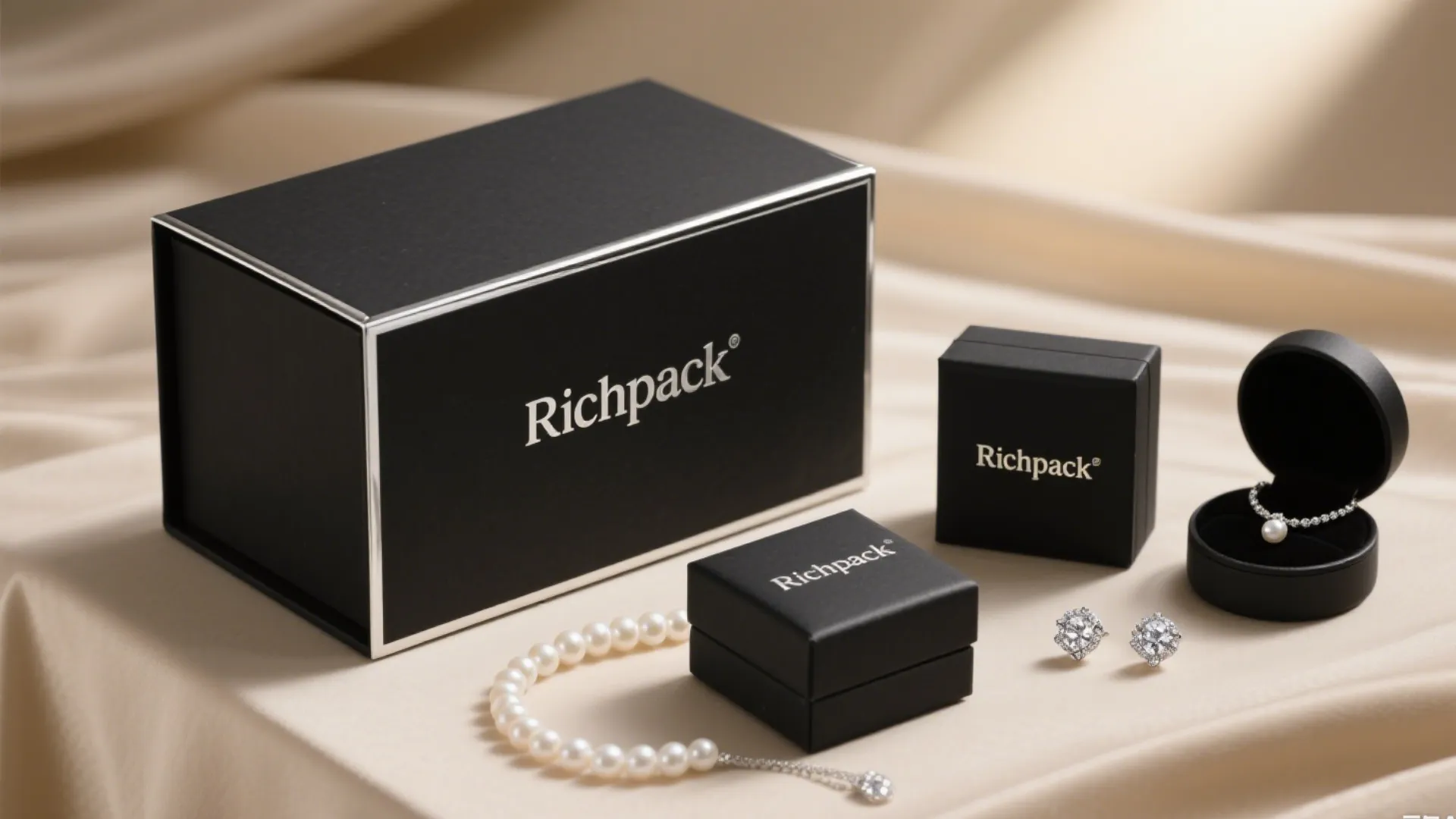
30+ Jewelry Packaging Ideas to Elevate Your Brand (2026)
2025-07-10




A luxury necklace can be well made and still feel underwhelming when it arrives in a flimsy carton. The opposite is also true: a beautiful box cannot rescue a loose insert, a crooked lid, or a shipping pack-out that arrives crushed. Rigid magnetic boxes work well for luxury packaging because they combine a pre-formed structure, a controlled opening action, and a large surface for brand details in one presentation system.
That combination makes them a strong candidate for jewelry, watches, fragrance, gifting, and premium e-commerce. It does not make every magnetic box the right choice. You still need to compare storage volume, product fit, closure force, shipping protection, and the evidence behind material claims.
This guide explains those decisions so a design or procurement team can move from a mood board to a workable packaging brief.
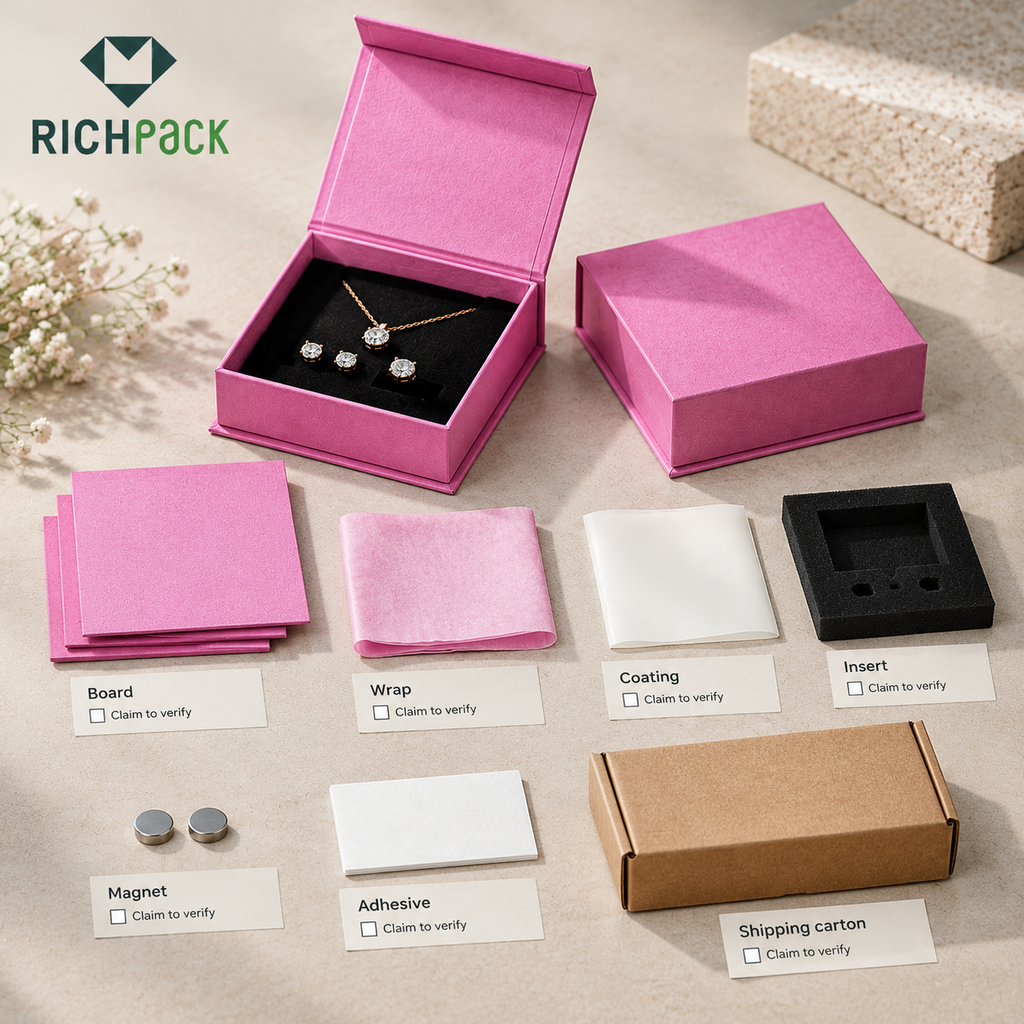
Rigid magnetic boxes are pre-formed presentation boxes built around a stiff board structure and a concealed magnetic closure. The board creates the box shape, the outer wrap creates the visible surface, and the insert controls the product inside. The hinge, flap, and magnets determine how the lid meets the base. Treating those parts as one system makes it easier to specify a box that looks refined and works in handling.
The structural core is commonly a dense paperboard such as greyboard or chipboard. It gives the lid, base, and side walls their shape. Unlike a folding carton, a rigid box arrives in its set-up form and is not intended to be flattened for storage. The exact board grade and thickness should be selected against the product size, weight, span, insert, and opening style rather than chosen from a generic “luxury” label.
Board stiffness affects more than crush resistance. It also helps the lid stay aligned with the base and keeps the magnetic contact point stable. A box can feel firm when empty and behave differently after the insert, product, wrap, and shipping movement are added. Approve the structure with the intended pack-out inside.
The board is usually covered with a printed or decorative wrap. Art paper, textured paper, kraft paper, fabric, leatherette, and other finishes can create different visual and tactile signals. The wrap is the layer that carries color, artwork, logo placement, and many surface treatments, but it does not replace the board or the insert.
Keep those jobs separate in the brief. Ask for the board specification, the wrap material and finish, the lining or insert material, and the adhesive or assembly method as distinct fields. That makes it possible to compare samples accurately and to discuss recycling or end-of-life handling without calling a multi-layer package “eco-friendly” by default.
For a wider look at magnetic structures, finishes, sampling, and artwork checks, see RichPack’s guide to designing magnetic gift boxes. Use it as a design reference, then confirm the final material combination for the specific project.
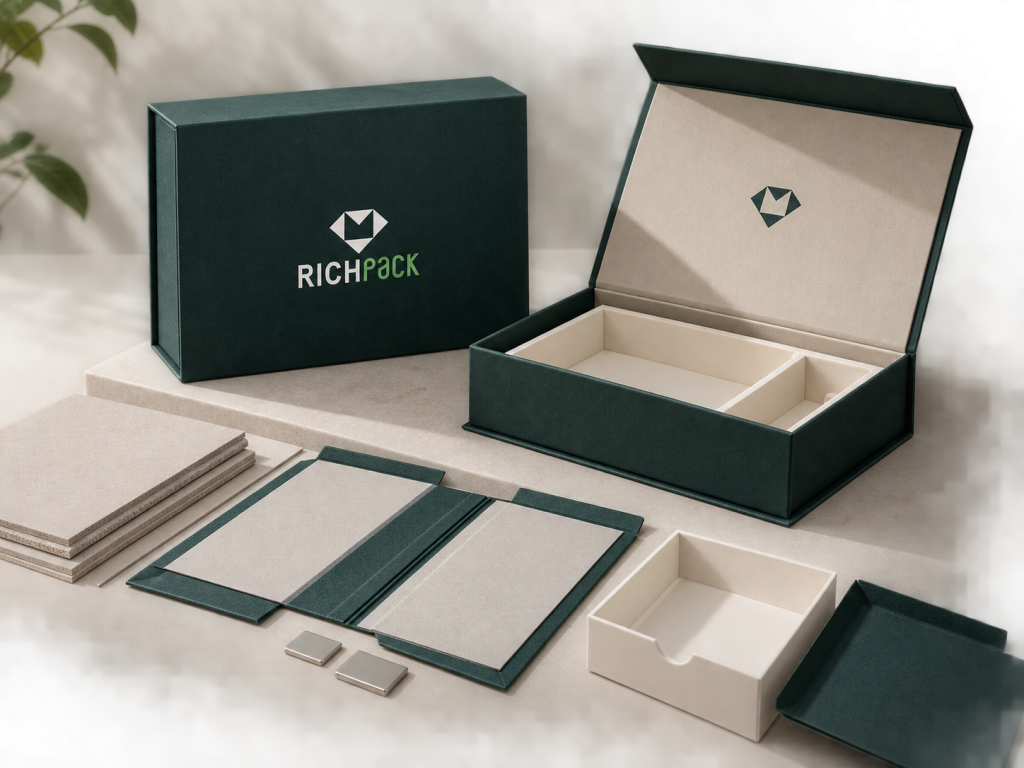
The word “magnetic” describes the closing mechanism, not a universal quality grade. Magnets are commonly recessed into the flap and the front wall or another matching closure area. When the poles meet, the lid is guided into position and stays closed without a visible snap, tie, or clasp.
The closure works only when several details agree: magnet position, polarity, contact area, surface thickness over the magnet, board stiffness, and lid alignment. A magnet that is too weak can leave the box loose. A magnet that is too strong can make the flap awkward to open or stress the hinge. The target is controlled closure that a customer can operate naturally with one hand when the product is already in the other.
The hinge or flap defines the opening path. A book-style box opens like a cover, a wrap-around flap creates a guided front reveal, and a hinged lid keeps the cover attached to the base. The choice affects where the customer places a hand, what they see first, and whether the lid stays out of the way while the jewelry is removed.
Check alignment with the box empty and filled. An insert can raise the product or change the pressure on the lid. The wrap can add thickness around the magnet. The hinge gap can look acceptable in a rendering but feel tight after finishing. A physical sample should show a flush lid, even pull, and no rubbing at the fold.
The insert is the part that positions a ring, earring, necklace, bracelet, or set. It may use slots, pads, shaped cavities, cards, ribbons, or dividers. Its role is not simply to make the box look full. It should limit unwanted movement, keep the product visible, and let the customer lift it without scraping a setting or pulling a chain into a knot.
RichPack’s custom jewelry box inserts page shows the range of jewelry types and insert directions that can be discussed during sampling. The project brief still needs the actual product dimensions, the largest projection, the intended presentation angle, and the removal motion.
Standard rigid magnetic boxes keep their three-dimensional form during storage and transport. Collapsible or foldable magnetic boxes are designed to reduce the empty package footprint, although the construction and setup method vary. The trade-off is usually between a dense, ready-to-use feel and the space, freight, and assembly efficiency of a package that can be stored flatter.
Do not infer performance from the word “collapsible.” Review the collapsed dimensions, setup steps, fold memory, hinge behavior, and the number of times the box may be opened before the customer sees it. A foldable format can be the better decision for seasonal e-commerce volume, while a fully rigid format can suit a high-value jewelry presentation that remains assembled.
Rigid magnetic boxes signal luxury when their structure, opening action, surface, and insert work together. The customer experiences weight, alignment, touch, and reveal in a short sequence. Those cues can support a premium position, but they are design effects rather than proof of a higher price, conversion rate, or customer loyalty.
The magnetic closure creates a deliberate action. The lid approaches the base, the magnets guide it, and the box closes without a loose ribbon or visible fastener. Opening reverses that sequence and can create a clear pause before the jewelry appears. For a gift or a boutique handoff, that controlled reveal may be more valuable than a faster but less considered opening.
Test the motion with the product inside. A customer may hold a phone, shopping bag, or certificate in the other hand. The box should open without a fight, and the lid should remain stable while the piece is removed. A “premium” closure that requires force or two hands has missed the use case.
The rigid shell gives the package a consistent shape on a counter, shelf, or unboxing table. It can frame the jewelry instead of allowing the product to sink into a soft mailer. That visual stability is useful for collections that need a repeatable presentation across ring, earring, necklace, and set formats.
The presentation surface still depends on the complete pack-out. A rigid box can arrive with scuffed corners or a damaged wrap if it is placed loose inside an unsuitable shipper. Separate the display job from the transport job when defining the system.
Protection has layers. The insert limits movement and contact. The rigid box protects the presentation structure during normal handling. The outer carton, sleeve, void control, and other shipping materials address the route to the customer. A rigid magnetic box is usually the presentation layer, not a substitute for a tested shipping container.
When a team says it needs “more protection,” ask which risk it means. Is the concern a stone rubbing against the lid, a necklace tangling, the insert shifting, the corners crushing, or the parcel receiving repeated impact? Each risk needs a different check. Test the finished product, insert, rigid box, outer shipper, and packing method together.
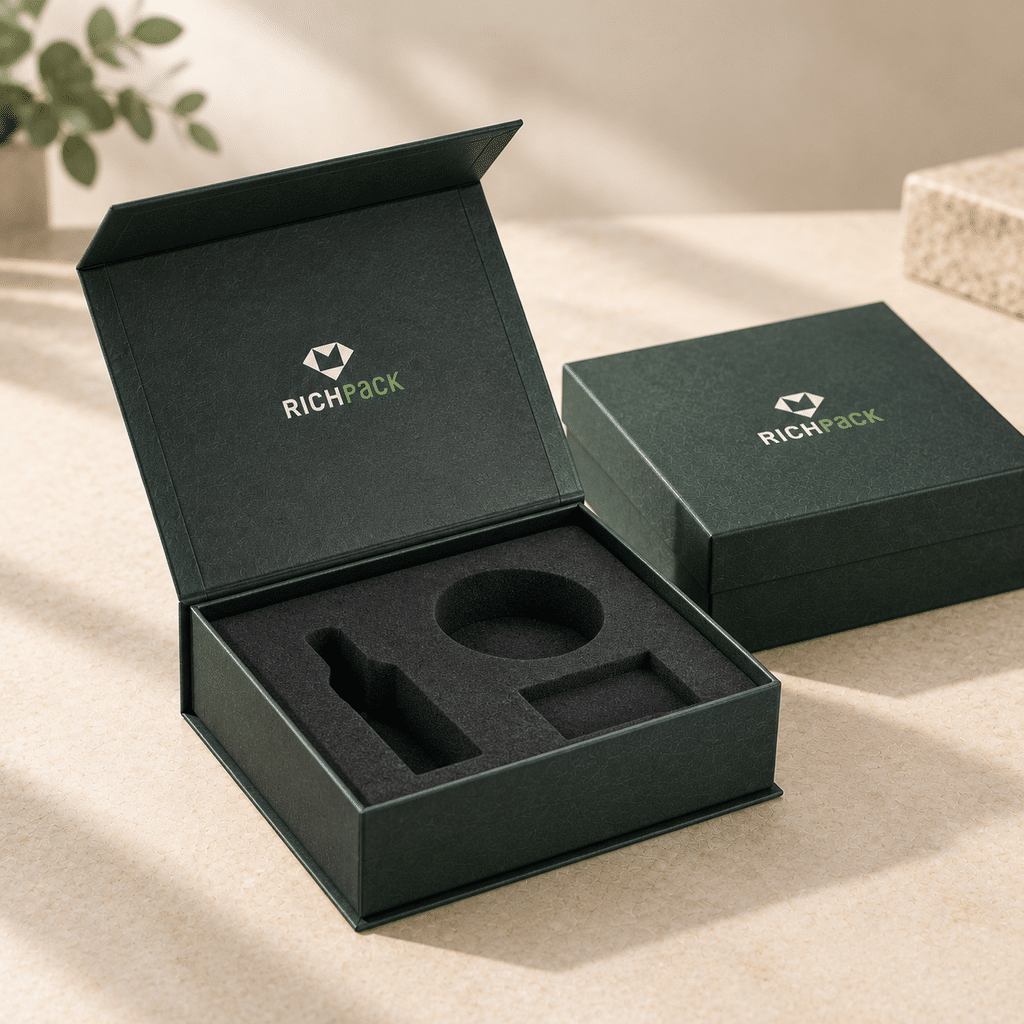
Luxury packaging does not require every available finish. Foil stamping can highlight a small logo, embossing or debossing can create a tactile mark, and a matte or soft-touch surface can change how the box feels in the hand. A restrained combination often communicates more clearly than a surface covered with competing effects.
Choose the finish after the structure and wrap are stable. Check color on the proposed paper, under the lighting used in retail or photography. Review fingerprints, scuffs, edge marks, and logo legibility on a filled sample. The same dark surface can look rich in a studio and show handling marks in a fulfillment area.
Customers may keep a sturdy magnetic box for jewelry storage, keepsakes, gift cards, or small accessories. That second use can extend the time the brand remains visible in a home or office. It is a possible behavior, not a guaranteed marketing result, so design the box to be useful without promising that every customer will reuse it.
Reusability and recyclability are also different questions. A package can be durable enough to keep and still contain mixed materials that are difficult to separate. If sustainability is part of the positioning, explain the specific material choice and its conditions rather than using a broad green claim.
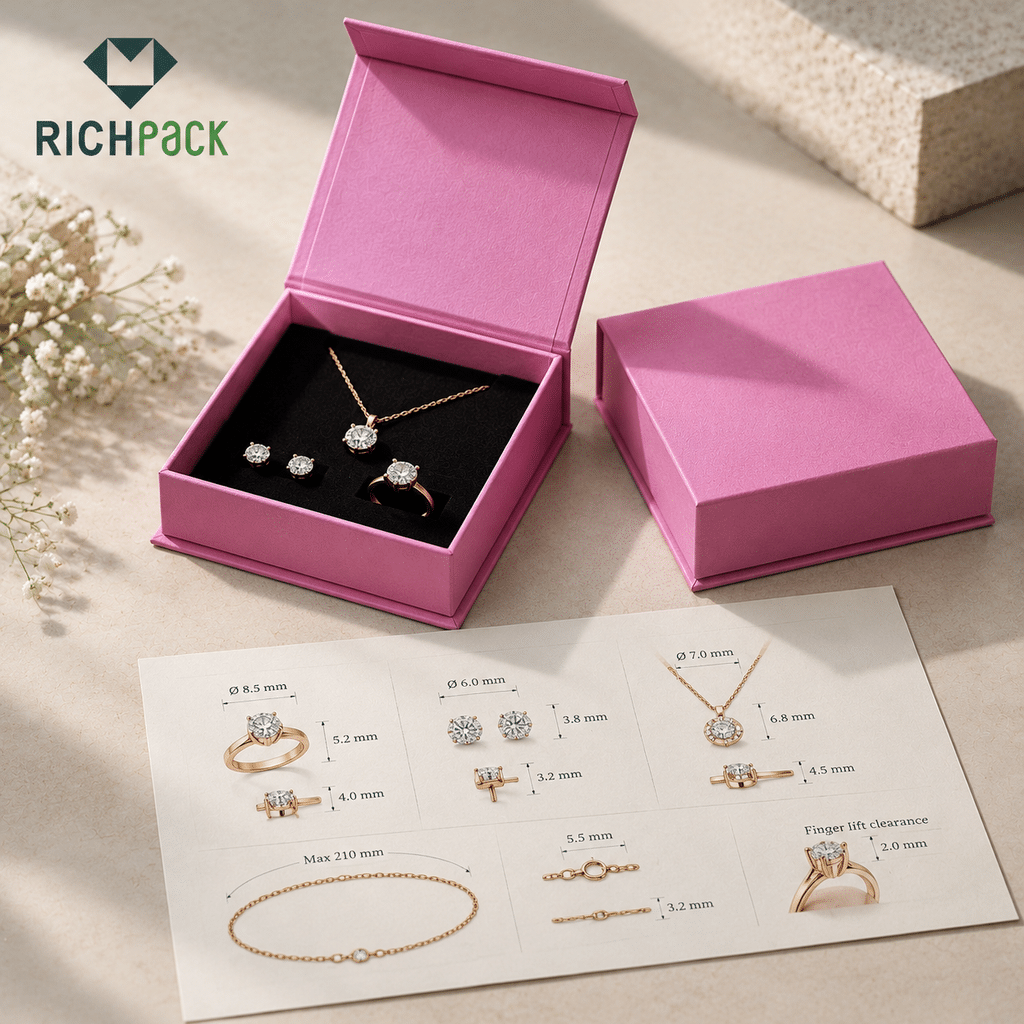
Customers notice a ring that leans, an earring pair that rotates, or a necklace that arrives tangled. The insert affects the first visual impression before the customer touches the piece. Measure the product at its widest, longest, and highest points, including prongs, clasps, drops, and movable charms. Then test the actual piece in the insert.
The fit should be secure without making removal feel like a struggle. Add a finger lift, ribbon pull, card, or separate cavity when that feature solves a real access problem. A larger empty cavity is not automatically safer; excess space can allow the jewelry to move and change the intended reveal.
Ask what a sustainability statement refers to. It could mean recycled board, a paper-based insert, a certified paper source, a removable magnet, a water-based coating, a foldable structure that reduces empty volume, or a reuse intention. Those attributes are not interchangeable, and one positive component does not prove that the complete package is recyclable or low impact.
Record the material, claim scope, market, and supporting document for each component. Keep magnets, adhesives, laminations, foams, fabrics, and coatings visible in the discussion. If the supplier cannot show what the claim covers, use narrower language in the product brief.
Rigid magnetic boxes are a strong choice when a brand values a formed presentation and a guided opening. They are not automatically the best format when flat storage, quick assembly, or a lower freight footprint matters more. Use the table below as a first screen, then compare the same product, insert, quantity, route, and customer interaction.
| Format | Opening | Storage and assembly | Presentation and insert | Often fits when |
| Rigid magnetic box | Guided flap or hinged magnetic reveal | Arrives formed; higher empty-box volume; little setup at packing | Strong surface and stable insert platform | Premium jewelry, watches, gifting, and repeat display |
| Folding carton | Tuck, lock, or glued flap | Ships flat; requires forming or assembly | Strong print area; insert may be separate | Space, speed, and unit economics lead the brief |
| Two-piece rigid box | Separate lid lifts from base | Arrives formed; lid must be stored with the base | Direct, ceremonial opening; insert can be fitted | A clean lid-and-base presentation is enough |
| Drawer box | Tray slides from sleeve | Formed or semi-rigid; sliding fit needs control | Slower reveal with tray-style presentation | The opening sequence should feel layered |
| Collapsible magnetic box | Magnetic flap after setup | Lower collapsed volume; setup and fold behavior need testing | Can retain a premium surface with more logistics efficiency | E-commerce kits, campaigns, or limited storage space |
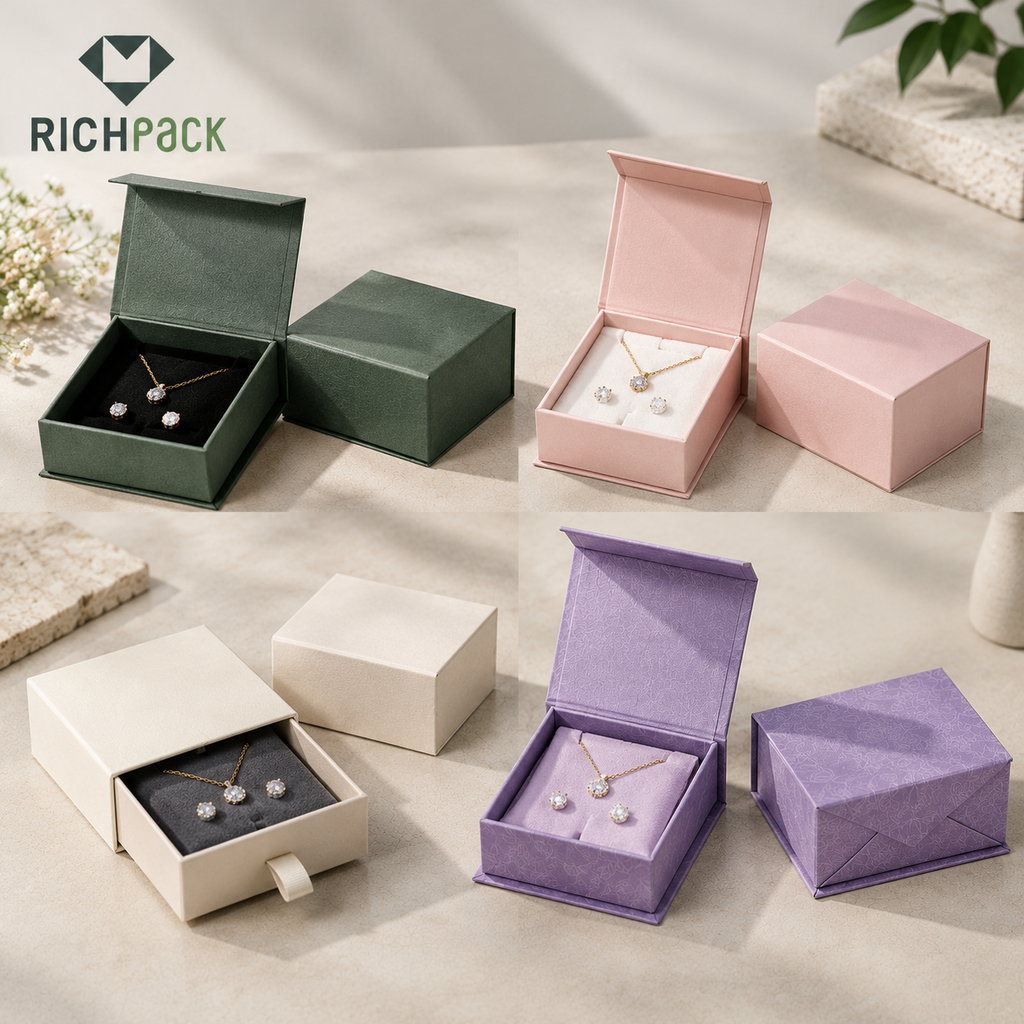
The main difference is when the package takes its three-dimensional form. A rigid magnetic box is already set up. A folding carton ships flat and is formed during packing or at the point of sale. That difference changes warehouse space, assembly labor, opening feel, and the type of insert that can be integrated.
Neither format owns the word “premium.” A folding carton can carry a strong identity when print, structure, and insert are well planned. A rigid box can create waste and freight pressure when its size or presentation does not solve a real customer problem. Compare total landed cost and the complete customer interaction.
A two-piece rigid box uses a separate lid and base. It creates a direct lift-off reveal and can be easy to pack, but the lid must be set aside during opening. A magnetic box keeps the cover attached and guides it back into place. Choose between them by asking how the package will be opened, where the lid can rest, and whether one-handed reclosure matters.
The insert must remain stable in either format. Review the lid clearance, the product’s highest point, and the customer’s finger path before deciding that one structure is more elegant.
A drawer box creates a sliding reveal. It can present several layers or a tray, while a magnetic box usually provides a faster front or top opening. Drawer packaging adds sliding interfaces that need clean tolerances. Magnetic packaging adds a closure line that needs accurate alignment and controlled force.
Use a drawer when the reveal benefits from sequence and depth. Use a magnetic closure when the brand wants a clear front face, quick reclosure, and a guided snap. The right choice depends on the product and the desired hand motion.
Standard rigid magnetic boxes reduce setup at the packing station because they arrive in shape. Their downside is the volume of empty boxes in storage and freight. Collapsible formats can reduce that footprint, but they add setup steps and may show fold memory or different hinge behavior.
Ask for the collapsed dimensions, setup time, number of assemblies expected, and the condition of the surface after handling. If the box is part of a seasonal e-commerce kit, those factors may outweigh the denser feel of a fully rigid box.
Retail staff and e-commerce customers judge different moments. Retail packaging must look consistent when closed, open cleanly for display, and tolerate repeated handling. E-commerce packaging must protect the presentation box through the parcel route and still feel gift-ready at home.
RichPack’s foldable vs. rigid jewelry packaging comparison can help teams frame the portability and protection discussion. Treat any cost, test, or capability figure as project-specific and confirm it in the quotation and test plan.
Start with the product value, weight, dimensions, fragility, and opening behavior. Add the sales channel, storage location, fulfillment method, and repeat-order requirements. A high-value necklace that is handed over in a boutique may justify a fully rigid presentation. A lighter gift set shipped in large seasonal volumes may need a collapsible option and a stronger outer shipper.
The best choice is the one that meets the intended customer experience without creating avoidable storage, assembly, or transport problems.
Specify the box from the product outward. A useful brief connects the jewelry dimensions, insert, closure, finish, channel, and shipping layer before artwork is finalized. This sequence prevents the common mistake of approving a beautiful exterior and discovering later that the product cannot be removed cleanly.
Measure the real piece at its widest, longest, and highest points. Include prongs, clasps, chain length, drops, earring backs, and movable charms. Record the orientation in which the customer should see the product. If several SKUs share one box family, test the largest or most awkward piece first and define the limits for smaller products.
Do not rely on a product photo or a nominal “small” or “large” box label. A setting that rises only a little can change the insert depth and the lid clearance. Keep a dimensioned drawing or physical reference sample with the brief.
Choose the insert material and shape together. Velvet or suede may support a soft luxury presentation, while foam, paperboard, or molded structures may solve a different movement or weight problem. These are starting directions, not universal performance ratings.
Test the finished piece in the cavity. The ring should stay upright without being pinched. Earrings should remain paired and visible. A necklace should have a controlled chain path. A bracelet should not press against a hard edge. Add a card, divider, or finger lift only when it improves a defined interaction.
The closure must hold the lid in place without making the customer fight it. Review magnet position, polarity, surface thickness, lid alignment, and hinge movement in the finished sample. Open and close the box with one hand, with the insert and product inside, and after the surface has been handled.
Record what “comfortable” means for the team. The final acceptance note might cover flush alignment, even pull, no pinching at the hinge, no product movement, and a repeatable opening action. Do not substitute a magnet strength number for a complete use test.
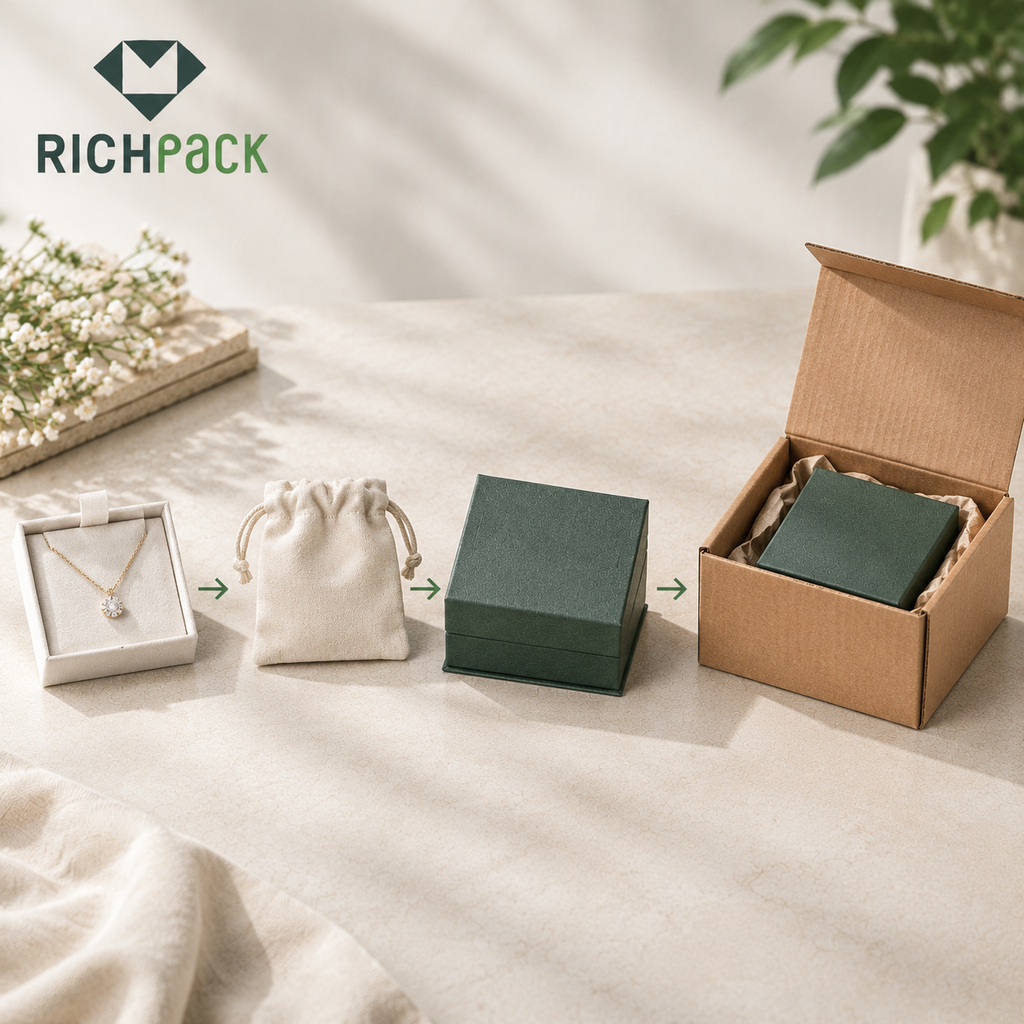
A pouch can organize the jewelry or add a soft presentation layer. The rigid box can frame and display it. The outer carton protects the presentation package through delivery. Each component should have one clear job.
When the project needs a pouch as well as a box, use RichPack’s guide to choosing a jewelry pouch for your brand to explore materials, closures, dimensions, and fit-testing questions. Do not assume that a soft lining prevents scratches, tarnish, or crushing; match each risk to the layer that can actually address it.
Translate the brand position into visible choices. “Luxury” is too broad for a supplier brief. Specify the color family, surface texture, logo scale, contrast, inside-lid message, and the level of decoration you will accept.
Use physical samples for color and touch. Check the logo on the actual wrap, not only on a screen. Review dark colors for fingerprints, light colors for edge marks, and textured papers for fine details. A finish should reinforce the product story and leave the insert and jewelry as the focal point.
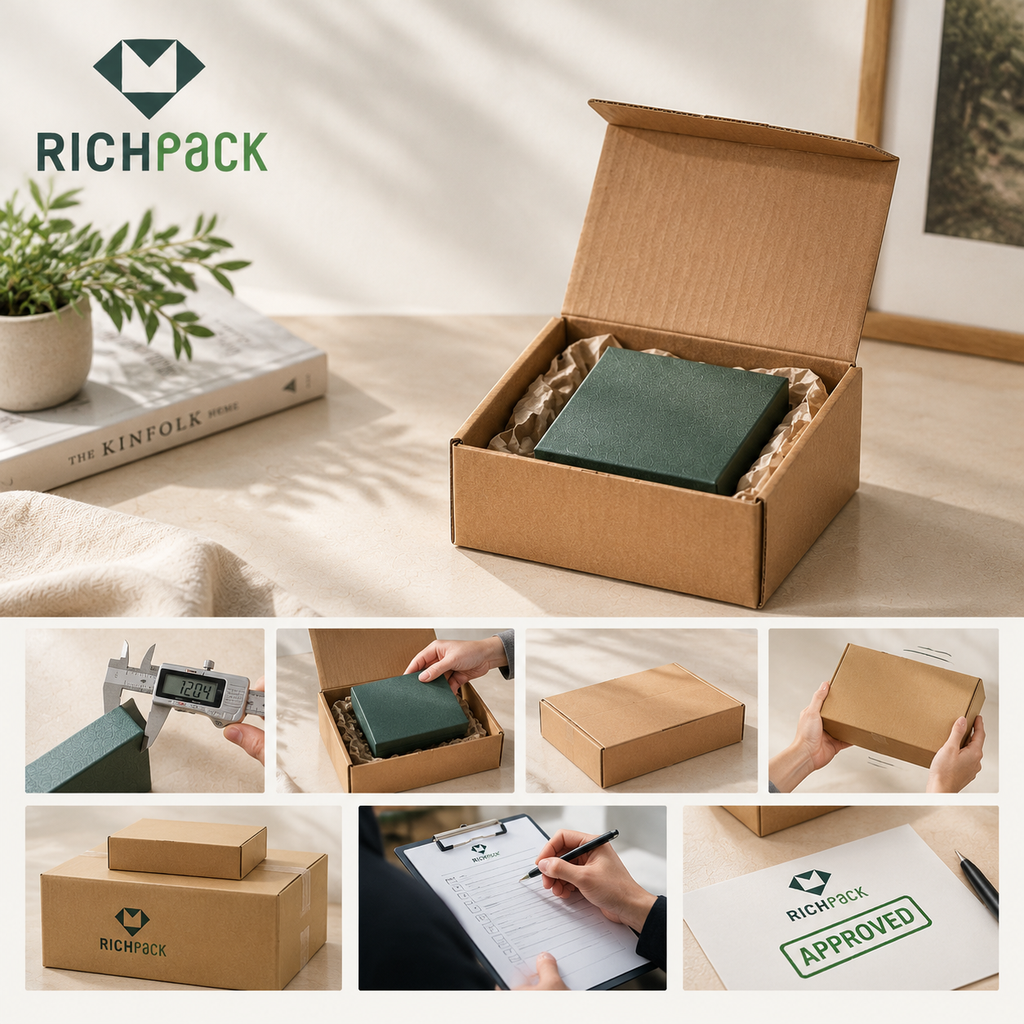
A sample should prove more than appearance. Put the actual jewelry, insert, pouch or card, rigid box, and outer shipper together. Check centering, movement, closure, lid alignment, surface marks, finger access, outer-carton fit, and the condition after realistic handling.
The test method and acceptance limits depend on the product, route, and project risk. Record what was tested, under which conditions, and what the sample does not prove. A digital rendering can confirm visual direction; it cannot confirm touch, closure, fit, or transit behavior.
Before requesting a quote, turn the design intention into a written specification. The supplier should be able to see what is fixed, what is still open, and what evidence is required before production. This makes competing proposals easier to compare and prevents a low headline price from hiding missing components.
Include the product drawings or samples, dimensions, weight, SKU range, target market, sales channel, opening frequency, quantity range, launch window, storage location, shipping method, and desired customer action. Add the insert, pouch, outer-carton, finish, artwork, and sustainability questions.
The brief should say whether the box is handed over in a boutique, packed into an e-commerce mailer, used in a subscription kit, or stored for a later campaign. Those details change the best structure.
Compare like with like. Ask whether the quote includes the board, wrap, magnet, hinge, insert, finish, assembly, packing materials, sampling, tooling, freight basis, and any special handling. A larger box may increase both material and empty shipping volume. A complex insert can add setup and labor. A finish can change defect risk and approval time.
Use total cost of ownership as a discussion framework, not as a promise of savings. Include sample and revision work, storage, packaging labor, freight, repacking risk, and the cost of a presentation box that arrives damaged. Do not accept a unit-price comparison that leaves those fields blank.
Ask for the sequence of samples. A white or unprinted structure sample can confirm size, hinge, lid alignment, insert depth, and magnet placement before the team pays to finish the surface. A printed sample can confirm color, logo, and texture. A pre-production sample can show the closest available production method.
Record who approves each stage and what happens when the sample does not meet the brief. Keep the approved artwork, dimensions, material specification, and reference sample together. That record supports repeat orders without relying on memory.
Request the exact board, wrap, lining, insert, coating, adhesive, magnet, and shipping material description. If the supplier uses a certification or recycled-content statement, ask what material and market it covers. A material claim on the outer wrap does not automatically describe the insert or the finished package.
RichPack’s own contact page invites buyers to share a packaging brief and request a quote or sample. Use discuss your jewelry packaging brief only after the product dimensions, channel, and open questions are ready for a meaningful project discussion.
Ask what was tested, how it was tested, under which conditions, and whether the result applies to the exact construction. “Protective,” “recyclable,” “anti-tarnish,” “water-resistant,” and “durable” can each refer to different materials and methods. A supplier photograph or general page cannot replace a project-specific test record.
If no report exists, narrow the language in the product brief. State the check you will perform instead, such as product-fit review, closure-cycle review, surface inspection, or complete pack-out handling. Clear uncertainty is more useful than a broad promise that the team cannot verify.
Magnetic boxes are used when a product needs a structured presentation and a controlled reclosure. They are common in jewelry, watches, fragrance, gifting, and other premium product programs. The right format still depends on the product, channel, storage plan, and shipping layer.
A rigid box is a pre-formed package built around a stiff board structure. It keeps its shape during storage and use, unlike a folding carton that ships flat and is formed later. Its actual protection depends on the insert, outer pack-out, and test conditions.
They typically combine a greyboard, chipboard, or other rigid paperboard core with an outer paper or fabric wrap, a concealed magnetic closure, a hinge or flap, and an insert. The exact materials, thicknesses, coatings, and adhesives must be specified for the project.
They can cost more than a simple folding carton because they use a formed structure, wrap, closure hardware, finishing, and often a fitted insert. Compare total landed cost, storage, freight, assembly, samples, and customer experience rather than a unit price alone.
They can be suitable when the insert fits the piece and the presentation box is placed inside an outer shipper that matches the route. Test the complete pack-out with the real jewelry. A rigid magnetic box by itself is not proof of parcel protection.
Rigid magnetic boxes are a strong luxury-packaging choice when a brand needs a formed presentation, a guided opening, a fitted jewelry insert, and a surface that can carry restrained brand cues. Their value comes from the complete system. Board, wrap, magnets, hinge, insert, pouch, outer carton, storage, and testing all shape the result.
Choose the format only after comparing the product, channel, storage footprint, freight conditions, and approval process. Prepare the jewelry dimensions, opening frequency, insert direction, finish priorities, shipping layer, and evidence questions before asking for a sample. RichPack can then use that brief to discuss a custom packaging route from design through delivery.


2025-07-10

2025-11-08

2025-04-18
2026-10-14
2026-07-29
2025-04-15

Bespoke Custom Sustainable Cosmetic Packaging for High-End Skincare Brands | Designed for Premium Brands Needing Green and Sophisticated Packaging
View More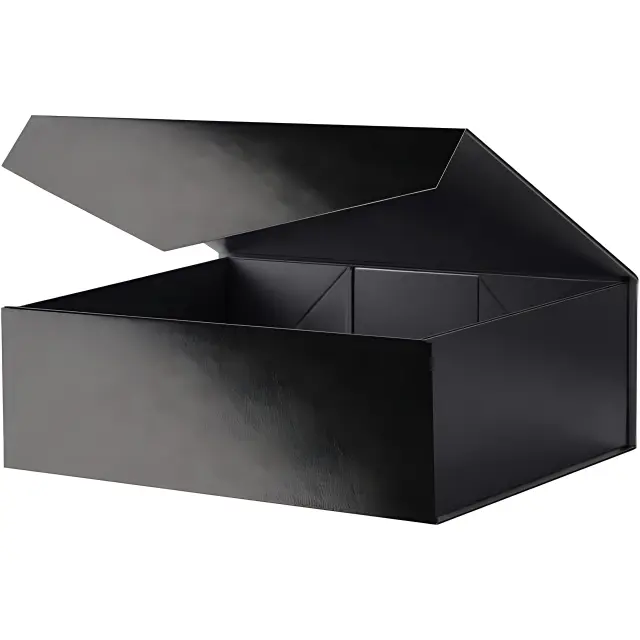
Big Black Gift Box with Foldable Lid – Oversized Rigid Packaging for Products & Gifts | Richpack
View More
Branded High-End Jewelry Gift Boxes with Foil Stamping Luxury Packaging for Premium Jewelry Brands | Customizable Designs
View More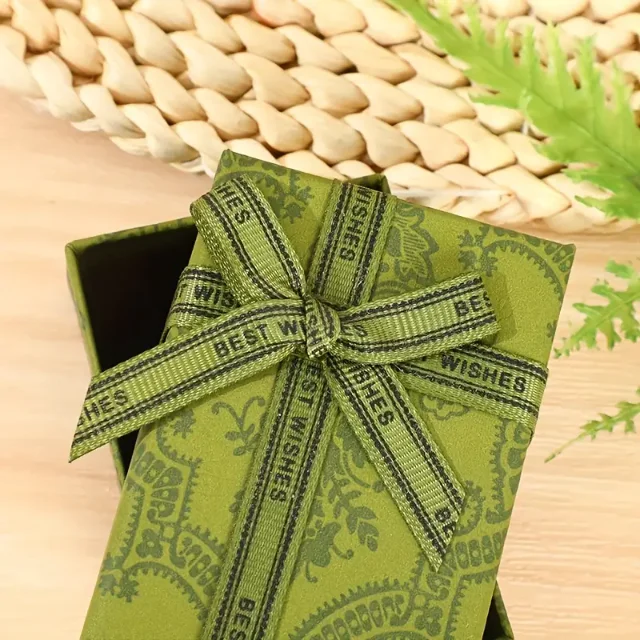
Christmas Gift Packing – Artful Packing that Spreads the Christmas Glow for Delightful Unwrapping
View More
Cost-Effective Eco-Friendly Bulk Packaging for Wholesale Jewelry Brands | Tailored for Large Orders Focused on Green Initiatives
View More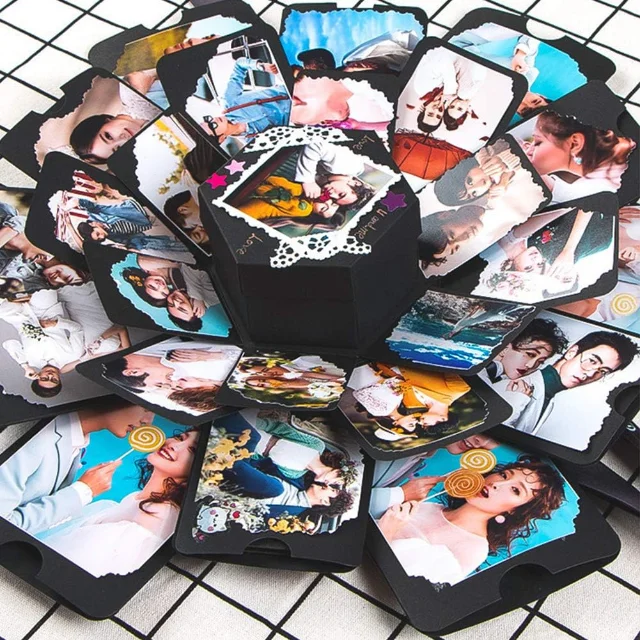
Creative Picture Gift Boxes | Custom Photo Box Gifts with Unique Designs and Personalized Options for Any Occasion
View More

