
 PREV
PREV
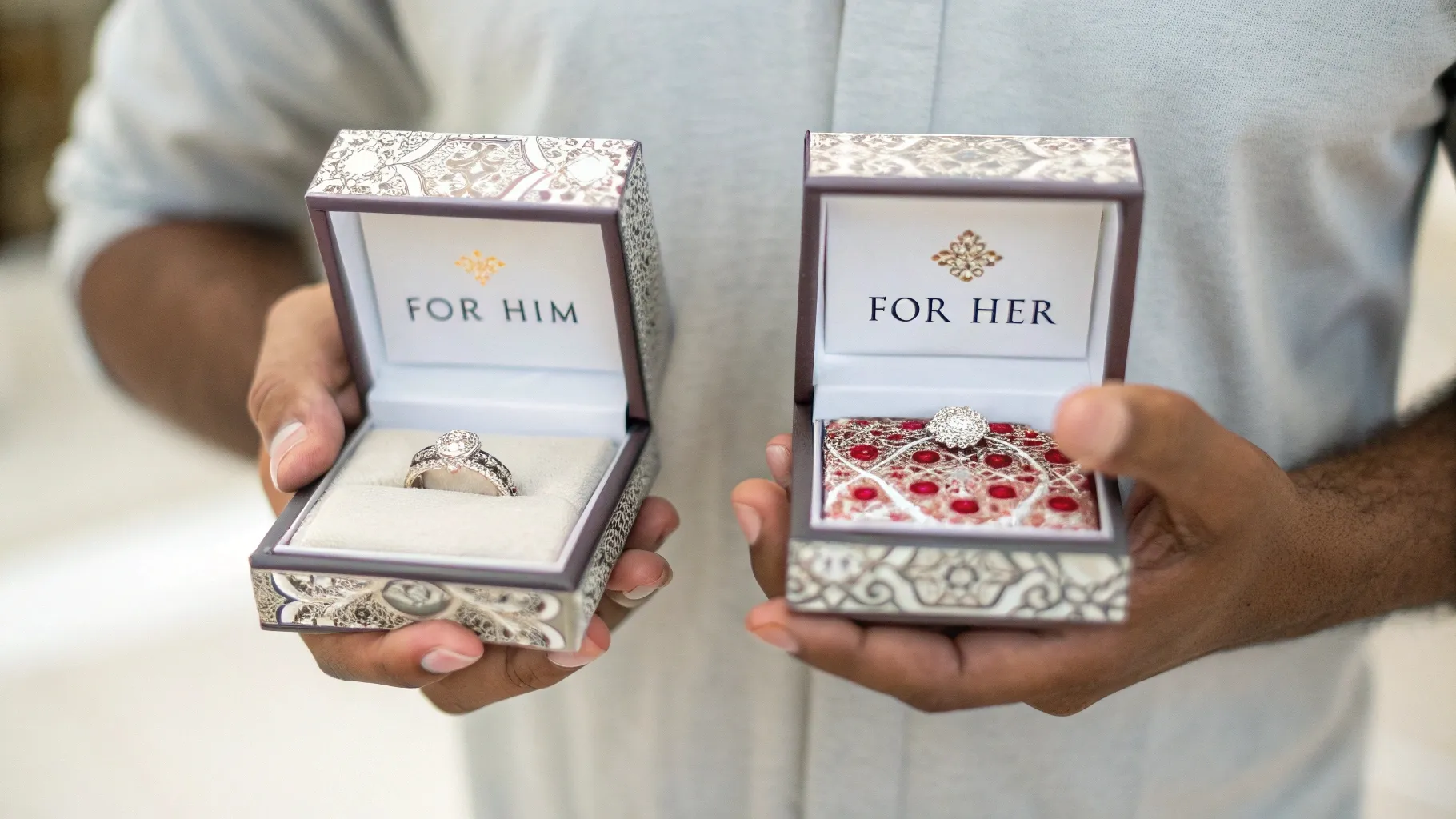
קופסאות תכשיטים לגברים לעומת קופסאות תכשיטים לנשים: מה ההבדל
2025-02-08
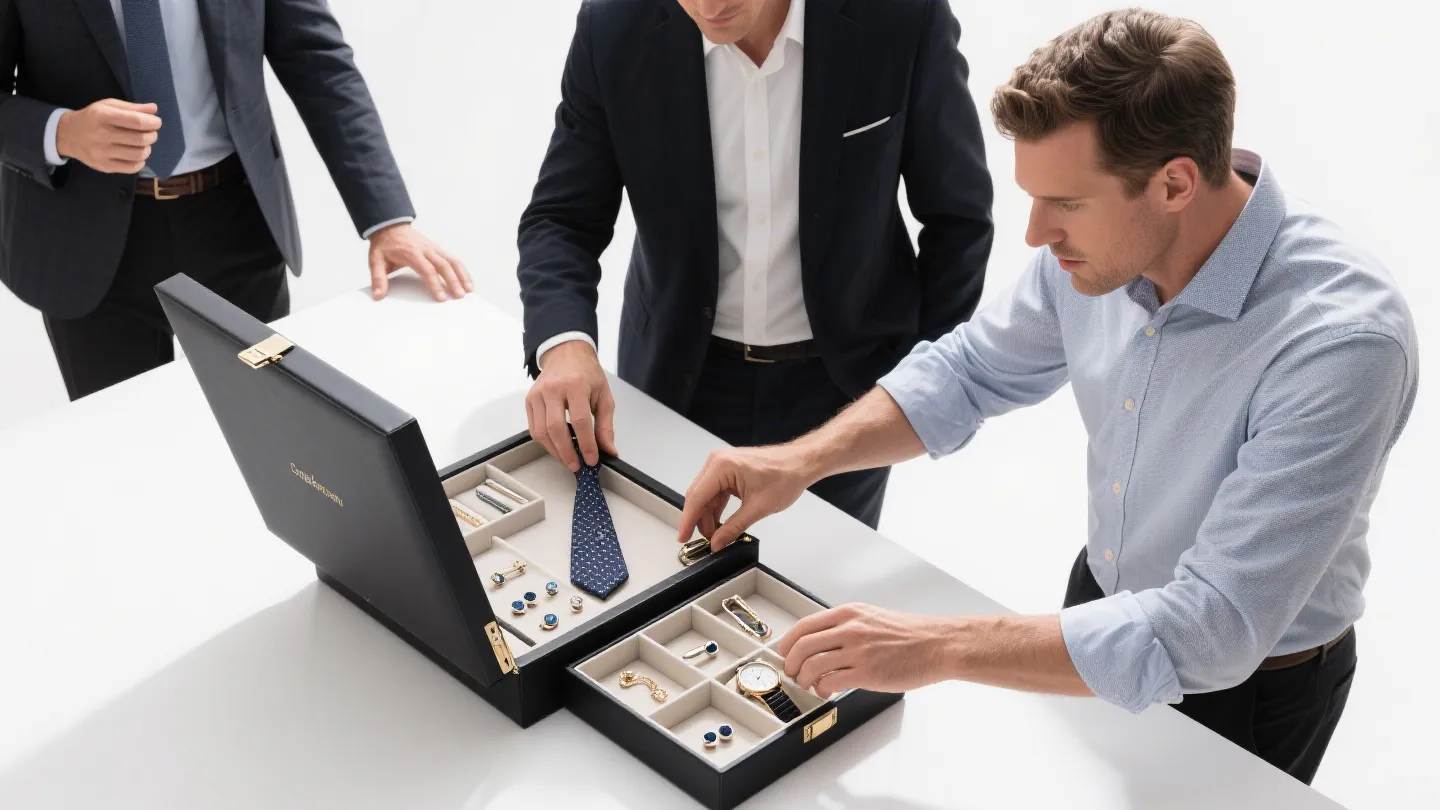



Here’s the thing about men’s jewelry boxes. Lift one at a jeweler’s shop, and you’ll instantly feel the difference between a 50 box and a 500 one. The expensive one has a certain weight. The lid closes with a soft, deliberate click. Inside, nothing shifts or rattles.
That feel isn’t magic. It’s engineering. Every layer of material inside serves a specific purpose.
This guide breaks down those layers from the outside in. If you’re sourcing packaging for a jewelry brand, evaluating a supplier’s proposal, or just trying to figure out why one box costs ten times more than another, you’ll find real answers here.
מה תלמד:
Before diving into each material, you need to understand the full system. A man’s jewelry box isn’t one piece of wood with some velvet glued inside. It’s a layered structure — and every layer is a decision point.
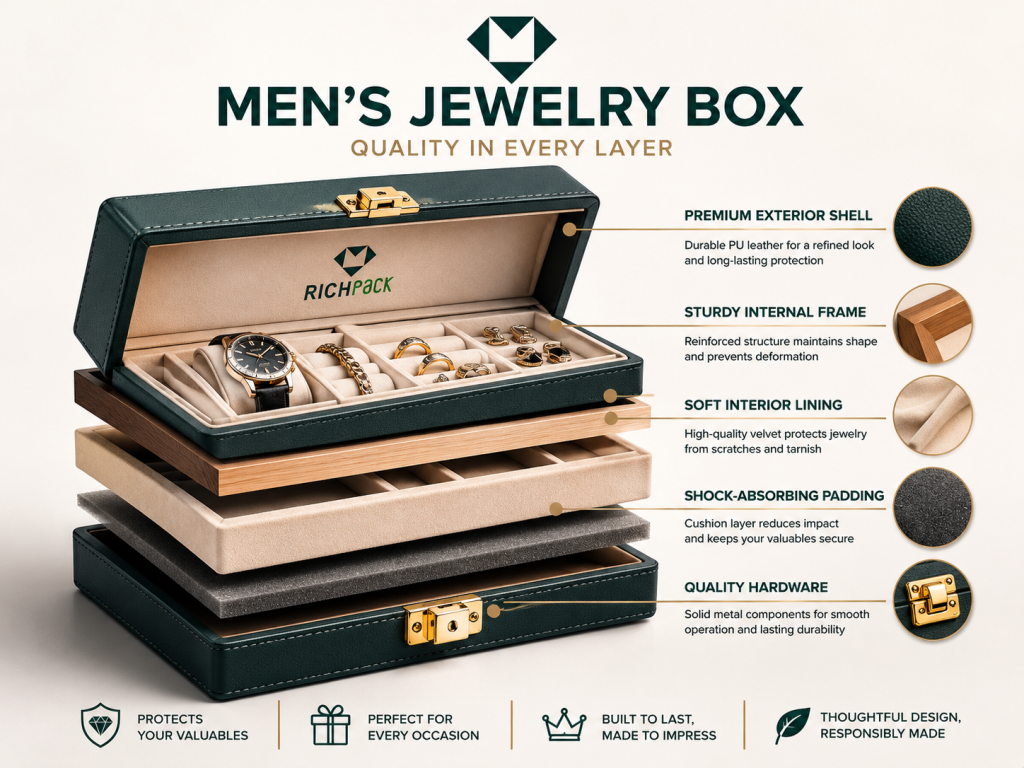
The outer shell is what you see first. In mass-market boxes, it’s usually paperboard wrapped in fabric or coated paper. In mid-range options, it’s medium-density fiberboard (MDF) with a veneer or leatherette finish. In the premium tier, it’s solid hardwood or top-grain leather applied over a structural frame.
The exterior shell does more than look good. It provides the rigidity that protects contents from compression during stacking and shipping. A box that collapses under its own weight is a packaging failure — it doesn’t matter how gorgeous the jewelry looks inside.
Interior lining is the material that actually touches the jewelry. This layer determines whether your watch gets micro-scratches after six months of storage. It also controls moisture exchange between the ambient environment and the piece.
Common options: velvet, suede, silk, satin, foam, and specialized anti-tarnish fabrics. Each carries different trade-offs in cost, protection level, and aesthetic impression.
The frame is the skeleton hidden inside the shell. In high-quality boxes, this is where manufacturers make or lose money on durability. Premium frames use kiln-dried hardwood rails or reinforced corrugated cardboard with specific GSM ratings. Budget frames skip the frame entirely and rely on shell material to bear all structural load.
You can spot a frame-free box with a simple test. Pick it up from one corner. If it flexes noticeably, there’s no internal frame worth mentioning.
Hinges, magnetic closures, lock mechanisms, and corner reinforcements — these components account for a surprisingly large portion of production cost on a well-made box. Industrial-grade hinges that pass a 100,000-cycle opening test aren’t cheap. Neither are neodymium magnets rated N42 or higher.
Hardware is where cheap imports cut corners most visibly. A box with a loose hinge after 50 openings signals hardware savings at the engineering level.
Surface finishing includes everything applied to the outside: spray paint, laminated paper, hot foil stamping, embossing, UV coating, or leather grain texture. These treatments affect two things: visual perception and scratch resistance during normal handling.
For men’s products, brushed metal accents or carbon-texture finishes communicate a different market positioning than grain leather or polished wood.
The insert card, care instruction leaflet, authentication tag, protective tissue, and outer mailer. For B2B buyers, these details matter because they directly influence the unboxing experience and brand perception at first contact.
Now that the structure is clear, here’s what you’ll actually encounter in the field. You can also browse our full men’s jewelry boxes collection to see these materials in practice.
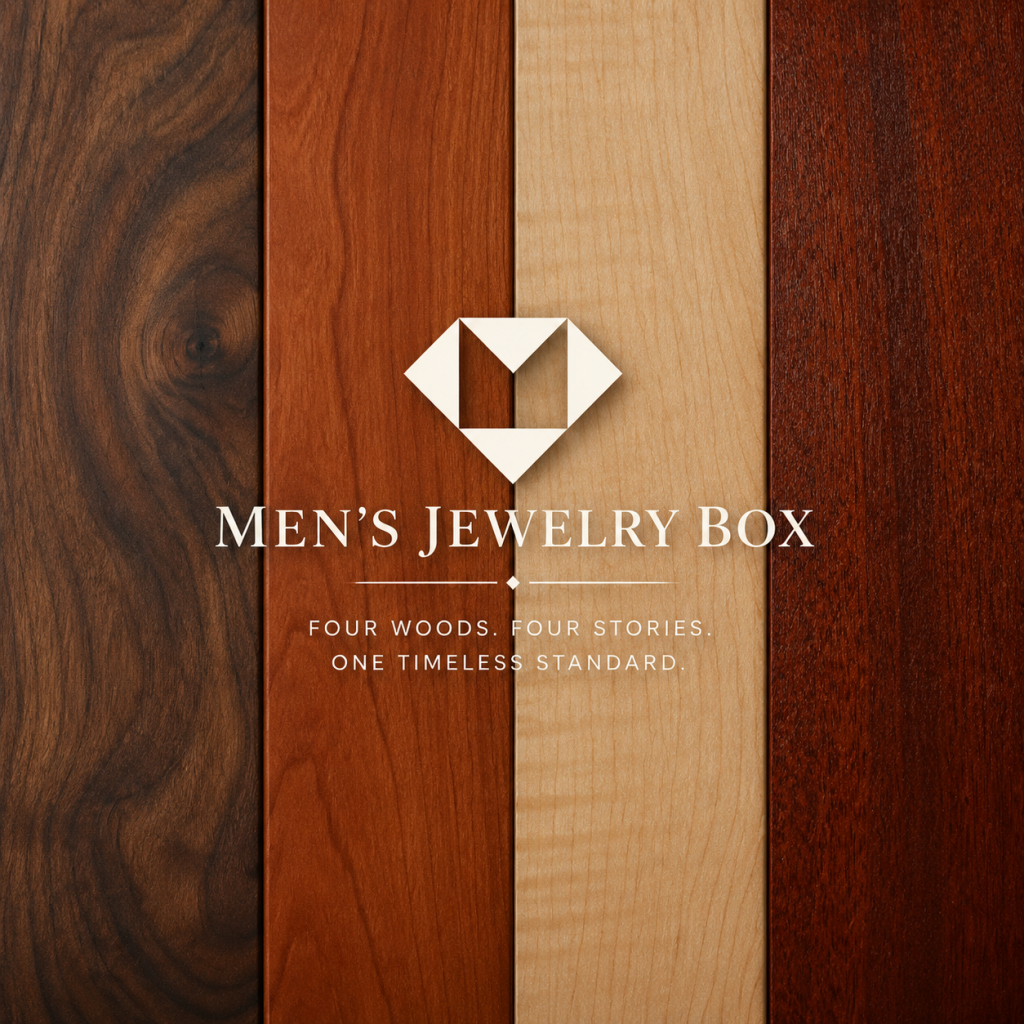
Solid wood remains the gold standard for luxury men’s jewelry boxes. Walnut, maple, cherry, and mahogany are the most common choices — each with distinct grain patterns and hardness ratings.
Walnut ranks highest for premium men’s applications. The Janka hardness scale rates black walnut at around 1,010 lbf, which means it resists denting better than most domestic species while remaining workable for precision joinery. Cherry darkens naturally with age. The older it gets, the better it looks.
The real advantage of solid wood is longevity and repairability. A scratched walnut surface can be sanded and re-oiled. A dent in paperboard cannot be repaired. For brands positioning themselves as heritage or heirloom quality, solid wood is the only logical choice.
From the manufacturing side, solid wood requires kiln drying to below 8% moisture content before working. Skip this step, and you’ll get joint splitting and frame warping within 12 months, especially in humid climates. This adds cost and lead time. It’s non-negotiable for consistent quality.
This category creates more confusion than it should. The distinction matters.
Genuine leather (full-grain or top-grain) offers superior durability and develops a patina over time. For luxury brands targeting high-net-worth male customers, real leather conveys authenticity in ways synthetic alternatives simply can’t replicate.
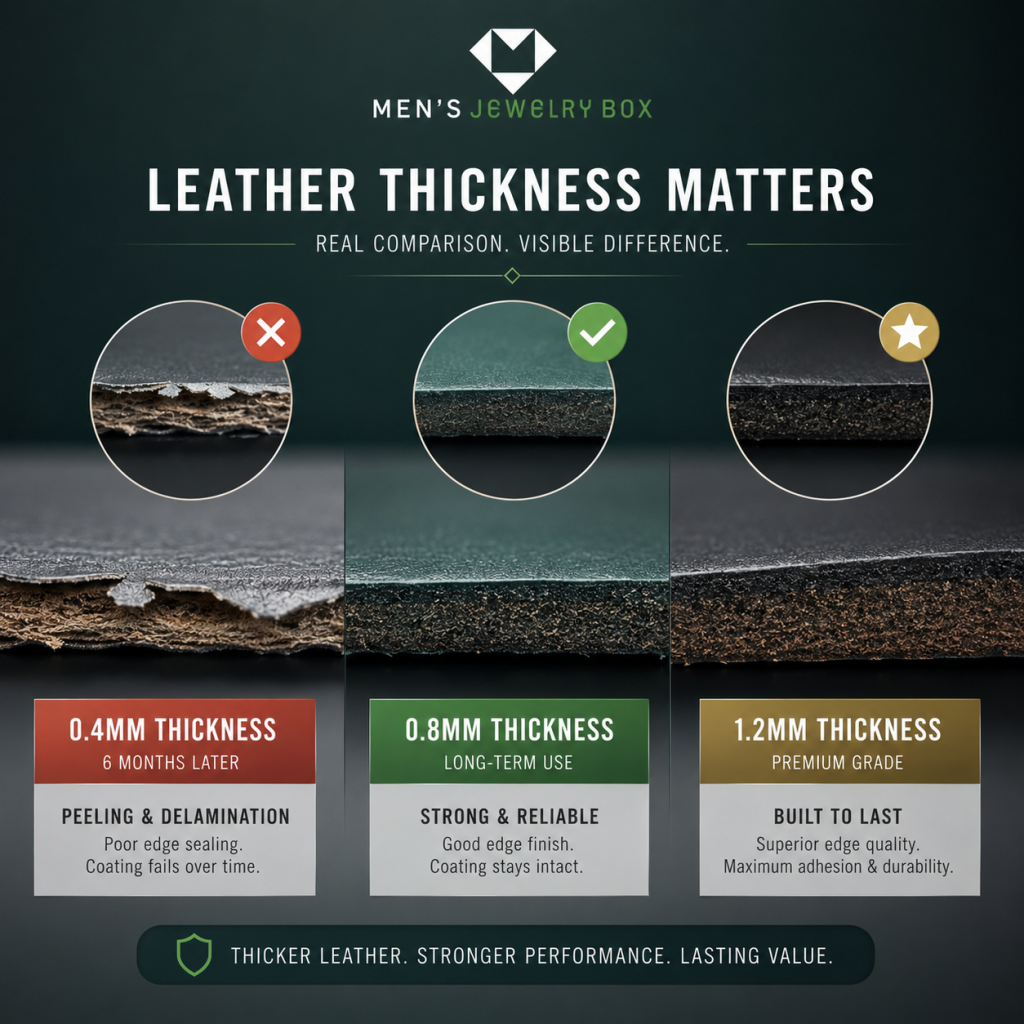
Leatherette (also called PU leather or faux leather) uses a polyurethane coating over a fabric base. High-quality leatherette at 0.8mm to 1.2mm thickness closely resembles genuine leather to the naked eye. At 0.4mm thickness, it tears easily and peels after six months.
Price differences between 0.4mm and 1.0mm leatherette are minimal. The performance gap is enormous. If a supplier can’t confirm their leatherette thickness specification, assume it’s on the thin end.
Aluminum, stainless steel, and carbon fiber represent the modern end of the spectrum. These materials speak to a specific customer profile: younger male buyers who associate brushed metal with technical precision and fitness culture.
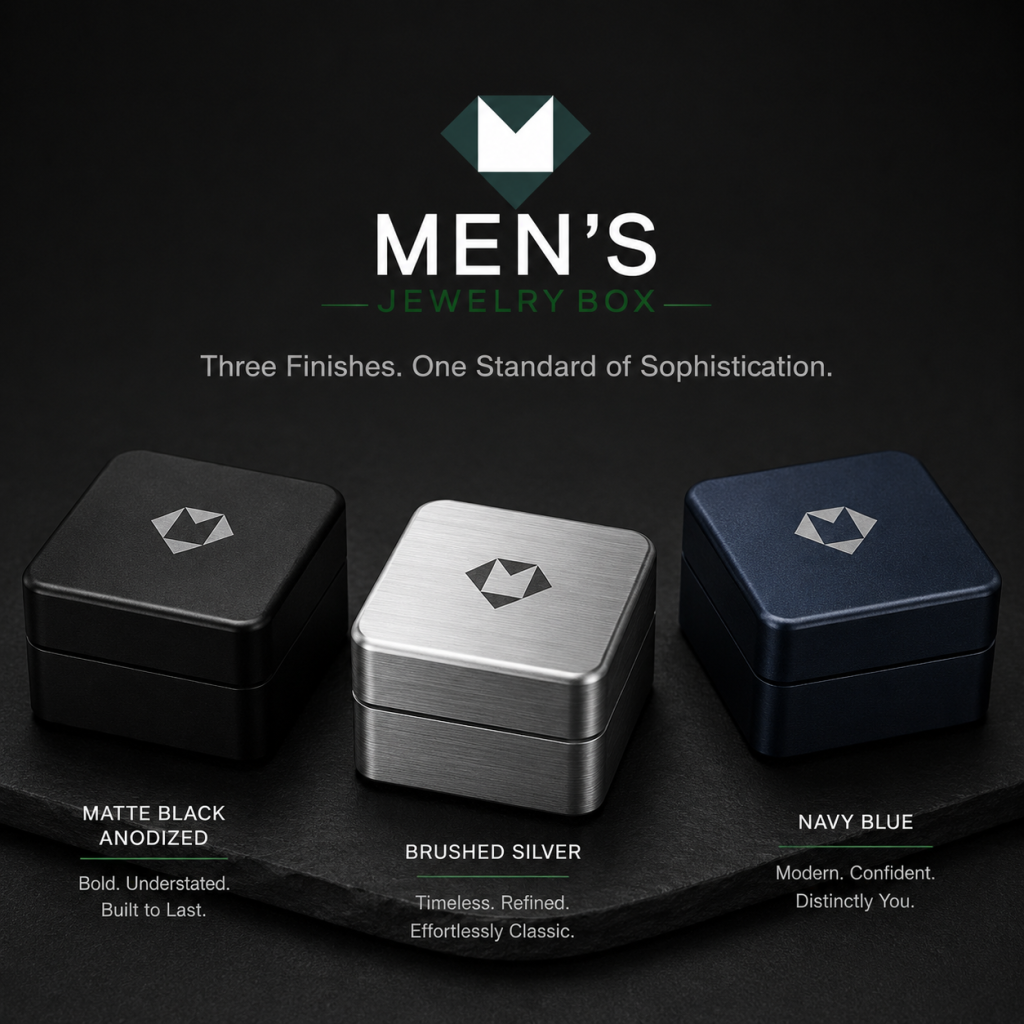
Aluminum boxes offer excellent strength-to-weight ratios and take anodized finishes in black, silver, or navy. They resist corrosion better than bare steel. The drawback is dent resistance. Drop an aluminum box, and it’ll show impact damage more readily than a wooden equivalent.
Carbon fiber boxes occupy the extreme luxury-to-technical crossover segment. Production requires specialized tooling that limits customization options. The aesthetic appeals to buyers who want to communicate investment and modernity simultaneously.
This is where volume economics dominate. Paperboard jewelry boxes dominate Amazon listings, fast-fashion retailers, and promotional gift programs.
The key specification is GSM. Standard folding carton board ranges from 270gsm to 350gsm for small boxes, providing sufficient rigidity for single-piece storage. Reinforced construction uses 400gsm to 500gsm with a corrugated void, approaching MDF stiffness at a fraction of the weight.
For travel and lifestyle applications, lightweight paperboard with molded foam insert fills a specific niche. A frequent traveler doesn’t want a 2kg wooden box in their luggage. A 150g paperboard unit with anti-crush corner reinforcements serves this use case better.
Sustainability-conscious brands are increasingly adopting recycled paperboard with FSC certification. Material performance is equivalent to virgin board. The environmental positioning matters to European and North American end customers.
Bamboo, flax fiber composites, and hemp-based boards are gaining traction with brands targeting the sustainability segment. Bamboo processes faster than hardwood and reaches usable hardness in three to five years, versus 20+ years for walnut.
These materials currently lack the aesthetic vocabulary that luxury buyers associate with fine jewelry storage. A bamboo box still looks like a bamboo box. But as supply chains mature, cost premiums are shrinking.
Below is a comprehensive comparison chart detailing exterior materials for men’s jewelry boxes across durability, cost level, aesthetic impression, typical MOQ, and the use cases each material serves best.
| חוֹמֶר | עמידות | רמת עלות | Aesthetic Feel | MOQ טיפוסי | הכי טוב |
| עץ מלא | גבוה מאוד | גָבוֹהַ | Heritage, premium | 50-200 יחידות | Luxury brands, watch collections |
| Leather (Genuine) | גָבוֹהַ | גָבוֹהַ | קלאסי, מתוחכם | 100-500 יחידות | High-net-worth male market |
| עור | בינוני | נמוך | מודרני, רב-תכליתי | 200-2,000 יחידות | Volume retailers, corporate gifts |
| מתכת/סגסוגת | גָבוֹהַ | בינוני עד גבוה | טכני, מודרני | 100-500 יחידות | Younger male buyers, gifting |
| קרטון | נמוך עד בינוני | נמוך | Casual, practical | 500+ יחידות | E-commerce, travel, promotional |
| Bamboo/Composite | בינוני | בינוני | Eco-conscious, modern | 200-500 יחידות | מותגים בני קיימא |
This is the question we get asked most often in our catalog conversations. “Is solid wood worth the extra cost over MDF or particleboard?”
The answer depends on three factors: intended lifespan, the environmental humidity, and brand positioning.
Solid wood frames bear compression loads that engineered materials can’t match at equivalent thickness. A walnut rail at 12mm thickness resists deflection that would permanently compress a 16mm MDF panel.
The critical failure mode for engineered materials is delamination. MDF and particleboard use adhesives to bond wood fibers. When these adhesives absorb moisture above 70% relative humidity, they soften. Repeated exposure causes internal peeling that you can’t detect from the outside until the box literally falls apart during opening.
This isn’t theoretical. We’ve traced customer returns from coastal markets in Southeast Asia, the Gulf region, and parts of South America directly to this failure pattern. Humidity regularly exceeds 80% in those areas. Solid wood, properly sealed, handles these conditions without structural failure.
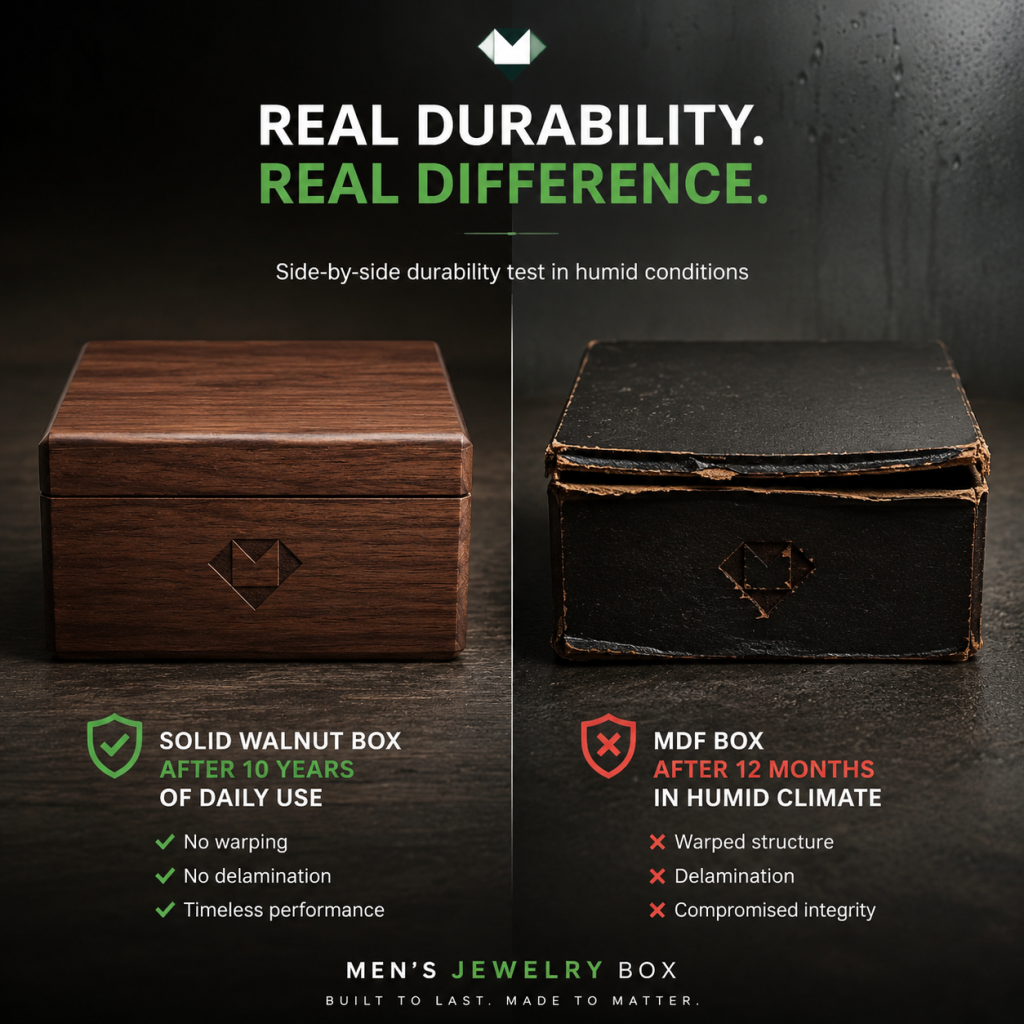
A solid walnut jewelry box improves with age. The wood darkens. The grain deepens. Minor surface scratches blend into the overall patina. Five years of use on a dresser actually makes the piece more attractive.
Engineered materials depreciate. MDF shows surface wear within 12 months of daily use. The laminated surface chips at the corners. After five years, a paperboard box is functionally exhausted.
For buyers positioning their product as a long-term investment rather than a disposable container, this aging differential justifies the material cost premium.
We’ve documented this in our 3 סוגי העצים המובילים לקופסאות תכשיטים לגברים guide, where our packaging structure team breaks down exactly which wood species perform best over a 10-year horizon.
Solid wood enables deep customization: CNC carving, inlaid metal hardware, custom hinge routing, and adjustable interior dividers. These features require tooling that works with wood as a material.
Engineered board supports surface customization extremely well: digital printing, hot foil stamping, embossing, and laminated graphics. For branding-heavy applications where the box is primarily a delivery vehicle for a logo, engineered board delivers better cost efficiency.
The decision is straightforward. If the box itself is the product statement, invest in solid wood. If the jewelry inside is the statement and the box is the container, engineered materials make more sense.
Surface finishing changes the moisture equation for solid wood. A properly sealed walnut box with polyurethane or lacquer finish resists moisture penetration adequately for normal indoor environments. The vulnerability point is the unfinished end grain on exposed joints. Moisture enters through these unsealed areas fastest.
Engineered materials present a different vulnerability profile. The edges are most susceptible and hardest to seal completely. In controlled indoor environments, a sealed MDF box and a sealed solid wood box perform similarly. The divergence appears in uncontrolled storage conditions.
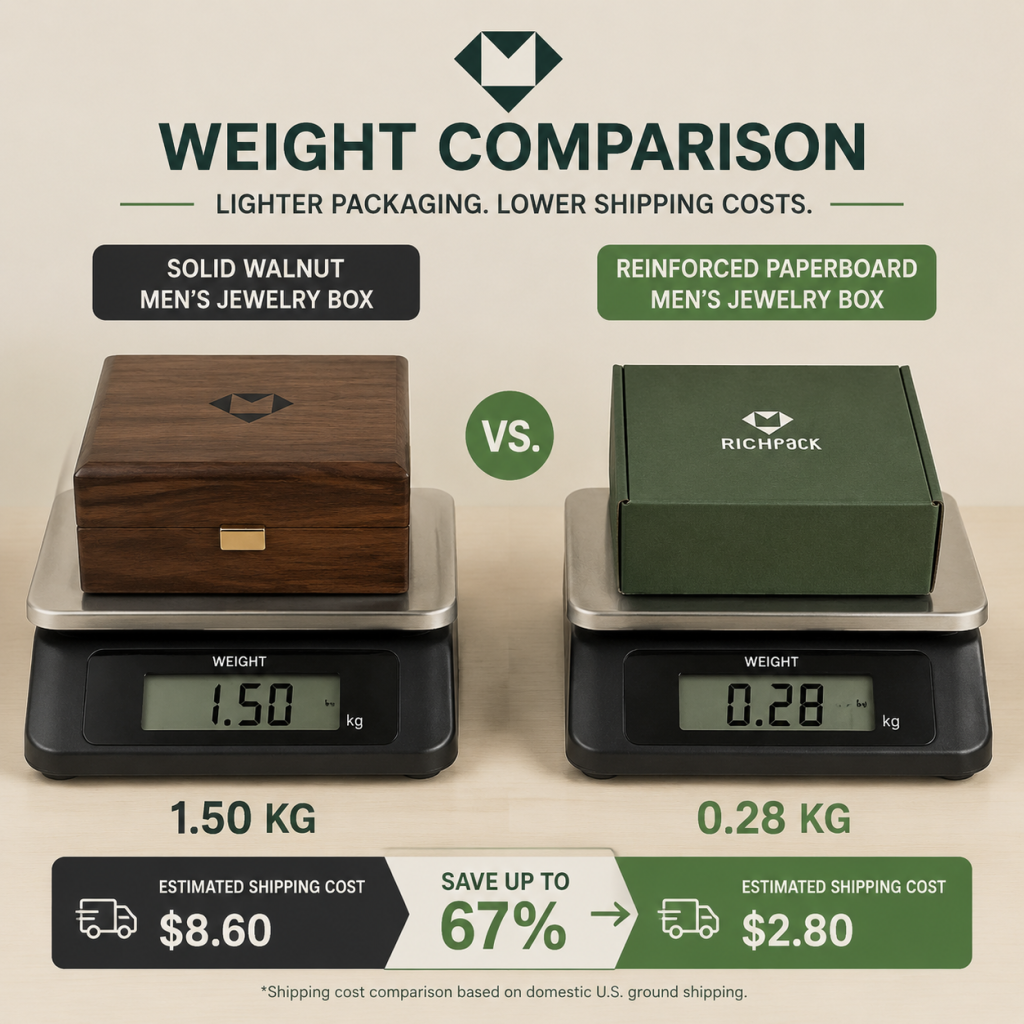
A 300mm × 200mm × 80mm solid walnut box weighs approximately 1.2kg to 1.8kg, depending on wall thickness. The equivalent paperboard construction weighs 200g to 350g.
For a desktop display, wood weight adds to the perception of quality. For travel, gifting, and shipping, it’s a liability. Shipping costs reflect weight. A 1.5kg wooden box costs roughly 4x to 6x more to ship internationally than a 300g paperboard equivalent. This freight differential compounds across thousands of units.
For a 300mm × 200mm × 80mm flip-top box at 500-unit order volume:
Finish grade, hardware selection, and interior lining choice add layers on top of these base costs. A velvet-lined leatherette box at $2.40 easily reaches $4.50 to $6.00 fully finished and packaged.
Interior lining is where most buyers make a mistake — they default to velvet without asking what they’re actually protecting. The lining material must match the jewelry type, not just look expensive.
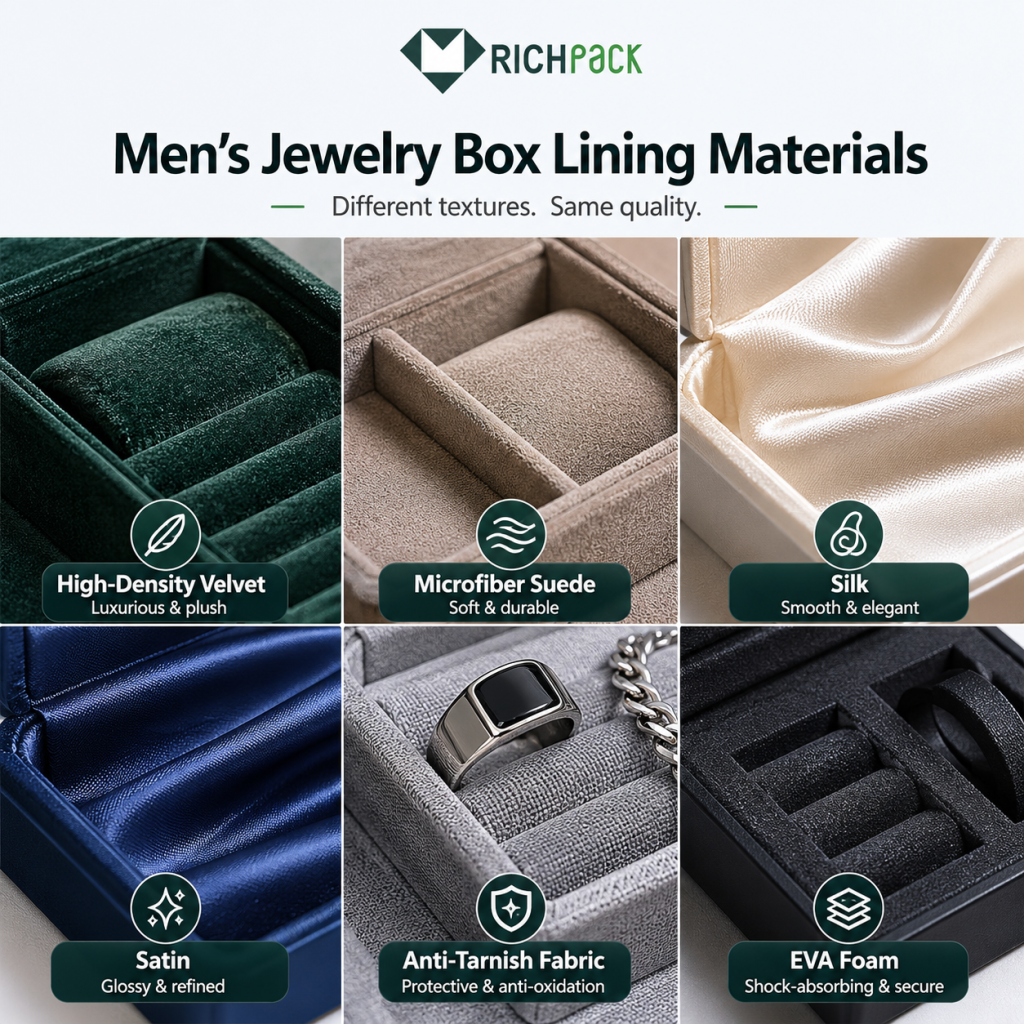
Velvet is the default choice for a reason. It feels premium, photographs well, and provides adequate scratch protection for most jewelry types. But not all velvet is equal.
The key specification is pile height and density. Low-pile velvet at 300gsm crushes under the weight of a watch bracelet over time. High-density velvet at 450gsm to 550gsm maintains its structure and recovers from compression. For watch storage, you want the higher density.
Velvet’s weakness is moisture and dust. The open fiber structure absorbs humidity and traps particulate matter. In high-moisture environments, velvet can develop mold if stored sealed for extended periods.
Suede offers superior scratch protection compared to velvet for metal pieces. The tighter fiber structure provides a smoother surface that grips less and cushions more evenly. For chain bracelets, metal cufflinks, and brushed steel watches, suede reduces the micro-abrasion that dulls polished finishes over time.
Faux suede (also called microfiber suede) has improved dramatically. High-quality microfiber suede at 400gsm performs indistinguishably from genuine suede in protective function while costing 40% to 60% less. Only a material engineer or a very experienced buyer can tell the difference by touch alone.
Genuine suede comes from the split layer of hide, giving it natural breathability that synthetic alternatives can’t fully replicate.
Silk and satin linings communicate luxury instantly. The visual sheen under display lighting in a retail environment is unmatched by any fabric alternative.
The practical limitation is durability. Silk is delicate. It tears under tension, stains from skin oils, and degrades faster than velvet or suede in daily use. For display boxes where jewelry is shown but rarely handled, silk makes sense. For functional storage boxes that open and close daily, it’s a liability.
Both materials work best as accent linings in specific compartments rather than full-coverage interior surfaces.
Silver and silver-plated jewelry require special handling that standard linings don’t provide. Anti-tarnish fabrics contain sulfur-active compounds that neutralize airborne oxidizing agents. Without this protection, a sterling silver chain stored in a standard velvet-lined box develops tarnish within two to four weeks in high-humidity environments.
Modern anti-tarnish microfiber linings provide the same soft-touch surface as standard velvet while extending the polished life of silver pieces by 3x to 5x under equivalent conditions. For brands with silver men’s jewelry lines, anti-tarnish interior should be the default lining specification, not an upsell.
Molded foam inserts serve a specific function: protecting items during transit. EVA foam at 25kg per cubic meter density provides adequate cushioning for watch movements and chain bracelets during shipping. The same foam in a storage application compresses permanently under sustained weight.
Silicone-infused foam offers improved recovery characteristics, maintaining cushioning performance after repeated compression cycles.
High-precision accessories like smartwatches and titanium rings require lint-free interior surfaces. Standard fabrics shed microfibers that accumulate on polished surfaces, particularly in recessed areas around lugs and clasps.
Microfiber cloths (the same material used for camera lenses) work as inserts for precision pieces. For brands selling into the smartwatch accessory market, this specification is increasingly a baseline expectation rather than a premium feature.
Below is a detailed comparison of interior lining materials for jewelry boxes, covering scratch protection, moisture resistance, cost level, and the jewelry types each lining best serves.
| חומר ציפוי | הגנה מפני שריטות | התנגדות לחות | רמת עלות | הכי טוב |
| Velvet (high-density) | גָבוֹהַ | נמוך | בינוני | General storage, chains, rings |
| Suede / Microfiber Suede | גבוה מאוד | בינוני | בינוני עד גבוה | Metal bracelets, watches, cufflinks |
| Silk / Satin | בינוני | נמוך | גָבוֹהַ | Display boxes, luxury presentation |
| בד נגד כתמים | בינוני | בינוני | בינוני עד גבוה | Silver and silver-plated jewelry |
| קצף EVA | בינוני | גָבוֹהַ | נמוך | Travel cases, shipping inserts |
| Microfiber / Lint-Free | גָבוֹהַ | בינוני | בינוני | Smartwatches, precision accessories |
Hardware is the component category most buyers underestimate. A box can look stunning in a photograph and fall apart within 50 openings if the hardware engineering is insufficient.
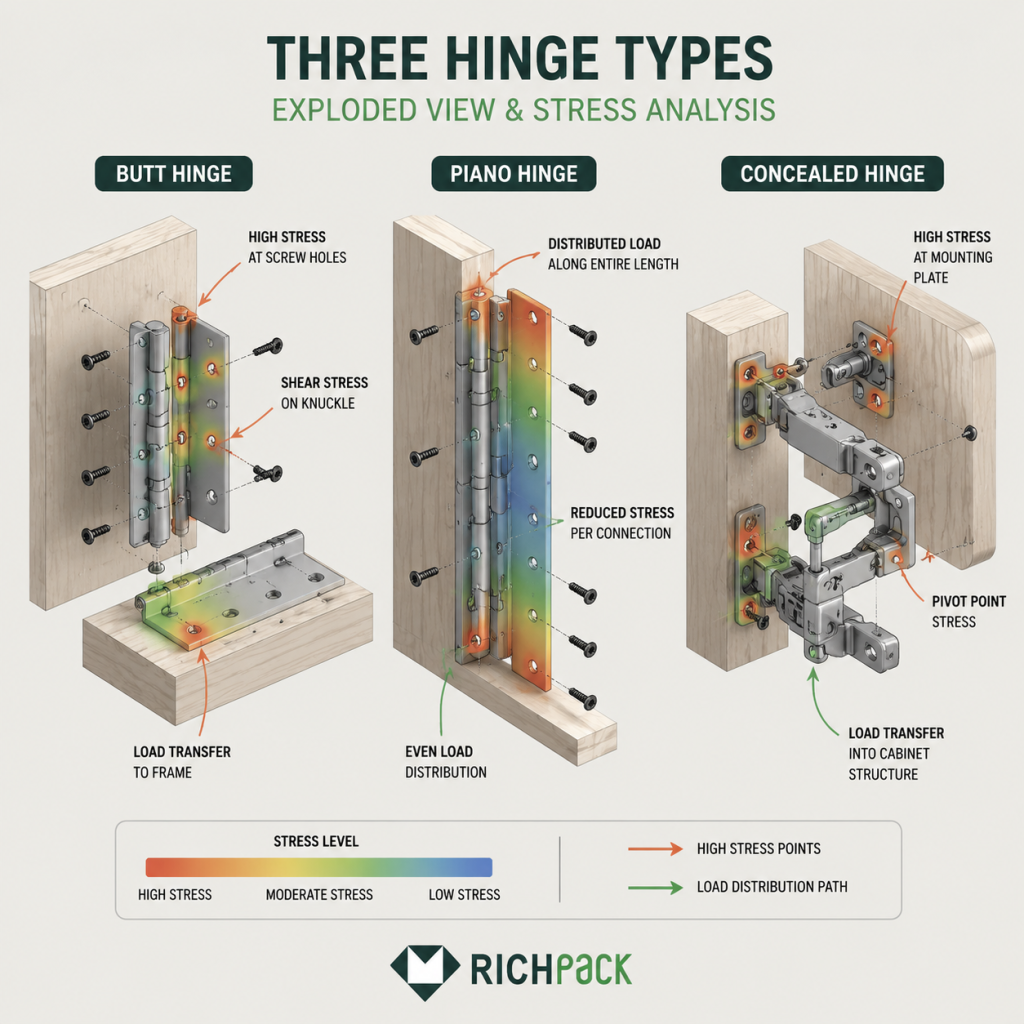
Piano hinges distribute weight evenly across the full seam of a flip-top box. Standard hinges concentrate stress at the center pivot point. Hidden hinges require precise alignment during assembly but provide cleaner exterior lines. Each design serves a different priority — durability, aesthetics, or manufacturing cost.
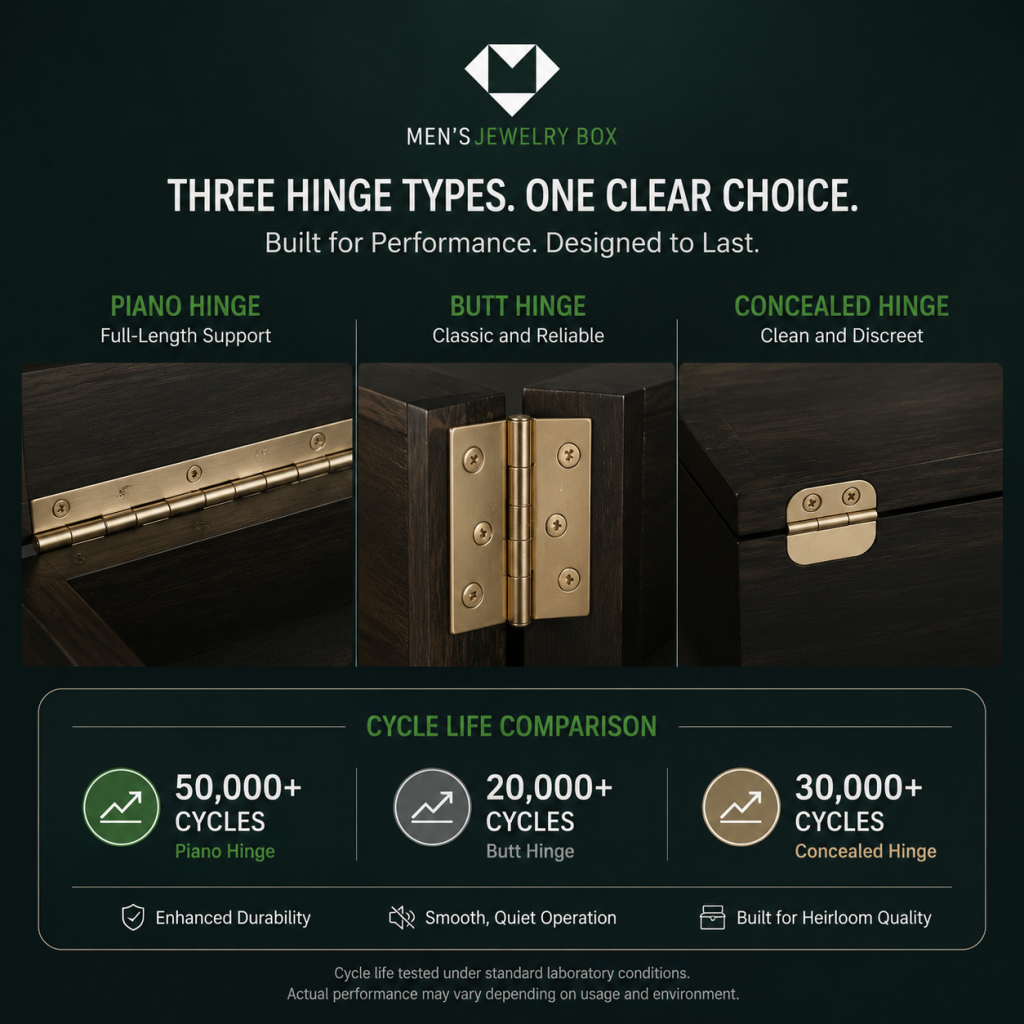
The hinge is the highest-stress mechanical component in a flip-top jewelry box. Every opening cycle stresses the pivot point. Standard butt hinges found in mass-market boxes typically survive 5,000 to 10,000 cycles before developing play.
Industrial-quality hinges use piano hinge construction, running the full width of the lid. These distribute the load across the entire seam rather than concentrating stress at the center. The cycle life extends to 100,000+ cycles with consistent performance.
Hidden hinges (also called concealed hinges) provide a cleaner exterior appearance. They work well in controlled environments but can develop alignment issues if the box undergoes significant temperature or humidity cycling.
For B2B buyers, the hinge specification should appear explicitly in your product requirements. If a supplier can’t provide cycle testing data, that’s a red flag.
Magnetic closures provide one-handed operation and a satisfying tactile snap that consumers associate with quality. Standard closures use 300Gs to 500Gs magnets.
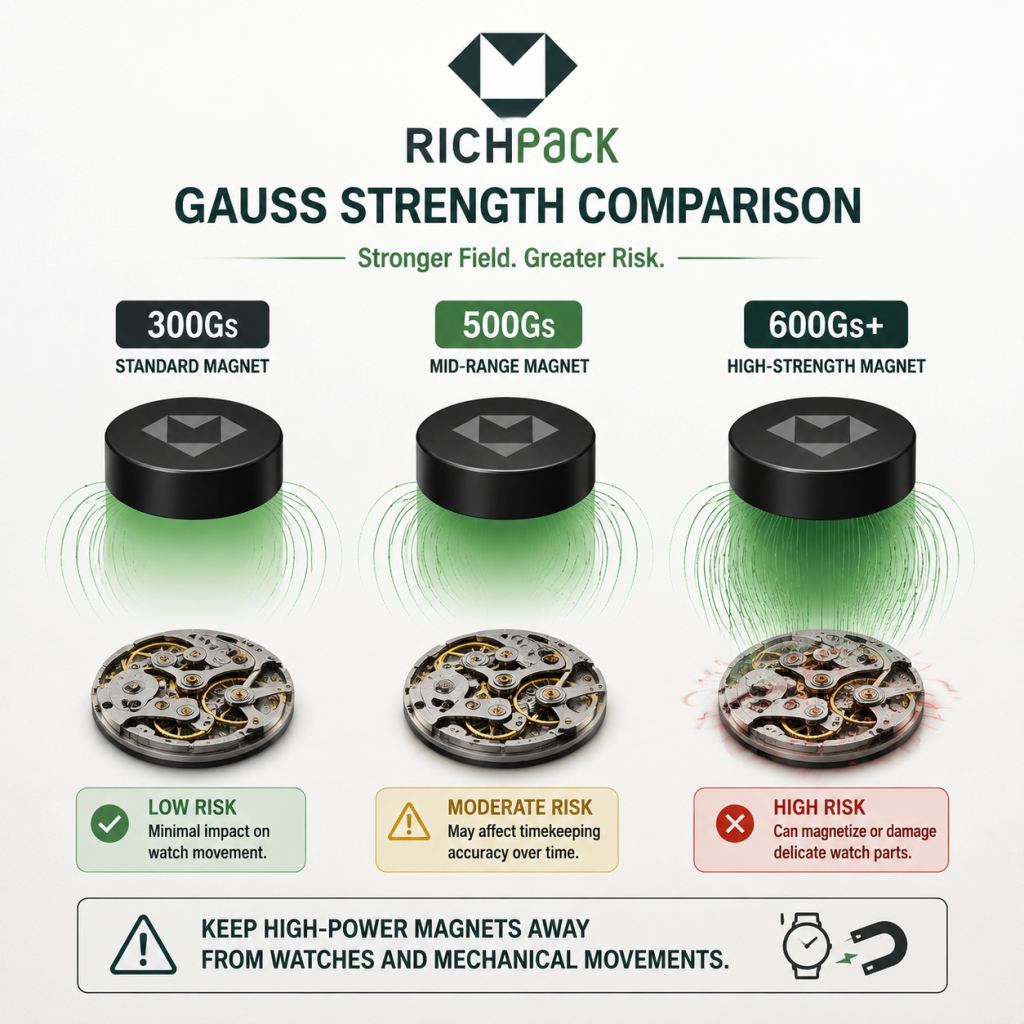
Stronger isn’t always better. Magnets above 600Gs can interfere with the magnetic mechanisms inside mechanical watches. As certified watchmakers frequently note, continuous exposure to magnetic fields above 600Gs can magnetize the hairspring in mechanical movements, causing the watch to gain or lose seconds per day. A watch worn immediately after being stored near a high-strength magnet can be affected even if the magnetization is temporary.
For watch box applications, confirm the magnet grade with the supplier and test against your specific timepiece movements. We’ve seen collector complaints trace directly to magnet strength in otherwise well-made boxes.
Locking mechanisms range from simple friction snap closures to mechanical combination locks and biometric fingerprint locks on ultra-premium pieces.
A friction snap closure provides security equivalent to keeping honest people honest. Anyone determined to access the contents can overcome it in seconds. It prevents accidental opening during handling, though.
Spring-loaded push locks offer better security for a wider range of use cases. They’re simple, durable, and add minimal cost to the unit.
Mechanical combination locks and digital locks serve situations where the jewelry box itself is a security asset: hotel room safes, shared office spaces, or collector storage. These mechanisms add 15 to 80 per unit in material and assembly cost.
Snap fasteners appear in drawer-style jewelry boxes and convertible designs where a lid attaches to a base. The failure mode is metal fatigue at the bending point after repeated openings. Budget stamped snaps fail within 200 cycles. Investment-grade hardware uses thicker-gauge metal that resists fatigue and maintains retention force for 2,000+ cycles.
D-rings and strap hardware serve box designs styled as portable carriers or briefcase-style organizers. These components bear load stress that hinge and closure hardware don’t.
The weight rating of D-ring hardware should exceed the fully-loaded weight of the box by at least 3x. A 3kg loaded box needs hardware rated for 9kg minimum. Omitting load rating creates dangerous underspecification in real-world use.
Corner brackets protect the most vulnerable structural points during shipping and handling. Metal corner pieces in brass or nickel plating add both protection and visual quality cues.
The alternative is internal corner gussets using the same shell material, providing impact resistance without visible hardware. Internal reinforcement is preferred for minimalist designs where external hardware would clash with the aesthetic.
At this point, you have enough information to make an informed decision. Here’s the practical selection framework based on actual buyer profiles we’ve worked with.
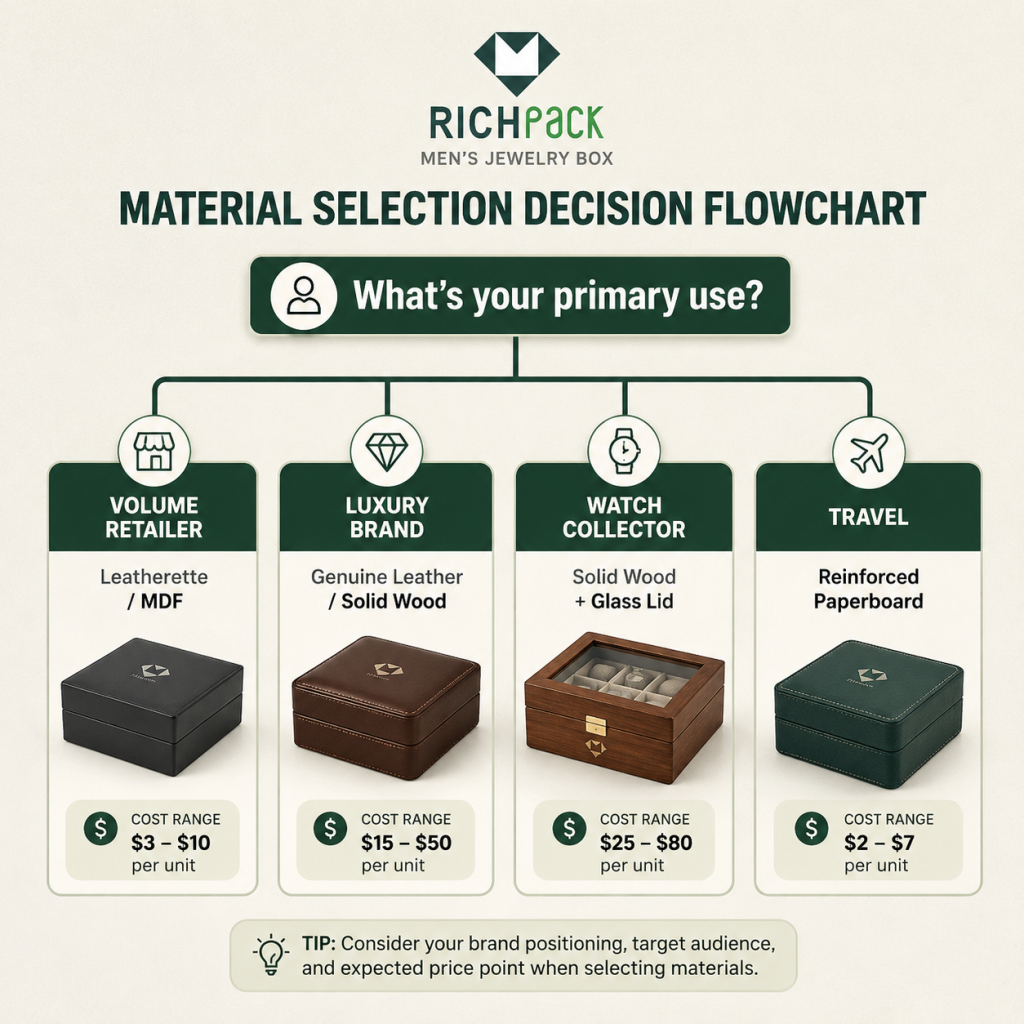
Full-grain leather exterior with suede interior lining, brass hardware, and solid wood frame. The cost per unit is high, but the unboxing experience justifies premium pricing on pieces above $500. If your jewelry sells in luxury department stores or boutique environments, the box is part of the product statement.
When the box itself communicates investment before the jewelry is even visible, the contents are perceived with corresponding gravity.
Leatherette over MDF with standard velvet lining and nickel-plated hardware. The aesthetic is close to genuine leather at 40% to 60% of the material cost. For brands moving high volumes through department stores or multi-brand retailers, this is the practical sweet spot.
The critical variable is leatherette thickness. Specify 0.8mm minimum. Anything thinner compromises the tactile quality that justifies leatherette over plain paperboard.
Solid wood frame with glass-lid display, suede-lined watch pillows, and anti-tarnish compartment dividers. Watch collectors judge boxes by how well they protect their primary asset.
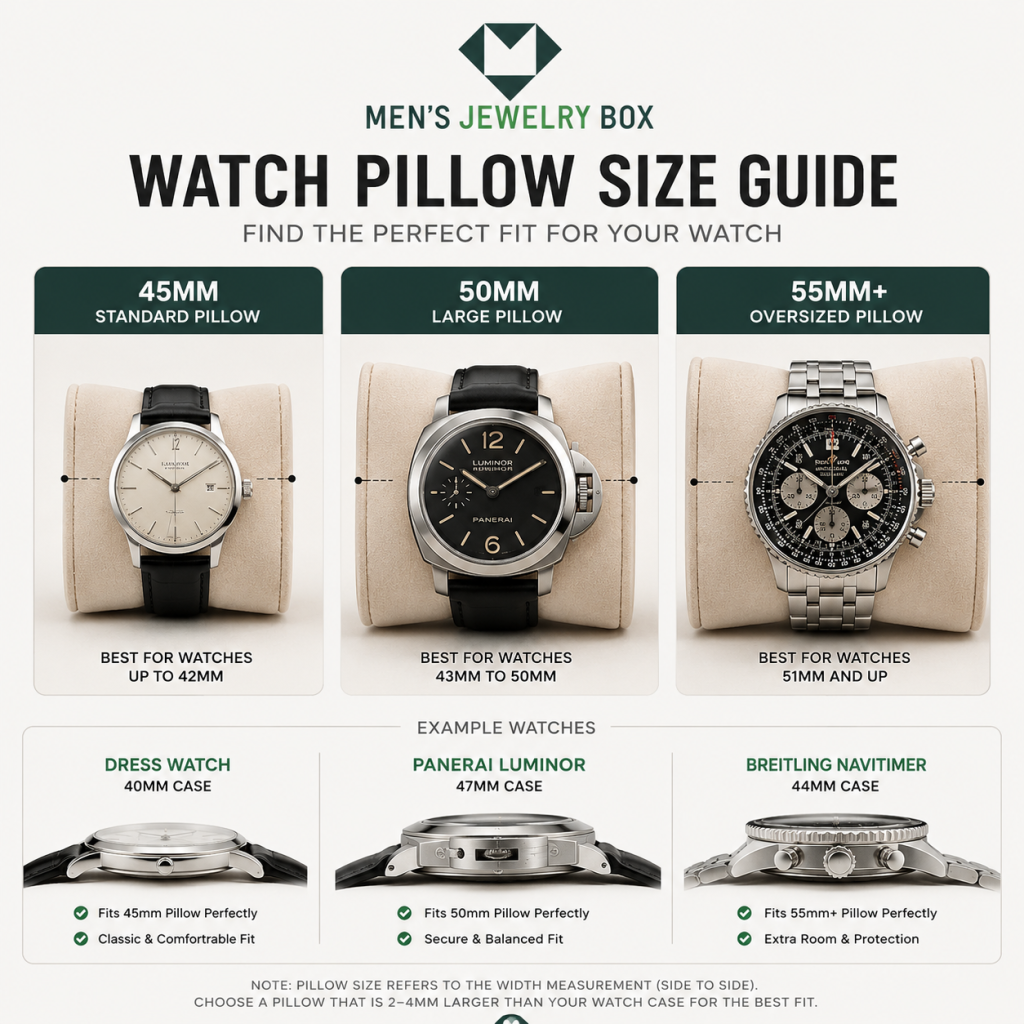
The pillow size matters as much as the material. Standard pillows at 45mm diameter work for dress watches, but squeeze sports watches with oversized cases. We’re talking pieces like a Panerai Luminor (47mm+) or a Breitling Navitimer (44mm+). Specify pillow diameter range in your product requirements. Oversized cushioning for large-diameter timepieces prevents case scratching and bracelet tangling — and that’s what separates a collector-grade watch box from a generic jewelry container.
You can explore our dedicated קופסאות שעונים collection for options that account for these size variations.
Reinforced paperboard with foam-lined compartments and elastic strap retention. Weight is the enemy. Every 500g saved in box weight is 500g available for actual luggage capacity.
Compression-resistant foam inserts maintain shape under travel conditions. Standard foam softens under sustained pressure, leaving watches and chains shifting in unpredictable directions after a long flight.
Leatherette or paperboard with logo printing priority, interior compartment customization for branded inserts or personalized cards, and hardware selection focused on presentation rather than long-term durability. These boxes are opened once or twice and either stored or discarded.
The priority is print quality and logo placement. The box doesn’t need to last 10 years. It needs to look impressive at the moment of gifting.
FSC-certified wood or recycled paperboard exterior, bamboo fiber or organic cotton lining, and biodegradable or recyclable hardware. Sustainability claims require substance. A brand claiming eco-conscious values while packaging in non-recyclable materials creates a perception gap that informed consumers notice.
את העתיד תיעוד קיימות ו eco-choices pages outline the full certification requirements you should be asking for from any supplier.
Below is a practical decision matrix for men’s jewelry box material selection, matching use cases to exterior material, interior lining, hardware tier, and approximate per-unit cost range at 500-unit volume.
| השתמש מקרה | חיצוני | פנים | חומרה | Cost Range (500 Units) |
| מותגי יוקרה | עור מלא | שוודיה | Brass, premium hinges | 12−12−25 per unit |
| Volume Retailers | Leatherette 0.8mm+ over MDF | קטיפה בצפיפות גבוהה | Nickel-plated standard | 4−4−9 per unit |
| אספני שעונים | Solid wood with glass lid | Suede + anti-tarnish zones | Piano hinges, controlled magnets | 15−15−35 per unit |
| טיולים / סגנון חיים | Reinforced paperboard | Compression foam | Light-duty snaps | 2−2−5 per unit |
| מתנות עסקיות | Leatherette or board with print | Light velvet | חומרה פשוטה | 2−2−8 per unit |
| מותגים ברי קיימא | FSC-certified wood or recycled board | Organic cotton or bamboo fiber | Recycled metal hardware | 6−6−18 per unit |
This section contains the procurement details that suppliers won’t volunteer unless you ask specifically. We’re asking.
When working with our פרויקטים מותאמים אישית team, we walk through all of these variables with every buyer — because skipping them is how orders go sideways.
Minimum order quantities vary significantly by material and production method. Understanding these constraints shapes your sourcing timeline.
Solid wood custom boxes typically require 50 to 200 units minimum. The lead time for custom wood cutting alone is 4 to 6 weeks before assembly begins. Short-run wood production is economically inefficient below these volumes.
Leatherette custom boxes can run at 200 to 500 units with acceptable per-unit costs. The tooling for embossing or debossing patterns requires a one-time setup fee of 300 to 800 that amortizes across the order.
Paperboard and cardstock boxes offer the lowest MOQ thresholds. Many suppliers run custom printing at 500 units with no setup fee for orders above 2,000 units. For brand programs testing a new product line, this is the practical entry point.
If you’re starting with a tight budget, our low-MOQ case study documents exactly how we helped a new jewelry brand get to market with a 100-unit first run without compromising on material quality.
A realistic production timeline for a fully custom men’s jewelry box at 1,000 units runs 8 to 14 weeks from design confirmation to ready-to-ship:
The material sourcing phase is where most delays occur. Specialty leathers, specific wood species, and non-standard hardware components all introduce supply chain variability. Building 2 to 3 weeks of buffer into your timeline is standard practice for experienced buyers.
את העתיד שרשרת אספקה אחראית documentation shows how we manage these timelines for international buyers, including our buffer-building protocols.
Four factors drive per-unit cost beyond base material selection:
Hardware grade is the most frequently underestimated cost driver. Industrial-grade hinges alone can add 1.50 to 3.00 per unit compared to budget hardware. The price difference seems small until you multiply it by 5,000 units.
Interior lining complexity multiplies cost faster than the liner material itself. Compartmentalized suede interiors with individual watch pillows require 3x to 5x more assembly labor than a single velvet compartment. The labor content is invisible in the quoted price unless you ask for a line-item breakdown.
Custom finishing processes like multi-color foil stamping and hand-painted edges each add per-unit processing time that compounds across large batches. A box with two foil colors costs more than twice as much to finish as a single-color version.
פחת כלי עבודה spreads one-time setup costs across the order quantity. An order of 500 units pays the tooling in full. An order of 5,000 units amortizes the same tooling, reducing per-unit cost significantly. This is why volume rebates matter — and why suppliers push for larger orders.
For brands selling into the European Union, the UK, California, or any market with established ESG reporting requirements, the certifications that carry actual legal weight differ from those that create marketing value.
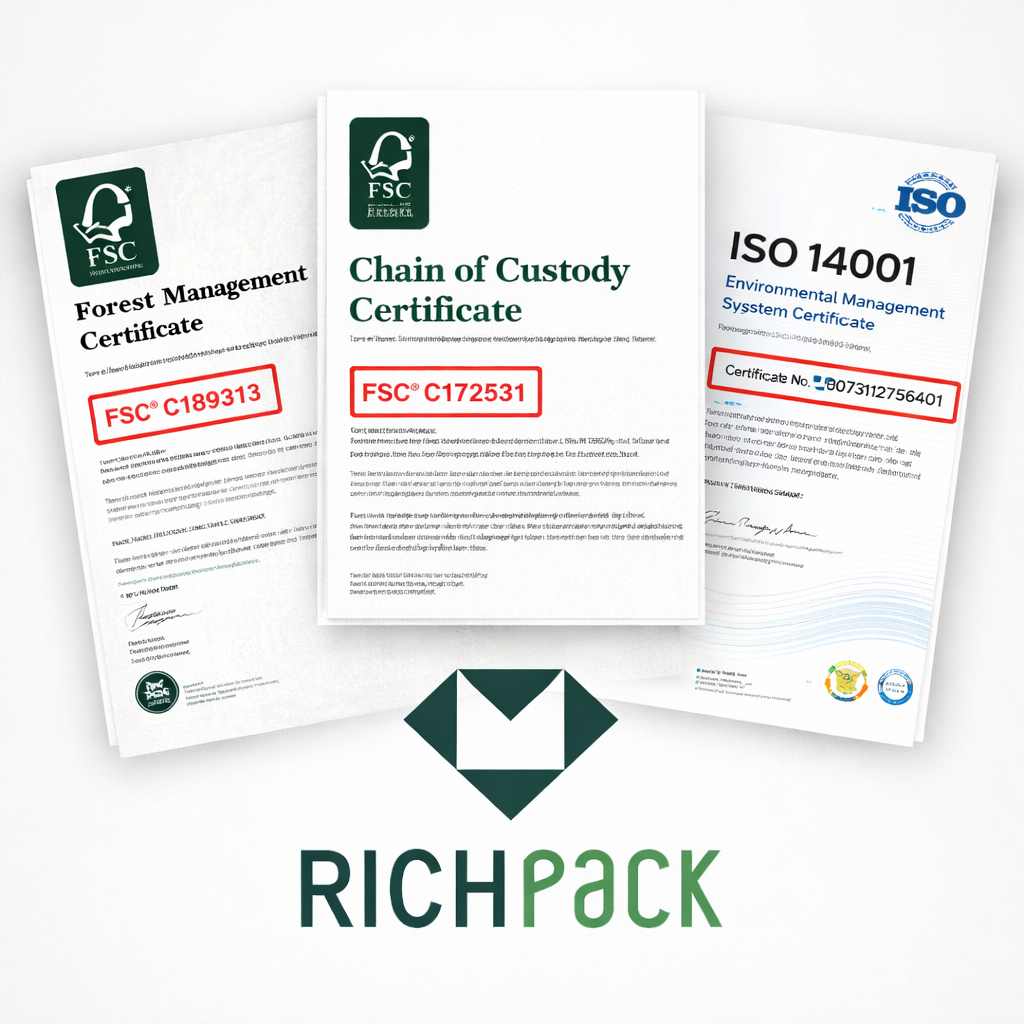
FSC (Forest Stewardship Council) certification proves that wood materials come from responsibly managed forests. The certificate number is traceable through the FSC database at fsc.org.
FSC-COC (Chain of Custody) certification tracks the material from an FSC-certified forest through every manufacturing step to the finished product. Without COC documentation, an FSC claim on a finished box is unverifiable.
ISO 14001 Environmental Management System certification demonstrates that the manufacturing facility itself operates under an environmental management framework. This matters for brands required to report Scope 3 emissions or conduct supplier audits.
את העתיד אישורים page lists all the documentation we provide to buyers — including the actual certificate numbers you can verify yourself.
Always ask for a copy of the actual certificate and verify the certificate number against the issuing organization’s public registry. Digital copies of certificates are easily fabricated.
Before committing to a production run, evaluate physical samples under conditions that simulate actual use.
These four tests take 10 minutes. They reveal more about real-world performance than any specification sheet.
The materials inside a quality men’s jewelry box are chosen for durability, but they still need periodic attention. Here’s what actually works.
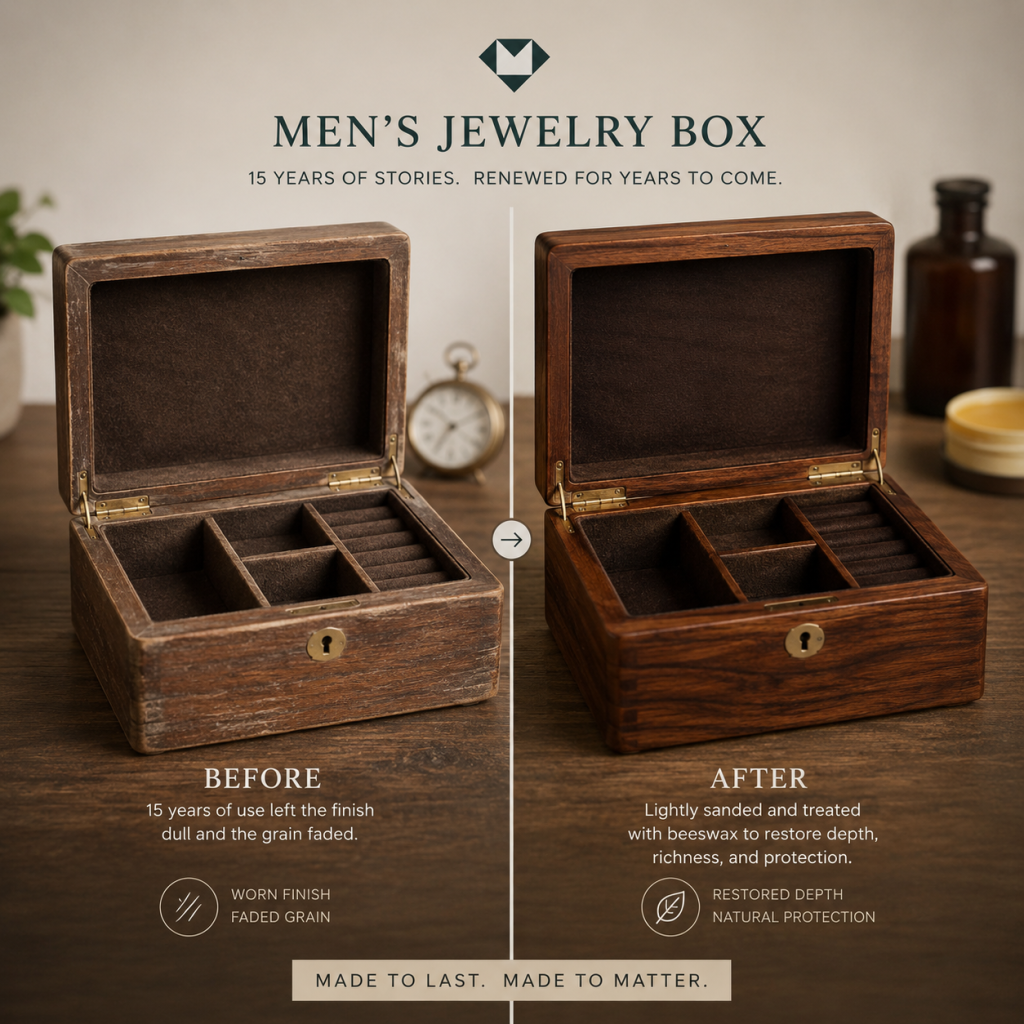
Solid wood responds well to simple maintenance. Wipe the exterior with a slightly damp cloth every few weeks to remove dust and body oils. Apply natural wood oil or beeswax polish every 3 to 6 months.
The enemies of wood are sunlight and humidity fluctuation. Keep wood boxes away from windows where direct UV light will bleach the grain. Avoid bathrooms and kitchens where humidity swings between shower-steamed and dry — this causes wood to expand and contract, which stresses joints over time.
A properly maintained walnut box retains its appearance for decades. We’ve seen walnut boxes in regular use for 15+ years that still look presentable after refinishing.
Genuine leather needs three things: cleaning, conditioning, and protection from drying out.
Clean with a dry or slightly damp cloth. Apply leather conditioner every 6 to 12 months, depending on the climate. In dry climates, leather cracks faster. In humid climates, it may develop mold if stored sealed without ventilation.
Waterproofing spray treatments add a protective layer that repels both moisture and oil from skin contact. Apply annually or after any deep cleaning.
Leatherette doesn’t need conditioning. Clean with a damp cloth and mild soap if needed. The PU coating is vulnerable to solvents, so avoid alcohol-based cleaners.
Velvet and suede linings accumulate dust in corners and around compartment edges. The correct cleaning method is a soft brush used in one direction only. Vacuuming at low suction with a brush attachment works for loose debris.
For stains, a clean eraser or suede brush used gently is safer than any liquid cleaner. Liquid applied to fabric linings creates watermarks that are harder to remove than the original stain.
Stubborn stains in velvet linings respond to steam cleaning in professional restoration, but this requires disassembly of the box interior. For valuable boxes, budget for periodic professional cleaning rather than attempting it yourself.
Metal hinges benefit from a single drop of siloxane-based lubricant applied to the pivot point every 6 to 12 months. This prevents the squeaking that develops as accumulated dirt and dried lubricant create friction in the hinge mechanism.
Lock mechanisms accumulate debris that interferes with the locking action. A can of compressed air blows out the mechanism in seconds. Follow with a dry cloth wipe of exposed metal surfaces to prevent moisture retention.
Corner reinforcement brackets and D-rings should be checked periodically for loosening. Tighten any hardware that shows movement with a precision screwdriver or appropriately sized Allen key. Loose metal hardware damages the surrounding shell material through repeated micromovement.
Solid hardwood frames with quality hardware systems deliver the longest service life. Kiln-dried walnut or maple with piano hinges and nylon bushings regularly exceed 10 years of daily use without structural degradation. The keyword is kiln-dried. Unseasoned wood fails regardless of species.
For luxury positioning and daily-use applications, yes. For display boxes or promotional gifts, no. The patina development, repairability, and tactile quality of genuine leather create differentiation that synthetic alternatives can’t match in the $150+ price segment. Below that threshold, the material advantage disappears in the overall product experience.
Suede or high-density microfiber suede with sized watch pillows provides the best combination of scratch protection and movement security. Anti-tarnish zones beneath watch compartments add protection for metal bracelets. Avoid low-density velvet for watches, as it compresses under bracelet weight and loses supportive shape within months.
Yes. FSC-certified solid wood, recycled paperboard, bamboo fiber composites, and organic cotton linings are all commercially available at competitive costs. The certification requirement must be specified upfront, as it affects both material sourcing and supply chain documentation.
Material samples alone (without custom dimensions or branding) take 5 to 10 business days from most suppliers. Full custom samples with logo printing and dimension confirmation typically run 3 to 5 weeks. Build these sample timelines into your product development schedule before confirming production dates.
Consider the recipient’s lifestyle. A frequent traveler needs a lightweight option. A home-based collector values the weight and presence of wood. If you don’t know the recipient well, wood communicates universally, and metal communicates specifically.
A men’s jewelry box is a layered material system, not a single product. The exterior shell, interior lining, structural frame, hardware, and surface finishing each contribute to how well it protects your valuables and how long it lasts.
For B2B buyers in jewelry packaging, the material selection decision should start with the jewelry type you’re protecting — not the budget ceiling you’re working within. A 200-piece watch deserves the same protection logic as a 5,000 piece. The difference is that expensive jewelry makes the protection logic obvious, while mid-tier pieces often get packaged below their actual value.
Solid wood with suede lining and quality hardware delivers across the widest range of requirements. It ages well, protects effectively, and communicates brand investment through tactile quality.
Need a custom jewelry box for your men’s collection? דבר עם הצוות שלנו about material options and sampling timelines.


2025-02-08

2024-12-06
2024-12-11
אריזת תכשיטים היא מרכיב מרכזי בבניית הזהות וחוויית הלקוח של המותג שלך.
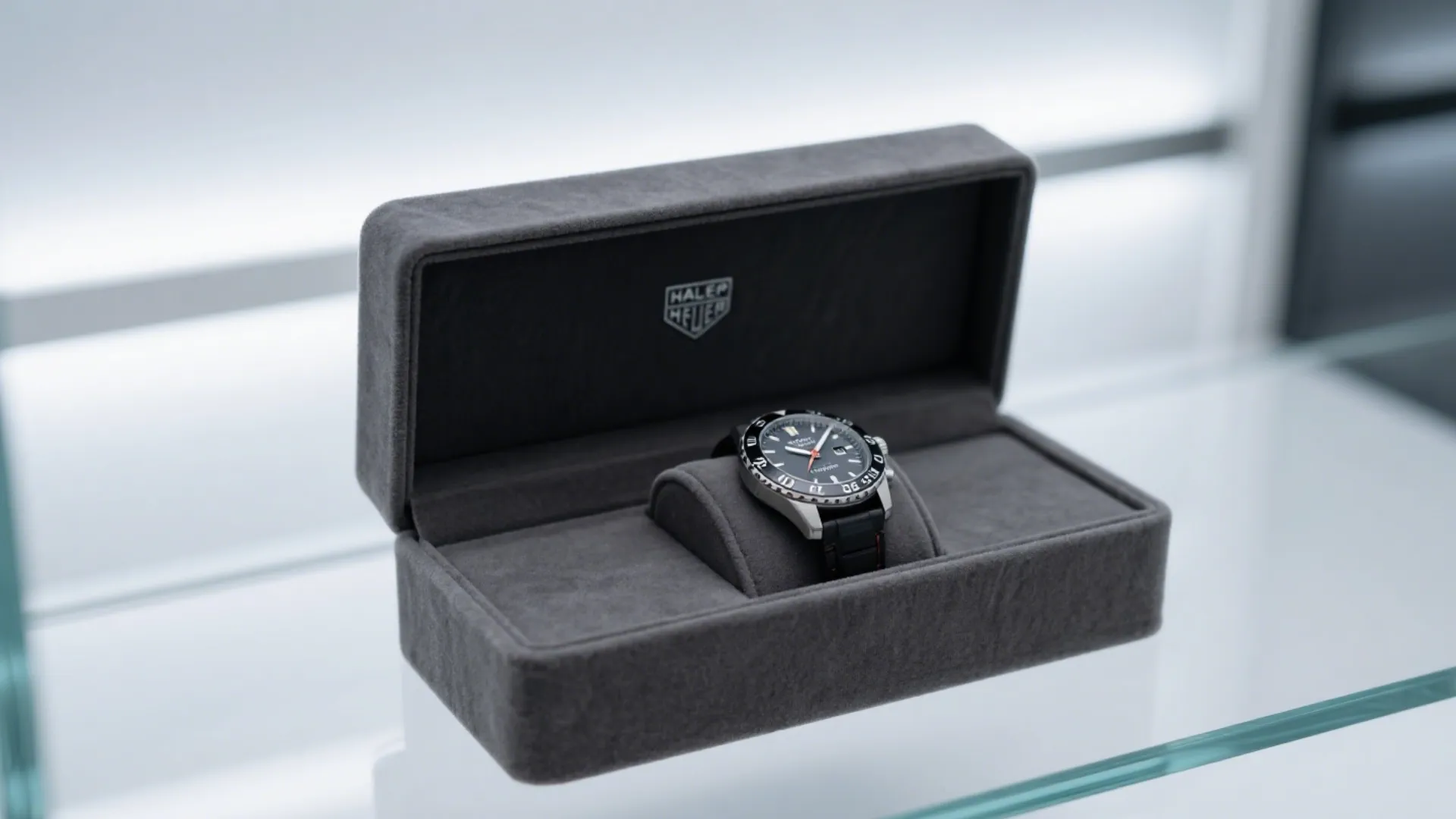
איסוף שעוני יוקרה אינו רק עניין של בעלות עליהם. מדובר באופן שבו אתם מציגים אותם. תצוגה לשעונים הופכת את הרולקס, האומגה או הטאג הויר שלכם לפריט מרכזי מדהים. בין אם זה על שולחנכם או על המדף, תצוגת השעונים היוקרתית הנכונה משלבת יופי עם הגנה. לכל תצוגת שעונים יש שתי משימות: להשוויץ ביופיו של השעון ו... המשך קריאה ממה עשויה קופסת תכשיטים לגברים?
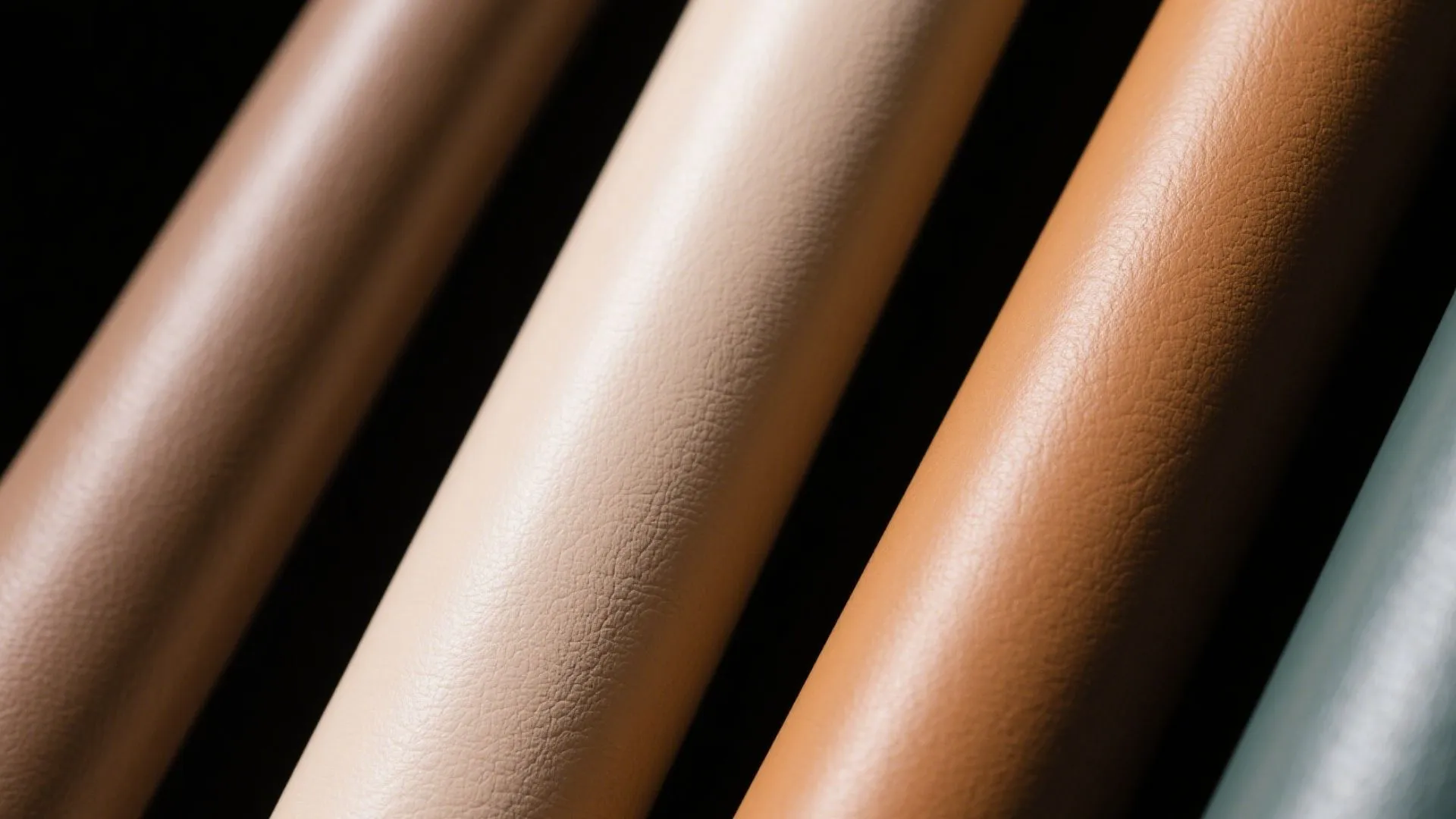
למדו כיצד ריצ'פק מאזנת יוקרה ואתיקה עם פתרונות בהתאמה אישית, החל מאפשרויות דמויי עור ידידותיות לסביבה ועד עור אמיתי יוקרתי. גלו איזה חומר מתאים לצורכי אריזת התכשיטים שלכם - עמידות, סגנון או קיימות - תוך יצירת רושם מתמשך.