

 قبلی
قبلی
10 بهترین راه حل نمایش جواهرات برای موفقیت در خرده فروشی
2024-11-04
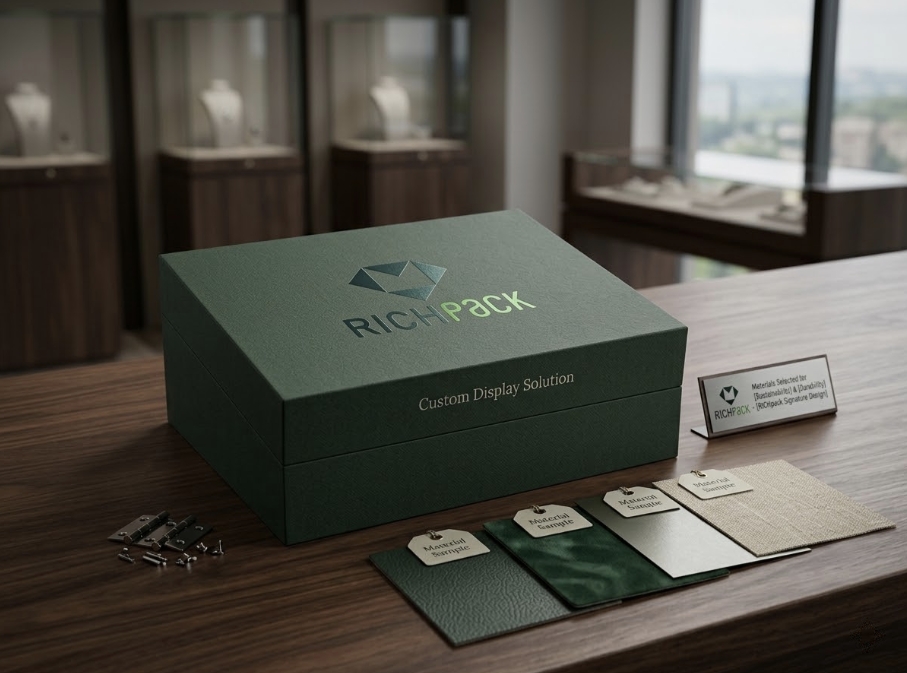



انتخاب جنس مناسب برای جعبههای بستهبندی نمایشی تا زمانی که نمونه خم نشود، چاپ لوگو کدر نشود، یا سینی خردهفروشی با گوشههای لهشده به دستتان نرسد، ساده به نظر میرسد.
من شاهد این اتفاق بودهام که برندها به جای انتخاب بر اساس جنس، تخته را بر اساس حس انتخاب میکنند. ضخیمترین تخته همیشه هوشمندانهترین تخته نیست. تخته مناسب از محصول محافظت میکند، در قفسهها به خوبی فروخته میشود، چاپ تمیزی دارد، از ادعاهای پایداری شما پشتیبانی میکند و کل هزینه خرید را تحت کنترل نگه میدارد.
برای اکثر محصولات خرده فروشی و جواهرات سبک وزن زیر ۱ پوند، مقوا یا نئوپان با کیفیت بالا بهترین نقطه شروع است. برای محصولات سنگین تر، سینی های آماده برای قفسه و ویترین های حمل و نقل، مقوای موجدار ایمن تر است. برای عرضه جواهرات درجه یک، جنس سخت می تواند هزینه بالاتر را توجیه کند زیرا جعبه به بخشی از تجربه محصول تبدیل می شود.
این راهنما یک چارچوب عملی برای تصمیمگیری در مورد مواد، وزن محصول، ضخامت مقوا، تنظیمات خردهفروشی، پرداخت چاپ، اثبات پایداری و هزینه به شما ارائه میدهد.
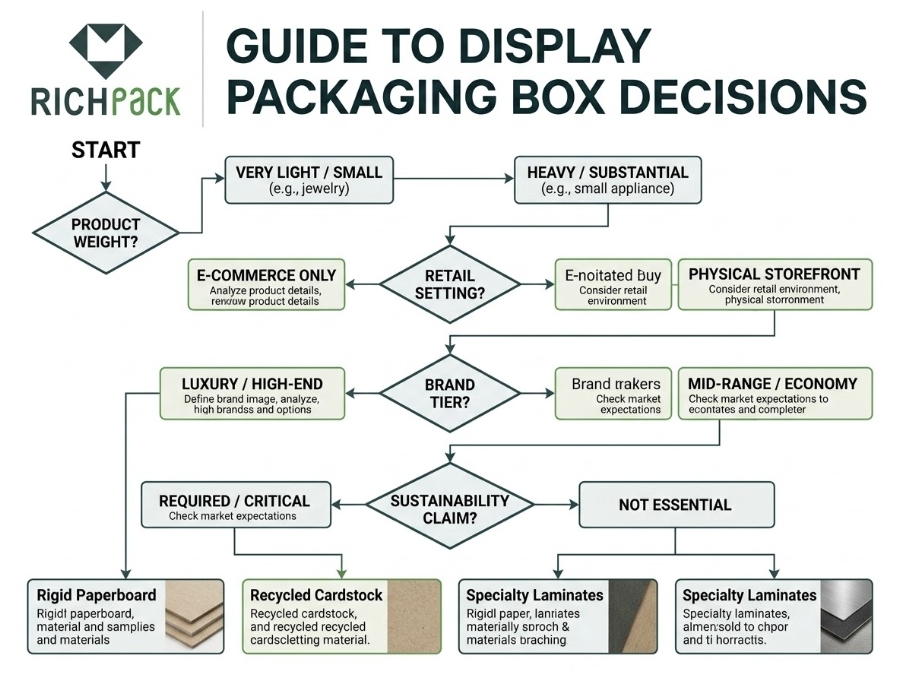
بهترین جنس به نوع جعبه بستگی دارد. یک ویترین برای گوشوارهها به ساختاری مشابه یک سینی آماده برای قفسه برای محصولات سنگینتر نیاز ندارد.
| بهترین مواد | محدوده مشخصات مشترک | از آن استفاده کنید برای | از آن اجتناب کنید وقتی که |
| مقوا | ۱۶ تا ۲۴ پوینت، حدود ۳۵۰ تا ۵۰۰ گرم در متر مربع | محصولات خرده فروشی سبک، چاپ تمیز، نمایش جواهرات کوچک زیر ۱ پوند | محصول سنگین است یا بدون کارتن بیرونی ارسال میشود |
| تخته موجدار | فلوت E حدود ۱.۵ تا ۲ میلیمتر، فلوت B حدود ۳ میلیمتر | سینیهای آماده برای قفسه، بستههای چند قلمی، نمایشگرهای حمل و نقل | این برند به یک ظاهر لوکس و ظریف نیاز دارد |
| سهام سفت و سخت | تخته خاکستری ۱.۵ تا ۳ میلیمتر، اغلب ۸۰۰ تا ۲۰۰۰ گرم در متر مربع | جواهرات درجه یک، هدایای رونمایی، ویترینهای با ارزش بالا | انبار مسطح و هزینه پایین واحد بیشترین اهمیت را دارند |
| تخته کرافت | اغلب ۲۵۰ تا ۴۵۰ گرم در متر مربع برای نمایشگرهای تاشو | برندسازی طبیعی و داستانهای پایداری تأیید شده | دقت رنگ روشن بسیار مهم است |
| تخته خرده چوب | اغلب برای کارتنهای تاشو و ویترینها، ضخامت ۱۸ تا ۲۸ پاوند | پایان بهتر با هزینه کنترلشده | صفحه نمایش نیاز به تحمل بار سنگین دارد |
مقوا برای گوشواره، انگشتر، آویز، نمونه، لوازم آرایشی کوچک و محصولات هدیه کوچک به خوبی عمل میکند. در بسیاری از پروژههای نمایشگاهی خردهفروشی، مقوای ۱۶ تا ۲۴ پاوندی زمانی که وزن نمایش بارگذاری شده کمتر از حدود ۱ پوند باشد و داخل یک کارتن اصلی حمل شود، کافی است.
این به شما یک سطح صاف برای لوگوها، متنهای کوچک، کدهای QR و آثار هنری پر رنگ میدهد. به همین دلیل است که من معمولاً وقتی محصول سبک است از اینجا شروع میکنم و ماندگاری آن در قفسه به کیفیت چاپ بستگی دارد.
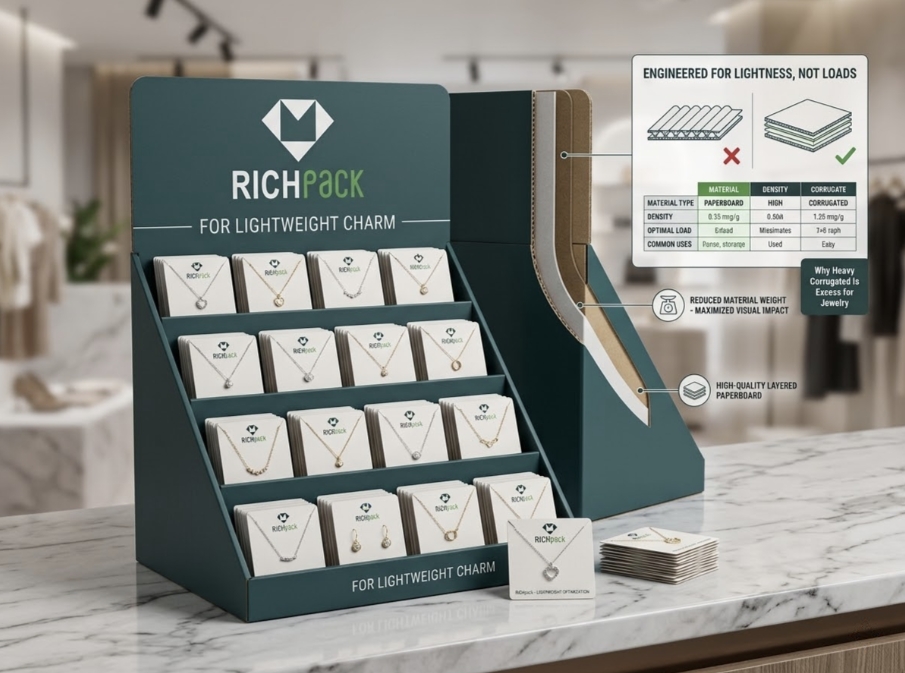
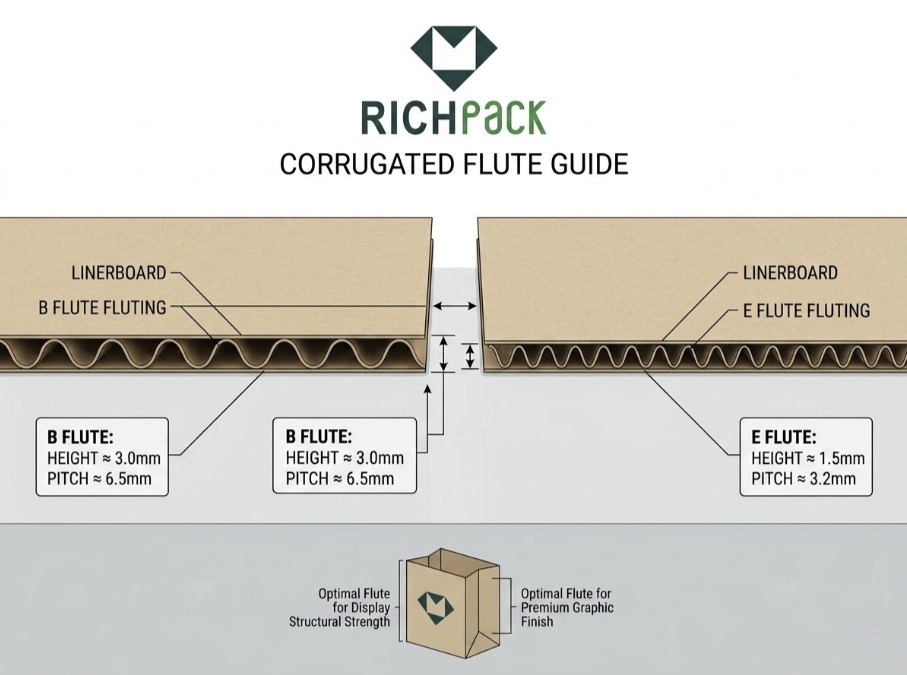
مقوای موجدار دارای یک لایه میانی شیاردار بین دو ورق آستر است. این ساختار باعث میشود که مقاومت فشاری بهتری نسبت به مقوای صاف داشته باشد.
برای ویترینهای خردهفروشی، معمولاً از فلوت E زمانی استفاده میشود که برندها سطح چاپی تمیزتری میخواهند، در حالی که فلوت B زمانی استفاده میشود که استحکام روی هم قرار گرفتن کاغذ اهمیت بیشتری دارد. به عنوان یک راهنمای کلی، فلوت E حدود ۱.۵ تا ۲ میلیمتر و فلوت B حدود ۳ میلیمتر ضخامت دارد.
از جعبههای بستهبندی ویترینی موجدار برای محصولات سنگینتر، مجموعههای چند قلم کالا، ویترینهای فروشگاههای زنجیرهای و بستهبندیهای آماده برای قفسه که قبل از ویترین شدن به فروشگاهها ارسال میشوند، استفاده کنید.
جنس سخت به جعبه وزن، شکل و جلوه بیشتری میدهد. این ویژگی آن را برای جواهرات لوکس، ستهای ساعت، عرضههای محدود و نمایش هدایای ارزشمند مناسب میکند.
بیشتر جعبههای جواهرات سفت و سخت مرغوب از مقوای خاکستری در محدوده ۱.۵ تا ۳ میلیمتر استفاده میکنند. برای بسیاری از پروژههای نمایش لوکس، ۱۲۰۰ تا ۱۵۰۰ گرم در متر مربع، حد وسط کاربردی است زیرا بدون اینکه بیش از حد بزرگ شود، محکم به نظر میرسد.
هزینه بیشتری دارد و فضای ذخیرهسازی بیشتری را اشغال میکند، اما وقتی قیمت محصول از انتخاب پشتیبانی کند، میتواند ارزش درکشده را افزایش دهد.
مقوای کرافت به بستهبندی ظاهری طبیعی و خاکی میدهد. این مقوا با برندهای اکولوکس، دستساز، ارگانیک و مینیمالیستی سازگار است.
برای جعبههای تاشوی نمایشی، مقوای کرافت اغلب حدود ۲۵۰ تا ۴۵۰ گرم در متر مربع وزن دارد. عدد مناسب به اندازه جعبه، مساحت برش، بار محصول و اینکه آیا قطعهی داخلی بخشی از وزن را تحمل میکند یا خیر، بستگی دارد.
کرافت را فقط به خاطر ظاهر پایدارش انتخاب نکنید. هرگونه ادعایی را با جزئیات منبع، اطلاعات محتوای بازیافتی یا گواهینامههایی مانند FSC (در صورت وجود) اثبات کنید.
نئوپان اغلب برای کارتنهای تاشو و جعبههای نمایشی که به سطح چاپی تمیز و بدون هزینه کامل بستهبندی سفت و سخت نیاز دارند، استفاده میشود.
برای جعبههای بستهبندی نمایشگاهی، نئوپان اغلب حدود ۱۸ تا ۲۸ پوینت میشود، زمانی که هدف، ایجاد حس تیزتر و واضحتر در خردهفروشی بدون تبدیل شدن به ساختاری کاملاً سفت و سخت است.
زمانی از آن استفاده کنید که محصول خیلی سنگین نیست و نمایشگر باید ظاهری کاملتر از یک تخته نازک معمولی داشته باشد.
هیچ برندهی جهانی وجود ندارد. پاسخ درست از شش بررسی حاصل میشود: وزن، موقعیت قفسه، ردهی برند، چاپ نهایی، اثبات پایداری و ریسک لجستیک.
اگر یک ماده در هر یک از این بررسیها مردود شود، بهترین ماده برای جعبه نمایش شما نیست.
جعبههای بستهبندی نمایشی خوب، دو کار را همزمان انجام میدهند. آنها محصول را ایمن نگه میدارند و باعث میشوند که محصول راحتتر دیده، درک و خریداری شود.
با وزن محصول شروع کنید. لوازم جانبی جواهرات سبک وزن میتوانند از مقوا یا نئوپان استفاده کنند، در حالی که بستههای سنگینتر محصولات به مقوای موجدار یا سازههای تقویتشده نیاز دارند.
جعبهای که روی قفسه خم میشود به اعتماد آسیب میرساند. جعبهای که هنگام پر کردن مجدد انبار فرو میریزد، هزینهای بیش از صرفهجویی در مواد اولیه دارد.
یک ویترین روی پیشخوان نیاز به دسترسی سریع و برندسازی قوی در نمای جلویی دارد. یک سینی آماده برای قفسه بندی نیاز به استحکام برای حمل و نقل، باز کردن و برداشتن مکرر محصول دارد.
ویترین مغازه در کف زمین به ساختار بیشتری نیاز دارد زیرا خریداران و کارکنان بیشتر اوقات آن را لمس میکنند.
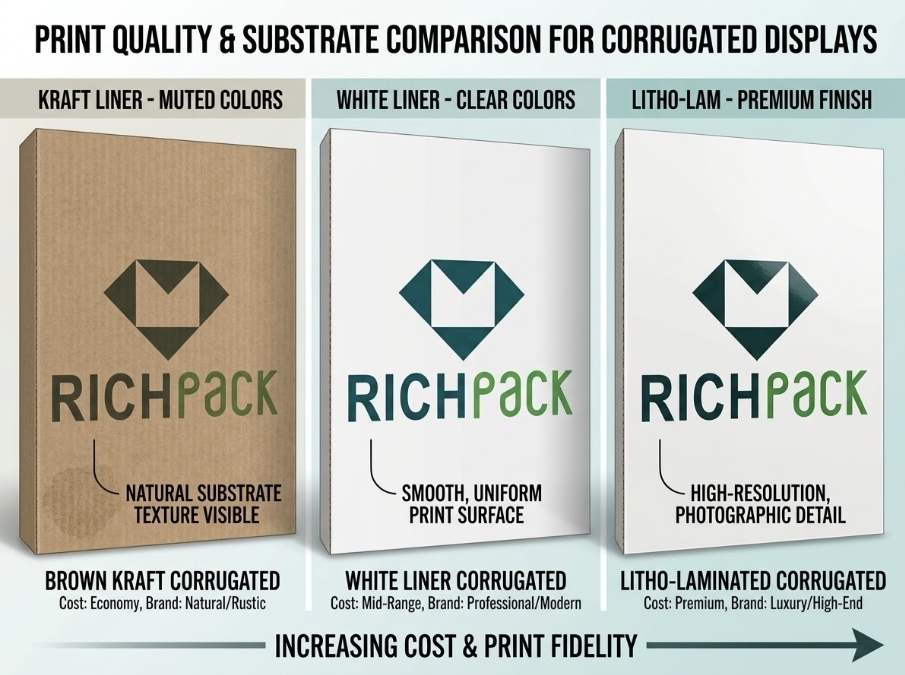
جنس مواد، نتایج چاپ را تغییر میدهد. مقوای روکشدار سفید، رنگهای تمیزتری ایجاد میکند، در حالی که کرافت میتواند تُنهای روشن را خنثی کند.
سطوح موجدار ممکن است بافت را نشان دهند، مگر اینکه از آستر سفید، آستر روکشدار یا برچسب چاپشده استفاده کنید. اگر برند شما دقیقاً به یک رنگ پنتون متکی است، قبل از تأیید، چاپ را آزمایش کنید.
جعبههای نمایش ممکن است به صورت صاف ارسال شوند، مونتاژ شوند، به فروشگاهها منتقل شوند، در انبار بمانند و سپس روزانه مورد استفاده قرار گیرند.
مقوای موجدار زمانی که جعبه باید در حمل و نقل و نمایش در خردهفروشی دوام بیاورد، ایمنتر است. مقوا زمانی بهترین عملکرد را دارد که یک کارتن بیرونی از نمایش محافظت کند.
بستهبندی پایدار یک ادعای ساده نیست. قابل بازیافت، بازیافتپذیر، تجدیدپذیر و دارای گواهینامه FSC معانی متفاوتی دارند.
شورای نظارت بر جنگلها توضیح میدهد که کاغذ و بستهبندی، محصولات مبتنی بر جنگل هستند و گواهینامه زنجیره نگهداری به اثبات تأمین مسئولانه از طریق زنجیره تأمین کمک میکند.
مواد را فقط بر اساس قیمت واحد قضاوت نکنید. یک تخته ارزانتر میتواند در صورت افزایش آسیب، مرجوعی، ضایعات انبارداری، زمان مونتاژ یا عدم پذیرش در خردهفروشی، هزینهها را افزایش دهد.
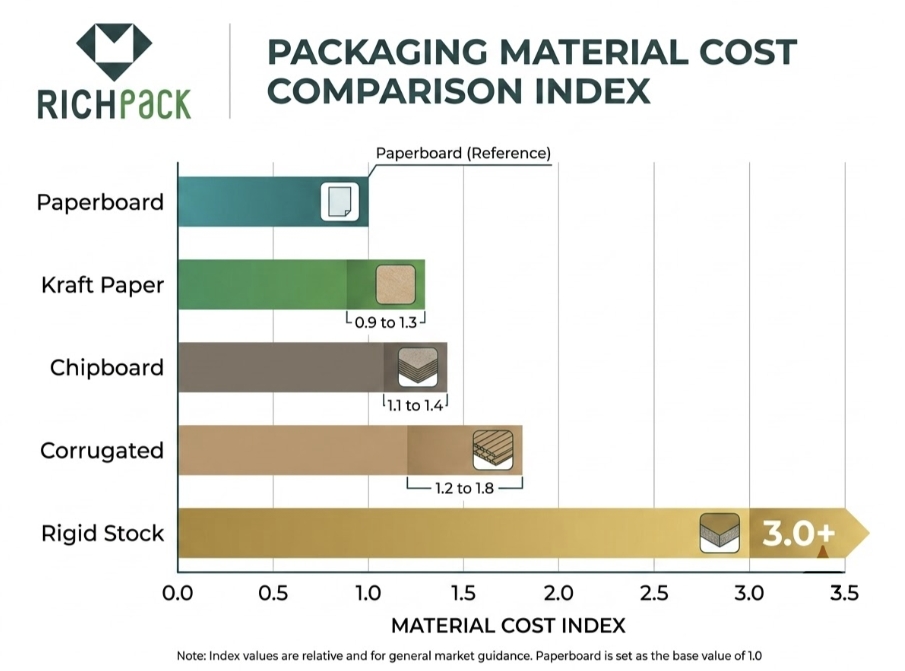
یک میانبر مفید برای نقل قول، شاخص هزینه نسبی است. اگر مقوا ۱.۰ باشد، نئوپان اغلب حدود ۱.۱ تا ۱.۴، موجدار حدود ۱.۲ تا ۱.۸، کرافت حدود ۰.۹ تا ۱.۳ و مواد خام سخت معمولاً از ۳.۰ یا بالاتر شروع میشود، بسته به نوع کاغذ بستهبندی، درجها، درب مغناطیسی و پرداخت.
کل هزینه تحویل شامل مواد، چاپ، پرداختها، درجها، نیروی کار، حجم حمل و نقل، نقصها و از دست دادن محصول میشود.
پنجرههای برشخورده، جداکنندهها، درجها، دهانههای توزیعکننده و ساختارهای تخت تاشو، همگی بر انتخاب مواد تأثیر میگذارند.
یک طراحی قوی میتواند باعث شود یک ماده سبکتر بهتر کار کند. یک طراحی ضعیف میتواند حتی یک تخته ضخیم را هم از کار بیندازد.
مقوا اغلب بهترین جنس برای برندهایی است که به چاپ تمیز، ساختار انعطافپذیر و هزینه معقول نیاز دارند.
مقوا یک ماده ضخیم و کاغذی است که معمولاً بیش از 0.3 میلیمتر ضخامت دارد. برندهای خردهفروشی برای آن ارزش قائلند زیرا به راحتی تا میشود، به راحتی چاپ میشود و محصولات سبک را بدون اینکه صفحه نمایش حجیم به نظر برسد، قابل مشاهده نگه میدارد.
مقوا برای کارتنهای تاشو، جعبههای خردهفروشی و بسیاری از جعبههای بستهبندی نمایشی با چاپ سفارشی استفاده میشود. این مقوا از مقوای موجدار صافتر است و چاپ جزئیات ظریف روی آن آسانتر است.
در نقل قولهای بستهبندی کاربردی، اغلب مقواهایی با ضخامتهای ۱۶، ۱۸، ۲۰، ۲۲ یا ۲۴ را مشاهده خواهید کرد. انتهای ضخیمتر برای ویترینهای بزرگتر مناسبتر است، در حالی که انتهای سبکتر برای کارتهای جواهرات کوچک و جعبههای نمونه مناسب است.
مقوا برای گوشواره، انگشتر، آویز، لوازم آرایشی کوچک، نمونههای عطر، کارت هدیه و لوازم جانبی سبک بهترین گزینه است.
یک قانون خوب ساده است: اگر وزن یک نمایشگر پر شده کمتر از حدود ۱ پوند باقی بماند و در حین حمل و نقل توسط یک کارتن بیرونی محافظت شود، معمولاً ارزش دارد که ابتدا مقوا را آزمایش کنید.
برای برندهای جواهرات، مقوا میتواند برای نمایشهای فصلی، کیتهای معرفی محصولات و ویترین بوتیکها به خوبی عمل کند.
مقوا به لوگوها، ادعاهای محصول، کدهای QR و تایپوگرافیهای کوچک سطحی تیز میدهد. همچنین با لمینت مات، روکش براق، مهر فویل، برجستهسازی و UV موضعی به خوبی کار میکند.
وقتی دقت رنگ برند مهم است، از مقوای روکشدار استفاده کنید.
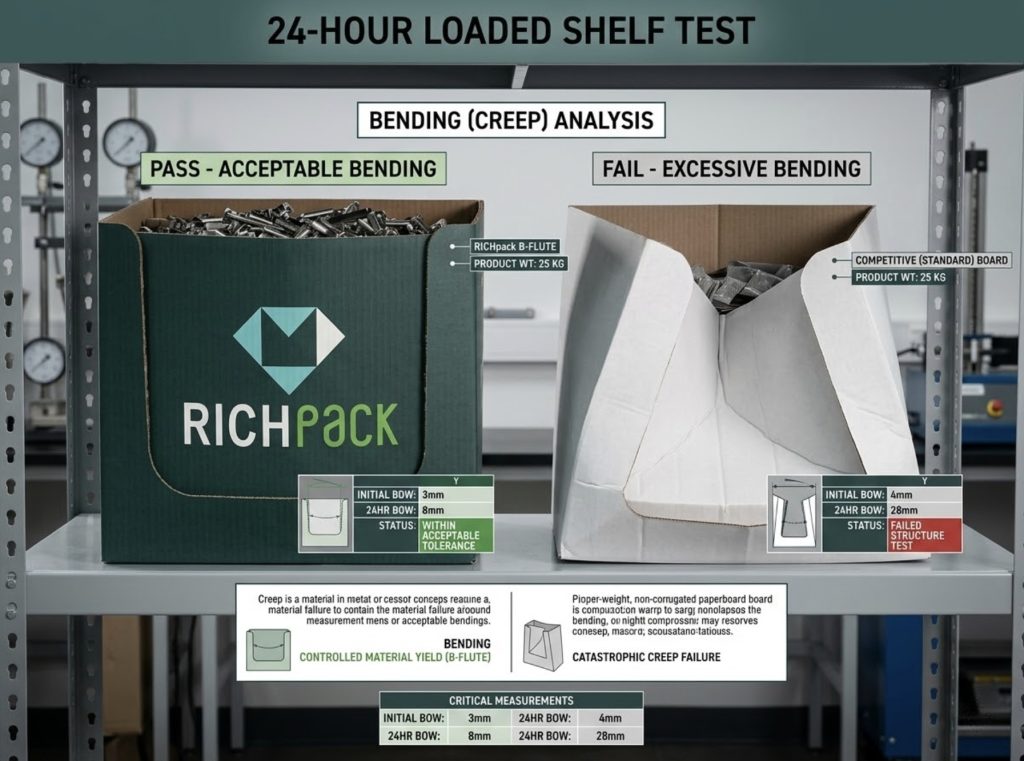
مقوا میتواند زیر وزن زیاد خم شود. همچنین اگر نمایشگر در معرض رطوبت، حمل و نقل خشن یا جابجایی روزانه سنگین قرار گیرد، میتواند ضعیف شود.
اگر نمایشگر مسافتهای طولانی را طی میکند، از یک حامل بیرونی، درج قویتر یا تخته ضخیمتر استفاده کنید. اگر نمونه پس از ۲۴ ساعت با بارگذاری محصول شروع به خم شدن کرد، تخته خیلی سبک است یا سازه نیاز به تقویت دارد.
روکش مات حس آرامش و کیفیت بالایی دارد. روکش براق، روشنایی و جلوه خاصی به قفسه میبخشد.
مهر زنی فویل برای لوگوهای جواهرات به خوبی کار می کند، در حالی که UV موضعی می تواند نام محصولات یا عناصر کلیدی طراحی را برجسته کند.
وقتی به یک نمایشگر سبک با کیفیت چاپ قوی و هزینه کنترلشده نیاز دارید، مقوا را انتخاب کنید.
برای جواهرات با ارزش بالاتر، مقوا را با یک قطعهی داخلی مناسب جفت کنید یا آن را به نئوپان یا مقوای سخت ارتقا دهید.
مقوای موجدار زمانی انتخاب ایمنتری است که استحکام، حملونقل و کارایی خردهفروشی بیش از یک روکش لوکس و صاف اهمیت داشته باشد.
مقوای موجدار از یک لایه شیاردار بین ورقهای آستر استفاده میکند. این شیارها فضای هوا و ساختار ایجاد میکنند که به جعبه کمک میکند تا در برابر فشار مقاومت کند.
در بستهبندیهای نمایشی، انتخاب فلوت اهمیت دارد. فلوت، حدود ۱.۵ تا ۲ میلیمتر، ظاهری ظریفتر ایجاد میکند. فلوت B، حدود ۳ میلیمتر، استحکام بیشتری برای سینیها و بستههای سنگینتر ایجاد میکند. فلوت C معمولاً حجیمتر است و در کارتنهای حمل و نقل رایجتر از ویترینهای خردهفروشی ظریف است.
از مقوای موجدار برای ستهای هدیه سنگینتر، بستههای تبلیغاتی، ویترینهای انبار و محصولاتی که با همان ساختار مورد استفاده برای ویترین ارسال میشوند، استفاده کنید.
فلوت B ضخیمتر است و استحکام بیشتری میدهد. فلوت نازکتر است و ظاهری تمیزتر برای چاپ خردهفروشی ایجاد میکند.
برای بسیاری از جعبههای نمایش خردهفروشی، فلوت E نسبت به انواع حجیمتر، تعادل بهتری بین ساختار و ظاهر برقرار میکند.
بستهبندی آماده برای قفسه، جابجایی را برای خردهفروشان کاهش میدهد. این ویترین میتواند به عنوان یک قاب محافظ ارسال شود، سپس به یک سینی یا ویترین روباز تبدیل شود.
این باعث صرفهجویی در نیروی کار میشود و به محصولات کمک میکند تا در شرایط بهتری به قفسه برسند.
مقوای موجدار را میتوان به خوبی چاپ کرد، اما به سطح مناسبی نیاز دارد. مقوای موجدار کرافت قهوهای ظاهری طبیعی دارد، اما میتواند رنگهای روشن را کدر کند.
چاپ آستر سفید یا چاپ لیتومتری، زمانی که طراحی بستهبندی جعبه نمایش شما به آثار هنری دقیق بستگی دارد، جلوهای تمیزتر به آن میدهد.
ممکن است برای جواهرات لوکس کوچک، مقوای موجدار خیلی ضخیم یا ناهموار به نظر برسد. از آن برای سینی بیرونی یا قفسهای استفاده کنید، سپس برای نمایش جواهرات از مقوا، نئوپان یا صفحات سخت استفاده کنید.
بستهبندی نمایشی ممتاز به چیزی بیش از استحکام نیاز دارد. به لمس، وزن، شکل و جزئیات نیاز دارد.
مقوای سخت، مقوایی ضخیم و غیرقابل تا شدن است که اغلب با کاغذ چاپ شده یا مخصوص پیچیده میشود. این مقوا مانند مقوای معمولی تا نمیشود.
این مقوا اغلب از جنس خاکستری با وزن ۸۰۰ تا ۲۰۰۰ گرم در متر مربع است. برای جعبههای نمایش جواهرات، وزن ۱۲۰۰ تا ۱۵۰۰ گرم در متر مربع رایج است زیرا حس محکمی به دست میدهد، لبههای آن تمیز است و مقاومت بهتری در برابر فرورفتگی گوشهها دارد.
جعبههای سخت ارزشمندتر به نظر میرسند زیرا شکل خود را حفظ میکنند و به ارائه وزن میدهند. برای جواهرات، این موضوع اهمیت دارد.
یک انگشتر یا گردنبند در یک ویترین ضعیف میتواند ارزانتر از آنچه هست به نظر برسد.
جنس سخت برای انگشتر، گردنبند، دستبند، ساعت، نسخههای محدود، هدایای ویژه و ویترین فروشگاههای لوکس بهترین گزینه است.
زمانی از آن استفاده کنید که بستهبندی بخشی از ارزش محصول باشد، نه فقط یک ظرف.
درجها میتوانند همه چیز را تغییر دهند. فوم EVA، درجهای مقوایی، درجهای مخملی، خمیر قالبگیری شده و پارتیشنها میتوانند از جواهرات محافظت کنند، حتی اگر جعبه نمایش بیرونی از مقوای سبکتری استفاده کند.
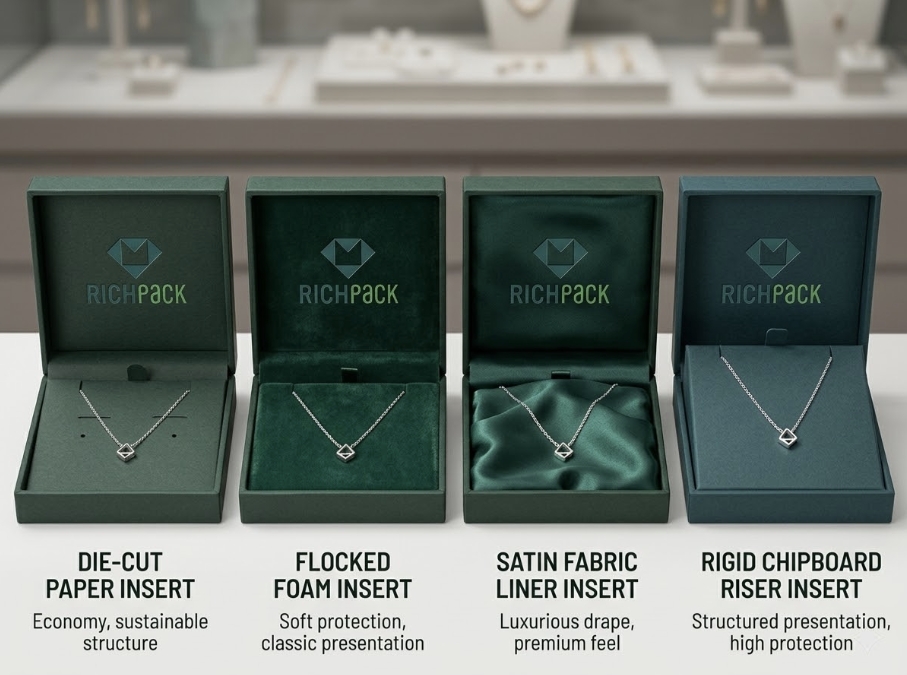
جعبههای سخت هزینه ساخت، حمل و نقل و انبارداری بیشتری دارند. همچنین به دلیل اینکه معمولاً نمیتوان آنها را به صورت مسطح حمل کرد، فضای بیشتری را اشغال میکنند.
در مقایسه با مقوا با شاخص هزینه ۱.۰، مقوای سخت اغلب از ۳.۰ شروع میشود و میتواند با درجهای مخملی، دربهای مغناطیسی، کاغذ بستهبندی مخصوص، مهر فویل یا مونتاژ دستی، بالاتر هم برود.
وقتی حاشیه سود، ارزش عرضه اولیه یا جایگاه برند، هزینه اضافی را پشتیبانی میکند، سهام سفت و سخت را انتخاب کنید.
وقتی میخواهید ظاهر تمیزتری نسبت به مقوای معمولی داشته باشید، اما به ساختار جعبهای کاملاً سفت و سخت نیاز ندارید، نئوپان میتواند گزینهی هوشمندانهتری باشد.
برای داشتن ظاهری لوکس و بدون ایجاد فضای اضافی در جعبه، آن را با لمینت یا فویل ست کنید.
جعبههای بستهبندی نمایشی پایدار به مدرک نیاز دارند، نه فقط کاغذ قهوهای و زبان نرم.
مقوای کرافت، حس طبیعی، ساده، مسئولانه و دستساز بودن را القا میکند. این مقوا میتواند برای خطوط تولید جواهرات ارگانیک، کالاهای هنری، مجموعههای لوکس سازگار با محیط زیست و برندهایی که ظاهری با جوهر کم میخواهند، مناسب باشد.
اما کرافت یک نشانه بصری است، نه یک مدرک. یک جعبه قهوهای هنوز هم میتواند از الیاف دست اول، پوشش پلاستیکی، پوشش جوهر غلیظ یا افزودنیهای غیرقابل بازیافت استفاده کند.
صدور گواهینامه به معتبرتر شدن ادعاهای پایداری کمک میکند. گواهینامه FSC یکی از راههای شناخته شده برای نشان دادن مسئولیتپذیری در تهیه منابع جنگلی و کنترل زنجیره نگهداری برای بستهبندیهای کاغذی است.
فقط زمانی از جزئیات گواهینامه استفاده کنید که تأمینکننده شما بتواند مستندات را ارائه دهد.
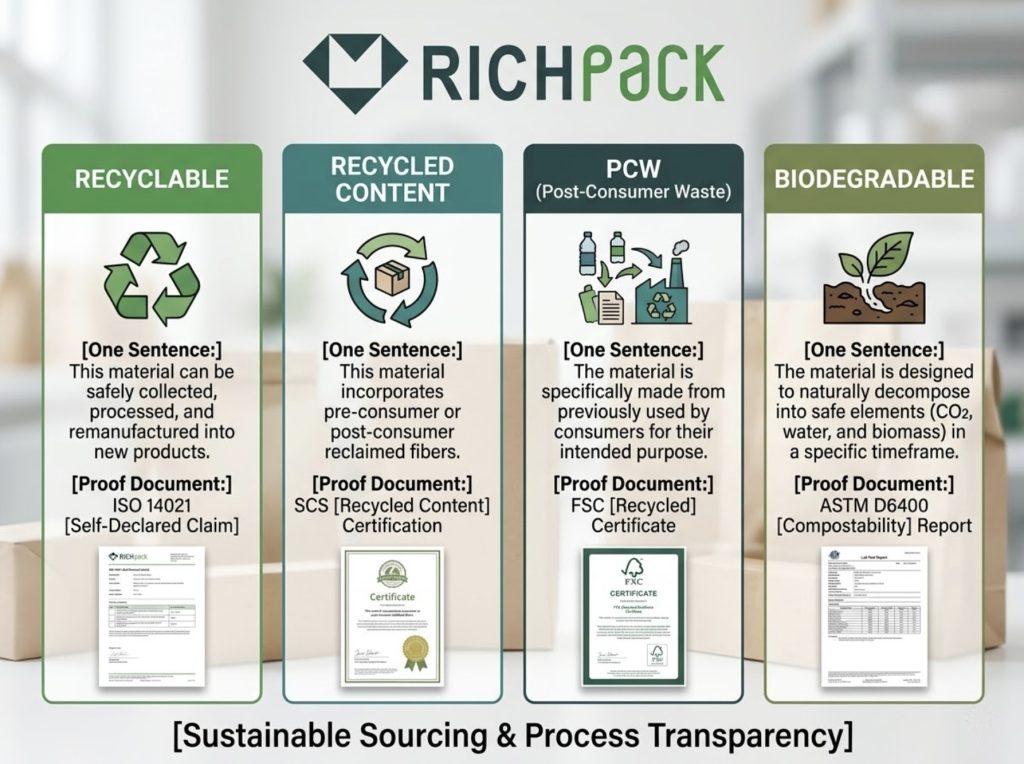
محتوای بازیافتی به این معنی است که ماده شامل فیبر بازیافتی است. زبالههای پس از مصرف، که اغلب به اختصار PCW نامیده میشوند، به این معنی است که فیبر از محصولاتی که قبلاً توسط مصرفکنندگان استفاده شده و سپس بازیابی شدهاند، به دست آمده است. محتوای بازیافتی قبل از مصرف معمولاً از ضایعات تولیدی قبل از رسیدن محصول به خریدار حاصل میشود.
قابل بازیافت به این معنی است که بستهبندی میتواند تحت شرایط محلی مناسب وارد جریان بازیافت شود. زیستتخریبپذیر به این معنی است که یک ماده میتواند از طریق فرآیندهای بیولوژیکی تجزیه شود، اما جدول زمانی و شرایط مهم هستند.
این اصطلاحات را یکسان در نظر نگیرید. موتورهای جستجو، خرده فروشان و خریداران این تفاوتها را بهتر از چند سال پیش درک میکنند.
مقوای کرافت بسیاری از رنگها را تیره میکند. صورتی روشن، طلایی کمرنگ، آبی روشن و رنگهای گرادیانی ظریف ممکن است آنطور که روی صفحه نمایش دیده میشوند، به نظر نرسند.
اگر میخواهید بستهبندی کرافت تمیز بماند، از جوهر مشکی، سفید، رنگهای تیره، لوگوهای ساده یا فویل استفاده کنید.
کرافت میتواند به ظاهر لوکس برند آسیب برساند، زمانی که برند به فضای سفید واضح، رنگهای زنده یا جزئیات جواهرات ظریف نیاز دارد.
یک مجموعه الماس با ارزش بالا ممکن است به جای آن به مقوای روکشدار، نئوپان یا مقوای سخت نیاز داشته باشد.
از ساختار استفاده کنید، نه شلوغی. یک محفظه محکم، دهانه تمیز، روکش نرم، تزیین با فویل یا لوگوی برجسته میتواند بستهبندی پایدار را ممتاز جلوه دهد.
برای برندهای جواهرات، محصولات اکو-لوکس زمانی بهترین نتیجه را میدهند که جعبه به جای ارزان بودن، حس هدفمندی داشته باشد.
یک مهندس بستهبندی RichPack اینطور بیان میکند: «در سالهای ۲۰۲۵ و ۲۰۲۶، خریداران جعبه قهوهای نمیخواهند. آنها به دنبال مدرک هستند. بهترین جعبه نمایشی پایدار، هنوز هم در وهله اول یک جعبه نمایشی است. این جعبه باید شکل خود را حفظ کند، از جواهرات محافظت کند و باعث شود محصول ارزش خرید داشته باشد.»
قبل از درخواست قیمت یا تأیید یک خط تولید، از این فرآیند استفاده کنید.
محصولات را بر اساس وزن و شکنندگی گروهبندی کنید. اقلام سبک میتوانند با مقوا یا نئوپان شروع شوند. اقلام سنگین یا چند کالا باید با مقوای موجدار شروع شوند.
جنس را بر اساس محل قرارگیری ویترین انتخاب کنید. ویترینهای پیشخوان نیاز به دسترسی سریع و برندسازی قوی در قسمت جلویی دارند.
سینیهای آماده برای حمل و نقل به استحکام نیاز دارند. ویترینهای بوتیک به پرداخت ظریفتری نیاز دارند.
خردهفروشی انبوه به سرعت، شفافیت و کنترل هزینه نیاز دارد. برندهای ممتاز به پرداختهای بهتر و ساختار تمیزتری نیاز دارند.
برندهای لوکس و اکولوکس به انتخابهای موادی نیاز دارند که اعتماد، تجربه لمسی و خاطره برند را تقویت کنند.
قبل از قفل کردن مطالب، آثار هنری را بررسی کنید. متن کوچک، رنگهای پنتون، نواحی فویل، گرادیانها و کدهای QR، همه بسته به سطح، رفتار متفاوتی دارند.
اگر طرح بستهبندی جعبه نمایش شامل آثار هنری دقیقی است، نمونههای چاپی را درخواست کنید.
قبل از تولید، نمونه اولیه نمایشگر را بسازید. بارگیری، باز کردن، انبارداری مجدد، حمل و نقل، زاویه قفسه و دسترسی مشتری به محصول را آزمایش کنید.
یک نمونه میتواند خمیدگی، تغییر رنگ، چسب ضعیف، تناسب ضعیف محصول یا عدم دید کافی را نشان دهد.
یک تامینکننده بستهبندی خوب باید ماتریسی از مواد، ضخامت، پرداخت، حداقل مقدار سفارش (MOQ)، زمان تحویل، هزینه و ریسک را در اختیار شما قرار دهد.
برای پروژههای RichPack، این ماتریس به برندهای جواهرات کمک میکند تا مقوا، جعبههای سخت، قطعات داخلی و گزینههای پایدار را در یک عرضه مقایسه کنند. همچنین تصمیمگیری را صادقانه نگه میدارد زیرا کمترین قیمت واحد همیشه کمترین هزینه پروژه نیست.
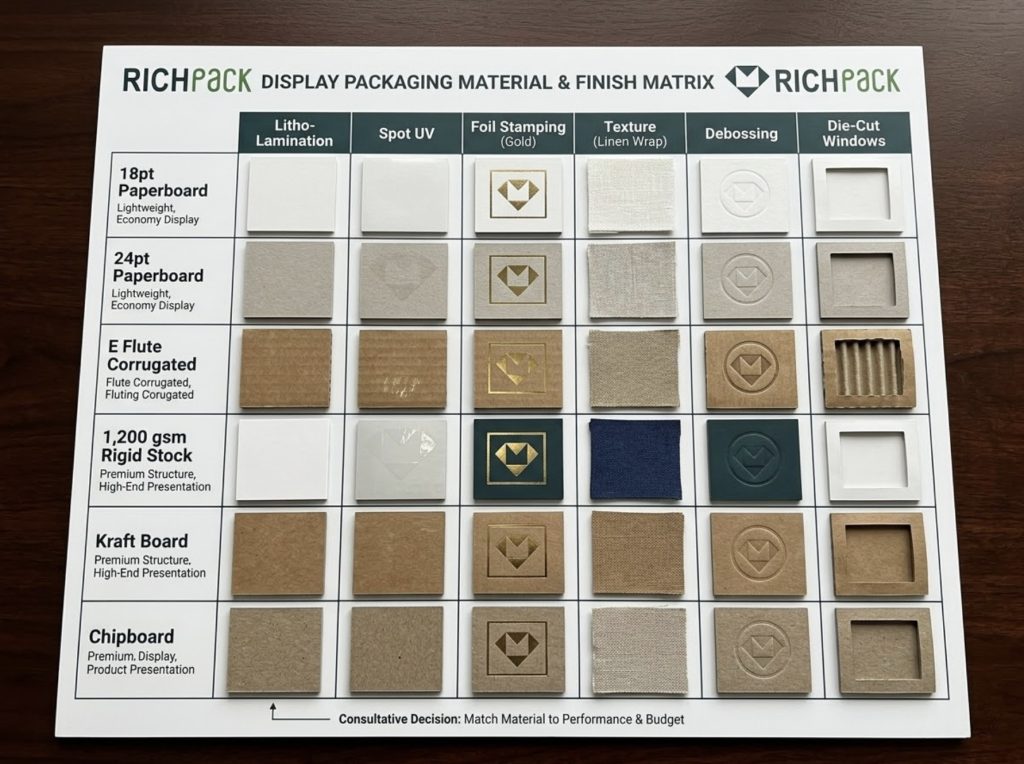
قبل از چاپ، هر ادعا را بررسی کنید. وضعیت FSC، محتوای بازیافتی، قوانین بازیافت محلی، انتخاب پوشش و اسناد تأمینکننده را تأیید کنید.
ادعاهای واضح از برند محافظت میکنند. ادعاهای مبهم ریسک ایجاد میکنند.
قبل از صحبت با تامینکنندگان، از این جدول به عنوان یک ابزار تصمیمگیری سریع استفاده کنید.
| ماده | محدوده مشترک | بهترین برای | استحکام | کیفیت چاپ | شاخص هزینه | یادداشتهای پایداری |
| مقوا | ۱۶ تا ۲۴ پوینت، حدود ۳۵۰ تا ۵۰۰ گرم در متر مربع | محصولات خرده فروشی سبک، کارتهای جواهرات، لوازم آرایشی | متوسط | زیاد | 1 | اغلب قابل بازیافت، صدور گواهینامه به منبع بستگی دارد |
| تخته موجدار | فلوت E حدود ۱.۵ تا ۲ میلیمتر، فلوت B حدود ۳ میلیمتر | سینیهای آماده برای قفسه، محصولات سنگینتر، نمایشگرهای حمل و نقل | زیاد | متوسط تا زیاد با خط چشم مناسب | 1.2 به 1.8 | اغلب قابل بازیافت، میتوان از الیاف بازیافتی یا منابع FSC استفاده کرد |
| سهام سفت و سخت | ۱.۵ تا ۳ میلیمتر، اغلب ۸۰۰ تا ۲۰۰۰ گرم در متر مربع | جواهرات لوکس، ستهای هدیه، ویترینهای ممتاز | زیاد | زیاد | 3.0 + | بستگی به بستهبندی، مقوا، پوشش و منبع دارد |
| تخته کرافت | اغلب ۲۵۰ تا ۴۵۰ گرم در متر مربع | برندهای طبیعی، محصولات لوکس سازگار با محیط زیست، طرحهای ساده | متوسط | متوسط | 0.9 به 1.3 | سیگنال طبیعی قوی، ادعاها نیاز به اثبات دارند |
| تخته خرده چوب | اغلب ۱۸ تا ۲۸ پوینت | کارتنهای تاشو، ویترینهای خردهفروشی براق | متوسط | با پوشش بالا | 1.1 به 1.4 | بستگی به محتوای بازیافتی و انتخاب پوشش دارد |
مقوای موجدار و مقوای سخت معمولاً بالاترین استحکام را دارند. مقوا و نئوپان برای محصولات سبکتر مناسب هستند.
استحکام کرافت به درجه، ضخامت و ساختار مقوا بستگی دارد. یک صفحه نمایش کرافت ۴۰۰ گرمی میتواند رفتار بسیار متفاوتی نسبت به یک ورق کرافت نازکتر با یک پنجره برش بزرگ داشته باشد.
مقوای روکشدار، نئوپان و کاغذ بستهبندیشدهی سفت معمولاً تمیزترین چاپ را ارائه میدهند. مقوای موجدار همچنین میتواند با آستر سفید یا ورق لمینتشده به خوبی چاپ شود.
کرافت برای کارهای هنری ساده، جوهر تیره و بافت طبیعی بهترین گزینه است.
مقوا اغلب برای نمایشگرهای سبک وزن مقرون به صرفه ترین است. در یک شاخص ساده، مقوا را روی ۱.۰ تنظیم کنید.
مقوای موجدار ممکن است وقتی ساختار و چاپ اضافه میشود، حدود ۱.۲ تا ۱.۸ باشد. نئوپان اغلب حدود ۱.۱ تا ۱.۴ است. مقوای سخت معمولاً از ۳.۰ شروع میشود و وقتی جعبه از کاغذ کادو، آهنربا، مخمل یا مونتاژ دستی استفاده میکند، به سرعت افزایش مییابد.
جنس سخت بالاترین هزینه بستهبندی را دارد، اما وقتی بستهبندی ارزش درکشده را افزایش میدهد و حاشیه سود را حفظ میکند، میتواند برای جواهرات مرغوب منطقی باشد.
مواد کاغذی در صورت تهیه و مستندسازی صحیح، میتوانند از جایگاه پایدارتری پشتیبانی کنند. گواهینامه FSC، محتوای بازیافتی، محتوای PCW و راهنمای شفاف بازیافت، اعتبار را بهبود میبخشند.
از ادعاهای کلی زیستمحیطی بدون مدرک خودداری کنید. اگر مستندات FSC را دارید، بگویید «مقوا دارای گواهی FSC». اگر مشخصات ماده این را تأیید میکند، بگویید «حاوی 30٪ الیاف PCW». اگر بازیافت به سیستمهای محلی بستگی دارد، بگویید «قابل بازیافت در صورت وجود امکانات».
مقوا برای محصولات کوچک مناسب است. مقوای موجدار برای حمل و نقل و نمایش آماده در قفسه مناسب است. جنس سخت برای ارائه محصولات لوکس مناسب است. کرافت برای برندسازی طبیعی مناسب است. نئوپان برای تعادل هزینه و پرداخت مناسب است.
تیمهای بازاریابی باید کیفیت چاپ و رده برند را در اولویت قرار دهند. خریداران خردهفروشی باید تناسب با قفسه و نحوهی حمل و نقل را در اولویت قرار دهند.
تیمهای تجارت الکترونیک باید بقای حمل و نقل را در اولویت قرار دهند. تیمهای پایداری باید ادعاهای تأیید شده را در اولویت قرار دهند. تیمهای طراحی باید سازگاری مواد و پایان کار را در اولویت قرار دهند.
بیشتر اشتباهات بستهبندی قبل از شروع تولید اتفاق میافتند. این اشتباهات از انتخاب بر اساس ظاهر به جای عملکرد ناشی میشوند.
یک جعبه نمایش میتواند در یک ماکت زیبا به نظر برسد اما در قفسه فروشگاه همچنان خراب باشد. همیشه ساختار را با وزن واقعی محصول آزمایش کنید.
من ترجیح میدهم یک نمونه اولیه سفید ساده با تست بارگذاری صحیح ببینم تا یک رندر سهبعدی بینقص که هیچکس به آن دست نزده است.
جعبههای حمل و نقل از محصولات محافظت میکنند. ویترینهای خردهفروشی محصولات را میفروشند.
یک سازهی نمایش محموله میتواند هر دو کار را انجام دهد، اما تنها در صورتی که از ابتدا برای هر دو کار طراحی شده باشد.
اگر خریداران نتوانند محصول را به راحتی بردارند، ویترین ایجاد اصطکاک میکند. اگر کارکنان نتوانند به سرعت آن را دوباره پر کنند، ویترین ارزش خردهفروشی خود را از دست میدهد.
فویل، برجستهسازی، براقکننده، UV موضعی و پوشش لمسی نرم همگی میتوانند کمک کنند. پرداختهای زیاد، طرح را شلوغ نشان میدهد و هزینه را بالا میبرد.
یک یا دو جلوه را انتخاب کنید که از پیام برند پشتیبانی میکنند.
یک نمایشگر قوی اگر با قفسه، پیشخوان، درپوش انتهایی یا پلانوگرام فروشگاه متناسب نباشد، همچنان میتواند شکست بخورد. قبل از طراحی سازه، محدودیتهای اندازه فروشگاه را بپرسید.
کلماتی مانند سازگار با محیط زیست و سبز بدون مدرک، ضعیف هستند. از ادعاهای خاصی مانند کاغذ دارای گواهینامه FSC، محتوای بازیافتی یا قابل بازیافت، در مواردی که سیستمهای بازیافت محلی از آن پشتیبانی میکنند، استفاده کنید.
نادیده گرفتن نمونه اولیه ریسک دارد. یک نمونه اولیه نشان میدهد که آیا ماده خم میشود، چاپ تغییر میکند، قطعه درج شده متناسب است و محصول قابل مشاهده باقی میماند یا خیر.
برای جعبههای بستهبندی سفارشی، نمونهبرداری تأخیر محسوب نمیشود. بلکه کنترل خسارت است.
بهترین جنس به وزن محصول، محیط خردهفروشی، نیازهای چاپ و جایگاه برند بستگی دارد. مقوا برای محصولات سبک وزن زیر حدود ۱ پوند و چاپ تمیز بهترین گزینه است. مقوای موجدار برای استحکام و نمایش آماده برای قفسه بهترین گزینه است. جنس سخت برای جواهرات مرغوب و مجموعههای هدیه با ارزش بالا بهترین گزینه است. کرافت برای برندسازی طبیعی زمانی که ادعاهای پایداری قابل پشتیبانی باشند، مناسب است.
جعبههای نمایش مقوایی برای محصولات خردهفروشی سبک مانند گوشواره، انگشتر، لوازم آرایشی کوچک، نمونهها و لوازم جانبی هدیه به اندازه کافی محکم هستند. مقوای ۱۶ تا ۲۴ پاوند، محدوده شروع رایجی برای نمایشگاههای خردهفروشی کوچک است. آنها بهترین انتخاب برای محصولات سنگین، حمل و نقل دشوار یا نمایشگاههایی که با موجودی مجدد مداوم مواجه هستند، نیستند.
بله. مقوای موجدار برای بستهبندی ویترینی خردهفروشیها، زمانی که محصول سنگینتر است، با همان ساختار حمل میشود یا به چیدمان آماده برای قفسه نیاز دارد، مناسب است. نوع فلوت اغلب برای ویترینهای خردهفروشی تمیزتر استفاده میشود. نوع فلوت B زمانی بهتر است که استحکام سینی اضافی اهمیت داشته باشد. این نوع به ویژه برای سینیها، ویترینهای حمل و نقل و بستههای چند قلمی مفید است.
برای جواهرات سبک، مقوا یا نئوپان با یک لایه داخلی مناسب اغلب بهترین انتخاب است. برای جواهرات مرغوب، جنس سخت حس ارزش بیشتری میدهد. برای تبلیغات خردهفروشی، مقوای موجدار میتواند به عنوان ساختار بیرونی آماده برای قفسه عمل کند.
جعبههای بستهبندی کرافت میتوانند از یک تصویر برند سازگار با محیط زیست پشتیبانی کنند، اما کرافت به تنهایی پایداری را اثبات نمیکند. منبع فیبر، محتوای بازیافتی، پوششها، جوهرها و گواهینامهها را بررسی کنید.
مقوا اغلب ارزانترین انتخاب برای جعبههای نمایشی سفارشی سبک وزن است. نئوپان همچنین میتواند در مواقعی که به چاپ نهایی بهتری نیاز دارید، مقرون به صرفه باشد. آسیب، حجم حمل و نقل، زمان مونتاژ و مرجوعی محصول میتواند هزینه واقعی را تغییر دهد.
وقتی برند به ظاهری آرام، لوکس یا مدرن نیاز دارد، روکش مات را انتخاب کنید. وقتی ویترین به رنگ روشنتر و جلب توجه بیشتر در قفسه نیاز دارد، روکش براق را انتخاب کنید. برای بستهبندی جواهرات، روکش مات با فویل یا برجستهکاری اغلب حس ظرافت بیشتری ایجاد میکند.


2024-11-04

2025-08-03
2024-11-19
2025-02-10
2026-01-08
2025-12-10
2026-01-25

جعبه جواهرات اکریلیک: شفاف و بادوام، ایده آل برای نمایش جواهرات
بیشتر ببینید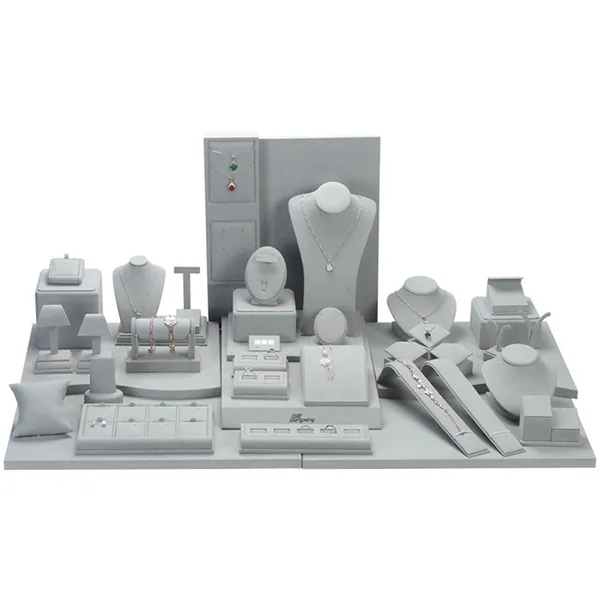
نمایشگر جواهرات مقرون به صرفه برای جواهرات مستقل | برای خرده فروشان کوچکی که به دنبال نمایش های زیبا و سفارشی با بودجه هستند، طراحی شده است
بیشتر ببینید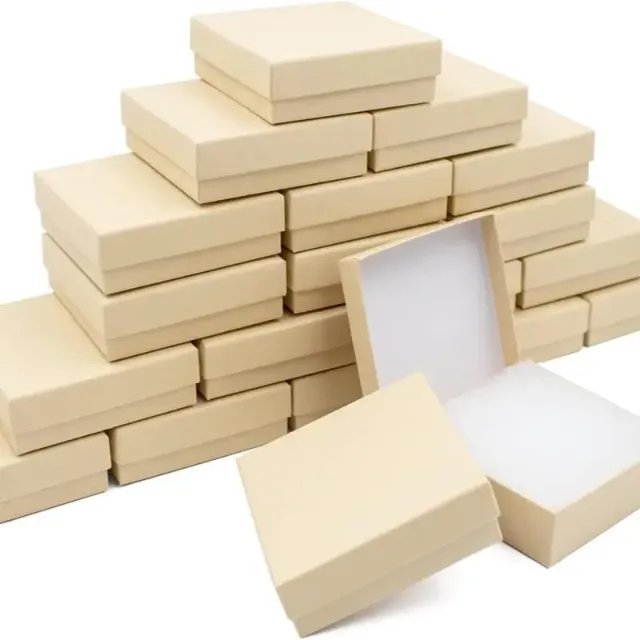
جعبه های هدیه سفارشی مقرون به صرفه برای جواهرات فروشی های کوچک | راه حل های بسته بندی سازگار با بودجه طرح های سفارشی برای خرده فروشان کوچک
بیشتر ببینید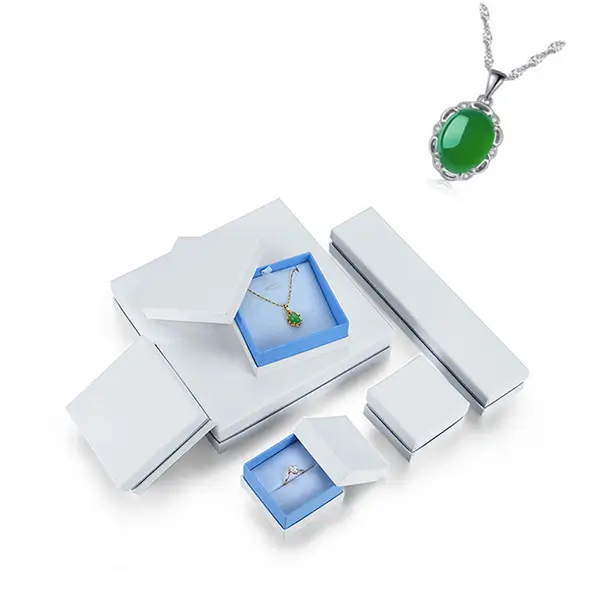
جعبه جواهرات سفارشی مقرون به صرفه برای سفارش های بزرگ | بسته بندی مقرون به صرفه برای برندهای جواهرات و خرده فروشان Richpack
بیشتر ببینید
عمده فروشی کیف جواهرات مقرون به صرفه برای بسته بندی حرفه ای – کیف های جواهرات عمده فروشی با کیفیت بالا برای خرده فروشی و راه حل های هدیه
بیشتر ببینید
سالگرد جعبه هدیه یکپارچه Richpack - یک سال خاطرات و لذت را باز کنید
بیشتر ببینید

