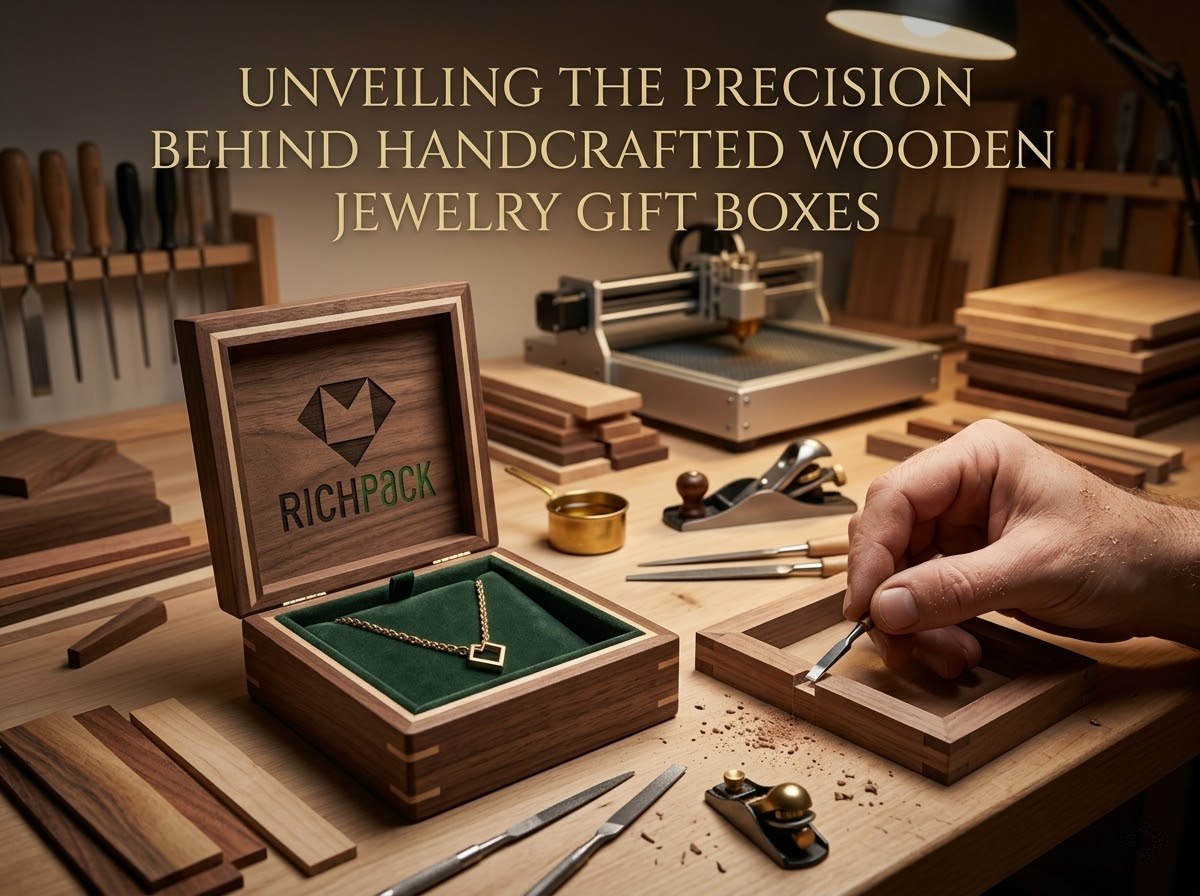


A small wooden jewelry gift box should do three things well. It should make the jewelry feel more valuable. It should protect the piece inside. It should give the buyer a gift-ready experience that feels worth keeping.
That is the core idea behind craftsmanship. It is not just about decoration. It is about how wood choice, box construction, interior protection, and finish quality work together to create a better product.
I have seen this in premium packaging projects many times. A box may look elegant in photos, then lose all impact when the lid feels loose, the lining wrinkles, or the necklace shifts out of place. Small packaging makes those flaws easier to spot.
So what actually makes a small wooden jewelry gift box feel premium instead of average? It comes down to material control, build precision, insert design, and consistency in the final finish.
In this guide, I’ll break down the full evaluation path. You’ll see what craftsmanship means in practical terms, how to compare wood and finish options, what quality signals to inspect, and how to choose a box that works for gifting, branding, and wholesale sourcing.
Craftsmanship shapes both perceived value and real performance. In a compact box, buyers notice every gap, every edge, and every movement. That makes precision more important, not less.
Instead of treating the box as a simple container, treat it as part of the product experience. That shift changes how you evaluate quality.
The surface is the first test. Grain clarity, stain depth, finish smoothness, and the way the lid opens all influence how premium the box feels.
A best small wooden jewelry gift box usually feels balanced in the hand. The edges look clean. The finish feels even. The opening action feels controlled instead of loose or stiff.
This matters because buyers often decide whether a package feels expensive within seconds. In premium jewelry packaging, that first impression supports both trust and price perception.
A box that looks good but fails to protect the jewelry is not strong. It is just attractive packaging with a weak job performance.
The structure should stay rigid. The lining should reduce abrasion. The insert should stop the jewelry from sliding, scratching, or tangling during handling and transit.
This is especially important for delicate chains, polished metals, and stones with exposed surfaces.
Packaging changes how people read the brand. A precise wooden box makes the product inside feel more intentional.
This is one reason many luxury and boutique brands move toward wood-based presentation boxes. Natural grain, engraved logos, and tailored inserts create a stronger brand story than disposable packaging.
In practical terms, craftsmanship helps close the gap between product price and customer expectation. I have seen brands upgrade from standard rigid boxes to wood-look or wooden presentation boxes and get a stronger premium response in sample reviews, sales meetings, and retailer feedback because the packaging made the product feel more giftable and more complete.
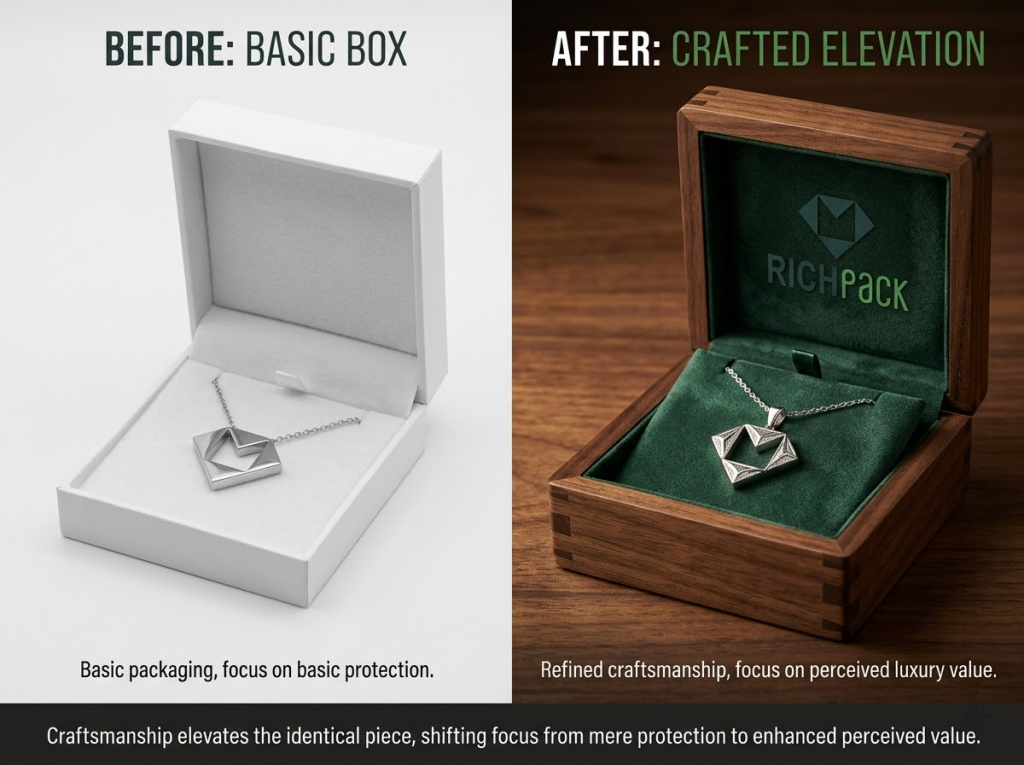
Wood carries more emotional weight than paper or plastic in many gift settings. It feels warmer. It feels more lasting. It often feels more personal.
That makes a wooden jewelry box a better fit for anniversaries, weddings, premium collections, and limited-edition gift programs. The box starts to feel like part of the gift instead of just the outer shell.
A well-made wooden box keeps working after the first unboxing. People reuse it. They keep it on display. They associate it with the gift experience.
That long life matters for both buyers and brands. A reusable keepsake box extends visibility and increases perceived value long after the product is opened.
Not all wooden boxes create the same effect. Wood species, surface finish, and construction style shape the look, feel, and long-term performance of the box.
Instead of asking which wood looks best in isolation, ask which material best fits the brand, the jewelry type, and the desired price position.
Choose walnut when the goal is a rich and upscale look. It is one of the strongest options for a brown small wooden jewelry gift box because it already carries premium visual depth.
Walnut works especially well for fine jewelry, men’s accessories, and gift programs that want a darker, more luxurious tone. It also pairs well with gold logo treatments, laser engraving, and deep velvet interiors.
Use oak when you want visible grain and a sturdier, more natural character. Oak feels less sleek than walnut, but it often feels more tactile and grounded.
This makes it a strong fit for heritage-style brands, handmade positioning, and packaging that needs to signal durability without looking plain.
Maple gives a lighter and cleaner appearance. Cherry adds warmth and often feels more refined as the tone deepens over time.
These woods work well for bridal jewelry, soft brand palettes, and collections where dark wood would feel too heavy. The main goal is to achieve visual harmony among the box, the jewelry, and the brand identity.
This is one of the most important comparisons in premium packaging. The choice between solid wood and veneer is not only a cost decision. It is also a positioning decision.
Solid wood usually commands a higher premium, but it can add weight and cost. Veneer can still look excellent when build quality is well controlled, and it often helps brands maintain greater consistency across larger runs.
In a real sourcing workflow, this trade-off matters a lot. A luxury brand launching a limited-edition necklace may prefer solid wood for stronger keepsake value. A retailer planning a larger seasonal run may choose high-quality veneer because it offers a cleaner path to visual consistency, cost control, and more predictable lead times.
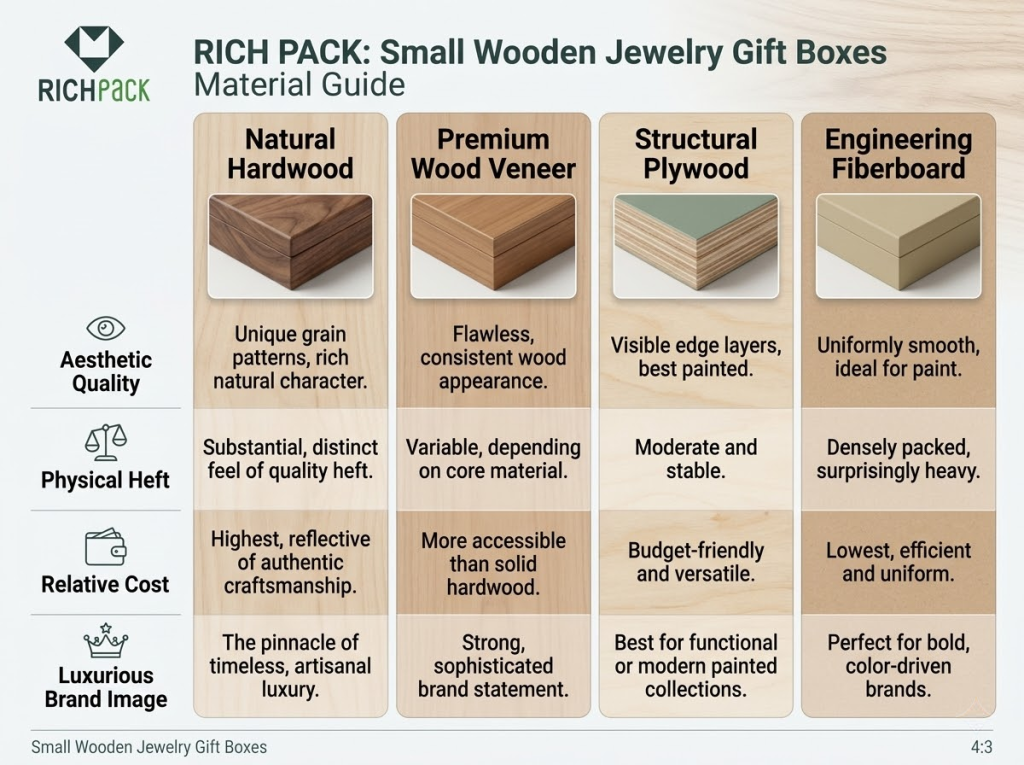
Instead of assuming one is always better, match the material choice to the promised customer experience.
Finish changes how the box reads under light and in the hand. Matte often feels modern and controlled. Gloss can feel formal and dramatic, but it also makes flaws easier to spot. A stained finish can deepen grain and create a richer look without adding visual noise.
The right finish should feel intentional. It should not look cloudy, smell harsh, or gather unevenly around corners and edges.
This is where real evaluation starts. Broad sales language means very little if the physical details are weak.
When I assess high-quality wooden jewelry boxes, I start with build control. Then I check movement, interior execution, and finish consistency.
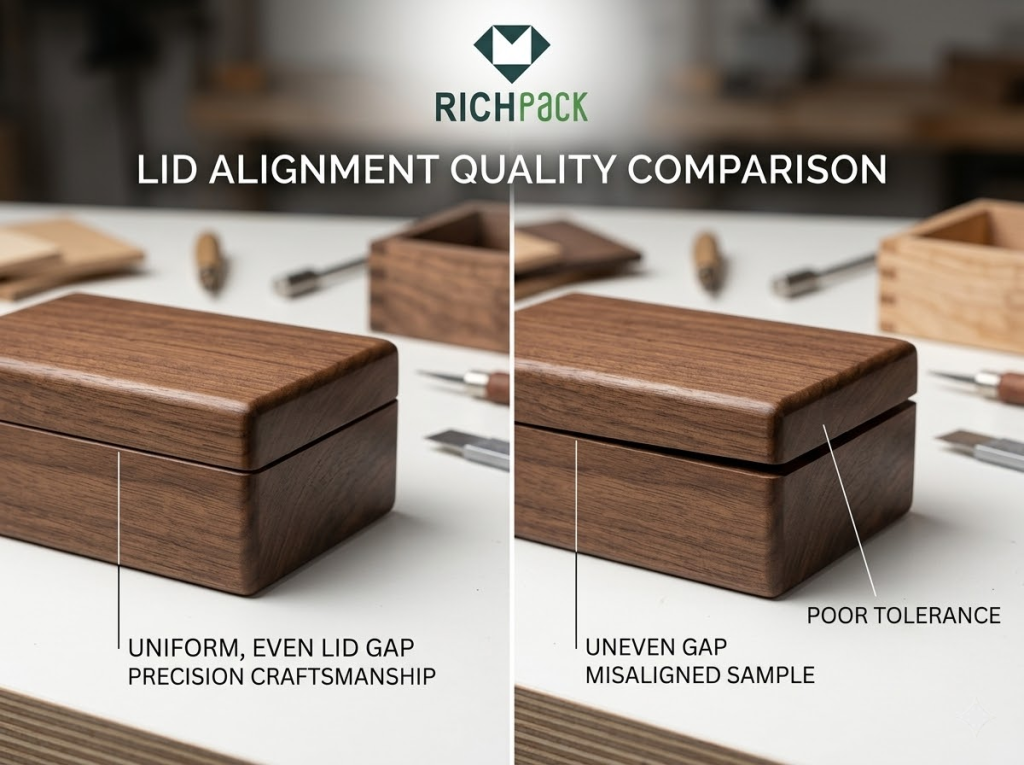
Check the reveal line first. A premium box closes evenly, sits flush, and shows clean alignment from multiple angles.
If the gap is uneven, buyers notice it fast. Small alignment errors can make a jewelry box feel lower-end, even when the material itself looks good.
Test the opening action next. A good hinge should feel smooth, stable, and controlled.
If the lid drops too fast, shifts side to side, or feels tight in one corner, the craftsmanship is not consistent. The same logic applies to clasps and magnetic closures.
Small hardware creates a strong sense of luxury by turning static packaging into a physical experience.
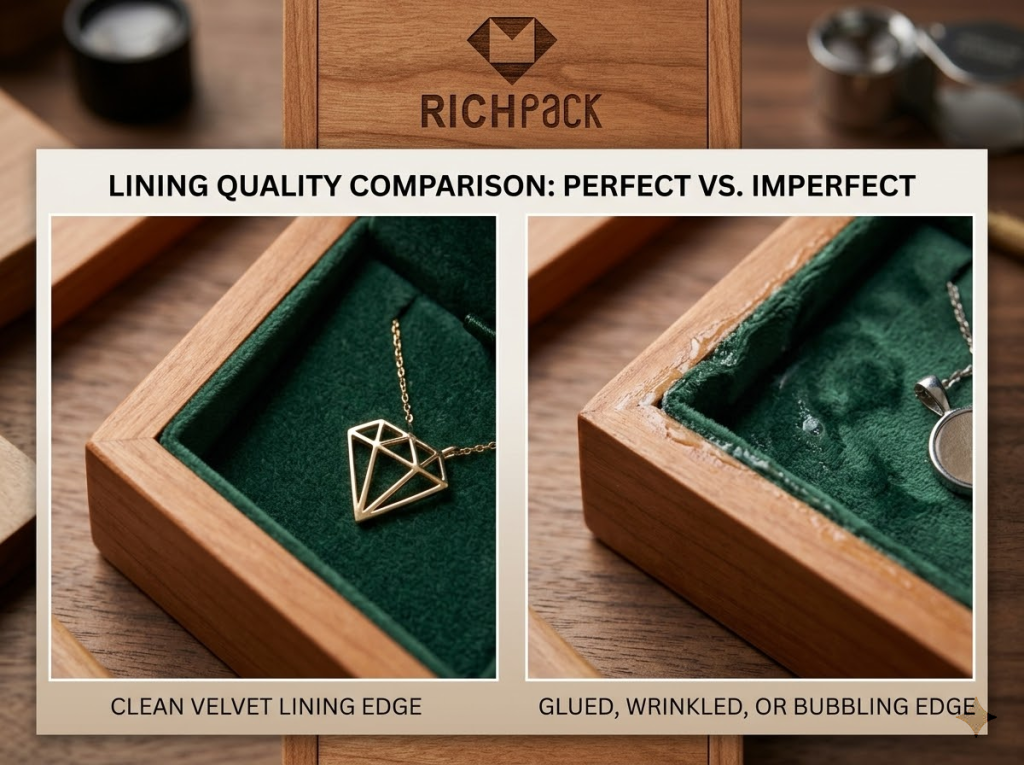
The lining should protect the jewelry and improve the visual reveal. Velvet and felt are common because they reduce abrasion and create contrast.
Look for flat adhesion, clean edges, and a soft touch. Wrinkles, glue marks, bubbling, and lifting corners make the box feel rushed.
Interior color matters too. The right contrast helps metal tones and stones stand out as soon as the lid opens.
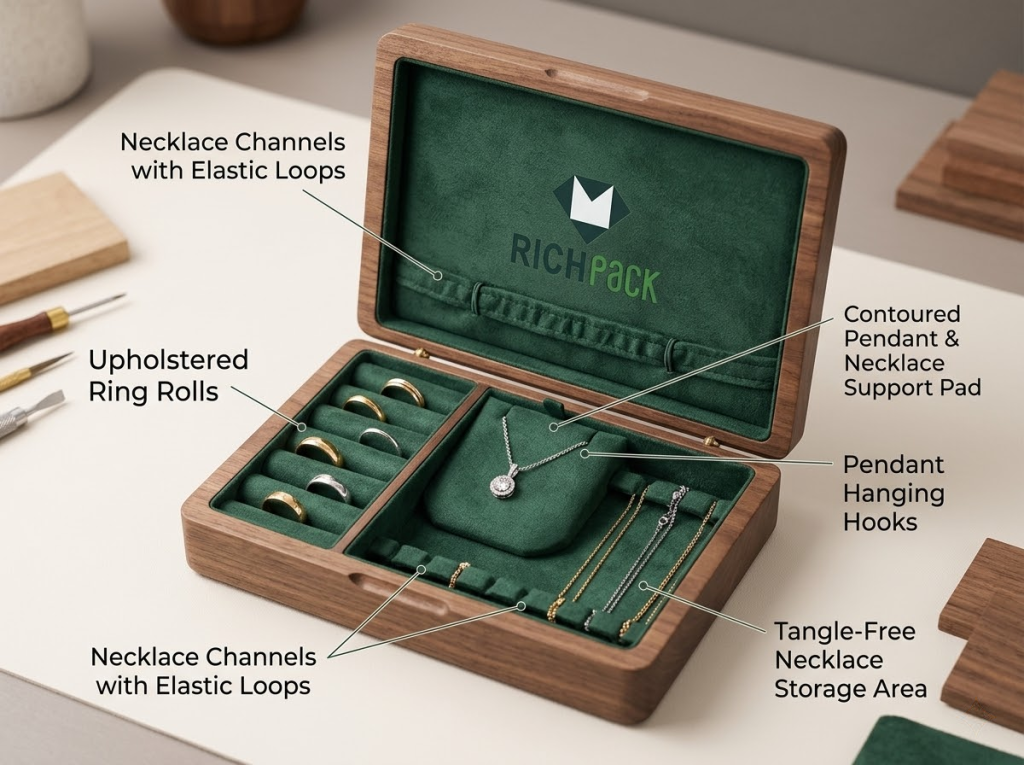
A premium insert should be shaped around the jewelry type. It should not be a generic filler.
Ring rolls, earring holders, necklace channels, pendant anchors, and removable trays all serve different jobs. The better the insert matches the jewelry, the stronger the presentation and protection.
One attractive sample is not enough. The real question is whether the same quality can be repeated.
Check sanding quality, stain consistency, edge cleanup, odor, and the way the finish transitions around corners. Cheap work often shows up in those small areas.
This becomes even more important in bulk production, where minor defects can escalate into visible brand problems.
A necklace small wooden jewelry gift box needs more than a nice exterior. Necklaces move easily, tangle quickly, and lose visual impact when the insert is weak.
That is why the insert structure matters so much in compact necklace packaging. A few small design choices can decide whether the reveal feels polished or messy.
Start with chain management. If the chain can move freely, it can knot, twist, or bunch during shipping and handling.
Use a dedicated slot, channel, or anchor point to guide the chain into place. This keeps the necklace readable when the customer opens the box.
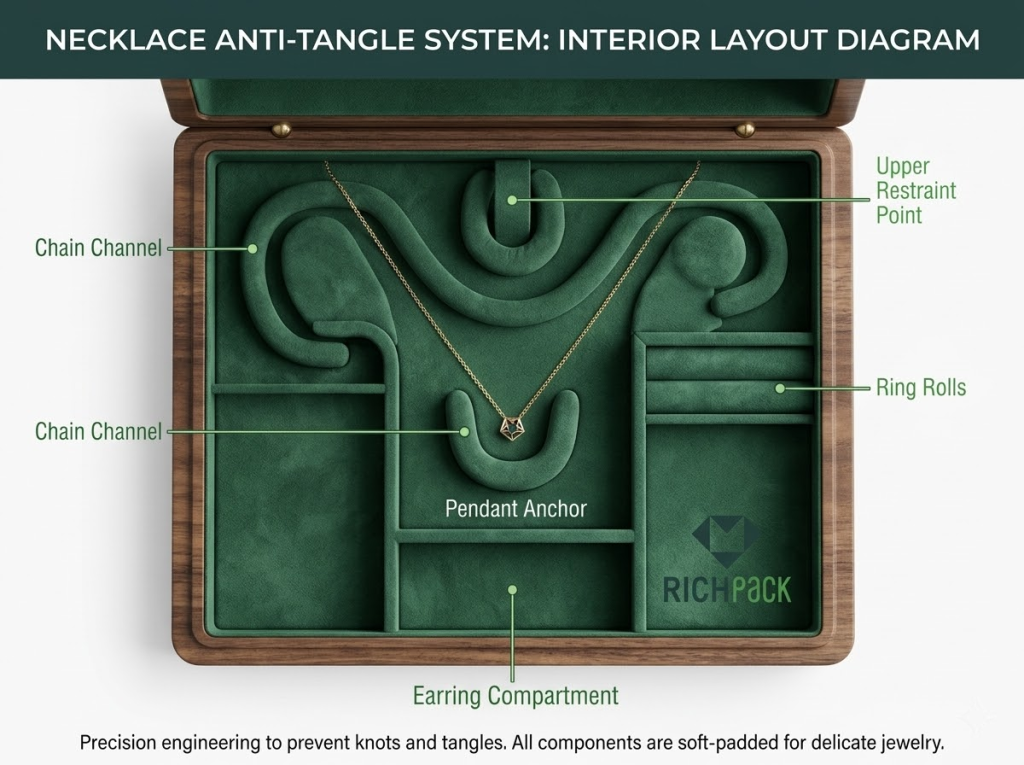
The pendant should be the hero when the lid opens. It should sit centered and visible, not collapse into the lining or rotate off-angle.
A strong presentation insert supports the pendant from behind and keeps the necklace visually stable. That improves both retail display and gift reveal.
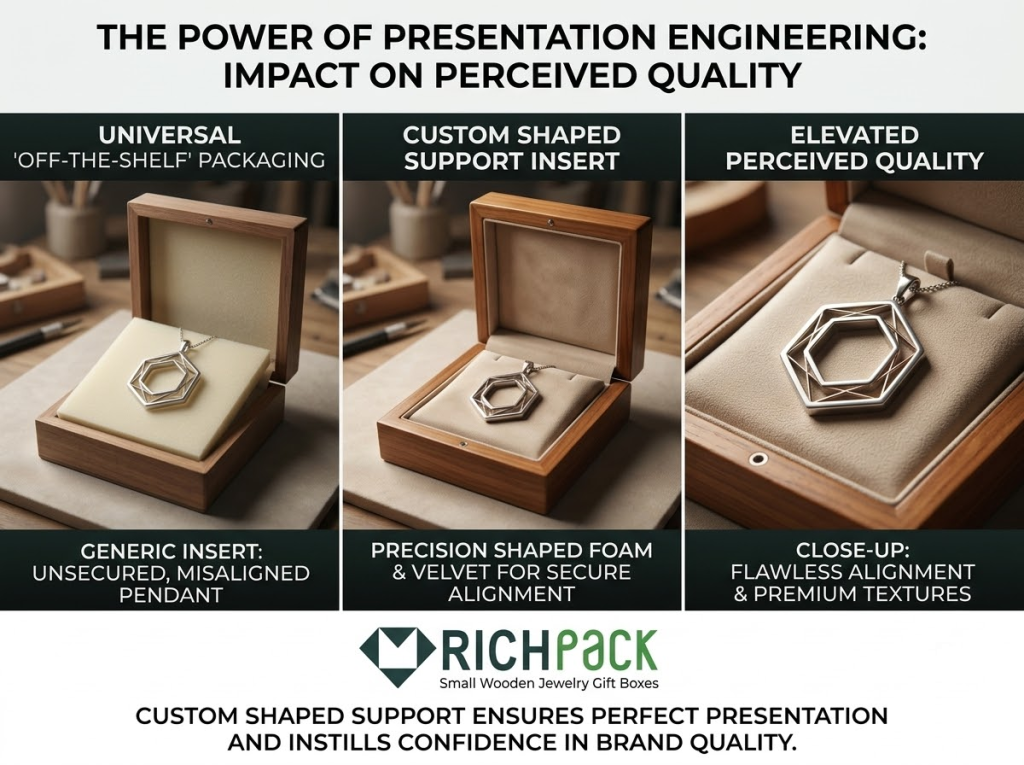
Depth needs to be balanced carefully. Too shallow, and the jewelry gets compressed. Too deep, and the necklace can feel visually lost.
The best boxes stay compact while still leaving enough space for clean presentation and safe storage. That balance is one of the clearest signals of thoughtful craftsmanship.
Do not assume a wooden necklace box is only for display. It can work well in transit if the insert controls movement and the outer packaging supports the box correctly.
For e-commerce and wholesale use, internal stability is the priority. If the necklace stays secure inside the box, the whole system performs better.
The reveal should feel intentional. Color contrast, insert angle, lid depth, and interior texture all shape that moment.
Dark velvet against warm wood often creates a rich, luxurious feel. Lighter interiors can help delicate metals stand out more clearly. The right combination improves presentation without changing the jewelry itself.
A sample can look great and still fail as a wholesale program. B2B buyers need repeatability, not just a good-looking prototype.
That is why wholesale small jewelry gift boxes should be evaluated through a production lens. Appearance matters, but consistency matters more.
Treat the sample as the first checkpoint, not the final proof. Then ask whether the same result can be maintained at the production scale.
Check whether grain tone, lining quality, hardware stability, and finish color will remain consistent across units. This is where many suppliers start to separate themselves.
Customization affects cost, timing, and manufacturing complexity. Logo engraving, insert shape, interior color, and closure style all influence production setup.
Some suppliers support smaller runs with limited customization. Others become more efficient only after the volume reaches a certain threshold. Instead of asking what is possible, ask what is repeatable.
Wood packaging usually takes more production steps than standard cartons. Cutting, sanding, staining, lining, hardware fitting, and quality checks all add time.
That does not make wood the wrong choice. It means buyers should build timing into the decision early, especially for retail launches and seasonal campaigns.
Retail presentation and shipping durability need to work together. A box that looks premium on the shelf but performs badly in transit creates avoidable problems.
For retail, focus on reveal and shelf appeal. For e-commerce, add movement control and outer protection into the planning process.
A simple case pattern shows why this matters. One box design may look perfect in a showroom sample, but once it enters parcel shipping, loose inserts, weak clasp fit, or poor internal restraint can make the jewelry arrive off-center. That is why wholesale buyers should test the presentation after movement, not only at first opening.
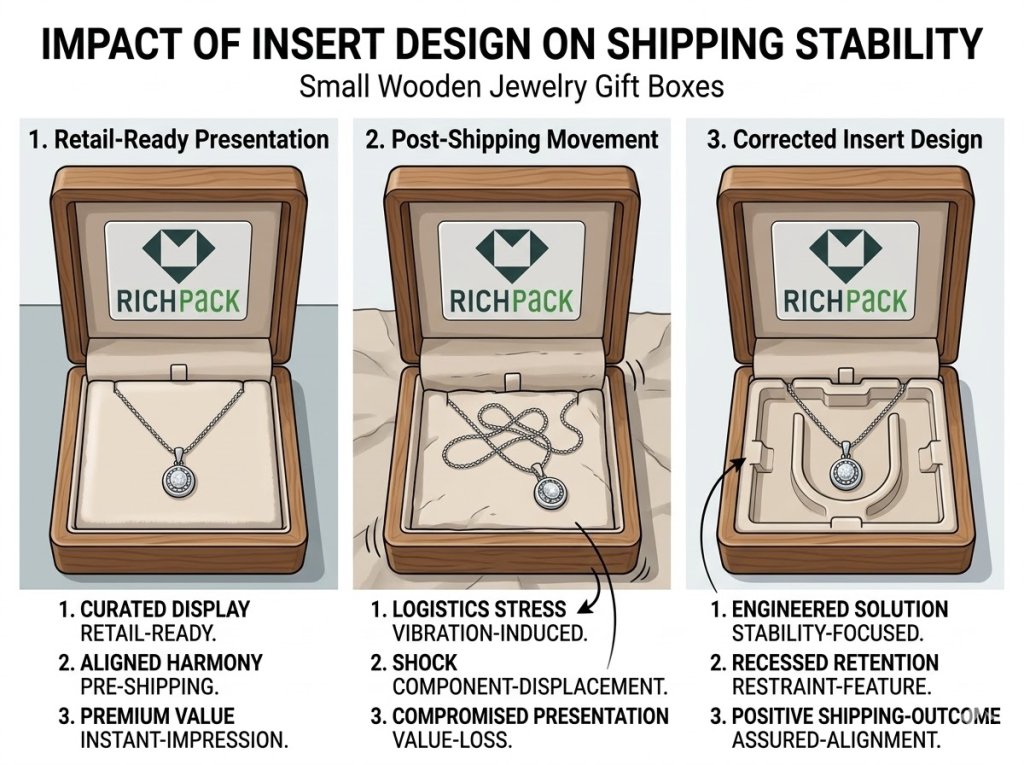
Ask direct questions before placing a bulk order. What wood or veneer is being used? How is the lining fixed? What is the tolerance for the lid fit? How is hardware tested? Which parts can be customized? What quality control checks happen before shipment?
These questions are simple, but they reveal whether the supplier has real process control.
The right wooden box depends on who is using it and why. A luxury jewelry brand, a retail buyer, and a personalized gift seller may all want wooden packaging, but the decision criteria will not be the same.
Use the box as a strategic fit, not just a visual choice.
Prioritize finish quality, insert refinement, and logo execution. The box should feel like a natural extension of the jewelry, not an afterthought.
Deeper tones, smoother opening action, and better visual reveal usually matter more than overdesigned decoration.
Focus on consistency, production control, and SKU clarity. Retail programs need reliable execution across units, not just one polished sample.
A beautiful box that cannot scale cleanly creates more cost than value.
Prioritize engraving quality, manageable lead times, and flexible design options. Personalization often drives sales, so the packaging needs to feel special without becoming unstable in production.
In many cases, clean structure plus strong finish quality works better than complicated decorative features.
Use sustainability carefully and specifically. Responsibly sourced wood, reusable design, and longer product life are stronger signals than vague eco claims.
If sustainability is part of the brand story, make sure the sourcing and construction decisions support it.
Wooden boxes work especially well for collector drops, anniversary launches, and premium gift sets. They add permanence and help the packaging feel collectible.
This is where engraved details, custom interiors, and unique finish treatments can create stronger emotional value.
If a supplier or product looks promising, use this checklist to test whether it is truly ready for premium use.
Confirm the wood species or veneer type. Then review grain quality, finish depth, and whether the material matches the intended price point and brand identity.
Inspect lid alignment, edge finishing, hinge stability, and closure feel. These details often reveal the real build quality faster than any sales description.
Review the lining softness and insert fit. For necklaces, make sure the design controls the chain and supports the pendant properly.
Check whether the logo method, interior color, exterior tone, and reveal moment feel visually coherent. Premium packaging should feel unified from start to finish.
Review sample quality, MOQ, lead time, and quality control process. Then confirm the supplier can explain how consistency will be maintained during production.
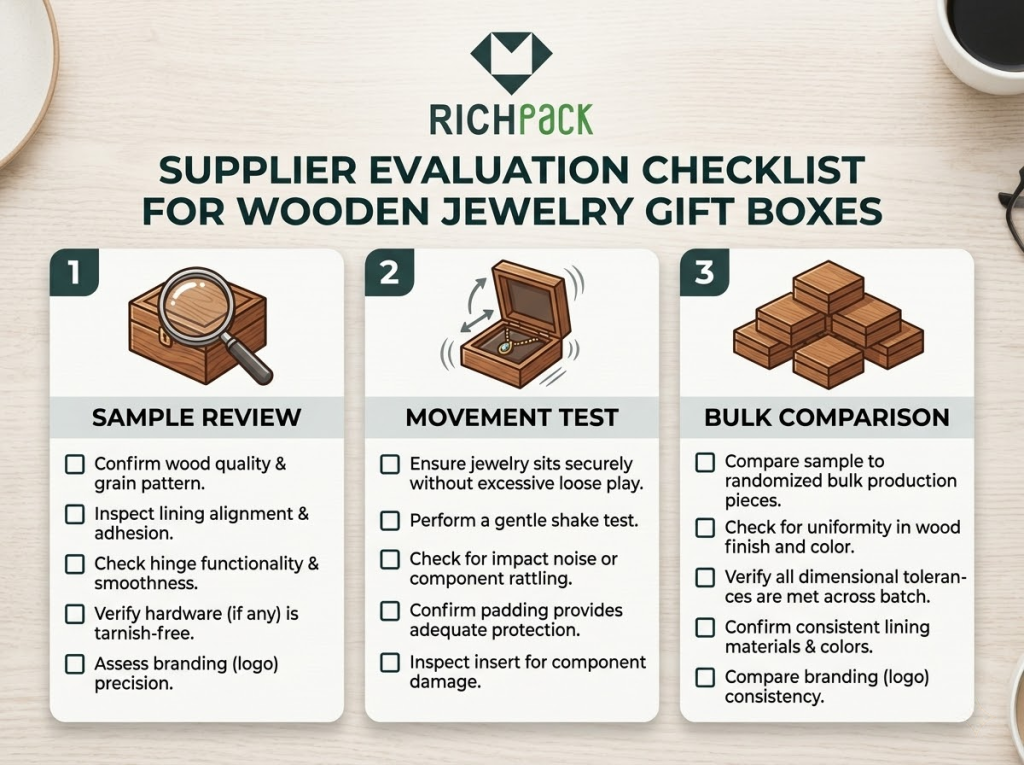
The fastest way to judge craftsmanship is to compare one jewelry box across three checkpoints. First sample review. Transit simulation. Bulk consistency check.
Here is a simple pattern I would use.
This is not a lab study, but it is a realistic buyer-side case method. It helps brands and procurement teams catch the exact flaws that usually get missed when decisions are made from a single beauty shot.
Walnut is one of the strongest premium options because it feels rich and elegant. Oak is a strong choice when visible grain and sturdiness matter more. Maple and cherry work well when the brand needs a lighter or warmer visual tone.
Yes, if the insert is designed correctly. A necklace box needs chain control, pendant support, and enough interior depth to prevent tangling and shifting.
The main signals are wood quality, finish smoothness, lid alignment, hinge stability, soft lining, and a purpose-built insert. Precision matters more than decoration alone.
Yes, when the supplier can maintain sample quality in bulk production. The value comes from better presentation, stronger product protection, and longer brand visibility.
Yes. A brown finish can still feel modern when the structure is clean, the hardware is minimal, and the interior palette is chosen carefully. Walnut with a matte finish is often a strong example.
Ask about wood type, insert options, logo methods, MOQ, lead time, finish consistency, hardware quality, and sample-to-bulk quality control. Those answers will tell you much more than broad marketing claims.
A small wooden jewelry gift box becomes premium through control. The material matters, but so do the hinge, lining, insert, finish, and overall fit.
When those parts work together, the box does more than package jewelry. It protects the product, strengthens the brand, and creates a more memorable gift experience.
If I were comparing options today, I would start with precision, not decoration. That is where real craftsmanship usually shows itself.

Just submit your email to get exclusive offers (reply within 12 hours)





 PREV
PREV