Home / Blog / How to Choose the Best Stackable Jewelry Trays for Drawers
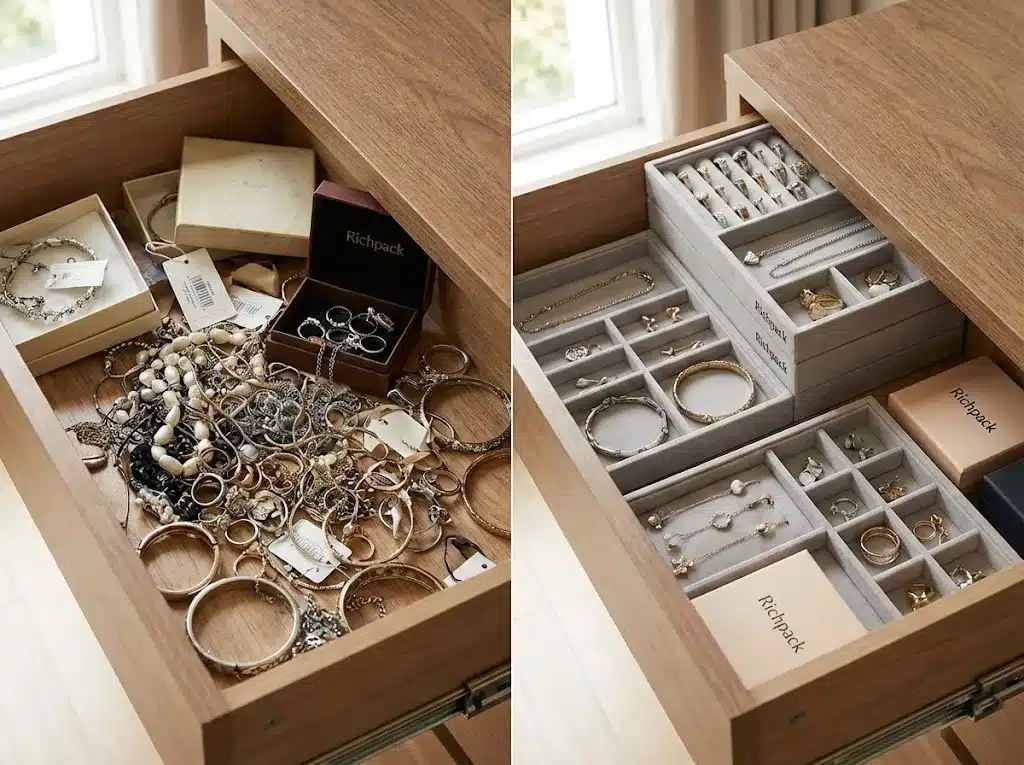
Comparison of messy inventory vs organized custom stackable jewelry trays for drawers aimed at reducing shrinkage.

How to Choose the Best Stackable Jewelry Trays for Drawers

By Dawn

2026-01-07 · 13 min read

Share this article
Facebook LinkedIn Close

A messy inventory drawer is not just an eyesore—it’s a silent profit killer.

I’ve visited countless boutiques and watched staff waste precious time rummaging through stock, while silver jewelry tarnishes and turns black slowly in cheap velvet. This kind of operational bottleneck is one you can’t afford.

If you choose the right stackable jewelry trays for drawers, they don’t just solve your storage problems—they also boost asset protection and sales efficiency.

Whether you’re optimizing warehouse processes or upgrading showroom equipment, your goals are clear:

  • Reduce inventory loss caused by scratches and tarnishing.
  • Speed up the process of retrieving items for salespeople.
  • Ensure every piece of jewelry fits perfectly with custom jewelry trays for drawers.

Define Your Use Case

Before we talk about velvet grades or millimeter measurements, we need to understand your layout first.

I’ve seen retailers order beautiful stackable drawer jewelry trays, only to find they’re too heavy for quick display sales and too bulky to fit in night safes.

Your choice should depend entirely on where the trays will go and what they’ll be used for.

Do you want to impress customers, or store 500 stock-keeping units (SKUs) in a vault?

Front-of-House vs Back-of-House Use

There’s a huge difference between trays designed for visual display and those used purely for storage.

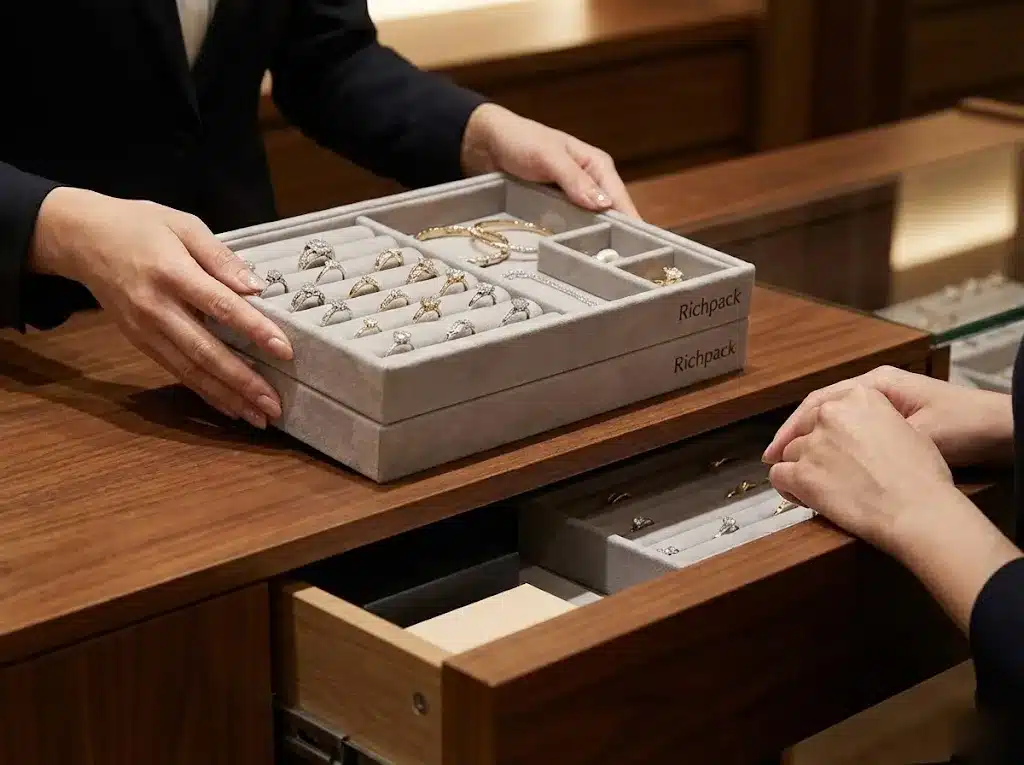
For front-of-house drawers (the ones under glass counters), trays are active sales tools. They need to meet these requirements:

  • Eye-catching Appearance: They should look appealing to customers.
  • Lightweight Design: Staff shouldn’t strain when lifting them repeatedly.
  • Easy Access: The layout should let customers see jewelry inside at a glance.

In contrast, back-of-house storage prioritizes storage density above all else. In this area, you don’t need to showcase jewelry to customers—you need to manage assets efficiently.

You need a sturdy, deeply stackable system that protects inventory from dust and tarnishing, while making the most of every inch of shelf space.
How to Choose the Best Stackable Jewelry Trays for Drawers - Front of House

Security Drawer / Safe Drawer / Stock Drawer

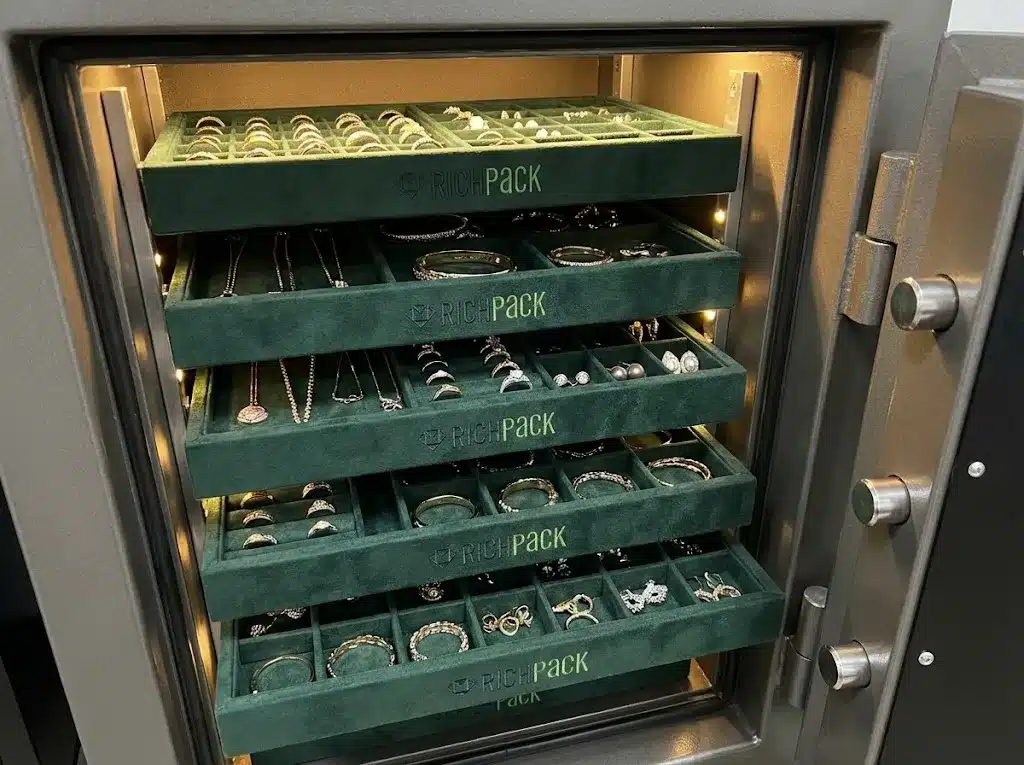
In my experience with jewelry businesses, these types of drawers suffer the worst from wasted space. Safes are expensive storage. If your trays don’t stack neatly, you’re basically paying to store empty air.

Standard-sized trays often fall short when outfitting safes or high-security inventory drawers. You need custom jewelry trays for drawers to maximize vertical space fully.

  • Goal: Stack as many layers as possible without squeezing the jewelry.
  • Common Mistake: Using retail display trays in safes usually wastes 30% of available height due to unnecessary thick edges.

If you’re currently struggling to fit all your inventory into your safe, contact our team. We’ll help you calculate the exact tray depth you need to double your storage capacity.
How to Choose the Best Stackable Jewelry Trays for Drawers - Security Drawer

When You Need Inserts Instead of Full Trays

Sometimes, you don’t need standalone full trays—you need to upgrade your existing drawers.

If you’ve invested in high-quality cabinets with solid wood drawers, drawer inserts are a smarter choice.

They fit like a liner inside your current drawers, allowing you to organize items without the bulk of double-walled trays.

  • Choose Inserts If: You want to preserve the look of your custom cabinetry, or your drawers are shallow (less than 2 inches deep).
  • Choose Full Trays If: You need the flexibility to remove entire sets of jewelry from drawers for overnight transfer to safes.

Suitable Types of Stackable Jewelry Trays for Drawers

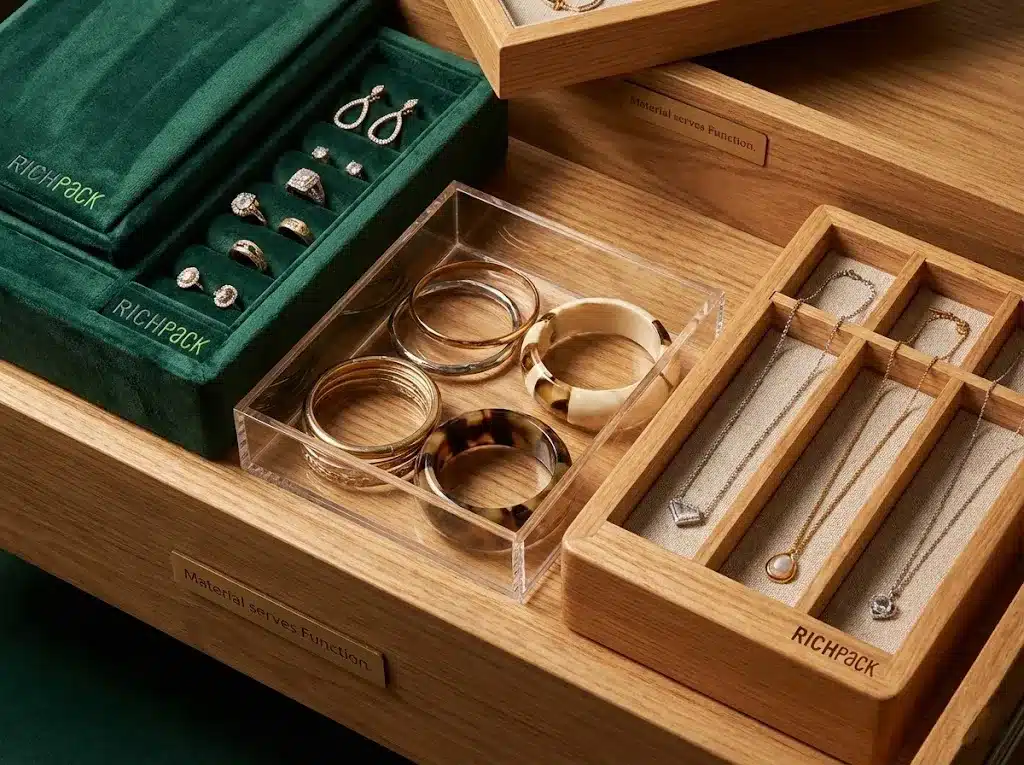
Choosing the right material isn’t just about aesthetics—it’s about boosting operational efficiency. I’ve seen many high-end boutiques struggle with operational issues for a simple reason: they picked materials that attract lint or make inventory checks a hassle.

Different areas of your store and different types of jewelry require different types of stackable jewelry trays for drawers.
How to Choose the Best Stackable Jewelry Trays for Drawers - Suitable Types of Stackable Jewelry Trays for Drawers
Feature Velvet / Microfiber Vegan Leather (PU) Acrylic / Plastic Solid Wood
Best For High-end displays & loose gems High-traffic retail & daily use Efficiency & inventory checks Heritage branding & luxury
Durability Moderate (Fraying risk) High High Very High
Maintenance Hard (Attracts dust/lint) Easy (Wipe clean) Easy Moderate
Protection Excellent (Anti-scratch) Good Low (Requires pads) Moderate
Cost (ROI) Budget-friendly Mid-range (Best value) Low Premium

* Comparison based on B2B jewelry retail standards.

Velvet Trays

Velvet is the industry standard for a reason—but not all velvet is created equal.

  • Advantages: Velvet has strong friction, so loose diamonds or delicate necklaces won’t slide around even when drawers are slammed shut during peak hours.
  • Ideal Use Cases: Perfect for storing loose gemstones, highly polished gold jewelry, and pearls—all items that need a scratch-free environment.

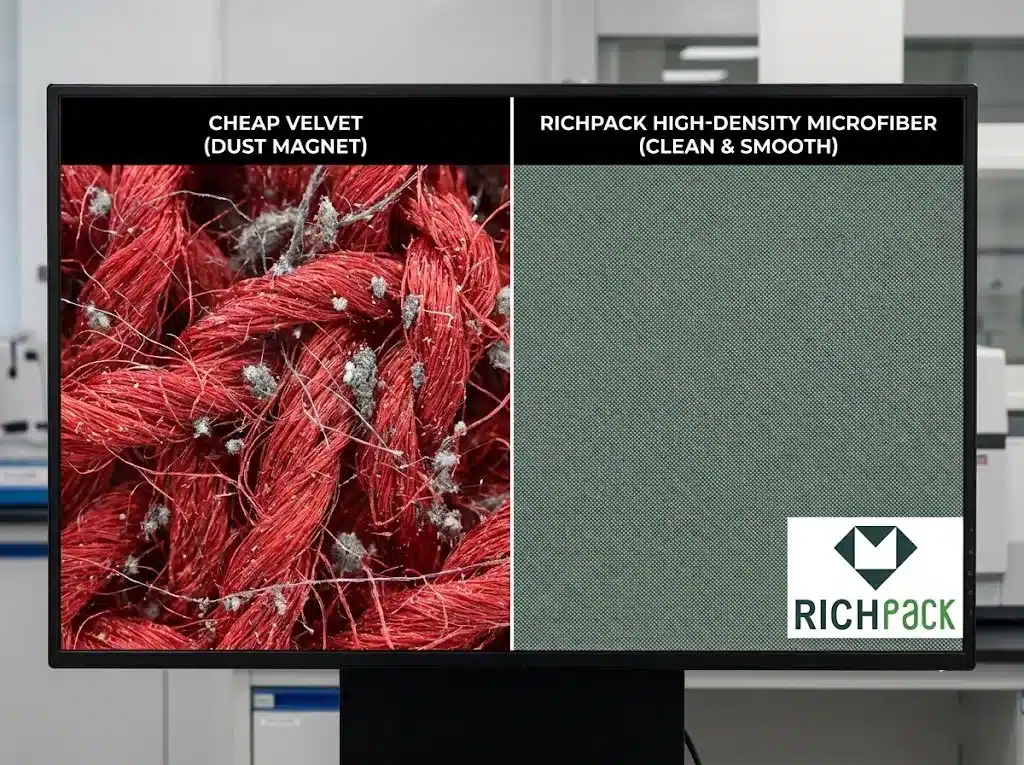
Pro Tip: Skip cheap flocked velvet. It sheds easily and acts like a magnet for dust. For business-to-business (B2B) purchases, we recommend high-density microfiber. It provides the same soft, scratch-proof protection, but is much easier to clean and less prone to indentations from stacking.
How to Choose the Best Stackable Jewelry Trays for Drawers - Velvet

Customizable Trays

In the jewelry industry, inventory mixes change with seasons. When you suddenly need to store chunky statement necklaces instead of delicate rings, fixed-compartment trays become a burden. Custom drawer jewelry trays with adjustable dividers let you adapt flexibly to these changes.

  • Flexibility: You can remove a divider to turn two ring slots into one bracelet slot in seconds.
  • Efficiency: This is crucial for maximizing space in inventory drawers, where every inch counts.

Acrylic/Plastic Trays

If your top priority is efficiency, clear acrylic trays are the best choice.

  • Visibility: Staff can check inventory at a glance without opening lids or unstacking trays. This transparency cuts down drastically on daily opening and closing prep time.
  • Durability: Unlike fabric trays, acrylic trays can be wiped clean with disinfectant. In high-traffic retail environments, this is a big hygiene advantage.

Note: Be careful when storing soft gemstones (like opals). Hard plastic offers no cushioning against impacts, which could damage the stones.

Wooden Trays

Wood conveys a sense of heritage and permanence. For brands positioned as handcrafted or sustainable, even plastic trays hidden inside drawers can ruin the immersive customer experience.

  • Customer Experience: When a salesperson pulls out a solid walnut tray, its weight and texture send an unspoken message of quality to customers.
  • Stability: Wooden tray frames are heavier, providing a sturdy base for stacking. They’re less likely to tip over even when filled with jewelry.

Grid/Wire Trays

While metal grid trays aren’t common for high-end jewelry storage, their usage is on the rise in modern industrial-style showrooms.

  • Breathability: The open grid structure prevents moisture buildup. In humid climates, this helps reduce tarnishing risks for certain metal jewelry.
  • Ideal Use Cases: Best for storing hardier items like watches or bracelets. I generally don’t recommend using metal grid trays for delicate necklaces, as they can easily get caught in the grid and knot.

Modular Trays

Don’t think of trays as single storage units—think of them like LEGO bricks.

Modular systems let you combine ring dividers, necklace pads, and open watch trays on the same drawer level. This is the ultimate form of stackable drawer jewelry trays, letting you design drawer interiors to match the layout of your display cases above precisely.

Professional Summary: Don’t use the same material for trays throughout your entire store. Use wooden trays in front-of-house areas to enhance the customer experience, and durable acrylic or microfiber trays in back-of-house inventory areas to boost efficiency.

Factors to Consider When Choosing Stackable Jewelry Trays for Drawers

I’ve seen retailers spend thousands on cabinets, only to pair them with trays that wobble, slide around, or worse—prevent drawers from closing properly.

Choosing the right stackable jewelry trays for drawers isn’t just about picking a color; it’s about designing a system that fits your workflow seamlessly.

Before placing bulk orders, use this checklist to ensure your investment actually solves your operational pain points.

Precise Measurement and Fit

Most people only measure length and width—and call it a day. This is the most common beginner mistake. In the commercial cabinet industry, standard sizes barely exist.

To achieve that high-end built-in look without paying full cabinetry fees, you need to measure clearances, not just capacities.

Step-by-Step Guide:
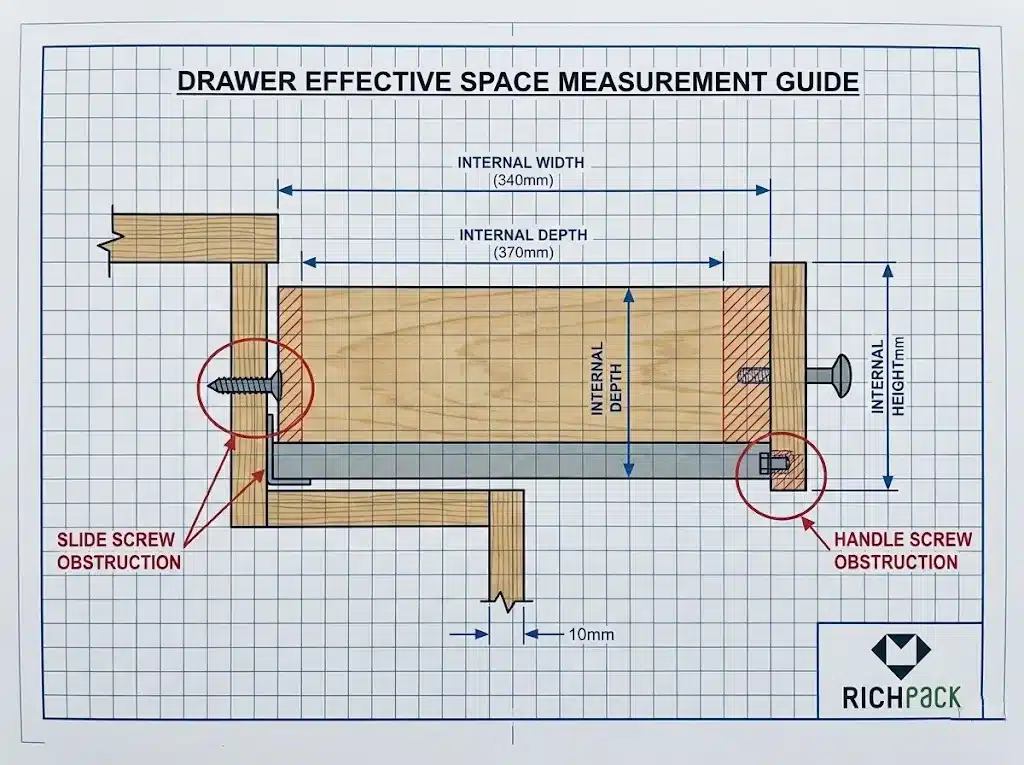
  1. Measure Net Depth: Don’t just measure the distance from one wall to the other. Check for screw heads on drawer pulls inside the front panel—these components usually take up 5 to 10 millimeters of space.
  2. Check Vertical Clearance: Measure the height from the bottom of the drawer to the cabinet frame opening, not from the top of the drawer box. Make sure to leave at least 15 millimeters of finger space for stacking trays.
  3. Address Sliding Issues: If you’re not ordering custom jewelry trays that fit the drawer perfectly (with no gaps from side to side), install non-slip pads or spacers to prevent jewelry from jostling and scratching when drawers are opened.
How to Choose the Best Stackable Jewelry Trays for Drawers - Precise Measurement

Material Quality and Protection

Trays are your first line of defense against inventory loss.

  • Chemical Safety: Cheap glues release sulfur-containing gases that cause silver jewelry to tarnish and turn black quickly. Make sure your supplier can provide proof that their materials are acid-free and tarnish-resistant.
  • Durability: In high-traffic retail stores, paper trays wear out within months. Opt for trays with a core of medium-density fiberboard (MDF) or reinforced plastic, wrapped in premium materials.
  • Ease of Cleaning: If you choose light-colored trays, ensure the material (like high-quality faux leather or microfiber) can be wiped clean easily. Stained display items hurt sales.

Compartment Configuration

Space efficiency equals money. A tray with generic 5×5 cm compartments wastes space for regular rings and is too small for oversized ones.
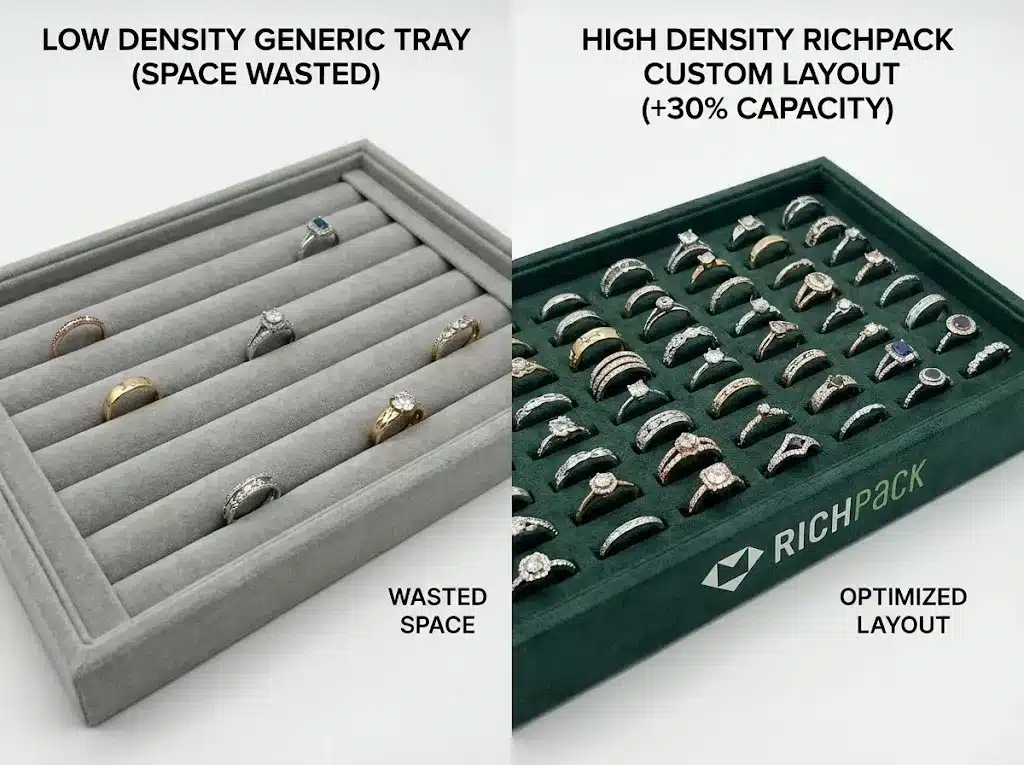
  • Analyze Your SKU Mix: If 60% of your inventory is rings, then 80% of your tray space should be designed as ring slots, not flat-bottom compartments.
  • Perfect Fit: Jewelry should fit snugly in compartments but still be easy to take out. Too loose, and items will jostle; too tight, and staff can’t retrieve them quickly for customers.
How to Choose the Best Stackable Jewelry Trays for Drawers - Compartment

Accessibility and Usage

Think about how the trays will be used in practice. How often do staff need to lift them?

  • Weight Matters: Solid wood trays look premium, but if staff need to stack and unstack them 20 times a day, fatigue sets in fast.
  • Ease of Handling: If trays fit tightly in drawers, choose styles with finger grooves or ribbon pulls. Prying trays out with a fingernail looks unprofessional.

Sets & Flexibility

Your inventory today won’t be the same as your inventory next year. Buying fixed sets locks you into a rigid layout that will eventually become obsolete.

I always recommend modular stackable jewelry trays for drawers, so you can replace individual levels as needed. For example, you might need three levels of ring storage in December, but can swap one level for bracelet storage in summer.

Aesthetic and Budget

Finally, strike a balance between appearance and return on investment (ROI).

  • Front-of-House Areas: Splurge here. Custom branding, premium faux suede, and wooden trim all boost the perceived value of your jewelry.
  • Back-of-House Areas: Choose durable, low-cost materials that prioritize space efficiency and protection over looks.

Pro Tip: Don’t settle for ill-fitting trays just to save money. A cheap, sliding tray harms the customer experience more than you think. Investing in custom jewelry trays tailored to your drawer dimensions usually pays for itself by reducing inventory damage and improving staff efficiency.
Choose a Tray Material That Protects Your Assets

How to Choose the Best Stackable Jewelry Trays for Drawers - Gemini Generated Image n1thzjn1thzjn1th
Gemini Generated Image n1thzjn1thzjn1th – How to Choose the Best Stackable Jewelry Trays for Drawers

We’ve seen many retailers focus solely on the color and look of stackable drawer jewelry trays, while ignoring the parts that actually touch their metal jewelry.

Six months later, they’re paying staff to polish tarnished, blackened silver jewelry instead of selling it. Some trays even break structurally, damaging the jewelry inside and forcing them to write off losses.

In fact, the tray material you choose is an insurance policy for your inventory.

Anti-tarnish Linings vs. Cheap Velvet

If your inventory includes silver or low-karat gold jewelry, regular velvet trays can be a trap.
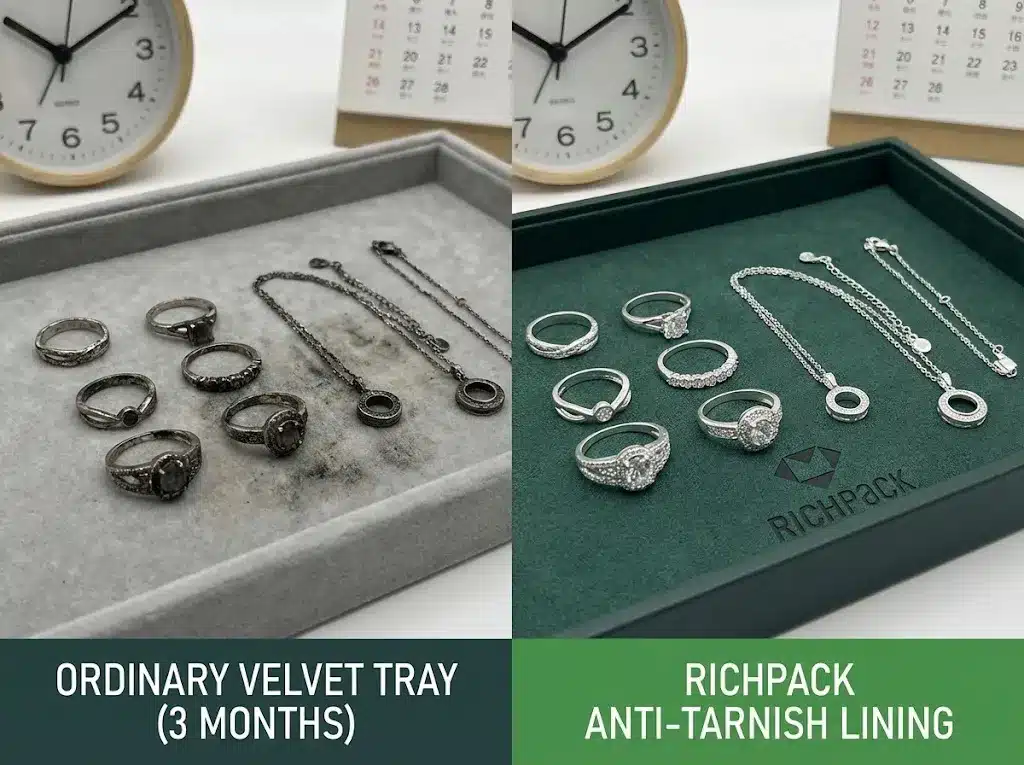
  • Hidden Risks: Many regular velvets use sulfur-containing dyes and glues during production. In sealed drawers, these release gases that speed up jewelry tarnishing drastically. In just a few weeks, bright, shiny jewelry turns black.
  • Professional Choice: We always advise customers to invest in anti-tarnish jewelry storage solutions or choose high-quality products comparable to Luster Loc™.
  • Return on Investment: While the upfront cost may be 15% higher, it saves you hundreds of labor hours spent cleaning tarnished jewelry and re-tagging items.
How to Choose the Best Stackable Jewelry Trays for Drawers - Anti tarnish

MDF vs. Cardboard & Plastic

Jewelry is surprisingly heavy. A full drawer of solid gold necklaces can weigh far more than you expect.
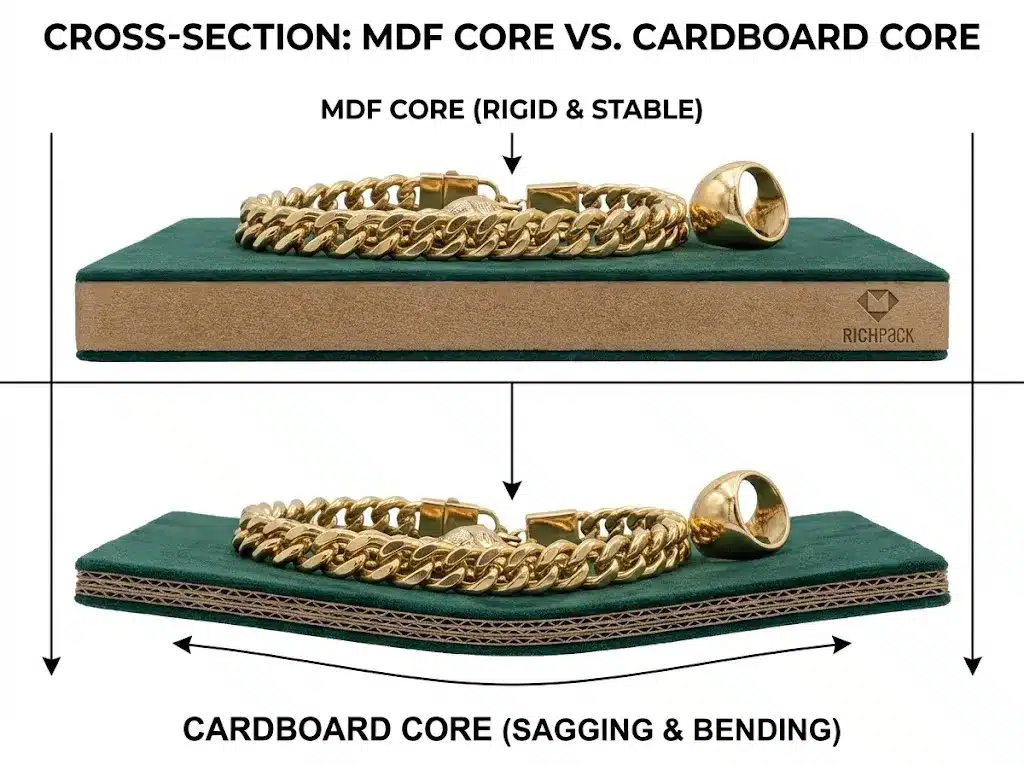
  • Structural Risks: Cheap mass-produced trays often have cardboard cores. Over time, humidity and weight cause the tray bottoms to bend or sag. When you stack these trays, the bottom of the upper tray presses down on the jewelry in the lower one.
  • Why MDF Is Better: For custom drawer jewelry trays, we use high-density MDF or reinforced wood composites as cores. This material stays rigid for years, ensuring the stacking clearances you calculated on day one remain precise even on day 1,000.
How to Choose the Best Stackable Jewelry Trays for Drawers - MDF vs Cardboard

The Rise of Vegan Leather in Modern Jewelry Packaging

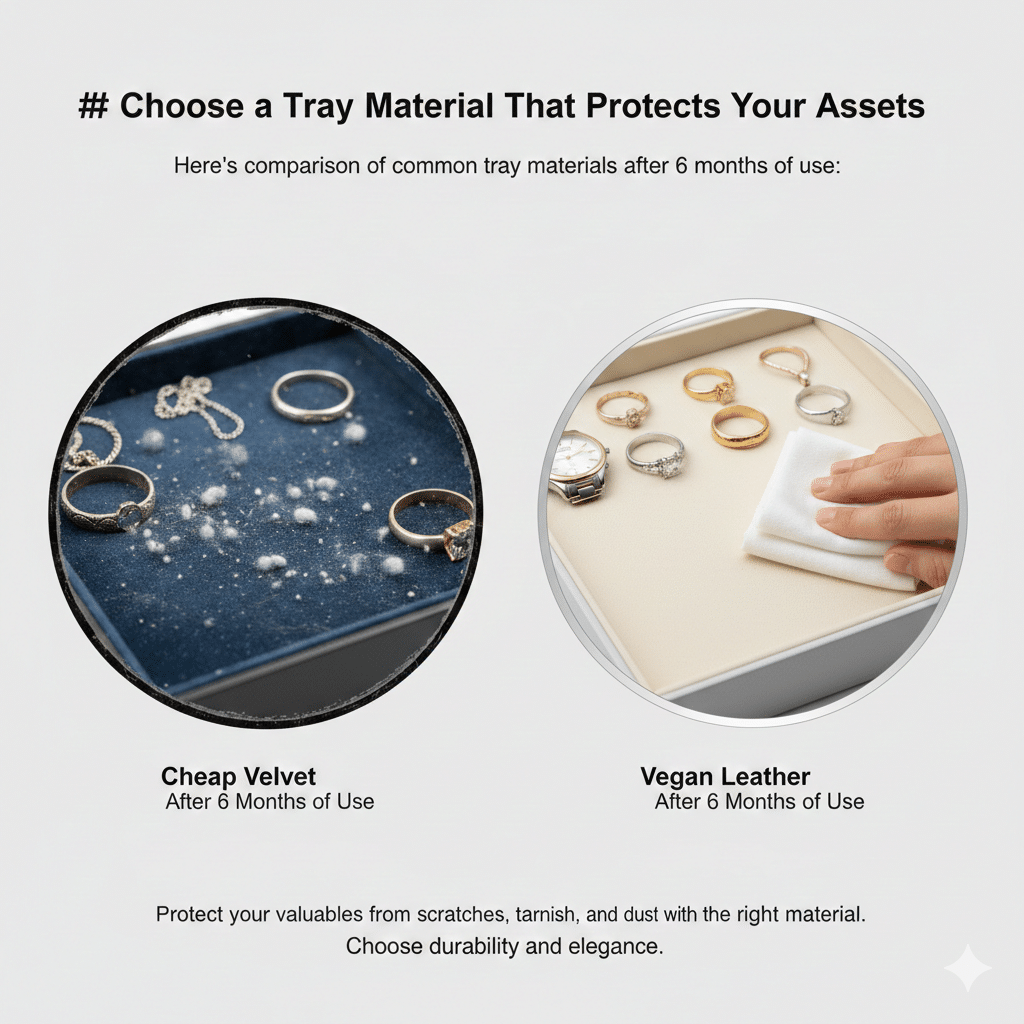
Velvet has a classic, luxurious feel, but it traps dust, lint, and makeup residue easily. In high-traffic retail environments, a dirty tray instantly lowers the perceived value of the diamonds inside.

  • Hygiene and Maintenance: More and more B2B clients are switching to high-quality polyurethane (PU, also known as vegan leather). It has the soft touch of leather and can be wiped clean with a damp cloth—a must for keeping trays looking fresh.
  • Durability: Fabric tray edges fray easily with frequent use, while high-quality vegan leather trays are wrapped tightly and can withstand the daily wear and tear of drawer openings and closings.

Pro Tip: If your drawers are “high-frequency storage spaces” (opened and closed often), prioritize vegan leather or microfiber trays. Reserve delicate materials like velvet or suede for trays inside glass display cases—areas with less frequent contact.

Understand the Pros and Cons of Customized Options

I often hear retailers ask: Why pay for custom molds when I can buy standard trays on Amazon?

It’s a valid question. For new businesses testing the waters, off-the-shelf products work fine.

But for growing brands, relying on ready-made solutions often means paying a “mediocrity tax.”

Let’s compare the actual ROI of investing in custom jewelry trays for drawers versus sticking with standard-sized options.

The “Brand Tax” Advantage

In the luxury market, packaging is part of the product itself.
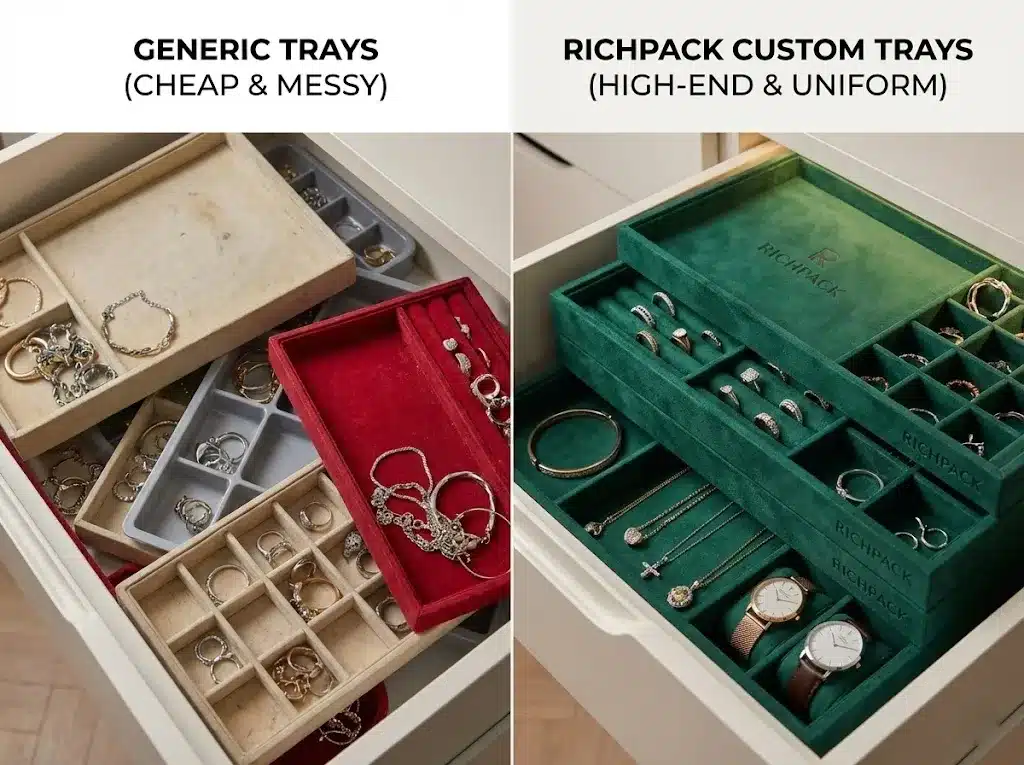
  • Visual Consistency: When customers open a drawer, they shouldn’t see generic white plastic organizers. They should see your brand colors, textures with your logo, and a thoughtfully designed layout.
  • Perceived Value: A custom display environment lets you charge premium prices. We’ve seen clients increase their average order value simply by upgrading their display tools. Customization turns a simple transaction into a branded experience.
How to Choose the Best Stackable Jewelry Trays for Drawers - Brand Consistency

Operational Speed & Perfect Fit

Standard trays are designed for average drawers, which means they rarely fit yours perfectly.
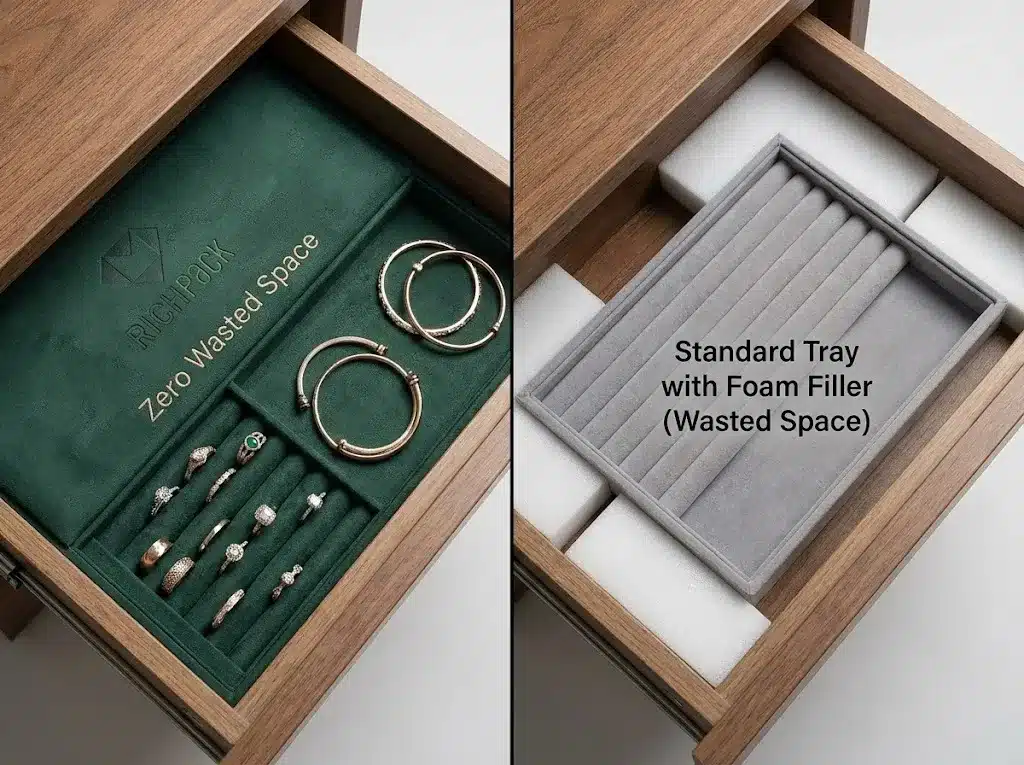
  • Zero Wasted Space: Stackable drawer jewelry trays designed to your cabinet’s exact dimensions can increase storage capacity by 20% to 30%.
  • Workflow Efficiency: Custom compartments mean no more forcing bulky watches into narrow bracelet slots. Every product has its own dedicated spot, cutting down the time staff spend searching and increasing the time they spend selling.
How to Choose the Best Stackable Jewelry Trays for Drawers - Operational Speed

The Reality of Lead Times & MOQs

Let’s be honest—customization doesn’t happen overnight.

  • Wait Time: Unlike off-the-shelf products, custom production requires design approval, mold making, and manufacturing. You need to plan your supply chain 60 to 90 days in advance.
  • Order Thresholds: Most manufacturers have minimum order quantity (MOQ) requirements. For very small stores, this can be a barrier.

Richpack’s Solution: We know lead times are a pain point. That’s why we act as your strategic supply chain partner, offering predictable timelines and inventory planning to ensure you never run out of trays during peak sales seasons.

Who Should Go Custom?

  • Choose Standard Trays If: You run a pop-up shop, have fewer than 50 SKUs, or need trays the next day.
  • Choose Custom Trays If: You have multiple retail locations, your inventory has high value and requires special protection, or your brand reputation demands consistency across every touchpoint.

FAQs:

What Is the Best Material to Prevent Jewelry Tarnish in Drawers?

Moisture and sulfides are the main causes of jewelry tarnishing. Many regular trays use cheap cardboard glues that release sulfides (which speed up tarnishing), while professional-grade stackable drawer jewelry trays use chemically neutral materials.

  • Recommendation: Choose trays with treated microfiber linings or those featuring LusterLoc™ technology.
  • Reason: These materials absorb harmful gases and can keep silver jewelry shiny for up to 35 years. Avoid using regular “flocked” plastic trays if you need to store silver inventory long-term.

Can I Get Custom Jewelry Trays Made for Odd-Sized Antique Drawers?

Absolutely—and honestly, it’s the smartest choice for older cabinets. Standard inserts rarely fit vintage or custom cabinetry, often leaving awkward 2-inch gaps. These gaps collect dust and waste valuable space. Custom drawer jewelry trays are made to the exact millimeter dimensions of your drawer’s interior. This lets you utilize that wasted space, usually adding an extra row of ring slots or bracelet compartments that would be lost with standard trays.

How Do I Stop My Jewelry Trays From Sliding When I Open the Drawer?

That rattling, sliding sound is actually your jewelry getting scratched. You have two solutions:

  • Quick Fix: Use non-slip silicone mats or rubber-coated drawer liners under stacked trays.
  • Professional Solution: Customize a base tray or frame that fits your drawer perfectly (with zero gaps). This locks the entire stack of trays in place, ensuring your jewelry stays exactly where you put it when you pull the drawer open.

What Is the Difference Between Velvet and Vegan Leather Liners?

The difference comes down to a trade-off between maintenance needs and traditional style.

  • Velvet: Boasts a classic, high-end look and strong friction (anti-slip). However, it traps dust easily, and stains are nearly impossible to remove completely.
  • Vegan Leather (Polyurethane): An emerging choice in modern jewelry packaging. It has a clean, sleek appearance, is highly durable, and most importantly, can be wiped clean effortlessly.

My Recommendation: If the tray will be in a high-traffic area with frequent handling, choose vegan leather to maintain a clean brand image.

What Are the Standard Dimensions for Jewelry Drawer Inserts?

Common standard sizes on the market include 14×8 inches or 7×8 inches, but these are designed for average home dressers—not commercial jewelry display cases. In B2B settings, relying on these preset sizes usually forces you into a frustrating game of spatial Tetris. Instead of sacrificing storage capacity, opt for a modular system. Its dimensions are determined by the number of SKUs, not arbitrary standards set by factories a decade ago.

Gift Icon

Get a Gift Card!

Just submit your email to get exclusive offers (reply within 12 hours)

×

Contact Us

×