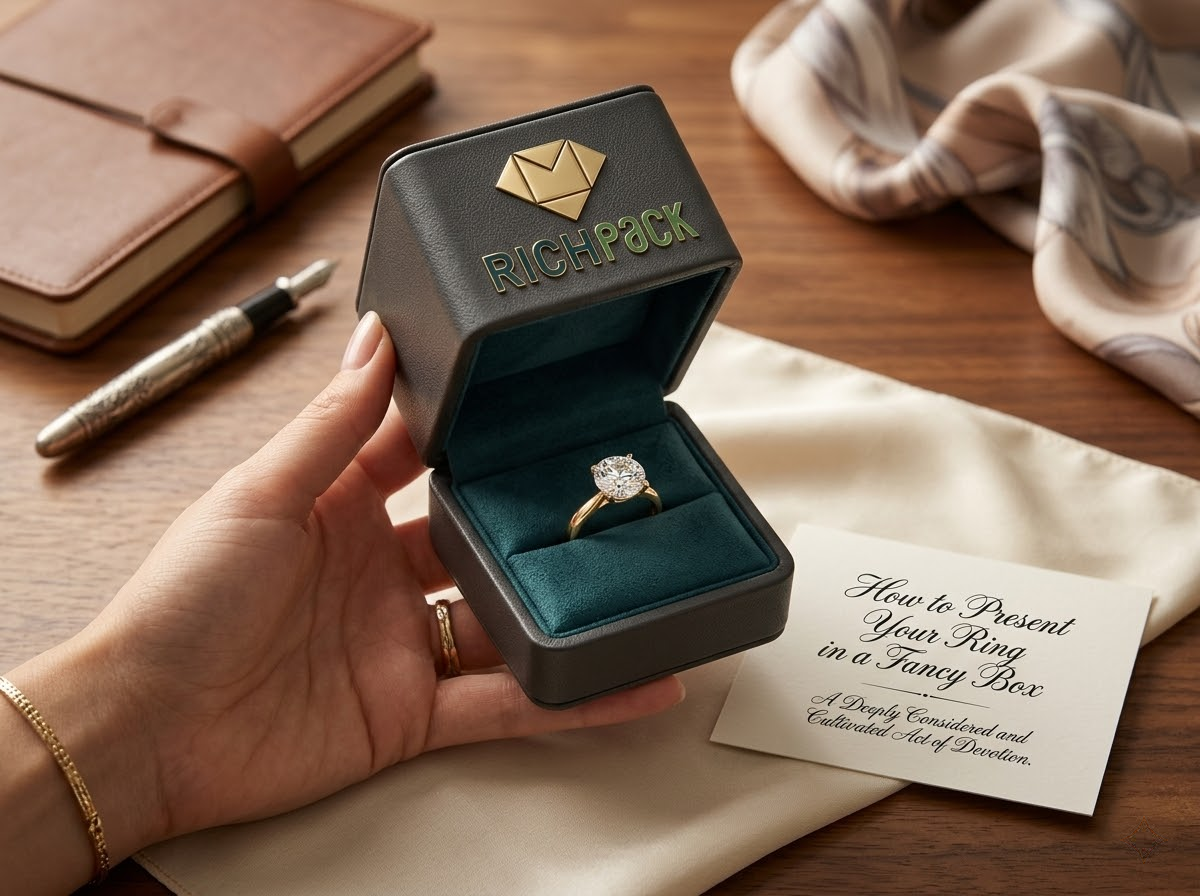


If you want a fancy ring box to feel premium, do not start with decoration. Start with the reveal. The best presentation happens when the box fits the ring, the setting, the light, and the story behind the moment.
A good box can do more than hold a ring. It can improve proposal photos, make a wedding detail flat lay look more refined, and help a jewelry brand feel more trustworthy from the first touchpoint. For context, GIA notes that diamonds are the hardest natural material on earth and that most diamonds formed more than a billion years ago. A product with that kind of rarity and symbolic value should not be presented in packaging that feels generic or forgettable.
After reading this guide, you will learn how to choose the right box style, how to present the ring with more impact, and how to use custom ring boxes to improve both emotion and brand value.
A fancy ring presentation feels intentional when every part of the reveal supports the ring instead of competing with it. The box should control focus, improve the opening sequence, and give the ring a cleaner visual frame.
Many people think a premium presentation is about adding more. In practice, it is often about editing better. The reveal should feel measured, stable, and easy to understand at a glance.
The first question is simple. Where will the reveal happen?
A dinner proposal, a beach proposal, a wedding ceremony, and a retail counter all reveal different box features. A slim box that works in a jacket pocket may not feel substantial enough for a high-end retail handoff. A glass display box may look beautiful in a styled flat lay, but perform poorly in travel.
Choose the moment first, then choose the box.
Best-fit use cases
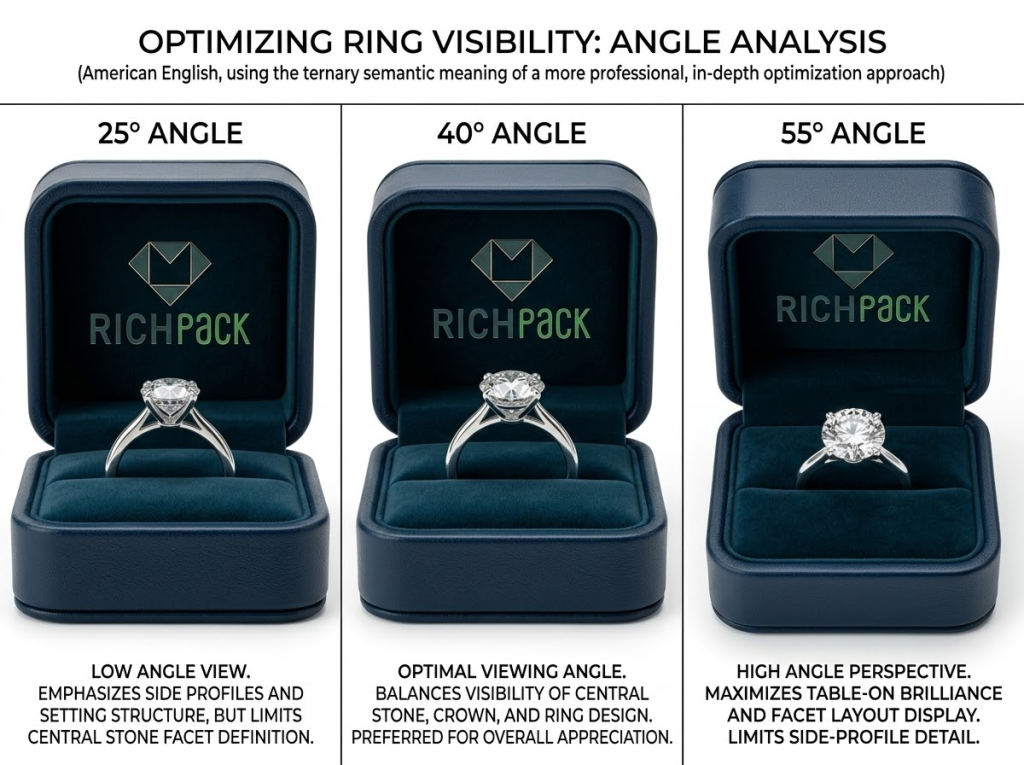
A fancy ring box should support the stone, not mute it. Color, scale, and insert angle all influence how premium the ring looks when the lid opens.
A bright diamond usually benefits from deeper backgrounds because contrast makes the stone read faster. A darker gemstone can look clearer against ivory, champagne, blush, or sand-toned interiors. GIA notes that even subtle color differences affect gemstone value perception, especially in fancy color diamonds. That makes interior color choice more than a styling issue. It is part of how the customer reads the stone.
Insert height matters too. If the ring sits too low, the reveal loses energy. If it leans too far forward, the ring can look unstable. In most presentation boxes, a balanced ring angle between 35 and 50 degrees gives the best mix of visibility and security.
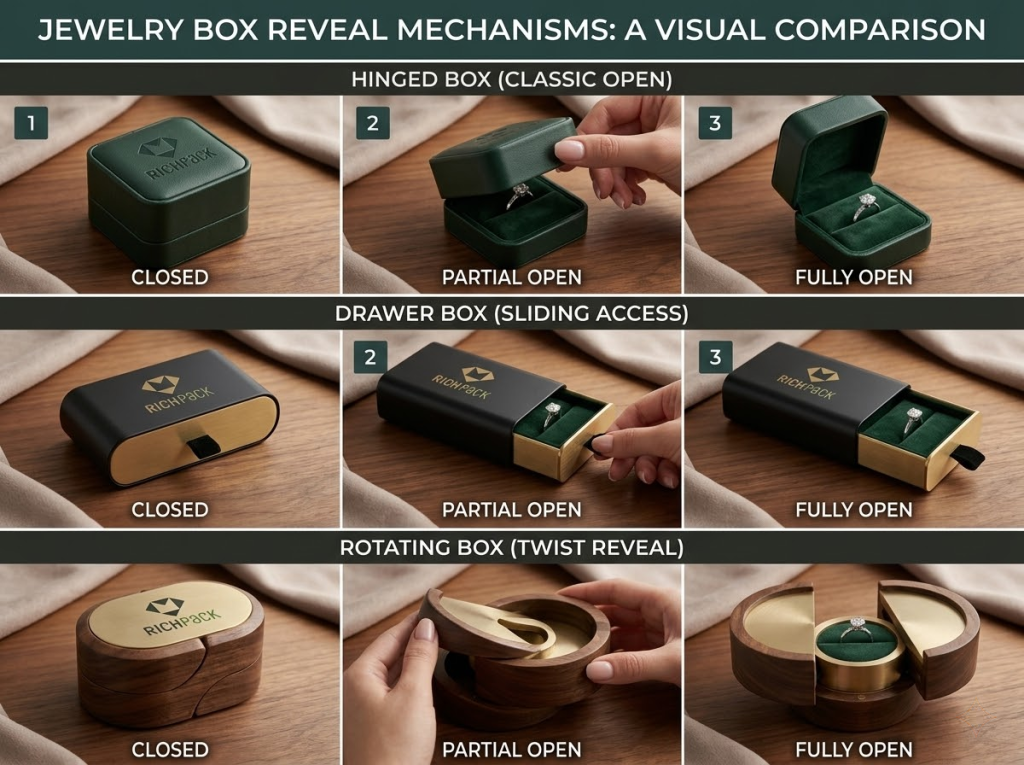
A better reveal starts with motion. The opening mechanism controls pacing before the ring is even visible.
A hinged lid feels classic. A drawer-style structure slows the reveal and creates a more deliberate sequence. A rotating fancy ring box adds movement and works especially well in short-form product videos or proposal content made for social sharing.
Choose the mechanism based on use, not novelty.
Use these reveal formats with intention
Before a list like this, the key point is simple. The opening style changes the emotional speed of the reveal. Fast openings feel direct. Slower openings feel more ceremonial.
A customizable fancy ring box feels premium when personalization is limited and precise. One strong detail usually works better than several average ones.
A monogram, date, initials, short message, or interior logo can shift the box from standard packaging to keepsake packaging. That applies to both personal gifting and custom ring boxes made for brand programs.
Best personalization options
Before you add any of them, use one test. If the box still looks calm from three feet away, the customization level is probably right.
A photo-ready ring box keeps working after the reveal. It may show up in engagement photography, wedding flat lays, UGC, influencer content, and unboxing videos.
That is why material finish matters. Velvet softens light. Matte rigid surfaces reduce glare. Glass and acrylic can look very clean, but they show reflection quickly and need more controlled styling. In Fine Art Wedding Photography, glass and acrylic boxes are often used because they create an airy, minimal, editorial look. That connection matters because those styles are not just materials. They are visual signals linked to a specific photography aesthetic.
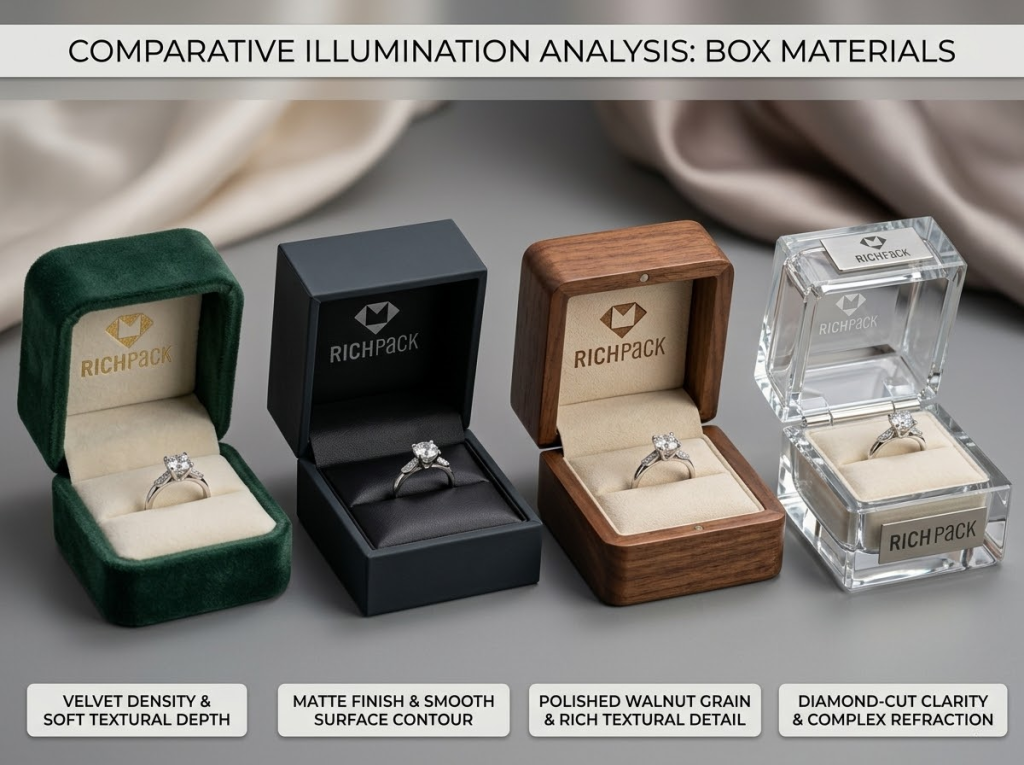
The best fancy ring box style depends on the visual mood, the use case, and the level of protection you need. Do not choose based on trend alone. Choose based on what the box needs to do.
This section gives you a practical breakdown by material and structure.
A velvet ring box creates softness immediately. It feels romantic, tactile, and ceremony-ready. That is why it keeps appearing in engagement shoots and wedding detail photos.
Velvet is also flexible in color. Rich tones like emerald, navy, burgundy, and dusty rose can create a stronger luxury feel than plain black, especially when the brand or wedding palette has a defined mood.
Why velvet works
A wooden ring box works best when the goal is permanence. It feels grounded, keepsake-driven, and easier to personalize with engraving.
Wood is a strong choice for destination proposals, rustic styling, heritage brands, and gift moments where the box should still matter after the ring is presented.
Why wood works
Glass and acrylic ring boxes are display-first packaging formats. They show the ring clearly and work well in editorial styling.
They are especially effective in Fine Art Wedding Photography, minimalist wedding styling, and high-visibility flat lays where the ring needs to feel surrounded by light, flowers, moss, or clean architectural space. They are less ideal for rough travel, repeated carrying, or fully hidden proposal setups.
Why glass and acrylic work
Leather-look and matte rigid boxes often feel more controlled than softer or trend-driven formats. They signal precision, structure, and consistency.
For luxury jewelry brands, these formats are often easier to scale because they hold logos, inserts, and consistent finishes more reliably across production runs. They also integrate more smoothly into broader custom jewelry packaging systems.
Why rigid formats work
LED and rotating ring boxes can work well, but only when they support a real use case.
An LED ring box is useful in low-light proposals because it helps the center stone read more clearly. A rotating box is useful in social-first content because movement improves visual engagement. These are not always better. They are just more specialized.
Where they make sense
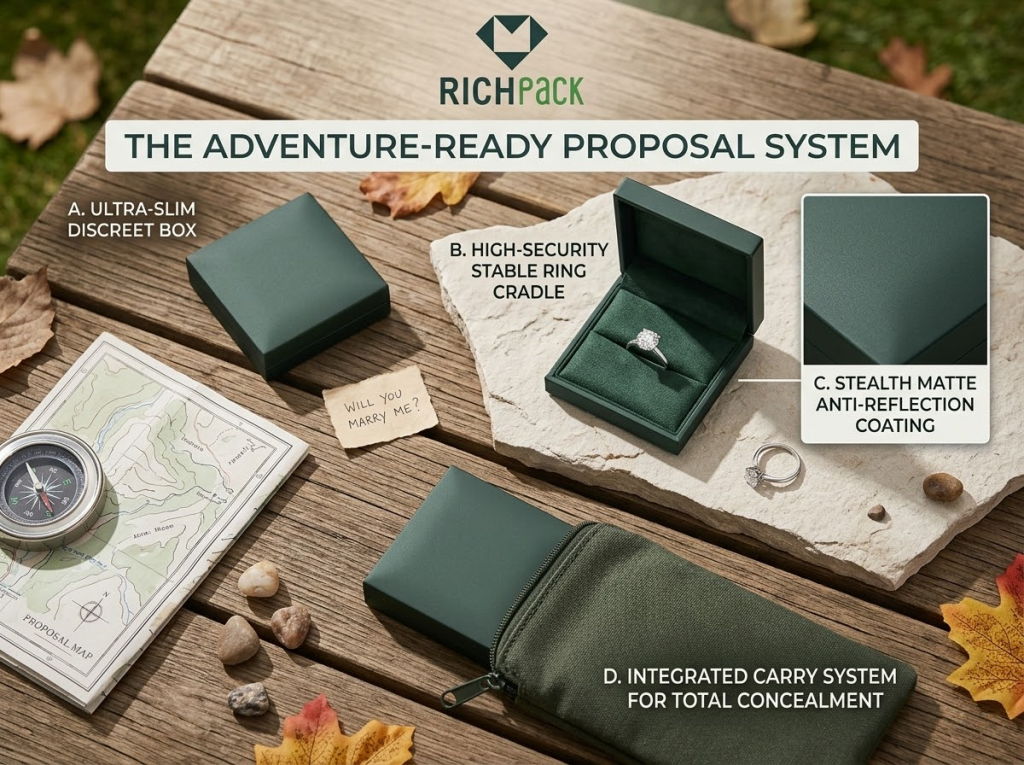
A slim ring box solves a practical problem. It helps the ring stay hidden before the reveal.
For most surprise proposals, a slim box should stay under 1.5 inches thick. Once the box gets noticeably thicker than that, it becomes much harder to carry cleanly in a jacket, trouser pocket, or small evening bag. A slim format still needs a firm insert and stable shell, or it starts to feel flimsy instead of elegant.
Why slim boxes work
The same fancy ring box can perform very differently depending on the occasion. A good design choice in one setting can feel wrong in another.
That is why the reveal should be planned around context, not just aesthetics.
A dinner proposal needs control. The box should open smoothly, stay stable in one hand, and keep the ring centered under warm ambient light.
In most cases, a hinged or slim rigid box works best. Avoid oversized novelty shapes. In candlelight or restaurant lighting, a simpler silhouette usually reads as more expensive.
Outdoor proposals add movement, moisture, bright light, and uneven surfaces. Those variables change what counts as good packaging.
Choose a box with a secure insert, firm closure, and low-glare finish. Matte rigid shells and finished wood often perform better outside than highly reflective surfaces. If the proposal happens at sunset or after dark, an LED feature may help.
A fancy wedding ring box needs to perform in two roles. It carries the rings for the ceremony, and it appears in photography.
That is why photographers often favor velvet, wood, and glass. Each gives the ring a stronger visual frame. Velvet adds softness. Wood adds warmth. Glass adds air and light.
If the box will be carried by a ring bearer, keep the structure secure and easy to hold. A beautiful box that opens too easily is still the wrong box.
A gift reveal feels more complete when the box already feels gift-ready before the lid opens.
For anniversaries, birthdays, and milestone gifting, the ring box can carry some of the emotional weight. Soft-touch coatings, a custom sleeve, a date, or a message card can make the entire package feel more intentional.
A retail counter reveal is emotional, but it is also commercial. The box affects how polished the sales experience feels in real time.
When a sales associate presents a ring in a structured, well-finished box with a good insert, the customer reads that as quality control. This is one reason premium packaging matters in live selling. It signals that the brand manages details well.
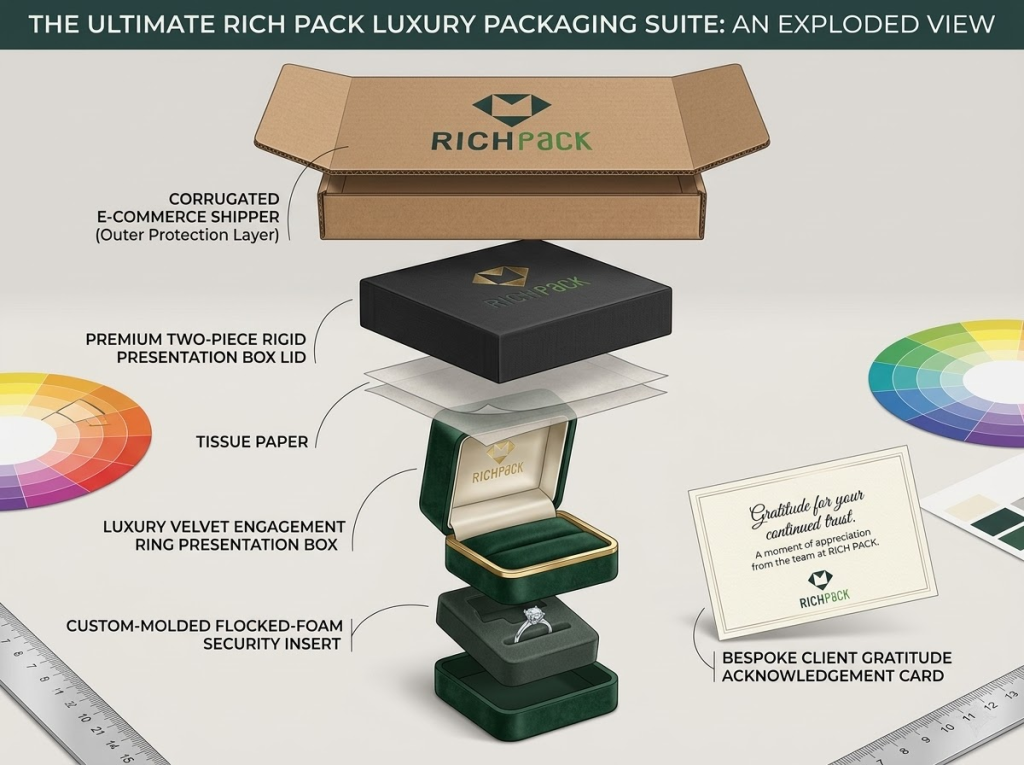
E-commerce unboxing happens in layers. The shipping carton protects. The branded outer package sets the tone. The ring box delivers the emotional reveal.
That means the fancy ring box must work inside a larger system. It should survive parcel handling, align with the brand palette, and still feel premium when opened at home. This is where custom ring boxes need both structure and strategy.
The best customization feels controlled. It gives the box more meaning without making it noisy.
This is true in both personal gifting and B2B packaging. Good customization sharpens the identity of the box. Bad customization makes it feel crowded.
A monogram is compact, elegant, and easy to place. It works well for weddings, anniversaries, and keepsake packaging.
It also gives the box a more personal identity without changing the main surface too much.
Yes, especially when the box is meant to be kept. A proposal date or wedding date turns the packaging into a memory object.
It works especially well on wood, leather-look surfaces, and matte rigid boxes where the finish can hold the detail cleanly.
A logo should improve recognition, not dominate the box. One clean foil stamp or one small debossed mark is often enough.
If the brand identity is already minimal, let material quality and shape do more of the work.
The insert controls protection, ring angle, and first visual impact. It is one of the most important parts of the box.
A weak insert can make a premium shell feel cheap. A strong insert can make a simpler shell feel much better than expected.
What a better insert should do
Before this kind of checklist, the main idea is clear. The insert is where presentation and protection meet.
Color influences emotion, contrast, and brand consistency. A deep green or navy velvet box may feel luxurious, but it also changes how the ring reads in photos. An ivory insert may soften the look, but it may not create enough contrast for every stone.
Choose color based on the ring and the brand palette, not just trend moodboards.
A message card adds context with very little visual clutter. It can carry a proposal line, a care message, a thank-you note, or a short brand story.
For e-commerce brands, this is one of the easiest ways to add warmth without overloading the ring box itself.
A ring box usually looks cheap because of small decisions, not one big failure. Proportion, surface finish, insert quality, and opening feel all shape the result.
These are the mistakes that do the most damage.
A box that is too large can make the ring feel smaller than it is. A box that is too tight can make the reveal feel cramped.
For most single-ring boxes, an outer footprint around 2.0 to 2.75 inches wide creates a balanced frame without overwhelming the product. Larger sizes can still work, but the box has to justify the space with structure or storytelling.
If the stone blends into the insert, the reveal loses clarity. This often happens when the interior color is selected without testing gemstone tone, metal color, or expected lighting.
Always test contrast before locking the design.
A ring box must protect the ring during handling, transport, repeated opening, and storage. If the insert is loose or the shell is weak, the box may photograph well and still fail in real use.
That tradeoff is not worth it.
Too many finishes, icons, lines, patterns, or phrases can make a premium box feel busy. Most luxury packaging performs better when it is edited down.
Use fewer elements and give each one more space.
The lid should not wobble. The drawer should not drag. The closure should not feel uncertain.
These small tactile signals shape how expensive the box feels, often within the first two seconds of contact.
This is the biggest mistake for brands. The ring may be the hero, but the packaging controls the frame around that hero.
If a premium ring arrives in generic packaging, the perceived value drops before the customer even tries the ring on.
A fancy ring box becomes a brand asset when it improves perception, trust, and repeatability across customer touchpoints. At that point, it is no longer just a presentation accessory.
It becomes part of the sales system.
Packaging changes how customers judge quality. Weight, finish, insert quality, and opening motion all influence perceived value before the product is handled in full.
That is why premium jewelry brands invest in a packaging strategy. The box does not replace product value, but it can frame product value more effectively.
A signature color, repeatable structure, and consistent finish help customers remember the brand. Over time, those details become part of the identity system.
This matters in retail, ecommerce, product photography, and influencer content, where recognition often starts with shape and color before it starts with text.
A better box helps the customer more than once. It improves the reveal, protects the ring after purchase, supports gifting, and often becomes a keepsake.
That is what good packaging should do. It should keep creating value after the sale.
Retail needs visual polish and repeatable presentation. E-commerce needs shipping logic and structural protection. Good custom packaging has to do both.
That means brands should choose box formats that are not only attractive but also practical in distribution.
A gift-ready ring box reduces effort for the buyer. The less rewrapping and repackaging the customer needs to do, the easier it is to give the product with confidence.
That reduced friction helps both personal gifting and premium DTC brand experience.
One beautiful sample is not enough. If the fiftieth unit feels weaker than the first, the packaging strategy breaks.
That is why production consistency matters. Material sourcing, color control, insert fit, and logo placement all need to stay stable across the run.
The best fancy ring box material depends on what you value most. Velvet usually wins in romance and photography. Wood wins on keepsake value. Matte rigid boxes win on branding and production consistency. Glass and acrylic win on display styling.
If you need a fast decision, use the comparison tables below instead of guessing by trend.
Before you choose a material, focus on one question. Do you need emotional softness, visual clarity, stronger branding, or better structural protection? The right answer will narrow your material choice fast.
| Material | Best For | Strength | Watch Out For |
| Velvet | Proposals, wedding photos | Soft luxury feel, strong photography performance | Can collect dust if poorly finished |
| Wood | Keepsakes, engraving, rustic styling | Natural character, lasting feel | Can feel heavy or too casual if the finish is rough |
| Glass | Wedding styling, display | Airy and elegant look | Reflection and fragility |
| Acrylic | Modern display, branded visuals | Clean visibility, lower break risk than glass | Can feel cold if not styled well |
| Leather / Matte Rigid | Retail, premium branding | Strong structure, scalable branding | Needs precise finishing to avoid a mass-market feel |
The main difference between structures is not appearance. It reveals speed, portability, and support. Some open quickly. Some create more ceremony. Some hide better in public settings.
| Structure | Best For | Why It Works |
| Hinged lid | Classic proposals | Direct and timeless opening |
| Drawer style | Layered storytelling | Adds ceremony and supports message cards |
| Rotating | Social video, dramatic reveal | Adds movement and visual interest |
| Slim profile | Travel and surprise proposals | Easier to hide and carry |
| Double-slot | Wedding bands or paired rings | Better for the ceremony and couple styling |
You do not need every format. You need the one that matches the moment and the product path. These are the cleanest pairings.
If branding flexibility matters most, rigid, leather-look, and wood formats usually perform best. They take foil, deboss, engraving, and logo placement more cleanly than softer surfaces.
Velvet can still work, but it requires more restraint to keep the result refined.
For travel and shipping, structured, rigid, and leather-look boxes usually offer the best mix of support and consistency. Glass is usually the most delicate. Acrylic handles impact better than glass, but it still needs a stable insert and outer protection.
A fancy ring box looks expensive when the proportions are clean, the insert holds the ring at the right angle, and the material finish feels intentional. Weight, opening motion, and color contrast also shape the premium feel.
Velvet is better for a softer, more romantic look and usually performs better in engagement and wedding photos. Wood is better when you want a natural keepsake feel, engraving, and a more lasting presentation style.
They can be, especially when the moment is captured on video or shared on social media. For a quiet and classic proposal, a hinged or slim box often feels more natural and less theatrical.
Limit the customization to one or two details, such as initials, a date, a foil logo, or a message card. Let the material, shape, and insert quality do most of the visual work.
Contrast matters most. Darker box colors often help bright diamonds stand out. Lighter interiors may work better for darker gemstones. Test the ring under the same lighting conditions you expect to use for the reveal or shoot.
Yes. Strong packaging can improve perceived value, make the brand feel more trustworthy, and create a more premium unboxing experience. It can also improve gifting ease and brand consistency across retail and e-commerce.
A fancy ring box works best when it fits the occasion, supports the stone, and adds meaning without adding clutter. The strongest designs balance reveal quality, photography, protection, and brand storytelling in one controlled package.
If you want to create a better proposal moment or build custom ring boxes for a jewelry brand, focus on material, scale, insert quality, and restrained customization. That is what turns a simple box into a premium experience.

Just submit your email to get exclusive offers (reply within 12 hours)





 PREV
PREV