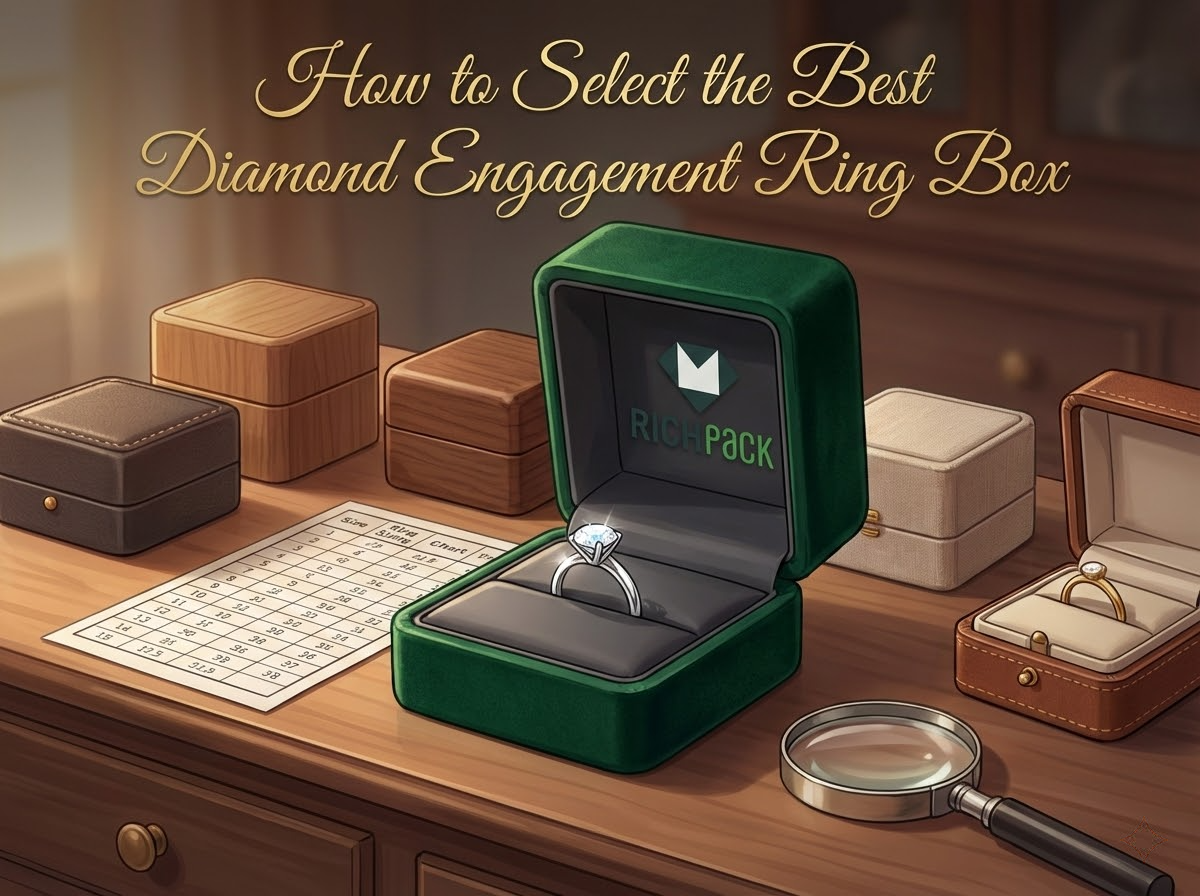


Your client feels the box before they see the ring. That first half-second really matters. I always look at the weight and the lid resistance. These small details frame the diamond. Research in the Journal of Consumer Psychology proves this. People judge value in under 0.5 seconds.
In this guide, I will show you how to pick the right materials. We will look at brands that do it well. You will also see what buyers say online.
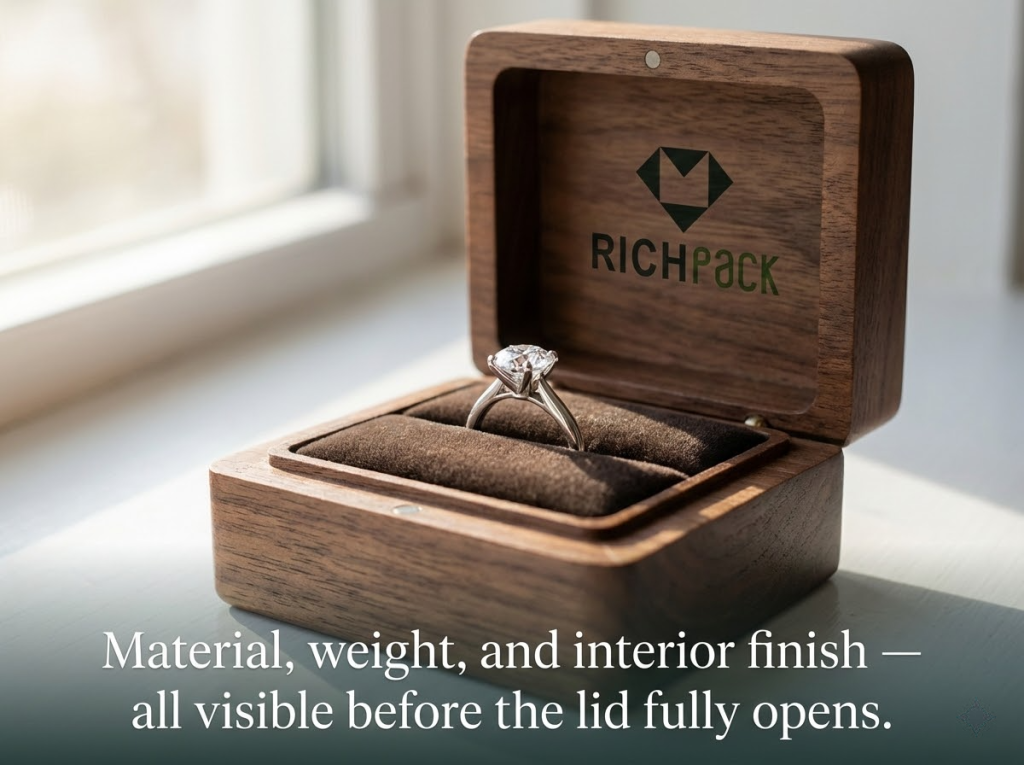
Grand View Research shared its 2025 report recently. Rings now make up 33.89% of the USD 381.54 billion market. Most sales still happen in physical stores. That is nearly 84% of all revenue. Millions of people propose every single year. In every case, the box arrives first.
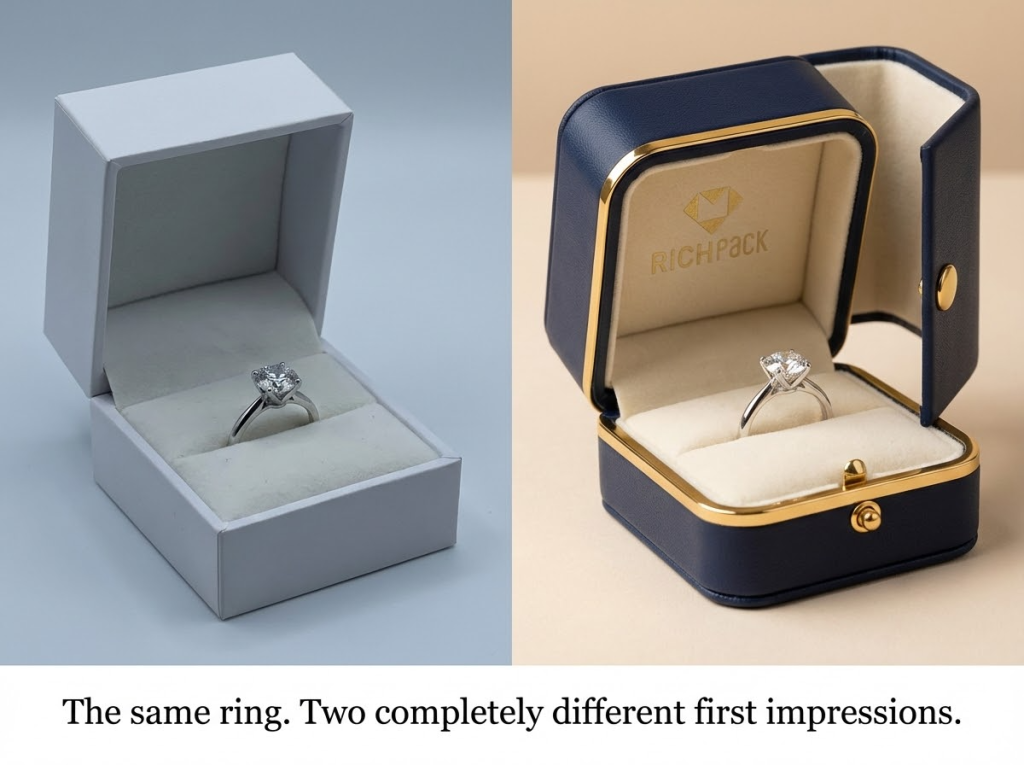
Your client’s partner sees the box first. It appears right when the question is asked. This is the peak of the moment. That touch sets the mood for the ring. I suggest using weighted hardwood boxes with velvet. This signals a high price tier immediately.
A thin plastic box does the opposite. It makes the stone look cheap. This is vital for rings over USD 5,000. You spent months on the diamond. The box is the final five seconds of your work. It either helps or hurts your brand.
The Journal of Consumer Psychology explains this well. Our brains judge value through touch. Weight and texture trigger these thoughts fast. This happens in less than half a second. It is a proven human habit.
Oxford University studied this in 2022. They tested heavy boxes with magnetic lids. Perceived value went up by 22%. The product itself did not change. For a USD 6,000 diamond, this is huge.
I saw a great case study from ECOICOLOR in 2024. A London startup sold high-quality lab diamonds. They used basic paper boxes at first. Customers were not very happy. They switched to custom boxes with soft velvet. Satisfaction scores went up quickly. People shared the boxes on social media more. The ring stayed the same. The package finally matched the quality.
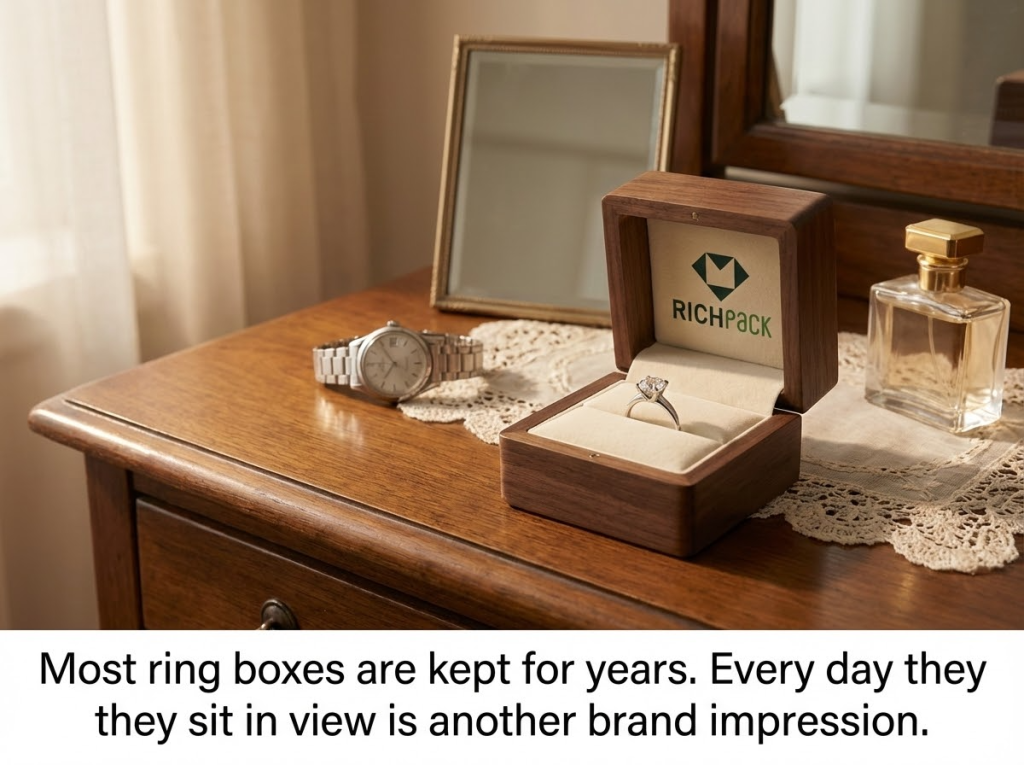
People rarely throw ring boxes away. They keep them for many years. Families look at them during visits. They sit on vanities every day. Interpak analyzed this for 2026. Good packaging leads to more social media posts.
I see this on WeddingWire often. Buyers say the box matters more after the proposal. It becomes a family treasure. People show the ring to friends many times. They open the box again and again. Proposal agencies get free brand exposure this way.
I track feedback on Reddit and WeddingBee. Disappointment over a bad box is real. It often outweighs the box cost. People hate lids that do not close properly. They notice cheap hinges that rattle.
One Reddit user shared a sad story. The ring was perfect. The box felt like a dollar store item. They felt let down. You can easily avoid this. A box costs only 3% to 5% of the ring. Getting it right is cheap. Getting it wrong is a big mistake.
We released new data in late 2025. Better boxes can raise sales by 20%. This is true for boxes with LED lights. The Luxury Institute also has data. High-end packaging makes people 10 times more likely to give a gift.
Pandora switched to recycled boxes in 2021. Their customer loyalty rose by 33%. Bulgari used a special snake design on boxes. Their Instagram engagement jumped by 25%. These brands know the box is the product.
The jewelry box market grows every year. It will reach over 6.13 billion USD by 2032. Most luxury brands choose rigid boxes for their strength. This choice makes up 38.4% of the market. The material you pick defines your brand. It separates cheap boxes from premium ones.
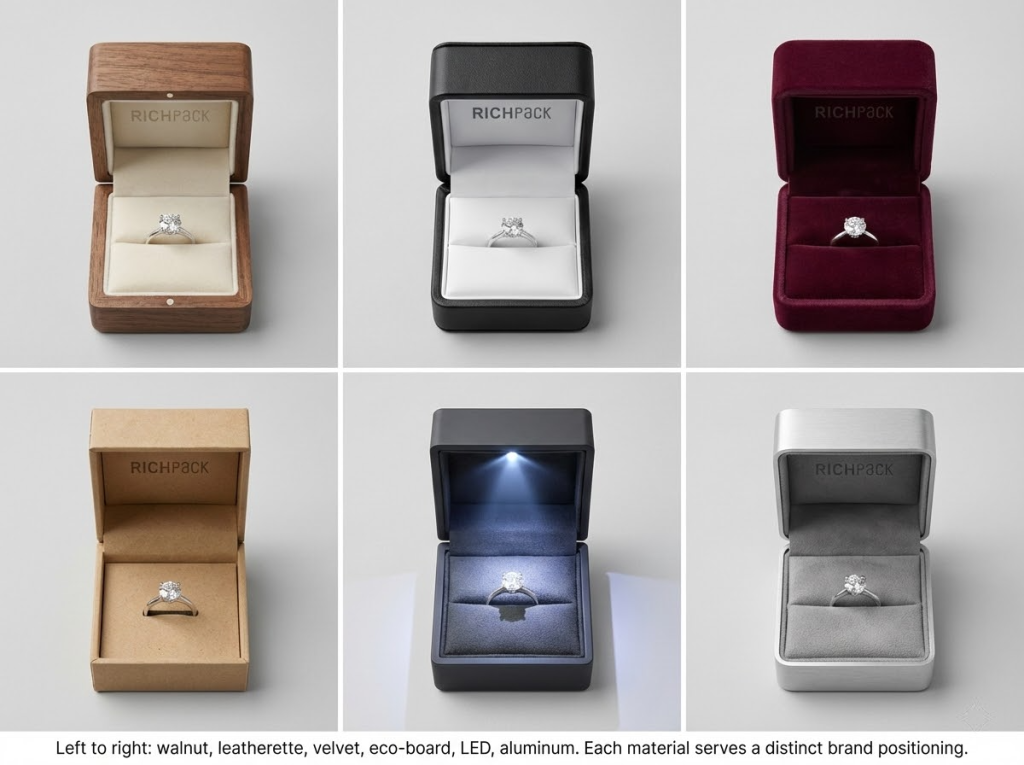
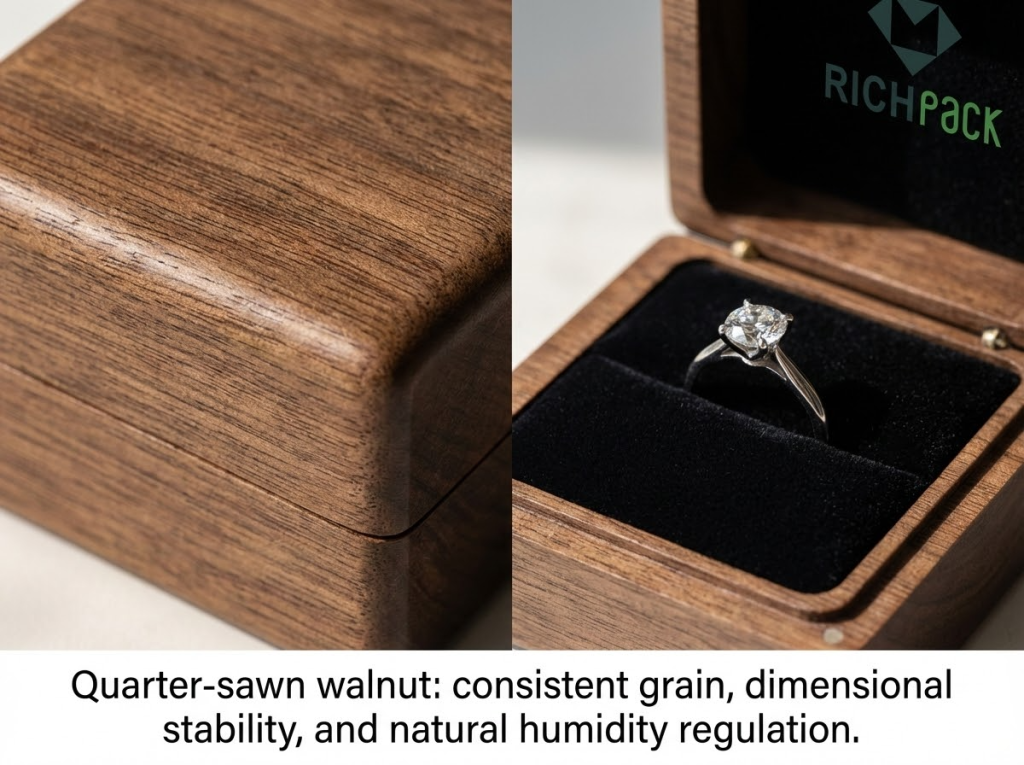
I see 85% of top brands use solid hardwood. It is the gold standard for high-end rings. Hardwood keeps the right humidity levels inside. This prevents the jewelry from tarnishing over time. A good walnut box will last for decades. It will not warp or lose its shape.
I suggest two main wood types. American Black Walnut looks great with platinum rings. Its dark tones create a sharp contrast. Mahogany has warm red tones. It pairs well with yellow gold. It also handles high humidity quite well.
Here is a tip from my experience. Always ask your supplier for quarter-sawn samples. This cut stays stable and looks better. Also, check the wood moisture certificate. Aim for 6% to 8% for the best results.
Use wood for items over 5,000 USD. It fits brands focused on craft and history. For instance, WOLF used walnut for their 190th anniversary. They wanted to show off their heritage.
Real leather feels and smells like true luxury. It develops a unique look as it ages. This works perfectly for custom jewelry pieces. I have found that scent builds brand memory. People remember the smell of quality leather.
For large stores, use high-grade vegan leather. It resists moisture and stays consistent. It handles daily use in display cases well. Most commercial retailers now pick this over real leather.
Pick your colors with a plan. Black is a safe, classic choice. Navy and forest green look great in photos. They are popular with modern online brands. Blush or champagne colors sell best in spring.
Try carrying two colors at once. Use black for your main stock. Add a seasonal color like blush for Valentine’s Day. This keeps your brand looking fresh. You do not need new tools for this.
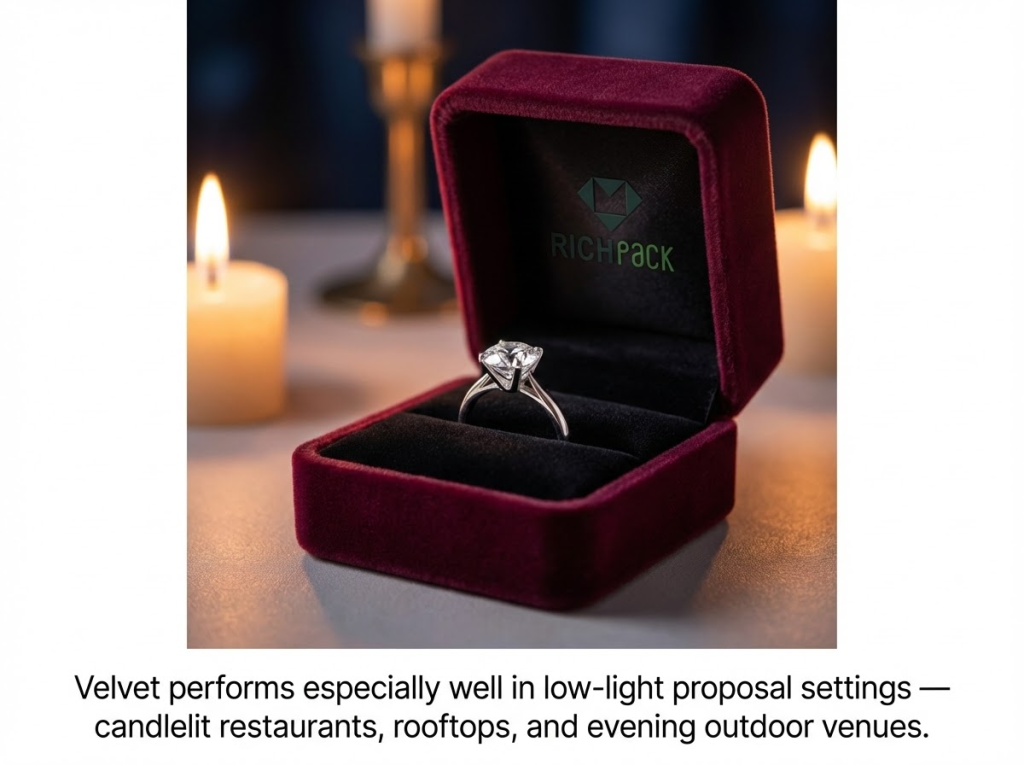
Velvet is the heart of the proposal moment. It has been the top choice for a century. The soft texture shows that you care. It protects the ring better than foam or satin.
I look at two types of velvet. Standard velvet is the classic industry choice. Micro-velvet is better for humid areas. It keeps its shape and does not flatten.
For your most expensive rings, use silk linings. Silk feels cool and has a special shine. It catches the light during the big reveal. It is delicate, so use it for one-time gifts.
Test your velvet samples for humidity. Put a box in a steamy bathroom for 30 minutes. Standard velvet might mat down. Micro-velvet will bounce back quickly. This test saves you from future complaints.
Sustainable boxes are a huge win right now. Most shoppers will pay more for green packaging. Young couples care deeply about the planet. They check for eco-friendly labels before they buy.
Pandora switched to 100% recycled materials recently. This move boosted their customer loyalty. Mejuri also uses reusable pouches now. They cut their plastic use by 90%. Both brands saw great marketing results.
Look for FSC-certified board for your boxes. It is strong and fully recyclable. You can still get a luxury feel with matte finishes. Bamboo is another great choice for a premium look. It is very strong and grows fast.
Always check the official paperwork from your supplier. Do not just trust their marketing words. Ask for the FSC chain-of-custody documents. This proves your boxes are truly green.
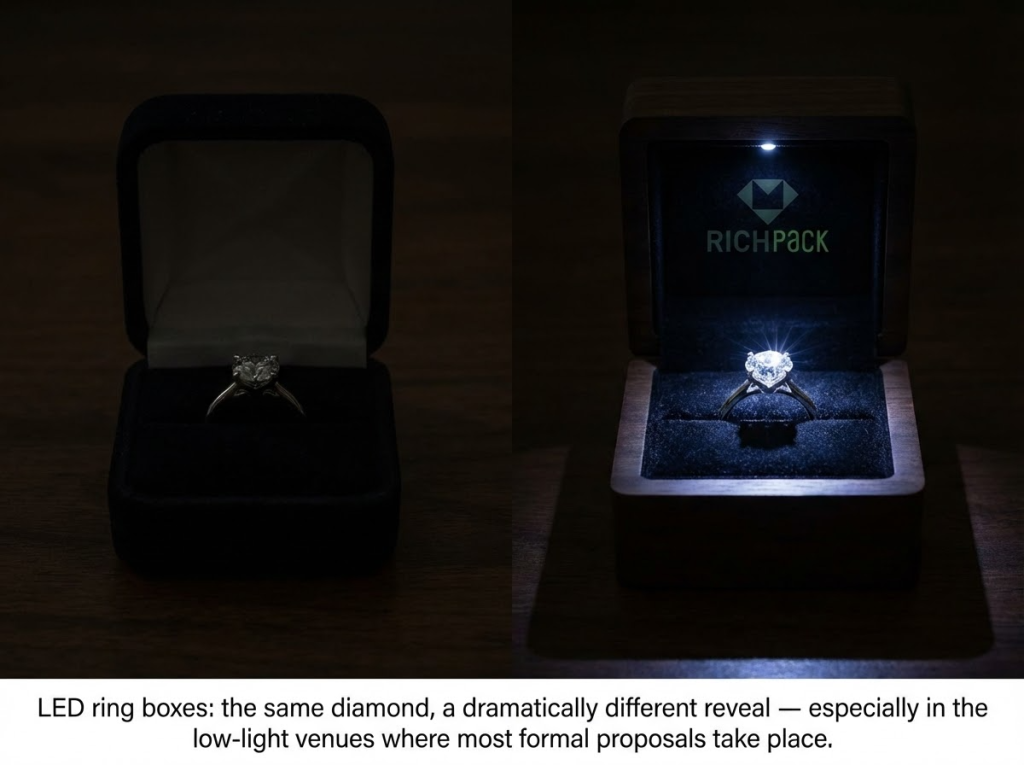
Light-up boxes are perfect for social media. When the lid opens, the diamond glows. This looks amazing in dark restaurants or at night. It creates a powerful moment for the camera.
I have seen these boxes raise sales by 20%. Many luxury buyers post their unboxing online. A lit-up ring gets many more views. This gives your brand free ads on social media.
Check the light color before you buy. Warm white light makes diamonds sparkle best. Cool white can make the stone look blue. The light must turn on instantly. Any delay ruins the surprise.
Make sure you can change the batteries easily. Also, check the hinges of the box. The light parts add extra weight. The box should open and close 2,000 times without breaking.
These boxes cost between 6.30 and 15 USD. If a ring costs 4,000 USD, this is a smart buy. It is a tiny cost for a much better reveal.
Metal boxes are great for travel. Aluminum and brass feel heavy and strong. They protect the ring from bumps and drops. Aluminum looks modern and sleek. Brass feels more traditional and rich.
Clear acrylic is best for store windows. Customers can see the ring from every side. You do not have to open the box. This keeps the jewelry safe while on display. It works well for busy holiday seasons.
Most guides just say “make sure it fits.” I find that advice poor for pros. Choosing dimensions is really an engineering task. It affects ring safety and how the hinge works. The wrong size can ruin a proposal. It also hurts the trust your clients have in you.
The standard box is 50mm by 50mm by 45mm. This is about a two-inch cube. I’ve seen this size solve three big problems at once. It fits almost every ring style perfectly. It also stands well under showroom lights. Engineers call this the “proposal grip” standard.
The lid-to-base ratio is usually 1:1 or 2:3. This design helps the user hold it securely. I’ve found that slim boxes also work well. These are often 70mm by 70mm by 22mm. They fit safely in a jacket or trouser pocket. This is the best choice for a hidden-carry plan.
Here is a practical tip for you. Stick to the 50mm standard for most cases. A big box makes a small stone look tiny. A small box makes a large ring look crowded. The 50mm cube is right for most clients.
The slim box is usually 50mm by 50mm by 19mm. This is a great tool for surprise proposals. The flat hinge keeps the height under one inch. This stops the box from bulging in a pocket. Many of my clients worry about being caught. This box solves that fear instantly.
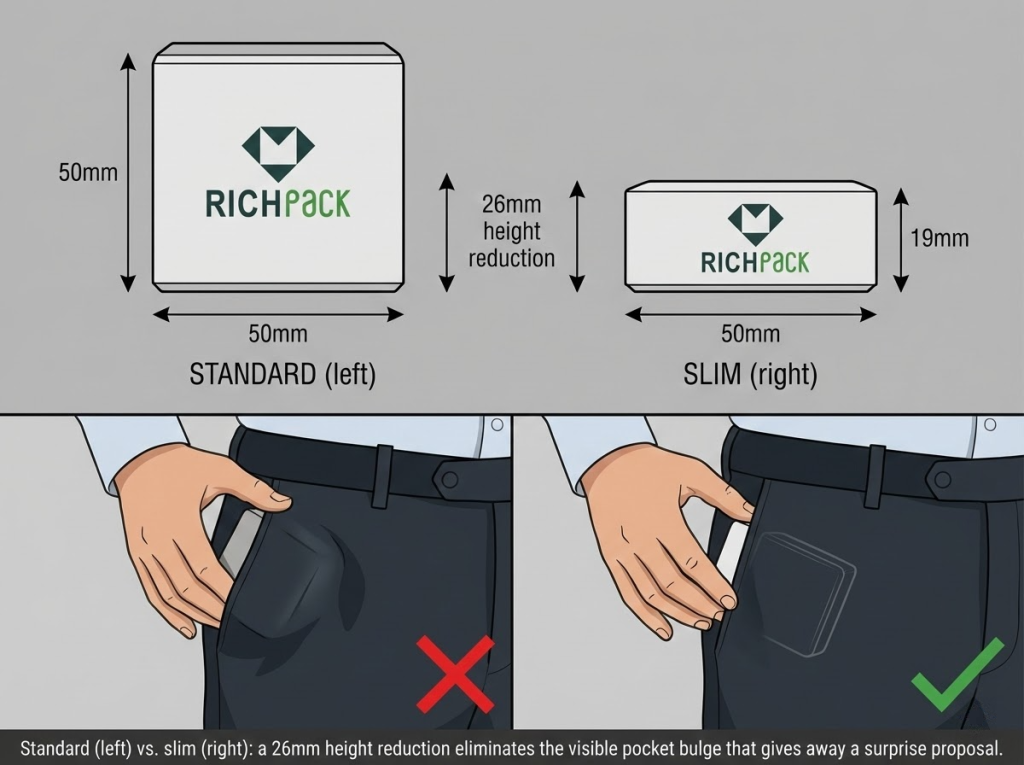
The slim box only works for low-profile rings. It is not for every client. Use this plan to decide:
| Ring Profile | Slim Box Compatible? | Reason |
| Round/oval solitaire, standard 4 or 6-prong (stone height <14mm) | ✅ Yes | Stone clears the lid with the required 12mm headroom |
| Bezel-set or flush-set stone | ✅ Yes | Minimal protrusion — ideal slim box candidate |
| Thin wedding or eternity band (presented separately) | ✅ Yes | Band sits flat; no protrusion risk |
| Cathedral mount (stone height >15mm) | ❌ No | Lid presses against stone or prongs — creates prong stress |
| Double or triple halo setting | ❌ No | Halo outer stones contact lid surface — scratch and stress risk |
| Wide men’s band (>7mm width) | ❌ No | The band sits too wide for the standard slim slot — the display fails |
Use the slim box to grow your sales. I recommend bringing it up early in the talk. Frame it as a pro solution for pockets. This shows you are an expert on proposals. You aren’t just selling a ring.
You can also bundle it for travel. Pair it with a soft pouch for extra value. This creates a product that clients love to review. I often display both box styles together. Label them clearly to show the engineering differences. Many buyers will pay 15 to 30 dollars more for the slim design.
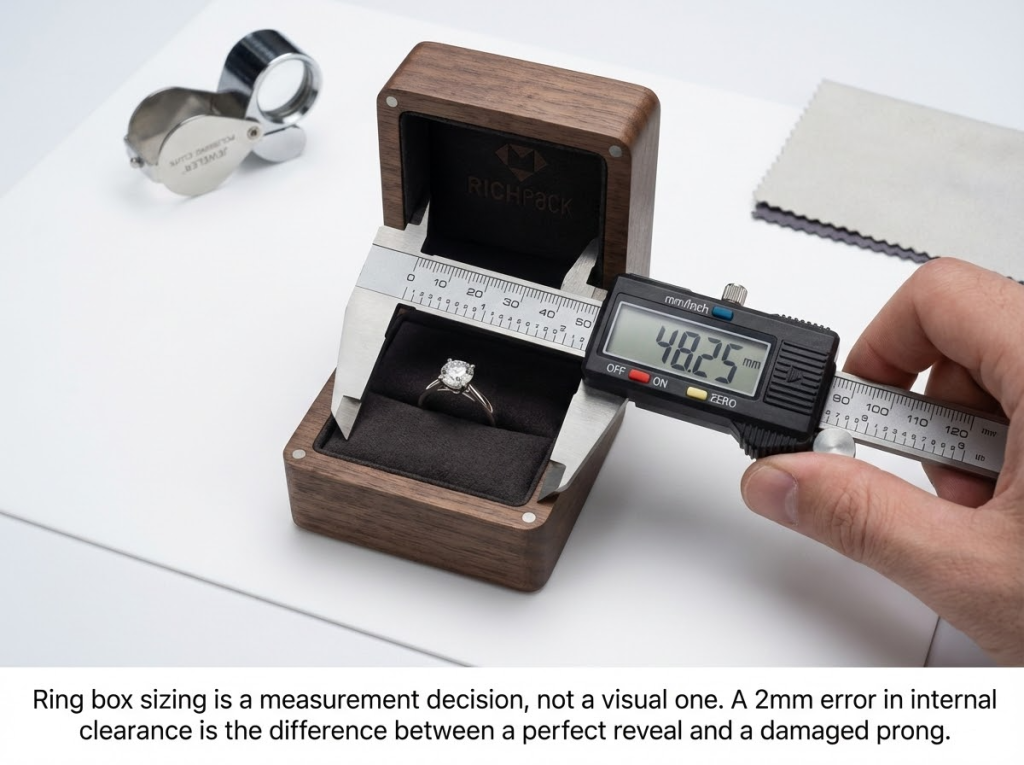
The outside size is only half the story. You must check the internal clearance too. This is the link between the ring and the box walls. Good clearance keeps the piece safe and looking professional.
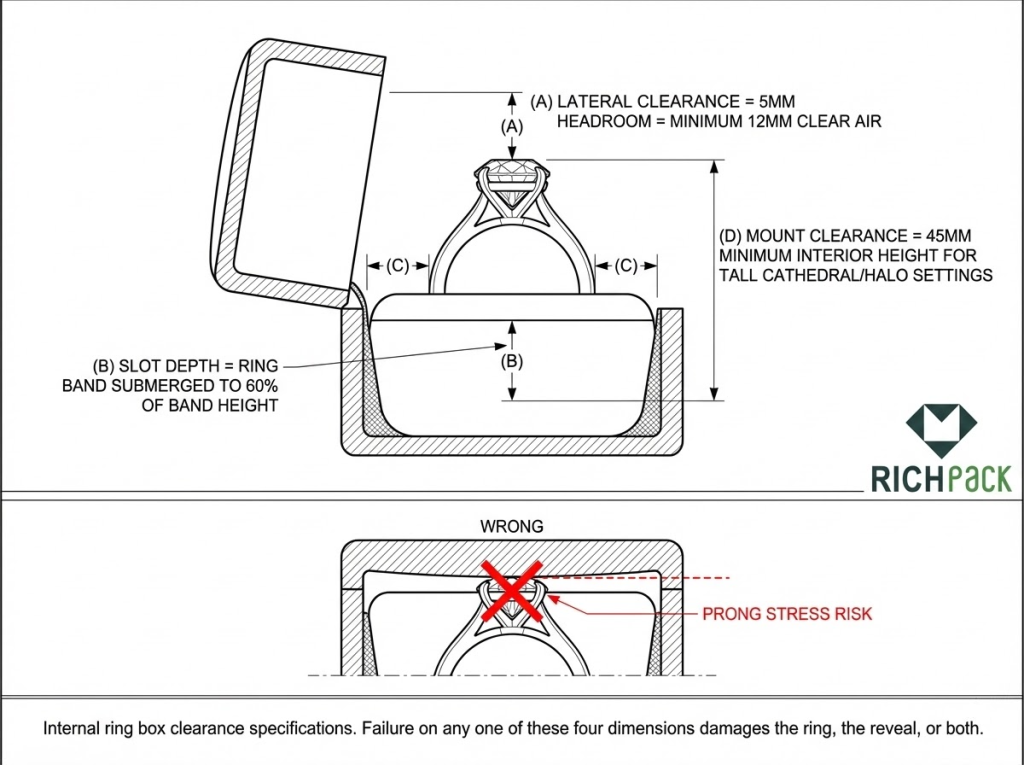
| Clearance Factor | Required Minimum | What Goes Wrong Without It |
| Headroom (gemstone apex to closed lid) | 12mm minimum clear air | Lid contacts stone or prongs — prong stress, surface scratching |
| Slot depth | 60% of the band height is submerged | Ring leans or tips sideways when the box is tilted — unprofessional reveal |
| Lateral space | 5mm each side of the band | The client cannot retrieve the ring cleanly without touching the stone |
| Interior height minimum | 45mm for tall mounts | Cathedral and halo settings require extra vertical clearance — the slim box is incompatible |
The field test: Place the ring in the box and close the lid normally. Any resistance — any pressure from the lid against the ring — means the box is wrong for that ring. A box should never be forced closed. Period. This test should be performed on every new box style before ordering volume.
Different ring styles need different packaging specs. Use this table when you advise clients. It also helps when you place orders:
| Ring Style | Recommended Box | Key Specification | Common Mistakes to Avoid |
| Round solitaire (4 or 6-prong) | Classic 2″ square box | Standard slot, 12mm headroom | Using a slim box on cathedral-height settings |
| Halo or double-halo | 55mm+ internal width box | Extended slot width; tall lid clearance | Standard slot scratches outer halo stones on retrieval |
| Men’s wide band (>7mm) | Wide-slot box or adjustable insert | Slot width ≥ full band width | The band doesn’t submerge — tips and displays poorly |
| Eternity band (full-perimeter stones) | Padded cradle insert | No rigid slot — cradle protects stone girdles from contact pressure | Rigid slot edges chip girdle-set stones over time |
| Vintage or milgrain design | Soft-pile velvet interior only | Never rigid foam — foam scratches milgrain and engraving | Foam inserts destroy surface detailing on vintage bands |
| Cathedral mount (tall elevation) | Standard 2″ square box only | Minimum 45mm interior height; never slim | Slim box lid presses directly on prongs |
| Oval or pear solitaire | Square box with rectangular-orientation slot | Slot orientation follows the stone’s long axis | A round-orientation slot tips an elongated stone sideways |
I always tell my clients that the materials handling function. Style handles your identity. This box speaks for you at the most emotional moment. You must make that choice on purpose. A mismatch here just confuses your customer.
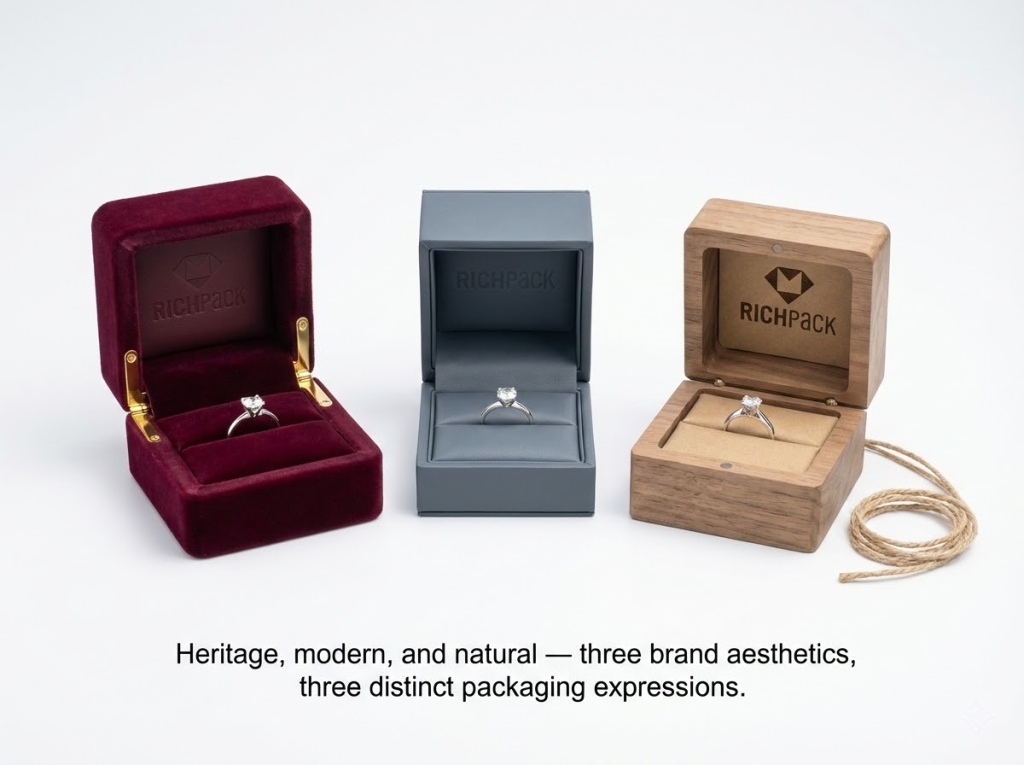
The hinged velvet box is still the king. I see burgundy, navy, and black everywhere. People know this look. It tells them your shop has high standards. It makes the moment feel heavy and real.
If you serve clients over 35, stick to this. Watch your hardware colors closely. Match the gold or silver to the ring itself. I’ve seen clients notice when these do not match. It is a small detail that sticks.
Younger buyers love clean lines and matte finishes. Use slate grey or nude tones. Keep the logo simple. I love using contrast inside the box.
Imagine a black box with a champagne silk lining. That “reveal” moment is pure experience design. Look at how Mejuri uses restraint. It makes their brand feel even stronger.
Here is a trick I use. Put a message on the panel under the ring. No one else does this. It costs you nothing extra to do. It creates a final touchpoint they will love.
Wood and natural fibers work for outdoor weddings. I see more people wanting a sustainable look lately. The 2026 trends show linen and earth tones are winning. This style hits home with Gen Z.
Try laser engraving on the wood. Add coordinates or a map. People share these boxes on social media constantly. Your brand gets the credit in every post.
Data shows people keep these boxes 40% more often. Your brand stays in their life forever. It is a simple way to stand out.
Old-school boxes use brass clasps and aged leather. This niche is growing fast. Etsy data shows antique styles jumped 30% recently. If you sell old rings, the box must match.
It creates a story that clients love to share. You can buy new boxes that look old. Or find real antiques for your best pieces. This makes the whole purchase feel special.
A ceremony box is different from a proposal box. It needs to hold two rings at once. It must look great in photos, too. Make sure it is easy for a child to carry.
Use two slots to stop scratches. I suggest magnetic closures over spring hinges. You do not want the box snapping shut by mistake. Use a matte finish to stop camera glare.
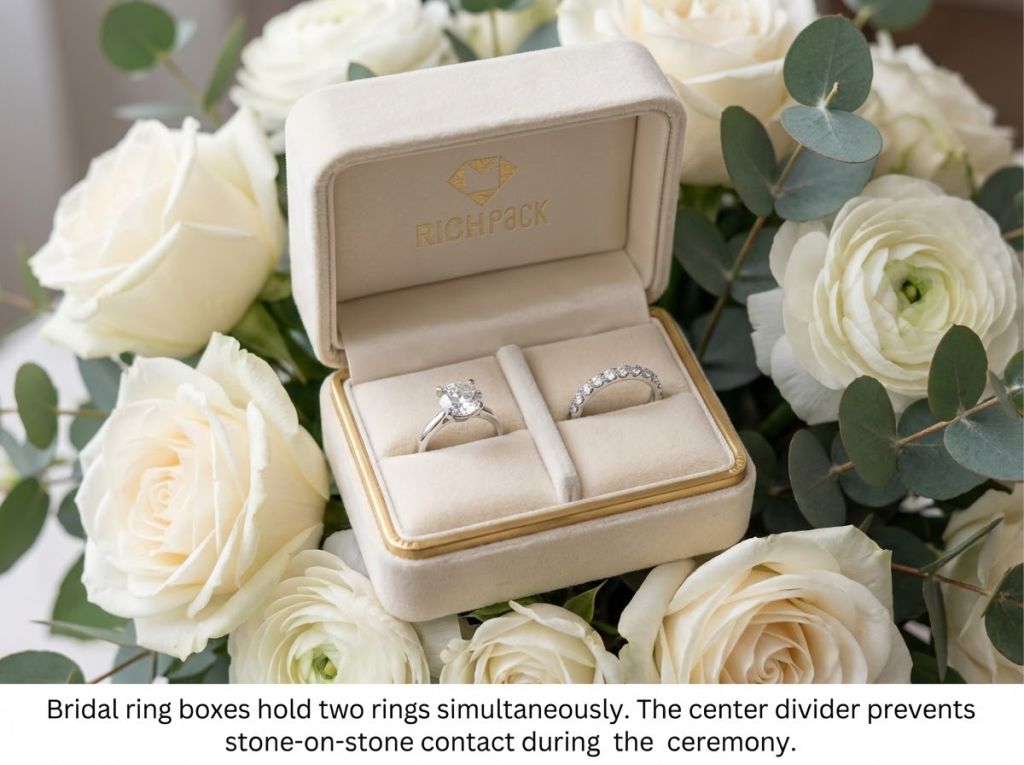
For rings over USD 10,000, the box is the product. The custom jewelry market is worth billions now. A cheap box ruins a five-figure diamond. I’ve seen it kill a jeweler’s reputation.
You get to pick every single detail. This box should only come from you. That is the whole point of luxury. It makes your brand feel unique.
Plan for 30 to 90 days for delivery. You might need to buy 50 units at once. Even for small shops, this is a smart move. It protects your brand value.
Your ring box does more than hold jewelry. It travels with your clients. It shows up in proposal photos and social media posts. This reaches people you never targeted before. I’ve seen this work for many retail brands. A 2023 Stanford study shows 61% of luxury buyers post unboxing videos. Each tagged photo acts like a personal referral. You reach the friends and family of your customers easily.
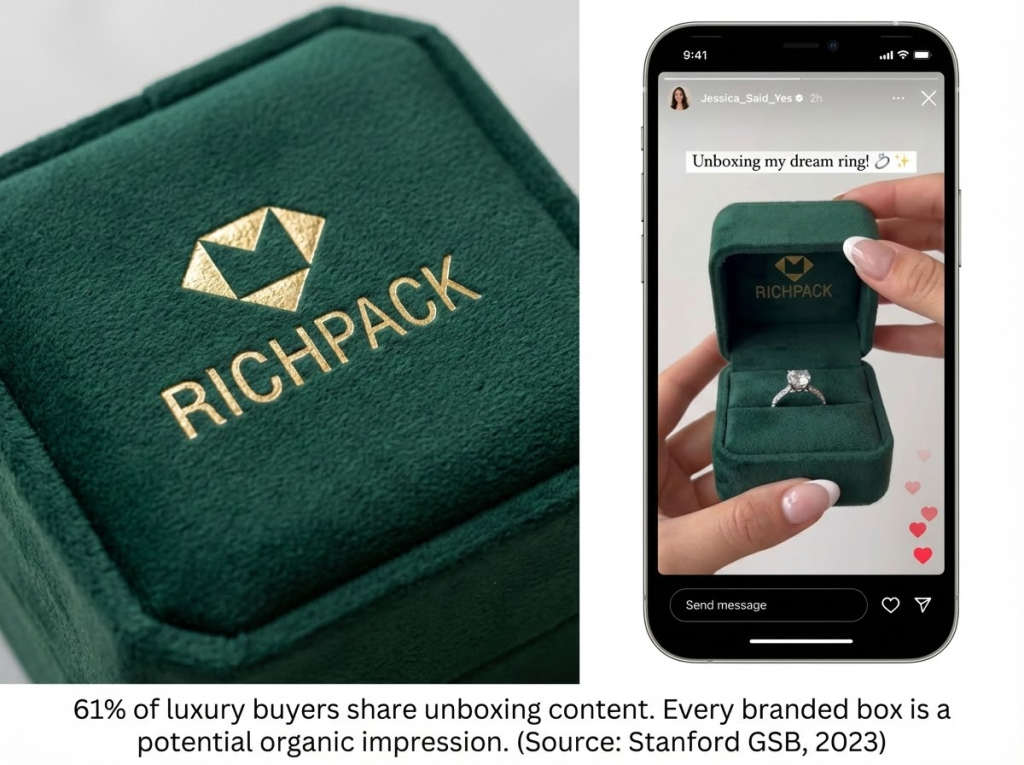
Some finishing methods last longer than others. Quality varies widely across different techniques. I use this table to match materials with budgets. It helps you find the right fit for your brand.
| Technique | Best Surface | Perceived Tier | Durability | Practical Note |
| Debossing | Leatherette, smooth paper, wood | Premium / Understated | Permanent — no fading or peeling | The safest, most versatile choice across all brand tiers |
| Gold/silver foil stamp | Dark leatherette, smooth paper | Premium / High visibility | Excellent on smooth; test on velvet first | Test adhesion on velvet before volume order — bonding varies |
| UV spot varnish | Matte paper stocks | Contemporary premium | Excellent | Logo appears from the surface — tactile and visual simultaneously |
| Screen printing | Leatherette, paper | Mid-range / Volume | Good; fades under prolonged UV | Avoid for display boxes in sunlit shop windows |
| Embossing (raised) | Smooth paper, cardboard | Traditional premium | Permanent structural | Tactile recall — consumers feel the logo after the box is stored away |
Everyone knows the Tiffany blue color. You don’t even need to see their name. They used one material for every box for decades. This consistency built their famous brand. The color became their identity. It wasn’t about the high price. It was about staying the same.
You can do this too. Custom colors work well even on mid-range budgets. Pick one color for all your boxes. Over time, people will recognize it like a logo. I often suggest adding a custom ribbon pull. This makes the opening feel special. Research shows that touch and feel create strong memories. These associations last longer than just seeing a logo.
Standard inserts work okay for basic rings. But custom foam inserts are much better. I recommend them for your top-selling lines. They stop the ring from moving or scratching. Every customer gets the same look. It doesn’t matter who packed the box that day.
Insert types by application:
Here is a pro tip. Use a satin overlay on top of foam. It hides the foam but feels soft. Your client feels a silk-like fabric. The foam underneath keeps the ring steady. This is the standard for high-end boxes. Always ask for these samples. Do this if your boxes cost 30 dollars or more.
Show off your green materials. Put your eco-friendly marks right on the box. This turns a cost into a brand value. Most buyers will pay more for sustainable packs. A 2023 report says 82% of people feel this way. Newer data shows people keep these boxes longer. This keeps your brand in their home for years.
Add a small card inside the box. Explain where your materials come from. This tells a great story to your customer. I see this builds strong emotional bonds. It leads to more referrals for designers. The KIMITAKE brand did this very well in 2024. They used natural materials and traditional crafts. It is a great model to follow.
People love sharing proposal videos online. The ring box is the first thing they see. It shows up before the ring or the reaction. This makes the box the cover art for the video. These videos get three times more views than ads. I always tell my clients to focus on this.
Practical tips for your boxes:
Choosing a ring box is a major business move. You need to get the small details right. Things like MOQs and lead times can make or break your budget. I want to share the exact steps I use to avoid costly mistakes.
Different buying levels work in their own ways. You must know which one fits your current needs. From working with many clients, I have seen how these tiers differ. Let’s look at your options right now.
I recommend building what I call a “box library.” Pick two or three custom styles for most of your rings. Use velvet for daily sales and wood for high-end pieces. Then, keep one special design for your flagship items. This approach keeps your branding consistent and your life simple.
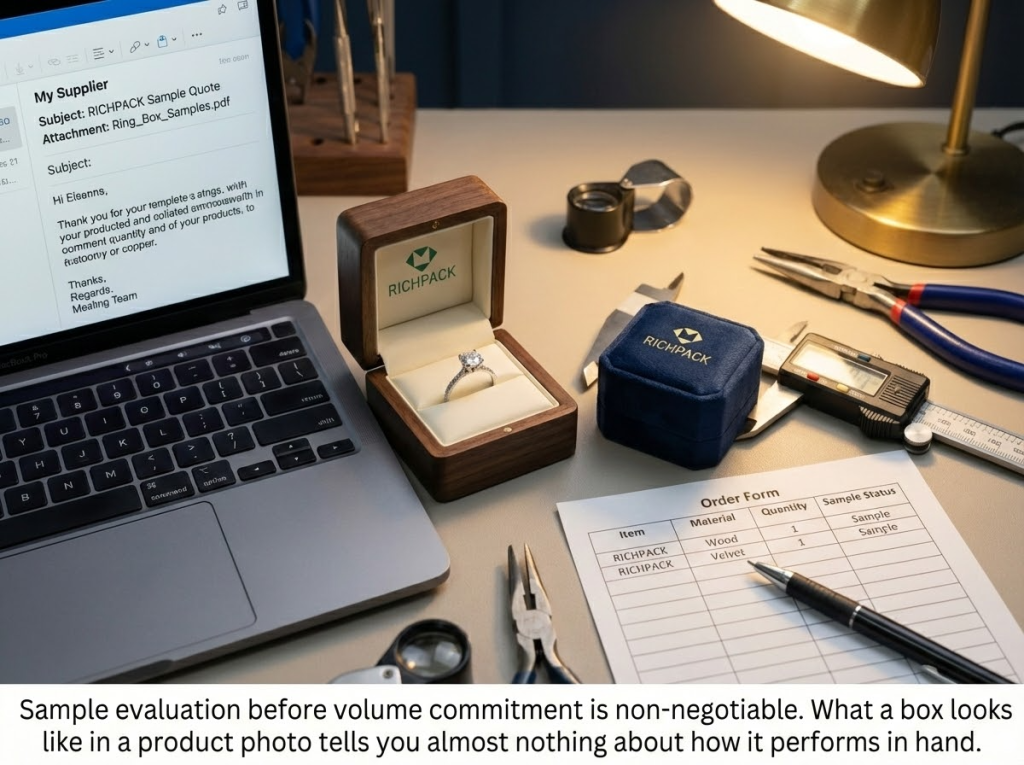
Photos do not tell the whole story. You need to feel the weight and hear the hinge snap. I never place a big order without holding a physical sample first. Most good suppliers will send you samples for a small fee.
Spend 50 to 150 USD to test different options. This small cost saves you money later. Here is my go-to checklist for testing samples.
Your ring box needs protection during shipping. A nice box in a thin mailer is a recipe for disaster. Your outer packaging must look just as professional. Let me be clear about the standards you need.
Use a tough outer carton for shipping. Add at least 25mm of foam on every side. I double-box all my international orders. It costs very little but saves a lot of stress.
Now, let’s talk about keeping your stock safe. Different materials need different care.
I follow a simple pricing rule. Your box should cost 3% to 5% of the ring price. For rings over 10,000 dollars, you can go up to 8%. A 15,000-dollar diamond deserves a 600 USD bespoke box.
Putting a 15,000 dollar diamond in an 8 USD box hurts your brand. No amount of training can fix that. Your packaging must match the value of the jewelry.
| Tier | Unit Cost (USD) | Typical Materials | Customization Available | Best Suited For |
| Entry-level | $2–$8 | Machine-pressed cardboard, synthetic velvet | Sticker or basic stamp only | Estate sales, repairs, volume gift packaging |
| Mid-range | $10–$25 | Leatherette shell, velvet or suede lining | Debossed logo standard; color options | Standard retail engagements up to $3,000 |
| Premium | $30–$75 | Genuine leather, solid hardwood, multi-material | Custom interiors, foil stamping, full finish options | Engagements $3,000–$10,000; flagship retail lines |
| Luxury bespoke | $80–$200+ | Full custom specification; handcrafted elements | Complete brand identity integration | Engagements above $10,000; signature collections |
These questions help you find the best partners. They weed out the middlemen quickly. Use these before you sign any contract.
Most ring box failures follow the same boring patterns. I see these issues all the time in jewelry forums. You can stop these errors with simple team rules.
I see these complaints on Reddit and WeddingWire often. Here are the five biggest mistakes I see today.
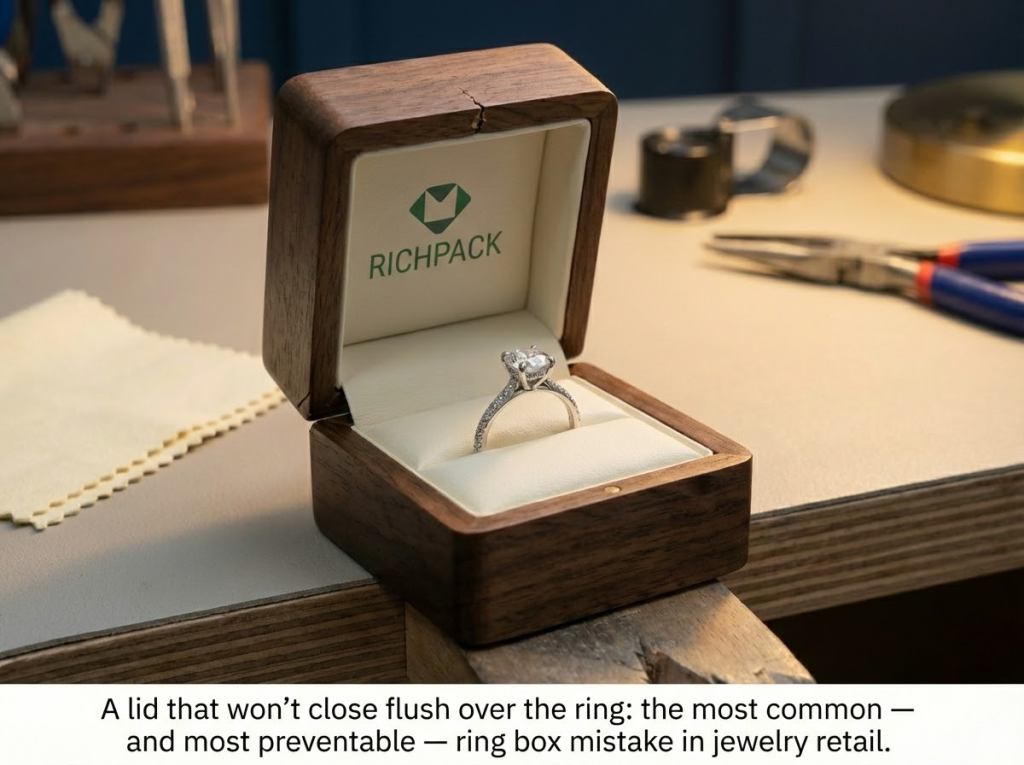
This is the most common mistake I see. Most people choose boxes from product photos alone. If the lid hits the prongs, you ruin the moment. The ring might even get damaged.
I’ve read many horror stories on r/EngagementRings. You cannot fix a ruined proposal. It is a mistake that stays with the client forever.
The fix: Use a digital caliper for every ring. A ruler is not good enough here. Check the width, height, and stone size. Compare these numbers to the box specs.
It takes 90 seconds to save your reputation. This stops the most common failure in our industry.
A pretty box with a cheap foam insert is a letdown. The box looks high-end until the client opens it. The ring must stay upright at a 45-degree tilt.
If it wobbles or falls, the interior is bad. Good photos do not make up for poor function.
The fix: Ask for the insert specs on their own. Put a real ring inside a sample box. Tilt it to 45 degrees.
If the ring moves, do not buy it. Exterior beauty never fixes a loose ring.
The sound of the lid opening is part of the design. A clean magnetic snap signals high precision. Loose hinges feel cheap and lazy.
Ribbon pulls that need two hands do not work. They fail during a one-handed proposal reveal.
Oxford research shows that weight and sound drive value. These tactile cues change how clients see your brand. A bad hinge ruins a premium feel.
The fix: Test physical samples yourself. Photos cannot tell you how a hinge feels. I never place big orders without a hands-on test. Make no exceptions for this rule.
A nice box in a plain brown mailer looks bad. It breaks the brand experience before the reveal. Your branding must stay the same at every layer.
This includes the shipping box, tissue, and wrap. Inconsistency makes you look like you do not care.
The fix: Map out every layer the client sees. Check for brand consistency from start to finish. This includes the outer box and the padding.
You can do this without spending much more money. It just takes a clear plan.
Buying random boxes creates a messy look. Two clients might get totally different packaging. This hurts your brand and stops referrals.
People trust jewelers who look consistent. Inconsistency just confuses your customers.
The fix: Build a small collection of 2–3 box styles. Source them from one trusted supplier. Consistency builds real brand value over time.
I suggest a “box library” for your shop. This works best for high-volume retailers.
I usually suggest the standard 50mm cube for a classic look. This size safely holds about 95% of all engagement ring styles. It fits everything from simple solitaires to moderate halo designs. You get the best display proportions for glass showcases this way.
For surprise proposals, I recommend the slim 19mm version. It hides perfectly in a pocket without a bulge. These specs come from the latest 2025 jewelry packaging guides. I’ve found these two sizes cover almost every client’s need.
Solid hardwood is the gold standard for high-end brands. I personally prefer kiln-dried American Black Walnut or Mahogany. Most top-tier jewelry houses use these for their flagship collections. They provide a heavy, expensive feel that customers love.
If you need to scale up, go with genuine Italian leather. It feels very premium, but it works better for large orders. People judge your quality in less than a second. These materials help you win that moment every time.
You can definitely add your logo to your packaging. I usually suggest foil stamping or debossing for a sharp look. You can even customize the interior lining or ribbon pulls. Most specialty suppliers offer these options for mid-range tiers.
For branded boxes, you usually need to order 50 units. Expect a wait of about 15 to 45 days. Truly custom shapes require more time and higher counts. I always tell my clients to approve a sample first.
The box changes how much a customer thinks a ring is worth. I’ve seen how tactile cues shape a buyer’s mind instantly. Heavier boxes with magnetic clicks can boost perceived value by 22%. This happens even if the ring stays the same.
Research shows people judge the box before they see the jewelry. For engagement rings, the “reveal” moment is everything. Your packaging does the heavy lifting for your brand. It builds trust before the customer even sees the stone.
A slim box is only 19mm thick. It uses a special hinge to stay flat in a pocket. This stops the partner from seeing the proposal coming. It is a great tool for secret planners.
Use it only for low-profile rings and thin bands. I don’t recommend it for large halo settings or cathedral mounts. The lid might put too much pressure on the prongs. Check your ring height before you commit to this style.
Look for FSC-certified boards and water-based glues. I like using soy-based inks for your branding needs. Bamboo is another great pick for a high-end, green look. It has a very distinct style that stands out.
Always ask to see the real FSC paperwork yourself. Do not just take the supplier’s word for it. Brands like KIMITAKE are already doing this really well. They prove you can be sustainable at a large scale.
I suggest spending 3% to 5% of the ring’s retail price. For 10,000-dollar rings, you should bump that to 8%. High-end buyers expect the packaging to match the jewelry. It creates a better experience for your best clients.
You can always earn back the cost of a nice box. But you can’t fix the damage of a cheap one. A mismatched box creates a real gap in your credibility. I’ve found that the right box always pays for itself.
I’ve found that the best engagement ring boxes always nail three specific things. You need high-quality materials to show your brand level. Precise sizing keeps the ring safe and ensures a perfect reveal. Your style must stay consistent so the box feels like a part of your brand.
Your client sees the box before they ever see the diamond. Its weight and texture set the mood for the entire proposal. I tell my clients that this isn’t just a detail. It is a vital part of what you sell.
Big names like Tiffany and Bulgari know that great packaging pays for itself. I’ve watched how these investments build real loyalty and social media buzz. This often works much better than most traditional ads.
If you are an independent designer or a small shop, use this to your advantage. A custom box helps you stand out against the big players. It is one of the easiest ways to show your value at any price point.
Do you have a specific question about choosing a box for your collection? Drop it in the comments below. I personally reply to every question from my fellow jewelry pros.
Are you ready to find a custom box that fits your brand perfectly? Reach out to our team for a free sample kit. We can walk through your production options together.

Just submit your email to get exclusive offers (reply within 12 hours)





 PREV
PREV