


 PREV
PREV
21 Best Bracelet Packaging Ideas to Elevate Your Brand (2026 Guide)
2025-08-18
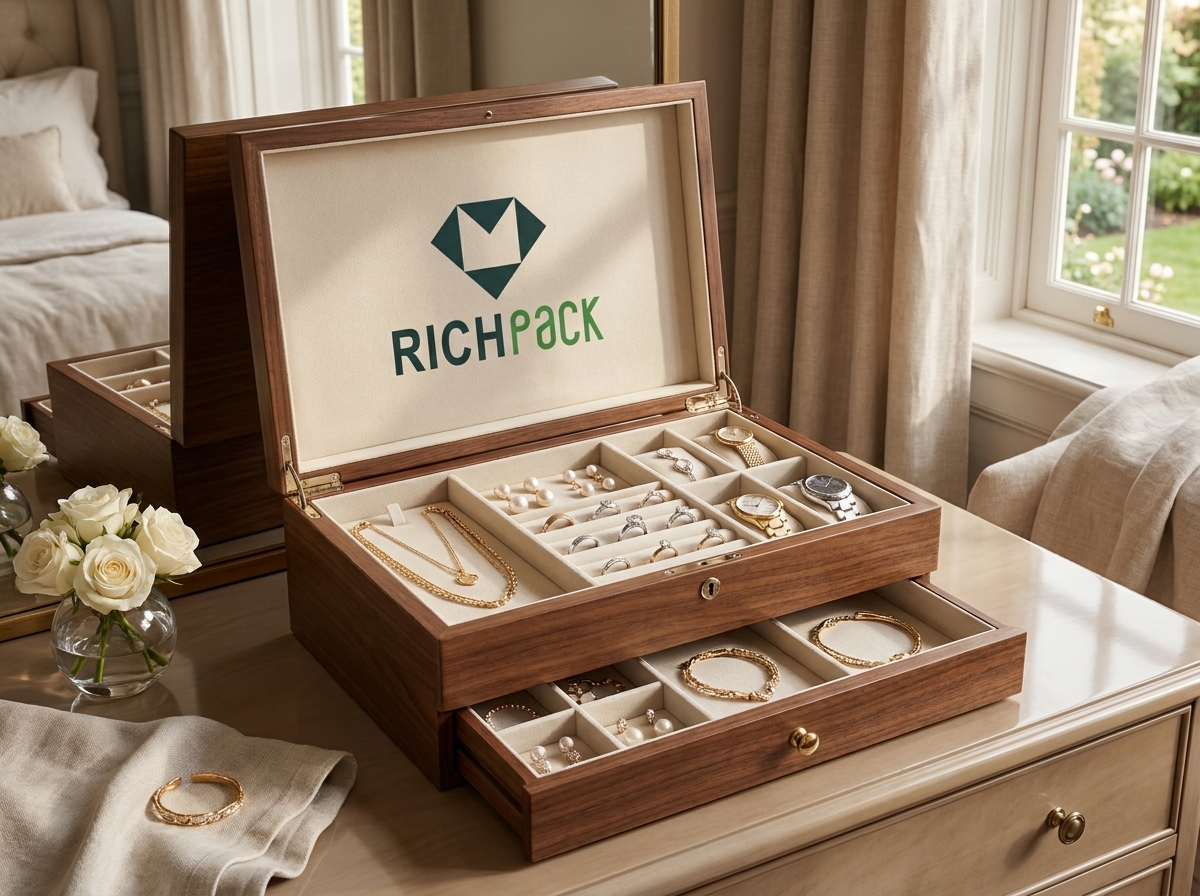



A good jewelry box does more than hide clutter. It separates pieces, prevents chains from tangling, limits surface contact, and makes the collection easier to use. The best Jewelry Box Ideas begin with the jewelry you own, the space you have, and how often each piece is worn.
For brands and retailers, the same rules shape a better product experience. A well-fitted box can become storage the customer keeps, a retail display staff can handle, and a branded service touchpoint long after the sale. RichPack’s custom jewelry boxes connect those storage needs with design, sampling, production, and delivery.
Jewelry Box Ideas work best when storage type, jewelry fit, access, protection, and available space are considered together. The table compares practical starting points for different jewelry types and settings. Use it to narrow the options before buying or building anything.
| Storage idea | Best for | Main benefit | Main risk | Best upgrade |
| Stackable trays | Growing mixed collections | Flexible capacity | Pieces migrate between sections | Add fitted modules |
| Drawer organizer | Daily jewelry | Fast visibility | Shallow cells may crowd stones | Use measured compartments |
| Upright necklace box | Chains and pendants | Controls tangling | Hooks may be too close | Add channels and elastic loops |
| Ring roll box | Rings | Dense organized storage | Tight rolls can press settings | Match slot width to ring size |
| Earring panel | Studs and drops | Keeps pairs together | Posts may touch the lid | Add back clearance |
| Travel case | Small portable sets | Controls movement | Tiny cells can compress pieces | Use removable dividers |
| Lockable box | Fine jewelry | Adds access control | A lightbox can still be carried away | Anchor it or use a safe |
| Glass top drawer | Display collections | Easy scanning | Light and dust exposure | Add a lined cover |
| Wall display | Necklaces and earrings | Saves surface space | Open storage collects dust | Use a cabinet door |
| Custom keepsake box | Branded jewelry | Protection plus reuse | Poor fit weakens the experience | Prototype with real jewelry |
These retail examples give Jewelry Box Ideas a clear price and size frame. Prices and stock change, so use them as planning references, not fixed quotes. Compare outside size, usable space, insert layout, and closure before comparing price. A larger box is not always a better storage system.
| Reference product | Observed price | Listed outside size | Planning lesson |
| Target 2-layer travel case | $30.99 | 4.6 x 6.3 x 3 in | A small travel case needs hooks, a tray, and soft lining |
| Target 3-layer organizer | $30.99 | 8.1 x 9.4 x 4.3 in | Extra layers need a stable footprint |
| Stackers Deep Open Tray | $29.99 | 7.25 x 9.875 x 2.25 in | Modular trays add capacity in small steps |
| West Elm jewelry storage range | About 18 to 18 to 260 | Varies by product | Decorative storage spans several price tiers |
| Pottery Barn jewelry box range | About 49.50 to 299 | Varies by product | Premium pricing reflects finish, materials, and size |
These are consumer retail reference points checked on August 18, 2026. Custom packaging quotes use different inputs, including order quantity, tooling, materials, printing, inserts, packing, and freight.
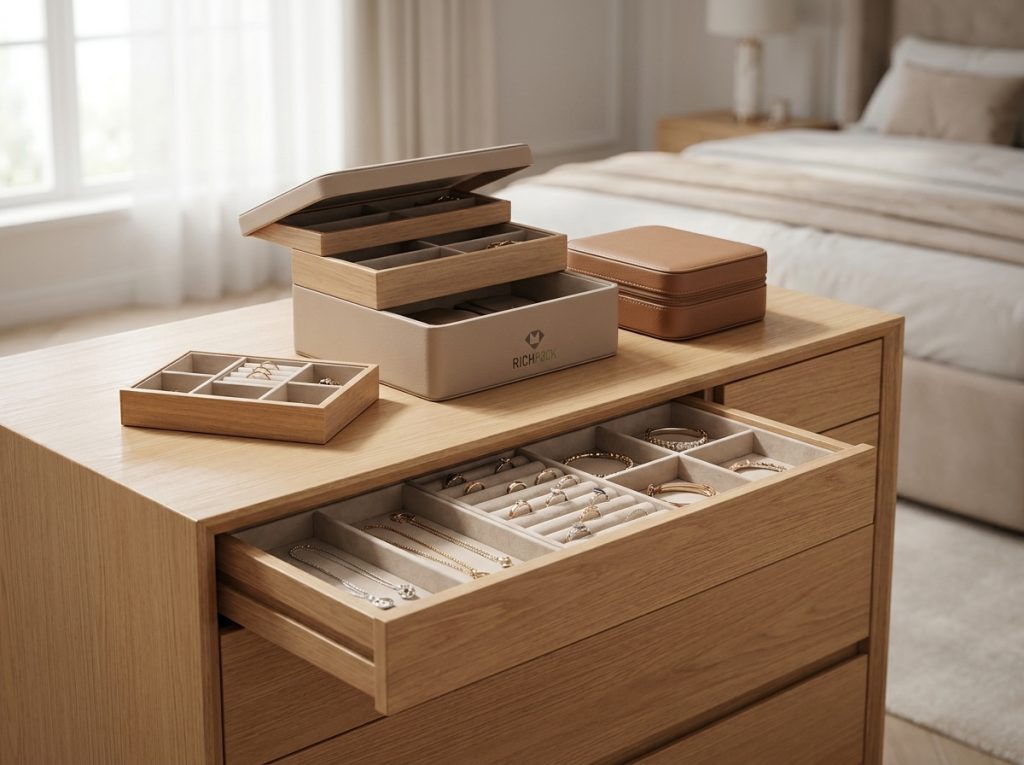
Count the pieces by type before choosing a box. Rings need slots, stud earrings need paired holes, drop earrings need vertical room, and necklaces need separate hanging paths. A large empty compartment looks flexible, but it lets hard surfaces rub and chains cross.
Lay the collection on a clean cloth. Group daily pieces, occasional pieces, sentimental items, and travel items. This simple audit shows whether one large box, several smaller boxes, or a modular system will work best.
The most beautiful box can fail if you avoid opening it. Daily jewelry should sit near the top, open with one hand, and return to its place without a puzzle.
Deep layers suit archive pieces better than morning routines. If you regularly remove three trays to reach one necklace, the structure is fighting the habit. Put speed first for daily pieces and ceremony first for special pieces.
Measure the drawer, shelf, vanity, closet, or retail counter. Include handle clearance, lid swing, and the room needed to pull out a drawer.
Small spaces often benefit from shallow stackable trays, wall cabinets, or drawer inserts. Large armoires make sense only when the collection and room can support them. Storage should use the space without making jewelry hard to see.
Daily pieces face frequent handling. Archive pieces need stable, low-contact storage. Keeping them together can create crowding and unnecessary movement.
Use a small top tray for the weekly rotation and a protected lower section for heirlooms, seasonal jewelry, and high-value pieces. This also makes cleaning and inventory checks easier.
A portable capsule prevents last-minute packing into plastic bags or loose pouches. Choose a travel case for a few coordinated pieces, not the full collection.
Look for controlled compartments, a secure closure, and no exposed zipper teeth near jewelry. If the case can be shaken and the pieces collide, it needs smaller cells or soft restraints.
Daily storage should make the right action easy. You should see each piece, remove it without disturbing another item, and return it to the same place. This section compares trays, drawers, hooks, rolls, cases, and hidden storage for daily use.
Stackable trays are a practical answer for a collection that changes. Start with ring, earring, necklace, and open-grid modules, then add capacity without replacing the full system.
Choose trays with stable edges and consistent outside dimensions. A soft exterior can feel refined, but the inner layout matters more. Modules should stack without rocking and lift without catching the jewelry below.
A fitted drawer organizer turns unused furniture space into a low-profile jewelry station. It keeps the vanity clear and hides the collection when the drawer closes.
Measure the inside width, depth, and usable height in several places. Drawers are not always perfectly square. For a made-to-fit solution, custom jewelry trays for drawers can align compartment size with the collection and the furniture.
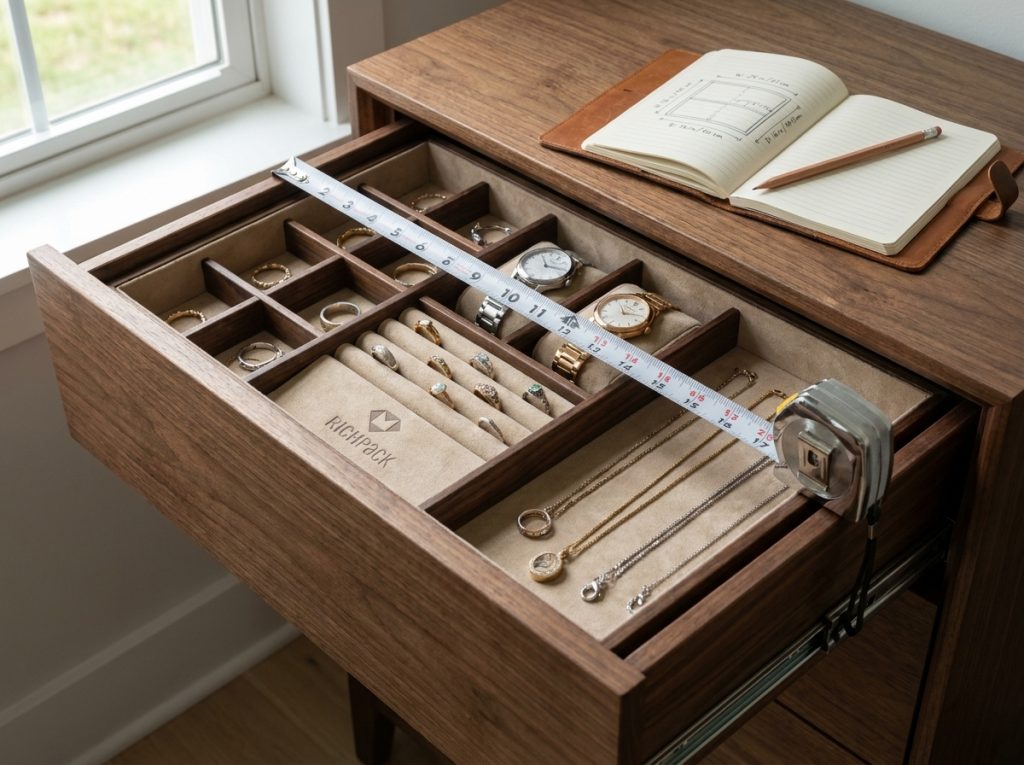
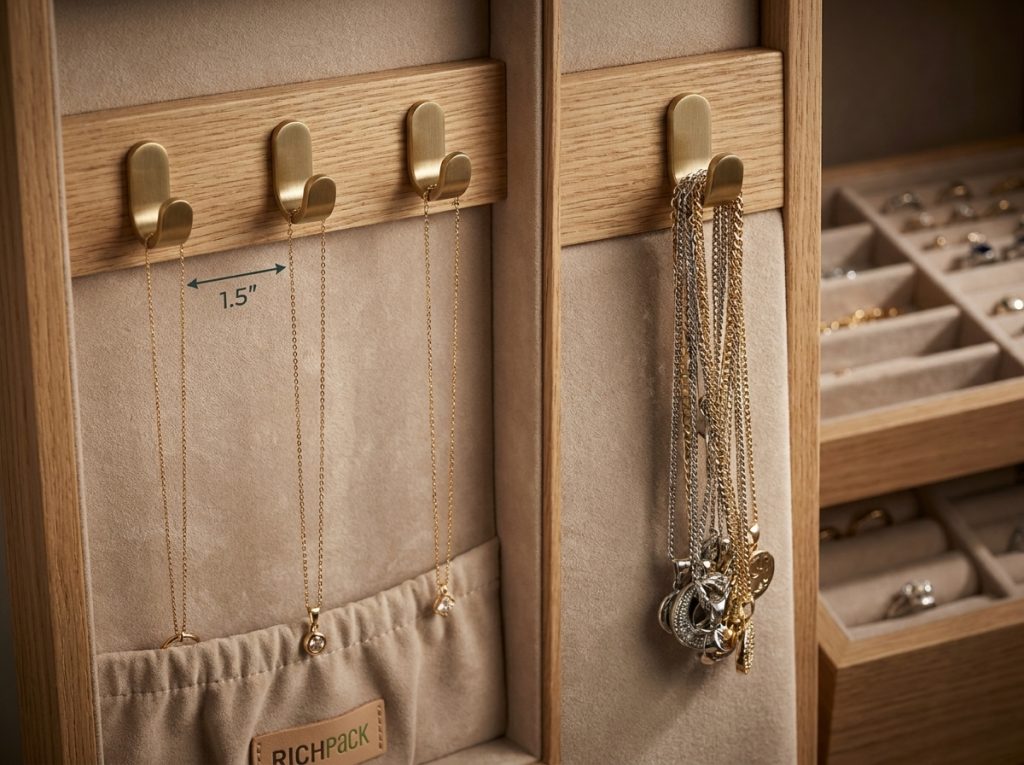
Necklaces need controlled length. A useful necklace section combines hooks, a clear vertical path, and a lower pocket or elastic loop that keeps the pendant from swinging. Keep standard hooks at least 1.5 inches apart, or about 3.8 cm, when the box must hold common pendants without overlap.
Do not place hooks so closely that pendants overlap. Longer chains may need a double-loop path. Brands selling pendants can adapt this logic to custom necklace packaging boxes that present the chain without a knot.
Ring rolls organize many pieces in little space, but the gap must accept wide bands without gripping stones or decorative shoulders. Test the largest ring, not only a thin sample band.
Earring panels need space behind posts and backs. A protective insert should hold the pair without bending the post. Custom jewelry box inserts can combine ring rolls, earring holes, pendant channels, and bracelet wells in one planned layout.
A compact travel case should open flat enough to show the contents while keeping each piece restrained when closed. Removable dividers help when the travel set changes.
Use a soft pouch only for pieces that will not rub or tangle. A structured case is usually better for mixed jewelry. Keep valuable items in personal control and follow carrier and destination rules when traveling.
Hidden storage reduces visual exposure, while a lockable box limits casual access. Neither replaces a properly installed safe for high-value collections.
For home use, a locked drawer insert or concealed cabinet can keep daily jewelry organized. For hotels and spas, staff procedures, room-safe compatibility, and guest handoff matter as much as the box itself.
DIY work can refresh a sound box when its color, lining, layout, or hardware no longer fits the collection. This section covers safe repainting, new lining, dividers, vintage shells, shadow boxes, and hardware. Skip any box with mold, sharp damage, or an unstable finish.
Remove jewelry, hardware, dust, and failing finish before painting. Test products on the bottom first, especially when the old coating is unknown.
Use thin, even coats and let the box cure fully before jewelry returns. A dry surface can still release odor or remain soft under pressure. Keep wet paint and adhesive away from the lining and hinge.
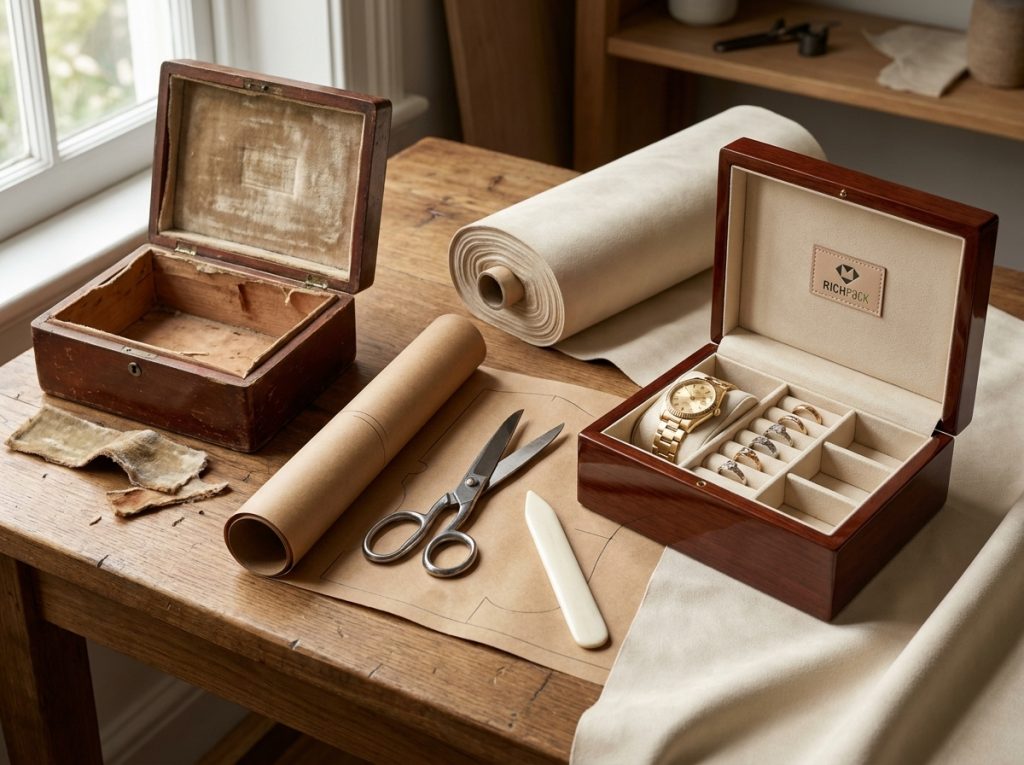
Worn lining can expose glue, rough board, or debris. Remove loose material carefully, then create a paper pattern before cutting the replacement.
Choose a clean, low-lint surface and an adhesive suited to both the lining and the base. Let the assembly cure with the lid open. Test a spare metal piece and a white cloth for residue before using the box.
Removable dividers make a large compartment useful without permanently altering the box. Foam board, wrapped card, thin wood, or ready-made grids can work if edges are smooth.
Build the divider as a lift-out tray. This makes cleaning and later changes easier. Keep cells large enough for fingers to remove the jewelry without pulling a chain or scraping a stone.
A vintage box can become storage for brooches, watches, keepsakes, or a small themed collection. Preserve attractive hardware and repair only what affects safe use.
Inspect old fabric, metal corrosion, odors, and loose internal parts. A vintage look can also inspire vintage ring boxes for brands that want an heirloom mood without relying on an unstable antique structure.
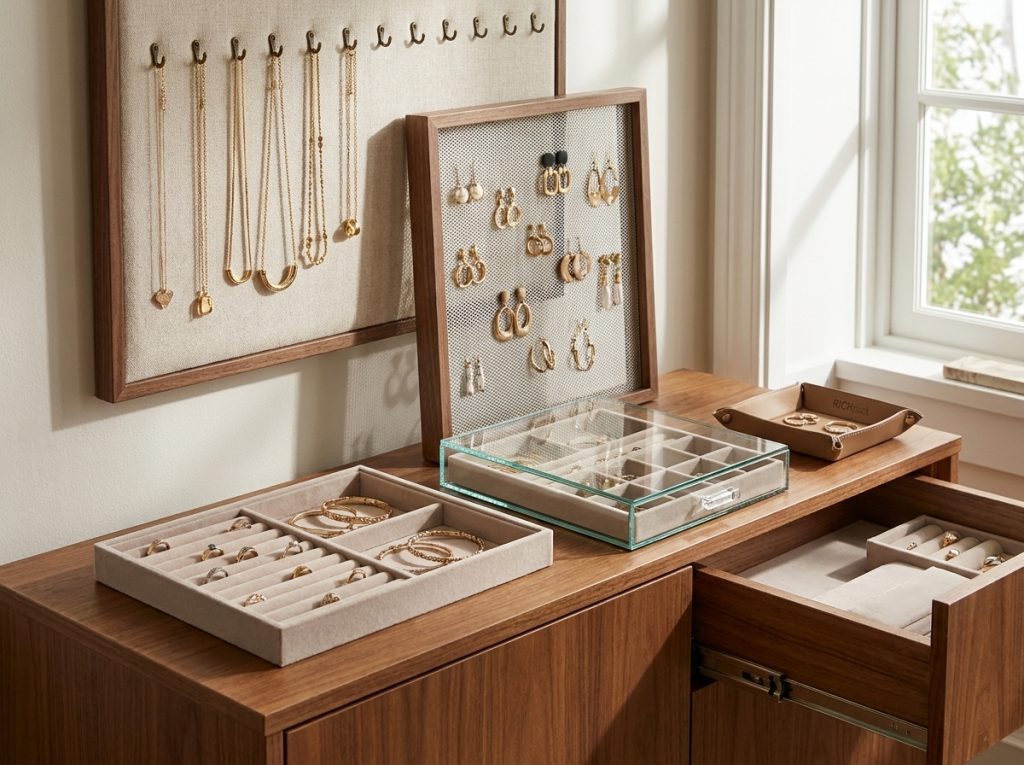
A shadow box can become a wall cabinet for necklaces and earrings. Add a lined back, covered hooks, an earring screen, and a secure front.
Check the wall fixing and the total loaded weight. Keep necklaces spaced so pendants do not strike the frame. A door reduces dust and keeps the display visually calm.
New pulls, feet, hinges, labels, and compartment markers can improve function without changing the shell. Replace hardware with matching screw size and movement range.
Labels work best for collection groups, not every individual piece. Use them for categories such as daily rings, pearl pieces, repairs, or seasonal sets. The goal is a faster return, not a museum catalog.
Display storage helps people see and choose jewelry, but open storage also adds dust, light, handling, and security risks. This section compares wall boards, earring screens, countertop trays, glass drawers, and hospitality displays for homes, shops, hotels, spas, and pop-up events.
A wall board keeps chains separated and visible. Use smooth hooks with enough distance for pendant width. Place the longest pieces first, then fill shorter rows above them.
Avoid damp walls and direct sunlight. For retail, make sure staff can remove a necklace without lifting nearby chains. A lockable cabinet front adds control.
A framed mesh or perforated panel displays earrings as pairs. It works well for hooks and lightweight drops, while studs need a removable backing or card.
Choose a screen that will not scratch posts. Leave room behind the frame for backs. In stores and pop-ups, use stable feet or secure wall mounting so handling does not tip the display.
Countertop trays support quick selection and controlled presentation. Use shallow wells for rings, bracelets, and earrings, then add a cover when the tray is not in use.
For sales appointments, several small trays are easier to reset than one crowded tray. Custom ring boxes and presentation trays can also give hero pieces a distinct reveal.
A glass top drawer combines visibility with a physical barrier. It suits curated collections, retail counters, and wardrobe storage.
The insert should remain removable for cleaning. Check that the glass or clear panel cannot contact tall stones. Use a cloth cover when long-term light exposure is a concern.
Boutiques, hotels, spas, and lifestyle brands often need temporary placement rather than permanent jewelry storage. A guest tray, ring dish, or small lidded box gives jewelry a clear resting point.
Choose materials that tolerate frequent cleaning and handling. Keep branding restrained. The object should feel useful in the room, not like an advertisement.
A good jewelry box idea protects the jewelry, fits the user’s routine, and stays easy to clean. The core checks are separation, soft contact, movement control, clear access, tarnish planning, stable construction, security, and a clear return place for each piece.
Separation is a storage method that gives each jewelry type the space and support its shape requires. Rings, chains, earrings, bracelets, watches, and pearls should not share one open compartment by default.
Use cells, rolls, hooks, channels, and pads. The correct layout reduces friction and makes missing pieces easier to notice.
Every surface that touches jewelry should be clean, smooth, stable, and suitable for the finish. Check seams, cut edges, glue points, exposed board, and hardware.
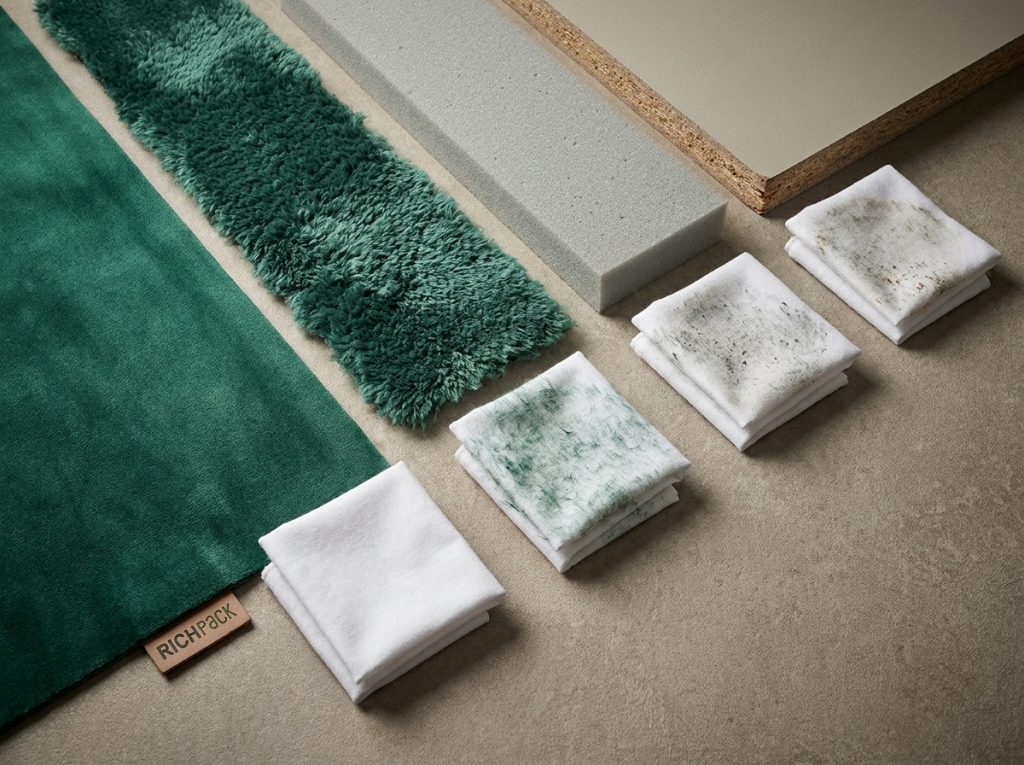
Soft does not automatically mean safe. Loose fibers, dye transfer, residue, or compressed foam can cause problems. Dense microfiber velvet gives a short, smooth nap and a clean hand feel. Test the finished sample, not only a material swatch. Ask for a rub test and a lint check before approval.
Movement control keeps jewelry in its intended position during carrying, drawer operation, shipping, and unboxing. Necklace hooks need lower restraint. Earrings need post clearance. Rings need stable slots.
Close the box and move it through realistic handling. If you hear pieces shift, inspect the layout before adding more padding.
Good storage makes the collection scannable. Similar pieces need contrast and enough spacing for the eye to separate them.
Removal should not require pulling a chain under another item or forcing fingers into a narrow cell. A ribbon tab, removable pad, or open finger space can improve access.
A closed box limits dust, but storage conditions still matter. Keep jewelry dry and clean before storage, follow care guidance for each material, and avoid unverified chemical treatments.
Sterling silver and other sensitive materials may benefit from storage products designed to slow tarnish. LusterLoc™ is a named anti-tarnish lining technology used in some jewelry boxes. Its presence does not replace clean, dry storage or the jeweler’s care instructions. Replace strips or tabs as directed, and keep unknown chemicals away from jewelry.
The box should sit flat, open without tipping, and close without pressing the jewelry. Hinges, magnets, locks, and drawers need repeat testing.
Security is layered. A lockable box supports organization and access control, while valuable inventory may require a safe, alarms, insurance, staff procedures, and documented counts.
When storage becomes a product, the design must work for the jewelry owner, the BFA packing team, the FBZ retailer, and the BTZ supply chain. This section covers structure, inserts, retail display, reuse, samples, and the information a supplier needs to quote the project.
Wood offers stiffness and a furniture-like feel. Wrapped rigid board supports detailed branding and scalable gift packaging. Fabric cases offer portability and a softer hand feel.
Choose the FDO structure based on use, quantity, freight, durability, and desired reuse. A small jewelry gift box may suit a compact product line, while a substantial keepsake box can support premium gifting.
An insert is a fitted component that positions jewelry inside the box. Its job is to support, separate, protect, and present the piece.
Build the insert from actual product dimensions. Include stone height, pendant width, chain length, clasp size, earring post length, bracelet diameter, and removal path. One generic cutout rarely fits every SKU well.
Retail boxes should open cleanly, sit at a useful angle, and return to shape after repeated handling. Staff must be able to remove and replace the piece quickly.
Use consistent exterior dimensions where possible. This improves shelving, outer-carton planning, and visual order across a collection.
A reusable jewelry box stays in the customer’s home. That gives it more brand exposure than disposable packaging, but only if it remains practical.
Keep logos balanced, materials easy to care for, and compartments relevant after the original purchase. Custom jewelry boxes with a logo should earn their place on the vanity through function.
A sample reveals fit, color, odor, hand feel, opening force, alignment, print quality, and packing speed. Review it with the real jewelry and the real outer shipping pack.
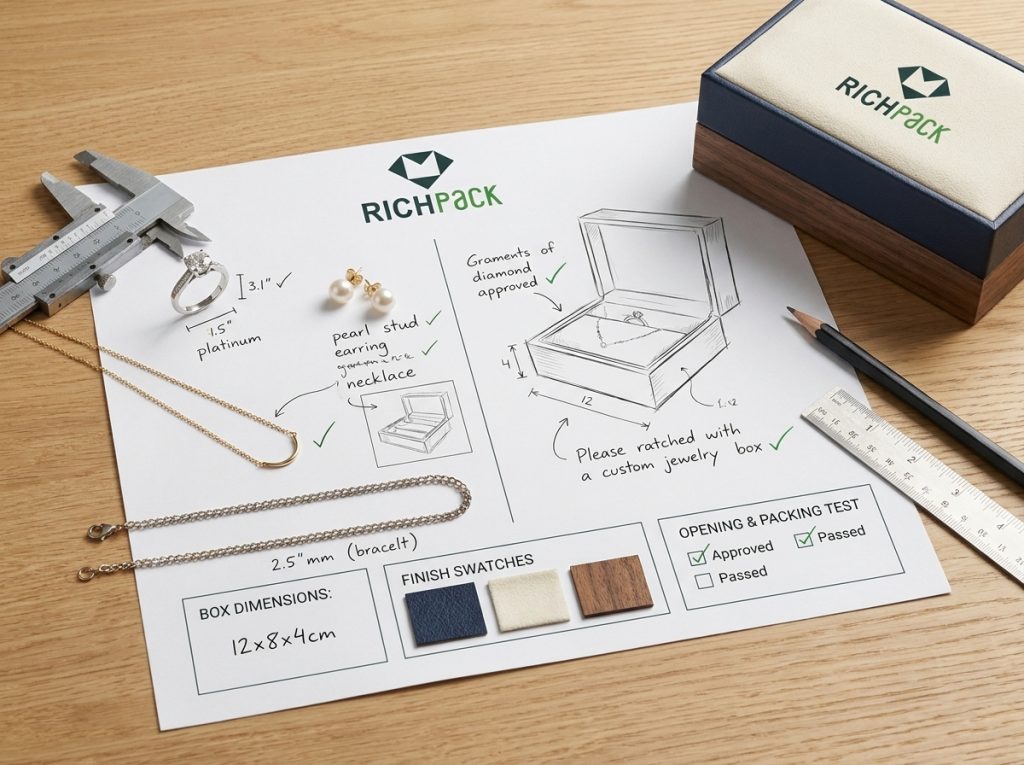
Open and close it repeatedly. Turn it in a different light. Photograph it. Pack it at normal working speed. A low MOQ jewelry packaging case can help buyers think about how early-stage quantities and validation interact.
A useful request includes jewelry dimensions, box size, structure, material, lining, insert layout, logo file, finish, color reference, quantity, destination, target date, packing method, and quality priorities.
Clear specifications reduce quotation gaps. They also make it easier to compare suppliers on the same scope instead of comparing two different boxes under one name.
A strong commercial idea is a storage experience that fits the product, customer, sales channel, and operating plan. This section shows brands how to define the use case, build a system, test samples, plan quantity and freight, and use the box as a service touchpoint.
Decide whether the box is mainly for gifting, daily storage, retail display, travel, subscription delivery, hotel use, or corporate presentation. One structure can serve several jobs, but one job should lead.
Document who opens it, where it stays, and what happens after purchase. That determines size, closure, insert, finish, and durability.
Create a family of sizes and inserts instead of designing every SKU alone. Shared colors, print standards, and exterior proportions make the range feel consistent.
Use different inserts for rings, earrings, pendants, and sets. The outside can stay recognizable while the inside does the product-specific work.
Approve the box only after testing the actual pieces. Include the smallest, largest, heaviest, and most fragile SKU planned for that insert.
Record changes on a sample sheet. Photos, dimensions, annotated drawings, and approval samples reduce ambiguity when production begins.
Unit price is only one cost. Add sampling, tooling, packing labor, freight volume, storage space, damage risk, and obsolete stock.
A cost-effective custom jewelry packaging plan often uses shared structures, controlled finishes, and insert variation. Premium programs should also protect repeat-order color and material consistency.
Add only information the customer will use, such as care guidance, repair contact details, authentication, return instructions, or a discreet reorder path.
For brands balancing premium presentation with material goals, a premium sustainable jewelry packaging case can prompt better questions about structure, claims, and customer expectations.
You can use a lined drawer tray, wall cabinet, ring dish, earring screen, necklace board, divided travel case, or small lidded containers. Choose smooth contact surfaces, separate jewelry types, cover pieces that collect dust, and add security when value or access requires it.
Start with a sound wooden, rigid-board, or metal box. Clean it, repair sharp parts, create a measured compartment plan, add removable dividers, and line contact surfaces with clean, low-lint material. Let the paint and adhesive cure fully before testing the box with jewelry.
A good jewelry box has stable construction, smooth lining, and compartments matched to the collection. It controls necklace movement, supports rings and earrings, and provides easy access. The lid should never press stones, posts, or pendants.
Store each necklace on a separate hook or in a separate channel. Restrain the lower chain or pendant with a pocket or elastic loop, keep hooks far enough apart for the pendant width, and use individual pouches or wrapped cards when traveling.
Store clean, dry sterling silver in separate closed compartments with suitable soft contact surfaces. Use tarnish-control products only as directed by their manufacturer, avoid unknown chemicals touching the jewelry, and follow the jeweler’s care guidance for stones, plating, and mixed materials.
A brand should begin with the jewelry dimensions, protection risks, customer use case, sales channel, order quantity, freight plan, and desired reuse. It should then compare structures and inserts, request a working sample, test real jewelry, and approve measurable quality standards before production.
Send jewelry dimensions, box size, preferred structure, materials, lining, insert layout, artwork, finish, color reference, quantity, destination, target delivery date, packing method, and quality priorities. Add photos or samples when the shape, stone height, or presentation angle is difficult to describe.
The best Jewelry Box Ideas make jewelry easier to see, safer to store, and simpler to return to its place. Start with fit, separation, access, and real use, then add style. Brands can take the same logic into retail displays and reusable packaging. RichPack can turn a clear storage brief into a coordinated custom packaging project from design through delivery.
2025-08-18

2025-02-28
2025-01-02
2024-11-29

2025-04-17
Charming Suitcase Gift Boxes | Unique Mini Suitcase Gift Boxes for Special Occasions and Creative Packaging Custom Service at Richpack
View More
Discover Perfect Present Ideas for Guy Friend – Jewelry Boxes by Richpack
View More
Eco-Friendly Jewelry Packaging Solutions for Jewelry Designers | Sustainable and Stylish Options | Custom Branding Available
View More
Interesting DIY Gift Boxes | Creative and Customizable Gift Box Ideas for Wholesale and Retail Use Bulk Order Options From Richpack
View More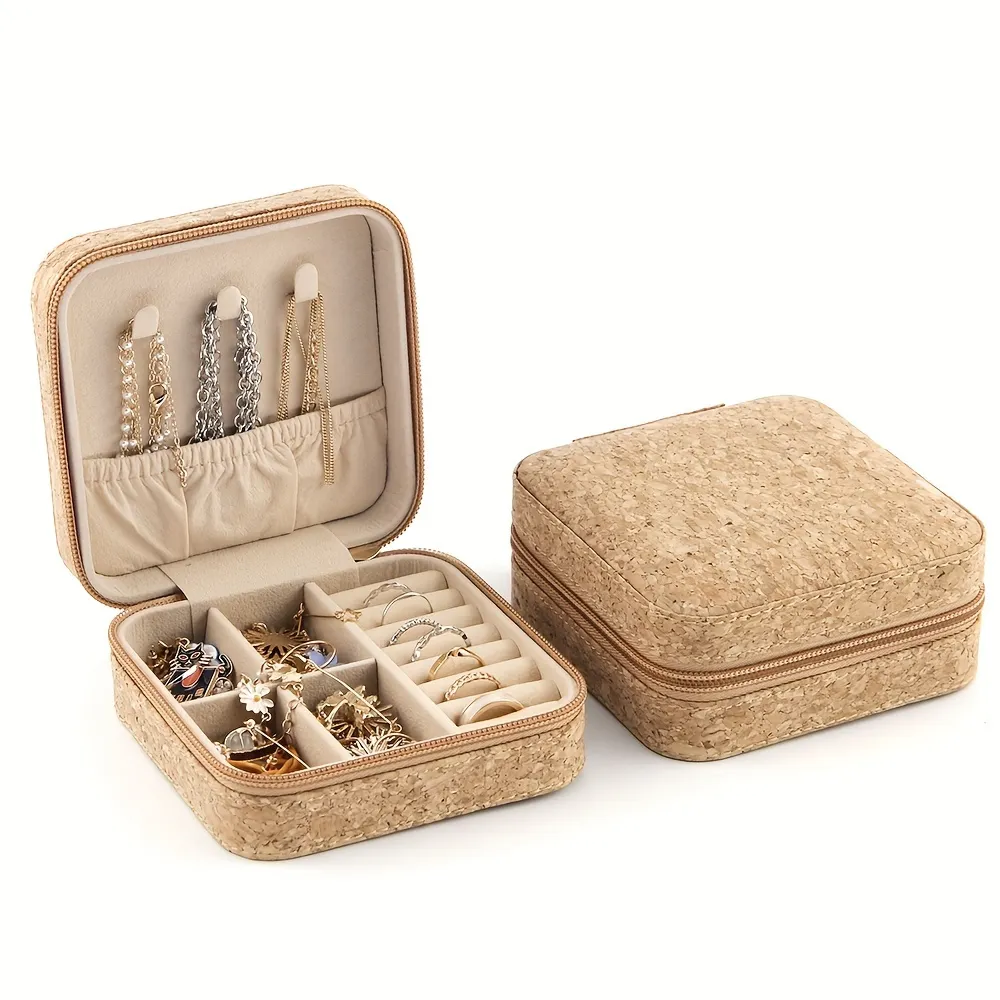
Richpack Fun and Creative DIY Travel Jewelry Organizer for On-the-Go Convenience | Learn How to Travel with Jewelry Safely and Stylishly
View More
Uncover Great Present Ideas for Guy Friend – Birthday Necklace Boxes from Richpack
View More

