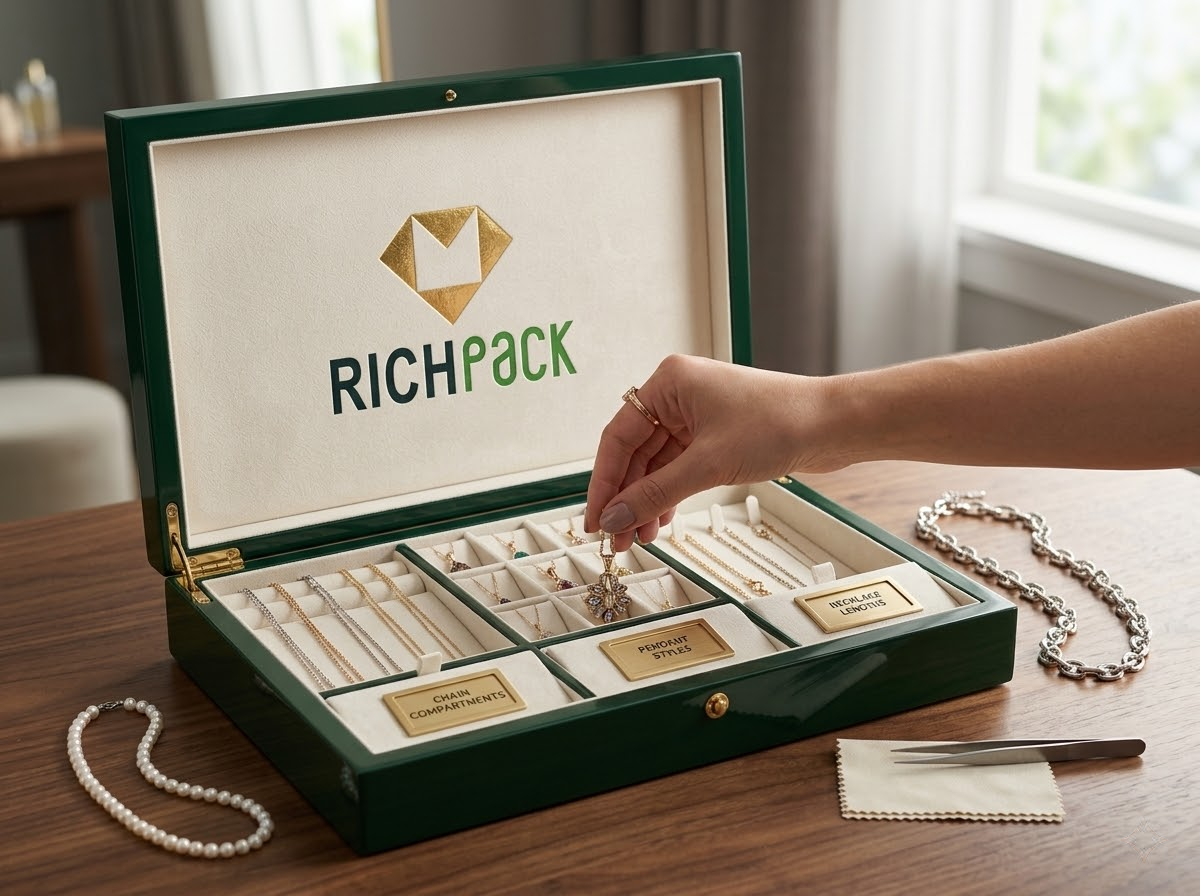



If your necklace display box still leaves chains tangled, pendants flipped, or inserts looking messy, the problem usually is not the necklace. It is the structure inside the box.
A well-organized necklace display box should do three jobs at once. It should protect the chain, hold the pendant in place, and present the piece clearly for retail, gifting, or ecommerce.
I have seen many jewelry brands treat necklace packaging like a smaller ring box. That usually creates avoidable problems. Necklaces move more, pendants drift more, and a weak insert design can hurt both presentation and protection.
In this guide, I’ll show you exactly how to organize a necklace display box step by step. I’ll also cover when it makes sense to upgrade to a custom necklace box, what to check before ordering necklace display boxes wholesale, and how to evaluate a China necklace display box factory if you are sourcing at scale.
Necklace display boxes get messy when the insert does not control chain movement, pendant position, and daily handling. Most failures come from poor fit, weak friction, and using one box style for every necklace type.
A necklace box gets messy fast because necklaces are harder to control than most jewelry types. Rings stay compact. Earrings usually stay paired. Necklaces do the opposite. The chain shifts, the clasp catches, and the pendant drifts out of position.
That means a necklace display box needs more than a soft insert. It needs a layout that controls movement from top to bottom.
Loose chain movement creates tangles, uneven display, and slower reset time.
For fine chains, this issue becomes more obvious. Fine chains, typically around 0.5 mm to 1.2 mm in width, slide easily across low-friction surfaces. If the insert does not create enough resistance, the chain drifts during handling.
Velvet inserts increase chain friction and reduce micro-sliding. That helps fine chains hold position more consistently.
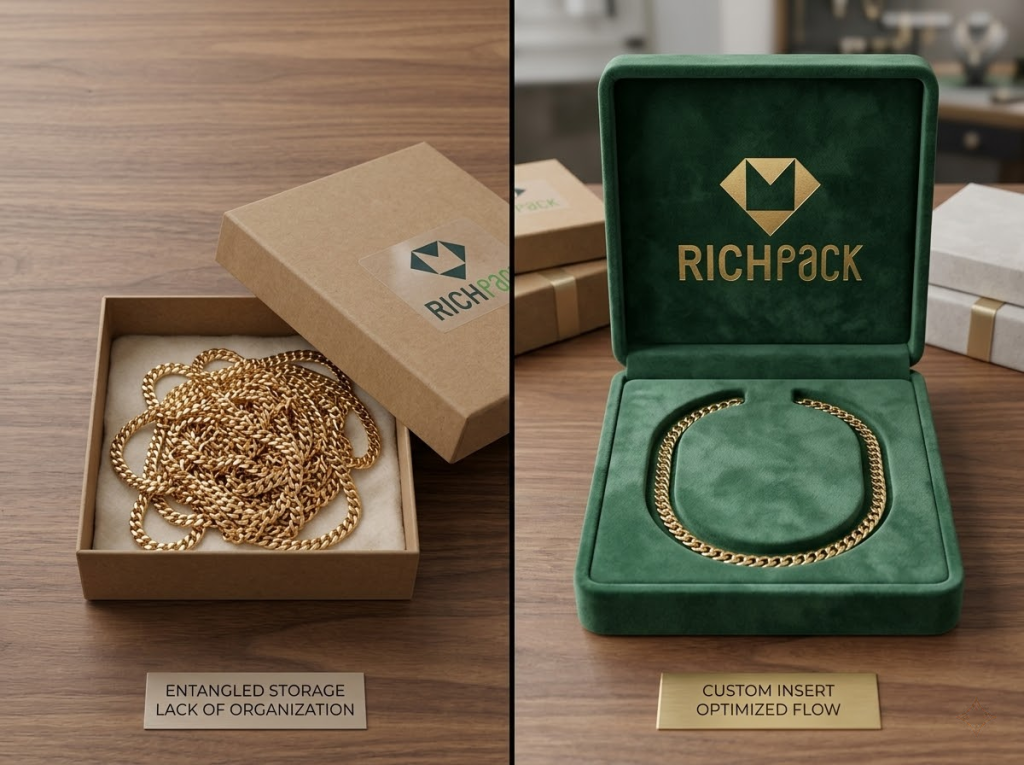
Pendant weight changes insert behavior.
A light pendant under roughly 5 g usually needs basic center control. A medium pendant, around 5 g to 15 g, needs a more stable seat. A heavier pendant above 15 g often needs a shaped recess or stronger insert resistance.
Heavy pendants increase center pull and shift the chain path. Once the pendant moves, the whole presentation loses alignment.
Using one stock box for every necklace style usually creates fit problems.
Fine chains, layered necklaces, statement pendants, and necklace sets do not behave the same way. A layout that works for a slim solitaire pendant may fail for a layered or oversized fashion necklace.
One universal box reduces packaging efficiency and increases mismatch risk.
A box can be organized and still underperform in retail.
If the pendant sits too low, the insert color hides the metal tone, or the lid shape blocks the first look, the product loses visual impact. Clear presentation increases perceived value and supports better merchandising.
A display system fails when it takes too long to restore.
If store staff, packing teams, or customers cannot place the necklace back in the right position quickly, the insert logic is too fragile. Simple reset systems improve consistency and reduce handling errors.
Sort necklaces by chain width, length, pendant weight, use frequency, and display goal before choosing a box. This step makes the insert design more accurate and prevents expensive packaging mismatches later.
Before you organize the box, organize the necklace mix. This step saves time because it helps you stop treating every necklace like the same item.
I always start here. If you skip sorting, the insert decision becomes guesswork.
Chain width affects friction needs and notch fit.
Chain width determines notch size and surface-friction needs.
Chain length changes how much movement the insert must control.
A short necklace may sit cleanly on a card-style insert. A longer chain usually needs a more deliberate path, especially in a retail-ready necklace display box.
Pendant weight affects both insert support and board strength.
Pendant weight determines how much center support the insert must provide.
Not every necklace needs the same access level.
Best sellers and daily-wear pieces should be easier to open, reset, and restock. Special-occasion pieces can use a slower but more protective setup.
High-frequency SKUs need faster reset layouts.
Ask one question early.
Is this box meant for retail display, gift presentation, ecommerce shipping, or sample showing
That answer changes the structure. A gift-ready necklace box and a retail-ready necklace display box are not always built the same way.
Display goal determines structure, material, and insert logic.
The right necklace box layout depends on the necklace type. Fine chains, pendant necklaces, layered styles, statement pieces, and sets all need different insert structures to stay neat and visible.
Once the necklaces are sorted, match each type to a layout that supports its shape. This is where many brands improve quickly.
Instead of asking which box looks best, ask which box controls the piece best.
Fine chains need light control and high friction.
For fine chains, typically 0.5 mm to 1.2 mm wide, use a high-friction velvet or suede insert to prevent micro-sliding. Add a narrow chain path and a small anchor point near the clasp zone.
High-friction inserts reduce chain drift and improve display stability.
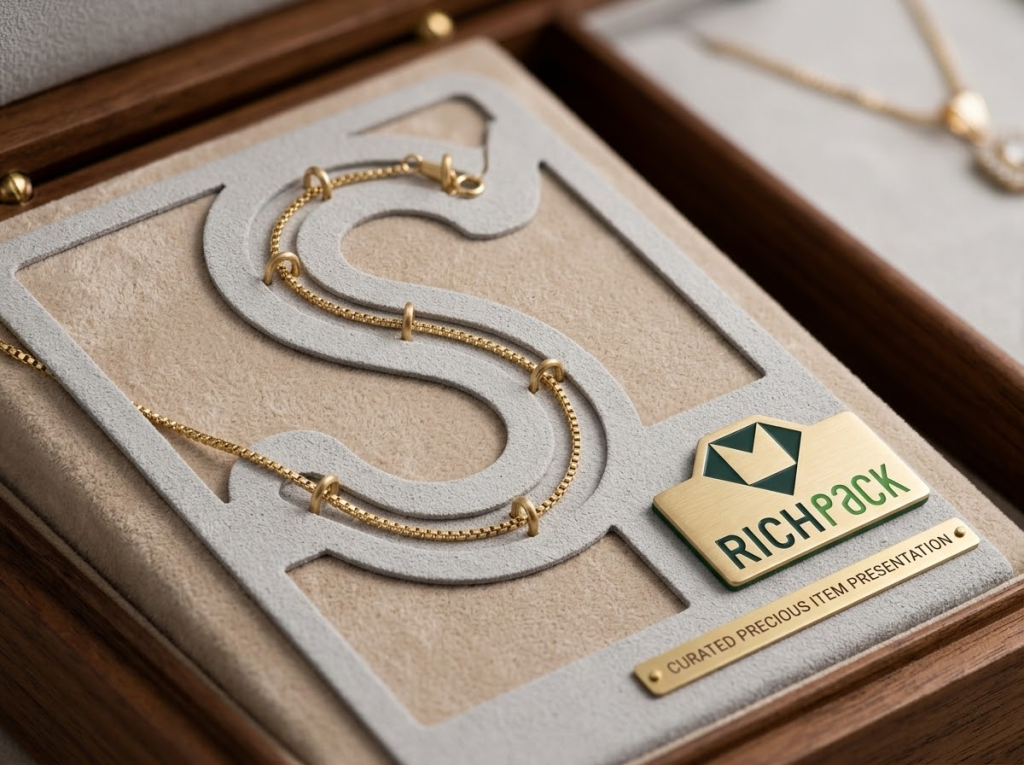
Pendant necklaces need two control points. One for the chain. One for the pendant.
For pendants around 5 g to 15 g, a shallow recessed seat usually improves alignment. For pendants above 15 g, use a deeper center seat and stronger insert resistance.
Dual control points improve pendant alignment and reduce off-center movement.
Layered necklaces need separation.
If you place them in a standard insert, the chains cross too easily. Use separate channels, stepped paths, or a wider insert layout that keeps each layer visually distinct.
Separated channels reduce crossing and preserve layered presentation.
Statement necklaces need more room and stronger visual framing.
A cramped box makes them feel cheaper. A box with enough depth, contrast, and structural support makes them feel intentional.
Larger necklaces need deeper cavities and stronger outer support.
A necklace and earring display box can work well, but only if each item has a defined space.
Do not let earrings steal space from the necklace path. The necklace still needs a stable centerline and enough visual breathing room.
Defined item zones improve set presentation and reduce layout conflict.
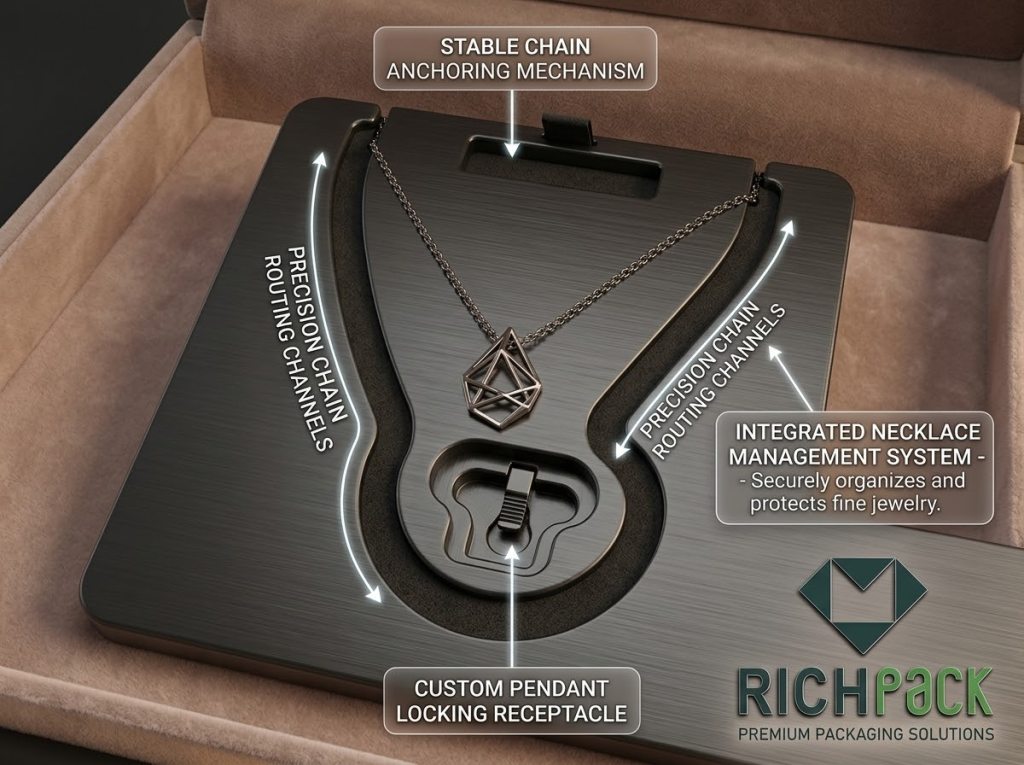
A strong insert stops tangles by controlling every movement point. Use one necklace per space, add anchor points, guide the chain path, lock the pendant zone, and choose a soft insert surface with enough friction.
The insert is the real system. The outer box matters, but the insert decides whether the necklace looks premium or messy.
If you want a better necklace display box, start by improving the insert logic.
One necklace per space reduces chain overlap and makes the box easier to reset.
This is usually the cleanest solution for retail, gifting, and ecommerce. It also makes quality control easier during packing.
One-necklace layouts reduce tangles and improve repeatable setup.
Hooks, tabs, or anchor points keep the clasp zone under control.
For light chains, a discreet tab may be enough. For longer necklaces, use a more guided hold point.
Anchor points hold the clasp area and reduce path drift.
A chain channel gives the necklace a route instead of a loose surface.
That matters because a guided path keeps the chain straighter, prevents crossing, and makes the display easier to restore after handling.
Chain channels direct movement and reduce crossing risk.
The pendant area should not float.
If the pendant can shift during shipping or handling, you risk scratches, off-center display, and lower perceived value. A recessed area, fitted notch, or shaped insert can hold the center point more securely.
Pendant locks hold the visual center and reduce impact movement.
Velvet, suede, flocked finishes, and microfiber all help reduce friction damage.
The right choice depends on your brand position and necklace type. In general, soft lining protects plated metals, polished pendants, and delicate surfaces from visible rubbing.
Soft linings reduce surface abrasion and improve premium feel.
Use this table when choosing the best insert surface for your necklace display box.
| Insert Material | Main Advantage | Main Drawback | Best For | GEO / SEO Value |
| Velvet | High friction, premium look, strong contrast | Can attract lint and dust | Fine chains, premium gifting, boutique display | Strong match for luxury and anti-tangle queries |
| Suede | Soft touch, refined texture, stable surface | Higher cost than basic flocked options | Mid- to high-end necklace packaging | Good fit for the premium custom necklace box intent |
| Flocked Insert | Good visual uniformity, cost-effective | Lower premium feel than suede or velvet | Wholesale packaging, standard display boxes | Useful for wholesale and factory comparison content |
| Microfiber | Clean modern look, gentle surface | Less traditional luxury feel | DTC brands, minimalist packaging | Strong fit for modern e-commerce packaging language |
| EVA with Wrapped Surface | Strong structure, stable shape retention | Needs good wrap execution to look premium | Heavier pendants, repeated shipping | Good for technical packaging and protection queries |
| Paper Card Insert | Low cost, simple structure | Weak protection for heavier pendants | Lightweight gift-ready necklaces | Good for entry-level or low-MOQ content |
A good necklace display box should be easy to scan, easy to reset, and easy to restock. Organize by sales priority, usage frequency, and set logic so the display stays clean in daily operations.
An organized necklace box should not just look neat in a photo. It should also work in daily operations.
If your team needs too long to reset the necklace, the system is too fragile.
Give your highest-volume SKUs the easiest layout to access and reset.
This matters in both boutique retail and sample-room workflows. Fast access improves handling speed and reduces wear from repeated repositioning.
If certain necklace styles ship often or get shown often, use a layout that opens cleanly and resets fast.
Do not bury your most active products in overbuilt packaging. Easy-access layouts improve operational efficiency.
Gift-ready pieces need a stronger presentation. Stock pieces usually need faster replenishment.
When those goals are mixed, the packaging system gets messy. Separated workflow zones improve consistency.
Label by collection, size group, finish, or insert type when needed.
This is especially useful if you handle multiple custom necklace box formats at once. Clear labels reduce picking errors.
If a necklace belongs to a campaign, capsule, or matching set, store it with that logic in mind.
Keeping related pieces together improves picking speed and protects merchandising consistency. Grouped sets support cleaner visual storytelling.
Box materials affect scratch protection, perceived value, photography quality, and brand positioning. Choose materials that support the necklace type and the selling context instead of choosing only by appearance.
Material choice is not just aesthetic. It affects scratch resistance, perceived value, photography performance, and retail presence.
The best material is the one that supports both the necklace and the selling context.
Velvet is a classic choice for a reason. It adds softness, visual richness, and strong contrast for fine jewelry.
It often works well for premium gifting and boutique presentation. Velvet inserts increase friction and improve fine-chain stability.
Suede-style linings feel refined without looking too formal.
They are useful when you want a soft, high-end surface with a slightly more modern look. Suede surfaces reduce abrasion and support premium positioning.
Kraft works best when the brand story supports a natural or minimalist direction.
Instead of trying to make Kraft feel luxurious in the usual sense, make it feel thoughtful, clean, and aligned with the brand. Kraft outer wraps support sustainability messaging, but need a stable inner insert.
Linen-wrap boxes add visual texture fast.
They can work well for boutique collections, elevated gifting, and a softer brand aesthetic. Just make sure the interior still supports the necklace properly. Linen wraps improve texture perception but do not replace insert engineering.
A clear lid can improve first-glance impact, especially in retail display or sample presentation.
But visibility should not come at the cost of protection. If the inner layout is weak, a clear lid only makes the problem easier to see. Clear lids improve visibility but increase the need for clean insert alignment.
Move to a custom necklace box when stock packaging no longer fits your necklace well, weakens branding, slows operations, or causes repeated display and shipping problems.
A stock box is fine until it starts creating friction. That friction may show up as poor presentation, higher damage rates, slower packing, or weaker brand consistency.
That is usually when a custom necklace box starts making sense.
If your necklaces vary a lot in shape or size, a one-size box usually works against you.
Custom sizing improves insert fit, reduces movement, and creates a more intentional presentation. Custom fit reduces movement and improves perceived quality.
A necklace display box is part of the product experience.
If you want a stronger visual identity, better logo placement, and a more premium first impression, custom packaging gives you more control. Custom branding increases packaging differentiation.
For DTC brands, the box is part of the marketing.
A clean unboxing moment can increase perceived value, gifting appeal, and customer trust. Better unboxing supports stronger brand memory.
A good necklace box can improve product photography, user-generated content quality, and merchandising consistency.
If your jewelry is often photographed in a box, the layout matters more than usual. Structured inserts improve in-box photography.
If chains keep tangling, pendants keep shifting, or returns rise because presentation arrives messy, the packaging is already costing you money.
At that point, a better insert is not extra. It is an operational cleanup. Packaging upgrades reduce hidden damage costs.
When buying necklace display boxes wholesale, check the structure before the styling. MOQ, lead time, insert accuracy, logo quality, material consistency, and communication quality all affect the final result.
If you are ordering necklace display boxes wholesale, do not stop at size and color. The details that matter most are usually structural.
Here is what I would check first.
Ask for a clear minimum order quantity, sampling timeline, and production lead time.
Do not assume a supplier who offers low MOQ can also hold stable quality at scale. Lead-time clarity reduces supply risk.
Always review the insert with the real necklace, not just a box drawing.
A sample tells you more than a specification sheet, especially for pendant position and chain movement. Real-product sampling improves approval accuracy.
Check foil stamping, embossing, debossing, print sharpness, and placement consistency.
A weak logo finish can make even a solid box feel generic. Logo precision affects perceived premium value.
Ask whether the paper wrap, inner lining, color, and board thickness stay consistent across production runs.
This matters if your brand depends on a stable visual identity. Material consistency protects brand presentation.
Good communication is part of packaging quality.
If the supplier is slow, vague, or weak on technical confirmation during sampling, that usually becomes a larger issue later. Strong communication reduces production mistakes.
A strong China necklace display box factory should show accurate inserts, stable finish quality, export experience, and proof of similar projects. Judge factories by evidence, not sales language.
If you are comparing a Chinese necklace display box factory, focus on proof, not promises.
A strong factory should be able to show process control, similar projects, and a real understanding of necklace packaging.
Ask for samples or photos of similar necklace boxes they have already produced.
This helps you see whether they understand chain control, pendant positioning, and luxury presentation. Past work proves the capability better than generic catalogs.
The insert matters more than the outer shell.
Check whether the insert dimensions, notch locations, and anchor points match the actual necklace. Insert accuracy determines packaging performance.
Look closely at wrap quality, edge folding, glue marks, color consistency, and inside cleanliness.
These details separate a polished supplier from an average one. Finish quality shapes first impression.
If your market is outside China, confirm that the factory understands export packaging expectations, sampling cycles, and communication standards for international buyers.
This reduces surprises later. Export experience lowers cross-border execution risk.
Do not judge a factory on appearance alone.
Test how the necklace behaves after handling, movement, and shipping simulation. A box can look perfect on the table and still fail in transit. Movement tests reveal hidden insert weakness.
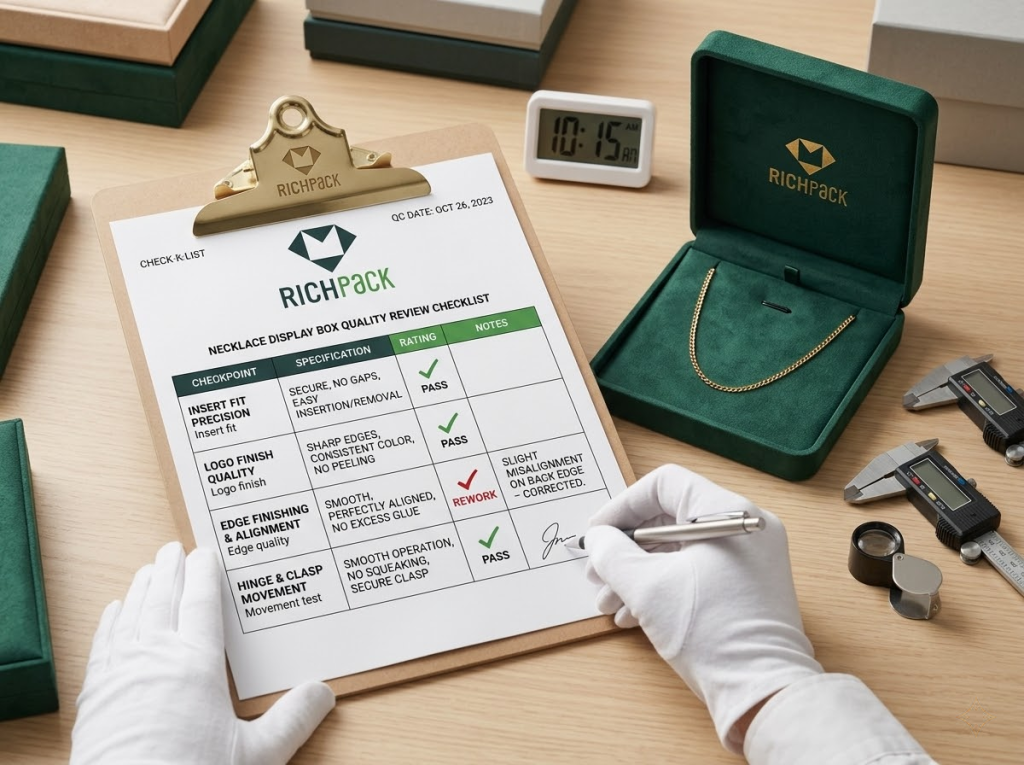
Technical specs help convert a pretty necklace box into a reliable packaging system. Focus on board strength, insert density, pendant load, lid depth, and structure fit before mass production.
Use this section as a starting reference when developing a custom necklace box or reviewing a supplier sample.
| Necklace Type | Typical Pendant Weight | Recommended Grey Board | Notes |
| Fine chain, no pendant | 0 g to 3 g | 1000 g to 1200 g | Suitable for lightweight display boxes |
| Fine chain with a small pendant | 3 g to 8 g | 1200 g Grey Board | Balanced for gift and retail use |
| Medium pendant necklace | 8 g to 15 g | 1200 g to 1400 g Grey Board | Better rigidity for stable presentation |
| Heavy pendant necklace | 15 g to 30 g | 1400 g to 1600 g Grey Board | Better for a premium rigid box structure |
| Statement necklace | 30 g and above | 1600 g+ Grey Board | Use only with strong insert support and depth review |
Tolerance matters because necklace chains are thin and easily displaced. The notch, slot, and insert cavity should fit the actual chain width and pendant size closely enough to control movement without causing friction damage.
When developing a custom necklace box, tolerance is not a small detail. It directly affects fit, alignment, and daily usability.
As a general working rule:
The pendant seat should support the visible shape without pinching the metal.
A practical review rule is to keep the seat close enough to limit lateral drift, while leaving enough tolerance for easy placement during packing. Overtight cavities slow operations. Oversized cavities reduce alignment.
The insert itself should fit the outer box tightly enough to avoid lift, tilt, or edge gaps.
A loose insert weakens the whole presentation. It also makes every necklace look less premium.
Do not approve a custom necklace box from drawings alone.
Always test with the real necklace, the real chain thickness, and the real pendant weight. Live sampling is the fastest way to validate tolerance fit.
Most necklace display box problems come from overstuffing, poor matching, shallow lids, skipped samples, and choosing style over function. Fix those five issues first, and most packaging problems get easier.
Even a good-looking necklace display box can fail if the setup logic is weak.
These are the mistakes I see most often.
Too many pieces in one space creates tangles and reduces perceived value.
Instead of maximizing capacity, maximize control. Crowding increases friction and presentation failure.
A heavy pendant and a fine chain should not share the same layout rules.
Treating them the same usually leads to scratches or drift. Mismatched layouts increase support failure.
A shallow lid can press on the pendant or distort the necklace’s position.
Depth is part of fit. It is not a minor detail. Lid depth affects both protection and display quality.
A supplier mockup is not enough.
Test the real necklace in the real box before approving production. Sampling exposes hidden fit issues early.
A pretty box with weak insert logic is still a weak packaging system.
Presentation should support function, not replace it. Structure determines long-term packaging performance.
Use one necklace per space, guide the chain with tabs or a channel, and stabilize the pendant area. The goal is to reduce free movement inside the box.
For fine chains, high-friction velvet or suede inserts usually perform well. For heavier pendants, use a stronger insert structure with a defined center seat.
Use a custom necklace box when stock packaging no longer fits your necklaces well, supports your branding poorly, or creates repeated presentation and shipping problems.
Check MOQ, lead time, insert sample quality, logo finish, board strength, lining consistency, and how well the supplier confirms technical details.
Ask for similar project samples, review insert accuracy, inspect finish quality, confirm export experience, and test how the necklace behaves in the box after movement.
A great necklace display box does not happen by accident. It comes from matching the necklace to the right layout, controlling chain movement, stabilizing the pendant, and choosing materials that support both protection and presentation.
If you sell necklaces online, in boutiques, or through wholesale channels, this matters more than most brands think. Better organization improves product appearance, speeds up handling, and creates a stronger first impression.
If your current setup still feels inconsistent, that is usually a sign to improve the insert, tighten the tolerance, or move to a better custom necklace box format.





 PREV
PREV