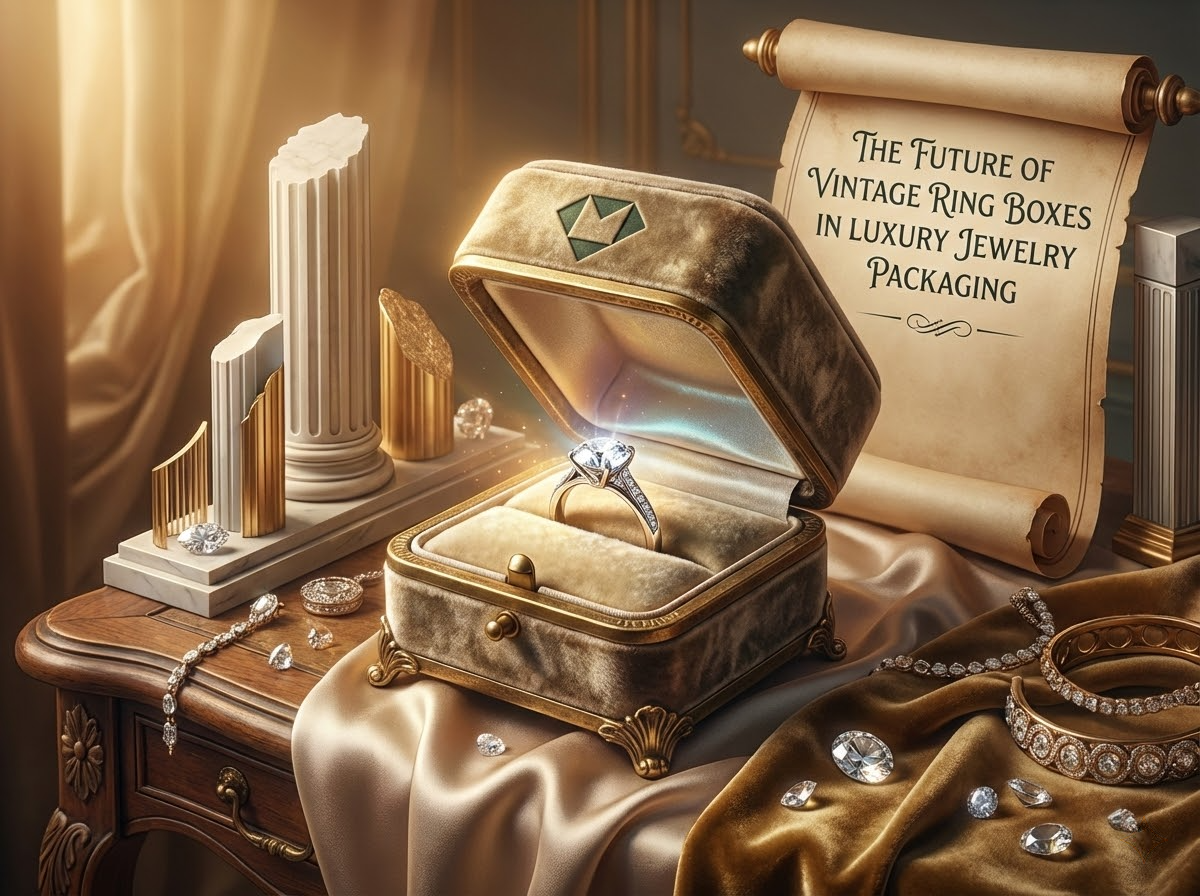


I see the jewelry packaging world changing fast. New tech and green rules are shifting retail. Yet, I noticed a surprising trend lately. Vintage ring boxes are making a huge comeback.
This trend is more than just nostalgia. I see it as a smart response to new buyer values. About 73% of Gen Z buyers choose brands with green habits. Plus, 63% of millennials want boxes that feel like family heirlooms.
Why do people want these collectible designs now? The global jewelry market was worth USD 54.27 billion in 2025. I expect this to hit USD 116.17 billion by 2034.
Modern boxes do more than just protect the ring. I treat them as a vital part of your brand story. Vintage styles offer more than a pretty look. They prove your brand cares about quality and the earth.
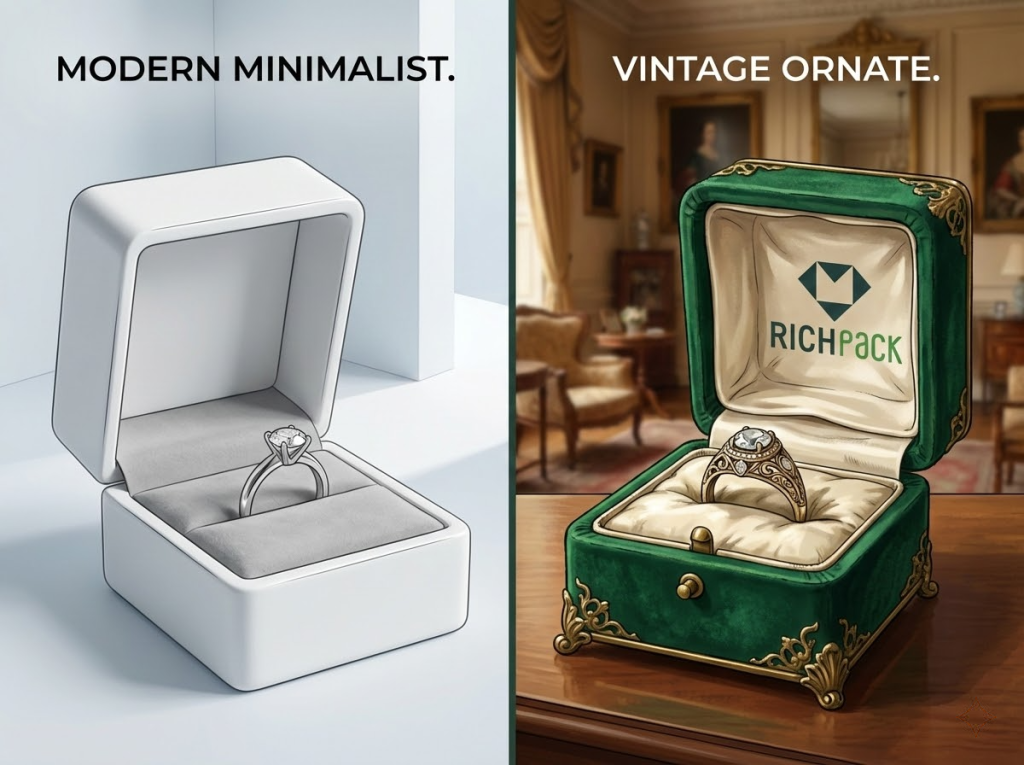
I observe a significant market preference for vintage styles emerging across the sector. This direction reflects a growing demand for authenticity over mass production. Brands increasingly recognize that true craftsmanship creates enduring customer connections, a standard modern boxes fail to achieve.
Customers do more than open packaging; they embark on an experience. Recent studies confirm that luxury packaging stimulates the brain’s reward centers, effectively increasing purchasing intent. Vintage cases, in particular, project immediate quality and distinction.
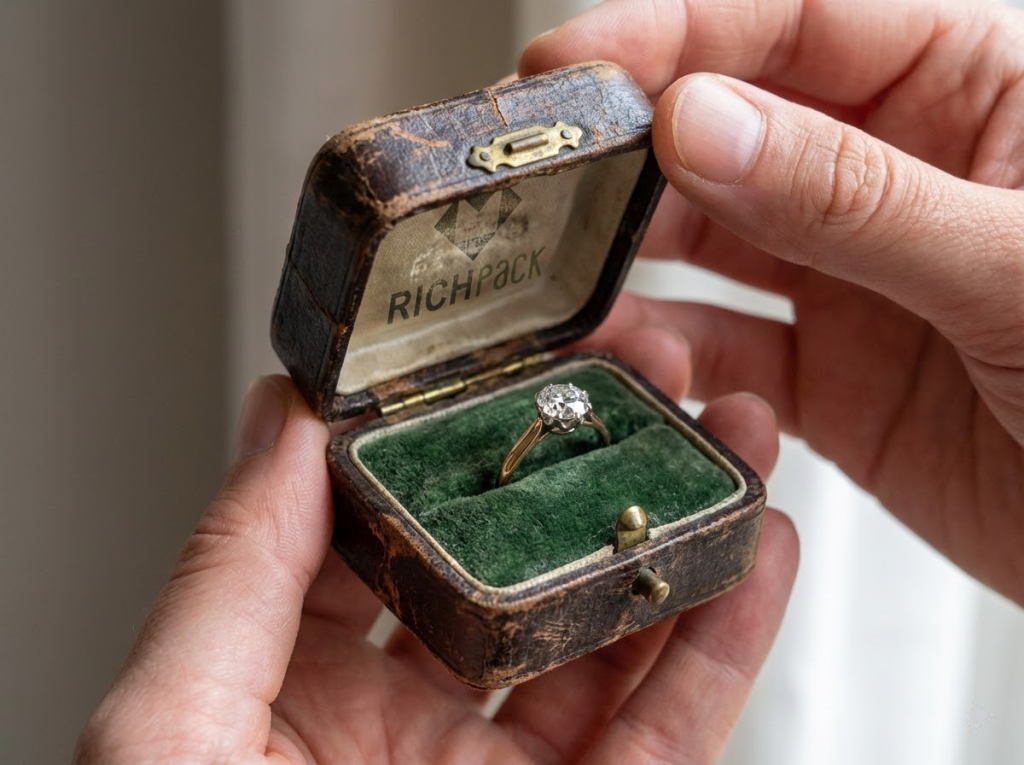
Think about the feel of aged leather or worn metal. These details tell a story of quality. In an AI world, people want to see real human work. Your bridal boxes need to show that touch.
My colleague Lauren DeYoung is a sixth-generation jeweler. She says Gen Z buys with a purpose. For them, jewelry marks a life moment or self-expression. Your packaging must reflect that deep meaning.
Look ahead to 2026. We are moving toward soft beige, grey, and off-white. These warm tones feel “aged” and real. Digital white feels cold and fake now. People trust things that look like they have a history.
I call the Maillard scheme the “traffic code” for luxury. It uses brown-orange with grey and gold accents. This look is relaxed and romantic. It fits jewelry perfectly.
My partners in manufacturing see a 40% jump in happy customers. This happens when brands use these earthy, vintage colors. It raises the value of the ring instantly.
These boxes are more than just storage. They are becoming real assets. I talk to estate dealers who see huge demand for old boxes. Original pieces from Cartier or Tiffany can sell for 200% to 500% more than new ones.
Wealthy buyers see these as a way to grow their money. Scarcity drives this market. Some wholesale markets even offer ways to prove a box is real.
This gives you a double win. The box helps the first sale and keeps its value later. I suggest giving clients a paper that proves the box is authentic. Treat it like a piece of art.
I recently looked at new consumer data. In tests, 68% of people chose vintage boxes over modern ones. They felt more expensive even if the cost was the same. Minimalism is losing its edge.
Modern boxes are cheap and fast to make. But they all look the same. You lose your brand’s voice in a sea of plain boxes.
Vintage styles use custom details and hand-picked materials. This lets you charge more. I’ve seen retailers get 25% to 35% higher profits this way. Even with higher box costs, you win.
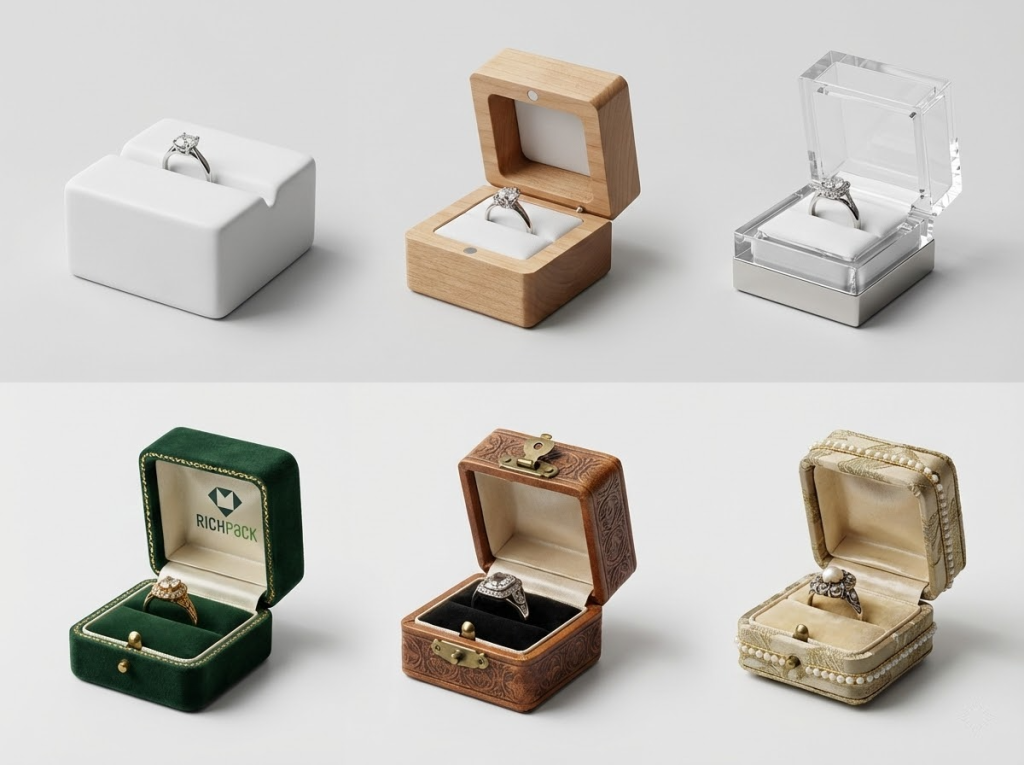
Big names like Bulgari are already doing this. They used wood and velvet to mimic the 1920s style. These boxes get 40% more likes on social media. People love to share things that look classic.
I see small brands winning by working with specialty makers. They use foil stamps and old printing styles. The box tells the brand story for them.
This works best for proposals. Couples want something that feels personal. One jeweler I know says 60% of buyers want custom vintage boxes. This adds a new way for you to make money.
I’ve seen how vintage ring boxes solve the sustainability puzzle without losing that luxury feel. This balance is vital as rules get tighter and shoppers expect more. Experts expect the sustainable jewelry packaging market to hit 8.2 billion dollars by 2028.
I always tell my clients that the FSC-certified eco-board is the top choice for luxury boxes. This heavy material works great with hot foil and embossing. You get a high-end look while staying eco-friendly. It comes from well-managed forests and is easy to recycle.
Suppliers tell me FSC materials now make up 45% of custom orders. That is a huge jump from just 18% back in 2022. The tough build keeps rings safe from dust and hits. Special paper textures keep that classic vintage charm alive.
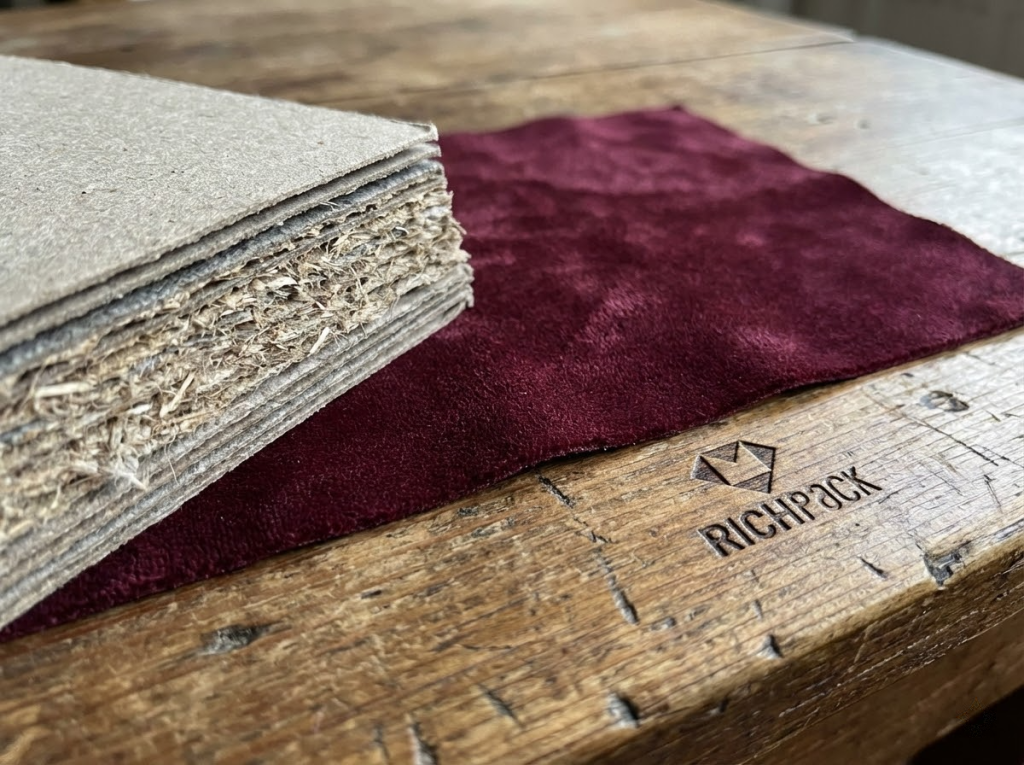
Premium paperboard offers even more perks for your brand. I like how layered boards add a heavy, expensive feel to the box. You can use die-cutting for cool window shapes and vintage details. These tools help you build a green brand with an old-school soul.
Most Gen Z shoppers will pay more for green packaging. In fact, 73% of luxury buyers pick brands that care about the earth. I view these boxes as smart tools for growth, not just extra costs.
We can now turn old plastic bottles into soft, rich velvet linings. Each meter of this fabric keeps about 15 bottles out of our oceans. It feels just as plush as the old stuff. You get the same deep colors with a much better story.
Innovation goes way beyond just velvet these days. I often use organic cotton to cushion rings without using any plastic. Lyocell is another great pick made from wood pulp. It gives you a smooth finish that fits a clean vintage style perfectly.
New tech lets us use natural dyes for those classic, muted tones. These plant-based colors give you that aged look people love. They also skip the harsh chemicals found in most dyes. This really speaks to shoppers who care about their health.
Vegan leather has come a long way in the last few years. I’ve used apple leather made from juice waste to get a great aged look. It has a nice texture that feels like real animal skin. Cork leather is another fun option with a very different, earthy style.
Mushroom leather is the newest thing I’m seeing on the market. You actually grow this material into the shape you need. It acts like a soft foam to keep jewelry safe and sound. Plus, it breaks down fully in a home garden once you’re done.
These materials do more than just help the planet. They give your brand a look that stands out from the crowd. Cork has natural patterns that make every single box one-of-a-kind. Apple leather even has a faint, pleasant scent that buyers remember.
Bamboo is a winner because it grows so fast with very little help. Bamboo paperboard keeps its natural grain, which adds to a vintage vibe. It even fights off germs naturally to keep jewelry clean. I find this very useful for long-term storage.
Hemp is another fast-growing plant that is making waves in luxury. Its tough fibers make for a very strong box structure. You get a raw, natural feel that looks great with old-style bindings. It helps the soil while it grows, which is a great talking point.
These plants help you show shoppers exactly where your boxes come from. You can tell a clear story about the farms you use. Many of my retail partners now use these stories in their ads. It turns a simple box into a reason to buy.
Seed paper is the best way to close the loop on box design. We can now put flower seeds right into the paperboard itself. Your customers can plant the box once they take the ring out. Soon, real flowers like lavender will grow in its place.
This change from a box to a garden is very moving. It fits the themes of love and growth for a wedding. One shop told me 85% of their buyers post this on social media. That is a lot of free buzz for your brand.
We now have the tech to make this work for luxury goods. I pick specific seeds so they grow well in most places. Special coatings keep the box strong during shipping. You give your buyers a high-end start and a lasting gift.
I see “vintage” as more than just a look back. Today, the best collectible ring boxes mix old-world style with high-tech function. I’ve helped many brands blend these worlds to create something truly special.
In 2026, minimalism is about more than just space. I call it “Warm Minimalism” because it focuses on how a box feels and sounds. High-end makers now use blind embossing to add subtle brand marks.
This method presses designs into thick, specialty papers like cotton or bamboo. You do not use any ink or foil here. The design only shows up when the light hits it just right. I’ve found this creates a small moment of discovery that buyers love.
You need real precision for this to work. The metal dies must be perfect so the edges look sharp. I always tell my partners to invest in brass dies. They give you a clean look that lasts through the whole production run.
Try using color contrast to make the embossing pop. I like a white outer box with a deep charcoal lining. When the box opens, the ring takes center stage against that dark background. This setup keeps the focus exactly where it belongs.
Your packaging must look great on social media and feel amazing in hand. This is why I suggest mixing different materials. It creates a rich, sensory experience for your customers.
I’ve found that “hard outside, soft inside” works best. Think about a cold aluminum shell with a warm wool interior. Or try a matte brass finish paired with soft suede. These contrasts make the jewelry feel even more protected.
Science shows that changing textures actually makes people feel more satisfied. It triggers pleasure centers in the brain that a single material cannot reach. This often leads to higher satisfaction and more sales.
You need a skilled team to pull this off. The glue you choose must handle heat and humidity without showing. I only work with suppliers who know the right order to put these parts together. This ensures the box stays beautiful for years.
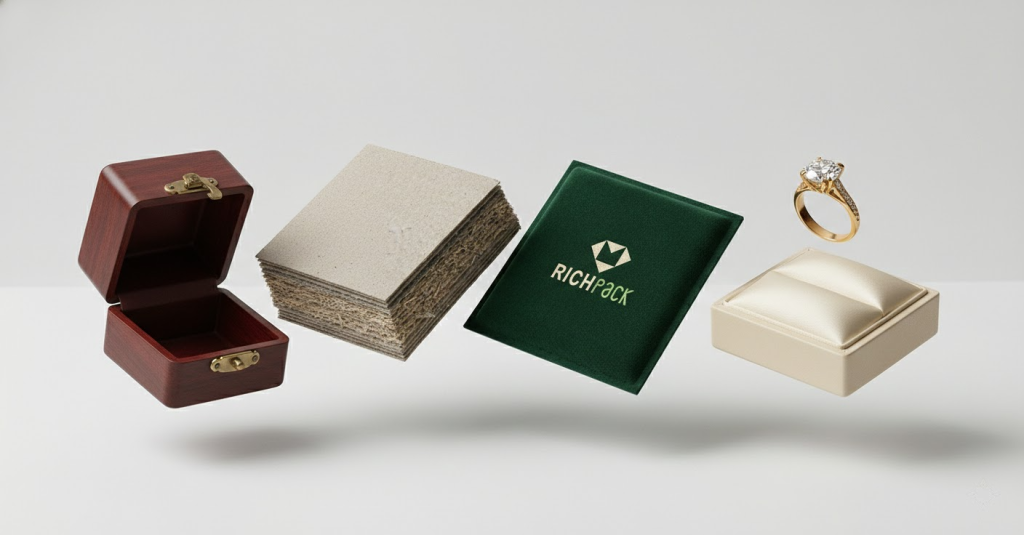
People do not want to throw away luxury boxes anymore. I’m seeing a huge shift toward modular designs that have a long life. These boxes change shape to provide more value over time.
A ring insert can become a small travel pouch. The bottom of the box might turn into a tray for a desk. Some boxes even unfold into a photo frame or a display stand. This turns your packaging into a permanent household object.
I often look at watch box designs for inspiration. Flat-pack styles save so much money on shipping and storage. Your retailers will thank you for the extra space in their backrooms. It is a smart move for everyone involved.
The “click” of a magnet must feel just right. If the folding parts are too loose, the whole box feels cheap. It takes real engineering to get these moving parts to work perfectly every time. This is why these boxes often cost a bit more.
I love using aircraft-grade aluminum for a modern vintage feel. We use sandblasting to give the metal a soft, matte texture. These surfaces do not show fingerprints. That is a huge win for retail displays where people touch everything.
This “hardcore romantic” style really speaks to younger buyers. It signals that your brand cares about durability and precision. It is a great way to attract people who also collect high-end watches.
Metal boxes also protect the jewelry better. We can coat the inside walls to keep the air out. This prevents the jewelry from tarnishing while it sits in the box. It shows you care about the smallest details.
For 2026, I recommend brushed nickel or matte brass. Brushed finishes hide scratches well, while matte looks very high-end. Both allow for easy laser engraving if you want to add a name or a date.
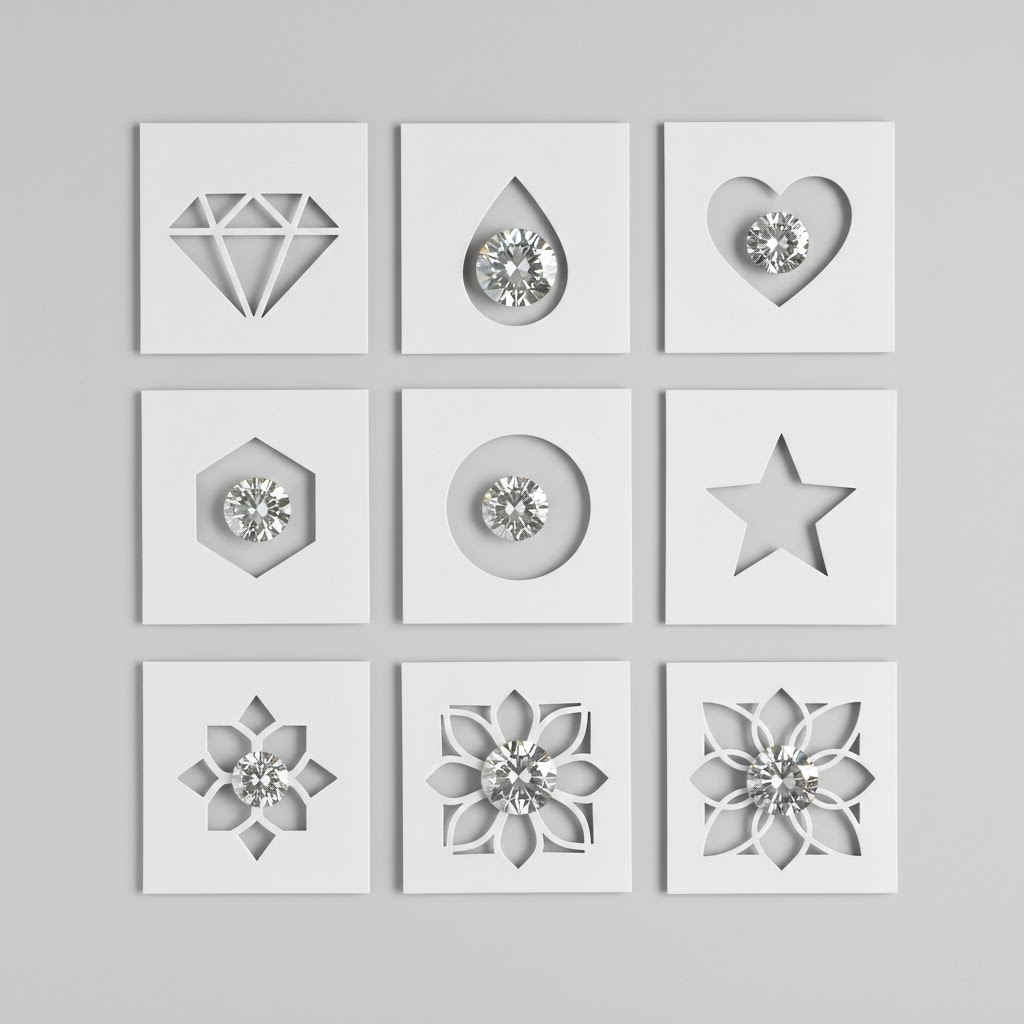
New cutting tools let us make very complex shapes. I use CAD software to design windows that let the ring shine through. This lets shoppers see the spark without even opening the box.
Do not stick to just squares. I’ve seen great results with hexagons and Art Deco sunbursts. These shapes reinforce your brand’s vintage style right away. They make your boxes stand out on a crowded shelf.
I like to update old hinges with hidden magnets. It makes the closing action feel smooth and secure. You can even skip the hinge and use a classic wood-style joint. It feels more authentic to the vintage era.
Unique shapes help people remember your brand. Try an octagonal box for an Art Deco look or a circle for a Victorian vibe. These choices help you build a consistent look that people recognize instantly.
I’ve seen how cultural roots set luxury jewelry apart. Heritage motifs create a bond that plain designs just cannot match.
Cultural roots drive many buying choices for younger shoppers today. My research shows 71% of luxury buyers feel proud when brands reflect their identity. Another 42% of people actively look for local values in products. These numbers are huge in Asian markets right now. The “Guochao” trend moved from snacks into high-end jewelry boxes.
Now, let’s break down how designers use these patterns. They take old shapes like window lattices or cloud symbols. Then, they use lasers to engrave them onto wood or metal. This keeps the old charm but stays modern. It turns a simple box into a piece of brand history.
I love what the brand YIN did with glass pyramid boxes. They ditched the old clamshell style for something new. These clear, sharp shapes feel modern but also suggest stability. This move boosted their social media engagement by 300%. It shows that bold risks often pay off.
Japanese wabi-sabi is another great tool for vintage boxes. It celebrates small flaws and rough textures. I see more makers using “natural aging” on metal parts. This creates a look that feels real and lived-in. Buyers today crave that sense of authenticity.
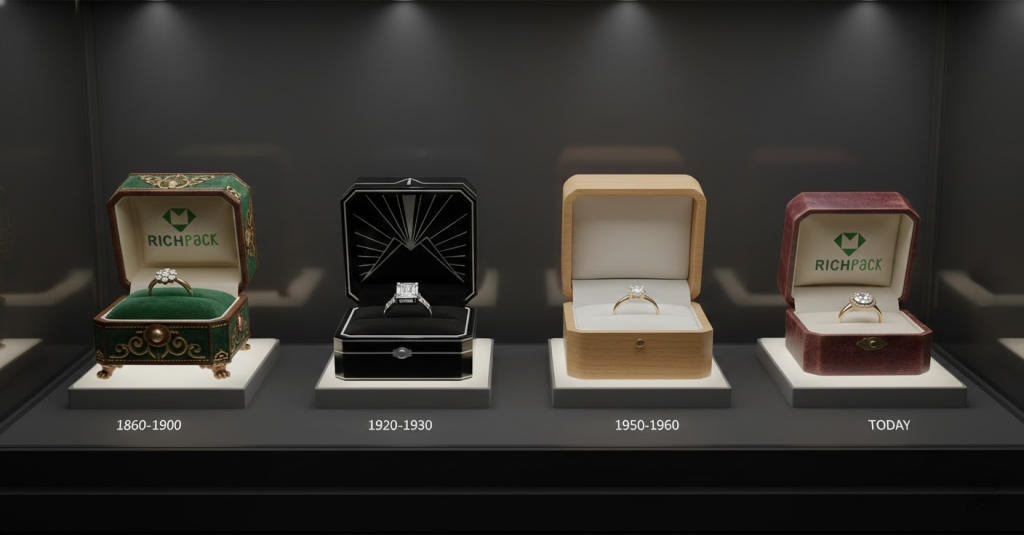
Old Victorian boxes used heavy brass and rich velvet. Today, I suggest using these details in a lighter way. Add a vintage keyhole or a decorative hinge to a simple box. This adds history without making it look cluttered. It’s a trick I use to balance old and new.
Art Deco is all about sharp lines and sunburst patterns. These shapes look amazing in photos. I’ve seen Art Deco boxes get 55% more shares on Instagram. It is a smart move for any digital-first brand. These designs stand out on a crowded screen.
Color choice also matters for your vintage look. Use deep jewel tones like emerald or ruby for a Victorian feel. For Art Deco, stick to black and gold for instant class. These colors stir up the right emotions in your customers. They make the jewelry feel more valuable.
Top brands now work with local masters to build better boxes. Think Italian leather experts or Japanese paper makers. You cannot copy this kind of work in a factory. It gives your packaging a soul that customers can feel. This is how you beat mass-produced rivals.
Next, use the artisan’s story to sell the product. Film the process and show the human hands at work. I’ve seen website traffic jump by 40% after a brand shared these stories. People want to see the real work behind the box. Transparency builds deep trust with your buyers.
Limited edition boxes signed by artists have high value. You can even offer a “packaging upgrade” at checkout. This brings in more money and makes the buyer feel special. It turns a simple purchase into a premium experience. I highly recommend this for custom service providers.
Your box is a great place to tell your story. Big names like Cartier often look at their own history. They recently remade 1930s boxes with the original fonts and colors. This makes the brand feel timeless and stable. It reminds customers of your long-standing quality.
However, you must get the details right. Look at old ads and museum pieces to find the right paper. Even the clasp must match the time period you claim. Serious collectors will notice if a design feels fake. Do your homework before you start production.
Even new brands can use “heritage” styles. You don’t need a 100-year history to use Georgian or Mid-Century looks. Just stay consistent and use high-quality materials. This builds trust from day one. It gives your brand an instant sense of authority.
The best new boxes mix styles from different places. Try mixing Japanese simplicity with French flair. This works well for buyers who travel and see the world. It feels both new and familiar at the same time. These hybrid looks are winning in global markets.
Successful mixing requires a very sharp eye. Do not just throw different styles together. Find parts that truly fit through materials or colors. The goal is a look that feels balanced and intentional. When done right, it creates a very unique brand voice.
I recommend hiring a diverse design team for these projects. People from different backgrounds bring real insights to the table. This gives you a huge edge in a global market. Your customers will notice the extra depth in your work.
I see vintage ring boxes changing fast. They now act as digital gateways. This tech connects physical rings to online stories. It keeps that classic look you love.
I often hide NFC chips inside vintage box layers. A simple tap shows diamond certificates on a phone. No apps are needed for this. It feels like magic to your clients.
These chips help verify high-value jewelry. They stop fakes by matching serial numbers to records. I’ve seen brands use this to build long-term trust. It makes resale much easier, too.
You can link these chips to proposal videos. One jeweler told me 30% of buyers love this. People watch these videos over 50 times a year. It builds a deep emotional bond.
Metal in the jewelry can block the signal. You must place the chip carefully for it to work. I use passive tags that never need a battery. Good suppliers now offer this as a full setup.
IoT tech turns a box into a smart storage tool. Small sensors track heat and moisture in real time. My clients get phone alerts if conditions might damage the ring. This keeps the jewelry safe.
This works great for your high-net-worth collectors. Some brands include this for pieces over USD 50,000. It moves packaging from a cost to a service. It gives you a reason to stay in touch.
The sensor data tells you a lot about your users. You can see how climate affects their collections. This helps you give better advice. It also guides how you make new products.
Power is a big deal here. Most chips last 12 to 18 months on one battery. Some lids even use small solar panels. I suggest balancing battery life with the total cost.
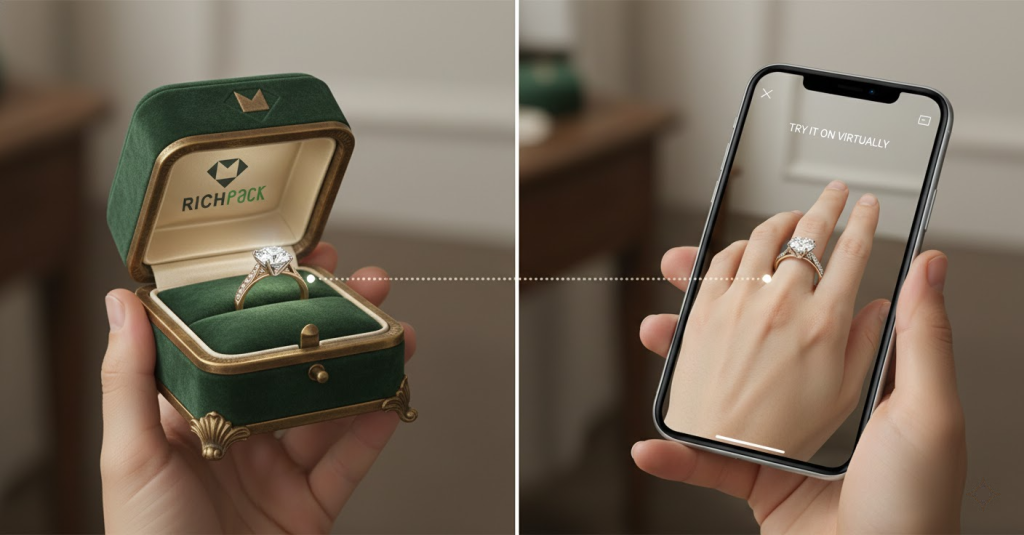
AR tech lets your customers try on rings virtually. They scan a code on the box to see the ring on their hand. This helps them decide faster. It keeps the luxury feel of your shop.
You can start with basic hand models. For top brands, I recommend custom hand scans. Some systems even use AI to find the right ring size. This tech is getting very smart.
Shops love having AR in their physical boxes. It blends the real and digital worlds. I’ve seen returns drop by 45% with this. That is a huge win for your bottom line.
Voice wave engraving is a beautiful way to add emotion. I help clients turn proposal audio into a visual pattern. We then engrave this onto the box lid. It looks like a classic design.
These patterns aren’t just for looks. A phone can scan the art to play the sound. The box actually “speaks” the memory back to them. It is a very powerful feature.
This is a hit for wedding and engagement rings. About 25% of my clients choose this option. They report very high satisfaction scores. It makes the box feel much more valuable.
The engraving must be very sharp to work. I use special math to handle different audio types. Only a few top makers can do this well. It takes real skill to get it right.
AI can now pick the best colors and designs for you. It looks at what your buyers like online. Then it predicts what box they will want. It hits the mark about 80% of the time.
You can use AI at every step. It suggests styles while they browse your site. At checkout, it offers the best add-ons. Later, it sends custom care tips for that ring.
Too many choices can tire your customers out. AI narrows it down to just a few great picks. This can boost your sales by 40%. It makes the buying process feel easy.
You must be open about how you use data. Get their consent first to keep their trust. I treat AI as a digital concierge. Done right, your customers will love the help.
To understand why vintage ring boxes are popular, we must look at who is buying. I see shifts in demographics and psychology driving this trend. Let’s look at how people buy luxury items today.
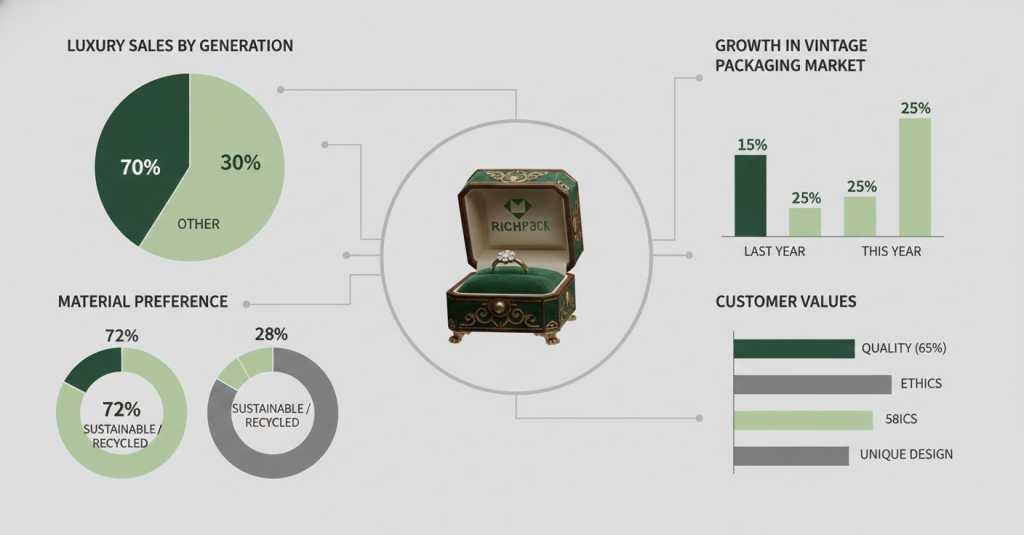
Millennials and Gen Z now drive 70% of luxury sales growth. I’ve noticed these groups shop differently from their parents. They value the experience and sustainability more than just a brand name. Vintage ring boxes fit these values perfectly.
Data shows that 48% of Gen Z buyers want to express themselves. About 63% of millennials prefer brands with custom options. Also, 72% of Gen Z buyers like sustainable materials. I use these numbers to help you calculate your packaging ROI.
Grace Lavarro sees this every day in her vintage ring business. She says younger buyers love history and character over simple diamond size. This choice also applies to the box. A modern box can feel wrong with a vintage ring.
Designer Ashley Zhang says vintage pieces offer a break from our digital world. They let customers show off their own style. If you ignore the box, you lose that emotional bond. You are leaving money on the table.
About 55% of millennials will pay more for custom designs. They want a real story. The box is part of that tale. You can justify a 40% price jump if the box adds value.
I tell my clients to think of the box as an asset. Some boxes turn into travel cases or home decor. This adds value long after the sale. I even see some jewelers offering ten-year warranties on box hinges now.
The unboxing experience drives 82% of repeat sales. When customers share photos of your box, they show off their taste. This social proof is worth much more than the box cost. It is a smart investment for your brand.
Instagram and TikTok changed how we design packaging. Buyers check if a box looks good on camera. Vintage boxes look great in photos. Their textures and colors catch the light very well.
Unboxing videos get millions of views on TikTok. Vintage boxes work well here because they look dramatic. I’ve seen brands design boxes just for social media performance. They want that “wow” factor.
They think about how the box opens with one hand. They even check if the materials make a good sound for ASMR fans. These “Instagram moments” really matter for your reach. Small details drive big views.
User content provides a clear ROI for your business. Brands track how often people share their boxes. One jeweler I know earned USD 180,000 in free ads from their vintage boxes. They only spent USD 35,000 more on those boxes.
Different buyers need different types of vintage boxes. Very rich buyers want rare woods and gems. Middle-market buyers want a premium feel for a fair price. You must match the box to the buyer.
Your strategy must match your target group. Old-school brands keep things simple with neutral colors. New brands might use bright colors or bold patterns. Using vintage boxes helps fashion brands look more high-end.
I’ve found that Asian markets like lots of detail. European buyers often want subtle, classic styles. In North America, people love a mix of new ideas and old stories. You should tweak your boxes for each region.
People now buy and sell old ring boxes as collectibles. Boxes from brands like Cartier can sell for a lot of money. Even estate dealers now value the box on its own. It has its own worth.
This creates a new trend for brands. Smart brands are now making limited-edition boxes. They give out certificates to show they are real. This makes the brand feel more prestigious and rare.
For the customer, a collectible box feels like an investment. They aren’t just spending money on a box. They are buying an asset that might go up in value. This makes the high price feel much more logical.
I’ve found that bringing vintage packaging to life takes real planning. You need to match your design with your brand’s voice and supply chain. It also has to meet what your customers expect.
Picking the right factory makes or breaks your vintage project. I’ve seen many jewelry box suppliers fail at authentic vintage looks. You need partners who really know heritage designs and old-school finishes. Make sure their order minimums fit your current stock plan.
Top-tier suppliers spend a lot on the right gear. They own their foil stamping and embossing machines. If they outsource this, you’ll face quality shifts and delays. I always ask if they own their machines or use subcontractors.
Samples save you from big headaches later. Ask for many versions to see different materials and colors. Check these samples under sunlight and shop lights. I also run drop tests to check the box strength.
Where your supplier lives matters for your bottom line. Asian factories often cost less but take much longer to ship. European makers offer amazing skill but charge a premium price. Your brand’s spot in the market should guide your choice.
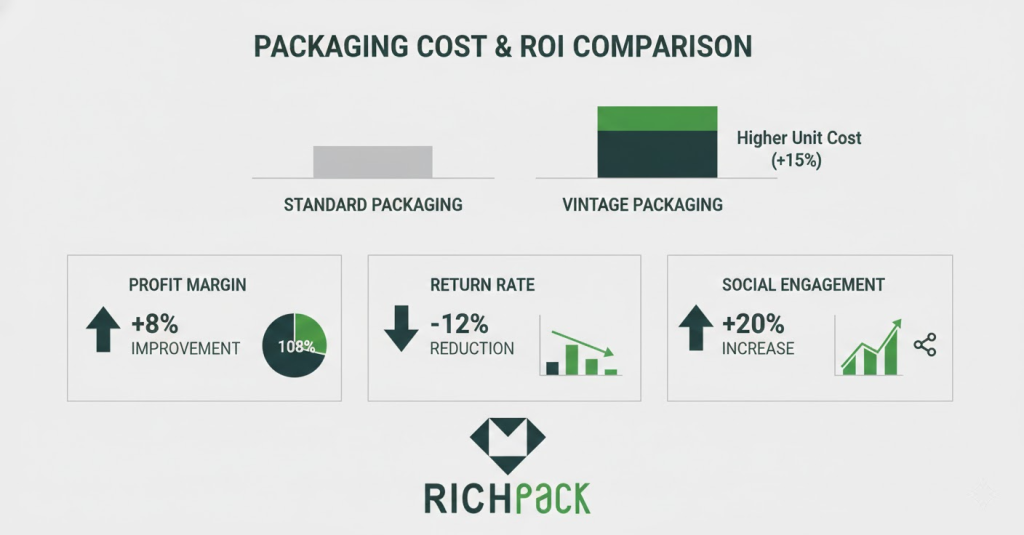
Vintage packaging usually costs 40 to 150 percent more than basic boxes. I know that sounds high, but the payoff is real. Many of my clients see margins grow by 25 to 35 percent. You also get fewer returns and more repeat buyers.
Some big wins are harder to put a price on. It makes your brand look like a true luxury player. You’ll stand out from rivals who use boring, generic boxes. This builds a deep bond with your customers over time.
Your business model changes how you view the math. High-volume brands might only use vintage boxes for special lines. Ultra-luxury brands can easily cover the cost for every piece. I often suggest a tiered plan for mid-market shops.
Try a small pilot test to lower your risk. Launch the new boxes for just one product line first. Track your sales, feedback, and returns very closely. This data makes it easy to win over your team.
Your boxes must match your brand’s look and feel perfectly. They shouldn’t feel like a random add-on. Every spot a customer sees your brand should feel the same. If the box doesn’t match the website, people get confused.
Old-school luxury brands should stick to quiet, elegant designs. I recommend matte finishes and simple, neutral colors. New Chinese brands can mix traditional patterns with clean, modern lines. Younger designers might try mixing old textures with bold, new shapes.
Bridal jewelry offers a huge chance for vintage styles. These boxes fit the romantic story of a wedding proposal. You can even add custom dates or voice wave patterns. This turns a simple box into a lifelong treasure.
Don’t forget the small, practical design details. Your box fonts must match your brand’s main typefaces. Colors should flow well with your latest jewelry collections. Match the box texture to the metal of the jewelry.
Vintage looks actually need much tighter quality checks than modern ones. “Old” effects like patinas must look the same on every box. Hand-made parts still need to meet a high bar. I’ve seen even the best factories struggle with this.
Write down very clear rules to avoid bad surprises. List exactly how much color or texture change you’ll allow. Keep a “gold standard” sample to check against every batch. This takes more time up front but saves money later.
Keep a close eye on every single order cycle. I like to pull random boxes from each batch to check. Listen to what your customers say about the quality. Treat your suppliers as partners to keep things honest.
Think about hiring an outside team to check big orders. These pros find flaws that a factory might try to hide. It costs a bit more, but it’s worth the peace of mind. You don’t want to get 10,000 bad boxes after months of waiting.
Vintage boxes often take up more room than flat-pack styles. You can’t squeeze them because they are stiff and delicate. Moisture is a big enemy of wood, leather, and paper. This means you need to plan your warehouse space carefully.
I suggest a “just-in-time” plan to save on storage. Find a factory that can ship fast with low minimums. This keeps your cash free instead of tied up in boxes. Some of my clients keep extra stock for their top sellers only.
Plan your stock around the big jewelry seasons. The winter holidays and summer weddings always bring a rush. Order your ring boxes well before these busy times start. This stops you from running out when sales are peaking.
Good storage keeps your investment safe and sound. Use a space with air control to stop warping or fading. Put boxes on sturdy shelves to avoid any dents or scratches. I always use the “first-in, first-out” rule for stock.
I’ve seen sustainable materials beat traditional luxury options in many tests. Eco-board with FSC labels handles foil stamping and embossing really well. Recycled velvet feels just as soft as the original stuff. My clients find these boxes pass every drop and humidity test.
Minimum orders change based on how complex your design is. Basic prints usually need 500 to 1,000 units. Harder designs might need 2,000 to 5,000 units to start. Small brands can use buying groups or find low 100-unit runs.
Vintage boxes look great in photos for your online store. The rich textures and details grab attention better than flat designs. I suggest using videos to show how the hinges move. Good visuals can cut your return rates by 20 to 30 percent.
You must be careful not to copy modern designs. Old styles from 70 years ago are usually safe to use. I always tell my clients to run a trademark search first. Keep records of how you created your own look to stay safe.
Different cultures like different things when it comes to style. Asian buyers often want more detail and clear signs of quality. Europeans usually like a more subtle and quiet look. I recommend keeping your core brand but changing small details locally.
Look for the FSC mark for any paper or wood parts. The GRS and GOTS tags prove your fabric is truly green. I also suggest checking for ISO 14001 and RWS wool standards. These labels prove your brand is real and help avoid greenwashing.
Vintage ring boxes aren’t just about looking back. I’ve found they meet real needs through smart design and better materials. The luxury jewelry market will hit USD 116.17 billion by 2034. Packaging is now a key tool for growth.
Vintage styles solve many problems at once. They offer eco-friendly options that still feel like true luxury. Younger buyers often love real stories more than new trends. These custom boxes help you stand out and remain collectible.
The best brands use packaging to tell stories and protect the planet. I recommend finding strong suppliers who value quality and craftsmanship. You should also use premium materials and adapt to different cultures. In 2026, these boxes protect jewelry and create shareable moments that last.

Just submit your email to get exclusive offers (reply within 12 hours)





 PREV
PREV