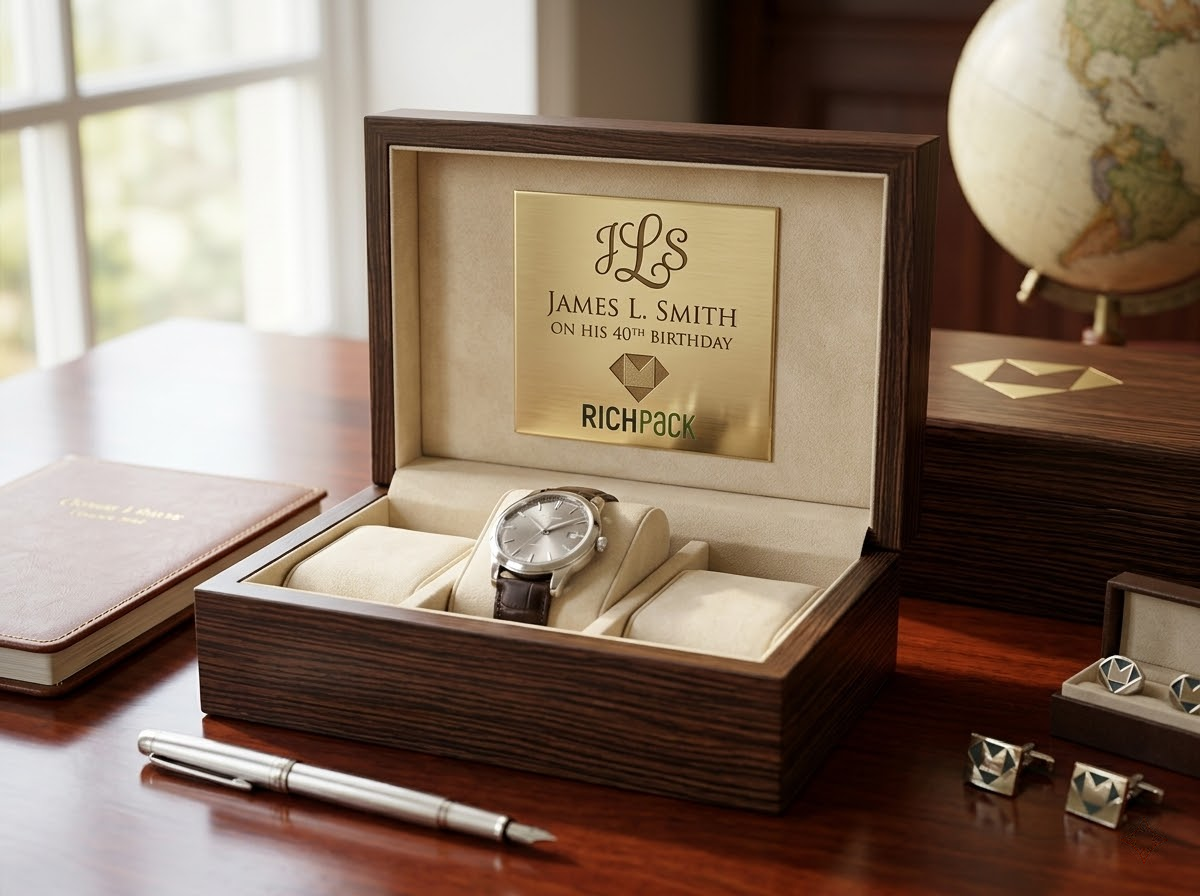


Pick up a plain watch box, and it does exactly one thing: it holds a watch. But open a personalized men’s watch box — one engraved with initials, finished in walnut, lined in suede —, and it tells a completely different story. That difference is exactly why custom watch boxes have become the go-to choice for corporate gift buyers, jewelry brands, and anyone who wants to make a timepiece feel truly memorable.
This guide covers everything you need to make the right call. You will learn which materials hold up best in premium gifting environments, how to choose between laser engraving, foil stamping, and embossing, what to watch for when ordering in bulk, and how to avoid the mistakes that cost buyers both time and money. Whether you are sourcing a single anniversary gift or placing a corporate order for 500 branded units, the key decisions are the same, and this guide walks you through all of them.
A personalized men’s watch box is not just a container. It is the first physical object someone touches when they receive a timepiece, and that opening moment sets the tone for everything that follows.
A standard watch box keeps a watch safe. A personalized one does that too, but it also adds a layer of meaning that a plain box simply cannot match.
That gap comes down to two things: identity and intentionality. Consider what each of these elements communicates to the recipient:
That shift in perception carries real value. In retail environments, personalized packaging consistently commands higher price points and lower return rates. In gifting contexts, it is the difference between something that stays on a dresser for years and something that ends up forgotten in a drawer by February.
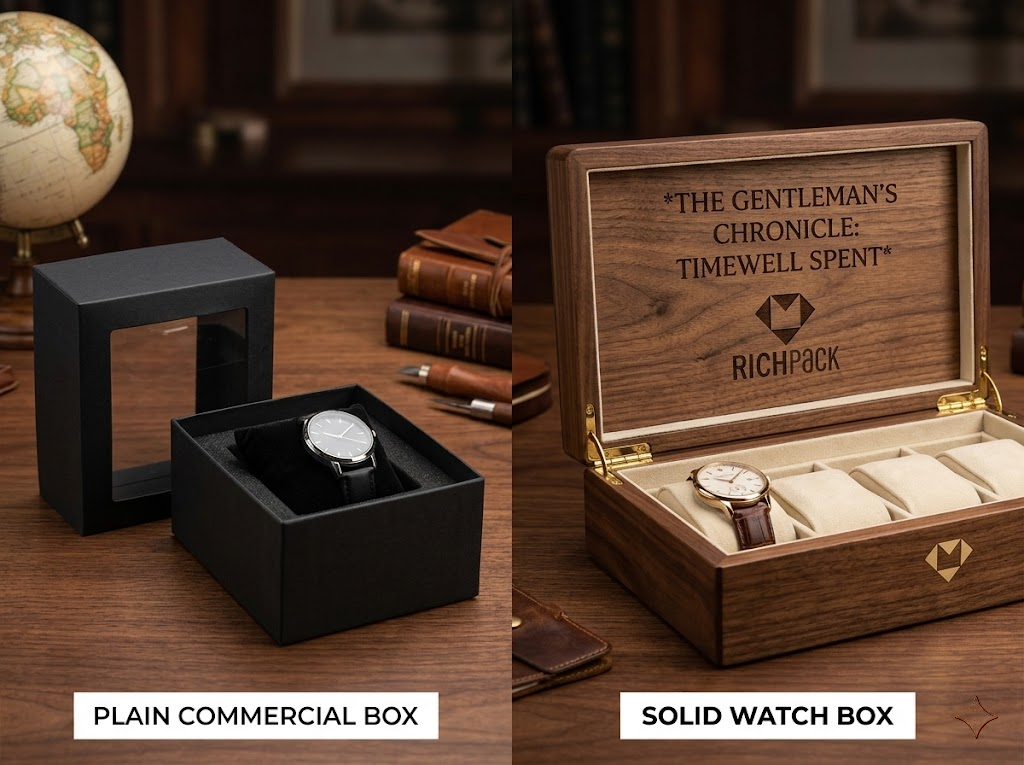
The unboxing experience is not a luxury detail. It is a business asset that directly influences how a product is perceived before it is even fully opened.
Research from the corporate gifting space consistently shows that recipients judge a gift’s quality before they have even opened it. The weight of the box, the finish on the lid, the way the clasp feels, these small moments add up into an overall perception of care and quality that the gift itself may not achieve on its own. From my experience working with watch packaging across different price tiers, the physical interaction with the box is often what people remember and talk about first.
For watch brands and retailers, this has a direct impact on margin. A $120 timepiece presented in a custom rigid box with a foil-stamped logo and suede interior reads as a $200 product. The packaging is not hiding anything; it is amplifying what is already there.
The buyer landscape for personalized men’s watch boxes is broader than most people expect. Four main groups drive the majority of demand:
Each group has slightly different priorities, but they all share one: the box needs to look and feel premium enough to justify its presence.
Demand for personalized men’s watch boxes clusters around predictable moments throughout the year. The most consistent peaks include:
This timing matters for anyone placing an order with a specific event date in mind. Lead times for custom-engraved or branded watch boxes typically run 8 to 10 business days at standard production, with rush options available at 4 to 6 days. It is also important to factor in the sample approval step, which adds time before bulk production can begin.
The numbers behind personalized gifting are not soft, and they point in one clear direction.
According to GiftAFeeling’s 2025 corporate gifting research, personalized gifts boost client retention rates by 43%. The same data shows that 67% of companies report meaningfully improved brand image after putting structured gifting programs in place. The global corporate gifting market reached $839.6 billion in 2024 and is projected to reach $919.9 billion in 2025, according to The Business Research Company, representing a 9.6% year-over-year climb.
A custom men’s watch box that carries a brand’s identity is not a cost. It is a touchpoint that keeps working long after the box is first opened, reinforcing brand recognition every time the recipient reaches for their watch.
Walk into any watch boutique, and you will notice something right away: the box on the counter tells you just as much about the brand as the watch sitting inside it. Material choice is where that communication begins, and getting it right is one of the most important decisions in the entire packaging process.
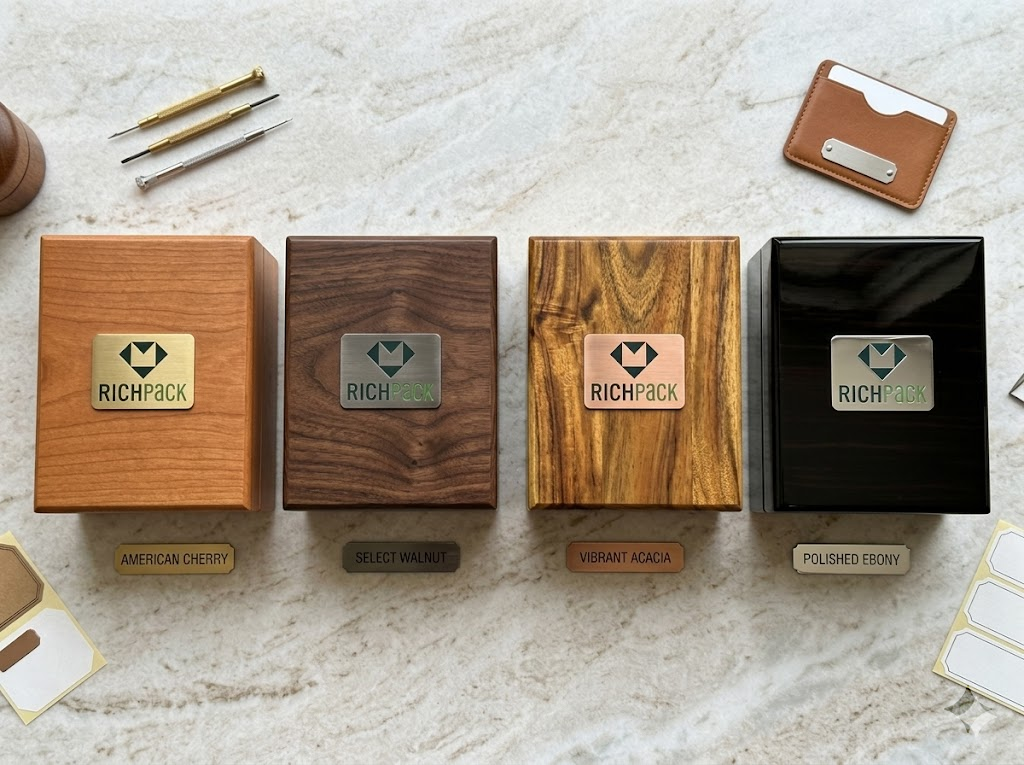
Wood is the dominant choice in premium men’s watch box packaging, and not just for aesthetic reasons. Solid wood construction keeps the box rigid and protective over the years of use. It also takes engraving exceptionally well, producing clean, deep lettering that holds up over time without blurring or fading.
The most common wood types each project something different to the recipient:
One detail buyers often overlook is wood density, and it matters more than most people expect. Thin veneer-over-MDF construction looks similar in product photos but feels noticeably hollow when lifted. Solid wood, or thick MDF wrapped in real wood veneer, produces the heft that signals quality before the box is even opened.
Leather watch boxes solve a different brief than wood. Where wood reads as heirloom and traditional, leather reads as modern, precise, and executive.
Genuine leather offers the most tactile premium feel, with a slight give, natural grain variation, and a scent profile that many buyers immediately associate with quality. It is the right call for ultra-premium positioning, though it comes at a higher unit cost per box.
PU leather (polyurethane leatherette) is the workhorse of this category. It is durable, consistent across large production runs, water-resistant, and substantially more affordable. For corporate gifting programs where hundreds of identical units are needed, PU leather delivers a premium look without the cost variance that comes with genuine hides.
The real trade-off is longevity. Genuine leather develops character over time, while PU leather holds its original look but does not age in the same way. For a gift meant to sit on a dresser for the next 20 years, genuine leather is worth the investment.
For watch collectors and display-first buyers, a glass-top watch box changes the dynamic entirely. The appeal is straightforward: a flat or hinged glass lid lets someone see the full collection without opening the box, which reduces handling and lowers the risk of accidental drops. It also turns the box into a display object, something that sits on a shelf and invites attention rather than hiding what is inside.
Glass-top cases come in two primary formats, each suited to a different use:
The durability question buyers most often raise is whether the glass will break. In quality construction, tempered glass panels are resistant to everyday handling and normal use. The real risk comes from impact during shipping when the outer packaging is inadequate, not from opening and closing the box at home.
The inside of a watch box is where protection actually happens, and it is also where most buyers stop paying close attention after a first glance. Choosing the right interior lining affects both how the watch is protected and how the overall presentation reads when the box is opened.
Each material serves a distinct purpose:
One specific detail worth paying close attention to is the watch pillow inside each slot. A well-sized, properly filled pillow holds the watch upright without putting stress on the bracelet or strap. An undersized pillow causes the watch to tip forward; an overstuffed one can stretch a bracelet clasp over time. This is worth asking about directly when sampling any new supplier, because it rarely shows up in product descriptions but makes a real difference in day-to-day use.
Sustainability is no longer a nice-to-have in B2B packaging procurement. According to the Accio AI Corporate Gift Show 2026 report, 68% of B2B buyers now require that corporate gifts include biodegradable or recyclable components. For watch box packaging specifically, meeting that standard is increasingly achievable without sacrificing quality or visual appeal.
The most practical sustainable options available today include:
Buyers sourcing companies with formal ESG commitments or sustainability reporting requirements should ask suppliers for certification documentation before committing to a production run. Verbal assurances are not enough when procurement decisions need to be audited.
This is where most buyers make the decision that matters most, and where most guides stop too early. Knowing that laser engraving is available is not enough. What actually prevents a regrettable order is understanding which technique works on which material, at what cost level, and for which visual outcome.
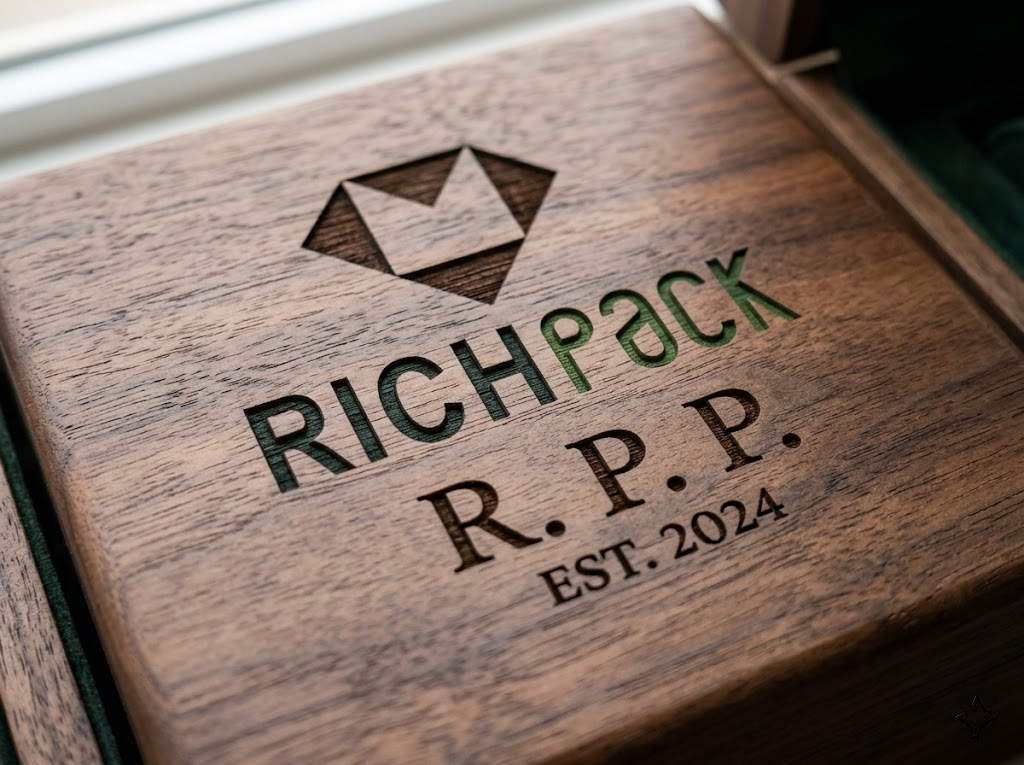
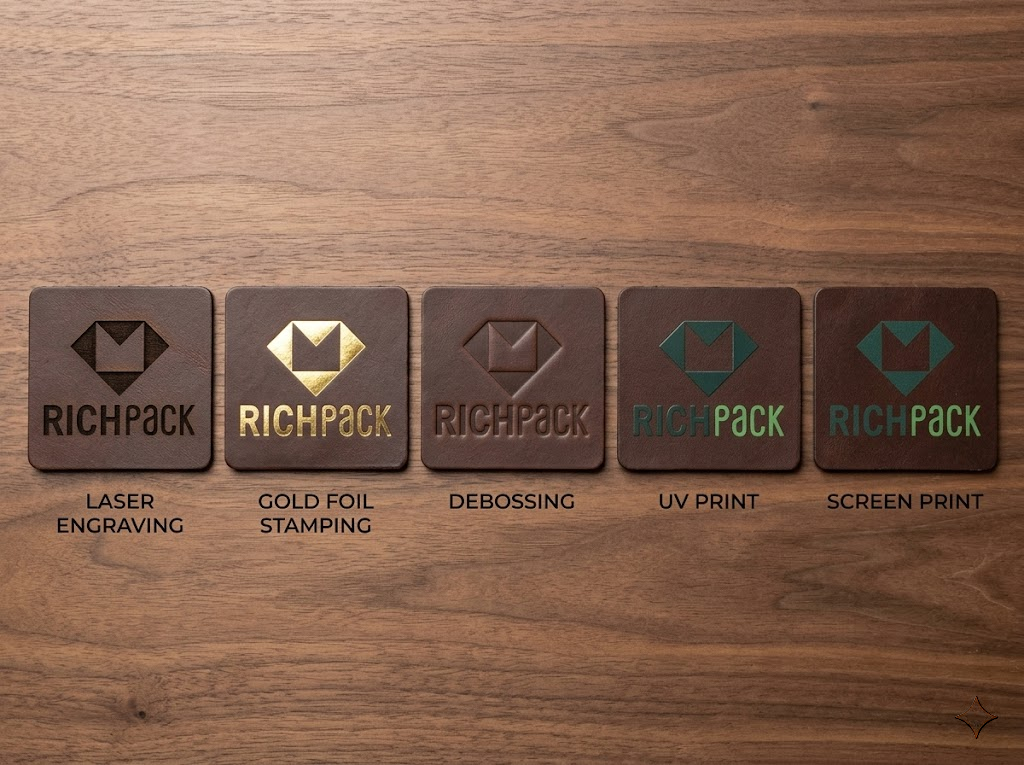
Laser engraving is the most widely used personalization method for men’s watch boxes, and the reasons are easy to understand once you have seen the results in person. A computer-guided laser removes a thin layer of material to create a precise, permanent mark. On wood, this produces a natural char effect with clean edges and excellent depth control. On glass, it creates a frosted finish that catches light well, and on leather, it burns a subtle impression into the surface without cutting through.
The key advantages that make laser engraving the default choice for most buyers are:
The main limitation is color. Laser engraving is inherently monochromatic because it removes material rather than adding pigment. If color-sensitive branding is a priority, a different technique will be needed.
Foil stamping applies metallic or pigmented foil to a surface using heat and pressure, producing a bright, reflective mark that reads as premium from across a room. It is the technique of choice for brand logos on leather watch boxes, particularly for fashion labels, jewelry brands, and corporate programs where the packaging needs to carry a brand identity as clearly as the product does. Gold foil on matte black leatherette, for example, is a combination that consistently performs well in gifting contexts.
The most commonly used foil types are:
The trade-off with foil stamping is that very fine lines and small text can lose definition during the stamping process. It performs best with clean, bold logo marks rather than intricate script or detailed artwork.
Where foil stamping adds visual impact, embossing and debossing add tactile impact. Embossing presses a design element up from the surface to create a raised relief, while debossing presses it inward to create a recessed impression. Both techniques work primarily on leather and leatherette surfaces, and both produce a result that is felt as much as it is seen.
This approach suits brands that want their identity to feel subtle. It is a quiet mark that does not announce itself loudly but rewards close attention, and it is common in ultra-premium packaging for watch brands and luxury goods retailers who prefer restraint over visibility.
Because no ink or foil is involved, the mark will not chip or fade over time. That makes embossing and debossing one of the most durable customization options available for packaging that will be handled repeatedly.
UV printing uses ultraviolet-cured inks to reproduce artwork in full color on virtually any flat surface. Where laser engraving and foil stamping are limited by surface type or color range, UV printing removes those constraints entirely.
It is the right choice when any of the following apply:
UV-printed finishes on rigid surfaces are durable and resistant to smudging once cured. On softer materials like leatherette, the ink can crack over time if the surface is flexed repeatedly, which is a factor worth discussing directly with any supplier before placing an order.
| Technique | Best Surface | Color Options | Cost Level | Best For |
| Laser Engraving | Wood, glass, leather | Monochrome (natural burn) | Low–Medium | Names, initials, monograms |
| Foil Stamping | Leather, leatherette, paper | Metallic (gold/silver/rose gold) | Medium | Brand logos, corporate programs |
| Embossing / Debossing | Leather, leatherette | None (texture only) | Medium | Subtle brand marks, premium retail |
| UV Printing | Any rigid flat surface | Full color | Medium–High | Complex logos, multi-color art |
| Screen Printing | Flat rigid surfaces | Full color | Low (high volume) | Large runs, simpler designs |
Knowing what materials and techniques exist is only half the equation. The real decision happens when you match the right combination to your specific situation, whether that is a single corporate gift, a bulk retail order, or a collector’s storage solution.
Slot count is the first design decision, and it should be driven by purpose rather than personal preference. The right number of slots depends entirely on what the box needs to do and who it is for.
Here is how each configuration maps to a real use case:
For corporate buyers specifically, a 1 to 3 slot design almost always makes more sense than a larger box. It is more portable, more gift-focused, and easier to personalize in a way that feels intentional rather than purely functional.
This is the most common sourcing mistake buyers make, and it is entirely avoidable. Standard watch box slots are sized for watches with a case diameter of 38 to 42mm, which covered the vast majority of men’s timepieces for decades. Today, a significant portion of popular men’s watches run 44 to 47mm in case diameter, with wide lugs and thick profiles that simply will not fit a standard slot.
Before finalizing any custom watch box order, confirm the following three specifications with your supplier:
If the target recipient is known to wear an oversized watch, request a large-case or sport watch slot specification. Most quality manufacturers offer this as a standard variant, but it rarely appears in default product listings.
Closure type affects both the user experience and the perceived quality of the box, and the differences between options are more meaningful than they might appear in product photos.
Magnetic closure is the current premium standard. Two embedded magnets, one in the lid and one in the base, create a satisfying, clean close with no mechanical parts to wear out over time. The open-and-close experience feels intentional and high-quality, and it is what most buyers expect in the $80 and above price range.
Hinged lid uses a metal or fabric hinge at the back of the box. It is a more traditional construction that works well for wooden boxes where the lid needs to sit flat when open. The main risk is hinge fatigue with heavy daily use, so the quality of the metal hinge specification matters more than it might seem at first.
Sliding lid, sometimes called a drawer-style lid, lifts vertically off the base. It is clean, minimal, and straightforward to manufacture, but it offers less of an opening moment compared to a hinged or magnetic design. It is more common in transit-focused packaging than in gifting applications where first impressions count.
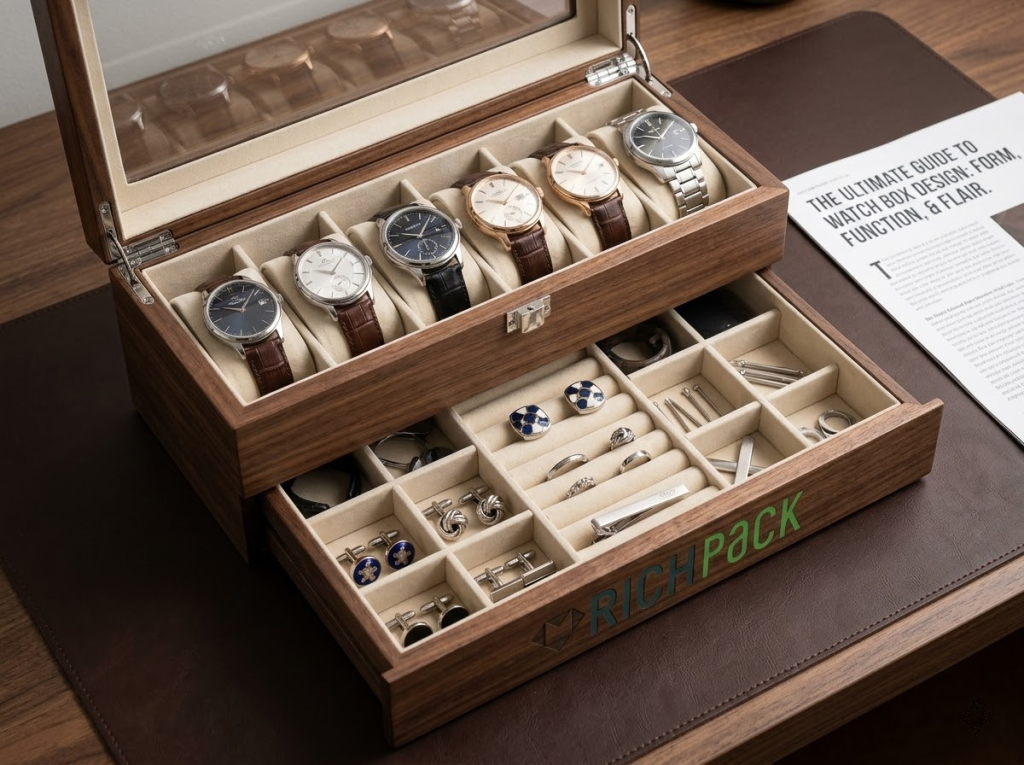
A watch box with a pull-out drawer transforms a single-purpose storage piece into a complete men’s accessories solution. The drawer, typically positioned beneath the main watch compartment, holds the items that naturally live alongside a watch collection: cufflinks, rings, collar bars, tie clips, and spare straps. For buyers creating a gift that feels complete rather than single-use, this feature moves the product from watch storage into valet box territory.
This is particularly relevant for executive gifting programs. A six-slot walnut watch box with a felt-lined accessory drawer and a company monogram is a piece a recipient will interact with every day for years. That is a meaningfully different proposition from a promotional item that gets appreciated once and then stored away.
These two categories are frequently confused, and they serve fundamentally different functions. Understanding the distinction before placing an order saves buyers from an outcome that looks right on paper but fails in practice.
A presentation watch box is a display and storage object. Its design prioritizes aesthetics, tactile quality, and the impression it creates when first opened. It is not optimized for travel and is not intended to be.
A travel watch case, also called a watch roll or travel watch pouch, is built for portability and protection in transit. It is typically softer in construction, with individual padded slots or a roll-style design compact enough to fit in a carry-on without dedicated space. Material durability and secure closure matter far more than visual elegance.
Confusing the two leads to predictable problems. Using a beautiful walnut presentation box as a travel piece often ends with discovering it does not survive a checked bag. Gifting a nylon travel roll when the occasion called for something more considered sends an unintended message about the level of care that went into the gift.
A personalized men’s watch box is much more than a lifestyle product. For brands and professional teams, it is a strategic tool used to carry a company name forward. I have seen that a well-made box keeps working for your brand long after the initial gift moment has passed.
Not every business gift earns a permanent place in a person’s home or office. A personalized watch box is different because it is a practical object that people actually use. It is not a seasonal decoration that gets thrown away or a snack that gets eaten.
Every time the recipient opens the box, they interact with your brand again. When visitors notice the high-quality case on a desk, they see your company’s identity. In my experience, the long-term value of a branded case is much higher than what it costs to buy.
The data also supports this choice for professional teams. According to GiftAFeeling’s 2025 research, companies that invest in corporate gifting report up to 5 times the return on investment in client retention. A branded watch box priced between 60 dollars and 150 dollars per unit fits perfectly into the executive gift tier.
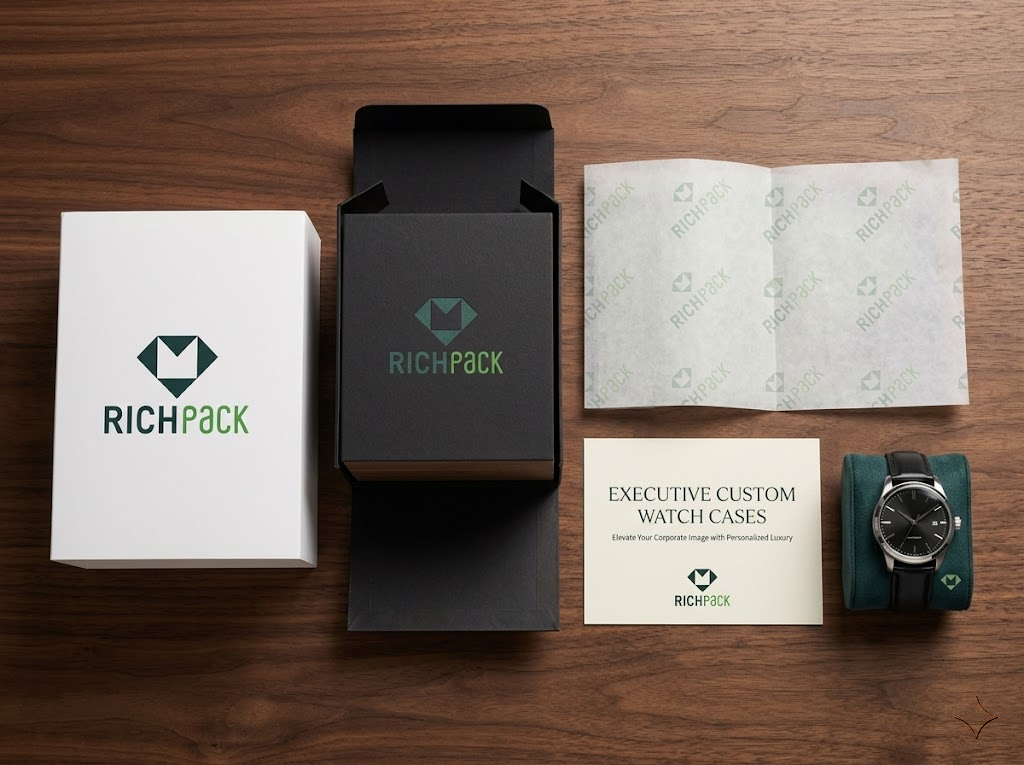
Creating effective branded packaging is not a complicated process, but you must follow the right steps. I have found that following a specific sequence leads to the best results. Here is how you can build a box that represents your business:
Buying custom watch boxes in large amounts involves several details that can surprise new buyers. Getting clear answers at the start prevents expensive problems later. You need to understand how quantities and timing affect your project.
Minimum order quantities (MOQ):
Lead times after you approve the design:
Questions to ask before you pay:
Choosing the wrong style can hurt a gift that is otherwise very strong. If a sustainable company sends a shiny plastic box, it sends a confusing message. You want the look of the box to match the values of your business.
Here are some ways to match the box to your brand:
Not every supplier will give you exactly what you asked for. I have learned to watch for certain warning signs before signing a contract. Knowing these red flags will help you protect your investment.
Even experienced buyers make these errors when sourcing custom packaging. Most of them are easy to prevent with the right information in hand. I have found that taking a few extra minutes to check details saves a lot of frustration later.
The problem with watches larger than 44mm catches buyers more than any other single issue. A slot built for a 40mm dress watch will reject a 46mm sports chronograph outright, or it might hold it uncomfortably. This puts a lot of stress on the bracelet clasp and can damage the presentation.
Before you place your order, you should measure the watch it is meant to hold. Check the case diameter, the length from lug to lug, and the thickness of the case. You should then compare these numbers against the dimensions the supplier gives you for the slots.
If you cannot get exact measurements, you should request a large case slot specification. Make sure to confirm that it fits the specific category of watch you are gifting. This small step prevents the frustration of receiving a box that no one can actually use.
Low-grade velvet or cheap fabric linings often shed small fibers onto the watch surfaces. This is a big problem for watches with brushed finishes that trap lint easily. Some synthetic linings even create static that attracts dust from the air.
In my experience, you should ask suppliers specifically about the density of the lining. You want to know if the fabric is resistant to lint and shedding. A quality velvet lining should feel dense and have a very short pile to protect the timepiece.
Any fabric that loses fibers when you rub it between your fingers is a sign of trouble. Protecting the watch is the most important job of the box. You do not want the packaging to be the thing that causes a mess or a scratch on a premium product.
Thin script fonts often look very elegant in a digital design mockup. However, they can become impossible to read once they are actually engraved on wood or leather. The laser beam has a physical width that can make fine letters look blurry at small sizes.
I always suggest that you request a test engrave on your chosen font first. Seeing it at the intended size is the only way to be sure it looks clean and professional. This allows you to fix any issues before the full production run begins.
If a supplier cannot produce a test piece for you, that is a major warning sign. You should know about these limits before you spend your budget on a bulk order. A clear and readable logo is essential for maintaining your brand identity.
Standard production usually takes 8 to 10 business days for most custom orders. This works well unless you have a fixed delivery date that cannot be changed. Events like Father’s Day or a new product launch do not move for anyone, so your timing must be perfect.
You should build in at least two weeks of extra time for your first order. Use one week for approving the sample and one week as a buffer for shipping. This keeps you safe from unexpected delays that often happen during the production process.
For international orders, you must also think about the time it takes to clear customs. These delays are hard to predict and can easily ruin your schedule. Planning ensures that your gifts arrive exactly when you need them to make an impact.
The lowest price on a large order is not a true saving if many units arrive with defects. If 15 percent of your boxes have bad engraving or misaligned logos, you have lost a lot of money. The cost of fixing these errors is much higher than the small amount you saved per unit.
I recommend asking your supplier about their rejection rates and inspection processes. You need to know exactly what happens if the units fail a quality check before they are shipped. A reliable partner will have a clear plan to handle these issues for you.
A supplier who answers these questions with confidence is a better partner for your business. They care about the long-term quality of your brand impression. Saving a few cents is never worth the risk of a damaged reputation or a failed gifting program.
Finding the right manufacturing partner for custom watch box packaging is worth your time. A reliable supplier will make every order after the first one very simple. I have seen that the best partnerships are built on clear communication and high standards from the very beginning.
These questions help you find the suppliers who can actually deliver high-quality results. It is important to ask about the specific details of their work before you sign any contracts. I always recommend getting these answers in writing so you have a clear record of their promises.
You should use this list to separate the best suppliers from the rest:
A well-run sample process is the best way to protect your investment and your brand. It allows both you and the supplier to agree on exactly how the final product should look. I have seen many projects succeed because the buyer insisted on seeing a physical sample before the big run started.
A professional sample process usually follows these specific steps:
You should only start bulk production once you have signed off on that physical sample. If a supplier tries to skip this step, it usually means they are not confident in their quality control. A physical sample is your best insurance policy against a big and expensive mistake.
You can often tell a lot about a supplier by how they communicate during the first few weeks. I have learned to watch for certain warning signs that suggest a partner might not be reliable. These red flags are your signal to look for a different manufacturer before you spend your money.
Keep an eye out for these common warning signs:
A partner who handles everything from design to shipping is very different from a simple factory. These full-service partners help you with design advice, material choices, and quality checks. This model is especially helpful for buyers who do not have their own packaging experts on staff.
Every time you hand off a project between different companies, you increase the risk of a mistake. Moving from a designer to a maker and then to a shipping company creates many chances for delays. A single partner owns the whole process and can solve problems much faster than three separate vendors.
In my experience, having one point of contact makes the entire process much smoother. You do not have to worry about who is responsible if something goes wrong. One relationship handles everything from the first idea to the final delivery at your door.
Most buyers focus only on the unit cost, but that is not the number that actually matters. You should look at the total value of the order instead of just the price of one box. A cheaper box is not a good deal if many of them arrive broken or with bad logos.
A box that costs 45 dollars but has a 10 percent defect rate is actually more expensive than a 65-dollar box that is perfect every time. You must also think about the cost of replacements and the time your team spends fixing errors. These hidden costs can quickly ruin your budget if you are not careful.
Calculate the total cost of your campaign before you decide that a lower quote is the best choice. This includes the cost of shipping, replacement units, and the time spent on coordination. A reliable supplier might cost more at first, but they often save you money in the long run.
Walnut and cherry wood are the top choices for premium gifts and retail use. They engrave very cleanly and look expensive without needing any extra explanation. These woods hold their finish well and feel very solid in your hand.
For large business orders, PU leather is often a more practical choice. It looks the same on every box, which is important for brand consistency. It is also very durable and handles branding like foil stamping or embossing very well.
A computer-guided laser removes a thin layer of material from the surface of the box. On wood, this creates a natural dark burn effect with very sharp and precise edges. On glass, the laser creates a frosted look that catches the light beautifully.
This method does not use any ink or dye to create the mark. Because of this, the design will never fade or peel away over time. I always suggest a test piece before a big order to make sure the machine is set correctly.
Most standard watch box slots fit cases up to 42mm wide. If you have a larger sports watch or a diver watch, you must ask for large-case slot sizes. These larger watches often have wide parts that will not fit in a normal slot.
Typical large-case slots are about 55mm wide and 100mm long. This extra space makes sure the watch sits comfortably without touching the sides. Always check your watch size against the box measurements before you place a final order.
Standard production takes about 8 to 10 business days after you approve the design. If you are in a hurry, rush orders can be finished in 4 to 6 days for an extra cost. I have found that planning is always the safest way to meet a deadline.
You should also add about 5 days for the sample approval process. International shipping will add more time to your total schedule on top of production. Make sure to build in a buffer for any important events or product launches.
You can definitely add your company logo to almost any watch box. A simple one-color logo works best with laser engraving on wood or embossing on leather. These methods create a classic look that many high-end brands prefer.
If your logo has many colors, you should choose UV printing instead. Always give your supplier a high-quality vector file to ensure the best results. I recommend approving a physical sample before you start a large production run.
Foil stamping uses heat to apply a shiny metallic layer to the box surface. It is a visual technique that adds bright colors like gold, silver, or rose gold. This is a great way to make a brand logo stand out and look expensive.
Embossing uses pressure alone to raise the design from the material surface. This creates a 3D effect that you can feel with your fingers. While foil stamping adds color and shine, embossing adds a premium feel through touch.
Eco-friendly boxes are becoming very popular and are widely available. According to the Accio AI Corporate Gift Show 2026 report, 68 percent of business buyers now want green components. This shows that sustainability is now a major part of the gifting industry.
You can choose FSC-certified wood or recycled leather for your order. Some manufacturers also use water-based glues and soy-based inks for their branding. Always ask for official documents to prove the materials are truly sustainable.
A personalized watch box is a special gift that people keep and use every day. The right choice of material and design sends a clear message about your brand. I recommend starting with your main goal and then picking the features that fit.
If you are looking for custom watch packaging for a business project, we can help. Share your ideas with us, and we will find the best options for your budget. We are here to make sure your next gift makes a lasting impression

Just submit your email to get exclusive offers (reply within 12 hours)





 PREV
PREV