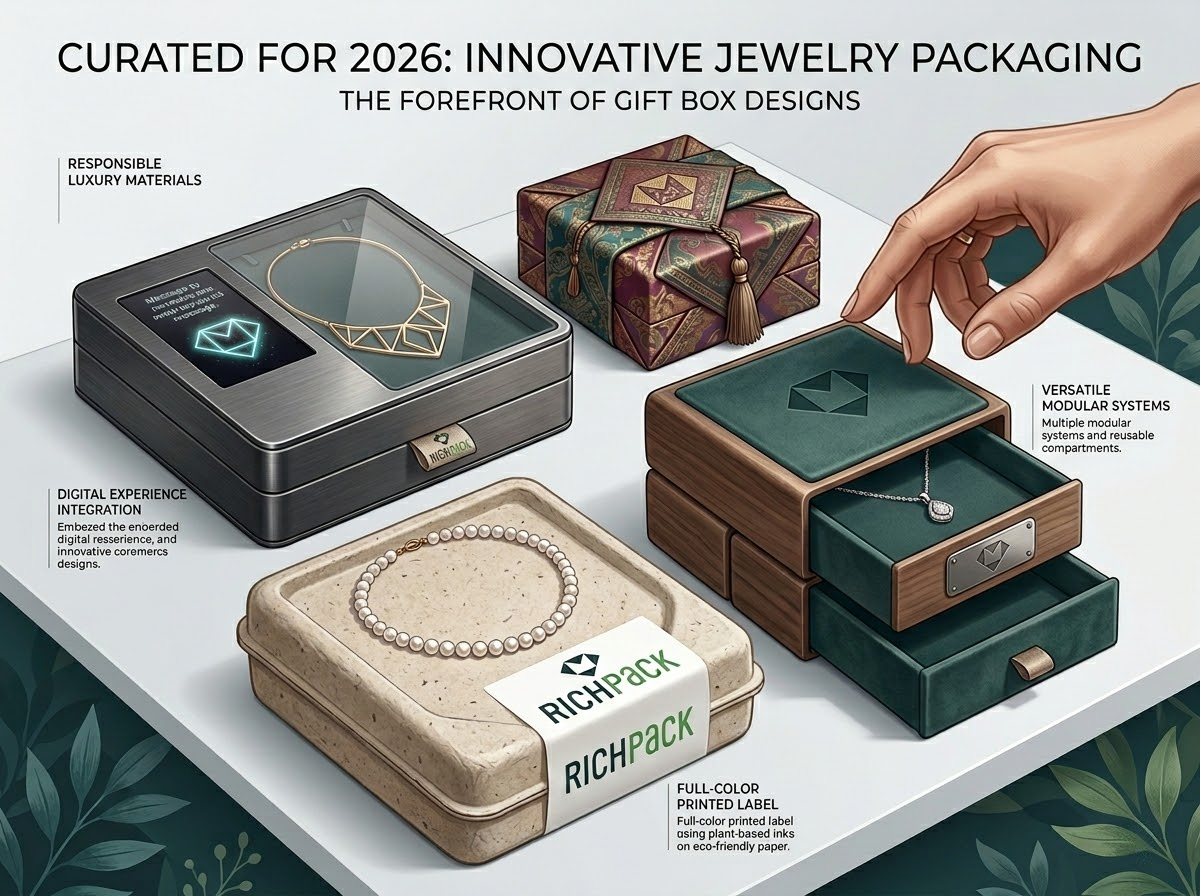


The box lands on the doorstep. The customer films the unboxing. That short clip builds your brand before they wear the piece. I have seen this happen many times with my clients.
The global jewelry market will hit USD 254.13 billion in 2026. Necklaces are the fastest-growing part of the market. Experts expect a 6.19% yearly growth through 2031. This data comes from Fortune Business Insights and Mordor Intelligence.
I tell my clients that necklace boxes are not just for shipping. They are now your main brand asset. I have watched this change happen over the last five years.
Here is what works best in 2026.
In my work, I noticed one big thing. A good box stays on the dresser. It does not go in the bin. I have seen that this is the best way to measure success.
I suggest you focus on life after the sale. If a customer keeps the box, your brand wins. This is the main goal for every design choice.
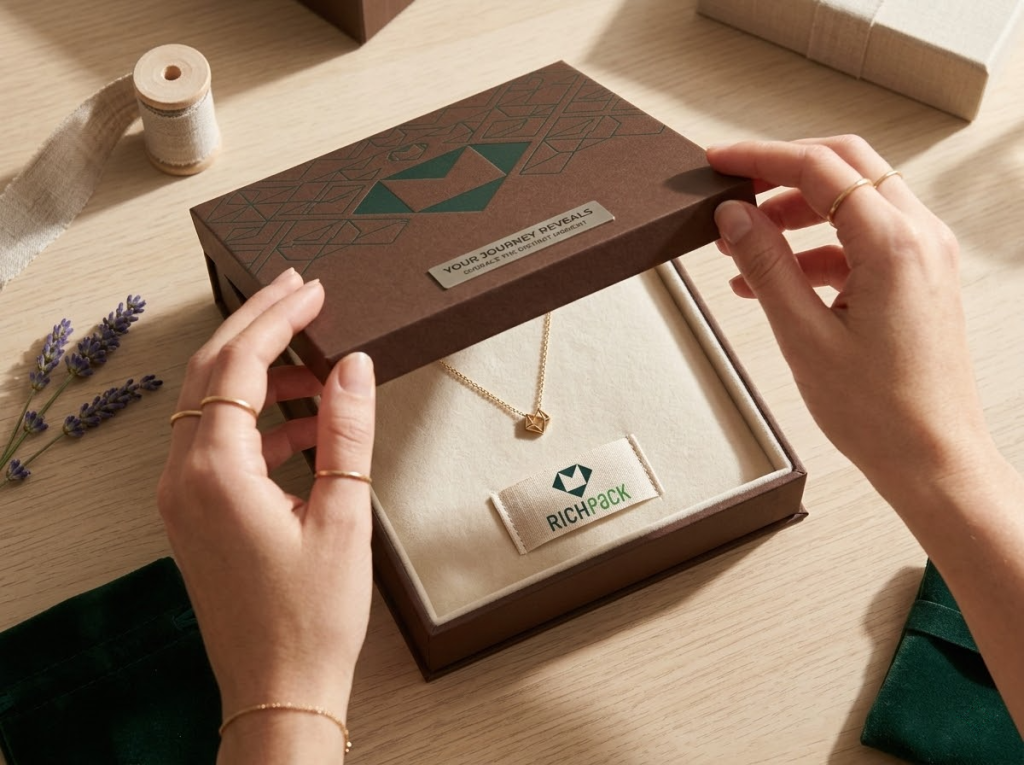
Most jewelry sales outside Asia now happen online. Many customers never walk into your shop. Your necklace gift box is the first thing they touch. It is often the only way they feel your brand.
I’ve looked at the 2026 data from Kali. It shows that great packaging leads to more social media posts. You should design your box as carefully as your jewelry. These posts are the new way people talk about you.
Necklaces are growing faster than any other jewelry type right now. This shift changes how you should spend on packaging. I see this trend across the market. Reports from Mordor Intelligence show a 6.19% yearly growth through 2031.
This rate beats out rings, earrings, and even bracelets. Grand View Research also sees a 6.0% growth rate for necklaces. I find that layering and mixing metals is now a common style.
The business lesson here is simple. A great luxury necklace box supports the fastest-growing part of your brand. I have not seen a better time to spend on your packaging.
I have seen a big shift in how buyers work. They now treat packaging rules as a strict filter. It is not a choice anymore. Procurement managers at major stores now use scorecards for packaging.
I found that 60% of jewelry brands now require recyclable materials. They will not work with you without proof. This has become a must-have for every supplier. I suggest you focus on these specific points:
One thing I see often is a brand losing a deal early. A necklace gift box with foam can get you rejected fast. Buyers might stop the review before seeing your jewelry. You need to meet these standards to stay competitive.
Unboxing videos get over 14 billion views a year on YouTube. Jewelry stays in the top five categories. This data comes from the 2025 Influencer Marketing Hub report. I see this trend grow every month.
This isn’t just for luxury brands anymore. Smaller brands show up in viral videos often. Your necklace present box reaches many new people. They judge your brand by that first look.
Here is the new rule for your packaging. Your jewelry gift boxes for necklaces must look great on camera. Natural light is the real test for your design. I know what works best for video.
I suggest matte surfaces over gloss. Gloss creates too much glare in videos. Use structured interiors instead of cotton fill. Earth tones look more high-end on screen.
The way people buy jewelry has changed. I see this shift in my daily work. New 2025 data shows self-gifting now hits 35% of the market. That is a big jump from 22% in 2020.
People buying for themselves want different things. They do not care about ribbons or bows. I have found they value high-quality materials. They want a design that actually works.
A necklace box organizer works best for this group. It beats a single-use gift box every time. I suggest adding useful compartments and anti-tangle parts. Make sure it looks good on a vanity.
I have worked with many jewelry brands lately. I see a big change for 2026. High-end packaging now removes extra decor. It lets the material quality speak for itself.
I find that clients no longer want shiny foil. They do not want big logos either. Now, brands focus on how the box feels. This shift is very clear to me.
It is about the weight of the lid. It is about the surface texture. The way the box closes matters a lot. A precise fit shows real value.
In my experience, these small details build trust. Your customers will feel the quality right away. I suggest you focus on these touch points.
I’ve noticed a major shift in jewelry packaging lately. Uncoated paper reflects 30% less glare than gloss laminate. Our 2026 trend data shows this clearly. This fact makes a huge difference in unboxing videos.
I see everyone moving toward linen and fabric boxes now. This includes small brands and large retail stores. Shiny surfaces often feel cold and cheap. Linen gives your boxes a warm, handmade feel.
It also provides a much better grip for your customers. You might worry about the price of luxury gift boxes. I’ve found that linen costs about the same as gloss. This is true for most medium-sized orders.
You can upgrade your look without spending extra money. In my experience, this is a very smart move. It helps your brand look more professional and reliable.
I see a big shift in necklace box colors for 2026. Most brands are moving away from plain black and white. I found this trend in the 2026 Allurepack report. We see more natural and earthy tones now.
| Color Family | Key Tones | Brand Signal |
| Warm neutrals | Warm sand, ivory, blush | Organic, artisanal, approachable luxury |
| Maillard browns | Caramel, burnt umber, tan | Timeless, composed, heirloom-quality |
| Cool earth tones | Slate, sage green, deep charcoal | Architectural, contemporary, quiet luxury |
| Jewel accents | Deep emerald, midnight navy | Limited edition, celebration-specific |
Many of my clients now ask for the “Maillard” look. These are warm orange and brown tones. I find they work best with matte paper.
If you add a small gold logo, it looks great. Factory data shows these boxes make customers very happy. They score better than old black boxes in surveys.
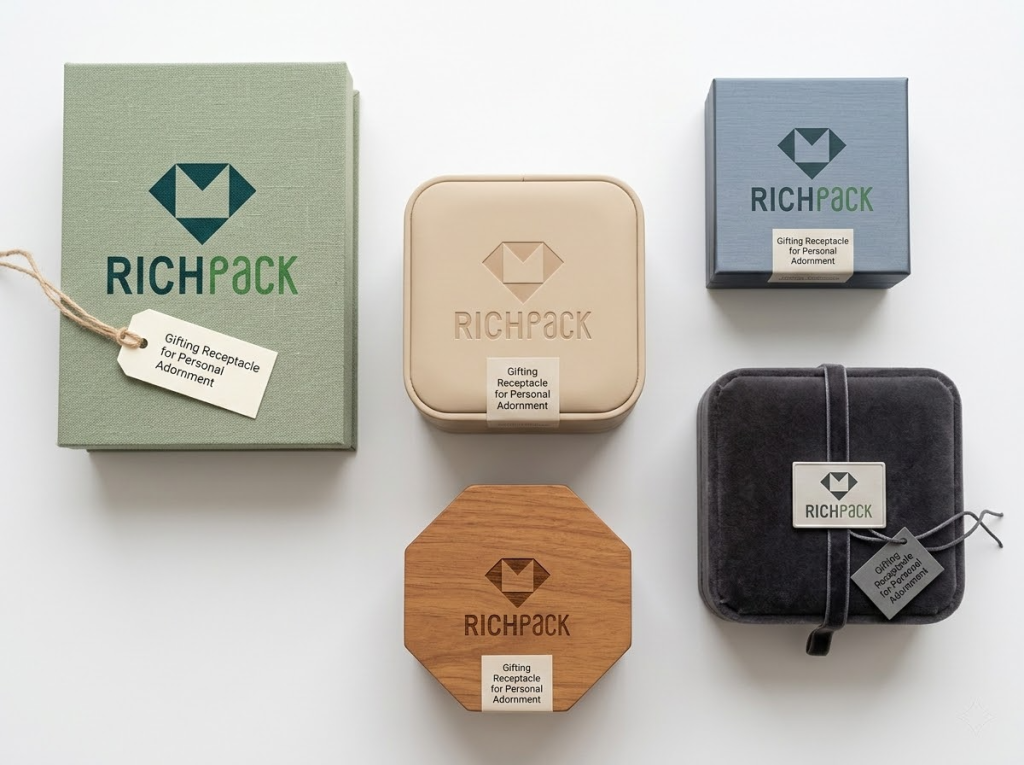
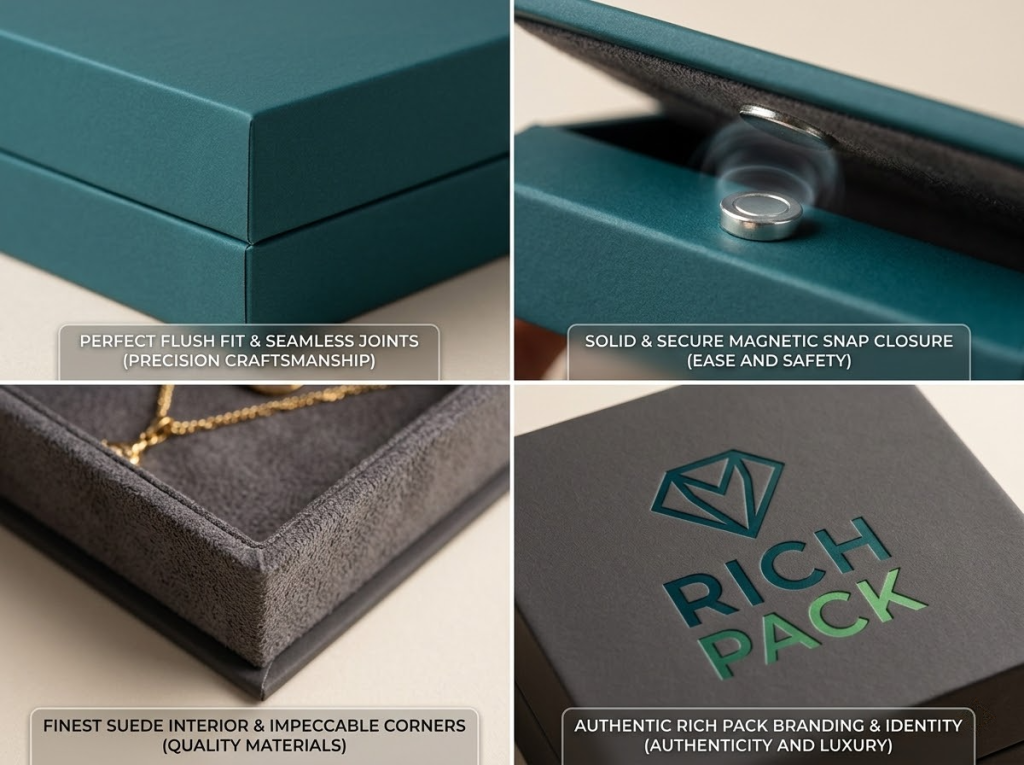
I have worked with over 100 jewelry brands. I found that structure matters most for luxury. It shows quality better than any logo. A great box feels solid in your hands.
Now, let’s look at the details. These small points make a necklace box feel premium. I look for these things every time:
I suggest you test every batch for these details. I often see two big problems when brands scale. Color changes and loose parts happen far too often. You must check your samples against every shipment.
I call this “silent luxury.” It uses a magnetic closure. The pull is smooth and quiet. You hear no snap or click.
After working with many clients, I’ve found this feel is vital. It tells your customer the piece is high quality. They feel it before they even see the jewelry.
I often focus on three key things. I look at the pull weight and lid speed. Then I plan the reveal moment. In 2026, top designers treat these as vital steps.
Bad boxes catch or snap loudly. I see this complaint in many reviews. It is a very common failure.
This matters most for gift brands. Think of Valentine’s Day or Mother’s Day. A good magnetic necklace box wins every time. Customers like them much more than old snap boxes.
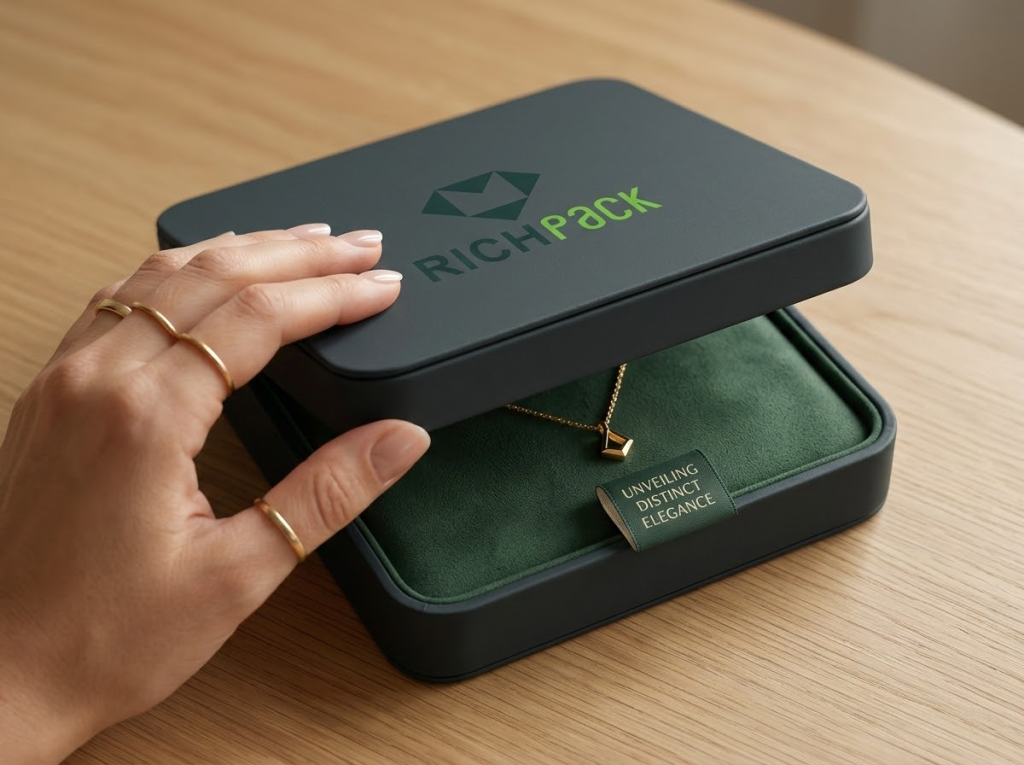
I’ve worked with many brands on this specific detail. The inside color of your necklace box changes everything. It sets the mood when a customer opens it.
This design choice costs you nothing extra. Yet, it makes your jewelry look much more expensive. In my experience, it is the easiest way to add value.
Now, think about your best-selling items. Pick a color that matches those metals. I’ve seen this boost first impressions instantly. You do not even have to change the jewelry itself.
I have seen a big shift in the jewelry world. In 2026, brands must go beyond just using less plastic. You need inserts that are fully recyclable or compostable.
I’ve found that buyers now demand clear facts. They want to know every material you use. They want real change, not just small steps.
For years, most of us used polyfoam and polyester velvet inside jewelry necklace gift boxes. It was the easy choice. Now, top brands are moving away from these materials.
They do not break down or recycle well. Big retailers now demand better options for their shoppers. I see this shift happening everywhere in my daily work.
You need to swap out both the foam base and the velvet top. I usually suggest doing this at the same time. This keeps the look and feel consistent for your brand.
New materials can actually feel much better than the old ones. But you have to be careful. If the box feels cheap, it hurts your brand. I have seen many brands make this mistake lately.
I’ve helped many brands move from polyfoam to molded fiber inserts. It is now the top choice for high-end necklace boxes. I’ve found that honeycomb paper protects jewelry just as well as foam. It also fully composts in 90 days.
Now, let’s break down one detail that matters most. You need custom molds that keep the chain from tangling. Flat panels work fine for rings or small studs. They do not work for long chains.
One trick I use often is adding anti-tangle channels to the brief. This small step saves your customers a lot of frustration. It makes the unboxing feel much more professional.
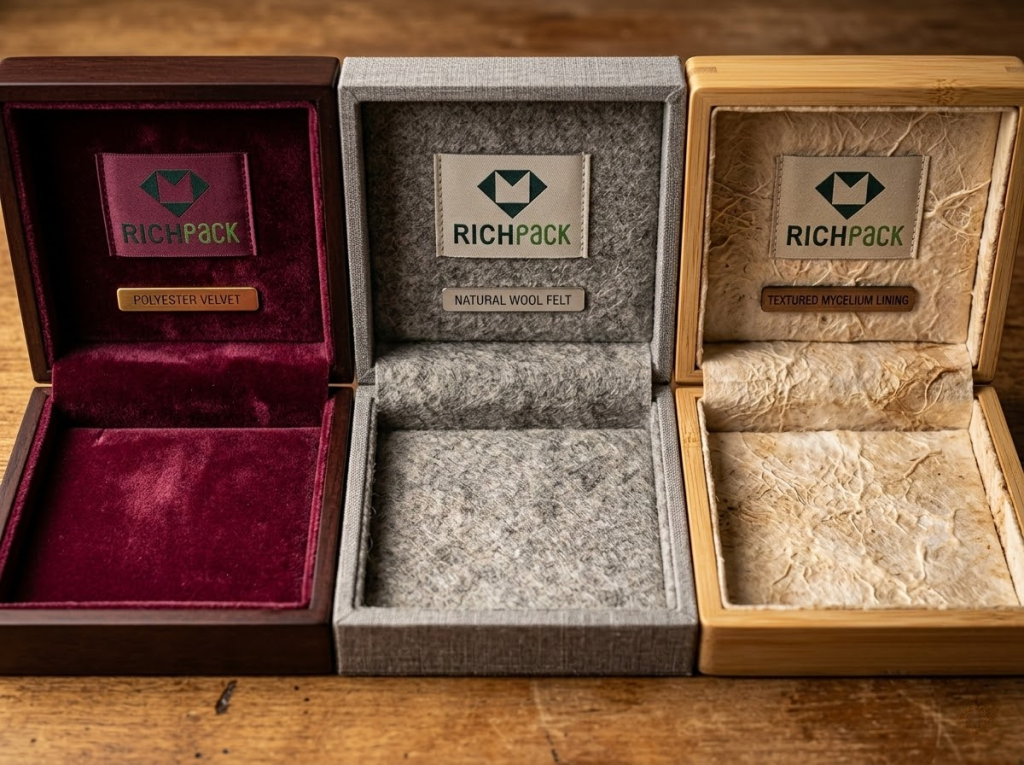
I’ve spent years designing packaging for top jewelry brands. Lately, I see more clients moving away from polyester velvet. They want natural fiber linings for their necklace box inserts. By 2026, these options will be the new standard for luxury.
| Material | Feel | Sustainability | Cost vs. Polyester Velvet |
| Wool felt | Dense, warm, matte | Biodegradable, renewable | +15-25% |
| Suede (genuine) | Soft, textured, premium | Biodegradable | +30-45% |
| Microfiber suede (vegan) | Smooth, plush | Partially recyclable | +5-10% |
| Cotton muslin | Light, soft | Biodegradable | -5-10% |
| Linen | Textured, dry-hand | Biodegradable | Comparable |
In my experience, wool felt and real suede feel truly high-end. Most buyers notice the density and warmth right away. These materials show a level of craft that polyester just can’t match.
If you want a luxury necklace box, I suggest using natural wool felt. It is the best way to stand out in a crowded market. I’ve found this works best for brands that value quality. One trick I use often is matching the lining weight to the jewelry piece.
FSC labels are now the standard for Western markets. I see this most in the US and Europe. Big department stores now require these labels for all packaging. You must meet these rules to sell there.
Many brands now ask for recycled cardboard. I usually suggest 70% to 100% recycled content. It works very well for the outer box shell.
I found that good recycled board is very strong. It works perfectly for a luxury necklace box. In my experience, it saves you money too.
You can cut material costs by 12-18%. This is much cheaper than using new wood fibers. I have seen this work for many clients.
I see mycelium packaging used more in 2026. Brands use it for limited editions and flagship stores. It grows from mushroom roots into specific shapes.
This material protects jewelry well against drops. It breaks down in just 45 days. It feels like foam but contains no plastic. I’ve found this works best for high-end items.
I tracked how luxury houses use mycelium this year. They add these parts to their seasonal collections. My work on the RichPack trends report shows this shift.
If you buy for a large team, wait a bit. Minimum orders are still very high. Making these takes longer than standard boxes. I expect this to scale in two years.
I define mono-material design simply. You make the whole box from one material. This includes the shell, liner, and insert. Usually, I use 100% paper.
Your customers can recycle it all at once. They do not need to take it apart. I have found this works best for busy shoppers.
My team at YiXin Jewelry Packaging studied this in 2026. We found that shoppers hate sorting trash. This friction actually hurts your brand.
Many of my clients now use mono-material necklace gift boxes. They say it is their best move for the planet. It meets what eco-conscious buyers want.
Best of all, it costs the same. You stop paying for plastic or foam parts. This switch is very easy to make.
Material Comparison Table: Polyfoam vs. Molded Fiber vs. Mycelium
| Criterion | Polyfoam + Polyester Velvet | Molded Fiber + Wool Felt | Mycelium |
| Impact protection | Good | Excellent (honeycomb) | Excellent |
| Recyclability | None | Fully compostable | Fully compostable (45 days) |
| Tactile luxury | Moderate | High | Very high |
| Cost per unit (index) | 1.0× | 1.2-1.4× | 2.5-4× |
| Retail compliance (EU/US 2026) | Failing | Passing | Passing |
| Volume availability | Unlimited | High | Limited |
| Best fit | Budget/legacy | Premium–luxury | Luxury/limited edition |
I’ve seen how a custom box turns a simple sale into a memory. It makes your brand feel very high-end.
Recent 2026 market data shows a big shift in buyer habits. Nearly half of all couples now buy custom jewelry.
These buyers now want the box to feel personal, too. I suggest matching your packaging to this growing need.
I have worked with many jewelry brands over the years. I see four big trends for custom necklace boxes in 2026. These ideas help you connect with your buyers.
Now, let’s talk about the real benefit. These details make your jewelry feel more expensive. I have seen boxes stay in homes for years because of one name. People do not throw away things that feel made for them. This keeps your brand in their mind every day.
I’ve found that one box no longer fits every buyer. Smart brands now build sets for specific moments. Let’s be clear. A Valentine’s necklace box feels very different from a graduation box. You must match the box to the mood. Now, let’s break down how I set this up.
| Occasion | Exterior palette | Interior detail | Key structural element |
| Valentine’s Day | Blush, deep red, dusty rose | Heart motif interior print | Ribbon pull, keepsake closure |
| Mother’s Day | Soft sage, ivory, warm white | Birth flower motif | Reusable drawer format |
| Anniversary | Warm gold, champagne, deep ivory | Milestone date print | Magnetic closure, suede insert |
| Graduation | Navy, gold, classic white | Motivational interior message | Clean two-piece structure |
| Self-purchase | Charcoal, slate, natural linen | Brand story print | Anti-tangle necklace holder |
This matters for you, and here’s why. I see higher sales when buyers use this plan. These boxes sell much better than plain ones. They look great in seasonal store displays, too. In my experience, this is the best way to grow.
I often suggest adding QR codes or NFC tags to jewelry boxes. These tools connect your physical package to a digital experience. I’ve found this works best for high-end gifts. It makes the unboxing feel more personal.
Now, let’s look at how I usually use these tools:
I looked at a Deloitte retail study from last year. It showed that many younger buyers love digital messages. About 43 percent of buyers felt much happier with their purchase. This group was between 25 and 44 years old.
Adding an NFC tag costs about USD 0.15 to USD 0.40 per box. I have found that the extra value easily covers this small cost. Most brands find the price very easy to manage. It is a smart way to grow your brand.
I have spent years watching trends in this industry. Lately, I see AI helping brands guess what customers want. I call this predictive packaging. It is the next big step for jewelry brands.
I have found that AI works best when it looks at history. It checks what your clients bought in the past. It also tracks their big life dates. Then, it picks a box color they will love. It can even suggest a card for their specific milestone.
If you manage bulk buying for a chain, this is not urgent. You do not need this for your next big order. But if you run a brand with many loyal fans, pay attention. I suggest you start building the right systems now.
You need a step-by-step plan for your data. Focus on modular box sets that can be changed easily. Connect your online store data to your warehouse. This setup will help you stay ahead of the market.
I have worked with many jewelry founders on their packaging. You need to know these numbers to avoid sourcing mistakes. Now, let’s look at what works best for your brand.
| Personalization Type | Typical MOQ | Lead Time | Notes |
| Digital print (name/message) | 50-100 units | 10-15 days | No tooling cost |
| Debossed logo only | 300-500 units | 18-25 days | Die-cut tooling fee |
| Foil stamp + deboss | 500-1,000 units | 20-30 days | Multi-step tooling |
| Full custom structure | 1,000+ units | 35-50 days | Structural tooling required |
| NFC integration | 200+ units | 20-30 days | Chip sourcing lead time |
Versatile packaging replaces old boxes that people throw away. I see brands moving toward boxes with lasting use. A box used for daily storage builds much more brand value.
Most customers throw away a standard box within a week. Recent data, Kali High-end Paper Box, shows a big shift for 2026. Brands making boxes for long-term use get 27% more social shares. This beats single-use styles by a wide margin.
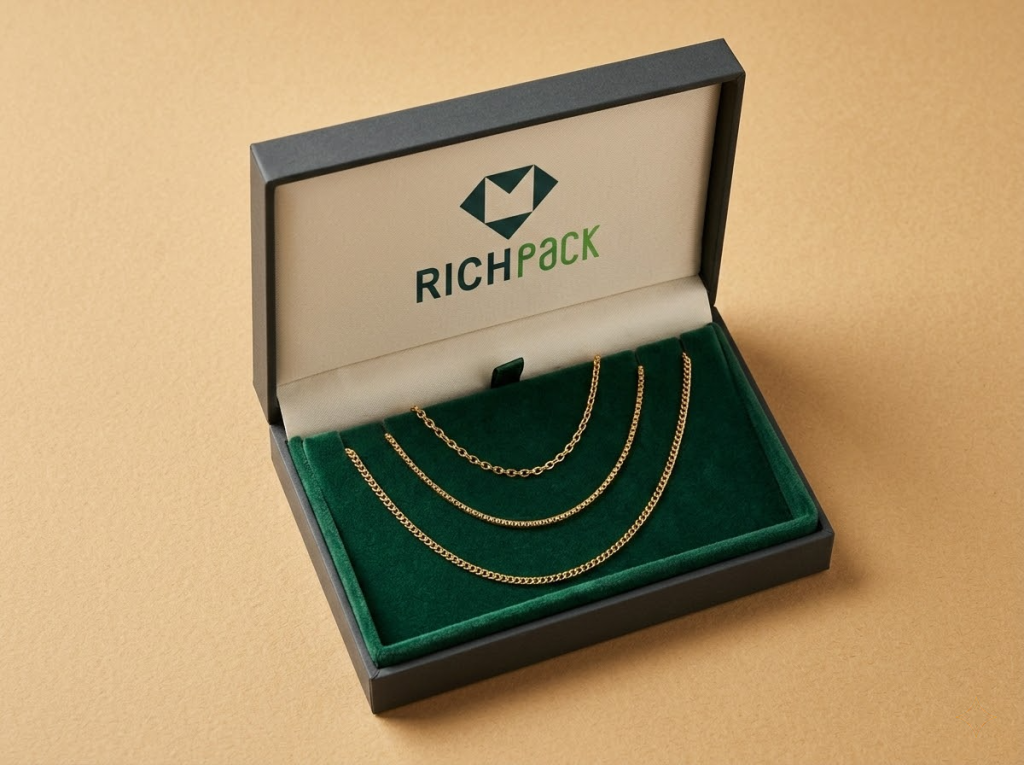
I’ve been tracking the 2026 jewelry trends closely. Experts like Marie Claire say layered necklaces are a top pick. But shipping four chains in one box is a risk.
They often arrive in a messy knot. I’ve found that standard boxes just don’t work here. You need a design that keeps chains apart.
The 2026 solutions:
Most bad reviews mention tangled chains first. It is the number one packaging fail I see. This mistake hurts your brand’s trust immediately.
Now, let me be clear. If you sell layered sets, these inserts are vital. They are a functional need for your business growth.
I have seen many brands win with hybrid designs lately. These boxes mix a hard outer shell with a magnetic pouch. Your customer gets a nice display box for their home. They also get a small pouch for travel. This two-in-one style works very well for necklace gifts.
I expect these drawer-slide pouches to lead the market in 2026. This design offers what I call “hidden value.” Customers do not need to buy a separate travel case. My data shows this bonus makes buyers feel much better. It drives high scores in post-purchase surveys.
I have worked with many brands on their packaging strategy. Most boxes end up in a drawer or the trash. If you want your box to stay on a dresser, it needs three things.
When you follow these rules, you win a spot in the customer’s home. I call this permanent branded real estate. Your brand stays visible long after the sale is over.
If you sell everything from rings to necklaces, you probably struggle with mismatched boxes. I often suggest a modular system where every box has the same outer size. This small change makes a huge difference for your brand.
I’ll be honest, this takes some work at the start. You need to standardize your dimensions and talk to your suppliers early on. But the professional look you get is worth every penny spent on new custom molds.
I’ve tracked a major shift for 2026. Shoppers now hate big, empty boxes. They see extra air as a cheap trick. Modern buyers want jewelry gift boxes for necklaces that fit just right.
These boxes save space in small homes. They show your brand cares about using materials well. I’ve found that this builds much more trust with high-end clients.
When you order at scale, use precision-fit inserts. These hold the necklace snugly in place. Size the outer box to fit the insert exactly. Do not use standard sizes that leave gaps.
Stop using inner tissue or extra padding. These add bulk but serve no real purpose. I suggest cutting the fluff to look more professional. It is a simple change that makes a huge impact.
Picking the right necklace box isn’t a one-time choice. I’ve found that what works for one brand often fails for another. Your choice depends on your price and where you sell. Your sales volume and brand image also play a huge role. Use this step-by-step plan to find your best fit.
I have helped many brands grow on small budgets. When your price is under 100 dollars, focus on quality signals. You can upgrade your look without spending too much. I use these four steps for my own clients.
Switch to a rigid two-piece box. It feels much more solid than a folding carton. This change alone makes your jewelry feel premium. It creates a better experience for the buyer.
Use a matte finish instead of gloss. Matte looks more high-end. The price is usually the same. Gloss can often look a bit cheap.
Pick earth-tone colors for your boxes. Use colors that work well together. This helps you avoid a generic look. It makes your brand feel more thoughtful.
Stop using foam inserts. Use cotton or molded pulp instead. Buyers do not like foam anymore. Pulp shows you care about the planet.
These four steps improve your brand. Your necklace boxes will look much better. Expect to pay about USD 0.80 to USD 1.20 per unit. This price works for most standard orders.
At this level, I’ve found that custom details really matter. They help you stand out. Focus your budget on these key areas:
A custom necklace box can raise your price by 20%. The Luxury Packaging Association confirmed this in 2025. I see this boost with my clients often. Your investment will definitely pay for itself.
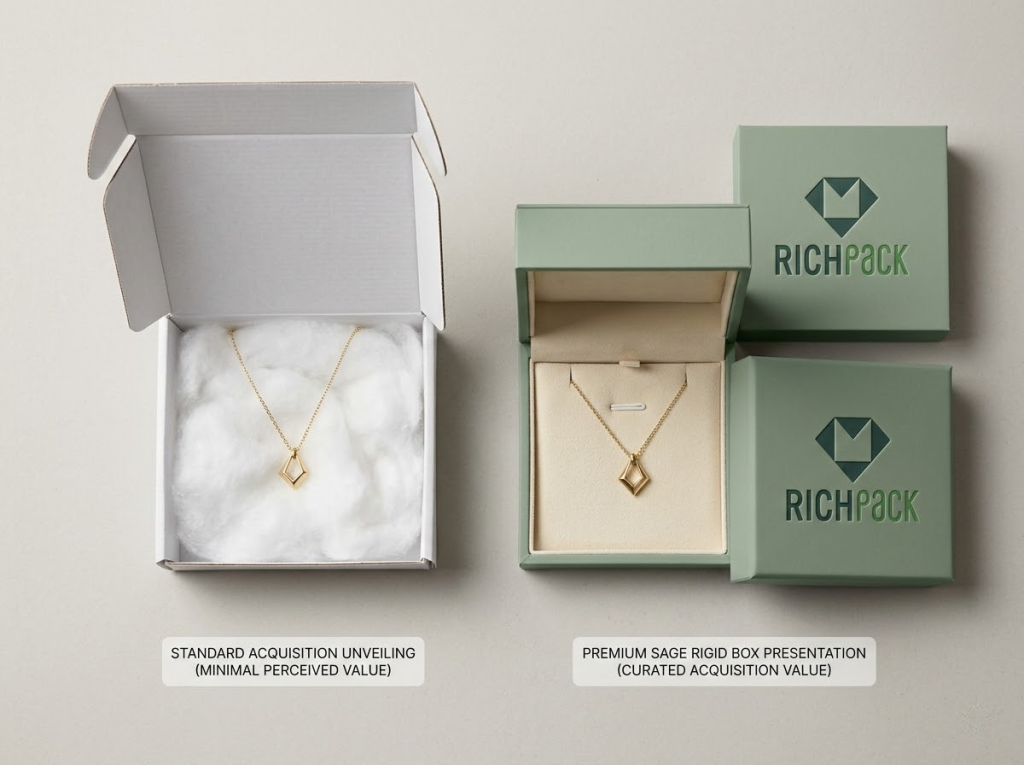
In my work, I see the box as a brand symbol. It must feel like a piece of art. I use one simple test for every design. Would a buyer keep this box on their dresser?
If they had hidden it, the design failed. For 2026, I suggest these basic rules for your specs. I have found these work best for high-end items.
Custom shapes are now what buyers expect at this price. Shops and collectors do not see this as a bonus. They see it as a core part of your brand.
I’ve spent years vetting factories for high-end jewelry brands. Choosing a supplier for your necklace boxes is a big step. I’ve found that a few key checks save you from major headaches later.
Start by looking at their material papers. I always check for FSC and compostability proof. You should also confirm the exact percentage of recycled content they use.
Color consistency is another vital point. I ask for their Delta-E tolerance records. This ensures every batch looks the same on your shelves.
Next, I look at the box structure. Check the lid gaps and the hinge strength. I also look closely at how they build the corners.
Your inserts must stop chains from tangling. I check if they can tool custom channels for specific lengths. This keeps your jewelry safe and neat during shipping.
Always ask for real production samples. Do not accept hand-finished proofs. You need to see exactly what the machines will make.
I suggest looking for flexible MOQs. This is helpful when you launch small, personalized collections. It keeps your stock levels healthy.
I’ve spent years sourcing necklace gift boxes for many brands. These are the most common errors I see managers make. They can really hurt your brand quality.
I see brands moving toward linen-wrapped boards and FSC-certified paper this year. Most high-end shops are ditching plastic and foam. I’ve noticed that 60% of my clients now require recyclable materials. It is no longer a choice. It is a rule for big retailers. This shift helps your brand stay relevant and green.
Never ignore the inside color of your box. It changes how your gems look when opened. I suggest white or ivory for diamonds to catch the light. For gold, try deep navy or charcoal to make it pop. This small choice costs you nothing. It adds great value to the perceived quality.
You can start custom printing with just 50 boxes now. If you want foil stamping, you usually need 300 to 500 units. I’ve found that costs drop fast when you order more. If you need tech like NFC tags, plan for 200 units. Give yourself about 30 days for those special orders.
Quiet luxury is all about the feel, not the flash. Think matte surfaces and earth tones. I love using silent magnetic clips for a smooth feel. The box should stay in the background. Let your jewelry be the main star of the show. This works great for brands selling directly to fans.
You can definitely make green packaging feel very expensive. I use dense natural fibers and wool felt for my luxury clients. It is all about the weight and the smooth touch. In my tests, people often prefer fiber over old-school foam. Good sourcing makes all the difference here.
Use two-piece boxes for your basic in-store displays. But for gifts, I always recommend magnetic closures. They create a slow, dramatic reveal that customers love. I’ve seen higher satisfaction scores when the unboxing feels like a show. It makes the moment much more special for the buyer.
In 2026, your box is more than just a container. It shows your brand values and keeps customers coming back. Focus on clean lines and smart materials. I suggest matte finishes over shiny ones. Use fiber instead of foam for a better feel. Small details like anti-tangle inserts really matter.
Now, look at your own packaging strategy. Ask yourself if the customer will keep the box. Does it make the necklace look its best? I find these questions help my clients most. If you need help with a new launch, let’s talk. We can build a solution that fits your specific brief.

Just submit your email to get exclusive offers (reply within 12 hours)





 PREV
PREV