

 PREV

2026 Guide: Where Can You Find Affordable Gift Boxes with Lids
2025-05-28




Imagine a small jewelry box made for a delicate ring. In a product photo, it may look ready for production. Before approving it, the team still needs two answers: can the customer lift out the ring easily, and will the display box also travel inside an outer shipping box for online orders? Both decisions belong in the same review because the ring, its box, and the outer carton are parts of one order.
Finished artwork is only one approval item. The ring still has to fit, the customer has to be able to use the box, and an online order needs a clear shipping setup. Reviewing those needs together can reveal a mismatch before production.
Packaging design is more than drawing a pattern on a box to make it look nice. It covers the choices that make a package fit its product and the way people buy, use, store, and receive it. That includes the box itself, what a customer sees on a shelf or product page, how the box opens, and how the product comes out.
These choices have two connected parts:
The two parts can affect one another. A thicker insert, for example, may change the ring’s position, leave less room for a care card, or make the lid harder to close. Reviewing the structure and the customer experience together helps catch those conflicts while the design can still change.
People often use “packaging design” and “package design” to mean the same thing. The wording alone does not define the work, so the buyer and designer should agree on whether the project covers the artwork, the package structure, or both.
“We need package design for a ring” could mean a logo and print layout, a box that holds the ring, or both. Clarifying the request tells each person which decisions they are responsible for.
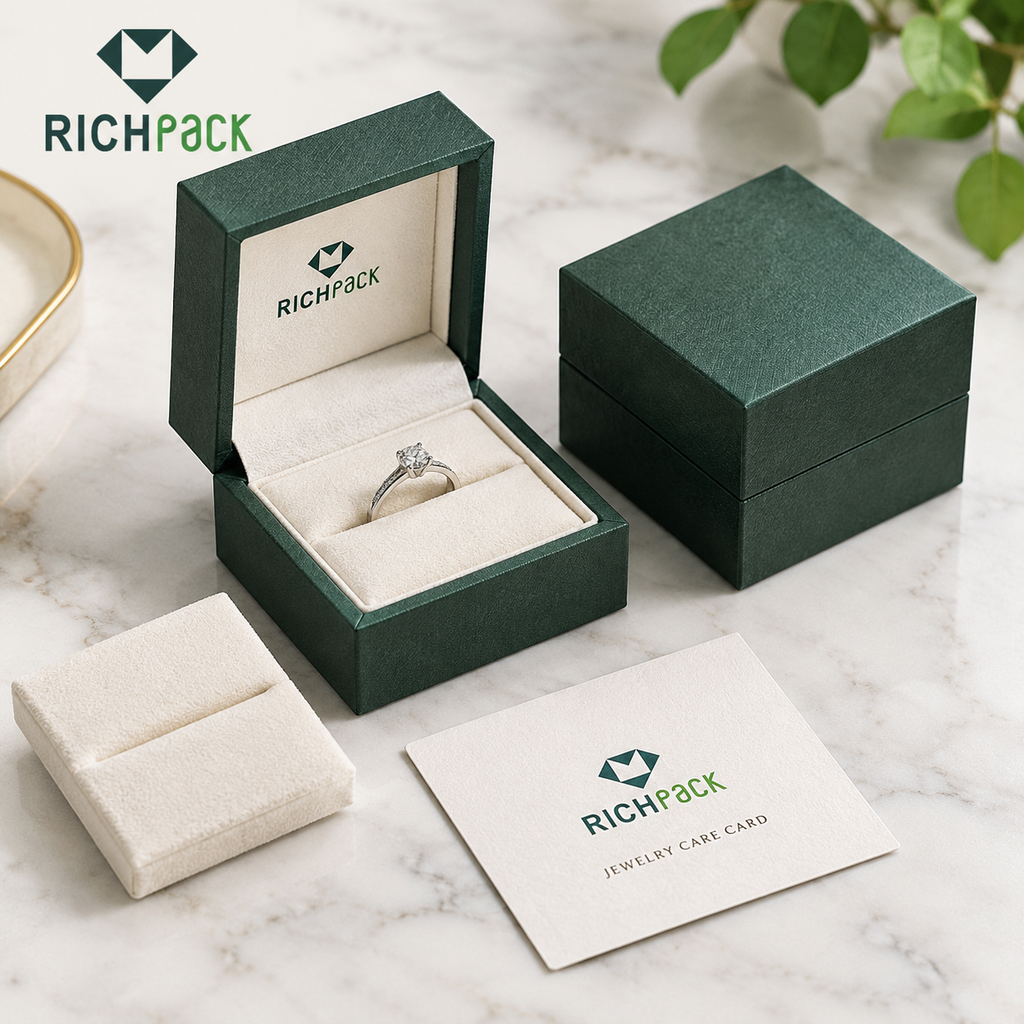
A jewelry package may include a box, lid, insert, and printed labels. An online order may also need an outer shipping box. A short written plan should name each part in scope and the job it needs to do.
In this example, the small box presents the ring, and the outer box carries it through an online order. The plan should also show where the care card goes and confirm whether the shipping box is part of the design work. That gives the buyer and designer a shared view of what is being approved.
Graphic design covers what people see: the logo, colors, type, and words on the package. Packaging design also covers the box itself, including whether it holds the ring, has room for required text, and opens as intended.
| Graphic design asks | Packaging design also asks |
| Can customers see the logo and read the words? | Do the graphics fit the actual box panels? |
| Is the visual order clear? | Does the box hold the ring and open as intended? |
Changing the box size can force changes to the artwork. A logo or line of text may need to move or shrink to fit the new panel, so the structural and graphic reviews need to happen together. Otherwise, a layout that looks finished on screen may not fit the actual box.
Product design decides the shape of the item, while packaging design decides what goes around it and how the two work together. The packaging team needs the item’s real size, shape, surface, and use before choosing the box or insert.
A small change to the ring can affect how it sits in the insert even when the outer box stays the same. Share product updates with the packaging team before sample approval so they can check the fit against the latest specifications.
These names describe the layers around a product. A primary pack holds the product, a secondary pack groups or presents one or more primary packs, and a tertiary pack groups packages for handling or shipping.
| Primary | Holds or directly touches the product | A pouch or small box around the ring |
| Secondary | Groups or presents primary packs | A branded jewelry box around the ring pack |
| Tertiary | Groups packages for handling or transport | A shipping carton carrying several orders |
The National Motor Freight Traffic Association uses these terms to describe product contact, grouping, and transport. They help teams identify each layer; they do not show whether a specific box will protect a specific product. That requires product-specific requirements and an appropriate sample check or test.
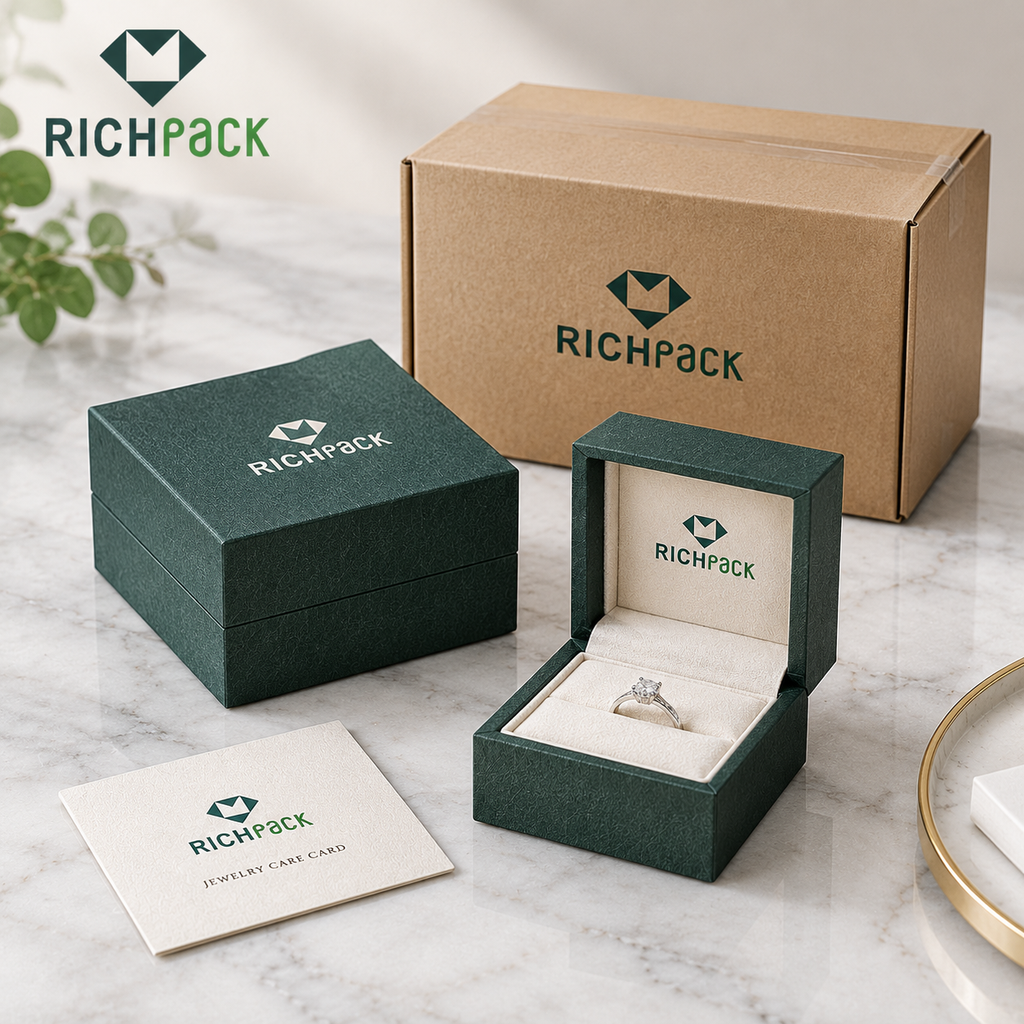
Customers encounter a package at several points: they may see it on a shelf or product page, open it, store it, or send it onward. A clear logo may help them recognize the brand, and a well-planned insert may make the product easier to handle. Those are design aims, not guarantees of higher sales, damage-free shipping, or lower environmental impact.
Customers may first see a box on a shelf, in an online photo, or when they open an order. At each point, they need enough visual information to spot the brand and understand what the box holds.
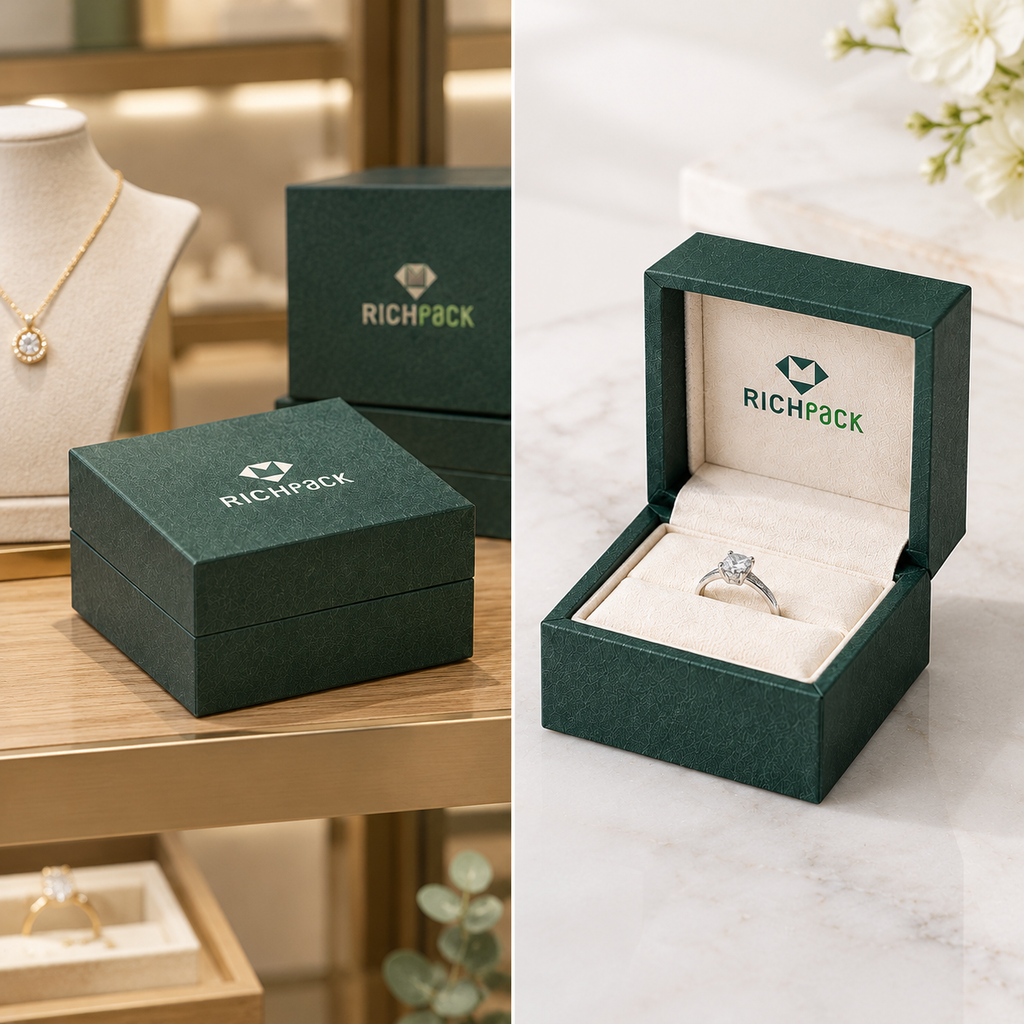
In a store, a shopper may first see the closed lid. An online shopper may also need to see the ring inside the box. Compare both views to decide whether the same artwork works in each setting or the product listing needs another photo; the box itself may stay the same.
Start with the conditions the package needs to handle. If the ring box will be shipped, write down the route and the handling conditions that matter before choosing a test. A qualified packaging partner can help define a sample check that represents them.
A box that presents jewelry well in a store may still need an outer shipper. Include that box in the sample review rather than adding it after the display box is approved. Until the agreed check is complete, neither the box style nor its material proves shipping performance; any claim must match the setup and conditions actually checked.
Customers need to know what the product is and find any care or use information that applies. They also need to open the box and take out the jewelry without struggling with the insert.
For our ring box, watch someone open it and lift out the ring. If they have to dig around, the insert or opening may need to change. That is a use problem, not a copy problem.
Label rules are a separate matter. They vary by country, so a qualified reviewer should confirm the required wording and languages for each market. A clear box does not replace that review.
An online order can pass through a warehouse, carrier, and customer. Warehouse staff may need to group boxes for picking, while the customer expects the ring to arrive in its planned presentation.
For the ring order, the layers have different jobs:
The team should state whether the jewelry box also needs an outer shipping box. This keeps a display decision from being mistaken for a complete shipping plan and gives procurement and fulfillment teams the same description of what is being approved.
Look at how much material the package uses and what happens to it afterward. In the United States, the EPA’s materials management hierarchy puts source reduction and reuse above recycling. That framework sets priorities for the U.S.; it does not establish that one material is best in every market.
For the ring box, check what each insert or sleeve does before deciding whether to keep it. Then confirm what local recycling programs accept before making a recycling claim. A material name alone does not tell customers how the complete package will be handled where they live.
Before removing a component, ask what job it does and whether the package can still do that job without it. Then check what local options exist after use. Those answers narrow the next design decision without implying that one material is better everywhere.
Consider a redesign when the product, sales channel, or shipping route changes, or when customers keep reporting the same problem. Start with what happened rather than choosing a solution too early.
“Customers cannot lift out the ring easily” points to an action the team can observe. “We want a new color” does not explain what is failing. One comment may be a clue; repeated feedback or a sample review can show whether the issue needs a design change.
Write down where the issue occurs and what result would show that a change helped. Then the team can decide whether the insert, opening, or graphics need attention instead of changing the design without a clear goal.
Teams can organize the review by following the package from product fit through customer use, sale, delivery, and end of life. This is a practical sequence for discussion, not an industry standard. It links what the box must hold with what customers need to see and do before artwork is approved.
| Start with | Ask | This can affect | Check it by |
| Product | What size and shape must fit? | Box, insert, opening | Try the real product in a sample |
| Customer | What will the person see and do? | Opening, information, presentation | Watch someone use it and read the copy |
| Store or online shop | Where will the package be seen first? | Graphics, size, layout | View it on a shelf or at the image size |
| Shipping | What happens between storage and delivery? | Outer box, grouping, route | Review the whole shipping setup |
| After use | What happens to the parts? | Materials, finishes, pieces | Check the supplier details and local rules |
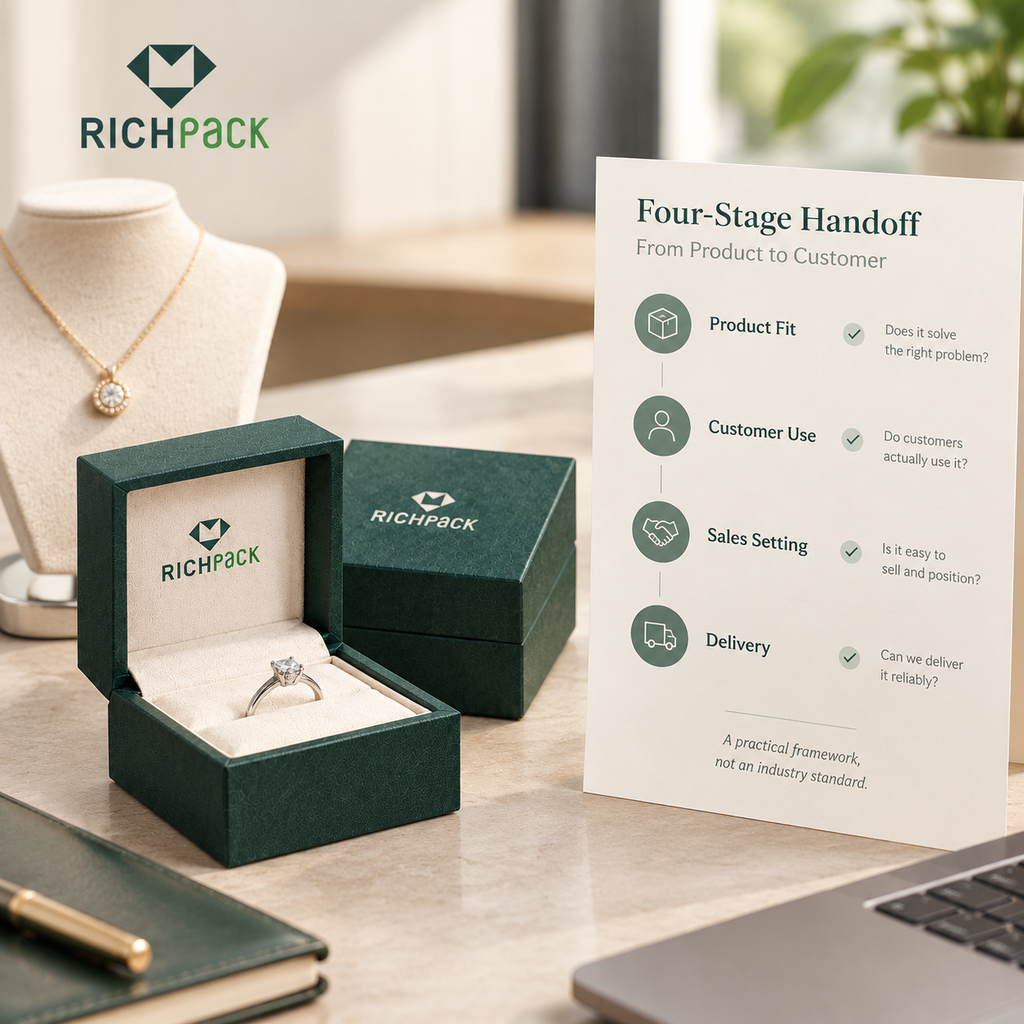
Begin with the ring’s size and shape, then consider who will open the box and where they will see it. A ring can fit the insert yet still be hard to lift out, so product dimensions and customer use both belong in the plan.
Here, the same ring is sold in a store and online, so it needs to fit the same insert in both cases. The first view and shipping setup differ. Record both in the written plan before artwork begins, while the team can still compare the options.
Brands comparing box families can browse RichPack’s jewelry box collection after noting the product size and sales setting. The page is a starting point for exploring box types; it does not decide which structure fits a particular ring.
The box and insert determine where the ring sits and how someone takes it out. A drawing shows the shape; a sample lets the team check the movement with the actual product. The lid and insert also have to fit together. If the ring sits too high, the box may not close as planned.
When the team discusses the structure, separate three questions:
Place the ring in the insert, close the box, and open it as a customer would. If the ring is hard to reach, adjust the fit or opening; changing the logo will not solve that problem. The sample shows how the parts work together in a way a drawing cannot.
For ring-specific shapes and presentation, RichPack’s custom ring box options offer a relevant next place to compare forms after the fit and opening needs are clear.
Choose materials for the job they need to do, not only for how they look in a sample book. Paperboard, fabric, and foam differ in feel and print performance, and their weight, cost, and disposal depend on the actual specification. The product and the supplier’s details should guide the choice.
For this ring box, a soft lining may look luxurious, but appearance alone is not enough to choose it. Check it with the actual ring and compare the finished box with the written requirements. RichPack’s packaging materials overview shows material families; its in-depth packaging design guide covers additional design choices and steps.
The first view depends on where the customer encounters the package. A product photo may show the closed box, while an in-person customer may first see the ring after opening it. Check both views and read the logo and words at their actual size, not only on an enlarged screen.
One quick check is to put the closed and open views beside the product listing and ask someone who has not seen the design what they notice first. If they notice the logo but cannot tell what the box holds, the artwork needs a clearer order. This check shows what stands out in that view, but it does not replace a review of market-specific label rules.
First list the information customers need, then decide how much room remains for brand messages. A care card, product name, or required label should not be squeezed into a corner after the artwork is finished. For a jewelry box, the plan might separate:
The words and languages depend on the product and country, so the responsible reviewer must confirm them for each market. A general packaging article cannot replace that local check. The packaging team can still leave the right space in the design while that review is underway.
For an online order, identify what surrounds the ring box and which handling conditions the outer box must address.
If the same jewelry box is also sold in a store, review its shelf presentation separately. Then check the full setup without expecting the small display box to handle every part of delivery. This makes it easier to decide whether a change belongs to the jewelry box or the shipper.
| Setting | Main package question |
| Retail | Does the jewelry box present the ring as intended? |
| Online order | What outer pack carries the jewelry box to the customer? |
For a fuller jewelry-specific shipping walkthrough, see RichPack’s jewelry shipping guide. Its instructions can help frame the route review, but any protection claim still needs evidence for the actual package and test conditions.
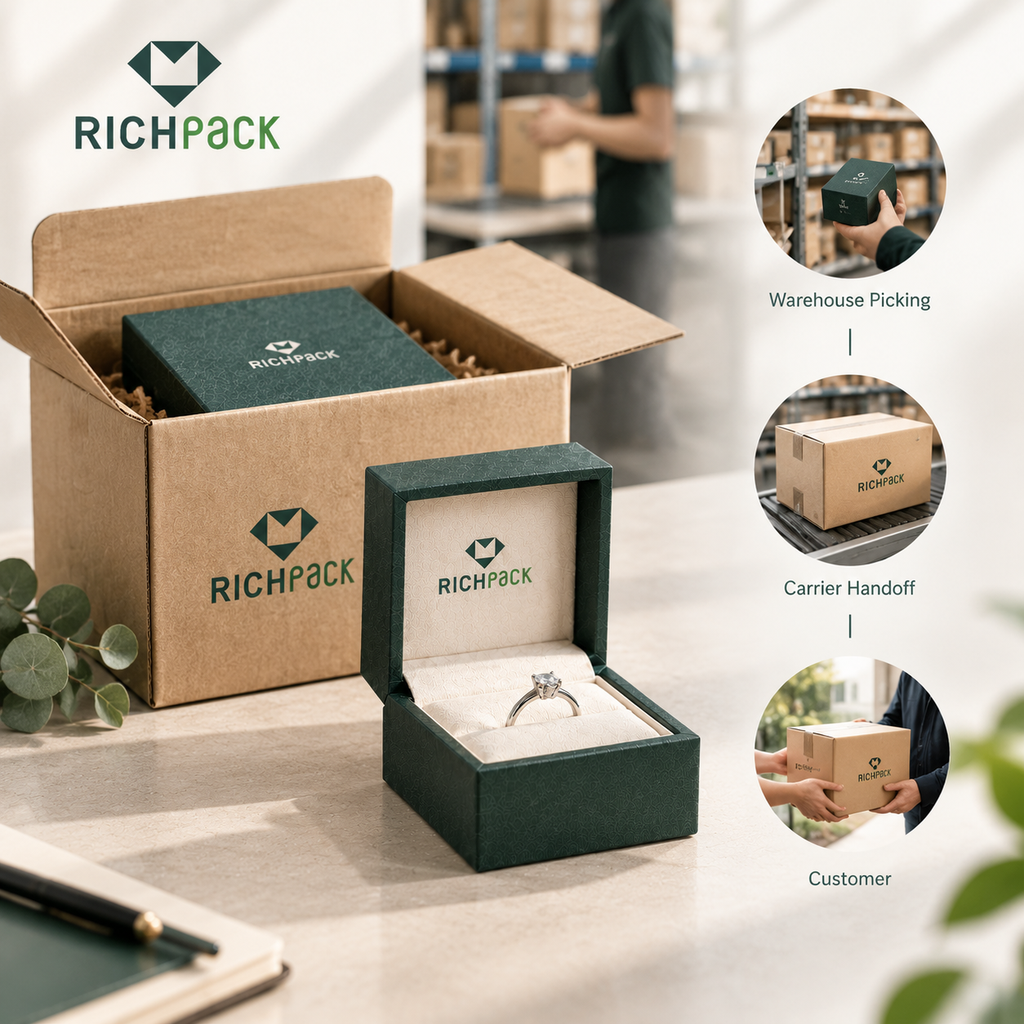
Sustainable packaging design starts with the package’s job. Look for material that can be reduced without losing that function, then check whether parts can be reused and what local systems accept for recycling. Removing a sleeve may use less material, but first confirm that the box still works without it.
In the United States, the EPA hierarchy favors source reduction and reuse; recycling depends on local programs. In other countries, check local guidance instead of assuming the same collection rules apply.
Teams comparing paper-based options can review RichPack’s paper packaging solutions, then confirm the actual material specification and local end-of-use guidance for their market.
| Choice | Question before approval |
| Use less | Can a component be removed while the package still does its job? |
| Reuse | Is there a clear way for the package or part to be used again? |
| Recycle | Does the local program accept the actual material and format? |
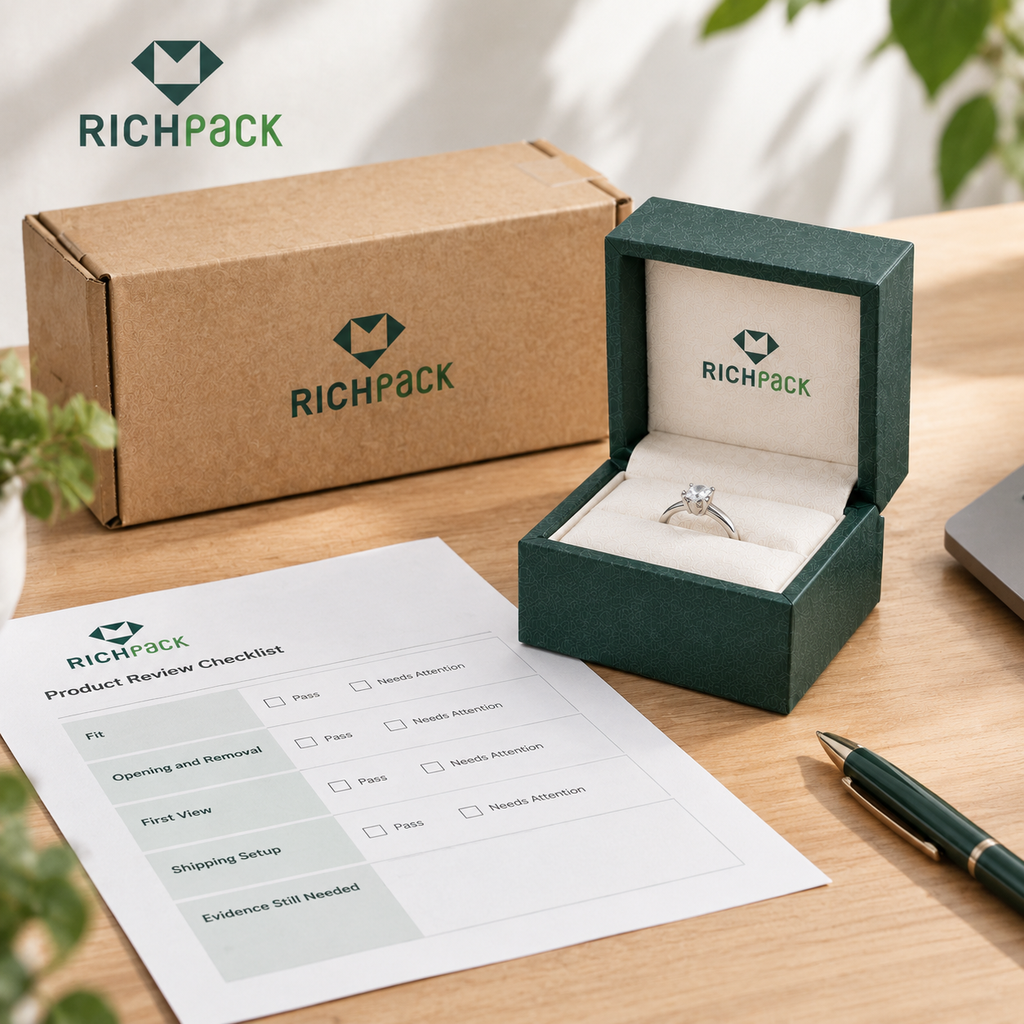
Before production, compare a real sample with the written plan. Check whether the ring fits, a customer can open and use the box, important information is easy to find, and each package layer has a clear job.
For this ring box, review product fit, opening, presentation, and shipping as separate parts of the same approval. The sample may reveal a need for formal testing, but the review itself does not prove measured performance.
Put the real ring, or a sample with checked dimensions, in the box. Check where it sits, what it touches, and whether it goes in and comes out in the intended direction. Use the same questions for each size:
If the brand sells sizes that change the fit, check them separately instead of assuming one sample represents them all. Record any size that needs a different insert or box.
Put the box where customers will first see it, or show it at the actual size of the online image. Ask someone outside the design team: “What is this product, and where would you look for its care information?” Their first response can show whether the visual order is clear.
If they cannot tell, move or rewrite the words and check again at the same size. Keep this visual review separate from the country-specific label review, and record who confirmed the required wording for each market.
Use the sample to follow the customer’s actions in order:
Watch for catching, unclear opening direction, or extra handling. Record the sample version and the change requested so the next review can check the same item. This is a use check, not a shipping, drop, or long-term wear test.
Map one order from storage to delivery. The warehouse may group the ring box with other orders, an outer carton carries it on the route, and the customer opens the jewelry box at delivery. Review a sample of that full setup rather than each box on its own.
If shipping performance needs to be measured, agree on a test and pass/fail rules with a qualified partner before making a claim. The result only applies to the setup and conditions that were tested.
End the review with a short record of what is approved and what still needs an answer. For our ring box, that could include:
| Decision | Record |
| Product fit | Ring sizes checked and insert version |
| Presentation | Approved artwork and first-view sample |
| Delivery | Outer shipping box and route assumptions |
| Evidence still needed | Test, material, or market review still outstanding |
Keep the record with the approved artwork and product details so buyers can compare later changes with the original plan. Once the requirements are clear, they can review RichPack’s custom jewelry boxes with logo and custom jewelry box inserts overview against them. Those pages describe relevant options, but they do not confirm the fit or performance of a specific item.
Packaging design means choosing the box, materials, appearance, information, and opening so they fit the product and how it will be used and shipped.
Usually, yes. Package design and packaging design are commonly used for the same discipline; context determines the exact scope of work.
Packaging design helps hold or present a product, share useful information, and make the package easier to handle. The right choices depend on the product and how it will be stored, displayed, or shipped.
Common levels are primary packaging, which holds the product; secondary packaging, which groups or presents primary packs; and tertiary packaging, which groups packages for handling or shipping.
Sustainable packaging design looks at material use, reuse, recycling, what the product needs, and what local systems accept. A material name alone does not prove that the whole package has less environmental impact.
Jewelry packaging design matches the jewelry with its insert, box, appearance, and shipping plan. Check the actual piece in a sample box. A drawing alone cannot prove that it fits or will be protected.
Before approving the ring box, confirm that the ring fits, a customer can lift it out, the box works in its sales setting, and the outer shipping plan is clear. Put those requirements in writing and check them against a physical sample. Keep any unconfirmed test or local rule open until it has been reviewed. With the requirements settled, a jewelry brand can compare RichPack’s custom box and insert options against the job.


2025-05-28


2025-02-19

2025-03-28
Find the perfect box for proposals, anniversaries, or business gifts. Contact Richpack for custom options.
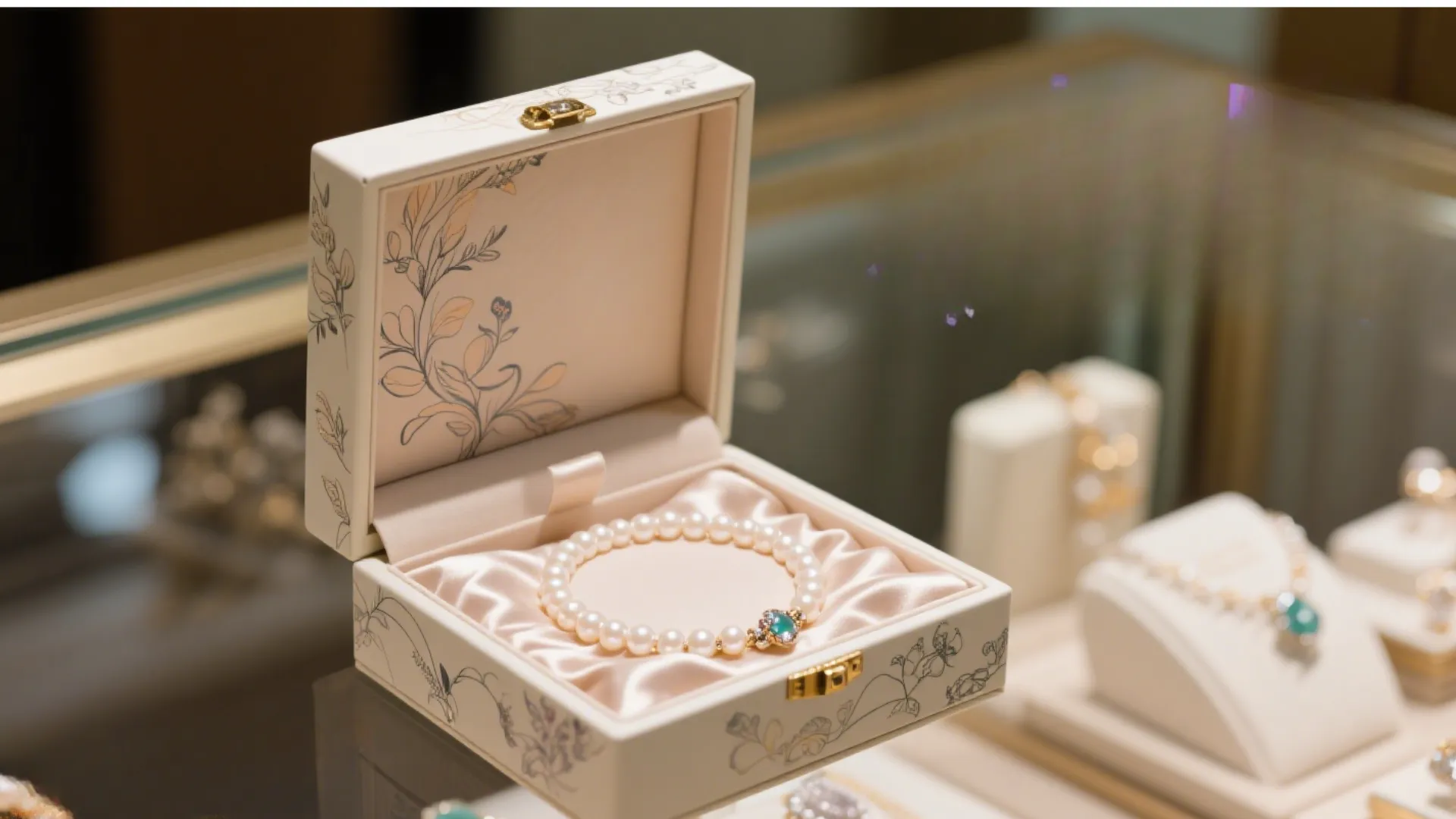
Avoid costly custom packaging mistakes for your luxury jewelry brand. This guide reveals common pitfalls like oversized boxes and poor material choices, offering expert solutions for precision sizing, protective inserts, flawless logo application, and an unforgettable unboxing experience. Learn how to order custom packaging that elevates your brand and delights customers. You’ve done it. After… Continue reading What Is Packaging Design and Why It Matters

The fashion focus now seems to have shifted entirely to younger generations such as Gen Z, but it is undeniable that about 70% of jewelry purchases are made by adults aged 25-50 (Generation X and Y), with the largest share belonging to millennials. According to the survey, millennials spend an average of 157.9% more on… Continue reading What Is Packaging Design and Why It Matters
Canvas Zipper Pouches for Gym Gear Carrying | Breathable Designs with Customized Logos

Christmas Cookie Gift Boxes High-Quality Christmas Cookie Gift Boxes Suitable for Candy and Cookies Bulk for Gift Giving & Holiday Treats | Richpack
Classy Jewelry Box Mirror Style for Elegant Storage – Customizable Mirrored Jewelry Boxes and Vanity with Jewelry Storage in Mirror Solutions
All-in-One Richpack Gift Box Anniversary – Unwrap a Year of Memories & Delights
View More
Bangle Boxes for Secure and Stylish Storage | Perfect for Retail Displays and Gifting Solutions Richpack Trade Pricing
View More
Black Velvet Jewelry Pouches | Soft, Elegant Storage for Jewelry by Richpack
View More

