

Selling a beautiful pearl necklace is only half the job. You can still lose a customer if the pearl necklace box feels cheap or wrong. Packaging is the very first thing a buyer touches. For pearls, the right box also makes sure the jewelry stays flawless for a long time.
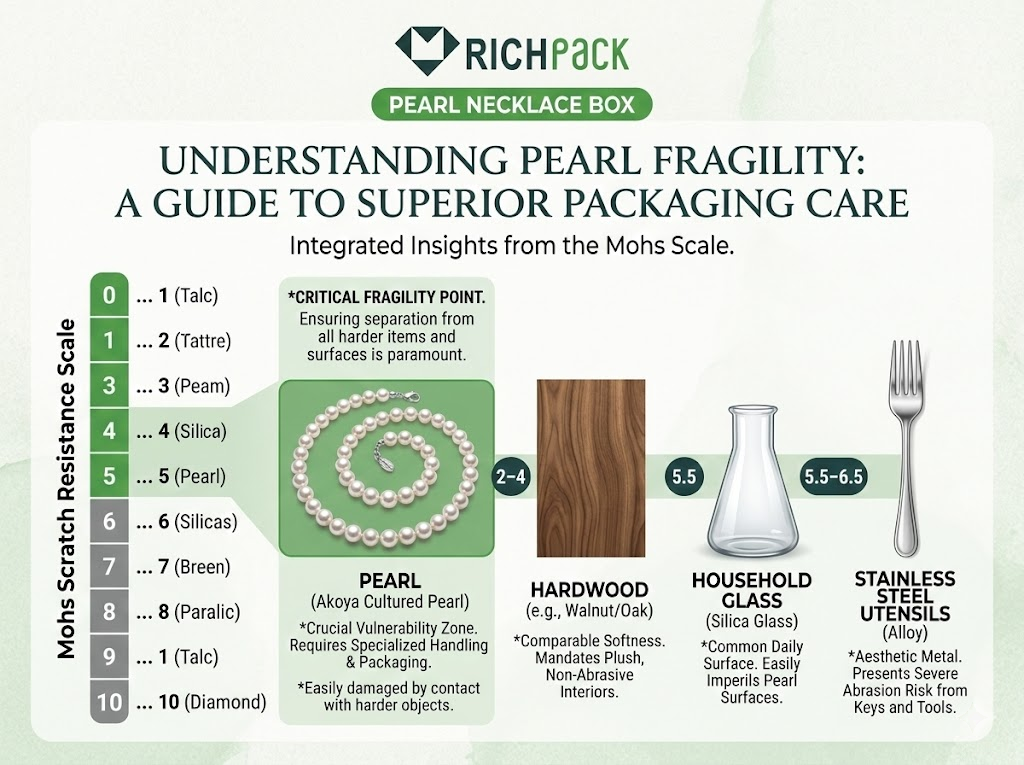
Pearls are very delicate. They score only 2.5 to 4.5 on the Mohs hardness scale. This means they scratch much more easily than most metals. Their natural outer layer, called nacre, can lose its shine forever if it rubs against the wrong material. For brands that care about quality, picking the right box is a vital business decision.
This guide will help you make every important choice. We cover which soft materials truly protect the pearls and how to match the box size to the necklace length. We also look at which styles work best for retail stores, online shops, or gifts. Whether you are ordering your first set of boxes or updating your current brand, you will find a clear plan for choosing the best necklace jewelry box for your collection.
Choosing the right packaging is a vital business decision for anyone selling fine jewelry. Because pearls are more delicate than diamonds or gold, they cannot be stored in just any container. A dedicated pearl box protects the gems from physical damage while also making your brand look more professional. By using the right materials and design, you ensure that the customer’s first experience with your product is one of quality and care.
Pearls are different from other gemstones because they grow inside living shells. They are made of layers called nacre. This natural coating gives pearls their beautiful shine, but it also makes them very soft.
On the Mohs scale, which measures how hard a material is, pearls score between 2.5 and 4.5. This means they are much softer than glass (5.5) or stainless steel (5.5–6.5). They are even softer than some of the hardwoods used to make boxes. If a pearl touches anything harder than itself—like other jewelry, rough fabric, or the side of a cardboard box—it gets tiny scratches. Over time, these scratches build up and make the pearl lose its luster. Nacre is also sensitive to moisture. If pearls are kept in a box that is completely airtight, they can dry out and crack. A high-quality jewelry box for pearl necklaces solves both problems by using soft surfaces and allowing the pearls to “breathe.”
Damage to pearls rarely happens all at once. Instead, it builds up slowly. If a pearl necklace is kept in a standard box, it might rub against a rough lining every time the box is moved or opened. During shipping, the necklace can slide around inside a box that is too big, causing the pearls to hit each other. After six months, the surface of the pearls may look hazy, and there is no single accident to blame.
There is also a risk for necklaces held together by silk thread. If you hang a pearl necklace up for storage, the weight of the pearls stretches the thread. This puts stress on the knots and eventually makes the strand weak. Pearls should always be stored lying flat so the whole strand is supported. This means the insert inside the box is just as important as the material used to line it.
A customer feels the box before they ever see the necklace. The weight of the box, the feel of the outside material, and the way the lid opens all create a first impression. This impression helps the customer decide if the product is worth the price.
Brands that invest in high-quality packaging do not have to work as hard to explain their prices. The box does the work for them. A well-chosen luxury necklace gift box tells the buyer that the jewelry was handled with great care. This makes a price tag of 200 dollars, 500 dollars, or even 2,000 dollars feel exactly right. On the other hand, a cheap box can make a customer want to return the item, and returns can quickly ruin the trust people have in your brand.
A standard necklace gift box—the kind used for gold chains—usually has a simple cotton or foam insert. This works for metal because metal is tough and does not scratch easily.
Pearls need a very soft interior, such as velvet, satin, or suede. The lining must be softer than the pearls themselves. The box also needs to be deep enough so the necklace can lie completely flat without being bent at the clasp. Finally, the lid must close firmly so it does not press down on the pearls during shipping. Most regular jewelry boxes fail at least one of these tests. A box designed specifically for pearls is built to meet all three of these needs from the start.
Business buyers have a different set of goals than regular shoppers. For retailers and wholesalers, the choice of packaging depends on cost, how the boxes look on a shelf, and how easy they are to reorder.
The most common priorities for professionals looking for necklace gift boxes are:
Understanding these needs is the first step in choosing a box that works for both the pearls and the business.
The material inside your jewelry box is just as important as the design on the outside. Because pearls are so soft, the lining is the only thing standing between a perfect gem and a scratched surface. Choosing the right material helps your brand look professional while making sure the jewelry stays safe during shipping and storage. The right lining is a simple way to show your customers that you care about quality.
Velvet is the most common choice for pearl packaging, and for a good reason. It has a thick, soft surface that creates a cushion for the pearls. This keeps them from sliding around while protecting the delicate outer layer.
A velvet necklace box looks classic and high-quality without being as expensive as silk or leather. For most pearl collections, velvet is a great choice because it protects the gems and works well with many different brand styles. Velvet also stays looking new even after the box is opened and closed many times, which is very helpful for stores where customers handle the boxes often.
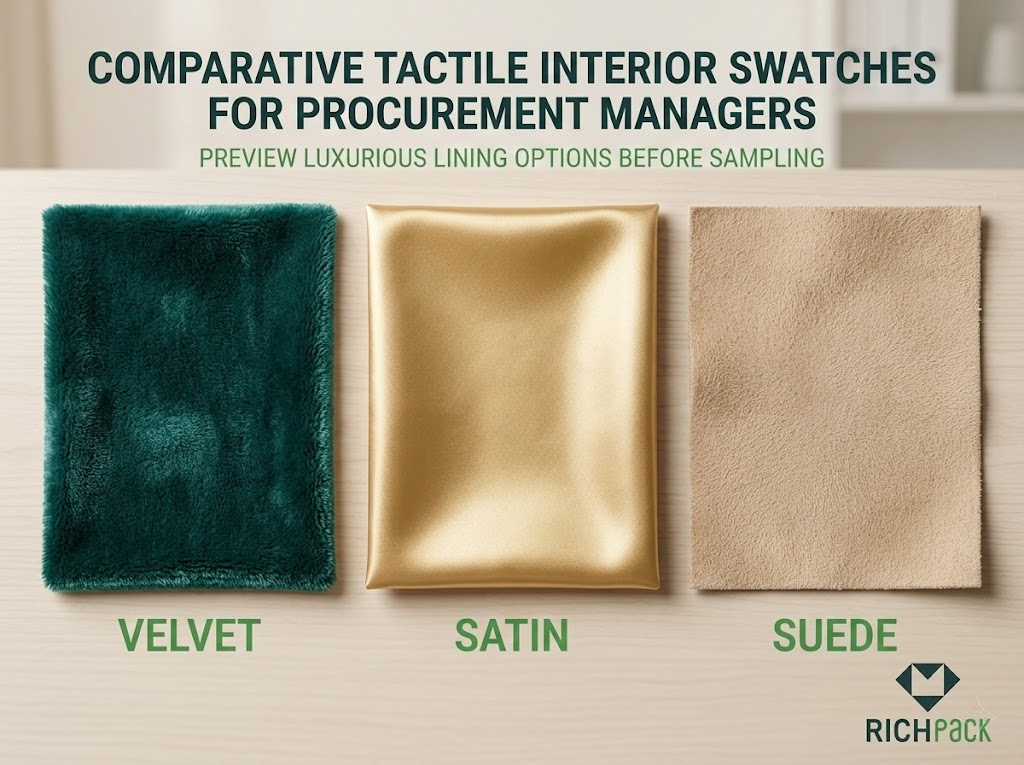
Satin has a very smooth and shiny finish. It is often used for expensive pearls and wedding jewelry. Because it is so smooth, it helps highlight the natural shine of the pearls.
A satin-lined luxury necklace gift box tells the customer that the jewelry is for a very special occasion, like a wedding or an anniversary. One thing to remember is that satin can show wear and tear more easily than velvet. It also usually costs a little more to buy. For pearl necklaces that cost more than 300 dollars, this extra cost is usually worth it because it makes the product feel more valuable.
Suede is a soft material that has a modern, matte look. It looks very clean in photos and is a popular choice for brands that want a simple, high-end style. It holds its shape well and feels very professional.
Microfiber is a newer material that is becoming very popular for online brands. It is lightweight, easy to find in eco-friendly versions, and very soft. For businesses that sell a lot of jewelry online, microfiber-lined boxes offer great protection for pearls at a price that is easy for the business to manage.
Some materials might seem okay, but they can actually damage a pearl.
You should never use plain cardboard because it is rough enough to leave marks on the pearls. Plastic inserts with rough edges are also risky. Any rough fabric or plain foam can scratch the surface of the pearl over time.
You should also be careful with wood. Plain wood contains natural chemicals called tannins that can hurt the pearls if they are stored together for a long time. If you want to use a wooden box, the inside must be completely covered with a soft lining. The pearls should never touch the raw wood directly.
The material you choose for the lining is one of the biggest factors in how much the box costs and how customers see your brand. Here is a simple guide:
Choosing a lining that is one level higher than what you use now can make your jewelry feel much more expensive. This is because the interior is the very first thing a buyer sees when they open the box.
Selecting the right box style is a key part of your business strategy. The style you choose affects how much it costs to ship your products, how you display them in a store, and how your customers feel when they open their purchase. Whether you are selling high-end luxury items or affordable gift sets, matching the box style to your brand helps build trust and keeps your products safe.
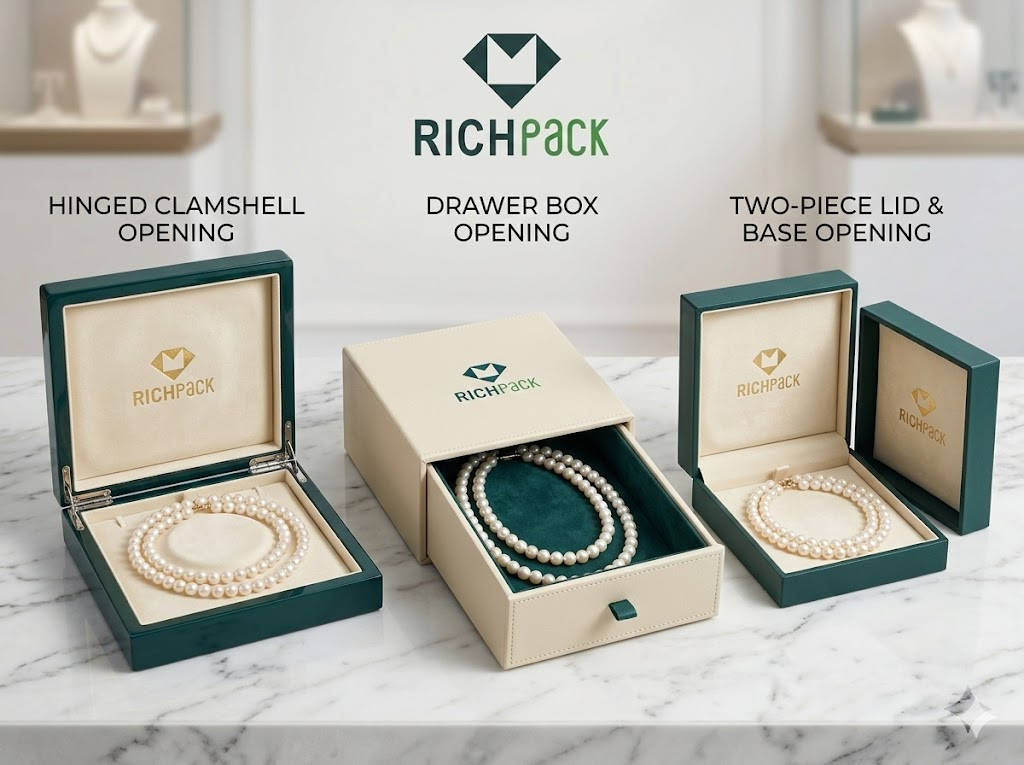
The hinged box is the most common style for selling pearl jewelry in stores. It is made of one piece with a lid that opens on a hinge to show the necklace lying flat on a soft pad. It is very secure during shipping and is ready to be given as a gift without any extra wrapping.
For stores, hinged boxes are great because they can stand upright on a counter with the lid open. This makes it easy for customers to see the pearls. This style is a reliable choice for most retail shops, especially for shorter necklaces that fit well in a compact box.
Drawer boxes make the “unboxing” moment feel more special and slow. The inner part of the box slides out from a hard outer sleeve, usually by pulling a small ribbon tab. This slow reveal makes the jewelry feel more expensive and luxurious without needing extra words or fancy packaging.
This style is best for high-end boutiques where the experience of opening the gift is part of the story. However, drawer boxes cost more to produce than other styles. The fit must also be very precise so that the pearls do not slide around when the drawer is opened or closed.
Pearl folders are thin and flat. They hold the necklace between two soft panels made of materials like leather or suede and close with a snap or a magnet. These are very helpful for long necklaces (20 inches and up) that would be too bulky for a regular hard box.
For brands that sell at trade shows or travel often, these folders are the most practical choice. They are easy to stack, do not weigh much, and can easily have a logo printed on the front. They offer a professional look while taking up very little space.
The classic two-piece box has a separate top and bottom. This is the most affordable option for businesses that need to buy a large number of boxes. They are easy to put together, come in many colors, and are easy to store in a warehouse.
For wholesalers who sell a lot of jewelry, a two-piece box with a soft insert is a smart choice. It keeps costs low while still looking professional. It is also the easiest style to customize quickly with a logo or a printed ribbon, making it a great default for holiday gift programs.
Window boxes have a clear plastic panel in the lid. This allows the customer to see the pearl necklace without having to open the box. These are mostly used in retail stores where the jewelry needs to be visible on a shelf or counter to help make a sale.
When choosing a window box for pearls, you must make sure the clear panel does not touch the surface of the pearls. The insert must hold the necklace low enough so that there is no contact during shipping or display. If designed correctly, a window box is a great way to protect the pearls while still showing them off to buyers.
Picking the right size for your pearl necklace box is more than just a design choice. It is a key part of keeping the jewelry safe and making your brand look professional. A box that is too small can damage the pearls by bending them too much, while a box that is too big can make them slide around and get scratched. By choosing the correct size for each necklace length, you ensure that the product arrives in perfect condition and looks great when the customer opens it.
Choker and collar necklaces are the shortest types of pearl strands. A box with an inside size of about 6 inches by 3 inches by 1.5 inches fits these necklaces well. This size allows the pearls to lie flat with a little extra room at each end.
For these short strands, a hinged box or a small two-piece box is the standard choice. This small size also makes it easy to put the necklace in a gift set with matching earrings or a bracelet. This is a great packaging option for stores to consider.
Princess-length necklaces (17–19 inches) are the most popular size in stores. A medium-sized box—about 8 inches by 4 inches by 2 inches—is the best fit for this length.
Matinee necklaces (20–24 inches) are a bit longer and need a larger box, around 9 inches by 5 inches by 2 inches, or a flat folder. At this length, the fit becomes very important. If the box is even a little too small, the necklace will bend at the clasp. This puts stress on the silk thread and can damage the pearls over time.
Opera-length necklaces (28–36 inches) need a large box that is at least 11 inches by 6 inches by 2 inches. A soft folder made of leather or suede is also a very practical choice for this length. Folders are great because they are not as bulky as a large hard box, but still keep the pearls flat and safe.
Rope-length pearls (36 inches and longer) are usually coiled in a circle rather than laid flat. For these, you should use a deep square or round box with a soft base that supports the pearls without squashing them. Make sure the box is deep enough so the pearls do not press against the lid when it is closed.
If your brand sells many different necklace lengths, you can use adjustable inserts. These allow you to use the same box size for different necklaces, which helps you keep less stock. Elastic tabs are small loops that hold the clasp in place so the necklace does not move.
Groove-channel inserts are also useful for necklaces with pendants. They have a special slot that keeps the chain from tangling while showing off the pendant in the center. These features are common in high-quality single necklace jewelry boxes and are worth asking for when you order custom packaging.
Having the right fit is about more than just looking good; it is about protection.
If a box is too large, the necklace will slide around during shipping. This rubbing can scratch the surface of the pearls. If the box is too tight, it puts too much pressure on the clasp and the silk thread every time you close the lid. Both of these problems can lower the quality of the pearls and hurt your brand.
A good rule is to measure the necklace lying flat and then add 1 to 2 inches of extra space. For the depth, aim for at least 1.5 inches of space inside for a single strand, and at least 2 inches for thicker or multi-strand necklaces.
The outside of your jewelry box is the first thing a customer sees and feels. It protects the necklace during travel and tells the story of your brand before the box is even opened. Choosing the right exterior material is a balance between cost, how long it lasts, and the message you want to send to your buyers. Whether you want a classic look or a modern feel, the right finish helps make your jewelry stand out in a crowded market.
Leatherette—which is a fabric or board coated with a plastic called PU—is a very useful choice for pearl packaging. It is strong, easy to wipe clean, and comes in many different colors. It also works very well when you want to add a logo using heat or pressure.
For brands that want a professional look for a good price, leatherette is the best option. It is the standard material for most wholesale and custom necklace box orders because it stays looking new even after many people touch it in a store. It also looks very clean and high-quality in product photos.
Wooden boxes make a pearl necklace feel like a special treasure that will be kept forever. Because they are heavy and solid, they show that the jewelry inside is high-quality and expensive. This makes them a great choice for very valuable pearls, wedding gifts, or special collections.
The most important thing to remember is the inside of the box. Plain or raw wood is not safe for pearls. Wood contains natural chemicals called tannins that can damage the pearls over time. Also, rough wood can scratch the surface of the gems. You must make sure that any wooden box is fully lined with soft velvet or satin so the pearls never touch the wood directly.
Rigid paperboard is made of thick, hard cardboard covered in decorative paper. This style allows you to customize your brand look for a lower price. You can choose from many finishes, such as shiny (gloss), dull (matte), or even paper that feels soft to the touch.
This is also the best format if you like to change your colors for different seasons or special holidays. You can change the paper on the outside without having to change the whole box design. For many brands, this is the most affordable way to create a beautiful and unique pearl necklace gift box.
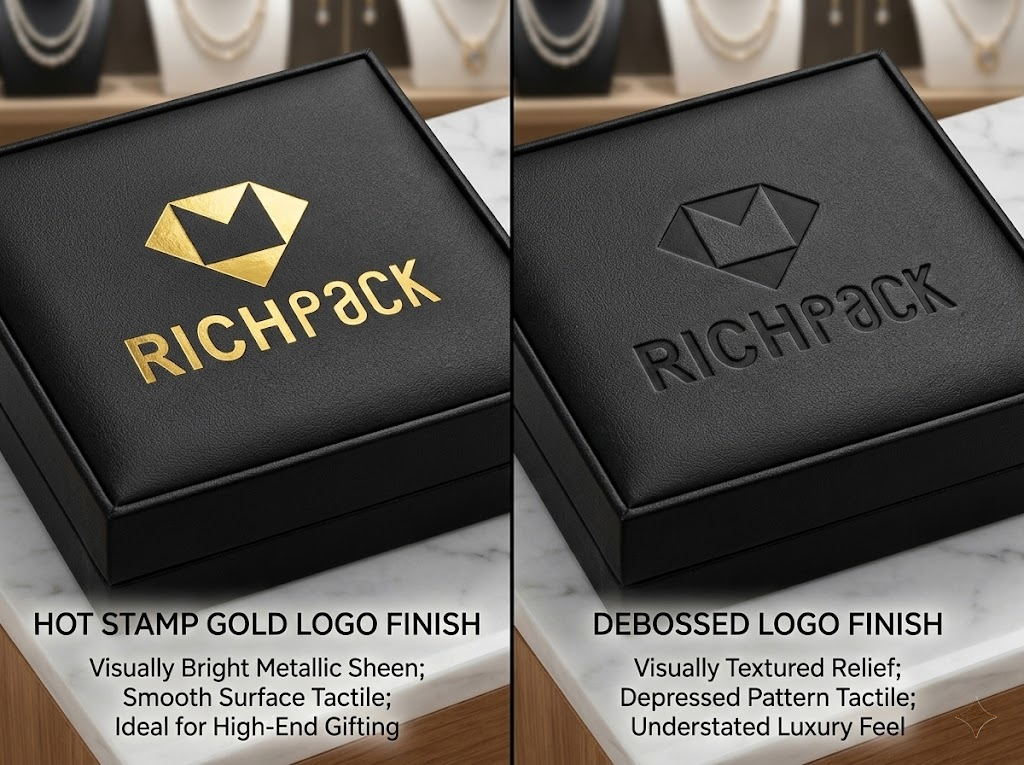
The way you put your logo on the box is what makes it a true brand asset.
Hot foil stamping uses heat to press a shiny metal layer—like gold, silver, or rose gold—onto the box. It is the most common way to brand jewelry boxes because it is durable and looks very sharp.
Embossing and debossing create a logo that is either raised or pressed down into the material. This creates a fancy look that people can feel with their fingers. It looks very high-end, even without using any colors.
Spot UV adds a shiny, clear coat to a specific part of a dull surface. This makes your logo or a pattern pop out. It is a great choice for modern brands that want a clean and simple look.
Many businesses now look for packaging that is better for the environment. This is especially important for brands selling in North America and Europe.
FSC-certified paper is a popular choice. This means the paper comes from forests that are managed responsibly. It is easy to recycle and can be used with inks made from soy. Recycled hardboard is another great option. It is just as strong as regular cardboard but is made from recycled materials. Before you tell your customers that your boxes are eco-friendly, always check with your supplier to make sure they have the right certifications.
Custom boxes are a great way to grow your business. They help customers remember your brand and can even save you money when you buy a lot at once. By choosing your own colors and materials, you make sure your pearls are safe, and your brand looks its best. Custom packaging is a smart choice that shows your customers you care about quality.
If you only need a few boxes (fewer than 150), it is usually best to buy standard boxes that are already made. This is because making a custom box has extra costs for design and setup.
However, once you are selling 300 boxes or more each season, custom packaging is a smart choice. If you order 500 or more, the price for each box is often lower than buying standard ones. Plus, your brand will look more professional. A simple way to start is by putting your logo on a standard box. Many suppliers will do this if you order at least 100 pieces.
When you talk to a supplier about making a custom necklace box, you will need to make six main choices:
Getting these choices right at the start helps the process go faster and keeps everything on schedule.
MOQ stands for “Minimum Order Quantity.” This is the smallest number of boxes you can order at one time. For a simple logo on a standard box, the MOQ is usually 100 pieces. For a box that is completely custom, you will likely need to order 300 to 500 pieces. Very fancy boxes may require 500 to 1,000 pieces.
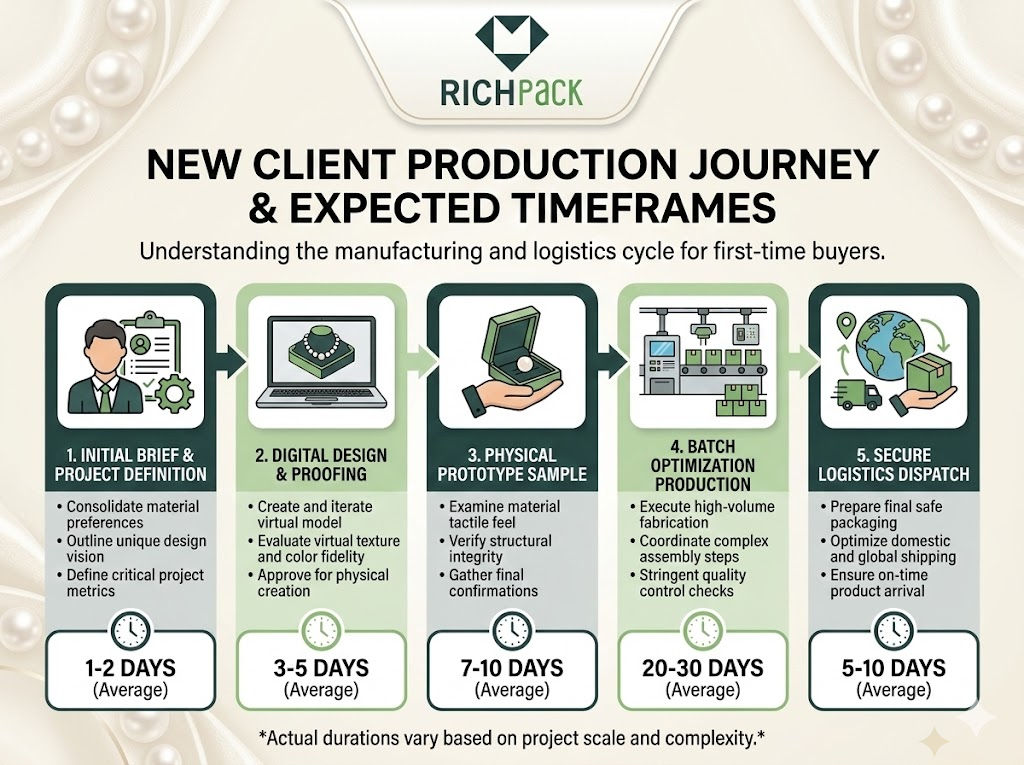
It takes time to make custom boxes. Usually, it takes 15 to 20 business days to make the boxes after you approve a sample. Getting the first sample takes about 5 to 7 business days. You also need to add time for shipping. It is best to start the process at least 8 weeks before you need the boxes.
The cost of your packaging depends on how many you buy and what they are made of. Here is a general guide to prices:
| Packaging Type | MOQ | Estimated Unit Cost |
| Stock velvet two-piece (no custom) | Any | $0.50 – $1.50 |
| Stock box + hot stamp logo | 100 pcs | $1.20 – $2.50 |
| Full custom leatherette + foil | 300–500 pcs | $1.50 – $3.50 |
| Custom luxury rigid with specialty finish | 500–1,000 pcs | $3.50 – $8.00+ |
Prices for materials are steady in 2025, but shipping costs can change. It is a good idea to add 10 to 15 percent to your budget for shipping and taxes.
Before you place a large order, ask your supplier these six questions:
A good supplier will be able to answer all of these questions clearly. If they seem unsure, you might want to look for a different company.
Avoiding mistakes in packaging is a key part of running a successful jewelry business. If you pick the wrong box, you risk damaging your products and losing customers. By knowing what to look for, you can protect your pearls and make sure your brand looks professional every time. Taking the time to choose the right materials and size will save your business money and keep your customers happy.
Getting the fit right is the best way to prevent damage during shipping. If a box is too big, the pearls will slide around. This rubbing creates tiny scratches that make the pearls look dull and hazy over time. If the box is too tight, it puts too much pressure on the clasp and the silk thread every time you close the lid. This can cause the necklace to break or wear out faster.
Always measure the necklace while it is lying flat, and add 1 to 2 inches of extra space at the ends. If you are selling thick or multi-strand necklaces, make sure the box is deep enough so the lid does not press down on the gems.
A beautiful box is great, but it does not matter if the inside is not safe for pearls. This is a common mistake for new buyers who only look at how the box looks on the outside.
You should always check the lining material first. Before you buy a large order, ask for a physical sample you can touch. You cannot tell how soft a material is just by looking at a photo or a digital design. Testing a sample is the only way to be sure the box will protect the pearls’ delicate nacre.
Pearls are natural and need a small amount of air to stay healthy. If they are kept in a completely airtight box for a long time, they can dry out and crack.
To prevent this, choose a box that closes firmly but still lets a little bit of air in. Magnetic and hinged boxes are usually the best choices. You should avoid vacuum-sealed bags or any container that blocks all airflow entirely during storage.
Never place a big order based on just a picture or a digital file. This is a mistake that can cost your business a lot of money.
Colors on a computer screen often look different from how they do in real life. Also, you need to feel the softness of the lining and check how well the lid closes with your own hands. Getting a sample first helps you find problems before you spend money on hundreds of boxes. Make sure you include time for a sample in your schedule as a step you never skip.
For a jewelry brand, packaging is a powerful tool to keep customers coming back. When a customer has a great “unboxing” experience, they are more likely to leave a positive review and tell their friends about your brand.
This means the money you spend on a high-quality box is an investment in your future sales. Brands that treat packaging as a way to impress customers usually do much better than those that only try to find the cheapest option. A great pearl necklace gift box helps turn a one-time buyer into a loyal customer.
Velvet and satin are the two best choices. Velvet is great for most gifts because it is soft and retains its shape even after repeated use. Satin is perfect for expensive or wedding jewelry because it looks very fancy and shiny. Both materials are softer than the pearls themselves, so they will not cause scratches. You should avoid plain plastic, unlined cardboard, and rough synthetic fabrics.
You can use a regular box only if the inside is very soft. Most standard jewelry boxes are made for hard metals and diamonds, so the materials might be too rough for pearls. If the box is lined with velvet or satin, it is safe. If the interior has no lining or if it uses rough foam or textured fabric, it is not a good choice for storing pearls for a long time.
The size you need depends on how long the necklace is. Short necklaces (14–16 inches) fit in a small box about 6 inches by 3 inches by 1.5 inches. Standard necklaces (17–19 inches) need a medium box about 8 inches by 4 inches by 2 inches. Longer necklaces (20–24 inches) need a larger box, about 9 inches by 5 inches by 2 inches. For very long necklaces (28 inches or more), use a large box or a flat folder. Always measure the necklace lying flat before you pick a box size.
To order custom boxes, you need to decide on six things: the outside material, the inside lining, the box style, the size, the logo finish, and how many you want. If you just want your logo on a standard box style, you usually have to order at least 100 pieces. For a completely new box design, you will likely need to order 300 to 500 pieces. The whole process usually takes 4 to 8 weeks from the first step to delivery.
Wooden boxes are safe as long as the inside is fully lined with velvet or satin. The pearls should never touch the bare wood. This is because plain or untreated wood has natural chemicals called tannins that can damage the surface of the pearls over time. Also, rough wood can scratch the gems. Always check with your supplier to make sure the inside of the wooden box is completely covered with soft material.
The best way to stop tangling is to use the right insert. A flat, soft board with small slots for the clasp will keep the necklace from moving. For necklaces with pendants, use an insert with a special groove to keep the chain separate. Avoid boxes that are too big or have loose cotton inside, as these allow the necklace to move around too much and get tangled.
It usually takes 4 to 8 weeks from the time you start until your boxes arrive. It takes about 5 to 7 business days to make a sample and 15 to 20 business days to make all the boxes after you approve the sample. Shipping takes another 1 to 2 weeks, depending on where you are. If you need them faster, some suppliers can rush the order for an extra 20 to 30 percent cost. It is best to plan so you do not have to rush.
The most popular way to add a logo is hot foil stamping. This uses heat to press a shiny metal logo—like gold, silver, or rose gold—onto the box. You can also use embossing or debossing to create a logo you can feel. Another option is Spot UV, which adds a shiny layer to a dull surface. You will need to give your supplier a high-quality digital file of your logo. For the inside, you can also add your brand name to a piece of tissue paper or a small card.
Choosing the right packaging is a key step in building a successful jewelry brand. It is not just about finding a container; it is about protecting your investment and creating a lasting impression on your customers. By following the tips in this guide, you can find a box that keeps your pearls safe and helps your business grow.
The best pearl necklace box succeeds by focusing on three main areas:
When you are ready to choose your packaging, start with the inside lining. This is the most important part because it touches the pearls directly. Next, make sure the box is the right size for the necklace length. Finally, pick an outside material and a logo style that matches your brand and the price of your jewelry. If you are ordering custom boxes, always ask for a physical sample before you pay for a large order.
Are you ready to find packaging that protects your pearls and builds your brand at the same time? [Explore our custom pearl necklace box options] or [get in touch with our packaging team] to talk about what your collection needs.

Just submit your email to get exclusive offers (reply within 12 hours)





 PREV
PREV