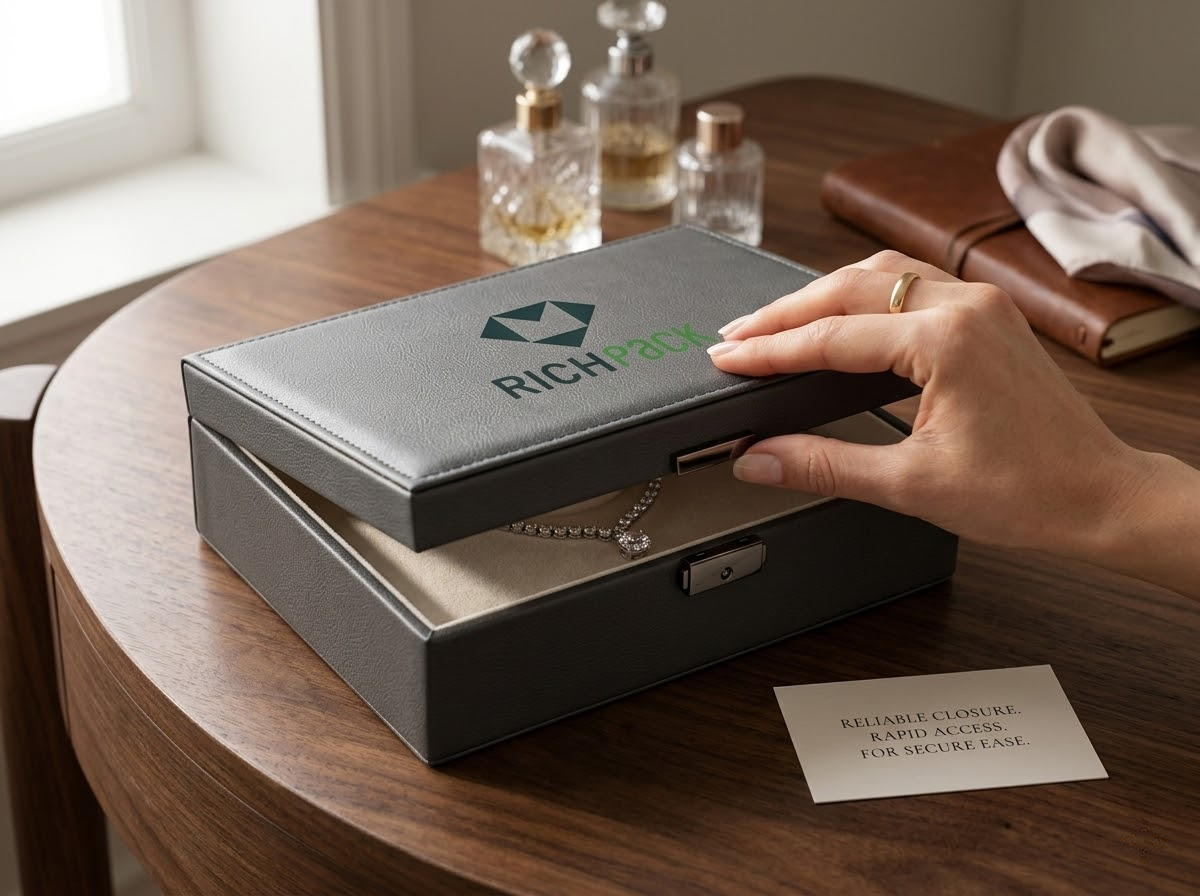


If you are choosing packaging for fine jewelry, a Magnetic Jewelry Box makes the most sense when you need premium presentation, stronger perceived value, and a better unboxing experience in one format. It is especially useful for gift-ready products, boutique retail displays, ecommerce orders that still need a luxury feel, and branded collections that need a cleaner, more polished closure than a standard paper box.
In my experience, this box style works best when packaging has to do more than protect the item. It needs to help sell it.
In this guide, you will learn when a magnetic jewelry box is the right fit, when another structure may work better, how it compares with hinge lid and drawer boxes, and what to check before ordering a custom magnetic jewelry box or placing a wholesale order for magnetic jewelry boxes.
A magnetic-closure jewelry box is not the cheapest option, but it is often the smartest when presentation affects how customers judge your product. The hidden magnets, rigid structure, and clean flap give the box a stronger luxury signal than a basic folding carton.
That matters because packaging is often the first real brand touchpoint. Shopify notes that packaging and unboxing are part of the product experience, not just a shipping layer. For jewelry brands, that point is even more important because the product already carries emotional and gift value.
Use a Magnetic Jewelry Box when the packaging needs to make the jewelry feel more premium the moment the customer touches it. This is common with engagement jewelry, fine jewelry gifts, boutique collections, and limited launches.
A magnetic flap creates a smooth snap-close action that feels more finished than a tuck flap or a simple lid-and-base carton. East Color points out that magnetic closures are often chosen for their sleek look and premium opening feel. That detail matters when your customer is paying for emotion, not just material.
Use this box style when:
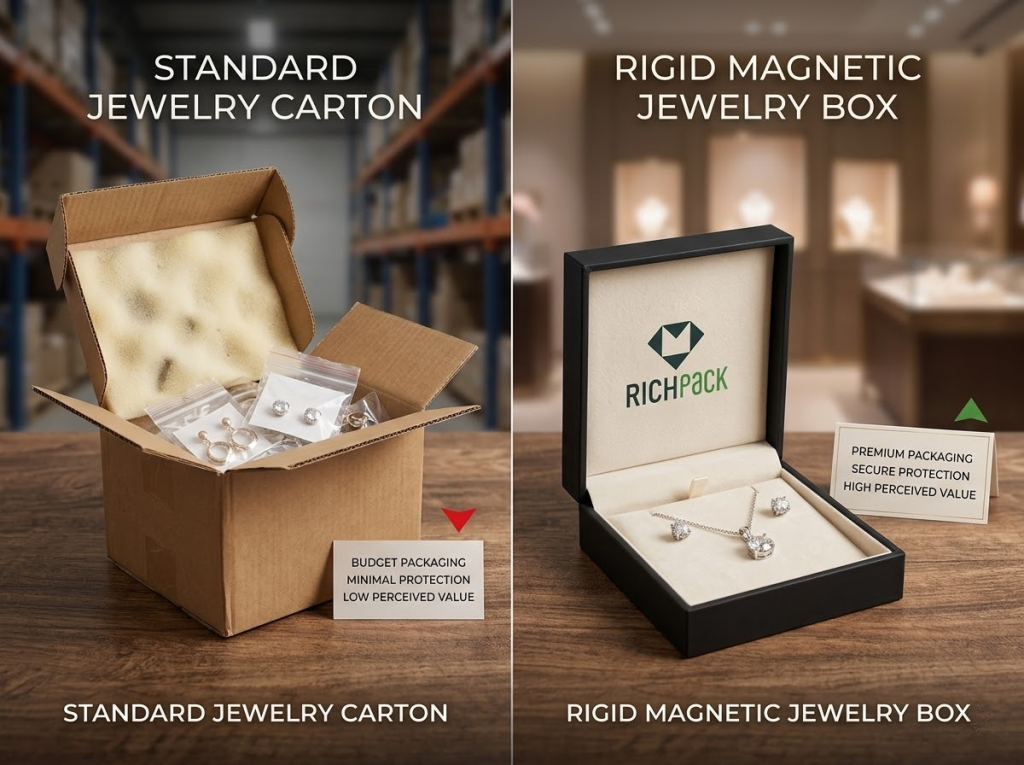
Choose magnetic gift boxes when opening the package is part of the story you want customers to remember. That is especially true for DTC brands, corporate gifts, seasonal launches, influencer kits, and keepsake-style packaging.
Shopify also points out that unboxing content keeps drawing massive attention online. In 2023, YouTube videos with unboxing in the title received more than 25 billion views. That does not mean every brand needs viral packaging. It does mean the opening moment now has clear marketing value.
A magnetic jewelry box helps because it adds three things at once:
In my experience, brands often overlook this. They spend heavily on product design, then put the piece in packaging that feels flat. A strong unboxing structure fixes that gap fast.
A jewelry packaging magnet box is ideal when the item requires extra internal support. Necklaces, pendants, bracelets, watches, and multi-piece sets often need more than just a cotton-filled box.
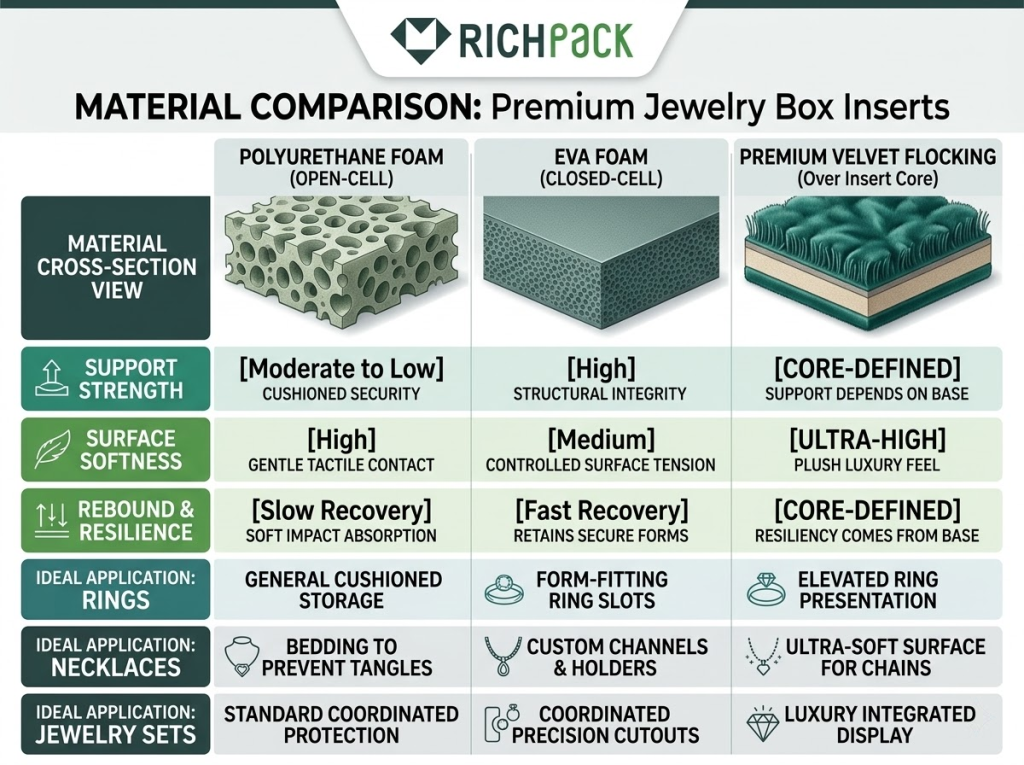
Rigid magnetic boxes work well with inserts such as foam, EVA, velvet, satin, and paperboard cards. This gives you more control over how the item sits, how much it moves, and how it looks when opened.
This is important for three reasons:
From a customer communication perspective, visuals are key. Foam, EVA, and velvet might seem similar in a sales conversation, but they perform very differently once you compare their structure, rebound, surface feel, and edge finish side by side.
If the jewelry is meant to be gifted, a magnetic box usually makes more sense than a plain folding box. That includes holiday gifts, wedding party gifts, anniversary jewelry, brand gifting, and client appreciation kits.
Gift buyers often judge the full package, not just the item inside. A rigid magnetic box feels more complete because it combines protection, reveal, and keepsake value in one piece. Many customers reuse these boxes later for storage, which extends your brand exposure long after the sale.
That is one reason magnetic gift boxes keep showing up across jewelry, beauty, and premium retail. They make the product feel ready to give without needing extra wrapping.
A luxury magnetic jewelry box works very well in boutiques and premium counters because it keeps its shape, stacks more neatly than softer folding styles, and looks cleaner during display.
This matters in retail because customers are often judging quality before they ever touch the jewelry. A rigid magnetic structure signals order, consistency, and control. That supports the idea that the product inside belongs in a higher-value category.
Use this structure when:
A custom magnetic jewelry box makes sense when branding needs to feel integrated, not added on. Magnetic structures work especially well with foil stamping, embossing, debossing, matte wrap paper, soft-touch lamination, and spot UV.
That gives you room to create a box that looks branded before the customer even sees the logo up close. A cardboard magnetic jewelry box with a logo can also balance premium appearance with better budget control than some heavier luxury formats.
For branded projects, the real value is not just decoration. It is consistency. The same structure can carry your logo system, color palette, insert logic, and finish language across multiple collections.
A magnetic box is strong, but it is not the right answer for every SKU. Saying that clearly makes the buying decision better.
In practice, the best packaging choice depends on unit economics, shipping constraints, product type, and brand strategy. Sometimes another format will do the job with less cost or better functionality.
If your main goal is to reduce packaging spend, a magnetic box may be too much. This is often true for low-margin collections, entry-level items, or campaigns where packaging has a limited role in conversion.
A Magnetic Jewelry Box usually costs more than a standard carton because of the rigid board, magnetic components, more involved assembly, and higher finishing expectations. If the customer is not paying for a premium experience, that extra cost may not return enough value.
Use a simpler box style when:
Some magnetic boxes are bulkier than drawer boxes or simpler folding structures. If shipping efficiency is your top priority, this matters.
That does not mean you must avoid them. It means you need to compare standard rigid magnetic boxes with collapsible magnetic jewelry box formats and other compact alternatives. Collapsible designs can reduce storage and freight pressure, but they need careful review for setup time, strength, and finish quality.
For high-volume ecommerce, I would always compare:
If your brand language is classic, heritage-led, or formal, a hinge lid box may fit better than a magnetic flap. East Color makes this distinction clearly. Hinge boxes often feel more traditional and ceremonial, while magnetic closures feel more modern and sleek.
That difference matters more than many teams expect. A modern closure on a heritage-inspired collection can create a subtle mismatch.
Use a hinge style instead when you want:
Some magnetic designs do not open fully flat. East Color notes that the opening angle can vary depending on the structure and magnet placement. That can be a small issue for some applications, but it becomes important when display, photography, or product access depends on a wider opening range.
If your team needs the lid to stay fully open during presentation, product fitting, or in-store handling, test this early. A drawer box or a well-made hinge lid box may solve that problem more cleanly.
A magnetic box is not automatically eco-friendly just because it uses paper-based materials. That claim needs proof.
If sustainability is central to your brand, specify what supports it. FSC explains that certification is tied to responsible forest management and traceability. That gives you a real sourcing standard to point to. You can also look at recycled board content, reusable structure, lighter material choices, and design choices that support easier recycling.
Do not say the box is sustainable unless you can explain why. Smart buyers will ask.
Not every jewelry type needs the same structure. The best Magnetic Jewelry Box projects are the ones that match the jewelry category to the right insert, depth, and opening experience.
Rings and earrings work well in magnetic boxes when the goal is a more premium reveal than a basic insert carton can provide. This is a strong option for branded gifting, bridal jewelry, and boutique retail.
The key is insert precision. A ring roll or earring card has to hold the piece firmly so the box does not feel oversized or empty.
Necklaces and pendants are one of the strongest use cases for a magnetic box because they often need more structure. A simple carton may not hold a necklace neatly, especially when tangling, chain movement, and display angle matter.
Use this format when you need:
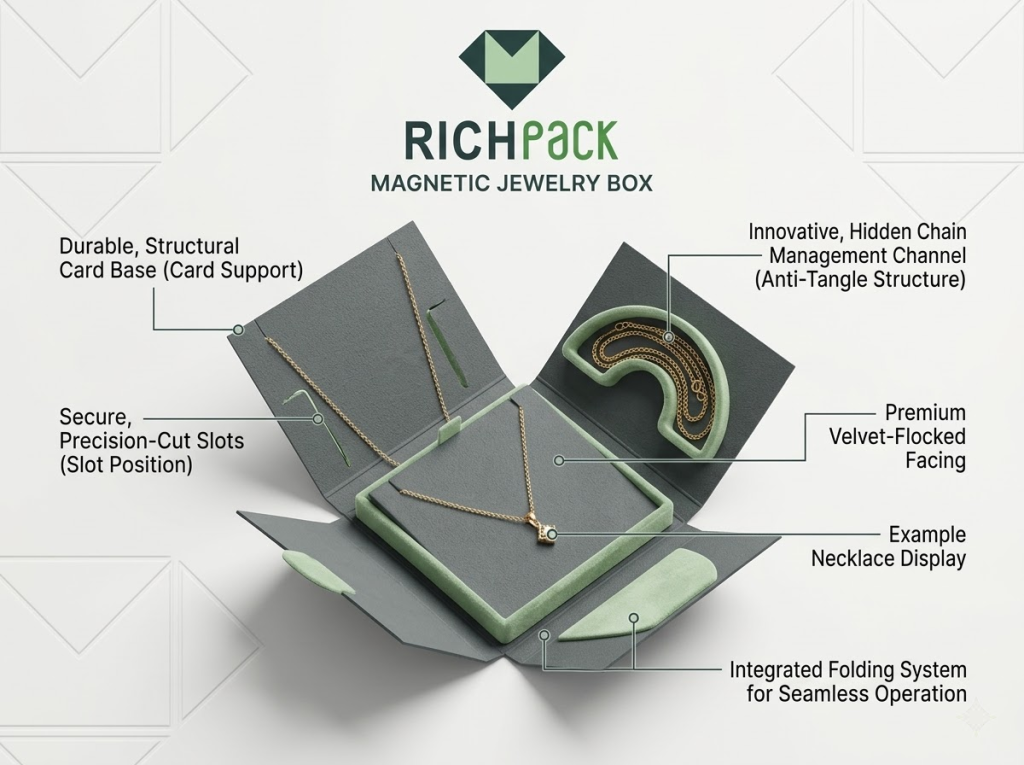
Bracelets and bangles benefit from rigid support because they can shift inside loose packaging. A magnetic box makes it easier to build an insert that keeps shape and spacing under control.
This is useful for charm bracelets, cuffs, premium bangles, and gift sets where the item should sit centered and stable at first open.
Jewelry sets are one of the clearest reasons to use magnetic gift boxes. When a box needs to hold a necklace, earrings, bracelet, or matching pieces together, the magnetic format gives you enough structure to create compartments without losing presentation value.
It also supports a more gift-ready feel. That matters for holiday packaging, bridal gifting, and corporate gift programs.
Watches, cufflinks, and premium accessories also fit this box type well. These products often need a more substantial structure to match their price point.
A rigid magnetic jewelry box gives you room for stronger cushioning, layered inserts, and a more upscale reveal. That helps the packaging keep up with the product.
This is where many packaging decisions get easier. Instead of asking which box is best in general, ask which structure fits your product, margin, and brand story best.
Choose a magnetic box when you want a cleaner, more modern look. Choose a hinge lid box when you want a more classic or heirloom feel.
Magnetic boxes usually win on:
Hinge boxes usually win on:
Drawer boxes are strong when you want a pull-out reveal, better flat stacking, and a format that can feel compact. Magnetic boxes are stronger when you want a flap opening and a more immediate premium closure cue.
A drawer structure often works well for slim jewelry and tighter storage logic. A magnetic structure works better when the lid itself is part of the luxury experience.
A standard rigid box without magnets can still look premium, but it does not create the same closing feel or integrated flap design. If your budget is tighter, that simpler structure may be enough.
Use a magnetic version when the closure itself adds value. Use a standard rigid box when shape, protection, and premium feel matter, but the magnet is not essential.
A collapsible magnetic box can help when warehouse space and shipping efficiency are major concerns. That said, it must still feel premium after assembly.
For some brands, this is the best middle path. You keep the magnetic opening while reducing storage pressure. For others, a fully rigid box still looks more refined and stable.
| Box Type | Best For | Main Strength | Main Limitation |
| Magnetic Jewelry Box | Premium gifting, retail display, branded unboxing | Modern luxury feel and strong presentation | Higher unit cost |
| Hinge Lid Box | Heritage brands, keepsake feel | Classic presentation | Less modern look in many designs |
| Drawer Box | Slim jewelry, compact storage, layered reveal | Good structure and efficient format | Weaker premium closure cue |
| Standard Rigid Box | Mid-tier premium packaging | Strong protection with a simpler build | Less distinctive opening experience |
| Collapsible Magnetic Box | Projects needing a lower storage footprint | Better freight and storage efficiency | Must be checked for the final premium fee |
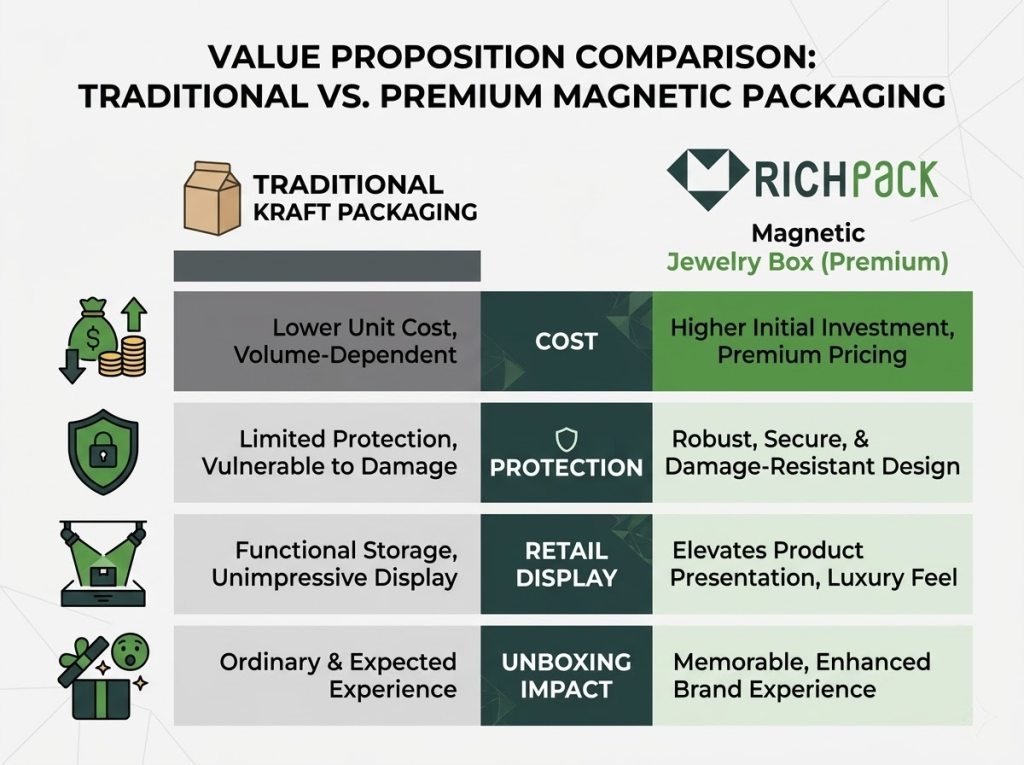
A custom magnetic jewelry box only works when the structure and insert are designed around the jewelry first. Too many teams start with the outer look and fix the fit later. That usually leads to weak inserts, awkward proportions, or wasted material.
Measure the jewelry before you choose the box. That includes the product size, protected size, and displayed size.
For example, a pendant may need more depth than expected because of the chain fold and card position. A ring box may need less outer volume but more insert precision. Start with the item, then build the structure around it.
The closure should feel secure, but it should not fight the user. If the magnet is too weak, the box feels cheap. If it is too strong, the opening action feels awkward and can stress the wrap or flap.
In practice, premium jewelry packaging projects often perform best when the box structure uses 1200gsm to 1500gsm high-density greyboard for the main shell, especially for mid-size and higher-end rigid magnetic boxes. For the closure, many suppliers prefer N35 to N52-grade magnets depending on box size, flap length, board thickness, and the opening force the brand wants to create. In higher-end sampling, teams often move toward the stronger end of that range to get a cleaner snap and more confident close, but the final choice still needs testing against the actual box dimensions and wrap material.
That said, magnet grade alone is never the whole answer. Board thickness, magnet size, flap overlap, paper tension, and insert weight all affect how the box feels in the hand. A good sample stage should test closure feel, flap alignment, repeat opening performance, and whether the snap still feels crisp after repeated use.
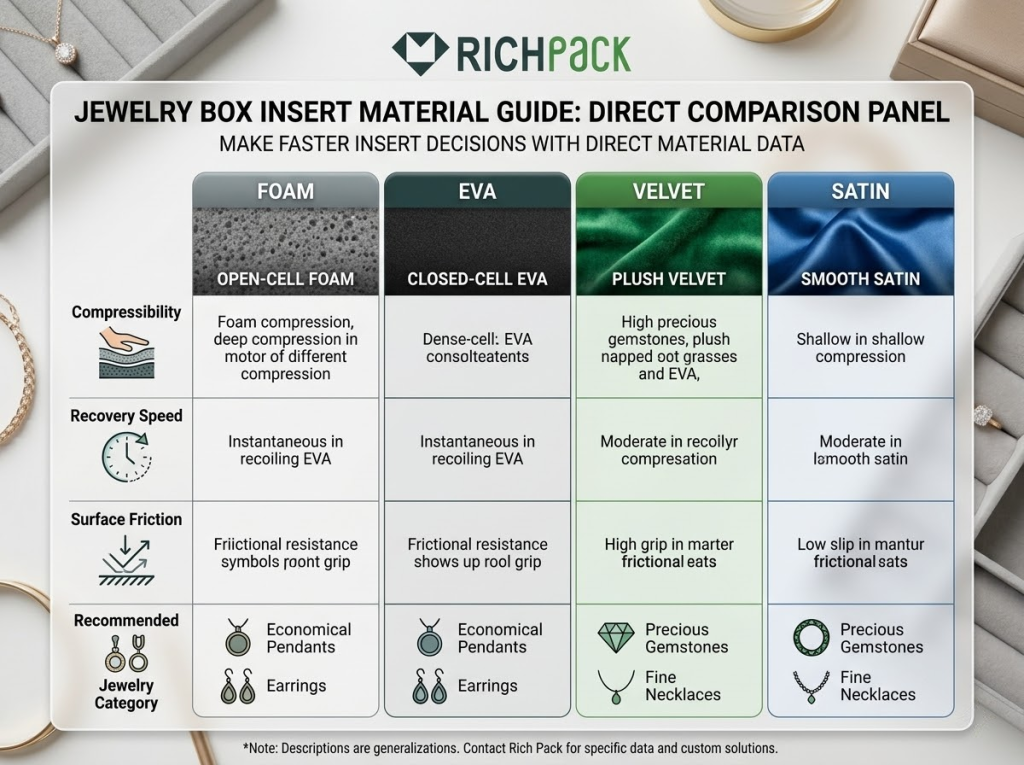
Insert choice changes both protection and presentation. In practice, the best option depends on the product category.
Here is a quick guide:
Choose the insert based on movement control, surface sensitivity, and the look you want at first open.
Do not overload the box with effects. Use finishes that match the brand.
For a modern luxury line, I usually prefer:
For a more playful or gifting-led line, spot UV, brighter wraps, or ribbon details can work better. The key is consistency. Your finish stack should support the brand, not compete with it.
Retail, ecommerce, and gifting do not ask for the same box.
For retail, focus on shelf appeal, logo visibility, and consistent structure across SKUs.
For e-commerce, focus on insert stability, transit protection, and master carton efficiency.
For gifting, focus on opening feel, keepsake value, and emotional presentation.
In my experience, the strongest packaging programs are built around the sales channel first, not the trend first.
If sustainability matters to your buyers, write it into the specification sheet from the start.
That can include:
This is a better approach than adding a vague eco claim at the end of the project.
A wholesale order for magnetic jewelry boxes is not just about price. It is about fit, consistency, and whether the supplier can support your brand standards at scale.
Start with the minimum order quantity. A box may look perfect, but if the MOQ is too high for your launch plan, it is the wrong structure for now.
Ask whether MOQs change based on size, print method, insert type, and finish level.
Always ask for a sample before mass production. This is where you test proportion, closure feel, insert fit, print quality, and surface finish.
A sample often reveals issues that a flat dieline never shows.
Ask how the insert will hold the jewelry during movement, handling, and shipping. This is critical for necklaces, pendants, bracelets, and multi-piece sets.
You want to know:
This is where many custom magnetic jewelry box projects separate from generic ones. Ask about:
The goal is not to use every option. It is important to know which ones fit your brand and budget.
Lead time matters, but so does consistency. A supplier should be able to explain how they manage sampling, color approval, production checks, and final inspection.
That matters even more when the order includes multiple SKUs or repeated runs over time.
This is where a one-stop partner has a real edge. If the supplier can support structure design, insert development, branding finishes, sampling, production, and delivery together, the project usually moves faster and with fewer mistakes.
For jewelry brands that want packaging to support sales and brand image, that kind of development support is often worth more than chasing the absolute lowest quote.
Yes, they are often a strong fit for luxury and premium brands because they combine rigid protection, clean structure, and a more refined opening experience. They work especially well when packaging needs to increase perceived value and support a stronger brand image.
They can be, but shipping safety depends on the full packaging system, not the magnet alone. The box structure, outer size, insert design, and master carton protection all matter. For e-commerce, always test movement and pressure before placing a large order.
Sometimes, but not by default. A magnetic box is more credible as a sustainable option when it uses FSC-certified paper, recycled board, efficient sizing, and a reusable structure. Avoid broad eco claims unless the material spec supports them.
The best insert depends on the jewelry. Foam works well for many standard projects. EVA offers a stronger structure. Velvet gives a softer, premium look. The right choice should be based on product protection, fit, and presentation angle.
Sometimes, yes. It depends on the supplier, box size, finishing method, and insert complexity. Some manufacturers support lower MOQs for sampling or smaller launches, but custom structures and premium finishes usually raise the minimum.
A Magnetic Jewelry Box is the right choice when your packaging needs to protect the jewelry, strengthen brand perception, and create a better opening experience at the same time. It is most effective for premium gifting, branded retail, elevated ecommerce, and custom packaging programs where presentation directly supports sales.
If you are planning a new launch or upgrading an existing line, compare your product type, price point, channel, and insert needs first. That is the fastest way to tell whether a standard box is enough or whether a custom magnetic jewelry box will give your brand a clearer edge.

Just submit your email to get exclusive offers (reply within 12 hours)





 PREV
PREV