

 PREV
PREV

10 Eco-Friendly Cosmetics Packaging Ideas to Inspire Sustainable Beauty Brands in 2025
2025-07-13
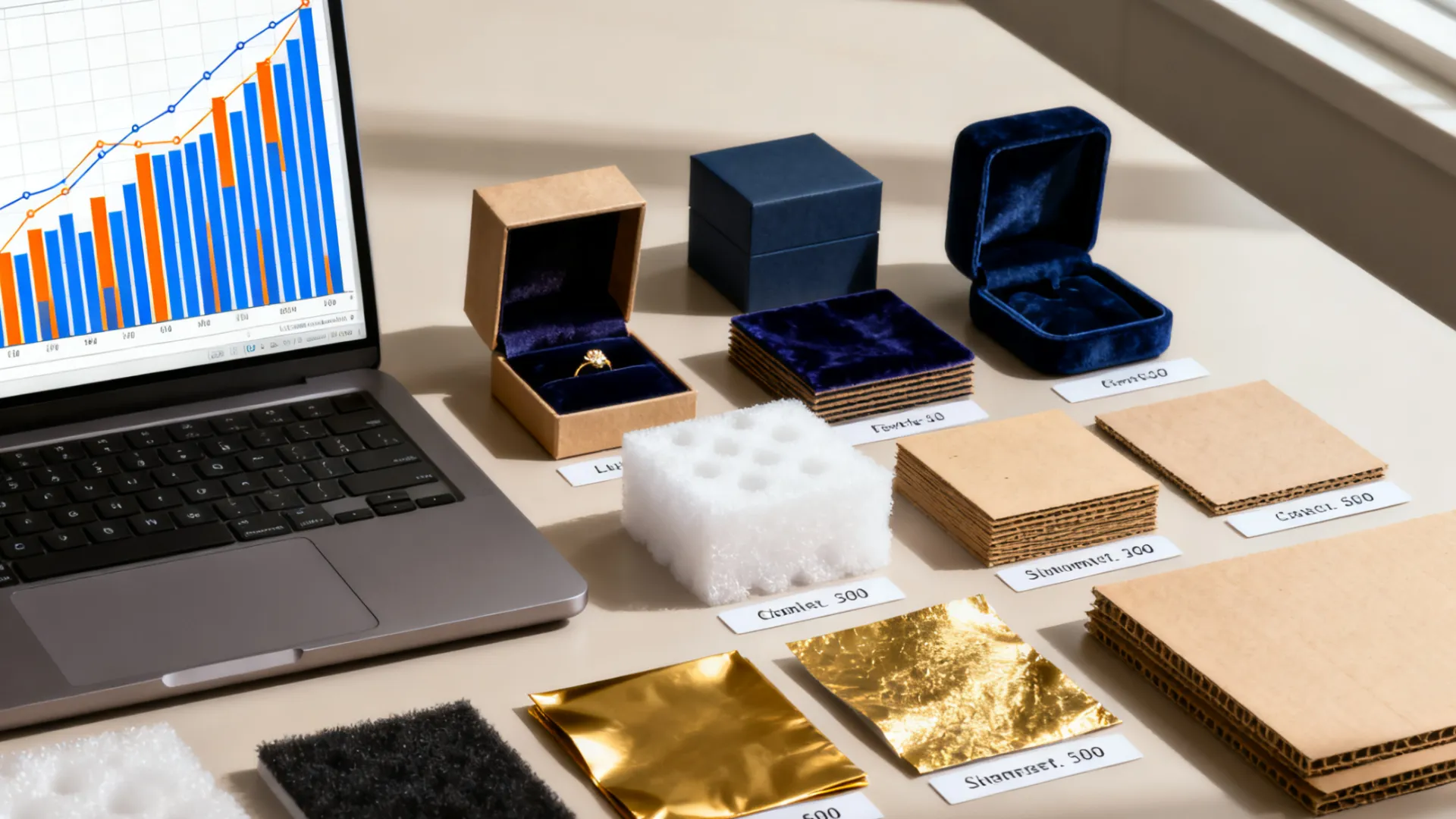


The wrapped plastic base jewellery box merges a rigid injection-molded frame with a seamless fabric exterior. Yet, the true difference between a “luxury feel” and a “cheap knockoff” lies not in the fabric, but in the engineering precision hidden underneath.
This guide takes you onto the workshop floor to decode the complete manufacturing process—from HIPS 475 selection to 0.1mm mold tolerances—equipping you with the insider knowledge to look beyond the surface and identify true quality.
When we talk about high-end jewellery boxes, “plastic” may not be the first thing that comes to your mind. But the industry insider secret is that the core of many of the most durable luxury packaging with consistent texture is exactly the precision-manufactured plastic base, or plastic blank.
The skeleton of such a box is an injection-molded plastic base. Its “skin” is high-grade PU leather, special paper or flannelette, which fits perfectly with the skeleton through precision wrapping technology. This structure provides the sturdiness of a wooden box, while also having extremely high design flexibility and consistency— key advantages for custom jewelry packaging.
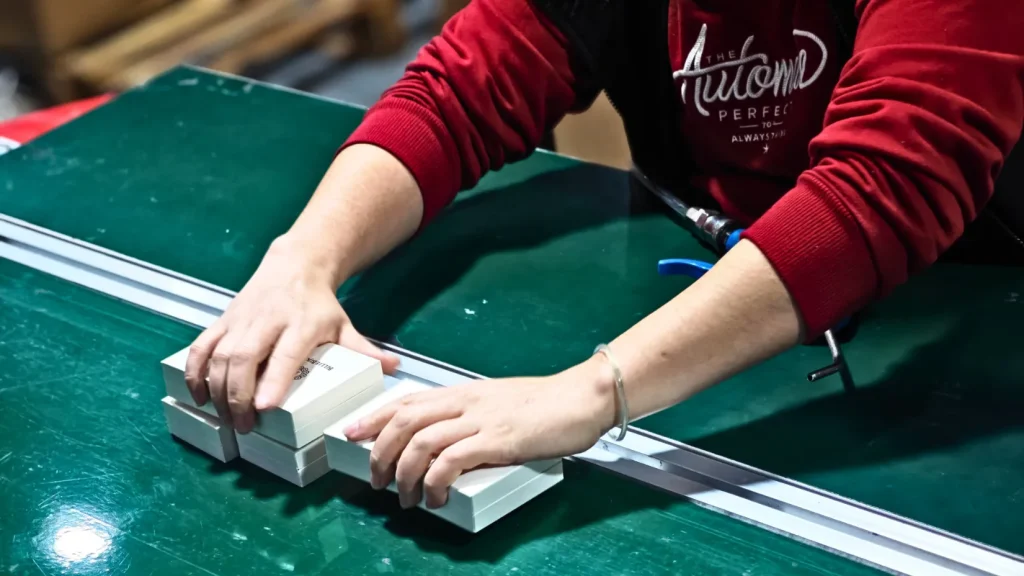
In high-end manufacturing, plastic is not a synonym for cheapness. On the contrary, although it is not as noble as raw materials for jewelry boxes such as velvet and wood, it is the foundation for shaping the delicacy of jewelry boxes. With plastic bases, we can control dimensional tolerances to the sub-millimeter level using precision molds worth hundreds of thousands of yuan. This is something hand-made paper boxes or natural wood can never match. This precision lays the foundation for perfect gaps, smooth opening and closing, and consistent texture.
The core structure revealed in this article is the hinged type. Unlike separate top and bottom lids, the hinged structure has extremely high requirements for the dimensional precision of the base. The upper and lower lids must align perfectly to achieve that silent, smooth opening experience with a slight damping feel.
A perfect box starts with two key elements: the right materials and flawless molds. A mistake at this step will ruin all subsequent efforts. To truly master the technical requirements, we recommend Mastering Jewelry Packaging Materials: A Comprehensive Guide.
80% of our regular plastic boxes rely on HIPS, or High Impact Polystyrene, especially the 475 grade. Why? First, it has balanced toughness. The plastic blanks are not easy to crack and can withstand transportation jolts. The toughness of HIPS 475 is crucial for meeting international shipping standards, a common issue discussed in the Top 10 Most Durable Jewelry Packaging Materials for Shipping. Second, it has excellent adhesive adherence. This means the glue can firmly stick to its surface, preventing blistering or peeling when wrapping PU leather later. We insist on using first-class new materials, because impurities in recycled materials will cause black spots on the plastic blanks. Even after wrapping, these spots cannot be hidden.
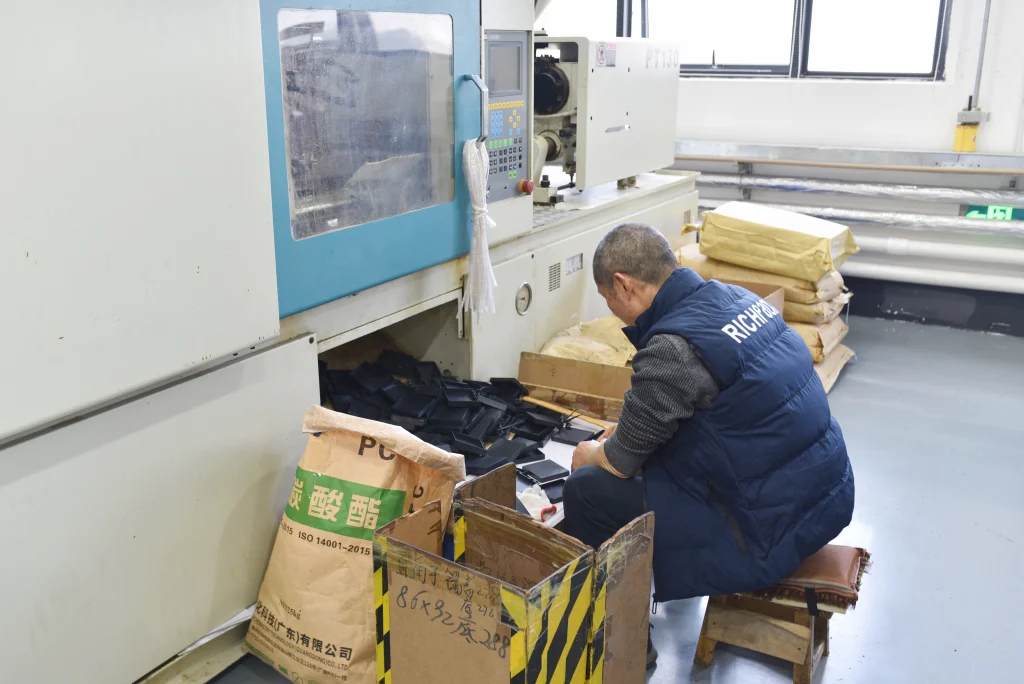
If customers pursue ultimate environmental protection or a high-end feel, we will recommend PET. It is hard and very eco-friendly. But it is a delicate material that absorbs moisture easily. Before injection molding, PET pellets must be dried at 80 – 95℃ for a full 4 hours. Even one minute less can leave bubbles in the plastic blanks and ruin the entire batch.
The mold is the lifeline of the jewellery box —especially for hinged box manufacturing. A good set of molds costs a lot, and its precision determines everything. We require the surface roughness of the mold cavity to reach Ra 0.8μm, which is almost like a mirror. The level of complexity in manufacturing a precision hinged box is detailed in our guide.
The mold is the lifeline of the jewellery box. A good set of molds determines everything.
Why We Demand Ra 0.8μm (Mirror Finish)? Standard molds often have a roughness of Ra 3.2μm, which leaves microscopic lines on the plastic. We polish our mold cavities to Ra 0.8μm.
The Benefit: A mirror-like plastic surface ensures the glue spreads evenly (0.1mm thickness), completely eliminating the risk of “bubbling” or “orange peel” effects on the final leather wrapping.
We strictly control the wall thickness between 1.2mm and 2mm. If it is too thin, the box will be flimsy and look cheap. If it is too thick, the surface will shrink and sink when cooling. No matter how thick the wrapping material is, it cannot cover this flaw. Designers often prefer small R-corners, but this complicates manufacturing by hindering plastic flow and tearing wrapping material. To prevent insufficient filling and material failure, we consult with designers to ensure R-corners are at least R1.5. This aligns with standard DFM guidelines requiring radius at least 0.5 times * wall thickness, striking the perfect balance between aesthetics and craftsmanship.
With the blueprint in place, we enter the workshop. Turning plastic pellets into plastic blanks all depends on precise temperature and time control.
The barrel of the injection molding machine uses three-stage heating. Take HIPS 475 as an example. The feed inlet is heated to 170℃, the middle section to 190℃, and the nozzle to 200℃. If the temperature is too low, the plastic will not melt completely, leaving cold material marks on the blanks. If the temperature is too high, the plastic will carbonize, making the blanks turn black. Our technicians operate strictly according to the Injection Molding Process Sheet and never adjust settings randomly based on experience.
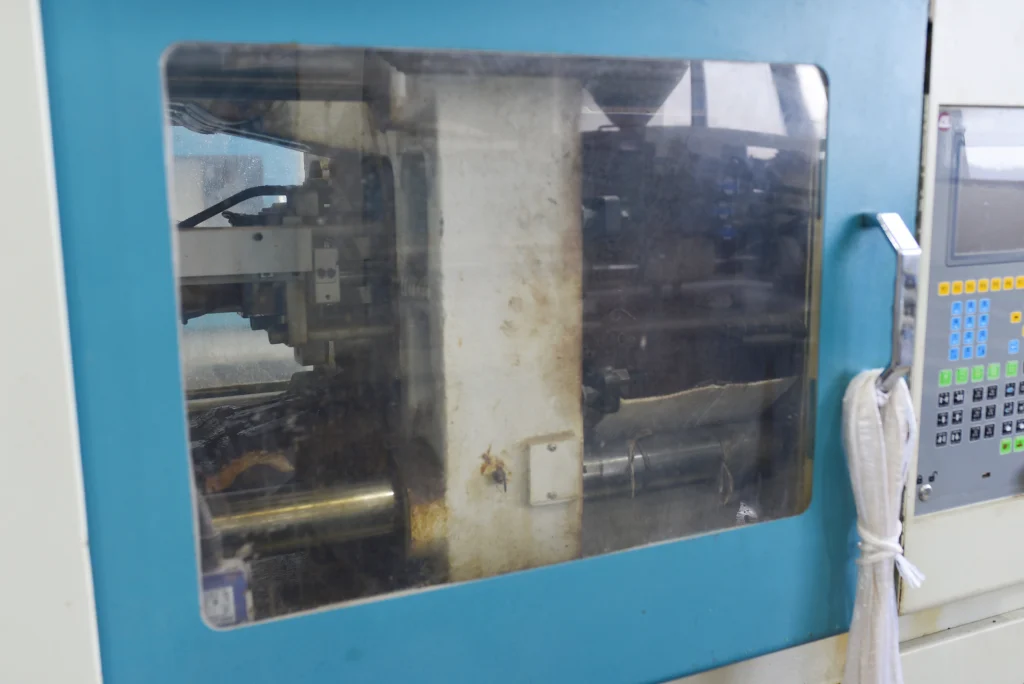
Patience is part of ensuring quality. A 2mm-thick plastic blank must cool in the mold for at least 60 seconds. Taking it out early to improve efficiency will cause deformation as the blank has not fully set. We would rather sacrifice a little efficiency to guarantee a 100% qualified rate.
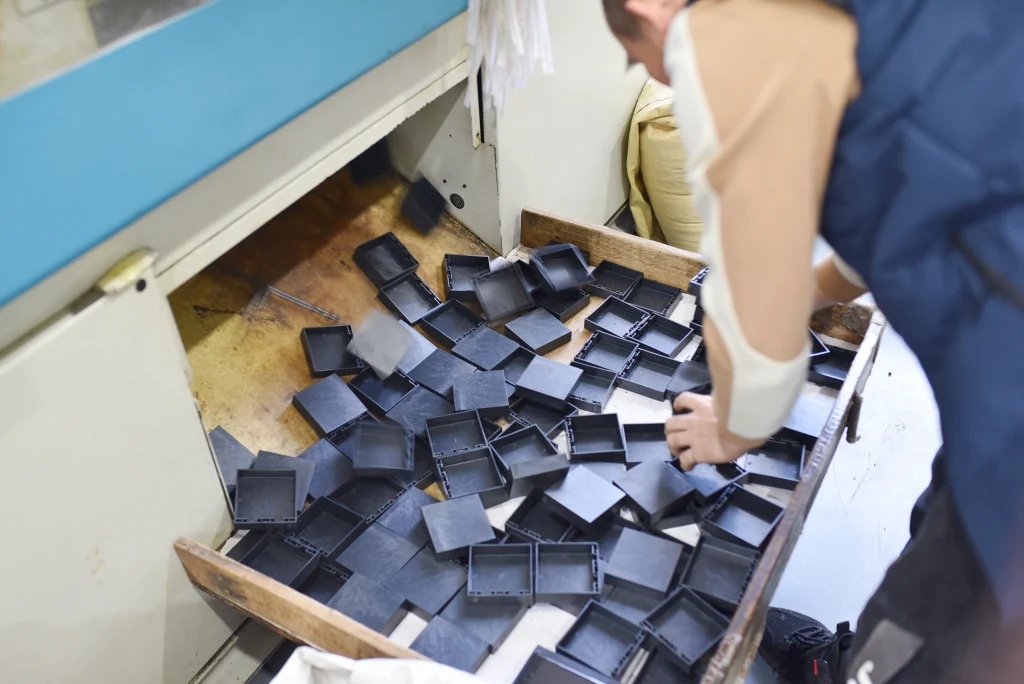
After being taken out of the mold, plastic blanks cannot be directly thrown into baskets. Workers must conduct visual inspections from a distance of 20 centimeters, looking for sinks, weld lines, scratches or missing material. Any defective blank must not enter the next process.
For qualified plastic blanks, inspectors must clearly confirm their dimensions against the standard sample. Only when the dimensions are confirmed correct can they be sent to the next production line. We require inspectors to ensure the blanks have flat and smooth surfaces without any unevenness. Otherwise, incorrect dimensions will make subsequent wrapping impossible. Uneven surfaces will make the finished products dull, which directly harms customers’ impression of the high-end boxes.
As for unqualified products, we have a strict recycling process. First, inspectors must register and sort all defective items with clear reasons marked. Then these defective items must be taken to the crushing area and crushed separately. Defective products must never be mixed with qualified ones. Once mixed, the entire batch will be contaminated.
The plastic blank is the skeleton, and the wrapping materials such as PU leather and flannelette are like the clothes. Cutting these “clothes” requires extremely high precision.
• Process flow: Roll materials, such as large rolls of PU leather or paper → Inspection → Slitting into large sheets → Die-cutting into shapes according to the hinged box’s unfolded pattern.
• Plastic blank creasing: Use a flat creasing and cutting machine. The crease depth should be 0.3 – 0.5mm. Too deep a crease will easily break the blank; too shallow will cause wrinkles when folding.
• Wrapping material cutting: Special paper is cut with a paper cutter, with a tolerance of no more than 0.2mm. It must be cut along the paper’s grain direction. Otherwise, the paper will expand and deform after absorbing glue, causing the finished product to curl at the edges. PU leather and flannelette are cut with laser cutters, ensuring neat edges without lint loss.
• Liner processing: We use high-density foam with a density of over 30kg/m³. When punching grooves in the foam with a punch press, the grooves must be slightly smaller than the jewellery. This allows the foam’s elasticity to hold the jewellery securely.
This is the stage to perfectly combine the “skeleton” and the “clothes”, and it also tests craftsmanship the most.
This is the process of enhancing the box’s appearance.
• Hot stamping: There are two types, automatic and manual. Automatic machines are used for regular logos, with an efficiency of 300 – 500 pieces per hour. The temperature ranges from 130℃ to 150℃, and the pressure from 5MPa to 8MPa. For PU leather, the temperature must be lower at 130℃. For special paper with rough textures, the pressure needs to be adjusted to 8MPa.
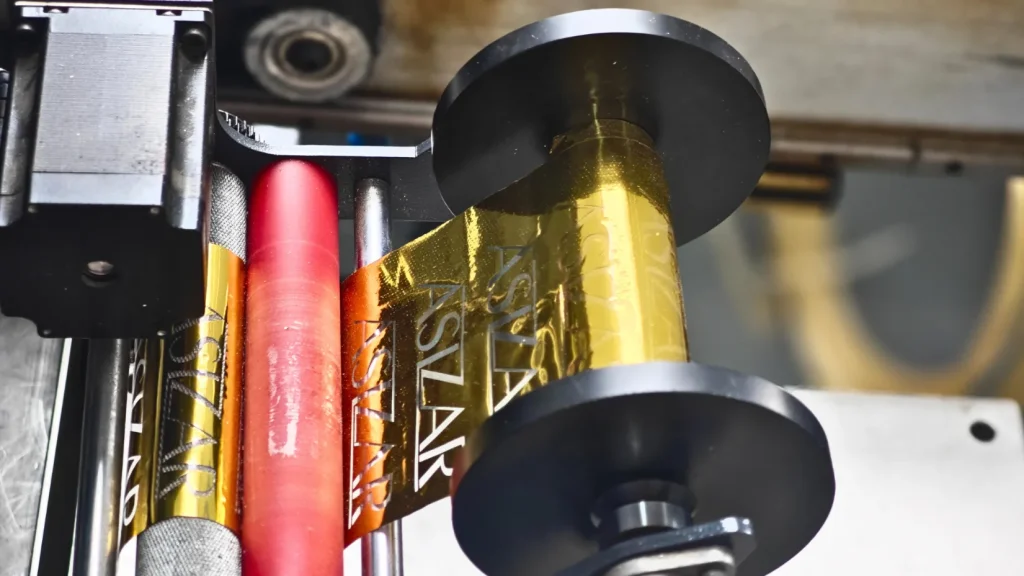
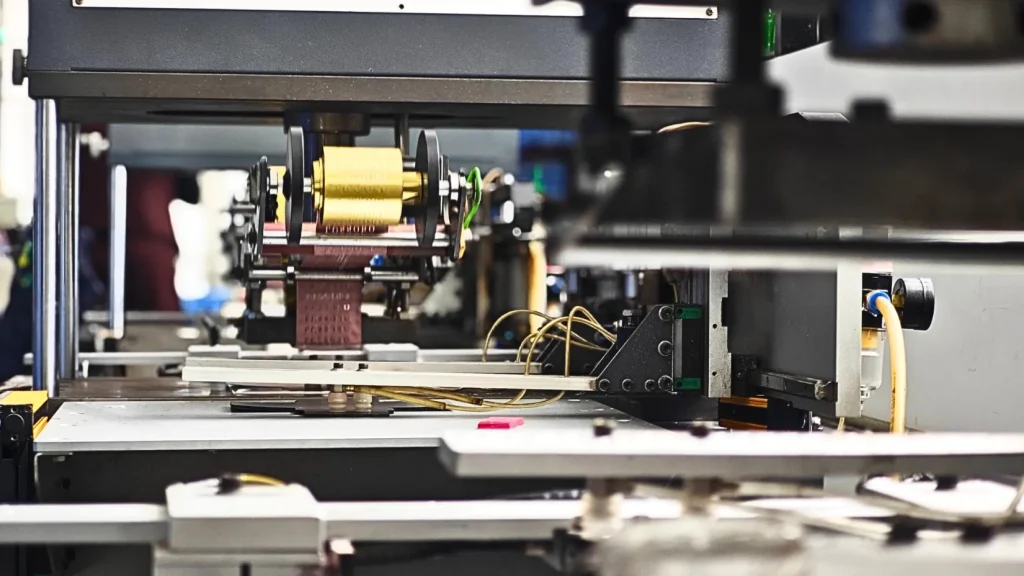
• The secret of manual hot stamping: For stamping thicker materials like cotton cloth, silk or satin, which are elastic and uneven in thickness, we must use manual hot stamping equipment. Skilled craftsmen can adjust pressure in real-time according to how much the material sinks, ensuring the stamping depth and firmness meet customer requirements. This kind of precise control is a craft that automatic machines cannot achieve. The positioning error of manual hot stamping must not exceed 0.1mm.
• Debossing: Use a hydraulic embossing machine, with a temperature of 80 – 100℃, a pressure of 10 – 15MPa, and a pattern depth of 0.2 – 0.3mm.
• Film lamination: The film must be firmly attached without bubbles. We have workers press the film again after lamination to prevent edge curling.
The assembly workshop is the final and most craftsmanship-testing step. Here we integrate the plastic blank frame into the finished outer shell and then combine it with the liner. The workshop has two core sections: outer box forming and assembly line, each with its own strict standards.
| Feature | Manual Wrapping (Craftsmanship) | Automated Production (Efficiency) |
| Best For | Irregular shapes (Heart, Hexagon), Complex designs | Regular shapes (Square, Rectangle), Standard sizes |
| Output | Limited (High attention to detail) | 800 – 1,000 pieces/hour |
| Glue Thickness | Human control (Based on material) | Precise 0.1 – 0.2mm auto-control |
| Advantage | Handles elastic fabrics (Silk, Cotton) perfectly | guarantees 100% flatness & consistency |
Manual wrapping for irregular boxes is the signature work of our workshop. It specially handles irregularly shaped boxes like heart-shaped and hexagonal ones, relying entirely on the craftsmanship and patience of skilled workers.
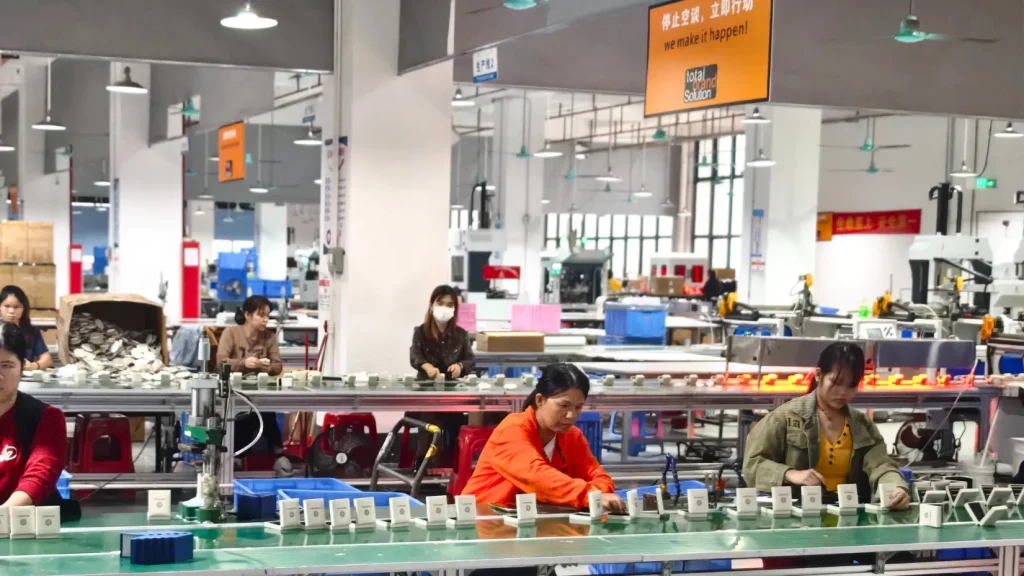
• Gluing with automatic gluing machines: The glue layer must be controlled between 0.1mm and 0.2mm. Too thick glue will overflow and stick to the flannelette; too thin will result in weak adhesion.
• Positioning: Workers attach the wrapping material to the plastic blank accurately, with a positioning error of no more than 0.2mm.

• Folding edges: Workers must fold along the creases made by the creasing machine, especially at the corners, to avoid wrinkling the wrapping material.
• Bubble pressing: Use a scraper to remove bubbles, and conduct a second bubble pressing process afterward.
• Installing upper and lower box panels: Ensure smooth opening and closing without jamming or abnormal noises.
• Edge sealing: Wrap the box edges with special edge strips to ensure tight sealing.
• Cleaning and temporary storage: Wipe the box surface with a lint-free cloth to remove glue stains and dust.
Automated integrated production is for regular-shaped boxes. Fully automatic machines work efficiently, producing 800 – 1000 pieces per hour. These machines integrate gluing, positioning, edge folding, bubble pressing and edge sealing processes. More importantly, they automatically detect flatness and reject any products with a flatness error exceeding 0.3mm.
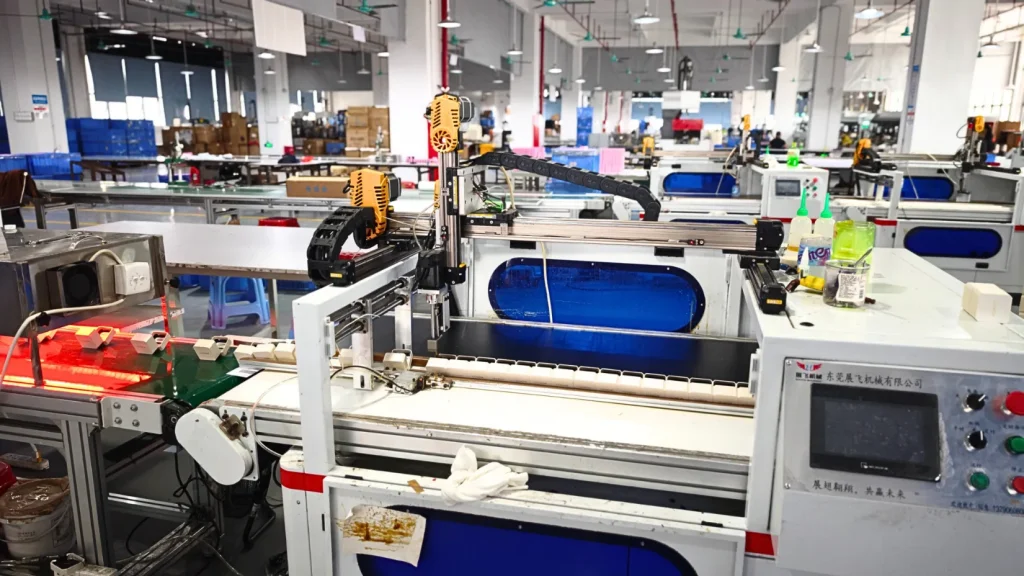
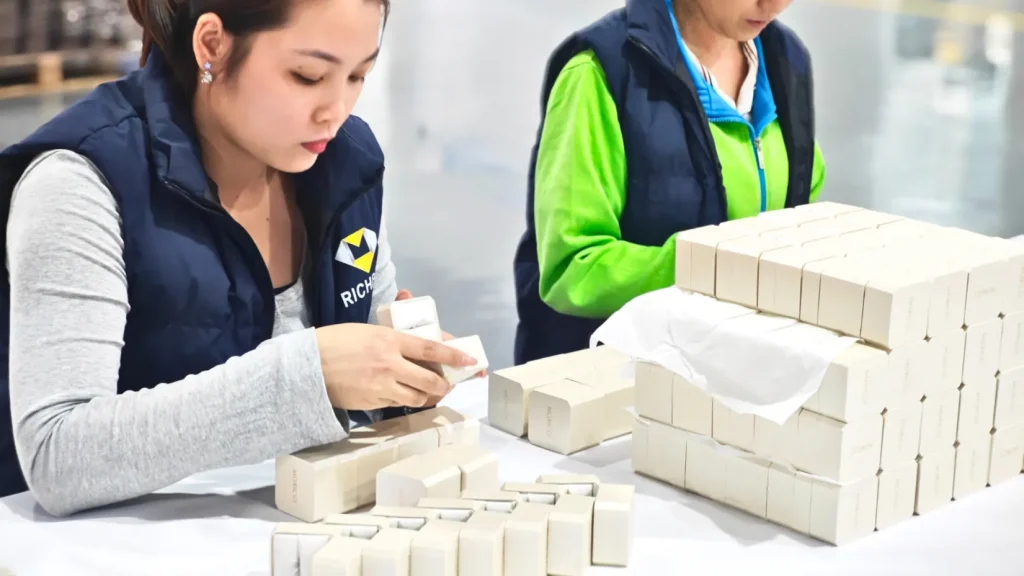
Only qualified outer boxes can enter this assembly line. This process involves manually combining the hot-stamped or embossed liners with the finished outer boxes. It requires higher precision than outer box forming, as the liner is the first quality detail customers see when opening the box. The assembly line has six stations, each operated by a dedicated worker.
The 6-Station Process
Interior gluing: Use a small glue dispenser to apply glue evenly on the inner wall of the outer box, with a glue layer thickness of 0.1mm. Apply five glue dots, one at each of the four corners and one in the middle. Control the glue amount strictly to prevent overflow.
The positioning error of the liner must be no more than 0.2mm. Reposition it if it is misplaced.
Use manual bubble presses to ensure the liner fits tightly with the outer box, with no looseness or bubbles.
This is the first quality inspection checkpoint. Check the liner’s fit, the outer box’s surface condition, and whether the box opens and closes smoothly.
Air gun cleaning:
First, use a high-pressure air gun with pressure adjusted to 0.3MPa to blow away dust and fibers.
Then wipe the outer box surface with a lint-free cloth in a single direction.
Put qualified products into transparent dust-proof PE bags with a thickness of 0.03mm. Seal the bag mouths tightly with a sealing machine at 180℃ for 1 second.
When packing into cartons, separate each box with EPE foam. Install corner protectors or foam at the four corners of the cartons to ensure safe transportation.
Outbound management: Before delivery, we require the cartons to be flat and intact with no damage. The sealing tape must not peel off to ensure the products remain undamaged during transportation.
Whether you’re curious about the raw materials used in jewelry boxes or eager to learn about the entire jewelry packaging manufacturing process, press play now to see how your next jewelry box will be opened.
Quality inspection is not about finding faults; it is about ensuring the products’ quality. We have four strict quality inspection checkpoints.
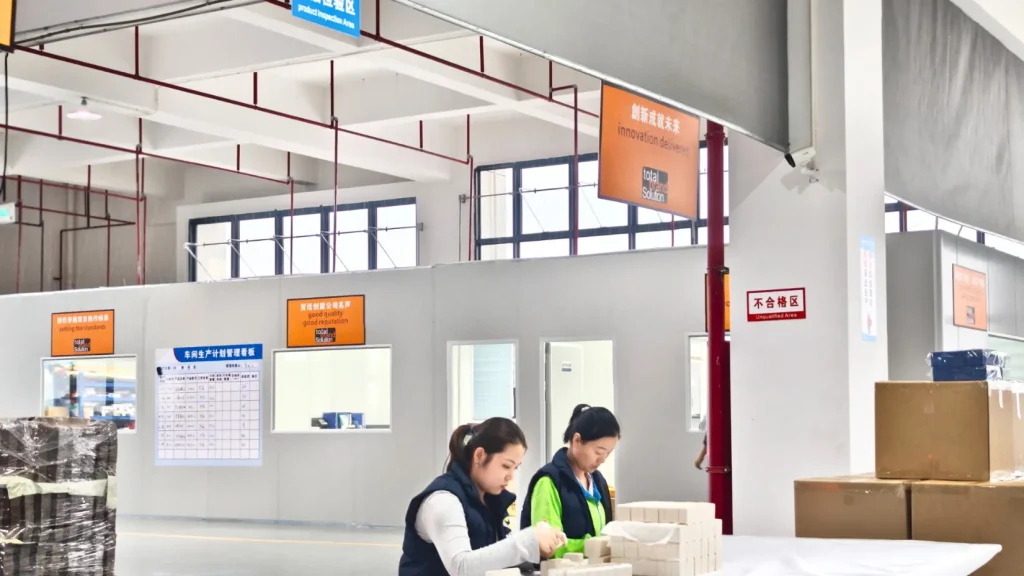
Inspectors open and close each box repeatedly 10 times. They listen for abnormal noises and check if the movement is smooth. The clasp force must be controlled between 500 grams and 800 grams. If it is too loose, the box may open during transportation. If it is too tight, customers will struggle to open it.
Under low-angle grazing lights—which isolate surface topography to reveal height variations—even tiny bubbles, wrinkles, or misaligned wrapping materials cannot be hidden. This is the final inspection of all processes, including molding, gluing, and bubble pressing.
Both glue and PU leather have odors. All our finished products must be ventilated for at least 24 hours. Otherwise, the pungent smell when customers open the boxes will instantly ruin all our previous efforts.
Finally, use an air gun to remove dust and a lint-free cloth to wipe off glue marks. Qualified products are put into PE dust-proof bags. When packing into cartons, separate each layer with cardboard and install corner protectors inside the cartons. This ensures the products reach you safely.
Now that you understand the manufacturing process, you are already an insider. When choosing a B2B jewelry packaging manufacturing partner, you can ask these three key questions:
Don’t just ask “What plastic do you use?” Instead, ask “What grade of HIPS do you use? Is it new material or recycled material?” A professional factory like ours will tell you the advantages of new HIPS 475 material and explain why we don’t use recycled materials.
Ask about their mold precision. Our standard is 0.1mm. Also ask about the mold cavity’s surface roughness, which is Ra 0.8μm for us. This question can quickly eliminate middlemen who only know sales and nothing about manufacturing.
Don’t just ask “Do you have quality inspection?” Ask “What are your quality inspection standards?” Do they conduct opening and closing tests? Do they check for odors? Do they use side lights for inspection? A mature quality control process like ours should be proactive and multi-dimensional.
A: The MOQ depends on the design complexity. For regular boxes using existing molds, the MOQ is lower. For custom designs requiring new molds, the MOQ is usually higher. We recommend contacting us to see if we have existing molds in your required size and discuss your specific design for an accurate quote.
A: A precision injection mold usually takes 4-6 weeks to design, manufacture and test to meet the 0.1mm precision requirement.
A: Yes, absolutely. We support the sustainable transformation of the industry and offer GRS-certified recycled HIPS as well as eco-friendly PET.
The Expert Insight: While recycled materials are excellent for the environment, they can sometimes contain minor impurities that affect surface smoothness.
Recommendation: If you choose a recycled plastic base, we advise against using ultra-thin, light-colored silk for wrapping. Instead, we recommend using textured paper, velvet, or thicker vegan leather. These materials work perfectly with recycled bases to hide any microscopic imperfections, allowing you to achieve both environmental certification and a premium aesthetic.
A high-quality wrapped plastic base jewellery box is far more than a simple combination of plastic and fabric. It is the crystallization of precise material selection (such as HIPS 475), expensive molds (0.1mm precision), strict process control (temperature management) and meticulous craftsmanship (0.2mm tolerance).
From the durable skeleton to the flawless appearance, every step determines the final presentation of your brand.
Are you looking for a packaging partner who not only understands sales but also masters manufacturing for your brand? We appreciate the difference of 0.1mm.
Contact our packaging experts to discuss your next custom project, or request our process sample box to experience this “inherent” quality firsthand.



2025-07-13

2025-05-14
2025-07-24
Recyclable packaging that merges luxury with sustainability. Our efficient, low-energy process delivers premium quality that protects your brand and your bottom line. A streamlined system proven to reduce material waste by up to 15% and cut lead times by an average of 10% compared to traditional production models. We engineer solutions that solve the core conflict between… Continue reading Wrapped Plastic Base Jewellery Box Manufacturing: 2026 Industry Production Unveiled
Richpack · Find Your Niche Vertical Labret Jewellery Packaging at Richpack The vertical labret piercing, a striking embellishment that traverses the lower lip, has emerged as a popular choice for individuals seeking a bold and distinctive aesthetic. According to Glimpse, search interest for vertical labret piercing has increased – 1% over the past year to… Continue reading Wrapped Plastic Base Jewellery Box Manufacturing: 2026 Industry Production Unveiled
A major challenge for jewelry brands is creating custom jewelry boxes that protect fragile pieces like pearls and fine handmade jewelry. Even small damage can lead to big losses and unhappy customers. Therefore, it’s critical to create a protective jewelry box to maintain the quality and integrity of your pieces and enhance the customer experience. In this blog, we’ll… Continue reading Wrapped Plastic Base Jewellery Box Manufacturing: 2026 Industry Production Unveiled

Wholesale Cookie Packaging for Small Home-Based Businesses | Affordable and Customizable Solutions | Bulk Orders Available in Richpack
Transparent Delight – Rectangle Gift Box with Clear Lid for Captivating Displays
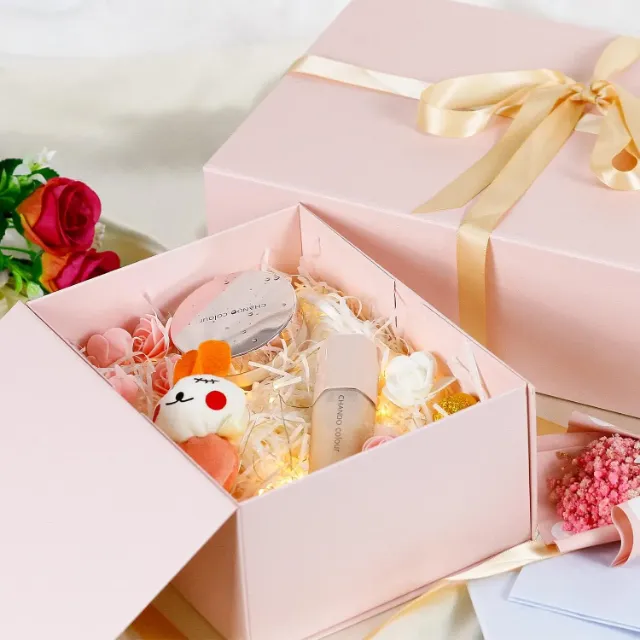
Zero-Waste Gift Packaging Solutions for Online Stores | Eco-Friendly and Customizable Packaging | Sustainable E-Commerce Solutions
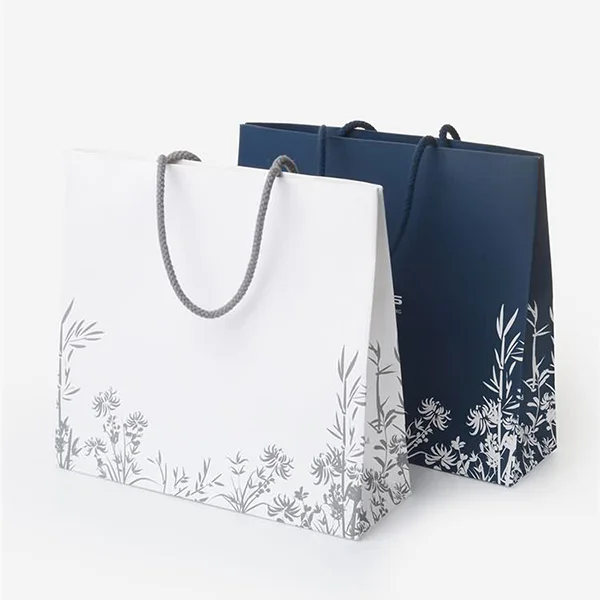
Durable and Biodegradable Compostable Paper Bags for Sustainable Packaging | Eco-Conscious Solutions for Jewelry Retailers and Boutique Stores
View More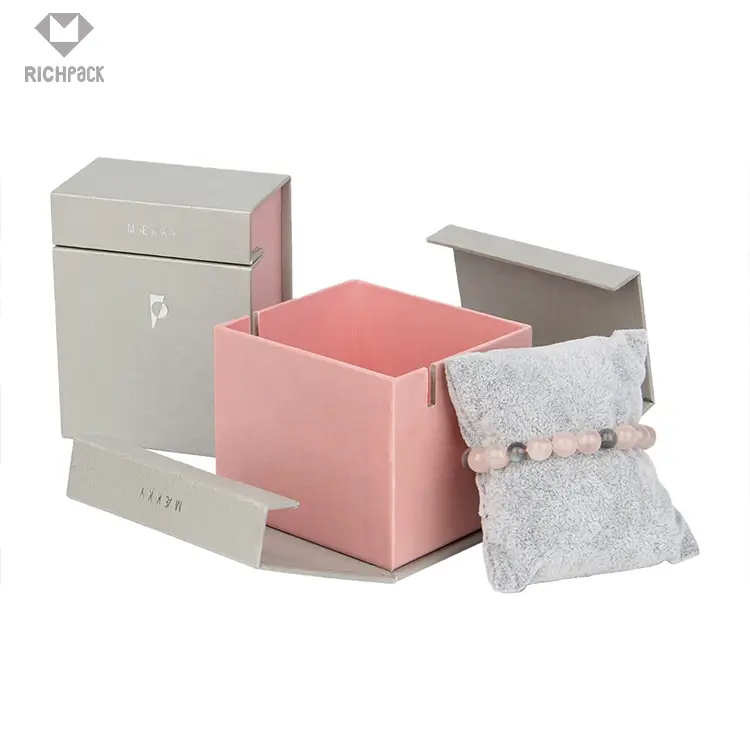
Eco-Friendly Affordable Biodegradable Jewelry Boxes for Bulk Purchases | Ideal for Wholesale Buyers Looking for Affordable and Sustainable Packaging Solutions
View More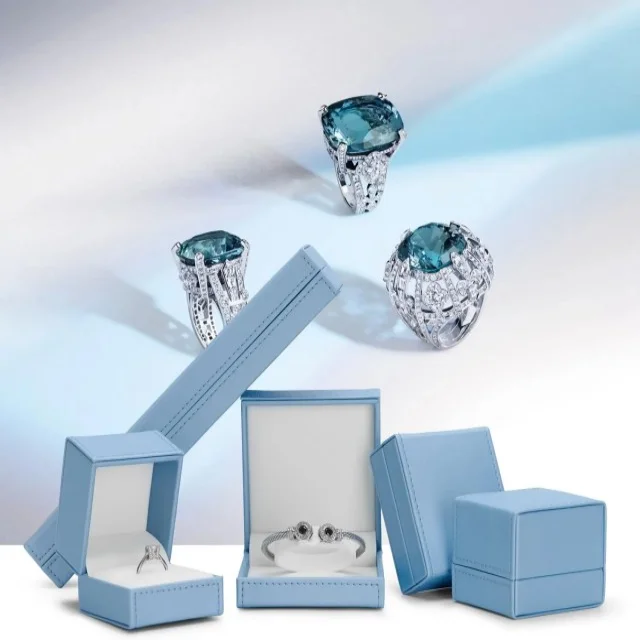
Eco-Friendly Bangle Gift Boxes for Sustainable Gifting | Customizable Packaging for Green Brands and Eco-Friendly Brands
View More
Just submit your email to get exclusive offers (reply within 12 hours)


