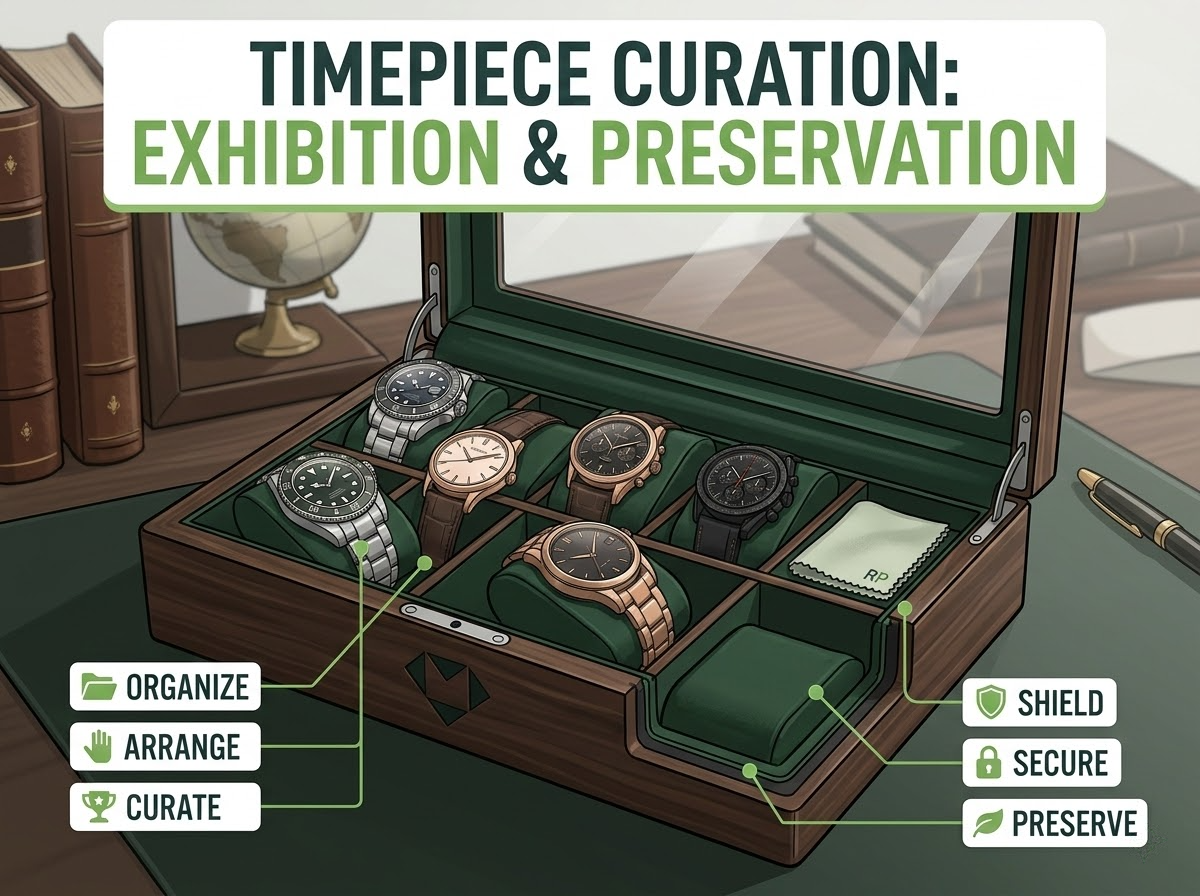


I often see collectors ignore the watch display box. After working with many clients, I know it is very important. It is a key part of the watch world.
I look at data from Chrono24 often. They are a top site for used watches. They say storage quality is a top factor for buyers.
I’ve found that people use poor storage to lower the price. I have seen watches lose 15 to 25 percent of their value. Scratches and moisture do a lot of damage very fast.
Now, let’s look at how to protect your pieces. I will help you pick the right box size. We will also talk about materials and air quality.
This matters for brands and retailers too. I have seen how custom boxes grow a business. You will leave here with a real plan.
Quick Reference: Ideal Watch Storage Parameters
| Parameter | Recommended Range | Risk Below | Risk Above |
| Relative Humidity | 40–60% RH | Strap cracking, seal contraction | Internal corrosion, rust |
| Temperature | 15°C–25°C (59°F–77°F) | Oil thickening, slow rate | Oil migration, shortened service interval |
| Distance from Magnets | >15 cm | N/A | Hairspring magnetization, fast rate |
| UV Exposure | None / indirect only | N/A | Dial fading, strap degradation |
| Service Interval (mechanical) | Every 5 years | N/A | Accelerated wear if skipped |
I often see clients treat watch boxes as simple storage. They just put their watch inside when they are not wearing it. This view misses the real value of a good box. I’ve found that a great box does much more.
A well-made box creates a safe space for your watch. It acts like a tiny shield for your mechanical investment. I tell my collectors that three things kill a watch. These are dust, moisture, and hard bumps.
Dust gets into the movement and slows it down. Moisture causes rust on the fine metal parts. Physical hits can break the glass or the gears. Your display box stops these three forces from harming.
After working with dozens of collectors, I know that condition is everything. Your watch is a serious financial asset. The resale market pays much more for pieces kept in great shape.
Data from sites like Chrono24 proves this point clearly. Watches with the original box and papers sell for a high premium. This usually ranges from 5 to 12 percent more.
The box shows you truly cared for the piece. It suggests the inner movement is also in good health. Buyers feel much safer when they see the original packaging.
I often tell my clients that neglect has a high price. A basic movement service can cost USD 300 to USD 600. A new sapphire crystal might cost USD 150 to USD 400.
These costs hit your wallet hard and fast. Even a small scratch on the case needs professional work. This can easily cost you USD 200 to USD 500.
These small repairs add up very quickly. Most issues start by leaving a 5,000 dollars watch in a bare drawer. I have seen this mistake many times.
Now, let’s be clear about one thing. A high-quality watch box is not just a fancy extra. It is a vital tool for protecting your investment. I always suggest using proper storage to keep your asset safe.
Inside a watch, the hairspring moves back and forth very fast. Many small parts need oil to keep moving smoothly. I have found that dust and water can dry this oil out. Most of the dirt enters through the crown. This is a common issue I see with collectors.
Dust acts like sandpaper on the tiny metal teeth. It wears down the parts very fast. Usually, a watch needs a check-up every five years. Without a box, you may need one in two years. Water is even worse because it causes rust. I have seen rust ruin a watch, so it cannot be fixed.
A good watch box stops these problems before they start. Even a simple wooden box with a tight lid helps. It keeps the air and dust away from the watch. Leaving a watch on a table is a big risk. I always tell my clients to use a proper case.

I’ve spent years helping collectors protect their watches. A good watch box cushion does two things at once. It keeps the watch still, so the crown stays safe. It also stops vibrations from reaching the movement.
Many collectors forget about the bracelet-on-crystal contact. Folding a metal bracelet flat against the face is a mistake. The steel clasp edge touches the glass directly. I’ve seen many ruined crystals because of this error.
Hard steel easily scratches glass and sapphire coatings. Separate slots solve this problem right away. Each watch stays in its own padded space. The pieces never touch each other.
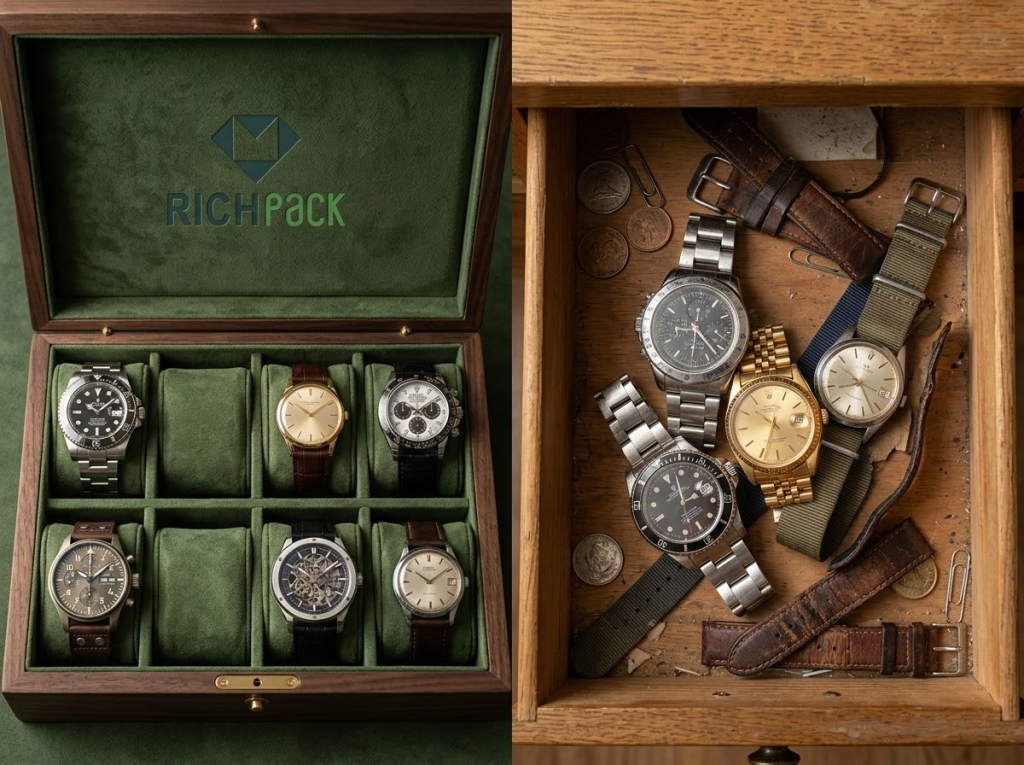
I have spent years watching how people react to high-end gifts. For watch brands, your display box is more than just a holder. It is the very first thing a client touches. I always tell my clients that this moment sets the tone for the product.
Recent studies show that good packaging keeps customers coming back. About 40 percent of shoppers say high-quality boxes make them want to buy again. I have seen this happen with many boutique brands. Quality shows you care about the person holding the box.
Think about the feeling of a 3,000 dollars watch. If you put it in a cheap paper sleeve, the value drops instantly. But a heavy wood box with soft suede inside feels worth the price. That feeling starts before they even see the watch face.
Most people throw away boxes, but watch collectors keep them forever. This box becomes the permanent home for their investment. Every time they open it, they see your brand name. I view this as a marketing tool that keeps working for years.
I have worked with many Rolex and Cartier boxes. They look great in a shop. But they fail at home. These boxes do not stack well.
Most lack moisture control. They also do not fit custom straps. I find this makes daily use hard.
Things get messy once you own three watches. Original boxes take up too much space. You cannot see your whole collection at once.
I share one trick with my clients. Put original boxes in a safe place. This keeps the resale value high.
Buy a high-quality multi-slot box for daily use. You get easy access and stay organized. This protects your investment.
Every watch box has a different job. The right style depends on your collection size. Think about how often you wear your watches. Consider if you travel or need a winder. I have seen these five types work best:
Here’s how to identify which type fits your situation.
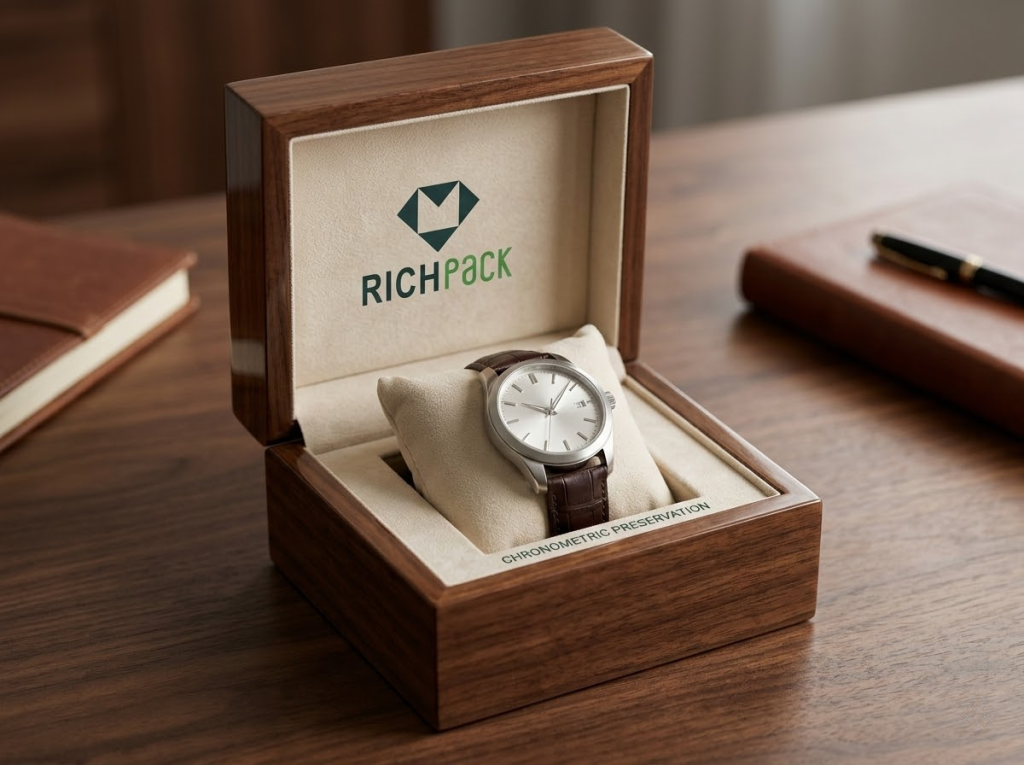
I’ve found that a single-slot box is a very personal choice. It holds one watch on a snug, exact cushion. These usually have a clear lid and a strong hinge. I suggest using them for watches you wear every day.
They also make a great gift box for high-end stores. A good box adds real value to the sale. When you pick a box, look at the cushion first.
The fit matters way more than the outside look. I’ve seen many watches get scuffed because the cushion was too big. A loose watch rocks and rubs against the lining.
This ruins the whole point of the box. Glass lids work best if you want to see the watch. Solid wood or leather lids keep out all the dust and light.
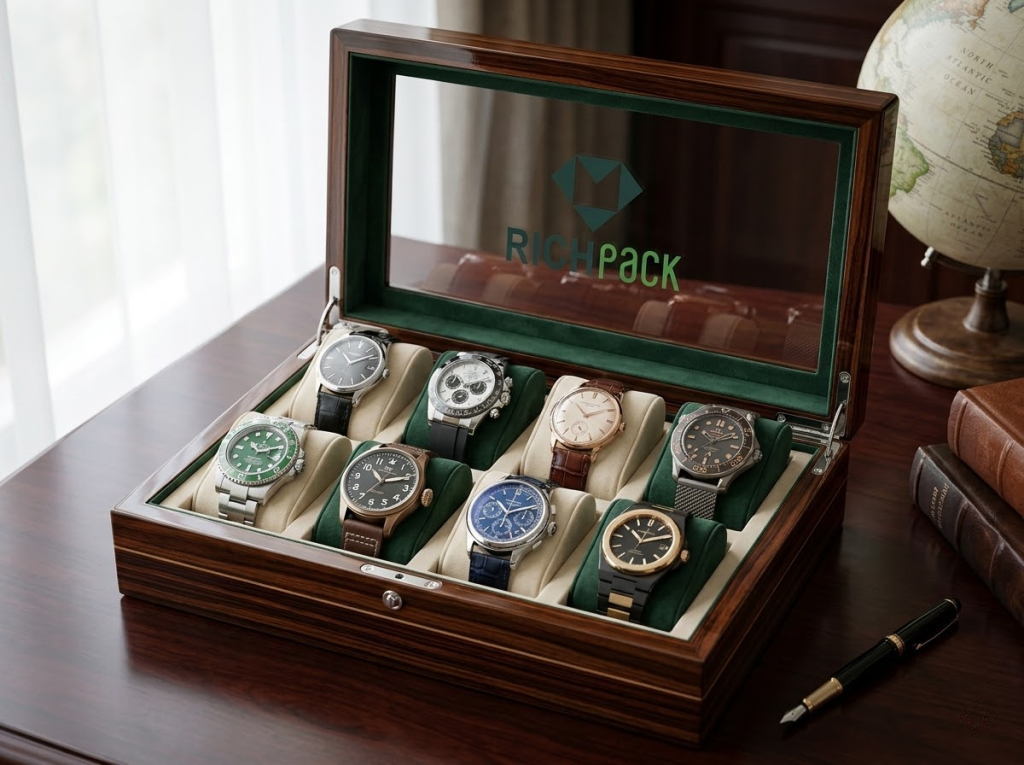
I tell my clients to get a multi-slot box once they own three watches. It really helps keep things organized. Most boxes come with 3, 6, 8, 10, or 12 slots.
Do not just buy for the watches you have now. I always suggest adding two or three extra slots. This gives you room for new pieces later.
A packed watch box is a big risk. I have seen lids crush the top row of watches. Straps can also rub against other cases and cause scratches.
You should always buy a box larger than your current set. This keeps your investment safe.
Good boxes use soft, adjustable cushions. These fit watches from 36mm up to 46mm. I like glass lids because you can see your collection easily. A strong lock also adds peace of mind.
Many of my collectors love the Tawbury Bayswater 24-slot box. It has over 1,500 great reviews. I find it offers the best quality for the price today.
When you manage 12 or more pieces, your needs change. I also work with retailers who have floor stock. Both need a setup built for scale. I suggest using layered drawers and simple trays.
I’ve found these designs fit right into your own furniture. They make organizing a large stock much easier. You can stack them or hide them away. This keeps your space looking clean and sharp.
Now, you must choose between visibility and protection. Glass cabinets look great. However, dust will settle on your watches. This is a common issue I see in showrooms.
Closed drawers offer the best safety for your pieces. You just have to open them to see the collection. I suggest this if you value care over display. It keeps the watches very clean for years.
I always tell my clients to watch the humidity. Use built-in monitors or silica gel in every drawer. This is vital for large collections. Mistakes at this level cost a lot of money.
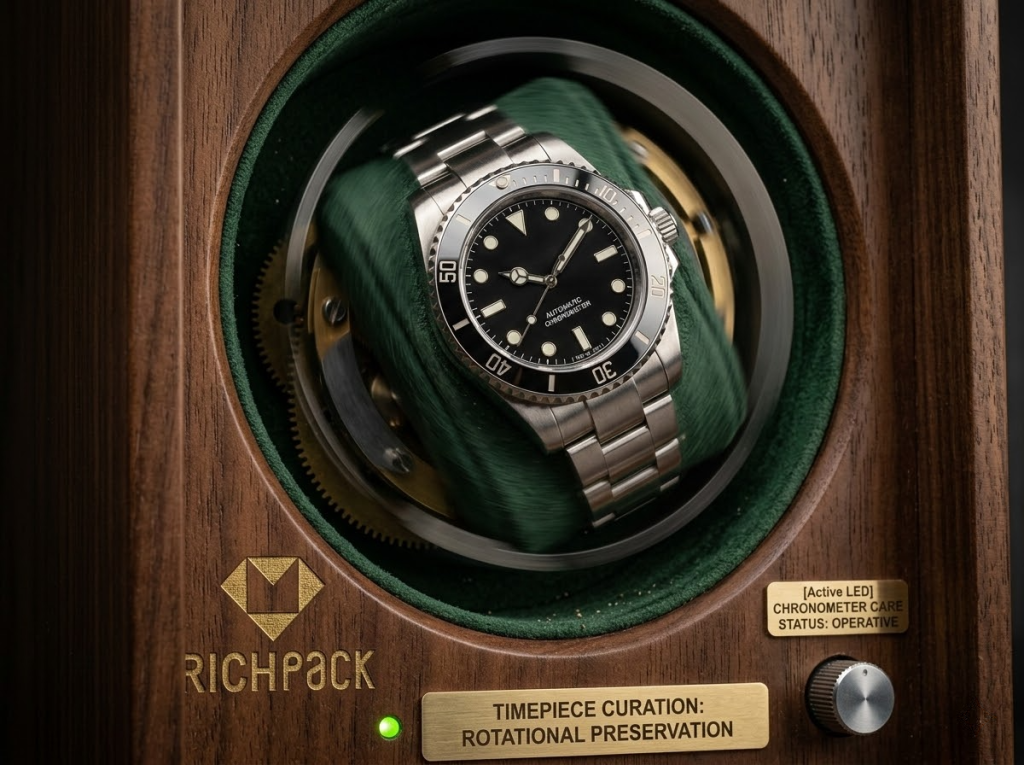
A watch winder is a powered box. It spins your watch to keep it wound while you do not wear it.
I see many clients struggle with stopped watches. This box solves that one specific problem. It keeps the internal spring tight. This happens even when the watch stays in the box.
Your wrist movement powers these watches. A small rotor spins to wind the spring. Most watches stop after two or three days of rest. The winder mimics your arm movement. It uses a motor to do the work for you.
One trick I use is matching the TPD to the brand. Rolex models need 650 TPD in both directions. Audemars Piguet pieces need up to 800 TPD. This ensures the watch stays accurate.
Do not worry about over-winding your watch. Modern watches use a safety clutch to prevent damage. A good setting keeps it ready to wear. I find this helps collectors save time every morning.
Now, let’s look at what not to use. Quartz watches do not need these boxes. You should also avoid using them for hand-wound pieces. Those watches require you to turn the crown by hand.
I have seen many watches get damaged during travel. Luggage pressure can easily crush a fine timepiece. Vibration and humidity also cause real problems. A good case or roll stops all three issues.
Most of my clients choose between two main styles. Hard-shell cases use strong metal or plastic. These give the best protection for checked bags. They usually hold up to four watches.
Leather rolls are better for your carry-on bag. They stay flat and save much space. I find these work best for short trips. You can easily fit two to four pieces.
I always tell collectors to check for slot separation. Each watch needs its own padded spot. The pieces should never touch each other. This is a rule I never break.
I once saw a soft pouch ruin a glass crystal. Even a soft cloth allows parts to rub together. This contact happens with every bump or move. Now, I only suggest cases with fixed dividers.
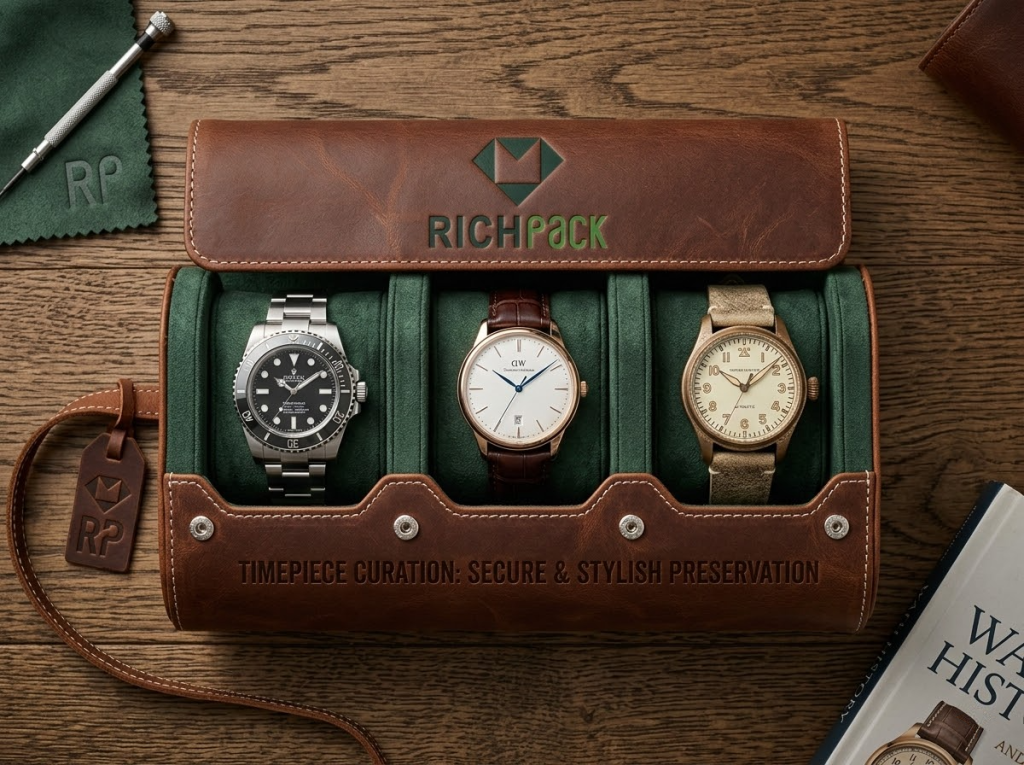
After working with over 100 clients, I’ve found that the box material is key. I see how the outer shell creates the first impression. It changes the weight and how the box feels in your hand.
The inner lining is just as vital for protection. I suggest you pick both materials at the same time. This ensures the watch stays safe and looks great.
| Material | Aesthetic | Durability | Weight | Best For |
| Lacquered Wood (Walnut / Mahogany / Oak) | Classic, premium | High | Heavy | Home display, gifting |
| Genuine Leather | Refined, supple | Medium–High | Medium | Gifting, retail, corporate |
| PU Leather / Synthetic | Contemporary | Medium | Light–Medium | Entry-level retail, bulk gifting |
| Carbon Fiber | Technical, modern | Very High | Light | Men’s collections, contemporary display |
| Metal / Aluminum | Minimalist, industrial | Very High | Heavy | Security-focused storage |
| Velvet-Covered | Soft, jewelry-grade | Low–Medium | Light | Watch + jewelry combo gift boxes |
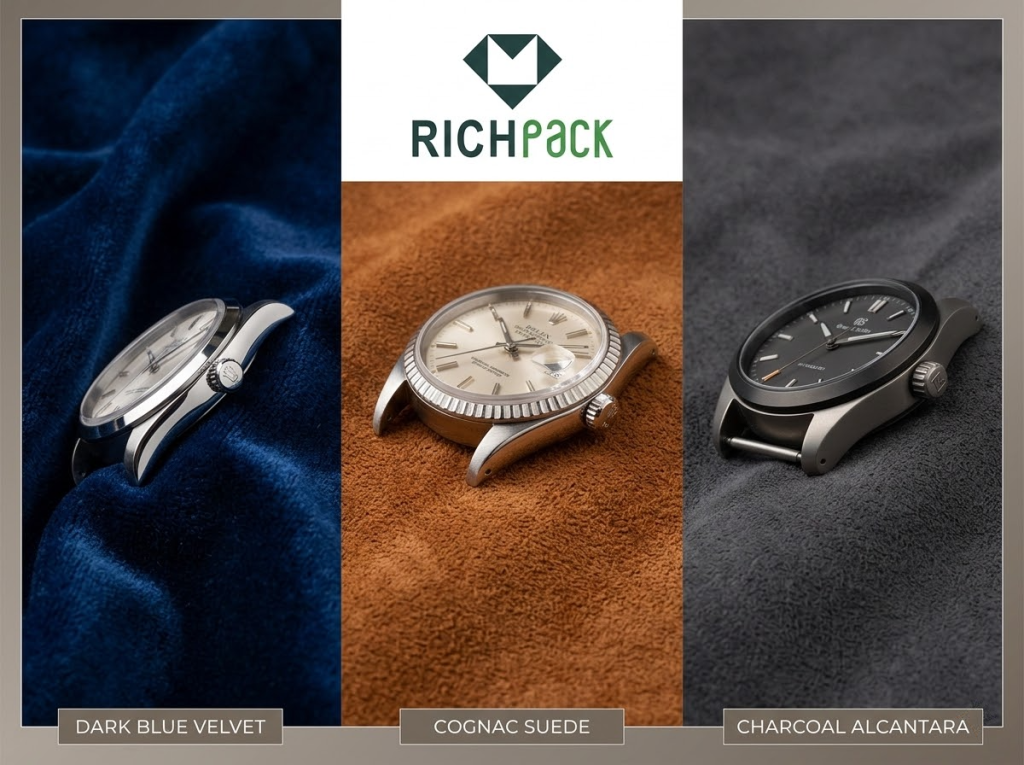
After working with many high-end brands, I have seen how the lining makes or breaks a box. The lining is the only part that touches the watch. If you choose the wrong one, the rest of the box does not matter.
One thing I tell every client is to avoid bare plastic interiors. Hard plastic creates static that pulls in dust. Softer plastic can even scratch the watch glass over time. I have seen this happen too many times to ignore it.
After working with over 100 clients, I’ve found the lid style is key. A glass lid lets you see your collection without opening it. This helps owners who pick new pieces each day. Watch out for dust if the seal is not tight.
Next, I suggest using solid wood or leather lids for storage. These lids offer a tight seal and block harmful sunlight. You lose the view, but you gain better protection. It keeps your rare pieces safe from the air.
When you think about sales, magnet lids are a top choice. They create a special opening moment that feels high-end. These lids have a tight seal and look great in videos. This small detail makes a big impact on your brand.
The wood you pick defines the look of your box. I’ve seen this choice matter more than any other. It sets the tone for your brand.
Walnut is a top choice for luxury gifts. It has a deep brown color and fine grain. I often suggest it because it looks great in photos. It also matches gold or brass parts very well.
Next, let’s look at Mahogany. It feels warmer and redder. It has a tight grain and a classic look. This works best for formal dress watches.
Oak shows a stronger grain pattern. It has a lighter tone for a modern style. Many of my clients now ask for bamboo. It grows much faster than hardwoods.
Bamboo is just as strong as oak. It helps you tell a green story to your buyers. Now, the finish is the final touch.
A high-gloss shine creates a rich feel. I use matte lacquer for a clean, modern look. An open-pore wax finish feels very natural. It lets you feel the raw wood texture.
Your watch and its box must tell the same story. If they do not match, your brand loses trust. I have seen this mistake hurt many high-end sales. Let’s look at how to pair them right.
For watches over USD 3,000, use real leather. I suggest Alcantara for the inside lining. Add a metal badge with your brand name. This setup matches the high quality of the watch.
Mid-range watches need a different feel. A lacquered wood box works very well here. Line it with soft suede for a premium touch. This gives great value without costing too much.
Entry-level watches need to look clean and professional. I usually pick PU leather with a velvet lining. It keeps your costs low but still looks sharp. Your profit stays safe with this choice.
Gifts and hotel programs need a special ritual. I use leather with gold foil for these clients. A satin ribbon pull adds a nice touch. It makes the unboxing feel like a real event.
The box should always look like it belongs. It must cost less than the watch itself. But it should never look cheap or out of place. This is how you make a smart investment.
I’ve seen a big shift in what buyers want lately. McKinsey found that 73% of shoppers now buy differently to help the planet. Your packaging is the first thing they see. It shows your brand values clearly at the point of sale.
I always suggest using FSC-certified wood for your boxes. This timber comes from forests managed with real care. Bamboo is another great choice. I like it. It grows to full size in just 3 to 5 years. Hardwoods can take up to 80 years to reach that point.
I also use recycled velvet for linings now. It looks just like the high-end stuff but uses old fibers. It feels the same to the touch. Your customers will never know the difference.
One trick I use often involves the paper inside. You must use acid-free paper for all cardboard parts. Regular paper has acids that eat away at metal over time. This can ruin a watch case or a bracelet. Switching to acid-free paper costs very little. It stops the risk of damage for good.
Most guides tell you to use a cool, dry place. This advice is too vague to be helpful. After working with many collectors, I know one thing. You need exact details to keep watches safe.
I pulled these facts from real brand service manuals. These are industry standards, not just guesses. Let me be clear about what works. Here is the data you really need.
I’ve spent years helping collectors protect their investments. Leading brands like Rolex and Omega suggest keeping humidity between 40% and 60%. This range protects the materials inside your watch case. I’ve found that staying in this zone is vital.
When humidity drops below 40%, leather straps dry out and crack. Rubber gaskets shrink and stop sealing the watch. Even vintage dials can develop fine cracks over time.
I’ve seen many watches ruined by high humidity over 60%. Moisture enters the case through tiny gaps. It turns into water on the steel parts inside. This causes rust that stays hidden for years.
Now, let’s look at how to fix this. For a few watches, use silica gel packets. I suggest changing them every two or three months.
If you own more than ten pieces, use an electronic dehumidifier. Place it inside your storage cabinet. This works well for many of my clients.
For collections worth over 50,000 dollars, I suggest a climate-controlled safe. Use a built-in hygrometer to track the air. This is the best way to stay responsible.
Swiss makers like ETA and Sellita have a clear rule. Keep your watches between 15°C and 25°C. This range keeps the oils at the right thickness. I always tell my clients this is the sweet spot.
COSC tests movements from 8°C to 38°C. They check for accuracy within a few seconds each day. I suggest staying in the tighter band for safety. It protects the precision of your fine timepieces.
Heat above 40°C is a real danger in cars. I’ve found that this heat thins oils and makes them drift. This cuts your service time from five years to two. Cold below 5°C thickens oils and slows the watch.
Stability matters most for your collection. A steady 18°C is better than big jumps. Fast heat changes make metal parts expand and shrink. Avoid sunny windows, vents, or glove boxes.
I have seen how sunlight causes lasting harm to watch parts. Dial fading is the most common issue I see. Cream or champagne dials on Rolex and Patek watches yellow within 18 months. Old lacquer finishes make this fading even faster.
Now, let’s look at crystals. Plastic crystals on older watches turn yellow very fast. I have seen clear glass turn dark amber over time. This makes the watch hard to read and lowers its value.
UV light hurts watch straps even faster. I have seen rubber straps crack in two years. Leather straps lose color and get stiff in bright light.
You can stop this damage easily. Keep your watches away from windows. I suggest using a box with a solid lid. Glass lids let too much light inside.
I’ve spent years working with high-end collectors. One issue comes up more than others. Magnetism is a quiet killer for mechanical watches. Let me explain why this happens.
The hairspring is a tiny, coiled part. It controls how your watch beats. This part is made of a very sensitive metal. Magnets make the coils stick together. Now, your watch runs much too fast. It might gain 10 minutes a day.
You might be surprised by the common culprits. I often find that laptop bags are the cause. Magnetic clasps and speakers are also risky. Even phone charging pads cause issues. I suggest a 15-centimeter safety zone. Keep your watch away from these devices.
Some new watches are built for this. I often point to the Omega Seamaster Aqua Terra. It uses a special inner case to block magnets. But your vintage and dress watches are at risk. They lack this extra layer. Store them on a separate shelf from your gear. This simple move costs you nothing.
Magnetism can even void a COSC certification. A magnetized watch will fail its accuracy test. I hate seeing a perfect movement lose its rating. A watchmaker can fix it quickly. It is a simple service call. But you can avoid it with better storage.
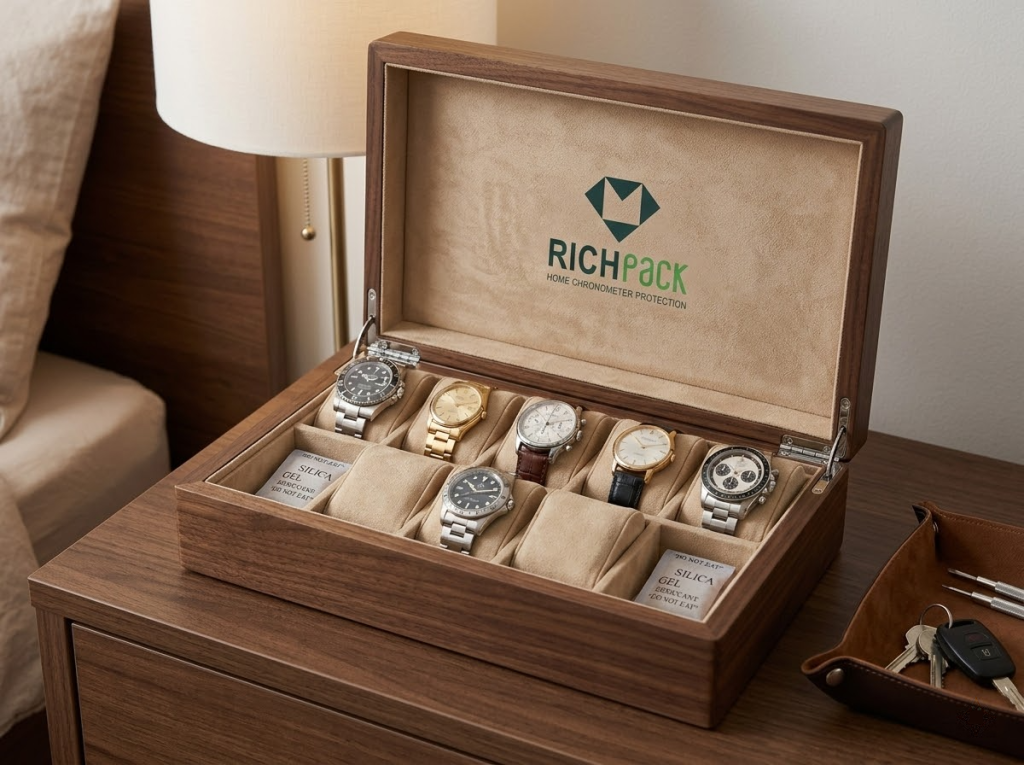
After working with many collectors, I’ve found that home storage is quite simple. You only need a few basic items, like a tight watch box. One trick I use is adding silica gel packets and swapping them every quarter. This simple kit stops dust and moisture for very little money.
Where you put the box is just as important as the box itself. I suggest using a dresser drawer or a wardrobe away from the outside walls. Sunlight and window drafts from a nightstand can hurt the movement over time.
If your collection is growing, you might want a better setup. I often recommend a watch cabinet with a humidity gauge. These usually cost between USD 200 and USD 800. For rare pieces, a climate-controlled safe is the best choice.
You should check the humidity in your storage area every season. I use a simple digital meter to get clear facts. These tools cost less than USD 15. Do not guess when it comes to your watches.
Ready-made watch boxes work for collectors. They do not work for brands. I have seen this many times. A cheap box breaks the luxury feel.
Smart buyers notice these small gaps. Custom boxes fix this problem fast. They turn a simple box into an experience. This move brings in more profit.
The extra cost is very small. The value you get back is huge. I always tell my clients to start here. It is the best way to build trust.
A customer sees the box before they see the watch. This first touch sets the mood for the whole brand. Research shows that about 40% of people buy again if the box feels premium. This is a big signal for how people spend their money.
The reason for this is simple. Our brains want things to match. Imagine a 5,000 dollars watch in a cheap paper box. I’ve seen this kill a sale instantly.
The watch might be great, but the box hurts the trust. A heavy, well-made box does the opposite. It makes the watch feel worth more before you see it. I always tell my clients that weight equals quality in a buyer’s mind.
Luxury watch boxes stay in a home for a long time. I’ve noticed owners keep them as a permanent house for the piece. Each time they open the lid, they see your brand. Now, think about that value. No other marketing tool works this hard for such a low cost.
I have worked with many high-end brands on their packaging. I found that getting the size right is the hardest part. Most people forget about crown clearance. The crown is the small knob on the watch side. It sticks out past the main case. The box interior needs extra space for it. If you miss this, the watch will not fit. I see this mistake happen quite often.
A good order list should include these details:
I’ve seen MOQ levels change by project size. New brands need 100 to 500 units for full custom work.
Retail projects start at 500 to 2,000 units. Large brands order over 2,000 units to save money. This also allows for more complex tool options.
Bulk orders take 15 to 25 days after sample approval. I see samples take 7 to 10 days to finish.
Now, please plan your timeline well. Rushing the bulk run leads to quality issues. I suggest you avoid this risk.
Ask these five questions before you pick a supplier. This step ensures you get the best quality.
These questions help you find the best makers. They separate the experts from those with loose standards.
I often tell hotel clients that watch boxes beat standard robes. High-end hotels use branded boxes as VIP welcome gifts. Guests take these home. This keeps your brand in their mind long after they leave.
It feels much more premium than a simple miniature bottle. I also see a huge demand for corporate gifts. One trick I use often is adding a custom logo.
You can engrave a logo or an event date on the box. This turns a simple tool into a special keepsake. My data shows that buyers want personalized luxury.
About 390 people search for “monogrammed watch box” each month in the US. Another 320 people look for “engraved watch box.” These buyers are ready to spend on quality items.
Next, I’ve found that clubs use these boxes to keep members happy. A high-quality box adds real value to a subscription. Members feel more connected to the brand.
They are less likely to cancel their membership. The box works for them every single day. I suggest focusing on these functional gifts to build loyalty.
I’ve seen many brands view boxes as a simple cost. That is a mistake. After years in this trade, I know the math works differently. A custom box is an asset that grows in value.
One study showed people keep luxury boxes for over three years. For watches, this time is even longer. I’ve found this works best because the box is useful. It stays in the home for years at no extra cost.
Next, think about the resale market. I always tell my clients that the box raises the price. Data shows watches with boxes sell for 5% to 12% more. This often covers the cost of the box itself.
Take a 3,000 dollars watch as an example. The box adds 150 dollars to the 360 dollars in value. I’ve seen this help collectors keep the value of their pieces high.
Now, let’s talk about new tech. Many top brands now put NFC tags in the lid. A buyer can tap a phone to see if a watch is real. This turns a box into a real asset record.
Some brands test AI tools like Google’s SynthID for digital papers. But NFC is the top choice today. I suggest this for any brand building at the high end.
I have worked with many watch brands on this exact shift. I found three signs that show you need better packaging. First, your retail price goes over USD 300. At this price, the unboxing matters a lot. A basic box makes your watch look cheap.
Second, you enter real retail stores. Your box now sits next to other brands. Generic boxes do not help you stand out. Third, check your customer reviews. If they dislike the box, you have a problem. Bad packaging actively hurts your sales.
You do not need a full custom build today. I suggest a simple middle step first. Use a nice stock box with a custom insert. Add a branded sleeve or a gift bag. This path keeps your order numbers very low.
Next, you can move to a full custom plan. Start by picking your own exterior and lining. Then, design the insert and your logo tools. Add matching outer packaging as you sell more. This step-by-step plan lets you grow without high risks.
After working with many top collectors, I found a pattern. These mistakes are not rare problems. I see them all the time.
I see this with first-time buyers. I also see it with experts. Every owner makes these errors at some point.
Many people just stop being careful. It is easy to get too comfortable. Let me show you how to fix these issues.
Many people toss watches into a junk drawer. I have seen this ruin thousands of dollars in value. Keys and coins have sharp edges. They scratch the glass every time you pull the drawer.
Even a drawer with only watches is a risk. Metal cases and bracelets rub against each other. This creates small scratches that add up over time. I see this often with new collectors.
Now, let’s look at the fix. You can solve this for almost no money. I always tell my clients to use felt or wool. Line the bottom of your drawer with these soft fabrics.
This simple layer stops most contact damage. If you want more safety, use a padded tray. A small organizer keeps each piece in its own spot. This is how I protect my own collection.
I often see new collectors pile their watches together. They might stack them face-up or on their sides. This habit looks safe at first. Then, a sudden drop happens.
I have seen steel clasps fall onto watch faces. The metal edges are very sharp. This sudden force can scratch a sapphire crystal. It does not take much pressure.
The mark left behind is easy to see. It is a small arc that matches the clasp shape. You cannot fix this scratch. You must replace the whole crystal.
I suggest a very simple fix for your collection. Give each watch its own soft cushion. Never let the pieces touch each other. This keeps your valuable items safe.
I’ve seen many collectors leave their automatic watches sitting for months. If a watch stays still for over three months, it faces a real risk. This isn’t about outside damage. The oils inside don’t dry out, but they do move.
They settle at the bottom of the parts. This leaves the top surfaces dry when you start the watch again. Your watch won’t break right away. It will still run after you wind it.
However, the first few minutes cause extra wear. Parts like the escape wheel rub together without enough oil. I have found this causes more friction than normal. It is a common issue I see with large collections.
Fixing this is very easy. I suggest you wind the watch by hand every few weeks. Doing this once a month keeps the oil moving. You can also use a watch winder.
Just make sure you set the turns per day correctly for your model. This small step keeps your movement healthy for years. I always tell my clients that movement is life for these pieces.
I have worked with many collectors in places like Singapore and Sydney. The air there is often very wet. Humidity stays over 70% most of the time. This wet air is a real risk for your watches. Salt in the air makes steel rust much faster than usual.
I always tell my clients to follow a simple plan after being near the sea. First, rinse your watch with fresh, warm water. Then, dry it well with a soft cloth. Put it in a box with fresh silica gel right away. This simple habit saves your collection from damage.
For daily storage, you need more than just a standard box. I suggest using a cabinet with active humidity control. In these wet cities, this is not just a luxury. It is a vital tool to keep your watches safe. I have found this works best for long-term care.
You might think tissue paper or a soft cloth protects your watch. After years of packing luxury goods, I know these materials soak up water. They hold this moisture right against the metal. This small wet area causes rust and tarnish to form very quickly.
Plastic bags make this problem even worse. A sealed bag traps damp air inside with no way out. In a normal home, this trapped moisture cannot dry. I have seen many fine watches ruined this way.
If you must wrap a watch, use acid-free tissue paper. You can buy this from special archival supply stores. This paper lacks the acids that eat away at metal. For long storage, use a breathable box and silica gel.
After working with many top collectors, I’ve seen how a worn box hurts a watch. A box in bad shape puts your pieces at risk. It stops doing its main job. You should check your storage often.
I often find that cushions lose their firm feel. When they collapse, watches rattle inside. They hit the inner walls. This movement leads to tiny scratches on the case.
Next, look closely at the lining. Cracked lining shows the rough foam underneath. These edges can snag or mark a leather strap. I always tell my clients to watch for these signs.
Now, let’s talk about the hinges. A broken hinge is a big threat. The lid can drop onto a watch face. This can crack the glass or dent the bezel.
Maintaining the box is part of caring for the watch. It is just as vital as a mechanical service. I treat my boxes with great care. This keeps the whole collection safe and sound.
I have seen many high-end boxes ruined by poor cleaning. Velvet traps dust and tiny skin cells from your watches. I always suggest using a soft baby toothbrush. Brush only in one direction with dry strokes.
Never use water or fabric sprays on velvet. Moisture ruins the fabric pile and leaves permanent marks. I have found that dry brushing keeps the look perfect. It protects the value of your collection.
Suede is a bit more forgiving than velvet. I use a suede eraser for small marks. You can find these at most shoe stores. For daily care, use the same soft brush technique.
How often should you clean your box? If your room is dusty, try every 4 to 6 weeks. In cleaner spaces, every 2 to 3 months works well. This keeps the interior fresh and professional.
One trick I use often is simple prevention. Wipe your watch with a microfiber cloth before storing it. This stops skin oils from soaking into the lining. It keeps your box looking new for years.
I’ve managed thousands of high-end boxes over the years. You must condition leather every six months. This prevents cracking at the corners and seams. I suggest using non-silicone products like Leather Honey. It sinks in without leaving a greasy feel. Avoid any cleaners with petroleum. These will dry out the leather over time.
Lacquered wood needs very little work. Just wipe it with a dry microfiber cloth. Piano finishes show fingerprints very easily. I use an optical-grade cloth once a month. This keeps the box looking brand new. Never use liquid cleaners on high-gloss wood. They leave tiny scratches on the finish.
PU leather is quite simple to maintain. Use a damp cloth for surface marks. I’ve found that alcohol ruins the finish. It dissolves the top film very quickly.
You should also check the metal hinges and locks. Use a cotton swab with machine oil. Apply it to the joints every year. This keeps the parts moving smoothly. I always do this to prevent sticking.
I have noticed that many collectors forget about their watch cushions. This small part is vital for keeping your watches safe. In my work, I see cushions wear out quite often.
High-density foam usually lasts about two or three years. Fiberfill cushions often lose their shape much faster. You can tell they are old when the watch starts to lean. It should always sit straight up.
A leaning watch is a real danger. It rubs against the side of the box. This contact creates tiny scratches on the metal. I often find these marks on watches stored in old boxes.
Brands like Wolf and Rapport sell extra cushions. They come in small, standard, and large sizes. It is easy to find the right fit for your collection. This keeps your watches looking brand new.
Sometimes you cannot find the right brand. I suggest making your own in those cases. Buy some firm foam and cut it to the right size. Wrap it in soft suede or velvet fabric. This is a very smart and cheap fix.
I have seen many watch boxes fail over the years. Look for three clear signs of wear. First, check if the cushions have fully collapsed. If you cannot replace them, the box is done.
Next, watch for broken hinges. A loose lid can damage your watches. Finally, look for mold inside the lining. Surface cleaning rarely fixes deep mold issues.
Your collection size also tells you when to upgrade. I suggest moving up when 80% of slots are full. A packed box creates real risks. The lid might press down on your watches.
This pressure can scratch the glass or cases. New pieces also need a safe home. You should not have to move one watch to fit another.
I always advise clients to upgrade early. It is less stressful than rushing a move later. Keep your transition smooth and planned.
How you arrange your watches matters. It keeps them safe and easy to reach. After working with many collectors, I find this setup works best.
Put your daily watches in the front slots. This lets you grab them fast. You will not bump other pieces. Put your rare pieces in the back.
I suggest you separate your watch types. Keep metal bands away from leather straps. Use different rows for each. Metal links can dent soft leather over time.
Do you own automatic watches? Try a simple rotation habit. Move a watch to the front every two weeks. This reminds you to wear or wind it.
One trick I use often is very simple. Put a small card under each watch cushion. Write the last service date on it. This turns your box into a log.
I often get asked about the best lid type. A display box has a clear top made of glass. You can see your watches without opening the lid. I suggest display boxes for your daily pieces.
A storage box uses a solid top instead. This keeps out all dust and UV light. I’ve found this works best for watches you rarely wear. Both styles will stop scratches and physical damage.
Don’t buy a box that fits only your current watches. I always tell my clients to add two or three extra slots. If you have six watches, buy an eight-slot box. You need room for your next purchase.
A full box can press against the watch crystals. This happens when the lid closes on a tight fit. Think about what you might buy this year. This saves you from buying a new box too soon.
You only need a winder if you skip wearing a watch often. Most new watches run for two or three days on their own. I find winders helpful if you rotate four or more watches.
It saves you the time of resetting them manually. But let me be clear, your watch won’t break without one. Just wind it by hand once a month. This works just as well for the movement.
Major brands like Rolex suggest a specific humidity level. You should aim for 40 to 60 percent. If it is too dry, your leather straps will crack. Rubber seals can also shrink in dry air.
If it is too wet, the metal inside might rust. I use silica gel packets in my clients’ boxes. Just make sure to swap them every three months. This keeps the air inside safe for your collection.
You can use the original box, but it has limits. These boxes are great for keeping the resale value high. But they are not good for daily use. Most do not seal out moisture well.
They also take up too much space on a shelf. I recommend keeping the brand box in a closet. Use a dedicated storage box for the watches you wear. This makes your morning routine much faster.
Most cushions fit watches between 38 and 44mm. If your watch is larger, you need an XL cushion. Small dress watches need a snug, small cushion. I’ve seen big cushions scratch watch cases.
The watch rocks back and forth in the slot. This rubs the metal against the box walls. A good fit stops this movement completely. This is one trick I use to keep pieces mint.
If your watch costs over 300 dollars, buy custom boxes. Customers expect a high-end feel at that price. A cheap box makes the watch look cheap, too. You don’t need to order thousands of units.
Many shops start with 100 boxes. I often suggest using a stock box with a custom sleeve. This looks great, but costs much less. It is a smart way to upgrade your brand.
A good box protects your investment. It keeps the metal and movement in top shape. I always say that storage keeps your watch’s value high. Pick a box with soft lining and the right size.
Keep the humidity around 50 percent. Take care of the box so it lasts. These steps ensure your watch lasts a lifetime. Now, let’s look at the business side.
For brands, the box is a smart tool. It builds trust with your buyers. It also makes the watch worth more later. I see the box as part of the product.
What does your setup look like now? Tell me in the comments below. If you need new boxes, reach out to my team. We can talk about your needs and send samples.

Just submit your email to get exclusive offers (reply within 12 hours)





 PREV
PREV