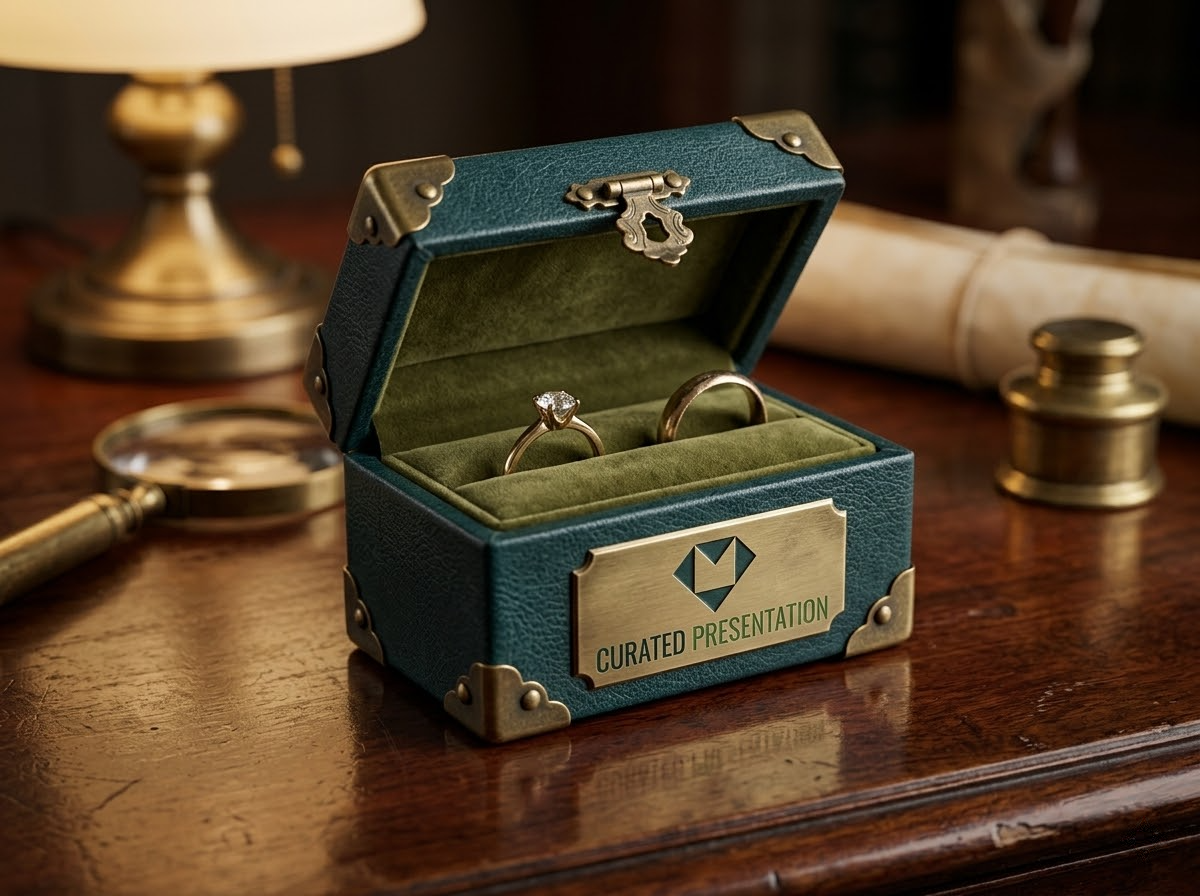


A vintage double-ring box protects jewelry. Velvet linings prevent scratches. Walnut wood provides natural durability.
That is the product value in three short lines. A strong double-ring box protects, presents as a pair, and strengthens brand memory. For luxury jewelry brands, retail buyers, and wedding planners, these three functions matter at the same time.
The best boxes do not depend on fake aging or random ornamentation. They depend on proportion, material choice, insert engineering, hinge control, and visual restraint. In my experience, the difference between a premium sample and a weak sample usually shows up in the tolerances. The wrap edge looks cleaner. The slot spacing feels calmer. The lid stops at the right angle.
This guide explains how a custom vintage ring box should be built, what dimensions usually work best, how material choices change cost and feel, and what buyers should check before approving production.
A vintage double-ring box is a two-slot presentation box designed to hold a matched pair of rings in a heritage-inspired format. It combines a compact shell, a soft protective lining, and a balanced insert layout so both rings look unified and stay protected.
It is not just a ring box with a darker color. A real vintage-style box combines old-world visual cues with modern production control. It needs to feel timeless, not theatrical.
A double-ring box must solve spacing, symmetry, and lid clearance at the same time. That makes it more demanding than a single-ring box.
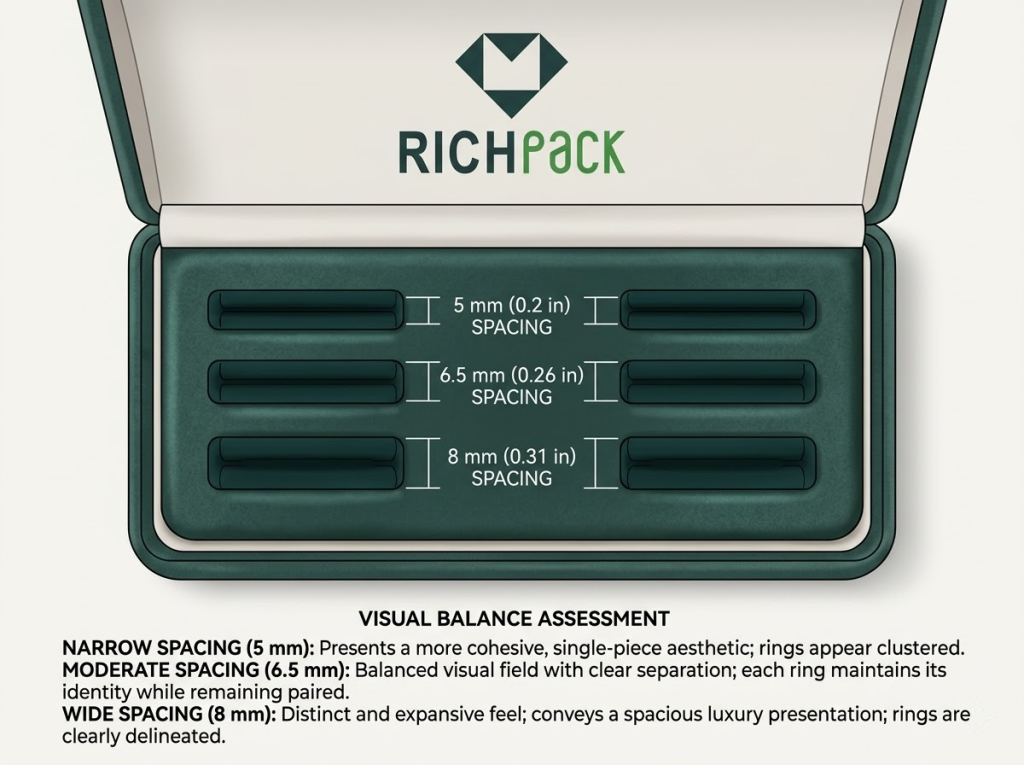
Two rings need enough distance to avoid rubbing, but not so much that the box feels empty. In premium samples, the gap works best around 5 mm to 8 mm, keeping rings visually linked and reducing metal-on-metal contact.
For bridal sets or paired wedding bands, suppliers also need to account for head height differences. If one ring has a taller setting, the insert height and lid clearance need to absorb that difference without making one side look sunken.
Buyers choose this style because it supports protection, presentation, and emotional impact in one object.
That is why a vintage double ring box works well for wedding bands, bridal sets, couple rings, heirloom-inspired collections, and premium gifting. It presents a pair, not a single item. That changes the emotional read immediately.
The strongest boxes do not copy antique designs line by line. They borrow the right signals and adapt them to a modern brand system.
A luxury jewelry label may want walnut grain with a dark green flocked insert. A bridal brand may prefer ivory suede with a soft gold interior logo. A retail chain may choose a leather vintage double-ring box that scales better in bulk production while keeping a heritage feel.
Heritage provides emotional language. Branding gives the box a commercial purpose.
Many buyers start with decoration instead of construction. That sequence usually weakens the final result.
A box can look vintage in a studio photo and still feel cheap in hand if the hinge drags, the insert is loose, or the wrap lines are uneven. Start with structure. Then refine the styling.
Vintage style still signals luxury because it suggests permanence, ritual, and memory. It slows the visual pace and makes the packaging feel less disposable than trend-driven retail boxes.
That is one reason premium buyers keep returning to deep walnut tones, muted leather surfaces, velvet linings, antique brass accents, and clamshell or square silhouettes. These details tell the buyer that the brand values craft and continuity.
Historical jewelry storage balanced protection and display long before modern branding existed. That principle still defines premium packaging.
The Metropolitan Museum of Art documents jewelry boxes with multiple compartments and sliding-lid logic in ancient contexts, which supports a simple point. Premium packaging has always balanced protection with ceremony.
That same logic still works in modern ring packaging. A heritage look feels credible when it is supported by real construction details like controlled lid movement, clean lining work, and clear internal separation.
Vintage styling depends on tactile trust. If the material feels wrong, the look collapses fast.
Walnut, matte leather, flocked velvet, satin, brushed hardware, and low-gloss finishes all support the vintage language because they absorb light softly and feel settled. High-gloss plastics and bright synthetic linings usually work against that effect.
Restraint looks more expensive because it signals control instead of excess.
A smaller logo, a softer color transition, and a clean edge fold usually create a stronger premium read than aggressive embossing or heavy distressing. In my experience, restraint ages better in both photography and retail display.
Vintage styling helps brands frame the product as collectible, giftable, and emotionally durable.
That matters in the luxury and wedding categories because the box often stays with the customer long after purchase. A standard ring box is a type of packaging. A good vintage box becomes part of the memory object.
A convincing vintage look comes from a system, not from a single finish. Shape, material, color, hardware, lining, and logo treatment need to tell the same story.
If those elements align, the box feels intentional. If they clash, the result feels costume-like or low-end.
The silhouette is the first thing a buyer reads. Before they notice the grain, foil, or lining, they notice the form.
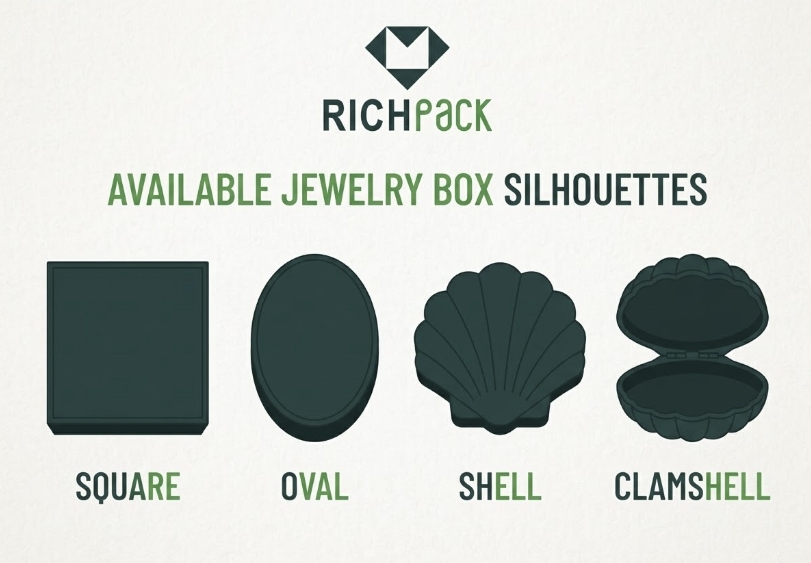
Vintage-style ring boxes usually work best when the body width is around 50 mm to 70 mm, the depth is around 45 mm to 65 mm, and the height is around 35 mm to 55 mm, depending on lid style and stone clearance. Square forms, rounded-edge rectangles, shell forms, and softly domed lids all perform well because they feel rooted in jewelry presentation history.
A silhouette that is too sharp can look modern and cold. A silhouette that is too ornate can look novelty-driven. The strongest result usually sits in the middle.
Surface material does most of the emotional work. It is what the hand touches and what the camera reads first.
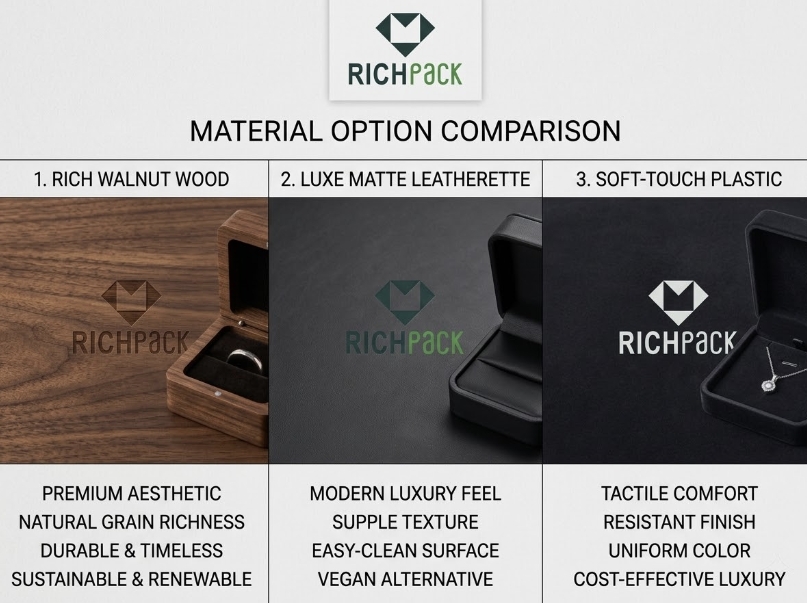
A wood vintage double ring box usually signals craftsmanship, permanence, and natural richness. Walnut is especially effective because the grain creates depth without needing too much extra decoration.
A leather vintage double ring box feels softer and more formal. It fits brands that want refined old-world elegance with cleaner lines.
A plastic vintage double-ring box can still work in commercial programs, but it needs stronger finishing discipline. Without a matte or soft-touch treatment, plastic usually weakens the premium signal.
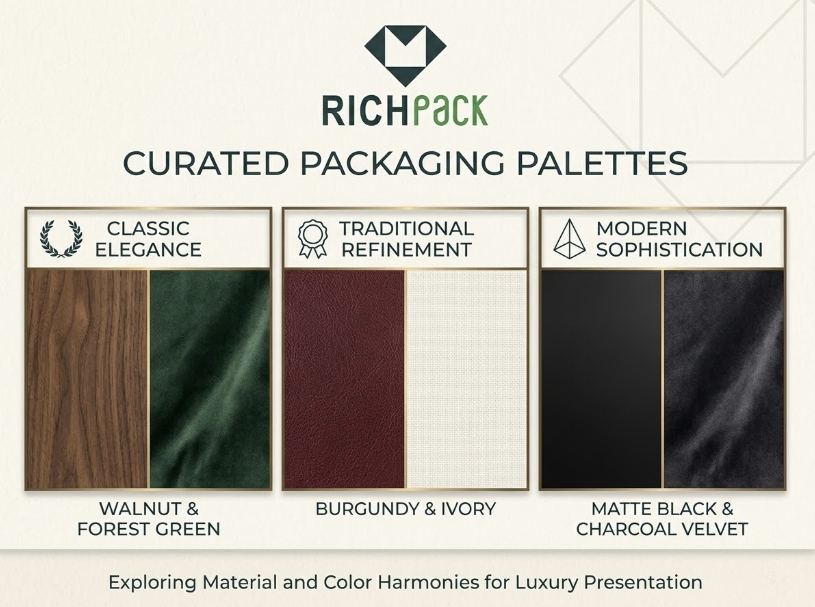
Vintage color feels credible when the palette looks deep, calm, and internally consistent.
Rich burgundy, forest green, black walnut, muted navy, ivory, and dusty rose can all work when the interior and exterior stay in harmony. If the outer shell implies heritage but the insert is a bright synthetic red, the illusion breaks quickly.
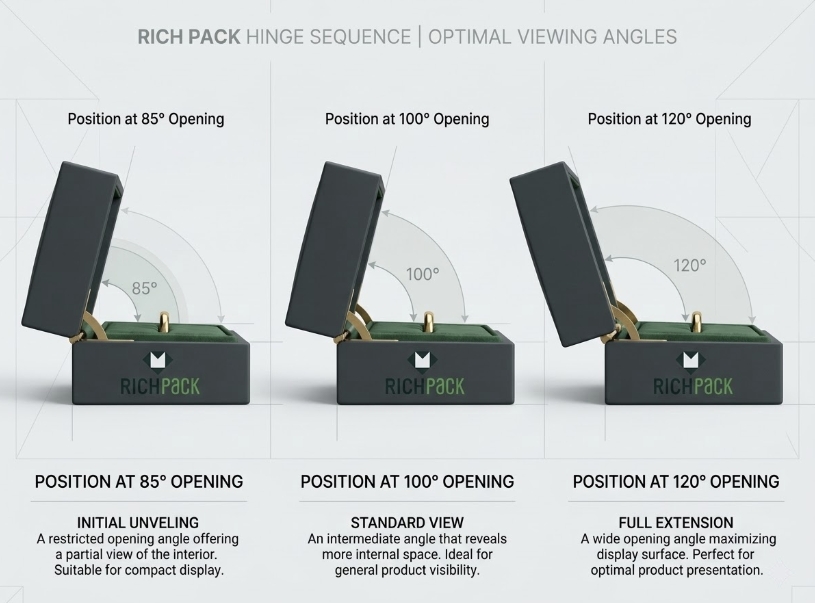
Hardware is a small detail with a large effect. Hinge movement, hinge finish, clasp precision, and lid resistance all change perceived quality.
In most premium box samples, the lid opens best between 95 and 110 degrees. That range usually supports good visibility in hand and in photos without making the lid feel floppy. Hidden hinges or warm brass-tone hardware both work, but the finish must match the rest of the box.
A bright modern hinge on a heritage-style shell usually feels wrong.
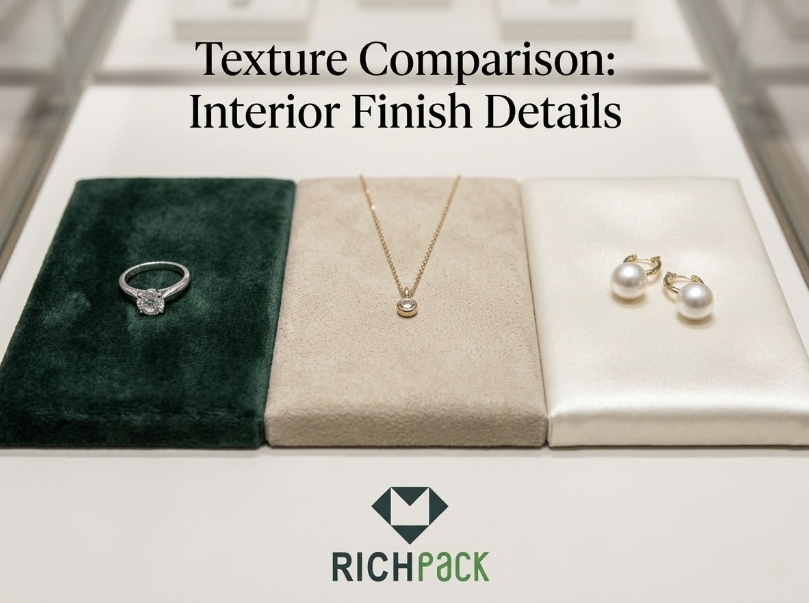
Linings shape both protection and first reveal. Velvet, flock, suede-touch fabrics, satin, and flannel-style interiors all fit the vintage vocabulary.
For ring security, insert foam density usually performs best around 30 to 45 kg/m³ when paired with a flocked or velvet surface. Softer than that, the rings may lean. Much firmer than that, insertion can feel forced.
According to historical jewelry storage references, velvet and leather linings were used because they added both visual richness and protective value. That logic still holds.
A logo should complete the box, not dominate it.
Gold foil, blind embossing, small monograms, and inside-lid marks usually perform better than oversized front branding. For most boxes in the 55 mm to 65 mm front width range, a logo width of around 18 mm to 28 mm is enough. Much larger than that, the box starts to feel promotional instead of collectible.
Material choice changes hand feel, branding flexibility, visual depth, and cost structure at the same time. That is why it should be treated as a positioning decision, not just a sourcing decision.
A wood vintage double ring box is popular because it gives the fastest route to a handcrafted and keepsake-level feel.
Real or veneered walnut gives natural depth and strong photo appeal. Wood also performs well in wedding styling because it adds warmth and clean grain lines.
The tradeoff is production control. Wood boxes demand more precise sanding, hinge placement, and lid alignment. In practical sourcing, wood styles can produce a 10% to 15% higher defect risk than simpler wrapped rigid boxes if the factory’s tolerance control is weak.
A leather vintage double ring box works better when the brand wants a more tailored and formal luxury signal.
Leather or leatherette wraps also take embossing and foil well, which makes them useful for boutique branding and retail presentation. The main risk is edge finishing. If the corners bulk up or wrinkle, the premium effect disappears.
Yes, but only when the finished system is disciplined. A plastic vintage double-ring box usually needs matte surfaces, darker heritage colors, stronger insert quality, and tighter logo restraint.
A cheap gloss finish can ruin the effect immediately.
Hybrid builds perform well when brands need to balance appearance, cost, freight, and MOQ.
A rigid board shell with wrapped paper can imitate leather. A wood-look surface can reduce weight and cost. A structured plastic base can improve consistency, while a flocked insert lifts perceived value.
Cost alone does not define value. Execution quality changes everything.
| Material | Strengths | Risks | Best Use Cases | Typical Relative Cost | Typical Cost Share vs Plastic |
| Wood | Natural grain, strong craft signal, high photo appeal | More tolerance issues, hinge alignment sensitivity | Luxury jewelry, proposals, and keepsake boxes | High | 1.8x to 2.6x |
| Leather | Elegant finish, strong branding potential, refined hand feel | Corner wrap flaws, finish inconsistency | Boutique retail, heritage brands, premium gifting | Mid to High | 1.3x to 1.9x |
| Plastic | Lower cost, scalable, repeatable | Can feel cheap, fast, and weaker tactile value | Entry programs, promotional lines | Low | 1.0x |
Different buyer types usually converge around different material priorities.
That is why there is no single best answer. The right material depends on brand story, budget, and use case.
A double-ring box should be built around ring protection, visual symmetry, and production tolerance control. If one of those three pillars fails, the box stops feeling premium.
This is where average suppliers often fail. They copy the exterior language of a vintage box but miss the engineering underneath.
The ideal visible slot gap for most double-ring box inserts sits around 5 mm to 8 mm. This usually prevents rubbing while keeping the rings visually unified.
If the rings sit too close, they crowd and can touch. If they sit too far apart, the pair loses emotional unity. This matters even more when one ring has a raised head or a wider band.
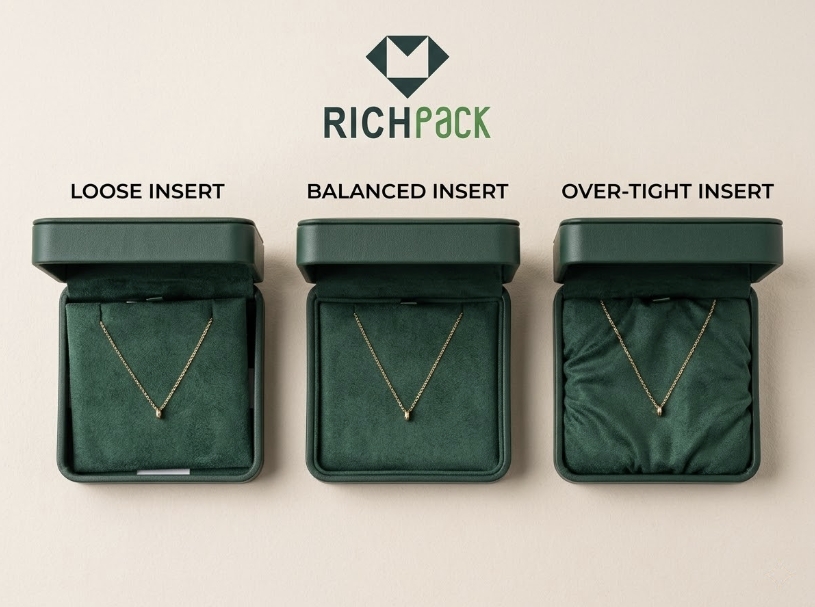
The insert firmness should hold the shank without forcing it. For most ring box programs, the insert slit width should stay about 0.5 mm to 1.5 mm narrower than the target ring shank thickness, so the ring stays stable without feeling jammed.
A typical insert stack may use 3 mm to 5 mm velvet surface foam over a firmer support layer. For slim wedding bands under 2.5 mm wide, the slit tension usually needs to be slightly tighter than for wider bands.
For premium samples, ask the supplier to test at least three ring profiles. A box that works only for one sample ring is not production-ready.
For proposal use, retail display, and flat-lay photography, the lid usually works best when it opens between 95 and 110 degrees.
A lid that opens too far can feel floppy. A lid that stops too upright can cast awkward shadows. A lid that opens too shallowly can block the reveal.
The base cavity in many premium double-ring boxes works best around 18 mm to 28 mm deep, depending on ring head height and insert thickness.
A shallow base can create a crisp reveal, but it may fail with taller settings. A deep base offers more protection, but it can swallow slim wedding bands.
For wrapped rigid-board constructions, outer wall thickness often works best around 1.5 mm to 2.5 mm greyboard. Premium keepsake programs may go up to 3 mm for a heavier hand feel.
For wood shells, body wall thickness often ranges from 4 mm to 8 mm, depending on the box size and hinge style. Thinner wood can feel elegant, but it raises the risk of edge fragility and hinge instability.
Hinge stability is one of the clearest markers of craftsmanship. In a sample review, a hinge should stay aligned through at least 200 to 500 open-close cycles without visible drift, side lift, or looseness.
A double-hinged ring box should feel calm and repeatable. If the hinge action changes after only a few test cycles, the production quality is not ready.
Small tolerances create the premium feel. For most high-end samples, buyers should watch these ranges closely.
These numbers are not universal factory law, but they are useful review benchmarks.
A good spec sheet turns taste into production language. It gives the factory fewer places to guess.
| Construction Item | Recommended Starting Range | Why It Matters |
| Visible ring slot gap | 5 mm to 8 mm | Prevents rubbing and keeps visual unity |
| Lid opening angle | 95° to 110° | Supports reveal and photography |
| Base cavity depth | 18 mm to 28 mm | Protects settings without swallowing slim bands |
| Insert slit tension | 0.5 mm to 1.5 mm narrower than the shank | Holds rings firmly without damage |
| Greyboard thickness | 1.5 mm to 2.5 mm | Balances rigidity and production efficiency |
| Wood wall thickness | 4 mm to 8 mm | Supports durability and hinge stability |
| Visual lid gap | 0.5 mm to 1.2 mm | Signals precision |
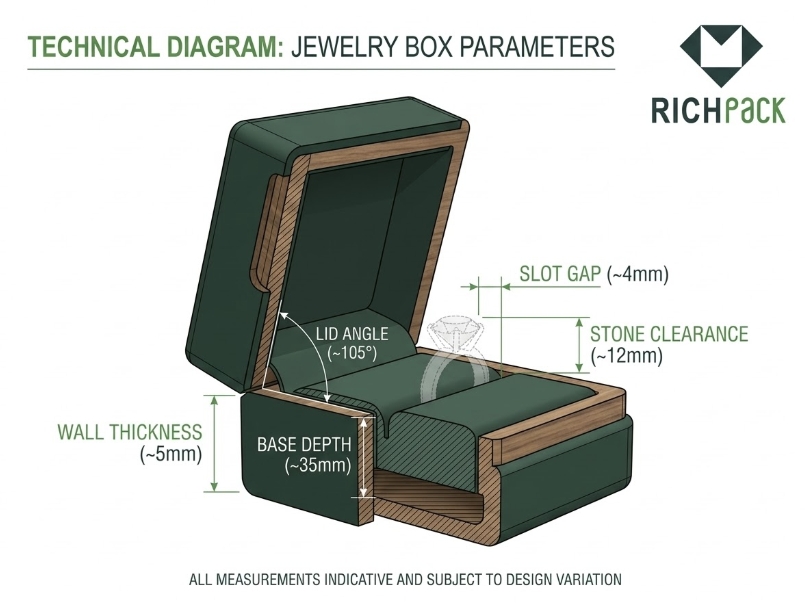
Buyers should review function, finish, and tolerance before approving mass production. That review is where many preventable defects are caught.
Use this checklist before sign-off.
A custom vintage ring box should begin with brand story and use case, not logo placement. Once those two inputs are clear, finish choices become easier and more disciplined.
Exterior finishing sets the tone before the lid opens.
For wood, that may mean a matte oil effect, soft satin sheen, or visible grain enhancement. For leather-style wraps, it may mean fine pebble texture, smooth classic grain, or lightly brushed surfaces.
Instead of stacking multiple effects, choose one finish language and make it precise.
The insert color should support both the exterior and the jewelry itself.
Ivory interiors feel bridal. Dark green feels heritage-rich. Deep charcoal makes diamonds and polished metal stand out. Burgundy can feel classic, but only when the material quality is strong enough to support it.
Logo placement should follow the moment of discovery.
A small outer mark creates recognition. An inside-lid logo creates a more intimate reveal. A bottom mark supports traceability without interrupting the vintage feel.
For many high-end projects, the inside lid remains the safest choice because it protects the outer silhouette.
Foil should sharpen identity, not overpower the object. Warm gold foil often works best on dark green, navy, walnut, and burgundy projects.
For smaller box fronts, the logo area should usually stay below 15% to 20% of the visible front face. Above that, the branding can start to overpower the heritage styling.
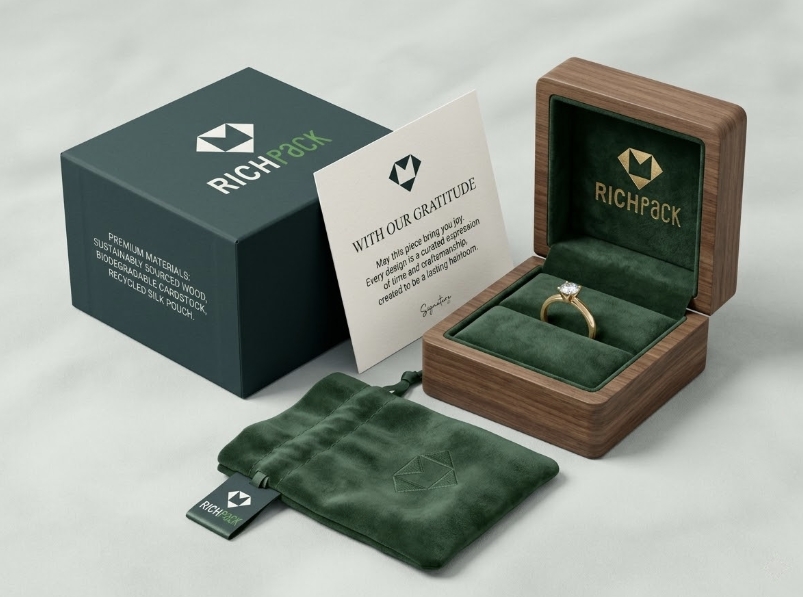
Secondary packaging affects the perceived value more than many buyers expect. A strong ring box can lose impact quickly if the outer carton or pouch feels generic.
That is why premium projects often require the box, outer carton, pouch, card, and shopping bag to follow the same finish language.
A prototype should be judged like a product, not admired like a mood board.
Check these points carefully before approval.
Luxury buyers judge through three filters at once. They look at emotional value, production reliability, and use-case fit.
A strong box must satisfy all three.
Jewelry brands care about emotional alignment and long-term brand memory. They want the box to match the perceived value of the ring, support product photography, and elevate the reveal.
For this buyer, material honesty matters. If the box is supposed to feel artisanal, the finish cannot feel synthetic or rushed.
Retail chains care about repeatability. One beautiful sample is not enough.
They need stable hinge action, predictable insert fit, color consistency, manageable MOQ, and tight quality control across every batch. This is where many attractive boutique samples fail.
Wedding planners often judge with the camera in mind. They need a ring box that performs well in flat-lays, ceremony shots, and hand-held close-ups.
For them, shape, lining contrast, and lid behavior often matter more than manufacturing terminology.
Weak samples usually reveal themselves quickly.
A realistic brand upgrade often comes from material hierarchy, not visual excess.
For example, a small bridal label can move from a glossy plastic shell to a matte leatherette shell with a darker flock insert and a smaller inside-lid logo. That type of upgrade usually improves flat-lay photography, raises gift perception, and makes the product feel more shareable online without forcing a full wood-box budget.
A second common case appears in premium jewelry retail. A brand may switch from thin rigid-board walls to a heavier greyboard shell with a cleaner lid gap and softer velvet insert. That change does not dramatically alter the silhouette, but it often improves hand feel, hinge stability, and the customer’s sense that the box is worth keeping.
Ask practical questions, not decorative ones.
Those questions usually reveal more than a mood board ever will.
A vintage look is easy to request and easy to get wrong. Most failures happen when brands chase style cues without respecting the underlying build logic.
Artificial scuffs, exaggerated dark edges, and random distress marks often make a box feel themed rather than premium.
Vintage style should feel settled and confident. It should not look like costume design.
A weak lining destroys trust fast. If the insert pills reflect too much light or feel harsh against the ring, the whole craftsmanship story collapses.
Nothing cheapens a ring box faster than movement inside the insert. A ring that leans or twists tells the customer that the presentation was treated as an afterthought.
Large logos may improve recognition, but they often hurt elegance. In a vintage box, the logo should act like a signature, not a billboard.
A poor hinge turns every opening into a reminder that the box is only pretending to be premium. This matters in retail, in proposals, and in repeat customer memory.
Some boxes combine a heritage exterior with a modern interior, or a classic silhouette with an aggressive metallic finish. That tension rarely feels sophisticated.
A strong vintage box needs one story from outside to inside.
A premium vintage double ring box feels premium because its structure, material, and insert work together as one system.
The shell, hinge, insert, and logo all need to support the same heritage feel. If one detail feels cheap, the entire box loses authority. That is why premium perception usually comes from tolerance control more than surface decoration.
Vintage style still signals luxury because it suggests permanence, memory, and craftsmanship.
Soft linings, restrained branding, and heritage-inspired materials make the box feel less disposable and more collectible. That emotional read matters in wedding, jewelry, and gifting categories where packaging becomes part of the experience.
A wood vintage double ring box usually feels more artisanal, while a leather version usually feels more formal and refined.
Wood often works better for keepsake and wedding use. Leather often works better for boutique branding and cleaner foil execution. The better choice depends on brand story, price point, and production scale.
Yes, a plastic vintage double-ring box can still look luxurious when the finish system is controlled tightly.
It usually needs matte surfaces, darker heritage colors, a stronger insert, and restrained branding to feel credible. Without those upgrades, it tends to feel more commercial than luxurious.
For many premium samples, a visible slot gap of around 5 mm to 8 mm works best.
That range usually keeps the rings visually unified while reducing the chance of rubbing. Final spacing should still be tested against actual ring widths and head heights.
In most cases, a lid opening angle of around 95 to 110 degrees gives the best balance between visibility, stability, and photo performance.
If the lid opens too far, it can feel loose. If it stops too upright, it can block the reveal or create harsh shadows.
Rigid-board vintage ring boxes usually work best at 1.5 mm to 2.5 mm wall thickness, while wood shells often work best around 4 mm to 8 mm.
The exact choice depends on material, hinge type, and target hand feel. Thicker walls usually feel more substantial, but they also raise material cost and weight.
Start with your brand story and use case first, then select silhouette, material, lining, and logo treatment to match.
A strong custom vintage ring box usually depends on finish restraint, clear color harmony, and a structure that supports both protection and presentation.
A great vintage double ring box is built, not decorated into existence. The strongest results come from disciplined choices in shape, material, insert fit, hinge motion, slot spacing, wall thickness, and branding restraint.
If you want a box that feels premium in hand, works in photography, and supports long-term brand memory, focus on craftsmanship first and styling second. That shift usually leads to better samples, better production, and stronger commercial value.

Just submit your email to get exclusive offers (reply within 12 hours)





 PREV
PREV