

 PREV
PREV

How to Package and Ship Jewelry the Right Way: Complete Guide for 2026
2025-09-11



In an increasingly crowded digital landscape, a thoughtfully designed business thank-you card possesses remarkable influence. Recent data indicates that direct mail can deliver a return on investment (ROI) as high as 1,300%—significantly outperforming digital channels like email (93%) and paid search (88%).
Sending a physical card is far more than a simple professional courtesy; it is a data-backed strategic initiative that drives client loyalty, expands referral opportunities, and directly fuels business growth. Richpack Packaging understands this dynamic, offering premium custom thank-you card wholesale solutions that help brands transform standard interactions into lasting commercial value.
This article explores the strategy, design, and execution required to leverage custom thank-you cards as a tool for strengthening business relationships, reinforcing brand identity, and achieving sustainable growth.
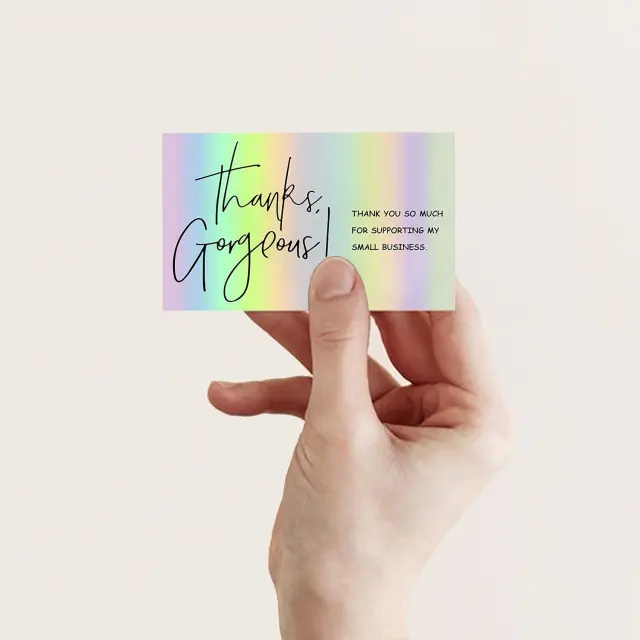

A business thank you card is a tangible instrument for expressing gratitude to clients, partners, and employees. These cards are typically presented in a high-quality, printed format that aligns perfectly with a company’s brand identity. Far more than a standard greeting card or postcard, professional thank-you cards prioritize a refined aesthetic and deep personalization. A premium card should integrate a clear message of appreciation with signature branding elements—such as a corporate logo, specific color palettes, and typography—alongside individualized content for the recipient. Whether they are hand-signed or pre-printed with space for a custom note, these cards serve as a physical representation of a brand’s standards.
The core value of a business thank-you card lies in its dual nature. It serves as both a tangible material commitment—proving that a company is willing to invest time and resources—and a powerful vehicle for emotional connection. Unlike an automated email, the process of selecting, drafting, and mailing a physical card sends a profound signal: “You are important to us.” Psychology plays a major role in why this medium remains so effective in a digital world. Research indicates that 94% of people have a positive emotional response to receiving personal letters and cards. Furthermore, Gallup data shows that receiving physical mail makes a significant percentage of Americans feel valued and prioritized. This psychological impact explains why, in a highly automated business environment, a sincere, physical thank-you card can generate influence and loyalty that far exceeds expectations.
Sending a thank-you card immediately after a deal is closed or a contract is signed is one of the most effective and high-impact ways to use this tool. This moment represents a critical turning point—the shift from a prospect to an active partner. A prompt, professional card does more than just reinforce the mutual agreement; it sets a positive, proactive tone for the long-term relationship.
A manufacturing firm in Dallas recently demonstrated the power of this strategy: by mailing thank-you cards signed by the sales team immediately after contract signing, they included personalized messages that resulted in an 80% customer retention rate for subsequent projects.
When writing these business thank you card, focus on the specific value of the deal or the shared goals of both parties. For example, a successful agreement note might read:
“Thank you for choosing to partner with us to achieve [specific project goal]. We are genuinely excited about this partnership and are committed to providing you with the highest level of service.”
By explicitly mentioning specific details of the agreement, the recipient immediately recognizes your attention to detail and the value you place on their business. Research consistently shows that these highly targeted cards are far more effective at driving loyalty than generic templates.
The period immediately following project delivery or service completion is another high-value opportunity to send a thank-you card. This stage is a critical touchpoint where the client evaluates their overall experience with your brand. Sending a card within 48 hours of final delivery—a window that is even more vital following high-stakes events like trade shows—solidifies the memory of a successful outcome and builds a foundation for repeat business.
The experience of many creative agencies proves this point: business thank you cards sent after a high-end project wrap-up do more than just strengthen ties—they directly open the door for referrals and new opportunities.
A project completion card should specifically highlight the deliverables and successful moments of the collaboration. For example:
Thank you for your trust and cooperation throughout [Project Name]. Your timely feedback and professional approach allowed us to exceed all our targets on schedule. We particularly appreciated your openness to innovation, which was instrumental to the project’s success.
Sincerely,
The Richpack Team
This type of summary message ensures that the client maintains a strong, positive emotional connection with your company long after the work is finished.
Client retention and relationship management is an ongoing process where thank-you cards act as a vital “relationship barometer.” Sending strategically timed cards prevents client churn and reinforces long-term professional bonds. Data consistently shows that acquiring a new customer is anywhere from 5 to 25 times more expensive than retaining an existing one. From an economic perspective, sending quarterly or semi-annual thank-you cards to long-term clients is a highly cost-effective strategy.
An effective retention strategy might include:
A prominent law firm in Chicago successfully implemented this by sending personalized holiday cards featuring handwritten notes. This simple gesture resulted in a 25% increase in client retention. While that percentage may seem modest, when calculated against Customer Lifetime Value (CLV), even a small improvement in retention can lead to double-digit revenue growth over time.
Investing in custom thank-you cards for business allows you to automate the high-quality production of these assets while maintaining the personal touch necessary to keep your brand top-of-mind. This level of intentionality signals to your clients that you are not just executing transactions, but are truly invested in their long-term success.
Following up with business thank you cards after meetings, events, or trade shows is a widely overlooked yet high-potential growth opportunity. Data from the trade show industry is sobering: 79% of leads never convert into sales, and nearly 70% of those leads never receive any follow-up communication at all. This means that the significant capital invested in booth design, travel expenses, and marketing collateral is often wasted due to a lack of systematic follow-up.
Sending a thank-you card within 48 hours—or ideally 24 hours—of an event can boost conversion opportunities by 47%. A timely note reminds prospects of the specific conversation held at your booth, reinforces your brand image, and demonstrates that your business takes every interaction seriously.
A comprehensive trade show follow-up strategy should include:
In an Account-Based Marketing (ABM) strategy, thank-you cards serve as a powerful tool for precision client engagement. The core of ABM is delivering hyper-personalized communication and experiences to specific high-value accounts. Within this framework, thank-you cards can take several high-impact forms:
By integrating physical business thank you cards into your ABM and gifting workflows, you move beyond “transactional” communication and begin building the kind of rapport that turns a client into a brand advocate.
Custom thank-you cards serve as precise touchpoints that reinforce your brand identity. Every card is a micro-representation of your brand’s story and values. By incorporating standardized typography, color palettes, and logos—or even a signature tagline—you ensure that even your smallest communications contribute to a cohesive brand narrative.
Consistency is paramount. Research into rebranding efforts shows that brand recognition drops significantly when logos, fonts, or colors vary across platforms. For thank-you cards, this means adhering to standardized color systems (CMYK for print and HEX for digital references) and maintaining consistent font pairings. For example, if your brand guidelines specify Montserrat Bold for headlines and Montserrat Light for body text, your cards should follow the exact same hierarchy. Every detail, from logo placement to the “breathable” white space, should reflect your official brand manual.
Through this systematic approach, every card you send strengthens your image in the mind of the recipient. Consistent brand presentation can significantly increase brand recall. Furthermore, because a physical thank-you card is a tangible keepsake often kept on a desk or displayed in an office, its impact is far more enduring than a disposable digital advertisement. Richpack Packaging specializes in custom solutions that ensure total brand alignment across every batch, from colour precision to paper quality, meeting the most rigorous corporate standards.
It is important to distinguish between brand recognition and brand recall, as both are critical to a healthy marketing funnel. Recognition occurs when a customer identifies your brand upon seeing your logo or colors. Recall, however, is the more powerful ability to remember your brand without any visual prompt. Custom thank-you cards contribute significantly to both dimensions.
From a recognition standpoint, physical mail enjoys a much higher “dwell time” than digital touchpoints. Unlike a fleeting email, people tend to keep tangible thank-you cards—often displaying them on desks, pinning them to office bulletin boards, or filing them away for future reference. Every time a client glances at that card, your brand identity is reactivated, creating multiple “organic impressions” that strengthen their familiarity with your logo and style.
Neuroscience offers a compelling explanation for this lasting impact. Studies show that processing physical mail requires 21% less cognitive effort than digital information. This lower cognitive load means your message is easier to understand and, more importantly, easier to remember. By reducing the “noise” associated with digital screens, a physical card allows your brand message to be absorbed more deeply.
When you combine these factors into a systematic campaign—such as sending themed thank-you cards to specific client segments each quarter—you create a compounding effect that significantly boosts top-of-mind awareness and long-term brand authority.
Thank-you cards are far more than mere marketing tools; they serve as a powerful vehicle for your brand values. By intentionally selecting design themes, linguistic styles, and even specific paper stocks, businesses can articulate their core ethos to every recipient.
For instance, if sustainability is a cornerstone of your brand, opting for thank-you cards made from recycled or FSC-certified paper demonstrates that commitment in action. You can explore how to integrate these sustainability principles into your brand assets to better align with eco-conscious consumer expectations. Your messaging can further reinforce this: “Thank you for joining us in choosing a sustainable path for our business partnership.”
Similarly, if your brand prioritizes creativity and innovation, your thank-you card design can be more avant-garde and bold, utilizing unconventional layouts or striking color combinations to stand out.
As a highly personalized and recurring touchpoint, a thank-you card is an ideal platform for reinforcing brand principles. With every card sent, a business effectively declares: “This is who we are, and this is what we stand for.”
In high-stakes commercial markets, professional image is often the deciding factor between a closed deal and a missed opportunity. A beautifully designed, high-quality thank-you card sends a powerful message to the recipient that your business values detail, invests in its relationships, and maintains the highest standards of professionalism. This serves as a critical psychological trigger for your clients.
Research indicates that high-quality physical materials—such as heavyweight paper, precision printing, and elegant design—significantly impact how a business is perceived. When a client receives a flimsy or poorly designed card, they subconsciously associate that lack of quality with your company’s overall service level. Conversely, a card utilizing premium cardstock (ranging from 120gsm to 300gsm), professional printing techniques like letterpress or foil stamping, and a clean layout strongly elevates your brand authority.
This boost in perception is particularly vital in high-value B2B sectors. Clients in industries such as law, consulting, finance, and high-end manufacturing are highly sensitive to signals of a provider’s professional caliber. A premium card essentially declares that your firm is well-resourced and professional enough to provide a high-quality experience in every aspect of the partnership.
In today’s omnichannel marketing landscape, the primary challenge for brands is maintaining a unified experience across every touchpoint. A thank-you card serves as a vital link in this ecosystem. Consider a typical customer journey: a prospect sees your social media ad, visits your website, meets a representative at a trade show, and finally receives a thank-you card. When each of these steps uses the same visual language, it reinforces brand recall and builds a sense of reliability and trust.
To achieve this level of consistency, businesses must rely on clear Brand Guidelines that dictate every design element—from logo placement and minimum sizing to specific CMYK and HEX color values. An effective guide is more than a reference for designers; it is a quality assurance tool that ensures every card, regardless of the print batch, is a perfect expression of your brand DNA. Richpack Packaging specializes in collaborating with clients to establish and maintain these standards, ensuring every thank-you card integrates seamlessly into your broader brand ecosystem.
The layout of a business thank-you card should strictly follow the principle of “less is more.” An overcrowded design compromises readability, dilutes the visual impact, and ultimately lowers recipient engagement. A professional card design typically utilizes a tiered visual hierarchy:
Core Message:
Bold “Thank You”
Personal Details:
Specific Interaction
Brand Identity:
Logo & Contact
This tiered structure aligns with best practices in visual hierarchy. When a recipient opens the card, their eyes are naturally drawn to the most prominent text first, then flow downward to the personal message, and finally land on your brand information. This sequence is a deliberate design choice, not an accident.
Furthermore, negative space (white space) is a critical element. White space is never “wasted” space; it is the “breathing room” that gives a design a premium, sophisticated feel. A card that feels balanced and spacious is far more likely to be cherished and remembered than one cluttered with excessive information.
Brand consistency extends beyond just logos and colors—it encompasses your entire visual language. If your brand is synonymous with innovation and technology, your thank-you card should reflect this through minimalist sans-serif fonts, geometric design elements, and a cool-toned color palette. Conversely, if your brand identity is built on tradition and reliability, your design should lean toward classic serif fonts, traditional layouts, and warmer, more grounded tones.
This consistency must be maintained across every corporate touchpoint. Richpack Packaging recommends that clients perform a brand audit before launching a thank-you card project. This ensures that the card design aligns perfectly with your website, marketing collateral, and physical office environment. While this process requires an initial investment of time, it guarantees long-term brand equity; studies consistently show that businesses with a cohesive brand presentation significantly outperform those with inconsistent messaging.
Typography is a cornerstone of effective business thank-you cards. First and foremost, legibility is non-negotiable. No matter how aesthetically pleasing a font appears, the design fails if your recipient struggles to read your message. As a rule of thumb, use clean sans-serif fonts—such as Helvetica, Arial, or Verdana—for the body text. Stick to a minimum size of 11 or 12 points to ensure the content is accessible and comfortable for all readers.
Headings offer a bit more room for creativity and can be scaled up to 14 or 18 points. You might experiment with classic serif fonts like Garamond or Times New Roman, or even more stylized display fonts, provided they remain perfectly clear.
Beyond legibility, your typography should mirror your brand’s unique persona. Serif fonts typically project a sense of tradition, authority, and reliability, making them a natural fit for law firms, financial institutions, and established consulting agencies. In contrast, sans-serif fonts feel modern, minimalist, and innovative, which resonates well with tech companies, startups, and creative boutiques. While script or decorative fonts can add a touch of flair for emphasis, they should be used sparingly to maintain a professional edge. A professional design standard is to limit yourself to two fonts per card—one for the heading and one for the body—to avoid a cluttered or disorganized appearance.
Color selection for business thank-you cards serves a dual purpose: it is both an aesthetic choice and a strategic psychological decision. First, your palette should align with your existing brand identity. If your corporate colors are navy blue and gold, the card should lead with these hues, perhaps complemented by neutrals like white or light gray. This consistency is key to reinforcing brand recognition across all client touchpoints.
Second, you must consider the psychological impact of your color palette. Blue typically conveys trust and professionalism—a staple for B2B companies. Red, while passionate, often carries a sense of urgency that may feel too intense for a gracious thank-you note. Green represents growth and sustainability, fitting for eco-conscious or wellness brands. For those in luxury or high-end services, gold or silver accents communicate premium value.
Because thank-you cards prioritize appreciation and relationship-building, warm tones—such as cream, beige, or soft tan—often work better than cool colors to evoke a sense of genuine connection. You can explore more about how these color psychology principles influence consumer perception and brand authority in high-end sectors.
Finally, prioritize color contrast. There must be enough contrast between the text and the background to ensure legibility. Dark text on a light background is generally the most professional and “safe” choice for printed materials. If your design includes graphics or photography, ensure the colors remain harmonious to avoid a cluttered or overwhelming aesthetic.
The choice of materials and print quality are the defining factors in the lasting impression your thank-you card leaves. A card printed on flimsy, standard paper (70-90 gsm) sends a subtle but clear signal that the relationship isn’t a high priority. In contrast, utilizing heavyweight, premium cardstock (120-300 gsm) combined with sophisticated finishing techniques strongly communicates that you are willing to invest in the partnership.
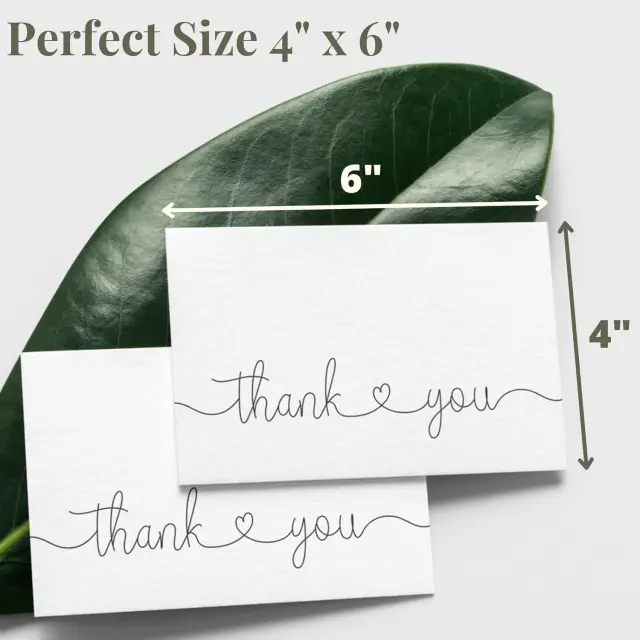

Your paper selection should align with your specific brand positioning. A gloss finish provides a vibrant, reflective look that is perfect for bold, colorful designs. A matte finish offers a softer, glare-free appearance that is widely regarded as more elegant and professional. For brands that emphasize craftsmanship and heritage, textured paper provides a tactile experience that conveys superior quality. Many premium businesses prefer matte finishes for their sophisticated feel and excellent color accuracy.
To ensure your cards meet professional standards, it is helpful to understand the technical foundations of your materials. You can explore this comprehensive guide to paperboard grades to see how different stocks impact the durability and perceived value of your printed assets.
The printing process itself is equally crucial. While standard digital printing is sufficient for most needs, high-end applications benefit from specialized techniques that elevate the brand experience. Consider letterpress for a classic, indented feel; foil stamping in gold or silver for a metallic luster; embossing for a raised 3D effect; or debossing for a recessed design. While these processes involve higher production costs, they significantly boost the card’s perceived value. Richpack Packaging offers a full suite of solutions, from standard high-quality printing to premium specialty finishes, helping you select the ideal combination of materials and craftsmanship to fit your budget and brand strategy.
At its heart, a business thank-you card is about authentic gratitude. While this seems straightforward, many corporate messages fall into the trap of being overly formal or sounding like a generic template. Effective appreciation must be clear, specific, and immediate in its sincerity.
While “Thank you” is the most direct way to start, adding specificity makes the message far more impactful. Instead of a simple “Thanks,” consider phrases like: “Thank you for the trust you’ve placed in us during this project” or “We truly appreciate your choice to partner with us.”
Your expression of gratitude should be the visual centerpiece of the card. In terms of design hierarchy, the words of appreciation should be the most prominent element. For example, a high-impact card layout might feature:
“Thank You” “For your vital contribution to our shared success.”

This approach is both concise and powerful. Rather than relying on clichés like “Thank you for your business,” aim to highlight the specific value of the relationship—such as “Your support during our recent transition” or “Your trust in our new innovative direction.” This level of detail proves that your business is genuinely attentive to the client’s unique contributions, ensuring the message feels personal and earned rather than automated.
The golden rule for business thank-you cards is to keep them brief but powerful. On a small physical card, long-winded paragraphs can overwhelm the recipient and dilute the message. Ideally, your body text should remain between 50 and 100 words unless you are using an oversized card format.
Your tone should be professional yet warm. Use personal pronouns like “we” or “I” (if signed by an executive) rather than the cold, third-person “Company X.” Stick to the active voice and steer clear of corporate clichés. For instance, instead of the robotic “Your continued support is appreciated,” try something more impactful like: “Your unique insights during the [Specific Project] were instrumental in helping us exceed our targets.” The former feels like a form letter; the latter feels like a genuine acknowledgment.
A high-performing business thank-you card typically follows this structure:
Example: “Dear [Client Name], Thank you for your outstanding efforts on the [Project Name]. Your professionalism and creative approach didn’t just drive the project to success—they inspired our entire team. We look forward to our continued partnership and creating even more value together. Sincerely, [Sender Name]”
Personalization is the “secret sauce” that elevates a card from a standard courtesy to a memorable brand experience. This goes far beyond simply including the recipient’s name; it requires the content to be relevant to their specific actions, behaviors, or contributions.
To make personalization effective, try to:
The depth of your personalization should scale with the depth of the business relationship. For a new lead or first-time contact, a high-level mention of a project is sufficient. However, for a long-term VIP client, your message should be more nuanced—perhaps reflecting on their business trajectory or showing an understanding of their specific industry challenges. This sends a powerful signal: “We aren’t just doing business; we truly understand and care about your success.”
Drawing from our extensive experience at Richpack with custom projects, we have consistently found that clients who receive personalized, bespoke gratitude show significantly higher engagement and loyalty than those who receive generic templates. While personalization requires an additional investment of time, the Return on Investment (ROI) in terms of client retention is undeniable.
The tone of your thank-you card should be consistently upbeat and respectful, carefully avoiding any negative or demanding undertones. This is not a sales flyer, a post-project report, or a response to a complaint—it is a pure expression of appreciation and professional regard.
Tones to avoid:
A business thank-you card should conclude gracefully, typically featuring a professional sign-off and, in certain contexts, a subtle suggestion for the next step. Your closing can range from traditional (“Best regards,” “Sincerely,” “Warmly”) to more modern alternatives (“Looking forward to our continued partnership,” “Onward and upward”). The priority is for the sign-off to feel authentic rather than a mere formality.
Regarding the “next step,” a thank-you card should generally avoid overt sales pitches or aggressive follow-up demands. However, a gentle nudge toward future interaction is appropriate, especially following a trade show or during a new business development phase. Examples include:
These phrases express an intent to maintain the relationship while giving the recipient the freedom to choose how they engage. The key is ensuring the card never feels like a sales pitch in disguise.
The primary criteria for selecting a supplier are print quality and long-term consistency. Your business requires more than just one good batch; you need a partner who ensures that every reorder matches the original in color, texture, and precision. This is vital for maintaining brand equity. When evaluating potential vendors, consider the following:
Richpack Packaging implements rigorous quality control at every stage of production.





The primary criteria for selecting a supplier are print quality and long-term consistency. Your business requires more than just one good batch; you need a partner who ensures that every reorder matches the original in color, texture, and precision. This is vital for maintaining brand equity. When evaluating potential vendors, consider the following:
Richpack Packaging implements rigorous quality control at every stage of production. Every batch undergoes a detailed multi-point inspection, and we provide comprehensive color proofing and sample approval to ensure the final product aligns perfectly with client expectations.
A premier supplier must offer the flexibility to accommodate diverse brand requirements. This include:
This level of flexibility ensures your brand is never forced into a “one-size-fits-all” solution that fails to reflect your unique identity.
Whether you are executing a planned annual outreach or reacting to a sudden deal closure, you need a supplier that guarantees its delivery schedule.
When vetting a supplier, evaluate:
Reliable turnaround involves more than just printing time; it includes the entire workflow of design revisions and sample approvals. An efficient supplier like Richpack has defined milestones to keep your project moving on schedule.
Your needs will likely evolve over time. A campaign might start small with 100 cards for core clients and scale up to 5,000 for a national event. Choosing a scalable supplier saves you the logistical headache of switching vendors as you grow.
Key questions for potential partners:
A top-tier supplier acts as an extension of your own marketing department. This “white-glove” service includes:
When you work with Richpack Packaging, you gain access to free brand consultations, design revision support, and rapid prototyping. Whether you are launching your first gratitude strategy or optimizing a mature program, we provide tailored support to ensure you achieve the highest possible ROI.

The true strength of business thank-you cards lies in their simple yet profound nature. In an era dominated by digital noise, a well-designed, sincerely written, and premium-printed card serves as a rare but powerful tool for brand differentiation. More importantly, the emotional connection forged through a physical card transforms standard customers into lifelong brand advocates, potentially increasing their Customer Lifetime Value (CLV) by more than 300%.
For businesses seeking to maximize the Return on Investment (ROI) of their relationship-building efforts, choosing a reliable partner is essential. A premier supplier offers more than just high-quality printing and materials; they provide strategic consultation and long-term support to help you extract the greatest value from your thank-you card program. Richpack Packaging is that partner. We deeply understand the vital role custom packaging and stationery play in brand identity, and we are recognized for our top-tier quality, flexible customization, and professional service.


2025-09-11


2025-10-07

2024-11-14

When Emily’s grandmother’s teacup arrived broken, she discovered our luxury keepsake boxes – where heirlooms get the protection they deserve. That’s why we craft each unique keepsake box with museum-grade materials and precision fits, because 73% of treasures last generations in proper storage. Clients like Mark use our best keepsake boxes to transform military dog tags into legacy gifts, proving these aren’t… Continue reading How Business Thank You Cards Strengthen Business Relationships

Successful jewelry packaging lies in the perfect balance of safety protection and brand experience. It uses carefully selected materials, suitable box type and unique design to ensure the safe delivery of the product while creating a memorable unpacking moment that can enhance the brand value for customers. Why Invest in Quality Packaging?The Strategic Value for… Continue reading How Business Thank You Cards Strengthen Business Relationships
In the booming online jewelry market, where 11% of packages are damaged in transit, a single packaging mistake can erase your profits and shatter your brand’s reputation. The key is to treat packaging as a professional system, not an afterthought. This guide reveals how to protect your valuable pieces, optimize shipping costs, and turn every… Continue reading How Business Thank You Cards Strengthen Business Relationships
Space-Saving Foldable Display Cards for Earrings and Necklaces | Customizable, Durable Packaging Solutions for Jewelry Brands Requiring Bulk Display Options

Thank you Cards Messages | Essential Packaging Supplies & Must-Haves for Customer Appreciation | Richpack Wholesale Bulk
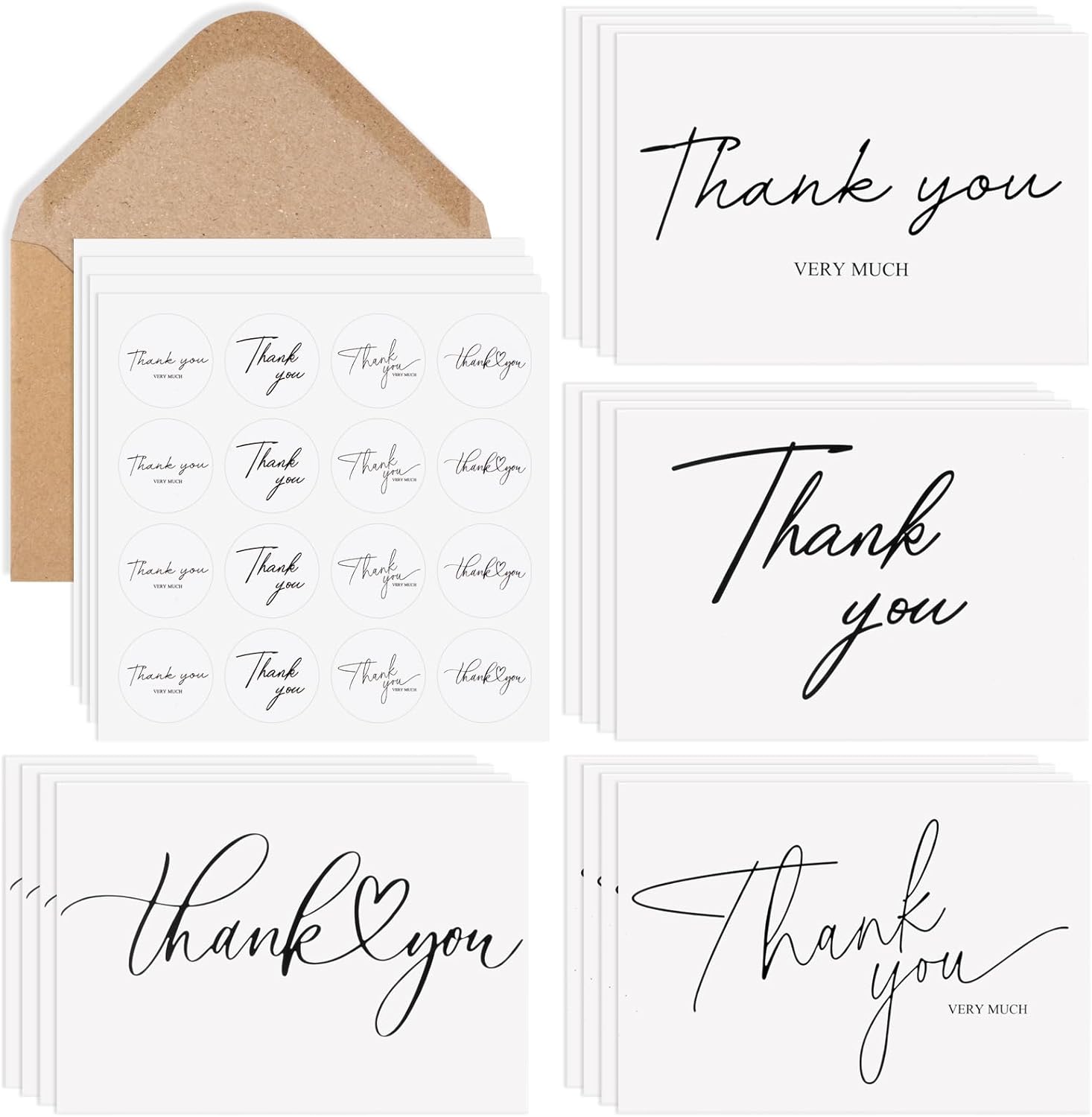
Thank You Cards for Teachers | Thank You Cards with Envelopes | Blank Cards for Wedding, Bridal, Baby Shower, Graduation, Business | Richpack Wholesale

Customizable Earrings Card Display Solutions – High-Quality Earring Cards and Hanging Earring Card Hangers for Retail and Personal Jewelry Presentation
View More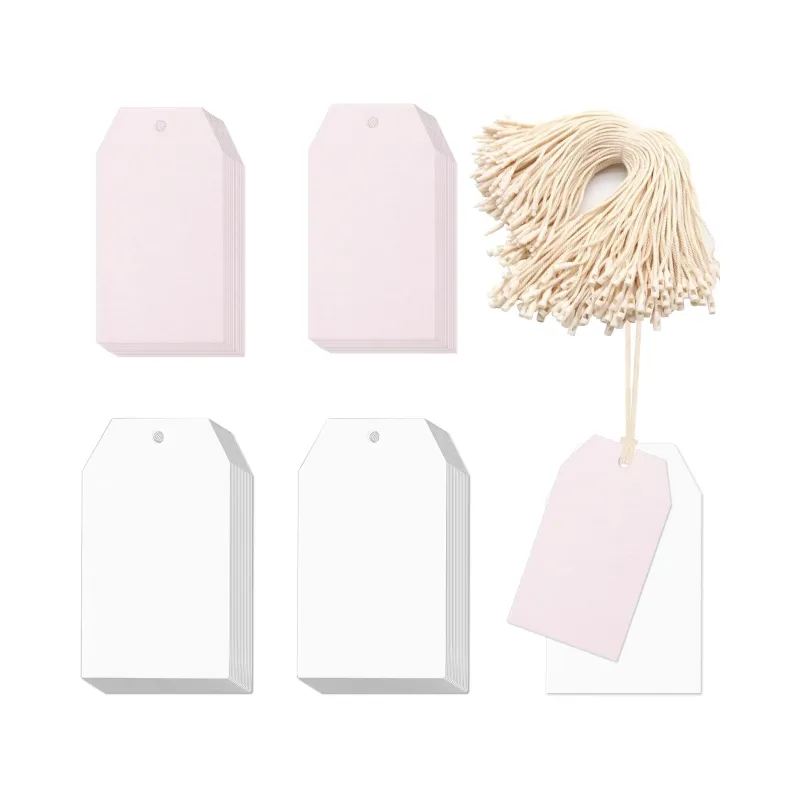
Exquisite and Elegant Presentation Cards for Jewelry Packaging | Premium, Custom Solutions for Jewelry Brands Seeking Sophisticated Bulk Display Options
View More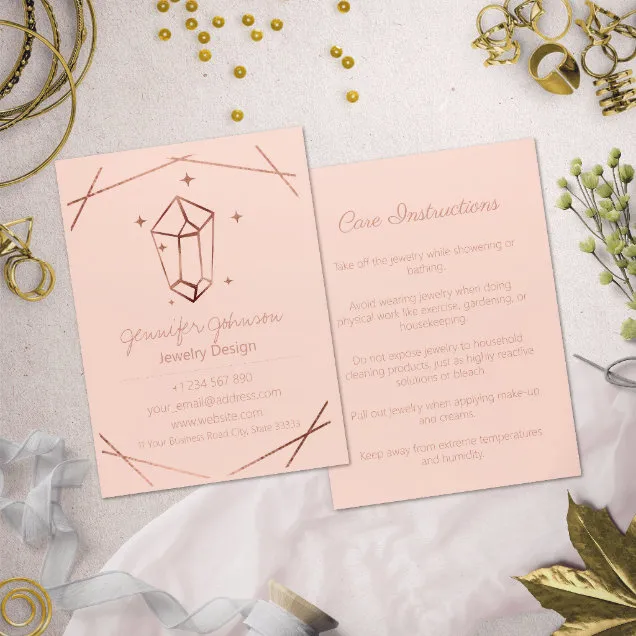
Premium Tagging Jewelry Solutions – Custom Jewelry Tags and Jewelry Price Tags by Richpack for Professional Tagging Jewelry and Brand Labeling Needs
View More
Just submit your email to get exclusive offers (reply within 12 hours)


