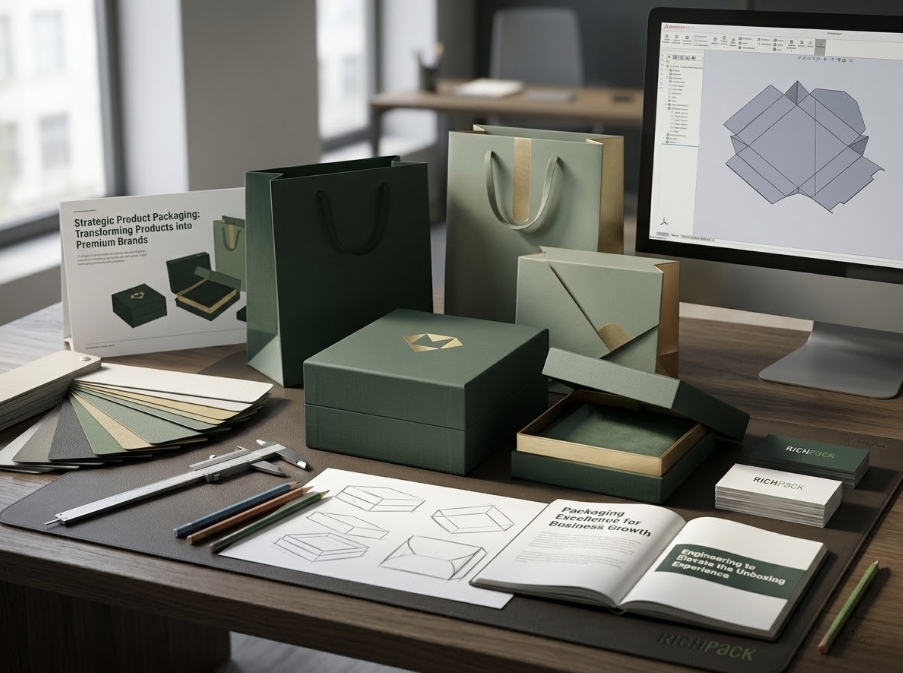



Bad packaging hides a good product.
Product packaging design can help your business grow faster by lifting conversion, raising perceived value, improving repeat purchase, and lowering avoidable damage and return costs. Nielsen’s 2015 article Make the Most of Your Brand’s 20-Second Window, citing Ehrenberg-Bass Institute research, says shoppers spend about 13 seconds choosing a brand in-store and 19 seconds online. Ipsos’ 2018 study for the Paper and Packaging Board found that 72% of Americans say packaging design influences purchase decisions. That means packaging is not decoration. It is a revenue tool for brands measured by growth.
If your product is strong but your packaging feels generic, buyers notice. If your packaging looks premium but fails in shipping, buyers notice that too.
This guide shows you how product packaging design supports business growth across retail, ecommerce, gifting, and global sourcing, and what you should change if your current pack is slowing you down.
Good product packaging design is not a finishing touch. It is part of the offer.
Like Lego bricks, each packaging decision should lock into a larger system. Your structure, paper choice, insert fit, print finish, opening sequence, and shipping logic work together to create trust, speed up decisions, and support margin for products scaled by execution.
When teams treat packaging as a growth lever, they stop asking one weak question. They stop asking if the packaging looks nice. They start asking if it helps the brand sell faster, charge more, travel safely, and stay memorable.
Shelf decisions happen fast. Nielsen’s 2015 article, quoting Ehrenberg-Bass Institute research, says the average in-store purchase takes about 13 seconds, while online decisions average 19 seconds.
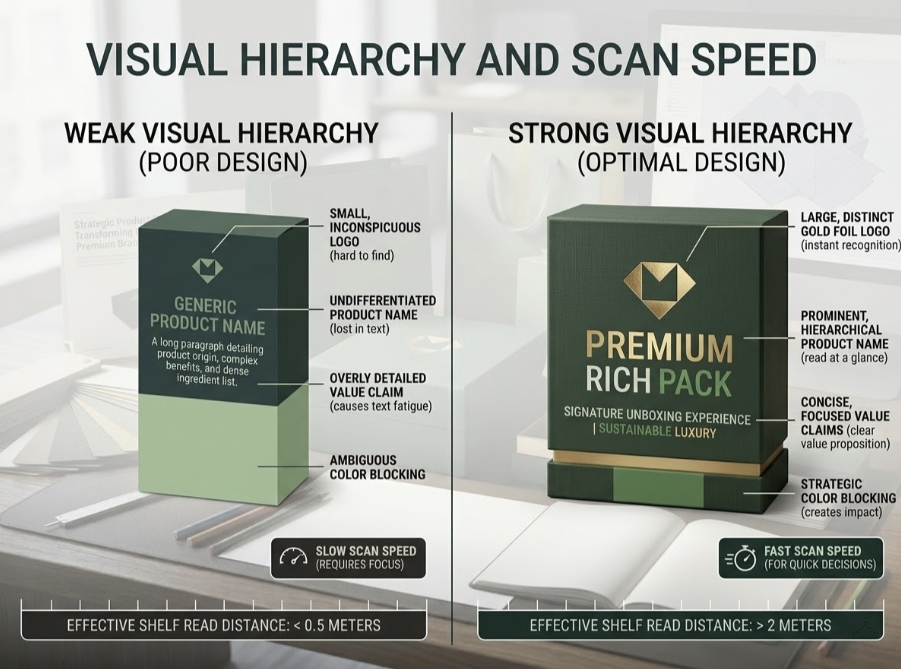
That short window changes everything. Your packaging needs a clear visual hierarchy, easy-to-read claims, and a shape or finish that helps the product register before the buyer moves on. This is why retail product packaging design lives or dies on clarity, contrast, and speed for brands judged by scanning.
Fast decisions reward clear packaging.
Premium pricing starts before the product is touched. Apple did not build perception with copy alone. It built perception with restraint, precision, and confidence.
The same rule applies to luxury product packaging design. Thick, rigid board, disciplined spacing, textured paper, foil accents, insert precision, and clean opening mechanics make a product feel more valuable before the item even appears. Ipsos’ 2018 packaging study found that 63% of Americans say paper and cardboard packaging can make products seem premium or high quality. That matters for brands positioned by feel.
Do not confuse premium with busy. More decoration does not always create more value. In many categories, fewer elements with better execution signal stronger quality than crowded artwork and random finishes for buyers persuaded by control.
Memorable packaging makes your brand easier to choose again. Daniel Kahneman’s fast-thinking framework helps explain why familiar visual cues matter in low-consideration moments.
Color systems, logo consistency, structure, and tactile finish create memory structures. If your packaging looks different across SKUs without a clear system, you lose recall. If each pack follows one architecture, buyers recognize your product faster in a crowded retail or ecommerce environment for collections scaled by consistency.
This is where many growing brands lose momentum. They redesign each launch like a standalone project instead of building one recognizable packaging system.
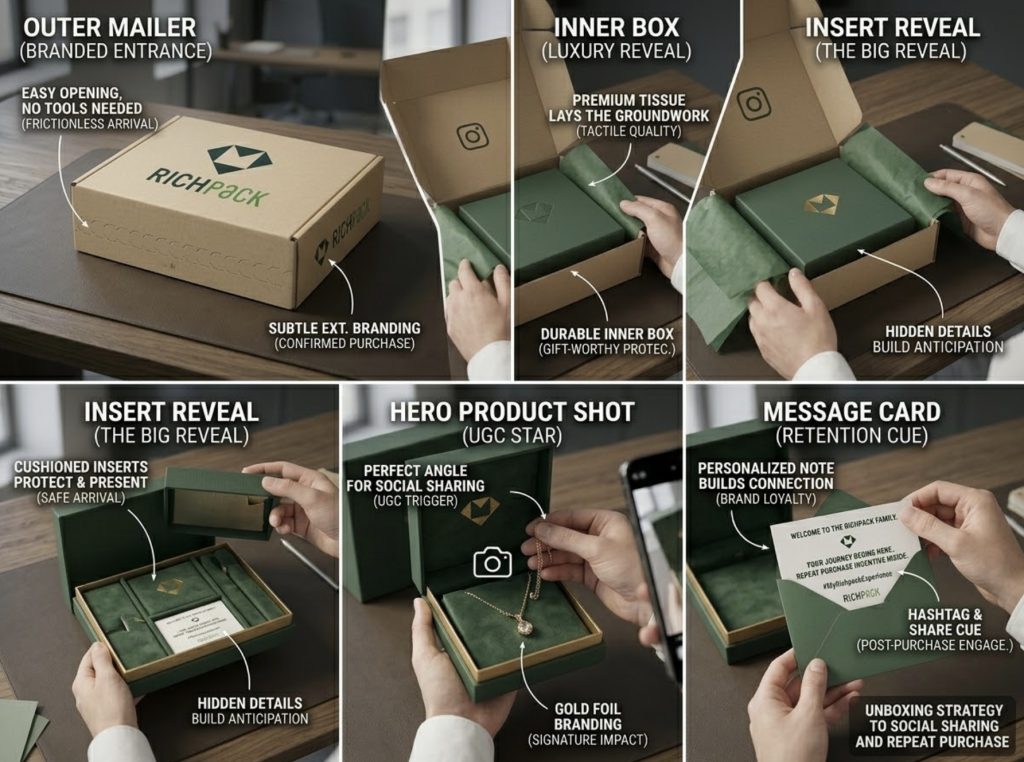
Unboxing experience is no longer a nice extra. It is a conversion layer, a social media trigger, and a retention asset.
Packworld’s 2023 coverage of Dotcom Distribution’s ecommerce packaging research points out that packaging influences how customers perceive the brand after delivery. The commercial meaning is simple. If the outer shipper arrives clean, the reveal feels intentional, and the product presentation looks camera-ready, the odds of UGC and repeat purchase go up.
This is why strong ecommerce packaging needs more than protection. It needs a reveal sequence. Lid lift. Insert exposure. Product framing. Brand message. For jewelry, beauty, candles, and gifting categories, that sequence often creates more memory than the first ad click for customers retained by experience.
Damage is expensive. Returns are expensive. Repacking is expensive.
Packaging design that ignores shipping, storage, compression, humidity, and handling creates hidden profit leaks. York Container’s packaging best practices article ties material and production choices to waste, consistency, and return risk. A beautiful pack that collapses in transit is not premium. It is a margin problem for operations judged by outcome.
Strong product packaging design protects more than the item inside. It protects contribution margin, review quality, fulfillment efficiency, and reorder confidence.
Many teams think packaging design means artwork on a box. That view is too small.
Good packaging design combines structure, graphics, material choice, information design, and production logic. Meyers’ guide to product packaging design describes packaging as the integration of materials, structure, color, typography, imagery, and regulatory information to make a product market-ready. That is the standard you should use for projects measured by readiness.
Structure decides how the package opens, holds, protects, stacks, ships, and displays. If the structure is wrong, the graphics cannot save it.
This includes box style, dimensions, insert design, product orientation, closure type, and reveal sequence. In premium categories, structure often drives the entire experience. A magnetic closure box feels different from a folding carton. A rigid drawer box tells a different story than a simple tuck-end carton for gifts differentiated by reveal.
For jewelry packaging, the precision matters even more. A necklace that slides, a ring box with weak hinge resistance, or an earring card that bends under pressure can destroy the perception of quality in seconds.
Graphics tell the buyer what matters first. Adobe’s packaging design guide highlights hierarchy, readability, branding, and information effectiveness for a reason.
Your product name, benefit, format, and brand mark should not compete at the same volume. Use typography, contrast, whitespace, and color blocking to direct attention in the right order. This matters on retail shelves, ecommerce thumbnails, and influencer photos for campaigns shared by users.
Bad graphic systems create friction. People should not have to decode your package like it is a CAPTCHA test.
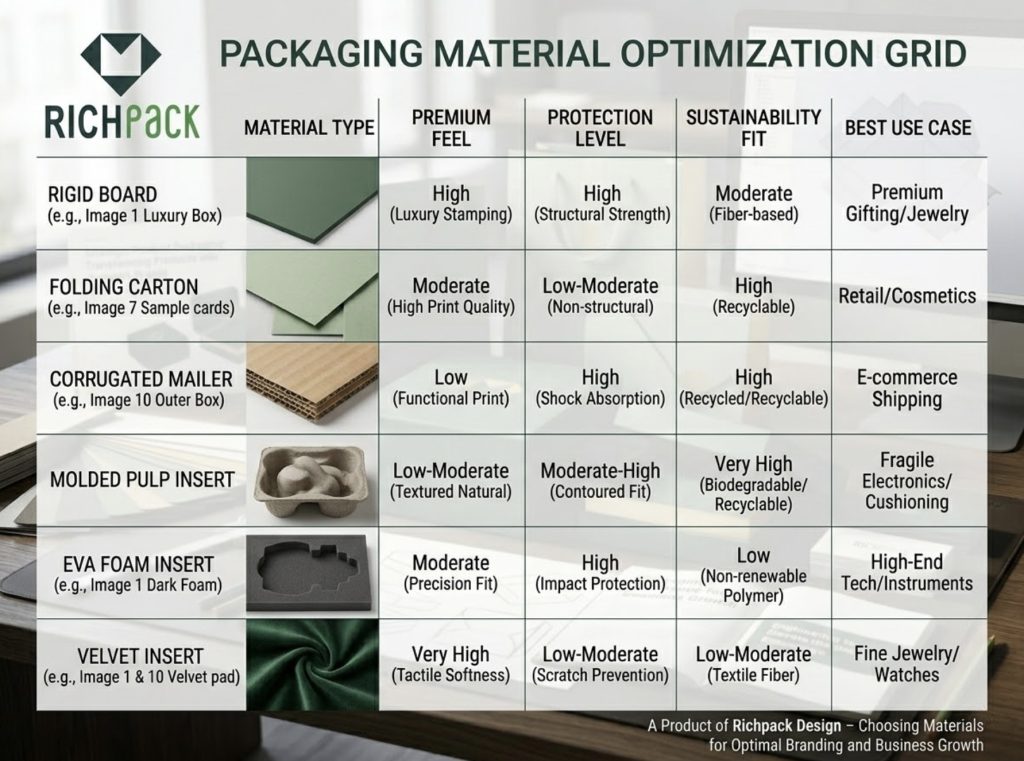
Material choice changes both performance and brand meaning. SCORE and Duplo both stress that packaging materials need to match the product, the audience, and the selling channel.
Rigid board, specialty paper, paperboard, corrugated mailers, molded pulp, EVA, velvet, and fabric wraps all send different signals. Some communicate durability. Some communicate softness. Some communicate sustainability. Some do all three when used well for products positioned by context.
For premium paper packaging, textured paper over rigid board often creates stronger tactile value than adding more graphics. For e-commerce, corrugated support and smart internal fit may matter more than a decorative outer wrap.
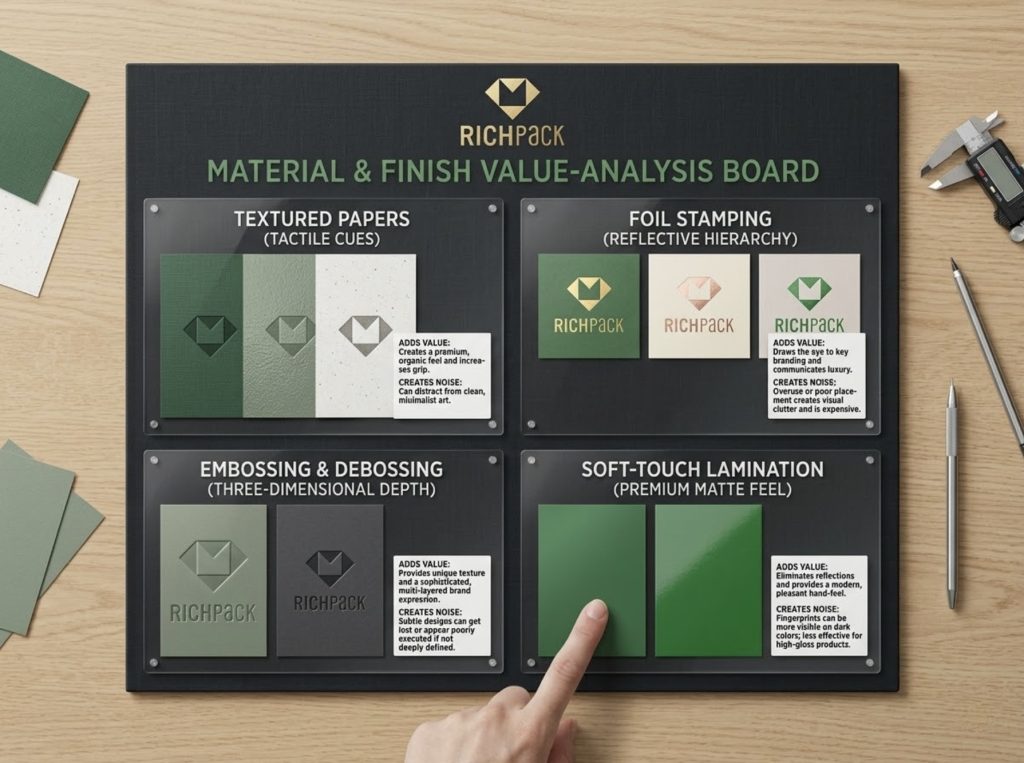
Finishes are not decoration. They are sensory signals.
Foil stamping can sharpen brand recognition. Embossing can add depth. Debossing can create restraint. Spot UV can guide the eye. Soft-touch lamination can make a pack feel richer without adding visual clutter. CANPACK’s article on packaging design and consumer choice also notes that tactile effects and special finishes strengthen memory and emotional response for packs remembered by touch.
The wrong finish stack creates noise. The right one creates discipline. Use finishes to reinforce the brand story, not to show off every factory option in one run.
Clear packaging copy reduces hesitation. Buyers want to know what the product is, why it matters, how to use it, and whether they can trust it.
That means your information design must cover claims, instructions, legal copy, barcode logic, origin cues, care details, and brand message without crowding the layout. SCORE calls packaging the silent salesperson. That idea still holds. Your package should answer obvious questions before the customer has to ask for purchases decided by speed.
This becomes critical in food product packaging design, beauty, wellness, and international retail. If the copy is confusing, trust drops fast.
Channel fit is one of the biggest gaps in weak packaging strategies. Brands often use one look everywhere without adjusting how the package must perform.
That is a mistake. Retail, ecommerce, gifting, and omnichannel systems each demand different priorities. Your strongest packaging design will reflect how the product is discovered, handled, opened, and remembered for sales shaped by the channel.
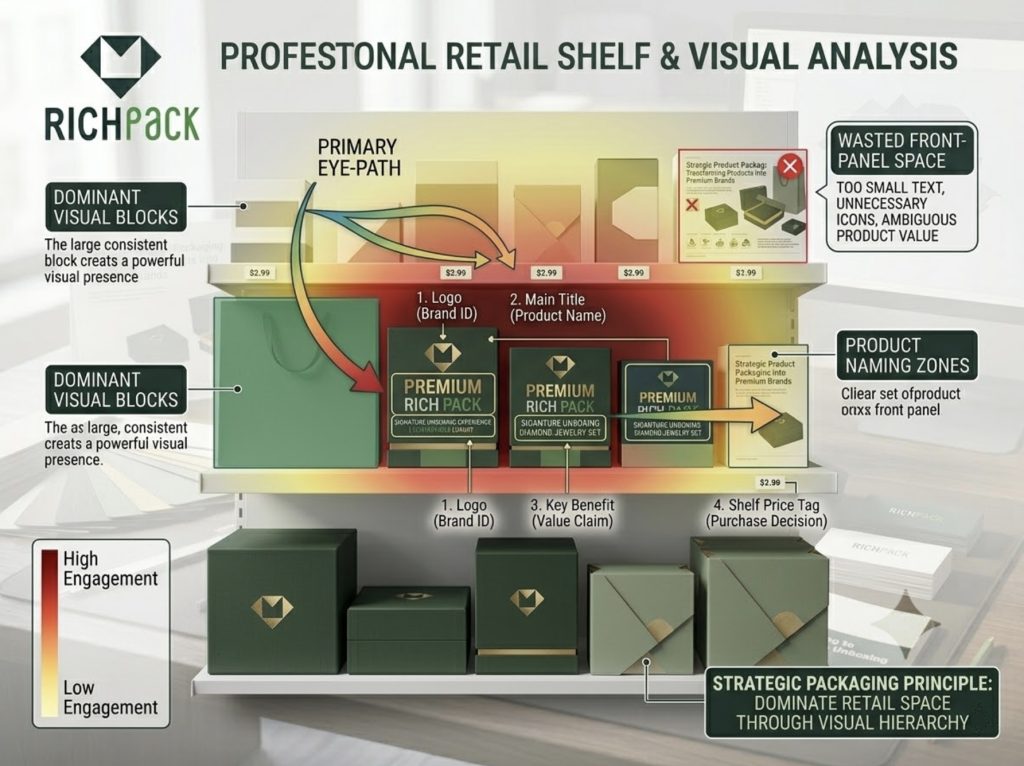
Retail packaging competes in a visual battlefield. Your product often sits next to stronger brands, lower-priced alternatives, and private-label copies.
This means retail product packaging design needs distance readability, bold hierarchy, strong silhouette, and a fast value cue. Buyers do not study the shelf like museum curators. They scan. They compare. They move on to products chosen at a glance.
Use color blocking, clean product naming, and one dominant benefit instead of stacking five weak messages on the front panel.
E-commerce packaging starts its job in transit. If the box arrives crushed, the brand story collapses.
Your structure needs to account for courier handling, dimensional weight, void space, insert retention, and product security. A clean outer mailer, a protective inner carton, and a reveal sequence inside often work better than one decorative box trying to do everything at once for items protected by systems.
E-commerce also rewards camera-ready packaging. If your package photographs well after shipping, you increase the odds of social sharing, UGC, and positive review imagery.
Giftable products need an emotional lift. That is especially true in jewelry, fragrance, candles, and limited-edition launches.
A better reveal comes from the sequence. Lid lift. Tissue or insert exposure. Product framing. Message moment. This progression builds anticipation and makes the product feel intentional. It also turns the packaging into part of the gift value for moments amplified by presentation.
RichPack sees this often in premium jewelry projects. A small change in insert angle, ribbon placement, or inner quote card can make the whole pack feel more thoughtful without forcing a major cost jump.
Subscription packaging needs to be scalable, recognizable, and operationally stable. The first box can be dramatic. The sixth box needs to stay reliable.
This is where packaging architecture matters. You need a system that handles recurring shipments, SKU variation, fulfillment speed, and predictable insert fit. A flashy concept that only works for one hero box is not a strong subscription solution for programs expanded by repetition.
Think in modules. Reusable structural logic, controlled finish choices, and stable print specs make reorders easier and lower production risk.
Omnichannel brands need consistency without rigidity. Your retail carton, ecommerce mailer, and gifting box should look related, but they should not all behave the same.
The best way to manage this is with one brand system and several structural adaptations. Keep your visual codes stable. Adjust material, wall thickness, insert type, and opening experience by channel. That gives you recognition without forcing a weak one-size-fits-all solution for SKUs managed across touchpoints.
| Channel | Main Goal | Packaging Priority | Typical Risk |
| Retail | Win the scan | Shelf presence, readability, pack silhouette | Blending in |
| Ecommerce | Arrive intact | Shipping protection, dimensional efficiency, and unboxing experience | Damage and returns |
| Gifting | Feel worth giving | Premium cues, emotional reveal, keepsake value | Flat emotional impact |
| Omnichannel | Stay recognizable | Visual consistency with structural flexibility | Brand drift |
The best packaging does not force you to choose between premium feel and real-world performance. It balances both.
That balance is where strong brands separate themselves. Anyone can approve a beautiful render. Fewer teams can turn that render into a pack that survives shipping, protects margin, meets MOQ, and still feels expensive in hand for launches judged by execution.
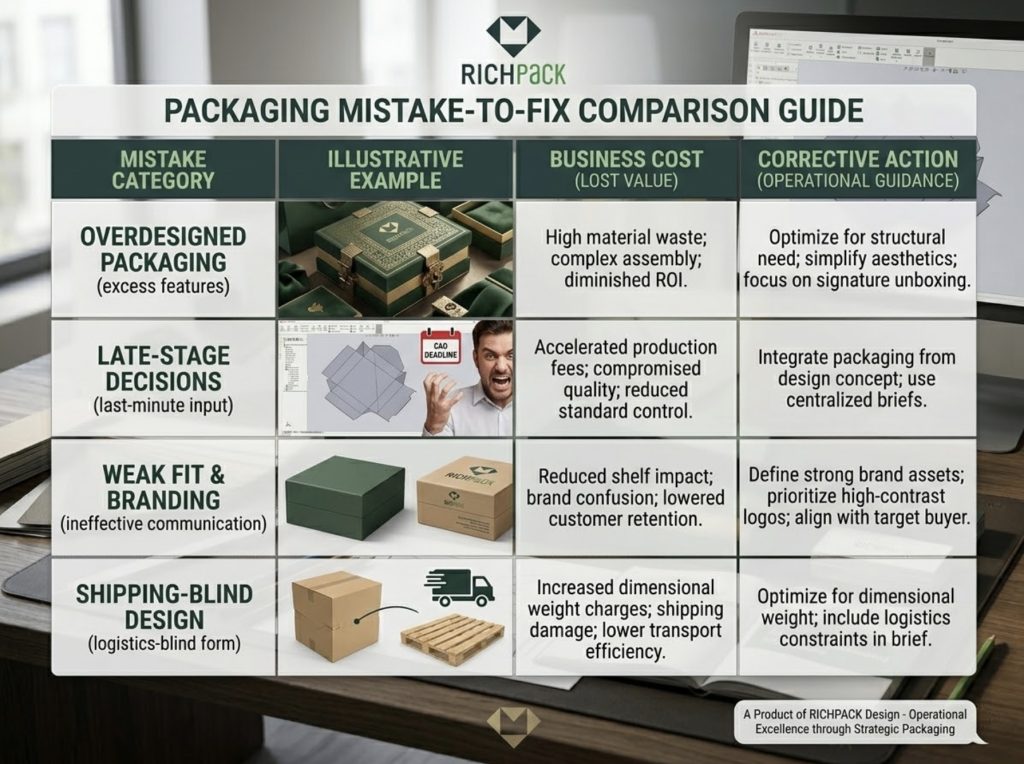
Overdesigned packaging looks expensive for the wrong reason. It often uses too many finishes, too much copy, and too many visual tricks.
Real premium packaging usually feels controlled. Better board. Better fit. Better spacing. Better opening motion. Better restraint. Like a well-cut suit, the value is in discipline, not noise, for buyers impressed by confidence.
This is why many luxury product packaging design projects improve when elements are removed rather than added.
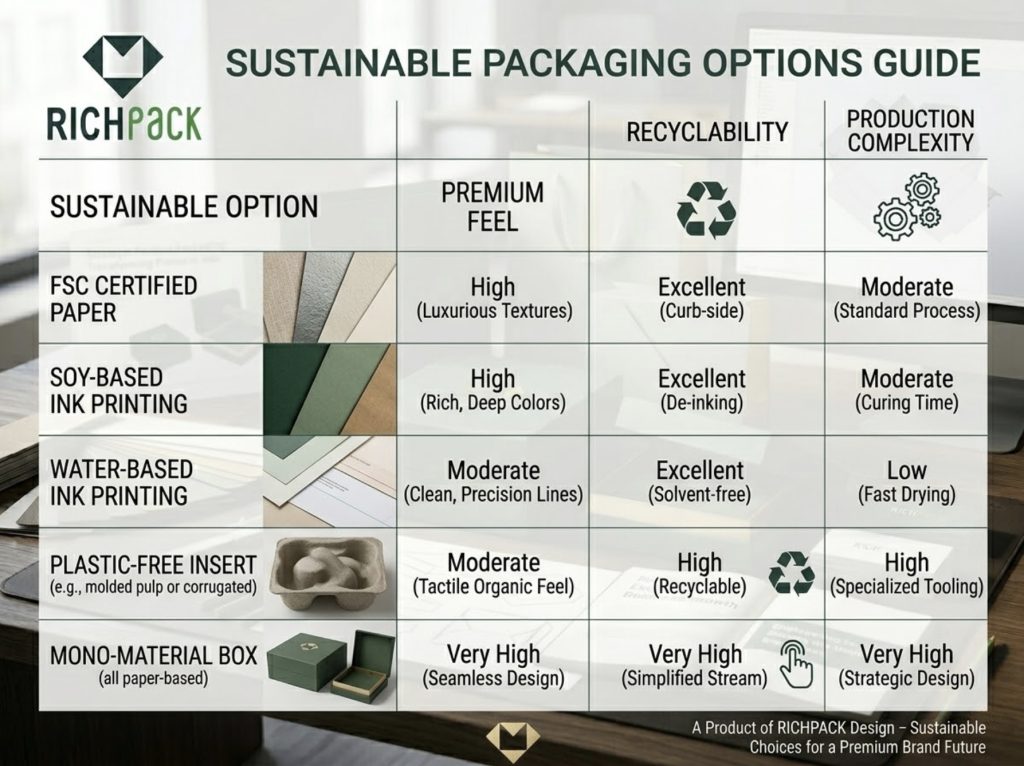
Sustainable packaging does not need to look raw or low-cost. That lazy assumption is outdated.
Ipsos’ 2018 packaging study found that 71% of respondents were more likely to buy brands using paper or cardboard packaging, and 67% said those materials can make a product more attractive. York also cites a strong willingness to pay more for sustainable packaging. That means eco-luxury is not a niche idea. It is commercial logic for brands positioned by values.
Use FSC-certified paper, strong board quality, clean print discipline, and fewer mixed materials when possible. Add soy-based inks, water-based inks, and plastic-free packaging structures when the supply chain supports them. Mono-material thinking often improves recyclability and sharpens the visual story at the same time for products framed by sustainability.
The best protective packaging does not feel defensive. It feels effortless.
Strong inserts, hidden reinforcement, snug fit, and smart outer mailers protect the product without making the buyer feel like they are opening warehouse equipment. This is especially important in premium categories. Buyers want confidence, not clumsiness, for experiences shaped by polish.
In jewelry packaging, invisible protection often comes from insert density, wrapped edge quality, lid tolerance, and clean nesting rather than oversized outer bulk.
Do not judge packaging by unit price alone. Judge it by the outcome.
A cheaper pack that drives more returns, more breakage, weaker shelf impact, and lower repeat purchase is not cheaper. A slightly higher-cost pack that improves conversion, reduces damage, and strengthens perceived value may produce better total landed cost over time. That is the number that matters for budgets reviewed by finance.
Measure packaging by business return, not unit cost alone.
| Decision Lens | Weak Packaging View | Smart Packaging View |
| Cost | Lowest unit price | Best total landed cost |
| Premium feel | Add more decoration | Improve material, fit, and finish discipline |
| Shipping | Hope it survives | Test structure and inserts |
| Sustainability | Use eco claims | Build eco logic into the material system |
| Brand consistency | Redesign every SKU | Create one architecture |
Bad vs. good ROI example
That example is hypothetical, but the math reflects how packaging teams should think. If your packaging lowers damage and raises perceived value at the same time, you are not looking at a cost center. You are looking at an operating lever for budgets measured by margin.
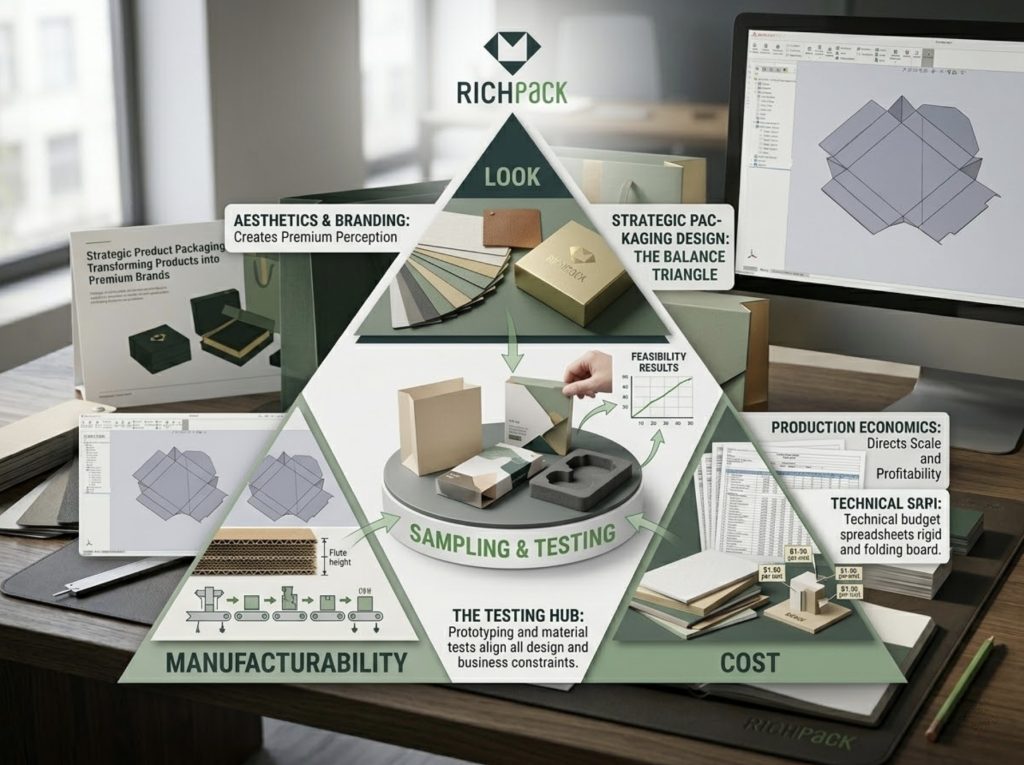
A pack is only as good as its production repeatability. If the concept works once but fails at the reorder stage, it is not a strong packaging system.
Ask early about MOQ, lead time, color tolerance, assembly method, insert consistency, shipping carton plan, and sample approval steps. This is where product packaging design services prove value. The best teams bridge creative intent with manufacturing reality for projects approved by scale.
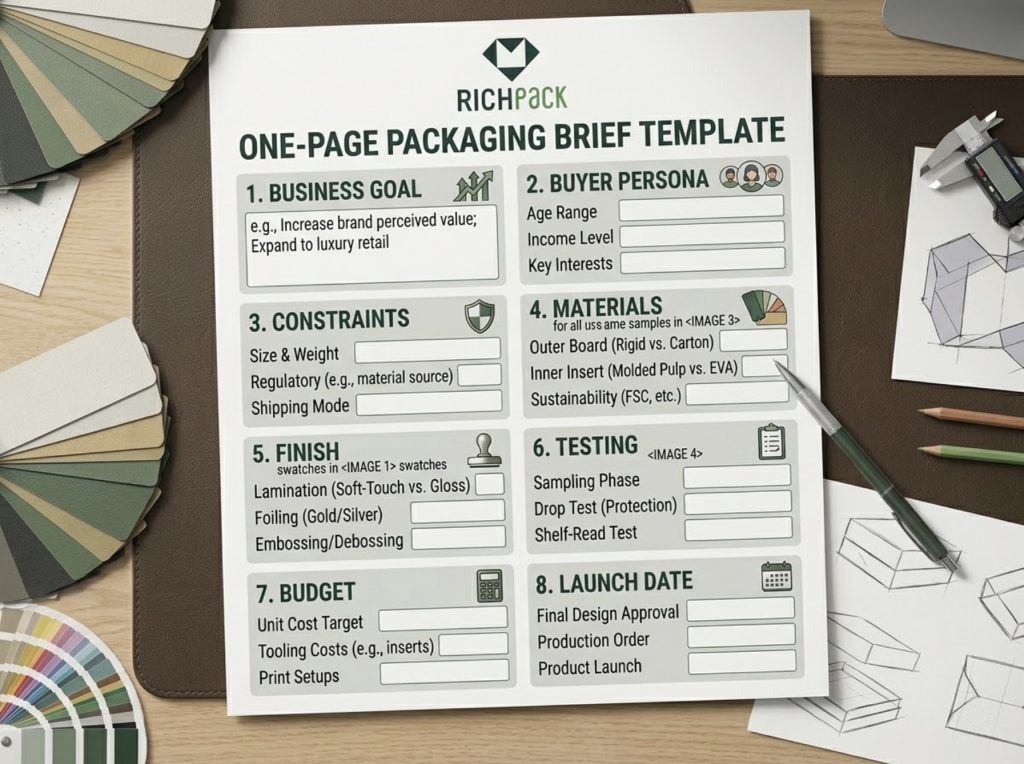
Weak briefs create weak packaging. Strong briefs save months.
A good packaging brief gives your design team, supplier, or packaging design agency the right commercial context before they draw anything. It reduces guesswork, speeds revision cycles, and makes better custom product packaging design outcomes more likely for teams aligned by intent.
Define the outcome first. Do you need to justify premium pricing, improve retail visibility, reduce shipping damage, support a new product launch, or make the product more giftable?
That goal should guide each packaging decision after it. If the goal is unclear, the design process turns into opinion theater for teams distracted by taste.
Describe who buys the product and where the key moment happens. Is the item bought from a shelf, from an Instagram ad, from a wholesale catalog, or as a gift?
This changes everything from front-panel messaging to opening logic. A buyer in a luxury boutique expects different packaging signals than a buyer ordering from a mobile product page at midnight for purchases driven by context.
Write down the hard facts. Product dimensions. Weight. Fragility. SKU count. Compliance needs. Shipping route. Climate risk. Storage conditions.
These are not side notes. They are structural boundaries. Good product package designers use them to build a solution that can be sampled, tested, and repeated without ugly surprises for production managed by control.
List the cues the packaging must carry. Logo usage. Core colors. Typography rules. Tone. Premium signals. Sustainability message. Hero claim.
This avoids one common failure. The packaging may look polished, but it no longer feels like the brand. You need visual discipline, not just creativity, for identities scaled by repetition.
Define target cost, MOQ, launch deadline, supplier model, market region, testing needs, and required samples before concept development begins.
That makes design services for retail product packaging and e-commerce packaging far more effective. It keeps the creative team tied to something real.
Explanation: brief first, visuals second
A good partner does more than make mockups look polished. A good partner helps you avoid expensive mistakes.
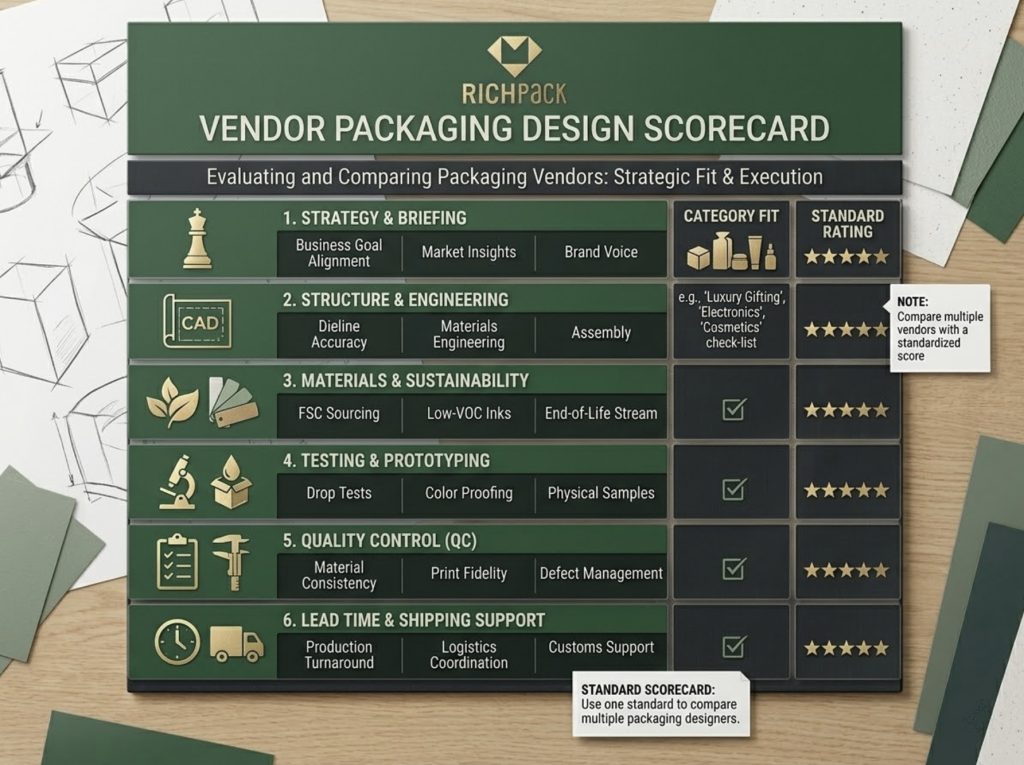
This is where many brands lose time. They chose a team with strong visuals but weak production understanding. Then they discover the design cannot scale, costs too much, or falls apart in transit for projects selected by portfolio hype.
Mockups are easy to love. Samples are harder to fake.
Ask to see physical work, not just digital renders. Look for edge wrapping quality, insert precision, foil registration, opening feel, and finish consistency. These details tell you more than a glossy Behance-style presentation for brands evaluated by proof.
Strong product packaging design companies can explain their process clearly. Briefing. Concepting. Structural development. Prototyping. Revision. Pre-production sample. Testing. Production handoff.
If the process sounds vague, the risk is real. Good partners do not hide the operational path.
Category experience matters because buyer expectations change by product type. Food product packaging design has different constraints than jewelry, fragrance, apparel, or tech.
If you sell a premium giftable product, choose a team that understands reveal, keepsake value, and tactile detail. If you sell through retail, choose a team that understands shelf competition and pack architecture for categories shaped by norms.
Good partners can explain material tradeoffs in plain language. They should know when to use rigid board, folding carton board, molded pulp, EVA, wrapped inserts, textured paper, or mono-material systems.
If a team cannot explain why one material performs better than another, they are not really leading the packaging strategy. They are decorating it for clients guided by appearances.
Ask how the partner handles sample approval, tolerances, QC checkpoints, lead time, and global shipping support. These details matter more than moodboards once your launch date gets close.
RichPack’s one-stop model matters here because design, sampling, production, and delivery are connected. That reduces handoff loss and gives growing brands a cleaner path from concept to final pack for launches executed across markets.
Bad packaging usually fails in predictable ways. The warning signs show up early.
The problem is not that teams never work hard. The problem is that they often optimize for the wrong thing first.
Internal teams often approve packaging that matches their own preferences instead of buyer expectations. That creates design drift.
Your package does not need to impress everyone in the meeting. It needs to make sense to the person buying, gifting, or unboxing the product for brands grown by fit.
Late packaging decisions create early problems. Structure gets compromised. Costs rise. Timelines shrink. Sample rounds get rushed.
York is right to frame packaging as part of the product, not a last-minute box choice. Build it in early.
Luxury is not foil on everything. Luxury is not oversized boxes with weak inserts. Luxury is not unreadable typography printed on dark textured paper.
Use better materials, a better fit, and better restraint. Do not copy casino-style visual excess and call it premium for brands defined by credibility.
A package may look good in a meeting room and fail instantly in the real world. Compression, humidity, vibration, stacking, and courier handling all matter.
This is why protective packaging logic, ship testing, and shipping carton design need to be part of the packaging system from the start for goods transported by networks.
The first production run is not the full test. Reorders reveal whether your packaging system is truly stable.
If colors drift, inserts vary, or assembly gets messy, the brand loses consistency. Build packaging that works at the reorder stage, not just the launch stage, for SKUs repeated by growth.
Product packaging design is the system that shapes how a product is protected, presented, explained, and experienced.
Product packaging design is the process of shaping how a product is protected, presented, explained, and experienced through structure, materials, graphics, copy, finishes, and production logic. It is not just artwork on the surface for products prepared for launch.
It helps businesses make faster decisions, raise perceived value, improve brand recall, support repeat purchases, and reduce avoidable shipping and return costs. In simple terms, it affects revenue and margin at the same time for brands measured by growth.
Costs depend on structure complexity, material choice, number of concepts, sampling rounds, print finishes, insert design, and production scale. A simple folding carton project costs far less than a rigid gift box system with custom inserts and multiple tests for programs scoped by requirements.
The strongest luxury packaging uses restraint, tactile quality, clean reveals, precise inserts, and disciplined finishing. It feels controlled and intentional. It does not rely on visual overload for buyers influenced by confidence.
Redesign becomes urgent when conversion stalls, shelf presence feels weak, shipping damage rises, your price point moves up, or your current packaging no longer matches the brand you want to become. Those are business signals, not cosmetic ones for brands changing by stage.
Yes. Sustainable packaging can feel premium when material quality, print discipline, fit, and structure are handled well. Paper-based systems, FSC-certified board, soy-based or water-based inks, textured wraps, plastic-free packaging parts, and simplified material mixes often create a more modern, premium feel, not a cheaper one for products framed by care.
Include the business goal, buyer profile, sales channel, product specs, constraints, brand rules, target cost, launch timing, sustainability goals, and testing requirements. A short, sharp brief saves money later for teams aligned by clarity.
It depends on complexity. Concepting may take a few weeks. Prototyping, revisions, sample approval, and production add more time. Global sourcing, custom inserts, and specialty finishes can extend the schedule for launches managed by dependency.
Retail packaging needs shelf impact, readability, and fast visual recognition. E-commerce packaging needs shipping protection, dimensional efficiency, and a strong unboxing experience. The same brand can use both, but the structures should not be identical for packs optimized by channel.
Choose a partner that understands strategy, structure, material tradeoffs, sampling, production, and delivery. Ask for real samples, a clear process, and proof that they can bridge creative work with manufacturing reality for projects awarded by readiness.
Good product packaging design helps your business take off because it does more than hold the product. It helps buyers choose faster, trust the brand sooner, remember the product longer, and feel better about paying for it.
Treat packaging like a growth system, not an afterthought.
Now it is your turn. If your current packaging is not helping conversion, pricing, retention, or brand recall, rebuild it with a stronger structure, clearer strategy, better unboxing experience, and production-ready detail.
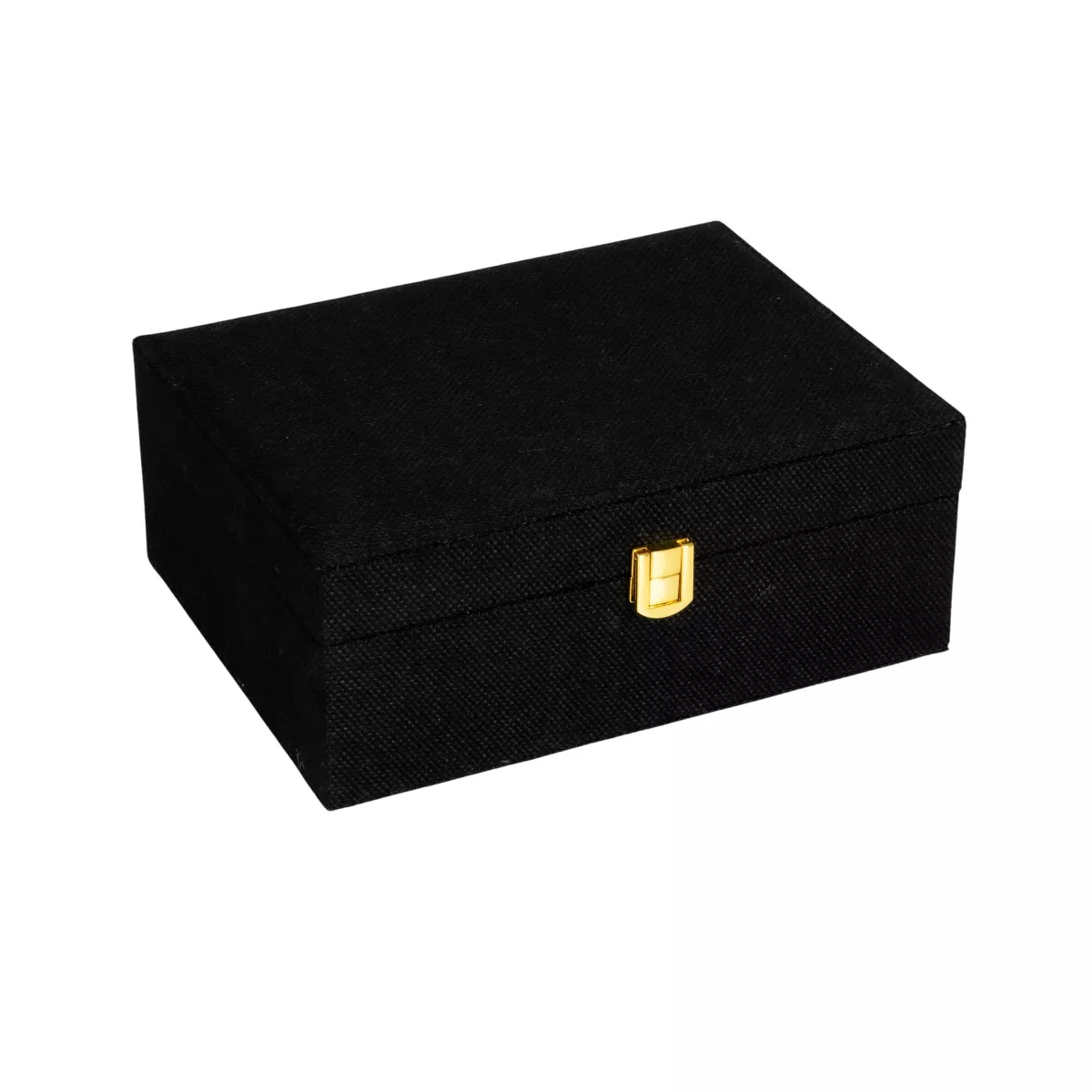
Affordable Bespoke Jewelry Organizers with Low Minimum Order Quantities | Designed for Small-Scale Jewelry Retailers Needing Custom Packaging
View More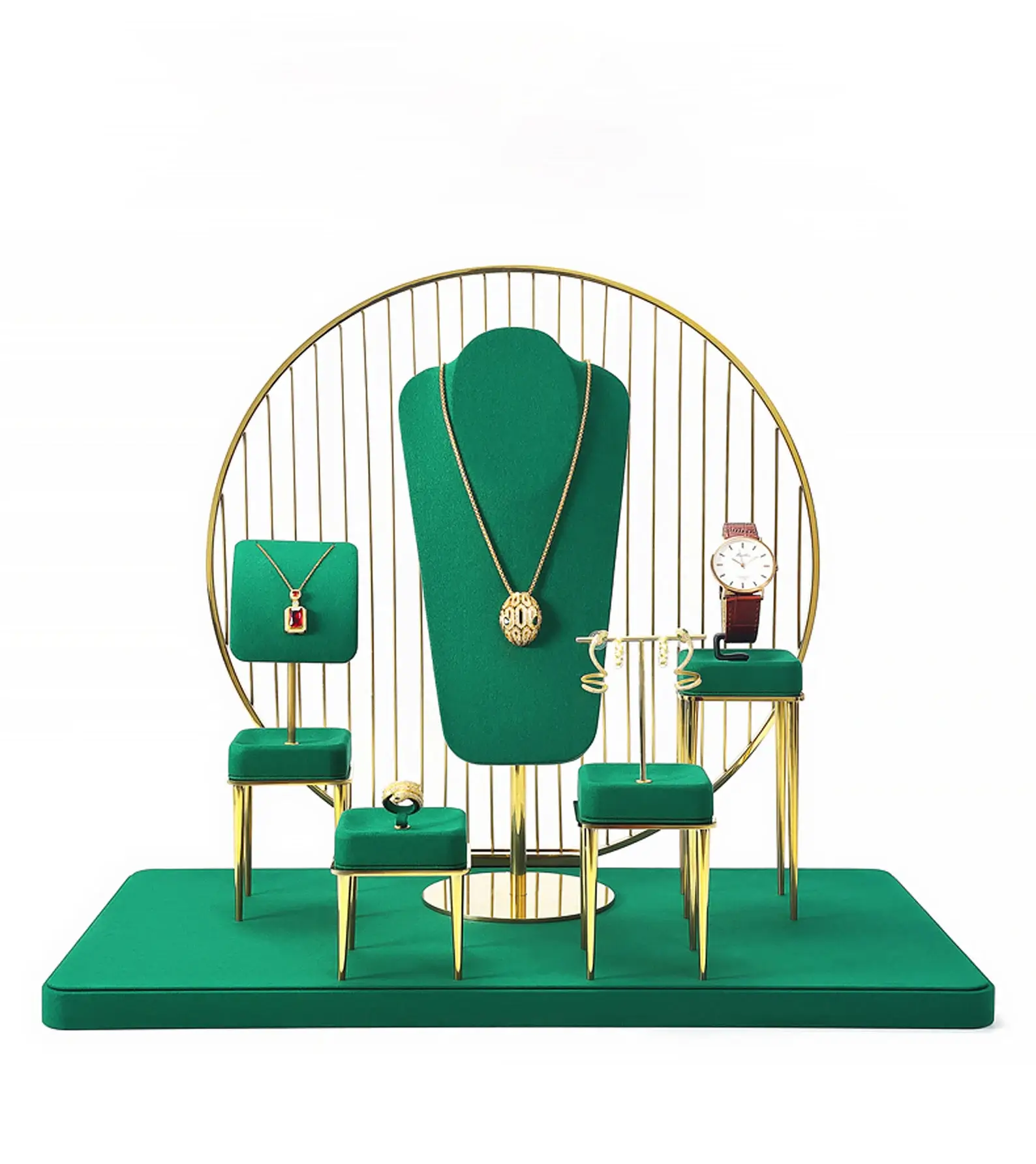
Affordable Bulk Jewelry Display Stands for Wholesalers | Perfect for Large-Scale Suppliers Looking for Reliable and Cost-Effective Jewelry Display Solutions
View More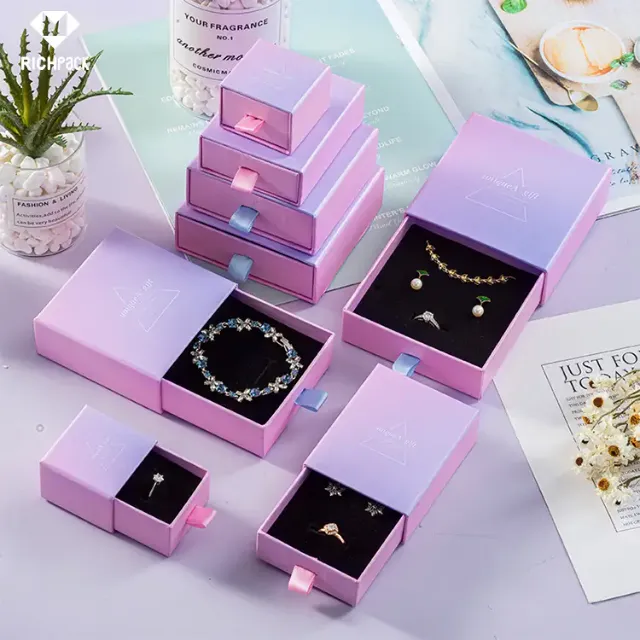
Affordable Gift Packaging Boxes for Bulk Orders | Cost-Effective Solutions for Large Purchases | Customizable Designs Available
View More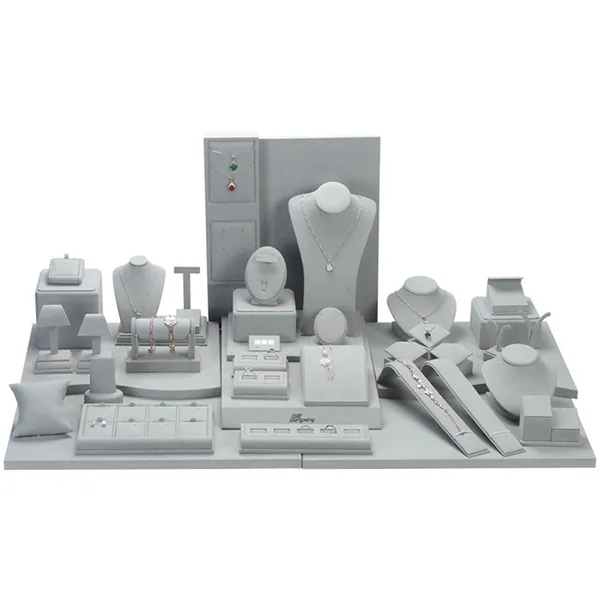
Affordable Jewelry Display Stands for Independent Jewelers | Tailored for Small Retailers Seeking Elegant, Custom Displays on a Budget
View More
Affordable Sustainable Packaging for High-Volume Jewelry Orders | Perfect for Wholesalers Seeking Scalable, Green Solutions at Competitive Prices
View More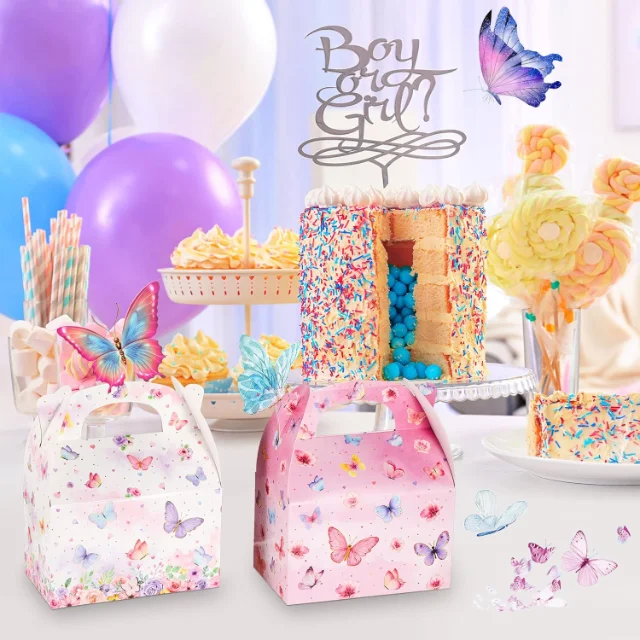
Beautiful Butterfly Box Gifts | Deluxe Butterfly Gift Boxes for Special Occasions and Unique Presentations Bulk Order Options from Richpack
View More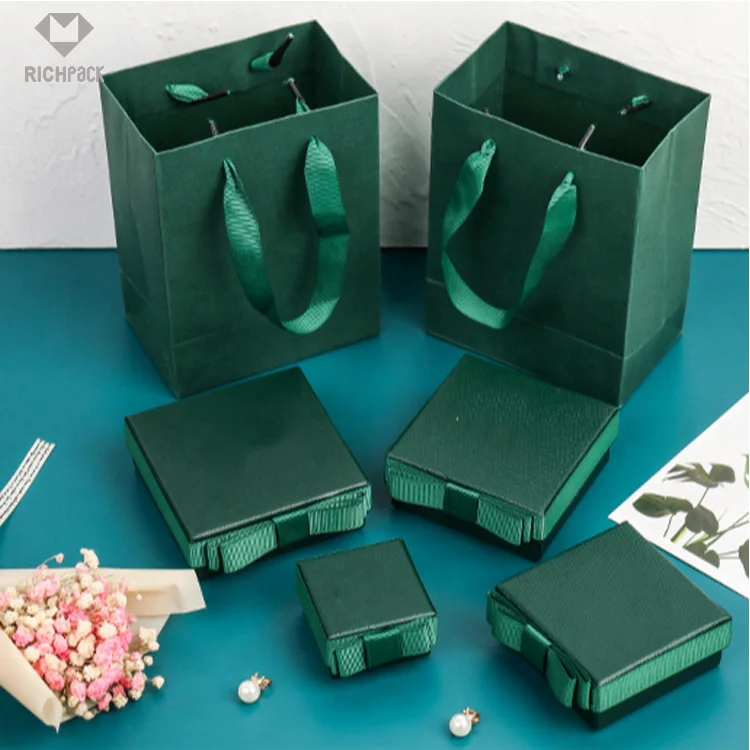
Bespoke and Durable Custom-Printed Paper Bags for Retail Stores with Logos | Perfect Branding Solutions for Jewelers Needing Eye-Catching Retail Packaging
View More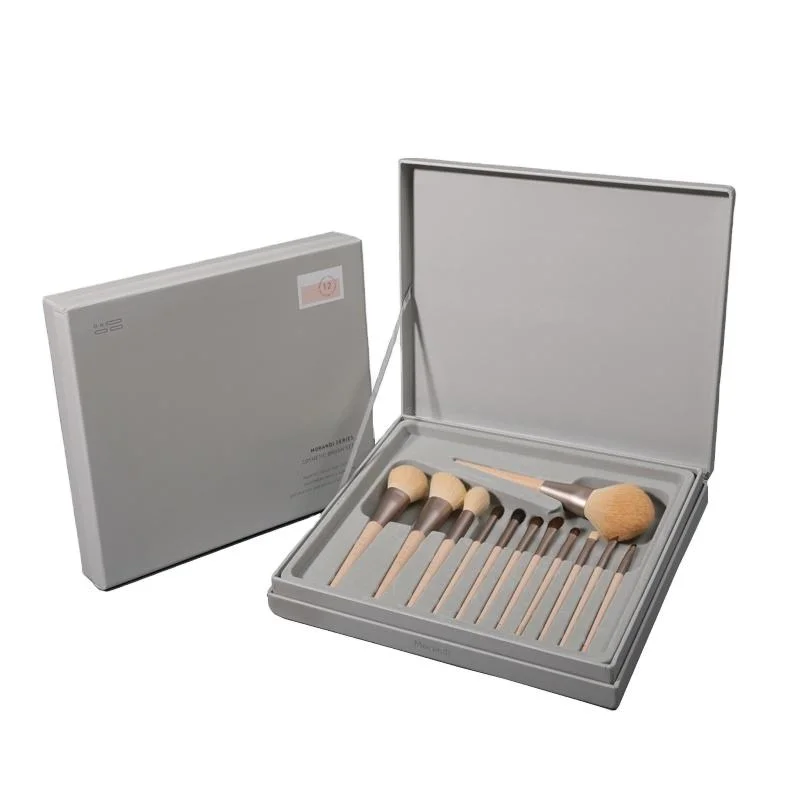
Bespoke Cosmetic Boxes for Small Beauty Brands with Low MOQ | Perfect for Niche Beauty Businesses Needing Customized Packaging Solutions
View More





 PREV
PREV