

 PREV

2024 Ranking the 10 Best Sustainable Jewelry Packaging Brands
2024-11-26
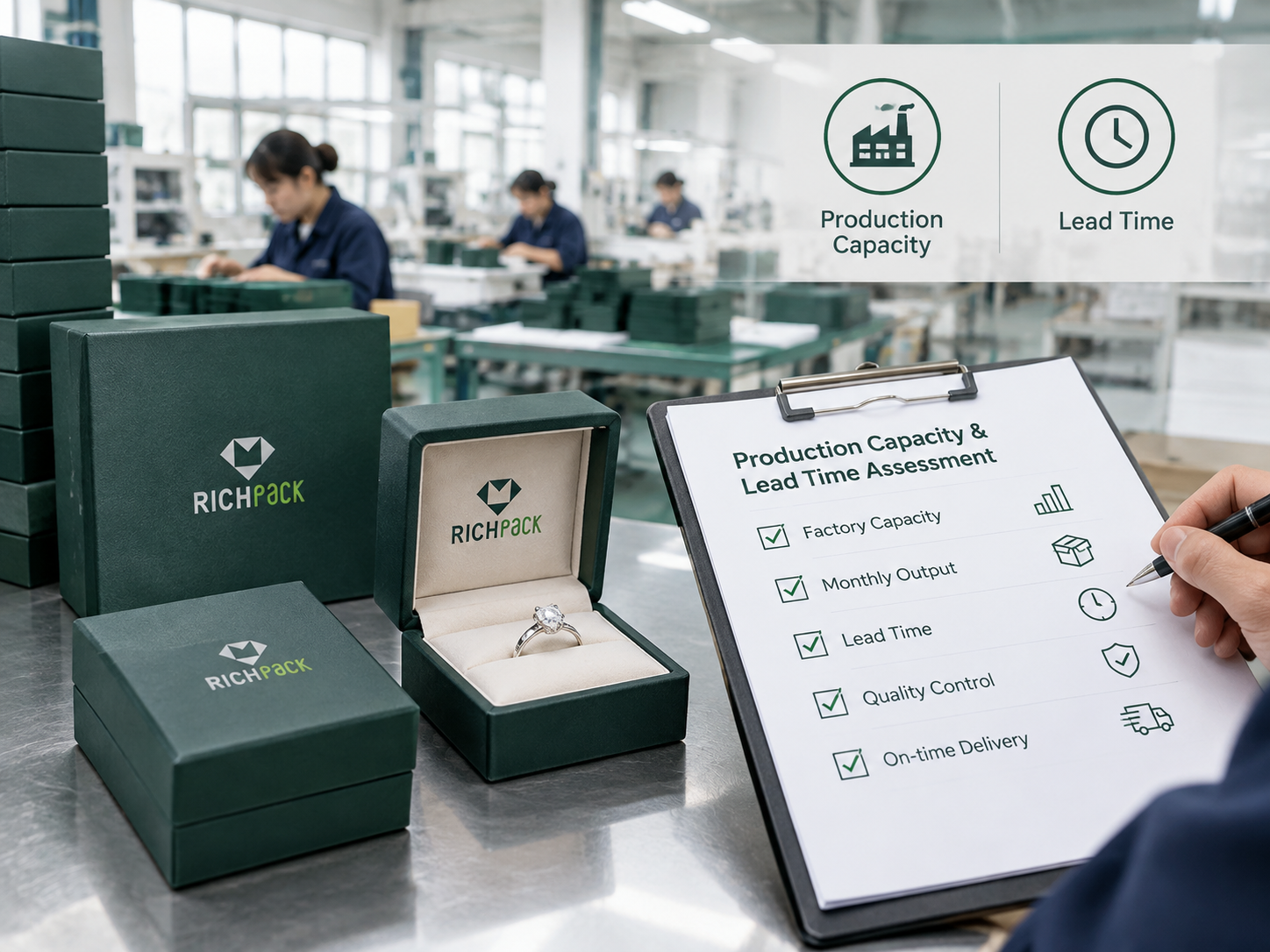



Before you trust a monthly output number, put your actual Jewelry Box brief on the table. A factory can have open equipment and still miss your date if the insert, finish, sample approval, or outside process is not ready. Ask for a dated plan from approved specifications through delivery, then test the assumptions behind each date. The checklist below gives you a capacity model, sample and inspection controls, a supplier scorecard, and RFQ fields you can use before placing an order.
Production capacity is useful only when it matches the box, order, and time window you need. A factory may make many boxes in a month and still lack an open slot, a suitable process, or a ready insert for your design. Assess the whole route from materials to packed units.
Start with the finished item. State the box structure, dimensions, insert, wrap, finish, logo method, quantity by SKU, packing method, and destination. A ring box with a fitted slot may use a different sequence from a necklace box with a longer insert. A broad capacity figure cannot indicate whether the factory has handled those requirements in combination.
Ask the supplier to confirm which parts of your brief are already standard and which need new tooling, samples, materials, or outside processing. RichPack’s jewelry box collection can help you name a box type before you send the brief, but the factory must still confirm the route for your exact design.
Ask what the supplier means by capacity. It may refer to a machine’s theoretical output, a team’s normal output, total factory output, or the number of finished units available for your order. These figures describe different things.
Request the unit of measure, time period, product type, shift pattern, yield assumptions, and whether the figure covers one operation or finished boxes. Then ask what quantity can be reserved during your required production window.
The slowest step often sets the pace for the full order. A line may finish the box body and then wait for printed wraps, special hardware, hand finishing, or a fitted insert. That delay is easy to miss when a quote shows one total number. Ask which operation is the bottleneck for your design and how the supplier measures its queue.
Request a route map that names each step, its owner, and its planned dates. RichPack’s jewelry packaging manufacturing page shows the stages it presents, from samples to production and quality control. Ask for dates and owners for your order. The page itself does not prove an open production slot.
Equipment matters when your box needs a specific structure, finish, or repeatable fit. Ask which processes the supplier controls directly and which it sends to another vendor. For outsourced steps, request the handoff date, receiving inspection, and person responsible for recovery if the work is late.
Do not treat a machine list as proof by itself. Ask for evidence that the relevant process can make your box to the approved sample and quality criteria.
Output depends on how work is staffed and scheduled. Ask how many shifts the estimate assumes, whether the required operators are available, and how much setup or changeover time is included when switching colors, sizes, inserts, or artwork.
The supplier does not need to disclose confidential employee or customer details. You need enough information to see whether the quoted schedule depends on overtime, a special shift, or a line that is already committed.
List the parts that must arrive before production can start: board, paper, fabric, lining, hardware, magnets, inserts, printed sheets, and shipping cartons. For each item, ask whether it is in stock, reserved, made to order, or sourced externally.
Special colors or components may need a separate approval or purchase step. Keep those dates visible in the schedule, and ask what substitute is acceptable if a component misses its date. Do not approve a substitute until its appearance and performance meet the product brief.
The first order is only part of the supply plan if you expect replenishment. Ask whether the supplier can keep the approved materials, dieline, insert, and production reference for a repeat order. Confirm how a reorder competes with new work during busy periods.
Record any holiday closure, maintenance window, or peak-season constraint that falls between approval and required arrival. A supplier’s current availability can change, so ask when the production slot becomes reserved and what event could release it.
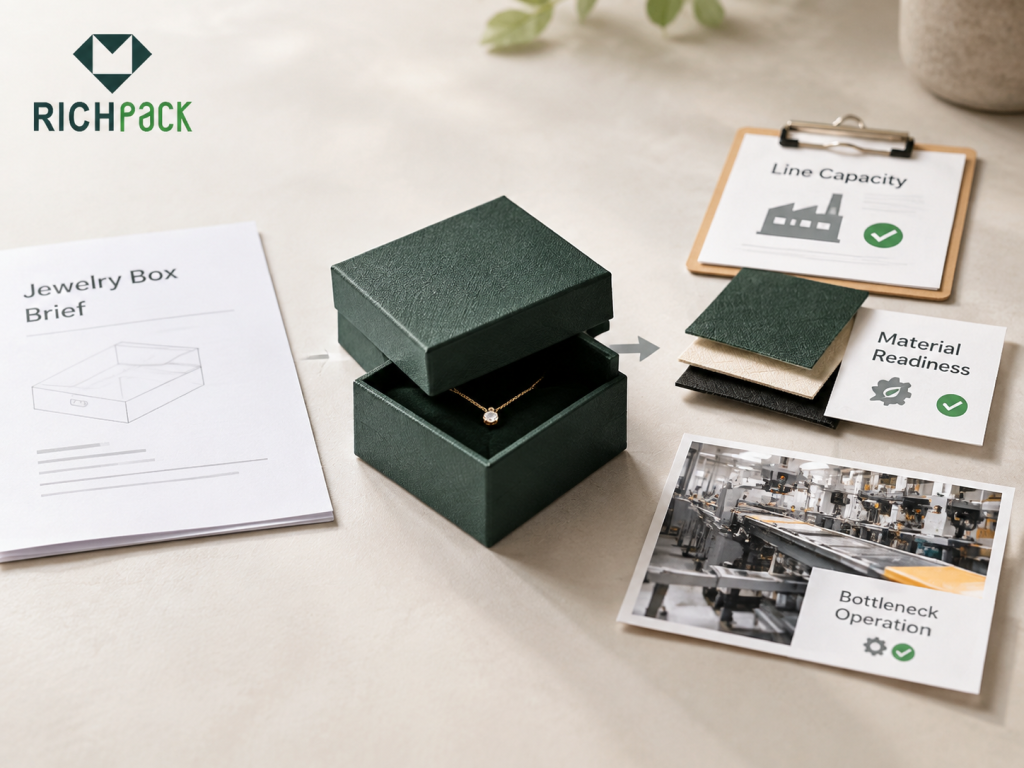
Verify capacity with dated evidence tied to your product and delivery window. Request the assumptions behind the number, the current production load, a comparable run, and a recovery plan. You do not need confidential factory records. You need enough evidence to confirm that the supplier can reserve and manage the work you are buying.
Ask the factory to state the unit, period, product type, process covered, shifts, setup time, and yield assumption behind its capacity figure. Confirm whether the figure means raw output, completed boxes, inspected boxes, or packed units ready for shipment.
If the supplier gives a monthly figure, ask how much can be assigned to your order during the dates you need. The answer should identify conditions that would change the estimate.
Ask for a dated view of booked work and open production slots for the relevant process. The supplier can remove customer names and confidential prices. You still need to see whether your order has a reserved place or is waiting behind unallocated work.
Record the date when the schedule was checked. If approval or payment is required to reserve the slot, add that milestone to your purchasing plan.
Ask for a completed example with a similar box structure, material, insert, finish, and order profile. A factory may be experienced in simple paper boxes but less familiar with a rigid box, specialty wrap, or multi-part insert.
Useful evidence can include a redacted production route, approved sample, inspection record, or dated production summary. Treat a photograph of unrelated equipment as background information, not proof of order-specific output.
List every outside process that can affect the delivery date, such as printing, coating, hardware, insert forming, or hand finishing. Ask who places the order, who checks incoming work, and who owns the next action if the vendor misses a date.
The factory should include outside work in its schedule. If it does not, the quoted lead time may omit a real dependency.
Ask who makes the prototype and who will lead the production run. The sample process should connect to the team and equipment that will make the order, or the supplier should explain how it will transfer the approved specifications.
Compare the pre-production sample with the approved brief. If the mass line uses a different material, process, or subcontractor, ask how the factory will confirm that the result still matches.
Gross output is not the same as usable output. Ask how the supplier records rejected, reworked, or replaced units and whether inspection time is included in the delivery plan.
Agree on the inspection method and defect categories before production. Do not accept a capacity figure that counts units that have not passed the agreed release checks.
Ask whether factory holidays, equipment maintenance, or peak demand overlap with your schedule. Confirm when your slot is reserved and whether the supplier expects any planned interruption.
If your launch date is fixed, ask what change in scope or approval timing would make the current plan fail. That makes the supplier’s risk assumptions visible while there is still time to adjust the brief.
Agree on who contacts you when a milestone slips, how quickly the supplier will report it, and what evidence the update must include. A useful notice gives the affected step, cause, revised date, and available recovery options.
Possible recovery actions may include resequencing work, using an already approved alternative component, splitting a shipment, or changing the transport plan. Each option has a cost or quality tradeoff, so do not treat recovery as a guarantee.
Lead time should be a chain of dated milestones, not one number with an unclear starting point. Write down what starts the clock, who owns each step, what approval releases the next step, and whether each date refers to factory completion or arrival at your location.
Use the table below to turn a factory quote into a schedule you can check. Each row names the date to request and the proof that lets the next stage start. Keep factory work, quality release, freight, customs, and arrival as separate events so a short production promise cannot hide a long delivery path.
| Stage | Date to request | Evidence or release condition |
| Specification and artwork freeze | Buyer and supplier agreed date | Approved brief, dieline, logo file, materials, insert, finish |
| Sample and proof | Planned completion and review dates | Sample type, comments, owner, revision number |
| Material readiness | Arrival and incoming-check dates | Component list, sourcing status, approved substitutions |
| Production | Start and finish dates by major operation | Reserved slot, route, outsourced handoffs |
| Quality release and packing | Inspection, correction, pack-out dates | Inspection criteria, final count, release approval |
| Freight and destination delivery | Pickup, transit, customs, arrival dates | Mode, destination, customs responsibility, tracking |
Ask when the quoted lead time begins. Suppliers may count from deposit, approved artwork, approved dieline, approved sample, or production release. These start points are not interchangeable.
For comparison, ask each factory to state the start event and list any buyer action that must happen before it. A date that starts after every specification is approved may be accurate while still leaving design and sampling outside the quoted window.
Technical review can include dimensions, dieline, insert fit, closure details, logo placement, material, color, and packing instructions. Assign a buyer and supplier owner to each approval so comments do not sit in an unowned inbox.
Send production-ready artwork and clear color references when available. If an important choice remains open, mark it as a decision with an owner and due date instead of treating the specification as complete. RichPack’s package design service covers structural design and sample review. Use it to frame the questions you ask about your own sample gate.
A prototype can help check size, construction, or presentation. A pre-production sample can confirm the intended materials, print, finish, insert, and process before the mass run. The supplier should state which sample it is quoting and what that sample proves.
Keep review time in the plan. If the buyer must approve a physical sample, include shipping to the reviewer and the time needed to return a clear decision.
For every critical component, record its source, order date, expected arrival, incoming check, and approved fallback. This is especially useful when a Jewelry Box combines a special wrap, hardware, insert, or printed component from different suppliers.
Do not let the production date hide a component risk. If production cannot start until all parts are ready, show the last-arriving component as a release condition.
Ask the supplier to separate setup and production where the process requires both. Printing, forming, wrapping, assembly, finishing, and pack-out may have different owners or queues.
The schedule does not need a line for every minute of work. It should be detailed enough to show the main dependencies and the point at which a delay changes the ship date.
Include the first-article check, any in-process checks, final inspection, correction time, count reconciliation, and release approval. If inspection finds a problem, the plan should show who decides whether to rework, replace, or hold the affected units.
Agree on inspection criteria before production starts. A late disagreement about color, fit, logo placement, or acceptable variation can hold an order even when manufacturing is complete.
Factory lead time ends at a defined release or handoff point. Freight time starts at pickup or carrier acceptance and may include origin handling, transit, customs, destination handling, and final delivery.
Ask the supplier to show those stages separately. Search result snippets for individual suppliers show different production and delivery windows, which is a reminder that supplier figures are tied to their own product and shipping conditions. Do not reuse one supplier’s estimate as an industry standard.
Work backward from the date the boxes must be at your location. Add time for buyer approvals, material delays, inspection corrections, customs, and final delivery according to your route and launch risk.
Keep the buffer visible instead of hiding it inside a factory promise. The right amount depends on your destination, shipping mode, calendar, and ability to accept a split shipment.

Customization affects timing when it adds decisions, special materials, extra process steps, or another approval. Ask which requirement changes the route and what evidence supports the added time. The answer varies by supplier, box design, order quantity, and sourcing plan.
Rigid, folding, drawer, hinged, magnetic, and specialty boxes use different structures and assembly steps. A structure that needs a new dieline, tooling, or hand assembly can create work beyond a standard box route.
Ask the supplier to map the selected structure to its process. The word “custom” alone does not explain the schedule impact.
The insert must hold the jewelry and present it as intended. A ring slot, necklace channel, earring support, bracelet cushion, or multi-piece layout may need a different cut, material, or assembly process.
Provide the actual jewelry dimensions or a representative piece when possible. Confirm that the sample checks fit, movement, clearance, and placement before the design is released.
Special paper, fabric, lining, board, hardware, magnets, foam, velvet, or molded inserts may depend on a separate supplier or a minimum purchase. Ask which components are readily available and which need a new order.
If a material has a minimum buy, clarify what quantity it applies to and whether unused material is stored for reorders. Do not assume that a material minimum equals the finished-box MOQ.
Foil, embossing, debossing, UV, lamination, coating, color matching, and hand finishing can add setup, sampling, or inspection steps. Their effect depends on the surface, process, artwork, and supplier’s existing setup.
Ask whether the sample uses the same material stack and process planned for production. A digital proof may show artwork placement but may not prove how a physical finish looks or feels.
Total quantity alone does not describe the workload when an order includes several sizes, colors, logos, or inserts. Ask whether each SKU requires a separate setup, sample, or packing instruction.
If you can accept split shipments, define which SKUs can ship first and what must remain together. The factory and logistics plan should reflect that choice.
A changed logo, dieline, color, wrap, insert, or closure can affect a proof, material order, setup, or sample. Agree on which changes reopen approval and how the supplier will update the schedule.
Record the approved revision in one place. A clear version record helps the buyer and factory avoid making production decisions from different files.
Peak demand, holidays, maintenance, and overtime plans can affect availability. Ask whether a faster schedule relies on a reserved slot, overtime, a different process, or a change to inspection and shipping.
An expedited request should preserve the agreed sample and quality checks. If a proposed shortcut changes materials, inspection, or approval, evaluate that tradeoff before accepting it.
Sample approval protects the schedule when it makes the buyer’s decisions explicit. Define the sample type, the reference files, the approval owner, the revision rule, and the release point. A comment such as “looks good” is not enough if the box still has open questions about fit, color, finish, or pack-out.
State whether you need a mockup, structural prototype, printed proof, pre-production sample, or golden sample. Each can answer a different question. Ask what materials and processes the sample will use and what it cannot confirm.
Set the review criteria before the sample arrives. That keeps the review focused on the decisions needed for production.
Name one buyer-side owner who can gather comments and issue the decision. Name the supplier contact who records that decision and updates the schedule.
If design, procurement, and quality teams all review the box, set a single deadline and one consolidated response. Multiple uncoordinated comment rounds can create conflicting instructions.
Record the approved file name, revision, date, dimensions, color reference, insert drawing, closure details, and logo placement. Link the approval to the physical or digital sample it describes.
When the supplier sends a proof, compare it with the current brief. Do not approve an older file simply because it is easier to find in an email thread.
Check that the jewelry fits the insert, stays in place, and clears the lid or closure. Then check appearance: color, logo position, surface, finish, and presentation when the box opens.
Separate pass/fail notes make revisions easier to assign. If one item fails, state whether the supplier should revise the insert, the box, the artwork, or the process.
Agree which changes require a new proof, physical sample, material order, setup, or revised date. A change to a logo file may have a different effect from a change to the box structure or insert.
Ask the supplier to identify the affected milestone when a revision arrives. This makes the schedule impact visible before the buyer approves the change.
Keep a controlled reference for the approved product. Record its revision, materials, finish, dimensions, and approval date. Use that reference for production checks and future reorders.
Store the approval record where procurement, design, quality, and the supplier can find it. If the reference changes, update the record and communicate the new version before work continues.

Quality checks need dates and owners. Add them to the production plan, so the factory has time to inspect, correct, and release the boxes. RichPack’s quality process page describes design review, production checks, and batch records. Treat those as stated practices and ask what checks and records will apply to your order.
Confirm that the received board, wrap, printed parts, hardware, inserts, and cartons match the approved specification. If a component is wrong, the supplier should flag it before it enters the line.
Ask for the record or photo that shows the check occurred. The exact format can depend on the risk and the supplier’s process.
Inspect an early finished unit before the full run continues. Compare it with the golden sample and check construction, insert fit, logo, finish, closure, and pack-out.
Record approval or required correction with the unit and revision identified. That makes the release decision traceable.
Use in-process checks to catch drift before many boxes are complete. Relevant points may include alignment, wrap adhesion, hinges, magnets, slots, padding, and assembly consistency.
Agree on which checks matter for the selected box. No single checklist fits every structure or finish.
Use the intended jewelry or a dimensionally accurate sample where possible. Check whether the item fits the slot or channel, stays in place during ordinary handling, and presents as planned when the box opens.
Record any movement, snagging, contact, or clearance issues. The supplier should know whether the corrective action belongs to the insert, the box, or both.
Check logo placement, color reference, foil transfer, embossing, debossing, UV, coating, scratches, dust, and visible variation against agreed criteria. Review under consistent conditions when color matters.
Do not describe a finish as flawless or identical without a defined inspection method and acceptable tolerance. Agree what variation is acceptable before sign-off.
Before release, reconcile the finished count, defect disposition, cartons, packing list, and shipment documents. Confirm who can authorize dispatch and how held or corrected units are recorded.
If a third-party inspection is part of the purchase, include its booking and report time in the plan. Do not assume inspection is included unless the quotation or purchase terms say so.
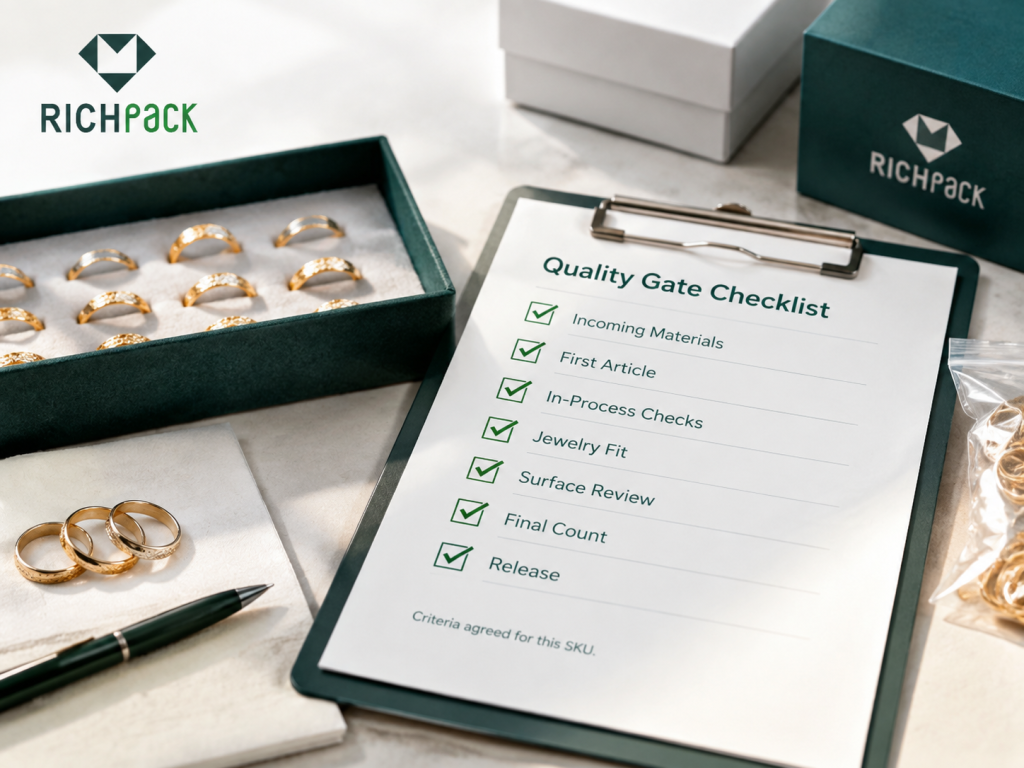
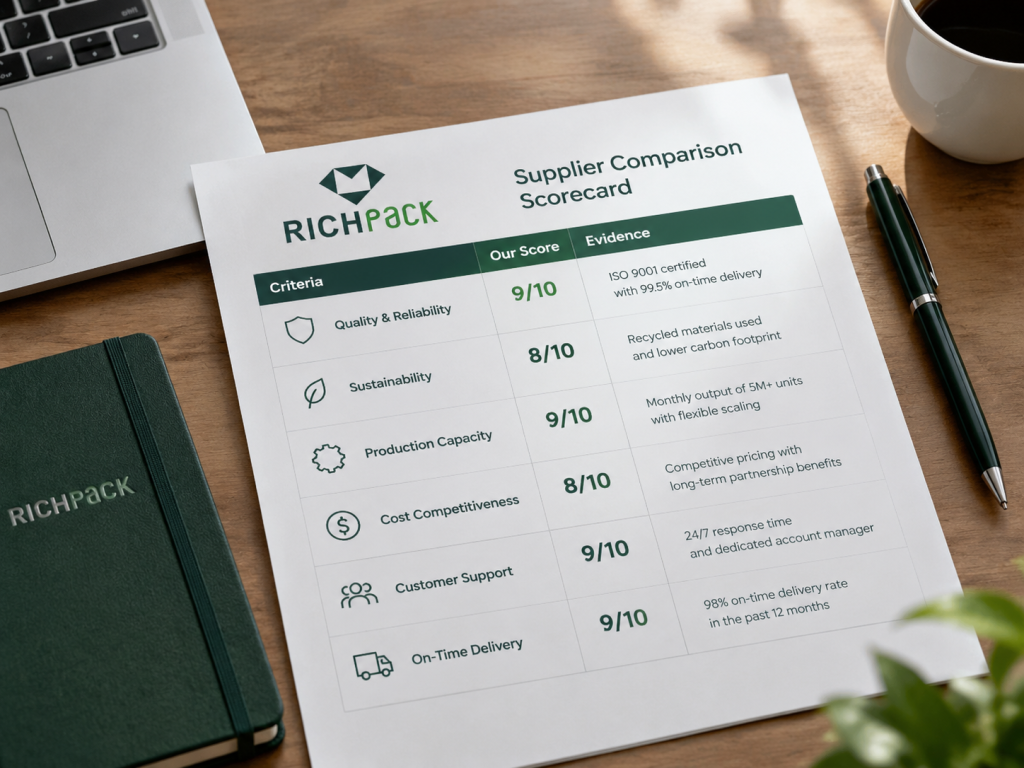
Use one scorecard for every supplier and base each score on evidence. Choose the weights according to launch risk. A seasonal launch may place more weight on schedule evidence, while a new presentation design may place more weight on sample control and fit.
The scorecard below gives each supplier the same questions and a simple 1–5 field. Use the evidence column to explain every score, then compare the totals only after checking that suppliers quoted the same box, quantity, finish, approval scope, and delivery conditions.
| Criterion | Evidence to request | Buyer score |
| Relevant box experience | comparable structure, insert, material, finish, and SKU mix | 1–5 |
| Capacity fit | assumptions, current load, bottleneck, reserved slot, recovery plan | 1–5 |
| Lead-time control | start point, stage dates, approval gates, production/delivery split | 1–5 |
| Quality control | sample record, first-article check, in-process and final release | 1–5 |
| Communication | named owners, update timing, escalation and revision record | 1–5 |
| Commercial risk | full cost scope, MOQ conditions, rework, freight, and reorder terms | 1–5 |
Check whether the supplier’s evidence matches your box structure, insert, finish, quantity profile, and jewelry presentation problem. Similarity matters more than a long list of unrelated packaging products.
Ask what part of the example was made by the supplier and what part came from an outside vendor. Keep any customer information confidential.
Give stronger scores to current, dated evidence tied to your production window and product route. Lower the score when the supplier provides only a generic monthly figure or cannot explain the bottleneck.
Record missing evidence as missing. Do not convert a confident sales statement into a verified capacity result.
Compare the start point, sample milestones, material readiness, production dates, inspection time, and destination arrival plan. The supplier should state which buyer actions control each date.
Separate factory completion from delivery. A shorter production estimate may not lead to an earlier arrival if transport and customs are not included.
Review who approves the sample, who releases production, who reports a delay, and what inspection record the buyer receives. Good communication means clear ownership and usable updates, not only fast replies.
Ask for a sample update that shows a revision, decision owner, and next milestone. That tests whether the supplier can keep a change visible.
Compare the full purchase scope: unit price, sample charges, tooling, material minimums, inspection, packing, freight, rework, delay exposure, payment, and reorder terms. Do not compare unit prices if the included work differs.
Choose weights that reflect the order’s real risk and record why. The scorecard is a decision aid, not an industry certification or a guarantee of performance.
A red flag is a missing condition or control that prevents you from testing a promise. Ask a follow-up question before rejecting a supplier. Some gaps can be fixed with a clearer schedule or approval record. Others may show that the supplier cannot support your risk level.
Ask for the structure, quantity, finish, shift, process, and yield assumptions behind the number. If the supplier cannot explain the scope, do not use the number to approve the launch date.
Ask whether the estimate includes artwork review, sample making, buyer approval, and material readiness. A fast date that begins after all these steps may exclude the time you still need.
Ask where the factory’s responsibility ends and when freight begins. Require separate dates for pickup, transit, customs, destination handling, and arrival where those stages apply.
The supplier may not share customer names or confidential schedules, but it should be able to explain current availability, a reserved slot, and the process bottleneck. Ask for a dated confirmation with assumptions.
Ask who controls the external process, when the handoff occurs, how the work is checked, and what happens if the vendor slips. An unnamed dependency makes the date hard to manage.
Ask which file and sample production will follow and what happens if either changes. If the supplier cannot link a version to an approval, the buyer and factory may work from different specifications.
Ask what must pass before dispatch and who signs the release. If there is no check for count, fit, finish, or packing, add a clear control before comparing delivery promises.
Send the same brief to each Jewelry Box factory. A complete RFQ lets suppliers quote the same product and state the same schedule assumptions. It also reduces repeated clarification after sampling begins.
Use this RFQ table as a shared input sheet. Complete the buyer fields before asking for prices, then require each factory to return the same evidence for capacity, samples, materials, quality, and delivery. Comparable inputs make differences in schedule and risk easier to see.
List the jewelry type, key dimensions, box structure, opening action, insert, and presentation needs. Add photos or drawings that you own or have permission to share.
If the jewelry is not ready, provide a dimensioned drawing and mark any measurement that may change. Ask the supplier which open dimensions block a reliable sample.
Specify board, wrap, lining, insert, hardware, magnets, printing, coating, foil, embossing, debossing, and color references where decided. Mark alternatives as approved options or open decisions.
Ask which materials need a sample or separate sourcing approval. Do not assume a named finish will look the same across different surfaces.
Give the first order quantity by size, color, insert, or logo variation. State the likely reorder pattern if it matters to material storage or repeat setup.
Ask each supplier to state any minimum quantity by SKU, component, process, or material. These are supplier terms to compare, not a universal MOQ rule.
List the sample types, number of review rounds, approval owner, golden-sample requirement, and version record. Give each buyer decision a requested date if the launch calendar is fixed.
Ask the supplier to show how the approved sample connects to mass production and inspection.
Provide the destination, required arrival date, shipping mode if known, customs responsibility, and carton or pallet requirements. Ask the supplier to keep factory dates separate from transport dates.
If you can accept a split shipment, state which items may ship first and what must stay together.
Ask each factory to return the same evidence: capacity assumptions, current-load note, stage-level schedule, sample plan, material status, QC plan, inspection criteria, exclusions, and recovery options.
Request a named owner for each approval and schedule update. This makes the answers easier to compare than a single “lead time” field.
| RFQ field | Your entry |
| Jewelry type and dimensions | [Complete] |
| Box structure and opening | [Complete] |
| Insert and fit requirements | [Complete] |
| Materials and finishes | [Complete] |
| Logo/artwork and revision | [Complete] |
| Quantity by SKU | [Complete] |
| Sample and approval steps | [Complete] |
| Required arrival and destination | [Complete] |
| Shipping and customs assumptions | [Complete] |
| Inspection and defect criteria | [Complete] |
| Carton, pack-out, and split shipment | [Complete] |
| Evidence requested from the factory | [Complete] |

The box type changes what the buyer should inspect. Use the jewelry itself or accurate product dimensions to check the insert and opening experience. The examples below identify questions for sampling. They do not set universal dimensions.
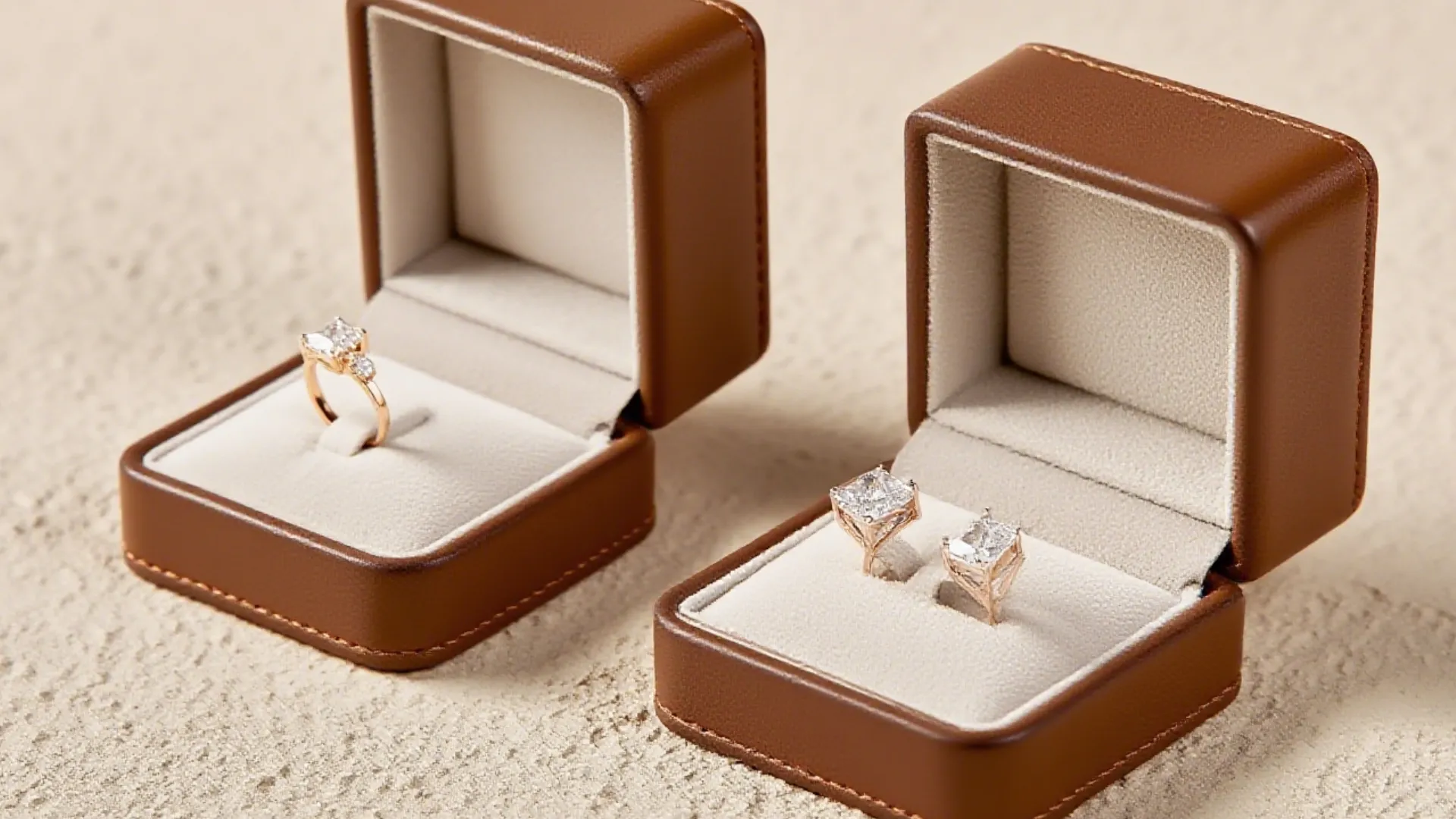
Check the ring slot, retention, clearance, closure action, and presentation angle. Confirm that the ring can be placed and removed without catching on the insert.
If the box uses a special display position or light, verify those features against the approved sample and current product specification. RichPack’s ring box collection shows the range of styles. It cannot replace a fit test with your ring.
Check chain routing, insert length, pendant position, movement control, and lid clearance. Confirm that the chain does not tangle or press against a surface during ordinary handling.
The insert should present the necklace as intended when the box opens. Record any tie, slot, or channel position on the approved reference.
Check pair alignment, post or hook support, insert thickness, visibility, and repeatable placement. Confirm that the backing or support suits the actual earring style.
Test both earrings together. A box may hold one piece while failing to keep a pair aligned.
Check channel or cushion fit, clasp clearance, movement, and the effect of a longer or wider insert. The bracelet should sit as intended without forcing the clasp or creating unwanted movement.
Record whether the insert is designed for one bracelet size or a range. Do not assume an insert fits all bracelet shapes.
Check multi-piece fit, layered inserts, outer presentation, pack-out sequence, and coordination across SKUs. Confirm that all pieces fit without colliding and that each part is packed in the right order.
For a gift set, check the outer box, jewelry boxes, printed materials, and shipping carton as one pack-out plan. A good sample should show the full arrangement.
Production lead time covers the supplier’s defined manufacturing stages. Delivery lead time adds the transport and destination stages, such as pickup, transit, customs, and last-mile delivery. Ask for separate dates and a clear start point.
Match the capacity claim to your box, finish, quantity, and production window. Ask for the assumptions, current load, bottleneck, comparable run, outsourced steps, and recovery plan. A generic monthly figure is not enough to prove order fit.
There is no single sample duration that fits every box. Ask the factory to date the design review, prototype or proof, material sourcing, sample production, shipping to the reviewer, comments, and final approval. The structure, finish, insert, and revision count can change the plan.
No. A customization may use an existing process or material, while another may require new sourcing, tooling, sampling, or outside work. Ask which exact choice changes the route and what approval or material date it affects.
Confirm the approved sample and file version, jewelry fit, materials, finish, quantity by SKU, inspection criteria, production slot, change rule, and release owner. Ask the factory to show the stage dates that follow approval.
The response should state assumptions for price and capacity, sample steps, material status, a dated production schedule, quality checks, shipping conditions, exclusions, and the person responsible for updates. Ask suppliers to use the same RFQ fields so you can compare answers.
Assess a Jewelry Box factory by how clearly it connects capacity evidence, sample approval, production dates, quality release, and delivery to your exact brief. Ask for the assumptions behind each date and record who owns each decision. Then compare suppliers with the same RFQ and scorecard. A factory that can explain its current load, bottlenecks, approval controls, and arrival plan gives you evidence to evaluate before you place the order.


2024-11-26

2025-12-10

2025-03-27

2024-12-19

2025-10-29

2025-06-16

China-Based Custom Jewelry Boxes Supplier for Wholesalers | High-Quality Packaging with Global Shipping Bulk Order Discounts Richpack
View More
Custom Jewelry Packaging Sets with Boxes, Pouches, and Bags | Richpack Tailored Packaging Solutions for Jewelry Brands Looking for Bulk Customization
View More
Eco-Friendly Recycled Materials Jewelry Packaging for High-End Jewelry Brands | Designed for Luxury Jewelers Committed to Sustainability and Branded Elegance
View More
Richpack’s Exquisite Custom Black Velvet Jewelry Boxes – Ultimate Luxury, Supreme Protection
View More
Tailored Custom Printed Luxury Packaging Boxes for High-End Jewelry Brands | Exclusive Branding Solutions for Jewelers Needing Elegant Presentation
View More
Organza Bag Pink 4 x 6 Inches | Elegant Jewelry & Gift Packaging Solutions | Richpack
View More

