


 PREV


10 Creative Uses for Magnetic Gift Boxes
2026-05-19
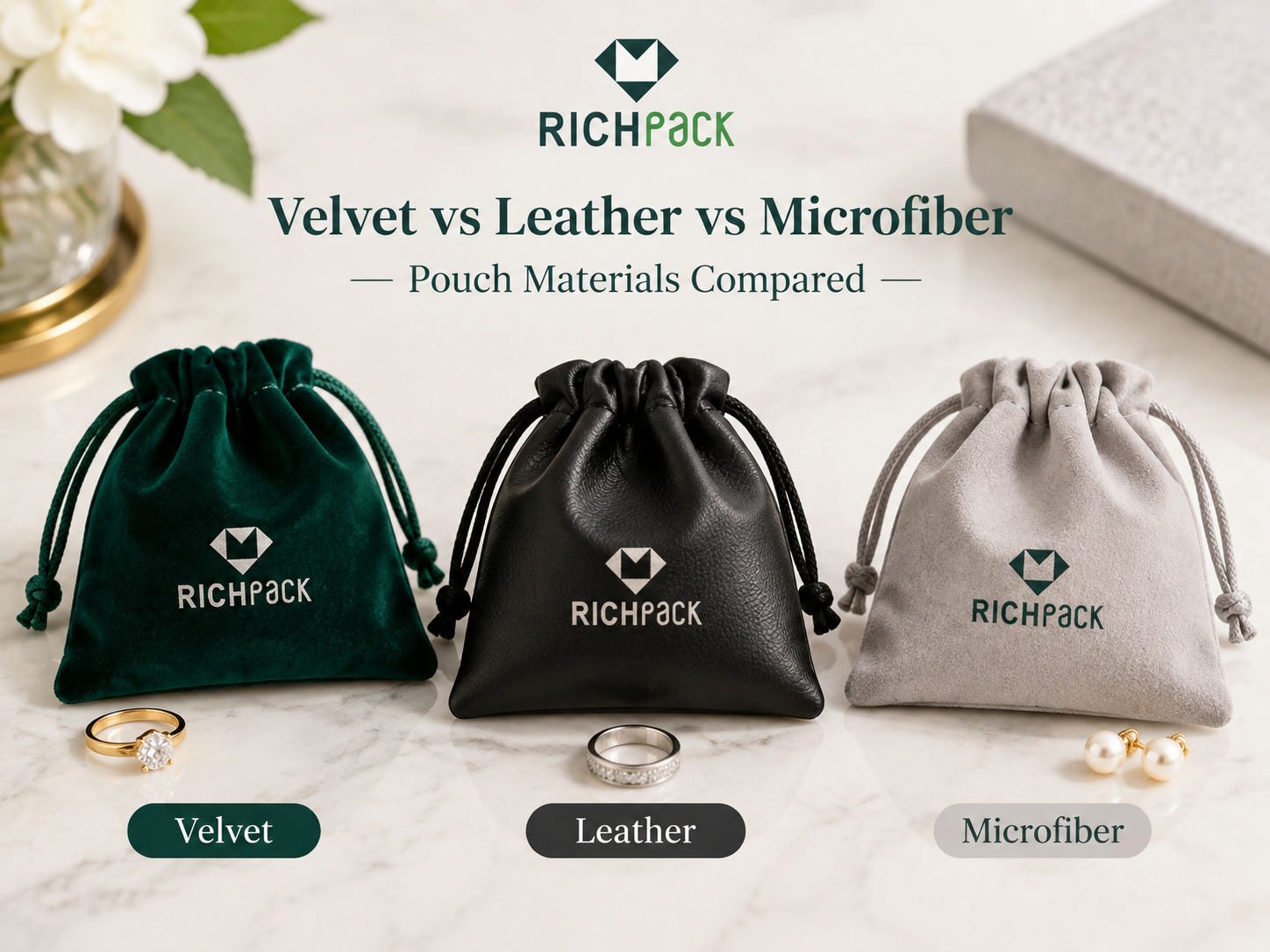



Choosing jewelry pouch materials has a simple answer. Velvet suits premium display. Leather or leatherette suits a structured, heritage look. Microfiber suits a smooth, modern pouch that needs repeatable branding.
The final choice depends on the contact surface, lining, closure, logo method, and sample result.
Name the item first: jewelry, watch, eyewear, or gift. Pouch materials can also mean food films or utility bags.
| Material family | Typical feel | Brand signal | Common formats to consider | Watch-outs | First sample checks |
| Velvet | Plush pile, soft visual depth | Traditional luxury and ceremony | Drawstring, snap, envelope | Shedding, pile marks, color transfer | Pile density, white-cloth transfer, contact rub |
| Genuine leather or leatherette | Grain or leather-like surface, more body | Heritage, structure and reuse | Snap, envelope, travel or roll | Material ambiguity, edge finish, lining choice | Fiber mix, backing, seams, closure cycles |
| Microfiber | Smooth, matte or suede-like surface | Modern, controlled and understated | Drawstring, envelope, snap | Blend and backing vary, logo distortion | Lint, surface uniformity, logo tension |
Use this table to shortlist materials. Do not treat it as a performance ranking. Check the shell, lining, closure, and finish on a sample.
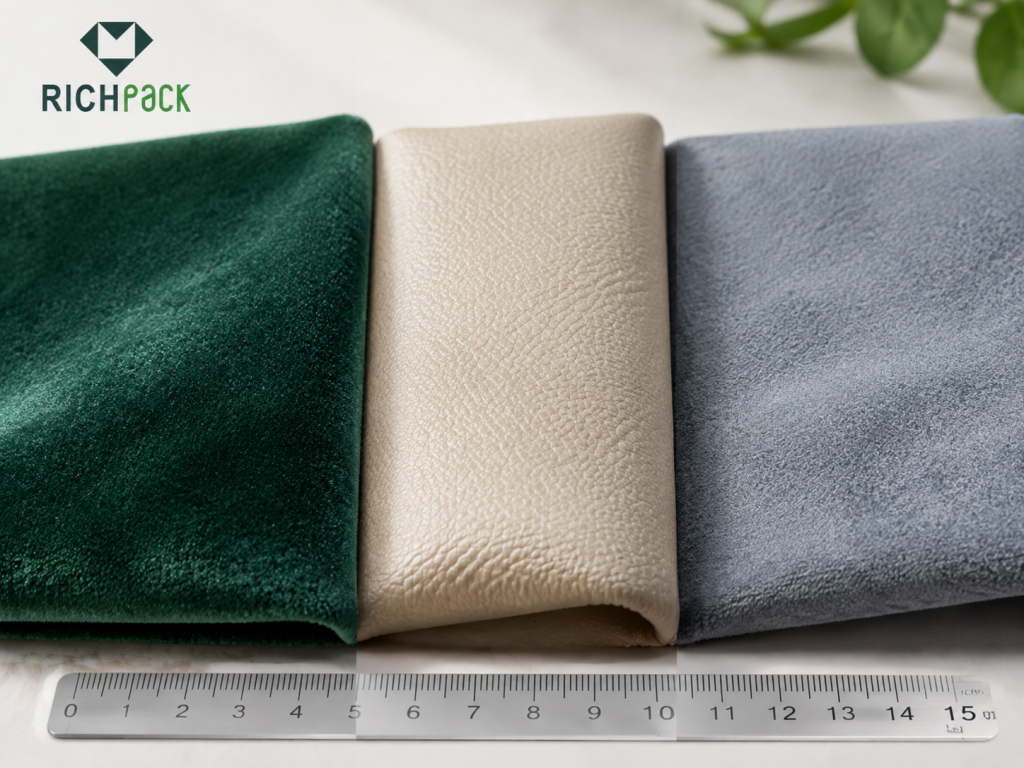
Start by separating a pouch’s outer face from its inner contact layer. The right choice depends on what the pouch holds, how often it opens, and what the customer must see or feel.
A jewelry pouch is a soft or firm holder for display, storage, or travel. A flexible food pouch is a barrier pack designed to block air and moisture.
The names overlap. The buying tests do not.
Define the product category before you compare fabrics. A technically correct material answer can still miss the buyer’s task.
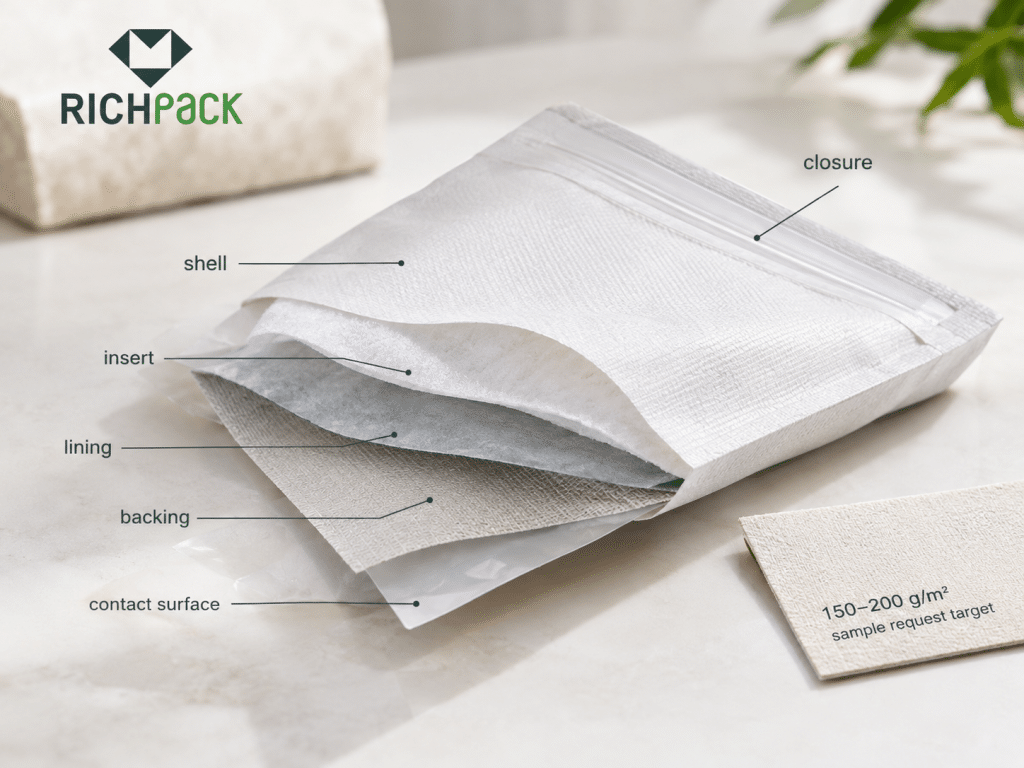
The outer material is only one part of a pouch. Surface is what the customer sees. Structure is what holds the shape.
Lining and inserts touch the jewelry, lens, watch case, or accessory.
That distinction matters when a supplier says “microfiber pouch” or “leather pouch.” Ask for each part. In the brief, list the polymer or fiber, backing, finish, basis weight, thickness, lining, and closure.
For a first comparison, you can request a 150–200 g/m² target range for a soft shell. Treat that number as an RFQ target, not a RichPack product specification. Ask the supplier to confirm the GSM on the final sample.
A soft hand feel does not prove low lint or low abrasion. A polished ring, watch head, and lens each create a different contact risk.
Start with the most sensitive contact. Test the actual lining against the actual product. This is a buyer check, not a claim that one material always protects every item.
In pouch listings, leather may mean genuine leather, leatherette, or a PU leather-like material. These options differ in fiber mix, backing, finish, cost, and end-of-life questions.
Do not approve a quote that says only “leather.” Ask for the material name, polymer or hide type, backing, surface finish, lining, and chemical statement. A clear description keeps a premium expectation from being applied to an unknown synthetic layer.
Write down the product, dimensions, contact surface, use cycle, closure, color, logo method, and target order before asking for a unit price. This makes quotes comparable and exposes missing fields early.
The brief also gives a supplier enough context to recommend a shell and lining. It stops the buyer from choosing the cheapest material and finding later that the logo, closure, or contact surface needs a redesign.
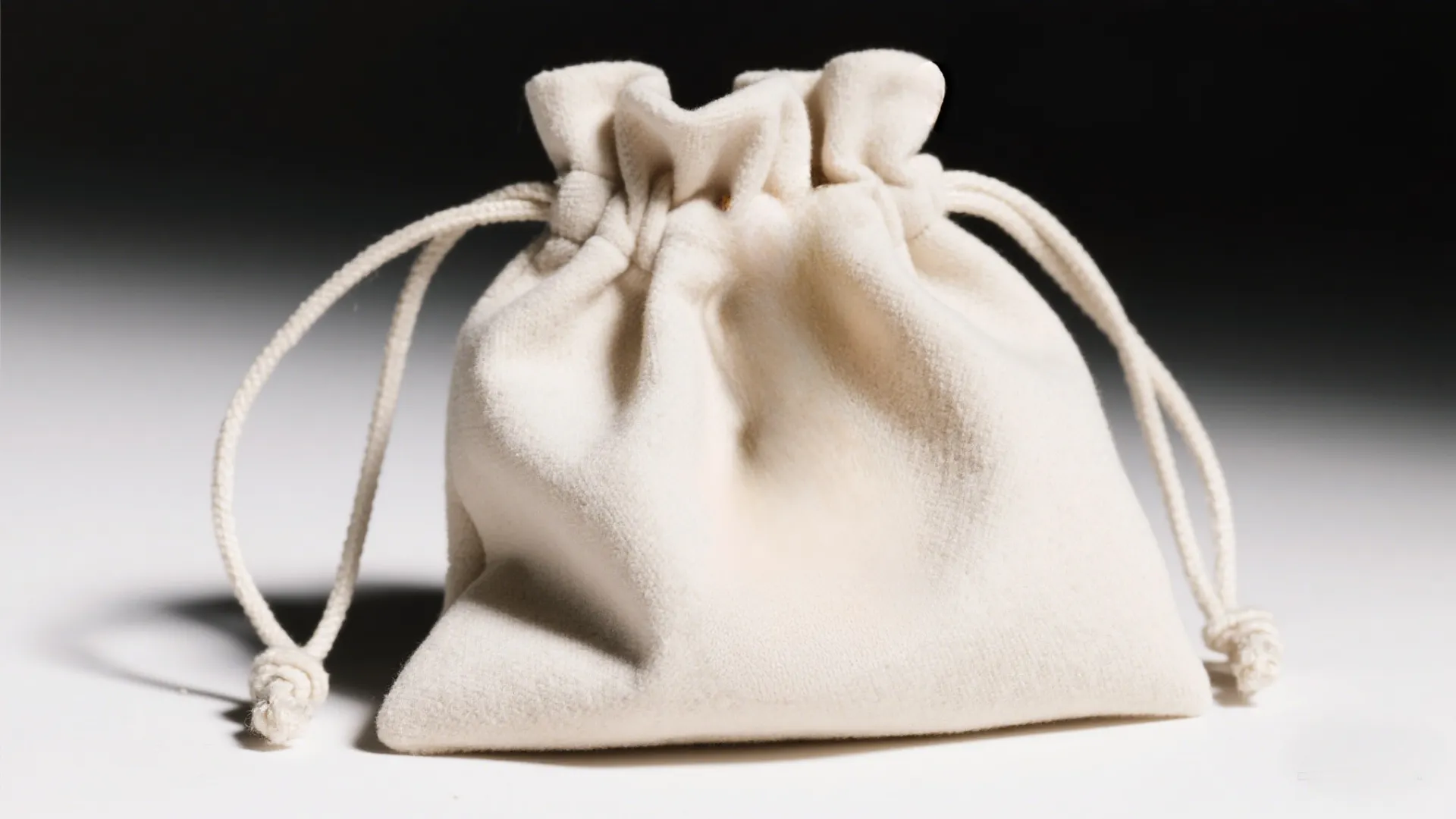
Velvet is the display-first option in this comparison. Its pile creates the look buyers expect from formal jewelry packaging, but the pile, backing, and lining still need a sample check.
Velvet is recognized by its raised pile. That pile creates the plush hand feel linked to traditional jewelry display. Density, direction, and finish can vary, so two products both labeled velvet may feel different.
Ecoicolor’s jewelry-pouch guide recommends approving pile direction, color transfer, lint, and logo method on the physical sample.
Put four fields in the RFQ: face fiber, backing, pile height, and GSM. A 150–200 g/m² target can help compare early samples, but it is an example range, not a verified RichPack SKU. The approved sample decides the result.
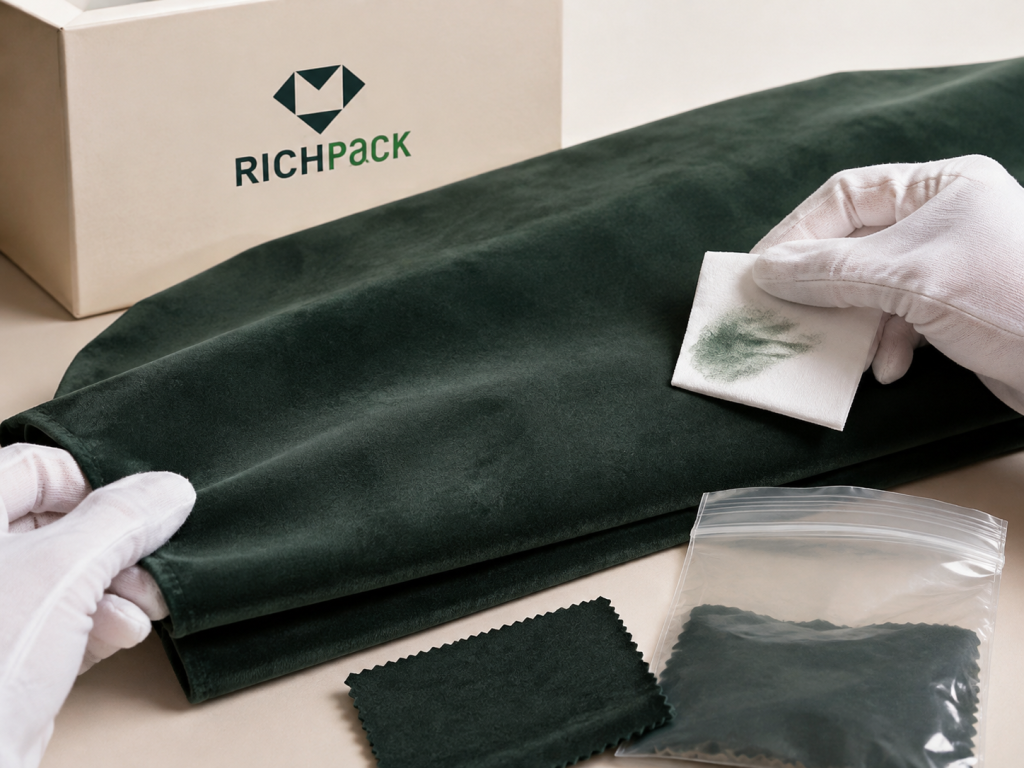
For a sample, inspect the pile under direct and side light. Look for thin areas, permanent pressure marks, and loose fibers. Use the sample to decide whether the surface feels intentional for your brand.
Velvet is a strong fit when the pouch is part of a ceremonial or gift-focused moment. It can support deep color, a soft touch, and a more traditional luxury signal.
That positioning does not make velvet the right choice for every use. A pouch that will be opened daily in a dusty workshop may need a surface and closure that are easier to wipe and keep clean. Let the use cycle set the brief.
A plush exterior does not tell you what touches the jewelry. The interior may use another fabric, an insert, or a divider. Those parts determine the contact experience.
Test the actual lining with the actual item. A jewelry buyer can place a polished metal edge, gemstone setting, or watch surface inside the sample and check for visible transfer or friction.
The test should be gentle and documented. It is a screening step, not a laboratory result.
Anti-tarnish is a chemical claim. Canada’s silver-care guidance says silver reacts with sulfur gases to form silver sulfide. A soft textile does not create an anti-tarnish shield by itself.
If a supplier claims “non-tarnish,” ask whether the pouch uses an anti-tarnish paper, film, coating, or insert. Request the test method, time, humidity, and report.
The CCI notes that silver tarnishes faster as sulfur gas and humidity rise. Its museum note cites about 86–600 parts per trillion of hydrogen sulfide and recommends storage below 50% relative humidity. These are reference figures, not a pouch performance guarantee.
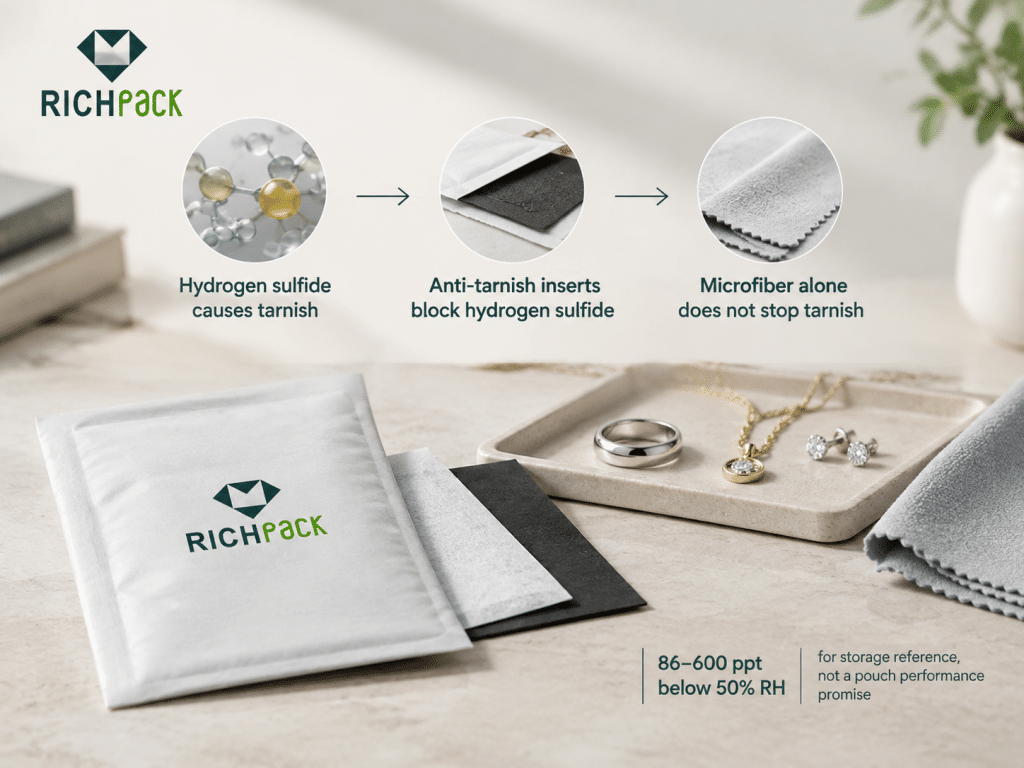
Dark or saturated velvet can look excellent in a product photo and still deserve a transfer check. Rub a clean white cloth over the interior and exterior with light, repeatable pressure. Record any visible color or fiber transfer.
If the pouch will hold light-colored jewelry cards, lenses, or polished metal, include those surfaces in the approval review. Keep the approved color and fabric sample with the purchase order.
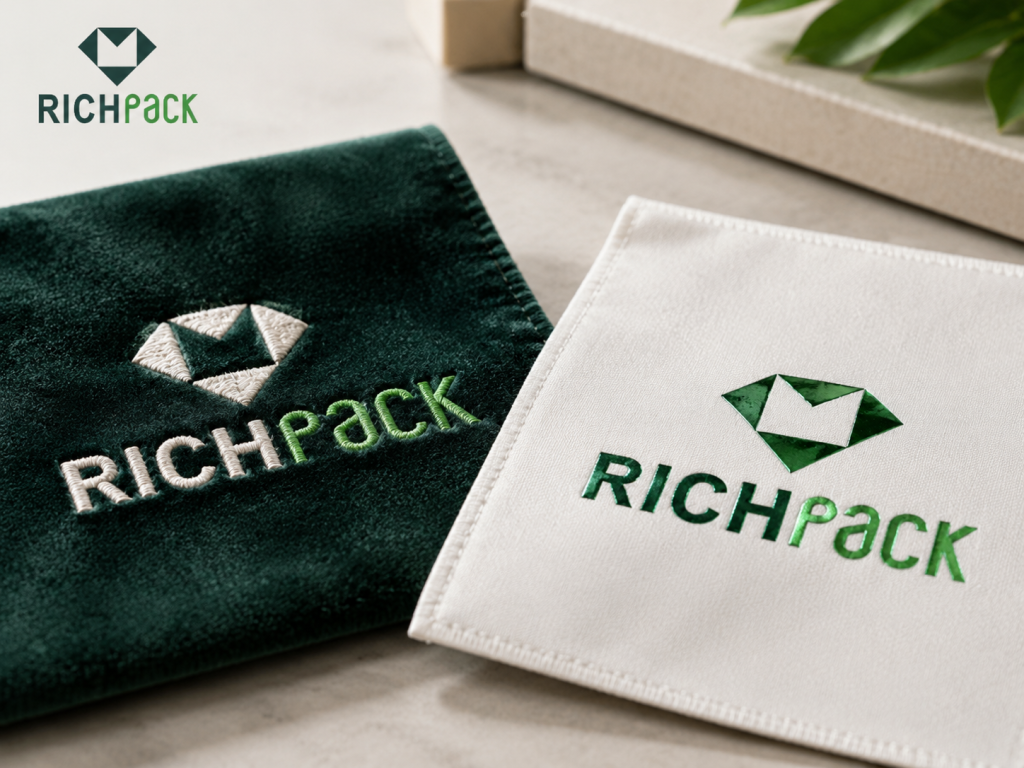
Logo application changes how velvet reads. Foil, embroidery, printing, labels, and relief effects each interact with the pile in a different way. The cleanest artwork file cannot compensate for a surface that does not hold the method well.
Request a decorated sample. Check edge definition, adhesion, and distortion when the pouch is filled. Check the logo again when the pile direction changes.
On velvet, embroidery follows the pile while foil needs a stable patch or smooth area. The process changes the surface, so the surface decides the logo method. RichPack’s Velvet jewelry pouches collection is a product reference, not a test report.
Drawstring, snap, envelope, and zipper formats create different opening motions and different pressure points. A ring pouch, necklace pouch, and watch pouch may need different clearances even when the outer fabric is the same.
Name the closure, lining, insert, and dimensions in the brief. A velvet shell with the wrong opening can slow packing and create movement inside the pouch.
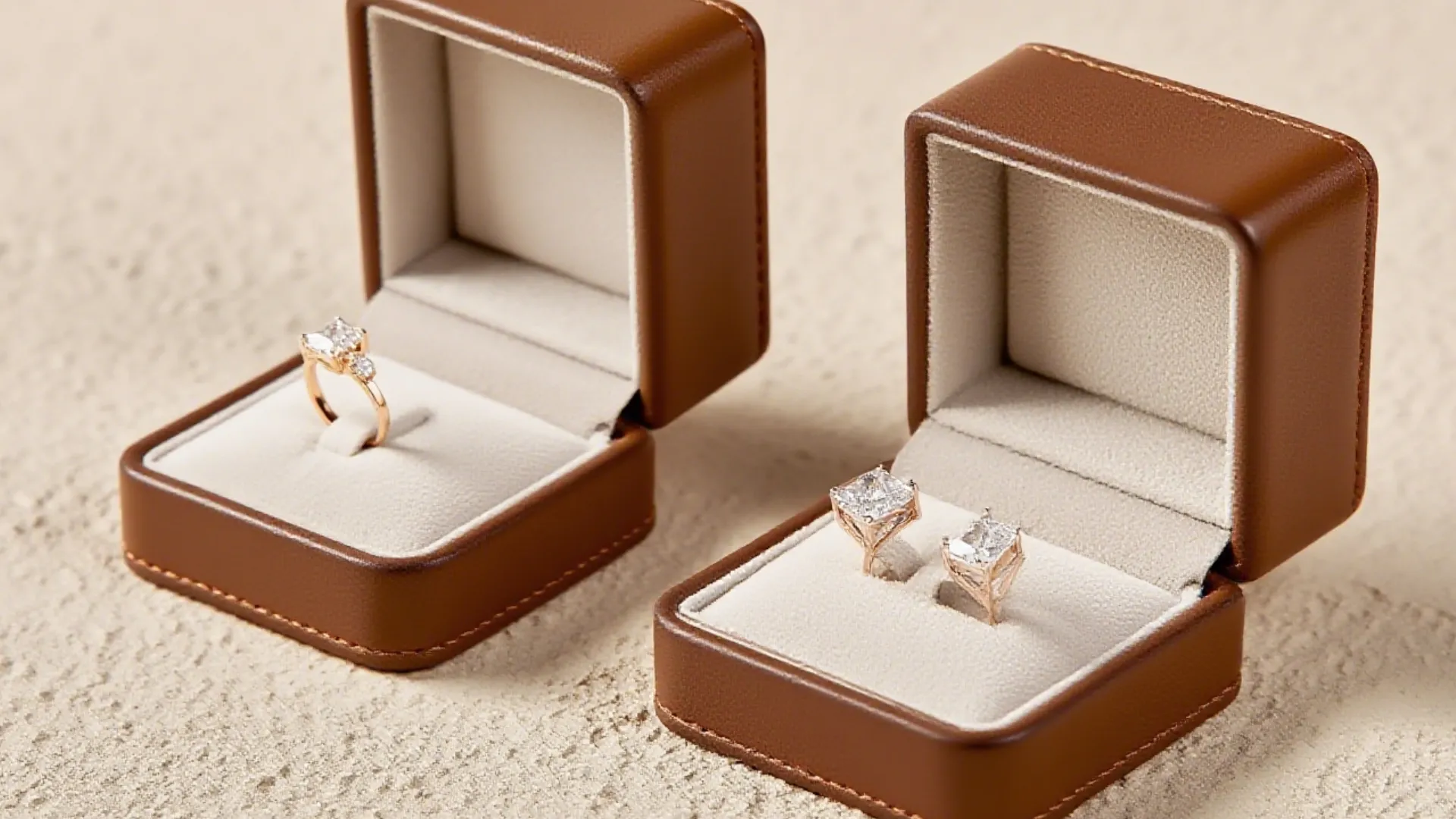
Leather-family pouches add body and a heritage cue. The buyer must first separate genuine leather from PU or leatherette, then match the outer face to the lining and logo method.
Genuine leather, PU, and leatherette can all appear in jewelry pouch searches, but the words do not describe the same construction. Surface grain, backing, odor, flexibility, edge finish, and care needs can differ.
Use the supplier’s material and build details in the quote. Keep the product name as precise as the evidence allows. “Leather-look PU pouch” is clearer than a generic “leather pouch.”
A buyer checklist should treat PU as a separate route and check its grain, backing, and edge finish.
RichPack’s PU leather jewelry pouches collection shows the same category.
Leather-family surfaces can give a pouch more body and a more structured feel. That can support heritage, travel, or reusable accessory programs where the pouch is expected to remain part of the customer’s routine.
The trade-off is that structure can change folding, shipping volume, and the way a small item sits inside the pouch. Test the empty pouch and the filled pouch. A heritage look does not remove the need to fit the product correctly.
The leather-like exterior may be durable or visually distinctive, while the jewelry touches suede-style fabric, microfiber, velvet, or another lining. Those layers should not be described as one material.
Ask for shell, backing, lining, and insert details. If the pouch is for eyewear or a precision item, add a clean-contact rule to the sample record.
For a brand program, uniform color, logo placement, and surface finish may matter more than the word leather. PU or leatherette can work when a buyer needs a steady look across repeat orders, but the supplier must confirm the build.
Check the sample for cracks, edge finish, and logo distortion after normal opening. Debossing needs a compressible surface with enough body. Foil needs a smooth face that can take heat and pressure.
Test the process on the final PU or leatherette surface. Do not turn a product description into a durability promise.
Put three questions in the RFQ. What is the outer material? What is the backing or base?
What finish and lining will touch the product?
Written answers make later comparisons easier. They also reduce the risk that a quote, supplier listing, and approved sample use different names for the same pouch.
Microfiber is the smooth, modern route in this comparison. It can suit a controlled matte look, but the polymer, backing, finish, and contact surface must be named before approval.
Microfiber is a synthetic fiber construction, not a single natural textile. Its feel depends on the fiber blend, backing, finishing, and surface treatment. Supplier listings commonly describe jewelry microfiber as smooth, soft, or suede-like.
Ask for the chemistry in plain terms: polyester/PET, polyamide/nylon, or another polymer. Then ask for the backing, finish, thickness, and GSM. A 150–200 g/m² target can make early samples easier to compare, but it is an example request field, not a verified RichPack product spec.
Microfiber often supports a clean, matte or suede-like display. That makes it a natural candidate for modern jewelry, watch, eyewear, and accessory programs where the brand wants a controlled surface rather than a pronounced pile.
Judge the look beside the product. A pouch can look modern alone and still feel wrong next to high-gloss metal or a formal gift box.
Microfiber pouches appear in drawstring, envelope, and snap formats across supplier product listings. The material and backing can help a design hold a defined shape, but the exact stiffness must be checked on the sample.
Open and close the filled pouch repeatedly. Check whether the edges collapse, the insert shifts, or the closure presses into the product. Record the result for the approved construction.
Microfiber is often marketed as low-lint or scratch-safe. Treat that language as a reason to test, not as a substitute for testing. Rub the contact surface with a clean cloth, inspect under strong light, and check the product after removal.
For an oxidation or anti-tarnish claim, ask for the active layer or insert. A microfiber shell alone does not stop tarnish. Hydrogen sulfide causes tarnish. Useful proof is a controlled test with a named material, time, and humidity.
Also ask how the surface should be cleaned. A care method that works for one finish may damage another. Put the agreed care instruction in the product spec.
Debossing, printing, foil, and labels can create different results on microfiber. Debossing presses the surface into a mark. Foil transfers a film onto a smooth face.
The surface should hold the mark without flattening, cracking, or losing edge definition when the pouch is opened.
Approve the logo on the final material and color. A logo sample on a different substrate is only an artwork check.
Choose by failure risk first, then by look. Velvet favors formal display, leather-family surfaces favor structure, and microfiber favors a smooth modern face. The right choice changes with the product and handling cycle.
Use velvet when the pouch’s first job is to create a plush, premium display. Consider leather or leatherette when the pouch needs a more structured, heritage or reusable feel. Consider microfiber when the brand wants a smooth, modern surface and repeatable decoration.
These are starting points. The contact surface, closure, and product fit can change the result.
Give contact safety the first decision weight. Check the lining, seams, loose fibers, color transfer, and movement inside the pouch before judging the material’s visual effect.
Luxury is useful only when the pouch performs its storage or display job. A beautiful surface that leaves the wrong residue creates a costly mismatch.
Rings and earrings often need compact openings and stable inserts. Necklaces need enough space to reduce tangling. Watches and eyewear may need a smooth contact surface, careful clearance, and a closure that does not press against the item.
Precision accessories deserve the same discipline. Define the contact surface and cleaning standard instead of assuming that jewelry packaging language covers optical or electronic components.
When the pouch must match a box, card, and tray, review RichPack’s jewelry packaging sets as a set-level route. Color, lining, and logo checks should still happen on the physical sample.
Velvet gives the logo a soft, tactile context. Leather-family surfaces can support a structured mark or a pressed effect. Microfiber often suits a restrained, matte treatment.
Choose the method after the material is fixed. Ask for a finished sample with the real artwork, not a digital mockup alone.
A pouch that stays in a display box has a different job from one that travels in a handbag, watch case, or shipping carton. Repeated opening stresses closures and decorated areas. Travel adds compression, friction, and exposure to dust.
Describe the intended use cycle in the brief. The right material is the one that still makes sense after the expected handling, not only at the first unboxing.
Recycled, mono-material, and biodegradable claims need documents. Ask for the exact fiber mix, recycled-content evidence, coatings, mixed components, and disposal route.
Use the right name for each proof:
RichPack has Sustainable Materials, Certificates and Eco Properties resources.
These resources can start a supplier discussion. They do not replace a current certificate, test report, or product statement.
RichPack’s Certificates resource states FSC Chain of Custody coverage for paper, cardboard, and wood-based products, names FSC C140687 for selected packaging on request, and describes GRS and BSCI programs. Treat these as supplier disclosures. Ask for the current scope, license, or transaction record for the exact order.

A material label alone does not prove that a pouch can be recycled, can break down, has low carbon impact, or has safe chemistry.
Compare the cost of the sample, artwork setup, logo method, inserts, rejects, freight, storage, and repeat orders. A lower unit price can disappear when a weak closure creates rework or when the wrong lining requires a second sample round.
Use one quote scope for every supplier. RichPack provides a custom packaging and contact route, but the current task materials do not verify RichPack pricing, MOQ, or lead time.
Quality is visible in the sample. Check the face, contact layer, seams, closure, and logo under the same use conditions your customer will see.
Look at the surface from more than one angle. Velvet should have a consistent pile. Leather-family material should show the stated grain or finish without unexplained flaws. Microfiber should look even across the pouch rather than patchy or crushed.
Take photos beside a size reference and note the color, direction, and finish. A sample record is more useful than memory.
Use the actual product or a documented material surrogate. Rub the contact surface gently and consistently, then inspect both the pouch and the product under strong light.
Record lint, dye transfer, visible marks, and changes in the surface. Do not call the result a certified abrasion or tarnish test unless a qualified test and report exist.
Pull drawstrings lightly, cycle snaps, and open zippers repeatedly. Inspect seam allowance, edge paint, loose threads, and corners.
The test should match the pouch’s intended use. A display-only pouch may need fewer cycles than a travel pouch, but both need a defined acceptance point.
Fill and empty the pouch while watching the logo. Check the mark under light tension, at the fold, and near the closure. A logo that looks sharp when flat may distort when the pouch carries the product.
Save the decorated sample. It becomes the visual reference for production approval.
Use the same white-cloth transfer check for velvet, leather-family surfaces, and microfiber. Note odor at unpacking and after the sample has rested in the intended shipping environment.
The goal is not to rank every material with one score. The goal is to catch a problem before the buyer commits to a bulk order.
Label the approved sample with the fiber mix, color, dimensions, lining, closure, logo method, and approval date. Attach photos and the acceptance notes to the purchase order or release record.
Without a retained reference, “same material” can mean only the same marketing name. That is too weak for a repeat packaging program.
RichPack also lists a Quality support resource. Use it to start the inspection discussion. Ask for the control plan, limits, and sample record for the order.
A good supplier brief turns a material idea into a buildable pouch. Give the vendor the product, contact surface, size, layers, closure, logo, and pass/fail checks before asking for a quote.
Name the item type and provide length, width, height, and any protruding or delicate parts. State what the pouch will touch and whether it will be used for display, gifting, storage, travel, or shipping.
For eyewear, watches, and precision items, add a clean-contact rule. It helps the supplier choose a lining and test the right risk.
Write each component on its own line. Include shell, backing, lining, insert, drawstring or snap, zipper if used, and any protective card or sleeve.
This prevents the quote from hiding a material change inside a general phrase such as “premium pouch.”
Add color reference, pile or grain direction if relevant, artwork file, logo size, position, and process. State whether the mark must stay clear after filling and opening.
RichPack’s jewelry pouch collection is the right place to browse available pouch families after the comparison.
List the checks that matter: product-contact rub, lint or transfer, seam and closure cycles, logo tension, dimensions, and color. Define who approves the sample and what happens when it fails.
Keep the result with the golden sample. A supplier can only reproduce what the buyer has described and approved.
Request the fiber mix, sample cost, artwork or tooling cost, unit scope, packaging, freight assumptions, production timing, and reorder terms. Ask which fields are estimates and which are confirmed.
For design-to-delivery follow-up, RichPack provides a custom packaging service. For material options, review the material resource.
These resources describe supplier services. They do not replace a current quote or approved sample.
There is no single best material. Velvet fits premium display. Leather or leatherette fits structured, reusable programs. Microfiber fits a smooth, modern surface.
Choose only after checking the lining, closure, logo, and product fit on the final sample.
Velvet has a raised pile. Microfiber is a synthetic fiber construction. Velvet feels plush and traditional. Microfiber often feels smooth or suede-like.
Blend, backing, finish, and lining change the result. Compare the finished pouch rather than the material name alone.
Velvet can work well when its lining and finish suit the item. The word velvet does not prove low shedding, colorfastness, or low friction. Check the pile, rub the contact surface with the real item, and record any transfer before approving a bulk order.
Genuine leather and leatherette are different material families. Leatherette usually means a leather-like synthetic surface. Ask for the polymer or hide type, backing, finish, and lining. The name should match the construction shown on the final sample.
They can be suitable when the surface, clearance, and closure fit the item. Watches and eyewear need clean contact, enough room, and no pressure points. Test the actual item or a documented equivalent. A microfiber label alone does not prove scratch safety.
Inspect, rub, cycle, and record. Check the surface, contact area, lint, color transfer, seams, closure, and logo under light tension. Keep the approved sample and attach the acceptance notes to the order. Do not call this a certified lab test.
It depends on fiber, coating, backing, mixed components, and local collection. Ask for the fiber mix, recycled-content proof, and disposal guidance. Do not infer that a pouch can be recycled or can break down from “natural,” “eco,” or “mono-material” without current evidence.
The best pouch material is the one that survives the buyer’s real use case. Velvet can make a jewelry gift feel ceremonial. Leather-family materials can add structure and a reusable heritage signal. Microfiber can give a smooth, controlled display.
Each choice still needs a defined lining, closure, logo method, and sample record.
Before you request a quote, write the product contact, dimensions, shell, lining, closure, decoration, and acceptance checks in one brief. Then send RichPack a pouch brief with those fields ready for review. The response is more useful when the supplier quotes the same object you will approve.
2026-05-19

2025-12-10
2025-04-28
2025-05-14
2024-10-29
2026-03-24

Affordable Jewelry Bags Wholesale for Professional Packaging – High-Quality Wholesale Jewelry Bags for Retail and Gift Solutions
View More
Bespoke Packaging Solutions for Luxury Jewelry | Ideal for High-End Jewelry Brands Seeking Exclusive and Sophisticated Packaging Designs
View More
Burlap Favor Gift Bags | Natural 3.5 x 5 Inch Drawstring Pouches for Jewelry, Weddings & Gifts | Richpack
View More
Cotton Jewelry Pouch | Eco-Friendly, Soft Storage for Your Precious Pieces
View More
Creative Personalized Packaging for Handmade Goods Marketplaces | Perfect for Artisans and Craft Retailers Needing Custom Branding and Memorable Packaging
View More
Custom Eco-Friendly Jewelry Packaging for Premium Brands | Sustainable and Elegant Solutions for High-End Retail
View More

