

 PREV


10 Best Customizable Jewelry Packaging Solutions for Standout Branding
2024-10-10
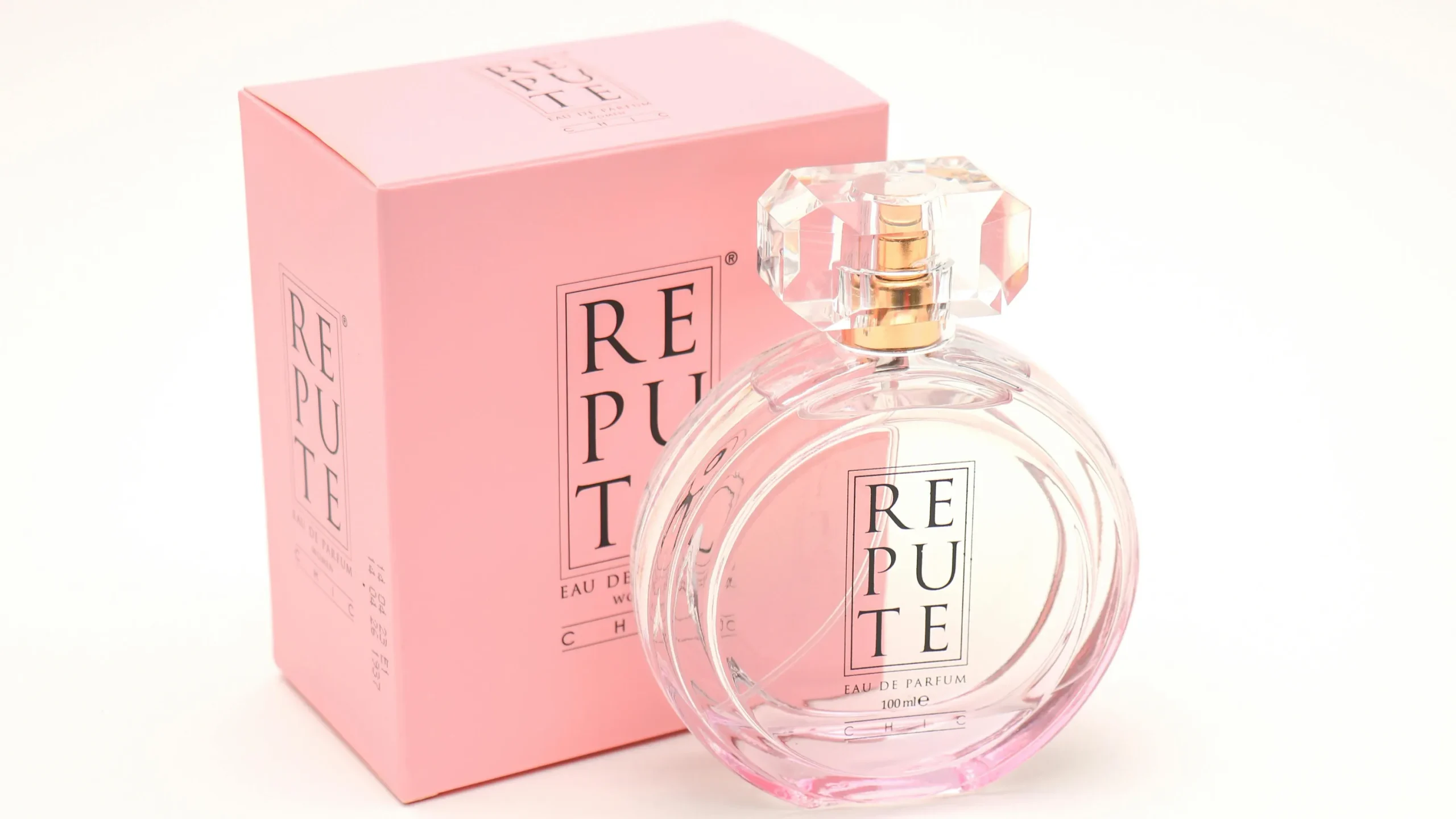



Choose materials for custom perfume packaging by component, function, destination market, and the evidence behind each environmental claim. A glass bottle, carton, insert, and shipping box do different jobs, so one material label cannot tell you whether the full package fits your product or local recovery options.
RichPack’s custom perfume packaging options are one starting point for a bottle and sales channel. Compare the material and documentation for each packaging layer, then use the four principles below to build a supplier comparison and approve a sample before production.
The four principles are simple to state: map the package, protect the product, choose a workable reuse or recovery route, and verify every claim before scaling. Apply them to the whole packaging system instead of treating “sustainable” as a property of one material.
List the parts before you compare substrates. Start with the perfume bottle and closure system, then record the cap, pump, collar, label, secondary box, insert, and shipping materials as separate components. The names and material mixes can vary by design, so the supplier’s bill of materials should be the reference for the package you are actually ordering.
That distinction changes the questions you ask. A bottle needs to suit the fragrance and closure. An outer carton carries branding and product information. An insert holds the bottle in position, while the shipping box is selected for the distribution route. Our broader perfume packaging guide covers the full system. This guide focuses on material decisions.
| Packaging layer | Typical components | First decision |
| Primary | Bottle, pump, closure, and parts that hold the fragrance | Does the container and closure match the product and filling system? |
| Secondary | Carton or rigid box, label, and protective insert | What presentation and fit does the bottle need? |
| Tertiary | Shipping carton, cushioning, and tape | What handling and distribution route must the packed unit face? |
Set the functional requirements first. The carton, insert, closure, and shipping configuration must fit the bottle and the way the product will be handled. A lighter or more easily separated component is not a useful change if the approved sample no longer meets the package’s required fit, opening, or distribution checks.
Define those checks with the people responsible for packaging development and distribution. At sample approval, confirm that the bottle sits as intended, the closure and insert fit the approved design, and the finished package can be assembled and opened as planned. The correct protection test depends on the product-package combination and route. A material description alone does not establish performance.
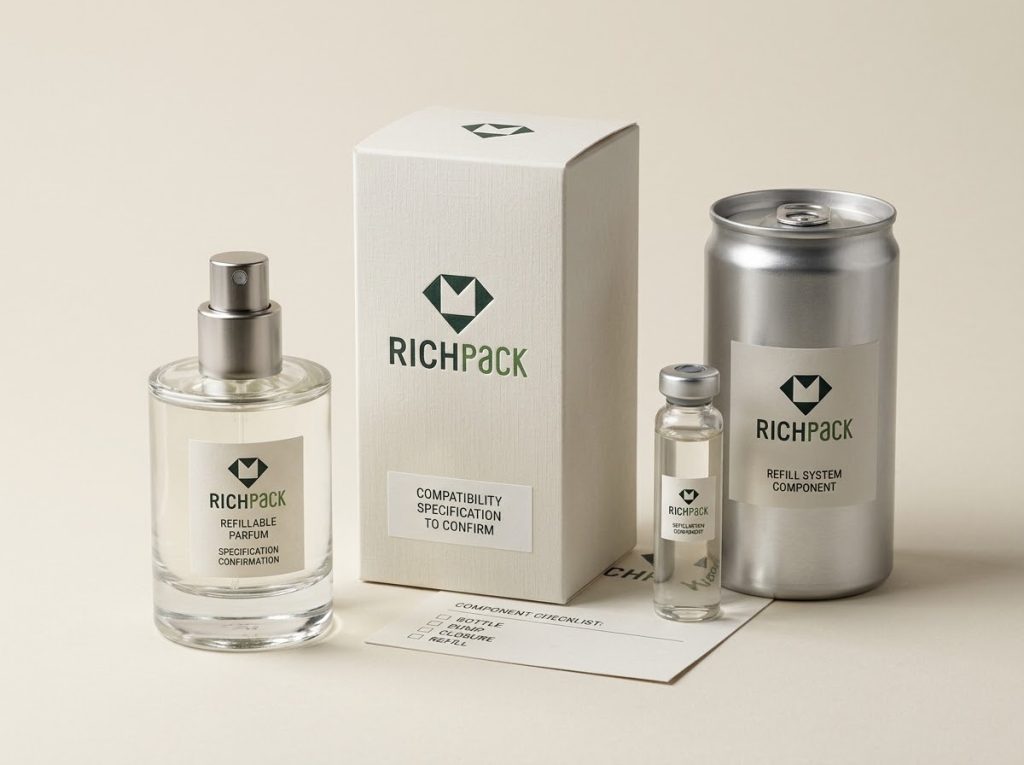
Decide what should happen to each component after use. A refill system needs a compatible refill format and a clear user process. A recyclable claim needs to match the material combination and the collection and processing options in the market where the package is sold. A theoretically recyclable substrate does not establish that every part will be accepted locally.
Pay attention to connections as well as base materials. Pumps, collars, labels, adhesives, coatings, and decorative layers may need to be separated or may affect local sorting. The U.S. FTC Green Guides discuss qualifying environmental marketing claims, while requirements and facilities differ by market. Confirm local instructions before printing disposal guidance on a package.
Ask for evidence tied to the exact component and production version. Useful records may include the bill of materials, recycled-content documentation, chain-of-custody scope for forest-based material, technical specifications, and the sample approval or test record. Each document should identify what it covers and any conditions.
For example, FSC Chain of Custody certification concerns tracking forest-based materials through a defined supply chain. It does not show that every component in a perfume package is certified or establish the package’s total environmental impact. Keep claim, component, evidence, market, and approved version together in the procurement record.
Choose sustainable perfume packaging by comparing the job, components, and end-of-life path of each layer. No single material is right for every bottle, brand, or market. Itemize the primary bottle and dispensing parts, label, secondary carton or rigid box, insert, and tertiary shipping set separately. A material name alone does not reveal coatings, attached parts, or local recovery options, so compare the finished components and request supplier documentation. This matrix is a screening aid, not an environmental ranking. RichPack’s packaging material options are a supplier overview, not independent life-cycle evidence.
| Packaging layer | Candidate materials or structure | Main use | Main trade-off to check | Recovery or reuse condition | Supplier evidence or sample check |
| Primary bottle and refill parts | Glass bottle; pump, cap, collar, and compatible refill format | Contain and dispense the fragrance | Multiple components may use different materials; bottle mass and refill compatibility vary by design | Confirm component separation and local collection; treat refillability as a system with a compatible refill format | Component-level BOM, drawings, material specifications, weights, and an assembled sample |
| Secondary carton or rigid box | Folding paperboard or rigid construction; recycled or certified fiber where documented | Hold the primary package and carry printed brand information | Coatings, laminations, foil, windows, adhesives, and reinforcements affect separation | Verify local acceptance of the finished construction and any removable parts | Board grade, recycled-content method, certification scope, finish details, and finished sample |
| Insert | Molded fiber, corrugated support, or folded / die-cut paperboard | Locate the bottle within its carton or box | Fit and assembly depend on the actual bottle, closure, and box geometry | Check whether the insert is accepted with paper locally and whether non-paper parts separate | Fiber composition, dimensions, binder or coating details, fitted sample, and route-specific evaluation |
| Plastic components | PCR or bio-based plastic identified by resin and component | Potential option for a specified closure, insert, or other designed part | Recycled content and feedstock origin do not establish end-of-life handling | Confirm resin acceptance or the specific composting conditions in each target market | Resin identity, content calculation, traceability, and claim-supporting documents |
| Closures, labels, and finishes | Metal or plastic details, paper labels, ink, adhesive, foil, film, wood, or composite details | Close, identify, decorate, or distinguish the package | Mixed materials and surface treatments can make separation and sorting less straightforward | Confirm what can be removed and how each material is handled locally | Component and finish specifications, adhesive details, removal steps, and assembly sample |
| Tertiary shipper and fill | Corrugated shipper, paper-based supports, or other specified protective fill | Group and protect the assembled package through distribution | Added parts, tape, dimensions, and fill depend on the route and package configuration | Check local handling and only describe reuse where a usable return or refill path exists | Shipper and fill BOM, dimensions, weights, assembly sample, and evaluation for the intended route |
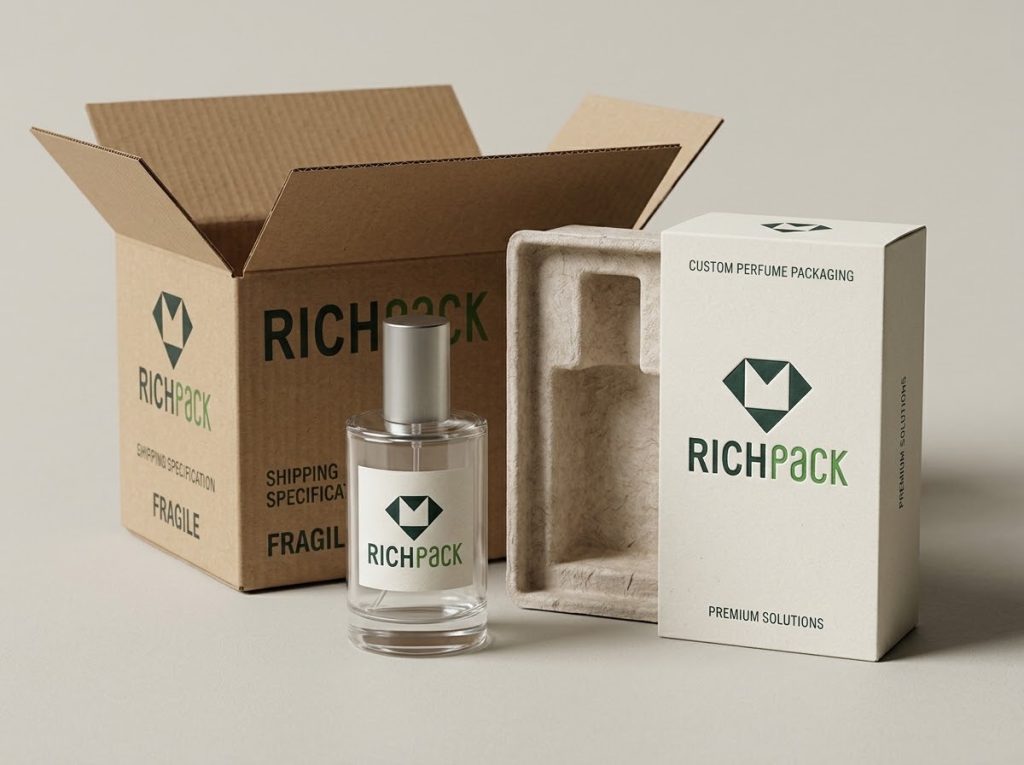
Start with a component list for the primary package rather than treating the bottle as the whole system. Record the glass bottle, pump or spray mechanism, collar, cap, label, and any sleeve. Each part can differ in material, mass, and ability to separate. A refillable description should mean that a compatible refill format and instructions are part of the offer. Bottle shape or a sturdy feel alone does not establish compatibility. Ask for a component-level bill of materials, drawings, material specifications, component and assembled weights, and written refill information.
Keep these records tied to a specific bottle size, closure version, and market. A change to a pump or collar can make earlier component answers incomplete. Then check how each component is handled in the destination market. A glass bottle is a candidate, not an automatic environmental winner. Attached parts, refill design, distribution, and local collection remain part of the comparison.
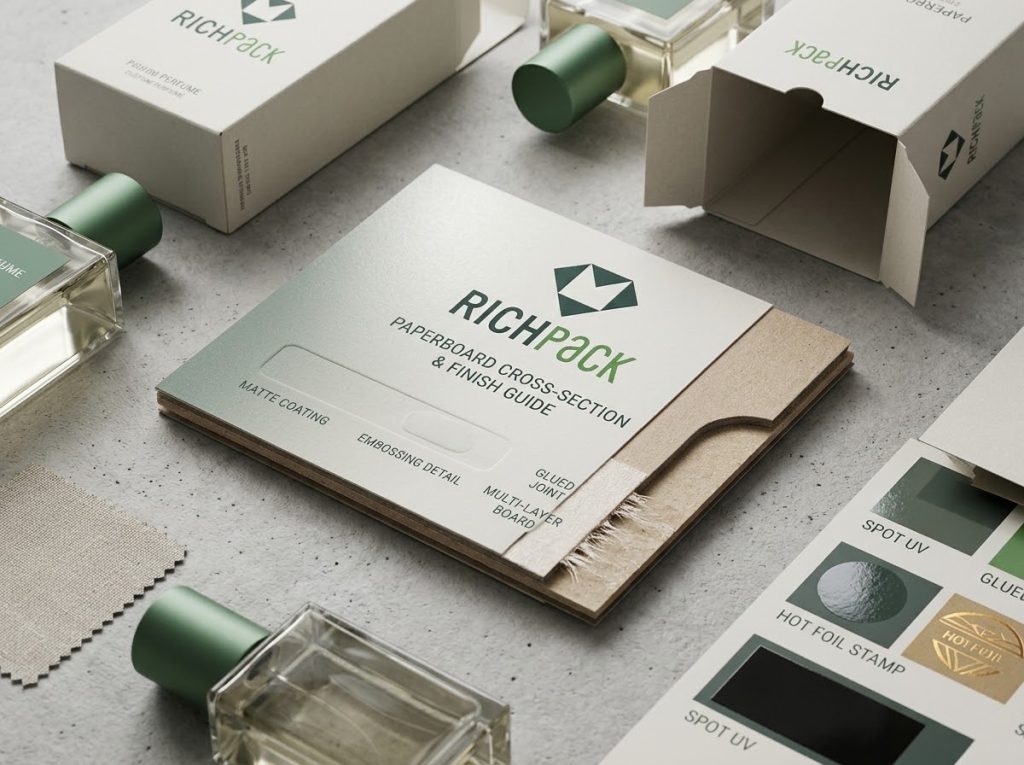
Compare folding cartons and rigid boxes against the structure and presentation the product requires, then document the fiber and every added layer. A recycled-content statement and chain-of-custody certification answer different questions. Where FSC is offered, confirm that the evidence applies to the particular paper item and traceability scope. It does not certify every box component or establish whole-package life-cycle performance. Coatings, laminations, metallic effects, windows, inks, adhesives, and reinforcements can affect separation and local acceptance of the finished package.
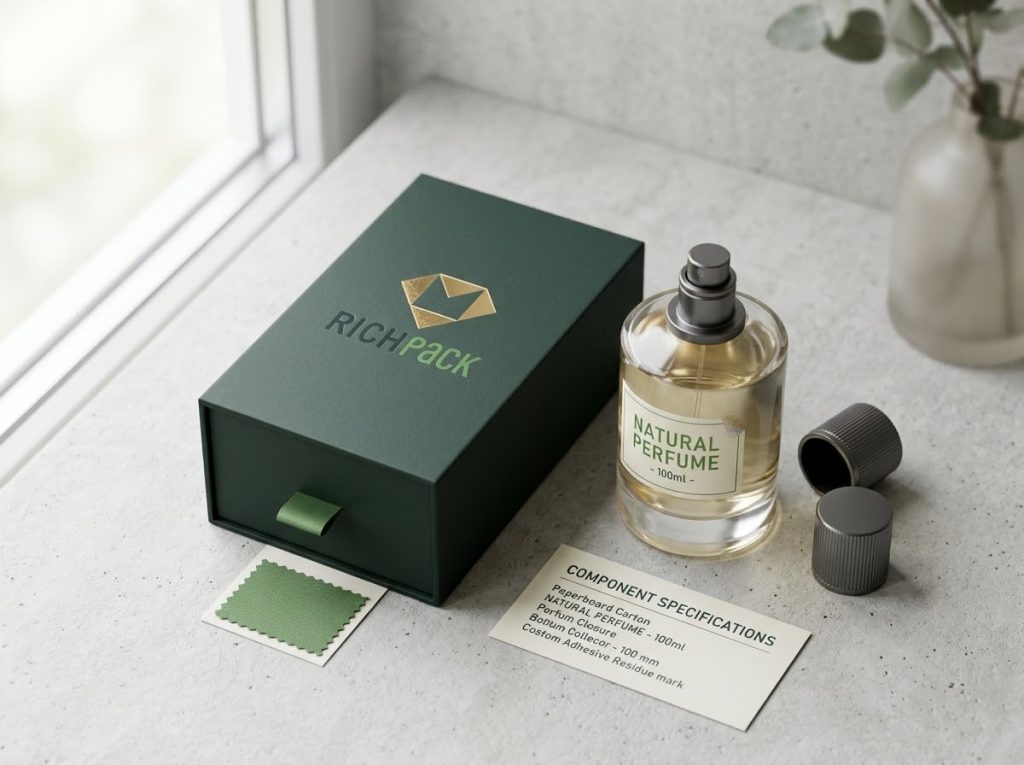
Ask for board grade, the basis for any recycled-content claim, applicable certification details, and a sample with all finishes. Inspect the finished sample rather than assuming a plain board swatch represents the assembled box. RichPack lists a recyclable perfume box option as a product. Treat “recyclable” as a RichPack product claim, then verify the exact SKU construction and destination market rather than assuming local collection.
An insert sits inside the secondary package and should fit the bottle and closure in their assembled form. Candidates include molded fiber, corrugated supports, or folded and die-cut paperboard. Their suitability depends on the actual geometry and how the package will be handled. A fiber label alone does not establish fit or recovery.
Ask the supplier to identify the fiber composition and any binders or coatings, share a dimensional drawing, and provide a sample matched to the approved bottle and box. Check movement, insertion and removal, and whether non-paper parts can be separated. Inspect the insert in the final carton, since a loose insert sample does not show how the complete assembly holds the bottle. The assembled package still needs evaluation for its intended route. Do not infer protection from a material name or appearance.
Post-consumer recycled (PCR) content describes material origin or share. Bio-based describes feedstock origin. Neither term by itself tells a buyer whether a component is recyclable, compostable, or biodegradable under the conditions available to customers.
Ask suppliers to identify the resin and exact component, state the content and calculation basis, and provide traceability and any claim-supporting documentation. Confirm how the specific part enters local sorting or composting. Acceptance depends on material identity and available infrastructure. Bio-based does not mean compostable, and recycled content does not prove that an item will be collected for recycling. Consider either option only after the component’s functional requirements and end-of-life route are clear. If the evidence stops at a broad marketing term, narrow the wording or leave it out.

Small parts can change how the main package is separated. A pump or closure may combine materials. A metal collar, plastic cap, wood detail, foil, film, varnish, label, or adhesive adds information the buyer needs to track.
Specify the intended visual result, then identify which parts are essential, optional, or detachable. Ask for component and finish specifications, adhesive details, removal instructions, and an assembled sample. Check whether the chosen treatment affects the recovery directions for the base material in each destination market. RichPack’s luxury perfume packaging design and custom printed perfume boxes are our own design and product resources. Neither establishes an environmental outcome for a particular package. Our guide to branding elements in perfume packaging covers a related design task.
Include the tertiary layer: the outer shipper, tape, void fill, and any supports around the retail package. Corrugated shippers and paper-based supports may be considered alongside other supplier-specified fill, but do not assume that all paper parts are collected together or remove protection before evaluating the actual configuration. Record the shipper and fill materials, dimensions, weights, and assembly details.
Ask for a sample using the intended bottle, closure, carton, and shipping setup, then evaluate it for the planned channel and route. Reuse should be described only when the package has a practical reuse path and clear instructions. The goal is to specify the layers needed for the route and product, not to guess that fewer layers will perform adequately.
Make the material decision actionable by giving every supplier the same brief: where the package will be sold and shipped, what each component does and contains, what evidence supports its material claims, and which appearance or separation requirements are fixed. A component-level brief makes quotations and samples easier to compare because the material, finish, and documentation refer to the same package version.
| Brief field | Record or request | Why it matters |
| Markets and route | Sales countries, channels, fulfillment route, and known local recovery context | Requirements and end-of-life options vary by destination and channel. |
| Component schedule | Component ID, function, material, dimensions, weight, coatings, adhesives, and assembly | A perfume package includes more than the bottle or outer box. |
| Material evidence | Source, recycled-content basis, relevant certificates, and supporting records | Names and marketing descriptions alone do not establish a claim. |
| Design constraints | Required finish, branding, separability, and acceptable alternatives | Suppliers can identify trade-offs before a sample is made. |
| Approval record | Sample and BOM revision, approver, acceptance criteria, and change triggers | Keeps later production decisions tied to the reviewed specification. |
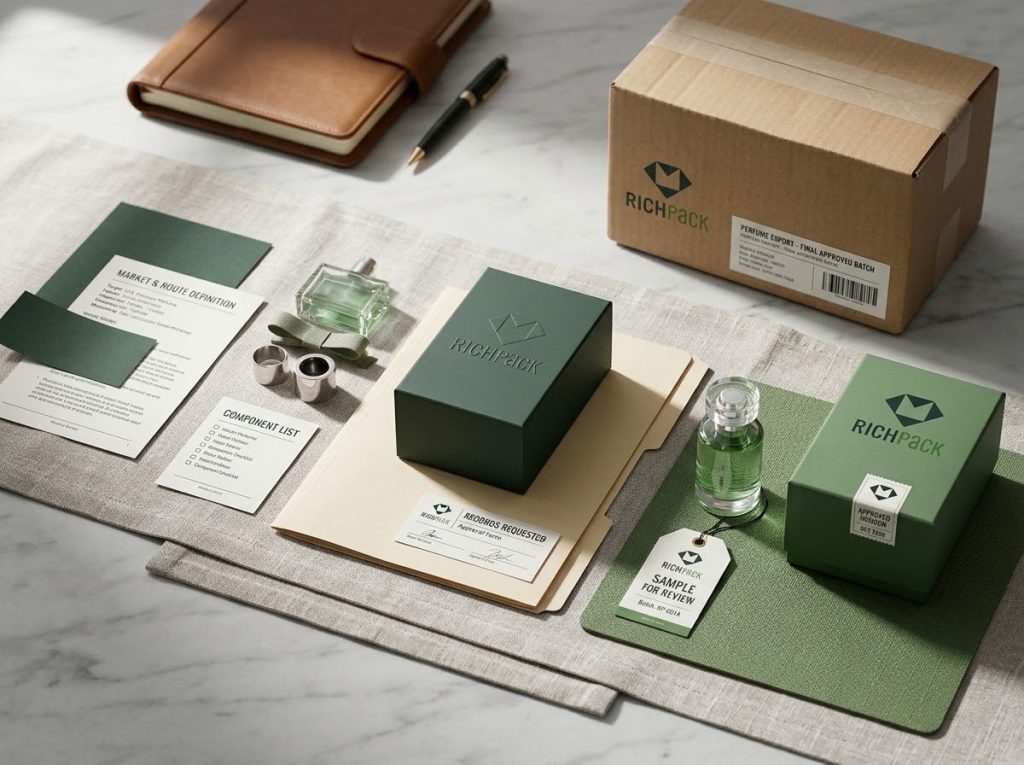
List the countries where the package will be sold, the channels (such as retail, direct-to-consumer, or wholesale), and the fulfillment route. Add any known local collection or recycling guidance, because claim language and disposal instructions may vary by destination. The European Commission states that Regulation (EU) 2025/40 applies from August 12, 2026. Check the specific EU obligations and implementation details for the package. This date is not a global rule.
Ask for a bill of materials (BOM) naming each part and function: bottle, pump or closure, cap or collar, label, carton, insert, and shipping carton. Include coatings, laminations, inks, foil, and adhesives when they affect composition or separation. Record material, dimensions, weight, and assembly. Reuse component IDs in the brief, quote, declarations, and sample record. This exposes claims that cover only a carton but sound as if they describe the whole package.
Request dated documents tied to the offered component and specification. For recycled content, ask for the percentage, calculation basis, and input category, plus records connecting the material through the relevant supply chain. For certified or source-traced material, request the certificate scope and transaction or product records. A certificate for one paper component does not establish the status of the pump, label, insert, or complete package. Keep evidence with the approved BOM so substitutions trigger review.
Separate essential design requirements from preferences. Specify brand colors, print coverage, finish, decoration, and structural features, then invite alternatives where flexibility is possible. Ask suppliers to disclose coatings, films, foil, adhesives, and mixed-material parts, and state which components must be separable. Approve the construction, not only a rendering: a finish can change material combinations and recovery options. Confirm the route for the actual construction and destination market rather than inferring it from appearance or a “bio-based” label.
Tie approval to a versioned sample and matching BOM. Record the reviewer, date, specification, finish, open issues, and acceptance criteria. If a change affects material, coating, adhesive, recycled content, certificate scope, or separation, request updated evidence and review before carrying a claim forward. Retain approvals and supplier change notices together so purchasing, design, and marketing refer to the same package version. RichPack’s custom perfume packaging development steps provide a related company resource for the design sequence. The material brief and sample record should still identify the specific project version.
Review each environmental statement, including a broad description such as “eco-friendly perfume packaging,” as a claim about a defined component, benefit, and sales market. “Recycled,” “recyclable,” “compostable,” “biodegradable,” and “refillable” describe different things. One does not prove another. The table below turns each claim into a supplier request and a boundary for the words used with customers.
| Claim | Ask for | State the boundary |
| Recycled content | Component-level declaration, percentage basis, input category, and traceability records | Name the component and the material covered; do not imply local recyclability. |
| FSC Chain of Custody | Current certificate scope and records that connect the forest-based material to the product claim | Identify the covered material or product; do not extend it to every package component or total impact. |
| Recyclable | Construction details and evidence about collection, sorting, and processing in the named market | Specify the component and market where the route is available. |
| Compostable or biodegradable | Evidence for the material or finished component and the required disposal conditions | Name relevant conditions and facilities; do not infer the claim from bio-based content. |
| Refillable or reusable | Component compatibility, refill or reuse instructions, and evidence for the stated system | Describe which parts are retained, replaced, or collected and where the system applies. |
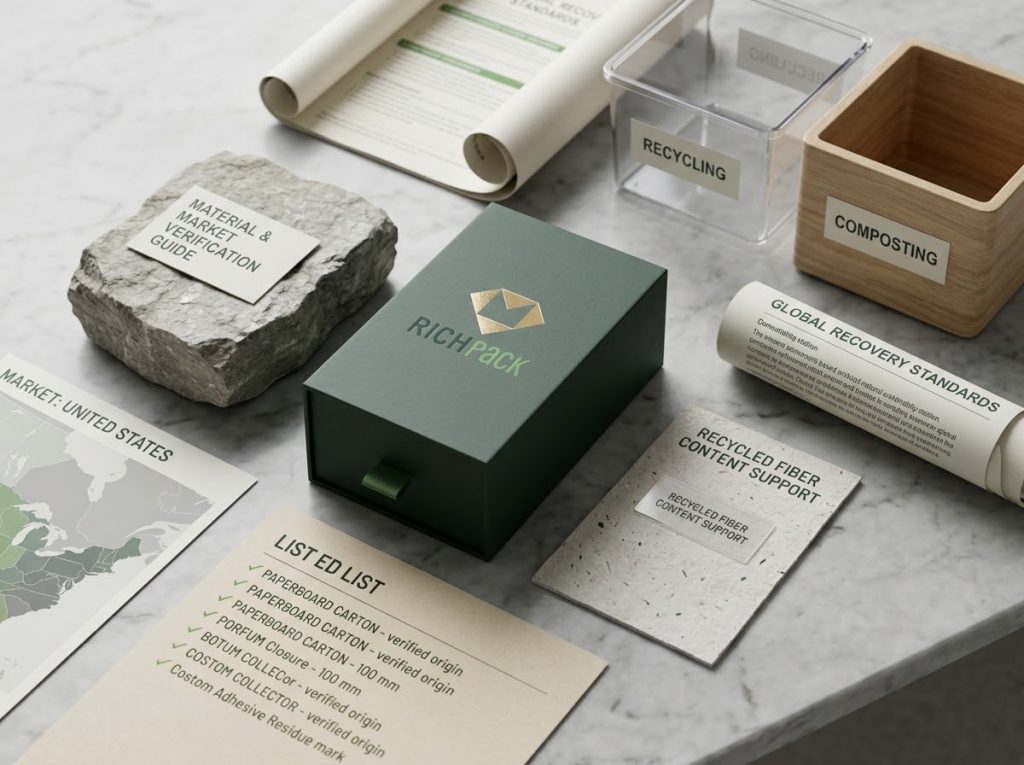
Ask which component contains recycled material, the substantiated percentage, its calculation basis, and the input category. Tie the declaration to the offered specification. A carton statement does not cover the bottle or complete pack, and substitutions may change the evidence. Recycled content describes material input, not acceptance in local recycling or total environmental impact. The FTC’s October 2012 Green Guides are a U.S. example, not a global rule. Check current requirements in each destination market.
FSC Chain of Custody can verify forest-based material tracked through the relevant supply chain to a finished product. Ask for the certificate scope and records connecting it to the material or product purchased, then match claim wording to that scope. It does not automatically cover the bottle, pump, label, or mixed-material insert, and it does not establish the lowest life-cycle impact for the whole package. Assess other components separately.
Do not infer “recyclable” from a material name. Check whether the named component is collected, sorted, and processed in the target market, including whether consumers must separate parts. The FTC’s 2012 Green Guides are a U.S. reference, not a global legal determination. Regulation (EU) 2025/40 applies in the EU from August 12, 2026. Verify the specific obligation for the package. RichPack’s sustainability information describes the company’s own approach. It does not independently substantiate a component-specific claim.
Identify whether the claim covers a raw material, component, or finished package. Request evidence for that object, the stated conditions and time, and the disposal route. If industrial facilities or a collection program are needed, name and confirm their availability in the target market. “Bio-based” describes material origin. It does not establish compostability or recyclability. The FTC Green Guides discuss U.S. claim qualifications, while evidence and current rules must be checked market by market.
Describe the actual system: which parts are kept or replaced, how customers obtain and use a compatible refill, and whether collection or return is offered. Request support for the stated instructions and define the product and markets covered. A durable bottle is not automatically refillable, and something a customer could keep is not necessarily part of a reuse system. If availability or instructions are unconfirmed, narrow or omit the claim. The FTC’s Green Guides include refillable claims in their U.S. framework. Check rules where the package is sold.
Approve a production-representative sample as a complete bottle, closure, carton, insert, and shipping configuration. A swatch, dieline, or empty box cannot confirm fit or use. Check component fit and finish, set channel-specific protection criteria, match any transit test to the route, and record revisions. Agree on acceptance criteria before testing. A qualified provider should confirm the formal procedure. This process does not establish a universal test or guarantee every shipment.
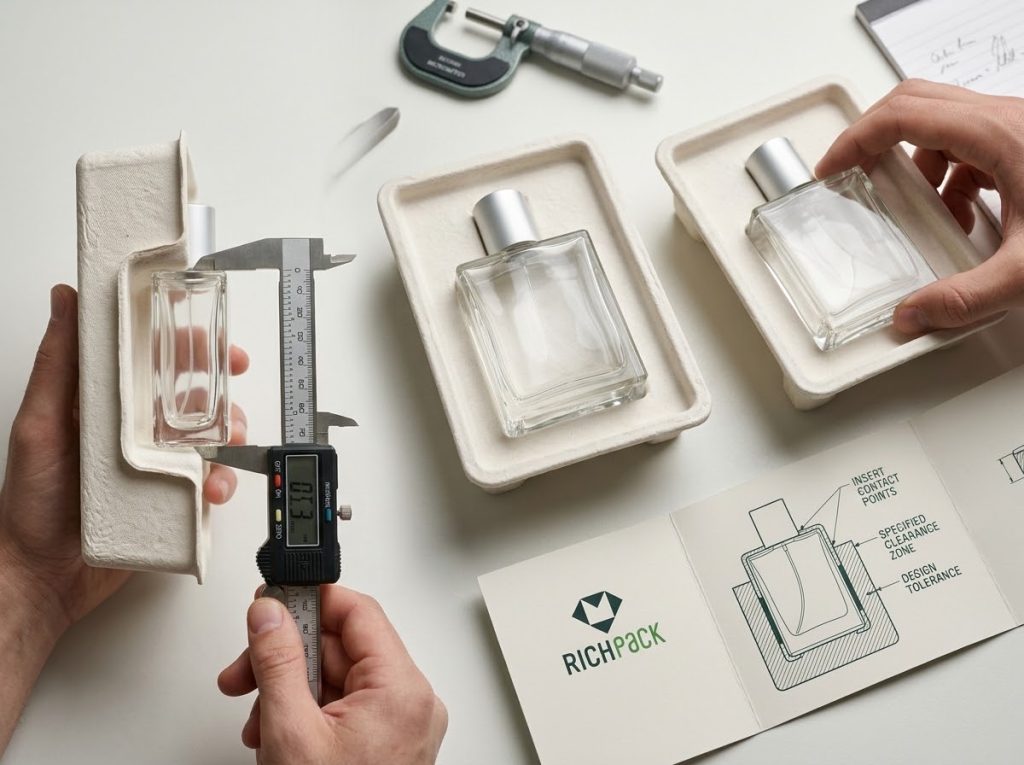
Use the intended bottle and closure, or an approved representative unit, with the supplier-confirmed component dimensions and tolerances. Check that the bottle seats without rocking, the insert holds it in the intended position, and the shoulder, base, and label have suitable clearance from surrounding parts. Close and reopen the package as it will be used: confirm the cap engages consistently, the pump is not pressed by the insert or box, and the bottle can be removed without forcing or damaging the pack.
Review label orientation and contact points after assembly, since a loose bottle alone will not reveal interference inside the finished package. Record each mismatch against the drawing or approved sample rather than inventing a tolerance during inspection.
Assemble the carton and insert. Look for incomplete folds, weak joints, adhesive squeeze-out, gaps, movement, sharp contact points, or interference with closing. Compare print color, alignment, texture, and embellishments with the approved proof. Record scuffing, lifting, cracking, or transfer after handling as issues to investigate, not proof of transit performance. For related fault examples, see our perfume packaging issues to check.
Build checks around the actual product and route. A one-unit e-commerce parcel needs review as a packed shipping unit, including outer carton, closure, insert, and void fill. Retail or wholesale may involve case packing and added handling. International routes can add handoffs. Discuss these conditions with the test provider. Inspect the same combination of components that will ship. A decorated carton alone does not represent the complete pack. Agree beforehand what condition the product and package must meet. Do not borrow another product’s drop count or pass threshold.
ISTA groups its procedures by purpose. The 1-Series offers non-simulation screening that can expose design weaknesses early. The 2-Series uses partial simulation and is not intended to predict shipping performance. The 3-Series provides general simulation of damage-producing motions and conditions commonly encountered in distribution. The 4AB approach supports enhanced simulation planned around a user-defined distribution hazard pattern. These categories answer different questions. Every perfume package does not need to complete them as a universal sequence.
Give a qualified provider the packed unit’s measured weight, packaging type, route, handling assumptions, and test objective. Ask them to confirm the procedure and conditions for that shipment scenario. Use the full protocol and provider’s plan. An overview is not a test plan. Record screening observations separately from formal transit-test results.
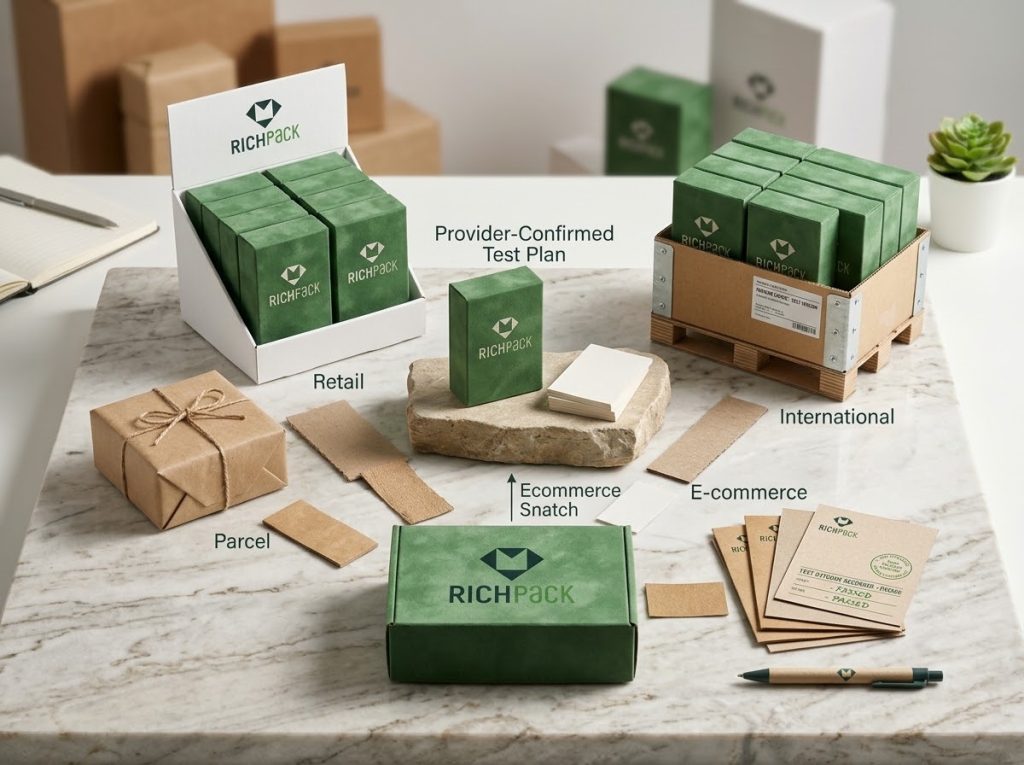
Keep a record for each sample and test cycle: sample ID and revision, BOM, measured package details, shipment scenario, test purpose, provider-confirmed procedure and conditions, acceptance criteria, observed issues, corrective revision, and retest status. Identify who approved the sample and criteria. Retain matching photos or reports. When a change affects fit, materials, insert, closure, or shipping configuration, record the checks to repeat before approval. This lets the team compare the tested sample with the production specification without treating an untested revision as equivalent.
Options to assess include paperboard with documented recycled content, molded-fiber or paperboard inserts, glass bottles, refill components, and specified recycled or bio-based plastics. None is automatically the best choice. Compare the component’s job, source, construction, available recovery route, and the evidence behind each claim.
There is no universal material list that makes a package sustainable by itself. Start with the protection and presentation the product needs, then compare material source, amount, reuse or refill potential, separability, and end-of-life options in the markets where the package will be sold. If life-cycle data is unavailable, state which evidence you do have and avoid claiming an overall environmental winner.
Some components may be accepted while others are not. A bottle, pump, cap, label, carton, and insert can follow different routes, and local collection programs vary. Check the waste guidance for each destination market and confirm whether parts should be separated. Do not treat a material’s technical recyclability as proof that a local program accepts the finished component.
Check the local waste authority’s instructions for the bottle and its attached parts. Identify the bottle material, pump or sprayer, cap, collar, label, and any decorative finish. Follow local directions for emptying, separating, and placing each part. If a closure is difficult to remove or the package combines materials, ask the local program or brand for the correct route rather than assuming every part belongs in one bin.
There is no single global list. A component may be excluded where local programs do not collect its material, where parts cannot be separated for sorting, or where the construction is not accepted by the available facility. Describe the limitation by component and market. A package that is not accepted locally should not be promoted to customers as recyclable there.
Choose custom perfume packaging materials by starting with the package’s components and job, then checking local recovery options, supplier evidence, and the test plan for the intended route. A short component schedule and versioned sample record give a brand team a firmer basis for comparing proposals than an “eco-friendly” label on its own.
Before requesting a quote, list your bottle and closure, carton, insert, required finishes, target markets, and distribution route. Ask suppliers to identify the materials and provide claim-supporting documents for the specific components. Use the approved sample and versioned component schedule as the reference when reviewing proposals. To begin an inquiry with RichPack, share these details and ask which material evidence and sample checks apply to the specific package. Confirm any certification, test, or end-of-life claim for the exact SKU and destination market before using it in customer-facing copy.


2024-10-10


2024-10-24
2024-10-24

2024-11-05
Did you know that 72% of consumers say that packaging design influences their purchase decisions? In the jewelry industry, where brand image and uniqueness are paramount, packaging can make all the difference. In this article, we will delve into the top 10 customizable jewelry packaging options. These options will enable your brand to convey its… Continue reading How to Choose Sustainable Materials for Custom Perfume Packaging: 4 Key Principles

Customers are increasingly looking for eco friendly cosmetic packaging that uses sustainable materials to protect the planet. For cosmetic companies specialising in skincare and beauty products, adopting more sustainable packaging is key to gaining customer trust and potentially boosting sales. However, it’s a challenge since eliminating traditional packaging materials, like plastic, isn’t feasible in the cosmetics industry. While we… Continue reading How to Choose Sustainable Materials for Custom Perfume Packaging: 4 Key Principles
Fragrance focuses on classics, fragrance packaging may be the opposite, sustainability, customization, and smart technology are shaping the future of packaging. Facing the perfume packaging market with increasing environmental awareness and obvious advantages of intelligent packaging, perfume packaging design should pay attention to market trends, consumer preferences, and in-depth research on innovation in the industry. In… Continue reading How to Choose Sustainable Materials for Custom Perfume Packaging: 4 Key Principles
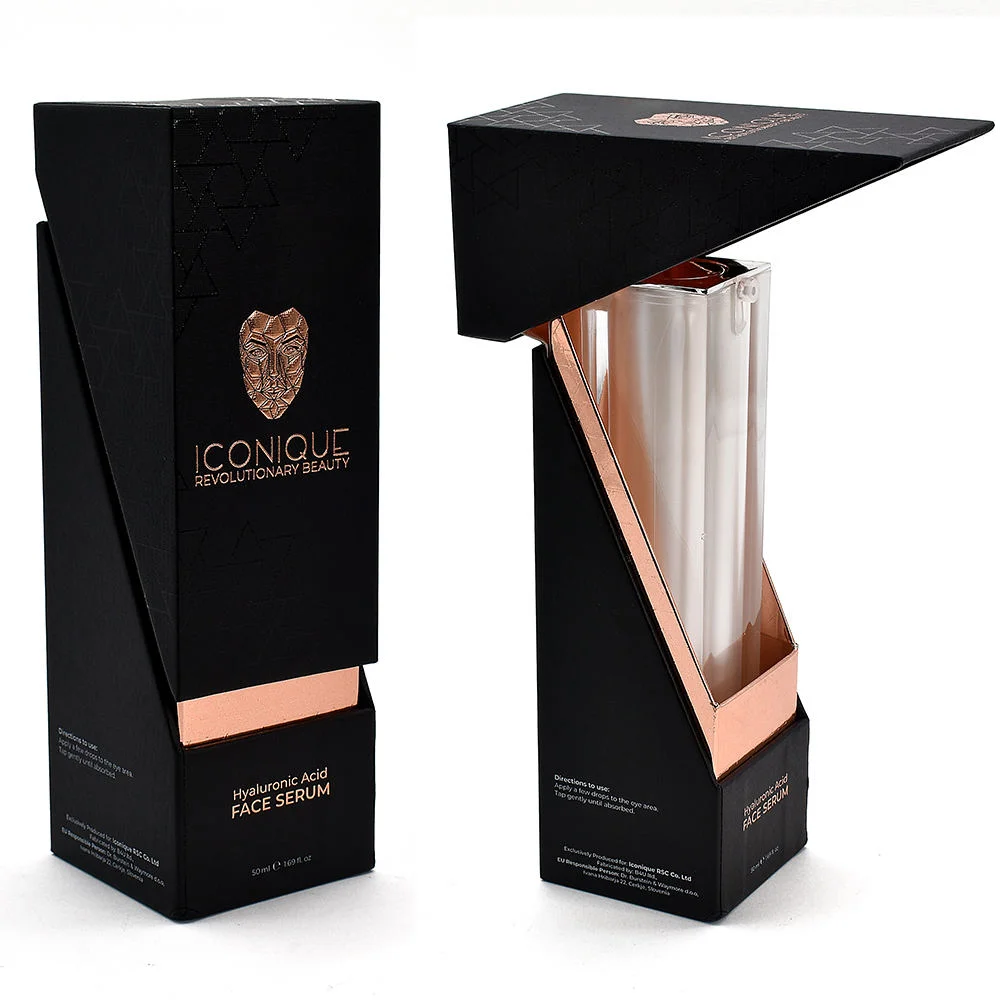
Richpack Custom Luxury Cosmetic Packaging Boxes with Logo | Tailored Solutions for High-End Brands
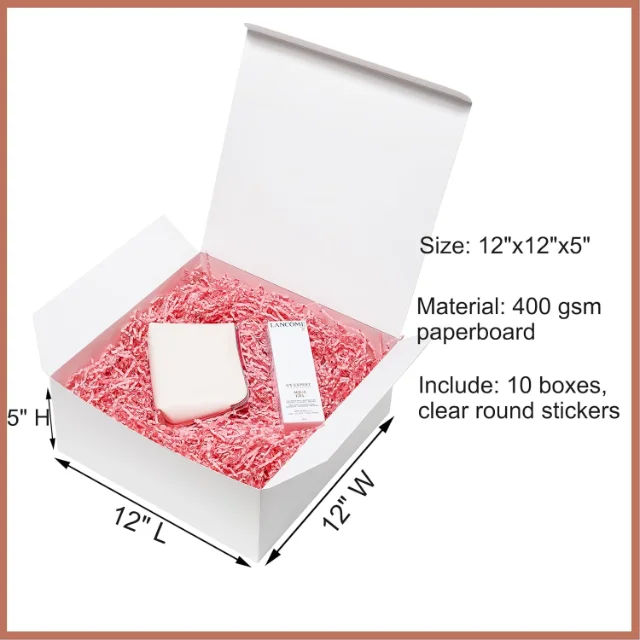
Durable Gift Boxes with Lids for Secure Packaging | 12″x12″ Gift Box Ideal for Perfumes Cosmetic Products Richpack Practical Gifting Solutions
High-End Custom Cosmetic Boxes with Foil Stamping | Perfect for Beauty Brands Needing Sophisticated, Custom Packaging Solutions
Cost-Effective Affordable Cosmetic Packaging for Large Orders | Custom Packaging Solutions for Distributors Seeking Bulk Product Packaging
View More
Creative Custom Cosmetic Packaging for Boutique Beauty Brands | Designed for Independent Retailers Needing Personalized and Branded Packaging
View More
Custom Cosmetic Kits Makeup Brush Packaging Box For Makeup Brushes Packaging Set Paper Boxes Cosmetic
View More

