


 PREV
PREV
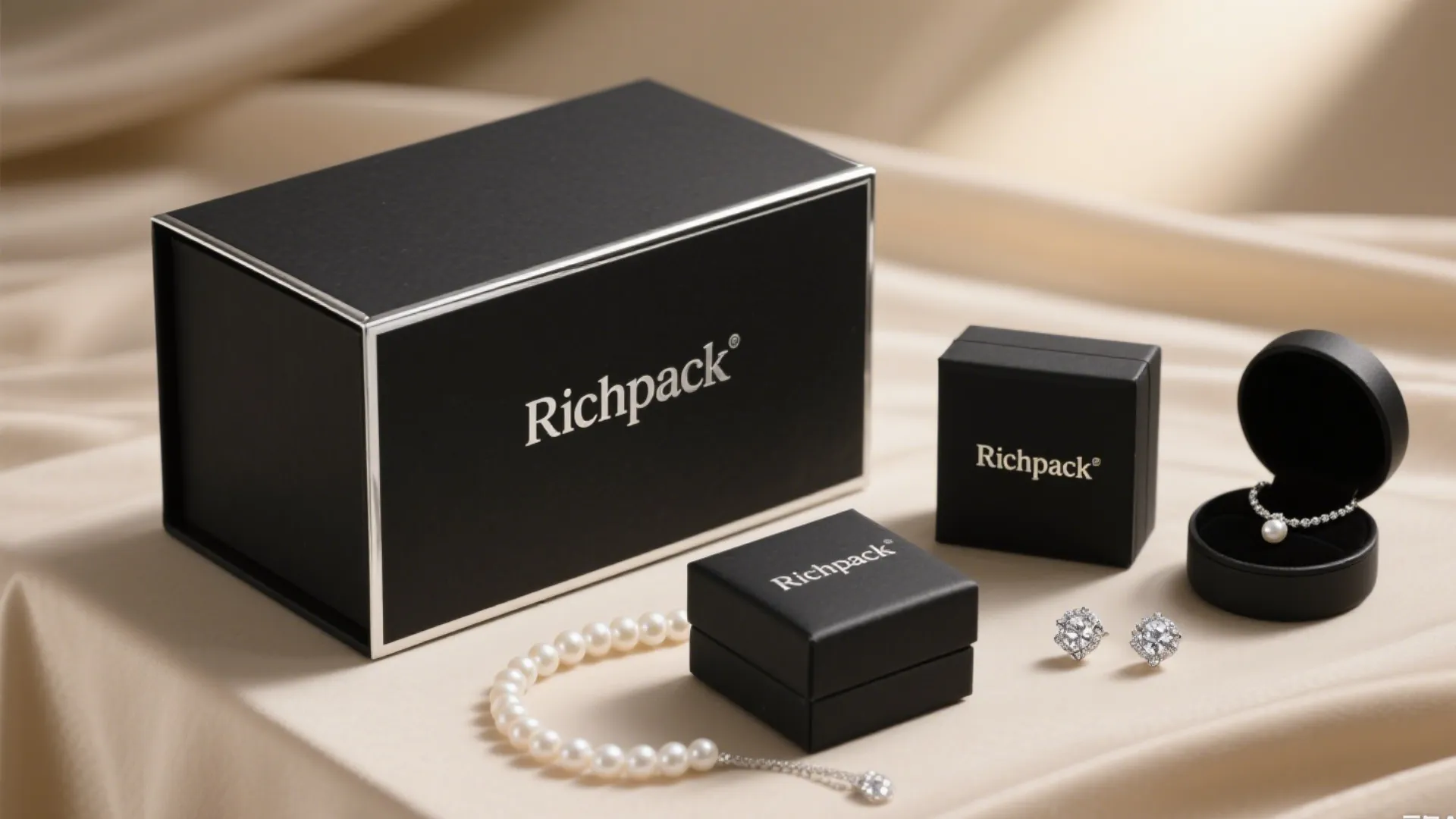
30+ Jewelry Packaging Ideas to Elevate Your Brand (2026)
2025-07-10



Whether you are an independent designer, a small Etsy seller, or a cross-border DTC jewelry brand, once you scale up your shipping, you quickly realize one thing: what truly “ruins a deal” usually isn’t the design itself. It is the missing stones, tangled chains, crushed boxes, or tarnished metal that occur in transit, followed by the inevitable negative reviews and returns. Industry data shows that approximately 2%–11% of small parcels experience some form of damage during shipping, and up to 20% of e-commerce returns are directly linked to “damaged on arrival.” These issues eat into profits and kill repeat purchase rates.
Richpack Packaging specializes in systematic packaging solutions for jewelry and high-value products like Wholesale Small Jewelry Gift Boxes. By providing structural design, material selection, and damage prevention systems for global jewelry sellers, we have developed a proven “Jewelry Shipping Methodology.” Drawing on real-world experience and industry data, this guide addresses the three biggest pain points in jewelry logistics: how to achieve near-zero damage rates, how to manage moisture and oxidation, and how to create an unboxing experience that customers can’t wait to share on social media.
Before discussing specific steps, it is important to understand that packaging is not just about a “pretty box.” It is a systematic engineering project that impacts profit margins, brand reputation, and compliance risks. For high-ticket jewelry brands, a single shipping accident costs far more than the price of one necklace—it represents the loss of a customer’s lifetime value.
Throughout the logistics chain, a small jewelry parcel undergoes at least 10–20 instances of handling, sorting, and stacking. The resulting vibrations, drops, and compression can amplify stresses far beyond the limits of daily wear. If jewelry has room to move inside the box or if different pieces rub against each other, scratches, tangling, and loosened stone settings are almost inevitable. Monitoring by U.S. packaging service providers shows that e-commerce parcels frequently endure tosses, rolls on conveyor belts, and vertical drops—impacts sufficient to cause severe displacement and collision in unshielded jewelry.
A benchmark case involves an eco-friendly packaging supplier using high-strength inserts and independent fixation structures: out of hundreds of thousands of annual shipments, their reported damage rate was less than 0.1%, far below the industry average of 2%–10%. This proves that with a structural design ensuring “zero movement” and flexible isolation, the jewelry remains intact even if the outer box is slightly compressed. When Richpack Packaging designs solutions for high-end engagement ring brands, we utilize “multi-point fixation + independent slots” to secure the shank, head, and center stone within custom-cut foam or paper inserts, minimizing the possibility of stone shifting.
Beyond physical damage, humidity and oxidation are the silent killers of jewelry in transit. For 925 sterling silver, gold-plated silver, stainless steel, and fashion jewelry, prolonged exposure to high-humidity environments leads to surface oxidation, yellowing/blackening of silver (sulfidization), and dulling of the finish. Jewelry that looks pristine when packed can arrive looking “used,” leading customers to question the brand’s integrity.
Using moisture-barrier and gas-barrier materials is essential. This includes high-performance films, self-sealing inner bags, anti-tarnish strips for silver, and anti-oxidation inner pouches. Leading packaging firms integrate moisture-proofing, ink-migration prevention, and anti-sulfidization into a systematic solution—from the lining material in contact with the jewelry to the anti-tarnish paper in the box. This philosophy aligns with Richpack Packaging’s “Integrated Anti-Oxidation Solution”: it’s not just about tossing in a desiccant; it’s about systematically reducing the jewelry’s exposure to humidity and corrosive gases through material science and structure.
While upgrading packaging may seem like an added expense, from a business model perspective, it is a high-yield investment. E-commerce data indicates that over 20% of returns are caused by items arriving damaged. Once a consumer experiences a broken product or a crushed package, more than 50% will develop a long-term distrust of the brand and refuse to buy again.
Internal analysis of over 50 jewelry e-commerce clients by a professional packaging firm found that losses due to improper packaging (including reshipping costs, customer service labor, shipping fees, and lost repeat orders) can swallow 15%–20% of potential annual revenue. In other words, every dollar “saved” on cheap packaging can result in dozens of dollars in hidden losses. Richpack Packaging helps clients re-engineer their systems to drive damage rates toward zero. In the short term, this slashes returns and claims; in the long term, it manifests as higher ratings, repeat orders, and referral rates—gains that far outweigh the incremental cost of materials.
The “unboxing experience” is frequently undervalued. Jewelry is inherently emotional and ceremonial, often purchased for birthdays, proposals, or weddings. When a customer opens a package, they seek more than just an intact item; they want to feel cared for and celebrated. Research shows that over 80% of consumers include the packaging experience in their overall brand evaluation. If the outer box is crushed or the interior is messy, over 80% of people immediately lose affinity for the brand.
Effective shipping packaging must be secure while “telling a story.” Everything from how the jewelry is gently secured to the presentation of brand cards, care instructions, color schemes, and eco-friendly messaging is part of this experience. Many brands now use custom-colored rigid boxes, branded eco-mailers, and recycled paper or cotton twine seals to ensure safety while delivering a unique brand identity. Richpack Packaging treats the “unboxing path” as a scripted journey: every step—from opening the outer carton to lifting the lid and revealing the jewelry—is designed to be seamless, surprising, and sustainable.
Now that we understand the “why,” let’s dive into the “how.” A standardized, repeatable shipping process helps drastically reduce damage risks and human error, making it easier to train warehouse teams or manage third-party logistics (3PL). The following steps aren’t just theoretical; they are the Standard Operating Procedures (SOPs) proven effective by established jewelry brands in the field.
Before any packaging takes place, the first step should always be “Clean + Inspect.” A light wipe-down before shipping isn’t just for aesthetics; it removes sweat, fingerprints, and skincare residues that can accelerate corrosion. For sterling silver and gold-plated items, this step significantly slows down oxidation during storage and transit. Use a lint-free, microfiber cloth to gently wipe metal surfaces and gemstones, avoiding cleaners with silicone oils or harsh solvents that might react negatively with packaging materials.

The inspection phase should focus on checking for loose stone settings, ensuring solder points are secure, verifying that clasps operate smoothly, and checking for surface flaws on pearls or fragile gems. Many brands implement a simple “Pre-shipping QC Checklist” for packers to initial, creating a traceable record for any potential disputes. For high-value orders, taking a clear photo before sealing the box provides evidence for insurance claims and protects the brand’s interests.
The second step is to ensure every piece is “safely seated.” The golden rule is that no two hard components should rub against each other, and nothing should move freely inside the box. Common practices include placing individual items into small self-sealing bags, velvet pouches, or slotted inserts. For silver items, always include anti-tarnish strips or use anti-oxidation inner bags.
For delicate necklaces and bracelets, lay them flat on a cardstock insert. Use notches, holes, or small adhesive dots to secure the chain and clasp before sliding the entire insert into a pouch or box. This prevents the chain from tangling or knotting during transit. For one multi-SKU necklace project, Richpack Packaging designed custom guide-slotted cards and precision-sized inner bags, allowing warehouse staff to complete the “lay flat—secure—bag” process in seconds, virtually eliminating broken chains caused by untangling.
Once each item is individually secured, it’s time for cushioning. The key here is to “fill the voids, not bury the product.” The goal of cushioning is to minimize relative movement and absorb shock, not simply to stuff the box with excessive filler. Effective methods include using corrugated strips, honeycomb paper, recycled crinkle paper, or molded pulp trays that conform to the shape of the jewelry box.
Avoid loose packing peanuts or fragile, cheap plastic cushions; these tend to pulverize or shift during long-haul transport, causing the internal structure to lose support. For eco-conscious brands, choosing recyclable or compostable paper-based cushioning better aligns with consumer expectations for green packaging.
The fourth step is selecting the appropriate inner gift or display box. A professional jewelry box must meet three criteria: a rigid structure that resists compression, an insert that supports and fixes the jewelry’s shape, and dimensions that fit snugly within the outer shipping box. Using a box that is too flimsy or significantly oversized amplifies the risk of damage.
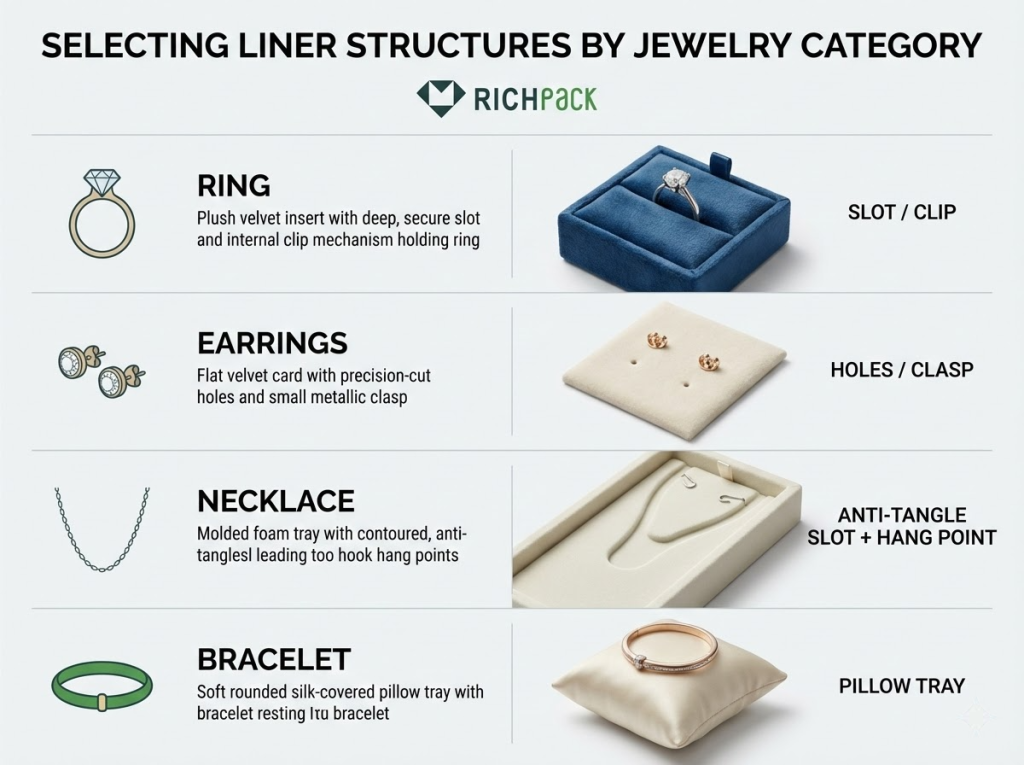
Many e-commerce brands opt for FSC-certified rigid paper boxes or pulp-based boxes with flocked paper inserts or card structures that “lock” rings, studs, and necklaces into place. More sophisticated brands also prioritize material safety—using pH-neutral, low-VOC papers and glues to prevent the release of acidic substances or sulfides that could corrode silver. At Richpack Packaging, we typically perform simulated drop and stack tests on custom boxes to ensure they won’t deform during the typical courier journey before moving to mass production.
This is where you build the final defense against the “stress test” of modern logistics. For most hard jewelry—such as gold/silver pieces, gemstone rings, or rigid bangles—relying solely on a padded bubble mailer is a high-risk move, especially for international or long-distance shipping. A safer approach is to use a corrugated mailer box sized to provide 10–30mm of buffer space around the inner box, filled firmly with eco-friendly cushioning.
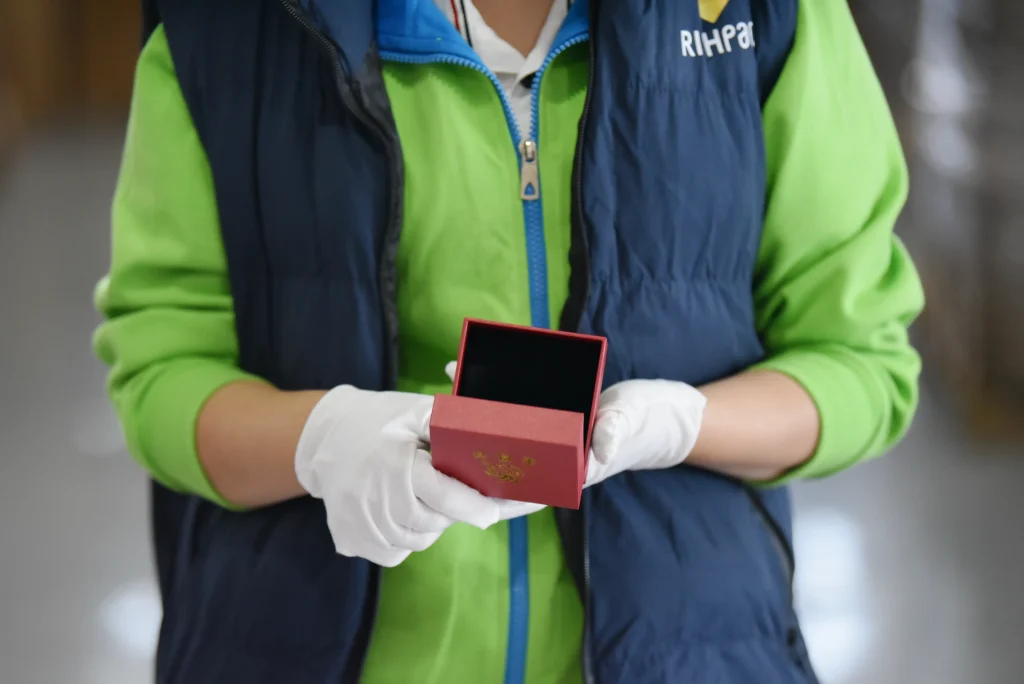
For strength, choose corrugated boxes with an appropriate Edge Crush Test (ECT) rating (such as 32 ECT or higher) to handle stacking and rough handling. For small but high-value items like engagement rings or diamond earrings, some brands utilize a “Double-Box” or “Triple-Box” method (Gift Box + Small Mailer + Medium Outer Box) to balance privacy, theft prevention, and compression resistance. Richpack Packaging often designs mailers with discreet locking mechanisms or subtle patterns that avoid using words like “jewelry” or “diamonds” on the exterior to reduce the incentive for theft.
The final step is often rushed but serves as the “last gate” for security. When sealing, use high-tack packing tape and apply the “H-tape method” to seal all open seams. Ensure the box surface is dry and free of dust to prevent the adhesive from failing due to temperature or humidity swings. For high-value shipments, consider using tamper-evident tape or security seals that leave a visible mark if disturbed.
Regarding labeling, you must balance courier requirements with security. Logistics experts and insurance providers generally recommend avoiding words like “jewelry,” “gold,” or “diamonds” on the shipping label. Instead, use neutral descriptions like “fashion accessories” or “metal goods.” Detailed item descriptions should remain within the customs paperwork and internal systems. For packages that require a signature, clearly mark “Signature Required” on the label or box if allowed, and ensure this setting is synced in your shipping software.
Different categories of jewelry vary greatly in structure, weight, and vulnerability. A “one-size-fits-all” approach to packaging often leads to issues. Based on industry experience, here are specific packaging strategies for the four main types of jewelry.
Rings are small but often carry high unit value. Many styles feature high-set center stones or intricate prong settings that are susceptible to bending or loosening under impact. The primary goal is to keep the ring securely upright. In commercial practice, traditional ring slots and high-density foam inserts are the most reliable methods. By utilizing pre-cut slots that accommodate various band sizes, the ring is held firmly in place, applying slight lateral pressure to minimize vertical movement of the center stone.
For prong-set rings, we recommend ensuring the stone does not directly touch the lid of the box. Increasing the height of the base insert or adding a layer of soft padding creates a “floating” position where the stone is neither compressed nor rattled. One North American online jeweler reported that switching from a simple unlined box to custom foam ring sockets reduced their stone-misalignment complaints to nearly zero, significantly lowering return rates.
Necklaces and fine chains are notorious for tangling during transit. A complex knot not only ruins the unboxing experience but can lead to chain breakage if a customer tries to force it open. The key to preventing tangles is reducing the “degrees of freedom” within the package.
Most professional brands use necklace display cards. By cutting notches on the sides, the chain is wrapped and locked across the card, with the clasp secured at the back. This “locks” the chain onto a flat plane, preventing it from rolling or knotting. For ultra-fine chains, a layer of soft tissue paper can be wrapped around the card before placing it into a small pouch. Richpack Packaging frequently employs a multi-layered solution—necklace card + transparent inner bag + structured insert—to ensure the chain remains tangle-free even after a turbulent journey.
The challenges for earrings are twofold: their small size makes them easy to lose (especially backs and posts), and many styles feature delicate surfaces like pearls, resin, or shell. Securing the position of the posts and backs is the priority.
The standard practice is to use earring cards or soft inserts with pre-punched holes. The posts are pushed through, secured with backs, and pressed firmly to ensure they won’t vibrate loose. For hoops or drop earrings, notches or “bridge” structures on the card can be used to prevent swaying. High-end brands often provide mini-compartments with custom-cut foam, which adds a sense of “gift-giving” while eliminating the risk of lost components.
Bracelets range from flexible chains to rigid bangles and cuffs. While flexible bracelets follow the same anti-tangle logic as necklaces, rigid bangles must be protected against deformation or denting.
For rigid bangles, we recommend using circular or oval-shaped inserts, or a thick foam inner core that maintains the bracelet’s natural shape. Adding soft padding above and below the piece protects against longitudinal shocks. For multi-bangle sets, each piece should be wrapped individually in soft paper or cloth bags to prevent metal-on-metal collision. Richpack Packaging helped a Southeast Asian jewelry platform reduce “slight deformation” claims to negligible levels by implementing molded pulp inserts and structured tiered boxes.
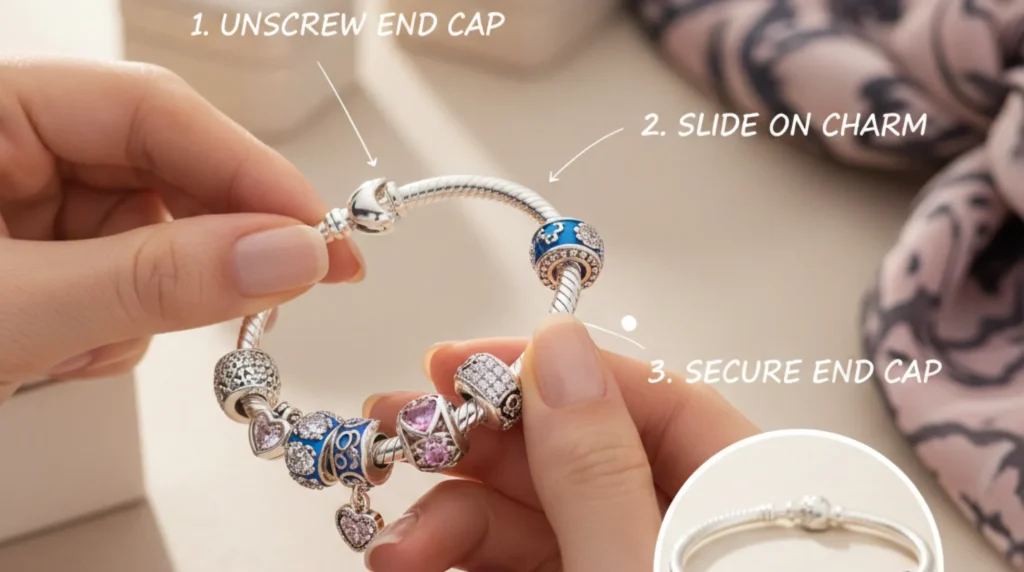
International shipping introduces extra variables: longer transit times, diverse climates, and stricter customs and insurance regulations.
Sustainability is now a core factor in consumer decision-making. Research shows that 60%–80% of consumers prefer brands that use sustainable packaging. In the jewelry world, packaging that is recyclable or reusable reflects a “responsible” brand image.
Rigid paper boxes are the most mature eco-friendly option. High-quality FSC-certified cardboard provides structural strength and is easy for consumers to recycle. By using mono-material designs—such as drawer boxes or folding boxes with paper inserts—you can eliminate the need for plastic linings. Richpack Packaging prioritizes techniques like embossing or foil stamping over plastic lamination to ensure the packaging remains 100% recyclable without sacrificing a premium feel.
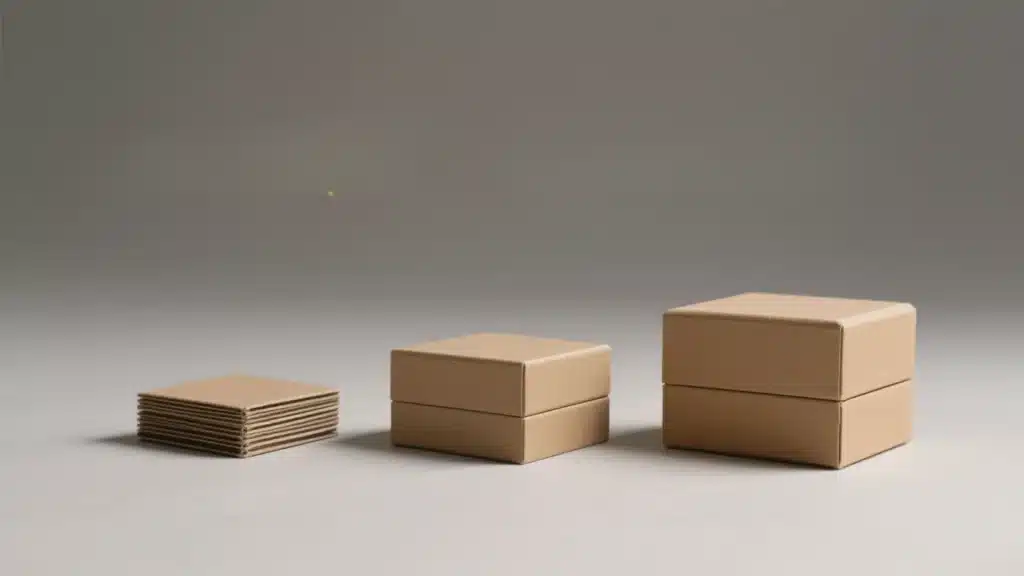
For outer packaging, many brands are ditching traditional plastic mailers for plant-based, compostable alternatives or 100% recycled paper mailers. Paper honeycomb mailers offer a great balance of protection and sustainability for small jewelry boxes. However, brands should provide clear disposal instructions to ensure “compostable” materials actually end up in the right waste stream.
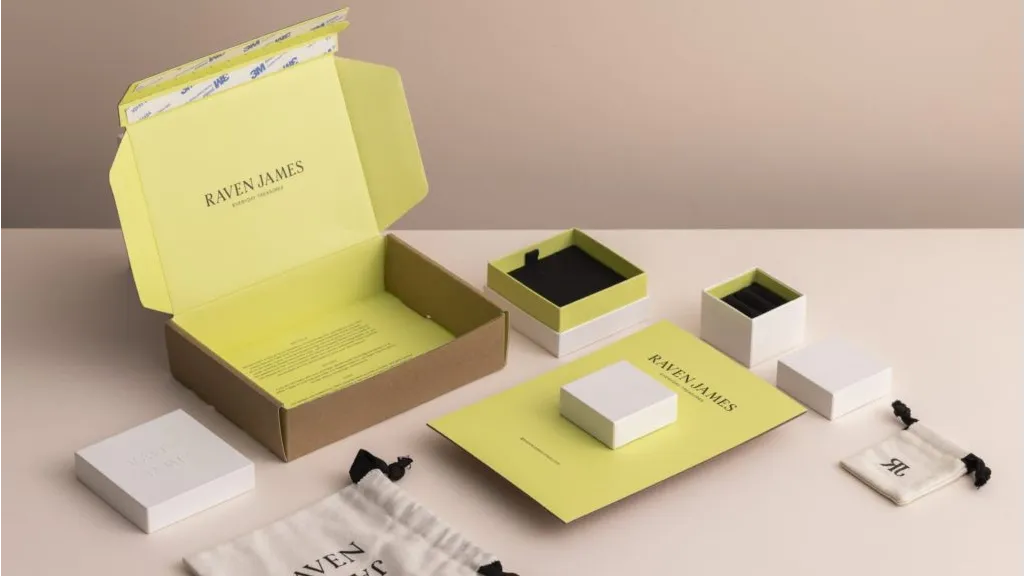
Traditional bubble wrap and packing peanuts are being replaced by paper-based alternatives. Honeycomb paper wrap, corrugated pads, and starch-based “dissolvable” peanuts are popular choices. While these require thoughtful folding and layering to match the shock absorption of plastic, they resonate strongly with eco-conscious shoppers. For larger brands, Richpack Packaging offers standardized paper pulp trays and automated honeycomb dispensers to keep fulfillment efficient and green.
The key is minimizing the chain’s “freedom” by securing it to a flat necklace card. Wrap the chain through side notches and secure the clasp at the back. Placing a layer of tissue paper over the chain before sliding it into an anti-tarnish bag prevents movement and friction.
Envelopes are acceptable for low-value, sturdy items on short routes. However, for anything with gemstones or a high price point, we strongly recommend a “Gift Box + Corrugated Mailer + Cushioning” structure. Boxes offer significantly higher crush resistance against the 2%–10% of parcels that experience rough handling.
Reduce exposure to moisture and sulfur. Wipe the jewelry clean before packing, seal it in a moisture-barrier bag, and include an anti-tarnish strip. Avoid using low-quality foam or rubber bands, which may contain sulfur.
Absolutely. If the order value exceeds the carrier’s basic payout (usually $100), you are essentially self-insuring the risk. Professional jewelry insurance provides peace of mind and covers “mysterious disappearance,” which standard carriers often exclude.
The safest method is a “layered” strategy: Thorough QC and photo documentation; secure fixation inside a rigid gift box; a discrete corrugated outer mailer; a neutral shipping description; “Signature Required” delivery; and full insurance coverage.If your brand is expanding online or entering cross-border markets, Richpack Packaging provides high-volume standardized systems and specialized protection for different price points and materials. Contact us for a custom jewelry packaging and storage consultation.
2025-07-10

2024-11-05
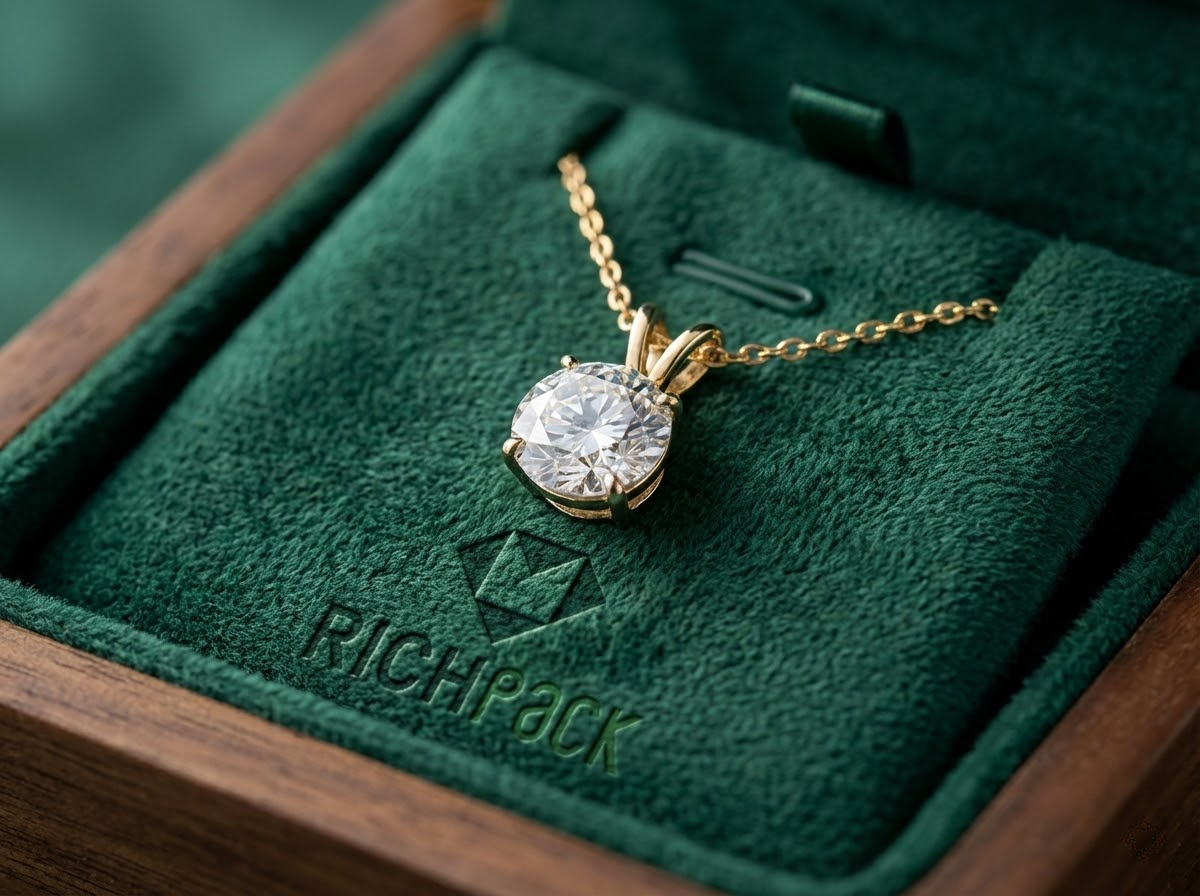
2026-02-16
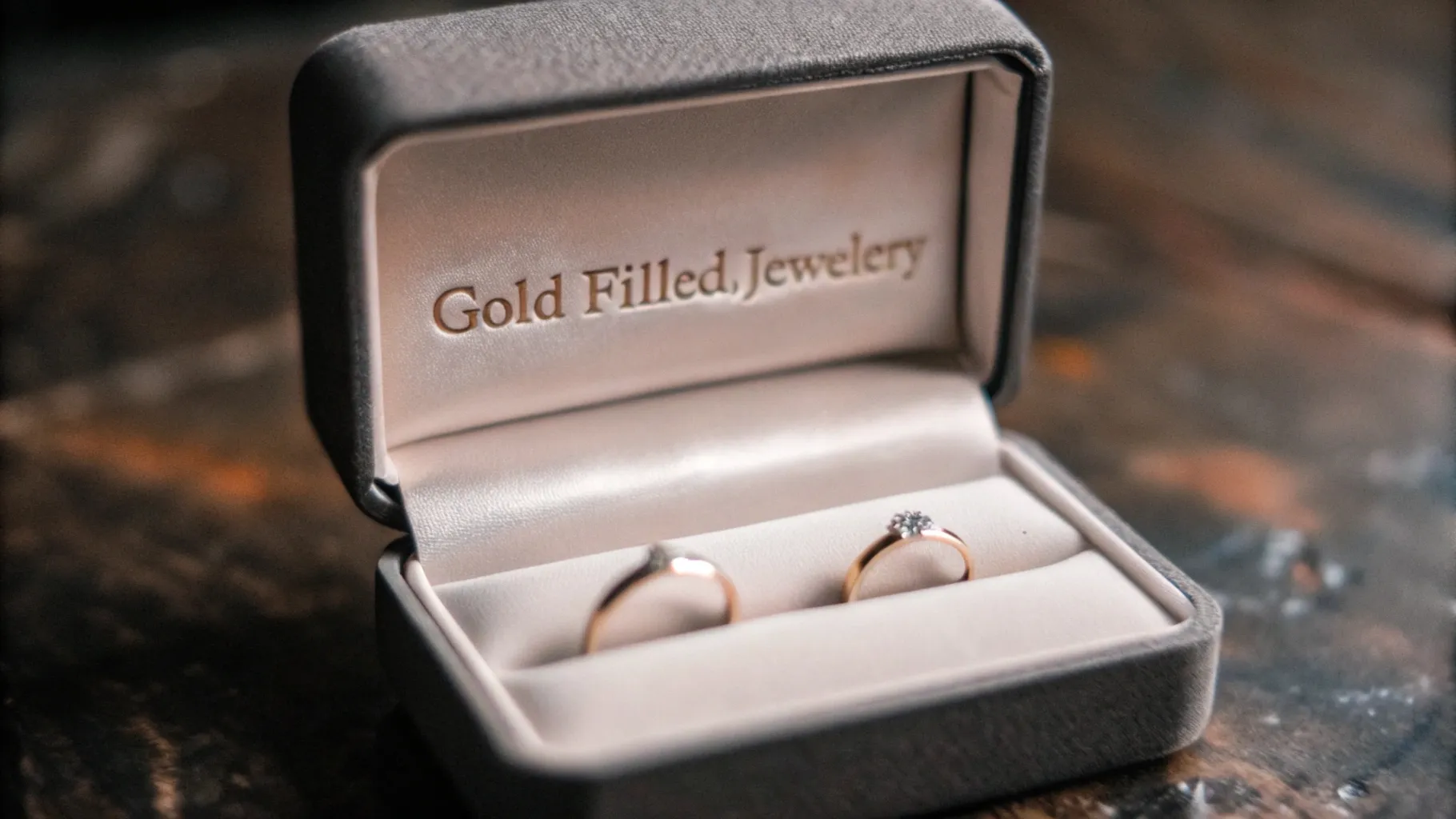
Richpack · 8 Ingenious Ways to Showcase Gold Filled Jewelry with Stunning Packaging In 2023, a report by McKinsey & Company revealed that 60% of consumers perceive packaging as a reflection of product quality, making gold filled jewelry packaging a key aspect of the jewelry market. With growing consumer expectations, jewelry packaging ideas are powerful… Continue reading How to Package Jewelry for Shipping: A Complete Guide
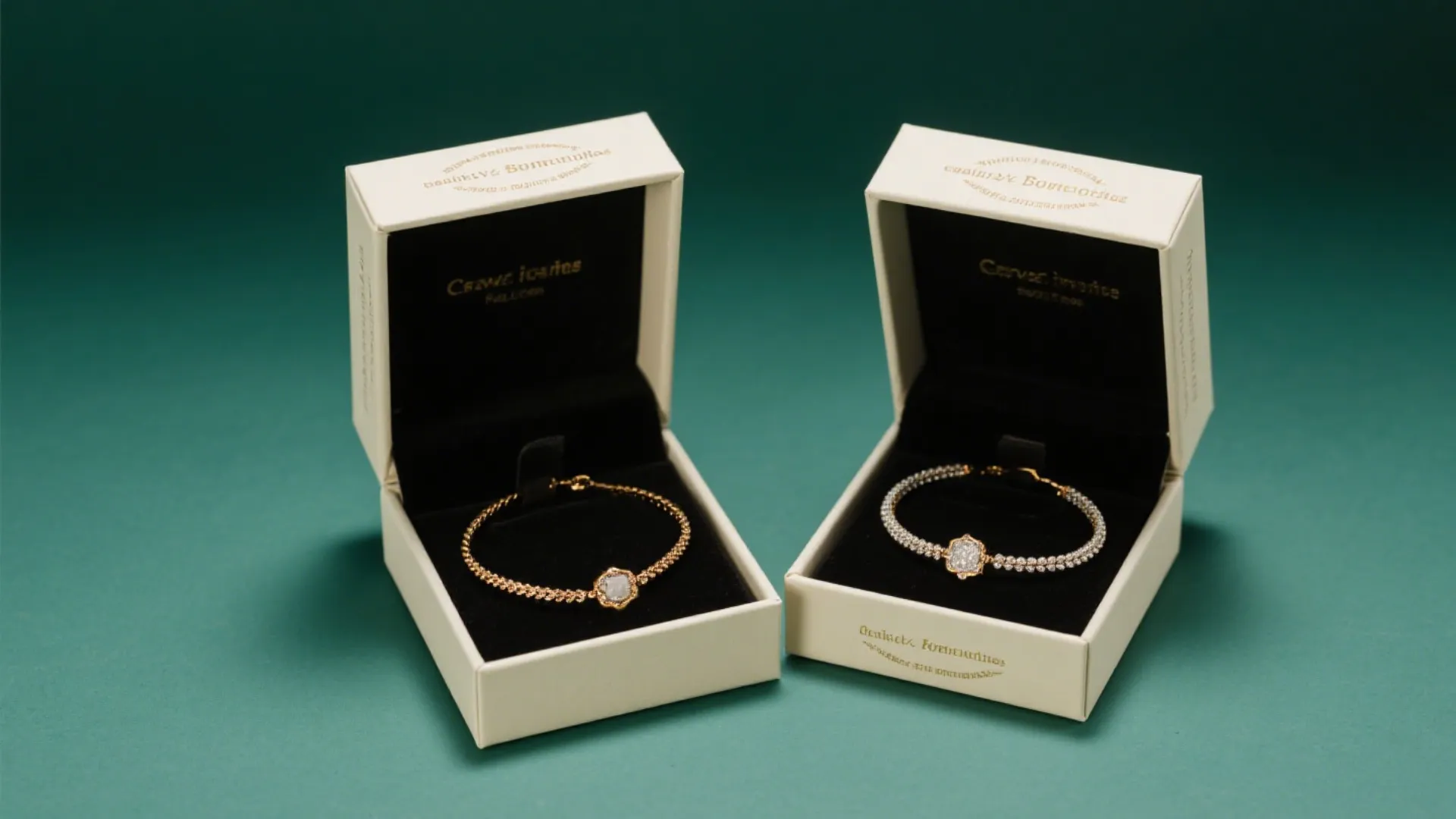
The global jewelry industry exists at a unique intersection of high-value artistry, historical legacy, and modern consumer psychology. In this environment, the container that houses a gemstone or a precious metal timepiece is far more than a protective vessel; it serves as a critical medium of brand communication. Industry experts often refer to the jewelry… Continue reading How to Package Jewelry for Shipping: A Complete Guide
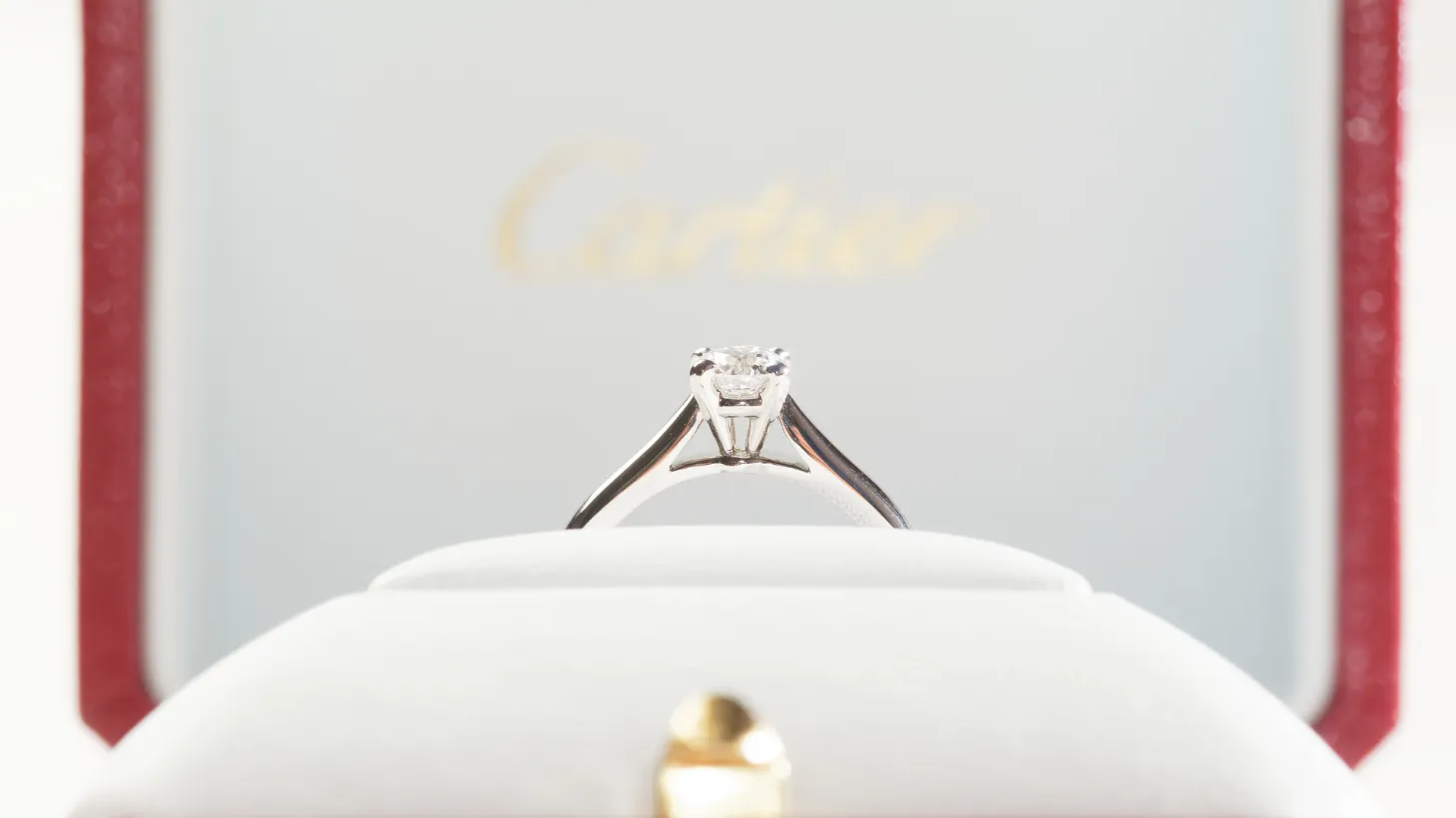
The way you present your products and services is as important as the products and services themselves.– Mary Kay Ash Every jewelry brand knows a ring box is more than just packaging—it’s the final touch that leaves a lasting impression. Buying ring boxes in bulk isn’t just about saving money. It’s about building a consistent, professional… Continue reading How to Package Jewelry for Shipping: A Complete Guide
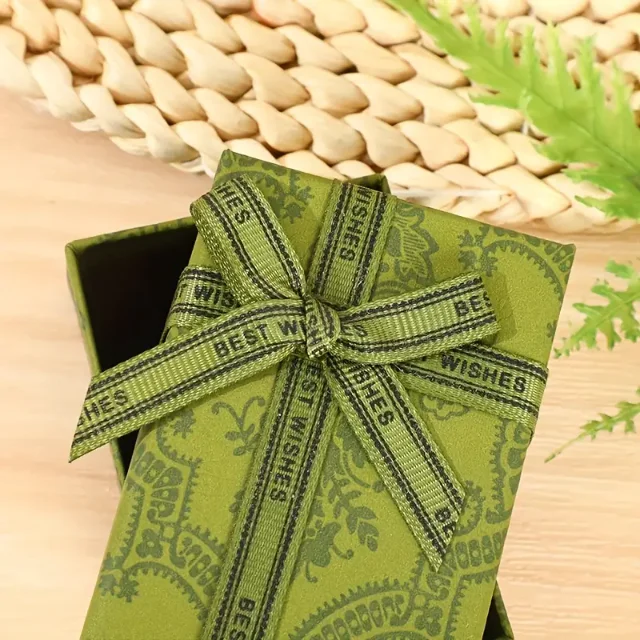
Christmas Gift Packing – Artful Packing that Spreads the Christmas Glow for Delightful Unwrapping
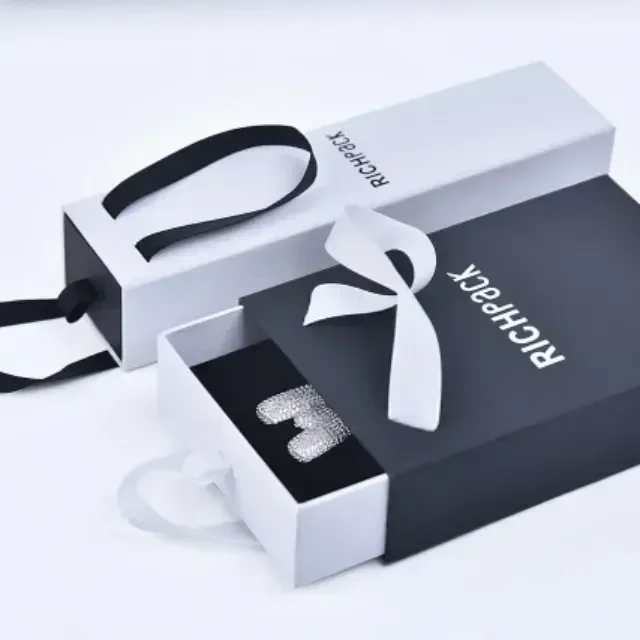
Cost-Effective Bulk Packaging Solutions for Jewelry Brands | Perfect for Wholesalers Needing Scalable and Customizable High-Volume Packaging

Custom Glass Gift Boxes with Protective Inserts | Elegant Packaging for Wine Glasses, Whiskey Sets More Bulk Order Options at Richpack
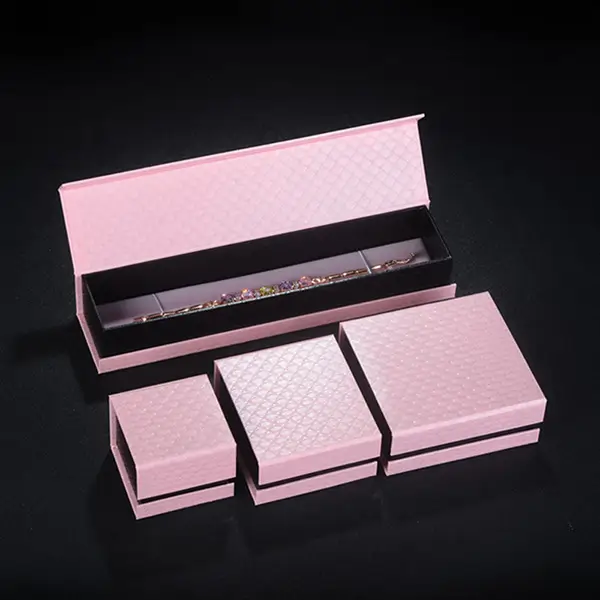
Affordable Custom Jewelry Boxes for Independent Jewelers | Budget-Friendly Solutions with High-Quality Designs
View More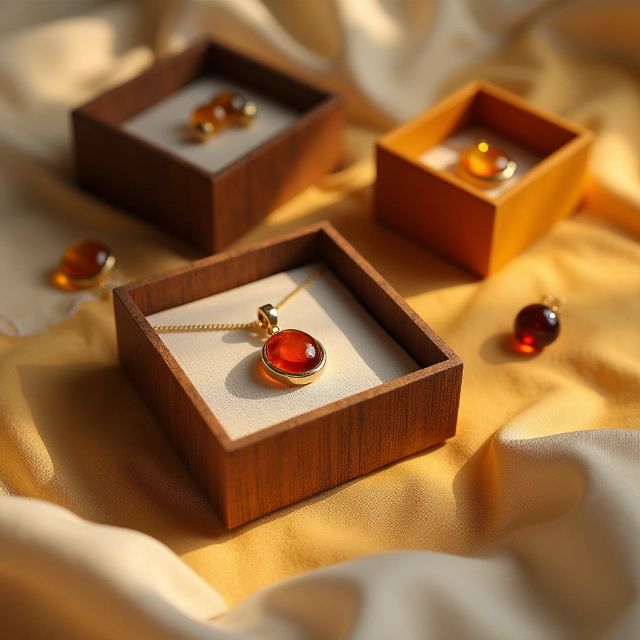
Amber Jewelry Packaging | Natural Elegance Meets Sustainable Packaging
View More
Bespoke and Durable Custom-Printed Paper Bags for Retail Stores with Logos | Perfect Branding Solutions for Jewelers Needing Eye-Catching Retail Packaging
View More
Just submit your email to get exclusive offers (reply within 12 hours)


