


Writing a wedding thank you card gets easier once you stop chasing perfect wording. Thank the person by name, mention the gift or kind gesture, say why it matters, add one personal detail, and close with warmth.
That structure works for registry gifts, cash gifts, guests who came without a gift, and people who sent love from afar. I have seen couples finish faster when they use one repeatable system and personalize one or two lines in each note.
If you are also choosing a card format, the best move is to match the message system and the delivery format simultaneously. That keeps the wording personal and the final experience polished.
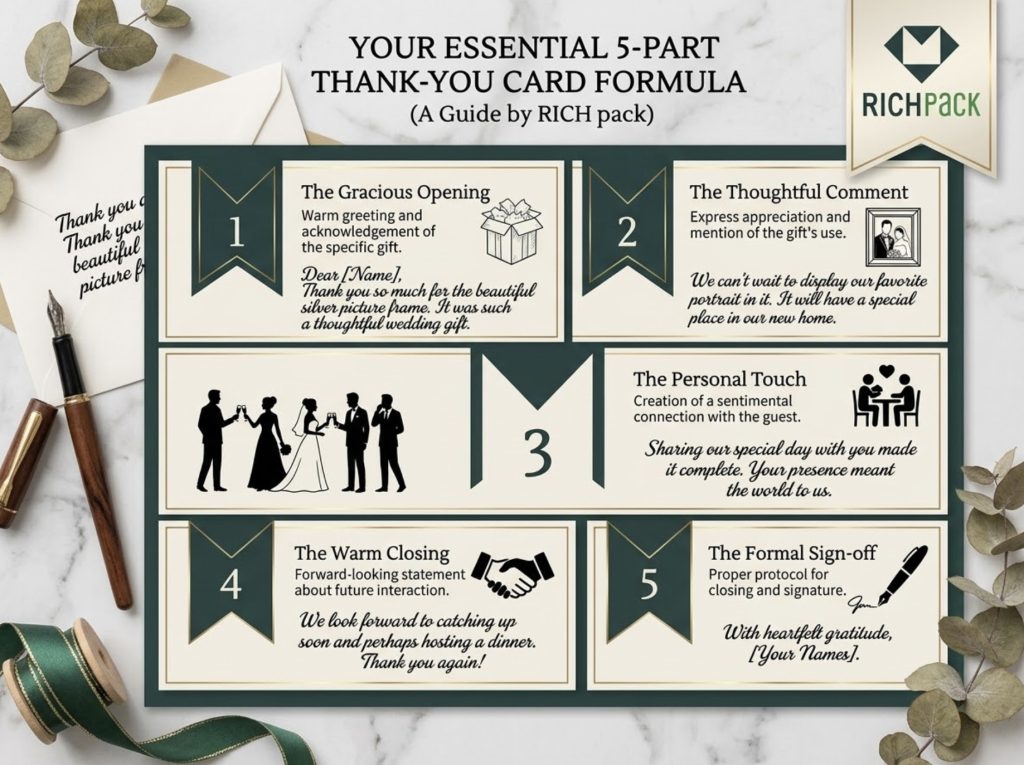
Most people do not struggle with gratitude. They struggle with structure. Once you know the order, the words come much faster.
This section provides the basic formula for strong wedding thank-you card wording. Use it as the base for every note you send.
Open fast. Do not warm up with filler.
Use the person’s name and say thank you in the first sentence. That instantly makes the note feel personal and clear.
Example: Thank you so much, Emily and Jason, for celebrating with us and for your thoughtful gift.
Specificity makes the note feel real. Generic wording feels copied, even when the intention is sincere.
Name the exact gift, contribution, or act of support. If the guest attended but did not bring a gift, thank them for being present and sharing the day with you.
Example: Thank you for the beautiful marble serving board you sent us.
Example for non-gift attendees: Thank you for traveling to celebrate with us and for bringing so much joy to our wedding day.
This is where the card starts to feel human. A gift matters more when you explain how it fits into your life.
For a physical gift, mention how you will use it. For money, mention the purpose instead of the amount. For emotional support, say what their presence meant.
Example: We cannot wait to use it when we host our first dinner at home.
Example for money: Your generous gift will go toward our honeymoon in Italy, and we are so grateful.
One real detail does more work than a long paragraph. It proves the note was written for that person and not for everyone.
Mention a moment from the wedding, a conversation, a dance, a toast, or even the help they gave during the planning process.
Example: It meant so much to see you on the dance floor with our families all night.
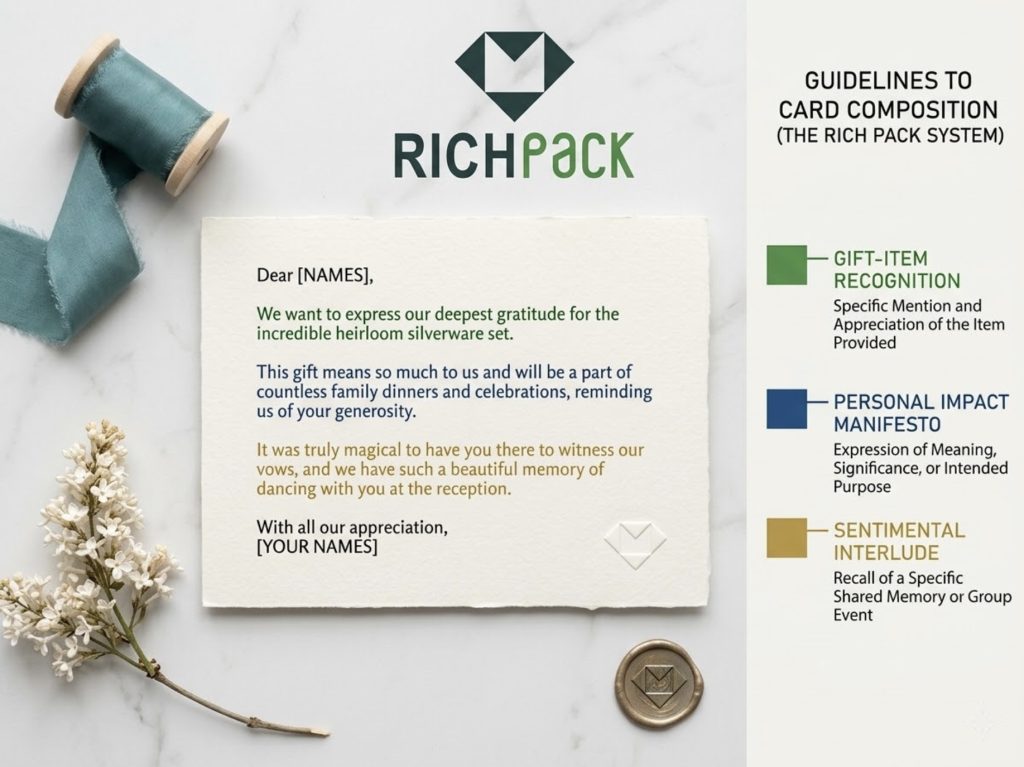
Your closing should sound natural, not stiff. One short sentence is enough.
Keep it warm and simple. Avoid overexplaining or adding too many formal phrases.
Example: Thank you again for your kindness and support.
Most wedding thank you cards should include both partners’ names. That is still standard etiquette, even when one person writes most of the notes.
If the gift came from one side of the family only, it can still help to sign from both of you unless there is a strong reason not to. That keeps the tone united.
According to the Emily Post Institute, a personal note still carries more weight than a generic form message. That principle also supports signing the card in a way that feels sincere and complete.
Example: With love, Sophie and Daniel
Templates save time. Bad templates sound robotic.
The goal is not to copy one message fifty times. The goal is to keep the structure consistent while changing the details that matter.
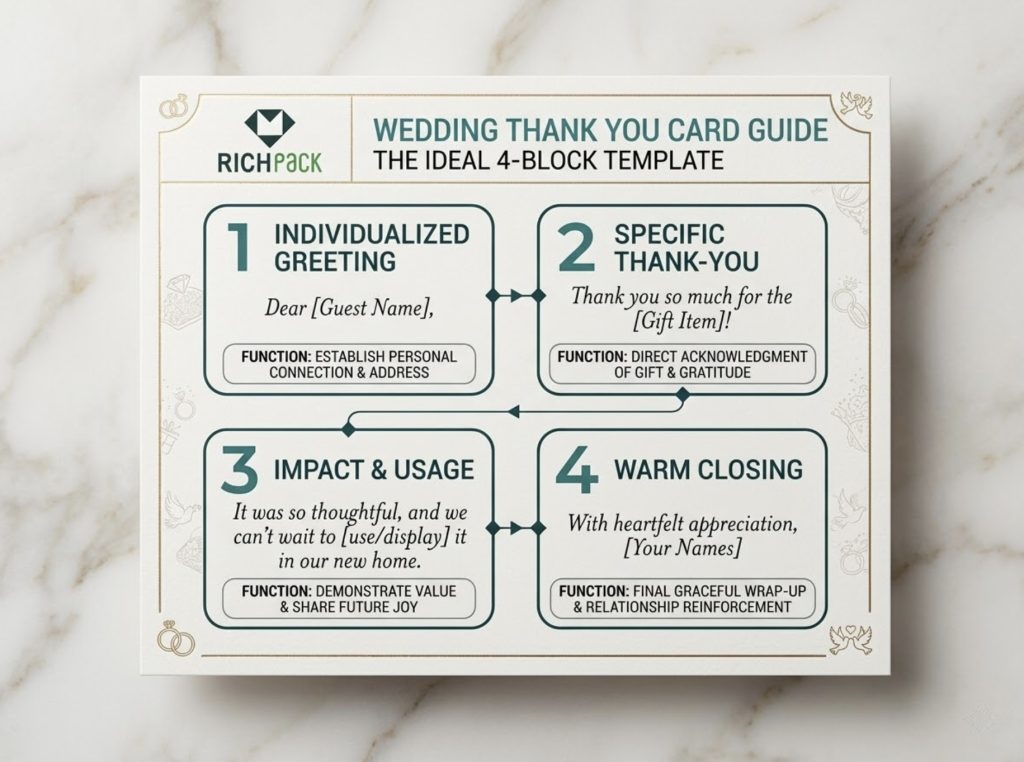
A standard wedding thank you card template includes a direct greeting, a specific mention of the gift, how you will use it, one personal wedding detail, and a warm sign-off. That formula is simple, fast, and strong enough for most guests.
This is the easiest wedding thank you card template for most couples.
| Part | What to Include | Example |
| Opening | Direct thanks with names | Thank you so much for celebrating with us |
| Gift mention | Name the gift or gesture | We truly appreciate the espresso machine |
| Impact | Say why it matters | We will use it every morning in our new home |
| Personal close | Add one memory and sign off | It was so special to have you there. With love, Maya and Chris |
Plug in real details, and the message will still sound personal.
Short does not mean cold. It means efficient.
Use this when you have many cards to write and still want each note to feel sincere.
Template
Dear [Name],
Thank you so much for [gift or attending our wedding]. We truly appreciate your kindness and were so happy to celebrate with you. Thank you again for being part of our day.
With love, [Names]
Close family often deserves a fuller note. You can slow down a little and include more emotional detail.
Template
Dear [Name],
Thank you so much for your generous [gift]. Your love and support meant so much to us throughout the wedding season. We were especially touched by [personal moment]. We will think of you whenever we use [gift or fund].
With love, [Names]
A template works when one line changes from card to card. That single detail creates warmth.
I usually recommend customizing one of these elements in every note.
Some phrases sound polite but empty. They do not create a connection.
Avoid lines like these when possible.
These are not wrong. They are just incomplete.
Make them stronger by adding one concrete detail. For example, replace thank you for your gift with thank you for the blue linen tablecloth, which will be perfect for Sunday dinners.
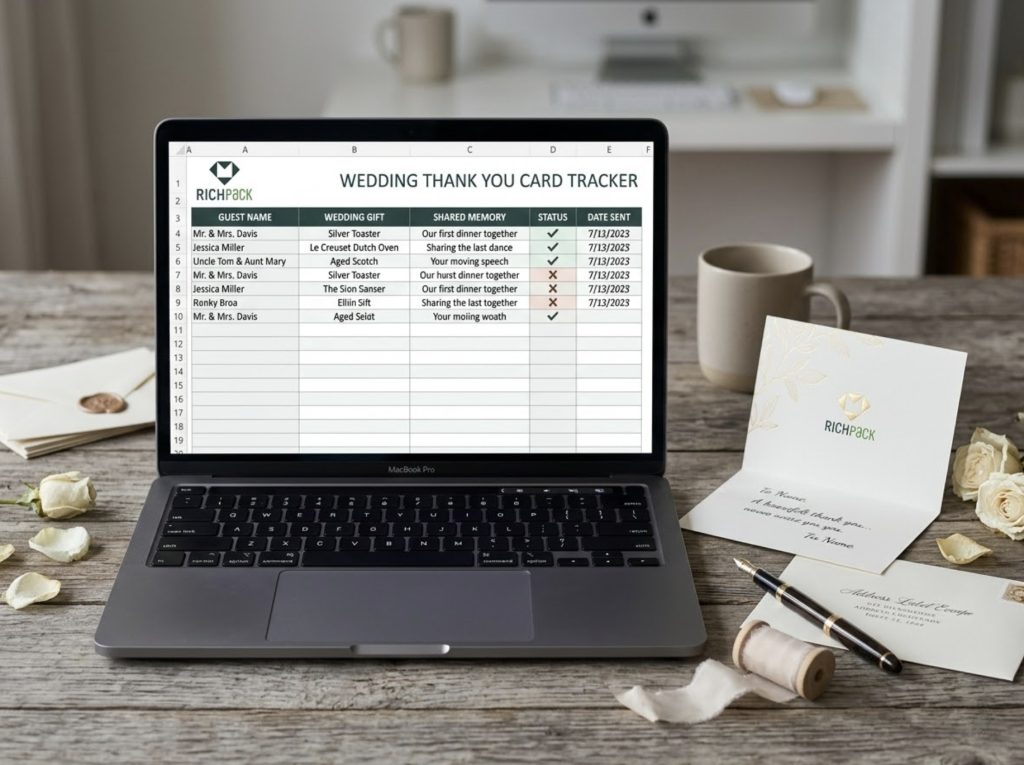
Create a repeatable system before you write. A simple guest tracker can save hours.
Use a sheet with the guest’s name, gift, relationship, wedding memory, and status. That gives you enough detail to personalize without stopping every few cards.
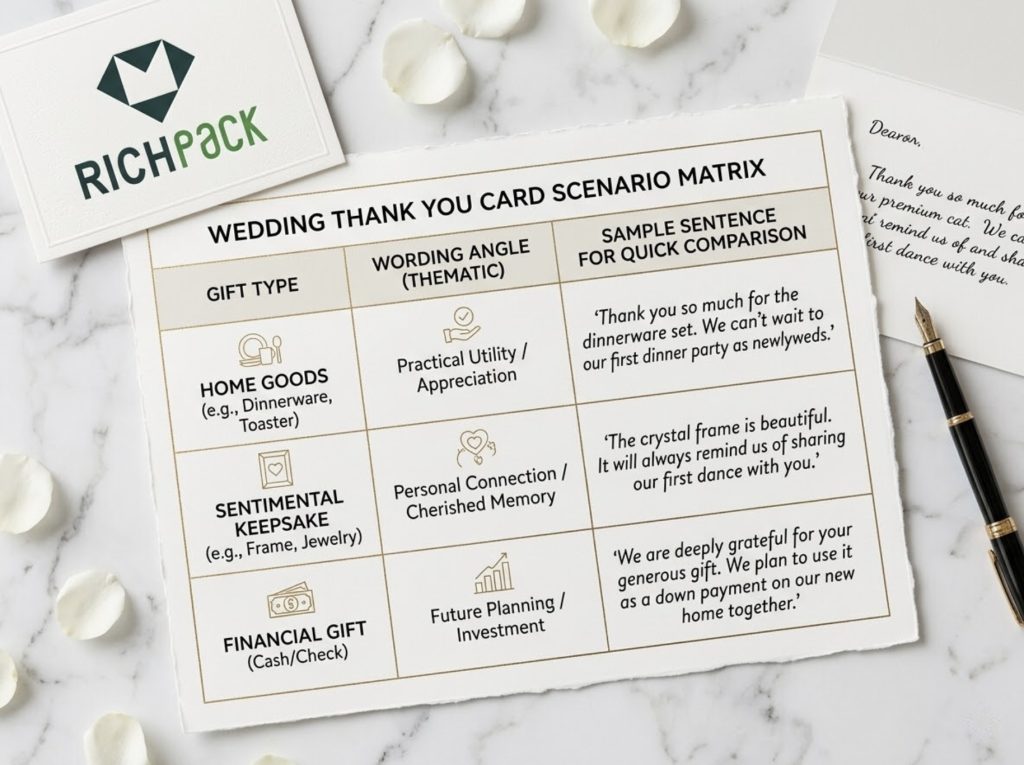
This is where most people freeze. The gift type changes, the relationship changes, and the tone suddenly feels harder.
Use the examples below as starting points. Then swap in one real detail so the final note sounds like you.
Registry gifts are easy to acknowledge because the item is clear. The best move is to name it and say how it fits into your home.
Example:
Dear Natalie,
Thank you so much for the Dutch oven from our registry. It was such a thoughtful gift, and we cannot wait to use it for cozy dinners at home. We loved celebrating with you and still keep talking about your dance moves at the reception.
With love, Ella and Marcus
Do not mention the amount. Mention the purpose.
That keeps the note graceful and avoids making the message feel transactional. Minted and The Knot both lean on this same etiquette logic because it protects the tone of the message.
Example:
Dear Aunt Linda,
Thank you so much for your generous wedding gift. Your kindness means a lot to us, and your gift will help us enjoy a special part of our honeymoon. We were so happy to celebrate with you and truly appreciated your love and support.
With love, Ava and Noah
A gift card still deserves a specific reply. Say where it will be used or what it will help you buy.
Example:
Dear Rachel,
Thank you so much for the Crate and Barrel gift card. It will be such a big help as we settle into our new place, and we already have a few kitchen pieces in mind. It meant so much to have you with us on the wedding day.
With love, Hannah and Luke
Group gifts can feel tricky because several people contributed. The cleanest option is to thank the group clearly and note the shared effort.
Example:
Dear Team,
Thank you all so much for contributing to the stand mixer. We were blown away by your generosity and cannot wait to use it in our new kitchen. Your support made us feel incredibly loved, and we are grateful to each of you.
With love, Olivia and Ben
Yes, you should still send a thank-you card. Their presence counts.
Keep the message centered on attendance, effort, and shared joy.
Example:
Dear Sam and Priya,
Thank you so much for celebrating our wedding with us. It meant a lot that you made the trip and shared such a joyful day with our families. We especially loved catching up with you during cocktail hour.
With love, Grace and Ethan
A guest does not need to attend in person to deserve a warm and specific note. Thank them for the gift and acknowledge that they were missed.
Example:
Dear Caroline,
Thank you so much for your thoughtful gift. We missed having you with us on the wedding day, but your kindness made us feel so loved. We hope to celebrate together soon and cannot wait to use your gift in our home.
With love, Julia and Ryan
Wedding party notes should feel more personal than standard guest cards. These people usually gave time, energy, and emotional support long before the ceremony started.
The best wedding party thank you card wording mentions both their role and one thing they did that made the process easier or more meaningful.
Bridesmaids often carry emotional labor that never appears in the photos. Acknowledge both the friendship and the effort.
Example:
Dear Mia,
Thank you for being such an incredible bridesmaid. Your support through every fitting, call, and last-minute decision meant more than I can say. Having you next to me on the wedding day made me feel calm, happy, and fully present.
With love, Charlotte
The strongest groomsmen’s notes sound direct and personal. Do not overcomplicate them.
Example:
Dear Alex,
Thank you for being part of our wedding and for standing by me as a groomsman. Your support, humor, and help throughout the weekend made the whole experience better. I was proud to have you there for such an important day.
With gratitude, Tyler
These roles usually deserve an extra line because the contribution is bigger. Mention speech support, planning help, or behind-the-scenes problem-solving.
Example:
Dear Emma,
Thank you for being the most thoughtful maid of honor I could have asked for. From helping with the planning to giving such a beautiful toast, you made every stage of this season feel easier and more special. I will always remember standing beside you on that day.
With love, Lily
Family notes should sound warmer and more reflective. This is a good place to acknowledge long-term support, not just the wedding itself.
Example:
Dear Mom and Dad,
Thank you for your love, guidance, and endless support throughout our wedding and far beyond it. We felt your care in every detail of the day, and we are deeply grateful for everything you did to help us celebrate this new chapter. It meant the world to share that moment with you.
With love, Emily and Jack
This group often includes a friend, family member, or community figure who gave time and care to the ceremony. Mention their role directly.
Example:
Dear Pastor James,
Thank you for leading our ceremony with so much warmth and grace. Your words made the moment feel deeply personal, and we are grateful for the care you brought to the day. We will always remember the way you helped set the tone for our vows.
With appreciation, Anna and Cole
Vendor thank you notes are not always required, but they are smart when someone delivered exceptional care. They also strengthen long-term relationships.
Example:
Dear Melissa,
Thank you for everything you did to make our wedding day run so smoothly. Your calm presence, quick problem-solving, and attention to detail made a huge difference from start to finish. We felt supported the entire day and truly appreciate your work.
Warmly, Sienna and Drew
Timing creates stress because people hear different rules from different sources. The old idea that couples have a full year does not match modern etiquette.
A faster thank you feels better for guests and makes the task easier to finish. The sooner you start, the less emotional weight the stack carries.
Send these as they arrive. You do not need to wait until after the ceremony.
The Knot and Emily Post both support a faster response for shipped or early gifts. A good target is within about two weeks.
These usually go out within three months. Earlier is even better.
If you are opening gifts in batches after travel or a honeymoon, build the writing process into the first few weeks back.
Usually no. If waiting for photos will delay your thank-you cards significantly, send a plain note first.
A prompt handwritten card matters more than a perfect photo design that arrives too late. If photos are central to your format, keep the delay short and intentional.
Late is still better than never. Guests care more about being acknowledged than about seeing a flawless timeline.
If you are behind, do not apologize for three paragraphs. Keep the note warm, sincere, and direct.
Example line:
Thank you so much for your patience, and please know how grateful we are for your kindness and support.
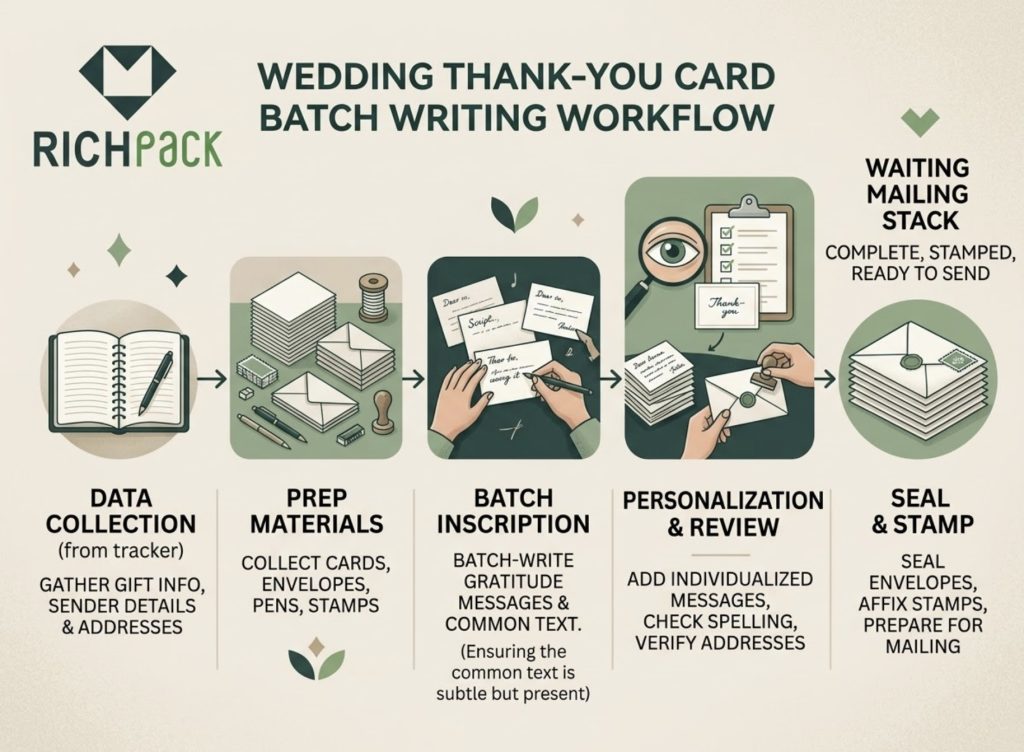
Backlogs shrink when the system gets simpler. Do not try to write the best card of your life every time.
Use a guest tracker, sort by gift type, and write in short batches. I have seen couples finish fifty cards faster once they stop reinventing the structure for each note.
This routine works well for most couples.
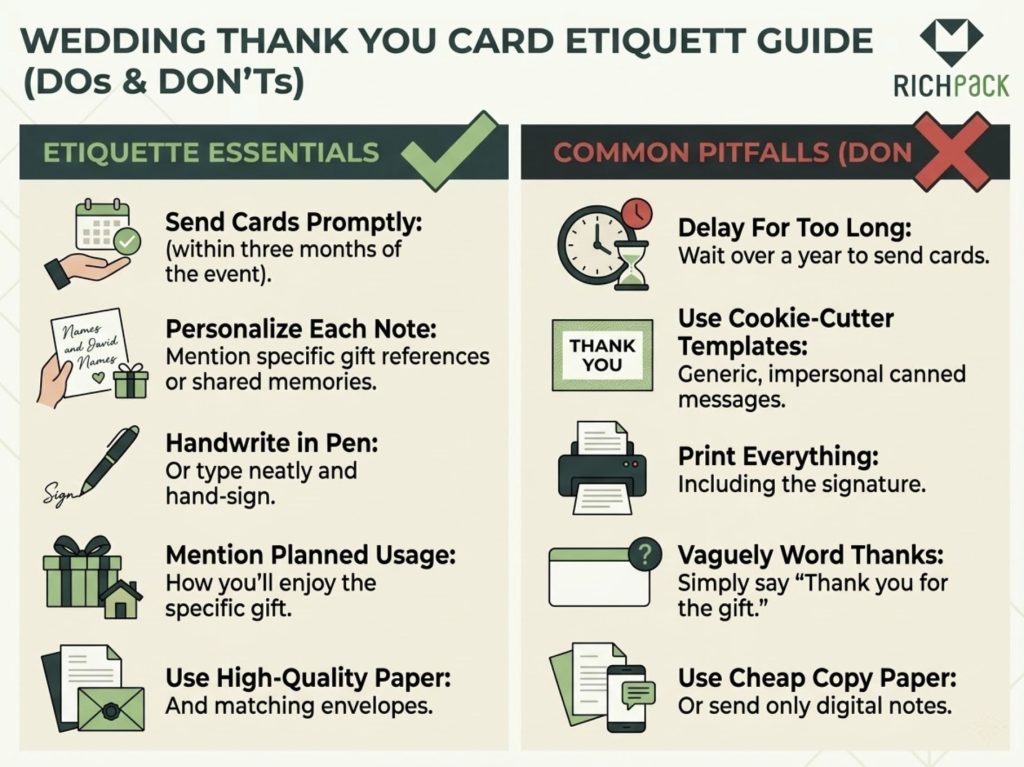
Etiquette should make the process easier, not heavier. Most modern rules still come down to clarity, specificity, and respect.
If you remember those three ideas, most wording decisions become much simpler.
Handwritten is still the gold standard for wedding thank you cards. It feels more personal and more intentional.
According to the Emily Post Institute, traditional etiquette still favors a personal note over a printed form card. That is why even a short handwritten message usually feels stronger than a longer generic one.
That said, printed cards with a handwritten message inside are a strong option when you want a polished look without losing warmth.
Yes, in most cases. Naming the gift shows that you noticed it and received it.
This matters even more for registry items, custom gifts, and shared contributions. The more specific the note, the more genuine it feels.
No. Thank the person for the generosity and mention how the gift will support a plan, experience, or next step.
That is the safest and most elegant wording for cash gift notes. It also matches the wording approach repeated by Minted, The Knot, and other leading etiquette style guides.
Send a card to everyone who gave a gift. It is also good etiquette to thank guests who attended but did not give one.
Their time, travel, and presence still matter. A short note is enough.
List everyone clearly when possible. If a gift came from a couple or family, thank the household together.
Inside the card, use the names people actually go by. That small detail makes the tone feel warmer right away.
These mistakes show up often.
Words matter first. Format shapes how those words land.
A thank you card can feel casual, elegant, romantic, or premium depending on the layout, stock, finish, and envelope style. This matters for couples, but it also matters for planners, retailers, resorts, and brands that want a more polished guest experience.
Photo cards feel warm and visual. Classic cards feel timeless and often leave more room for handwriting.
Choose photo cards when the wedding imagery is central to the memory, and the design stays clean. Choose classic cards when the handwritten message is the priority.
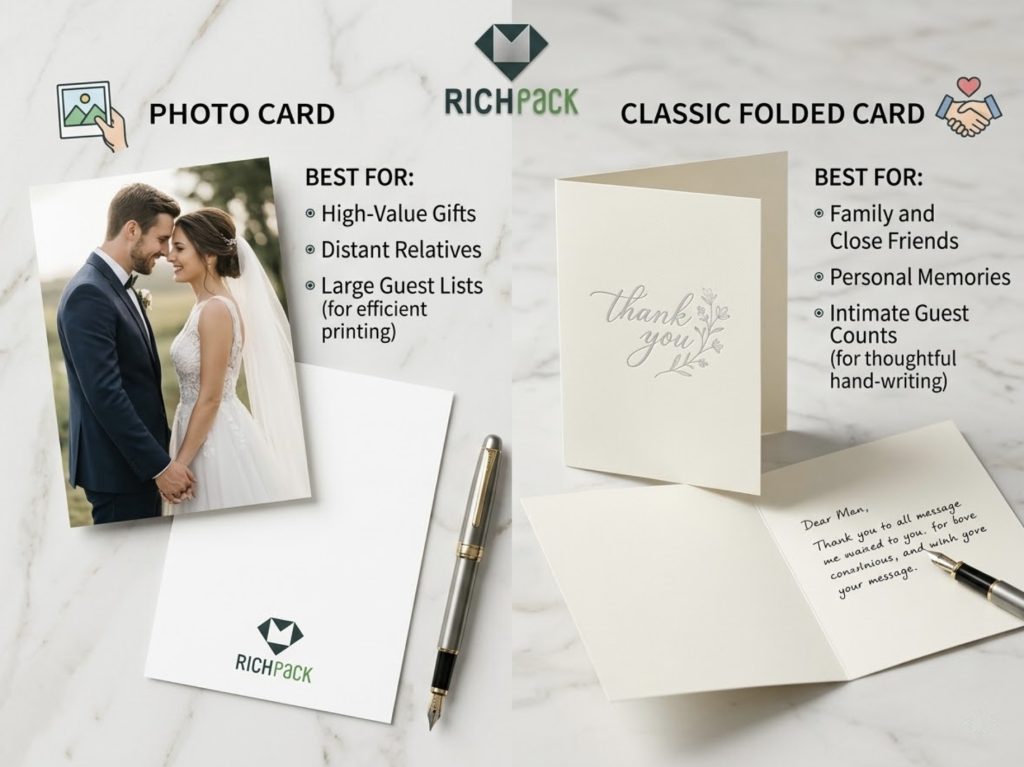
Handwritten messages feel personal. Printed messages save time at scale.
A smart middle ground is a custom-printed card with room for a short handwritten note. That works especially well for brands or planners managing premium guest communication.
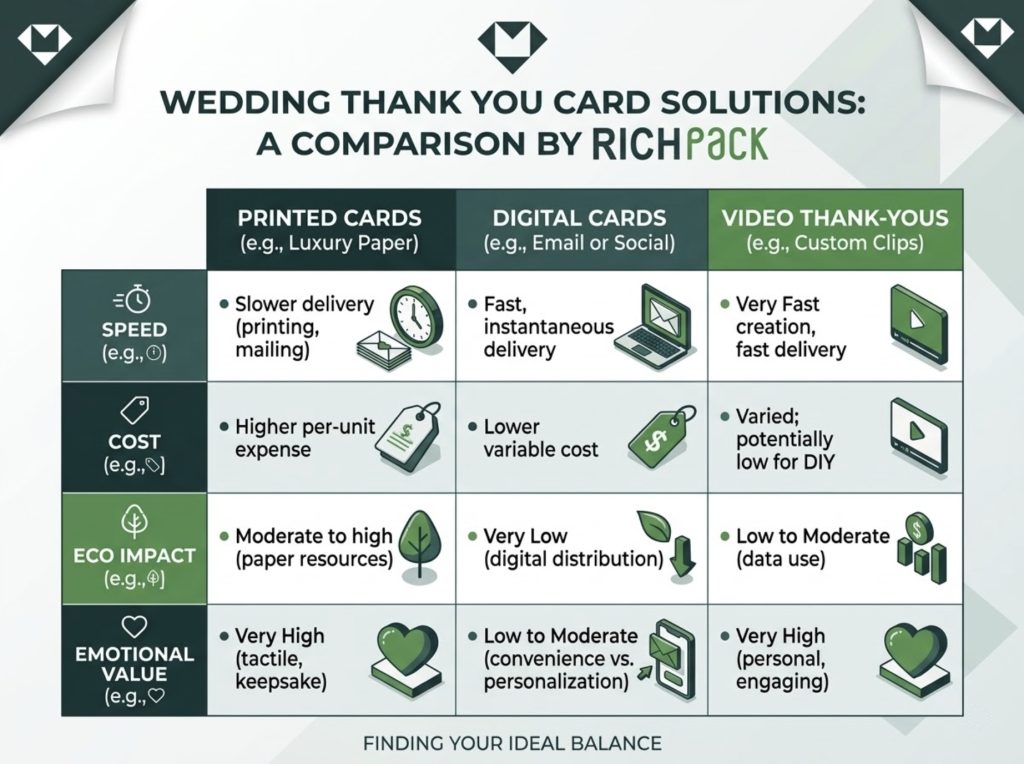
Digital thank you formats are growing because they are fast, flexible, and more eco-conscious. Paperless Post-style digital cards, email thank-you notes, and short video thank-you messages now show up more often in modern wedding workflows.
Digital cards reduce mailing friction. Email messages speed up delivery. Video thank yous add emotional warmth. Each format solves a different problem.
Use digital formats when guest lists are spread across countries, when timing matters, or when the couple prefers a lighter environmental footprint. Use printed cards when the goal is a keepsake experience, a luxury touch, or a more formal post-wedding impression.
A hybrid approach often works best. Send a prompt digital thank you first, then follow later with a printed keepsake card for close family, VIP guests, or high-value relationships.
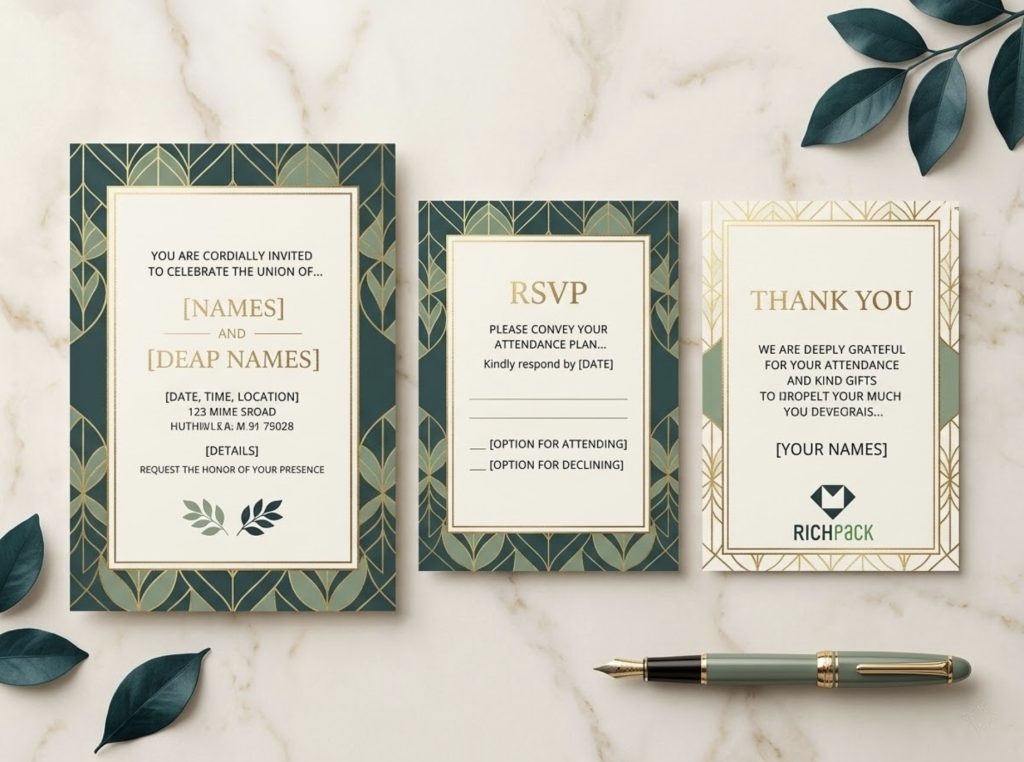
Matching design creates a stronger visual story. It makes the thank you card feel like part of the full wedding experience instead of an afterthought.
Try matching one or two elements from the wedding stationery suites, such as color palette, foil detail, monogram, floral motif, or typography. If the brand sells custom wedding invitation cards, this is the natural place to extend that same visual system into the thank-you stage.
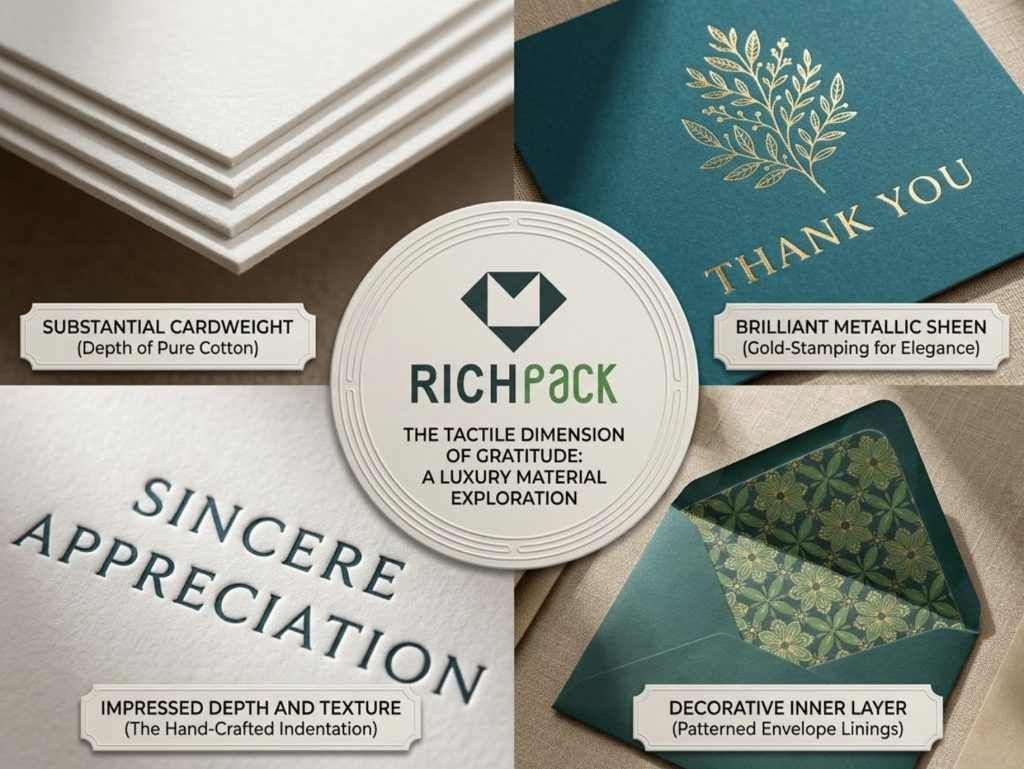
Material choices change perceived value fast. Heavy stock feels more premium in hand.
For a luxury look, many buyers lean toward thicker card stock, soft touch finishes, foil stamping, letterpress details, or lined envelopes. If speed matters more, digital printing with a clean design can still look polished and cost-efficient.
Custom cards make more sense when the event brand matters, the guest list is high value, or the wedding aesthetic is carefully built. They also help when you want a photo card, a unique size, or matching stationery across the full suite.
For wedding planners, boutique venues, hotels, and stationers, custom thank you cards can turn a simple follow-up touchpoint into a stronger brand impression. They also create a natural internal path toward personalized thank-you cards and related wedding paper goods.
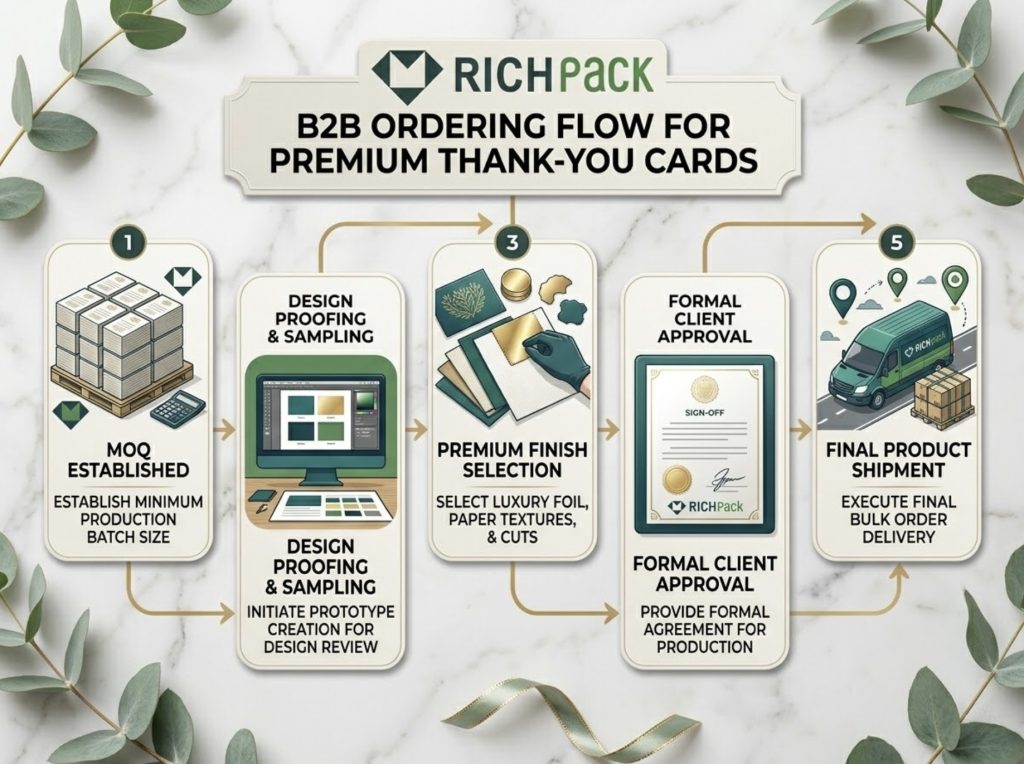
Wholesale ordering makes sense when you need volume, consistency, and better unit economics. It is especially useful for planners, hospitality groups, bridal retailers, and custom stationery brands.
Wholesale ordering reduces unit costs. Proofing support improves consistency. Standardized templates speed production.
Look for clear minimum order quantity, proofing support, finish options, turnaround time, and reliable print quality. Those details matter just as much as the wording when you are building scalable wholesale custom cards with premium presentation.
If the supplier also offers luxury printing finishes, the buyer can keep one vendor across invitations, inserts, and thank you cards. That creates stronger brand consistency and a simpler procurement flow.
Sometimes a full sample is easier than a formula. The examples below give you ready-to-adapt wedding thank you cards text samples for common tones and situations.
Use them as starting points, not scripts. The best version always includes one real detail.
Dear Mr. and Mrs. Carter,
Thank you very much for joining us on our wedding day and for your generous crystal vase. We truly appreciate your thoughtful gift and your kindness. It will have a special place in our home, and we were honored to celebrate with you.
Sincerely, Amelia and Henry
Dear Jess,
Thank you so much for celebrating with us and for the beautiful serving platter. We already know it will get plenty of use when friends come over. It was such a joy having you there, and we still laugh about our photo booth pictures.
With love, Chloe and Max
Dear Ben and Lucy,
Thank you so much for being part of our wedding day. We loved celebrating with you and are so grateful for your kindness and support.
With love, Nora and Liam
Dear Uncle David,
Thank you so much for your generous wedding gift. Your kindness means so much to us, and your gift will help us create a wonderful start in our new home. We were so happy to celebrate with you and appreciate your support.
With love, Isla and Mason
Dear Sofia,
Thank you for being such an important part of our wedding day. Your support, patience, and encouragement meant so much throughout the whole process. I felt lucky to have you by my side, and I will always remember everything you did for us.
With love, Harper
Dear Karen and Steve,
Thank you so much for coming to our wedding and for your thoughtful gift. It meant a lot that you were there to celebrate with us, especially since we do not get to see each other often. We were so glad to share that day with you.
Warmly, Leah and Owen
Write five things in this order. Thank the guest by name, mention the gift or kind gesture, say why it matters, add one personal detail, and close warmly with your names. That structure keeps the note personal without making it long.
Send thank you cards for gifts received before the wedding within about two weeks when possible. For most gifts received after the wedding, send them within three months. The sooner you write them, the easier the process feels.
Handwritten notes are still the preferred option because they feel more personal. If you want a more polished format, use a printed custom card and add a handwritten message inside. That gives you both style and sincerity.
Thank the guest for the generous gift and mention how it will support your honeymoon, home, or plans. Do not mention the exact amount. That keeps the wording gracious and avoids making the card feel transactional.
Yes, and templates save a lot of time. The key is to personalize each card with one real detail, such as the gift itself, a wedding memory, or a line about the guest’s effort to attend. That keeps the note from sounding copied.
You do not need to send one to every vendor, but it is a thoughtful move when someone delivers exceptional service. A short handwritten note can strengthen the relationship and leave a lasting impression, especially for planners and venues that work with repeat partners.





 PREV
PREV