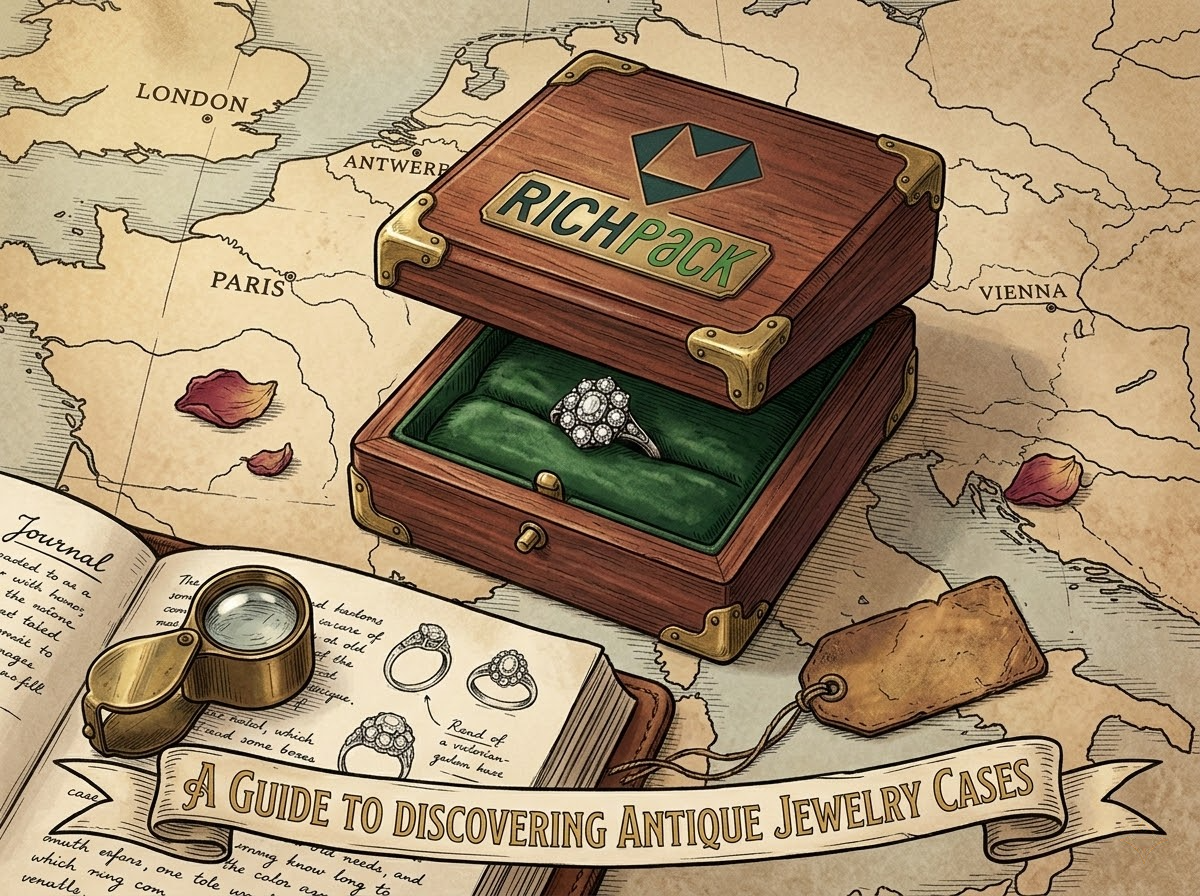


The ring is ready. The box you choose matters as much as the jewelry.
A vintage ring box is more than a small detail. It starts the story for a popular photo moment. Jewelers and photographers see a clear trend. The box displays the value before the lid is opened. Vintage styles lead the market today.
The data shows the jewelry market was worth USD 54.27 billion in 2025. This value is expected to reach USD 116.17 billion by 2034. Vintage packaging helps brands stand out during this growth. Nimesh Shah from Feel Good Contacts notes a high demand for vintage. People want a simple and classic shopping experience.
This guide covers vintage box styles and materials. You will learn where to find suppliers. We also share ways to use them for brand stories and weddings. You will gain a solid sourcing plan and fresh ideas.
Check the build before you compare prices on trade sites. A good box differs from a cheap one in how it feels. Look at the hinges, the weight, and the size. These details show if a box is a true classic or just looks old.
Vintage boxes follow design rules from the last 150 years. These styles range from Victorian leather to Art Deco cases. Good design uses high-quality materials and classic skills.
Look for these features:
New boxes can feel like old ones. You just need the right materials and build quality.
The word “vintage” covers many styles. Knowing the era helps you pick the right product.
Victorian (1837–1901) is a top choice. These boxes use leather with gold patterns. They have silk lids and brass buttons. The shapes are deep. Jewelers made them to fit in a coat pocket.
Art Deco (1920–1940) uses shapes and lines. Makers used early plastics and chrome trim. Colors are bold, like black and white. These cases look sharp and clean.
Mid-Century (1940–1970) is simpler. Factories used paper cores with faux leather. These boxes look like a collection rather than a new purchase.
Tell your maker the exact era. Ask for “Victorian style with brass buttons.” This prevents errors in your order.
Hardware shows the true quality of a box. Buyers notice the metal when they hold the item.
Look for these hardware traits:
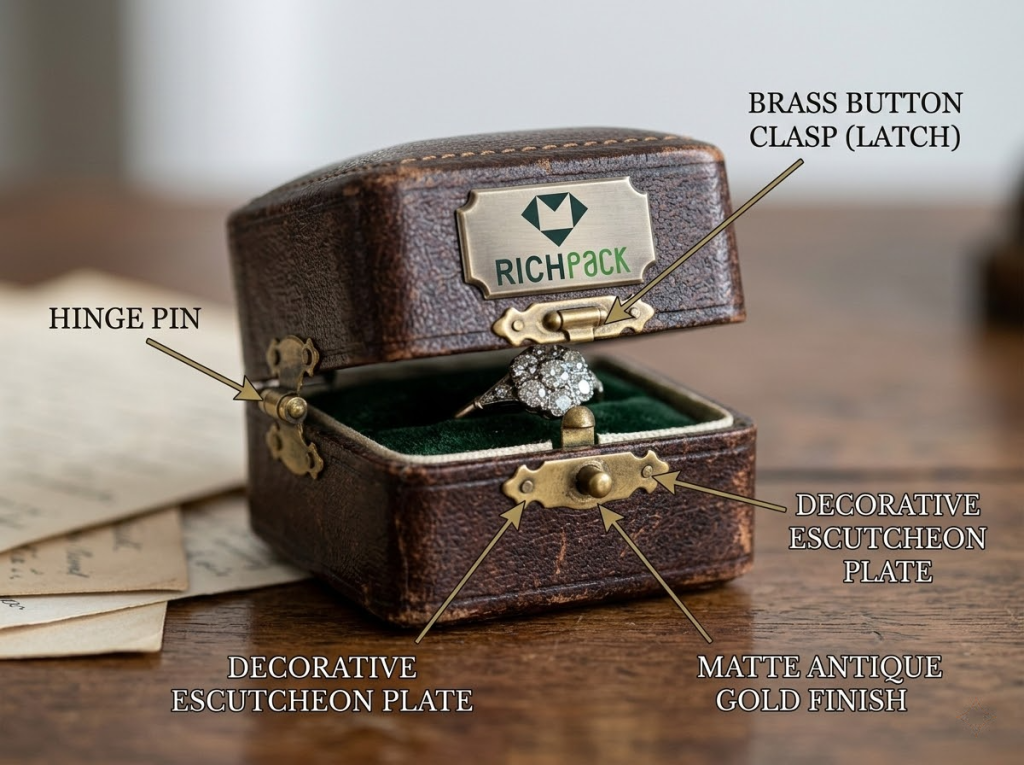
Check the metal in natural light. Bad plating looks green in the sun. Good plating stays gold after you touch it.
The inside of the box creates a great reveal. Designers must pick the right fabric.
Satin fits Victorian styles. Use cream or tan colors. Pure white looks too new for this style.
Ask for fabric samples before you start a big run. Colors like “ivory” look different at every factory. Request a physical swatch to confirm the tone.
Vintage boxes feel different in your hand. Modern boxes are often too wide and flat. These old proportions help you source the right items.
Common old box sizes are:
A deep box feels more private. It suggests a secret gift. A shallow box feels like a store display.
Check the inside depth of your samples. A shallow slot will not hold a ring safe. This ruins the customer experience.
Constantine Sedikides studies the power of the past. He says old memories help people feel strong. Jewelry brands use these stories to bond with buyers.
This data has real value. A 2025 report from RichPack shows a big trend. Most young buyers want boxes that look like family gifts. For wedding brands, this is a key goal.
Vintage boxes create a memory. A plain box is just a tool. A vintage box tells a story. This leads to more photos on social media. It helps your brand grow.
Choosing the right material is vital for your brand. Each option has a unique look and price. Your choice will affect shipping costs and how buyers see your work. Good sourcing means matching the material to its use.
Leather is a classic choice for old-style ring boxes. Early jewelers often used goatskin over wood. Today, two main types of leather boxes are used.
Most leather boxes include:
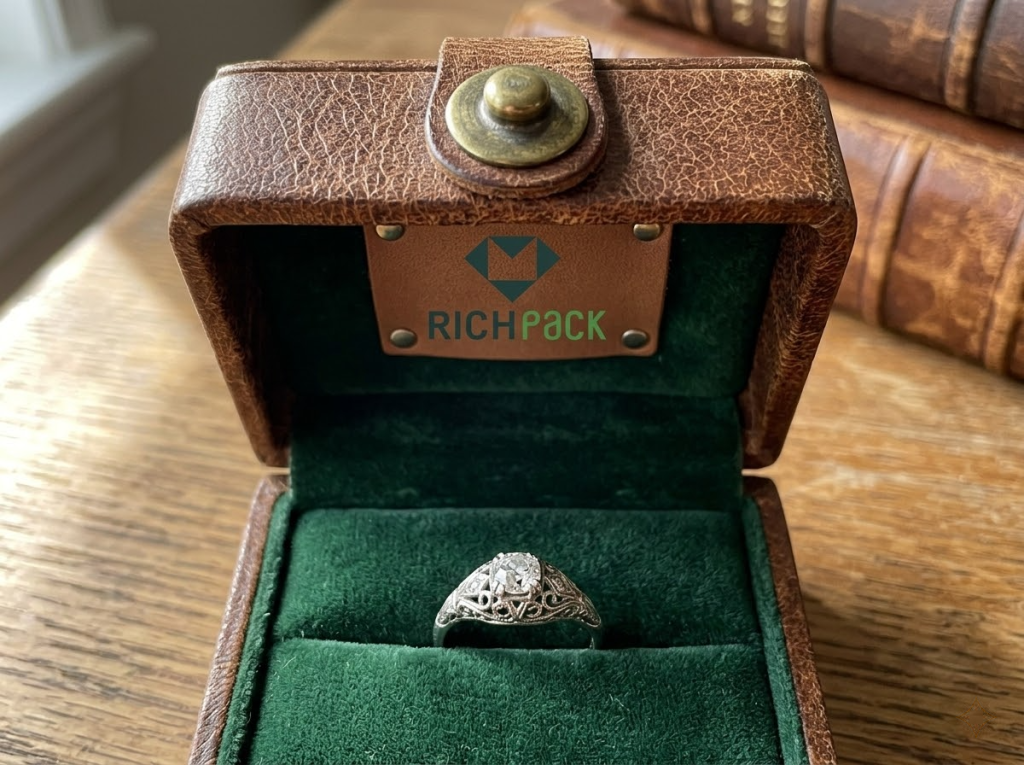
How to source leather boxes: Ask for a hinged box with a brass button. Make sure the leather grain looks the same on all sides. Bad grain patterns show poor quality. Experienced buyers check this first.
Jewelers have used velvet since the mid-1800s. It feels soft and looks high-end. This makes it a great choice for wedding photos and proposals.
For a vintage look, try these:
Velvet boxes are easy to find at wholesale prices. You can often buy as few as 500 units. This is helpful for small brands that want to test a new style.
Glass boxes are different from leather or velvet. They are fragile but look very dramatic. They allow people to see the ring without opening the lid.
Old styles use glass panels in brass frames. Modern versions follow this same design.
Check these points when buying glass boxes:
Shipping note: Glass boxes need extra care. Ask your supplier about their export packing. They should use thick foam. Breakage rates should stay below 1 percent.
Wood boxes look like small antique chests. Walnut and cherry are the best woods for this style. They have a rich look that works well for high-end brands.
Wood looks great in photos with side lighting. This lighting makes the wood grain stand out. You can find custom wood boxes on sites like Etsy. They are perfect for special or limited jewelry lines.
Celluloid boxes come from the mid-1900s. They are light and often look like marble or amber. Today, you can use acrylic to get this same look.
Fabric-covered boxes use silk or linen. These feel soft and feminine. They work well for wedding ceremonies or trunk shows.
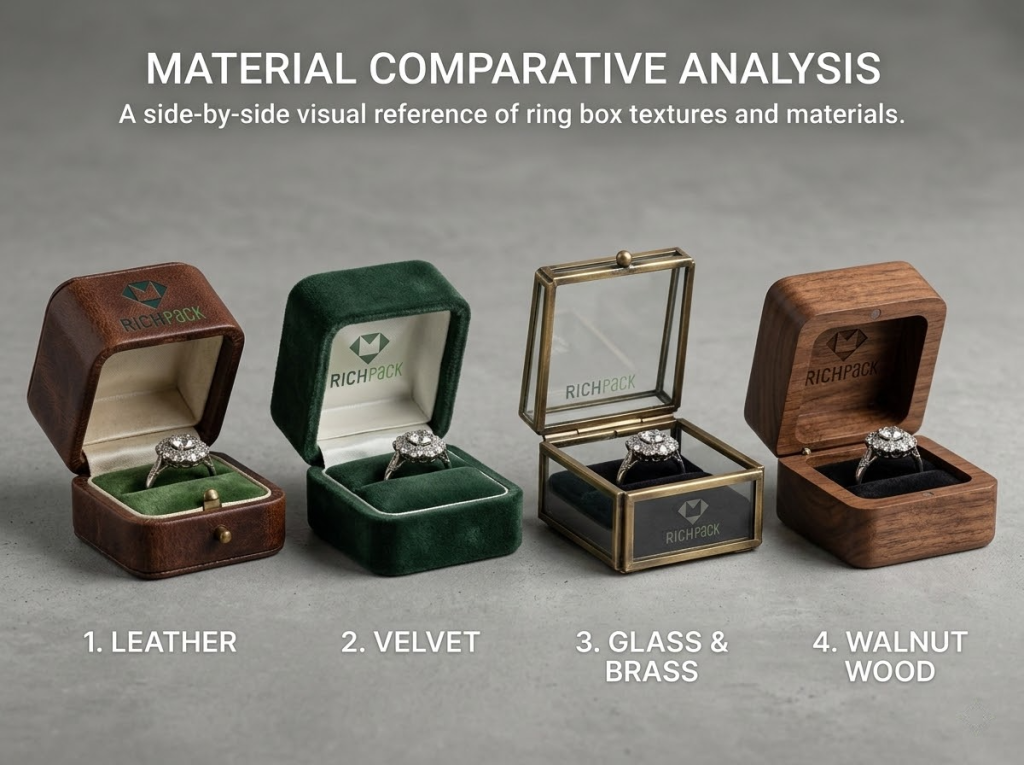
The best material is the one that fits your needs. Use this chart to help you decide:
| Your primary use case | Recommended material |
| Proposal video content | Genuine or PU leather with brass button closure |
| Wedding flat lay photography | Crushed velvet in muted square/octagon format |
| High-end jewelry editorial | Glass with brass frame (controlled lighting conditions) |
| Trade show and retail display | Leather or velvet—durable, handles repeated handling |
| Artisan or limited-edition launch | Walnut or cherry wood, custom fabrication |
| High-volume e-commerce gifting | PU leatherette—consistent appearance at scale |
Many buyers start with a Google search. This works for a quick look at the market. However, the best sourcing takes a clear plan. You need a better path to find good results.
Alibaba and Global Sources are the biggest sites for ring box makers. Many top suppliers are in Guangdong and Zhejiang. These areas have years of experience in jewelry packaging.
Look for these signs when you check suppliers:
Use this search term: “vintage ring box wholesale manufacturer.” Filter by material like velvet, leather, or glass. Also, filter by supplier status.
Faire serves a different group. It helps small shops buy from artisan brands. Shipping is fast. This site helps you get a handmade style with easy stock.
Jewelry brands need custom boxes for a unique look. You can add your logo and brand colors. Retail boxes belong to others. Custom boxes belong to you.
Start with a simple list of needs. Pick your material, size, and lining color. You can add foil stamps or printed logos. Review a sample before the factory starts the full run. Most makers ask for 500 to 1000 units. Some take orders for 500 units. Lead times take 3 to 10 weeks based on the material.
RichPack handles the whole process for you. We help with the design and make the boxes. They offer leather, velvet, glass, and wood styles. You can get logo stamps and silk linings. RichPack owns the factory. This helps keep quality steady for 500 or 5,000 units. New buyers should ask for a sample talk first.
Other makers include Annaigee Jewelry Packaging and Noble Pack. Each has different order limits and warehouse spots.
Questions to ask a maker before you order:
Trade shows let you touch the materials. This is vital before you buy. Key events include:
Meeting makers in person lets you check quality. You can see real colors that photos miss. Meeting a maker builds trust. It makes the factory more responsible for your order.
Small orders and photo props often come from Etsy. These boxes have a handmade feel. Factory machines cannot copy this look.
Search for these terms: “antique ring box handmade” or “custom leather box.” Look for shops with 200 sales and 5-star ratings. These shops are more reliable.
Photographers love these boxes. The unique look adds a real feel to wedding photos.
Big brands should work directly with factories. This takes extra effort but saves money. Follow these steps:
Treat your maker as a partner. This gets you better times and new materials. You will also get more help during busy seasons.
Finding a vendor is simple. Finding the right partner takes time. You must test their work before you give them your trust.
Physical samples show what photos hide. This is true for leather, velvet, or glass.
A classic box shows quality through how it moves. Check these parts carefully:
Know the market rates to avoid paying too much. Low prices often mean poor quality.
Usual wholesale costs for one ring box (orders of 100 to 500 units):
| Material | Approximate Range (USD/unit) |
| Stock velvet, no branding | $0.80–$2.50 |
| Custom velvet with logo | $2.50–$6.00 |
| PU leatherette, custom | $4.00–$9.00 |
| Genuine leather, custom | $8.00–$20.00 |
| Glass with a brass frame | $6.00–$18.00 |
| Solid wood, custom | $8.00–$25.00 |
Be careful if a price is very low. This often means the material is fake. High prices usually mean you are buying from a middleman. Try to find a direct factory instead.
High-end boxes take time to make. The parts are hard to find. Plan your shop dates with these times in mind:
Think about the big sales months. This includes Valentine’s Day and the summer wedding season. Order early to avoid shipping delays. Late boxes hurt your brand. You can avoid this with a good plan.
Watch for these signs before you pay:
Use the sample stage to find the best partner. Follow these steps when you ask for one:
Ask for a fabric scrap and a full box. Check both before you pay for a large order. This saves you from bad surprises.
If you work with wedding photographers or jewelry brands, learn how different boxes look in photos. This will help you make better buying choices for your stock.
Photographers have shared their needs for years. The box must do a few things at once:
One seller found that 85% of buyers post their box on social media. This gives your brand free ads. The box is a marketing tool, not just a case.
Different photo scenes need different box styles. Picking the right match adds value for your brand.
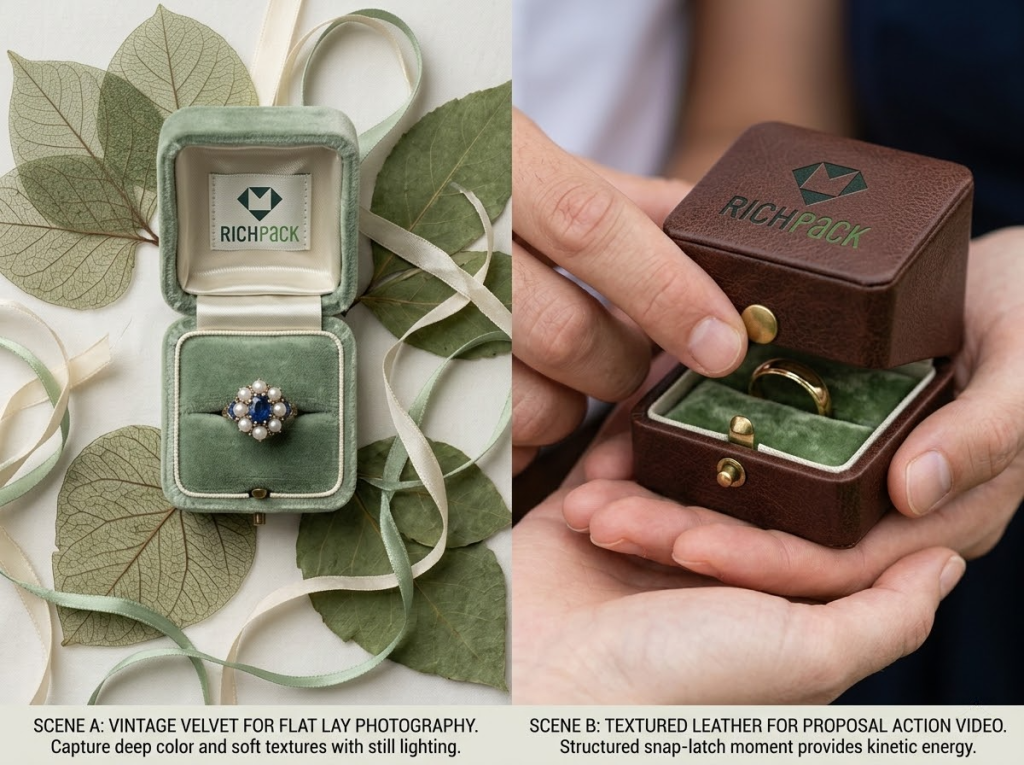
The inside color of the box changes how the ring looks in photos. Know this before you place a large order.
Photographers have clear needs when they use boxes as props. Knowing these helps you buy the right items for this market:
Proposal videos now drive a lot of sales. These videos have different needs than still photos.
A video shows a whole scene. The box must work well as it opens. You want to hear the click of the clasp. Magnetic boxes have no sound. Clear boxes ruin the surprise. Both make for a boring video.
Leather boxes with buttons are best for videos. Pick colors like tan or dark brown. These work in any season. The click sounds great on camera. The leather looks rich in the soft light of a proposal.
Most people think of proposals first. Yet, pros in our field know these boxes do more. They add value long after the “yes.”
A leather or velvet box lasts a long time. Couples keep them to remember their big day. They love custom stamps or dates inside the lid. Brands use these boxes to make a sale feel special. This helps customers take great photos for social media.
Use these boxes at trade shows. Put six or eight open boxes on your table. This looks better than a plain plastic tray. It shows you care about craft. Buyers see your quality in seconds.
Photographers love to collect these boxes. They keep ten or twelve on hand. This lets them match colors for any shoot. Brands can sell small sets to these pros. This is a good way to grow your sales.
These boxes work well for pop-up shops. They help set a classic mood. Use them in window displays or on counters. They act as small stands for your rings. You can use them again and again.
Couples buy new rings for big dates. Give them a fresh box for these items. It makes the buy feel like a real event. Use a new color to mark the new milestone. This builds strong brand loyalty.
These boxes hold more than just rings. People use them for small charms or old coins. Some even put photo drives inside. This is an easy way to sell to new groups. You just change what goes inside. The box stays the same, but the story changes.
Vintage style and green goals work well together. This mix matters to modern buyers. It also helps brands reach them in new ways.
Good packaging does not become waste. Cheap ring boxes end up in the trash fast. A sturdy vintage box lasts for years. People keep them to show off their jewelry. Some even pass them down. This long life makes them better for the earth.
Green choices will drive 30 percent of high-end jewelry sales by 2025. This comes from the 2025 Accio Business market report. A box meant to be kept is naturally green. You do not need a long story. The box tells the story for you.
Ask your maker for these parts to back up your claims:
Be clear when you talk to customers. Do not just say “eco-friendly.” Buyers and experts want real facts.
Use these clear points:
You can always say: “Built to keep, not to toss.” This works for any strong vintage box. It is a green claim based on how long the box lasts. It holds up if the quality is high.
Most Gen Z buyers pick brands that care for the earth. This is from the 2026 We report. For new brands, your box shows your values. Younger buyers look for craft over mass production. They want items that last. Your choice of box shows what your brand stands for. The box speaks louder than your ads.
Press your palm on the surface for 30 seconds. Real leather gets warm from your skin. Synthetic material stays cool. You can also look at the edges. Real leather shows fibers if you see a cut. Plastic or PU looks smooth and uniform. Good suppliers label their materials clearly for you.
Yes, you can ship them with the right care. Wrap each box in bubble wrap or foam first. Put them in small inner boxes. Use foam to stop any movement inside. Pack these small boxes into a strong outer carton. Add padding on all six sides. Ask for a packing list in writing. Good packing keeps damage under 1 percent.
Look for experts like RichPack or Annaigee. Many top makers are in Guangdong. They offer gold foil or stamped logos. You need your logo in a vector file, like AI or PDF. Most makers require 500 to 100 units for a custom order. This is a standard rule for custom work.
Always ask for a sample first. Most makers charge 15 to 50 dollars for one. They often take this cost off your big order later. Ask for a material piece and a finished box. Check both before you pay for a full run. This prevents errors in your final order.
It depends on your brand. Many buyers love the classic look. It feels more personal and handmade. This style works great for wedding brands. Modern boxes suit brands with a clean look. Pick the style that matches your jewelry. The right box helps you get more referrals.
A vintage ring box becomes part of a customer’s story. It stays in photos and homes for years. Choosing the right one matters. The material sets the mood. The maker ensures the quality. Together, they help your brand shine.
Request samples from a few makers first. Check the hinges and the lining. These small details are what people notice. Pick a style that fits your jewelry and your brand.
What material or style do you want for your next box? Share your questions in the comments. We want to help you find the best match.

Just submit your email to get exclusive offers (reply within 12 hours)





 PREV
PREV