

 PREV

10 Best Customizable Jewelry Packaging Solutions for Standout Branding
2024-10-10




An unboxing experience is the sequence a customer encounters from parcel arrival through opening, product reveal, removal, and any immediate care or support information. A useful design protects the item, makes it easy to open and remove, and gives each brand detail a clear purpose. More layers or more printing do not guarantee a better experience.
For jewelry brands comparing branded presentation options, custom jewelry boxes with your logo are one place to review box formats. The right choice still depends on the product, channel, and delivery conditions.
This guide shows how to define the customer and brand goal, separate shipping protection from presentation, choose useful details, write a repeatable packing sequence, and review a sample. It uses jewelry as a practical example while keeping the process useful for wider ecommerce packaging decisions.
Begin with what the recipient needs to do when the parcel arrives and what the brand wants that moment to communicate. Those choices determine how much packaging, information, and opening time the order needs.
A self-purchase and a gift can call for different presentation. So can a small everyday item and a high-consideration purchase. Compare the recipient, product, delivery setting, and brand position before choosing layers or finishes. Use customer questions, returns feedback, gift-order notes, or research to check assumptions. More packaging does not automatically feel more premium. Extra layers can add effort and material without helping the recipient.
Choose an observable outcome for the first interaction. A customer might recognize the brand when the parcel arrives, remove a necklace without pulling its chain, or find care guidance before wearing the piece. These are prompts, not promised outcomes. Select the action that matters most for the product and purchase, then use it to judge whether each package element has a clear job.
Map the route from delivery to first use: open the shipping layer, see the presentation, remove the product, find any care or support information, and use or gift the item. Change the order when the occasion or product calls for it. For example, a jewelry gift may need the presentation box to appear before an information card. A care note may need to be easy to find before the first wear. Check that each step is understandable and that the product can be lifted out without disturbing the next item.

Estimate the full cost per order, not just the box: packaging components, printing or finishing, assembly labor, storage, shipping weight and dimensions, and inventory or damage waste. Compare stock packaging with branded accents when standard formats can meet the product and delivery needs. Consider a custom structure when fit, presentation order, or gifting requirements cannot be handled well by an available format. Validate the choice with a representative packed sample and the actual fulfillment route. A heavier or more elaborate package does not automatically earn its cost.
Give the design team the information needed to compare a structure with its job. Include the product and dimensions, quantity and variations, sales and shipping channels, destination markets, self-purchase or gifting context, brand assets and intended customer action, budget range and cost variables, opening, removal, and return requirements, brand-supplied languages and required copy, sample-review criteria, and the owner and version date. A team offering packaging design support can use that brief to discuss design and sample options. Keep criteria observable, such as fit, legibility, ease of opening, and product removal.
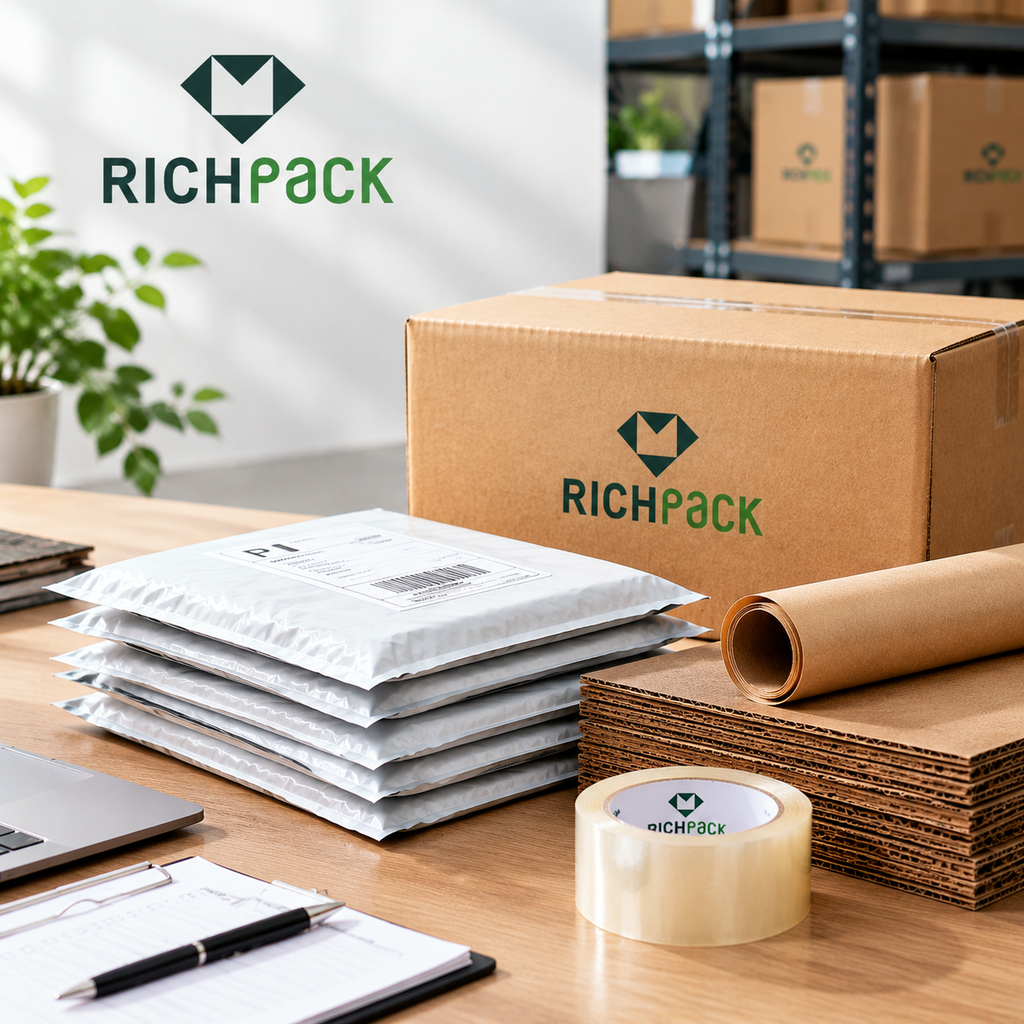
Treat the shipping layer, presentation box, insert, and card as coordinated components with separate jobs. The outer package handles delivery. The box stages the reveal, the insert positions the product, and the card carries useful information. Choose them against one brief instead of adding layers by default.
| Component | Job | When It Helps | What to Check |
| Shipping layer | Handles delivery | When the presentation box is not verified for shipping | Fit, closure, and movement |
| Presentation box | Presents product and brand | For an inner reveal or gift | Fit, opening direction, and handling |
| Product-holding insert | Positions the item | When it could shift, tangle, or be hard to lift | Contact points, grip access, orientation, and lid clearance |
| Printed card | Carries product, care, brand, or support information | When guidance is useful after opening | Legibility, accuracy, placement, and digital availability |
The outer shipping package and cushioning handle delivery, while the presentation box frames the reveal. Do not assume a branded jewelry box is suitable for shipping without checking the complete package for its route and handling. Check fit, closure, and movement. For more context, see jewelry shipping packaging.
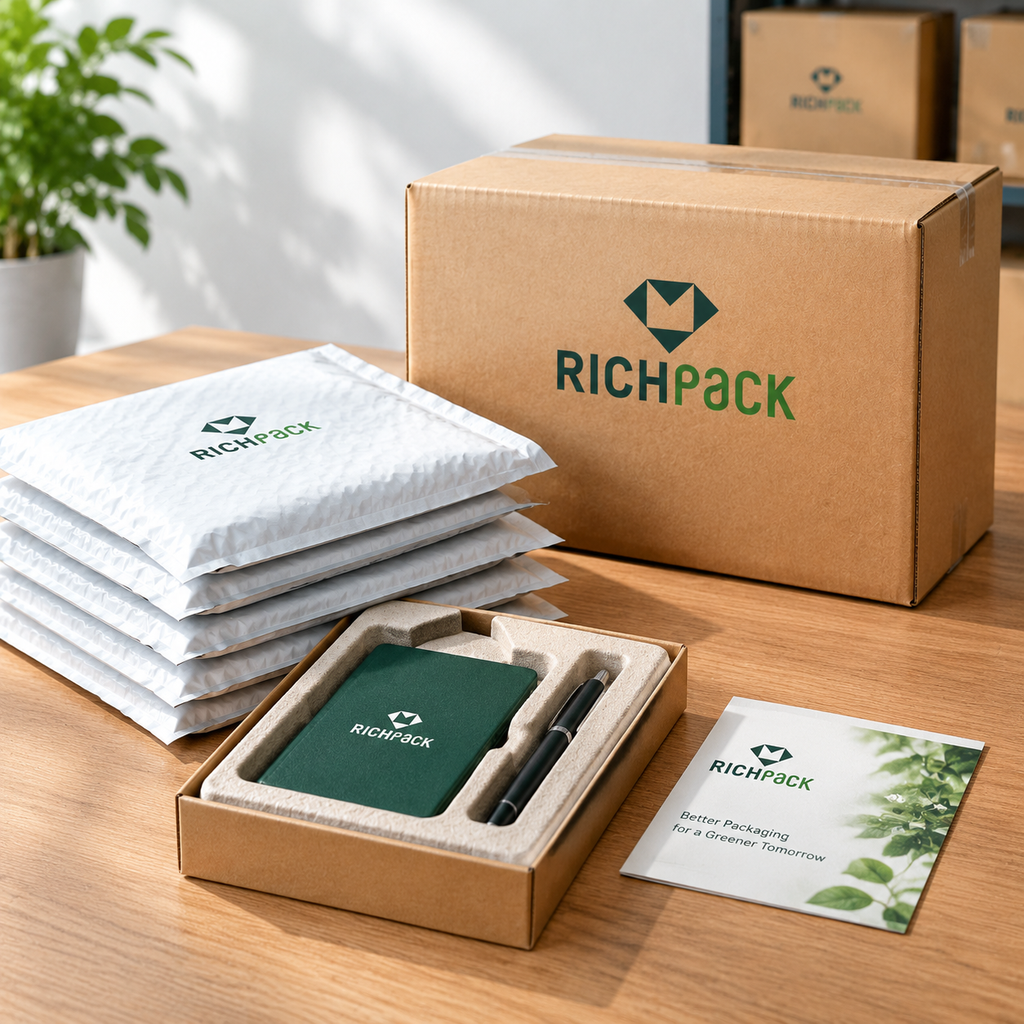
An in-stock box with a few brand elements can simplify selection and assembly. Consider a custom presentation box when available stock cannot meet the product fit, opening sequence, or visual identity. Compare both against product dimensions, sales channel, order volume, brand assets, and budget. Explore custom ring boxes as one jewelry format. The page does not establish fit for a particular product.
An insert positions the product, while a printed card communicates. Record product dimensions and orientation, then check contact points, movement, finger access, and lid clearance on a sample. Place the card where it can be read without hiding the item or impeding removal. See custom jewelry box inserts for a component reference. Validate fit against the actual product and box.
For a hypothetical necklace example, arrange a chain in a dedicated insert and check its path, pendant contact, movement, and whether it can be lifted without pulling the chain or catching a clasp. For a hypothetical earring example, check that each piece has a defined place and can be grasped without pressure on a visible surface. These are sample-review questions, not test results.

Review the package from the customer’s position: which edge opens first, where fingers can grip, whether a cutting tool seems necessary, and whether it can be closed again for storage or a return. Easy opening still has to serve the package’s protective purpose. Resistance alone does not make an opening feel premium. Ask someone outside the design process to try it and note pauses or requests for help.
Choose color, texture, printing, and finishes for each surface’s role. Under consistent lighting, compare color, sheen, printed details, and touch on an assembled sample. Ask for information about the specific material and finish. Appearance alone does not establish environmental or performance attributes. See packaging materials and finishes for listed options, and confirm project requirements separately.
Remove layers that do not protect, present, or inform. Identify separable components, then give disposal guidance only after checking the material combination and local options. Consider reuse when the box remains useful after opening. Do not imply that every material is recyclable, reusable, or accepted everywhere.
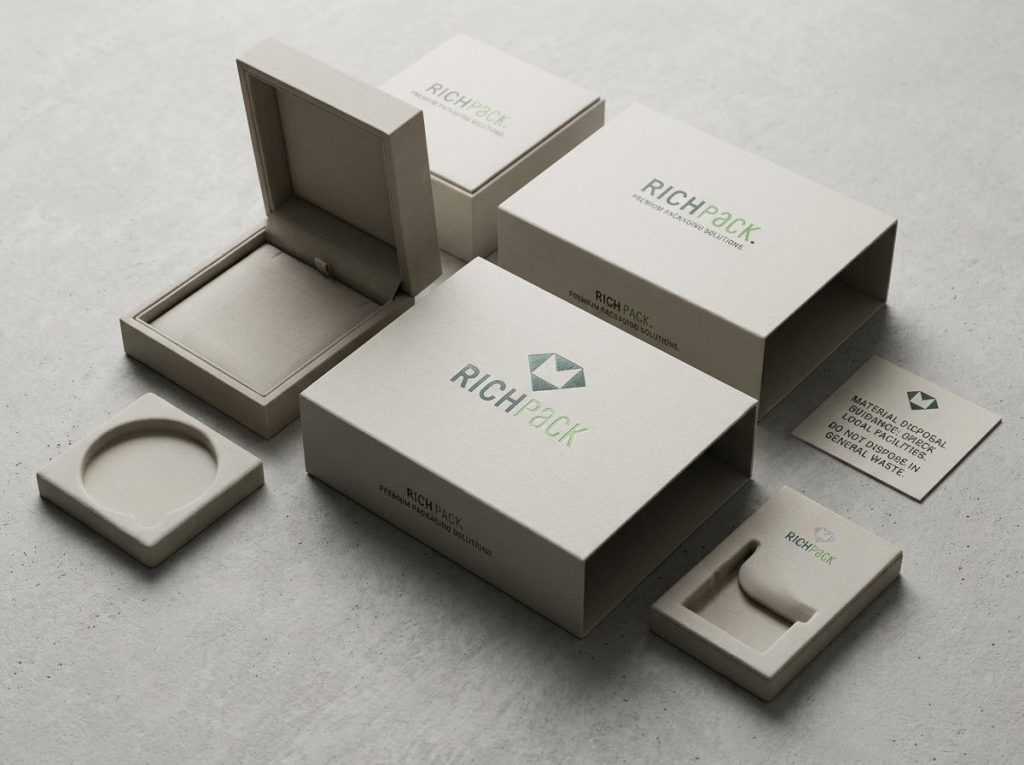
Treat each printed or visible detail as a customer touchpoint with a job: identify the brand, thank the customer, answer a product question, or offer an optional next step. Choose a few across opening and first use. Extra decoration can add steps or obscure information without making the interaction more personal.
Choose a compact visual system and repeat it at moments customers notice, such as the box exterior, inside lid, or card. A logo need not appear on every surface. Check its size, contrast, and placement on the selected material at actual scale, then preserve space for the product and other information.
For a public example, see our EFFY packaging design case, which describes black, white, and gray, metallic tones, and Jaguar-inspired texture. Connect a visual detail to a recognizable brand element, then place it where it matters in the opening sequence.
Tissue or a seal can protect a presentation, hold a layer in place, separate items, or create a deliberate reveal. Extra layers also add space, assembly time, and customer steps. Compare a simple and a layered version with someone unfamiliar. Note where they pause, need explanation, or struggle to reach the product. Keep a seal if it clarifies opening or holds the presentation in place. Remove it if it adds effort without a clear job. See personalize a jewelry box for related personalization ideas.
A thank-you card can identify the brand, acknowledge the order, and show where to get support. Keep it accurate and legible. Use a recipient’s name only if the order data and fulfillment process place it reliably. If the message comes from a printed template, present it as a brand note, not a handwritten message. For a consistent printed format, see custom thank-you cards. Keep the wording on-brand and within the available space.
Care information must match the specific product, materials, and finish. Ask the responsible product team to approve instructions before printing because generic cleaning directions may be wrong for a particular piece. Keep essential support and return information easy to find. If a QR code leads to longer instructions, state its destination in plain language and verify that it works on a phone. The narrower unboxing for personalized heart bracelets example shows where product-specific information can sit in jewelry packaging. The seller must supply the actual guidance.
An extra item is optional. Add one only if it is relevant to the order and fits without interfering with product protection or removal. A product sample may suit a related purchase if it can be selected and packed accurately. Consider its cost, storage, picking, and assembly as well as package space. A generic extra can create clutter or complicate fulfillment without answering a customer need. Clear support information may be more useful.
Keep sharing optional. A short prompt and a clearly labeled destination give the customer a defined next step. Place the invitation after product and support information, and avoid implying that a post earns a reward unless terms are real and approved. A public post does not automatically permit a brand to reuse it. Request permission before featuring customer content elsewhere. This leaves control with the customer.
Consistency at higher order volume requires a current packing guide that identifies the product, approved packaging version, assembly order, checks, and exception owner. Assign a revision date and remove outdated copies so packers can identify the instructions to follow.
Write the packing sequence in the order a person performs it:
Place the guide at the packing station or in fulfillment instructions. Show the sequence and finished pack, with a clear exception path. For jewelry, an illustration could mark where to check for a care card. This is a template, not a description of Richpkg’s current process.
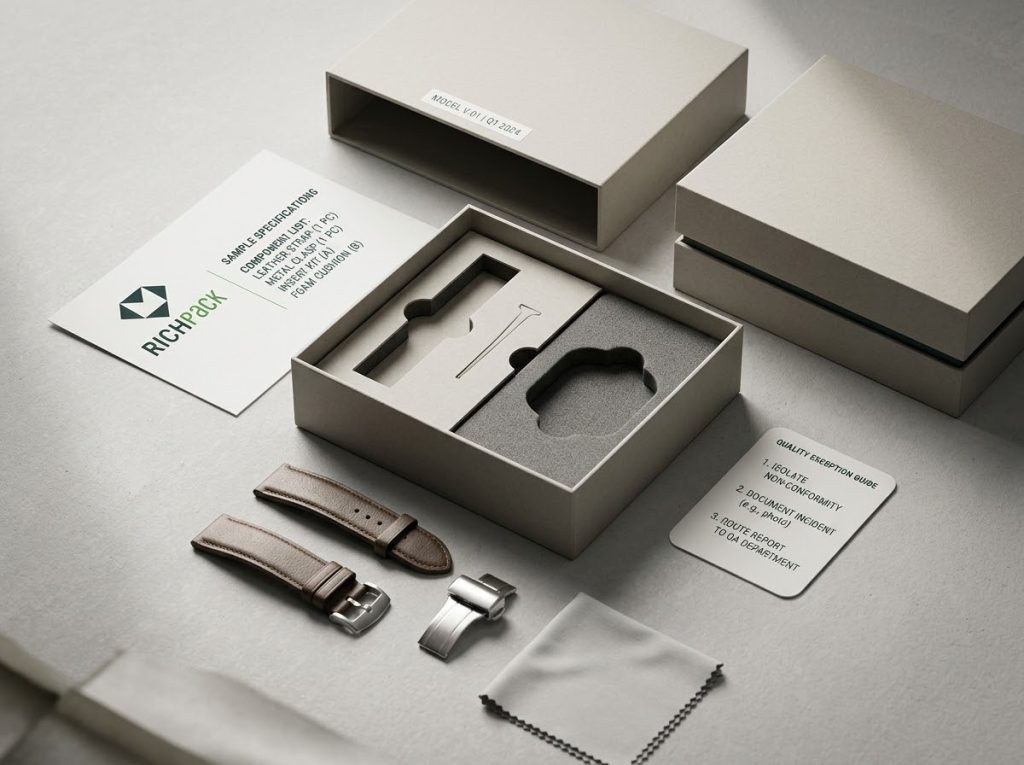
To evaluate effort, time comparable orders across packers or shifts. Record the packaging version, training status, routine assembly time, questions, missing items, and rework. Use the same timing method each time, and retain individual observations before calculating an average so variation stays visible. Without a baseline, do not claim a new kit is faster. Use the record to clarify a step, then check the revision on another order.
Use a register linking each product or SKU (stock keeping unit) to its approved packaging version, stock status, and allowed substitutes, with a named owner. Before approving a swap, check product fit, presentation, protection needs, assembly, and included customer information. Record who approved each substitute and when, so a temporary exception does not become an undocumented default. Similar size alone does not establish compatibility. Mark unresolved items for review.
Send the partner the current guide, component list, finished-pack reference, inspection points, and shortage or damage process. Name who can approve deviations. Ask the partner to confirm the instructions work within its process and agree how revisions take effect. Verify its capabilities rather than assuming a service is supported.
Make approved return or support instructions easy to find, and keep the package usable for retaining or repacking the item. Do not imply a presentation box is ready for return shipping. Check that the help path remains visible after product removal and that wording matches current policy. Ask an unfamiliar reviewer to follow the steps. Clearer instructions are not evidence of fewer returns or support contacts.
A sample review checks delivery condition, opening, product removal, and information. Set checks before packing, then record observations, changes, and the reviewed version. Do not approve an untested design.
| Observation | How to Record It | What a Failure Suggests | Next Action |
| Transit protection | Route, version, condition, product movement | Pack or fit may not suit the route | Review the complete pack and choose a suitable test |
| Opening and removal | Tools, pauses, snags, drops, product contact | Opening cues, grip, or insert fit may need review | Change one feature and review another sample |
| Presentation after delivery | Box position, finish, residue, card visibility | Pack may shift or a detail may not hold | Review fit, sequence, and components |
| Pack effort | Assembly steps, missing parts, questions, rework | Instructions or component preparation may be unclear | Update the packing guide and version |
| Cost per delivered order | Component, assembly, storage, attributable shipping, and replacement costs | A detail may add cost without serving its stated purpose | Compare options against the original brief |
Review the complete packed product. A desk sample does not establish how it will perform on a specific route. Choose checks for the product and delivery conditions, record the method and results, and consult a qualified testing provider when needed. Richpkg’s quality review process describes its published approach, not a transit test for a particular package.
Ask someone outside the design process to open it using visible cues. Record tool use, pauses, snags, and product contact. For jewelry, note whether it lifts without pulling a chain or pressing on a visible surface. These observations point to features for review. They do not establish a market-wide preference.
After the selected handling check, compare the logo, print, tissue, card, and product position with the approved reference. Record residue, shifted inserts, the package version, and review conditions for comparison with a revised sample.
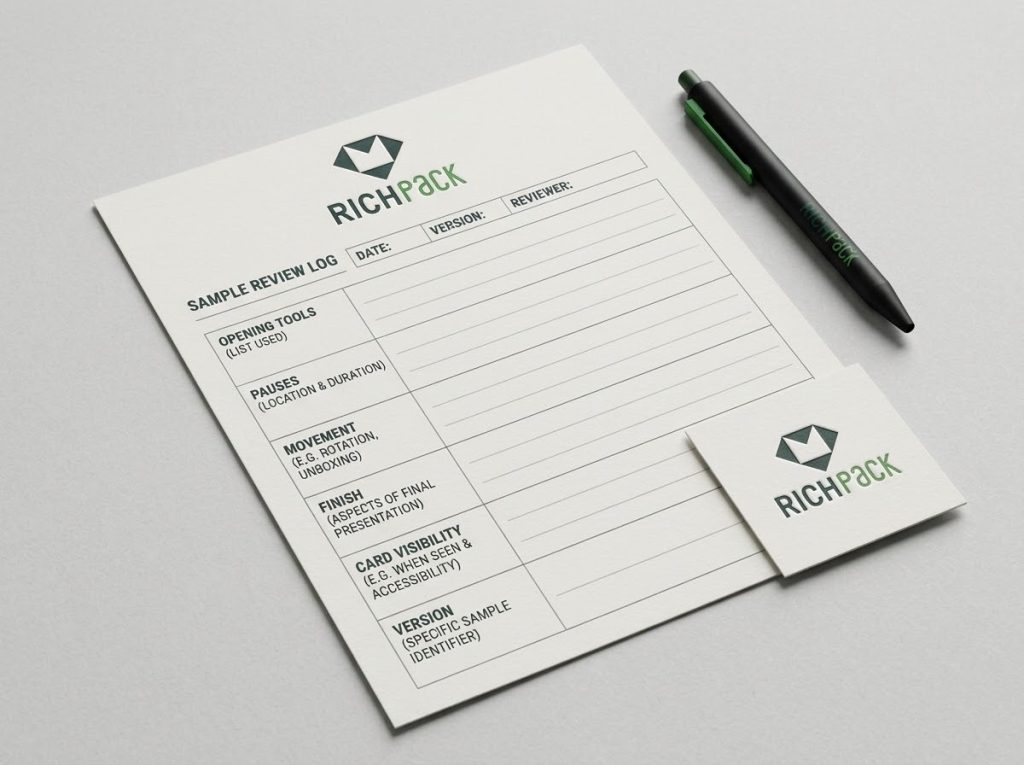
Ask specific questions: could the customer find the opening, remove the product, and locate care information? Record preferences separately from snags, unclear instructions, or damage. Feedback can guide revision, but a small set does not represent the market.
In a 2023 discussion on Reddit’s r/LinusTechTips and a 2021 thread in r/fragrance, participants differed on elaborate packaging, extra material, opening effort, and whether a box could be reused. These self-selected comments do not represent jewelry buyers, but they make protection, easy opening, and repacking useful points to test.
Compare options using the same order and delivery context. Add the packaging components, printing or finishing, assembly labor, storage, shipping cost attributable to package size or weight, and replacement costs tied to packaging issues. Divide by the number of delivered orders in the reviewed period. Do not count the same shipping or replacement cost twice, and do not call a design more profitable unless actual records support that conclusion. If a cost is unknown, leave it blank and identify who can provide it.
Set a baseline before changing the package. Track packaging complaints, opening problems, damage reports, support contacts, optional sharing, and relevant sales or inquiries over a defined period. Note concurrent changes such as promotions or shipping updates. A sales or repeat-purchase change alone does not prove packaging caused it.
Log product and package versions, route, date, reviewer, and observations. “The chain caught at the slot” is an observation. “Revise the slot” is a proposed fix. Mark the issue resolved only after reviewing the revised sample.
It is the planned experience of receiving and opening a package, including the product reveal and any care or support information the customer needs immediately. The sequence may include an outer shipping package, presentation box, insert, or card, but not every order needs each part.
In this guide, unboxing focuses on the planned reveal and first presentation. Unpacking describes removing items from a container, whether or not the sequence is designed as a brand moment. The terms overlap in everyday use, so explain the specific customer actions rather than relying on the word alone.
Start with one problem the customer needs to solve: clear brand recognition, easy product removal, a useful care note, or gift-ready presentation. Reuse a fitting stock box and add one useful branded detail before adding more components. Compare sample cost, labor, product fit, and delivery conditions against a written brief.
Jewelry can be small and may have chains, clasps, polished surfaces, or delicate attachments. Depending on the piece, it can move, tangle, or be hard to grasp inside an insert. Check fit, contact points, and finger access with the actual item. Keep care directions specific to the product materials, and do not assume every jewelry order needs a luxury box.
It is useful when opening affects product protection, presentation, care information, or the transition from delivery to first use. Whether a brand should add custom layers depends on its product, customers, and shipping conditions. Simple packaging may be the better choice when added materials do not solve a customer problem.
Packaging may support a positive impression, but it cannot guarantee loyalty. Product quality, service, expectations, delivery, and other factors also shape repeat purchases. Measure packaging-related feedback, opening friction, damage reports, and repeat purchases separately. Compare similar orders and note other changes before drawing conclusions.
Design the opening around a customer task, then give each layer a purpose: protect, present, position, explain, or support. Review the packed product from delivery through removal, compare it with the brief, and record what needs to change. Keep components that do useful work and confirm material, cost, and delivery assumptions with current project records. When planning jewelry packaging, share your product, channel, brand assets, budget range, quantity, and timing with Richpkg through share your packaging brief with Richpkg.


2024-10-10

2024-11-13

2024-12-02
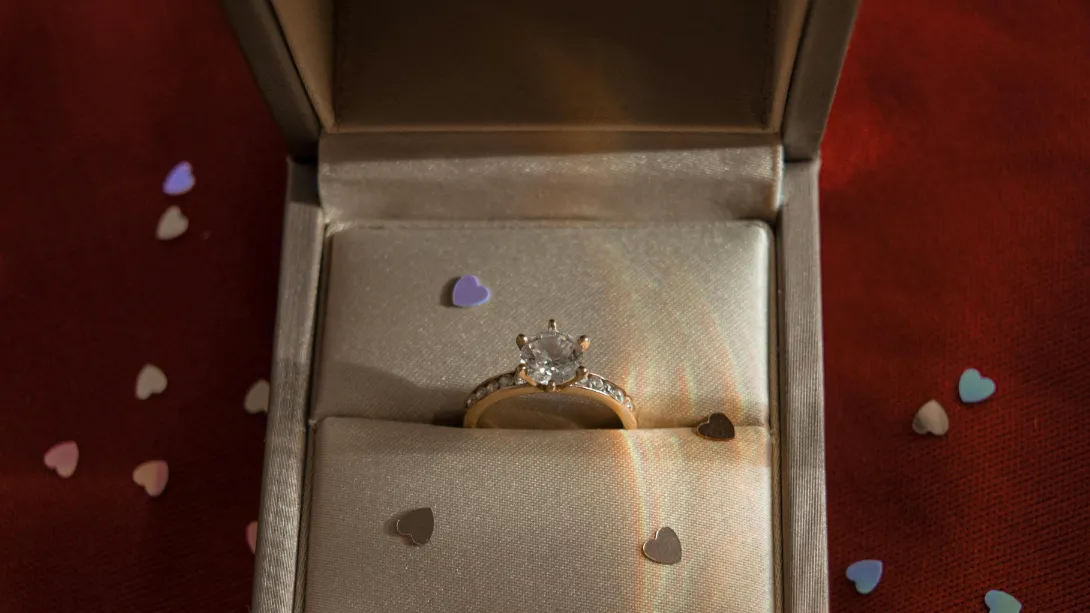
Custom jewelry packaging isn’t just making your jewelry look good. It focuses on creating the perfect mix of materials, designs, and techniques that truly represent your brand and meet your customers’ expectations. Understanding the key terms and techniques in custom packaging is crucial for any jewelry seller or brand manager. It helps you design better packaging and… Continue reading Unboxing Delight: Crafting Memorable Experiences That Build Your Brand
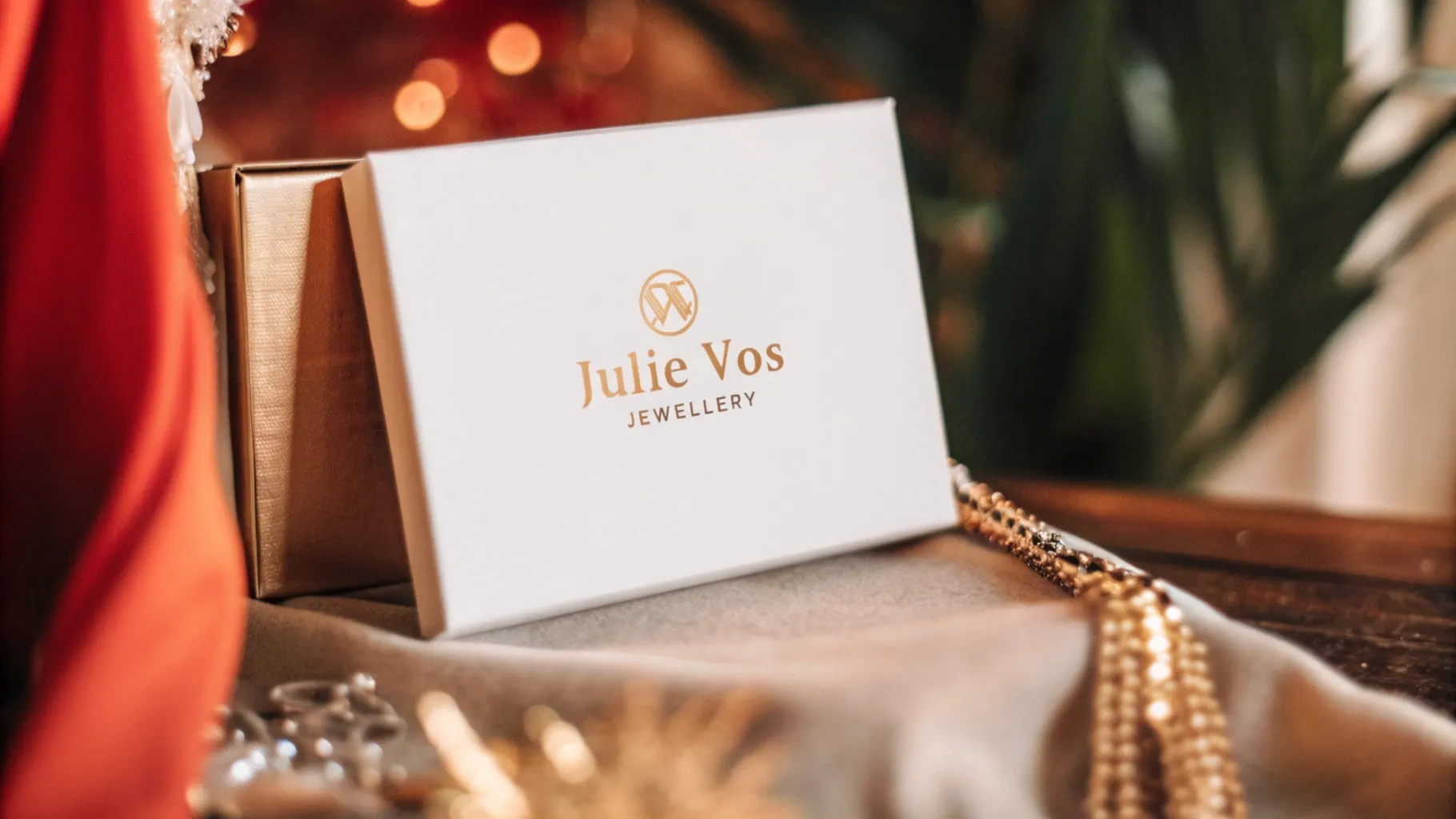
Richpack · From Design to Production The Whole Process of Julie Vos Jewellery Packaging The global jewellery market is experiencing remarkable growth. It is estimated that the market size will reach 35.326 billion US dollars by 2030, with a compound annual growth rate of 4.6%. Despite the fierce competition in the market, Julie Vos has… Continue reading Unboxing Delight: Crafting Memorable Experiences That Build Your Brand

With sustainability becoming a global priority, industries across the board are embracing greener practices, and jewelry packaging is no exception. According to a report by Future Market Insights, the global market for paperboard jewelry boxes—a popular eco-friendly choice, is growing from $84.5 million in 2024 to $118.6 million by 2034. The increase has shown a… Continue reading Unboxing Delight: Crafting Memorable Experiences That Build Your Brand
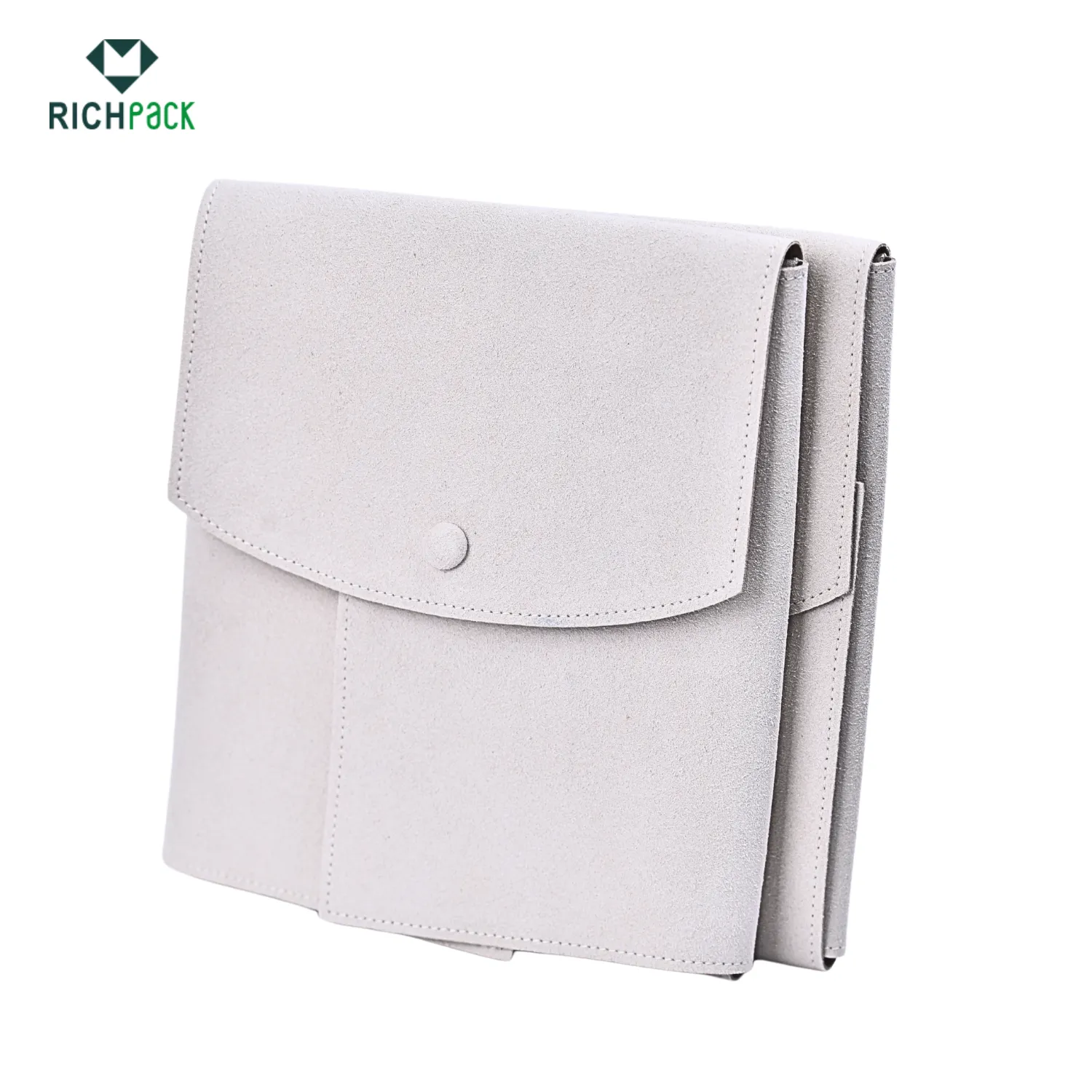
Convenient Roll-Up Travel Jewelry Cases | Space-Efficient and Protective Storage for Jewelers Needing Compact Solutions for On-the-Go Jewelry Storage
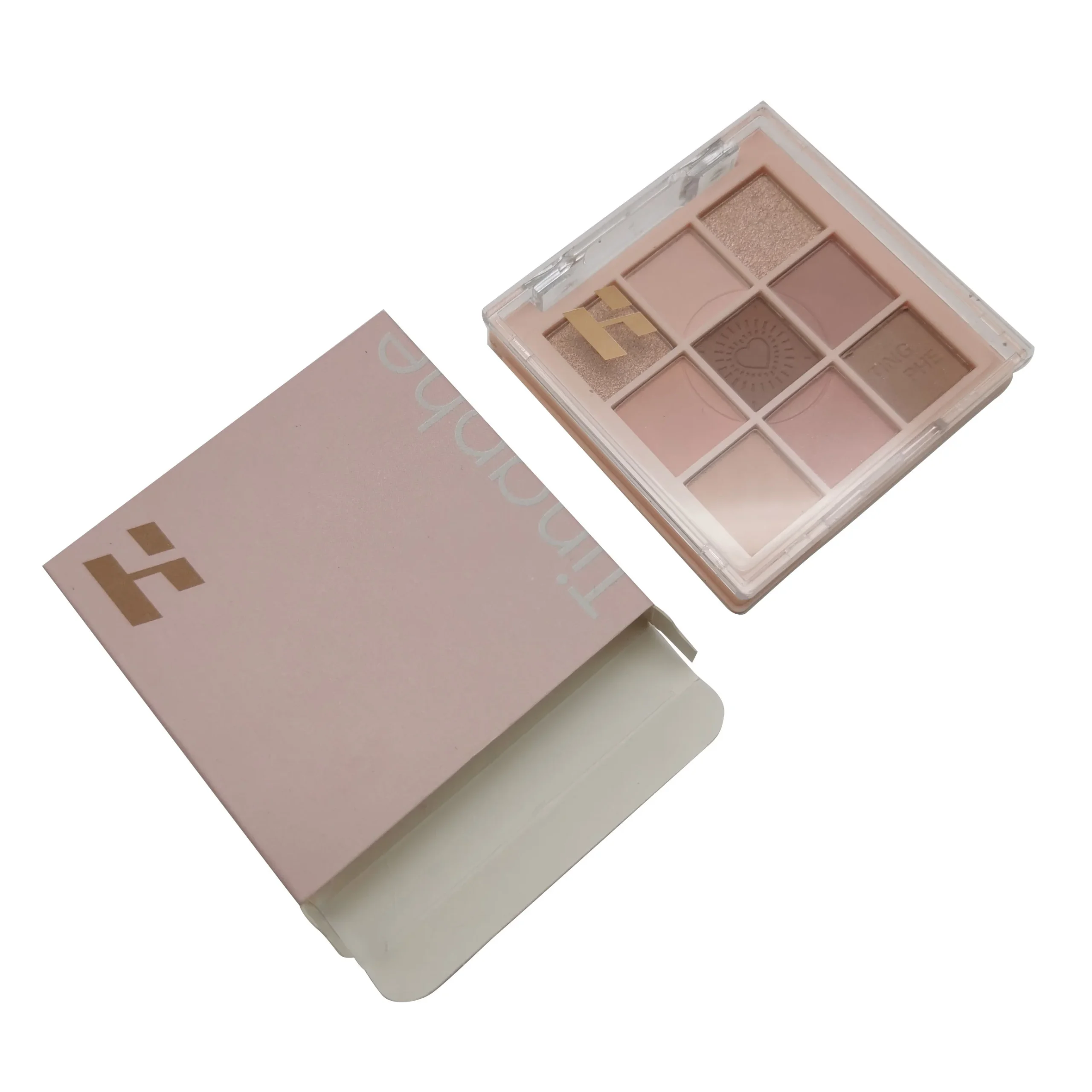
Custom Cardboard Makeup Eyeshadow Packaging Box Paper Cosmetic Box

Custom Jewelry Box Inserts for Organized Storage – Premium Jewelry Box Dividers and Ring Box Inserts from Richpack to Elevate Your Display Solutions
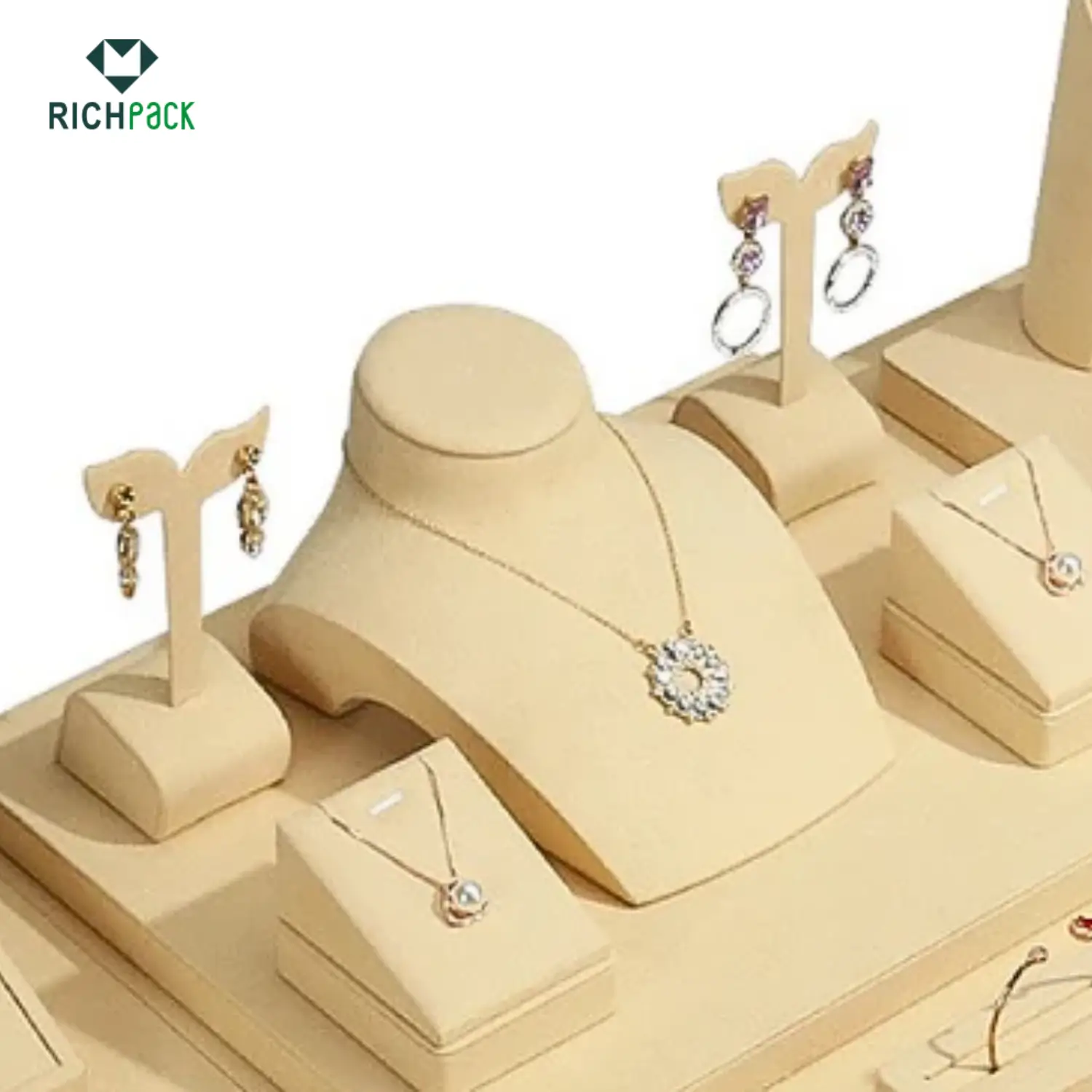
Reliable Jewelry Store Supplies for Retail Display and Packaging | Trusted Wholesale Jewelry Supply Co for Custom Solutions
View More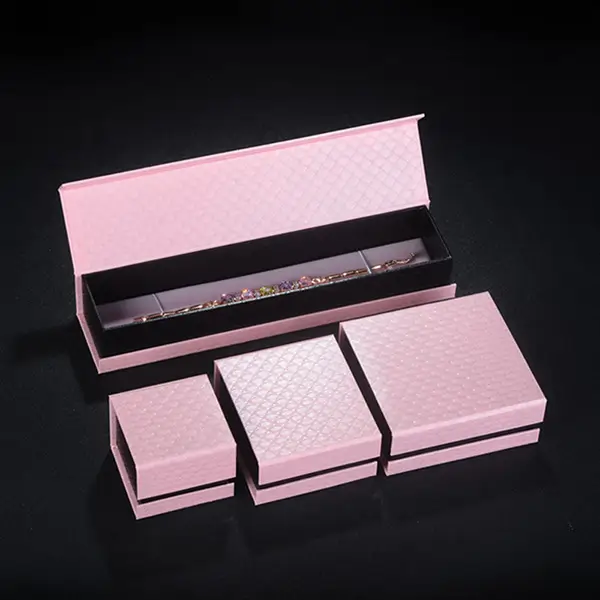
Affordable Custom Jewelry Boxes for Independent Jewelers | Budget-Friendly Solutions with High-Quality Designs
View More
Custom Velvet Jewelry Boxes with Magnetic Closure and Logo | Secure and Stylish Packaging Tailored Solutions for Jewelry Brands
View More

