

 PREV
PREV
2024 Ranking the 10 Best Sustainable Jewelry Packaging Brands
2024-11-26
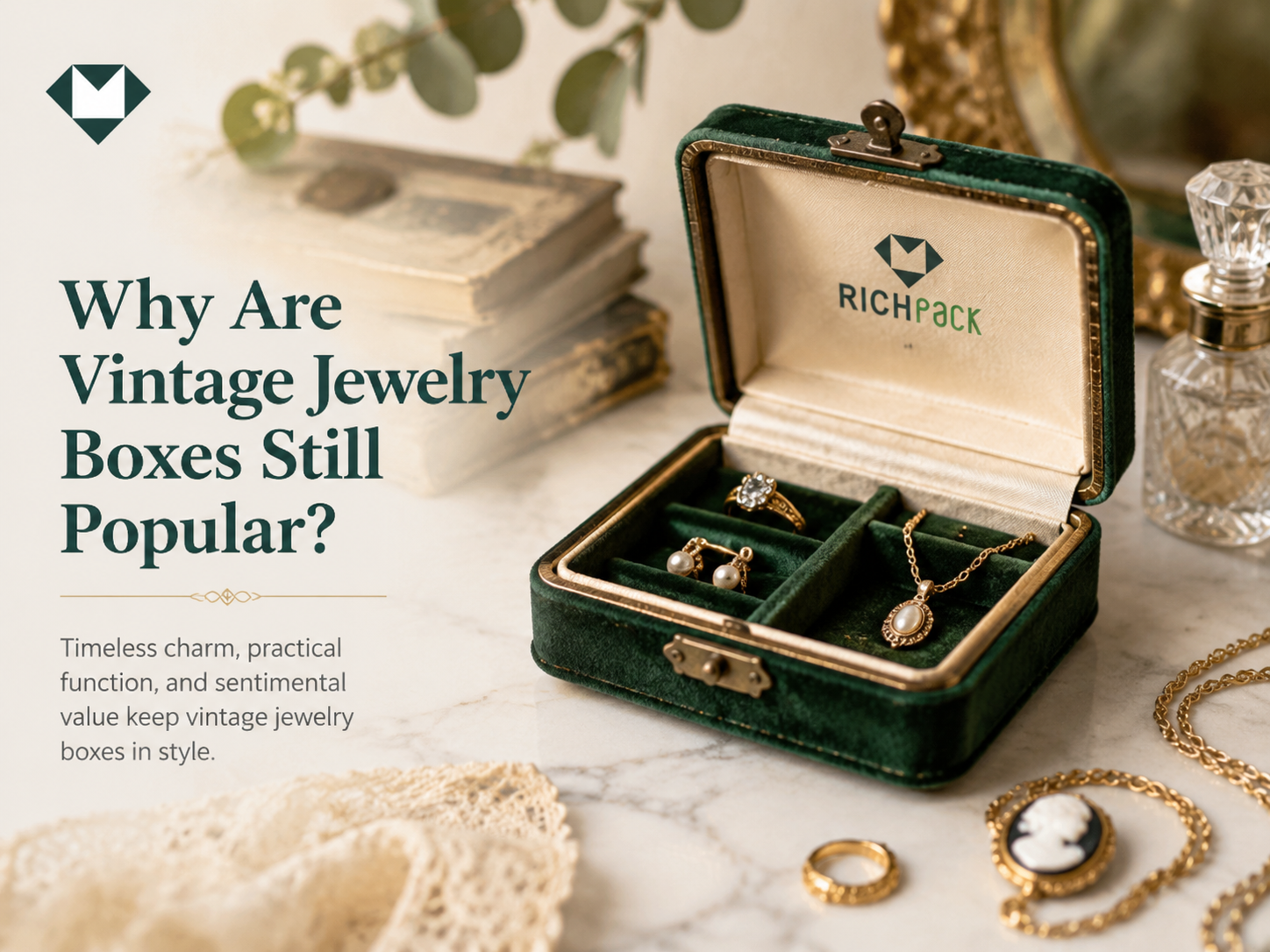



A jewelry box old enough to show hand wear can lift the perceived value of the jewelry before the lid is fully open. The hinge has weight. The lining has a hush. The box casts off the dull image of ordinary packaging and turns a small product moment into something that feels kept, not tossed.
After reading this guide, you will get a practical read on what vintage style promises, where it can fail, which buyers it fits, and how to turn that feeling into custom jewelry packaging with real structure behind it. The focus is not nostalgia for its own sake. The focus is brand premium, insert safety, material choices, print finishing, and a sourcing path your team can hand to a supplier.
If your brand is planning a heritage launch, anniversary collection, bridal capsule, boutique display, or high-touch gift program, start with custom jewelry boxes that feel worth keeping after the jewelry leaves the counter.
Vintage jewelry boxes remain popular because they combine beauty, storage, protection, memory, and rarity in one small object. A strong old box does more than hold jewelry. It gives the piece a setting, a story, and a reason to stay visible on a dresser instead of disappearing into a drawer.
For jewelry brands, that popularity has a hard packaging lesson behind it. The box has to feel emotional while still passing the boring tests: cavity fit, hinge alignment, liner adhesion, carton protection, and repeatable color.
They are popular because they feel personal. A new plain box often feels like a shipping step. A vintage box feels like part of the gift.
That difference matters for brands. When packaging feels like an object, customers keep it. When customers keep it, the brand stays in the room longer.
Old boxes feel valuable when materials, scale, sound, and wear agree with each other. Wood, velvet, satin, brass hinges, bevels, fitted trays, and soft closures all tell the hand that care went into the object.
The value is not always financial. Sometimes the value is trust. The buyer feels that the jewelry inside was handled with the same care as the box.
Study the proportion first. Many old boxes are small, tight, and fitted to one purpose. They do not waste space.
Then study the touch points: the lid, the lining, the insert, the pull tab, the hinge, the reveal angle, and the place where a logo or maker mark appears. These details shape the first five seconds of the unboxing.
Avoid fake age. Distressed printing, heavy brown color, and random antique patterns can look forced when the jewelry is modern.
Avoid weak protection, too. The outside may feel romantic, but the insert still has to hold prongs, chains, pearls, and plated finishes without scratching, snagging, or trapping moisture.
Custom packaging turns the vintage lesson into a controlled brand system. You can keep the mood while controlling dimensions, inserts, print color, material compliance, logo position, batch consistency, and delivery timing.
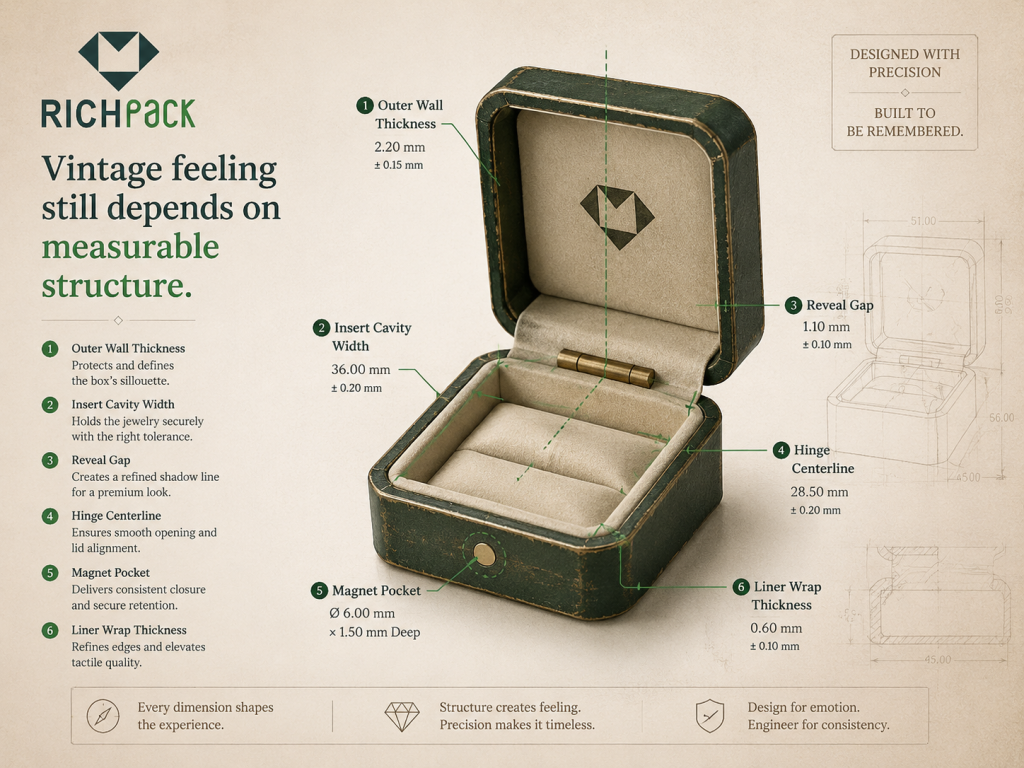
Use the numbers as planning targets, not universal specs. A ring slot often needs a finished grip tolerance of 0.5 to 1.0 mm after lining.
A drawer box may need a reveal gap of 1.5 to 2.5 mm so it slides without rattling. Small rigid jewelry boxes often start with 1000 gsm to 1200 gsm grayboard, but the finished wall thickness matters more than the GSM line on a quote.
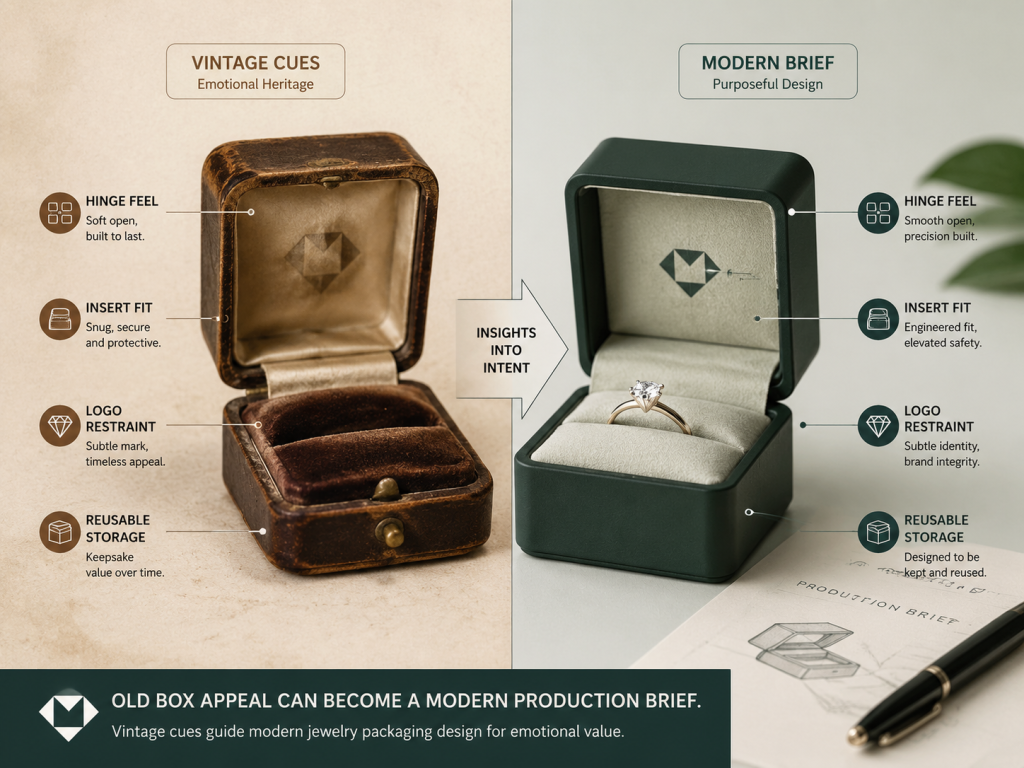
The following table compares the old box appeal with the modern packaging decision, which it should guide. It helps teams move from admiration to a real brief.
| Vintage appeal | Why buyers respond | Modern packaging move | RichPack planning note |
| Worn wood | Signals permanence | Use wood veneer or rigid paperboard with a warm finish | Confirm weight, shipping cost, and surface durability |
| Velvet lining | Signals softness and care | Use a tested flocking, microfiber, or velvet insert | Test fiber shedding, dye transfer, and glue odor |
| Small fitted shape | Feels made for one jewel | Match insert geometry to SKU family | Set cavity tolerance, reveal gap, and pull-tab clearance |
| Quiet maker mark | Feels authentic | Use restrained foil, blind debossing, or an inner lid mark | Keep the jewelry as the hero |
| Reusable storage | Keeps brand visible | Design for home use after purchase | Add removable trays or drawer-friendly proportions |
People keep old jewelry boxes because the best ones feel like proof of care. They are small, but they carry memory, touch, and status. A plain pouch can protect a chain for a few days. A box can become part of the owner’s home.
Nostalgia works because jewelry already carries life events. Engagements, anniversaries, first sales, inheritance pieces, graduation gifts, and private milestones need a container that feels equal to the moment.
An old vintage jewelry box does this without explaining itself. The patina says the object has lived. The buyer fills in the rest.
Craftsmanship matters because the hand notices before the eye finishes judging. A lid that lands softly, a tray that does not wobble, and a lining that holds its shape all create trust.
Cheap packaging can copy a vintage color. It cannot copy the feel of a good hinge, a tight corner, or a fitted insert unless the structure is engineered with care.
Age signals trust when the box has survived use. A box with solid joints and an intact lining tells the owner that someone made it to last.
For new brands, this is the deeper lesson. Customers do not only want something pretty on arrival. They want packaging that does not collapse, stain, shed, or feel disposable after one opening.
Small marks can make a box feel real. A slight darkening near the hinge or a soft edge on the lid can make the object feel handled, not mass printed.
But imperfection must be controlled in the new packaging. A deliberate warm paper texture is good. Random glue marks, crooked foil, loose fabric, and uneven seams are not charming. They are defects.
Jewelry storage is private. The box sits near the bed, on a vanity, in a drawer, or inside a safe. That closeness makes the container feel more intimate than most product packaging.
When a customer keeps a box for storage, the brand earns a longer relationship. The box becomes a daily reminder, even when the customer is not wearing the piece.
A strong box changes the timing of the gift. The recipient starts feeling the value before the jewelry appears.
That is why vintage ring boxes are still collected, photographed, and used in proposals. The box turns the reveal into a scene. Brands can use wholesale custom vintage ring boxes to build that scene into a repeatable product experience.
Old boxes are useful teachers because they show what people keep without being told to keep it. They also show what fails: dusty linings, broken hinges, sour odor, cracked lacquer, and inserts that no longer grip the piece.
The sample room version is blunt: romance dies when the cavity is loose.
An old box promises that the jewelry deserves its own place. The promise is simple: this piece should not be thrown into a pile.
Modern brands can make the same promise with fitted geometry. A necklace channel, ring slot, earring pad, or bracelet bridge tells the customer exactly where the jewelry belongs.
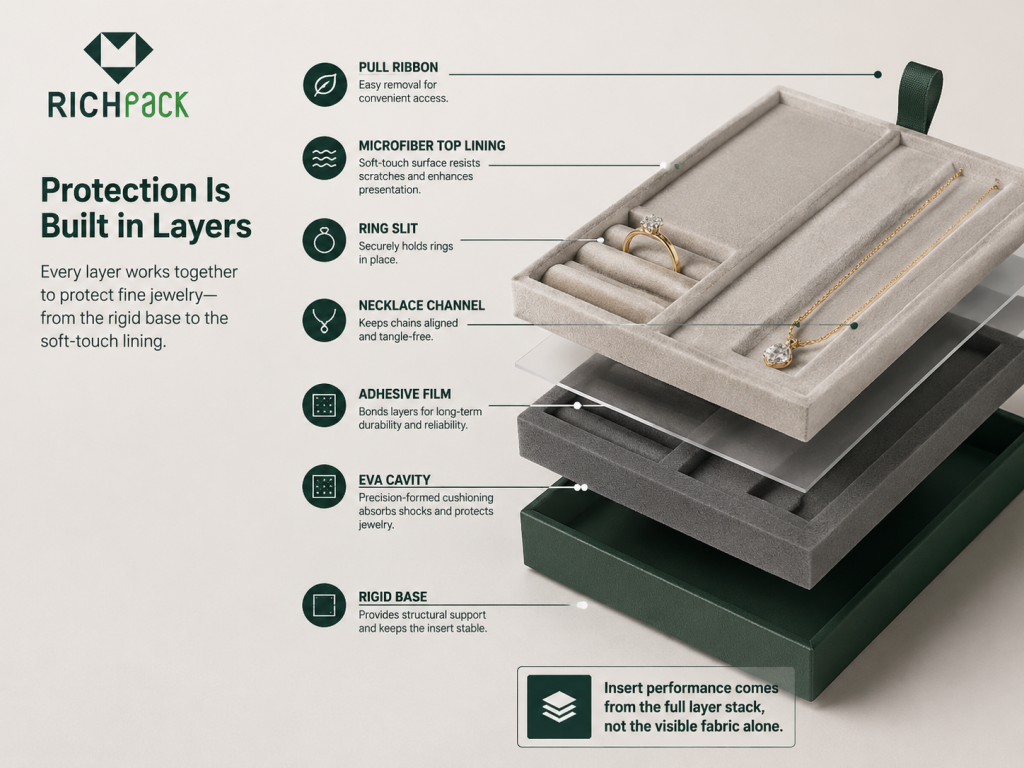
For a premium ring box, ask for the insert stack in layers: base board or molded tray, EVA or foam core, top lining, adhesive system, slit angle, and final compression. If the supplier cannot explain the stack, the sample may look fine and still fail after shipment.
Materials speak fast. Wood suggests permanence, velvet suggests softness, and satin suggests ceremony. Leather suggests formality. Paperboard can suggest modern luxury when it has the right density, finish, and edge quality.
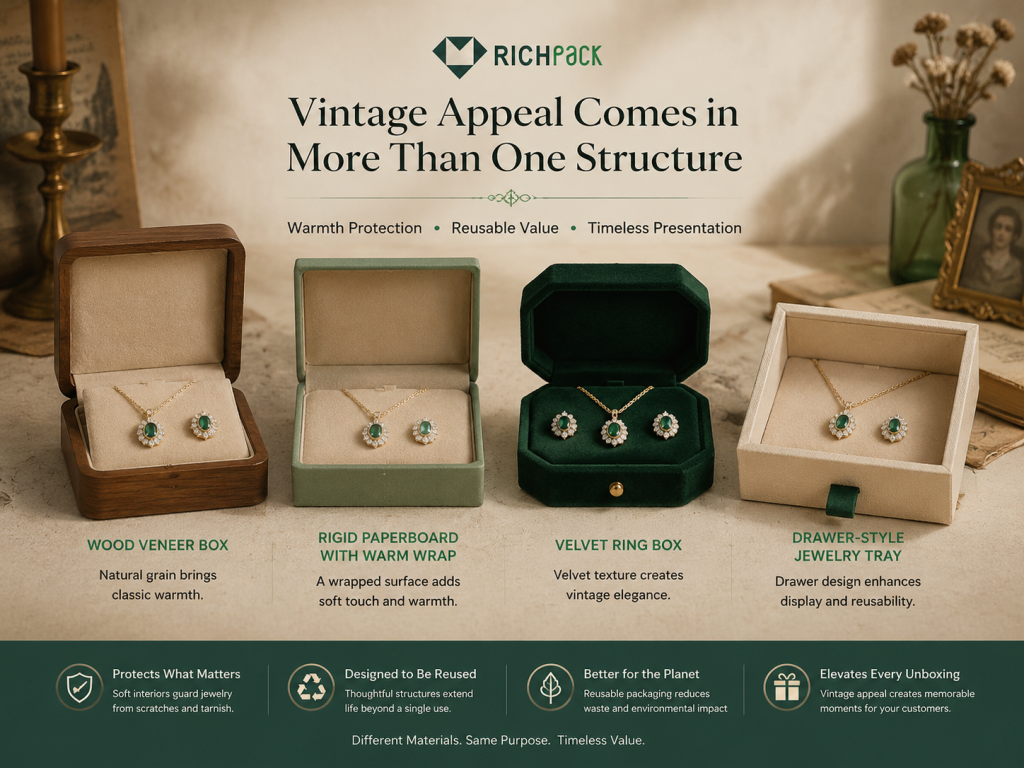
For an old wood jewelry box look, brands should not assume solid wood is always the best answer. A lighter engineered structure with wood veneer, paper wrap, or printed grain may ship better and still deliver warmth.
The material should lead to a process choice. Wood veneer needs edge control and varnish consistency. Wrapped rigid board needs tight corner forming, wrap bleed, and clean glue zones. Molded pulp needs tooling definition, surface smoothness, and a liner strategy if the jewelry has polished metal.
The insert is where romance meets risk. If the insert is wrong, the jewelry moves, scratches, tangles, or looks smaller than it is.
Use custom jewelry box inserts when the product mix includes chains, rings, studs, pearls, watches, or sets. The old box lesson is not “use velvet everywhere.” The real lesson is “give every piece a safe place.”
For higher value pieces, ask whether the tray is die-cut EVA, CNC-cut foam, molded pulp, flocked blister, paperboard card, or a hybrid tray with a wrapped top sheet. EVA can hold a crisp cavity. Molded pulp supports plastic-free programs, but it needs enough draft angle and surface refinement. Microfiber or suede-touch lining can reduce abrasion, but dyed fabric still needs rub and transfer checks.
Color is one reason old boxes are easy to remember. Deep green, oxblood, navy, ivory, black, rose, walnut, and aged gold can make a small box feel like a keepsake.
New brands should build a tight color system. Pick one dominant box color, one lining color, one metal accent, and one logo finish. Too many vintage cues will make the design feel like a costume.
A closure controls suspense. A snap, hinge, magnet, ribbon, drawer pull, or lift-off lid changes how the recipient slows down.
That pause is part of perceived value. If the opening feels flimsy, the jewelry has to work harder to feel premium.
Vintage jewelry box popularity sits at the center of a small knowledge graph: material, memory, protection, display, rarity, and brand identity all point back to keepability. The more of these signals a modern package carries, the more likely customers are to keep it.
| Entity | Attribute | Value for jewelry brands |
| Wood | Warmth and weight | Builds permanence for bridal, heirloom, and fine jewelry |
| Velvet | Soft touch | Creates a ceremony but needs shedding and color transfer tests |
| EVA tray | Cavity precision | Holds rings, studs, and pendants with a repeatable fit |
| Molded pulp | Plastic-free structure | Supports eco-luxury when tooling is clean |
| Hinge | Opening rhythm | Turns the reveal into a ritual |
| Patina | Memory signal | Inspires texture, but should not become fake distress |
| Maker mark | Trust cue | Supports restrained logo placement |
| Reuse | Second life | Keeps the brand visible after purchase |
The goal is not to make a new box look old. The goal is to make a new box feel worth keeping. That means translating vintage appeal into materials, structure, color, inserts, and touch points that production can repeat.
Wood is powerful because it carries warmth. It also adds weight, cost, and shipping risk.
For many jewelry brands, wooden jewelry boxes work best for hero SKUs, bridal lines, limited editions, and premium gift programs. For everyday collections, rigid board with wood texture or veneer may give the right visual value at a better freight profile.
Ask for finished weight by size, not just material name. A compact ring box can feel premium at a lower weight if the hinge, wall stiffness, and insert grip are right. A heavy box that arrives with crushed corners is not premium. It is expensive damage.
Velvet can make stones and metal look richer. It can also shed, trap dust, and transfer color if the fabric is poor.
Test the lining against the real jewelry. Rub chains across the surface, place plated pieces inside for a humidity check, and inspect light colored pearls or silver after contact. Buyers notice when a box makes the jewelry look tired.
For sterling silver or plated pieces, ask about sulfur-free adhesive, acid-free wrap paper, low-odor glue, and dyed fabric validation. A vintage mood should not create tarnish risk.
Rigid paperboard can look heirloom when density, wrap, edge finishing, and foil restraint are handled well. The trick is to avoid thin walls and shiny printed shortcuts.
A paper box with a warm, uncoated wrap, tight corners, soft touch coating, and blind debossing can feel more refined than a heavy wooden box with weak finishing.
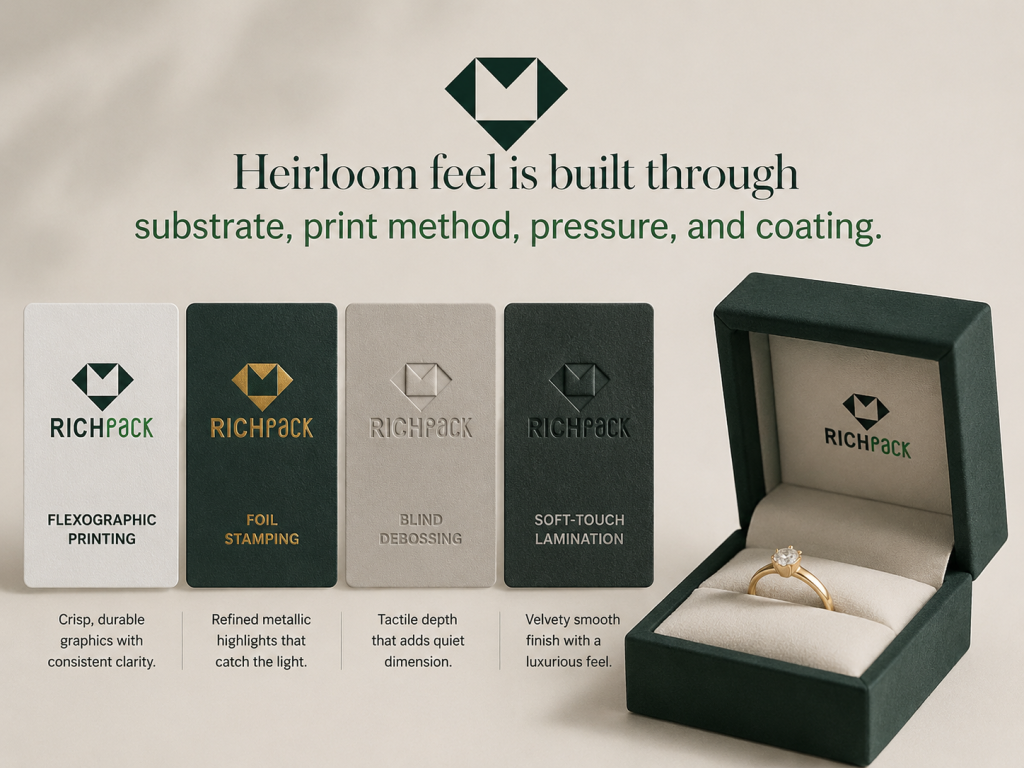
Premium finishing is a chain of choices. Flexographic printing can keep simple patterns clean on paper wrap at volume.
Hot stamping and foil stamping add a crisp metallic mark when pressure, dwell time, foil grade, and paper texture agree. Embossing or debossing gives a maker-mark feel. Soft-touch lamination can help a rigid box feel calmer in the hand, but it must pass scuff and fingerprint checks.
Good inserts do three jobs: they hold the piece, protect the surface, and frame the design. A ring needs upright tension, while a chain needs anti-tangle routing. Earrings need balanced spacing. Pearls need soft, clean contact.
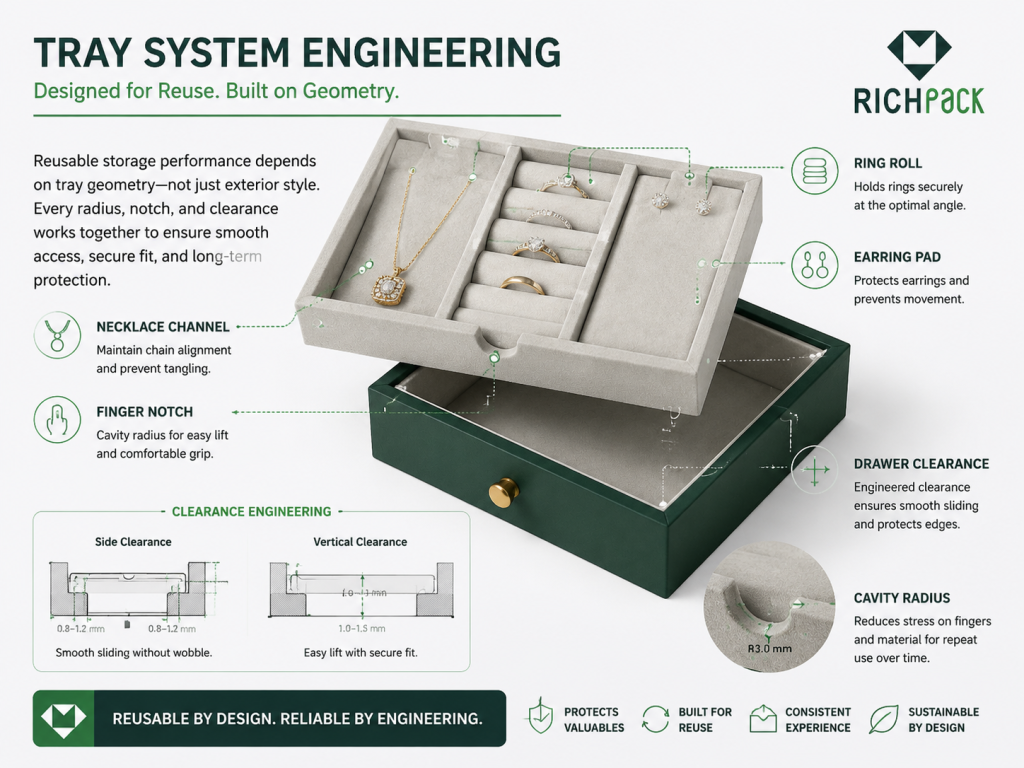
Use custom jewelry trays for drawers when the buyer needs the box to work after purchase. A reusable tray turns packaging into storage, which is one reason old boxes stay useful.
Tray systems deserve their own engineering review. Ask for the tray wall height, cavity radius, finger notch position, liner wrap direction, and compression set after the jewelry sits in place for several days. For drawer-style boxes, also check sliding friction, stop points, ribbon pull strength, and clearance after humidity exposure.
Vintage boxes rarely shout. Their maker marks often sit inside the lid, on a small plaque, or in a controlled foil stamp.
Modern brands should keep logo placement intentional. One good mark beats five weak ones. For wholesale programs, custom jewelry boxes with logo should support the jewelry, not compete with it.
Sustainability strengthens vintage style when it makes the package feel durable, reusable, and honest. A keepsake box is already a better story than a single-use throwaway.
Use FSC-certified paper, high recycled-content rigid board, water-based coatings, replaceable inserts, and right-sized shipping cartons where they fit the product. Plastic-free and mono-material structures can simplify recycling when the insert, wrap, and outer shell are designed as one system.
The point is not to make sustainability sound rustic. Eco-luxury works when the box still feels precise, clean, and giftable. RichPack’s sustainability commitment can support teams that need material choices aligned with brand responsibility.
Vintage-inspired packaging lives or dies in photos. A sample can look rich in hand and flat on camera if the color, grain, or foil angle is wrong.
Ask for sample photos under warm indoor light, daylight, and retail counter light. For online brands, also test how the box looks beside hands, jewelry scale, tissue, ribbon, and a packing insert.
Then ask for a short handling video. A box can look expensive in a still image and feel cheap when the drawer sticks, the lid snaps too hard, or the tray shifts.
Sourcing vintage-inspired packaging is different from buying one antique box. A brand needs repeatable color, safe inserts, stable closures, clear tolerances, and enough flexibility for future collections.
Here is the short audit roadmap I would use before a buyer sends the first quote request.
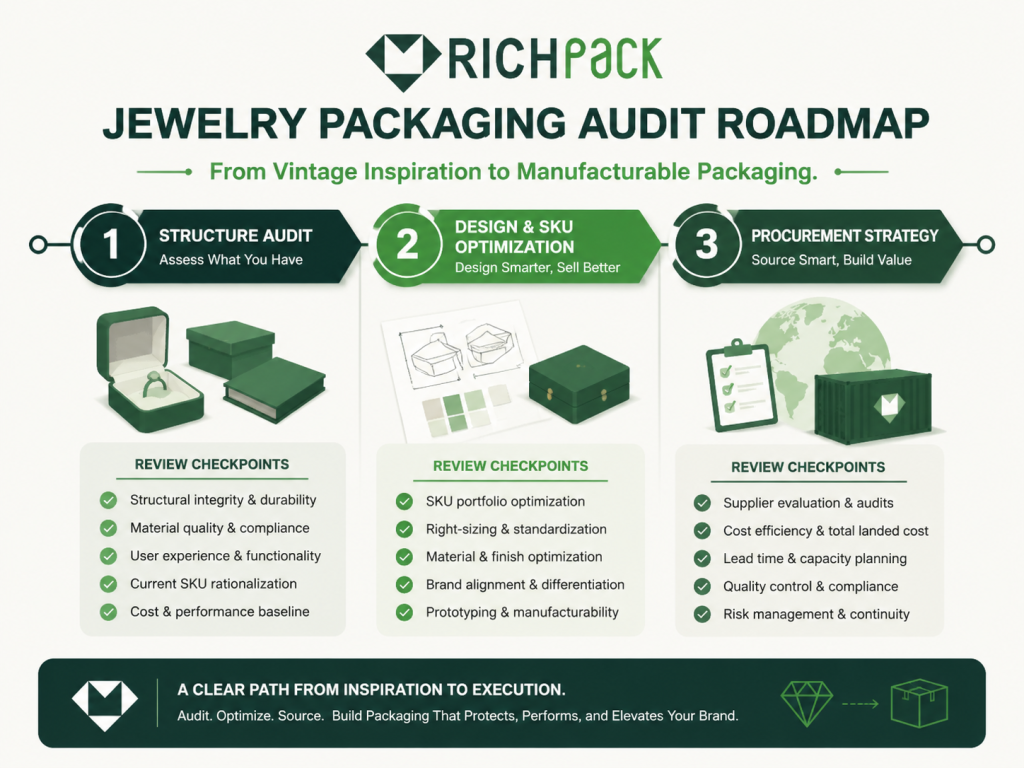
A good brief should name the jewelry type, product dimensions, target retail price, sales channel, desired opening moment, material preference, color palette, logo method, insert needs, order size, timeline, and shipping market.
Add reference photos, but explain what you like about each one. “Old red velvet box” is too vague. “Deep oxblood exterior, cream inner lid, low profile ring slot, quiet gold mark” gives the supplier something to build.
Add the engineering notes too: finished outer size, wall thickness target, insert cavity dimensions, acceptable color drift, closure pull feel, carton drop concern, and whether the box must be plastic-free or mono-material.
Test the parts customers touch first: lid alignment, hinge or magnet feel, insert grip, fabric shedding, odor, surface scuffing, foil adhesion, color match, and carton protection.
Do not approve a sample from photos alone. The hand test matters because vintage style depends on touch.
For decorated surfaces, add tape adhesion, rub, and scratch checks after the ink or foil has settled for 24 hours. A foil mark that survives one thumb rub can still fail on a packing table.
Ask which elements drive the minimum order quantity. The answer may be a custom mold, special fabric, custom paper, foil color, wood finish, insert tooling, or assembly method.
If the collection is small, use small jewelry gift boxes for a flexible starting point. Save highly custom tooling for hero pieces or repeat programs.
Quote breaks often need checking around 500, 1,000, and 3,000 pieces. Treat those as planning levels, not promises. The real break can move when a molded pulp tray, special foil, or hand-wrapped rigid structure enters the build.
Lead time depends on structure, material sourcing, sample rounds, print approval, insert testing, and order quantity. A simple rigid box moves faster than a wooden box with custom hardware and multi-part insert construction.
For seasonal launches, build time for sampling and corrections. Vintage-inspired design often needs one extra sample round because color, lining, and closure feel are hard to judge from drawings.
A practical path is two to three weeks for concept and dieline review, one to two sample rounds, then mass production after written approval. Rush work can happen, but it cuts the time buyers need to catch insert and finishing problems.
The quote changes when you add special material, custom hinges, high-density board, hand wrapping, flocked inserts, molded pulp, complex drawers, hot stamping, foil stamping, inner printing, small batch color matching, or premium cartons.
The lowest unit price can become expensive if the box causes returns, dulls the jewelry, or fails during shipping. A box customers keep is part of the product margin story.
Magnetic rigid boxes may quote 15% to 30% above a simpler drawer-style paper box of similar size and print, depending on magnet grade, board gap, wrap thickness, and assembly time. Use that as a sanity check, then ask for the actual cost drivers line by line.
A strong supplier should own a structure, material advice, insert engineering, sample correction, print control, quality inspection, and packing method. Design alone is not enough.
RichPack’s package design support helps turn mood references into a production-ready plan. For rings, custom ring boxes wholesale can keep the proposal moment consistent across stores, online orders, and event gifting.
The table below gives procurement teams a practical sourcing view for vintage-style jewelry boxes. Use it before sending a request for a quote.
| Decision area | Ask this | Why it matters |
| Structure | Is this a hinged, drawer, lift-off, or magnetic? | Controls the opening ritual and assembly cost |
| Exterior | Is the finish paper, fabric, leatherette, veneer, or wood? | Controls touch, price, weight, and durability |
| Insert | Is it EVA, foam, molded pulp, paperboard, or hybrid? | Controls cavity precision and jewelry safety |
| Logo | Is it hot stamping, foil stamping, debossing, printing, or plaque? | Controls brand tone and tooling |
| Testing | What gets checked before mass production? | Controls returns and customer trust |
| Packing | How many boxes per export carton? | Controls freight damage and landed cost |
Even if your brand is not selling antique boxes, value judgment matters. It teaches which signals buyers trust and which defects break the spell.
Vintage usually means older style with collectible or design interest. Antique is stricter in many trade contexts.
United States tariff schedules list antiques under category 9706 as objects over 100 years old. CBP notes that proof of age matters for antique import treatment.
For packaging design, do not overuse the word antique unless the product truly needs that claim. “Vintage-inspired” is often clearer and safer for new boxes.
Wood, leather, velvet, satin, brass, silver tone fittings, shaped compartments, old maker labels, and unusual forms can raise interest. The best boxes feel intentional from outside to inside.
For new packaging, material value comes from fit for purpose. A beautiful old-style box that scratches pearls is bad.
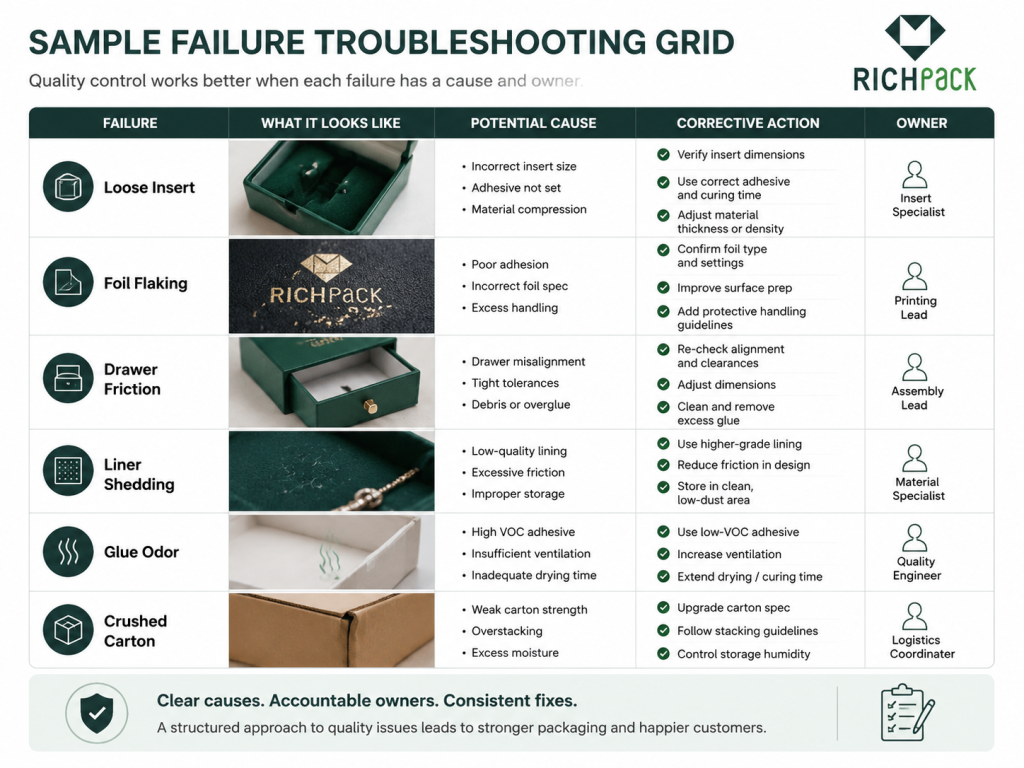
Odor, mold, loose hinges, crushed corners, flaking lining, rusty hardware, sticky drawers, torn satin, and powdery velvet all lower trust. These flaws remind buyers that the jewelry may not be safe inside.
New packaging has its own version of the same problem: glue odor, uneven wrap, poor insert grip, weak magnets, color rub, and crushed shipping cartons.
Ask the supplier to show a failure grid before approval. The grid should name the defect, likely cause, inspection method, and correction owner.
Maker labels, hardware style, lining material, stitching, typography, compartment layout, and construction method can help date an old box. Provenance helps, too, when it is real.
A modern brand can borrow this idea through traceable design details. Add a subtle collection mark, batch card, care note, or inner lid message that gives the box a reason to belong to that jewel.
Restoration is worth it when the box has good bones: stable structure, desirable shape, meaningful material, and damage that can be corrected without erasing character.
For a brand launch, restoration is usually inspiration, not supply. One restored old box can guide color and proportion. It should not become the source of an inconsistent packaging program.
Use new custom packaging when you need repeatable quality, brand color, compliant materials, clean inserts, stable supply, and reliable delivery. That is most commercial jewelry packaging.
A one-of-a-kind antique old jewelry box can be beautiful for a photo shoot. A controlled new box is better for retail rollout, wholesale gifting, influencer seeding, and holiday demand.
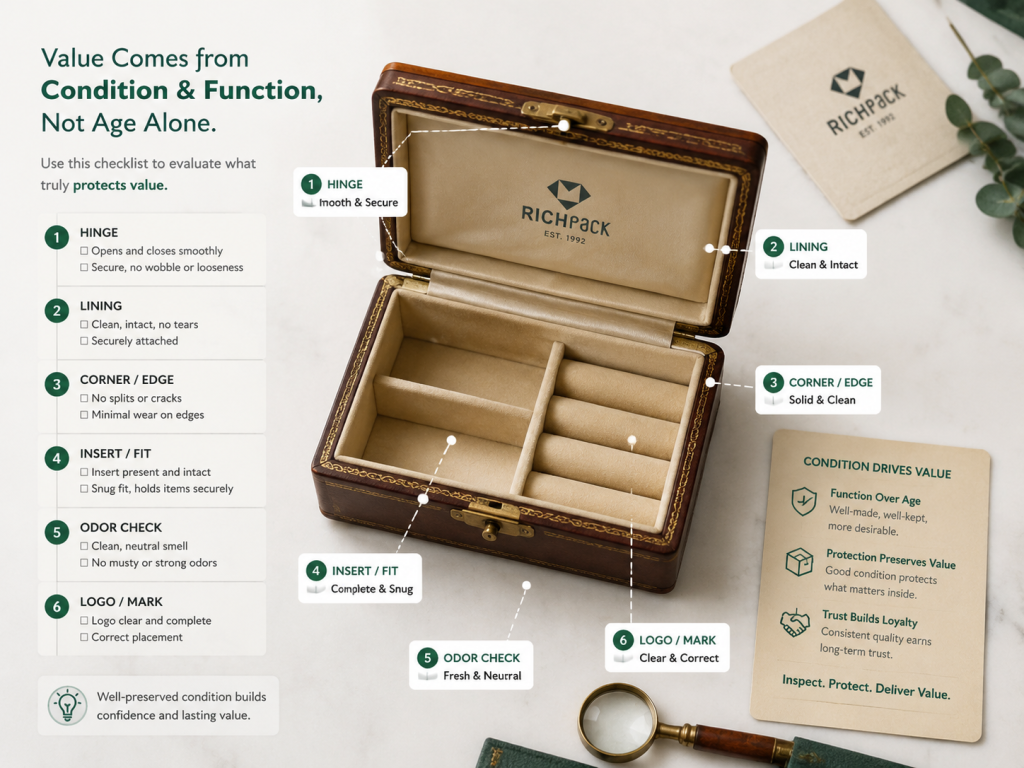
| Signal | Raises value | Lowers value | Modern brand lesson |
| Structure | Tight hinge, square corners | Wobble, cracks, weak closure | Test opening and carton compression |
| Lining | Clean velvet or satin | Odor, shedding, stains | Test fabric contact with real jewelry |
| Fit | Compartments match pieces | Loose or tangled storage | Build SKU-specific inserts |
| Material | Solid feel, rich surface | Cheap coating, sticky finish | Match material to price tier |
| Story | Maker mark, provenance | Fake distress, unclear claim | Use honest brand details |
Yes, some old jewelry boxes are worth money, but age alone is not enough. Value depends on condition, material, maker, rarity, style, size, original lining, and demand.
A damaged common box may only have decor value. A rare fitted presentation box, branded ring box, or finely made wooden case can attract collectors.
Vintage is a broad style and age term. Antique is more exact in many trade settings and often points to objects over 100 years old.
For new packaging, “vintage-inspired” is the safer term unless the box itself is truly old. It gives the mood without making a false age claim.
Start dry. Remove jewelry, dust with a soft brush, and test any cleaner on a hidden area. Keep water away from veneer, paper labels, old glue, and fabric lining.
If the lining smells, sheds, or has mold, do not store valuable jewelry inside until a specialist checks it. Old wood can be beautiful and still unsafe for daily jewelry storage.
Keep original jewelry boxes when they are clean, branded, fitted, or tied to an important purchase. Original boxes can support resale, storage, gifting, and memory.
This is why brands should not treat packaging as waste. The better the box, the more likely customers are to keep the brand with the jewelry.
Some are. A vintage box is good for daily storage when the lining is clean, the compartments fit the jewelry, the hinge works, and the material does not shed or transfer color.
Do not store high-value pearls, silver, plated chains, or delicate stones in a questionable old lining. Use clean, tested inserts when protection matters.
Vintage ring boxes are popular because they turn a small ring into a full scene. The compact shape, upright slot, soft lid, and dramatic reveal make the ring feel more important.
That is why bridal brands still borrow the form. A good ring box gives the moment a frame.
Yes, brands can recreate the feeling, but they should avoid copying protected brand marks, fake maker labels, or false age claims. The best route is the original design with vintage cues.
Use color, proportion, texture, lining, and closure rhythm to create the feeling. Use modern quality control to make sure every box works.
Customers keep boxes that feel useful, beautiful, sturdy, personal, and safe for storage. A box earns its second life when it protects the jewelry and looks good after the purchase moment.
RichPack’s timeless jewelry box case study shows how enduring design can support premium jewelry positioning beyond a single sale.
Vintage jewelry boxes are still popular because they solve more than a storage problem. They make jewelry feel protected, remembered, displayed, and worth keeping. That is why a jewelry box old enough to carry patina can still beat a new box that feels thin, loud, or disposable.
Modern brands do not need to imitate every antique detail. They need to copy the reasons people keep the old ones: fitted protection, honest materials, quiet marks, pleasing openings, and a second life after the sale.
For a heritage launch, bridal line, boutique program, or premium gift set, start by defining the feeling your customer should keep. Then build the structure, insert the material, print finish, and logo system around that feeling.
RichPack can help turn that direction into custom packaging that looks timeless, protects the jewelry, and arrives ready for retail. Bring the mood board, but also bring the dimensions, tolerance targets, insert risks, and sustainability goals. That is where vintage charm becomes packaging that can scale.


2024-11-26

2025-03-07
2025-07-11
2025-04-28
2025-03-27
2025-02-20
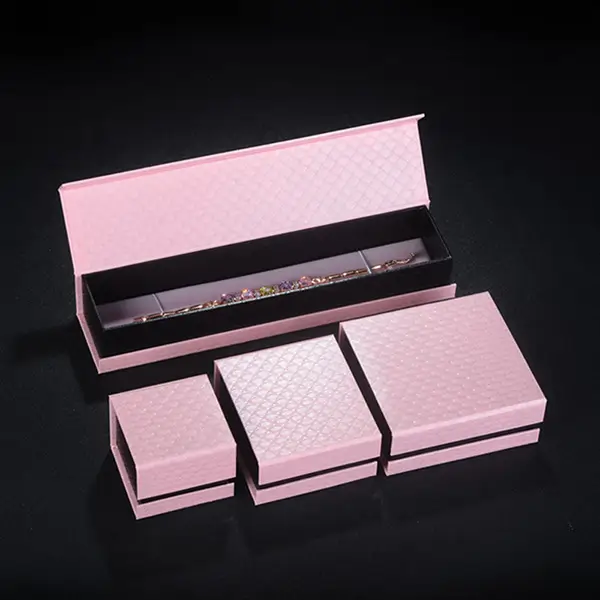
Affordable Custom Jewelry Boxes for Independent Jewelers | Budget-Friendly Solutions with High-Quality Designs
View More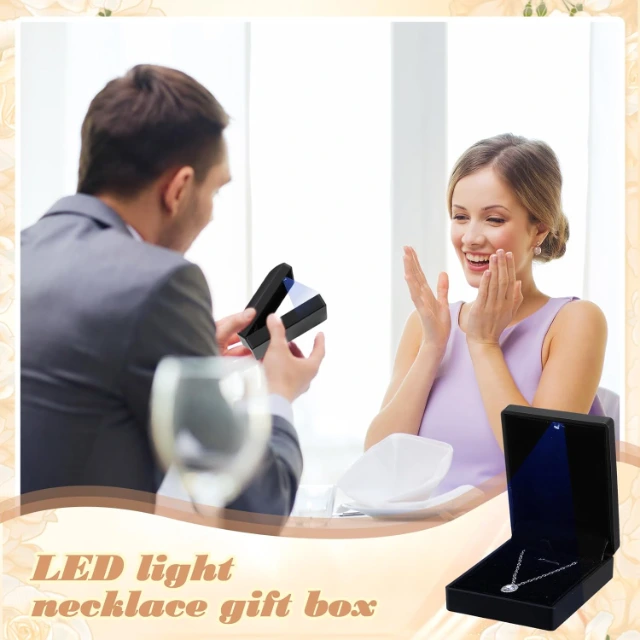
Anniversary-Themed Jewelry Boxes: With Romantic Designs, Ideal for Anniversary Gifts
View More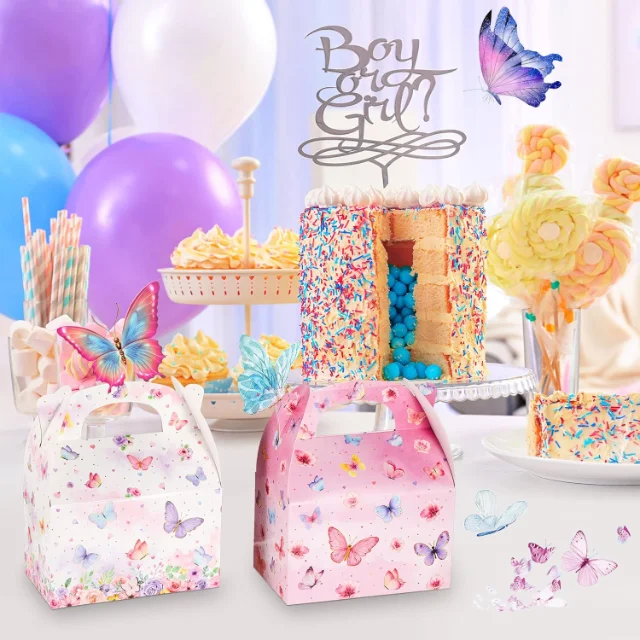
Beautiful Butterfly Box Gifts | Deluxe Butterfly Gift Boxes for Special Occasions and Unique Presentations Bulk Order Options from Richpack
View More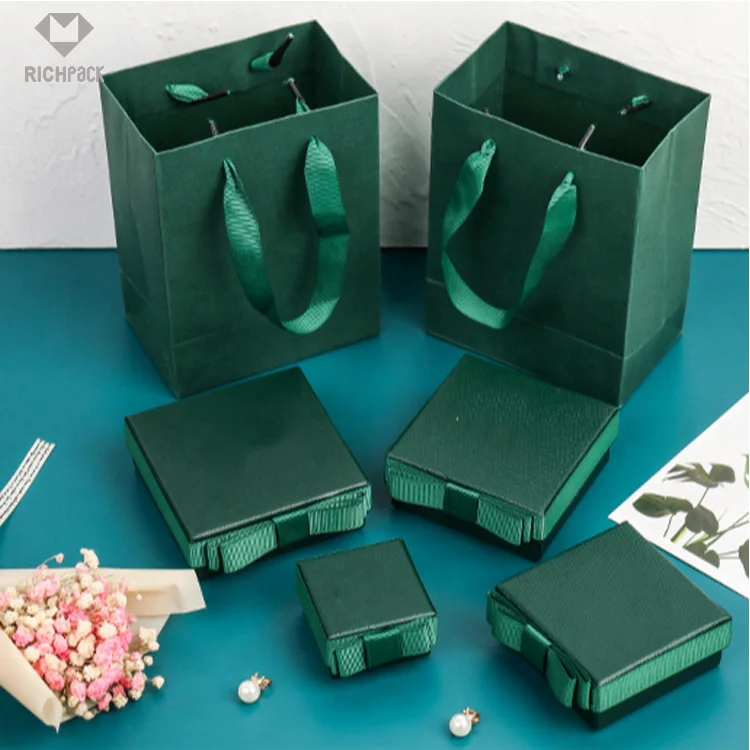
Bespoke and Durable Custom-Printed Paper Bags for Retail Stores with Logos | Perfect Branding Solutions for Jewelers Needing Eye-Catching Retail Packaging
View More
Birthday Gift Pack Ideas – Inspiring Bundles to Ignite Birthday Celebrations
View More
Black Velvet Ring Box for Jewelry Brands | Custom Wholesale Packaging Solutions – Richpack
View More

