


 PREV

14K Gold Filled Jewellery: Packaging Design and Protection Strategies
2024-12-12
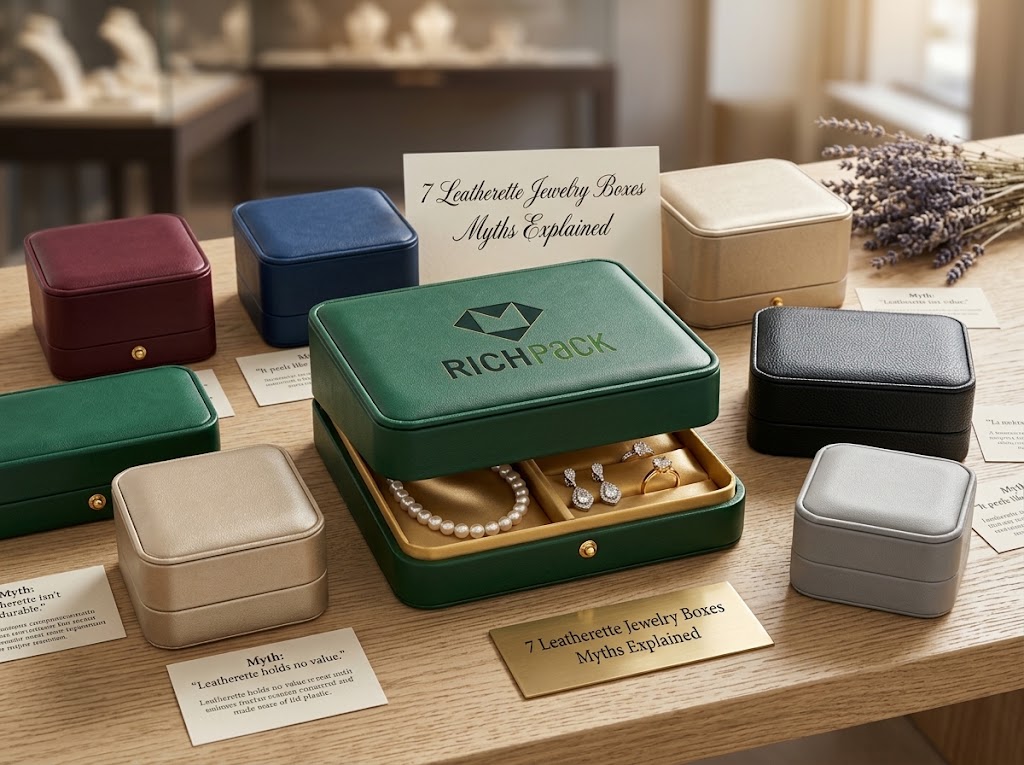



Leatherette jewelry boxes are often judged by one word on a product page. That word cannot tell you what sits under the surface, what gives the box its shape, what touches the jewelry, or what supports a claim such as “scratch resistant.”
For a jewelry brand, that gap can create a poor sample decision, a weak product description, or a box that looks right but lets a necklace move inside. The safer approach is to separate the outer face, backing, core, lining, and insert, then check the evidence for each claim.
The seven myths below cover material identity, construction, appearance, wear, cleaning, jewelry contact, tarnish, and environmental language. You will also get a practical set of supplier and sample questions that can help you compare a real packaging option in the RichPack jewelry-box collection.
Leatherette usually describes a non-hide surface made to resemble leather. It does not describe the whole jewelry box. The outer face may be bonded to a backing, wrapped over a rigid shell, and paired with a separate lining or insert. Each layer affects a different buyer concern, from logo appearance to lid fit and jewelry contact.
That distinction matters when a supplier uses a short phrase such as “water-resistant leatherette” or “premium leatherette box.” The phrase may describe only the outer face. It may not tell you what holds the box shape, what touches the jewelry, or what test supports the claim. A brand ordering several jewelry box styles should ask for those details before it compares samples or approves copy.
Leatherette is a market term for a leather-like material. It is also called faux leather, imitation leather, or simulated leather in different product descriptions. The name points to appearance and material category. It does not turn a synthetic surface into animal leather, and it does not provide a universal grade.
For U.S. sales copy, the leather and imitation-leather guides in 16 CFR Part 24 place limits on how businesses describe material content, finish, durability, cleanability, and scratch or scuff resistance. The practical lesson is simple: describe the material as it is supplied, then keep performance language tied to evidence for that product.
The same rule helps a buyer read a catalog page. “Leatherette jewelry box” identifies a style or surface family. It does not, by itself, identify the board, backing, adhesive, lining, insert, closure, or finish. Those details belong in the specification for the box being quoted.
PU and PVC refer to common coating families used in synthetic leather constructions. They are useful clues, but they are not a full material specification. A coating name does not tell you its thickness, backing fabric, texture, finish, bonding method, or response to heat, flexing, moisture, and cleaning.
Supplier material pages show why the word “synthetic” covers many constructions. A product may use a textile backing with a PU or PVC face. Another may use a different backing, surface grain, or finish. Those variations can change how a corner wraps, how a logo reads, and how a surface behaves during handling.
Ask for the exact material description tied to the quoted box. Record the face material, backing, texture or finish, and any surface treatment. Keep that description with the approved sample. If a later production run uses a different material family or finish, the original sample may no longer be a fair reference.
The backing sits behind the leather-like face. It gives the surface support and affects how it bends, stretches, bonds, and wraps around corners. A thin or flexible face can look neat on a flat lid and still show different behavior at an edge or seam.
This is one reason a product photo cannot answer every construction question. A backing can change the feel of the lid, the sharpness of a corner, and the risk of a visible lift where the wrap meets the shell. It can also affect how a logo process sits on the finished surface.
For a jewelry brand, the useful check is visual and physical. Look at a corner, seam, hinge area, and any curved section in the production-like sample. Ask whether the quoted backing and bonding method are the same ones used for the sample. The public supplier examples in this research show that backings vary, but they do not identify the backing in a RichPack SKU. That field remains a supplier question.
The rigid core or shell gives the box its shape. The leatherette wrap carries the visible surface, while the core supports the lid, walls, base, and closure. Two boxes can share a similar outer texture and still feel different because their cores, wall construction, or closure systems differ.
Core construction also affects the space around the jewelry. A lid that bows, a base that flexes, or a closure that pulls unevenly can change how an insert sits. That can affect presentation and removal even when the surface looks identical in a product image.
Ask for a drawing, cross-section, or physical sample that shows the shell and the insert together. You do not need a factory diagram to begin. You need enough information to compare the box you approved with the box you expect to receive. If the quote describes only the outer material, ask which structural material creates the shape.
The lining or insert is the part that may touch the jewelry. It can hold a ring, separate a pair of earrings, support a pendant, or create space for a watch pillow. It has a different job from the leatherette wrap. The outer face controls the first visual impression. The insert controls contact, movement, removal, and much of the visible presentation.
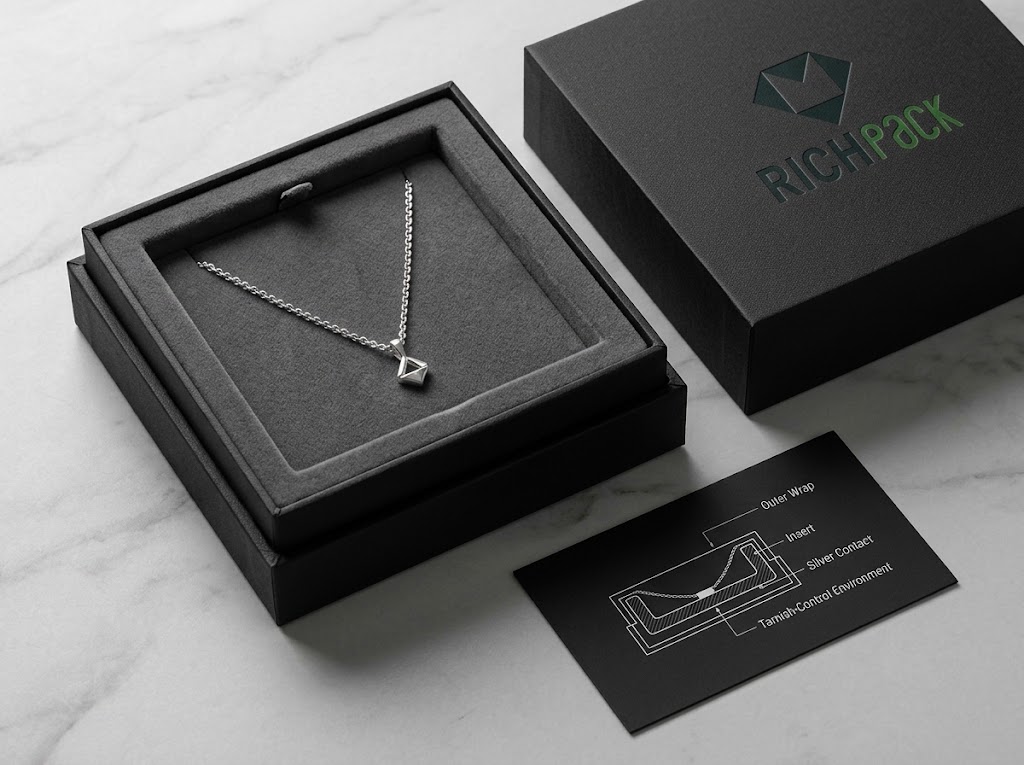
Softness alone does not prove scratch protection or tarnish control. The fit, fiber or foam surface, seams, movement space, and storage environment all matter. For silver, the Canadian Conservation Institute explains that tarnish is mainly black silver sulphide formed through sulfur-containing compounds in the air. A soft outer wrap does not remove those compounds from the storage environment.
When you review a sample, place the real jewelry in the intended position. Check whether clasps, stones, or chains rub against an edge. Check whether the piece shifts when the lid closes or the box is carried. Ask whether any anti-tarnish claim refers to an active insert or storage component, and ask for the method and conditions behind it. RichPack’s custom jewelry-box inserts page is a useful next step when the interior needs its own material and fit decision.
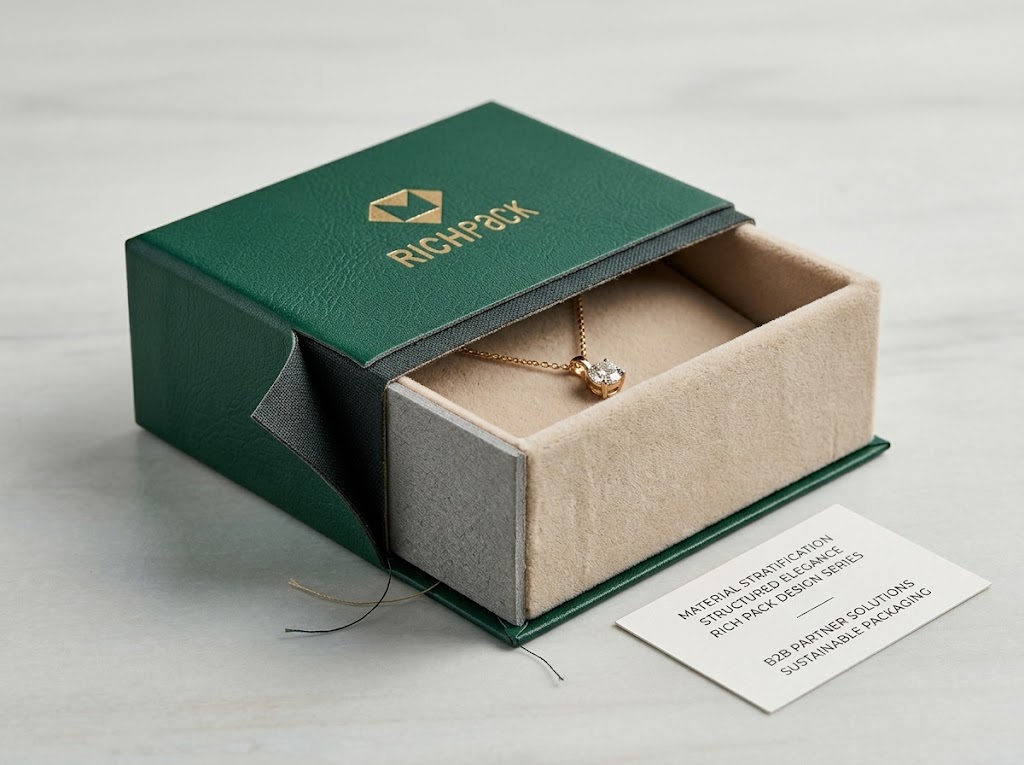
When a supplier makes a performance claim, ask which layer it describes and how the claim was checked. “Scratch resistant” may refer to a face surface. “Protects jewelry” may refer to an insert or a complete box tested with a specific piece. “Anti-tarnish” should identify an active material or control method, not just a soft lining.
This question also helps with environmental language. A claim about the box surface is different from a claim about the full package, including board, adhesive, insert, and shipping materials. The Federal Trade Commission’s environmental marketing guidance in 16 CFR Part 260 expects claims to identify their object and have reasonable support. A supplier should be able to tell you what the claim covers.
Write the answer into the packaging brief. Include the material layer, the sample or product version, the test or document used, and any condition that limits the claim. If the answer is unavailable, keep the wording narrow. A clear unknown is safer than a broad statement that a later sample cannot support.
The word leatherette cannot prove a box’s material content, appearance, durability, care requirements, jewelry protection, or environmental impact. Those questions depend on the complete construction and the evidence behind each claim. The table below gives the short answer first. The sections that follow explain what to check.
| Myth | What the claim leaves out | What a buyer can verify |
| Leatherette is simply real leather | Material content and labeling are separate from appearance | Material description and applicable market disclosure |
| All leatherette is the same | Face coating, backing, core, and lining vary | Layer-by-layer specification for the offered SKU |
| Leatherette always looks cheap | Texture, color, structure, logo, and lining all affect presentation | A production-like sample with the actual jewelry |
| Leatherette cannot crack, peel, or scuff | Performance depends on materials, construction, exposure, and use | Test method, sample details, conditions, and limits |
| Easy to wipe means waterproof and maintenance-free | Cleanability is not proof of liquid resistance or chemical compatibility | Written care instructions and a sample check |
| Leatherette alone protects jewelry from scratches and tarnish | Contact surfaces, movement, sulfur control, and inserts matter | Fit/contact review and any anti-tarnish evidence |
| Animal-free leatherette is automatically sustainable | Animal origin, polymer composition, recyclability, and life-cycle impact differ | Specific substantiated claim and regional end-of-life route |
Leatherette is not a synonym for animal leather. It is a leather-like material category used for products that imitate leather’s visual surface or hand feel. The exact construction varies, so a responsible product description should state the material nature instead of relying on a leather-suggestive name.
This matters in a jewelry box because the name can travel into several places at once. It may appear in a sales title, a purchase order, a customs document, and a customer-facing product description. If those descriptions imply a material content that the supplied box does not have, the language creates a product and compliance problem.
For a U.S.-market specification, use the material description supplied for the actual box and keep any comparison with genuine leather clear. Do not promise that one material has the same aging, repair, or surface behavior as the other. A supplier’s sample and written construction details should settle the naming question.
Leatherette is a family of constructions, not one universal recipe. PU or PVC may describe a face coating, but the backing, finish, grain, core, lining, adhesive, and decoration can change from one box to another. Even boxes with the same color name can behave differently when their surface and structure change.
That variation explains why a catalog phrase is not enough for a repeat order. A brand may approve a smooth black sample, then receive a textured black surface with a different logo result or edge feel. The problem is not the word leatherette. The problem is that the approved specification did not identify the layer or finish that mattered.
Ask for a layer-by-layer description tied to the offered SKU. If the supplier cannot share a full formulation, the brief can still record the face category, backing type, core, lining, finish, color reference, logo process, and sample version. Those fields make a later change visible.
Leatherette does not determine visual quality by itself. A box can look unfinished because of poor edge wrapping, uneven seams, weak structure, a mismatched insert, or a logo treatment that does not suit the surface. A different box with a controlled finish, clean fit, and suitable lining can support a refined presentation.
The reverse is also true. A leather-like texture cannot rescue a lid that sits unevenly or an insert that lets a pendant slide. Brand perception comes from the complete object the customer holds. Surface texture, color, hardware, logo scale, opening action, and jewelry placement work together.
Review the actual jewelry in the actual sample. Check the surface under the light used for product photography and retail inspection. Compare the logo at its final size, then inspect the edges and lining. This gives a brand a useful design decision without claiming that any material automatically looks premium.
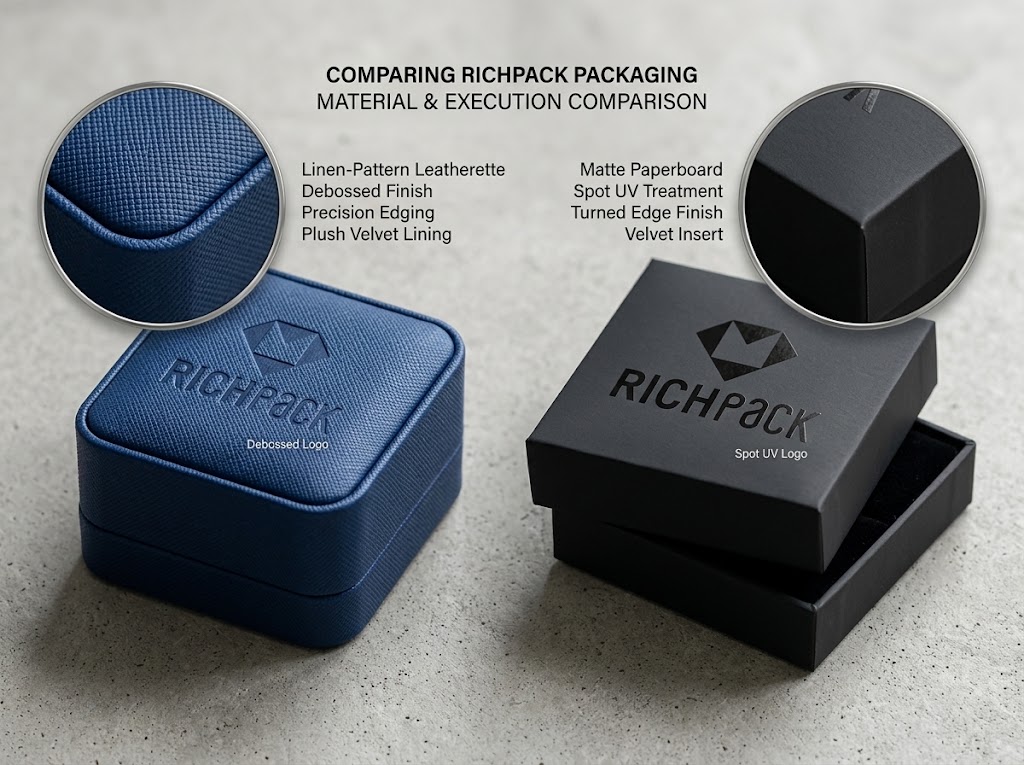
Leatherette can show wear. Whether it cracks, peels, scuffs, or stays stable depends on the face material, backing, bonding, finish, flexing, heat, light, cleaning, handling, and storage conditions. A material label cannot provide a service-life number for every box.
Several competing pages use strong durability language. One page calls itself a durability test while leaving the specimen, protocol, cycles, exposure conditions, and results unavailable in the page text. That does not prove the page is wrong. It means a buyer cannot use the public claim as a reproducible performance result.
The U.S. leather and imitation-leather guides in 16 CFR Part 24 also distinguish ordinary descriptions from claims such as scratch or scuff resistance. For a real purchase decision, ask which material version was tested, how it was handled, what conditions were used, and what failure limit applied. Keep “scratchproof” or “will not peel” out of customer copy unless the evidence supports that exact scope. For a deeper material comparison, RichPack’s faux leather and real leather durability comparison covers a different, broader decision task.
A smooth surface may be easier to wipe than a fabric pile, but “wipe clean” does not establish waterproofing or compatibility with every cleaner. Water can reach seams, edges, closures, lining materials, adhesives, or the box core. A cleaner that is harmless to one coating may damage another finish or logo.
Cleaning questions appear repeatedly in search results and community discussions. People ask how to remove grime from grooves, how to identify a plastic-feeling surface, and how to avoid making an old box worse. Those questions show why a short “easy care” label is not enough for a procurement brief.
Ask for the care instructions for the exact surface and lining. Test the approved method on an unseen area of a production-like sample before using it on a customer-facing box. Record the cleaner, cloth, moisture level, drying method, and visible result. Do not turn a simple wipe instruction into an unsupported waterproof or maintenance-free promise.
The outer wrap does not control every contact or storage risk. The insert positions the jewelry, limits movement, and shapes the first view. Its surface and geometry affect whether a clasp catches, a chain shifts, or a stone touches a hard edge. The box’s storage environment also affects tarnish.
The Canadian Conservation Institute explains that silver tarnish is mainly black silver sulphide formed through sulfur-containing compounds in air. Its conservation guidance discusses storage and materials that reduce contact with tarnishing gases. That source is about silver conservation, not a test of a commercial jewelry box. It supports a careful distinction: a soft wrap or generic lining is not automatically an anti-tarnish system.
Ask what an anti-tarnish claim refers to. It should identify the active material or control method, the jewelry or metal scope, and the test conditions. For scratch and movement concerns, place the real jewelry in the insert and close, carry, and reopen the sample. A box that looks soft may still allow movement if the fit is wrong. RichPack’s jewelry-box insert material guide and velvet versus foam insert comparison can support the next interior-material discussion.
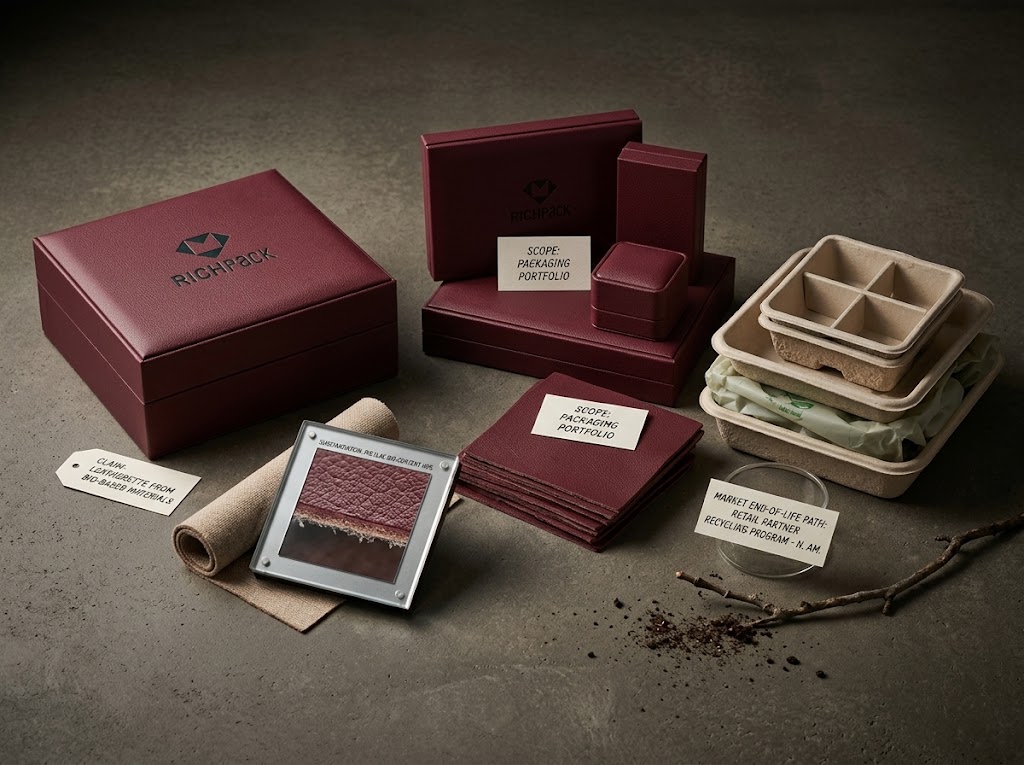
Animal-free describes one ethical or material attribute. It does not answer whether the complete box is recyclable, biodegradable, low impact, durable enough to reuse, or accepted by a local collection system. Polymer composition, backing, adhesive, lining, packaging layers, and end-of-life handling all matter.
The Federal Trade Commission’s environmental marketing guidance in 16 CFR Part 260 calls for environmental claims to be truthful, substantiated, and clear about whether the claim applies to a product or its packaging. A broad “environmentally friendly leatherette” statement needs more support than a material name or a vegan label.
For a buying brief, ask what the claim covers and what evidence supports it. Request the relevant material declaration, recycled-content proof if claimed, certification scope if applicable, and the target market’s collection or disposal path. Without those fields, use narrower wording such as “animal-free material” rather than claiming a complete environmental advantage.
Start with the material record and the actual jewelry. A catalog image can show a finish, but it cannot show the backing, core, contact surface, or the conditions behind a durability or environmental claim. Ask for the specific construction, then review a production-like sample with the jewelry, logo treatment, and opening method your customer will use.
Ask the supplier to name the face coating or surface, backing, rigid core, lining, and insert separately. A useful description should tell you which layer the word leatherette refers to. It should also identify the material family for the box shell and the surface that touches the jewelry.
This question prevents a common specification gap. Two boxes can both be called leatherette while using different face finishes, backing fabrics, cores, and inserts. Those differences can change how the lid holds its shape, how a logo appears, how the box feels in hand, and how the piece sits inside it. RichPack’s wholesale jewelry-box styles and materials guide is a relevant next step when a team needs a broader procurement brief.
Request the layer description in the same document as the sample reference. That gives your team something to compare when a repeat order arrives. A material name without a layer record is too broad for a meaningful approval.
Place the actual ring, earrings, pendant, necklace, bracelet, or watch in the sample. Check the fit while the box is open, closed, carried, and reopened. Look for movement, snag points, pressure on stones, chain slack, and any part that makes the piece hard to remove.
The box should support the way the customer will handle it. A ring slot needs a secure hold without gripping the band so tightly that removal feels awkward. A necklace setup needs a way to control chain movement. A watch or heavy bracelet may need a different support shape from a small pendant. These are fit decisions, not automatic benefits of a leatherette exterior.
For fulfillment teams, check the presentation box inside the shipping system as well. A box that looks stable on a table can move inside a mailer or carton. RichPack’s jewelry shipping packaging guide covers the separate transit risks that a presentation surface cannot solve.
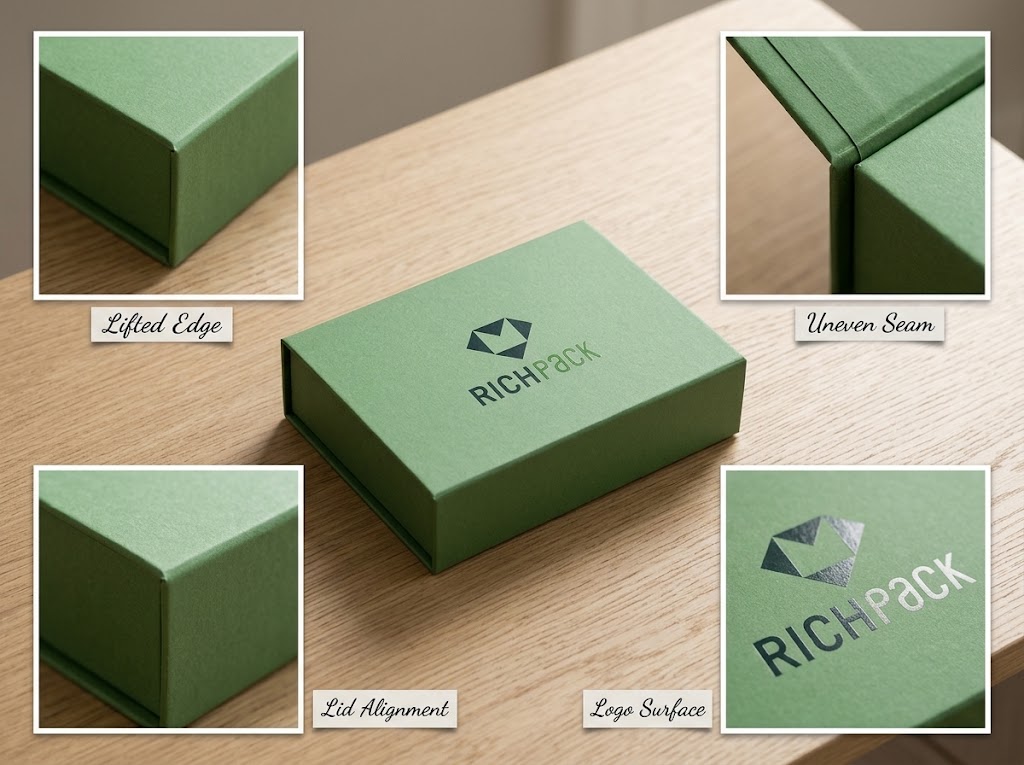
Inspect the parts customers see and touch first. Check whether the wrap stays clean at the corners, whether seams sit flat, whether the hinge moves without pulling the cover, and whether the lid closes evenly. Run a finger over the logo area and edges to find lifted material, rough joins, or changes in texture.
Use the same light and viewing distance for every sample in a comparison. Record the color, grain, gloss, edge finish, hardware, and lid alignment. These notes make small differences visible when several samples are reviewed by different people.
RichPack’s jewelry-box material inspection steps can support a broader inspection brief. The link is a practical follow-up resource, not independent proof that any particular leatherette sample passed a test.
Ask for the care instructions for the exact surface and lining before anyone cleans a production sample. “Wipe clean” does not tell you which cloth, moisture level, cleaner, drying method, or contact time is acceptable. The lining and the exterior may need different handling.
Start with dry dust removal. If the supplier permits a damp wipe, test it on an unseen area of the same material and let it dry before checking color, gloss, tackiness, and edge adhesion. Avoid turning a general leather-care tip into a universal rule for synthetic coatings, printed finishes, or velvet-like interiors.
This cautious order matters because surface damage can be permanent once a coating cracks or separates from its backing. A written care sheet gives customer-service and fulfillment teams a consistent answer. Without one, describe the limitation clearly and ask the supplier to approve the method before publication.
Approve the logo on the final surface, not on a different swatch. Texture, grain, gloss, color, and curvature can change how foil, debossing, printing, or an applied plate looks. A logo that reads cleanly on smooth material may lose fine detail on a deeper grain or near a wrapped edge.
Review the sample at the distance customers will see it. Check fine lines, small type, contrast, edge sharpness, and the feel of the logo when a hand opens the box. Confirm whether the mark sits on the lid, tray, sleeve, or insert, because each location changes the visual order of the unboxing.
RichPack’s custom jewelry boxes with logo page is a commercial resource for the next brief. It does not replace a substrate-specific logo sample or prove that every decoration method fits every leatherette construction. For additional personalization options, see jewelry-box personalization options.
Choose one approved reference sample for color, texture, gloss, edge appearance, and logo placement. Record the material name or code supplied for that sample, then ask how the supplier will compare later production against it. Keep the reference with the purchase documents so the buyer, artwork team, and receiving team use the same target.
Repeat orders can expose differences that a single sample hides. The face may show a changed grain, the color may shift under a different finish, or the logo may sit closer to an edge after a size change. These are reasons to define what must match and what needs written approval before a new run.
Do not promise a universal batch-consistency level without a documented tolerance or approval process. Ask for the supplier’s actual control method and decide which differences matter to your brand and jewelry line.
Separate the words animal-free, vegan, recycled, recyclable, biodegradable, and environmentally friendly. Each describes a different question. The first may describe animal origin. The second may describe a material or product label. Recyclability depends on the material combination and the collection system available where the packaging will be discarded.
For a specific claim, ask four questions. What product or packaging part does the claim cover? What material or percentage supports it? Which document or test supports the statement? What end-of-life route exists in the target market? The U.S. Federal Trade Commission’s Green Guides treat broad environmental claims as claims that need truthful, substantiated scope. They do not make a PU, PVC, or bio-based material automatically better.
Treat a supplier sustainability page as a starting point for documents, not as a substitute for them. RichPack’s own sustainable packaging pages are commercial resources, so any recommendation should state what the page offers and what still needs project-specific confirmation.
The best material depends on the jewelry, the box structure, the contact surface, the brand finish, and the handling route. Leatherette can suit a structured, branded exterior, while velvet, suede-like materials, foam, or another insert may better control contact and movement inside. Choose by the full construction and sample result rather than by the outer material name alone.
The main risks are material confusion and unsupported performance assumptions. The coating, backing, core, finish, and use conditions can vary, and some synthetic surfaces may crack, peel, or scuff under particular exposure and handling conditions. Ask for the exact construction, care instructions, and evidence behind any durability or water-resistance statement.
There is no single answer for every box. Leatherette can offer a consistent visual surface and a controlled branding option, while genuine leather has different material characteristics and natural variation. Compare the actual samples, construction, care needs, budget, values, and intended use. The word “leatherette” does not prove equal or inferior performance by itself.
Use the care instructions for the exact surface and lining first. If the supplier allows a damp wipe, test it on a hidden area of the same material and check the finish after drying. Avoid assuming that a cleaner made for natural leather, vinyl, fabric, or jewelry is suitable for every leatherette coating.
No outer wrap alone can guarantee that jewelry will not tarnish. For silver, tarnish is linked to sulfur-containing compounds and the storage environment. The insert, contact materials, air exposure, and any active tarnish-control component need separate review. Ask for the exact material and test scope before using an anti-tarnish claim.
There is no reliable universal timeline for every faux-leather jewelry box. Lifespan depends on the coating, backing, bonding, use, heat, light, moisture, cleaning, and handling. A supplier should provide material details and any test method that supports a stated service-life claim. Without that evidence, treat a fixed number as unverified.
Leatherette is a useful packaging surface, but the label is only the start of the decision. A buyer still needs to know what sits behind the face, what holds the box shape, what touches the jewelry, and what evidence supports each performance or environmental statement.
The practical rule is simple: approve the full construction, sample it with the actual jewelry, and keep customer-facing claims within the evidence available. When a brand is ready to compare a specific box brief, RichPack’s jewelry-box collection and custom packaging resources can support that next commercial conversation. Those pages are RichPack-owned resources, so they should be read as product and service information rather than independent material ratings.
2024-12-12

2026-01-02
2025-03-20

2025-04-24
2025-11-24

2025-08-06
Bespoke Jewelry Boxes with Personalized Branding for Jewelry Labels | Tailored Packaging Solutions for Retailers
View More
Eco Linen Ring Box Wholesale | Custom Jewelry Box Manufacturer – Richpack
View More
Mini Travel Jewelry Pouch Faux Leather Compact Jewelry Organizer | Custom Packaging | Richpack
View More
Richpack Ring Boxes with LED Light for Display | Illuminated Jewelry Presentation for Retail and Special Occasions
View More
White Jewelry Display for Modern and Elegant Showcases | Premium White Leatherette Jewelry Stand for Retail and Personal Collections
View More
Secure Jewelry Boxes with Locks | Multi-Layer Lockable Jewelry Boxes Designed for Safekeeping Valuables in Style Perfect for Retail Businesses
View More

