

 PREV
PREV
2026 Best Custom Jewellery Packaging Ideas That Will Shine Your Brand
2024-11-15



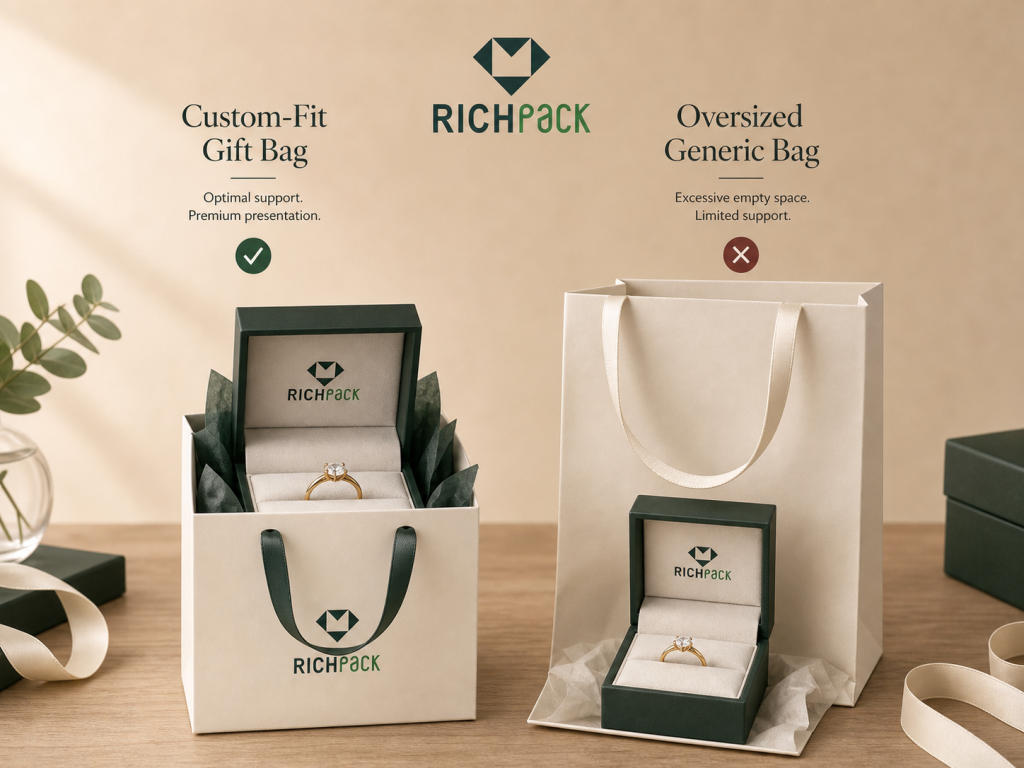
A ring box can look flawless yet still leave the store in the wrong bag.
The box slides to one side, the base sags, and a rope handle cuts across the logo. Five seconds later, a polished sale feels cheap.
A new rule also shapes bag design. Regulation (EU) 2025/40 starts to apply on August 12, 2026, and the European Commission wants all packaging sold in the EU to be recyclable at scale by 2030.
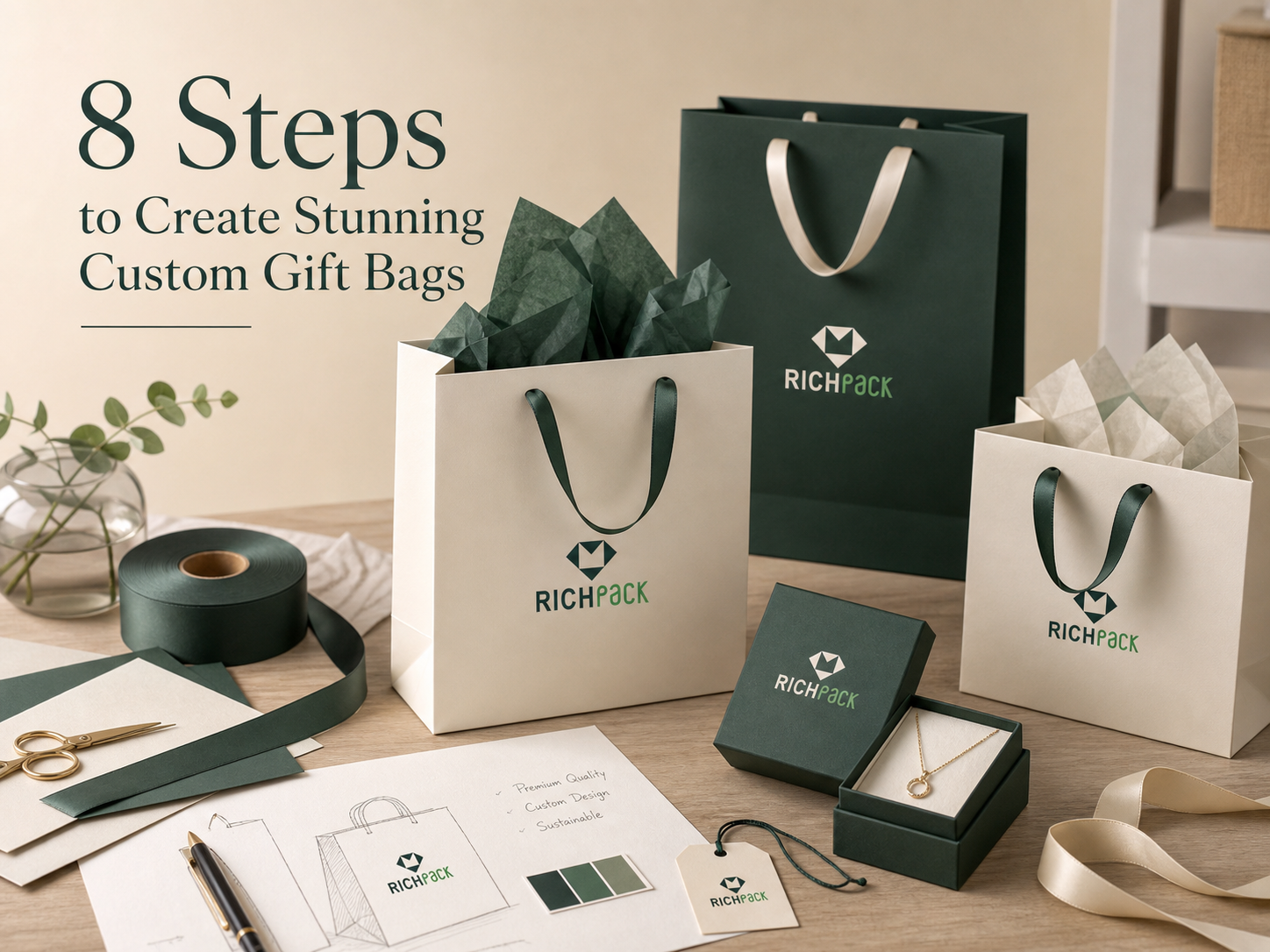
After reading this guide, you will get eight steps for creating Stunning Custom Gift Bags that fit the box, carry the load, and survive a full print run. The details come from the work buyers face at the sample table: paper shade, box clearance, handle pull, foil edges, packed cartons, and the date the bags must arrive.
If you are ready to source a made-to-order bag, RichPack’s custom printed paper bags give you a place to start with the size, paper, print, handle, and finish brief.
A custom gift bag is a handled retail pack made for one product range and one kind of handoff, and each step ends with something your designer, buyer, and factory can check.
| Step | Main decision | Jewelry packaging check | Approved output |
| 1 | Purpose and use | Store sale, event, VIP gift, or online gift order | Written brief |
| 2 | Inside size | Box, pouch, cards, tissue, and hand room | Size spec |
| 3 | Paper and fiber claim | Strength, print face, recycled or certified fiber | Paper spec |
| 4 | Build and handles | Base support, folds, load balance, and grip | Working bag sample |
| 5 | Art and color | Logo scale, safe area, ink, and color target | Print-ready art |
| 6 | Finish | Foil, embossing, coating, texture, or ribbon | Finish spec |
| 7 | Cost and timing | Order size, setup, freight, and due date | Production plan |
| 8 | Sample and quality | Fit, load, rub, color, handles, and cartons | Signed master sample |
Do not send a logo and ask for a luxury bag. Send decisions.
Start with the handoff by asking where the buyer gets the bag, what goes inside, and how long it must stay useful.
A boutique sale needs a bag that stands well on the counter and feels good on the walk home. An event bag must pack fast and store flat, while a VIP gift needs room for tissue and a card.
Write down the job before you pick paper or foil:
The bag must agree with the box, so plan the contrast between a matte ivory ring box and a black gloss bag. Check your custom jewelry boxes first, then treat the box and bag as one set.
Turn soft brand words into clear choices. Replace “make it premium” with warm white paper, a small copper foil logo, cotton rope handles, and no film coat.
That is a brief a factory can use, and RichPack’s packaging design support can turn brand ideas into paper, size, art, and finish specs.
Buyers say the same thing in different ways: custom packaging feels worth the cost when each part has a job, but it feels wasteful when it adds bulk without value.
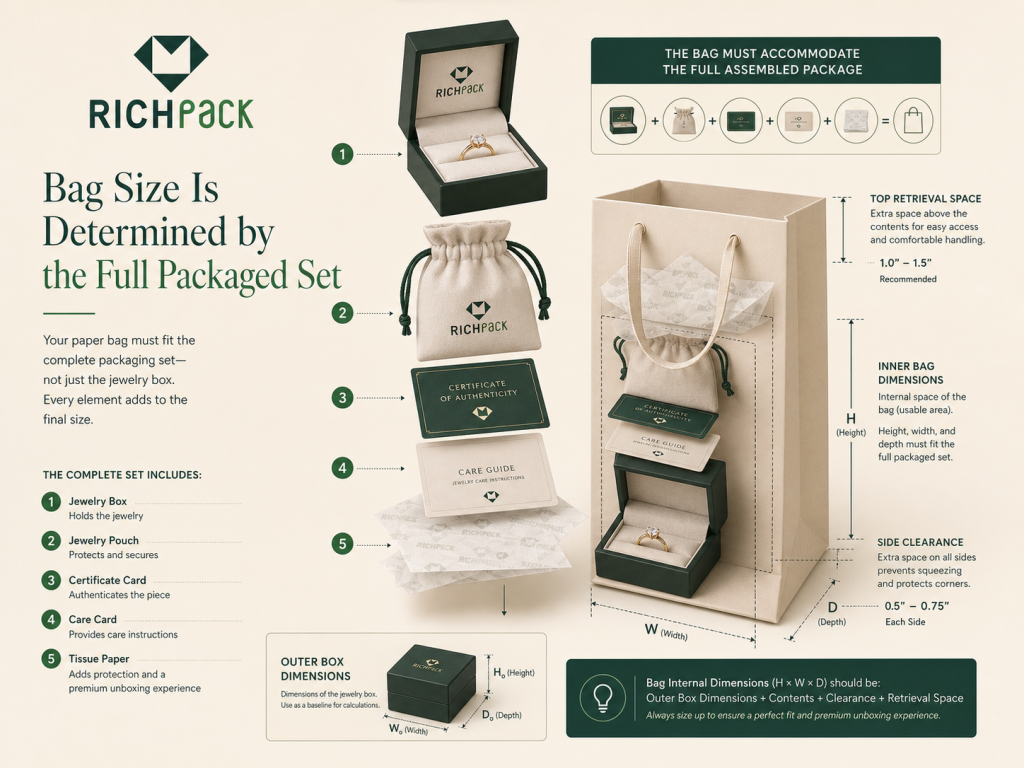
Measure the finished pack, not the jewelry, and start with the outer box. Add the pouch, care card, cloth, tissue, ribbon, and gift note because a flat necklace box needs a different bag from three stacked ring boxes.
Record length, width, and height in one unit, and keep that order on every drawing. RichPack explains how to measure jewelry box dimensions before you turn the box size into the bag size.
The size matrix below gives common starting points for paper jewelry bags. The order is width x height x gusset. These are planning sizes, not fixed rules. Test the real box and all pack-in items before you approve a die line.
| Pack-out | Common box range | Bag starting size in cm | What to check |
| Single ring or stud box | About 5 x 5 x 4 cm | 12 x 15 x 6 cm | The box stands flat, and fingers can lift it out |
| Earring or pendant box | About 7 x 7 x 3.5 cm | 14 x 18 x 7 cm | Card and tissue do not bend the top fold |
| Bracelet or small set box | About 9 x 9 x 4 cm | 16 x 20 x 8 cm | Base card supports the full box face |
| Slim necklace box | About 18 x 5 x 3 cm | 22 x 15 x 7 cm | Wide bag stays level when carried |
| Large necklace or jewelry set | About 18 x 13 x 5 cm | 24 x 28 x 10 cm | Box clears the gussets and does not tip |
| Watch box or two-box gift | About 12 x 12 x 9 cm | 20 x 24 x 12 cm | Handle length and base hold the deeper load |
Build a plain paper mockup around the real contents. Then check these points:
Do not add one fixed gap to every box because a small ring box needs less hand room than a bridal set with a bow. Folds, tissue, paper thickness, and the way staff pack the order all change the space you need.
Here is the sample-table trap: the team approves a bag around a bare box, then someone adds tissue and a care card. The box still goes in, but the top now bulges.
Make the final pack before you buy the bag because one sheet of plain paper can save a full remake.
Pick paper by load, print, feel, and end of life. GSM states the sheet weight in grams per square meter, but it does not tell you how the full bag will carry.
A useful first comparison is 150gsm kraft versus 250gsm coated paper because jewelry retailers often start near one of these points, then change the spec after load and fold tests.
| Paper starting point | Feel and build | Print fit | Best use | Watch for |
| 150gsm brown or white kraft | Light, tough, easy to fold | One-color ink, spot color, small foil mark | Ring boxes, earrings, small boutique orders | Pale ink can lose strength on brown stock |
| 180gsm white kraft | Firmer face with a clean fold | Spot color, black ink, small foil detail | Daily jewelry retail and mid-size boxes | Lot-to-lot shade can shift |
| 200gsm uncoated art or special paper | Stiff and soft to the touch | Deboss, emboss, tested foil | Bridal, fine jewelry, limited runs | Deep texture can break fine foil lines |
| 250gsm coated paper | Rigid, smooth, sharp print face | Photos, full color, solid ink, foil | Larger boxes, launch sets, formal retail | Fold cracks, film use, and carton weight |
Do not assume 250gsm is always better because thick coated paper costs more to ship and takes more carton space. It can hold a sharp panel, yet crack at a tight fold when the grain runs the wrong way.
Do not dismiss 150gsm kraft as cheap because long kraft fibers can make a light bag tough. Add a strong top patch and a fitted base card, and it can beat a thicker sheet with weak joints.
Paper choice still goes beyond those two weights:
| Material | Look | Print and finish fit | Buying question | Good jewelry use |
| Brown kraft | Natural and plain | Dark ink and simple marks | Is the fiber recycled, certified, or both? | Maker jewelry and refill plans |
| White kraft | Clean and modern | One-color print and small foil | What shade range will the buyer accept? | Daily boutique sales |
| Coated paper | Smooth and sharp | Full color, solid ink, foil, and film | Can local systems process the final build? | Campaigns and detailed art |
| Uncoated special paper | Quiet and tactile | Blind emboss, deboss, and tested foil | Did the factory test rub and fold cracks? | Fine jewelry and bridal |
| Reusable fabric | Soft and useful for storage | Screen print, stitch, or woven label | What fact supports the reuse claim? | Travel sets and VIP gifts |
FSC certification and recycled content answer two different questions. FSC labels track forest-based fiber and chain of custody, while the FSC Recycled label marks a product made with 100% recycled fiber.
Do not print “eco-friendly” because the paper is brown. In the United States, the Federal Trade Commission tells brands to state the share when part of a pack uses recycled material. “Made from 30% recycled material” is clear; a green leaf is not.
For Europe, check the whole bag because handles, eyelets, film, foil, glue, and labels can change how people sort it. RichPack’s paper packaging solutions can help you compare the fiber and the final build.
One more thing is shade drift because natural and recycled paper can change from lot to lot. If the bag must match a cream box, sign off on a shade range with real sheets because the word “ivory” is not a color target.
A paper bag fails at the joints, so a perfect front panel means little when a rope hole or base fold gives way.
Build around the packed weight. Check these parts as one unit:
A thick sheet can still tear around a bad rope hole, while a lighter sheet can carry the same jewelry set when the top edge, paper grain, and base card share the load.
Handles also change packing speed: twisted paper is fast, cotton rope feels soft, and ribbon looks refined but can twist or slow hand packing.
| Handle style | Hand feel | Packing speed | Main risk | Good fit |
| Twisted paper | Firm | Fast | Can look plain on a formal bag | Daily retail and events |
| Cotton rope | Soft | Fast after setup | Hole tear or visible knots | Premium boutiques |
| Ribbon | Soft | Slower | Twist, fray, and loose knots | Bridal and holiday gifts |
| Die-cut | Direct grip | Fast | Hard edge and bent front panel | Small bags and short carries |
No one praises a handle for staying on, but people talk when it tears off or cuts into the hand. Public buyer comments keep returning to the same faults: ripped paper, low load strength, and broken handles.
Give the factory a load, not the word “strong.” EN 13590:2003 sets test methods for the volume and carry strength of flexible bags with handles, so your team can name the test even without a formal certificate.
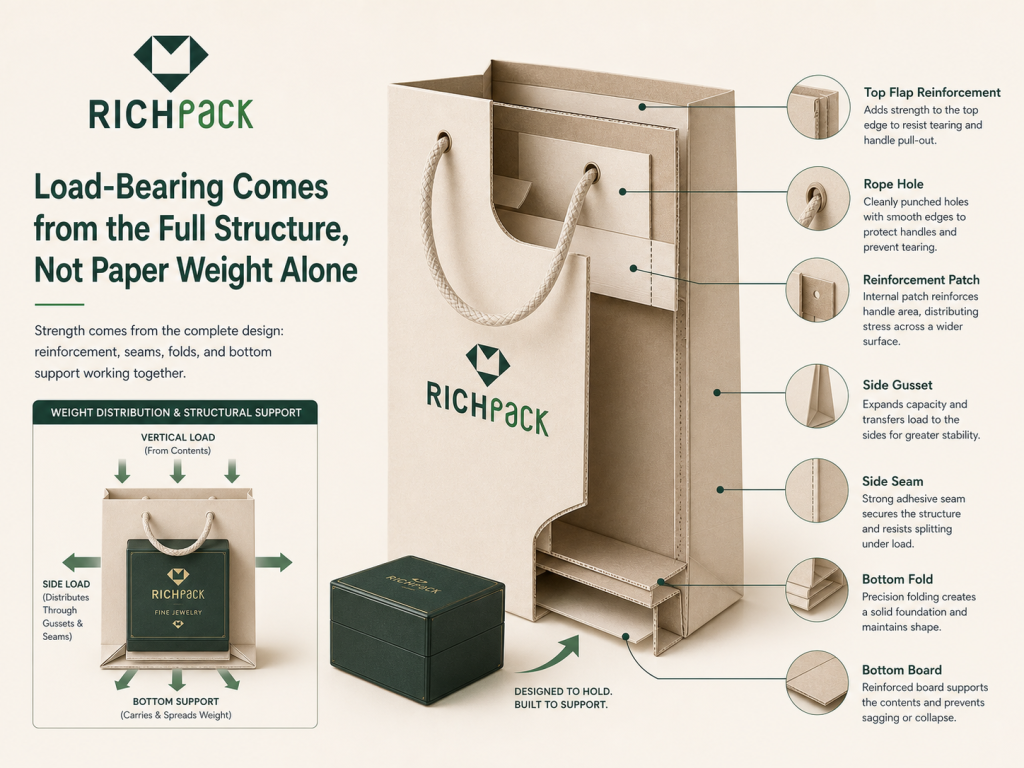
Design the bag as something people carry because handles cross the top, side folds hide art near the edge, and a hand covers part of the front panel.
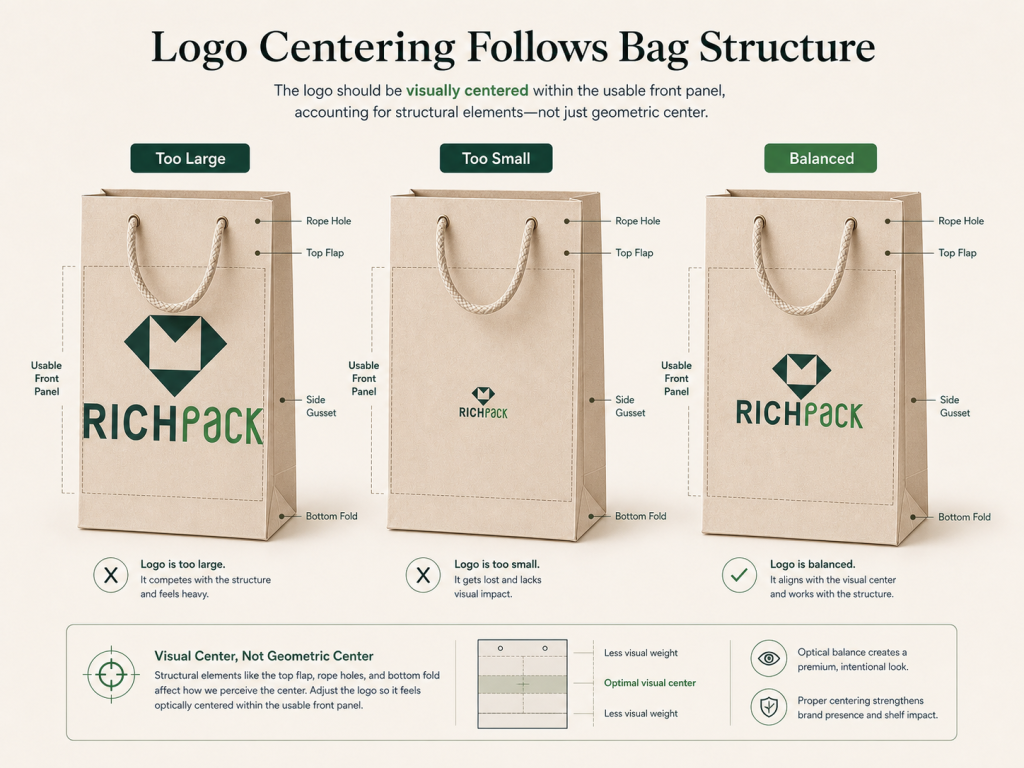
Place the logo after you set the bag shape, and keep it clear of rope holes, folds, and the base turn. Print the logo at full size and tape it to a blank bag.
That simple test catches a common miss because a logo can sit at the math center and still look too low when the handles shift the visual center.
Send the factory a complete art pack:
Pantone defines a spot color as ink mixed before it goes on the sheet, while process color builds an image from four or more standard inks. Use a spot color for one key brand hue and process color for photos, fades, or multicolor art.
Neither method can fix a weak color brief because paper shade, ink, coating, finish, and room light all change what the eye sees. Set a real color target and use color management for paper packaging before the press run.
Keep the brand system calm because the bag, box, tissue, sticker, and card do not all need a large logo. One strong mark outside and one small detail inside can feel more costly than five loud marks.
Pick the paper first, then choose a finish that works on its surface.
The same foil die can make a clean mark on smooth paper and a broken mark on deep texture. Foil uses heat and force to add a thin film, while embossing lifts the paper and debossing pushes it down.
Match the finish to the job:
Compare the exact choices in RichPack’s packaging finish options, then ask for the finish on the paper you plan to buy.
A flat foil card is not enough because fine lines can fill, and wide foil can show pinholes. A logo close to a side fold can also crack when the bag opens.
Here is a sample-table case we often see: a jewelry brand asks for dark uncoated paper, a large pale logo, and a wide gold foil block. The screen looks rich, but the real sample shows weak foil edges, flat pale ink, and fingerprints.
Take something away by shrinking the foil, changing the pale logo print, or using smoother paper. More decoration will not fix the clash.
Price follows the bag spec, so two bags of the same size can have a wide price gap once you add paper, handles, print runs, dies, hand work, cartons, and freight.
Split the quote into fixed and per-bag costs because art setup, foil dies, and sample work spread across the order. Paper, handles, packing, and freight rise with the order or carton count.
| Buying path | Cash needed first | Brand control | Cost pattern | Main trade-off | Good use |
| Stock bag with stamp or label | Low | Low to medium | More hand work per order | Limited sizes and colors | Market tests and small launches |
| Short-run print on a stock shape | Medium | Medium | Setup spreads over the run | Fixed bag shape and paper | Events and first retail runs |
| Full custom bulk bag | High | High | Unit cost falls as setup spreads | More time and leftover stock risk | Repeat lines and store groups |
Small brands ask for a small order because cash matters, not because they dislike custom work. A smart first run can use a stock bag, custom tissue, and one good seal.
Do not force a full custom bag before sales show which box sizes move, or you may fill a room with bags that fit last season’s box.
Once the volume holds steady, ask for price breaks at the amounts the factory can run. Keep these lines separate:
A low unit price can hide a large freight bill because bags with poor pack-out fill a carton with air. Compare carton size and bags per carton next to the unit price.
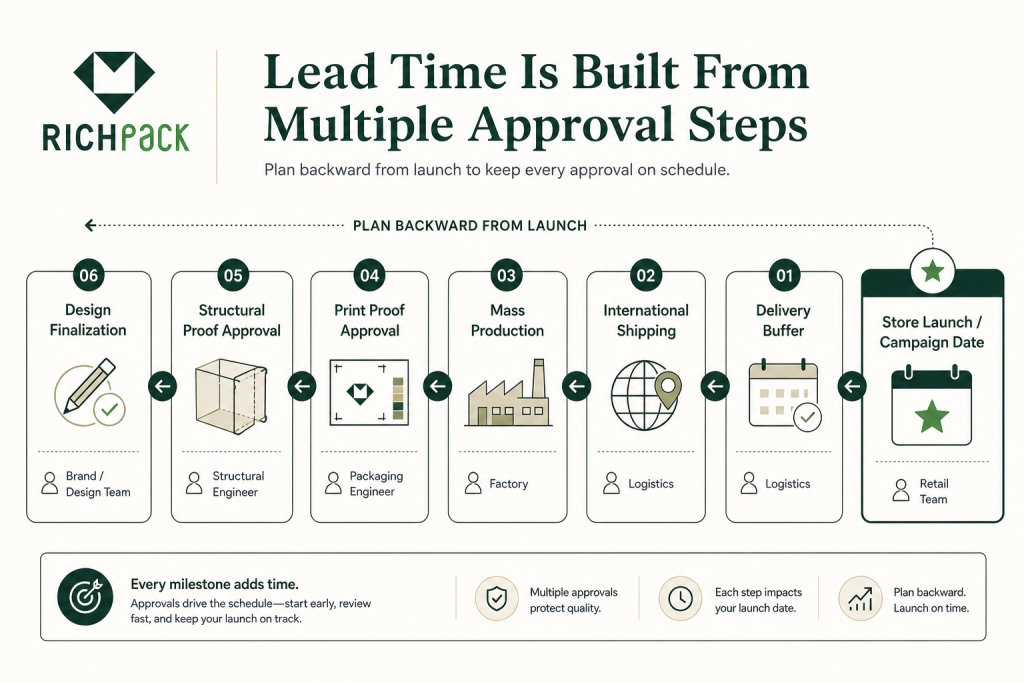
Work back from the day you need the goods, then add time for receiving, travel, bulk work, sample sign-off, art changes, and bag design. “Fast delivery” means nothing without dates.
Use RichPack’s ideas to reduce jewelry packaging costs without cutting the parts the shopper touches. Check these packaging supplier red flags before you pay the deposit.
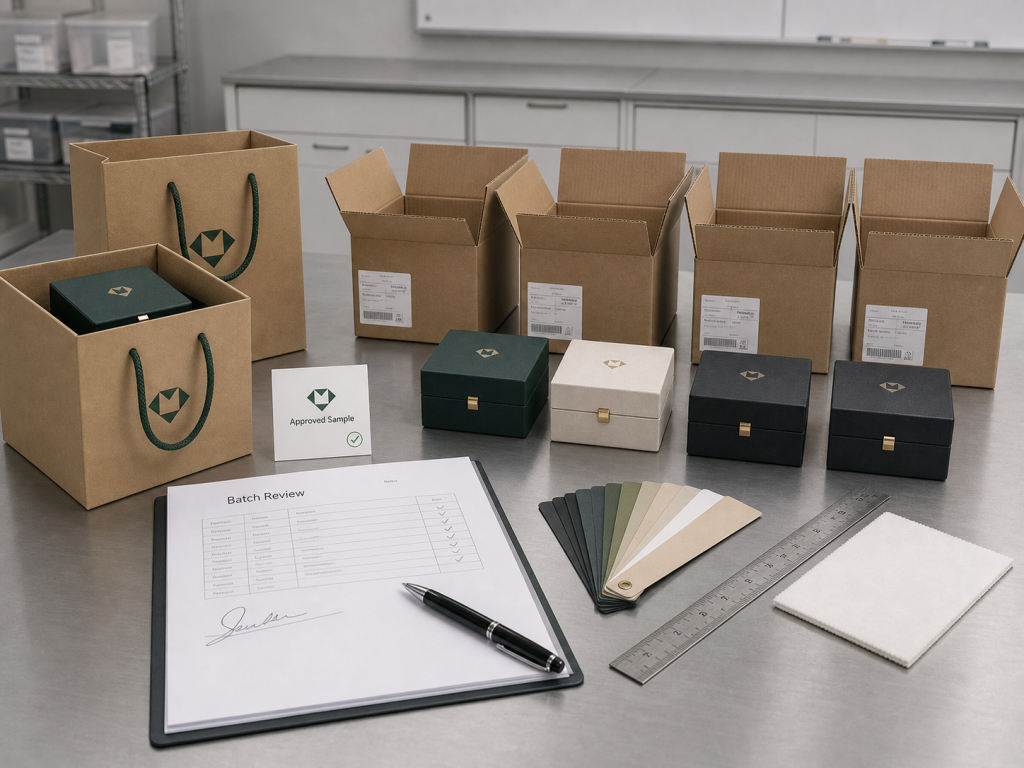
Approve the packed bag because an empty sample hides the faults that matter.
Put the real box, pouch, cards, tissue, and note inside, then carry the bag and set it down. Take the box out and pack it again.
Use a signed master sample and a short checklist:
Check the smell while the sample is fresh from a sealed pack, and stop to ask why if you smell ink, glue, or coating. Do not assume time will fix it.
Keep one signed sample with the buyer and one with the factory, then save dated photos and the real color target. RichPack’s six-step packaging design process links the brief, sample, and bulk run.
The gift bag is not a shipper, so online orders need a mailer or outer carton around the bag and box. Test the full pack for the route it will face.
ISTA 3A is a parcel test for single-packed products, and the right test level depends on item value and shipping route. RichPack also shows how to package jewelry for shipping outside the gift pack.
When the bulk bags arrive, pull samples from at least three cartons and from the top, middle, and base of each stack. Print shift, crushed rope, pressure marks, and bad glue can sit in one part of a load.
A bag looks cheap when the size or build feels wrong, and a lack of decoration is not the main cause. Fix the visible fault instead of adding another finish.
| Visible problem | Cause | Better action |
| The bag dwarfs the jewelry box | Buyer chose from a stock size list | Make a mockup around the full pack |
| Base bows under a small box | Weak base or poor weight spread | Add a fitted base card and load test |
| Handle crosses the logo | Art came before the handle layout | Set the bag shape first |
| Foil looks broken | Paper, area, heat, or force does not match | Test the real foil on the real paper |
| Brand color shifts | The team signed off on a screen | Approve a real color target under the set light |
| Bag feels busy | Competing finishes fight for attention | Keep one main finish and one small detail |
| The green claim feels vague | Claim rests on color or touch | State fiber, proof, share, and disposal limits |
| Delivery turns urgent | The plan has no sample or freight buffer | Work back from the arrival date |
The pattern is dull but true: a team can spend hours moving a logo by 2mm, then never carry the packed sample across the room.
Do both.
Start with 150gsm to 180gsm kraft for small boxes and daily store use, then move to 200gsm special paper or 250gsm coated paper when you need a stiffer face or sharp full-color art. Test the packed bag, folds, top patch, and base card before you buy.
No single gap works for every box, so start with the size matrix above, add tissue and cards, and make a plain paper mockup. The box must lift out with one hand, but it must not slide across the base.
Use one spot color when a key brand hue must stay steady, process color for photos or multicolor art, and a small foil mark after the paper passes a foil and fold test.
Yes, but a low order cuts your choices, so start with a stock shape and add a stamp, label, tissue, or tag. Move to a full custom size when your box range and repeat sales hold steady.
Spend money where the hand and eye land first by choosing a stock bag in the right size, thick tissue, one small foil seal or clean one-color stamp, and a small logo. Skip full flood print, custom-dyed rope, metal eyelets, and stacked finishes in the first run.
Use one color across the bag, tissue, and card because a tight color set looks planned. Good spacing, a straight base, and a neat knot cost less than a large foil panel, yet they do more for the final look.
The schedule depends on the bag shape, art, sample rounds, print, finish, order size, factory load, freight, and customs. Ask for dated steps from file sign-off to the day the cartons reach your door.
Stunning Custom Gift Bags start with fit and end with proof. Set the job, measure the whole jewelry pack, pick the right paper, build the load points, control the art, test the finish, plan the cost, and sign the packed sample before the full run begins.
The best result feels simple because the team did the hard work before production: the box lifts out cleanly, the bag stands straight, and the logo sits clear of the hand and fold.
Do not buy the bag as a loose extra. Build it around the jewelry, the handoff, and the path to the customer. RichPack can take a custom packaging project through design, samples, bulk work, and global delivery.


2024-11-15

2024-12-02
2025-01-15

2025-11-18

2024-12-06

2024-11-15
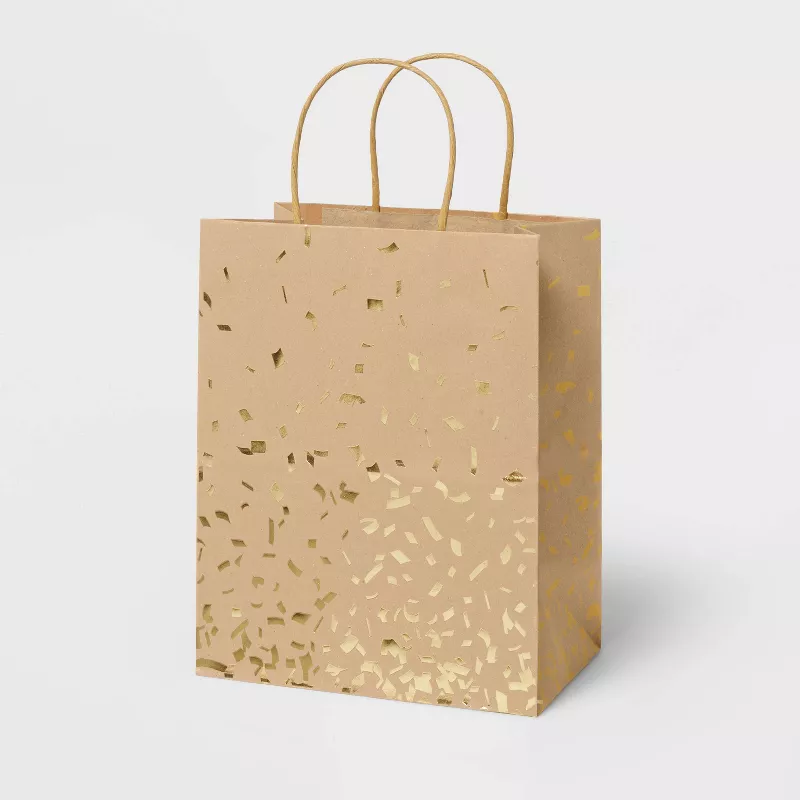
Creative Brown Paper Bag Decorations for Parties and Events | Stylish Star Paper Bags and Packaging Ideas to Decorate a Paper Bag
View More
Luxury Gift Bags with Ribbon – Premium, Lavish丨Make Gifting Opulent, Impress Recipients.
View More
Velvet Pouch Custom | Personalized Jewelry Pouches & Bags – Richpack
View More
Stylish and Compact Portable Travel Jewelry Box – Keep Jewelry Safe on Trips
View More
Fabric Jewelry Bags | Custom Cotton & Velvet Jewelry Pouches – Richpack
View More
Custom Jewelry Displays Wholesale for Retail and Exhibitions – High-Quality Necklace Displays Wholesale and Affordable Jewelry Display Stands Wholesale
View More

