


 PREV
PREV
10 Must-See Wine Gift Boxes for Clients
2025-08-16
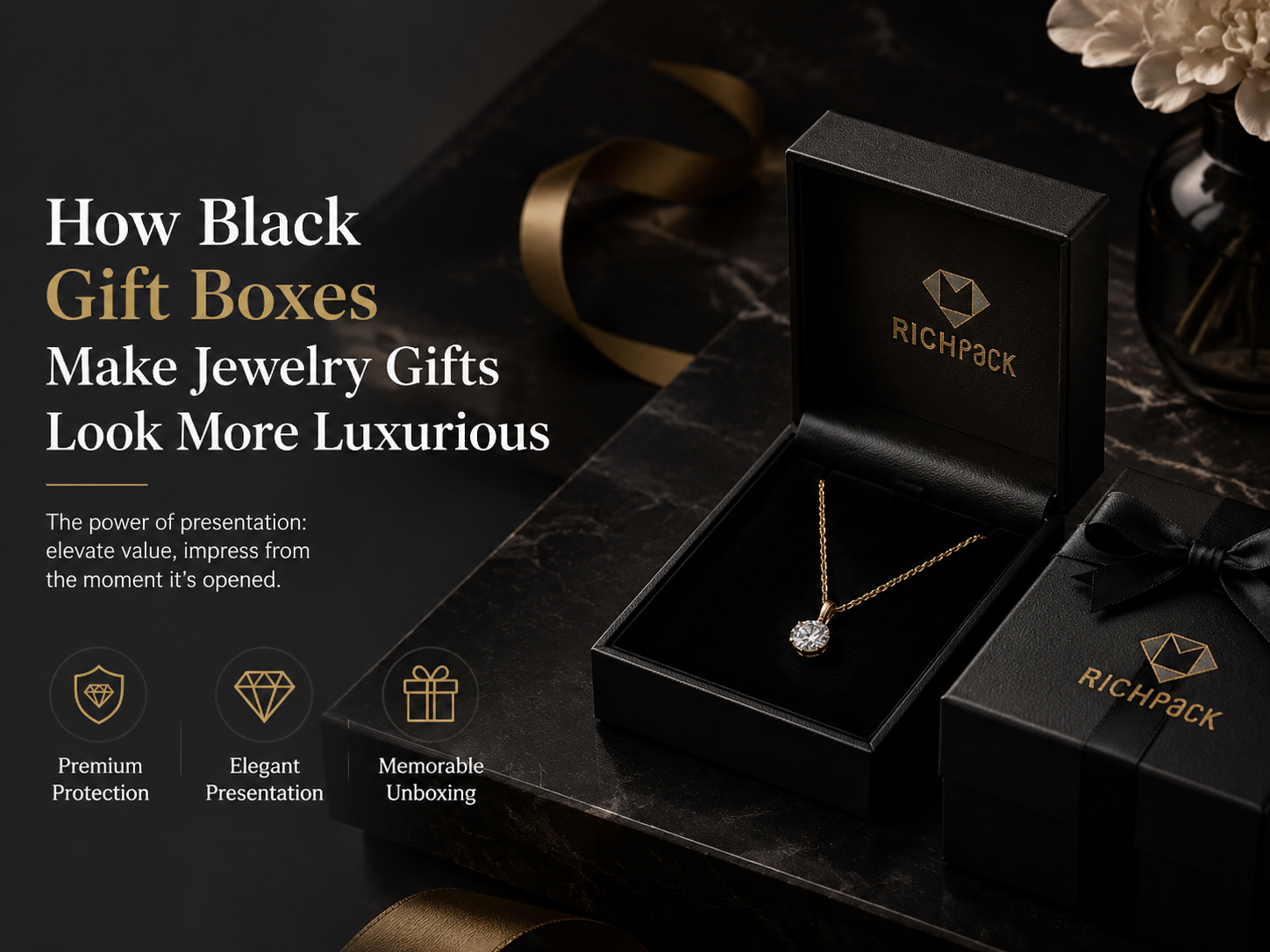



A weak box can make a good ring feel ordinary.
I have seen it happen on a sample table. The ring looked right. The logo looked right. The price point made sense. Then someone opened the box, and the whole mood dropped. The black wrap looked dusty. The insert sat too low. The foil mark was off by a hair.
That is why a black gift box is never just a black box. For many premium small and mid-size jewelry boxes, 1000gsm to 1200gsm high-density grayboard is a common starting point. But the real luxury comes from the parts buyers touch: the paper, the insert, the lid fit, the foil pressure, the closure feel, and the way the box survives shipping.
This guide shows how black jewelry gift packaging creates a more expensive first impression, where the real benefits come from, which box styles fit each jewelry type, and what to ask a supplier before you approve a sample.
You will walk away with practical choices for materials, inserts, finishes, branding, sustainability, quality checks, and custom order planning.
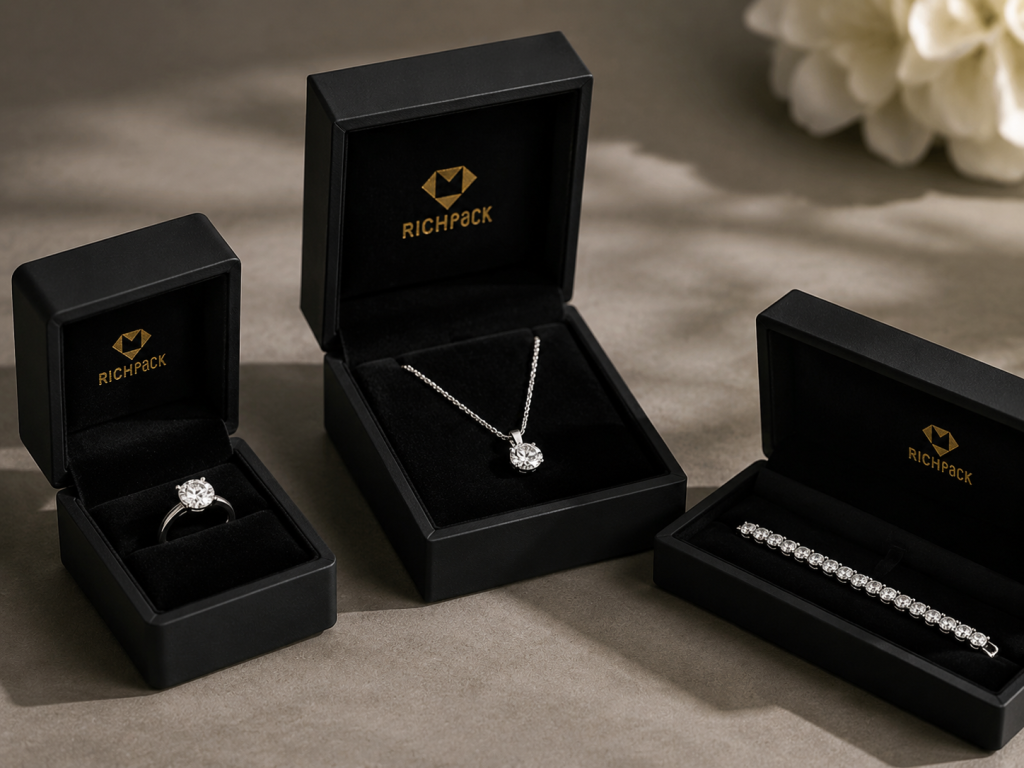
Black packaging changes what the buyer sees first. A good black box moves the eye toward the ring, necklace, bracelet, logo, and reveal moment.
A bad black box does the opposite. It shows dust, glue marks, weak corners, and poor insert fit.
Jewelry needs contrast. Gold, silver, diamonds, pearls, colored stones, and polished watch parts all read better when the background stays quiet.
Black does that job well. White can feel bridal. Kraft can feel handmade. Black feels controlled.
For a jewelry brand, that control matters. The buyer should not have to search for the hero piece inside the box.
A dark box works like a frame around a photo. It gives the jewelry a clear edge.
Gold often looks warmer against matte black. Silver and platinum look cooler. Colored stones can feel deeper because the packaging does not compete with the stone.
Working jewelers know the problem with pale inserts. The piece can blend into the background. Black gives it a stage.
Luxury packaging often feels calm because it removes extra choices. The customer sees fewer colors, fewer patterns, and fewer mixed signals.
A black box lets the brand send one message:
That last point matters. Too much shine can make a box look nervous.
Customers judge packaging with their hands before they say anything. The lid resistance, pull tab, paper texture, and insert firmness all send price signals.
A soft-touch black box with a clean magnetic closure feels different from a thin black carton. The color may be the same. The message is not.
If the corner bends under a thumb, the luxury signal breaks.
Jewelry often marks a private moment: a proposal, anniversary, milestone, promotion, or first luxury purchase. Black packaging gives that moment a pause.
A black exterior hides the detail until the lid opens. That works well for rings, necklaces, watches, and corporate jewelry gifts.
The pause is part of the value.
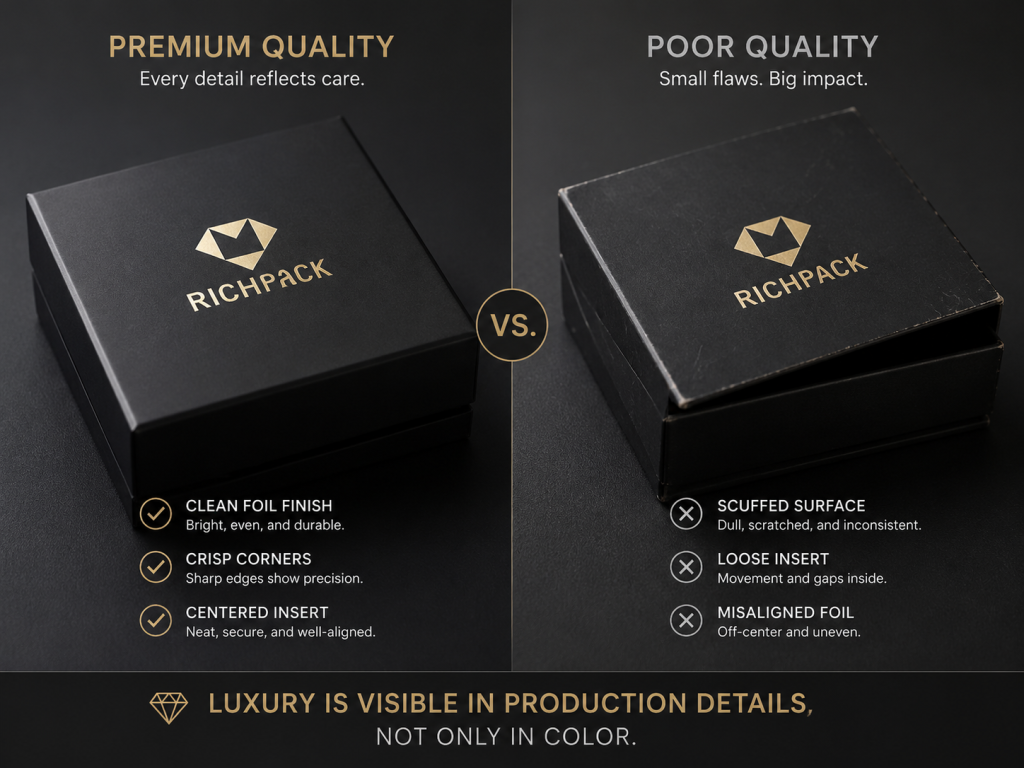
Black is strict. Dust, glue, fingerprints, scuffed corners, and uneven foil show faster on black than on many lighter colors.
That is why premium black packaging needs tighter production control. Board, wrap, lamination, foil, insert, and packing method all need to match.
Black can make jewelry look more expensive. It can also expose cheap production.
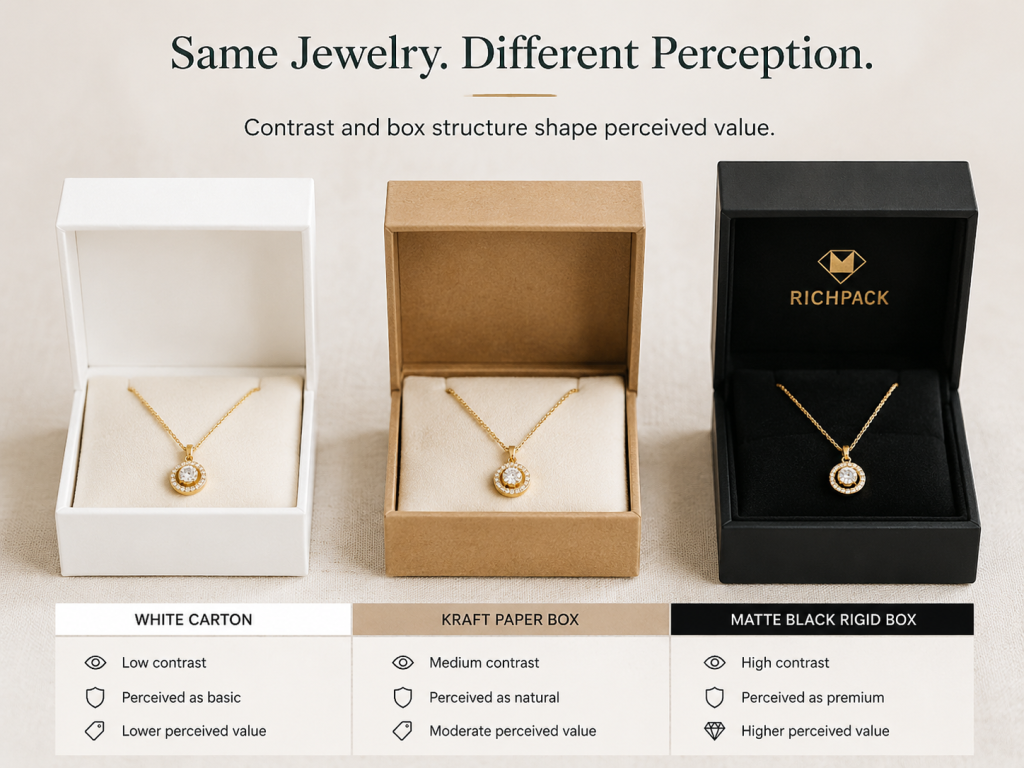
The old way to talk about black boxes was simple: attractive, protective, private, reusable, recyclable, and versatile. Those benefits still matter.
Jewelry brands need a sharper version. The box has to look good, protect the piece, support photos, survive handling, and help customers remember the brand.
A black box gives the customer a clear signal. The gift is not casual.
That signal matters in three places: product photos, delivery unboxing, and in-store handoff. The same package has to work in all three.
A plain black box with no texture can feel empty. A black box with the right insert, weight, and logo placement feels planned.
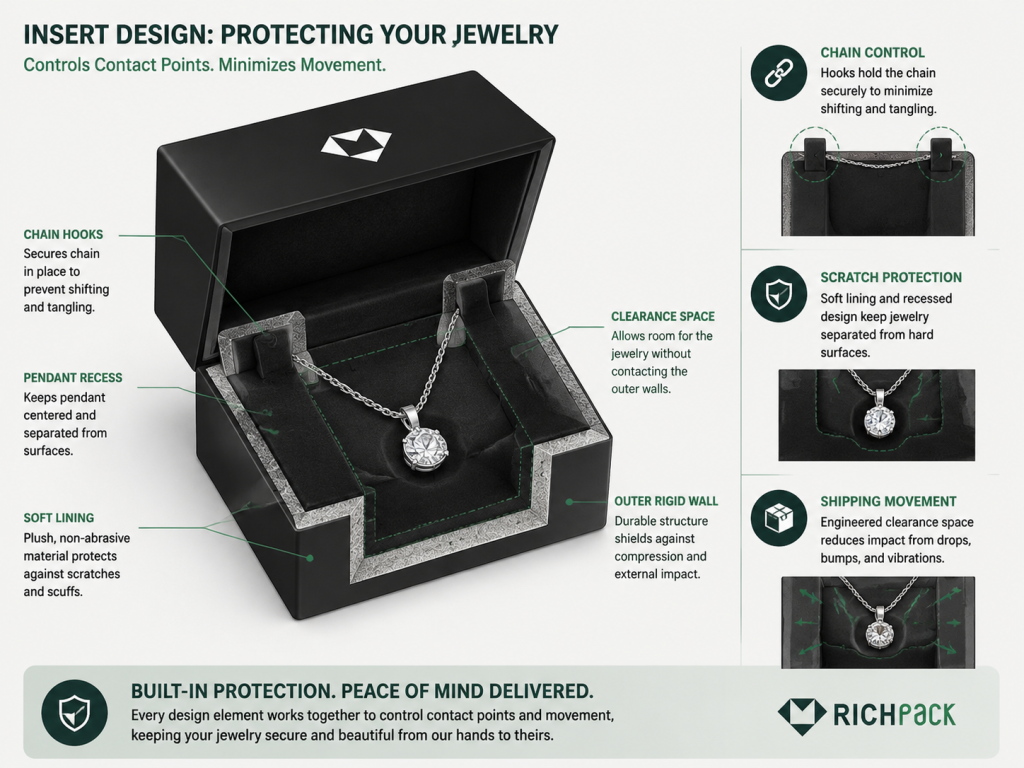
Jewelry protection starts inside the box. The color helps the presentation, but the insert does the hard work.
A ring needs a slot that holds the shank upright. A necklace needs tabs or hooks that stop the chain from tangling. Earrings need a pad that keeps the posts straight.
The best black box gift packaging protects the piece without making the customer fight the box.
Black slows the reveal. That is useful because jewelry is often emotional.
Buyers may not say, “I need privacy in the reveal.” They say, “I want it to feel special,” or “I do not want it to look like a stock box.”
Black helps because it hides the detail until the box opens.
Jewelry boxes often stay in drawers long after the first gift moment. That gives the brand more time in the customer’s home.
A reusable black box needs enough structure to survive storage. Thin boards and loose inserts usually end up in the trash.
If the customer keeps the box for travel, storage, or care, the packaging keeps doing brand work.
Black packaging can support better material choices. Recycled paperboard, paper inserts, FSC-certified papers, and molded pulp can all fit a premium direction when the finish is controlled.
The hard part is avoiding a dull gray-black surface. Recycled content and deep black color need careful sampling, especially when the brand wants a clean foil logo.
Ask for real material samples, not just a claim.
Black works across many jewelry gift moments. It can fit engagement rings, anniversary necklaces, men’s watches, corporate pins, VIP client gifts, and limited sets.
That range helps brands avoid a new packaging system for every season.
Change the accent, not the whole box. A ribbon, sleeve, card, or foil color can shift the mood while the core box stays the same.
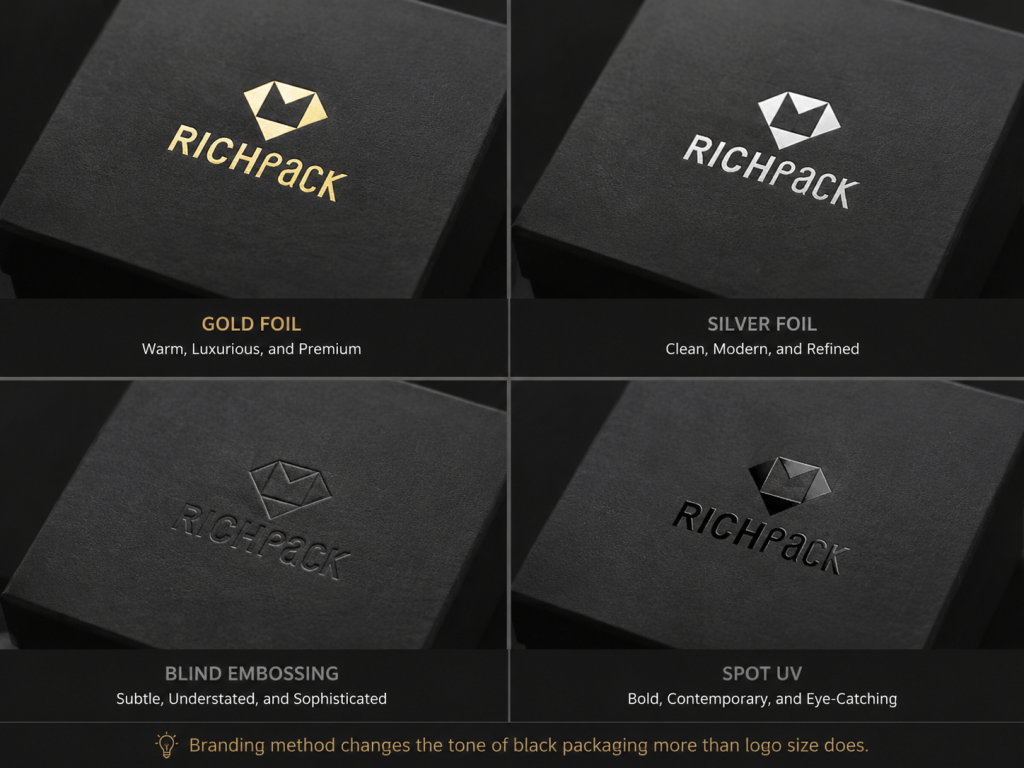
Black gives logos a strong contrast. Gold foil, silver foil, blind embossing, and spot UV all read well when the surface is clean.
A personalised black gift box can also feel more private than a bright branded box. The logo can be small.
That often looks more expensive than a large mark on every surface.

Black is not right for every jewelry line. Pastel enamel charms, playful bead jewelry, and beach-style pieces may need softer colors.
Black works best when the brand wants weight, contrast, privacy, or a more adult mood.
Engagement ring packaging needs focus. The ring should stand upright, centered, and well lit when the lid opens.
A black ring box can make a diamond or colored stone feel brighter. It also hides the reveal until the right second.
Avoid oversized boxes here. The ring should feel centered, not lost.
Necklaces need structure. A loose chain in a beautiful box is still a bad unboxing.
A black necklace box should use tabs, hooks, or a shaped insert to keep the pendant centered. The chain should not scrape against foil, raw paper edges, or rough insert material.
The best samples open cleanly and show the pendant first.
Bracelets need space and curve control. A cushion insert can work for bangles. A molded tray may work better for chain bracelets.
Black packaging helps bracelets feel more substantial because it frames the shape. But the fit has to be right.
If the bracelet shifts during shipping, the first impression turns into a fixing task.
Small jewelry can look tiny in a large box. Earrings need scale control.
A small black box with a card insert or pad can make earrings feel gift-ready without adding waste. For studs, pad firmness matters because loose posts can tilt.
Tiny details show up here. A crooked earring card makes the whole box feel off.
Black boxes work well for watches, cufflinks, tie bars, and men’s jewelry because the color feels restrained.
A watch box needs a stronger structure than a small ring box. The cushion must hold shape, and the lid should not press into the watch face.
Test the box height with the actual product. Catalog dimensions are not enough.
VIP gifting needs restraint. The packaging should look expensive without shouting.
A black box with a small foil logo, clean sleeve, and message card can carry that tone. It also lets the jewelry feel like the center of the gesture.
Corporate buyers care about this balance. They want the gift remembered, not the logo forced.
Corporate jewelry gifts need repeatable quality. One perfect sample is not enough.
The brand needs a consistent black tone, logo placement, insert fit, and carton packing across the full order. This is where many cheap boxes fail.
A black box custom gift program should include sample approval, batch checks, and packing rules.
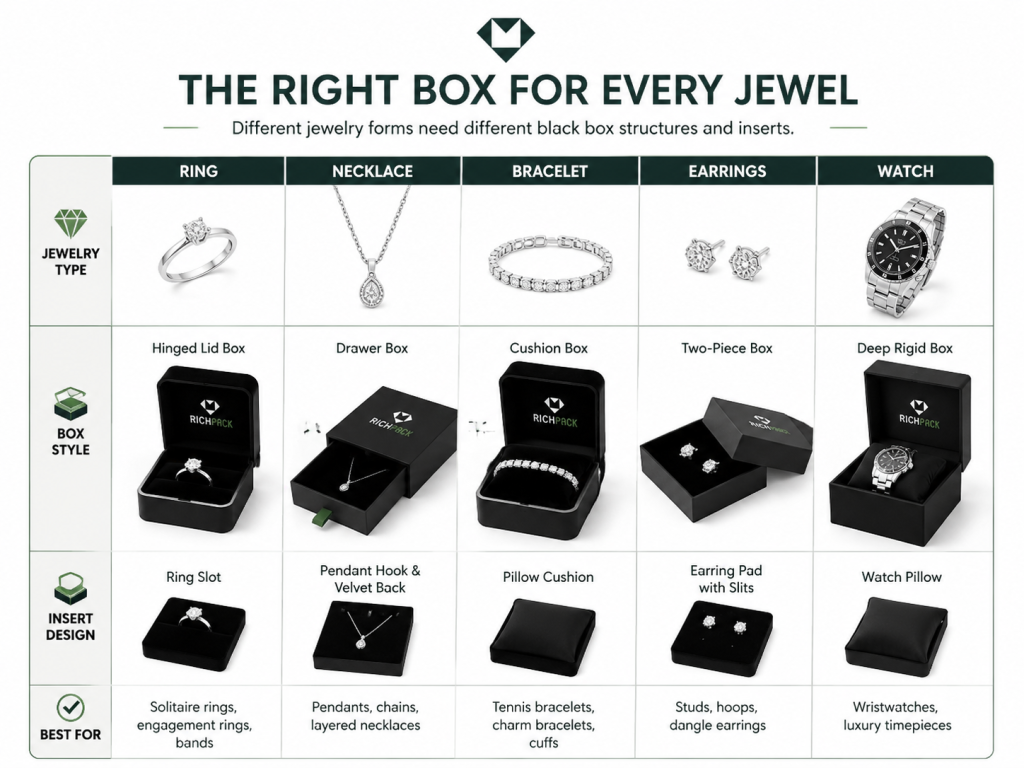
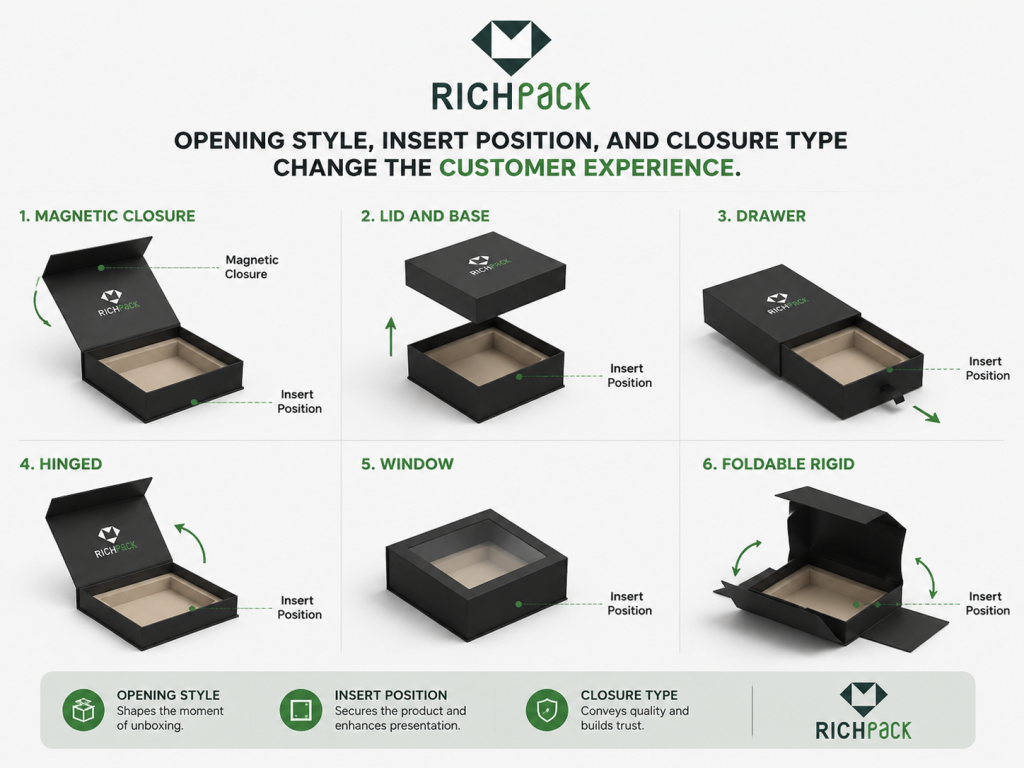
Box style changes how the gift opens. That matters because jewelry is small and easy to under-present.
The best style depends on product value, sales channel, shipping needs, and how much ceremony the brand wants.
Magnetic gift boxes feel modern and gift-ready. The close should feel soft and secure, not sharp or weak.
Hidden magnets depend on more than magnet grade. Board gap, paper wrap, glue layer, magnet size, and placement tolerance all change the pull feel.
Do not approve the magnet by spec alone. Open and close the sample with one hand.
Lid and base boxes are simple and reliable. They work well for rings, earrings, bracelets, and small sets.
The lid fit is the key detail. Too loose feels cheap. Too tight makes the customer fight the box.
A good supplier adjusts clearance after the insert is chosen.
Drawer boxes add a reveal moment. A ribbon pull can make a necklace or bracelet feel more special.
They also create friction risks. If the drawer scrapes, catches, or opens unevenly, the box stops feeling premium.
Ask for a sample with the final paper wrap and final insert thickness. A blank structure sample can lie.
Hinged boxes work well for rings and higher-value pieces. They create a classic presentation moment.
The hinge line needs clean wrapping. The lid should stay open at a useful angle, not fall back or drop forward.
For proposal-style packaging, this detail is not small. It affects the photo.
Window boxes can work when the jewelry needs to be seen before opening. They are more common in retail displays than luxury reveals.
Use them carefully for fine jewelry. A window can make the gift feel more accessible, but it can also reduce privacy.
For fashion jewelry or gift sets, the window may help. For engagement rings, it often works against the moment.
Foldable rigid boxes save storage and shipping space before assembly. That can help brands with warehouse limits.
The risk is felt. Some foldable boxes do not have the same weight or corner quality as a fully assembled rigid box.
For premium jewelry, test the assembled box after repeated opening and closing.
Ribbon closures add softness. They work well for wedding jewelry, holiday gifts, and limited sets.
The ribbon should not fight the box. If it is too shiny, too thin, or badly placed, the package can feel less refined.
Black with black ribbon feels quiet. Black with gold or ivory ribbon feels more festive.
Travel-ready boxes need a different standard. They must protect during use, not only during the first handoff.
Check zipper quality, lining, compartment layout, and pressure points. A beautiful box that scratches jewelry in a suitcase is not a premium product.
The use case decides the structure.
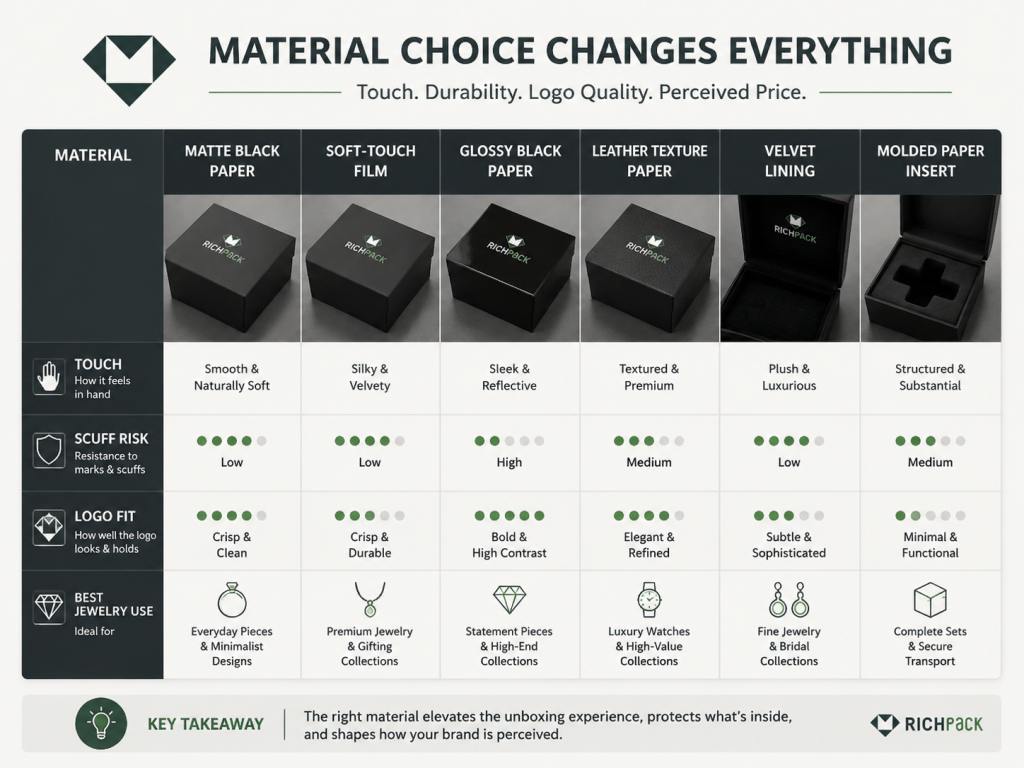
Material is where black packaging wins or fails. The same color can feel rich, dusty, soft, sharp, warm, or flat.
Ask for physical swatches before approving a black box. Screen photos cannot show touch, scuff risk, or foil behavior.
Matte black paper gives a quiet, modern look. It works well for brands that want restraint.
The risk is dust and corner wear. Ask how the paper handles rubbing, carton packing, and hand assembly.
A matte box should look calm, not chalky.
Soft-touch film gives a smooth hand feel. It can make a black box feel more expensive before the lid opens.
It also needs scratch testing. Some soft-touch surfaces show marks faster than buyers expect.
Ask for a handled sample, not a perfect one pulled from a sleeve.
Glossy black looks sharp in photos when it is clean. It can work for fashion jewelry, statement pieces, and bold retail displays.
It also shows fingerprints and glare. If the brand ships directly to customers, glossy black may need extra handling care.
Gloss is not bad. It is less forgiving.
Leather-texture paper adds a touch without using leather. It can work well for watches, men’s jewelry, and premium corporate gifts.
The texture should match the box size. A large grain on a tiny earring box can feel heavy.
Test logo stamping on the actual texture because uneven surfaces change foil behavior.
Velvet and suede-touch surfaces feel intimate. They work well for ring boxes, pendant boxes, and emotional gifts.
They also collect dust and fibers. That matters in packing rooms and warehouses.
If the order uses velvet, ask how the supplier protects the surface during final packing.
Rigid paperboard gives the box its shape and corner strength. For many premium small and mid-size jewelry boxes, 1000gsm to 1200gsm grayboard is a common planning range.
Do not stop at GSM. Ask for finished wall thickness, corner quality, and compression feel.
A thick board with poor wrapping still looks cheap.
Recycled board can support a better material story, especially when paired with paper-based inserts.
The challenge is consistency. Recycled board may vary in tone, density, or surface behavior depending on the supplier and finish.
Approve recycled materials with real production samples, not only swatches.
Molded pulp and paper inserts can reduce plastic use. They also help brands keep a cleaner material system.
The main issue is surface feel. For fine jewelry, the insert must not look rough or scratch the piece.
Use molded forms where shape support matters, then add a tested lining if the jewelry surface needs more care. RichPack’s packaging materials page is a useful starting point for comparing these choices.
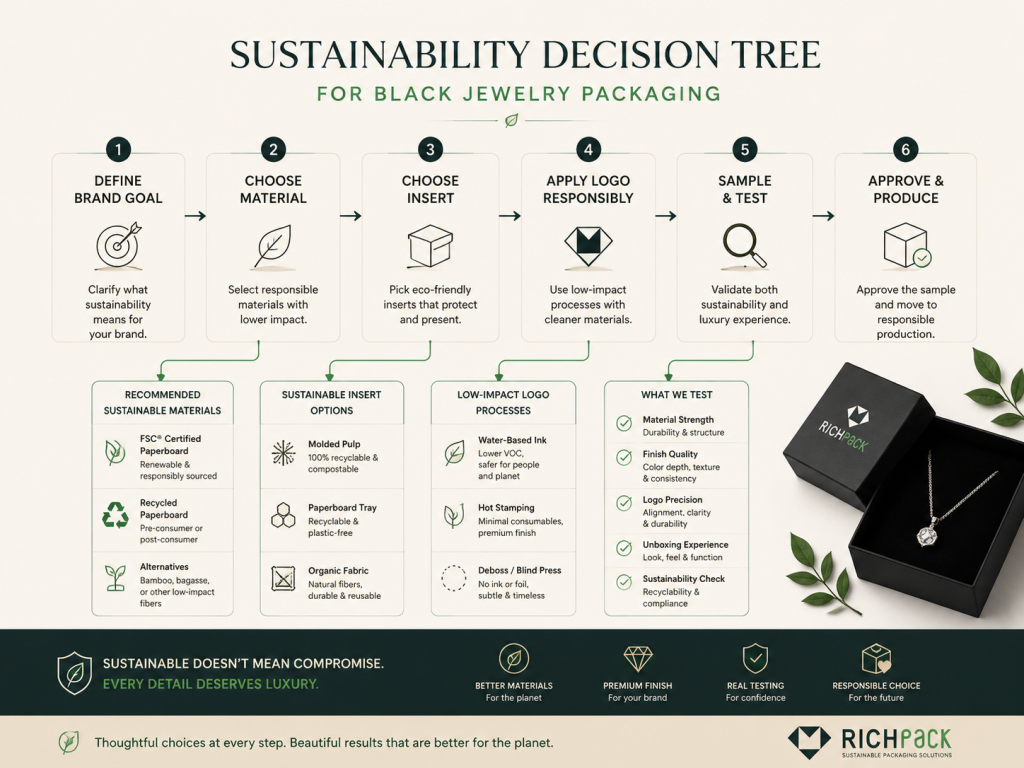
Many buyers worry that sustainable packaging will look flat or cheap. That can happen, but it is not a rule.
The better test is simple: does the material support the brand mood, protect the jewelry, and pass a real sample review?
Fenton, a B Corp jewelry brand, worked with Sourceful to redesign a messy packaging setup. The old system used separate components and animal leather ring boxes.
The new system brought the pieces together in one custom gift box. Sourceful also reported that the team tested more than 40 fabrics before choosing a certified vegan material for the ring box.
The lesson is useful for black jewelry packaging. Sustainable does not have to mean plain. It has to be engineered.
RichPack’s sustainable jewelry packaging case focuses on a similar problem: how to keep a premium feel while moving toward better materials.
That kind of project works when the supplier treats sustainability as a design constraint, not a slogan. The box still needs clean edges, a fitted insert, and a finish that photographs well.
A dull, recycled black surface will not help the brand. A tested paperboard, molded pulp, or fabric option can.
Sustainable black packaging needs the same sample discipline as any premium box.
Check these points before bulk production:
The claim matters. The sample matters more.
The outside sells the promise. The inside keeps it.
Jewelry inserts should hold the piece in place, protect the surface, and make the reveal easy. If the customer has to untangle or adjust the jewelry, the box has failed.
A velvet ring slot should hold the ring upright without squeezing the shank too hard. The ring should not lean when the box opens.
Test with real ring sizes, not only a sample prop. Thin bands and thicker bands can behave differently.
A slot that works for one collection may not work for the next.
Necklaces need control over the chain and pendant. Hooks, tabs, and hidden slots keep the chain from falling into the box.
The pendant should sit centered when the customer opens the lid. That is the image buyers remember.
If the chain arrives tangled, the box makes the brand look careless.
Bracelet cushions work well when the jewelry needs volume. They can make a bracelet look full and gift-ready.
The cushion must fit the box depth. If it sits too high, the lid presses the jewelry. If it sits too low, the bracelet looks buried.
Depth is part of luxury.
Earring cards keep small pieces organized. Pads can make studs, hoops, and drops easier to present.
The hole spacing should match the product. Generic spacing often creates tilted earrings.
That tiny tilt can show up in product photos and customer unboxing photos.
Sterling silver and plated jewelry need extra care. Some papers, dyes, glues, and fabrics can add odor or tarnish risk if they are not tested.
Ask for sulfur-free or acid-free options where needed. Also ask how the supplier checks dyed fabric and glue odor.
A beautiful black box should not create a care problem.
Jewelry surfaces can scratch against rough inserts, exposed paperboard edges, or hard plastic trays.
Run a simple sample check: place the jewelry in the insert, close the box, shake gently, then inspect contact points.
It is not a lab test. It catches obvious trouble.
Real product testing is the fastest way to avoid bad packaging. Drawings and catalog photos do not show every chain length, clasp thickness, stone height, or bangle curve.
Send the supplier real jewelry samples or exact dummy samples. Mark the pieces by SKU.
Good packaging starts with the product, not the box.
A jewelry box should survive more than a pretty desk review. It should hold the piece after carton packing, courier movement, and warehouse handling.
For higher-value launches, ask for a drop or vibration-style check based on the shipping route. ISTA and ASTM D4169 are useful references for these talks.
You do not need to over-test every order. You do need to test the risky ones. For custom structures, custom jewelry inserts should be reviewed before the outer box is locked.
Black packaging gives brand details room to breathe. The logo does not need to be large to carry weight.
Small, clean, well-placed details often look more expensive than loud decoration.
Gold foil on black is a classic jewelry signal. It works because the contrast is clear and warm.
The risk is registration. If the foil shifts, breaks, or fills in small letters, the box looks cheap.
Keep fine logo details simple when the surface has texture.
Silver foil feels cooler and more modern than gold. It pairs well with white gold, platinum, diamonds, and minimalist jewelry.
It can also feel less warm in gift settings. The right choice depends on the brand mood.
Ask for foil tests under the lighting used for product photos.
Blind embossing creates a subtle mark without adding color. It can feel refined on matte black paper.
It needs enough pressure and the right paper surface. Too shallow disappears. Too deep can distort the wrap.
Blind emboss works best when the brand wants quiet confidence.
Spot UV adds a gloss detail over a matte black surface. It can look sleek when used in small doses.
The problem is alignment. A small shift can be obvious because the shine catches light.
Use spot UV for simple marks, borders, or pattern details, not tiny text.
Ribbon changes the mood fast. Black on black feels restrained. Ivory feels bridal. Gold feels festive. Red feels dramatic.
For jewelry brands, the ribbon should support the piece, not steal attention from it.
Test ribbon width and pull feel with the actual box size.
A personalised black gift box can include a message card, a care card, an authentication note, or a limited-edition insert.
These small paper pieces often do more than a large logo. They make the gift feel chosen.
Keep the card stock and print quality aligned with the box. A flimsy card breaks the spell.
A sleeve can add seasonal design without changing the core box. That helps brands manage limited-drop, holiday-set, and corporate programs.
Sleeves also protect the black surface during shipping and handling.
For direct shipping, this small layer can reduce scuff complaints.
Black packaging works well for limited sets because it gives the collection a stronger boundary.
Use one detail to mark the edition: foil color, sleeve art, ribbon, card, or insert color. Do not change everything at once.
A limited edition should feel designed, not decorated. RichPack’s custom jewelry boxes with logo pages can help buyers compare logo and box options for branded programs.
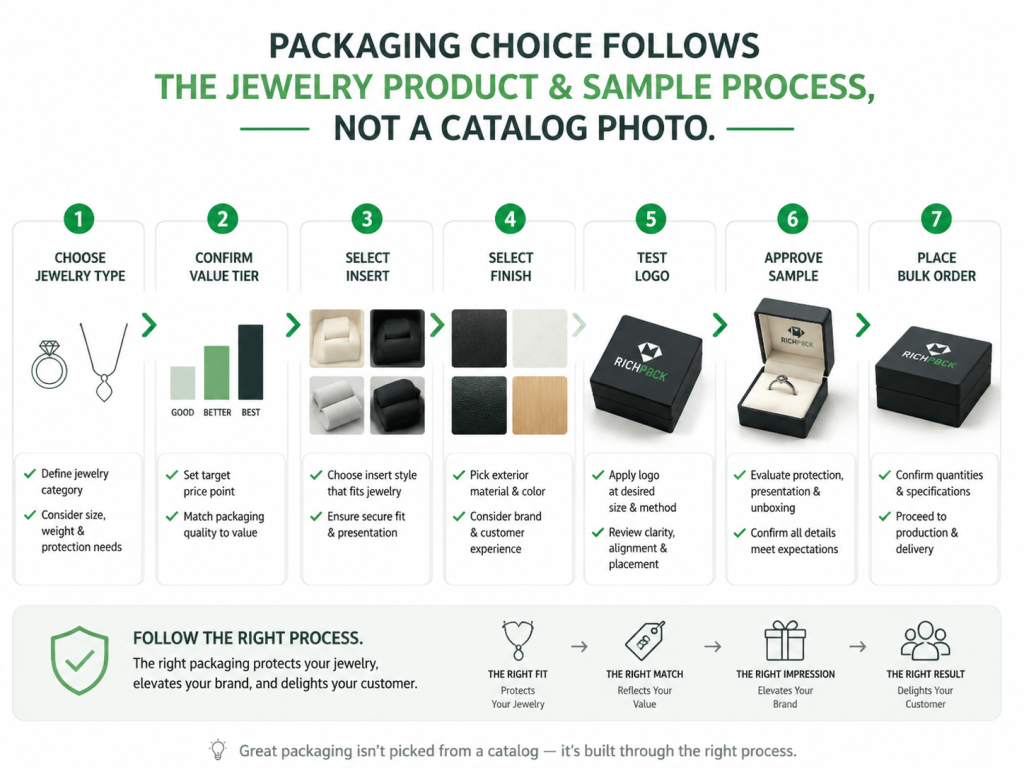
A good box is not the fanciest box. It is the box that fits the jewelry, price point, sales channel, and repeat order plan.
Use the packaging brief to make choices before the sample room starts guessing.
Higher-value pieces usually need stronger structure, better inserts, and quieter branding. Lower-priced accessories may need a lighter box that still looks clean.
Do not over-package low-margin items. Do not under-package high-emotion gifts.
Both mistakes cost money.
Start with the jewelry shape, not the box catalog. A ring, necklace, bangle, and earring set each needs a different hold point.
The insert should answer one question: what moves during shipping?
If the answer is the pendant, fix the pendant hold. If the answer is the bracelet, fix the cushion.
Matte black feels modern. Soft touch feels intimate. Glossy black feels bold. Leather texture feels classic.
Pick one mood and stay with it.
Mixed finishes can work, but only when the brand has a clear system.
Store display, online shipping, wholesale, and corporate gifting all treat packaging differently.
A box that works in a boutique may not work in courier shipping. A box that ships well may feel too plain for a proposal moment.
The channel decides the stress points.
Box size changes carton count, storage, freight cost, and damage risk. Oversized boxes may look generous in photos, but they waste space and need more protection.
For direct-to-customer jewelry, a snug premium box often beats a large dramatic one.
Luxury should not feel empty.
Foil, embossing, specialty paper, ribbons, sleeves, and custom inserts all add cost. Choose the detail customers will notice first.
For many jewelry brands, that detail is the insert and logo finish.
A perfect insert beats an expensive exterior with a loose necklace inside.
A launch sample can be beautiful and still fail repeat orders. Ask how the supplier controls black tone, foil position, insert fit, and packing method over time.
Repeatability is part of brand trust.
If the second order looks different from the first, customers notice.
The following table compares common jewelry products with box structures, insert choices, finish directions, and branding details. A black gift box should be chosen around the jewelry’s shape and value, not only around the outside color.
| Jewelry product | Best box style | Recommended insert | Best finish | Branding detail |
| Engagement ring | Hinged or magnetic box | Velvet ring slot | Matte or velvet | Gold foil logo |
| Necklace | Lid and base or drawer box | Hooks and tabs | Soft touch | Ribbon pull tab |
| Bracelet | Rigid lid and base box | Cushion or molded tray | Matte black paper | Blind embossing |
| Earrings | Small two-piece box | Pad or card insert | Leather texture paper | Silver foil logo |
| Jewelry set | Rigid gift box | Multi-compartment tray | Soft touch film | Branded sleeve |
For small formats and repeat packaging, wholesale small jewelry gift boxes can be a practical route when the line needs consistent sizing across several SKUs.
Most cheap-looking black boxes fail for boring reasons. Weak board, bad fit, poor finish control, and careless packing do more damage than a weak design idea.
This table turns those problems into a sample review checklist. Use it before approving bulk production.
| Review point | Premium black gift box | Cheap black gift box | What to check on the sample |
| Board strength | Corners feel firm, and walls do not flex easily | Corners dent or bend under light pressure | Press each corner and side wall with a thumb |
| Black surface | Deep, even black tone under different lights | Gray, dusty, faded, or patchy tone | View under daylight, store light, and photo light |
| Finish durability | Handles rubbing and packing with a few marks | Shows scuffs, fingerprints, or dull spots fast | Rub a handled sample with tissue and inspect the edges |
| Logo process | Foil or emboss lands cleanly | Foil shifts, breaks, or fills small details | Check logo edges with a close-up photo |
| Insert fit | Jewelry stays centered and secure | Jewelry tilts, moves, or tangles | Shake the closed box gently with the real product inside |
| Lid feel | Opens smoothly and closes with control | Too loose, too tight, or uneven | Open and close ten times with one hand |
| Batch match | Reorder matches the approved sample | Black tone and foil position drift | Keep a signed approval sample for comparison |
| Packing protection | The box arrives clean and unmarked | Surface damage appears before use | Review sleeve, tissue, inner carton, and master carton |
A good supplier brief saves time. It also prevents the sample room from solving the wrong problem.
Give the supplier the product, use case, launch date, shipping route, and brand mood before asking for a quote.
Ask for board type, wrap paper, lining, insert material, glue type, and finish. Do not accept “premium paper” as a final answer.
You need names, samples, and handling notes.
Material clarity reduces surprise later.
Ask how the finish handles rubbing, fingerprints, carton packing, and hand assembly.
A black box may pass a desk review and still be marked during packing. That is why handled samples matter.
Tell the supplier how the boxes will be packed and shipped.
Send the jewelry or a dummy sample. Ask where the piece will touch the insert.
A good insert brief should include product dimensions, hold points, clearance, and surface risk.
The insert is not an accessory. It is the protection system.
Foil, embossing, debossing, and spot UV behave differently on each material.
Ask for logo tests on the final surface. Do not approve a foil sample on a different paper and expect the same result.
Surface changes everything.
The approved sample should match the final material, final structure, final insert, and final logo process.
A white dummy box only proves structure. It does not prove black finish, scuff behavior, or foil quality.
Approve what you plan to buy.
Different structures can have different minimums. A custom insert, specialty paper, foil die, or molded tray can change the order plan.
Ask for price breaks at 500, 1,000, and 3,000 pieces when relevant.
The best order size is often a cash-flow decision, not just a unit-price decision.
Packaging often becomes urgent because the product team waits too long. Black custom boxes need time for material approval, logo testing, insert fitting, and packing checks.
For a new structure, leave time for at least one sample revision.
A rushed black box shows its mistakes.
Ask how the supplier checks black tone, corner wrapping, foil position, insert fit, magnet pull, odor, and carton packing.
For larger orders, ask for inspection photos or batch review points before shipment.
Do not wait until boxes arrive to find the problem. For a deeper review path, RichPack’s custom jewelry packaging support can help turn the brief into a sample plan.
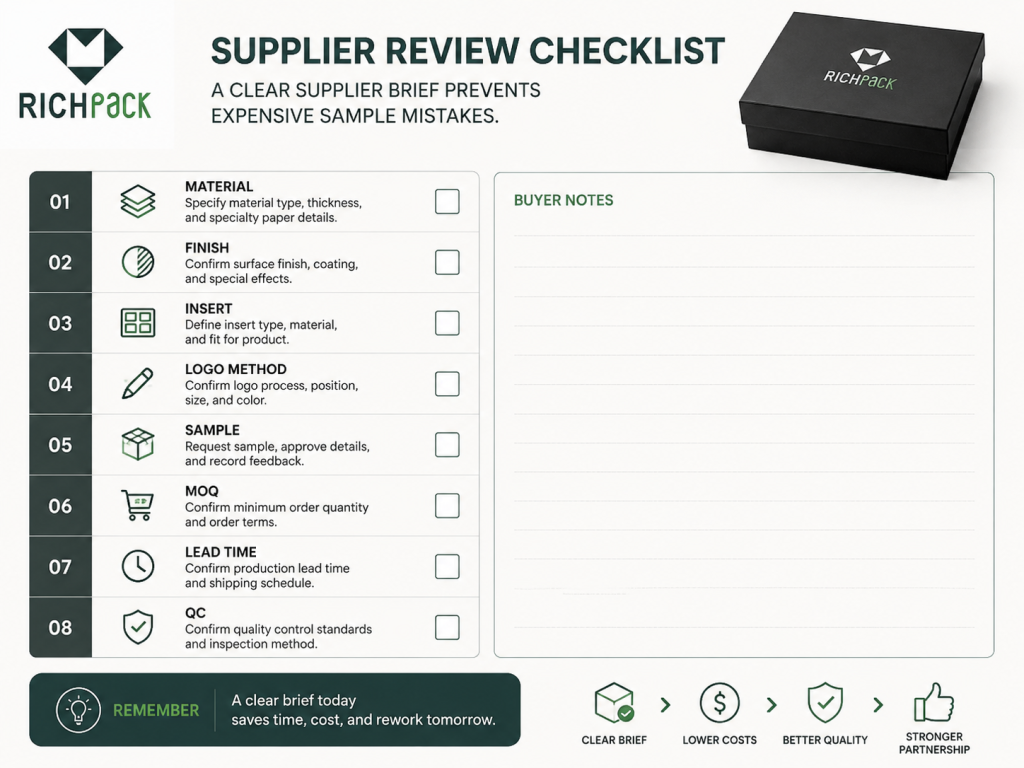
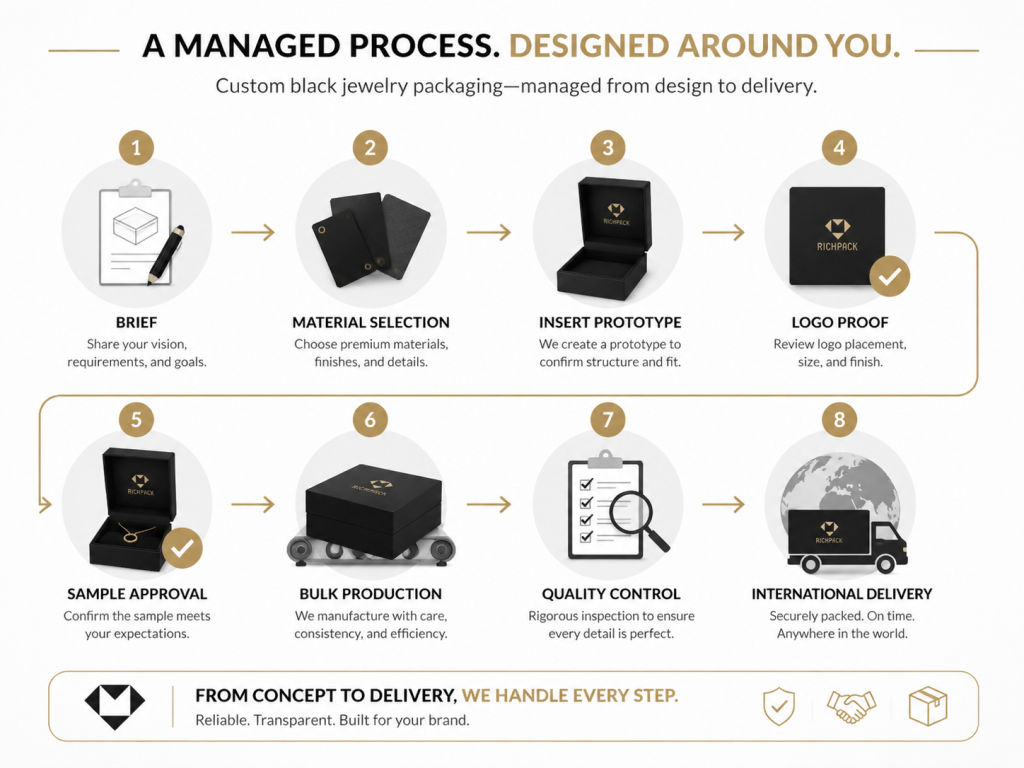
RichPack works best when the packaging brief covers the full path from design to delivery. A box is not only a container. It is a small supply chain.
That supply chain includes design, material sourcing, sampling, insert engineering, print testing, production, quality control, and international shipment.
RichPack can help match the box style to the jewelry type, price point, and sales channel.
The early decision is simple: should the box create ceremony, protect during shipping, support display, or do all three?
The answer shapes the structure. RichPack’s packaging design support can help brands turn that answer into a workable dieline.
Black packaging needs careful material choice. RichPack can compare matte paper, soft-touch surfaces, glossy finishes, leather textures, velvet, suede-touch lining, and paper-based insert options.
The goal is not to pick the fanciest surface. The goal is to pick the surface that survives the brand’s real use.
That includes handling, photography, packing, and repeat orders.
RichPack can build inserts around the jewelry, not around a generic tray.
For rings, that may mean slot depth and angle. For necklaces, it may mean hooks and tabs. For bracelets, it may mean cushion firmness or molded support.
Good inserts make the unboxing feel calm.
Black surfaces need print testing. Foil pressure, emboss depth, spot UV alignment, and logo size should be checked on the final material.
RichPack can help prepare samples that show the real finish, not just a digital mockup.
The sample should answer the hard question: will this look right in bulk?
Prototype review is where brands catch the expensive problems early.
Check lid fit, insert hold, surface marks, logo placement, odor, corner wrapping, and how the box opens with one hand. Use real jewelry whenever possible.
A good prototype meeting feels picky. It should.
Bulk production needs repeatability. Black tone, foil position, insert size, and closure feel should stay consistent across the full run.
RichPack can support production planning around approved samples, material standards, and batch checks.
That helps the second order match the first.
Quality control should look at both appearance and function.
For black jewelry boxes, common checks include surface marks, glue lines, foil defects, insert looseness, lid fit, magnet pull, odor, and carton packing. For silver jewelry, material and lining fit may also need review.
The box has to look good and behave well. RichPack’s packaging quality control process can help buyers review these points before shipment.
International orders need packing decisions that protect the box before it protects the jewelry.
Sleeves, tissue, inner cartons, master cartons, and pallet planning all affect surface condition. A beautiful black finish can be damaged before it reaches the brand.
Delivery planning is part of luxury packaging.
A black gift box improves the first impression, adds contrast, supports a private reveal, protects jewelry when paired with the right insert, and gives the brand a clean surface for logo details.
For jewelry brands, the biggest benefit is control. Black packaging controls the mood before the customer sees the piece.
Yes, black gift boxes work well for engagement rings, necklaces, bracelets, earrings, watches, VIP gifts, and corporate jewelry gifting.
They work best when the box has a fitted insert, clean finish, and branding detail that matches the jewelry value.
A black gift box looks luxurious when the surface feels clean, the structure feels firm, the insert holds the jewelry well, and the logo detail is small and precise.
Color alone is not enough. A weak board or loose insert can make black packaging look cheap.
Matte black feels modern and restrained. Soft touch feels smooth and intimate. Glossy black feels bold but shows fingerprints more easily.
For most premium jewelry brands, matte or soft-touch finishes are safer starting points than high gloss. For more background on luxury gift box materials, compare finish options before sampling.
Yes. A personalised black gift box can include foil stamping, blind embossing, spot UV, printed sleeves, message cards, or ribbon details.
Gold foil and blind embossing are common choices for jewelry because they look premium without making the box feel crowded.
Yes, custom black gift boxes can work for small jewelry brands when the structure and detail level match the budget.
A smaller brand may start with a simple rigid box, clean insert, and one logo process before adding sleeves, ribbons, or specialty finishes.
A necklace usually needs a lid and base box or drawer box with hooks, tabs, or a shaped insert.
The pendant should sit centered when the box opens, and the chain should not tangle during shipping.
Choose a finish that matches the handling route, then test real samples for rubbing, fingerprints, carton contact, and hand assembly.
Sleeves, tissue wrap, inner cartons, and careful packing can also reduce scuff marks before delivery.
Velvet inserts work well for rings, pendants, and high-emotion gifts because they add softness and contrast.
For some items, microfiber, suede-touch lining, EVA foam, paperboard cards, or molded paper inserts may work better. The jewelry shape decides the insert.
Yes, black gift boxes can use recycled paperboard, FSC-certified papers, paper inserts, or molded pulp components.
The brand should approve real samples because recycled materials can affect black tone, surface feel, and logo finish. For wedding and occasion gifting, elegant packaging for wedding jewelry can also help brands plan the emotional side of the box.
A black gift box makes jewelry gifts look more luxurious when it does more than look dark. It needs the right structure, a clean surface, a secure insert, and a branding detail that feels planned.
The practical benefits still matter: stronger first impression, better protection, private reveal, keepsake reuse, better material choices, occasion fit, and easier customization. That is why black keeps showing up in premium jewelry packaging.
Treat the box as part of the jewelry experience. If the sample looks good only when it is empty, keep working. The real test starts when the ring, necklace, bracelet, or watch sits inside.
RichPack can help jewelry brands turn black box gift packaging into a finished custom system, from structure and materials to inserts, logo sampling, quality control, and international delivery. For launch planning or sample development, review custom packaging projects and prepare the jewelry pieces you want the box to protect.
2025-08-16

2025-05-14

2026-04-02
2024-11-29
2024-12-24
2024-12-02
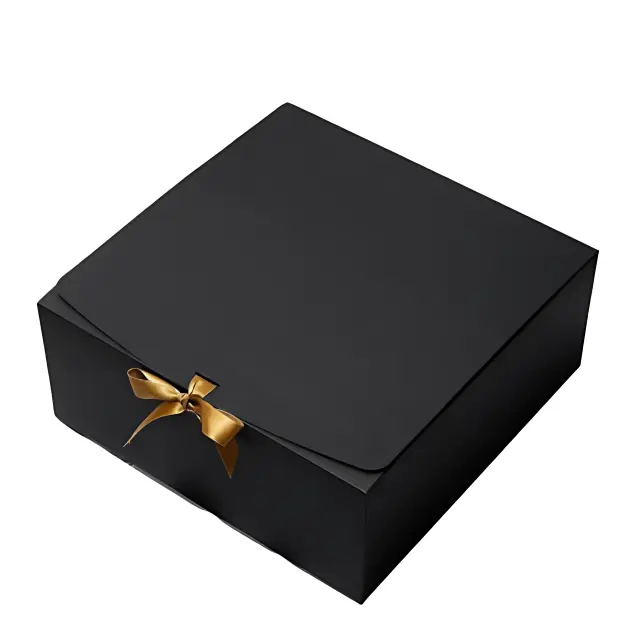
Black Gift Box with Lid – Rigid Box for Jewelry, Gifts & Retail Packaging | Richpack
View More
Birthday Gift Boxes for men – Sturdy Boxes for His Special Day’s Elegance
View More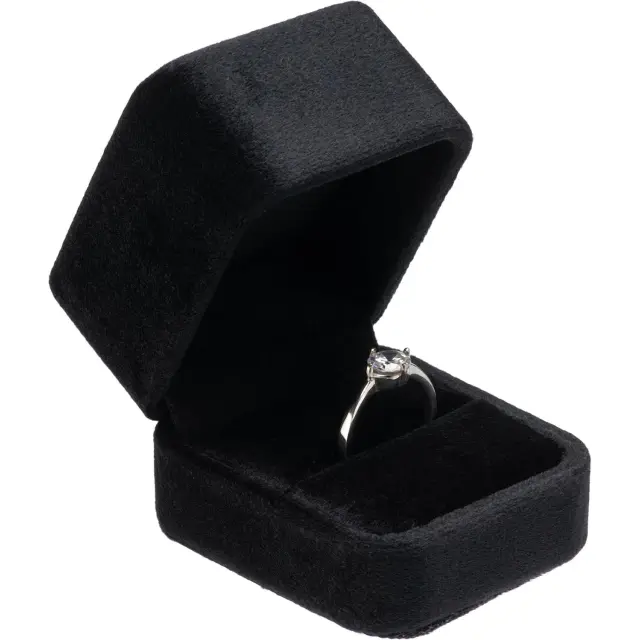
Black Velvet Ring Box for Jewelry Brands | Custom Wholesale Packaging Solutions – Richpack
View More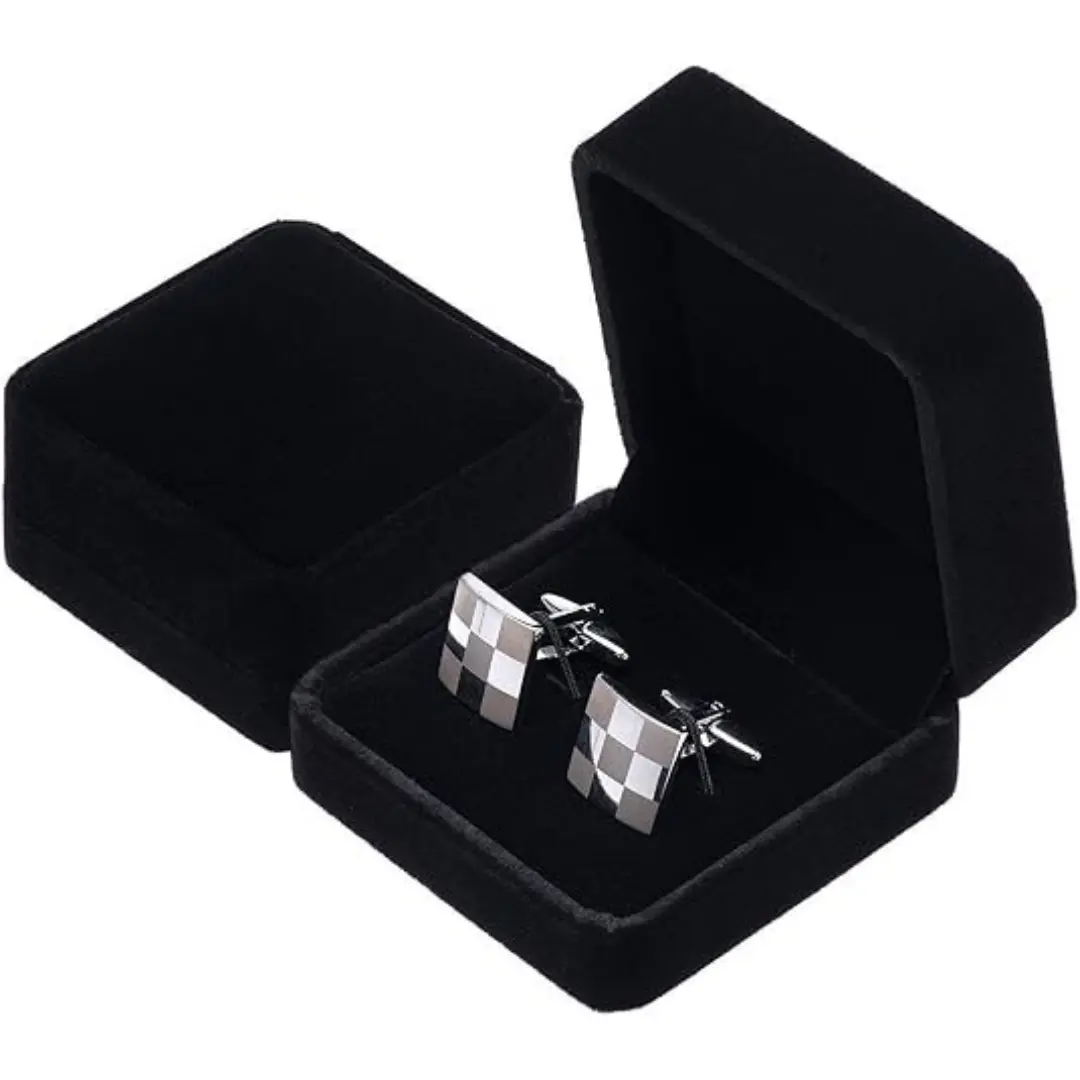
Cufflink Box in Black Velvet | Portable Single-Pair Cufflinks Display and Gift Case | Richpack
View More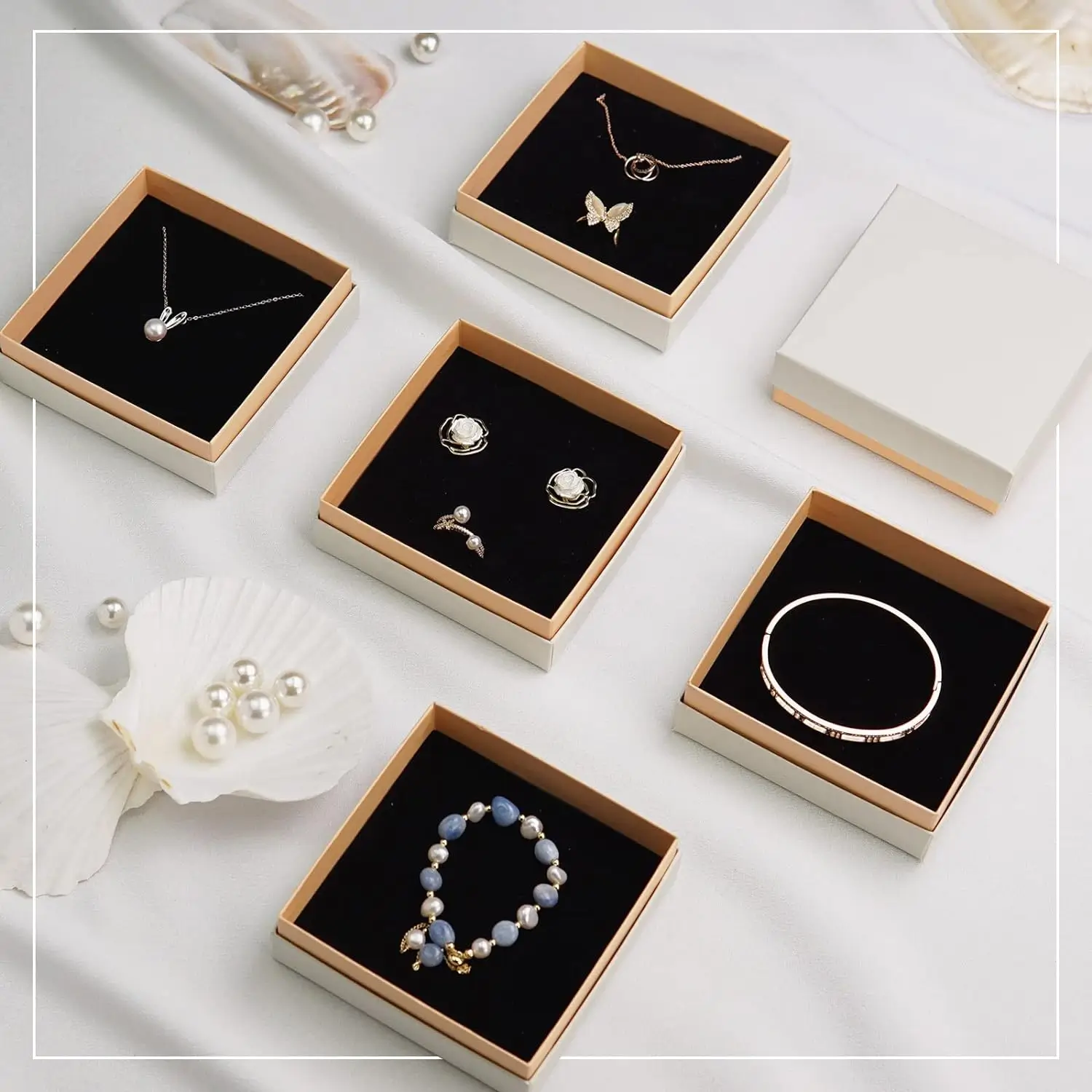
Elegant Gift Card Boxes for Weddings | Custom Wedding Gift Card Boxes for a Memorable Reception with Options of Sizes, Materials, and Shapes Richpack
View More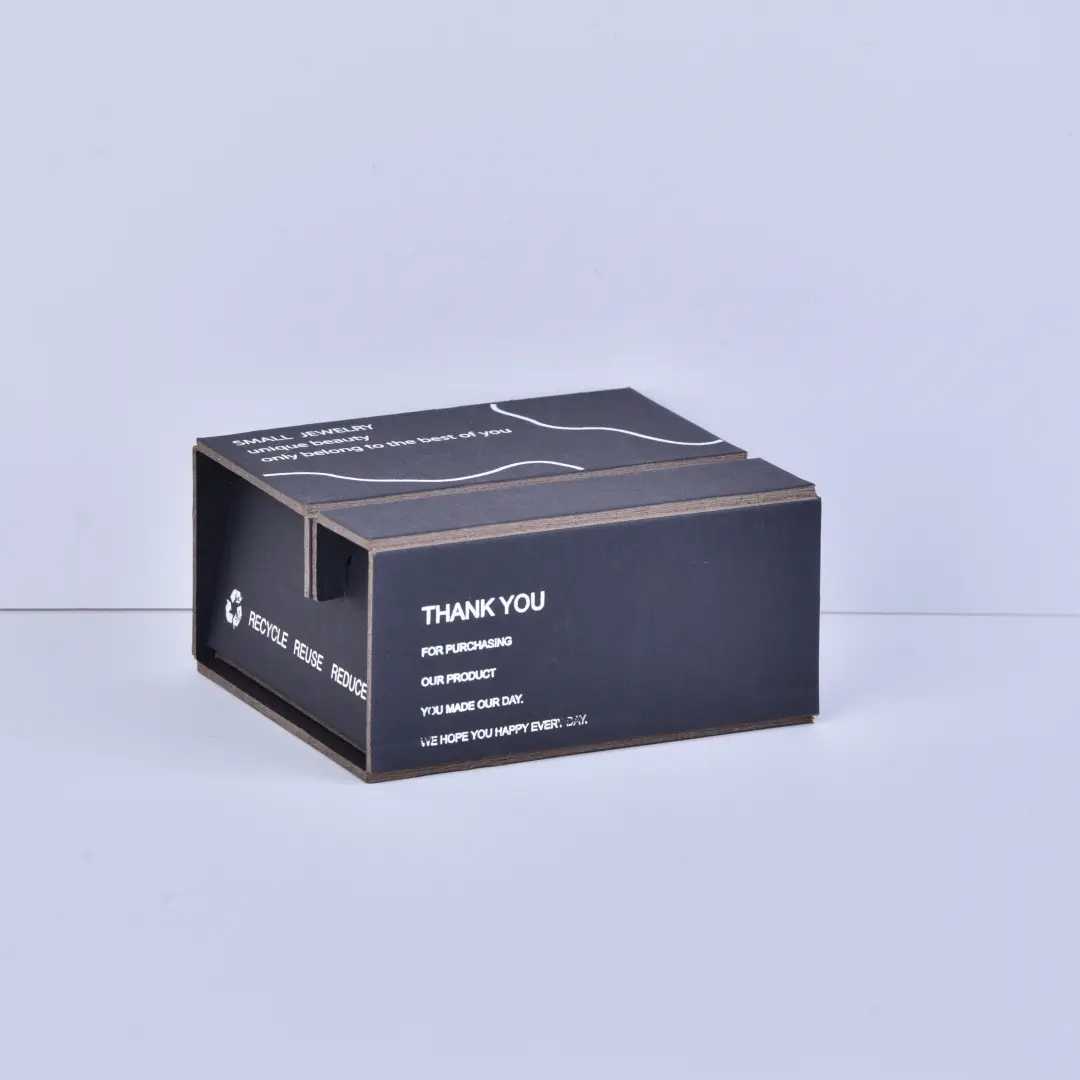
Empty Two-Piece Folding Box – Black 8x9x4.5cm Folding Jewelry Box | Custom Logo Options
View More

