

 PREV
PREV
10 Best Customizable Jewelry Packaging Solutions for Standout Branding
2024-10-10
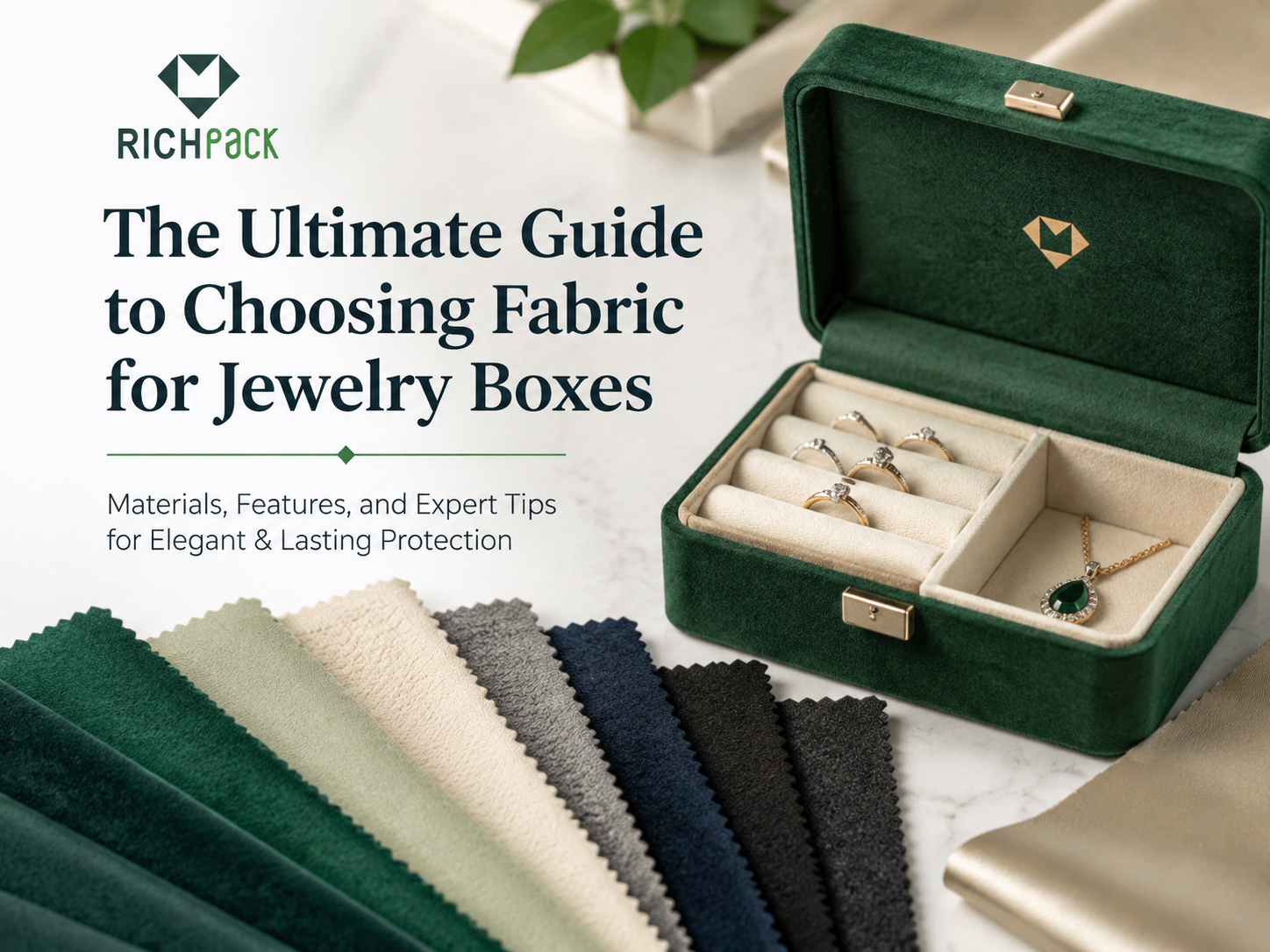



The best fabric for a jewelry box is usually velvet or suede-touch microfiber for the lining, with the final choice depending on the jewelry type, storage risk, insert structure, and brand style.
Fabric choice is not only about softness. The 2016 ISO 105-X12 rubbing method is a useful reminder here: color transfer can happen when a dark lining meets light jewelry cards, silver, pearls, or skin after dry or wet rubbing.
That is why the first decision should be simple: pick the fabric that protects the jewelry first, then refine the look.
This guide helps you compare common jewelry box fabrics, choose safer lining materials, match fabric to rings, necklaces, earrings, silver, pearls, and plated jewelry, and know what to check before approving custom jewelry boxes with logo.
Most jewelry brands should start with velvet or suede touch microfiber for the inside of a box. Velvet gives the richest visual depth. Suede-touch microfiber is easier to control in bulk and often works better for everyday collections.
For exterior fabric covering, the best choice depends on the brand mood. Linen and cotton feel natural. Brocade and jacquard feel vintage. Embroidered fabric works best when stitching stays away from jewelry contact zones.
Suede-touch microfiber is the safest all-around fabric for many modern jewelry boxes. It has a soft hand, a clean matte look, and fewer pile direction issues than velvet.
From a production view, it is easier to cut, wrap, and repeat across batches. That matters when a brand needs 500, 1,000, or 3,000 boxes that all look like they came from the same family.
Velvet works well when a box needs a richer, more ceremonial look. Its pile catches light, so diamonds, gold, and polished silver often look warmer inside the box.
The trade-off is production control. Nap direction, pressure marks, dust, lint, and glue ridges all show up when the backing or wrapping process is weak.
Microfiber is the practical choice for brands that ship a lot of daily wear jewelry. It feels soft, photographs cleanly, and works well with compact inserts.
It also pairs well with custom jewelry box inserts because the fabric can wrap foam, paperboard, and molded supports without adding too much bulk.
Felt and flocking are the budget choices. They can prevent direct contact with hard board, but they do not always create the same expensive feel as velvet or microfiber.
Use them for entry boxes, sample kits, event giveaways, or low-risk items. Do not use cheap felt for pearls, plated jewelry, or silver without testing for lint and color transfer.
Muted velvet, floral fabric, brocade, jacquard, and cream colored liners create the strongest vintage look. These fabrics give a box the feeling of an heirloom without needing antique construction.
The risk is overdoing it. A vintage fabric jewelry box should frame the jewelry, not compete with it.
Embroidered fabric works best on the lid exterior, the outer wrap, or a pouch-style box. It is less safe inside a tight jewelry contact area because raised threads can rub against polished metal, pearls, or plated surfaces.
If the embroidery must go inside, keep it on the interior of the lid or on a non-contact panel. Ask for a physical sample before approving the layout.
Silver needs a soft, low-odor, low-sulfur storage environment. A microfiber or tested suede touch liner with an anti-tarnish insert is usually safer than an unknown dyed fabric.
Silver reacts with sulfur compounds in the air, and humidity can speed that reaction. That means the lining, glue, paperboard, and storage space all matter.
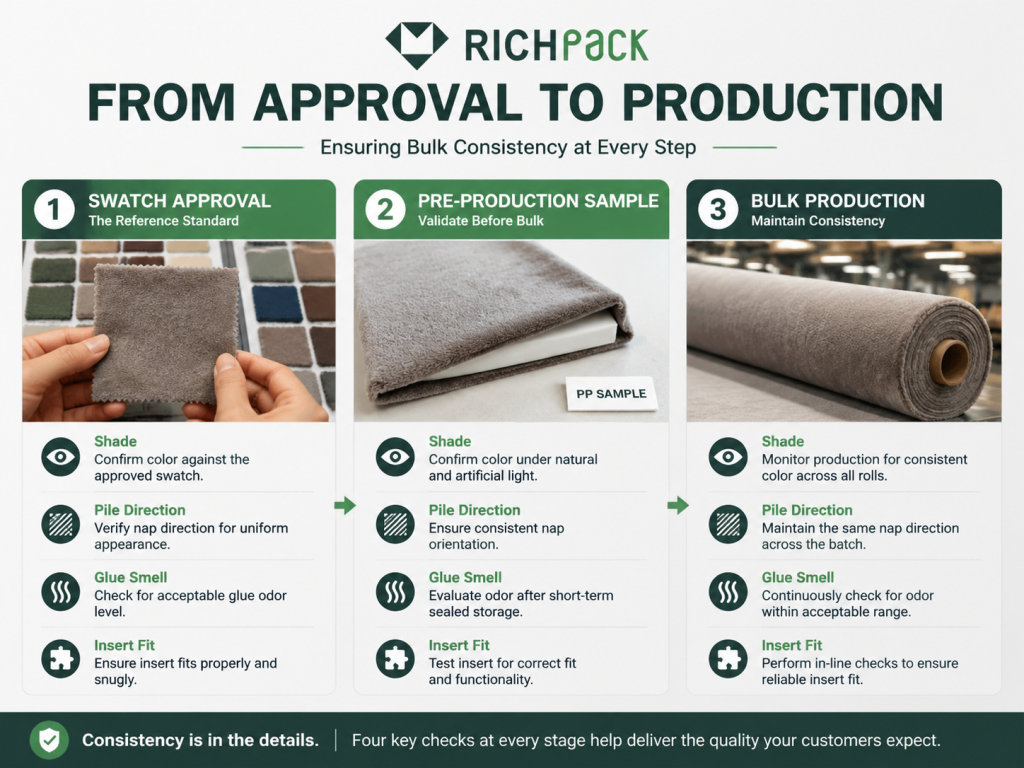
For bulk orders, the best fabric is the one your supplier can repeat. A beautiful one-off sample does not help if the next batch comes with a different shade, thinner pile, or stronger adhesive smell.
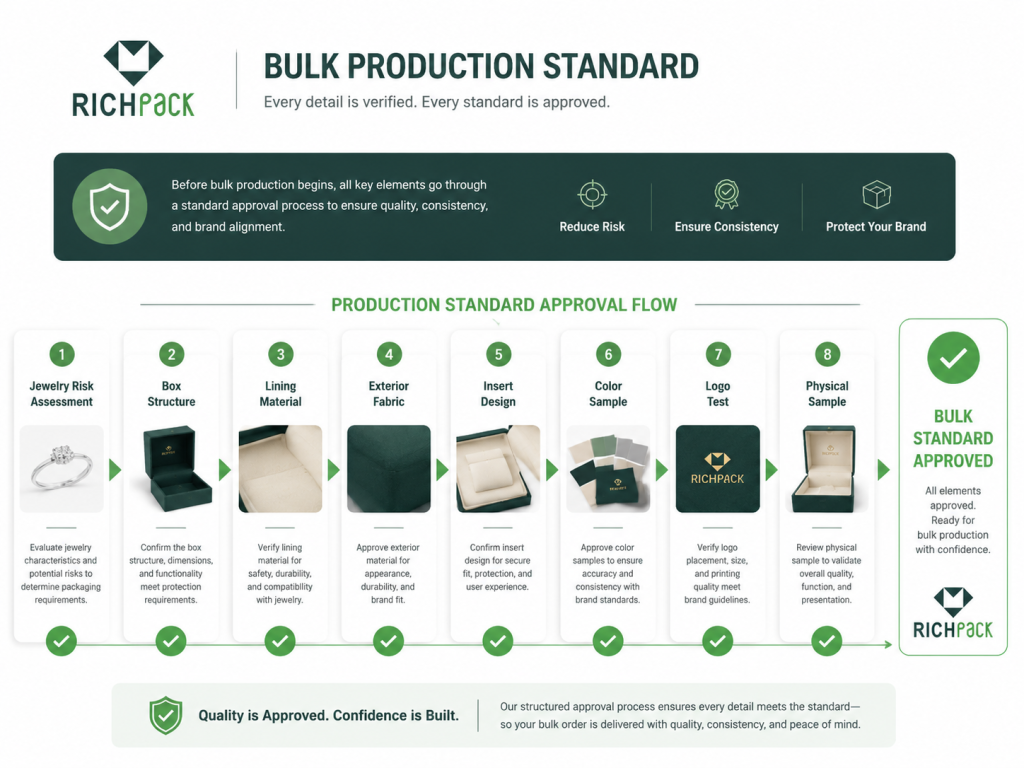
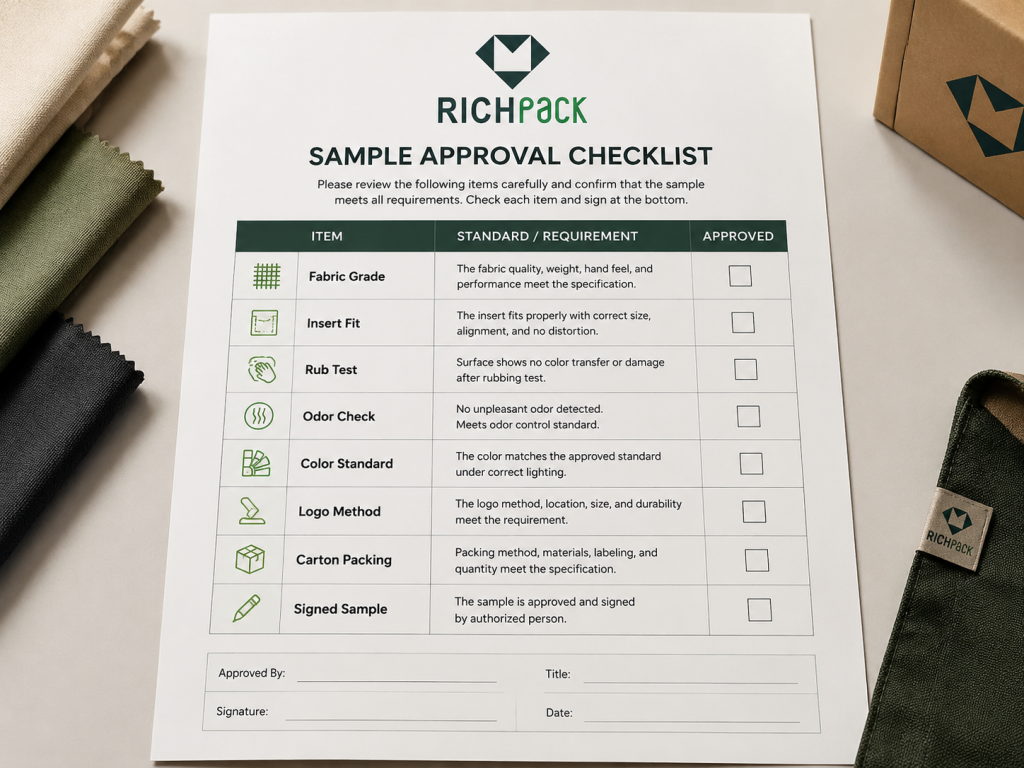
For bulk custom jewelry boxes, approve fabric with a signed color standard, rub test result, odor check, insert fit check, and packing method.
Jewelry box fabric has two jobs. It protects the jewelry in the box and tells the customer how much care went into the purchase.
The outside fabric builds the first impression. The inside fabric does the quiet work: holding, cushioning, separating, and staging the jewelry.
Scratch protection starts with separation. A soft liner helps, but the jewelry still needs a stable insert so pieces do not slide, twist, or hit each other.
Pearls are often listed around 2.5 to 4.5 on the Mohs hardness scale, while diamond is 10. That gap explains why a ring, clasp, or loose chain can damage a softer surface inside the same box.
Tarnish is not just a jewelry care issue. It is a packaging issue when the box creates a trapped environment with air, moisture, glue, and mixed materials.
Silver tarnish is commonly linked to sulfur compounds. In humid storage or ocean freight conditions, a weak packaging system can make a bright piece look dull before the customer even wears it.
A lining changes how jewelry looks under light. Black velvet can make diamonds and silver pop. Cream microfiber can make gold feel softer and warmer.
The wrong fabric can flatten the product. A busy print behind a delicate pendant is like putting a patterned curtain behind a small painting.
Customers touch the fabric before they touch the jewelry. If the liner feels thin, stiff, dusty, or noisy, the product feels cheaper.
Shoppers will tell you the same thing in plain words: the box made the piece feel more expensive, or the box made the gift feel like an afterthought.
Fabric alone does not hold jewelry. The insert does.
The fabric wraps the insert and creates the contact surface. The insert shape controls whether the ring stands upright, the chain stays straight, and the earrings remain paired.
Velvet fits a romantic, luxury, bridal, or heirloom mood. Microfiber fits clean, modern brands. Cotton and linen fit natural, handmade, or understated collections.
The fabric should match the jewelry price point and the brand promise. A minimalist silver brand can look better in stone gray microfiber than in red velvet.
A box may sit on a vanity for years. The liner will face dust, finger oils, repeated opening, pressure from jewelry, and sunlight if the box is displayed.
A good sample review should include rubbing, pressing, opening, closing, and leaving the box in normal room air for a few days. A box can pass a photo review and fail real handling.
Fabric consistency is where many projects get painful. A supplier may show one beautiful swatch, then source a slightly different roll for bulk production.
Ask whether the fabric is in stock, custom dyed, or purchased by the roll after order confirmation. The answer affects shade control, reorder risk, and delivery timing.
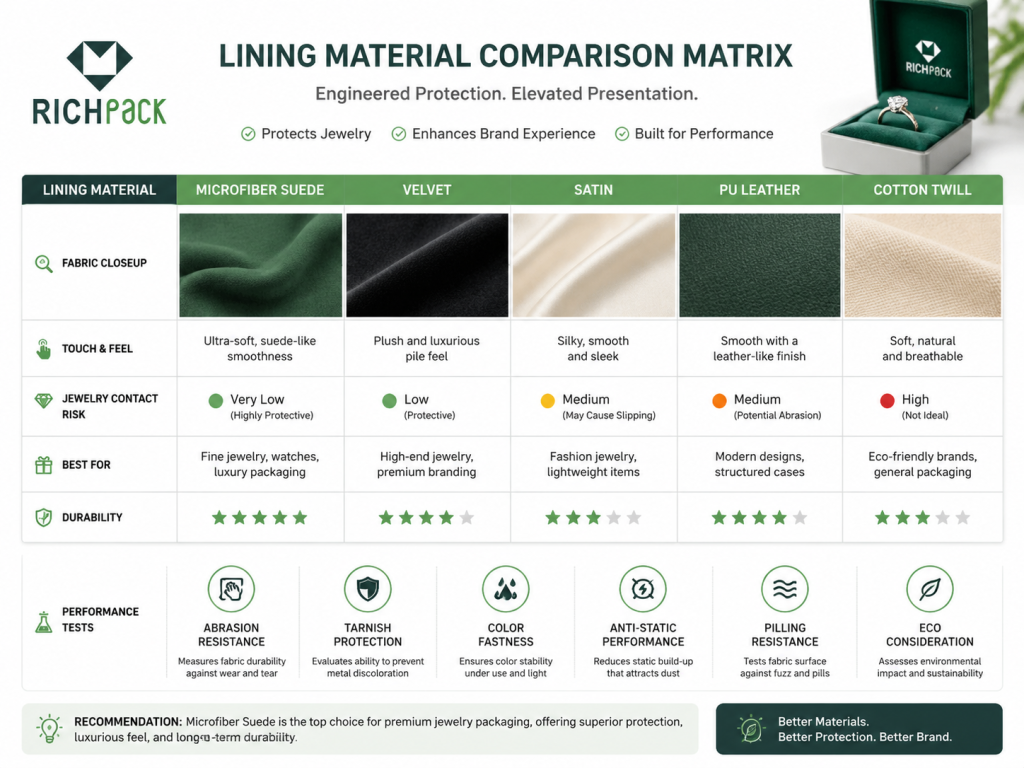
Fabric for lining jewelry boxes should be judged by touch, chemistry, color stability, and structural fit. A liner is not decoration. It is the surface that meets the jewelry.
The safest liner is soft enough to prevent abrasion, stable enough to avoid staining, and thin enough to wrap neatly around inserts.
Velvet lining is a plush textile surface that adds visual depth and a soft touch to jewelry boxes. It works well for rings, bridal boxes, pendants, luxury sets, and keepsake packaging.
Choose velvet when the box needs drama. A green, navy, black, burgundy, or ivory velvet interior can make a small ring feel more ceremonial.
The production risk is the pile direction. If one insert panel is cut against the nap and the next is cut with the nap, the color can look mismatched even when it comes from the same roll.
Suede-touch microfiber is a synthetic soft liner that gives a matte, clean, low-pile surface. It is a good option for modern jewelry packaging because it looks refined without the fuss of deep velvet.
It works well for necklaces, earrings, bracelets, watches, and travel cases. It also hides light pressure marks better than many velvet liners.
On the sample desk, microfiber often wins the boring tests. It cuts cleanly, wraps tight corners better, and does not fight the jewelry for attention.
Satin lining is a smooth, glossy fabric that creates a soft shine inside jewelry boxes. It can work well for lid interiors, presentation pillows, and gift sets that need a classic dressy feel.
Satin is less forgiving than velvet or microfiber because it has less cushion. It can also snag on prongs, chain ends, or sharp earring posts if the weave is weak.
Use satin for a display mood. Do not rely on it alone for impact protection.
Silk lining feels delicate and high-end, but it needs careful handling. It suits heirloom-style boxes, luxury keepsakes, and limited editions where the packaging is part of the story.
For everyday retail packaging, silk may be too fragile or costly. It can show marks, stains, and tension wrinkles more easily than synthetic liners.
If a supplier offers silk, ask whether it is real silk, silk blend, or satin labeled as silk. These are not the same in cost or performance.
Felt lining is a budget-friendly soft surface used in many boxes, trays, and drawer liners. It is easy to source and can give basic scratch protection.
Quality varies widely. Cheap felt can pill, shed fibers, trap dust, or look flat after light handling.
Felt is fine for low-price pieces and simple storage. For premium jewelry, test it hard before you approve it.
Flocked lining uses short fibers applied to a coated surface. It gives a velvet-like look at a lower cost and can cover complex shapes.
Flocking works well for molded trays and budget inserts. It can also create a clean, even surface when the base structure is simple.
The risk is fiber loss. Rub the surface with a white cloth and check whether fibers transfer.
Cotton lining gives a natural, soft, casual feel. It fits handmade, artisan, and eco-leaning jewelry brands.
Cotton can absorb more moisture than some synthetic liners. That makes it less ideal for silver or long storage unless the full packaging system controls humidity.
Use cotton when the brand story needs warmth and simplicity. Pair it with a strong insert structure.
Anti-tarnish lining or anti-tarnish inserts help slow the chemical reactions that dull silver and some plated metals. They are most useful inside enclosed spaces.
Anti-tarnish strips and treated materials still need the right conditions. They work best with a closed environment, dry handling, and clean jewelry before packing.
A silver brand should ask one direct question: what exact anti-tarnish material is inside the box, and how often does it need replacement during storage?
| Lining | Best for | Watch first | Good approval test |
| Velvet | Bridal rings, pendants, luxury gifts | Nap direction, lint, pressure marks | White cloth rub and light angle review |
| Suede touch microfiber | Daily jewelry, necklaces, earrings | Shade drift and adhesive smell | Movement check with actual jewelry |
| Satin | Lid interiors and pillows | Snagging and weak cushion | Prong contact test |
| Felt | Entry trays and budget boxes | Shedding and flat look | Fiber transfer check |
| Flocking | Molded inserts and cost control | Fiber loss | Tape pull and rub test |
| Cotton | Natural brand stories | Moisture and dye stability | Storage and color transfer check |
A fabric-covered jewelry box uses fabric on the outside, inside, or insert surface. Each placement has a different job.
The mistake is treating all fabric as one choice. Exterior fabric sells the mood. Interior fabric protects the product.
Exterior fabric covering creates the first tactile impression. Linen, cotton, velvet, jacquard, and brocade can all work, but each sends a different signal.
A linen exterior feels natural and modern. A velvet exterior feels giftable and soft. A brocade exterior feels ornate and vintage.
Interior fabric lining must be safer than exterior fabric because it may touch jewelry directly. Choose it for softness, color stability, odor, and clean finishing.
A busy exterior print can be charming. A busy interior print can make the jewelry harder to see.
Wrapped inserts use fabric over EVA foam, paperboard, molded pulp, or other support material. This is where protection and presentation meet.
If the insert is too thick after wrapping, the box may not close cleanly. If it is too thin, the jewelry may move.
Fabric thickness changes the finished cavity more than many buyers expect. A 1 mm liner can become several millimeters of build-up once it wraps around foam, board, corners, and glue zones.
That added thickness can make a ring slot grip too hard, raise a necklace board slightly, or cause a lid that closed cleanly on bare board to touch the insert after fabric is added.
So the insert drawing should show the fabric stack and the finished cavity size. Rings need compression recovery. Necklaces need clean notches. Stacked trays need clearance so the liner does not scrape when boxes nest.
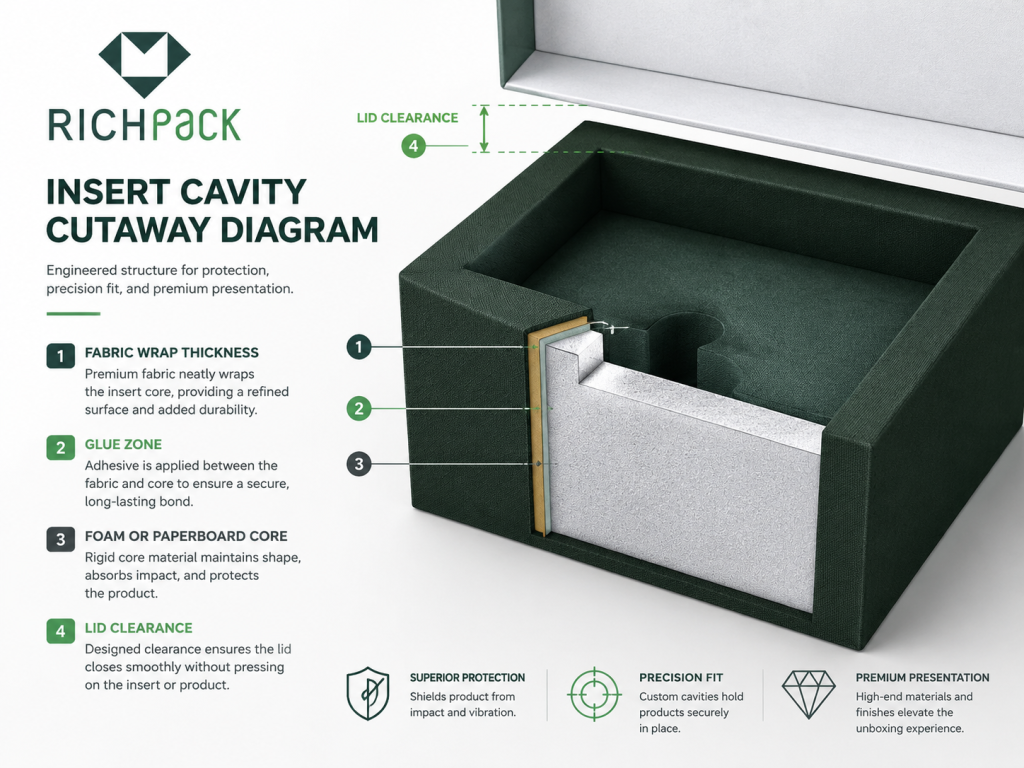
Ring slots need compression and recovery. The fabric should grip the band without scuffing it.
For custom ring boxes, velvet and microfiber wrapped slots are the common choices. Ask whether the slot was tested with your actual ring band width and setting height.
Necklace boards need smooth fabric, clean notches, and a way to hide the chain tail. The job is simple: the pendant should sit straight when the lid opens.
For custom necklace boxes, fabric is only half the work. The notch, tab, elastic, or hidden hook does the holding.
Drawer trays need low friction, clean edges, and strong glue. If the fabric catches on the box wall, the drawer feels cheap.
Stackable tray systems make this harder. Every fabric layer steals a little clearance, and the loss compounds when three or four trays sit inside one jewelry box.
A tray that slides well, as bare board can drag after lining. Add velvet to the tray base, microfiber to the side wall, and a folded edge at the corner, and the clearance can disappear.
Ask the supplier to check the full stack, not one tray alone. Each tray should slide smoothly at both slow and normal opening speeds, without scraping along the lined wall.
Check the tray after 20 opening cycles. A weak liner often starts lifting at the corners first.
Fabric color changes under different lighting. A navy velvet may look almost black in a showroom and bright blue in daylight.
Ask for photos in warm light, cool light, and natural daylight. Then approve the physical sample, not the screen image.
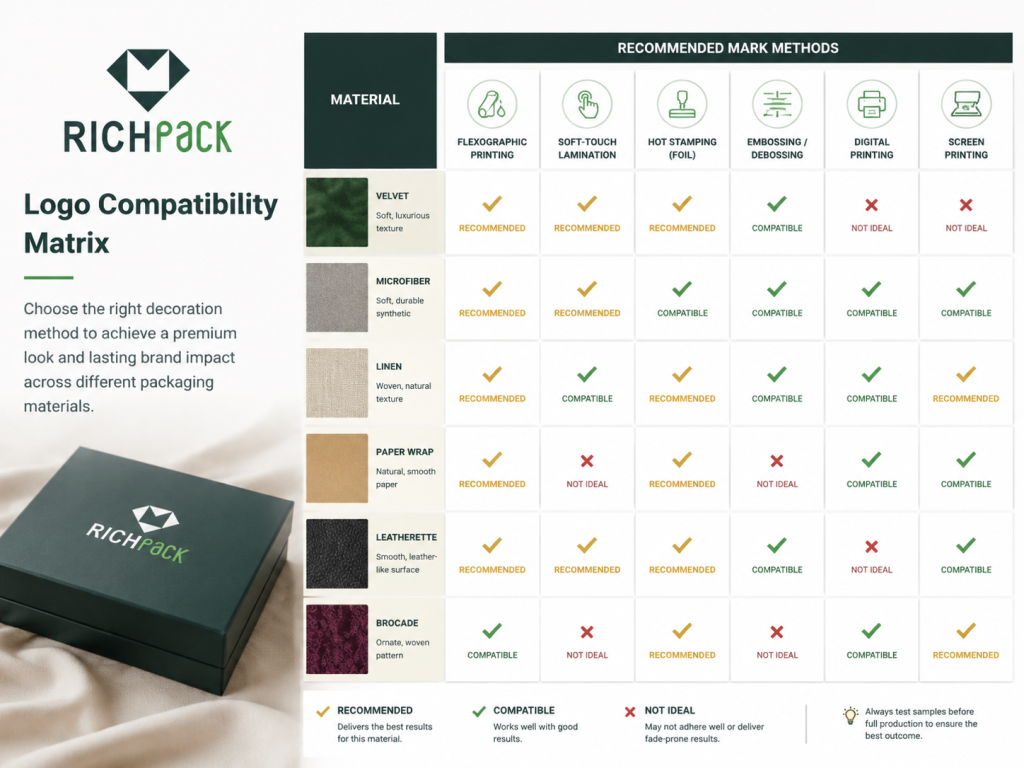
Not every fabric accepts a logo well. Embroidery works on some exterior fabrics. Foil, debossing, and screen printing work better on smoother surfaces.
If the logo has tiny lines, test it at the final size. A logo that looks sharp on paper may look muddy on pile fabric.
Flexographic printing belongs in the conversation when a brand needs repeat patterns, liner paper, wrapping paper, sleeves, or some flexible packaging surfaces around the jewelry box. It uses plates, controlled ink transfer, drying, and registration. It can be fast and consistent, but it is not suitable for tiny marks on deep pile velvet.
Soft-touch lamination is different. It is a paper or film finish, usually for exterior panels, sleeves, rigid box wraps, or printed cards. It can give the outside of a jewelry box that dry, velvety hand feel while the inside still uses a safer fabric liner.
Decoration has to be chosen as a material stack. Deep pile velvet may soften a small foil mark. Linen may hold embroidery beautifully, but make tiny serif type look uneven. Coated paper wrap can handle sharper debossing than many loose textiles.
| Surface | Suitable decoration | Detail level | Main risk | Sample test |
| Velvet | Foil on smooth areas, patch, label | Medium | Nap direction and pressure marks | View from two light angles |
| Microfiber | Screen print, foil on tested grade, deboss on bonded panels | Medium | Edge softness on small type | Test final logo size |
| Linen or cotton | Embroidery, screen print, label | Medium to bold | Ink spread and thread distortion | Rub and color check |
| Brocade or jacquard | Label, metal plate, simple embroidery | Bold | Pattern fights the logo | Photograph with jewelry inside |
| Paper wrap with soft-touch finish | Foil, embossing, debossing, UV, flexographic repeat pattern on suitable wrap stock | Fine to medium | Finger marks, scuffing, and registration drift | Handle, rub, and registration check |
| Leatherette | Foil, debossing, embossing | Medium to fine | Heat mark inconsistency | Press test at final pressure |
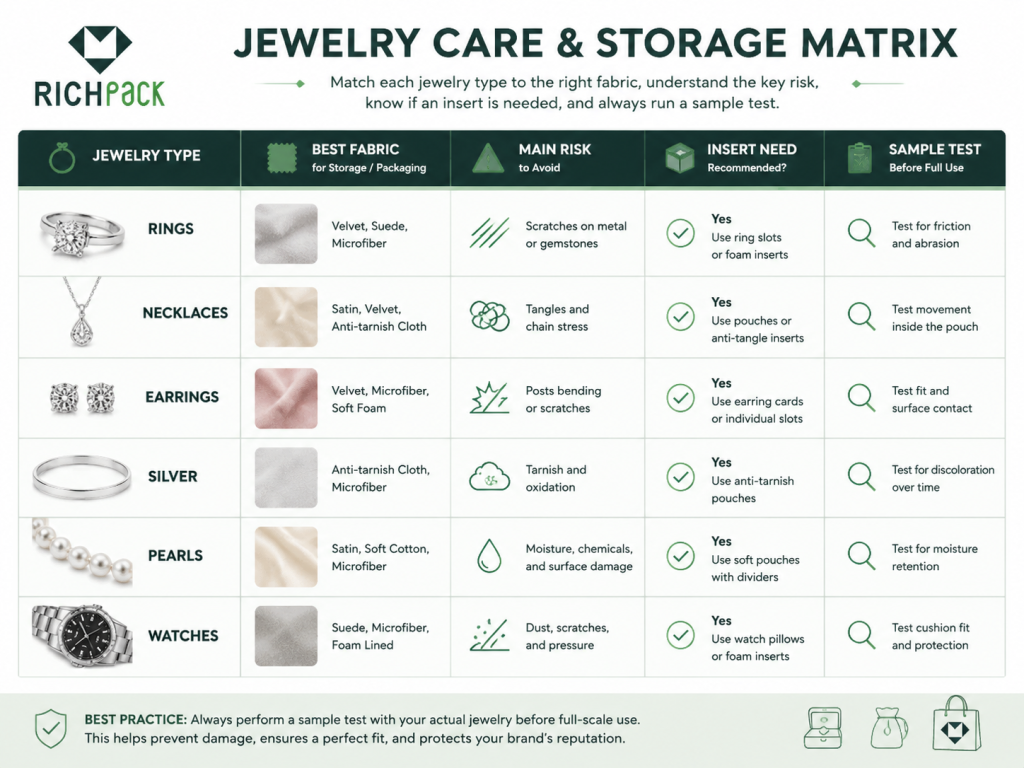
The best fabric changes when the jewelry changes. Rings, necklaces, earrings, watches, pearls, and silver do not fail the same way in packaging.
Start with the jewelry risk before anyone falls in love with a box style.
Rings need upright display and stable grip. Velvet and microfiber work well because they create a soft frame around the band.
For high settings, test whether the lid clears the stone. A beautiful liner does not help if the prong hits the lid during transit.
Necklaces need chain control. A soft liner prevents scratches, but a notch, tab, elastic, or hidden pocket prevents tangles.
The common customer complaint is not that the fabric feels wrong. It is that the chain arrives in a knot.
Earrings need paired placement. Studs need holes or slots that hold posts straight, while hoops and drops need more open space.
Microfiber-wrapped boards work well because they are clean and low-profile. Deep pile velvet can sometimes hide small studs too much.
Bracelets need curved support or enough tray space to avoid pressure marks. A flat board can work for chain bracelets, but bangles need a form.
Use a fabric that does not catch on clasps. Satin is risky here if the bracelet has sharp edges.
Watches need cushion, structure, and abrasion control. Fabric should wrap a pillow or insert that supports weight.
A watch is heavier than most jewelry pieces. The fabric must sit on a stronger structure, not a thin board alone.
Sterling silver needs separation from sulfur sources, humidity, rubber, and unknown dyed materials. A soft liner plus anti-tarnish protection is safer than a pretty but untested fabric.
Ask for low-sulfur materials and clean packing. If silver inventory sits for months before sale, storage conditions matter as much as box design.
Plated jewelry needs gentle contact and stable inserts because thin finishes can show wear faster. Avoid rough fabrics and hard tray edges.
A microfiber liner with a fitted insert is often a smart choice. It reduces movement without adding a heavy luxury signal that may not match the price point.
Pearls, opals, turquoise, and other softer materials need extra care. Pearls are much softer than sapphire, ruby, or diamond on the Mohs scale.
Use smooth, clean, non-abrasive linings. Avoid raised embroidery and rough-textured fabrics near direct contact points.
High jewelry sets need a full system: box structure, fabric, insert engineering, handling protocol, and shipping test. The fabric is one part of the risk plan.
If the jewelry is expensive enough to insure carefully, do not approve the fabric from a swatch card. Put the real piece inside the real insert and shake the closed box gently.
Vintage and embroidered styles are useful when the fabric supports the jewelry story. They are risky when the decoration becomes louder than the product.
Use these styles with restraint. The customer should remember the jewelry first and the box second.
Vintage velvet boxes work well for engagement rings, heirloom-inspired collections, anniversary jewelry, and boutique bridal lines. Muted red, moss green, midnight blue, dusty rose, and ivory all work.
The trick is shape and proportion. A small hexagon or oval box often feels more vintage than a large square box with heavy decoration.
Floral fabric can make a box feel personal, romantic, or handmade. It suits limited runs and seasonal collections.
Keep floral prints outside the jewelry contact area unless the print has passed color transfer checks. Light jewelry against printed fabric can be unforgiving.
Brocade and jacquard fabrics add pattern through woven texture. They suit ornate, heritage, and gift-focused collections.
They can also be thick. Thick fabric can create bulky corners, uneven lids, and fuzzy edges if the wrapping process is not tuned.
Cream and blush boxes photograph well and feel soft for bridal, pearl, and fine jewelry. They also show stains and glue marks faster than dark fabric.
Ask for a handling test with clean hands and normal packing materials. Pale fabric finds every weakness.
Logo embroidery gives a tactile brand mark. It works best on the exterior lid, a fabric pouch, or an outer wrap panel.
Tiny letters are the danger. If the logo has thin lines, reduce the stitch detail or choose a different marking method.
Monogram embroidery suits gift programs, wedding sets, VIP boxes, and boutique drops. It can make a small box feel personal.
Keep monograms away from ring slots, necklace channels, and earring boards. Raised thread should not sit under metal.
Pattern embroidery can turn packaging into a keepsake. It works for stars, florals, borders, small icons, and heritage motifs.
Use it as a frame. Do not place embroidery where the jewelry needs visual breathing room.
Raised stitching should stay outside direct jewelry contact. Place it on the lid, exterior wrap, side panel, pouch flap, or a non-contact interior panel.
A simple test is enough to start: close the box with the jewelry inside and shake it gently. If the piece touches the raised thread, move the stitching.
For heritage-inspired projects, custom vintage ring boxes can combine muted fabric with modern insert control. That pairing is safer than copying an antique box exactly.
Most fabric problems appear after the sample looks approved. The box photographs well, then fails when people touch it, pack it, ship it, or store it.
Check the boring things early. Those checks prevent expensive emails later.
Scratching happens when jewelry moves or when the liner surface is rougher than expected. The cure is fabric plus structure.
Do not test fabric with your finger only. Test it with the actual jewelry or a safe substitute with similar edges and weight.
Tarnish risk rises when silver or mixed metals sit in a closed box with sulfur, humidity, skin oils, or reactive materials. The liner, glue, paper, and storage space all count.
If the line includes silver, ask for low-sulfur materials and anti-tarnish options. If the supplier cannot explain the material, do not approve it for long storage.
Dye transfer is the silent killer of dark fabrics. Black, navy, burgundy, and deep green can look premium but need rubbing checks.
ISO 105-X12 covers color fastness to rubbing with dry and wet cloths. For jewelry boxes, a simple white cloth rub test is a practical first screen before lab work.
Lint makes jewelry look dirty. It is especially bad on high-polish metal, black enamel, clear stones, and camera-ready product sets.
Rub the liner, tap the insert, and inspect the jewelry under light. If fibers appear in the sample room, they will appear in customer photos.
Glue marks show as ridges, stains, dark patches, or hard spots under fabric. Velvet and satin reveal them fast.
Ask the supplier to show corners, edges, and tray bottoms. These areas tell you more than the front beauty shot.
Odor usually comes from adhesive, fabric finishing, foam, or poor drying time. A strong smell can ruin a premium box in one second.
Seal the sample in a poly bag for 24 hours, then open it. That test is crude, but it catches problems buyers often miss.
Wrinkles and bubbles come from poor wrapping tension, thick fabric, weak glue, or a curved surface that the fabric cannot follow.
Look at corners and inner curves. If the fabric lifts there, the bulk order will not improve by luck.
Color difference is common when fabric is bought from different dye lots. It becomes obvious when boxes from two batches sit side by side.
Use a signed swatch, batch record, and daylight review. For repeat orders, ask the supplier how long they can reserve the same roll or match the color standard.
Poor insert fit makes good fabric feel bad. If the insert is loose, the jewelry moves. If it is too tight, the piece is hard to remove.
A customer should not have to fight the box. That moment breaks the luxury spell.
Choosing fabric for custom jewelry boxes is a sequence, not a mood board. Start with the jewelry risk, then build the material choice around it.
That order keeps the project grounded. It also makes supplier communication faster.
List what can go wrong with the jewelry:
This list should drive the fabric choice. A bridal ring and a plated necklace do not need the same liner.
A drawer box, hinged ring box, two-piece box, travel case, and display box all treat fabric differently. Structure affects fabric thickness, edge wrapping, insert depth, and opening feel.
Choose structure before final fabric. Otherwise, you may approve a fabric that cannot wrap the corners cleanly.
Select the lining before the exterior fabric because the lining touches the product. If the inside is wrong, the outside does not matter.
Choose the liner first. Then let the exterior color and texture work around that safer contact surface.
After the lining is safe, choose the exterior fabric for the brand mood. Velvet, linen, cotton, brocade, jacquard, and microfiber can all work.
Ask one question: will the customer still like this box after the trend fades? If not, use the trend as an accent, not the whole exterior.
The insert material controls holding power. EVA foam, paperboard, molded pulp, plastic, and wrapped cushions all behave differently.
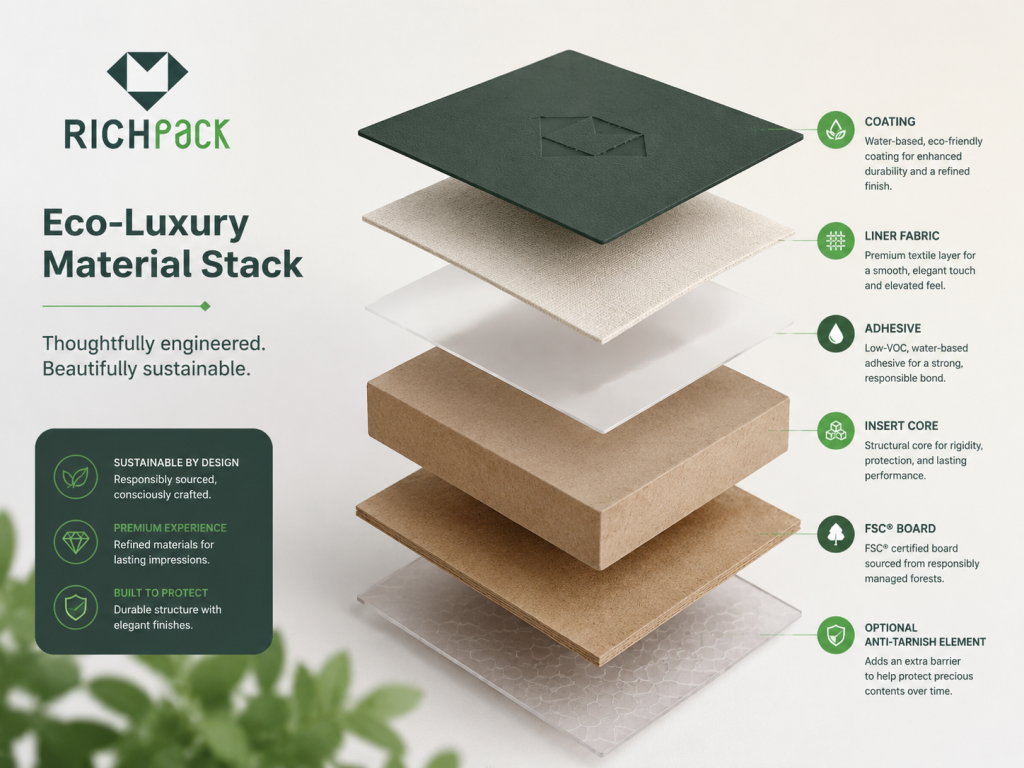
Fabric-wrapped EVA often works well for rings and sets because it combines shape control with a soft touch. RichPack’s jewelry packaging materials page shows how fabric, velvet, satin, elastic, greyboard, and other parts work together in the full system.
For brands with an eco-luxury position, ask about Plastic-Free and Mono-Material Packaging Solutions before the insert is engineered. The question is not “Do you have a sustainable material?” The question is which part of the box can change without making the jewelry less safe.
FSC-certified paperboard, molded pulp, folded paperboard, recycled microfiber content, water-based coatings, and low-odor glue all sound good. They only matter when the supplier can document them.
Be careful with vague green claims. FSC Mix, FSC Recycled, and FSC 100% are different claims. Mono-material packaging can help recovery only when coatings, magnets, glue, fabric layers, and lamination do not break the path.
A low-impact jewelry box cannot lean on one recycled label. Ask for the substrate, the jewelry-contact material, the adhesive, and the proof before you approve bulk production.
Review color in real light, because screen images often hide shade shifts.
Ask for physical swatches, then compare them with jewelry, logo color, box exterior, insert fabric, and any printed cards. If one element is off, the whole box can look mismatched.
Logo methods behave differently on fabric. Embroidery adds texture. Foil needs a suitable surface. Screen printing needs a clean ink holdout.
For velvet jewelry boxes, logo placement needs extra care because pile direction and pressure can change how the mark looks.
Approve the physical sample with real jewelry inside. Open it, close it, shake it gently, touch it, smell it, and photograph it.
A sample should answer practical questions, not just aesthetic ones:
Once the sample is approved, lock the standard. That means fabric roll, color, liner, insert material, glue, logo process, packing method, and acceptable tolerances.
If you skip this step, the bulk order can drift. And drift is where small packaging choices become big customer service problems.
For a seasonal launch, a 90-day approval window is safer than a last-minute swatch race.
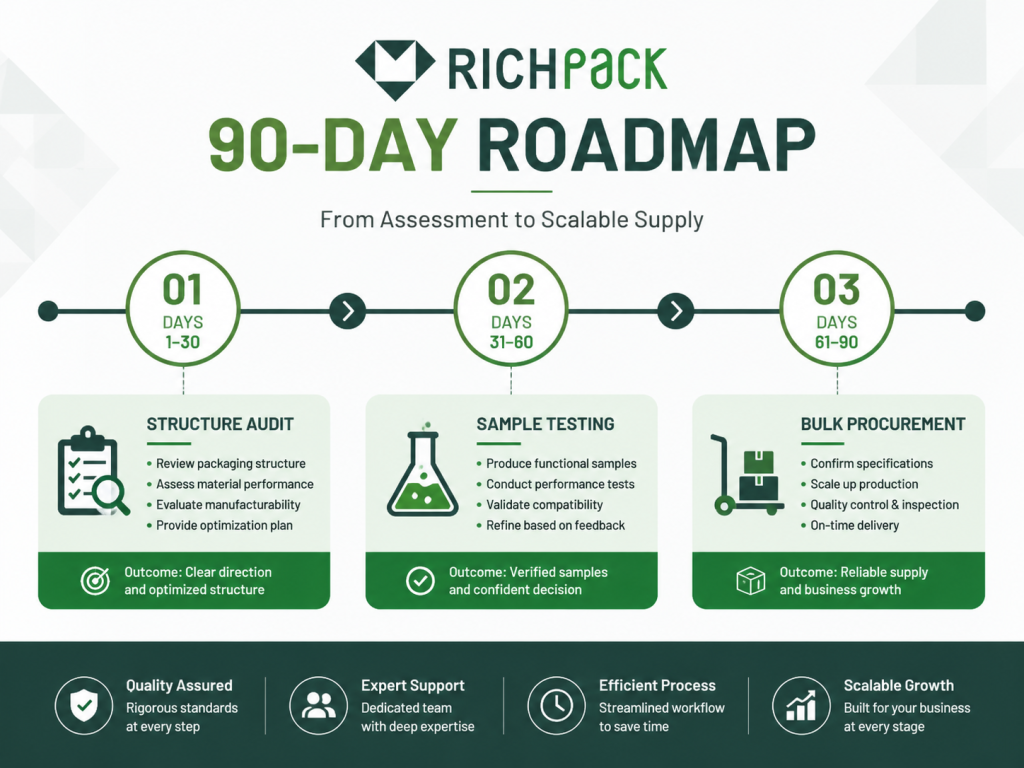
Days 1 to 30 should focus on structure and fabric audit. Map the jewelry risk, box structure, liner options, insert cavity fit, tray clearance, and brand color standard first.
Need a starting point? Use RichPack’s package design support to request a custom structure audit checklist before the sample round begins.
Days 31 to 60 should move into sample testing. Reduce the number of box families, approve lining, confirm logo method, run rub and odor checks, photograph the sample, and test movement with real jewelry.
Days 61 to 90 should lock procurement. Confirm order quantity, reorder color standard, packing method, approval sample, carton plan, and delivery schedule.
| Timing | Main decision | What to verify | Buyer output |
| Days 1-30 | Structure and fabric audit | Jewelry risk, liner options, insert cavity, brand color | Fabric shortlist and box structure brief |
| Days 31-60 | Sample and SKU testing | Rub, odor, logo clarity, movement, photo result | Approved sample or revision list |
| Days 61-90 | Bulk procurement | Quantity, packing, reorder standard, delivery path | Signed production standard |
Fabric selection becomes easier when the main options sit side by side. The table below compares lining and covering fabrics by feel, protection, tarnish safety, logo compatibility, cost level, and best use.
| Fabric | Luxury feel | Scratch protection | Tarnish safety | Cleaning difficulty | Logo compatibility | Cost level | Best jewelry use | Best brand use |
| Velvet | High | High if the pile is clean | Medium, needs testing | Medium | Medium | Medium to high | Rings, pendants, bridal sets | Luxury, romantic, vintage |
| Suede touch microfiber | Medium to high | High | Medium to high with the right materials | Low to medium | Medium | Medium | Necklaces, earrings, sets | Modern, minimal, daily wear |
| Satin | Medium | Low to medium | Medium, needs testing | Medium | Low to medium | Medium | Lid interiors, pillows | Classic gift packaging |
| Silk | High | Medium | Medium, needs testing | High | Low | High | Limited editions, keepsakes | Heritage, luxury, delicate lines |
| Felt | Low to medium | Medium | Low to medium | Low | Low | Low | Entry boxes, trays | Budget, starter lines |
| Flocking | Medium | Medium | Medium, needs testing | Medium | Low | Low to medium | Molded trays, simple inserts | Cost-controlled packaging |
| Cotton | Low to medium | Medium | Lower for long silver storage | Medium | High for embroidery | Low to medium | Casual jewelry, pouches | Natural, handmade, artisan |
| Brocade or jacquard | High visually | Medium | Needs testing | Medium to high | Medium for patches or labels | Medium to high | Exterior wrap, gift boxes | Vintage, ornate, seasonal |
| Embroidered fabric | High if restrained | Low near contact zones | Needs testing | Medium | High | Medium to high | Exterior lids, pouch flaps | Personalized, boutique, gift |
A buyer’s shortcut: velvet sells the moment, microfiber solves the production problem, felt protects the budget, and embroidery sells the story. None of them replaces the insert design.
Luxury feel comes from depth, touch, proportion, and silence. Velvet and silk feel richer at first contact, while microfiber gives a quieter modern finish that suits daily fine jewelry.
Scratch protection depends on fabric softness and jewelry movement. Velvet and microfiber help most when the insert holds the piece firmly and keeps metal away from hardboard edges.
Tarnish safety is strongest when the full box system avoids sulfur risk, trapped moisture, reactive glue, and unknown dyed materials. Silver programs should ask for low-sulfur materials and anti-tarnish support rather than trusting the fabric name alone.
Smooth, low-pile liners are usually easier to keep clean than deep-pile velvet, pale satin, or textured brocade. If product photography matters, test dust, lint, and fingerprints before choosing a dark or pale liner.
Logo compatibility is best on smoother surfaces or exterior panels that can take pressure, ink, thread, or a label without touching jewelry. Tiny marks need a final-size test because fabric texture can swallow detail.
The cost level includes more than just the fabric price. Waste during cutting, slower wrapping, custom dyeing, extra drying time, and more sample rounds can make a beautiful fabric more expensive in production than it looks on a swatch card.
The best jewelry use comes from matching risk to surface. Rings need stable slots, necklaces need chain control, pearls need gentle contact, and silver needs a cleaner storage environment.
The best brand use depends on the emotional signal. Velvet suits ceremonial gifting; microfiber suits clean, modern brands; cotton and linen suit natural collections; and brocade or embroidery works best for limited, heritage, or seasonal stories.
A good supplier can explain the fabric, the backing, the glue, the insert, and the test plan without hiding behind vague words. If the answer sounds too smooth, ask for proof.
You are not trying to make the supplier uncomfortable. You are trying to prevent surprises after deposit, sample approval, or shipment.
Ask for the fabric type, weight, backing, pile height if relevant, and whether it is stock or custom dyed. “Velvet” is not enough.
Two velvet fabrics can look similar in photos and behave very differently during wrapping.
Ask whether the fabric is approved for direct contact with silver-plated jewelry, pearls, or soft stones. If the supplier cannot answer, ask for a contact test.
Do not assume apparel fabric is safe for jewelry packaging. Apparel touches skin. Jewelry box fabric may touch metal for months.
Ask whether the adhesive is low-odor and suitable for the fabric, foam, board, and storage conditions. Glue choice affects smell, staining, lifting, and long-term stability.
RichPack’s material resources note glue certification and sulfur-free finished product testing. Those are the kind of details buyers should ask suppliers to document.
Ask for a dry and wet rub check, especially for dark colors. ISO 105-X12 is the formal reference for textile color fastness to rubbing.
For early sampling, a white cloth rub test can reveal obvious dye transfer. If the project is large or high risk, lab testing is safer.
Ask how reorders will be matched. Will the supplier keep the same roll, match to a swatch, or redye fabric?
If the packaging will run for years, reorder control matters more than the first sample.
Ask for a simple movement check. Place the jewelry inside, close the box, and simulate normal handling.
For larger distribution programs, coordinate box design with packaging distribution support so the retail pack, carton, and delivery path all work together.
Ask how long the first sample takes and how long revisions take. Fabric-covered boxes often need more than one round because color, texture, logo, and insert fit interact.
A rushed sample can hide a slow bulk problem. Give the fabric enough time to prove itself.
Ask what changes when the order moves from sample to bulk. The fabric roll, machine setup, hand wrapping team, drying time, and packing method may change.
This is where supply chain experience matters. A supplier should tell you what becomes easier at scale and what becomes riskier.
For broader sourcing context, see RichPack’s jewelry packaging strategy, then use the fabric questions here to narrow the final material choice.
Before the deposit, ask the supplier to return a clear approval record. It should include the fabric swatch, insert drawing, box structure, logo method, glue note, color standard, rub check, odor check, packing method, sample photos, and revision history.
That record saves arguments later. Six months after approval, nobody remembers the exact shade, glue note, or insert revision as clearly as they think they do.
Jewelry boxes commonly use velvet, suede touch microfiber, satin, silk, felt, flocking, cotton, linen, brocade, jacquard, and embroidered fabric. The inside liner is usually softer and safer than the outside covering.
For premium boxes, velvet and microfiber are the most common choices. For budget boxes, felt and flocking appear often.
Velvet is best for a rich luxury feel, while suede-touch microfiber is often the best practical lining for bulk custom orders. Both can protect jewelry well when the insert holds the piece properly.
The best lining depends on the jewelry. Silver, pearls, plated jewelry, and high-polish metal all need extra contact checks.
Velvet is better when the box needs strong visual drama. Microfiber is better when the project needs cleaner repeatability, easier handling, and a calmer modern look.
A bridal ring box may call for velvet. A large daily jewelry program may be safer with microfiber.
Soft, clean, non-abrasive fabrics such as velvet and microfiber help prevent scratches. The insert matters just as much because it stops the jewelry from moving.
A soft liner without a secure insert is only half protection. Movement creates many scratches.
Sterling silver is best stored with a soft liner, low-sulfur materials, dry conditions, and anti-tarnish protection where needed. Microfiber or tested suede touch lining is often a safer starting point than unknown dyed fabric.
Ask whether the box uses anti-tarnish strips, treated lining, or sulfur-free materials. Do not guess.
Fabric-covered jewelry boxes can be durable when the structure, fabric backing, adhesive, and edge wrapping are chosen well. The weak points are corners, drawer edges, lid hinges, and insert seams.
Ask for a sample and handle it as a customer would. Open it, close it, rub it, and check the corners.
A premium vintage fabric jewelry box usually uses muted colors, soft texture, compact shape, clean lining, and restrained hardware. The box should feel nostalgic without looking dusty or fragile.
Modern inserts make the difference. A vintage look still needs current protection.
Embroidered fabric should usually stay away from direct jewelry contact because raised thread can rub metal, pearls, or plated finishes. It works better on exterior lids, pouch flaps, side panels, or non-contact interior panels.
If embroidery must sit near jewelry, test it with the actual piece before bulk approval.
Brands should choose fabric by jewelry risk, liner safety, insert fit, brand style, sample performance, and reorder control. A good bulk approval includes a fabric swatch, physical sample, a rub check, an odor check, a logo test, and a movement check.
Approve the box with real jewelry inside. Empty samples hide too much.
There is no universal best fabric for a jewelry box. There is only the best match for the jewelry, the insert, the storage risk, and the way the customer opens the box.
Velvet can look refined and still fail a lint test. Microfiber can feel clean, but still needs the right cavity depth. Satin, silk, felt, flocking, cotton, brocade, and embroidery all have useful roles, but only under the right conditions.
Reliable packaging teams do not approve fabric by touch alone. They rub it, smell it, close the box with real jewelry inside, photograph it, check tray movement, and ask what will happen when the reorder comes later.
If your brand needs fabric selection, insert engineering, logo finishing, sample approval, and bulk delivery in one workflow, RichPack can help you start with the jewelry risk and build the box around it.


2024-10-10

2026-03-03
2025-02-17
2025-05-13
2026-03-24
2025-11-08
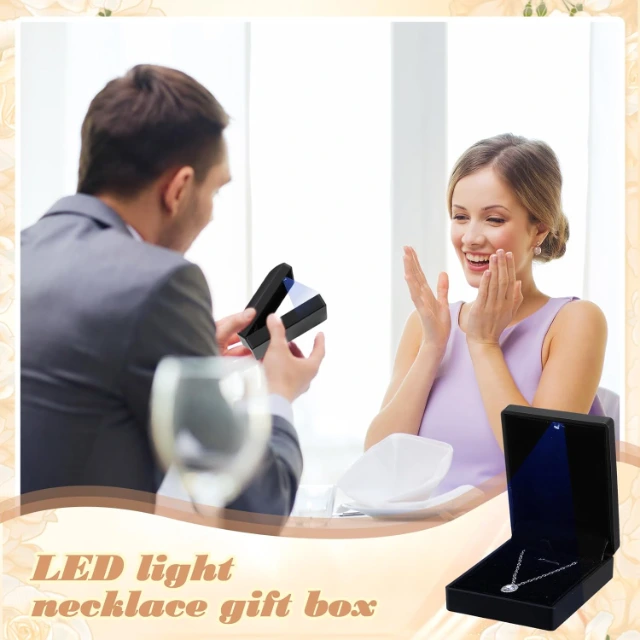
Anniversary-Themed Jewelry Boxes: With Romantic Designs, Ideal for Anniversary Gifts
View More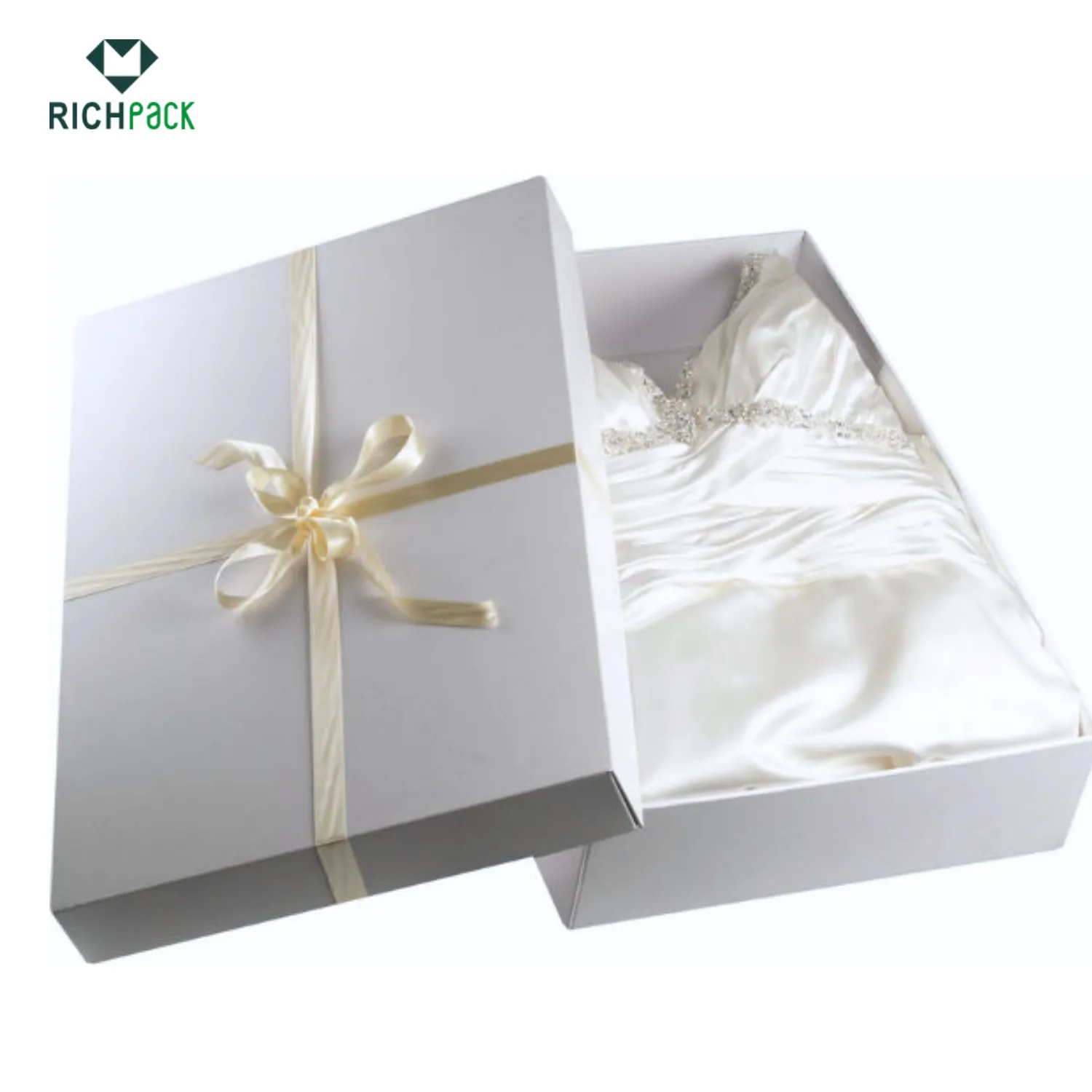
Bridal Dress Storage Box – Where Fashion Meets Function. Keep Dress Pristine & Elevate Storage
View More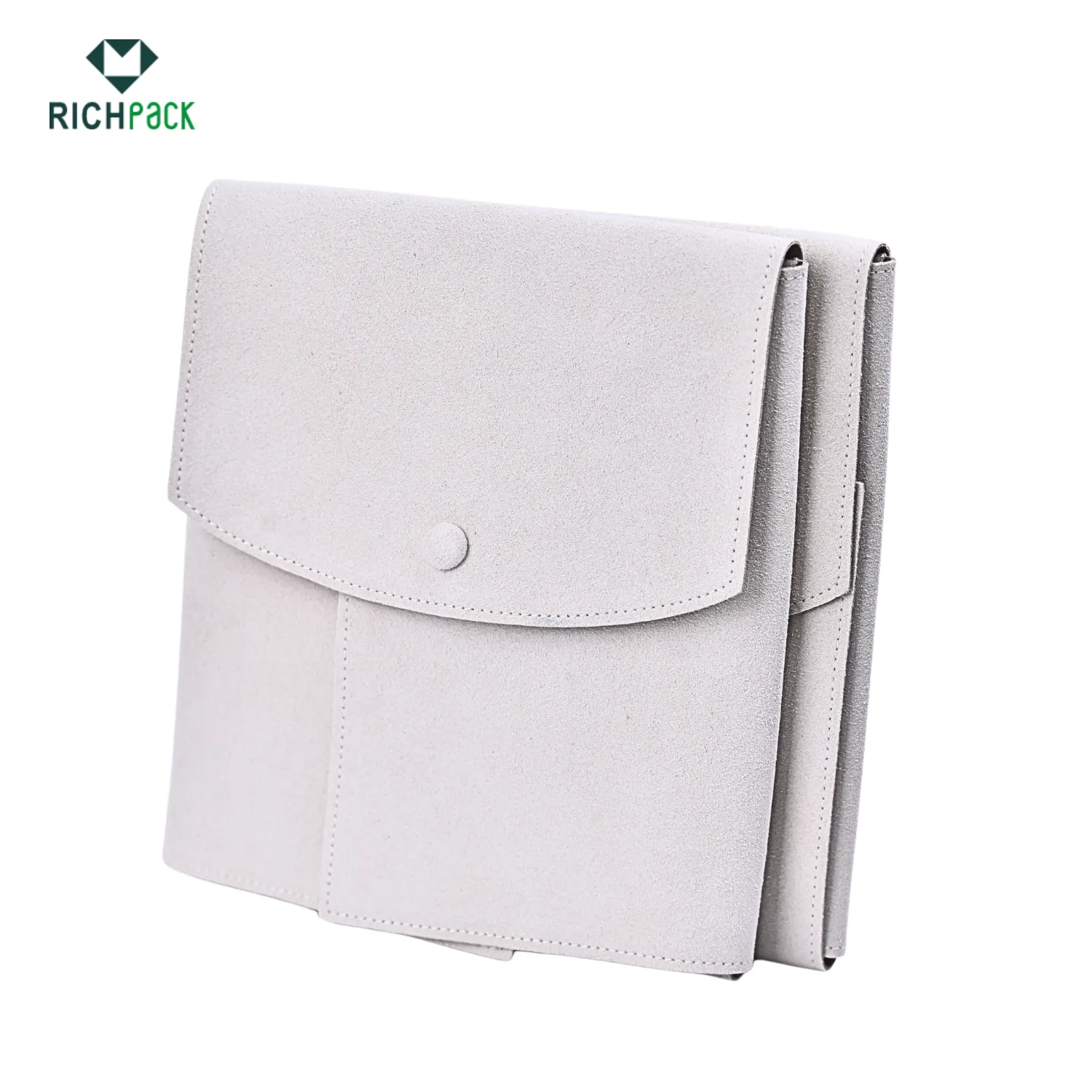
Convenient Roll-Up Travel Jewelry Cases | Space-Efficient and Protective Storage for Jewelers Needing Compact Solutions for On-the-Go Jewelry Storage
View More
Custom Eco-Packaging for Jewelry Brands with Green Initiatives | Perfect for Brands Focused on Sustainable and Branded Packaging
View More
Custom Jewelry Packaging for Artisan Jewelry Makers | Handcrafted and Personalized Solutions | Tailored for Small-Scale Brands
View More
Corporate Gift Boxes for Branded Gifting | Delicate Gift Tower Boxes for Client and Employee Appreciation Corporate Gifting Services
View More

