

 PREV
PREV
2026 Best Custom Jewellery Packaging Ideas That Will Shine Your Brand
2024-11-15




Choose a jewelry pouch for travel around the pieces you’ll actually pack. Give each piece enough room to rest without rubbing its neighbors. Then check that the loaded pouch closes with ease and fits in your personal bag.
A neat row of necklace hooks can still leave chains sharing a pocket. Pack Hacker’s review has a July 2026 update. Its Away roll test found that two chains next to each other tangled a little.
Follow each chain from its clasp to its pendant when comparing pouches.
Use your packing list to narrow the choice:
| What you’re bringing | Pouch styles to compare | Check before choosing |
| A few rings and studs | Individual soft pouches or a small divided pouch | Earring backs stay inside, and posts don’t press into other pieces |
| Several fine chains | A divided pouch or jewelry roll with separate necklace paths | Chains remain apart below their hooks |
| Bangles, a watch, or large earrings | A pouch with depth or a structured case | Bulky pieces fit without bending or pressure |
| A branded jewelry gift | A pouch sized for the actual gift set | The recipient can repack it without special instructions |
Lay out your travel jewelry before comparing pouches. Count the pieces you’ll need to store when you take them off, including anything you’ll wear in transit. A case full of ring slots adds little value if you mostly bring bangles and a watch.
A ring needs space for its setting as well as its band. A slim wedding band and a raised stone setting can fit the same ring holder yet need different room above it.
Slide each ring onto the holder or into its slot without forcing it. Check that neighboring settings don’t touch when the pouch folds. If the flap presses on a stone or catches a prong, choose a deeper layout or a separate compartment. Count usable places with your rings in them.
Keep each stud with its back, and check where the post points. An earring panel may organize the front of a pair while leaving the sharp ends exposed behind it.
Look for space or a fabric barrier between those posts and the next pocket. Put spare backs in a small pocket that closes. They can slip through a gap that holds larger earrings.
Check that you can remove a back without tipping out the rest of your jewelry.
Hoops need room for their full curve. The width of a flat pouch tells you little about the space available once you add a rounded pair.
Lay hoops in their natural shape, with clasps closed where the design allows. Give drop earrings enough length so the fold doesn’t press on a joint or setting. Keep pairs easy to find, but separate their surfaces if they would rub. A small fabric divider can be more useful than another empty slot.
Look for a separate route for each chain. A top loop secures one end, but the rest of the chain still needs somewhere to go.
Trace that route through the open pouch. Check the middle restraint, if present, and the pocket holding the pendant. Two top hooks above one open pocket may leave chains free to cross. A long chain also needs room for its extra length without piling onto another piece.
Close the necklace clasp before packing when practical. Keep clasps clear of the pouch closure, and don’t pull a fine chain tight to make it fit. A small pouch keeps it apart from other jewelry. A loose chain can still knot inside that pouch.

Try your widest bangle before judging the pouch’s capacity. A deep pocket may hold it well, while several flat pockets may offer no suitable space at all.
Check a watch with its strap or bracelet in the position you plan to pack it. The watch head needs room, and the clasp shouldn’t rub against another piece. Chain bracelets need the same care with loose ends as necklaces. If a rigid bracelet only fits when you squeeze the pouch shut, move to a deeper design.
Give pearls a clean, soft space away from harder jewelry. GIA’s jewelry care advice notes that soft gems can scratch easily. GIA also warns that storage in a dry area can harm pearls and opals.
Avoid adding a drying packet to every pouch as a general packing habit. Different gems have different storage needs. Ask your jeweler how to pack treated stones or fragile pieces.
Keep pressure off those pieces, including pressure from the pouch itself.
Choose the layout after you know what needs its own space. A few small pouches give you freedom to change your packing list. A divided organizer keeps a regular set together. A jewelry roll makes it easy to see several pieces when you open it.
A small jewelry pouch works well for one piece or a pair that can share space without rubbing. You can pack only the pouches you need and keep them together in a larger zipped bag.
Check the opening with your smallest item in mind. A drawstring that holds a bracelet may still leave a gap for an earring back. Individual pouches also offer little support against pressure from other luggage. Choose an outer case when the jewelry needs that support.
A divided travel jewelry organizer keeps pieces apart within one compact bag. Fixed pockets suit a familiar packing list. Wider or accordion-style pockets can offer more room for changing combinations.
Check how far the dividers reach when the pouch closes. A low divider may separate pieces on a desk yet let them cross over when the bag tilts. Look for a clear place for every item, including loose backs and small pendants. Avoid buying unused compartments at the expense of the one larger pocket you need.
A jewelry roll opens flat, which helps you find a pair of earrings without emptying a bag. Necklace straps and ring holders can keep a regular travel set in view.
Check where the folds land once you load it. A watch head or thick pendant near a fold can press into the layer above it. Roll or fold the organizer along its intended lines, then secure it without pulling hard on the ties. Its empty size won’t tell you how bulky it becomes when full.

Removable pouches let you change the layout between trips. You might take a small pouch for everyday earrings and add a larger one for an event piece.
Keep the smaller bags inside a single outer case so they have a clear home. If they all look alike, choose a simple way to tell them apart, such as different sizes or exterior labels. Check that the outer closure still works when you use the whole set.
Count the small pouches when you repack. Each one needs to go back into the outer case.
Choose a firm travel jewelry case if your pieces need support against pressure. Delicate shapes can need that support even when you carry little jewelry.
A soft pouch can still serve as an inner layer. The case protects the space around it, while the pouch separates contact surfaces. Check the inside layout as closely as the shell. Hard sides don’t stop chains from crossing in a shared pocket, and a lock doesn’t remove the risk of losing the whole case.
Compare these forms using the same packing list. Closures vary within each form, so inspect the actual product.
| Form | Useful for | Space tradeoff | Main limit to check | Closure to inspect |
| Individual pouch | One piece or a small pair | Packs down when empty | Little support against pressure | Drawstring gap, snap coverage, or zip opening |
| Divided pouch | A regular mix of small pieces | Dividers use some interior space | Pieces may cross low dividers | Outer closure and small inner pockets |
| Jewelry roll | Several pieces you want to see at once | Loaded folds add thickness | Bulky pieces may meet at a fold | Ties or snaps plus pocket closures |
| Removable pouch set | A packing list that changes | Extra fabric adds bulk | Small pouches can get separated | Each pouch and the outer case |
| Structured case | Pieces that need more support | Keeps its outer size when empty | Fixed slots may not suit your jewelry | Full closure with the contents in place |
Compare the pouch’s usable space and contact surfaces before choosing a color or finish. A smooth outer cover can hide rough seams inside. A listed size can include fabric you can’t use for storage. Ask for an open view and a loaded view when shopping online.
Ask whether the listed dimensions refer to the exterior or the usable interior. Seams and closure areas take up space. A side fold can add depth, but the opening may still limit what fits through it.
Measure the widest part of your largest piece and compare it with both the opening and the pocket. Use the same unit, inches or millimeters, for each measurement. Ask the supplier to mark the measuring points on a sample photo.
A paper outline can help you screen sizes, but it won’t show how the loaded pouch closes.

Measure the pouch after you fill it. A flat organizer can become thick around a watch or bangle, even if its length and width stay the same.
Place it in the pocket you plan to use in your personal bag. It should slide in without squeezing the jewelry or forcing the bag’s zipper. If you need to leave an item out, decide which one before buying. Trip length alone is a poor guide to size: a weekend wedding can call for bulkier pieces than a longer, casual trip.
Inspect the surface that touches the jewelry. The outside may be leather or faux leather while the inside uses a different fabric. Look for a clean, smooth contact surface with no gritty debris or rough patches.
A velvet jewelry pouch may feel plush, but the material name alone doesn’t prove protection. Check loose fibers around prongs and joins. With satin or microfiber, inspect the seams and folds as well as the broad fabric surface. Ask what care the finished pouch needs, especially when its lining and outer cover differ.
Open every pocket and feel along its edges. Check for stiff labels and rough stitching. Exposed metal also needs checking where the pouch bends against jewelry.
Check the back of a snap as well as the front. Look behind the earring panel and along the zipper path. A fabric flap that covers hardware needs to stay in place when loaded.
Feel a suspect surface with your fingers. Don’t drag jewelry across it.
Choose a closure that stays shut with your actual contents inside. A zipper encloses the opening, but a chain can catch in its path. Keep loose ends away from the teeth and check any fabric guard.
A snap can hold a flap closed while leaving space at the sides. Check a drawstring jewelry pouch for gaps once you pull it shut. A toggle may hold the cord’s position, yet it doesn’t remove every gap.
When comparing zipper jewelry pouches, look at the inner pockets too. Use a small zipped pocket to keep loose backs apart from larger pieces. Open and close each pocket while the pouch is full, without letting the jewelry touch the zipper.

Choose a product with stated tarnish protection if that is part of your storage plan. GIA recommends an anti-tarnish bag or cloth for sterling silver. A soft lining alone doesn’t establish that function.
Ask which metals the product suits and how to use or replace it. Follow its care instructions before washing. An anti-tarnish insert and a drying packet serve different purposes.
Check each piece’s care needs when packing a mix of gems and metals.
Read water claims for the finished pouch. Water may enter through seams or closures even when the cover resists it. For example, ALOHA distinguishes its Splash-Proof pouches from waterproof protection. Check what the claim covers before choosing a pouch for wet conditions.
Keep jewelry away from toiletries that might leak. Empty the pouch before cleaning it, follow its care label, and let it dry before repacking. Check for grit after a beach trip.
The cover may be washable, while the padding or trim needs different care.
Test the pouch with the pieces you plan to carry, on a table covered with a soft cloth. Check fit first, then closure and movement. A trial at home can reveal an unsuitable layout before you depend on it during a trip.
Have these items ready:
Give every piece a place, including spare earring backs. Take a photo of the open, loaded pouch so you can compare positions later and remember how to repack it.
Remove one item and return it without disturbing the others. If this forces you to empty a shared pocket, consider whether that will be practical in use. Test a brand sample with the jewelry set it will hold.
Close the pouch using only the force its closure normally needs. Stop if a setting catches, a hoop bends, or a bulge pulls the fabric tight.
Rearrange the contents once to see whether the layout works. If the same piece still needs pressure to fit, choose more space or a different form. Don’t press a loaded pouch under a heavy bag to test its strength. That could damage the jewelry inside.
Over the covered table, gently tilt the closed pouch and return it to its resting position. Open it and compare the contents with your photo. Look for crossed chains, displaced rings, or small parts that have left their pockets.
Travel + Leisure tested a Dagne Dover case and found that rings moved out of their slots. The outer zipper kept the contents inside. Check the ring holders even if the outer pouch stays shut.
This gentle check screens for obvious fit problems. It doesn’t prove drop protection or certify a pouch for shipping.

Pack the loaded pouch where you can keep it with you and reach it without emptying your bag. Keep it apart from hard objects that press against it.
For U.S. flights, TSA allows jewelry in carry-on and checked bags. Keep valuable items with you, as TSA advises. You can also request private screening.
If your carry-on must go into the hold, move the jewelry to a bag you can keep with you. Follow the airline’s cabin bag rules.
Check the rules for your route. TSA’s jewelry guidance does not call for a special approved pouch.
Pay for features your packing list uses. An extra row of ring slots is poor value if it removes the space needed for your bracelet.
Read the seller’s return terms before trying a pouch with jewelry. Ask if adding a name or logo changes those terms. For group orders, ask about a sample before placing the full order.
Compare costs after checking fit. A lower price is less useful if the recipient needs a second case to carry the intended set.
Record the trial in a compact fit checklist:
| Record | What to note |
| Jewelry | Piece type, quantity, and largest or most delicate item |
| Interior size | Usable pocket dimensions and opening |
| Closure | Whether it shuts without pressing on jewelry |
| Movement | Any crossed chains, loose backs, or shifted pieces |
| Bag fit | Loaded dimensions and the pocket you used |
| Next action | Keep, rearrange, request a change, or choose another form |
For a jewelry brand or gift program, approve a sample with the intended pieces inside. A logo review alone won’t show whether a recipient can use the pouch on a trip.
Hotel guests and event attendees may carry different types of jewelry. A layout with movable pouches gives them more choice about what to pack. For a pouch supplied with a specific necklace or pair of earrings, match the inside to that set. Keep the care note short and specific to the finished pouch.
Prepare these details before requesting a quote:
| Brief field | Information to provide |
| Contents | Actual jewelry types, sizes, and quantities |
| Layout | Usable inner dimensions, dividers, and closure preference |
| Materials | Outer finish and the lining that touches jewelry |
| Branding | Logo position, color references, and care-card needs |
| Order | Quantity, destination, and required delivery date |
| Approval | Fit issues to check and changes needed on the sample |
Browse RichPack’s travel jewelry pouches with your packing list in hand. One option to discuss is a faux-leather travel pouch with custom details. Use your brief to agree on the materials and sample.
Ask for the smallest order size and delivery date in the quote for your design.
A pouch suits pieces that need separation in a flexible, compact form. A structured case offers more support around delicate shapes. Choose based on the jewelry and the pressure it may face in your bag. Some combinations work best with individual pouches inside a case.
A drawstring pouch can keep a necklace apart from other pieces, but a loose chain can still knot inside it. Close the necklace clasp and give the chain a separate path where practical. Check that the gathered opening doesn’t pinch the chain or leave small parts exposed.
Choose a pouch that holds your planned set without pressing the pieces together. A weekend with a bulky bracelet may need more space than a longer trip with only studs and a band. Compare usable inner dimensions, then check the loaded thickness in your bag.
Velvet alone does not provide tarnish protection. Look for an anti-tarnish product with clear instructions for the metal you’re storing. GIA recommends anti-tarnish bags or cloths for sterling silver. If the piece also contains pearls, check their care needs too.
TSA allows jewelry in checked baggage. It advises travelers to keep valuable items with them. For U.S. flights, choose a personal item or another bag you can keep with you. Check your airline and airport rules for each route.
Yes, if it fits the jewelry, closes securely, and keeps contact surfaces apart. Check the opening with small earrings or loose backs in mind. A soft gift pouch may need a structured outer case for delicate shapes. Add separate inner storage when several pieces would otherwise rub together.
Before choosing a jewelry pouch for travel, pack the pieces you intend to take and close it. If a setting presses against the cover or a chain crosses into another pocket, change the fit. For a branded pouch, make that loaded check part of sample approval before ordering.


2024-11-15

2025-07-10
2025-05-14
2026-03-24
2026-07-15
2025-01-07
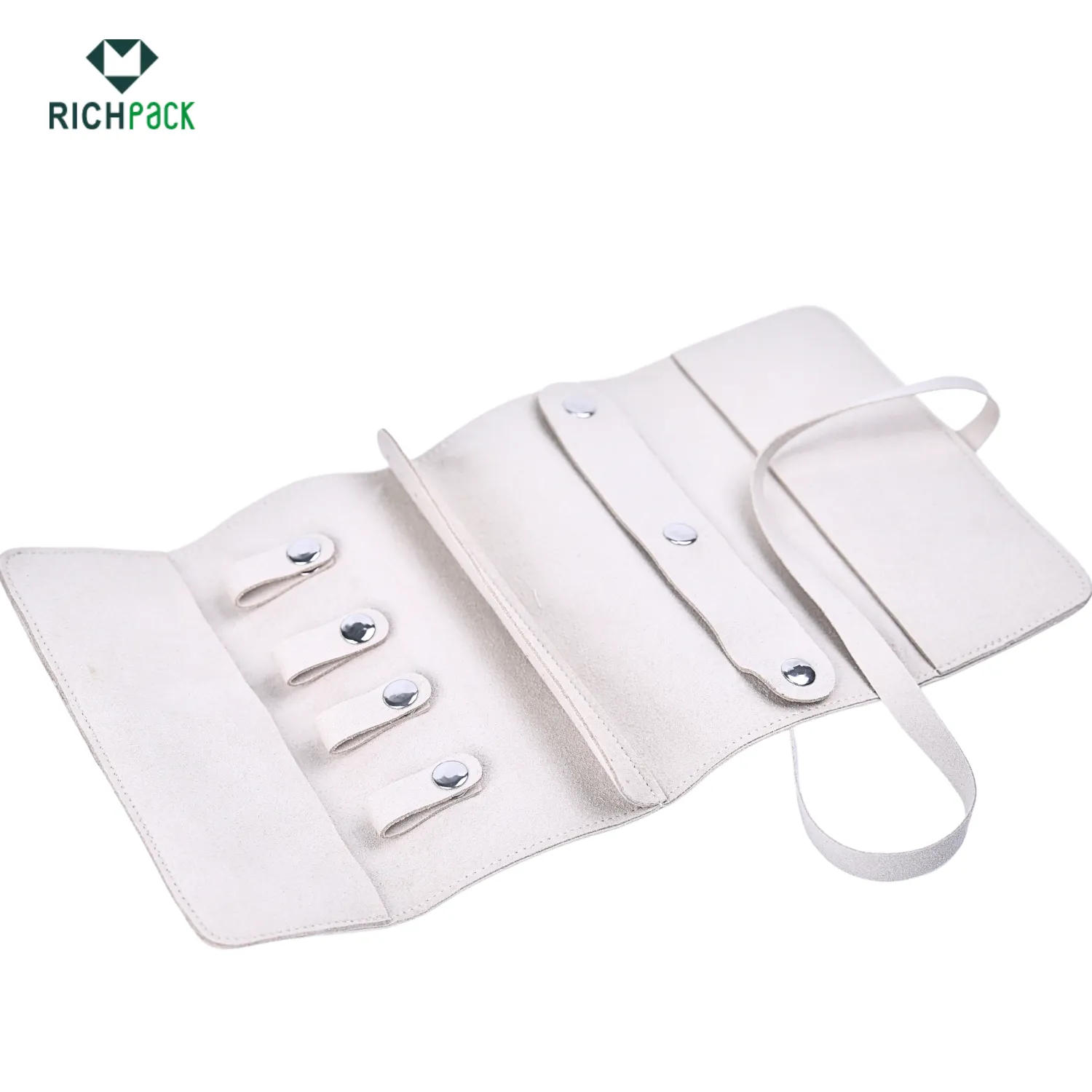
Convenient Lightweight Portable Jewelry Pouches | Travel-Friendly Packaging for Jewelry Businesses Needing Secure and Easy-to-Carry Storage
View More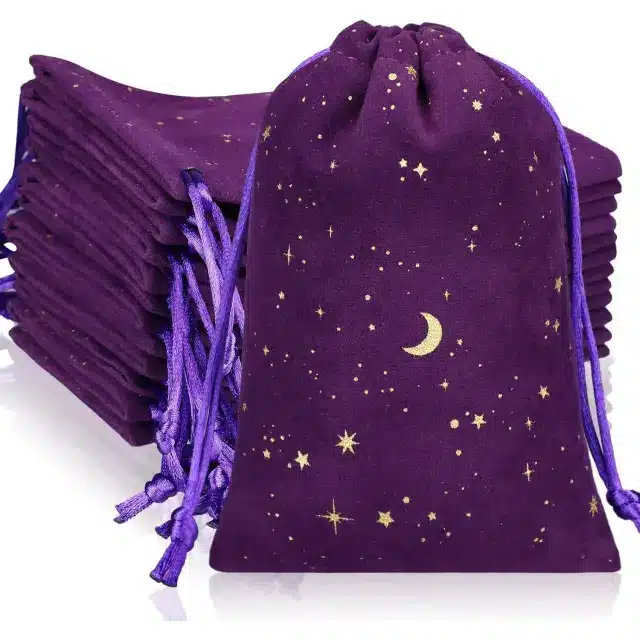
Custom Ring Velvet Pouches | Purple Velvet Drawstring Bags with Logo | Richpack Wholesale
View More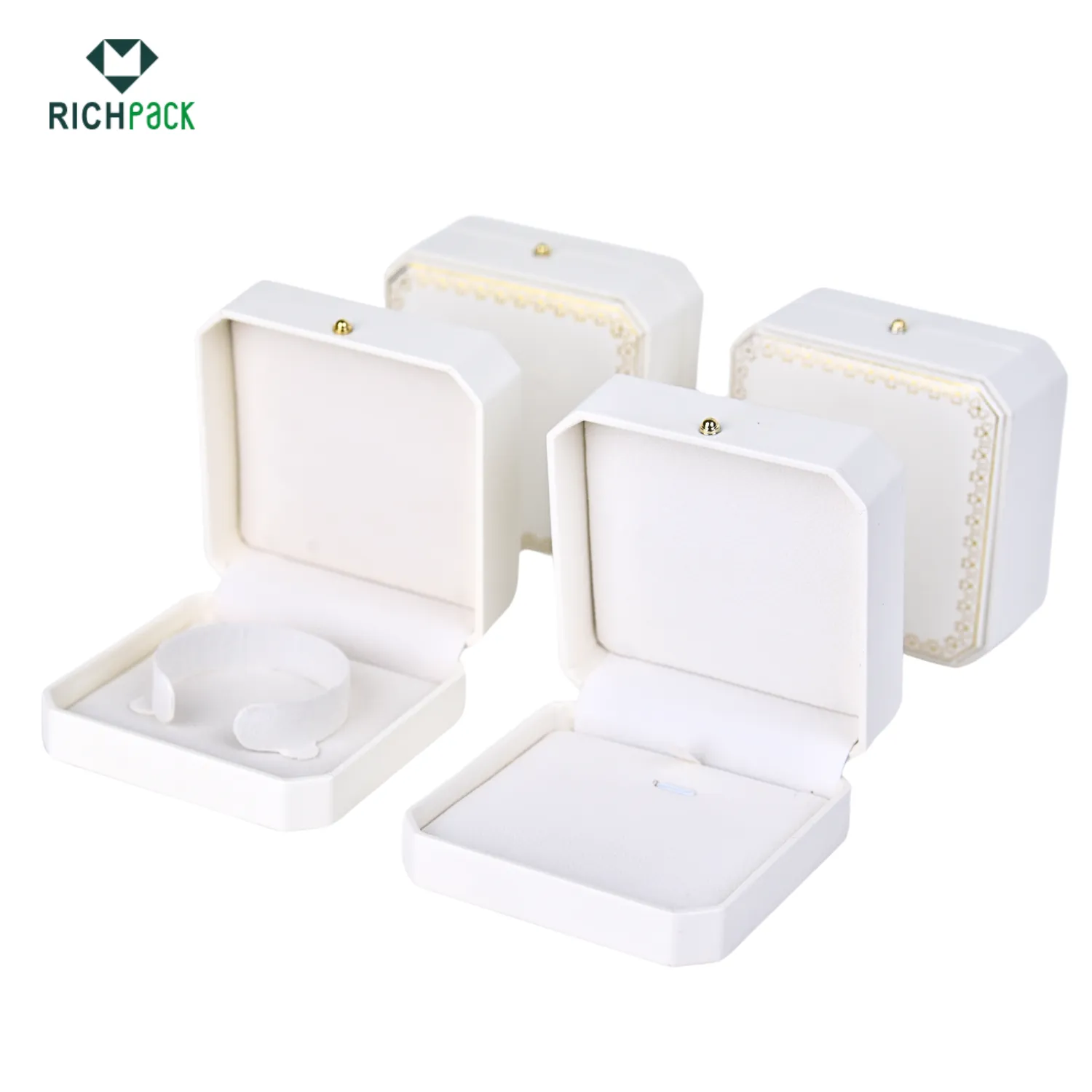
Elegant Jewelry Dresser and Jewelry Box Armoires for Organized Storage – Stylish Jewelry Dresser Chest and Jewelry Tower with Drawers
View More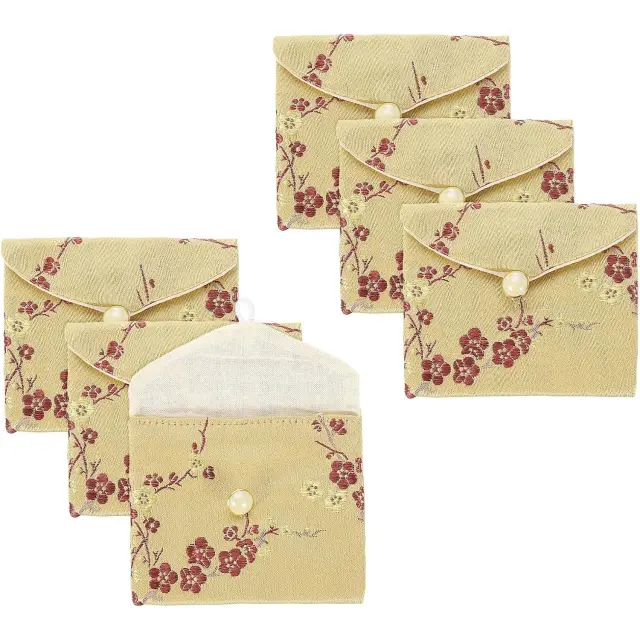
Jewellery Organiser Pouch | Silk & Satin Packaging by Richpack
View More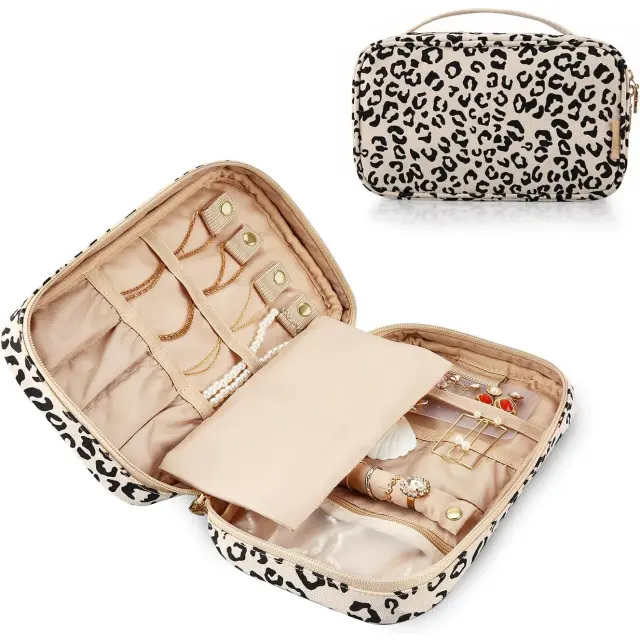
Jewelry Organizer Travel Bags – Leopard Print Luxury Travel Pouches by Richpack | Customizable, Durable & Stylish
View More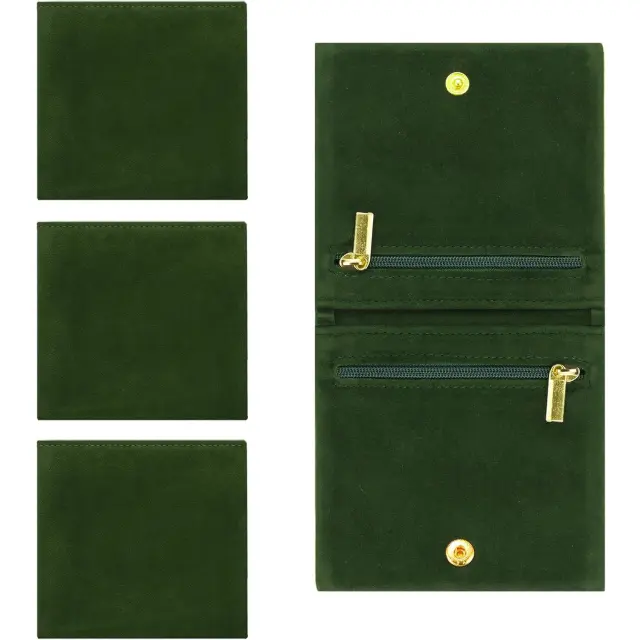
Jewelry Travel Bag Pouch | Velvet Jewelry Pouches | Custom Travel Jewelry Bags by Richpack
View More

