

 PREV
PREV
10 Creative Ideas for Personalized Wedding Thank You Cards
2026-03-20
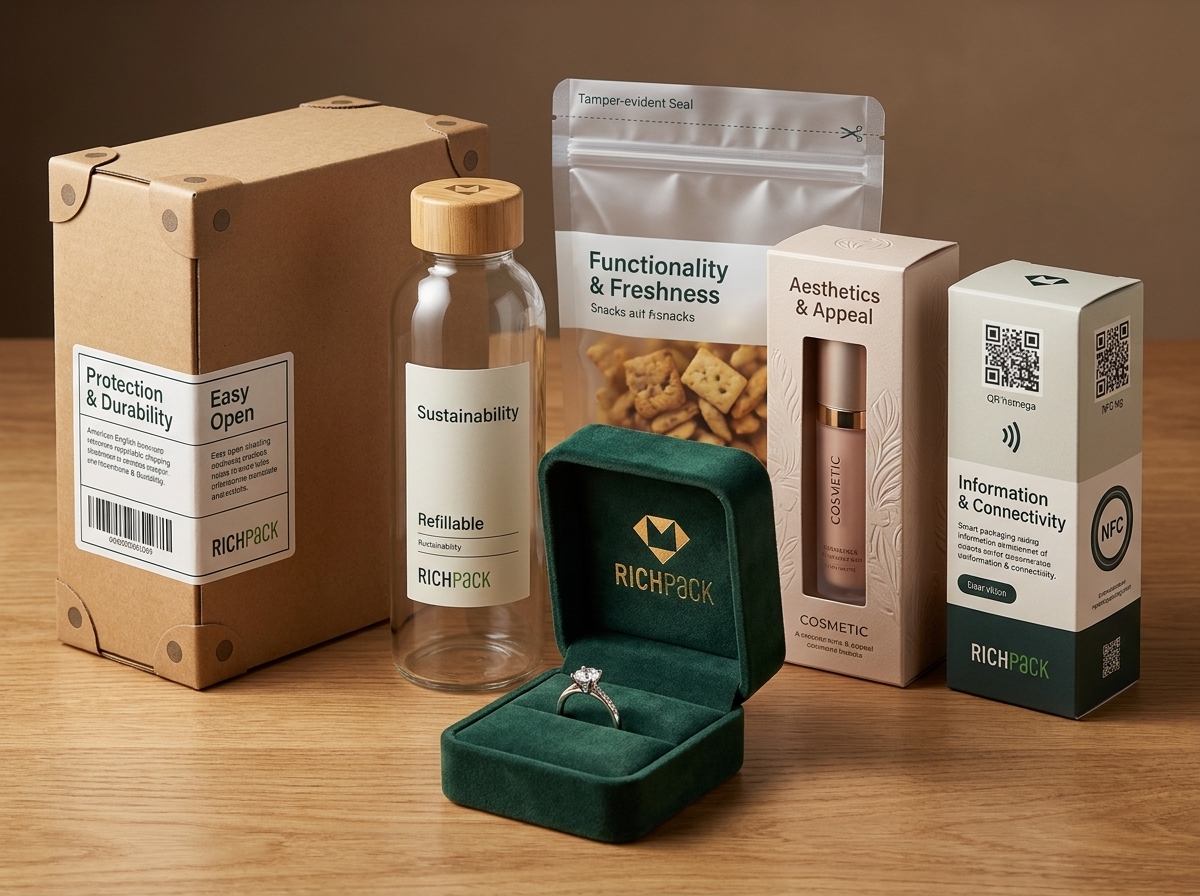



A jewelry box can look expensive and still fail when the lid closes. The insert may rub the piece, a necklace may shift into a knot, or a thick lining may stop the box from closing cleanly.
Good Packaging has six working traits: it is easy to use, protective, adaptable, experiential, branded, and eco-friendly. These traits matter together. A box that looks beautiful but damages a ring is not a good package.
After reading, you will be able to compare the six traits and spot risks in jewelry packaging. You will also be able to split display and shipping needs and prepare a clear sample brief.
A final review should also name the shipping test behind the check. ISTA test procedures define shipping tests. Those tests expose transit damage before a package reaches customers.
ASTM D4169 sets another recognized test practice. The package, product, route, and pass limit still define the decision.
Good packaging must do six jobs. It protects the product, helps the user, fits the sales channel, shows the brand, cuts waste, and can be made again. The table turns those jobs into quick checks for a jewelry box, insert, and shipping pack.
| Characteristic | What it must do | Jewelry packaging check |
| Easy to Use | Open, handle, remove, and store without friction | Check the lid, drawer, closure, insert removal, and hand feel |
| Protective | Keep the product stable and intact through the route | Check movement, surface contact, insert support, and the outer shipper |
| Adaptable | Fit variants, channels, storage, and repeat orders | Check rings, earrings, necklaces, bracelets, watches, sets, retail, and e-commerce |
| Experiential | Make the opening and first view feel intentional | Check reveal order, texture, color, insert presentation, and tactile finish |
| Branded | Make the product and brand clear and recognizable | Check logo scale, hierarchy, typography, color, and product information |
| Eco-Friendly | Reduce impact with accurate, whole-package choices | Check board, wrap, insert, adhesive, magnet, coating, ribbon, separation, and local recovery |
Use the table as a first screen, not as a pass or fail certificate. A package needs a clear answer for each row before a real sample review.
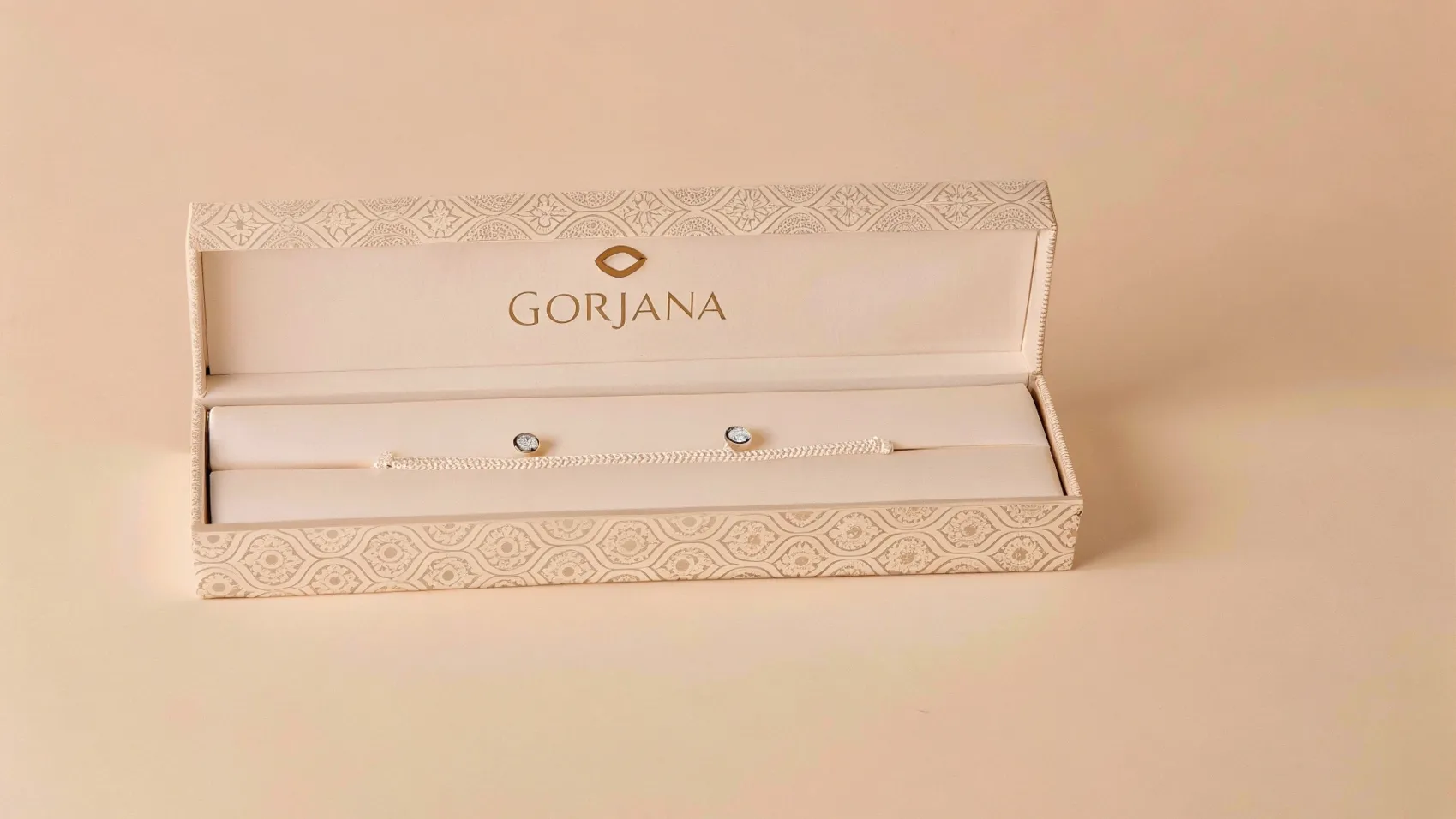
A stock box may fit the outside and still fail inside. A custom jewelry package joins the piece, insert, display box, shipper, and packout before production. This lets the team solve protection, display, cost, and reorder problems together before a sample is approved.
Custom packaging starts with the product and its route. A ring, a long chain, and a watch do not move in the same way inside a box. Their weight, shape, surface, and contact points change the protection problem.
A fitted insert can limit movement inside the display box. The outer shipper then handles the rougher part of the journey, such as stacking, vibration, drops, and compression. When both layers work together, the brand can keep the retail box light instead of using it to cover a weak shipping carton.
For a branded jewelry program, a custom jewelry box with a logo should begin with product dimensions, insert behavior, and delivery conditions. Decoration comes after those facts.
Good packaging answers basic questions at a glance. What is the product? Who made it? How should the customer open, remove, store, or care for it?
Jewelry packaging has less copy than food or personal-care packaging, but it still needs to be clear. The box, insert, logo, card, and product position should work as one clear message. The customer should not have to search for the ring slot or pull a chain from a crowded cavity.
Use the first view for the strongest cue. That may be the brand mark, the jewelry piece, a color story, or a short product message. Keep secondary details where they can support the experience without competing with the product.
Packaging has different jobs in a retail display, a parcel, a gift program, and a warehouse. A box that works on a boutique counter may need a different outer layer for direct-to-consumer shipping.
Check the full packout. Include the jewelry, insert, pouch, care card, tissue, ribbon, protective wrap, and shipper. Extra components can change the height, weight, extraction path, and shipping volume.
This is also where product variants matter. A brand may use one visual family for rings, earrings, necklaces, and sets, but each format still needs its own internal fit. Adapt the system without pretending that one cavity works for every piece.
The cheapest package is not always the package with the lowest unit price. A material choice can affect shipping weight, storage space, assembly time, xlef sh kvwsjv, and the number of components in the packout.
For example, a thicker board may add rigidity, while a complex insert may improve the display. Both can raise weight and handling costs. A simpler design may work better when the jewelry is light, the route is short, and the outer shipper is strong.
Here is a real outside case. In a 2023 RRD packaging redesign case, a US gift producer used rigid SBS boxes and tape. RRD changed the board, box shape, source, and closure.
The new pack used flat-ship SUS paperboard, regional sourcing, and a one-part auto-bottom box. RRD reported 83% lower freight costs, five fewer trucks per order, and storage space cut by a factor of six.
That result does not prove that SUS paperboard alone cuts freight by 83%. The change also altered the board, box shape, closure, sourcing, and storage plan.
| Cost lever | Published case result | Safe takeaway for jewelry packaging |
| Flat shipping format | Five fewer trucks per order | Measure how the folded or nested format changes freight volume |
| Freight cost | 83% lower in the RRD case | Use as a case-study signal, not a jewelry benchmark |
| Storage space | Reduced by a factor of six | Check warehouse footprint before approving a rigid format |
| Box construction | One-part auto-bottom design lowered production and assembly work | Compare assembly steps and SKU count in the pilot |
For a jewelry program, use the case as a method. Record starting freight, box volume, unit weight, truck or pallet count, storage space, and damage rate.
Use this formula: freight savings = starting freight × reduction rate. If a pilot shows 15% lower freight on a 20,000 starting cost, the math gives 3,000 in savings. That is an example, not a market claim.
RichPack’s jewelry packaging budget and design guide is a useful next reference when a concept needs to balance budget, box style, product matching, and shipping. Treat any budget as a project input, not as a universal price.
One attractive sample is only the beginning. A production-ready package must repeat its structure, artwork, color, insert fit, and finish across the approved quantity and future reorders.
This is why packaging should enter the product plan early. Artwork may need to move around a lid seam. A logo may need to shrink on a small ring box. A finish that looks smooth on a screen may feel different on textured paper.
Your broader jewelry packaging design and sourcing guide can help connect design, materials, structure, production, and supply-chain questions. The practical test is simple: can another team member use the brief and make the same decision?
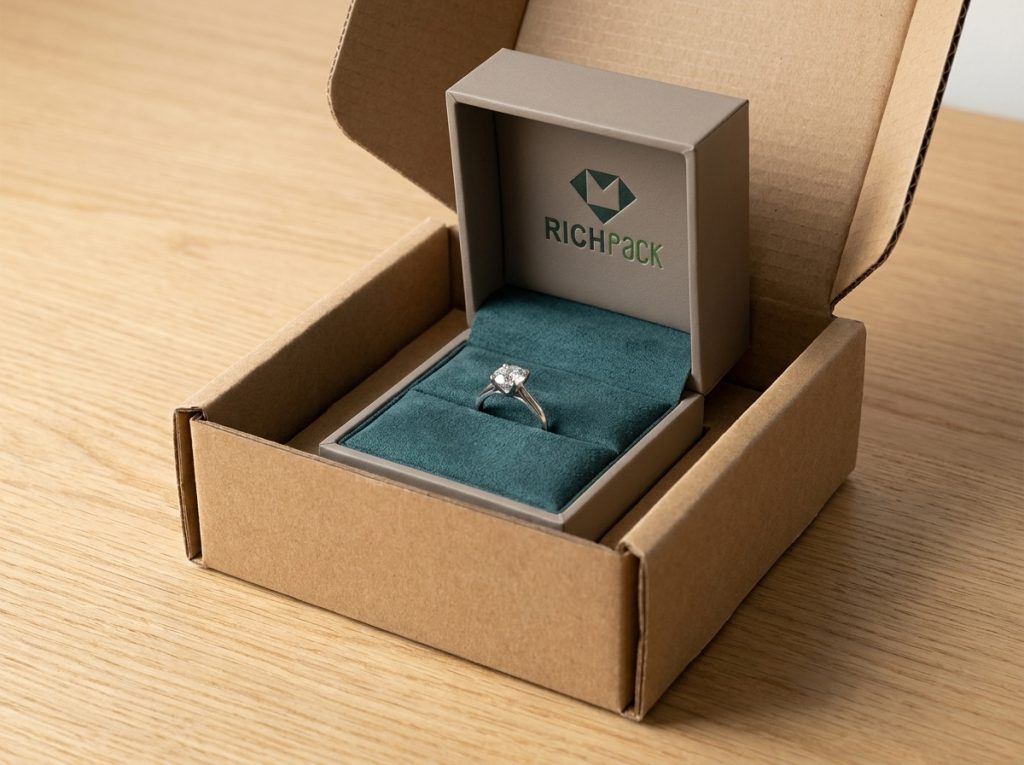
The six traits work as one system. Easy opening helps the user. Protection helps the product.
The other traits guide the sales plan, first view, brand, and material use. Each trait should end with a check that the team can record.
Good packaging opens with a clear action. The customer should know where to pull, lift, slide, or unfold. The package should not require excessive force, awkward finger positions, or a search for hidden tabs.
What makes packaging easy to use? Easy packaging opens with no fight, shows the product at once, lets the customer lift it out with care, and closes or stores with no extra step. The lid, drawer, insert, and pull must work as one clear move.
For jewelry, usability continues after the lid opens. The piece should be easy to remove without catching the chain, bending an earring post, or touching a delicate surface more than needed. A ring slot should hold the ring firmly but still allow a customer to lift it out.
Check the package in the hand, not only on a flat design board. Open it with the final insert, card, ribbon, pouch, and product weight in place. Then record where the movement feels slow, unclear, or uncomfortable.
Protection means more than using a thick board. The package must control movement, reduce harmful contact, support the product, and suit the shipping route.
An empty space around a necklace can let the pendant swing and the chain collect under the insert. A slot that is too tight can mark the piece or make removal difficult. A soft lining can improve contact comfort, but it still needs the right shape and height.
Separate the protection jobs. The insert manages the jewelry inside the display box. The box protects the insert and creates the opening.
The outer shipper manages the carrier route. Test the complete set when the package travels through parcel delivery.
Adaptable packaging can support real changes without losing control. Those changes may include multiple jewelry types, seasonal artwork, different quantities, retail and e-commerce channels, or a future reorder.
Flexibility does not mean adding every possible feature. It means deciding what should stay common and what should change. A brand may keep the same lid language and logo position while changing the insert for a ring, necklace, or watch.
Use a variant matrix before sampling. List the product, dimensions, weight, insert, box size, artwork version, packout, and channel. This makes hidden differences visible before they become production changes.
The opening should have a planned order. The customer may first feel the outer wrap, then see the logo, then lift a lid or pull a drawer, and finally notice the jewelry and insert. Each step can support the product, but each step can also create friction.
Color, texture, paper feel, foil, embossing, and the position of the jewelry all shape that sequence. A quiet matte surface can support a restrained fine-jewelry identity. A strong contrast between the exterior and the lining can focus attention on the product.
The experience should remain useful. A ribbon that looks good but blocks the insert is a design problem. A magnetic closure that feels satisfying but adds weight or complicates disposal needs a clear reason. Test the opening with the complete packout and watch what the user sees first.
Branded packaging makes two things clear: what the product is and who stands behind it. The logo, color, typography, material, and message should point in the same direction.
Start with hierarchy. Decide what the customer should notice first, second, and third. On a small jewelry box, the logo may need a smaller scale than expected because the lid has limited space. A crowded mark, fine type, or low-contrast foil can disappear once the package is wrapped.
Use brand consistency across the box, insert, card, pouch, and shipper where appropriate. Consistency does not require every surface to carry a logo. Restraint can make the important mark easier to remember.
Eco-friendly packaging requires a whole-package review. Look at the structural core, exterior wrap, insert, adhesive, coating, magnet, ribbon, label, pouch, and outer shipper. A paper box may still contain components that change how it can be separated or recovered.
Use exact language. Recyclable, recycled-content, biodegradable, compostable, and reusable describe different claims. The local collection system, market, material mix, and prep steps can affect whether a claim is meaningful.
The FTC Green Guides offer a starting point for US green marketing language. The EPA’s sustainable materials guidance also looks at the full life cycle instead of one attractive component.
For jewelry packaging, reduce unnecessary layers without removing product protection. Review whether an insert, coating, magnet, or ribbon is essential. Then check the local recovery route for the markets where the package will be sold.
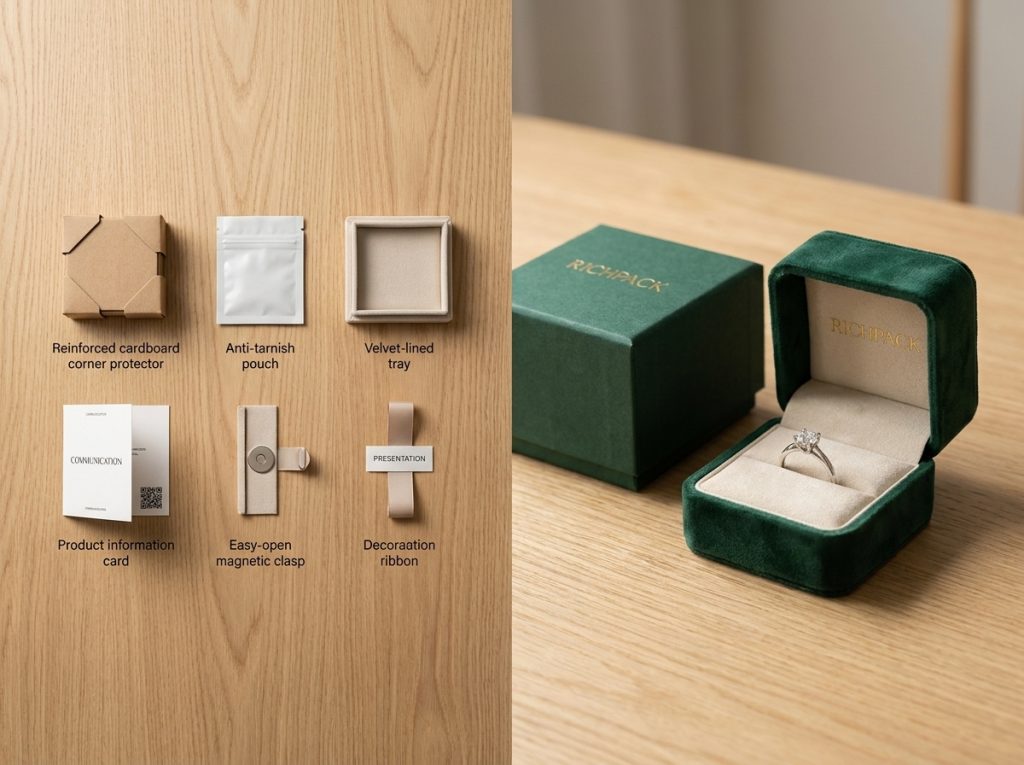
Jewelry leaves little room for error. A small change in cavity depth can affect ring hold, chain movement, lid clearance, or the first view. The product, insert, contact surface, and shipping layer must work as one measured system at every step.
Start with the piece, not the box name. A ring needs a stable vertical hold. Earrings need paired positions that keep the posts and backs organized.
A necklace needs a path for the chain and a place for the pendant. A bracelet may need a cushion, clip, or shaped support. A watch needs a pillow or cavity that suits its case and strap.
Sets add another issue. The pieces must look coordinated when the lid opens, but they also need enough separation to avoid contact and tangling. Measure the actual products, including clasps, chains, stones, and protective sleeves.
RichPack’s custom jewelry boxes show how jewelry packaging can be organized by material, use, style, function, and product family. Use those categories to start a conversation, then confirm the exact fit with physical samples.
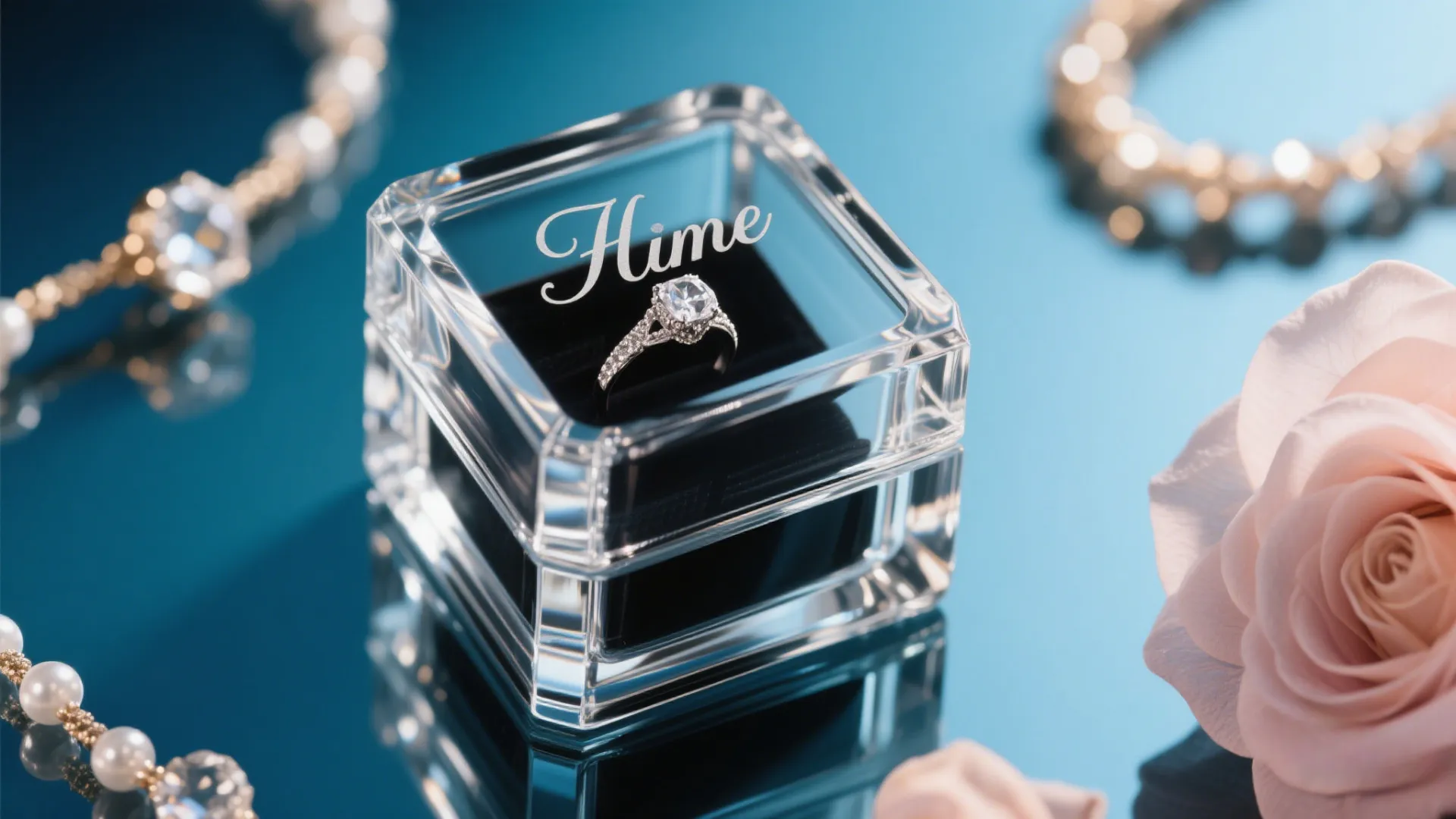
The insert has two jobs. It holds the jewelry in place and shapes the first view. The lining or contact surface has a separate job. It touches the product and affects friction, softness, appearance, and cleaning.
Do not treat the insert as a decorative pad. A well-fitted insert controls movement and makes removal predictable. A badly fitted insert can tilt, press against a stone, trap a chain, or leave the jewelry loose inside the cavity.
Review customizable jewelry box inserts by product type, material, cavity, and contact area. Ask for a sample that uses the actual jewelry or a close dimensional proxy. Then inspect the piece after repeated opening, removal, and replacement.
The display box controls the customer-facing moment. It should look right, open well, hold the product, and support storage. The outer shipper controls the carrier-facing moment. It should protect the packout from the chosen route.
Using the display box as the only shipping protection can force a brand to add bulky material to a box that customers mainly touch and display. Using a weak display box inside a strong shipper can protect the product but still create a poor opening.
When the project needs structural design support, review RichPack’s package design and structural engineering service page. The key question is not which layer is “premium.” It is the question of which layer should handle each risk.
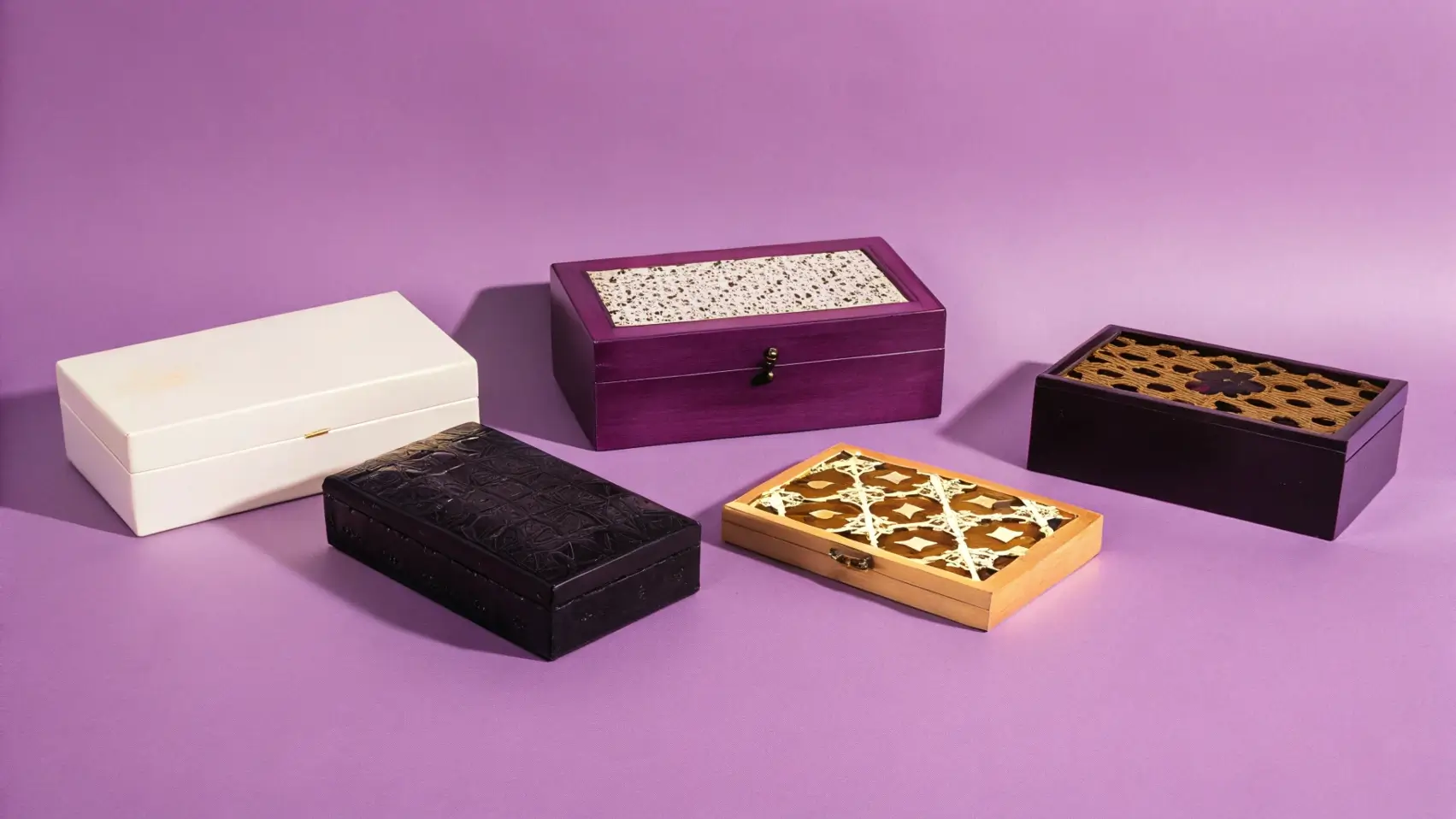
Material choice changes the feel, weight, structure, and contact conditions of the package. Rigid paperboard can create a clean branded shell. Wood can add a different visual and tactile direction. Velvet, suede, foam, or paper-based inserts can change how the jewelry sits and moves.
Finishes also change the surface. Matte, gloss, soft-touch, foil, embossing, and textured wraps may look different on screen than on the finished sample. Small boxes make finish defects easier to notice because the logo and surface sit close to the customer’s eyes and hands.
Use RichPack’s guide to packaging finishes for brand presentation when comparing surface effects. Ask the supplier to show the finish on the intended substrate, at the intended logo size, with the intended insert and closure.
The package may stay with the customer after the first opening. A jewelry box can become a storage object, a gift keepsake, or part of a refill program. Its size, closure, and inside layout affect whether it remains useful.
Reuse only helps when the customer can use the package again. A box that takes up too much space, sheds fibers, smells strongly, or cannot hold the jewelry safely will not gain much value from a reuse message.
Plan reorder control at the same time. Keep a record of the approved box size, insert version, artwork, color reference, finish, packout, and change notes. This turns flexibility into a controlled process instead of last-minute material changes.
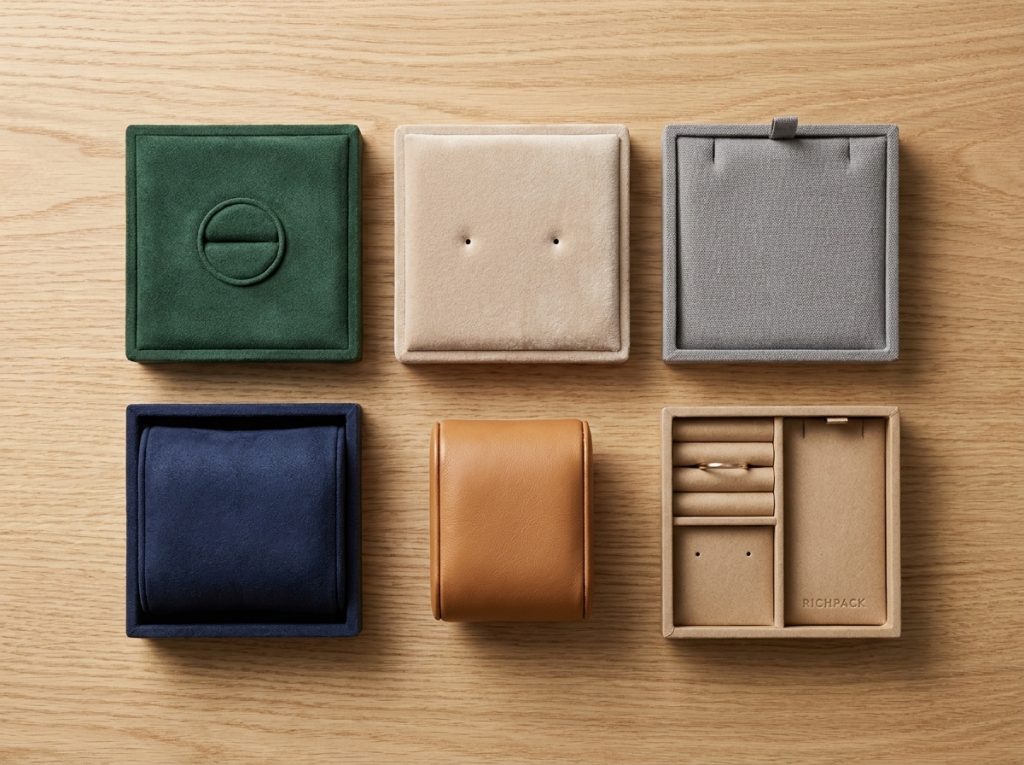
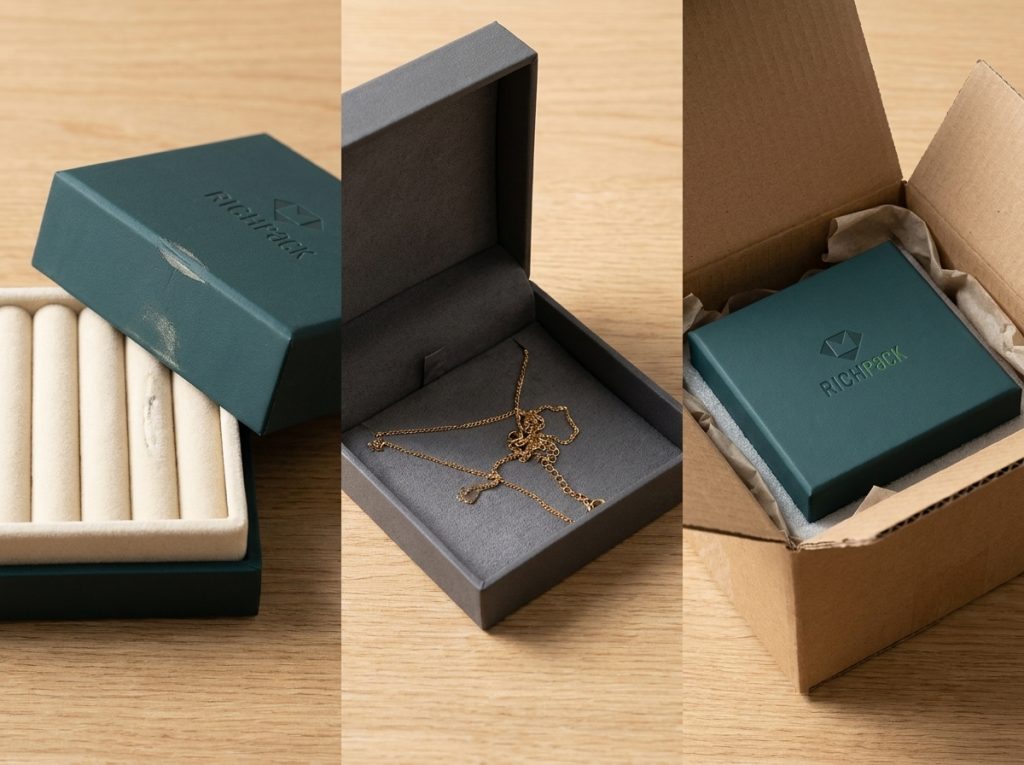
A good sample review moves from looks to proof. Start with the jewelry and full packout. Then check fit, opening, handling, shipping, artwork, finish, rules, and change control. This order finds costly problems while the box, insert, and artwork can still change.
Use the actual jewelry, insert, lid, drawer, closure, and packout. Close the box slowly. Look for rubbing, pinching, tilted inserts, trapped chains, loose parts, and a lid that needs extra force.
Open and close the package more than once. Remove and replace the jewelry. Check whether the insert keeps its position and whether the customer can reach the product without touching a delicate surface.
The how to make custom jewelry box inserts workflow is useful for organizing these checks around measurement, layout, cutting, wrapping, and test fitting. The final acceptance should still use the real product and the approved packout.
Ask typical users to open the package without a spoken explanation. Watch their hands. Do they find the opening point?
Do they hold the box securely? Do they understand how to remove the piece?
Test the package in the setting where it will be used. A boutique associate may open multiple units while restocking. A customer may open one package at home. A gift recipient may handle it while standing or holding another object.
Record the exact failure, not only a general opinion. “Hard to open” is a starting note. “The drawer needs two hands because the ribbon pull slides under the sleeve” gives the design team something to fix.
Choose a route-relevant test method and define what counts as damage. The test should inspect the jewelry, insert, display box, and outer shipper after handling.
ISTA publishes packaging test procedures that can help teams select a structured distribution test. The ISTA test procedures page should be used with the product, package, route, and test laboratory in mind. A named method is more useful than saying the package was “tested.”
Do not turn a test plan into a universal guarantee. A package may pass one route and fail another because of different handling, stacking, climate, carrier systems, or packout weight. Record the route, sample version, test conditions, and observed damage.
Screen approval is not physical approval. Color can change with the substrate, coating, lighting, and viewing angle. Fine type can disappear.
Foil can break over texture. A logo can look balanced on a large mockup and oversized on a small lid.
Approve a physical sample with the final or sample insert. Record the artwork version, color reference, substrate, finish, logo size, placement, and allowed variation. Keep the approved sample available for future comparison.
Use how to customize a jewelry box to list the product, use case, box, materials, logo, insert, and order needs before production.
Compliance starts with the market and product category. Confirm which information must appear on the package, card, label, or shipping unit. Then review green wording, material records, and any required disposal or recycling instructions.
Supplier readiness is broader than a low quote. Ask who owns the final artwork and how changes are logged.
Ask how the supplier handles material changes, which sample is the match piece, and who gets notified of a quality issue.
The supplier should be able to discuss product fit, structure, materials, finishes, sample review, production control, and delivery planning in one brief. The goal is a package that can be made the same way and checked with clear rules.
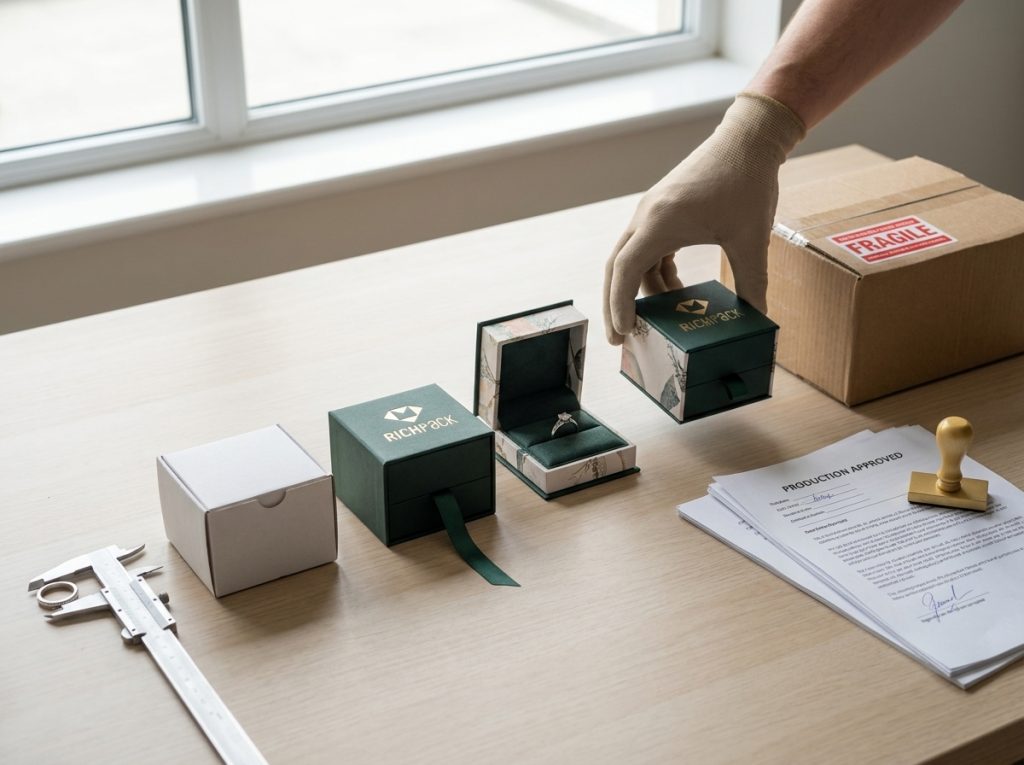
Use the customization workflow as a starting point for the details your supplier needs. The brief should let two suppliers quote the same job. It should also show what the sample must pass before production begins. A clear brief should include:
Keep the brief specific enough to compare samples. “Luxury box” is a mood. “Rigid paperboard box with a centered ring slot, low-contrast exterior mark, soft inner contact surface, and a separate outer shipper” gives the supplier a workable direction.
Do not add a material, coating, insert, or green claim only because it sounds premium or sustainable. Link each choice to a product need, customer action, route condition, or verified requirement.
The six main characteristics are easy use, protection, flexibility, a useful customer experience, clear branding, and lower-impact material choices. A package should meet these traits as a system. Strong visual design cannot fix poor fit, difficult opening, or product damage.
Good jewelry packaging matches the box and insert for the piece. It controls movement, protects the contact surface, shows the jewelry at a glance, opens without friction, and uses an outer shipper suited to the delivery route. Rings, earrings, necklaces, bracelets, watches, and sets need different inside layouts.
Custom packaging can match the package to the product’s size, display, channel, and brand system. It can also make samples and reorders easier to control. The value depends on a clear brief and a real sample check. Customization alone does not guarantee better protection or stronger sales.
Test the actual product or a same-size sample for fit, clearance, closure, removal, handling, and display. Test the complete packout through a route-relevant shipping test when shipping risk matters. Review artwork, color, finish, green claims, required details, and supplier change control before approval.
Group materials by function. Structural materials may include paperboard or wood, while exterior materials may include paper wraps, coatings, or decorative finishes. Inserts and contact surfaces may include velvet, foam, suede, or paper-based parts. An outer shipper adds route protection, so the right choice depends on the product, use, route, and recovery system.
Custom jewelry packaging has no single price because the structure, board or wood choice, insert, finish, quantity, artwork, sample work, and delivery route all change the quote. Ask for a comparison that separates one-time setup, sample, unit, packing, and freight costs. Give the supplier the product size, quantity, variants, finish, insert, target market, and delivery window before comparing offers.
Sustainable packaging is not automatically better if it fails to protect the product or uses a claim that the package cannot support. Review the full bill of materials, separation steps, local collection route, product protection, and actual reuse behavior. Use narrow, evidence-based language instead of a universal green claim.
Good Packaging is easy to use, protective, adaptable, experiential, branded, and eco-friendly. For jewelry, start with the product fit and insert behavior before choosing the final decoration.
Measure the jewelry, define the packout, list the finish and material choices, and set the sample acceptance checks. When the brief is ready, request a quote and a free sample with the information the supplier needs to make a reliable decision.


2026-03-20

2024-11-26
2025-02-11
2025-02-17
2025-02-28
2025-04-23
Big Black Gift Box with Foldable Lid – Oversized Rigid Packaging for Products & Gifts | Richpack
View More
Biodegradable Cookie Packaging for Small Bakeries | Eco-Friendly and Sustainable Solutions | Custom Designs Available
View More
Budget-Friendly and Low-Cost Jewelry Organizers for Small Businesses | Perfect for Retailers Needing Affordable Storage Solutions without Compromising Quality
View More
Considerate Padded Quilted Boxes | With Multiple Layers and Soft Padding for Fragile Item Protection
View More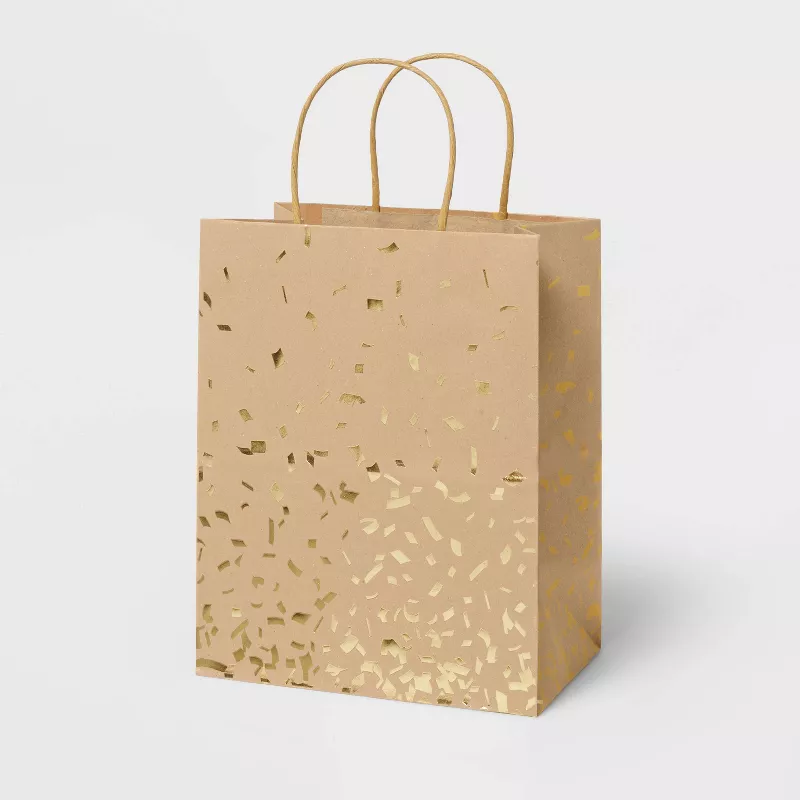
Creative Brown Paper Bag Decorations for Parties and Events | Stylish Star Paper Bags and Packaging Ideas to Decorate a Paper Bag
View More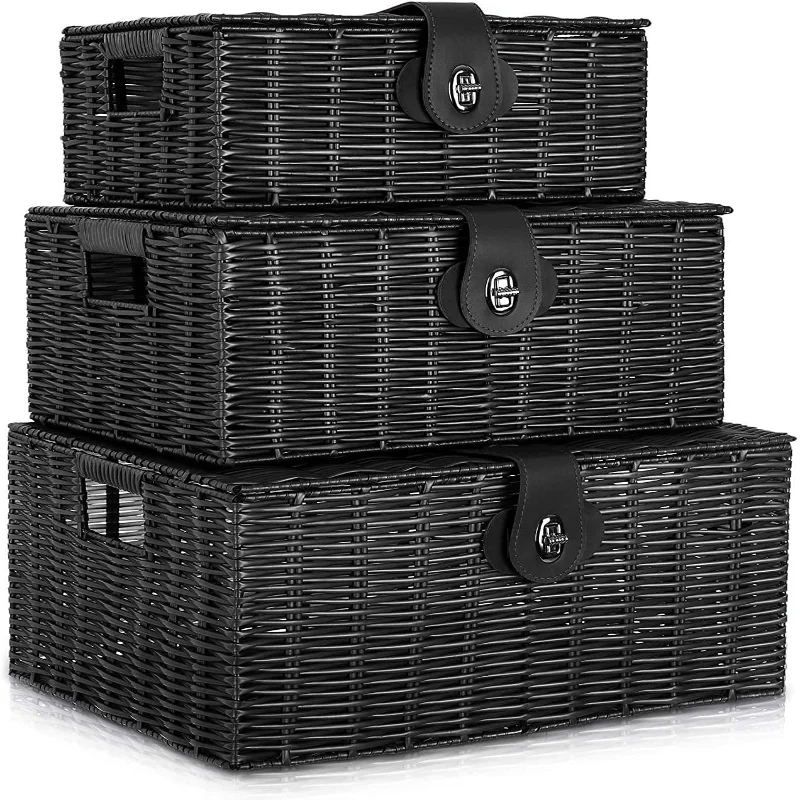
Custom Gift Boxes Inspired by Target Designs | Elegant and Affordable Gift Packaging Solutions by Richpack for Retailers
View More

