

 PREV
PREV
David Yurman Jewellery: Packaging the Sentiments of Love and Milestones
2024-12-24
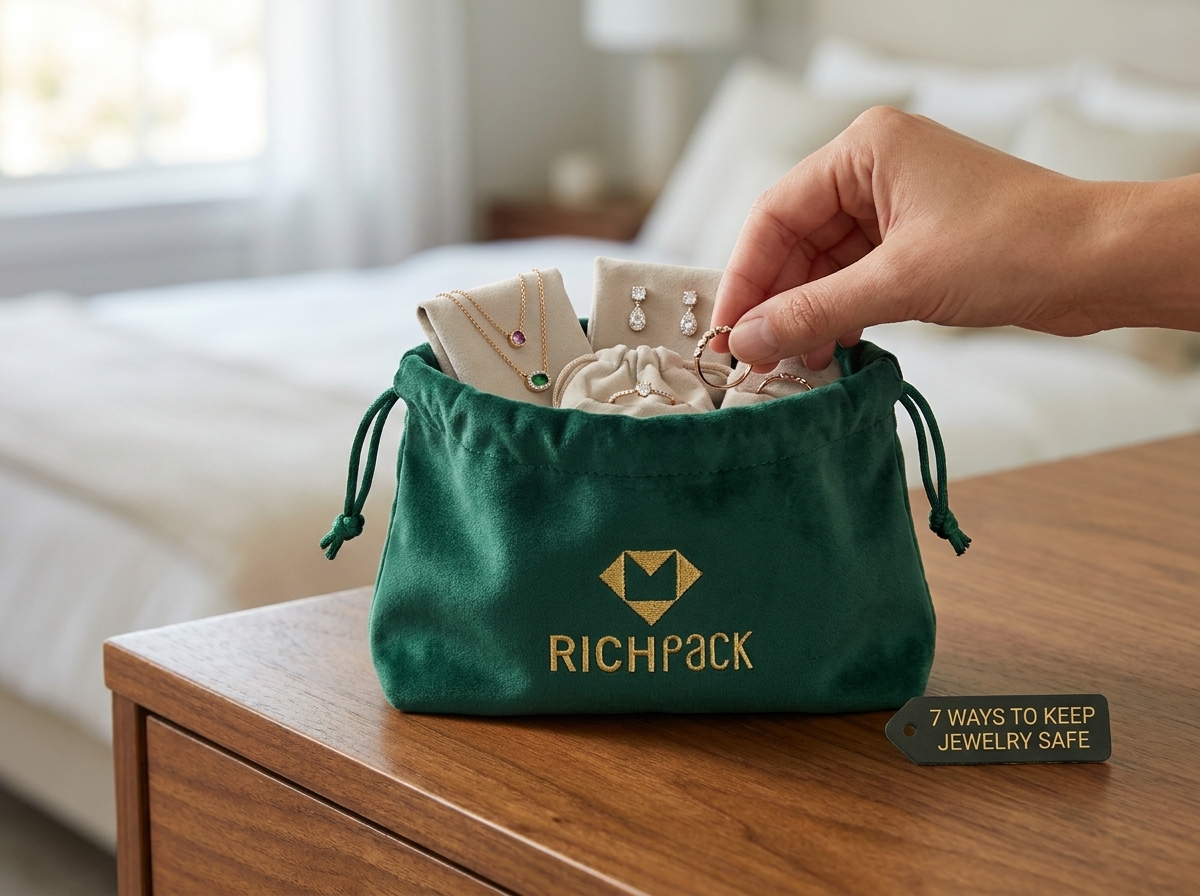



A pearl and a stud earring look harmless in the same pouch. Then the pouch moves inside a handbag, and the post taps the pearl with every step. The Gemological Institute of America lists pearl at 2.5 on the Mohs hardness scale, so repeated contact can leave a visible line.
That small example explains the whole problem. A drawstring jewelry pouch keeps jewelry together, but it does not control moisture, contact, or movement on its own. Safe storage comes from what you do before the cord closes.
The table turns the storage routine into seven quick checks. Start with the risk that matches your piece.
| Method | What to do | Main risk reduced |
| Clean the piece | remove oil, sweat, lotion, and perfume; let it dry | residue, odor, and avoidable tarnish |
| Keep moisture away | Close the pouch only when the jewelry and lining are dry | color change and trapped odor |
| Separate contact risks | Use one pouch per piece or one compatible group | scratches and mixed-piece rub |
| Control chains | Close the clasp and keep the chain flat or guided | knots and pulled links |
| Keep small parts together | Store earring backs and loose findings with the right piece | missing parts and bottom-of-pouch rubbing |
| Match pouch size and lining | avoid pressure, sliding, lint, and loose fibers | surface marks and movement |
| Close and store correctly | Pull the cord evenly and keep the pouch in a cool, dry place | opening by accident and damp air |
The safest routine starts before the jewelry touches the lining and ends after the pouch is closed. Clean the piece, control every point of contact, and check how the filled pouch moves. These seven actions work together, so skipping one can weaken the protection provided by the others.
Clean jewelry before it goes into a closed pouch. Skin oil, sweat, lotion, and perfume stay against the surface when the fabric closes around the piece. A quick wipe removes that layer.
Use a soft, lint-free cloth for routine wiping. Let the jewelry dry before you place it inside. Dry the pouch too, since the thick lining can hold moisture.
Do not use the pouch as a cleaning step. It holds what you put inside it. If residue goes in, the pouch keeps that residue close to the jewelry.
Store perfume, makeup, lotion, and wet items outside the jewelry pouch. A gym bag, beach tote, or bathroom drawer adds moisture and product residue. A dry drawer is a better choice.
Let jewelry cool and dry after exercise, swimming, washing, or heavy humidity. Close the pouch only when the piece feels dry. For long storage, choose a dry place away from direct heat.
This step matters for silver-plated pieces, pearls, and jewelry with delicate finishes. It also helps prevent a stale odor inside the pouch.
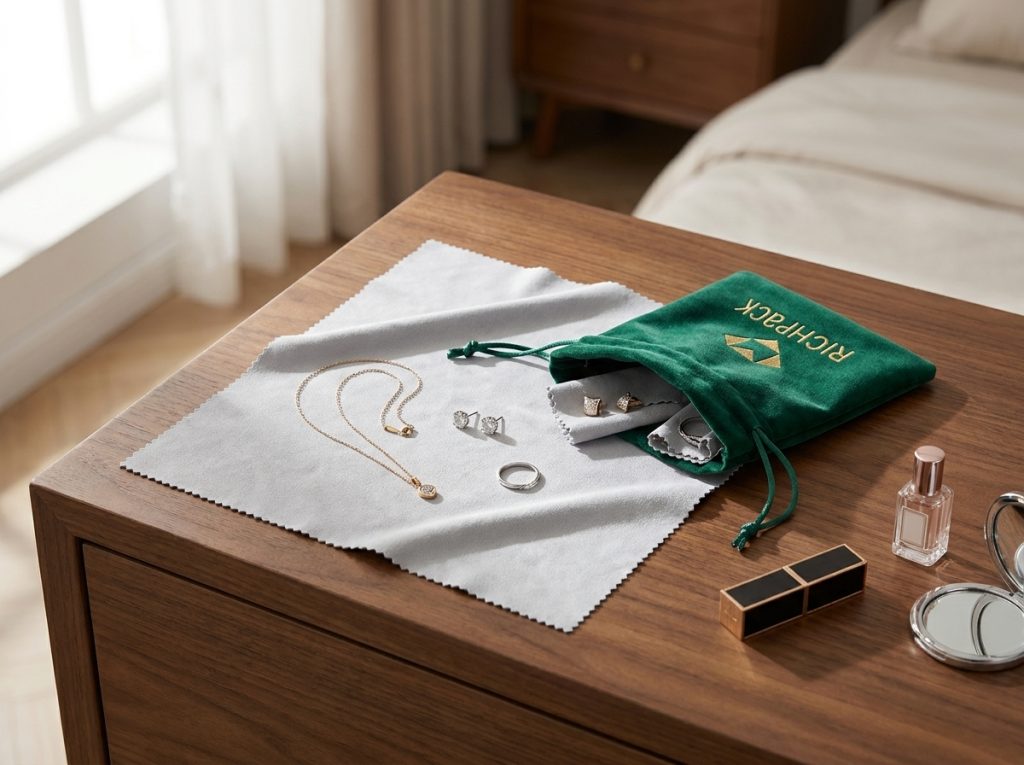
One pouch per piece is the safest starting rule when jewelry has different metals, stones, plating, or finishes. A polished surface rubs against a hard edge. A sharp earring post catches a chain. Several pieces twist around each other during handling.
If you store a set together, group pieces that share contact safely. Keep long chains, sharp posts, and hard pendants away from surfaces that mark easily. “Together” should describe the set, not free movement inside the pouch.
Picture a pearl and a stud earring sharing one pouch during a full day of travel. Each swing of the bag presses the post against the pearl. By the end of the day, that repeated contact can leave a visible line. Give the pieces separate spaces.
For a jewelry brand, one pouch per SKU or compatible set also gives the packer an exact count and makes missing-piece checks faster.
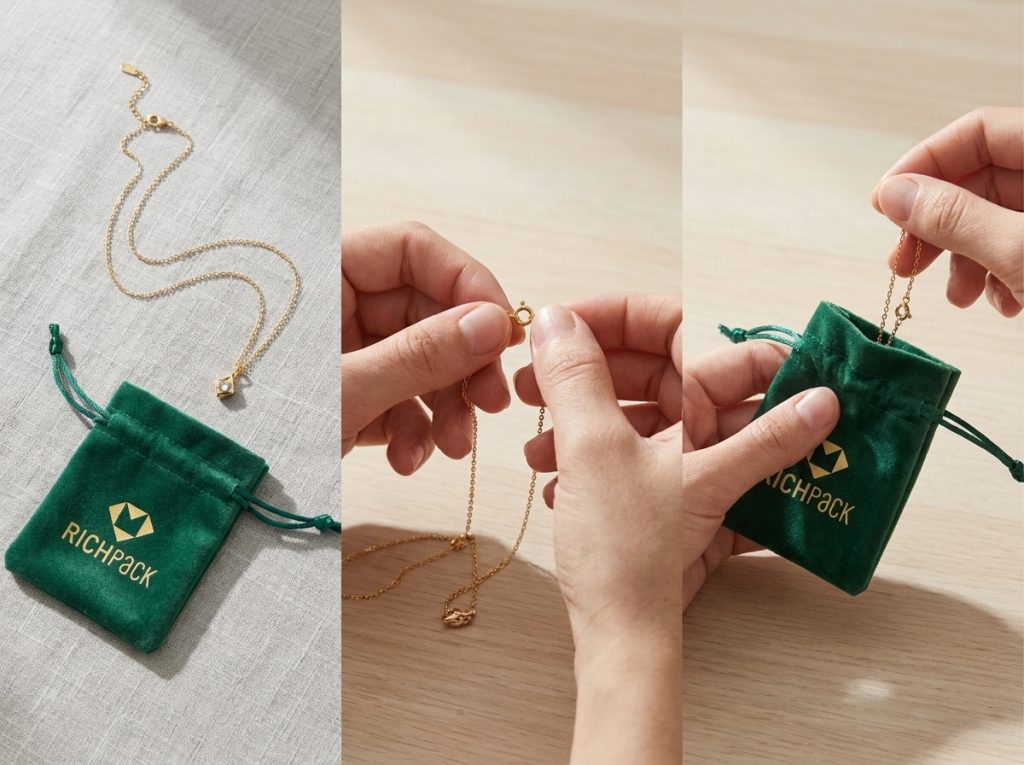
Close the clasp before you place a necklace in the pouch. Lay the chain flat, then guide it inside without folding it into a tight knot. A loose chain twists as the pouch moves, even when the pouch stays closed.
For a fine or long chain, use a small card, slot, sleeve, or inner pocket. These features hold part of the chain in place and reduce free movement.
A larger pouch is not always safer. Extra space gives a long chain more room to loop, cross, and catch on its clasp. Choose enough room for the pendant and closure, then control the chain.
Pair earrings before storage. Keep each stud with its back, and keep small findings with the piece they belong to. A loose back can fall to the bottom of a soft pouch, rub against another item, or drop out when the pouch opens.
Use a small pocket, card, divider, or separate mini pouch for loose parts. Pick the option that keeps each part easy to find without pressing against the main jewelry surface.
This step matters for sellers too. A pair that arrives with one earring back missing feels incomplete, even when the main pieces are undamaged.
The jewelry should fit without pressure, but the pouch should not leave enough space for sliding. Check the finished pouch with the jewelry inside and the drawstring closed. Flat fabric measurements do not show how the piece moves after the mouth gathers.
A compact pouch works well for rings and small earrings. Necklaces, bracelets, pendants, and watch-sized pieces need room around the clasp, stone, or hardware. Stop filling before the closure presses against the jewelry.
The lining is the surface that touches the jewelry. Check it for lint, shedding, odor, and rough seams. Material choice needs more detail, so the next section compares the main options.
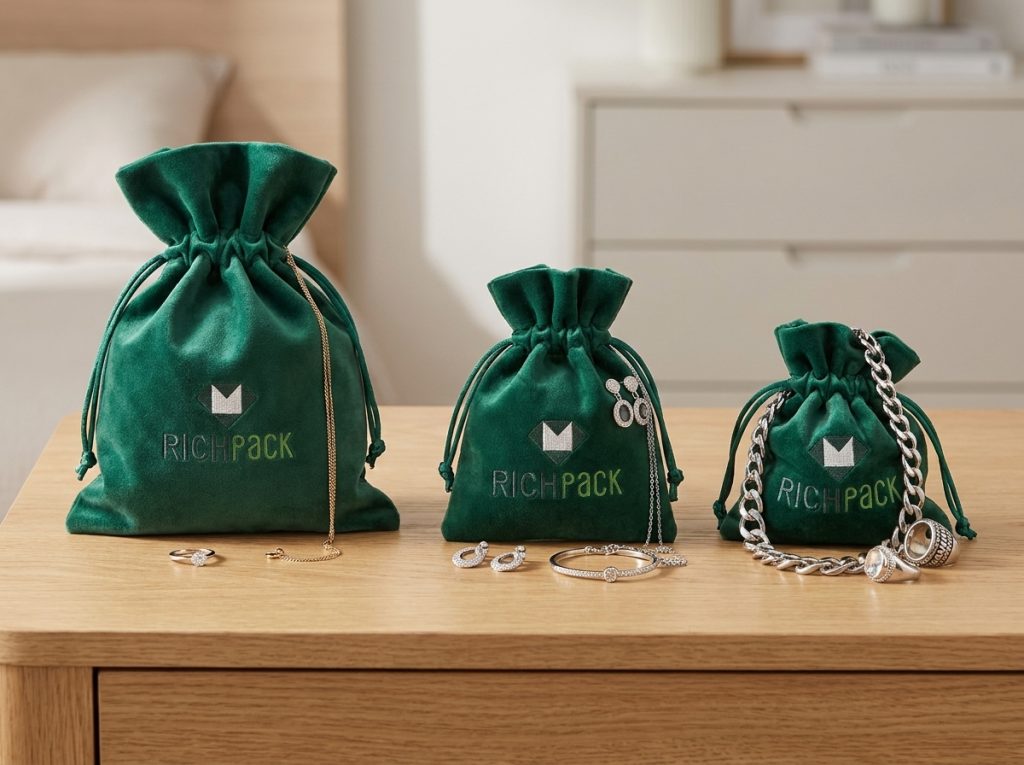
Pull the drawstring evenly from both sides. Inspect the cord, channel, stopper, knot, and opening. The pouch should close without one side staying wide open.
Test the filled pouch before you place it in a drawer or travel bag. Invert it and shake it gently. Check that the mouth stays closed, the jewelry does not hit the opening, and the piece does not move more than the pouch can handle.
Store the closed pouch in a cool, dry, dark place. Keep it away from bathroom humidity, wet counters, direct heat, and loose cosmetics. Do not bury a soft pouch under hard objects that press on the jewelry.
For travel, place the pouch in a stable organizer or personal bag where it will not rub against keys, chargers, or other hard items. A soft pouch protects the jewelry inside, but it does not protect a parcel from crushing.
For broader storage ideas, see RichPack’s small jewelry bag storage tips.
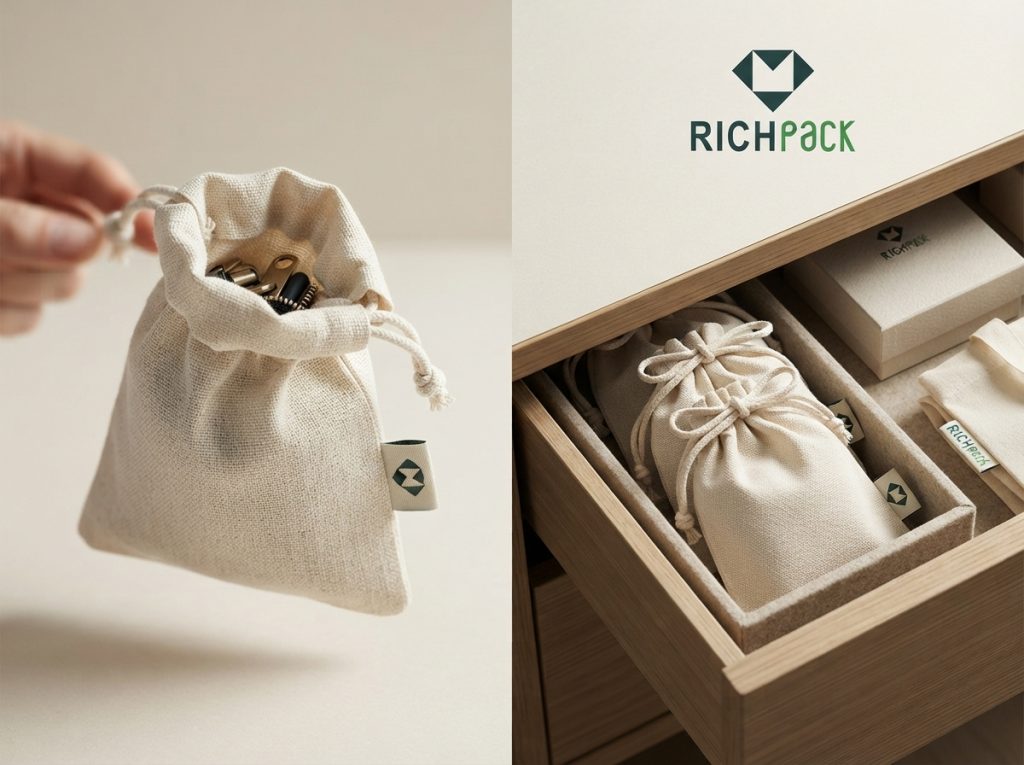
Fabric changes how the pouch touches the jewelry, how much cushion it gives, and how it handles moisture or lint. No material name proves safety by itself. Compare the finished surface, then test the actual pouch with the jewelry it is meant to hold.
The ratings below are practical planning guides, not lab scores. Fiber grade, weave, pile, dye, seams, and finish can change the result.
| Material | Scratch guard | Moisture risk | Best fit |
| Silk | smooth touch, little cushion | takes in some moisture; dries slowly when wet | pearls, polished pieces, and delicate surfaces in dry storage |
| Velvet | soft cushion; lint level varies | pile can hold moisture | rings, earrings, and retail pouches when the pile is clean and stable |
| Cotton | medium scratch guard, little cushion | takes in moisture fast; store it dry | light pieces and short-term storage with low-lint woven cotton |
| Microfiber or suede-like fabric | smooth contact with moderate cushion | varies by fiber and finish | plated pieces, polished metal, and daily-use jewelry |
| Treated anti-tarnish fabric | contact feel depends on the base fabric | Keep dry and follow the maker’s instructions | silver and plated jewelry stored for longer periods |
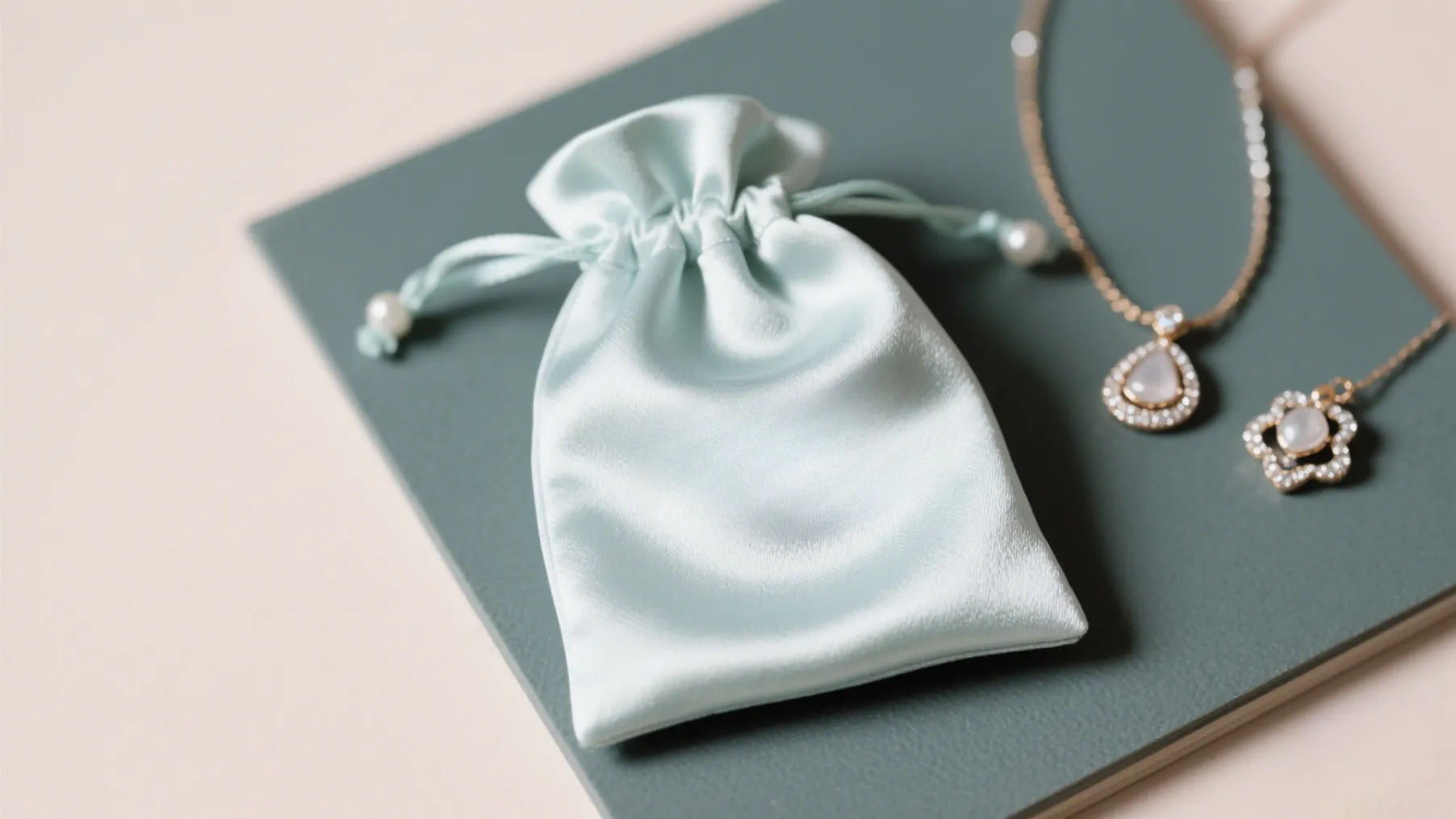
Silk gives jewelry a smooth contact surface with little bulk. It works well for pearls, polished metal, and delicate surfaces when the pouch stays clean and dry.
Silk does not add much cushion. A hard pendant or stone still needs enough space and separation. Wet silk also dries slowly, so do not close damp jewelry inside it.
Velvet adds a soft cushion around rings, earrings, and pendants. Its pile can reduce hard contact, but poor velvet can shed fibers or hide grit near clasps and settings.
Rub the finished lining against a clean cloth before use. Look for loose fibers, dye transfer, and trapped debris. RichPack’s velvet jewelry drawstring pouch shows how velvet appears in a finished pouch.
Woven cotton suits light pieces and short-term storage when the fabric is clean and low-lint. It feels less cushioned than velvet and can crease around hard jewelry.
Cotton takes in moisture, so store it in a dry place. Check raw seams and loose threads before placing a chain or earring post inside.
Microfiber and suede-like fabrics can give plated jewelry and polished metal a smooth contact surface with moderate cushion. Their performance depends on fiber quality, finish, and how firmly the material is fixed inside the pouch.
Check for lint, odor, dye transfer, and seam ridges. A soft sample still fails when a hard seam presses against a stone or clasp.
Soft lining and anti-tarnish lining do different jobs. An ordinary fabric reduces rough contact. A treated fabric or strip uses an added material system to reduce exposure to tarnish-causing gases.
Silver darkens when sulfur-containing gases react with the metal and form silver sulfide. The Canadian Conservation Institute explains the silver sulfide reaction. Some anti-tarnish papers use hydrogen sulfide scavengers or vapor inhibitors, according to the Museum of Fine Arts CAMEO materials database.
The treatment does not clean jewelry or dry a damp pouch. Put clean, dry silver inside, keep the pouch closed, and follow the maker’s care or replacement instructions.
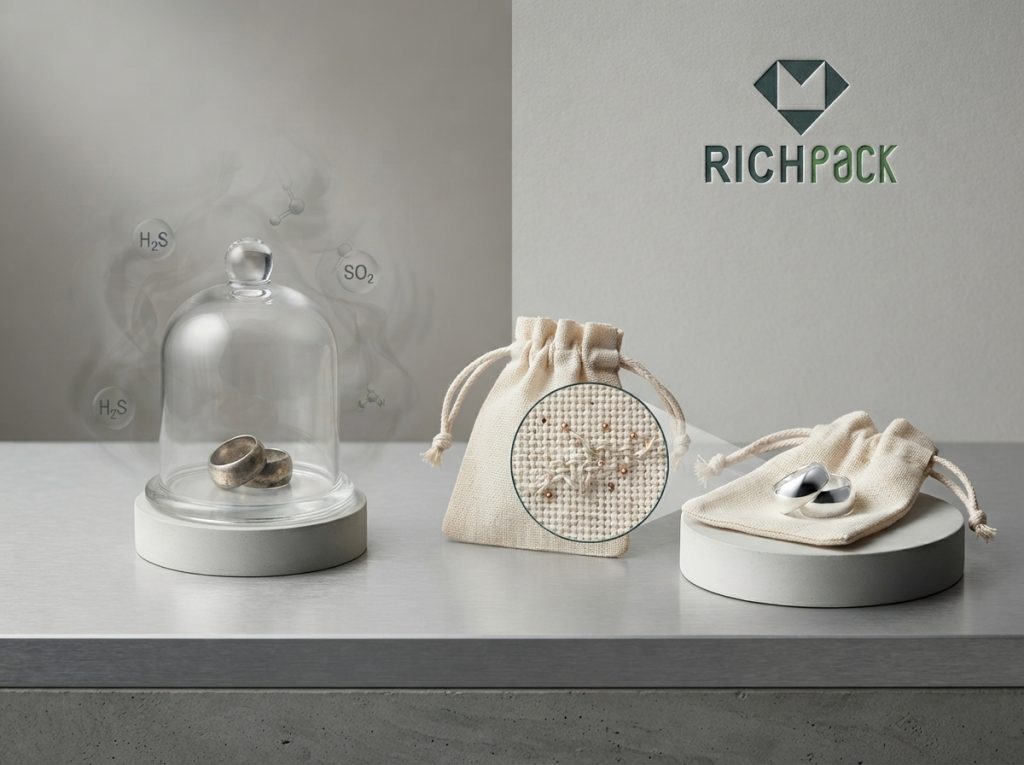
Jewelry shape and finish change the main storage risk. Silver reacts with tarnish-causing gases, chains knot when they move, rings strike each other, and earring backs disappear. Match the pouch space, contact surface, and inner control to the piece instead of using one setup for everything.
Silver darkens when air, humidity, and reactive materials stay close to its surface. Keep it clean and dry, and use a tested anti-tarnish method for longer storage. Jewelers of America covers routine silver care, while RichPack’s 925 jewelry packaging guidance adds a packaging view.
Plated jewelry also needs gentle contact. Repeated rubbing can wear the finish. Velvet, satin, and cotton do not prevent tarnish on their own, so judge the anti-tarnish claim separately from the fabric name.
Long chains need movement control more than extra space. Close the clasp, lay the chain flat, and use a card, sleeve, slot, or separate pouch when the chain is fine or layered.
If the necklace has a large pendant, check that the pendant does not pull the chain into a tight fold. The pouch should hold the piece without forcing the pendant against the gathered mouth.
Rings benefit from compact storage with little free movement. Separate rings when their stones, settings, or finishes can strike one another.
Check all settings before closing the pouch. The gathered mouth should not press against a raised stone or catch on a prong.
Keep each earring with its matching pair and back. Sharp posts need their own card, pocket, or mini pouch so they do not scrape polished metal, stones, or pearls.
Count the backs before closing the pouch. Small parts disappear easily into folds near the bottom or the drawstring channel.
Use a smooth, low-rub contact surface and keep pearls and delicate pieces away from sharp jewelry. Keep perfume and cosmetics outside the pouch.
A clean, dry storage area matters more than a decorative fabric label. Check the actual contact surface and the way the piece sits when the pouch closes.
Keep a jewelry set together only when the pieces do not mark one another. A necklace, earrings, and a ring can share a collection while still needing separate pouch spaces.
For delicate sets, use one small pouch per piece and place the pouches together in a larger organizer. The set stays easy to count without letting every part rub together.
Yes, but only when the pieces do not scratch or tangle with each other. One pouch per piece is safer for mixed metals, polished surfaces, long chains, sharp posts, pearls, and delicate finishes. For a set, separate the risky pieces and keep the pouches together.
Close the clasp, lay the chain flat, and use a card, slot, sleeve, or separate pouch to control part of the chain. Do not choose a much larger pouch to fit the necklace. Extra space gives the chain more room to loop and catch.
Yes. A regular fabric pouch does not stop tarnish. Store silver clean and dry, keep reactive materials and humidity away, and choose a tested anti-tarnish material or method for longer storage.
Choose a pouch that holds the jewelry without pressure and without leaving a large space. Test the closed pouch with the actual piece, including its pendant, clasp, stone, or hardware. Different jewelry shapes need different finished pouch sizes.
Yes. Velvet and satin describe surface or appearance, while anti-tarnish describes a material system or treatment claim. A soft lining reduces rough contact, but it does not provide universal tarnish protection.
Safe storage in a drawstring jewelry pouch comes down to clean jewelry, controlled contact, and a dry place. Keep sharp pieces apart, secure chains and tiny parts, match the lining to the jewelry, and test the filled pouch before it goes into a drawer, bag, or larger organizer.
Jewelry brands can use the same checks when developing a custom pouch. Start with the actual jewelry shape and storage risk, then approve the finished pouch with a representative piece inside.


2024-12-24

2025-10-07
2025-03-17
2025-05-02
2025-10-30
Drawstring Jewelry Pouches for Organizing Jewelry Collections | Stylish and Practical Solutions
View More
Brocade Jewelry Pouch Perfect for Special Occasions | Exquisite Brocade Fabric, Luxurious Look
View More
Custom Black Velvet Drawstring Bags | Jewelry Packaging Wholesale | Richpack
View More
Custom Velvet Bags | Luxury Velvet Jewelry Packaging – Richpack
View More
Drawstring Jewelry Bags for Delicate Jewelry Storage | Perfect for Daily Use, Travel, and Gifting
View More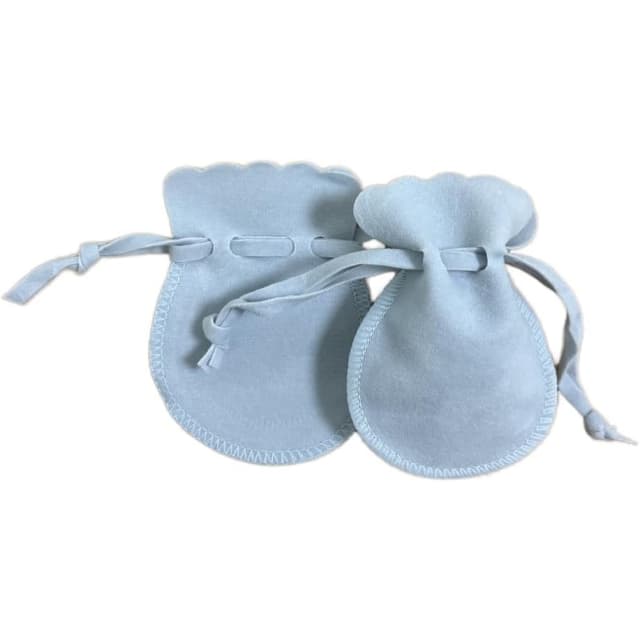
Jewelry Bags Wholesale | Custom Blue Velvet Pouches – Richpack
View More

