

 PREV
PREV
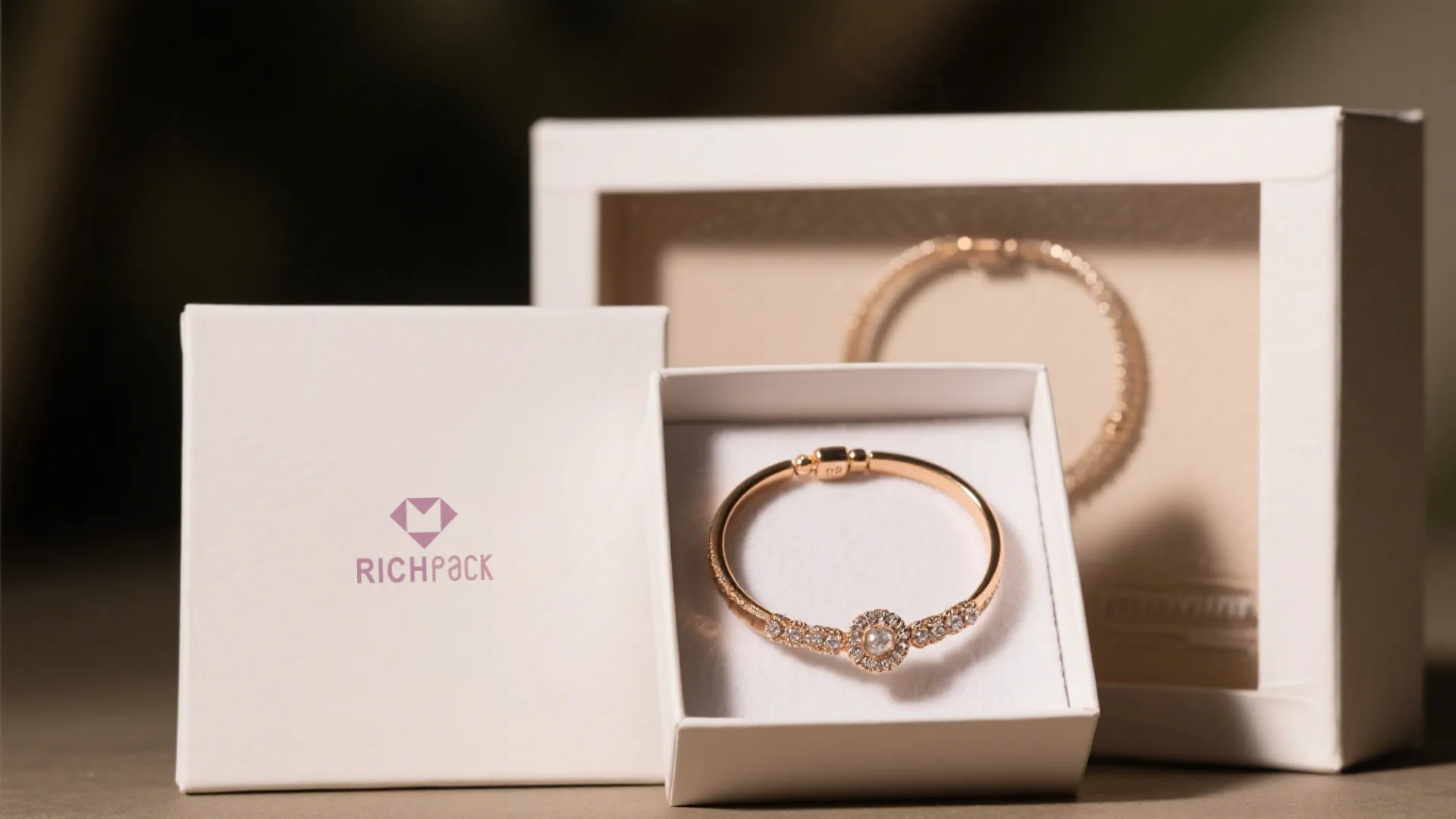
21 Best Bracelet Packaging Ideas to Elevate Your Brand (2026 Guide)
2025-08-18
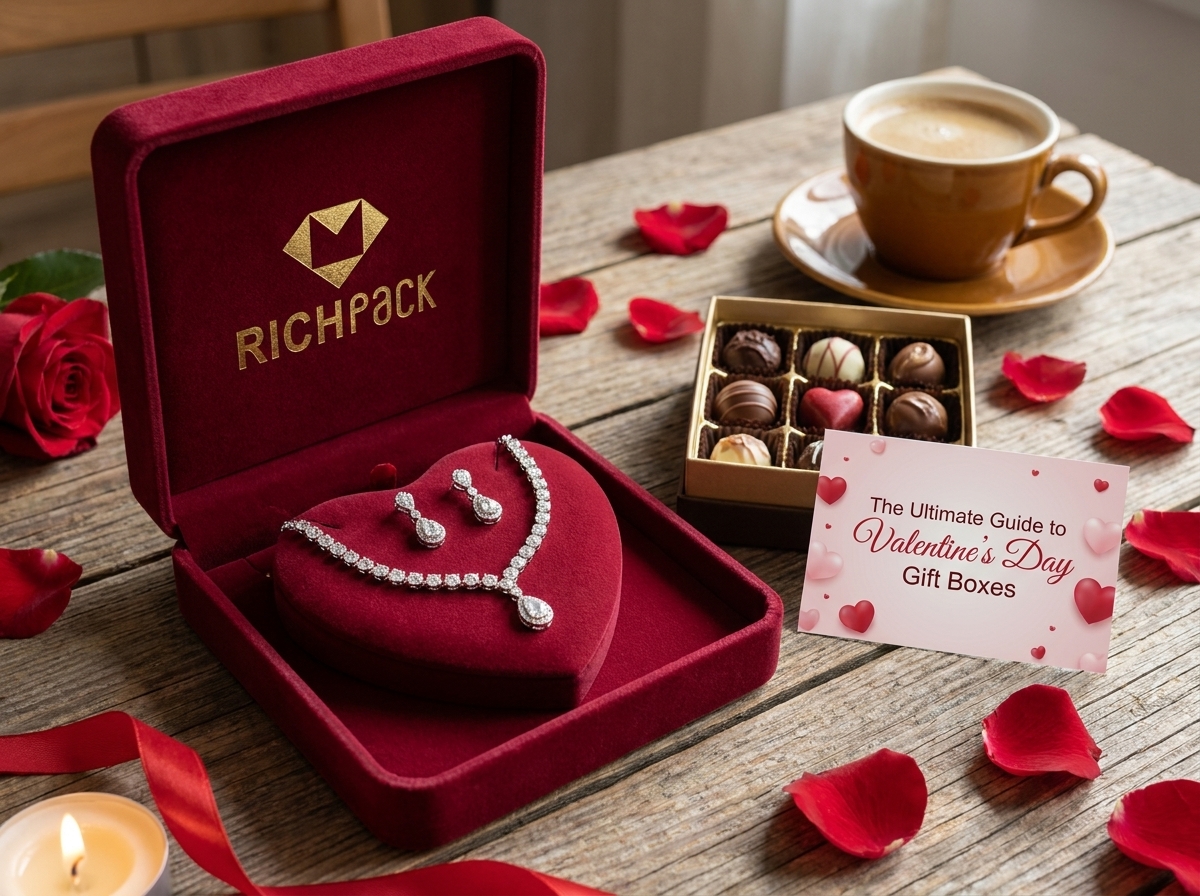



The first mistake is easy to make. You choose the box before you decide what has to live inside it.
A ring box, chocolate, candle, message card, and ribbon may look balanced on a screen.
Put them together, and the lid may rub the candle, the jewelry may slide, and the card may disappear under the insert. For a 2026 campaign, three gift mixes, four message versions, and two markets already create 24 packout combinations. That is a planning example, not a market statistic. It shows why a seasonal gift box needs more than a pretty theme.
A good Valentine’s Day gift box matches four parts:
That rule works for a personal gift, a retail gift set, an employee program, a hotel welcome gift, or a jewelry brand’s seasonal launch. The packaging is more useful when it helps the team choose, pack, protect, approve, and deliver the gift without having to rebuild the plan at the last minute.
Start where your decision begins:
For a quick view of current shapes and use cases, browse the Valentine’s Day gift box collection. Then return to the product list and measure the full set before choosing a box.
A Valentine’s Day gift box is a coordinated set or empty package made for a personal or branded February gift. The contents, insert, outer box, message, and delivery layer work together so the gift looks clear, stays secure, and reaches the recipient in the planned condition.
A filled gift box is a ready-to-give set. The seller has already chosen the products, arranged them, added the message or card, and prepared the box for handoff or delivery.
This format suits retailers, gift companies, hotels, and event teams that want a complete seasonal offer. The buyer sees the final combination, not an empty structure waiting for another packing operation.
The product count matters less than the fit between the products. A small jewelry box with a handwritten card can feel more specific than a large box of unrelated fillers.
An empty packaging box is the structure a brand or gift company purchases for its own packaging. The team may add jewelry, chocolate, skincare, wine, photos, cards, or promotional materials later.
This route gives the business more control over the product mix and the customer experience. It also creates more work. The team must confirm the box size, insert, assembly method, storage space, version control, and shipping route.
For a repeat program, that extra control can be worth it. For a one-off gift, a ready-made filled box may be simpler.
A gift basket uses an open, layered layout that is easy to browse. A gift box gives stronger control over the first view, product position, and opening order.
Baskets work well when the contents are different sizes or when a full display is part of the message. Boxes work better when the team needs:
Neither format is automatically better. The contents and delivery route decide the fit.
A personal gift may use one box for one recipient. A branded program may use the same outer box for hundreds of recipients, different locations, or distinct product combinations.
That difference changes the brief. A personal buyer can write one note by hand. A corporate buyer must control names, departments, addresses, dietary needs, message versions, cartons, and delivery records.
A custom program becomes useful when one gift idea must turn into a repeatable branded packout. Start with the contents, set the count, destinations, and arrival date.
A presentation box controls how the gift looks and feels. A shipping box controls what happens to it after it leaves the warehouse.
A rigid magnetic box can create a strong opening moment, but it may not absorb parcel handling. A mailer handles the route better, but its opening may feel less refined. Some programs need both layers:
The mistake is asking one layer to do every job.
A thoughtful gift box gives the recipient a reason to recognize each item. The box does not need to be expensive or crowded. It needs a clear idea.
Long-distance gifting discussions often return to the same details: a personal note, a shared memory, a small activity, or a treat chosen for a known preference. The lesson is useful for brands, too. Personalization starts with relevance. It does not start with more ribbon.
Choose a Valentine’s Day gift box based on the recipient’s tastes, the relationship, and the opening moment. A partner may want a keepsake, while an employee or hotel guest needs a broader choice. The best direction feels specific without relying on gender, age, or lifestyle stereotypes.
The same box style can serve different audiences. Before choosing the color or finish, decide who will receive the gift and what the gift needs to communicate.
“For her” does not describe one fixed taste. A jewelry brand may build a keepsake set around a ring, earrings, or a necklace. A beauty seller may use fragrance, skincare, refillable cosmetics, or a low-waste bath set. A gourmet brand may choose classic or functional chocolate, tea, fruit, or a dessert pairing.
These are product categories, not proven 2026 trends.
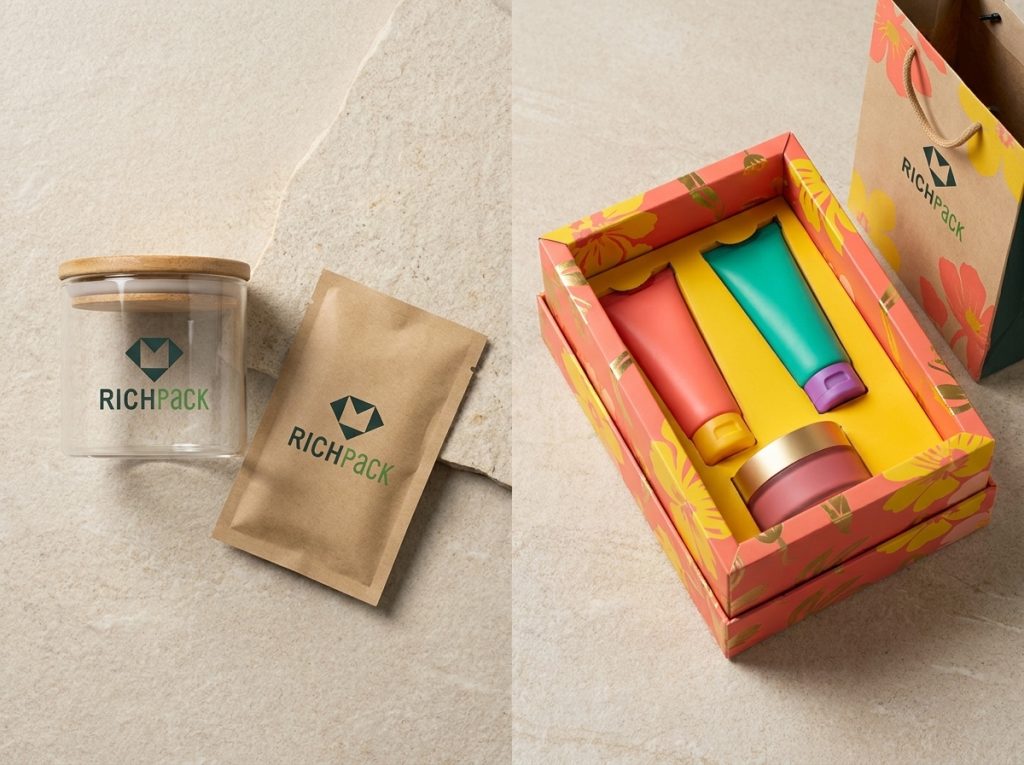
Lush gives one useful 2026 packaging example. It’s a Lush Kind of Love gift that places seven bath, body, and shower products in a box made from 100% recycled board. Corn-starch Eco-Pops replace polystyrene fill. The material story is clear, but the mixed shapes still need stable zones so soap, bottles, and bath products do not collide.
Use the recipient’s preferences as the filter:
The answers affect the gift contents and the packaging structure. The gift boxes for the women’s collection can provide a visual starting point, but preference should decide the final choice.
A “for him” gift box can work around food, coffee, grooming, a hobby, a small technology accessory, a keepsake, or a shared experience. Functional chocolate can fit when the ingredient list and product claim suit the recipient. Keep each food item in its own sealed pack and avoid health promises that the product label does not support.
The packaging does not need to rely on dark colors, heavy materials, or a large logo. A calm palette, a useful product mix, and a message that sounds like a real person can feel more considered.
For a business, this is also a reminder to keep the outer packaging neutral when recipient preferences are unknown. A flexible box with a replaceable sleeve or card can support several audience versions without creating several full box structures.
Shared-use gifts are often easier to make coherent because the box can hold an activity as well as products. Think about a meal, tasting set, movie night, game, photo memory, or small keepsake.
Two people also change the layout. A box may need two product zones, a larger card, or a divider that keeps paired items visible. If the contents are different heights, do not place the tallest item in front of the message or smaller gifts.
Employee gifting needs a different kind of thoughtfulness. The team may not know every recipient’s relationship status, fragrance preference, food restriction, or home situation.
Good employee gift programs usually prioritize:
The box should feel personal without requiring the company to collect more personal data than it needs.
Client and VIP gifts need brand judgment. The box should show care without looking like a generic promotional bundle.
Start with the business relationship and the intended moment. A jewelry brand may use a refined keepsake box with a restrained logo, a quality insert, and a short note. A hotel may use a smaller welcome set that fits inside a guest room or event bag. A distributor may need a standard structure with several regional sleeves.
The packaging opportunity is not to add every premium finish. It is to control proportion, material feel, and the order in which the recipient discovers the gift.
Hospitality and event teams often have a fixed handoff point. The gift may be placed in a room, delivered with a meal, presented at check-in, or distributed after a private event.
That setting changes the packaging brief:
The box must suit the moment in which it will be opened. A sales photo cannot define the whole packout.
| Recipient | Suitable gift themes | Personalization level | Main packaging need | Main risk |
| Her | Jewelry, chocolate, self-care, keepsakes | Card, name, photo, sleeve | Refined presentation and easy removal | Generic assumptions |
| Him | Food, coffee, grooming, hobbies, keepsakes | Message, interest, shared memory | Useful, calm, easy-to-carry format | Overly narrow styling |
| Couples | Shared food, activity, paired keepsakes | Date, photo, two-person message | Balanced two-zone layout | Uneven product heights |
| Employees | Useful gifts, treats, self-care | Name, team, neutral message | Consistent packout and delivery control | Dietary or scent mismatch |
| Clients and VIPs | Keepsake, gourmet, jewelry, premium set | Brand message and restrained logo | Material and opening quality | Promotional feel |
| Hotels and events | Welcome gifts, dining sets, favors | Event, room, guest segment | Fast handoff and compact storage | Slow assembly |
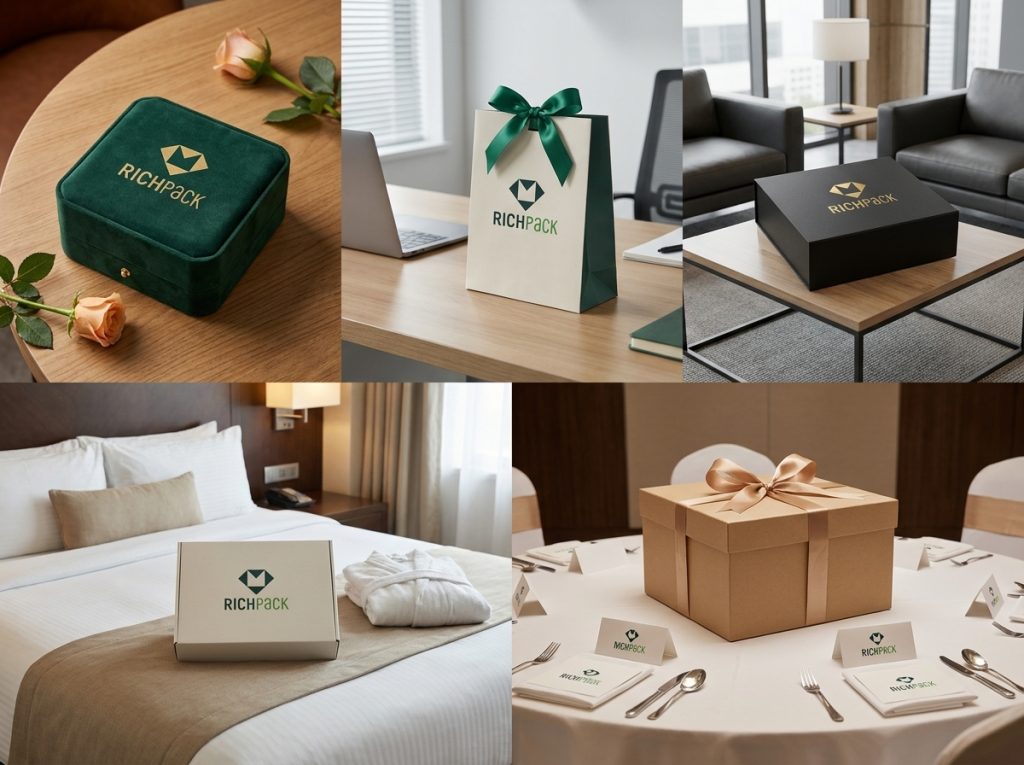
Put one hero gift inside a Valentine’s Day gift box, then add a few items that support the same moment. Jewelry, chocolate, beauty products, food, keepsakes, and activity cards can work. The box must separate products when heat, grease, scent, liquid, weight, or movement creates risk.
The contents determine the packaging before the packaging determines the contents. Choose a hero gift first, then add only the supporting items that improve the theme, usefulness, or opening sequence.
Jewelry makes a strong hero gift because the product is small, valuable, and easy to connect to a personal moment. It also creates a packaging problem that a generic cavity cannot solve.
A ring needs a slot or cushion that keeps it visible and easy to remove. Earrings need a secure card or a pair of openings. A necklace needs a way to limit chain movement. A watch needs enough depth for its pillow and enough clearance for the lid.
Brands that sell several jewelry forms may need more than one insert even when they use one outer box. Review Valentine’s Day jewelry boxes beside the actual product range, not as empty-box photographs.
For a ring-led program, the outer box and insert should be planned as one system. Compare current ring boxes with the real ring height and setting, then approve a loaded sample.
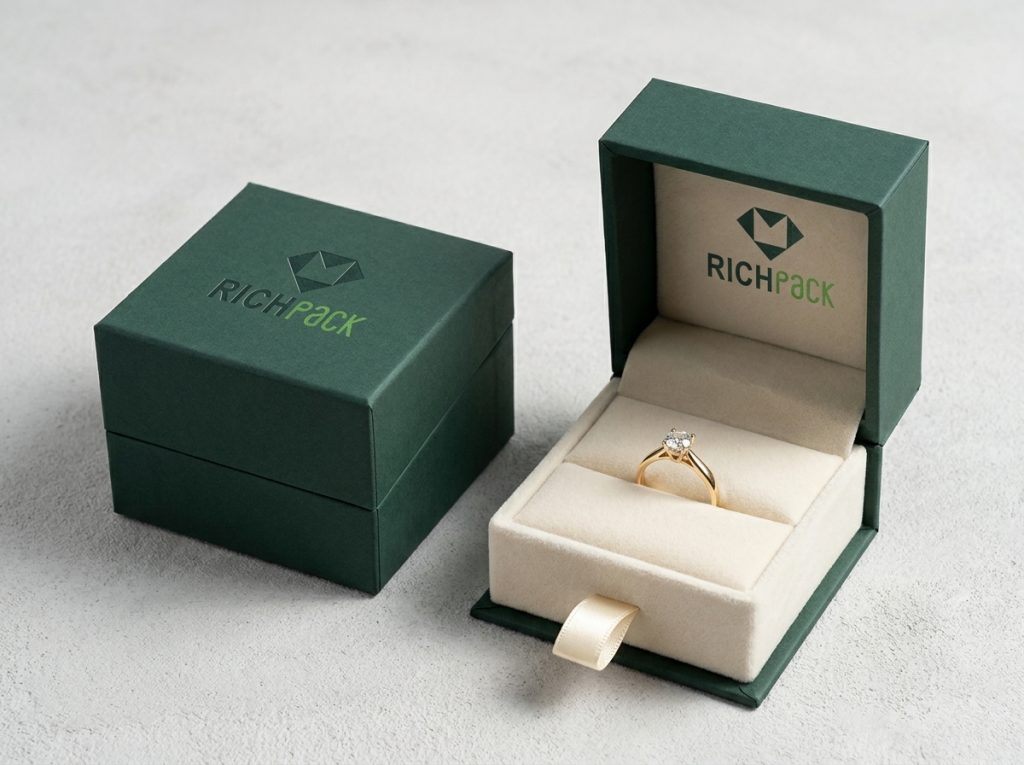
RichPack’s EFFY case shows a branded jewelry box with a firm shell, a hinged opening, and a fitted display area. The useful lesson is not the color alone. The outer pattern, logo detail, and inner product position were designed as one visual system.
Chocolate, candy, cookies, and baked treats are familiar Valentine’s Day choices because they are easy to understand and share.
The packaging questions are practical:
A heart-shaped box can signal the occasion fast. A regular rigid box can use space better. Choose the structure after checking the product shape, temperature, and delivery route.
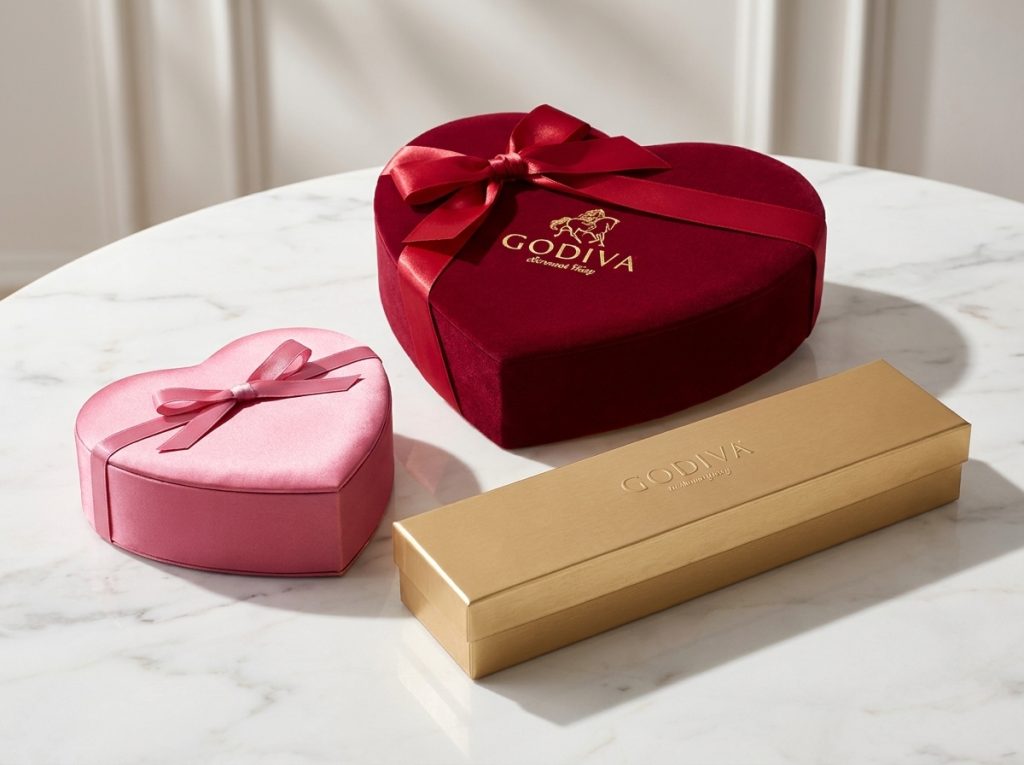
Three 2026 cases show different ways to use the heart shape. GODIVA grouped a 14-piece heart box, a 7-piece Heart Tin, and a 15-piece Gold Collection box with a red ribbon. The set mixes a paper heart, a reusable tin, and a classic rectangular box, so each part creates a different opening beat.
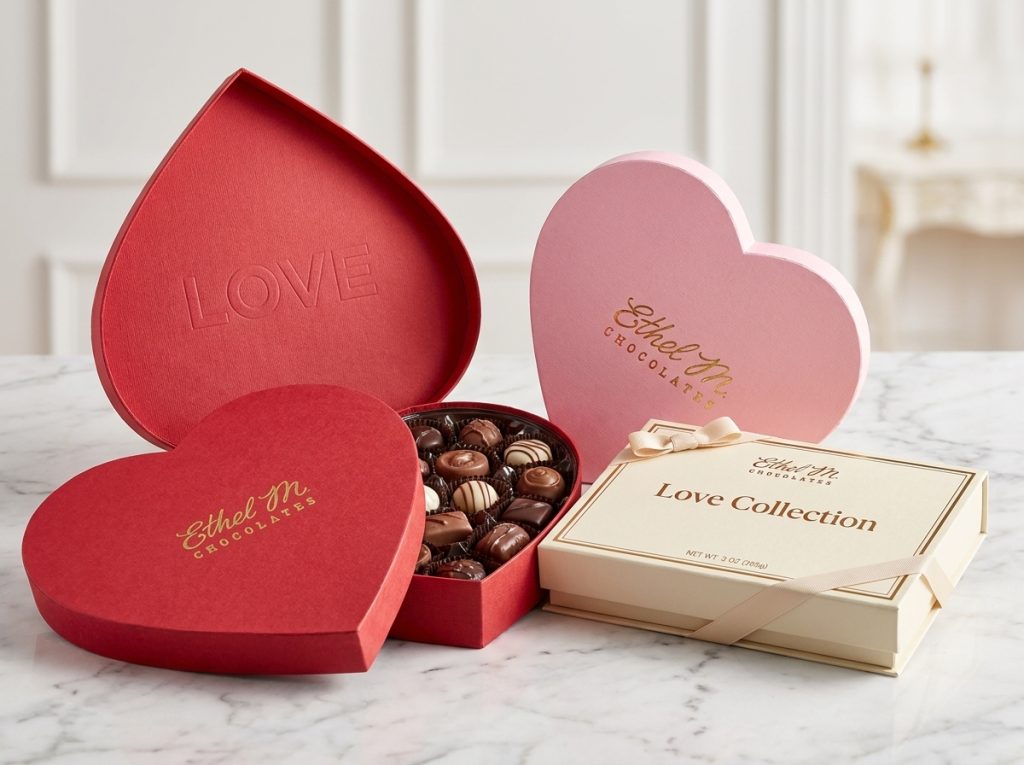
Ethel M used 14-piece and 28-piece heart boxes in its 2026 collection. The larger box opens to reveal a pop-up heart card. That card turns the lid into part of the message instead of adding another loose insert. A five-piece Love Collection used heart-shaped chocolates to carry the theme inside the box.
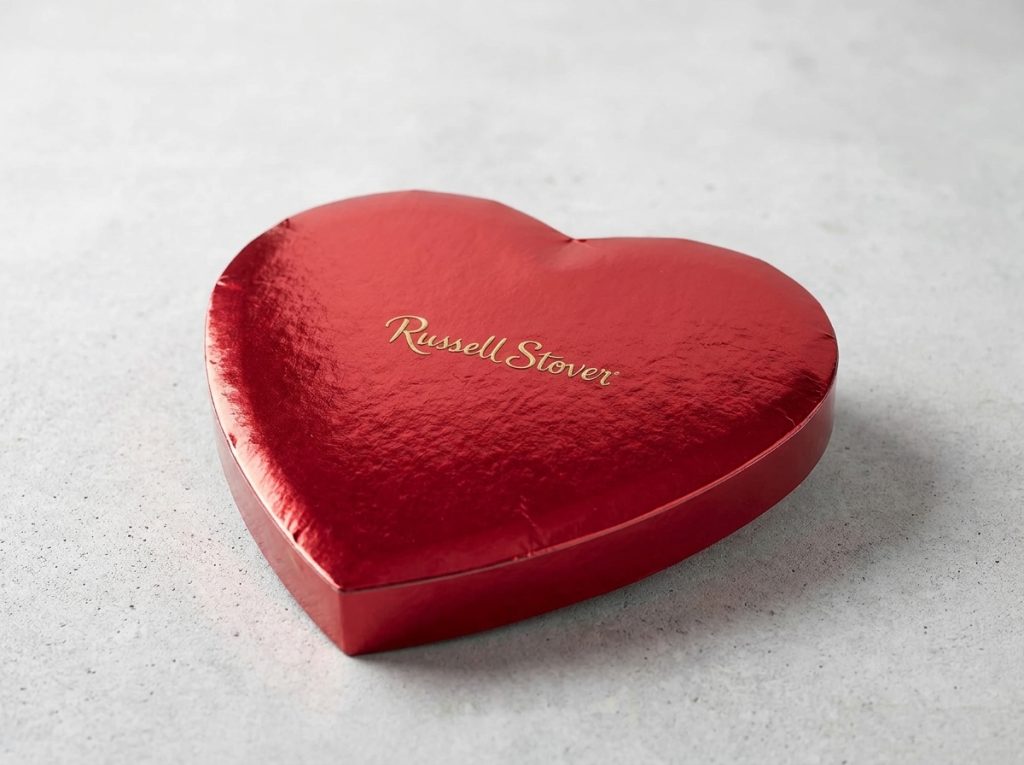
A 2026 USA TODAY gift list also featured Russell Stover’s red foil heart box. The official product page describes a 30.04-ounce, 52-piece assortment with 15 flavors. The foil and heart outline give fast shelf recognition. The large count also raises practical needs for cavity fit, heat control, and crush protection.
Self-care boxes can include fragrance, skincare, candles, bath products, or small relaxation items. Leakage is one risk. Scent is another.
A strong fragrance placed beside jewelry or a paper message can dominate the opening moment. A liquid container can create a cleanup problem if the closure is not protected. Use a divider, a sealed pouch, or a separate product zone when the contents need it.
Keep the promise modest. The packaging can present a relaxation theme. It should not make medical or therapeutic claims about the products inside.
Gourmet boxes work well for coffee, tea, jam, cookies, fruit, chocolates, wine, or small tasting sets. The best combinations have a clear serving moment.
Glass and bottle products need more than an attractive cavity. They need upright support, separation, and a delivery plan that accounts for movement. A bottle that looks stable in an empty sample may lean after the box is lifted.
Use the outer pack to explain the pairings, but keep the products easy to reach. A message card hidden under a heavy jar is not a thoughtful reveal. It is a picking problem.
Personalization can be physical or experiential. A name, photo, date, message card, playlist, recipe, activity card, or shared prompt can all make a standard product mix feel more specific.
Variable printing adds a quiet supply-chain risk. Every added version needs proofing, file control, picking, packing, and a final check. A small campaign can become complicated faster than expected.
Use the outside sleeve or card for information that changes by recipient. Keep the main box structure stable when possible. That limits waste and reduces the chance of sending the right gift in the wrong version.
Mixed sets need hierarchy. Choose one hero item, two or three supporting items, and one message or finishing element. Then check how the group looks when the lid opens.
Here is an anonymized composite scenario based on recurring buyer and community complaints: a retailer combines a ring box, two chocolates, a candle, a ribbon, and a card. The set looks generous in a digital mockup. In the loaded sample, the candle presses against the lid, the ring box tips, and the card slides underneath the insert.
The fix is not more filler. It is a smaller product set, defined zones, a measured clearance, and a packout sequence that a staff member can repeat.
| Gift content | Best recipient | Insert or separation need | Storage risk | Shipping risk |
| Ring or earrings | Partner, VIP, keepsake buyer | Slot, card, cushion, easy removal | Small parts can be misplaced | Movement and surface contact |
| Necklace or bracelet | Partner, client, jewelry buyer | Chain restraint and fixed display | Tangling during storage | Repeated movement |
| Chocolate or sweets | Broad recipient groups | Food-safe tray or wrapper | Heat and freshness | Melt, grease, crushing |
| Fragrance or skincare | Partner, employee, VIP | Leak and scent separation | Odor transfer | Closure or bottle damage |
| Bottle or glass item | Couple, client, event guest | Divider and upright support | Weight concentration | Impact and tipping |
| Mixed set | Retail, corporate, hospitality | Modular zones and height control | Version and assembly errors | Different products move differently |
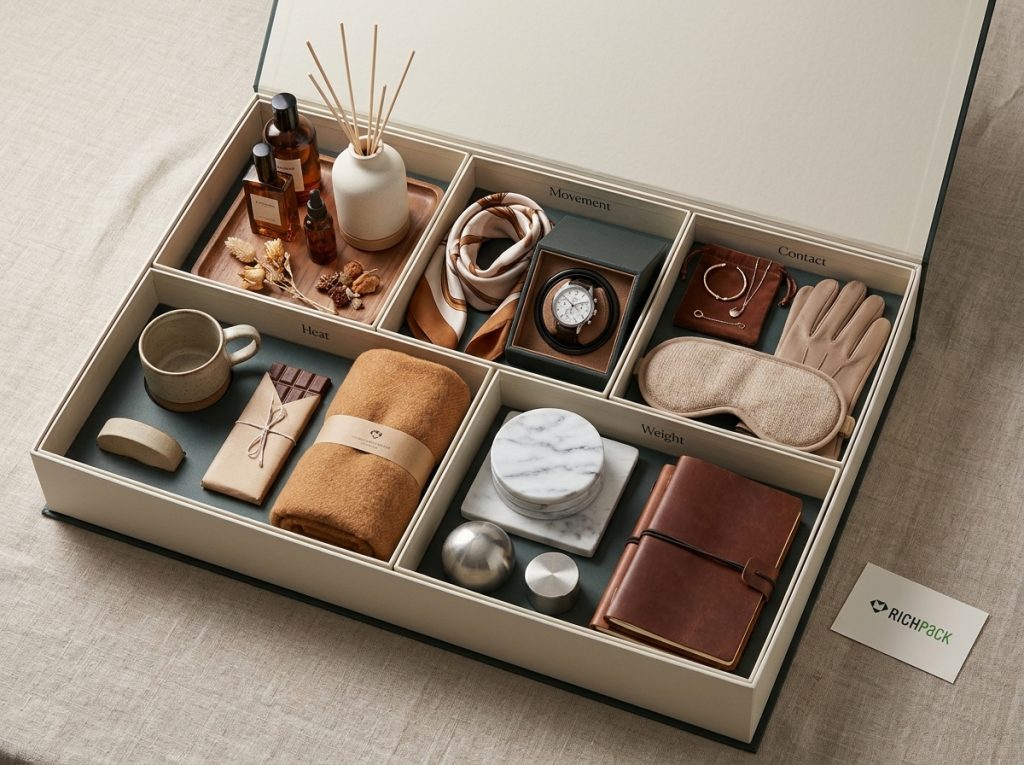
Choose the smallest box that holds the finished gift without pressure, hidden items, or loose movement. Measure the packed products, card, insert, and wrap together. Then match the shape, opening, storage needs, and shipping route to the job the box must perform.
The right box is the smallest structure that holds the finished packout without forcing it, hiding it, or leaving room for damaging movement.
Heart-shaped boxes work when the silhouette is part of the Valentine’s Day message. They are especially recognizable for chocolate, keepsakes, and seasonal jewelry.
The tradeoff is space. Curved corners can reduce usable interior area, complicate inserts, and make cartons harder to stack. A heart box can still be the right choice, but measure the usable cavity instead of the widest outside point.
Use a heart shape when recognition matters more than efficient storage. Use a regular rigid structure when the same box must serve several campaigns or product sizes. Compare heart-shaped gift boxes by usable inner space, not only by outer width.
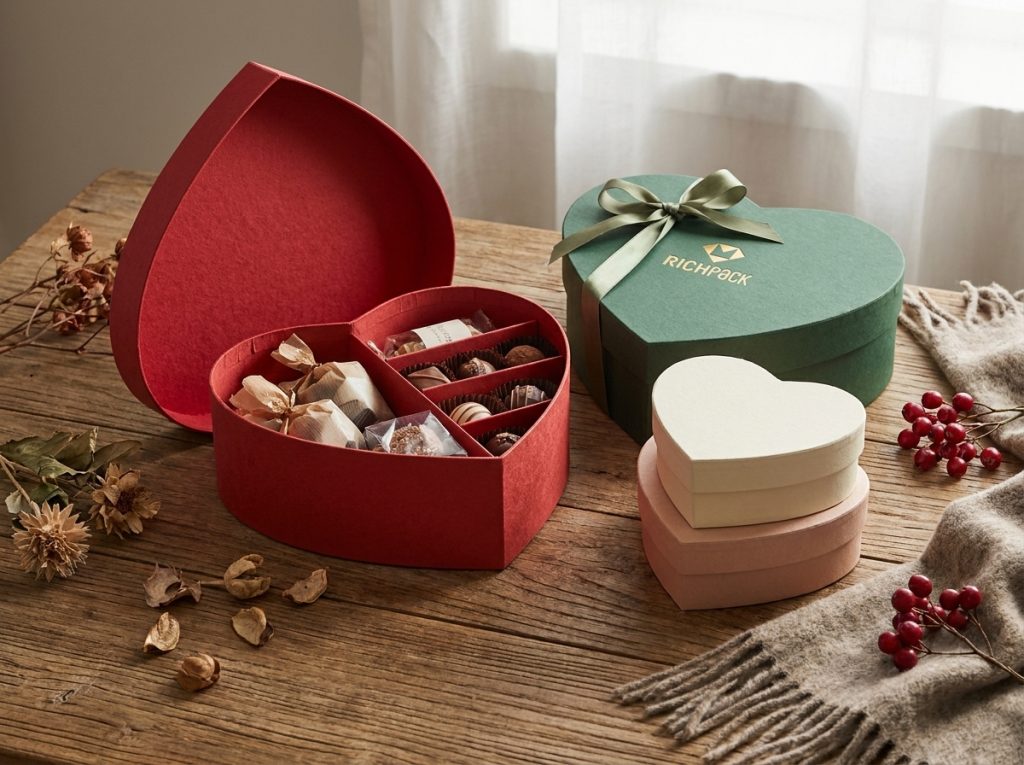
Rigid boxes give a firm shape and a deliberate opening feel. Magnetic closures can make the first lift feel clean, but the magnet is only one part of the system.
Check the lid alignment, closure strength, insert clearance, board thickness, wrap, and outer shipping protection. A lid that closes beautifully when empty may rub a raised stone or press against a tall candle after the insert is installed.
Review magnetic boxes when the closure is part of the opening experience. Treat the magnet as a structural choice, not as a substitute for a loaded sample.
Drawer boxes create a staged reveal. Compartment boxes control several products at once.
Both formats add tolerance questions. A drawer that slides smoothly before wrapping can scrape after the paper or fabric is applied. A compartment that holds one product may leave too much movement around another.
Use a drawer when the opening action has real value. Use compartments when they solve a movement, separation, or visibility problem.
Mailer boxes are useful when the gift must travel directly to the recipient. They can combine presentation with transit functions, but the design still needs a route-specific test.
Ask:
A mailer is not automatically safer than a rigid box. It is built around a different job.
Measure the complete gift, not the hero product alone. Record the packed width, depth, height, weight, and the space needed to remove the product without catching corners or fingers.
Then check five points:
The best dimension is not always the tightest dimension. A jewelry box may need a little clearance for removal, while a bottle needs a firm divider to stop movement.
Material decisions follow the structure and order profile. A small premium launch may justify a rigid board, a wrapped surface, a fitted insert, and one carefully chosen finish. A large employee program may favor a simpler structure that packs, stores, and ships more efficiently.
The gift box collection shows why material and structure must be discussed together. A collection page can define a starting family, but the final choice still depends on the actual product, quantity, and destination.
| Box style | Best use | Protection level | Presentation level | Storage impact | Main limitation |
| Heart-shaped rigid | Strong seasonal recognition | Medium to high with a fitted insert | High | Lower stacking efficiency | Curved space and carton waste |
| Rigid lid-and-base | Jewelry, keepsakes, VIP gifts | High with the right insert | High | Good if sizes are standardized | More material and setup |
| Magnetic rigid | Premium opening moment | High if closure and insert are matched | High | Moderate | Closure and hardware add complexity |
| Drawer or compartment | Multi-item set and staged reveal | Medium to high | High | More parts to store | Tolerance and assembly |
| Mailer | Direct parcel delivery | Route-dependent | Medium to high | Efficient for shipping | May need an inner presentation layer |
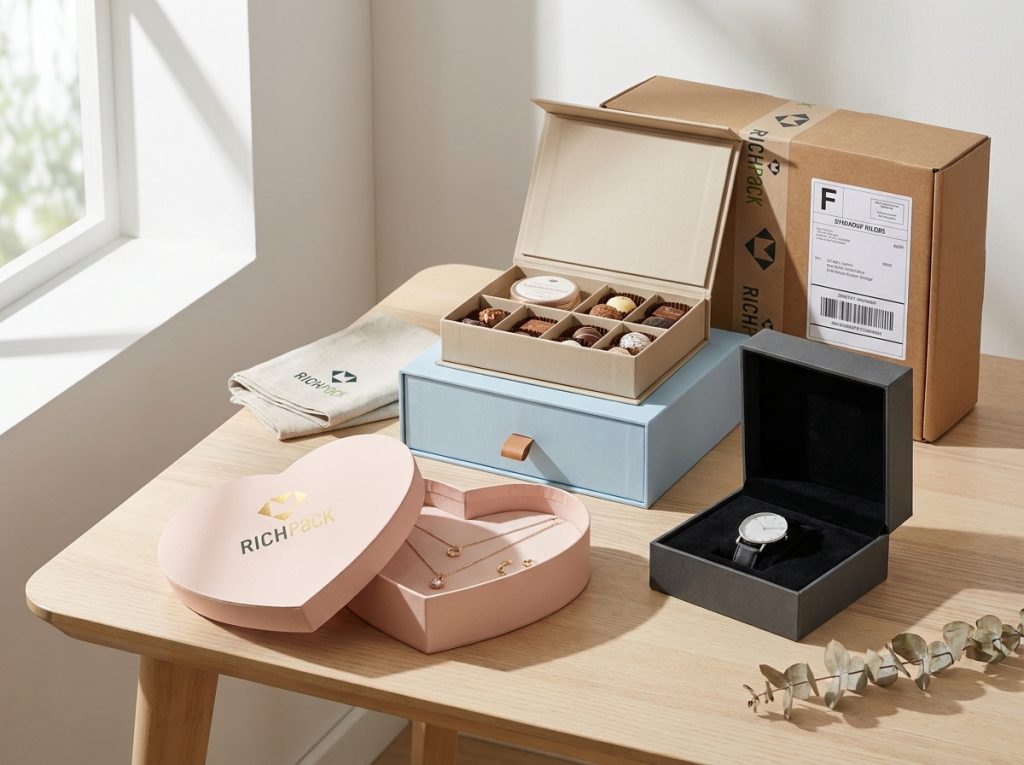
Design the packaging around the brand, product, and opening order. Use color and finish to signal the season, but keep the logo clear and the message easy to find. Put changing names or notes on cards or sleeves so the main box stays stable across versions.
Start with the brand, then add the season. Red and pink are familiar, but they are not the only way to signal Valentine’s Day. Burgundy, soft neutrals, deep green, warm white, or a restrained metallic accent may fit a jewelry brand better than a full red box.
The paper changes the result. Natural kraft, white paperboard, coated stock, and textured paper do not reflect light in the same way. A screen color is a design reference. It is not the final approval.
Place the seasonal palette beside the existing jewelry box, pouch, card, ribbon, and retail bag. The customer sees the set together.
Use the logo to identify the brand, not to compete with the gift. A small logo on the outer lid, a mark inside the lid, or a sleeve can be enough.
The emotional message may belong in a different location:
Keep the artwork away from folds, seams, drawer edges, magnetic closures, and hand-contact points. A logo that sits across a fold can crack or look uneven after the box is opened several times.
Paper, foil, embossing, debossing, coatings, and soft-touch surfaces change how the box feels in the hand. They also change how it folds, rubs, stores, and is disposed of.
Foil can give a simple mark a strong focal point. Embossing can add a tactile layer to a lid. A textured paper can support a quiet luxury direction without extra decoration. The right choice depends on the logo, paper surface, fold location, order size, and budget.
Ask for a physical sample on the final substrate. A PDF cannot show foil adhesion, a drawer scrape, a soft-touch scuff, or the way a dark color changes under store lighting.
The insert is the part that tells the product where to stay. It can be a card, tray, divider, molded shape, fabric-covered platform, foam layer, or another fitted component.
Use the insert to control:
For jewelry, develop the insert from the product form and the way the customer removes it. A slot that holds the ring securely but makes it hard to lift is not a finished solution. For necklaces, compare necklace boxes by chain restraint, pendant depth, and removal space. A box that hides the clasp or lets the chain cross the cavity needs a different insert.
Personalized names and messages are easy to imagine and easy to misplace.
Keep the main artwork stable when you can. Use a card, sleeve, sticker, or small insert for fields that change. If the outer structure also changes, lock a version list before production.
The working example is simple. Three gift mixes, four message versions, and two markets create 24 combinations. Add three languages, and the number rises to 72.
A spreadsheet can count them. A sample and final packout check are still needed to stop the wrong version from leaving the warehouse.
Use current Valentine’s gift box ideas to compare seasonal sleeves, colors, and messages. The buyer still owns the version list and final approval.
Design the opening in order:
The sequence should look good in a photograph, but it must also work for a staff member packing the set repeatedly. A beautiful arrangement that takes two minutes per box can become an expensive labor problem at scale.
| Design element | Purpose | Approval method | Production risk |
| Seasonal color | Signals the occasion | Printed sample on final substrate | Shade drifts across materials |
| Logo | Identifies the brand | Dieline and physical sample | Fold or seam conflict |
| Message | Creates relevance | Proofed copy and version list | Wrong message or spelling |
| Insert | Controls product position | Loaded sample | Tight fit, loose fit, poor removal |
| Finish | Adds tactile or visual focus | Handled sample under store light | Rub, cracking, or added disposal complexity |
| Sleeve or card | Supports variable content | Version proof and packout check | Picking and packing errors |
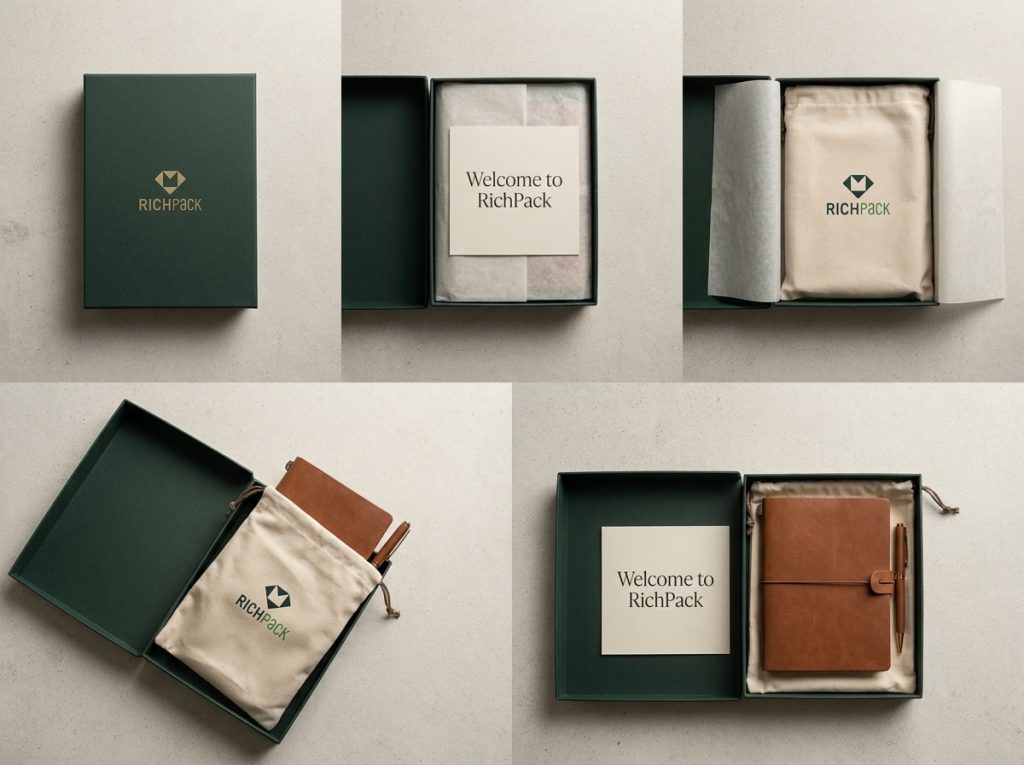
Protect each product according to how it moves, reacts, and travels. Rings need a stable slot, necklaces need chain restraint, food needs its own safe inner pack, and bottles need upright support. The presentation box and outer shipper must handle different parts of the delivery.
Rings and earrings are small, but their packaging tolerances are not forgiving. They can disappear into tissue, rotate in a loose cavity, or sit too deep for a clean removal.
Use a slot, card, cushion, or fitted pocket that keeps the product visible and stable. Check the surface touching the jewelry, the compression, the removal force, and the look after the lid closes.
Do not assume a soft insert is automatically safe for every finish. Review fiber shedding, dye transfer, adhesive exposure, and the product’s contact points.
Chains need restraint. A loose necklace can twist under the insert, catch on a card edge, or touch itself repeatedly during handling.
A good restraint holds the chain without making the customer fight the box. Leave enough room for removal, but not enough room for the chain to travel across the cavity.
The check is physical. Close the box, turn it gently, open it again, and see whether the chain has moved. Do this with the real clasp and pendant.
Food and jewelry can share a campaign, but they should not automatically share a contact surface.
Use separate zones for chocolate, fragrance, jewelry, and oils. Review grease, odor, temperature, allergen labeling, and the time the product will spend in the box.
The inner food packaging remains part of the finished packout. The outer box cannot solve a weak food wrapper or an exposed chocolate surface.
Bottles, candles, jars, and glass containers concentrate weight. They can tip when the box is lifted or push against the lid when the packout is tilted.
Use dividers, upright support, cushioning, or a shaped cavity where the route requires it. Test the loaded box, not an empty insert. Empty cavities tell you almost nothing about a mixed set.
Mixed heights create a visibility problem as well as a movement problem. A tall candle can hide a necklace box. A low chocolate tray can slide below the opening line.
Use platforms, dividers, or stepped inserts to control the first view. Then check whether the products remain stable after the box is carried from the packing table to the handoff point.
Presentation and transit need separate checks. A box that survives a short handoff may not survive parcel sorting, compression, moisture, or a long route.
For direct delivery, review:
When the route is uncertain, protect the presentation box with a separate outer shipper. It is cheaper to add the right layer during design than to explain a damaged gift after the delivery date.
| Product type | Main risk | Insert direction | Sample check | Delivery check |
| Ring or earrings | Rotation, loss, surface contact | Slot, card, cushion | Removal and visibility | Movement and rub |
| Necklace or bracelet | Tangling and chain travel | Restraint and fixed anchor | Open-close movement check | Tilt and vibration |
| Chocolate or sweets | Heat, grease and crushing | Food-safe tray or wrapper | Contact and freshness plan | Temperature and compression |
| Bottle or candle | Tipping and weight concentration | Divider and upright support | Lift and tilt check | Impact and carton fit |
| Mixed-height set | Hidden items and shifting | Platform and compartment | First-view and removal test | Movement in route |
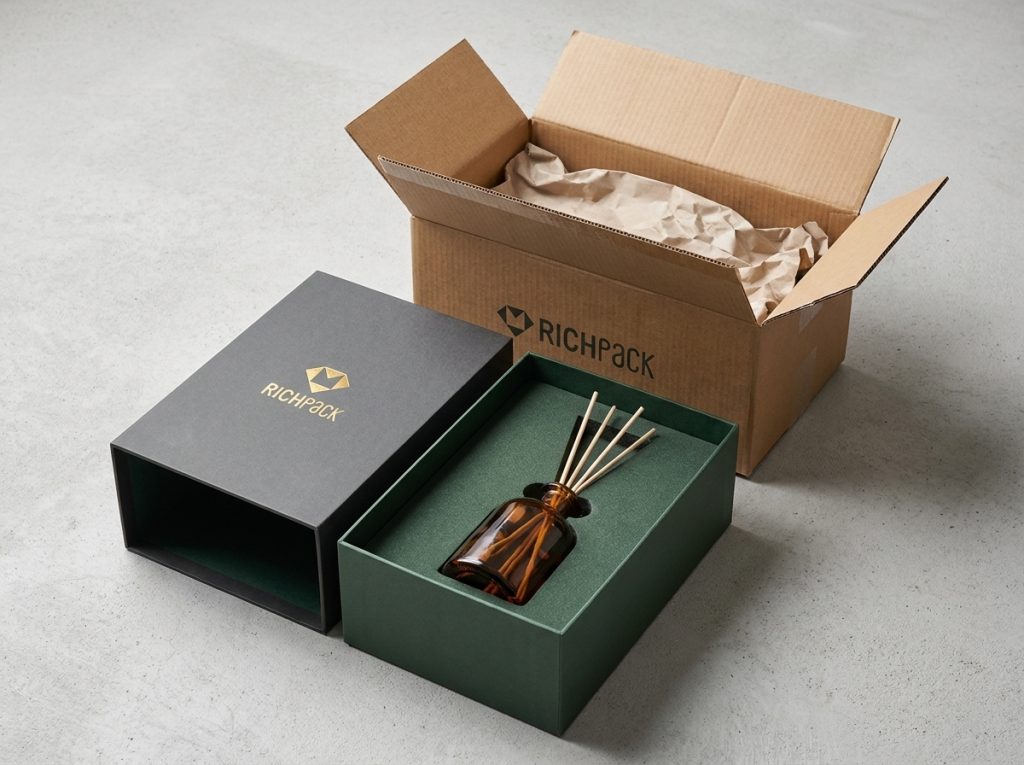
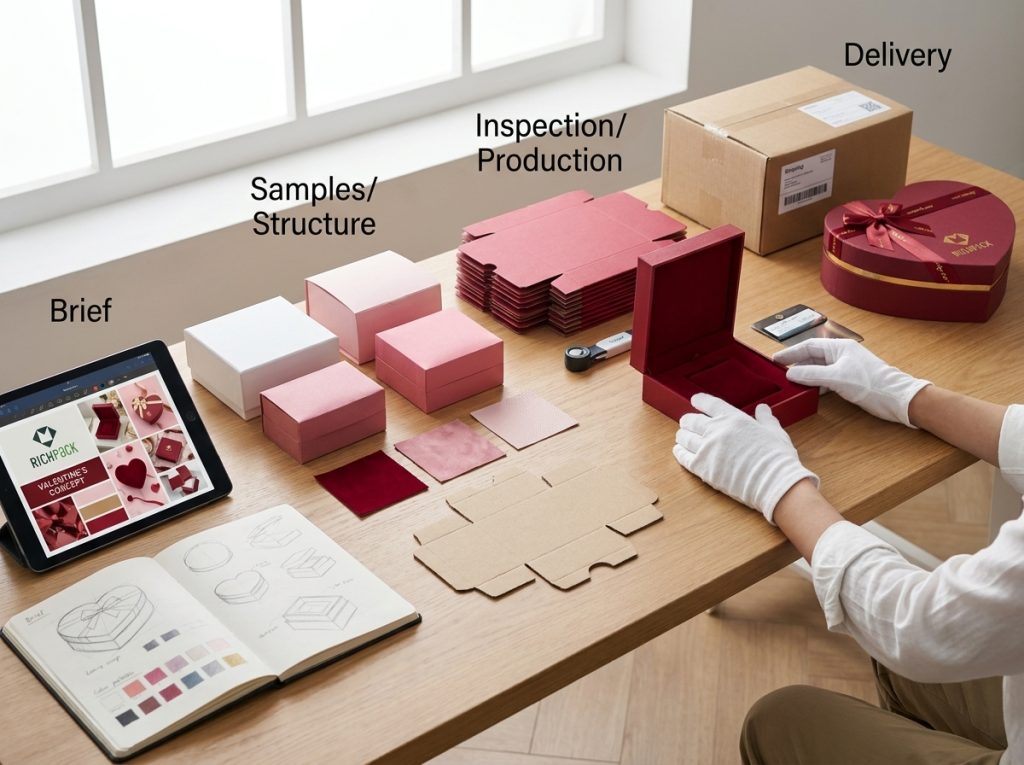
Businesses order custom Valentine’s Day gift boxes by fixing the contents, quantity, markets, budget, and delivery date before requesting a quote. A clear brief leads to a blank sample, a printed sample, production checks, and a freight plan. Start from the recipient’s delivery date and work backward.
Write the brief before asking for a price. Include:
The more complete the brief, the less likely the supplier is to quote a structure that looks right but fails during assembly.
Do not compare suppliers on unit price alone. Add the one-time and recurring costs:
RichPack currently publishes examples of 100 pieces for selected U.S.-stock styles and 500 pieces for full customization. Treat those as page-specific starting points, not a universal industry MOQ. The correct quantity depends on the style, material, customization, market, and reorder plan.
The useful question is not “What is the lowest MOQ?” It is “What quantity lets us test demand without creating a packaging problem six months from now?”
Small brands should compare the order quantity with the cash and storage tied up after February. A low unit price can still create an expensive seasonal remainder.
A supplier brief should be specific enough that two suppliers quote the same job.
Include:
Beauty and fragrance programs should review perfume boxes when bottle depth, upright support, or scent separation remain unresolved. A clearer brief reduces back-and-forth before sampling.
Use two sample stages when the project has real visual or structural risk.
The blank sample checks:
The printed sample checks:
A screen rendering cannot show a lid rubbing a raised stone, a velvet fiber caught on a clasp, or a drawer tray scraping after wrapping. Put the finished product inside the sample.
Start from the date the recipient must receive or open the gift. Then work backward.
| Stage | Decision or output |
| Campaign brief | Recipient, contents, quantity, market, and date |
| Structure review | Box type, size, insert, and shipper boundary |
| Blank sample | Fit, opening, product position and assembly |
| Artwork approval | Dieline, color, message, finish, and versions |
| Printed sample | Physical appearance and handled finish |
| Production | Confirmed materials, quantity, and packout |
| Inspection | Fit, appearance, closure, carton, and documentation |
| Freight and delivery | Route, buffer and recipient handoff |
Seasonal work needs a buffer because the product is date-bound. A sample delay affects more than the factory. It can remove the campaign from the calendar.
Write the pass criteria before the order. Keep them visible to the design, procurement, production, packing, and receiving teams.
Check:
Write your own approval sheet around the actual product, packout, market, and delivery conditions. A general supplier checklist cannot replace those pass criteria.
Treat the gift box as a complete construction. Review paperboard, wrap, coating, adhesive, ribbon, magnet, metal parts, insert, label, and food or jewelry contact layers.
The FSC chain-of-custody framework helps distinguish certified material sourcing from a broad claim about the finished box. Certification does not automatically prove that every component is recyclable in every market.
The FTC Green Guides are a useful U.S. reference for environmental marketing. A recyclable claim needs reasonable access to an appropriate recycling program. The word “paper” alone does not prove that the full gift-box construction meets that condition.
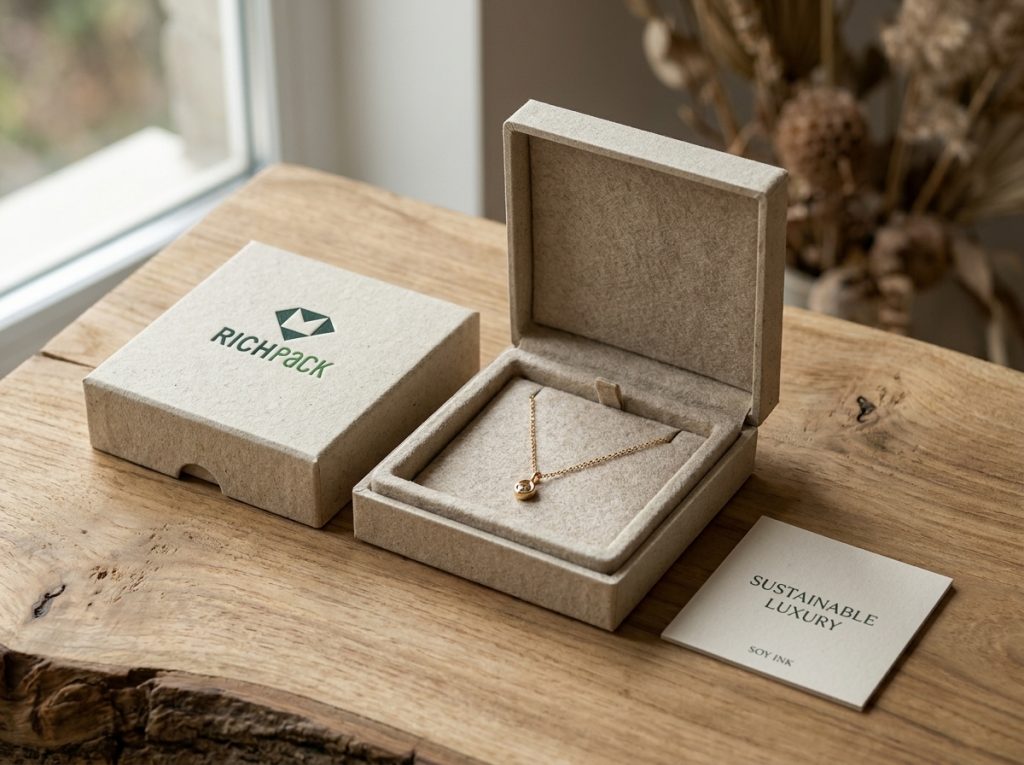
For European campaigns, Regulation (EU) 2025/40 is scheduled to apply from August 12, 2026. Review the destination-market rules before approving claims, especially when the box uses coatings, mixed materials, magnets, foam, or plastic parts. RichPack’s sustainable jewelry packaging case shows a rigid box design using FSC-certified paper and recycled board components. That case is a design example, not legal proof for another pack.
| RFQ field | Required information | Why it matters | Approval owner |
| Product | Photos, dimensions, weight, fragile areas | Controls fit and protection | Product or design |
| Structure | Box style, opening, closure, shipper boundary | Controls presentation and route | Packaging |
| Insert | Slots, dividers, cavities, removal action | Controls movement and first view | Packaging and product |
| Artwork | Logo, color, message, versions, safe areas | Controls visual consistency | Brand and marketing |
| Quantity | Launch, reorder, storage and destination split | Controls MOQ and landed cost | Procurement and finance |
| Samples | Blank, printed, loaded, and handled checks | Separates structure from appearance | Quality and design |
| Claims | Fiber, recycled content, recyclable or reusable language | Keeps marketing within evidence | Compliance or brand |
| Delivery | Date, destination, cartons, freight and buffer | Protects the seasonal use case | Operations |
The costliest mistakes happen before production: choosing the box first, adding unrelated items, using stereotypes, ignoring product movement, skipping the sample, or treating a presentation box as a shipper. Fix the contents and route first, then test the real pack before approving the order.
An empty box can look generous because the camera hides the gaps. The finished gift exposes them.
Choose the hero gift and supporting items first. Then measure the actual group, including tissue, card, ribbon, and insert.
More products create more buying, packing, storage, and disposal work. They do not automatically create more emotion.
Use a simple filter: does the item support the theme, improve the experience, protect the product, or give the recipient a useful second moment? If not, leave it out.
Use “for her” and “for him” because customers search for those phrases. Do not use them as a substitute for preference research.
A flexible campaign can keep the same box and insert while changing the card, sleeve, or hero product. That gives the business better relevance without multiplying every packaging component.
Browse luxury gift boxes for finish and structure references, then remove any detail that does not improve the real gift or its delivery.
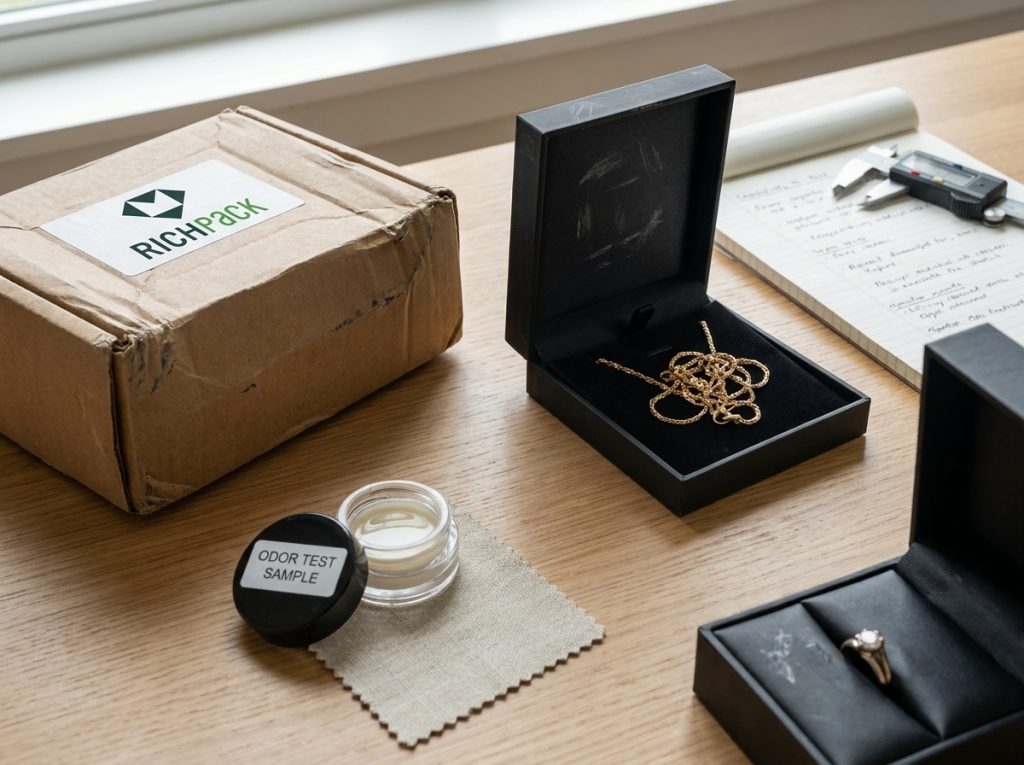
A loose necklace can tangle. A ring box can tip. A chocolate tray can slide into the lid. These visible defects weaken a gift that should feel special.
Close, tilt, carry, open, and remove the real product—record where it moves and why.
Artwork proves what the design should look like. It does not prove what the customer will touch.
Approve the physical sample before bulk production. Check the lid, folds, insert, message, finish, odor, product contact, and outer shipper.
A beautiful box can still arrive dented. A strong mailer can still create a weak opening moment.
Use the correct layer for the route. Presentation and protection should cooperate, not compete.
Choose one hero gift that fits the recipient. Add items that support the same theme, and separate food, fragrance, jewelry, or glass when contact and movement create risk.
Her preferences should lead the choice. Jewelry, chocolate, beauty products, books, flowers, or keepsakes can work, while a card or sleeve can personalize a standard outer box.
Choose a useful theme based on his interests. Food, coffee, grooming products, tech accessories, keepsakes, and shared activities give the box a clear purpose without relying on a stereotype.
Keep the main box stable and vary cards, sleeves, labels, or inside-lid messages. Match each message to a version list, recipient group, and final packout check before production.
Rigid lid-and-base and magnetic boxes give jewelry a fixed display area. The jewelry form, insert, box size, route, and budget decide which structure works, so approve it with a loaded sample.
Start from the delivery date and work backward through the brief, samples, production, inspection, freight, and buffer. Confirm the box size, insert, and supplier capacity before the final artwork is due.
Some boxes can be recycled, but the complete build and local collection system decide the answer. Check the board, wrap, coating, adhesive, ribbon, magnet, insert, and label before making the claim.
A strong Valentine’s Day gift box starts with the recipient and the gift contents. The box comes next.
Choose the structure after you know the finished packout. Choose the insert after you know how the product moves and how the recipient removes it. Choose the finish after you see it on the final material. Choose the order quantity after you understand demand, storage, reorders, and delivery.
For a business program, prepare the gift list, finished dimensions, product weight, estimated quantity, target market, personalization needs, and delivery date. RichPack can then review the packaging route, sample plan, and custom structure with the right information in hand.


2025-08-18


2025-09-02
2024-10-10
2026-08-10
2025-03-26
2025-05-02
Richpack Curated Gift Boxes for Gifts and Special Occasions | Best Gift Boxes of 2024 Unique Gift Boxes For Presents Perfect for Birthdays Anniversaries & Holidays
View More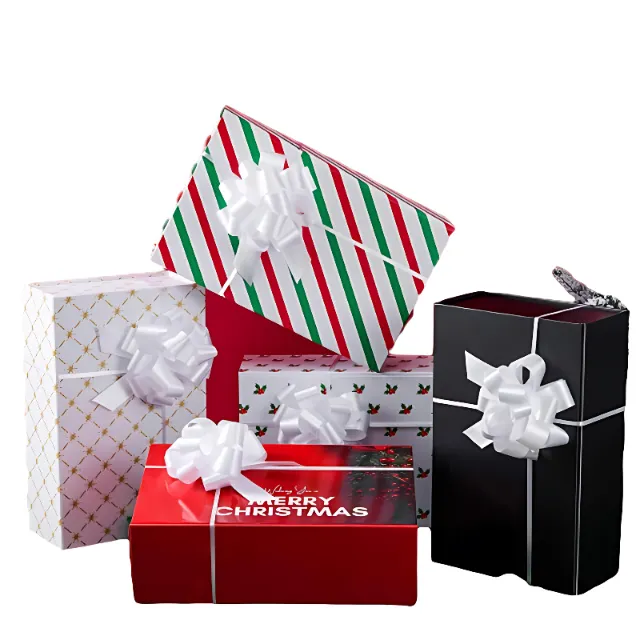
Themed Holiday Gift Packaging Boxes with Personalized Labels | Festive Designs for Special Occasions Custom Branding Solutions
View More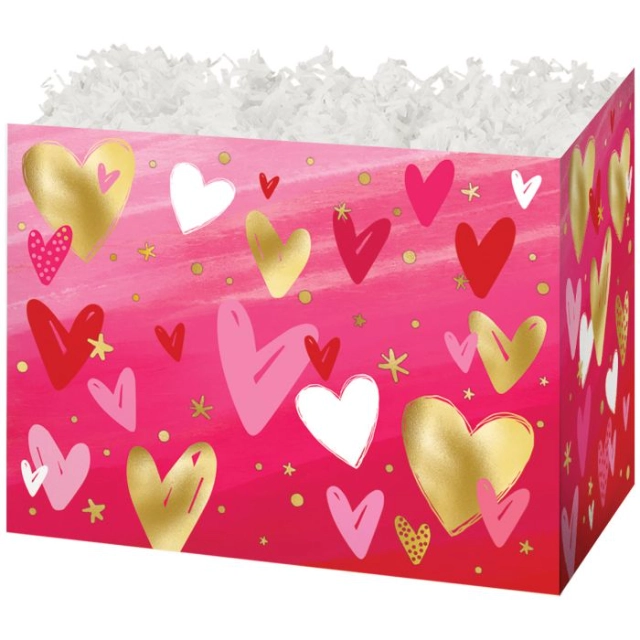
Valentine’s Day Gift Boxes with Romantic Elements | Elegant and Customizable Packaging for Love-Themed Gifts Richpack
View More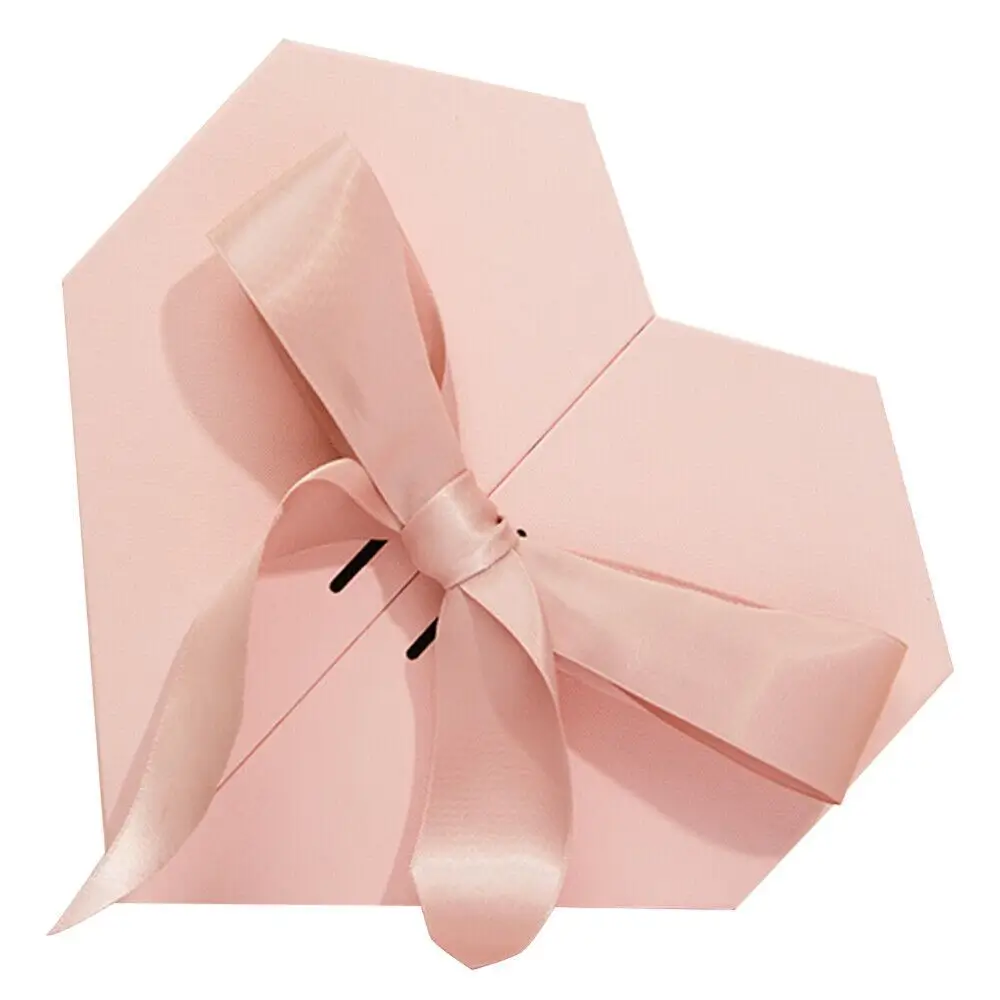
Valentines Present Box – Enchanting Container of Affectionate Gifts, Spreading Love Vibes
View More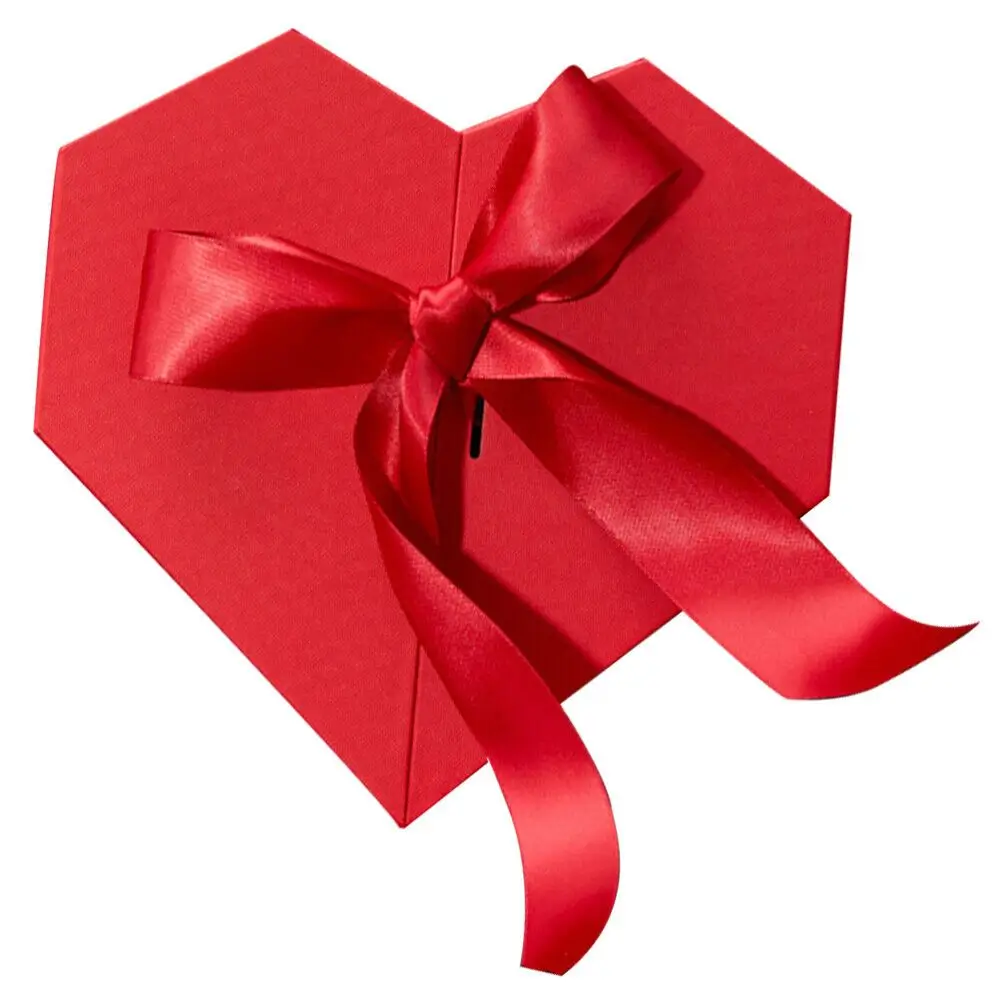
Romantic Valentine Gift Boxes | Eye-Catching Valentine’s Day Gift Boxes and Packaging for Gift Presentation Richpack Custom Valentine’s Day Gift Box
View More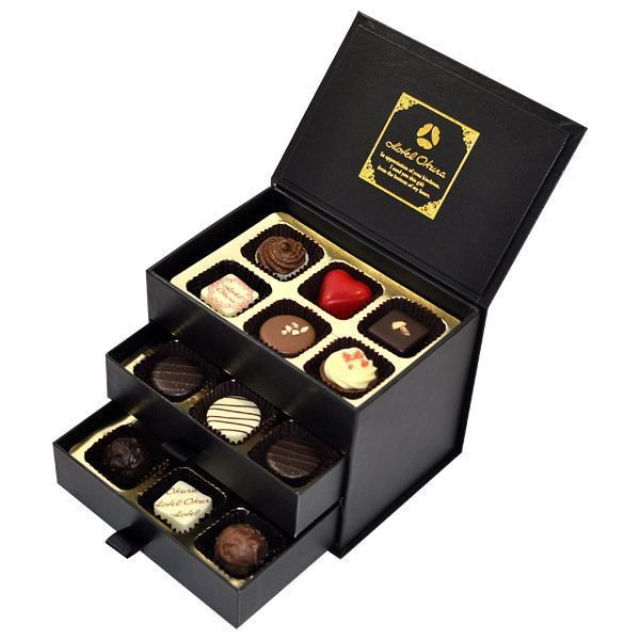
Cardboard Chocolate Box: Three-Tiered Tempting Treats for All Occasions
View More

