

 PREV
PREV
Adding a Thumb Notch vs. Ribbon to Your Sliding Jewelry Boxes: A Complete Guide for Smart Packaging Decisions
2025-06-22



Gift boxes appear high-end but are actually prone to various problems.
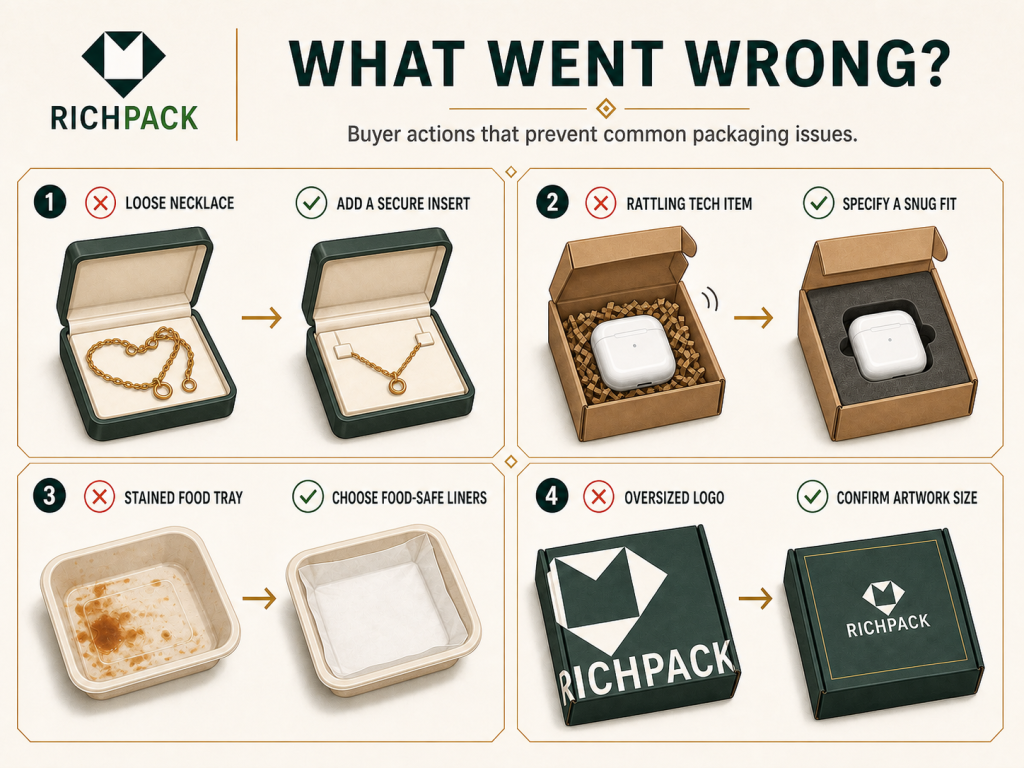
Such issues have occurred with gift boxes for jewelry, Bluetooth earphones, chocolate, scented candles, and new product matching sets. Even if sample renderings look exquisite and attractive, the first mass-produced batches often fail to meet expectations: loose inner liners that let products shift around, oversized printed logos, food trays that bleed color and stain box surfaces, or power banks colliding against box walls during transit.
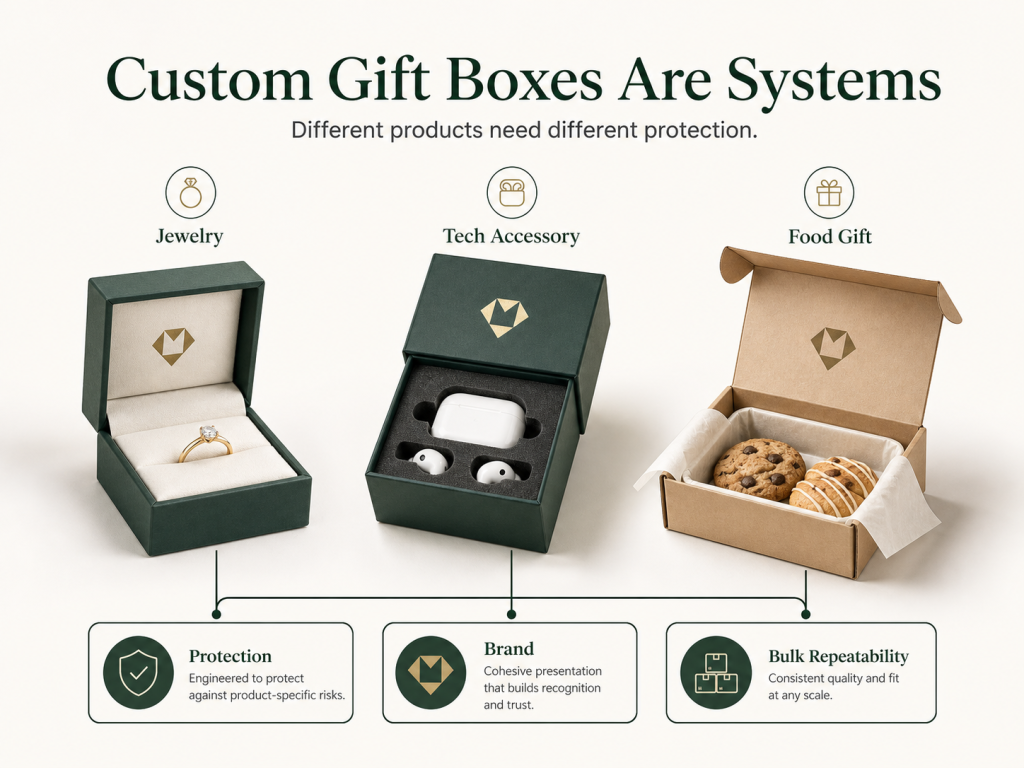
Custom gift boxes are primary packaging systems. Their subcategories include rigid boxes, folding color boxes, magnetic closure boxes, slide-out boxes, shipping mailer boxes, box sleeves, and gift boxes with custom inner liners.
The core functions of gift boxes are clear: protecting products, conveying brand identity, and ensuring consistent, uniform quality across mass-produced goods.
This article shares a set of practical strategies to help you select suitable gift boxes, plan logo printing areas, compare different liner options, calculate costs, coordinate with suppliers, and avoid all kinds of flaws that turn polished sample boxes into defective mass-produced goods.
You can pick suitable gift boxes based on your product protection needs first. Just keep in mind that appearance comes second.
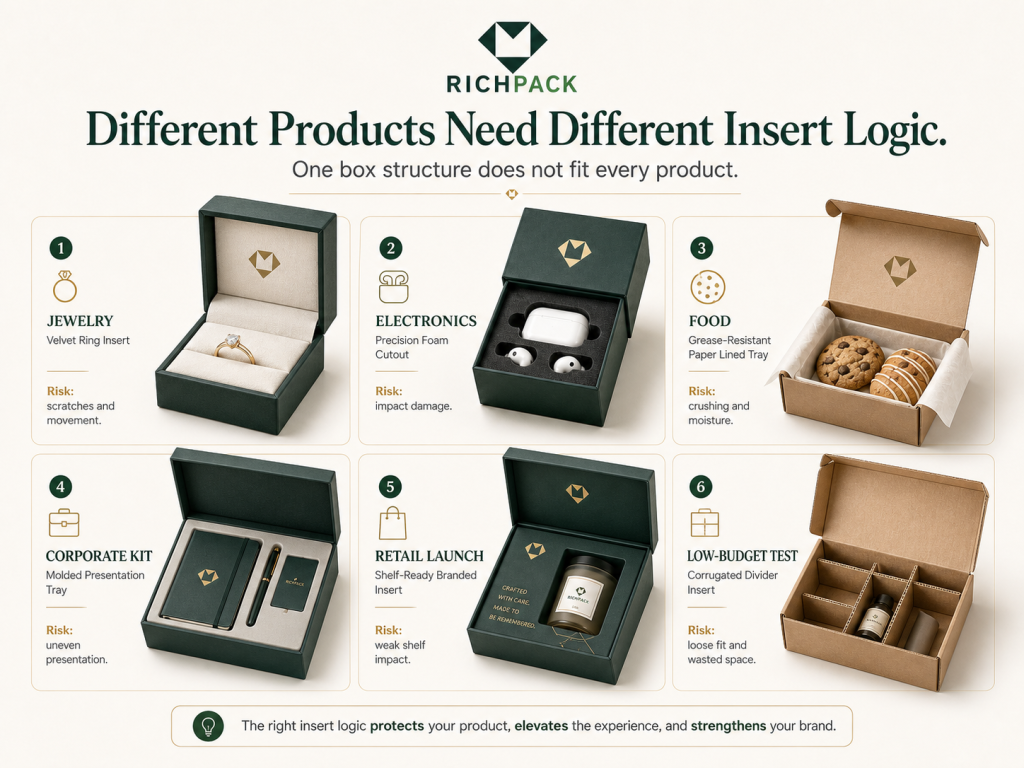
Jewelry gift boxes must resist scratches and fit items perfectly. Digital gift boxes need shockproof designs and slots for cables. Food gift boxes require safe inner linings, odor-blocking layers, and separate compartments. Corporate business gift boxes should be easy to pack quickly. Their boxes also need to hold up during long-distance shipping to many different locations.
| Use Case | Best Box Style | Insert Choice | Best Logo Method | Main Risk |
| Fine jewelry | Rigid, magnetic, lid, and base | Microfiber, velvet, EVA, card slots | Foil, debossing, small lid mark | Scratches, tangles, tarnish |
| Tech gifts | Rigid, mailer, magnetic | High-density EVA foam, molded pulp, paperboard tray | Full print, sleeve, debossing | Impact, cable mess, weight |
| Food gift sets | Rigid, folding carton, sleeve box | Food-safe tray, paper divider, PET or coated liner | Printed sleeve, label, foil | Staining, odor, crush |
| Corporate kits | Mailer, magnetic, collapsible | Segmented tray, paperboard divider | Inside lid print, card, sleeve | Slow packing, shipping damage |
| Retail launches | Rigid, folding carton, drawer box | Product-fit insert | Foil, color print, wrap paper | Color drift, shelf damage |
| Low-budget tests | Stock box with branding | Card, pouch, simple tray | Sticker, stamp, printed card | Paying for tooling too early |
Use a rigid, magnetic, or lid-and-base box when the product is small and valuable. A tiny pendant needs visual weight. A loose chain needs control.
RichPack’s custom jewelry boxes category is the most direct starting point when rings, earrings, bracelets, and necklaces need fitted packaging.
Corporate gifting is not only pens and snacks. Many programs now mix jewelry, tech accessories, wellness items, chocolate, coffee, and cards in one box.
A good corporate box needs zones. Use EVA foam for electronics, paperboard dividers for food jars, and a small jewelry insert when the box includes a bracelet, pin, or charm. If the gift ships to many homes, test the outer carton too.
RichPack’s personalized packaging for corporate gifting programs is a useful reference for branded business gifts.
Tech gifts need a controlled fit. Earbuds, charging cables, power banks, smart tags, and USB kits look messy when they float inside one open cavity.
Use high-density EVA foam for tight cavities, molded pulp for a cleaner, low-plastic look, or paperboard trays for lighter accessories. Ask the supplier to leave finger notches so people can remove the item without digging.
RichPack also has a product page for personalized packaging for high-end tech products.
Food gift boxes need a different kind of discipline. The box must handle grease, crumbs, scent, temperature swings, and crush risk.
Use food-safe liners or trays when the food touches the packaging. Use dividers when jars, cookies, chocolate, and cards share the same box. A beautiful paper wrap is not enough if oil marks show through on day two.
For food-specific inspiration, RichPack’s cookie gift box guide gives a better starting point than a jewelry-only structure.
Retail launches need repeatable packing. Your team should be able to pack the box fast and make every unit look the same.
The risk is not one bad sample. The risk is 1,000 boxes that each look slightly different because the insert, logo, or sleeve tolerance was not locked.
Use a stock box with a logo, sleeve, card, or sticker when you are testing a new product. Do not pay for a fully custom structure before the product has proven demand.
That is not cheap thinking. It is cash control.
Custom gift boxes are primary packaging made for a specific product, brand, and order plan. They can use stock sizes with printed branding or fully custom structures with special board, inserts, finishes, and shipping cartons.
A clean definition helps because buyers often mix up three things:
Treat those as one system. If one part fails, the customer blames the whole gift.
Stock gift boxes are ready-made boxes in standard sizes and colors. They work well for short runs, fast tests, and simple gifts.
Custom gift boxes are built or decorated for your brand. They make sense when the product size is fixed, the unboxing matters, or the same box will be ordered again.
For a deeper comparison, use RichPack’s custom packaging vs stock packaging guide.
Empty custom boxes are packaging components. Curated gift boxes are finished gift sets with products already selected and packed.
If you need 500 client gifts with snacks, socks, and notebooks, a gifting service may solve the full job. If you sell your own jewelry, tech, food, or beauty product, you need packaging made around your product.
Printed boxes change the surface. Fully custom structures change the size, board, closure, insert, and opening feel.
Choose printed stock boxes when speed matters. Choose full custom work when fit, perceived value, or repeat orders matter.
Retail packaging sells the product. Shipping packaging protects the order.
A rigid gift box can still fail if the shipper is weak. For online orders, plan the display box and shipping carton at the same time.
Choose custom packaging when the same box will support a launch, retail placement, gift program, subscription set, or seasonal campaign.
Do not wait until the product is finished and the launch date is close. The box needs product dimensions, artwork, material choices, sample time, and freight planning.
Logo work gets easier when the structure is already clear. A logo placed on the wrong box will still look wrong.
Start with fit, then move to brand. That order saves time.
Measure the product in its real selling state. For jewelry, measure the chain laid flat or the ring standing in a slot. For tech, measure the device, cable, charger, and manual. For food, measure the jar, pouch, sleeve, or wrapped item after sealing.
Leave room for fingers. A tight sample may look precise, but packers will hate it after 500 units.
The structure decides how people meet the product. A magnetic box feels formal. A drawer box feels like a reveal. A mailer feels practical.
RichPack’s gift boxes by style page helps compare magnetic, collapsible, drawer, and other gift box types.
Small logos often feel more expensive than large logos. Put the mark where the eye already lands: lid center, lower corner, inside lid, sleeve, or card.
For jewelry, let the product win. For tech, place the mark where it does not interfere with the device. For food gifts, keep the logo away from areas that may scuff or stain.
Color needs a physical surface. The same green can shift across coated paper, textured paper, velvet, kraft paper, and soft-touch film.
Ask for a printed sample when color is part of your brand. Screen color is not enough.
Foil stamping works well for simple marks and premium names. Embossing and debossing add a touch. Full-color print works better for patterns, illustrations, and large artwork.
Do not ask foil to hold tiny lines. Thin detail can fill in on textured paper.
The inside is where trust shows up. Use a clean insert, a short message, and enough space for the product to sit calmly.
A tangled necklace feels like a return. A power bank rattling in foam feels unfinished. A cookie touching a paper card feels careless.
Cards and sleeves can carry care notes, warranty details, gift messages, and authenticity cues. They also keep the box cleaner.
Put QR codes on a card or inside the lid. Do not place them near the product focal point.
Save a production file after approval. Include board thickness, paper code, print method, foil color, insert material, dieline, carton pack, and approved sample photos.
A reorder should not depend on someone remembering what “same as last time” meant.
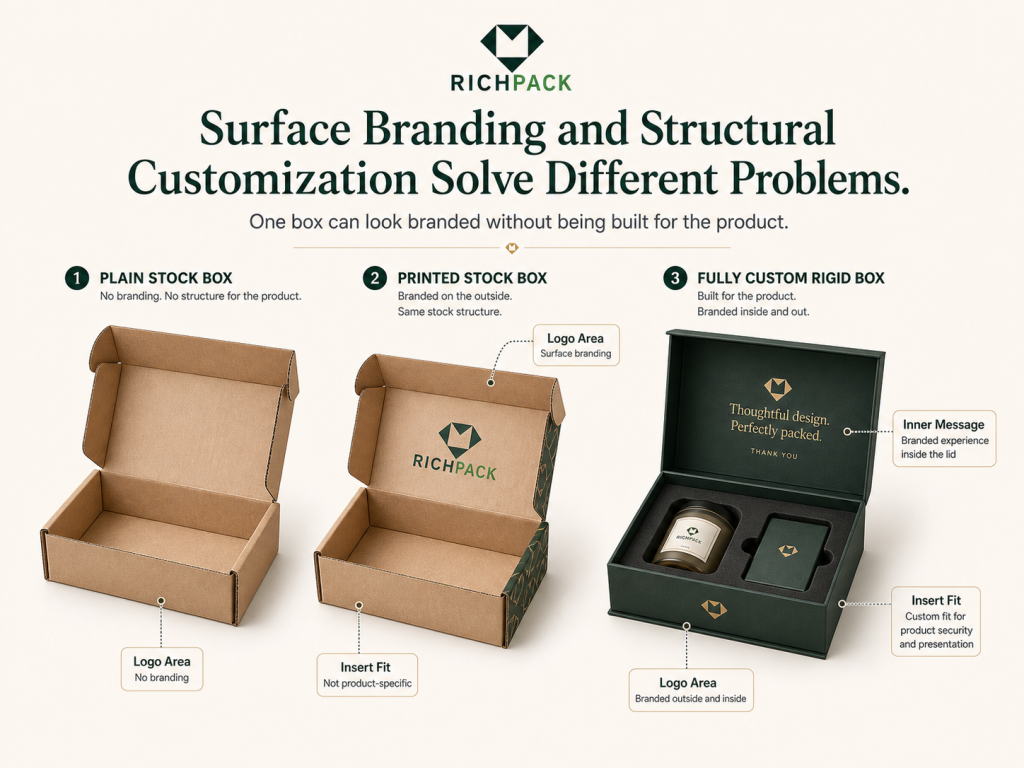
Box style changes cost, protection, storage, freight, and opening feel. Choose it like an operations decision, not only a design choice.
| Style | Best Use | Strength | Watch Out |
| Rigid box | Premium jewelry, tech kits, luxury gifts | Strong feel and protection | Takes more freight space |
| Magnetic box | VIP gifts, electronics, jewelry sets | Clean opening and closing | Magnet feel needs a sample |
| Lid and base box | Rings, earrings, candles, food jars | Classic and simple | Lid fit must be tested |
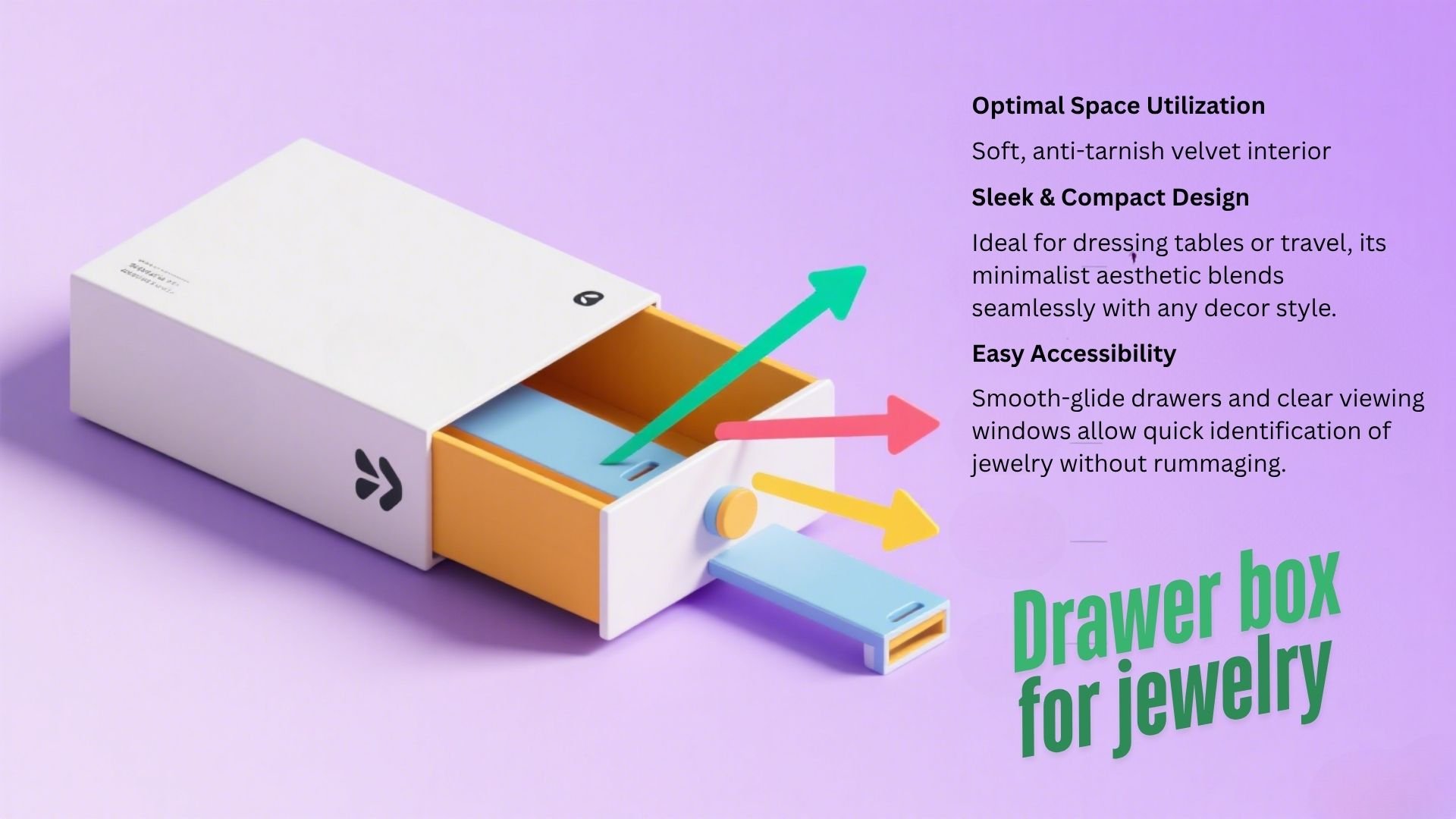
| Drawer box | Bracelets, accessories, launch kits | Strong reveal moment | The pull tab can loosen |
| Folding carton | Light products and budget runs | Low weight and print-friendly | Weak for heavy items |
| Mailer box | Direct shipping and subscriptions | Practical and fast | Needs inner protection |
| Collapsible box | Large gifting programs | Saves storage space | Assembly labor matters |
| Sleeve box | Seasonal branding | Easy update without a new box | Sleeve fit can slow packing |
Rigid boxes use thick board wrapped with paper. They make small products feel more valuable.
For jewelry and tech, they are often the safest premium choice. Ask for the finished wall thickness, not just the board weight.
Magnetic boxes give a controlled closing feel. They work well when the gift will be opened in a meeting, at an event, or on camera.
Do not assume stronger magnets are better. Pull feel also depends on board gap, paper wrap, glue layer, and magnet placement.
RichPack’s magnetic foldable gift box guide goes deeper into this structure.
Lid and base boxes are easy to pack and easy to understand. They work for rings, earrings, candles, chocolate, and small gift sets.
The lid should lift without scraping. Too tight feels cheap after the third opening.
Drawer boxes create a reveal. They work for bracelets, necklaces, tech cables, and layered gift kits.
Test the pull tab with real product weight inside. Empty drawers can lie.
Folding cartons are light and print-friendly. They suit lower-priced accessories, beauty samples, food sleeves, and high-volume campaigns.
Use an inner tray when the product can move.
Mailer boxes can combine shipping and presentation. They work for subscription kits and direct gifts.
For fragile products, do not rely on the mailer alone. Add a tray, pouch, foam, or inner box.
Collapsible rigid boxes save warehouse space. They help when assembled boxes would fill too many pallets.
Ask who will assemble them and how long each box takes. Labor can erase the storage benefit.
Materials decide the first touch. Inserts decide whether the product still looks good after shipping.
A 2018 paper packaging survey reported that 63% of consumers said paper and cardboard packaging makes a product seem premium or high quality. That does not mean paper is always best. It means the material signal matters.
Paperboard works for folding cartons, sleeves, cards, and light packaging. Grayboard is common in rigid boxes.
For many small premium boxes, 1000 gsm to 1200 gsm grayboard is a useful planning range. Always ask for finished thickness and sample feel.
Kraft paper feels natural and simple. Specialty paper can feel refined, textured, soft, or bright.
Match the paper to the product. A handmade cookie box and a fine jewelry box should not always use the same surface.
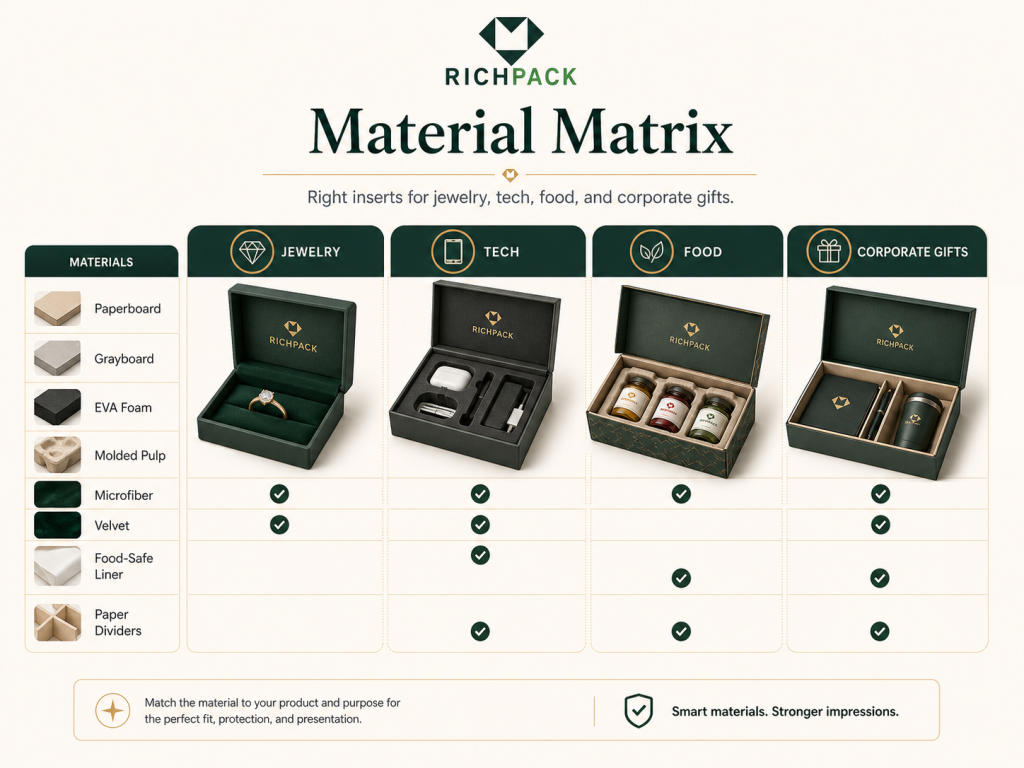
EVA foam gives a tight, controlled fit. It works well for electronics, glass items, tools, watches, and jewelry sets with several hard parts.
Use finger notches. A perfect cavity is annoying if the customer cannot remove the item.
RichPack’s article on making products fit magnetic closure boxes is useful for this exact problem.
Soft linings help protect jewelry and watches. They also change the perceived value of the box.
Test lint, dye transfer, odor, and rub marks. A pretty lining that stains a product is bad.
RichPack’s foam inserts for jewelry boxes and jewelry insert material guide are good supporting reads.
Food packaging needs safe contact surfaces when the food touches the tray. It also needs separation.
Chocolate, cookies, tea, coffee, and jars each create different risks. Think grease, scent, crumbs, moisture, and crush. A divider is often cheaper than a damaged gift.
Foil works best for clean marks. Embossing and debossing add feel without adding more color.
Use one strong finish first. Too many finishes can make the box look busy.
Matte and soft-touch finishes reduce glare and feel smooth. They can also show fingerprints and rub marks.
Test dark colors before bulk approval. Black soft-touch looks great until rough handling tells the truth.
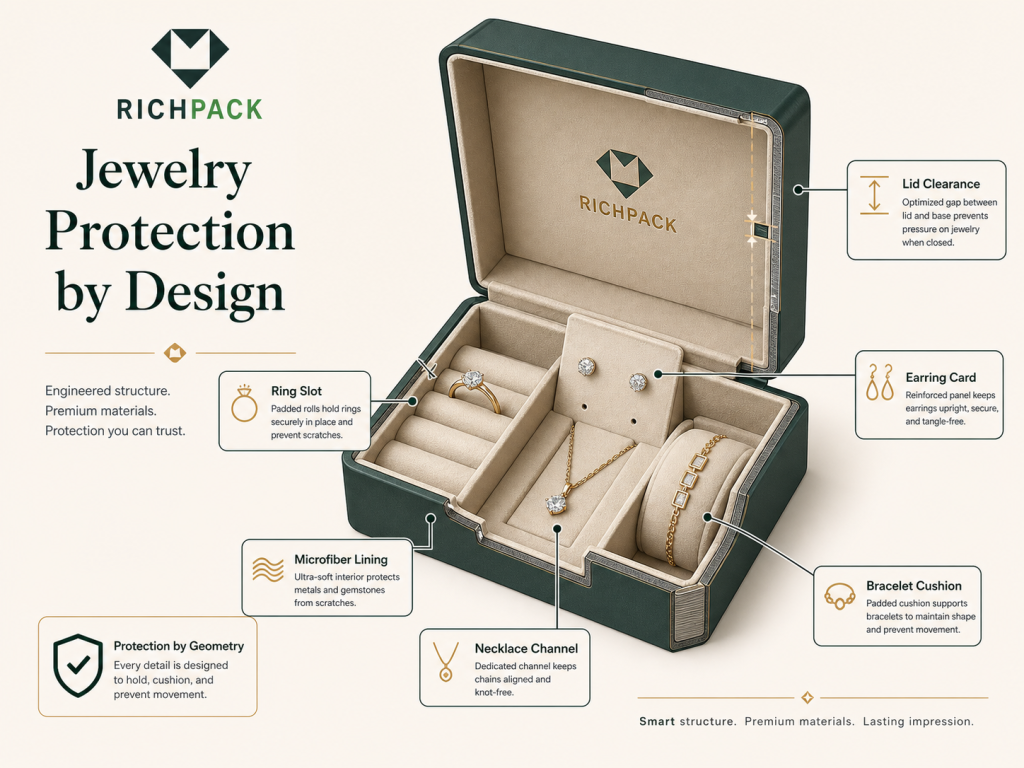
Jewelry has less room for error than most gifts. A candle can sit in tissue. A necklace can kink, scratch, tarnish, or arrive tangled.
That is why the insert is not decoration. It is product protection.
Ring slots should hold the ring upright without squeezing the band. The slot angle changes how the stone faces the buyer.
Test the smallest and largest ring sizes you sell. One slot rarely fits every ring well.
Earring cards need clean holes, enough stiffness, and a secure fit inside the box. If the card bends, the earrings turn.
Pair premium earrings with a shallow insert well. That keeps the card flat during shipping.
Necklace channels keep chains from tangling. They need space for the pendant, clasp, and chain path.
Working jewelers know this pain. A beautiful necklace that arrives knotted does not feel like a gift.
Cushions give shape and height. They work for bangles, cuffs, and watches.
Check firmness. Too soft looks tired after packing. Too firm makes the item hard to remove.
Ask about acid-free paper, sulfur-free adhesive, low-odor glue, and tested dyed fabrics when packaging sterling silver or plated jewelry.
Do not treat tarnish as a customer care issue only. Some risk starts inside the box.
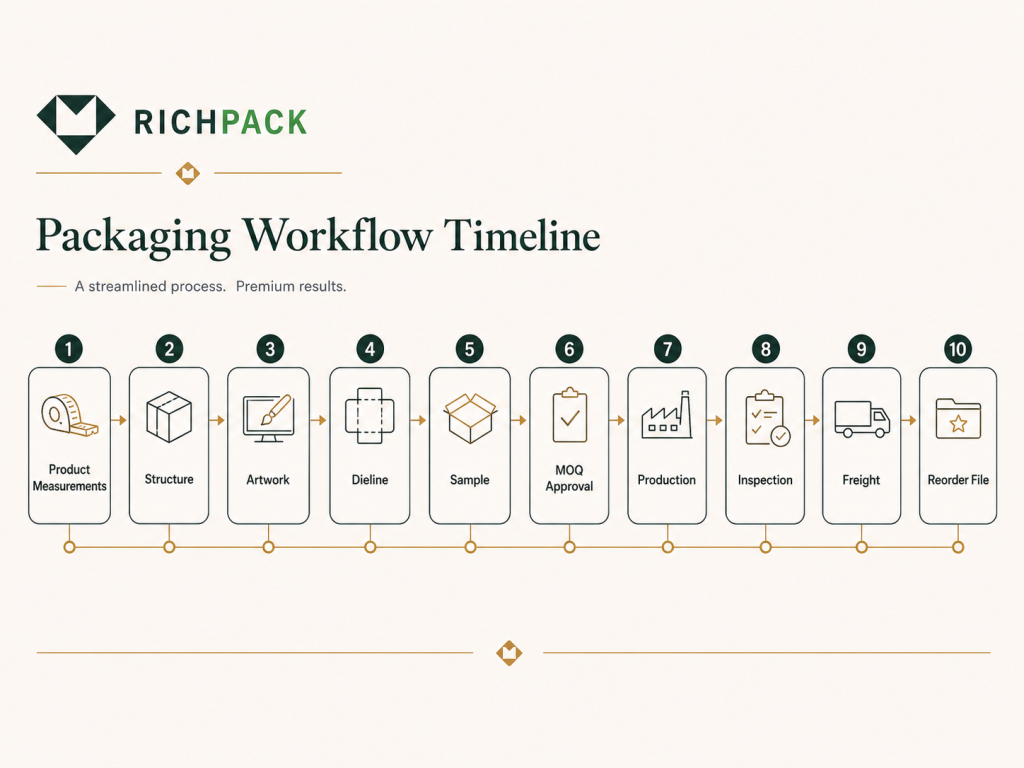
Bulk ordering is a chain. A vague early detail becomes a wrong quote, weak sample, late shipment, or costly reorder.
Use the same path every time.
Send length, width, height, weight, and packed selling state. Add photos with a ruler.
For mixed gift boxes, measure every item. Do not ask the supplier to guess from product photos.
Choose the structure before final pricing. A magnetic box, drawer box, mailer, and folding carton will not be quoted the same way.
If you are unsure, ask for two options: one premium and one cost-controlled.
Send vector logo files, brand colors, font notes, and finish references.
If color matters, ask for a printed proof on the chosen paper.
A dieline is the flat production map for cuts, folds, print areas, glue zones, and insert placement.
Review it with the product in mind. Pretty artwork on a wrong dieline is still wrong.
Approve a physical sample before bulk production. Photos hide lid looseness, paper scuffing, foil pressure, odor, and insert fit.
From the sample desk, the best test is boring: pack the real product, close the box, shake it, open it, and see what moved.
MOQ is the minimum quantity a supplier can produce under one setup. It changes with structure, print method, material sourcing, finish, and insert.
Ask for price breaks at 500, 1,000, and 3,000 units if the program may grow.
A normal custom box order includes artwork review, dieline, sample, revision, production, inspection, packing, and freight.
Work backward from the in-hand date. Packaging that arrives one week late can hold the whole product line hostage.
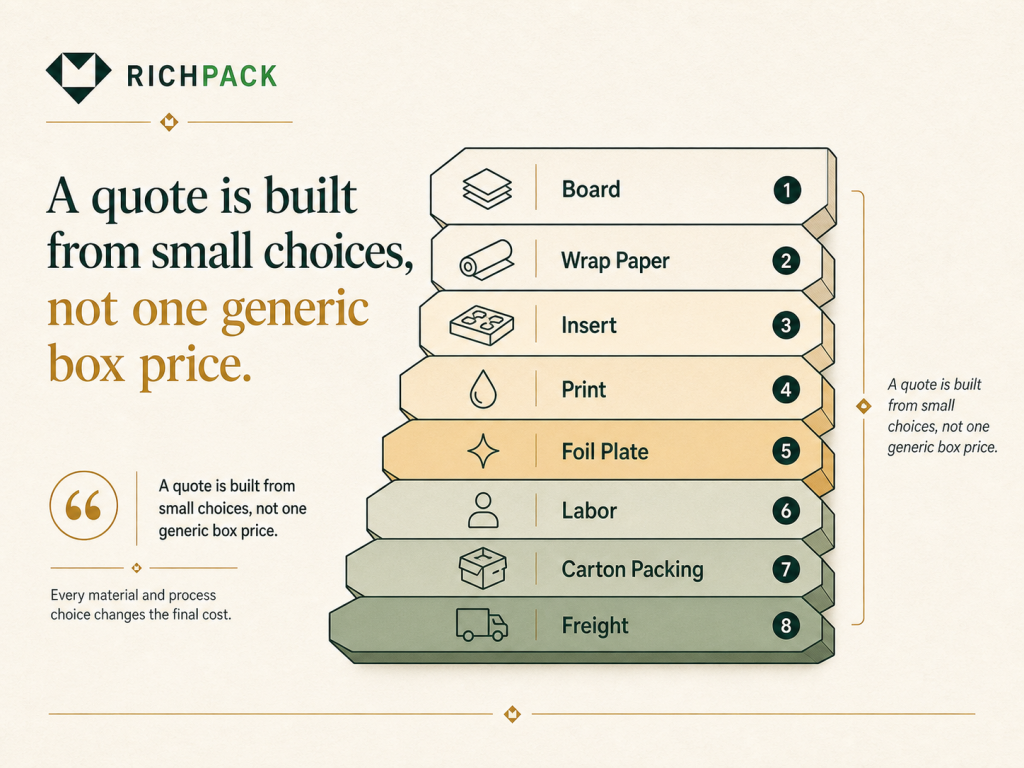
Wholesale pricing is not one number. It is a stack of structure, board, paper, print, insert, setup, labor, packing, and freight.
Use planning ranges for early budgeting. Then get a quote for matched specs.
The biggest cost drivers are box size, structure, board thickness, paper wrap, print method, finish, insert, quantity, and shipping volume.
Small boxes can still carry setup costs. A tiny foil-stamped ring box may need a plate, an insert cut, and hand work.
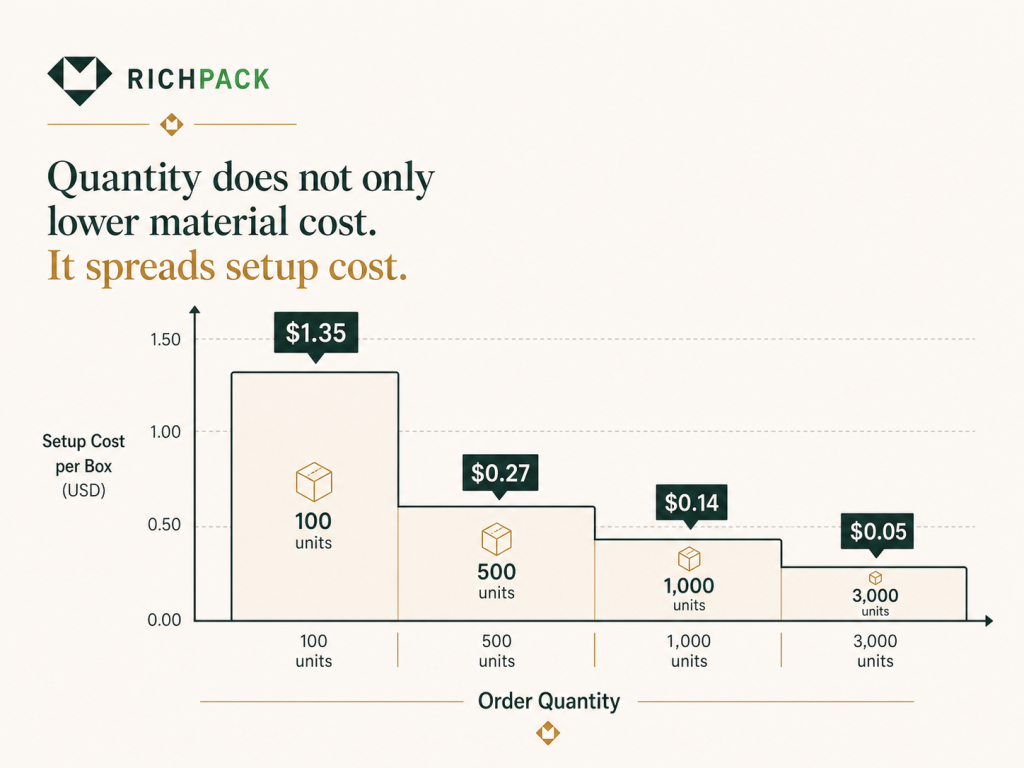
Fixed costs are spread across the order. If a die or setup charge is 135, it adds 1.35 per box at 100 units, 0.27 at 500 units, and about 0.14 at 1,000 units.
That is why tiny custom runs feel expensive. The supplier is not only charging for paper.
| Order Quantity | Fixed Setup Cost | Setup Cost Per Box | What It Means |
| 100 boxes | $135 | $1.35 | Good for a test, but the unit cost feels high |
| 500 boxes | $135 | $0.27 | Better for a launch or small retail drop |
| 1,000 boxes | $135 | $0.14 | Fixed cost starts to feel light |
| 3,000 boxes | $135 | $0.05 | Stronger fit for repeat programs |
Inserts add material, cutting, fitting, and packing time. EVA foam, molded pulp, microfiber, velvet, and paperboard trays all behave differently.
For jewelry and electronics, the insert is often the difference between a gift and a return.
Digital print can suit smaller runs and colorful designs. Offset print suits larger runs and sharper color control. Foil and embossing add setup.
Ask which method the quote uses. A mockup can hide a big price difference.
Tooling fees can apply to dies, foil plates, embossing plates, insert cuts, molds, and special closures.
If you are testing a product, keep the first version simpler. Upgrade after demand is real.
These are planning ranges, not final quotes. Size, material, country, freight, and finish can change the number fast.
| Packaging Plan | Rough Planning Range | Best For | Buyer Note |
| Stock paper box with card | Low | Tests and simple gifts | Fast, but limited fit |
| Stock box with logo stamp | Low to mid | Small launches | Good before full custom work |
| Folding carton with print | Low to mid | Light products and food sleeves | Needs a tray for fragile items |
| Rigid box with paper insert | Mid | Retail gifts | Good balance of feel and cost |
| Rigid box with EVA foam | Mid to high | Tech, glass, watches | Strong fit control |
| Rigid jewelry box with soft lining | Mid to high | Rings, earrings, necklaces | Best for premium feel |
| Magnetic box with segmented tray | High | VIP gifts and corporate sets | Test weight and closure feel |
| Collapsible rigid box | Mid to high | Large bulk programs | Saves storage, adds assembly work |
Compare the full job, not the headline price.
| Cost Driver | Ask This | Why It Matters |
| Structure | Is it rigid, folding, drawer, or magnetic? | Structure changes labor and freight |
| Board | What is the finished wall thickness? | Feelings and strength depend on it |
| Insert | What material and cut style are included? | Movement control lives here |
| Logo | Is it printed, foiled, embossed, or debossed? | Setup cost changes by method |
| Quantity | What are the 500, 1,000, and 3,000 breaks? | Fixed costs spread with volume |
| Packing | Are boxes flat or assembled? | Freight and warehouse space change |
| Sample | Is a physical sample included? | It catches hidden problems |
Corporate gift boxes sit between packaging and gifting. Some buyers need a finished gift service. Others need branded packaging for their own products.
Know which problem you are solving before you ask for quotes.
Curated gifts work when the main job is selecting items, writing notes, and shipping to many people.
Use that path for broad employee gifts, client thank-yous, and simple event follow-ups.
Custom packaging is better when the product is yours, the brand must stay consistent, or the gift supports a launch.
A snack box can be flexible. A jewelry launch gift, tech kit, or premium food set needs a controlled presentation.
Use EVA foam or molded pulp for electronics. Give every part a home: device, cable, plug, card, and manual.
The best tech gift boxes feel calm because nothing rattles.
Use food-safe trays, sleeves, or dividers. Keep scent-heavy items away from paper cards and fabric inserts.
A chocolate gift box and a necklace gift box can share a premium look. They cannot share the same risk plan.
VIP gifts need restraint. Use a sturdy structure, a quiet logo, a clean insert, and one note that feels personal.
Do not overfill the box. Space can feel premium when the product is held with intent.
Event gifts need fast pack-out. The box should be easy to open, fill, close, and stack.
Run a packing test with five people, not one designer. Slow packaging becomes a labor problem during the event week.
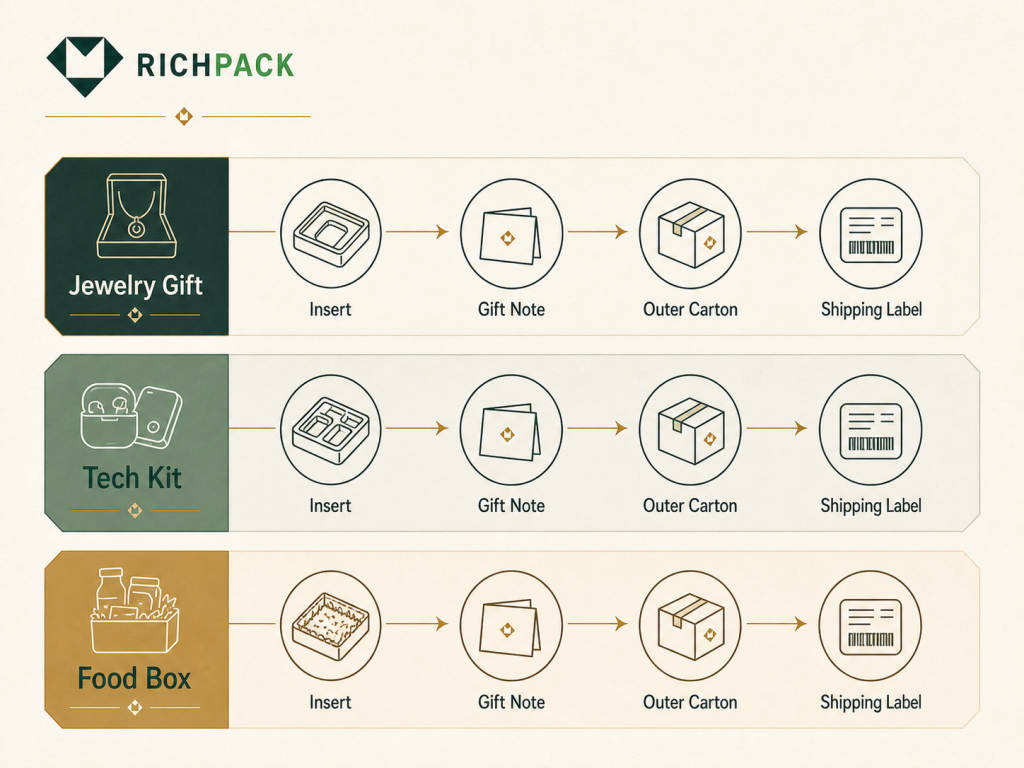
Multi-address shipping adds labels, cartons, address files, and damage risk.
Use a plain outer carton when the gift is valuable. The retail box should not do the shipping job alone.
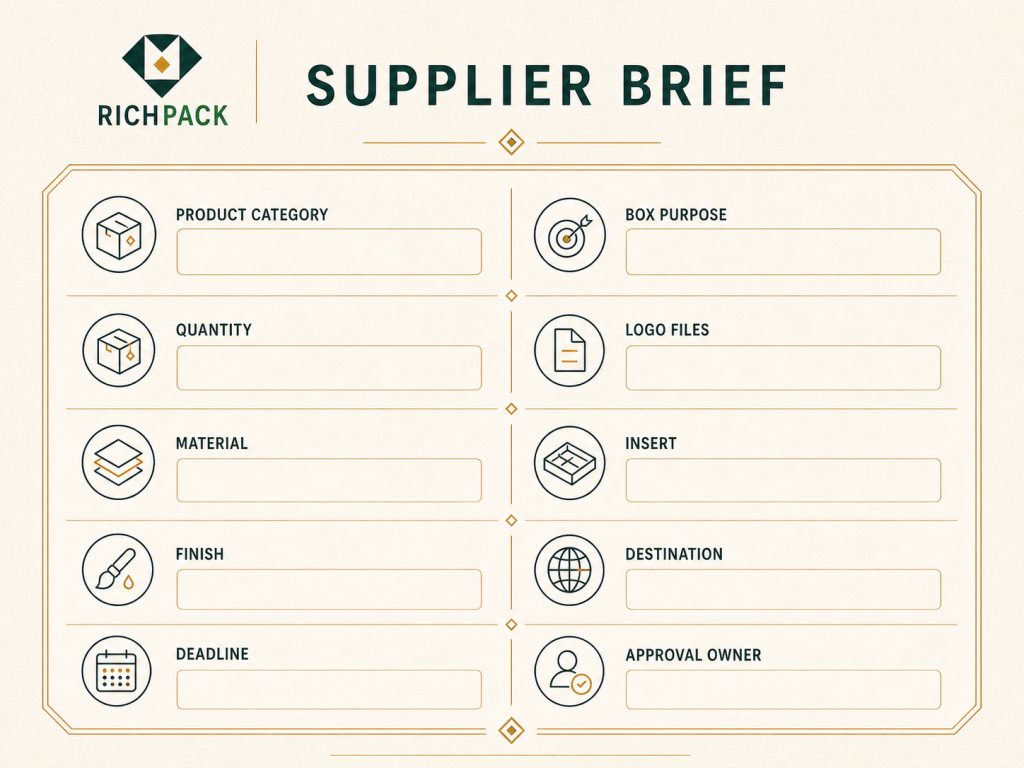
A strong brief saves days. It also stops you from comparing mismatched quotes.
Send one clean brief instead of twenty scattered messages.
Include product name, category, dimensions, weight, photos, and how the item should sit inside the box.
For multi-item gifts, rank the items by importance. The hero product should get the best position.
State the job: retail sale, online shipment, launch kit, corporate gift, subscription box, or event giveaway.
Suppliers make better choices when they know the job the box must do.
Share target quantity and possible reorder volume. A one-time 300-unit run should not be built like a 20,000-unit annual program.
Ask for price breaks if the box may repeat.
Send vector logo files, brand colors, font notes, and finish references.
Do not rely on screenshots for production artwork.
Explain how the product should be held. Name the insert type if you know it.
Use ring slot, necklace channel, earring card, EVA foam cavity, molded pulp tray, paper divider, food-safe liner, or mixed compartments.
Share the destination country, port, or warehouse, and in-hand date.
If the boxes are needed for a photo shoot, pop-up, launch event, or holiday drop, say that early.
Most packaging mistakes start as small skipped decisions. They look harmless during design and expensive during production.
RichPack’s article on ordering custom boxes in bulk from the factory is worth reading before a large order.
Do not choose a box before measuring the real packed item.
Jewelry changes shape on an insert. Tech changes size when cables and manuals are added. Food changes size after wrapping.
A beautiful structure can be wrong for your packing line, freight plan, or budget.
Ask how the box will be packed, stored, shipped, opened, and reordered.
Loose filler is not an insert. It may look soft in photos, but it does not control movement.
If the item can slide, twist, scratch, rattle, or stain, the insert is unfinished.
Oversized logos can make premium packaging feel promotional.
Print a logo-size test before approval. The screen can lie.
Never approve a custom box from a mockup alone. You need to feel the lid, smell the glue, check the insert, rub the surface, and pack the product.
One sample round can save a production run.
Two suppliers can quote “rigid gift box with logo” and mean different things.
One may include a thick board and a fitted insert. Another may include a thin board and no finish. Use the same brief for every quote.
Yes. You can print, foil stamp, emboss, deboss, sleeve, label, or place the logo inside the lid.
For premium products, start smaller than you think. Let the product carry the drama.
They can use paperboard, grayboard, corrugated board, kraft paper, specialty paper, EVA foam, molded pulp, microfiber, velvet, food-safe liners, magnets, ribbons, and printed sleeves.
The right mix depends on product weight, order size, budget, and shipping plan.
Cost depends on size, structure, material, print method, finish, insert, quantity, sample rounds, and freight.
Small runs cost more per unit because setup fees are spread across fewer boxes.
MOQ varies by supplier and specification. Printed stock boxes may start lower. Custom rigid boxes with inserts usually need higher quantities.
Ask for price breaks instead of one number.
Timing depends on artwork, dieline, sample approval, production load, packing, and freight.
Leave room for one physical sample and one revision. Peak season removes slack.
Rigid lid and base boxes, magnetic boxes, and drawer boxes are strong choices.
The insert matters more than the name of the box. A necklace needs chain control. A ring needs upright support.
Use a rigid, magnetic, or mailer structure with EVA foam, molded pulp, or a paperboard tray.
The goal is simple: no rattle, no cable mess, and easy product removal.
Use food-safe trays, dividers, sleeves, and liners. Keep oily, scented, or crumbly items away from cards and fabric.
If the food touches the package, ask about food contact safety.
Send product measurements, photos, target quantity, logo files, brand colors, box purpose, insert needs, delivery market, and deadline.
A clear brief gets a better quote than a long email with missing details.
Use a fitted insert, test the packed box, add an outer carton, control movement, and review carton strength.
For valuable gifts, ship a sample to yourself before bulk release.
Good packaging starts with a blunt question: what must the box do after it looks good?
For jewelry, the box must stop scratches, tangles, tarnish risk, and loose movement. For tech, it must control impact and parts. For food, it must protect shape, scent, safety, and cleanliness. For corporate gifting, it must pack fast and ship well.
That is the real job of custom gift boxes. They protect the product, carry the brand, and make the next order easier.
If you are planning a launch, retail set, client gift, employee gift, or seasonal campaign, prepare four things before asking for a quote:
RichPack helps brands turn those details into a complete packaging plan, from structure and sample review to production and delivery.


2025-06-22


2025-05-26
2025-04-25
Hey there! We know white gold makes a wedding band and a delicate necklace unique shine. But let me tell you—if you don’t take care of it properly, that gorgeous shine can fade, leaving you with dull, lifeless jewelry. I’ve been maintaining jewelry for years, and I’m here to share all the insider tips on how to keep your… Continue reading Custom Gift Boxes: The Definitive Guide to Design and Bulk Ordering
Specialty paper transforms jewelry packaging from ordinary to extraordinary. This comprehensive guide reveals the top 10 premium paper choices that jewelry wholesalers and manufacturers use to enhance brand perception while maintaining cost-effectiveness in bulk production. As jewelry wholesalers and manufacturers seek that perfect balance between cost control and premium appeal, specialty paper emerges as the… Continue reading Custom Gift Boxes: The Definitive Guide to Design and Bulk Ordering
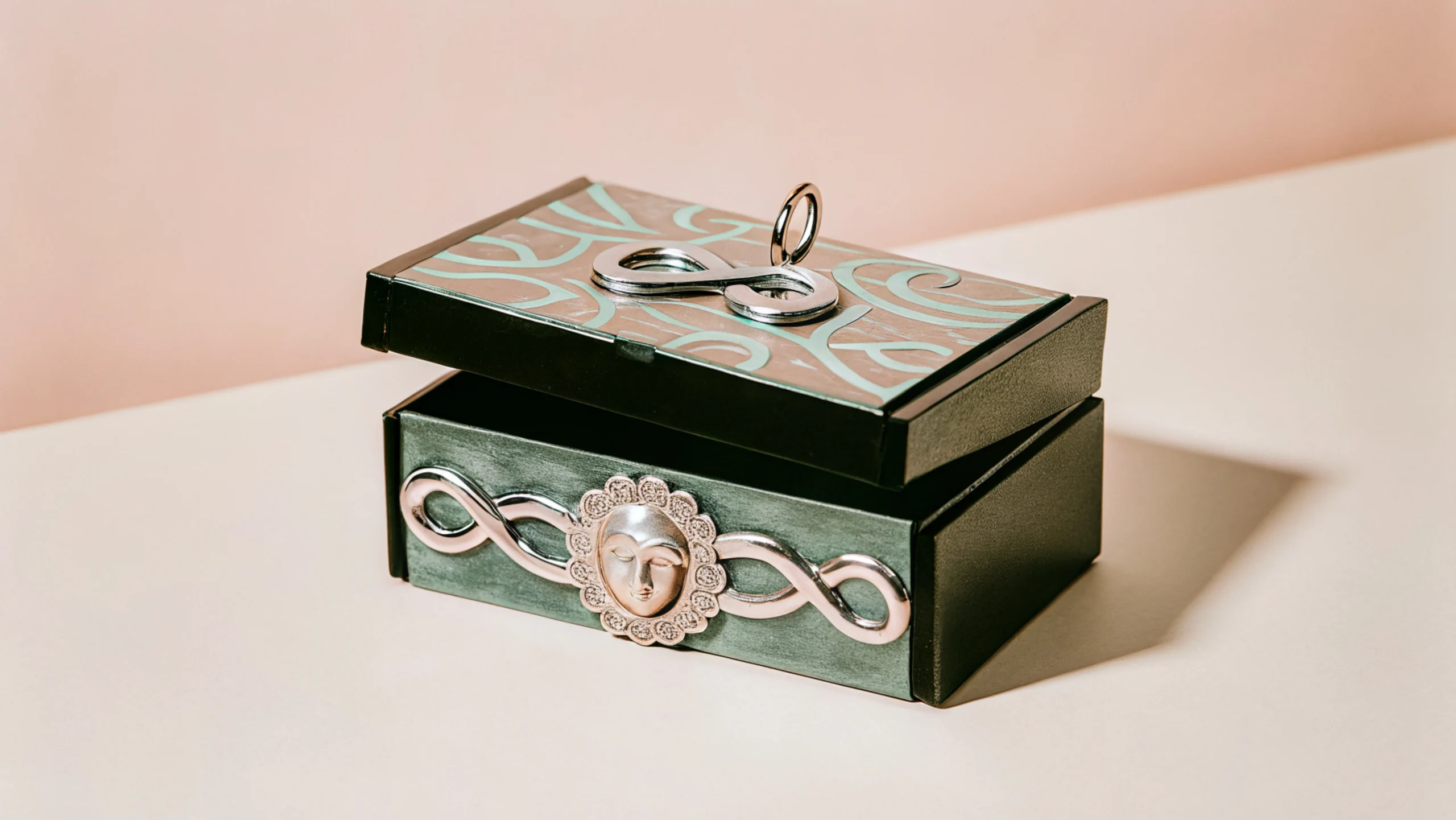
In the summer of 2024, Emily Clark from Los Angeles traveled with her beloved Medusa pendant. Upon returning home, she was devastated to find oxidation stains on her jewelry. Heartbroken, she turned to Richpack for help. Our research revealed that the root cause was likely the packaging—a cheap paper box with three fatal flaws: inability to… Continue reading Custom Gift Boxes: The Definitive Guide to Design and Bulk Ordering
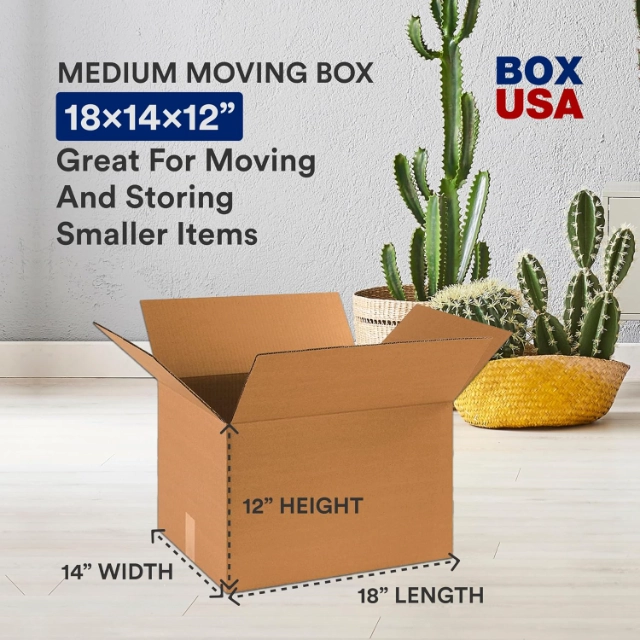
Brown Cardboard Gift Boxes – Classic, Economical丨Tradition in Every Box
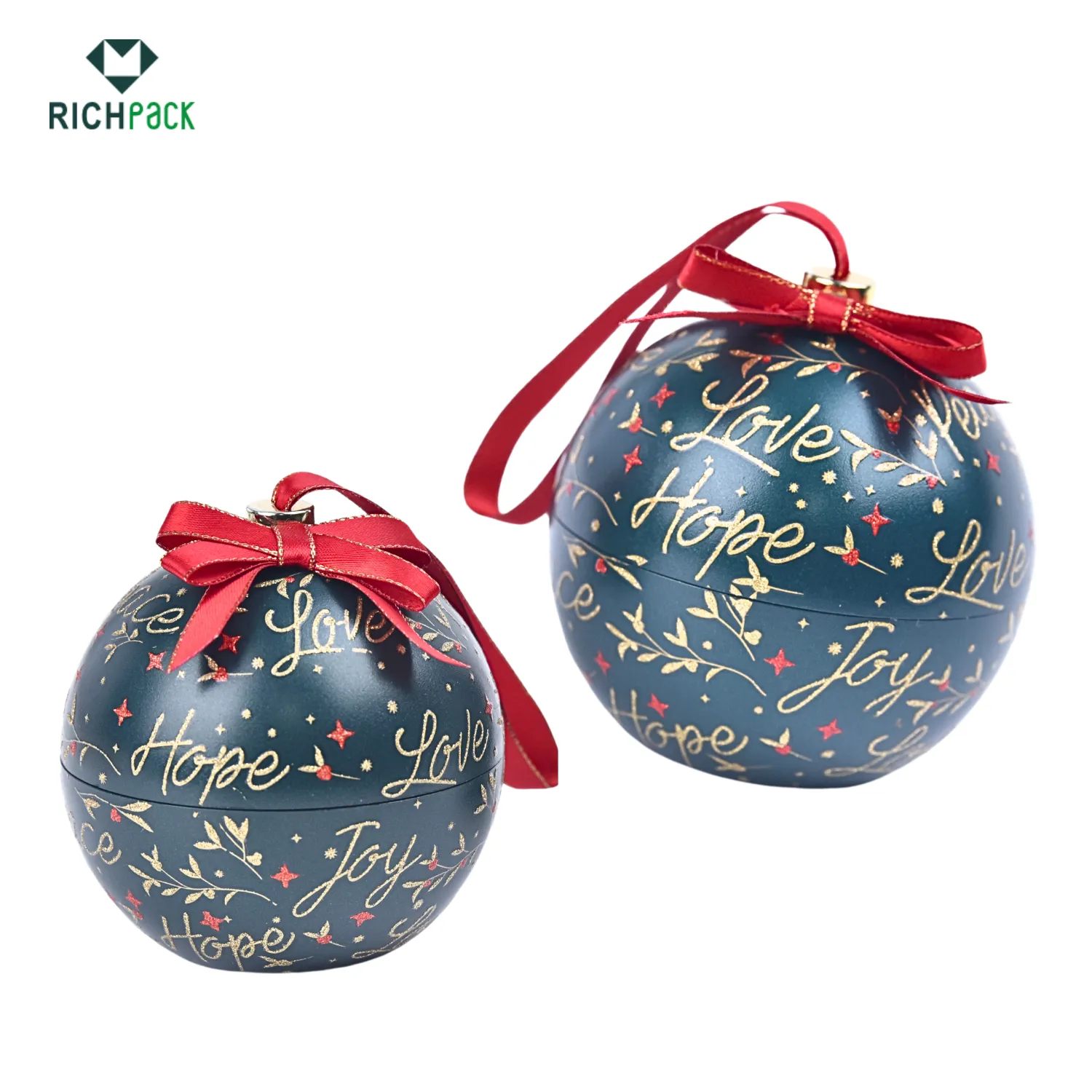
Creative Christmas Gift Boxes Ideas From Richpack | Custom Holiday Gift Box Solutions for Retail and Event Gifting Personalized Design & Fast Delivery
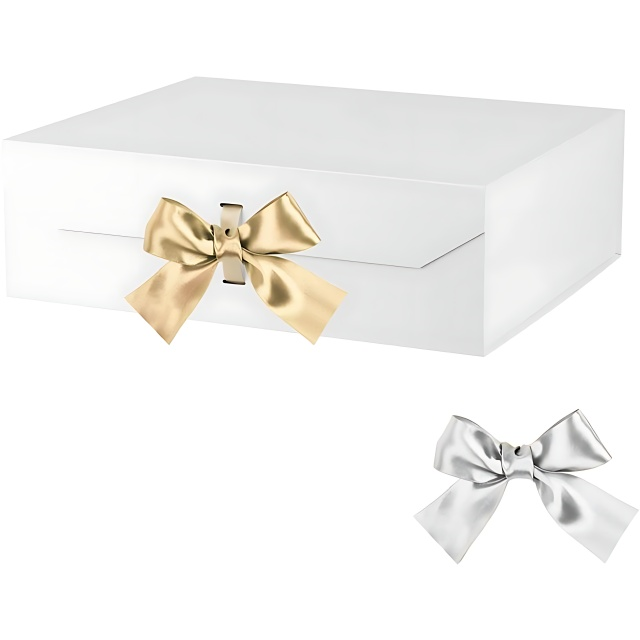
Large white box with lid for jewelry sets | White rigid packaging box with clean surface | Custom bulk by Richpack
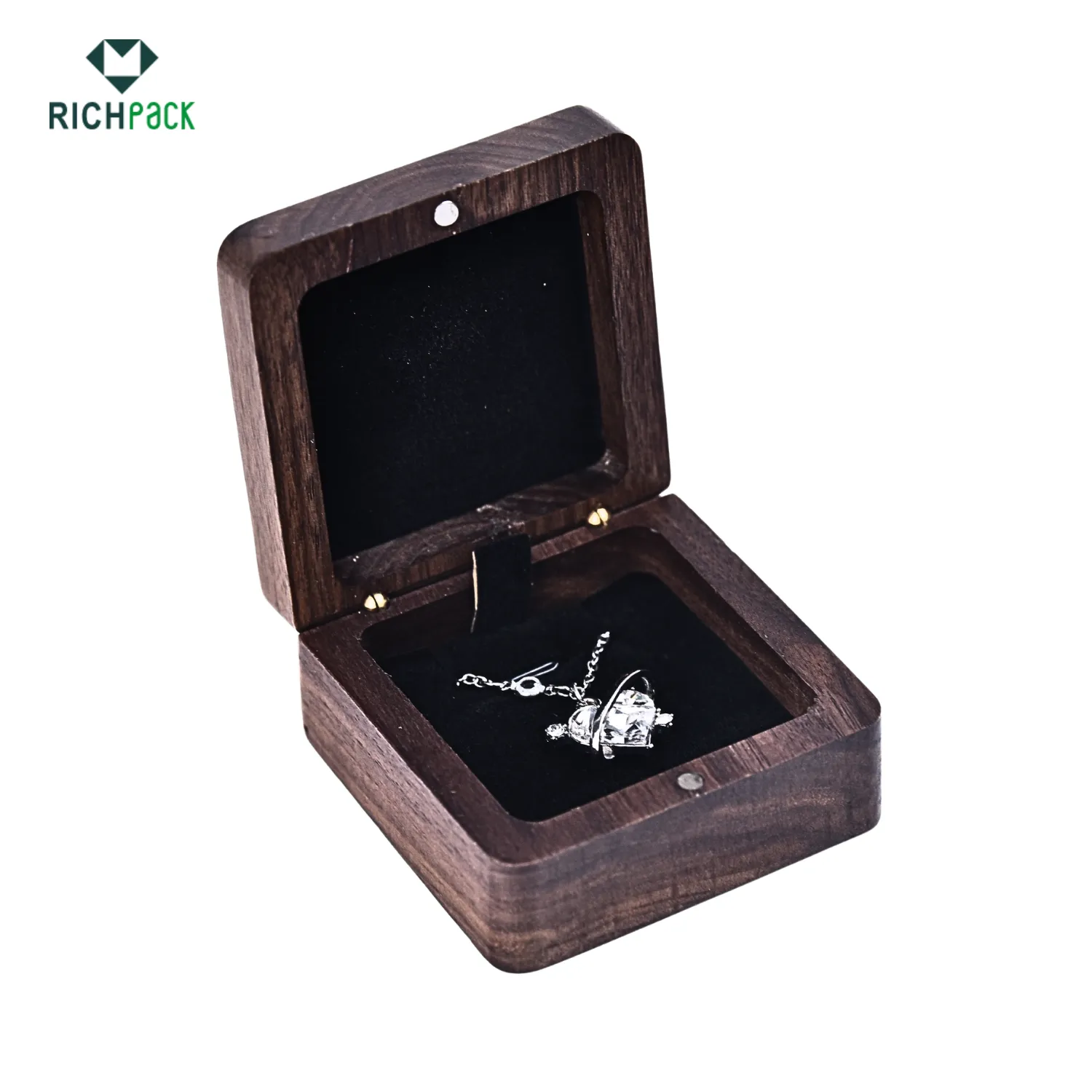
Bespoke Wooden Jewelry Boxes with Hand-Carved Details | Unique and Luxurious Packaging Custom Designs for Premium Brands
View More
Creative Christmas Gift Boxes Ideas From Richpack | Custom Holiday Gift Box Solutions for Retail and Event Gifting Personalized Design & Fast Delivery
View More
High-Quality Jewelry Packaging Boxes for Wholesalers | Premium Customizable Designs Bulk Order Solutions Richpack
View More

